2012-2013 ESOL
    Presentation
Welcome back! We look forward
    to another great year!
ESOL students at CHES

• Most are Hispanic   • A few from Mexico


• Majority is from    • 1 from Sudan
  Guatemala
ESOL Acronyms
• ESOL- English to • ELDA- English
  Speakers of        Language
  Other Languages    Development
                     Assessment
• ESL- English as
                   • ELL –English
  a Second
                     Language
  Language
                     Learner
Update On ELDA

• 20 ESOL students exited ELDA
• Most ESOL students showed
  improvement on ELDA
• We are proud of our CHES Team for
  their contributions
Mayan Languages
• Spanish        • Quiche


• Kanjobal       • ESOL students
                   speak and hear 2
                   languages
• Mam

                 • 1 Sudanese
• Acateco
                   student: Arabic
                   and Swahili
State and Local
        Guidelines

• Important information needs to be
  given to parent in native language
• Our parents need it verbally
• ESOL interpreters provided for
  conferences
Non Discrimination
        Guidelines
• The status of student or family is
  confidential and cannot be shared
• We cannot require a social security
  card for registration
• There will be potential personal
  litigation if there is failure to comply
Rights of an ESOL
          Student
• Protected under federal, state and local
  guidelines & office of civil rights
• ELLs are entitled to modified assignments,
  grades, tests
• Similar modifications provided on state
  mandated testing
• No failure of ELLs without a prior form
ESOL Monitor Students
• These are former ESOL students
• They exited with a composite score
  of 4 or 5 on the ELDA
• They need two years of monitoring
• Monitor students can be pulled back
  into ESOL if struggling
• Report card needed every quarter
Mayan Culture
• Education is a priority
• Students are quiet, bashful and non-
  assertive
• Parents expect mutual respect
• “teacher” is a honorable name
• Parent’s would rather be addressed as
  senor + last name or senora +last name
Literacy of Mayan
          Parents
• Most parents speak a Mayan or Spanish
  dialect
• No literacy or minimal literacy
• Some cannot read or write in Spanish
• Do not expect parents to help with phonics
  or reading
• Basic Math easier
• Majority cannot provide homework help
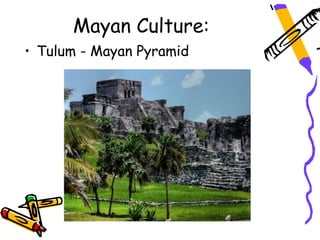
Mayan Culture:
• Tulum - Mayan Pyramid
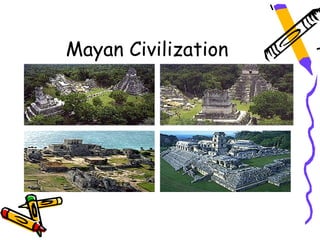
Mayan Civilization
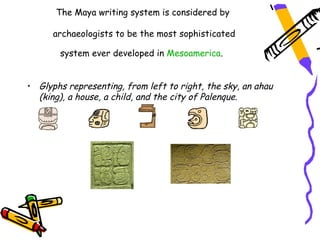
The Maya writing system is considered by

      archaeologists to be the most sophisticated

       system ever developed in Mesoamerica.


• Glyphs representing, from left to right, the sky, an ahau
  (king), a house, a child, and the city of Palenque.
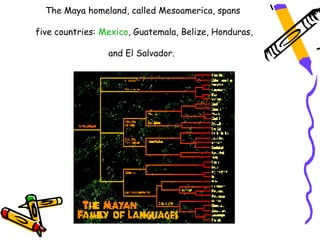
The Maya homeland, called Mesoamerica, spans

five countries: Mexico, Guatemala, Belize, Honduras,

                 and El Salvador.
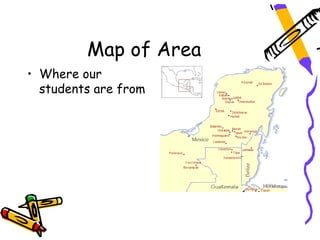
Map of Area
• Where our
  students are from
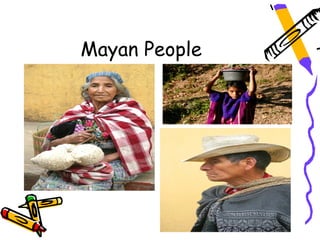
Mayan People
Websites:
• http://www.neok12.com/Maya-Civilization.htm
• http://www.mayaruins.com/yucmap.html
• http://www.civilization.ca/cmc/exhibitions/civil/
  maya/mmc01eng.shtml

• Created by-
• ESOL Teachers: Gabriela Halfin, Vinnie Taneja,
  Laura Ross and Becca Ritchey

2012 2013 esol presentation

  • 1.
    2012-2013 ESOL Presentation Welcome back! We look forward to another great year!
  • 2.
    ESOL students atCHES • Most are Hispanic • A few from Mexico • Majority is from • 1 from Sudan Guatemala
  • 3.
    ESOL Acronyms • ESOL-English to • ELDA- English Speakers of Language Other Languages Development Assessment • ESL- English as • ELL –English a Second Language Language Learner
  • 4.
    Update On ELDA •20 ESOL students exited ELDA • Most ESOL students showed improvement on ELDA • We are proud of our CHES Team for their contributions
  • 5.
    Mayan Languages • Spanish • Quiche • Kanjobal • ESOL students speak and hear 2 languages • Mam • 1 Sudanese • Acateco student: Arabic and Swahili
  • 6.
    State and Local Guidelines • Important information needs to be given to parent in native language • Our parents need it verbally • ESOL interpreters provided for conferences
  • 7.
    Non Discrimination Guidelines • The status of student or family is confidential and cannot be shared • We cannot require a social security card for registration • There will be potential personal litigation if there is failure to comply
  • 8.
    Rights of anESOL Student • Protected under federal, state and local guidelines & office of civil rights • ELLs are entitled to modified assignments, grades, tests • Similar modifications provided on state mandated testing • No failure of ELLs without a prior form
  • 9.
    ESOL Monitor Students •These are former ESOL students • They exited with a composite score of 4 or 5 on the ELDA • They need two years of monitoring • Monitor students can be pulled back into ESOL if struggling • Report card needed every quarter
  • 10.
    Mayan Culture • Educationis a priority • Students are quiet, bashful and non- assertive • Parents expect mutual respect • “teacher” is a honorable name • Parent’s would rather be addressed as senor + last name or senora +last name
  • 11.
    Literacy of Mayan Parents • Most parents speak a Mayan or Spanish dialect • No literacy or minimal literacy • Some cannot read or write in Spanish • Do not expect parents to help with phonics or reading • Basic Math easier • Majority cannot provide homework help
  • 12.
    Mayan Culture: • Tulum- Mayan Pyramid
  • 13.
  • 14.
    The Maya writingsystem is considered by archaeologists to be the most sophisticated system ever developed in Mesoamerica. • Glyphs representing, from left to right, the sky, an ahau (king), a house, a child, and the city of Palenque.
  • 15.
    The Maya homeland,called Mesoamerica, spans five countries: Mexico, Guatemala, Belize, Honduras, and El Salvador.
  • 16.
    Map of Area •Where our students are from
  • 17.
  • 18.
    Websites: • http://www.neok12.com/Maya-Civilization.htm • http://www.mayaruins.com/yucmap.html •http://www.civilization.ca/cmc/exhibitions/civil/ maya/mmc01eng.shtml • Created by- • ESOL Teachers: Gabriela Halfin, Vinnie Taneja, Laura Ross and Becca Ritchey