

ARMA Boston Spring Seminar 2011Jesse Wilkins, CRMManaging Your Email Better
Developing an email policyIdentifying and classifying messages as recordsManaging the inbox better – by managing less emailBetter collaboration WITHOUT emailSeminar agenda
Developing an Email Policy
Email policy elementsPolicy statementsThe policy development frameworkSession agenda
Email policy elements
Every organization’s email policy will be differentPublic vs. private sectorRegulatory requirements, both horizontal and verticalThere are some common areas that should be addressedLots of references andexamples availableEmail policy elements
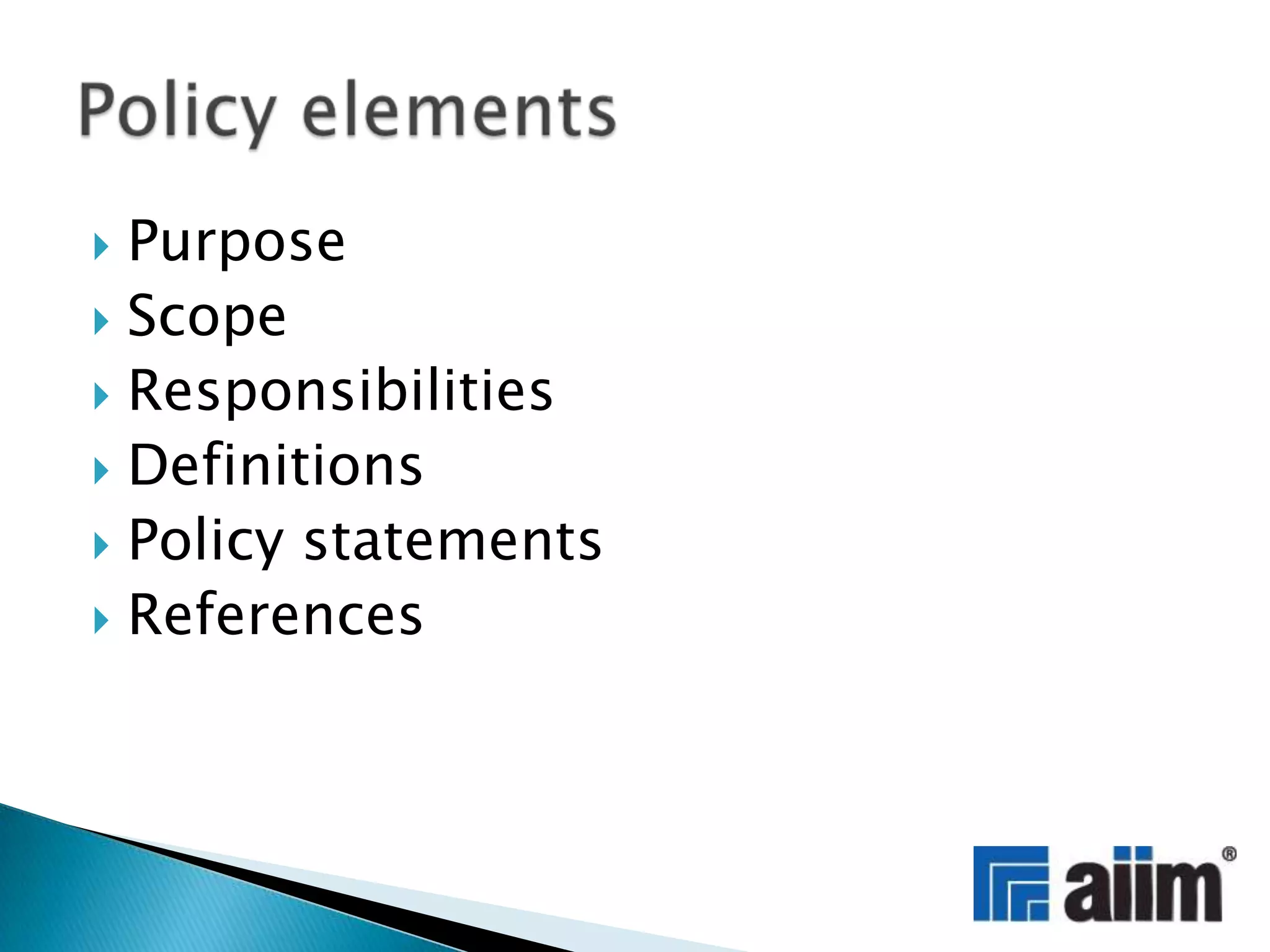
PurposeScope ResponsibilitiesDefinitionsPolicy statementsReferencesPolicy elements
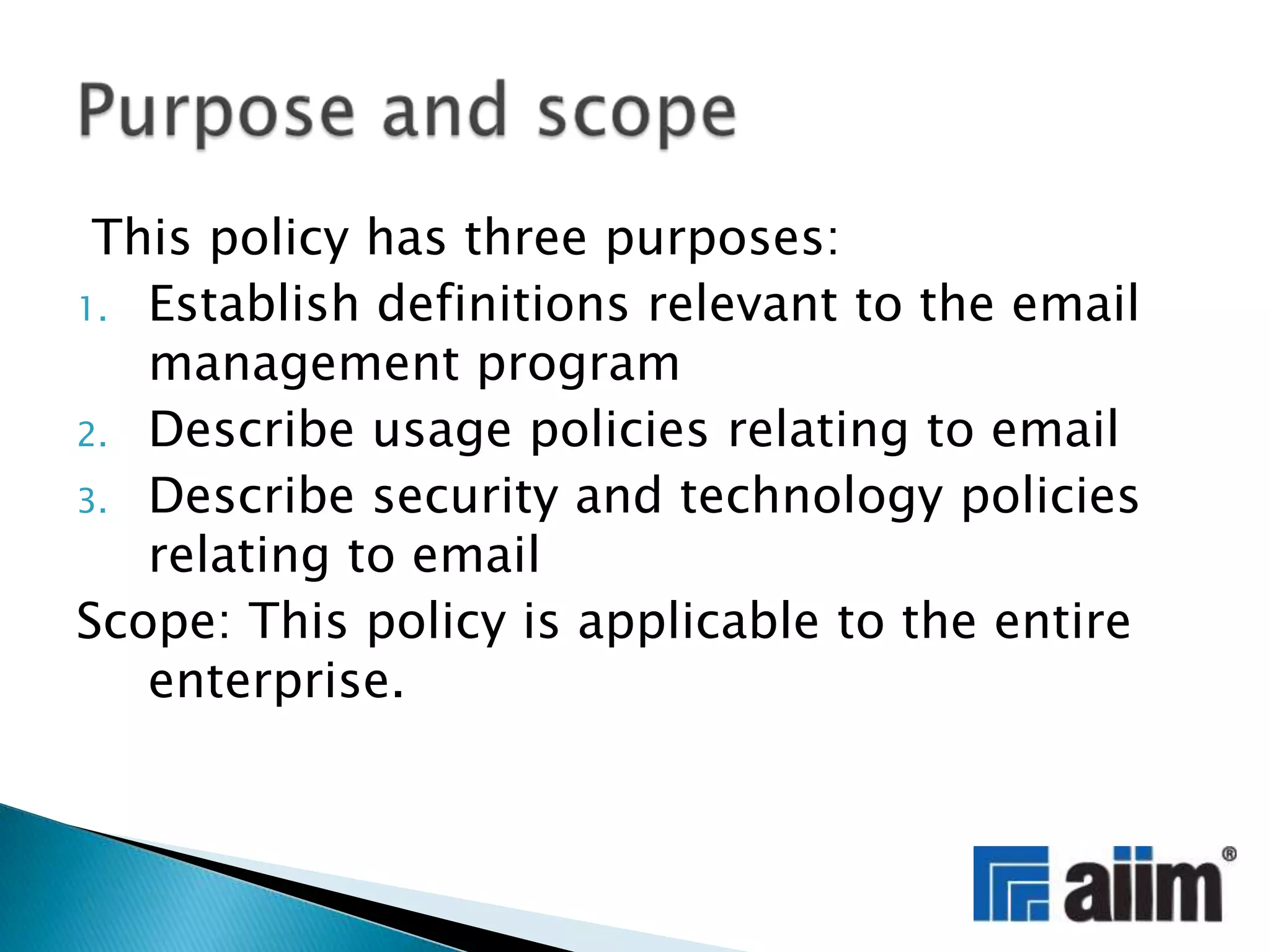
This policy has three purposes:Establish definitions relevant to the email management programDescribe usage policies relating to emailDescribe security and technology policies relating to emailScope: This policy is applicable to the entire enterprise. Purpose and scope
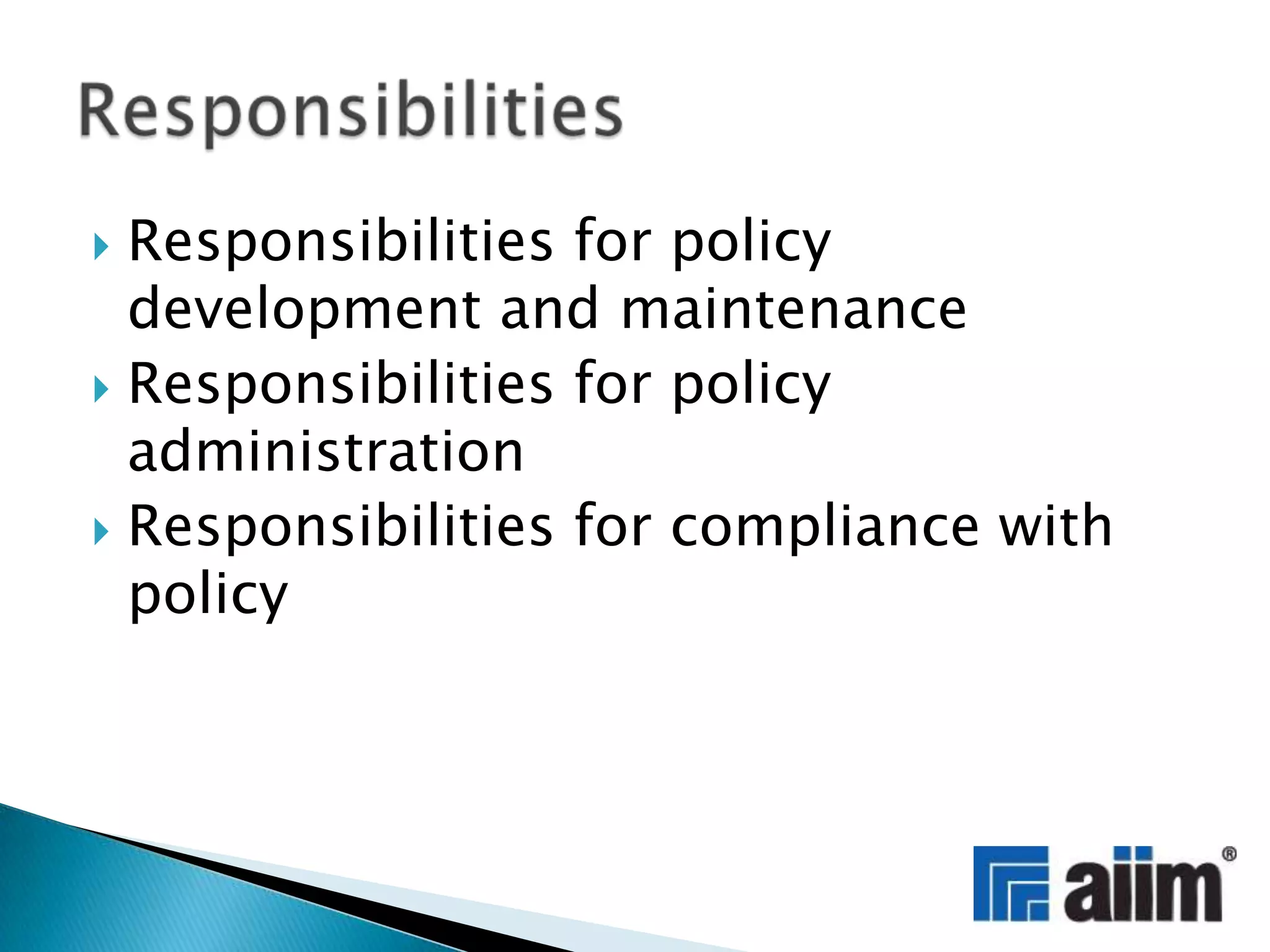
Responsibilities for policy development and maintenanceResponsibilities for policy administrationResponsibilities for compliance with policyResponsibilities
Uncommon termsCommon terms used in an uncommon fashionAcronyms and abbreviationsDefinitions
Many different elements availableDetailed in the next sectionPolicy statements
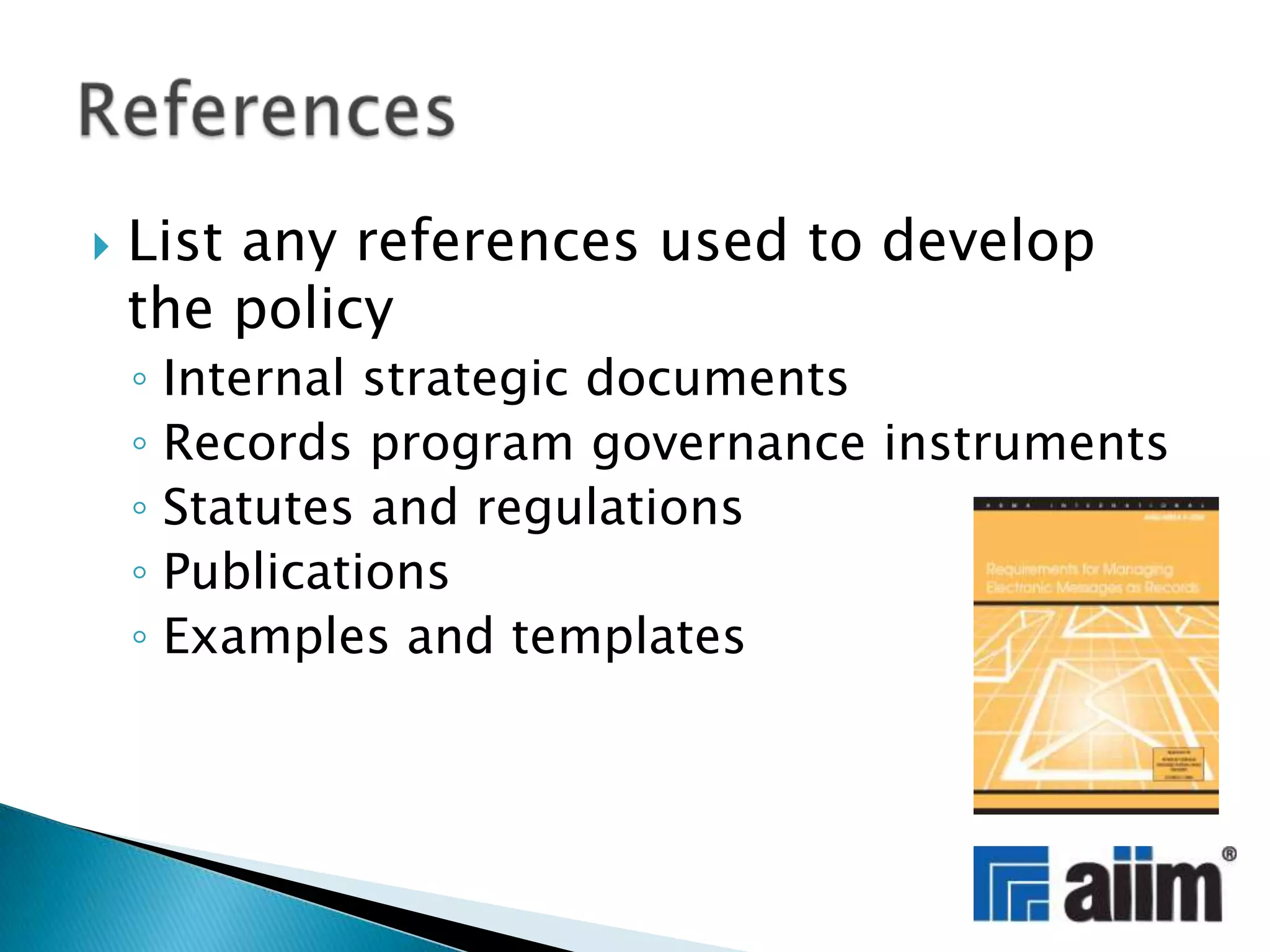
List any references used to develop the policyInternal strategic documentsRecords program governance instrumentsStatutes and regulationsPublications Examples and templatesReferences
Detailed instructions for complying with policiesOften separate document(s)Each of the policy statements will have one or more proceduresMay be specific to process, business unit, jurisdiction, and/or applicationProcedures
Email policy statements
Most common element of email policies todayTypically addresses things NOT to do:Obscene language or sexual contentJokes, chain letters, business solicitationRacial, ethnic, religious, or other slursMay address signature blocksStandardization, URLs, picturesAcceptable usage
Guidance on writing emailsWording and punctuationSpell check and grammar checkEffective subject linesGuidance on email etiquetteGuidance on addresseesEffective usage
Whether personal usage is allowedAny limitations to personal usageSeparation of personal and business usage within individual messagesPersonal email account accessPersonal usage
Whether email is considered to be owned by the organizationResponsibility for stewardship of messages, both sent and receivedPrivacy and monitoringThird-party accessOwnership and stewardship
Email is a medium, not a record type or seriesEmail messages can be recordsOther information objects that might need to be treated as recordsRead receiptsBounced messagesRetention and disposition
Email can be subject to discoveryAssigns responsibility for communicating  legal holdsDescribes whether or not email disclaimers will be used and howMay outline privilege issuesLegal issues
Outlines whether encryption is allowedWhat approaches to useWhether digital signatures are allowedWhat approaches to useEncryption and digital signatures
Most often found as part of general policies for remote workersRequirements for mobile devicesRequirements for web-based accessSynchronization and login requirementsMobile and remote email
Addresses whether email will be archivedAddresses whether personal archives will be allowed May address backups – but backups are not archivesMay also address public or managed foldersArchival
Attachment limitationsWhether they can be sent at allSize limitationsContent type limitationsAttachments vs. linksContent filteringEncryption and DRMSecurity
Policy development framework
Approach to developing and implementing a policyEnsures that policy development is consistent with organizational goalsEnsures that policy meets legal and regulatory requirementsThe policy framework
Policy development requires time and energy from users and stakeholdersSo does policy implementationOngoing compliance will require auditing and communicationNone of this happens without management support1. Get management support
Policy should address the entire enterpriseStakeholders should include:Business unit managersEnd usersLegal, RM, ITExternal customers and partners2. Identify stakeholders
What changes are being introduced? Processes, technologiesWhat are the desired outcomes?What behavioral changes should result?3. Identify the goals of the policy
Legal researchOrganizational researchPublic researchStandards and guidelinesBenchmarkingConsult with similarorganizationsAnalyze the results4. Conduct the research
Collaborative and iterative processThere are a number of resources available to provide an email policy frameworkThese are starting points and need to be customized for your requirements5. Draft the policy
Review by legal, HR, usersEnsures it is validEnsures it will work within existing organizational cultureChange management 6. Review the policy
Policy is reviewed by business managers, senior managementComplete revisions as necessaryApprove the policy7. Approve the policy
CommunicationTrainingAuditing8. Implement the policy
Monitor for compliance with policySolicit feedback about policyProvide refresher training as requiredConsider whether to retain previous versions of the policyPlan for periodic review and maintenance9. Once the policy is live
Questions?

20110512-1 ARMA Boston Email Policy

  • 1.
    ARMA Boston SpringSeminar 2011Jesse Wilkins, CRMManaging Your Email Better
  • 2.
    Developing an emailpolicyIdentifying and classifying messages as recordsManaging the inbox better – by managing less emailBetter collaboration WITHOUT emailSeminar agenda
  • 3.
  • 4.
    Email policy elementsPolicystatementsThe policy development frameworkSession agenda
  • 5.
  • 6.
    Every organization’s emailpolicy will be differentPublic vs. private sectorRegulatory requirements, both horizontal and verticalThere are some common areas that should be addressedLots of references andexamples availableEmail policy elements
  • 7.
  • 8.
    This policy hasthree purposes:Establish definitions relevant to the email management programDescribe usage policies relating to emailDescribe security and technology policies relating to emailScope: This policy is applicable to the entire enterprise. Purpose and scope
  • 9.
    Responsibilities for policydevelopment and maintenanceResponsibilities for policy administrationResponsibilities for compliance with policyResponsibilities
  • 10.
    Uncommon termsCommon termsused in an uncommon fashionAcronyms and abbreviationsDefinitions
  • 11.
    Many different elementsavailableDetailed in the next sectionPolicy statements
  • 12.
    List any referencesused to develop the policyInternal strategic documentsRecords program governance instrumentsStatutes and regulationsPublications Examples and templatesReferences
  • 13.
    Detailed instructions forcomplying with policiesOften separate document(s)Each of the policy statements will have one or more proceduresMay be specific to process, business unit, jurisdiction, and/or applicationProcedures
  • 14.
  • 15.
    Most common elementof email policies todayTypically addresses things NOT to do:Obscene language or sexual contentJokes, chain letters, business solicitationRacial, ethnic, religious, or other slursMay address signature blocksStandardization, URLs, picturesAcceptable usage
  • 16.
    Guidance on writingemailsWording and punctuationSpell check and grammar checkEffective subject linesGuidance on email etiquetteGuidance on addresseesEffective usage
  • 17.
    Whether personal usageis allowedAny limitations to personal usageSeparation of personal and business usage within individual messagesPersonal email account accessPersonal usage
  • 18.
    Whether email isconsidered to be owned by the organizationResponsibility for stewardship of messages, both sent and receivedPrivacy and monitoringThird-party accessOwnership and stewardship
  • 19.
    Email is amedium, not a record type or seriesEmail messages can be recordsOther information objects that might need to be treated as recordsRead receiptsBounced messagesRetention and disposition
  • 20.
    Email can besubject to discoveryAssigns responsibility for communicating legal holdsDescribes whether or not email disclaimers will be used and howMay outline privilege issuesLegal issues
  • 21.
    Outlines whether encryptionis allowedWhat approaches to useWhether digital signatures are allowedWhat approaches to useEncryption and digital signatures
  • 22.
    Most often foundas part of general policies for remote workersRequirements for mobile devicesRequirements for web-based accessSynchronization and login requirementsMobile and remote email
  • 23.
    Addresses whether emailwill be archivedAddresses whether personal archives will be allowed May address backups – but backups are not archivesMay also address public or managed foldersArchival
  • 24.
    Attachment limitationsWhether theycan be sent at allSize limitationsContent type limitationsAttachments vs. linksContent filteringEncryption and DRMSecurity
  • 25.
  • 26.
    Approach to developingand implementing a policyEnsures that policy development is consistent with organizational goalsEnsures that policy meets legal and regulatory requirementsThe policy framework
  • 27.
    Policy development requirestime and energy from users and stakeholdersSo does policy implementationOngoing compliance will require auditing and communicationNone of this happens without management support1. Get management support
  • 28.
    Policy should addressthe entire enterpriseStakeholders should include:Business unit managersEnd usersLegal, RM, ITExternal customers and partners2. Identify stakeholders
  • 29.
    What changes arebeing introduced? Processes, technologiesWhat are the desired outcomes?What behavioral changes should result?3. Identify the goals of the policy
  • 30.
    Legal researchOrganizational researchPublicresearchStandards and guidelinesBenchmarkingConsult with similarorganizationsAnalyze the results4. Conduct the research
  • 31.
    Collaborative and iterativeprocessThere are a number of resources available to provide an email policy frameworkThese are starting points and need to be customized for your requirements5. Draft the policy
  • 32.
    Review by legal,HR, usersEnsures it is validEnsures it will work within existing organizational cultureChange management 6. Review the policy
  • 33.
    Policy is reviewedby business managers, senior managementComplete revisions as necessaryApprove the policy7. Approve the policy
  • 34.
  • 35.
    Monitor for compliancewith policySolicit feedback about policyProvide refresher training as requiredConsider whether to retain previous versions of the policyPlan for periodic review and maintenance9. Once the policy is live
  • 36.

Editor's Notes

  • #37 At this point I’d be pleased to entertain your questions.