2 Years of
Real World
FP at REA
@KenScambler
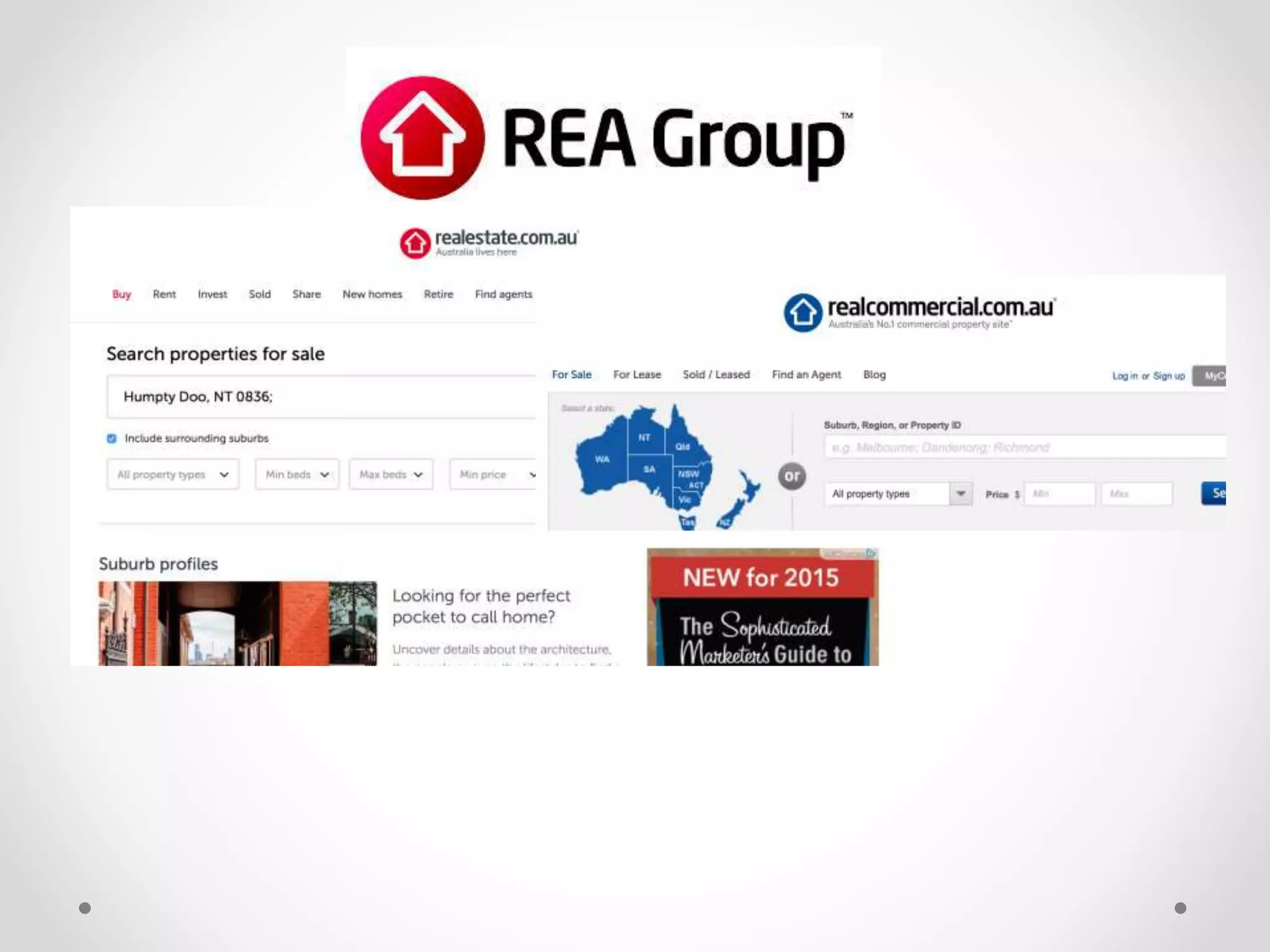
Scala Developer at
λ
Me
14 years
5 years
5 years
when possible
when bored
when forced
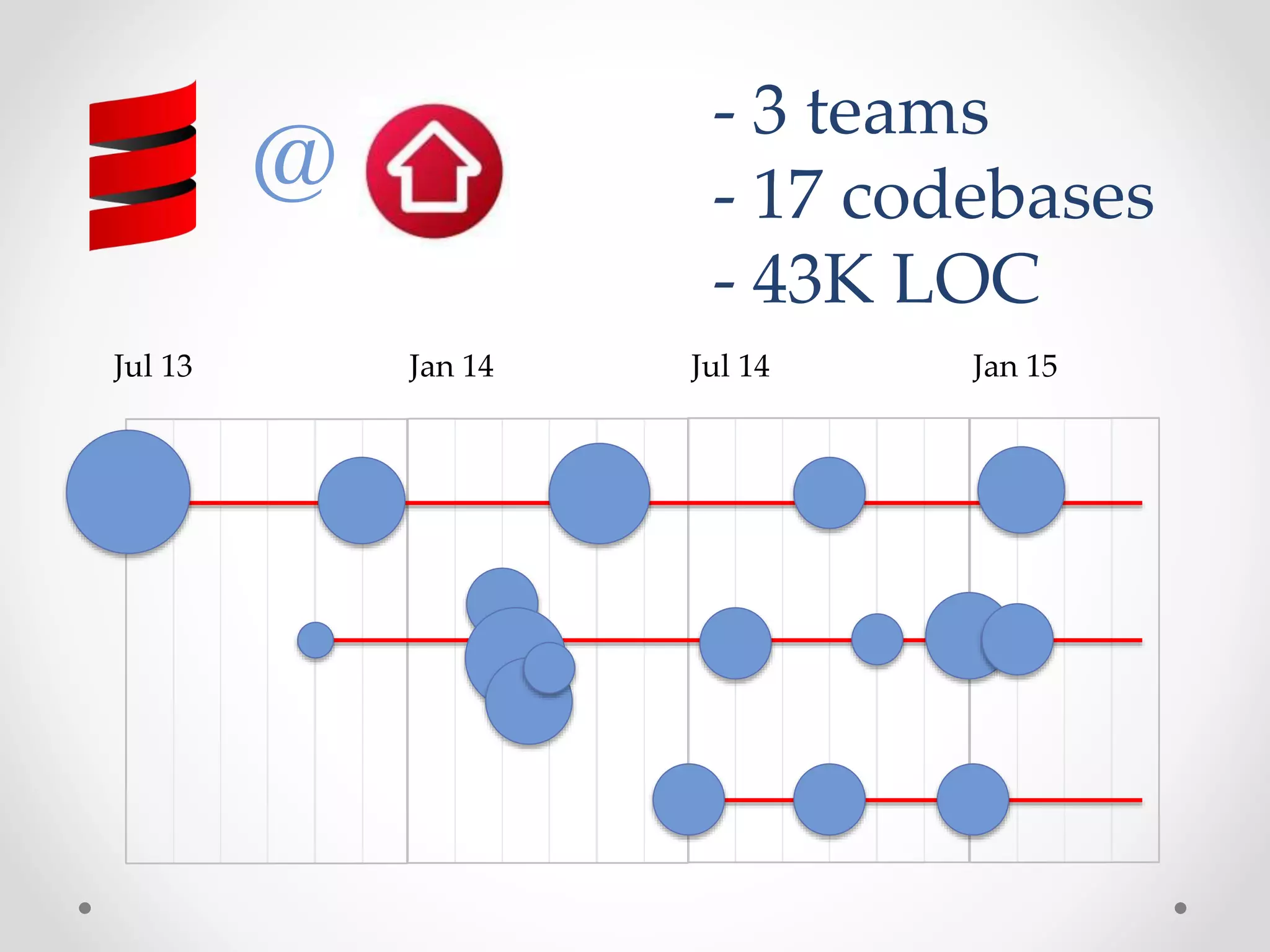
@
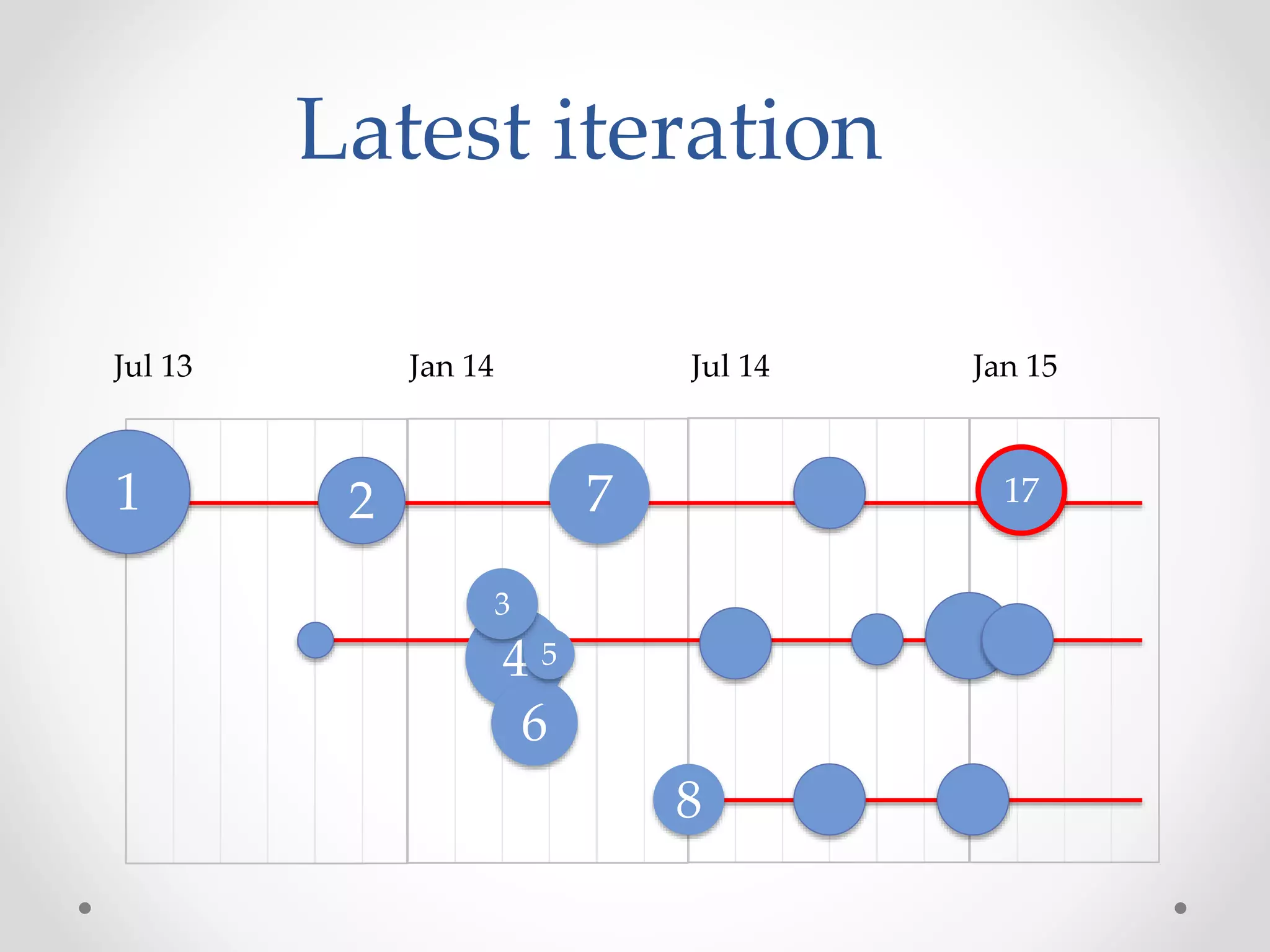
Jul 13 Jan 14 Jul 14 Jan 15
- 3 teams
- 17 codebases
- 43K LOC
Why Functional
Programming?
Compelling,
tangible software
engineering
benefits
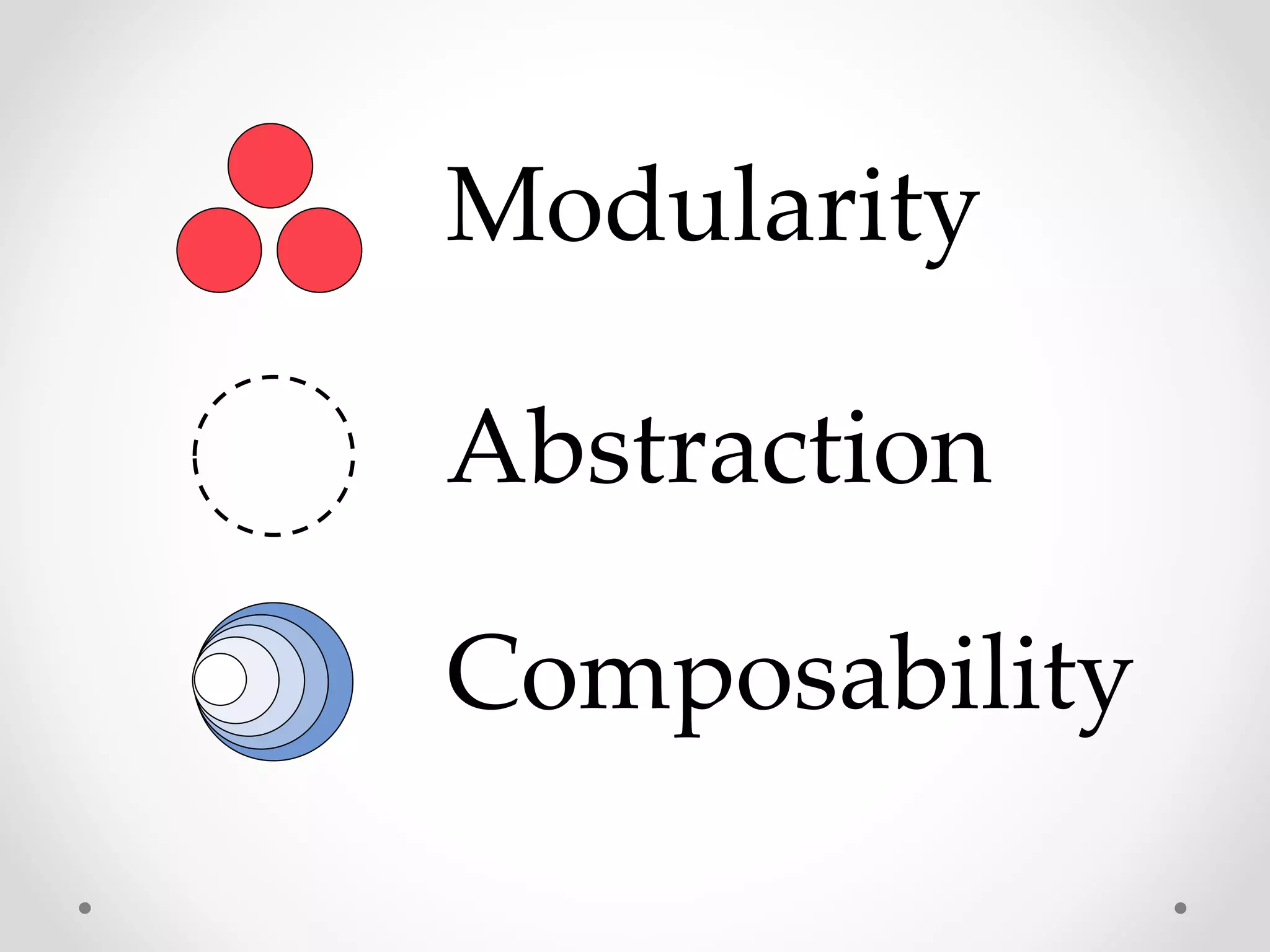
Modularity
Abstraction
Composability
Modular, abstract,
composable programs
are simple programs
Modularity
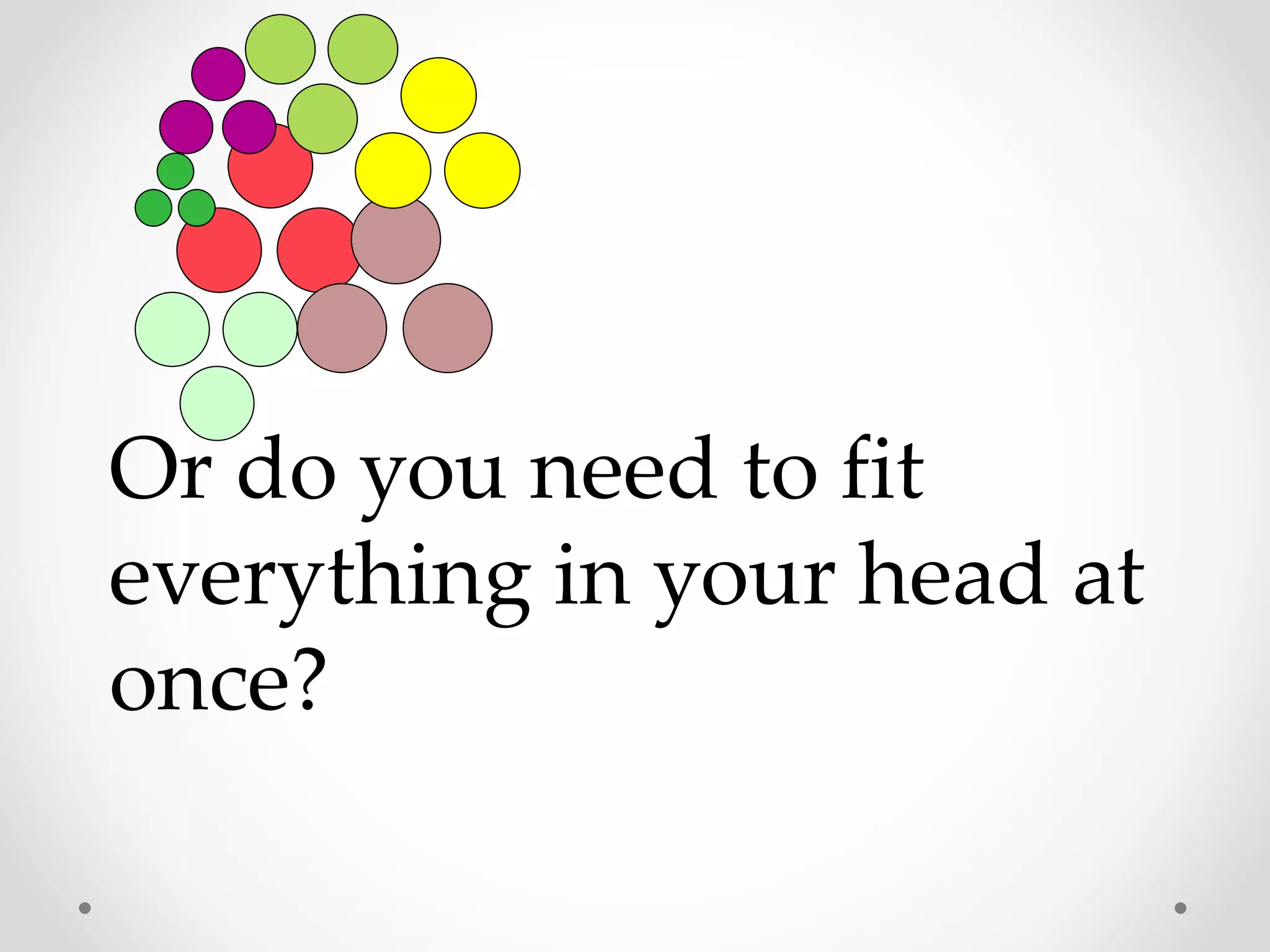
Can you reason about
something in isolation?
Or do you need to fit
everything in your head at
once?
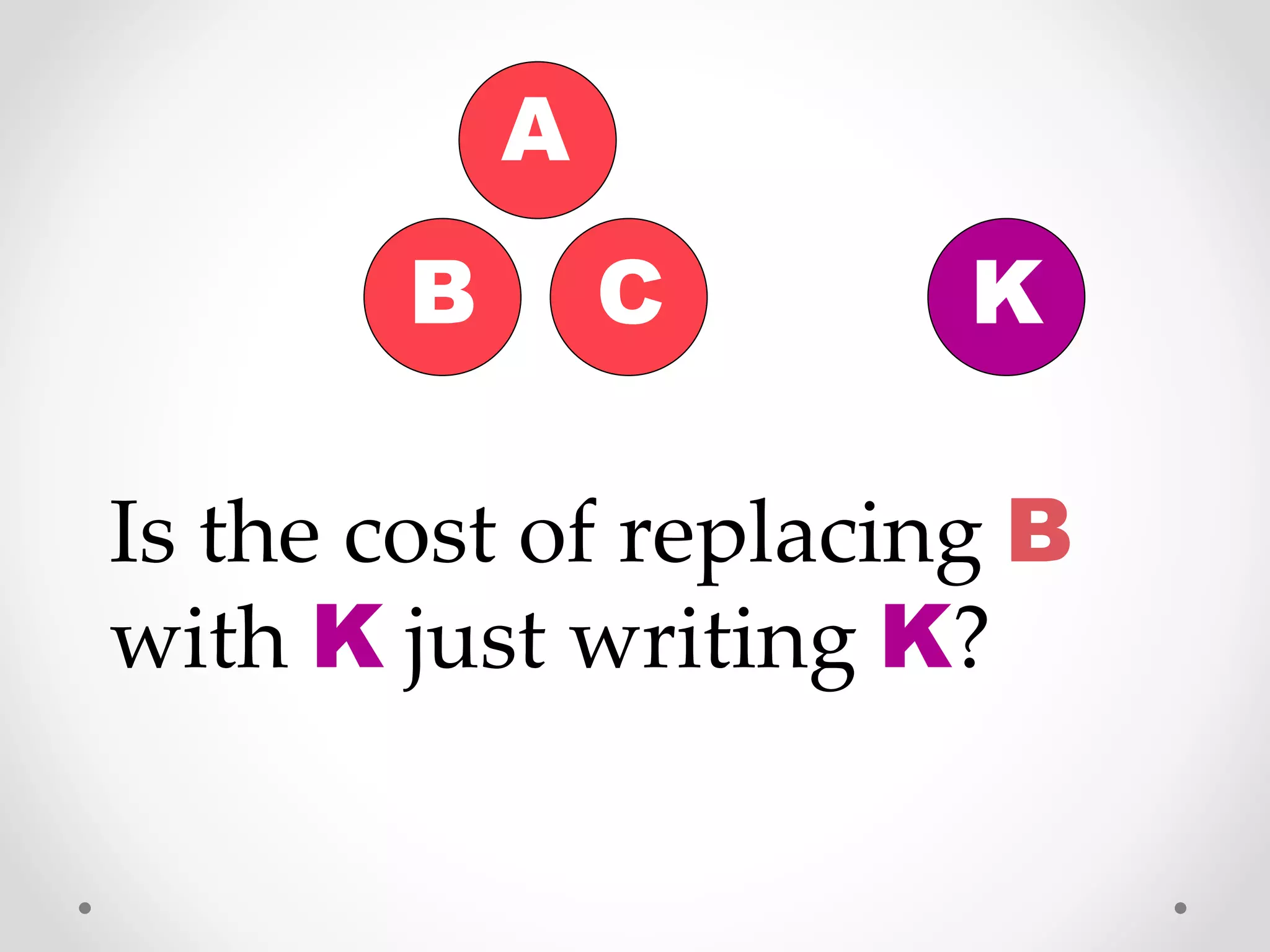
A
B C K
Is the cost of replacing B
with K just writing K?
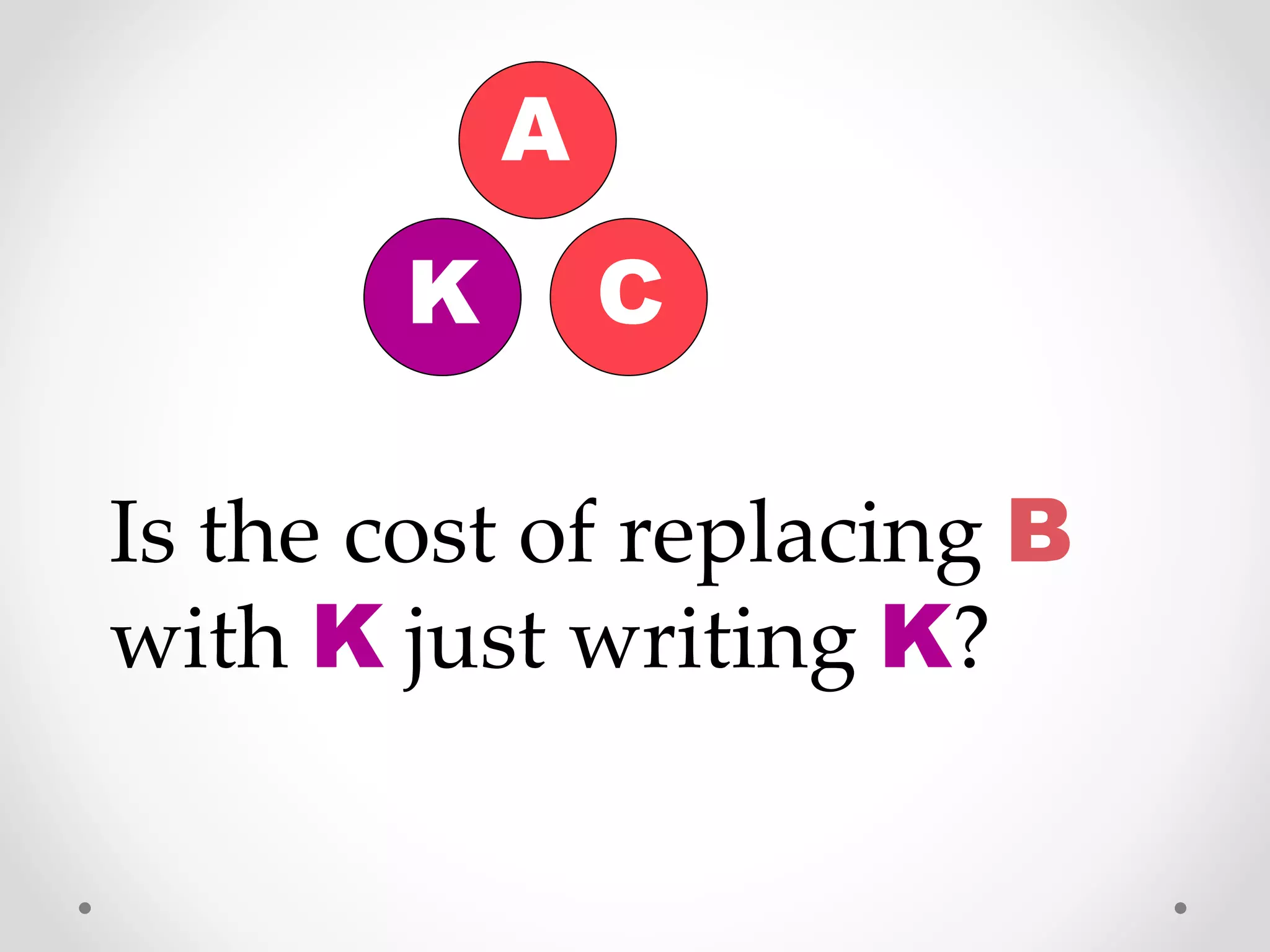
A
B CK
Is the cost of replacing B
with K just writing K?
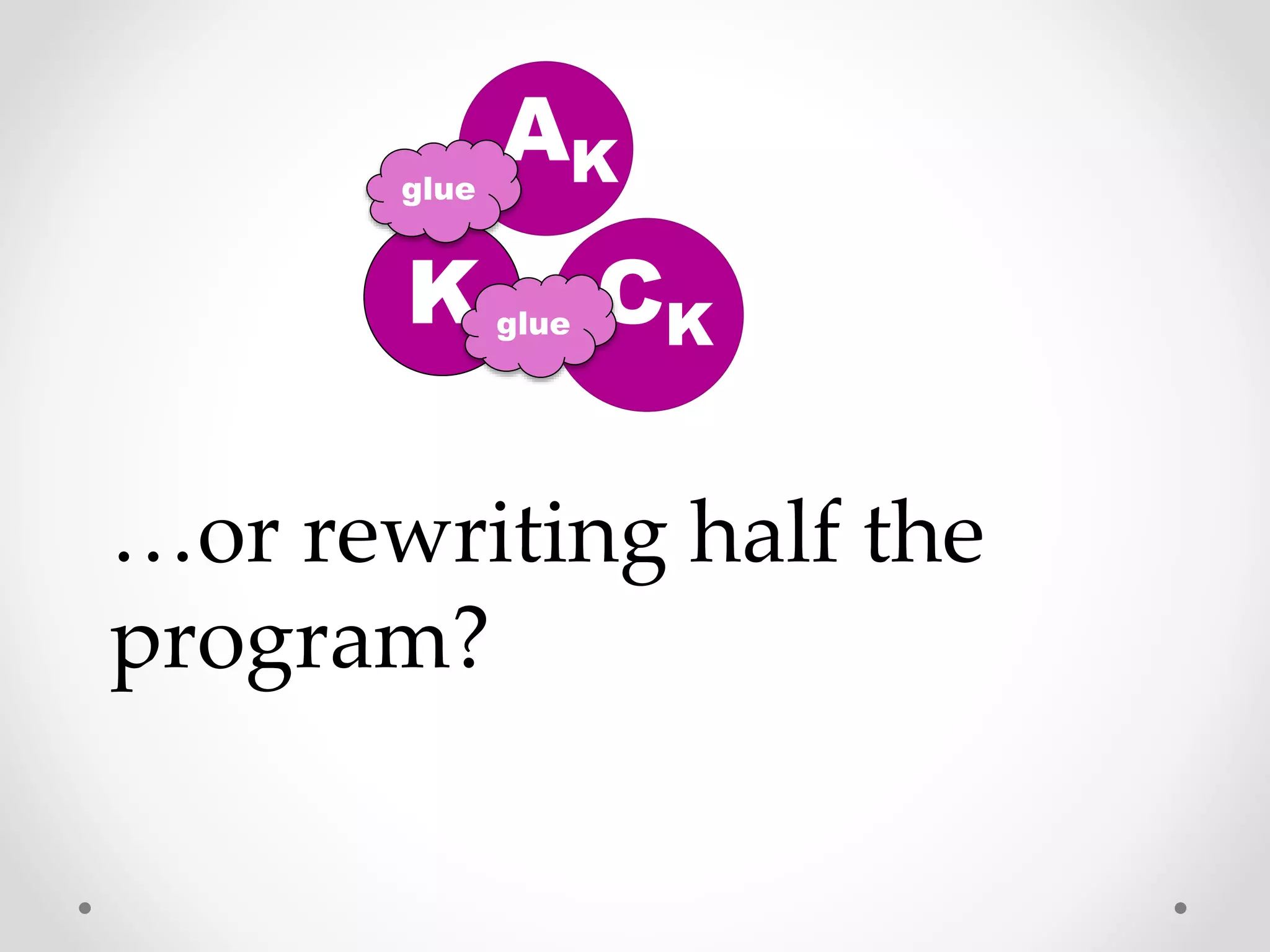
AK
B CKK
…or rewriting half the
program?
glue
glue
A pure function is just
input  output; no side effects
You can tell what it does without
Looking at surrounding context.
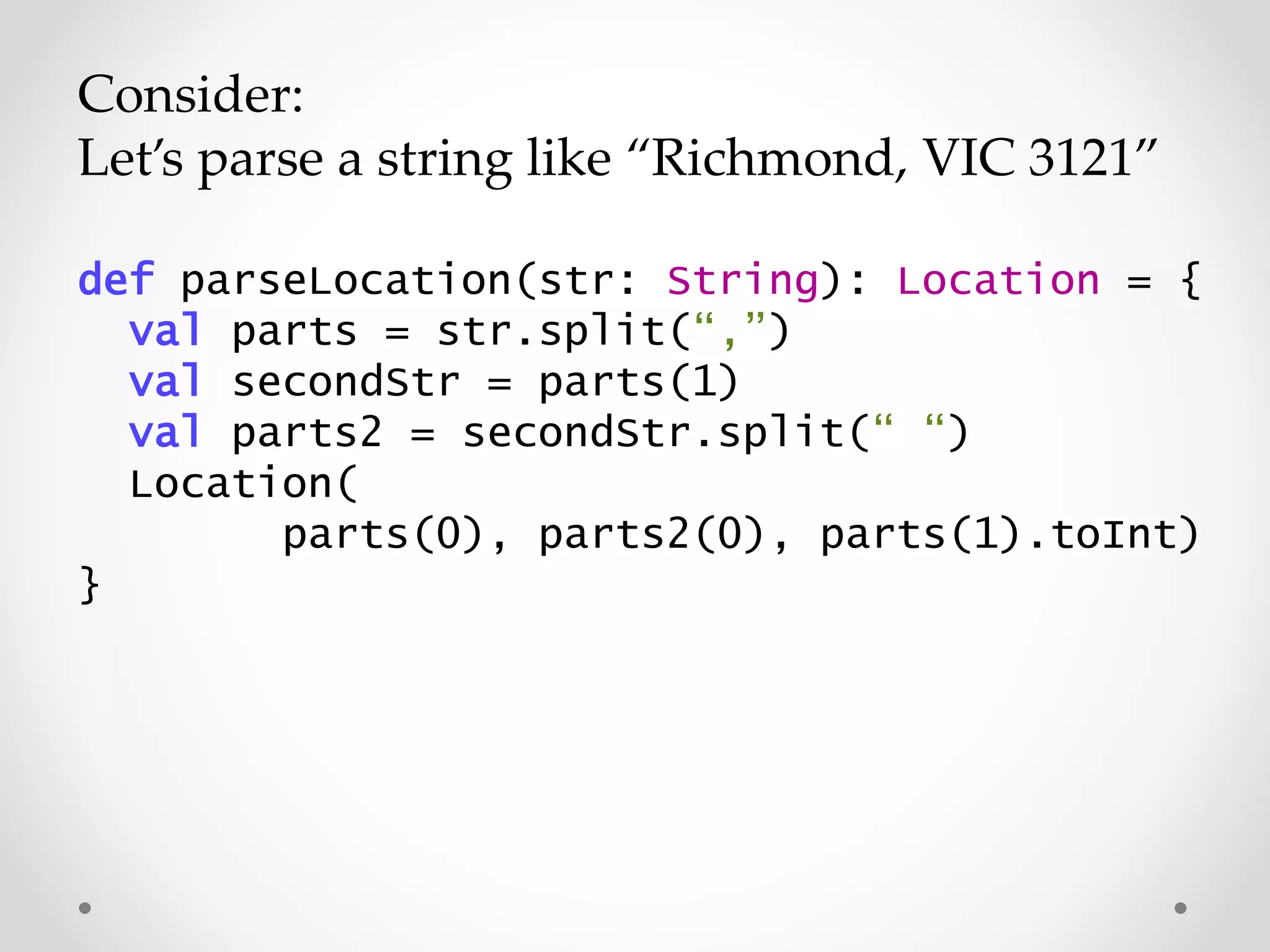
Consider:
Let’s parse a string like “Richmond, VIC 3121”
def parseLocation(str: String): Location = {
val parts = str.split(“,”)
val secondStr = parts(1)
val parts2 = secondStr.split(“ “)
Location(
parts(0), parts2(0), parts(1).toInt)
}
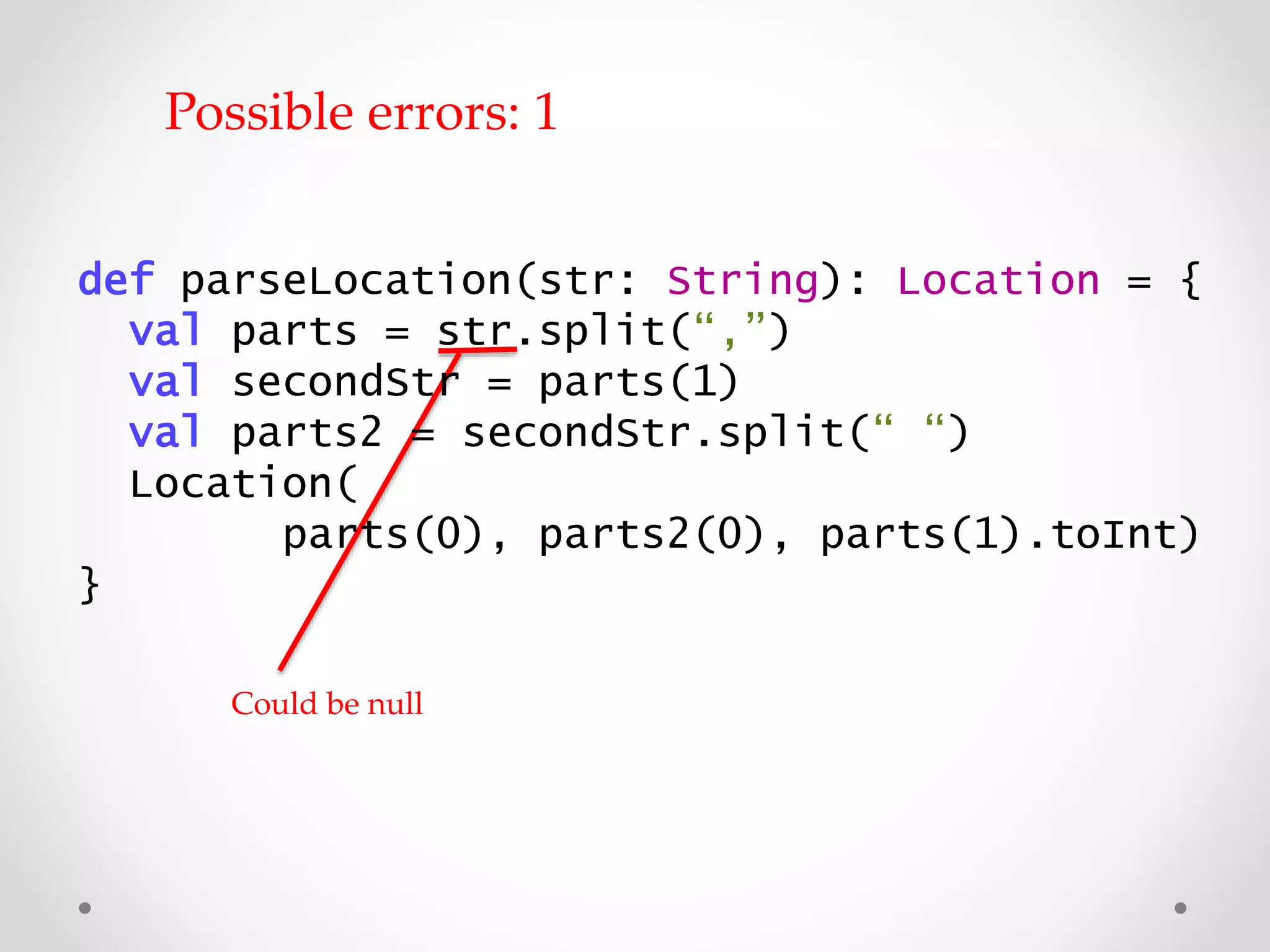
Could be null
Possible errors: 1
def parseLocation(str: String): Location = {
val parts = str.split(“,”)
val secondStr = parts(1)
val parts2 = secondStr.split(“ “)
Location(
parts(0), parts2(0), parts(1).toInt)
}
def parseLocation(str: String): Location = {
val parts = str.split(“,”)
val secondStr = parts(1)
val parts2 = secondStr.split(“ “)
Location(
parts(0), parts2(0), parts(1).toInt)
}
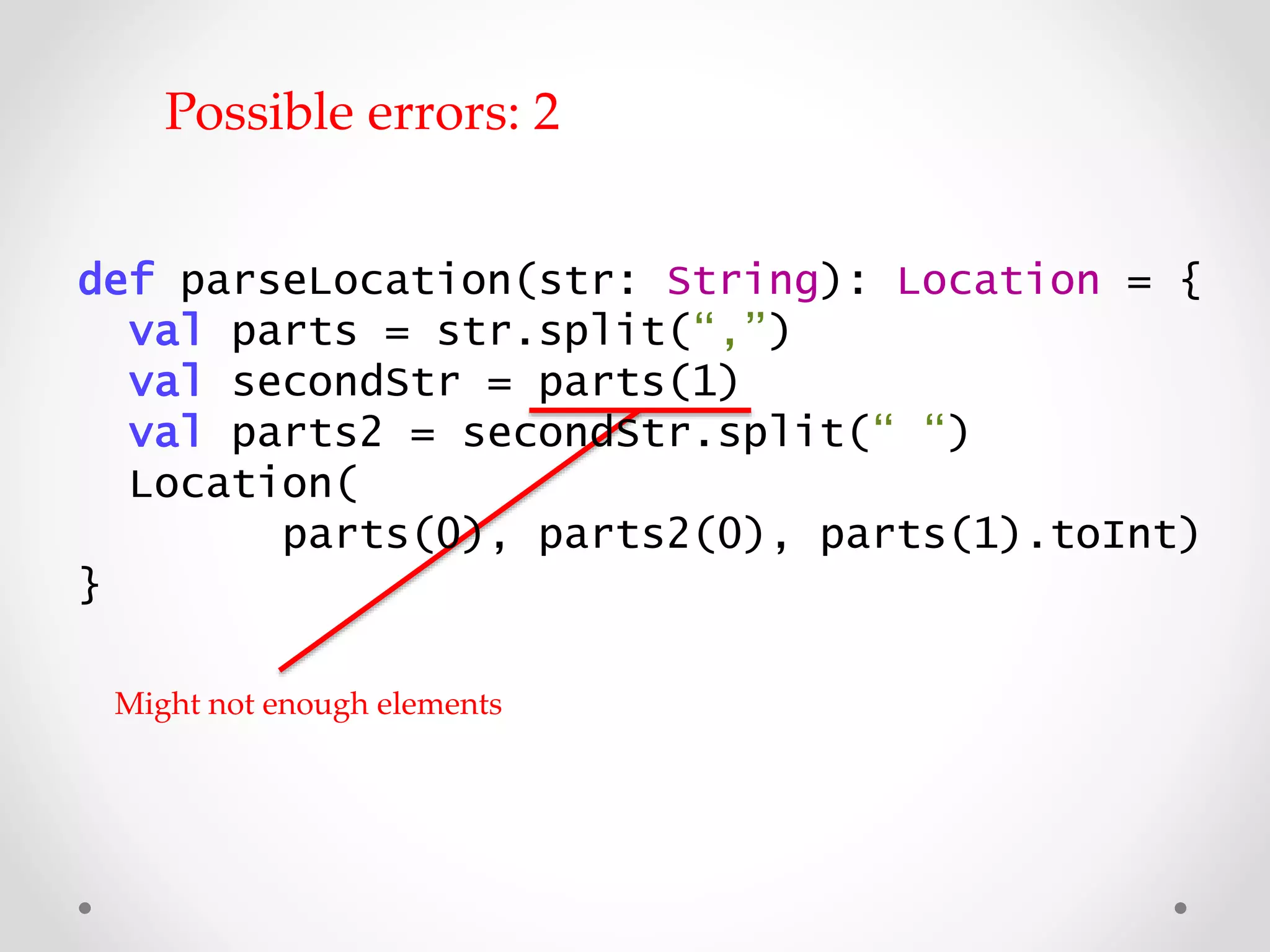
Might not have enough elements
Possible errors: 2
def parseLocation(str: String): Location = {
val parts = str.split(“,”)
val secondStr = parts(1)
val parts2 = secondStr.split(“ “)
Location(
parts(0), parts2(0), parts(1).toInt)
}
Might not have enough elements
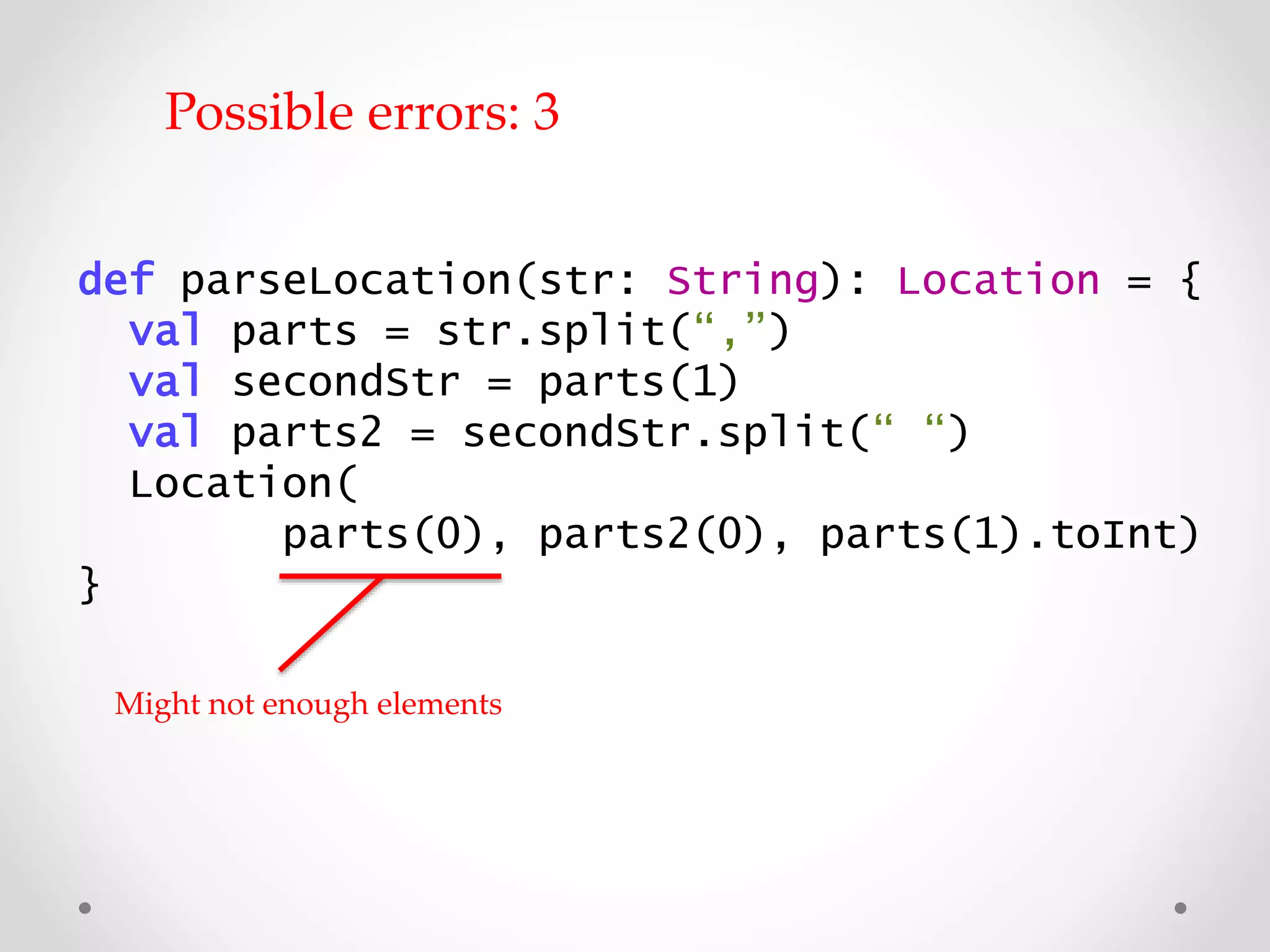
Possible errors: 3
def parseLocation(str: String): Location = {
val parts = str.split(“,”)
val secondStr = parts(1)
val parts2 = secondStr.split(“ “)
Location(
parts(0), parts2(0), parts(1).toInt)
}
Might not have enough elements
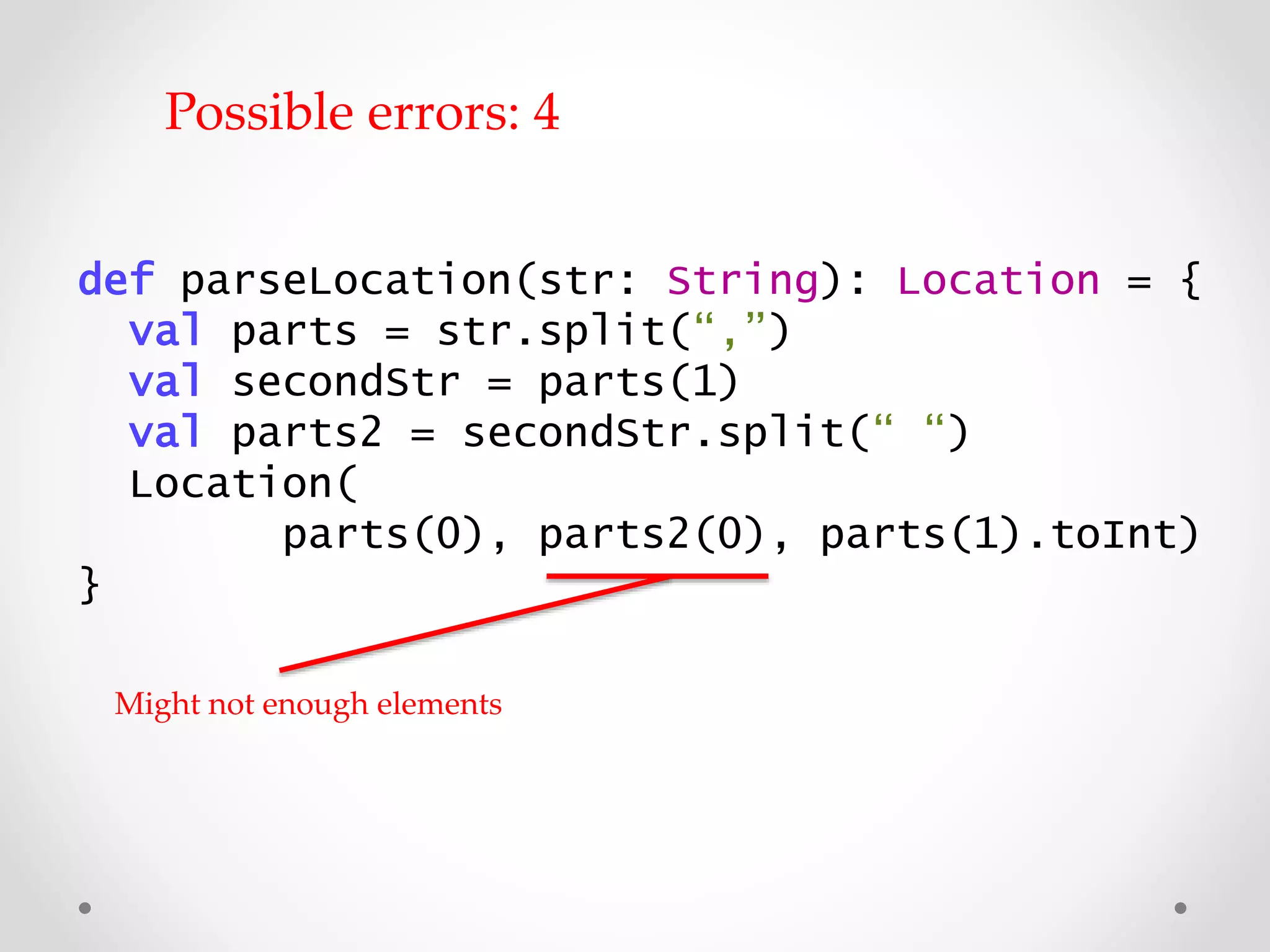
Possible errors: 4
def parseLocation(str: String): Location = {
val parts = str.split(“,”)
val secondStr = parts(1)
val parts2 = secondStr.split(“ “)
Location(
parts(0), parts2(0), parts(1).toInt)
}
Might not have enough elements
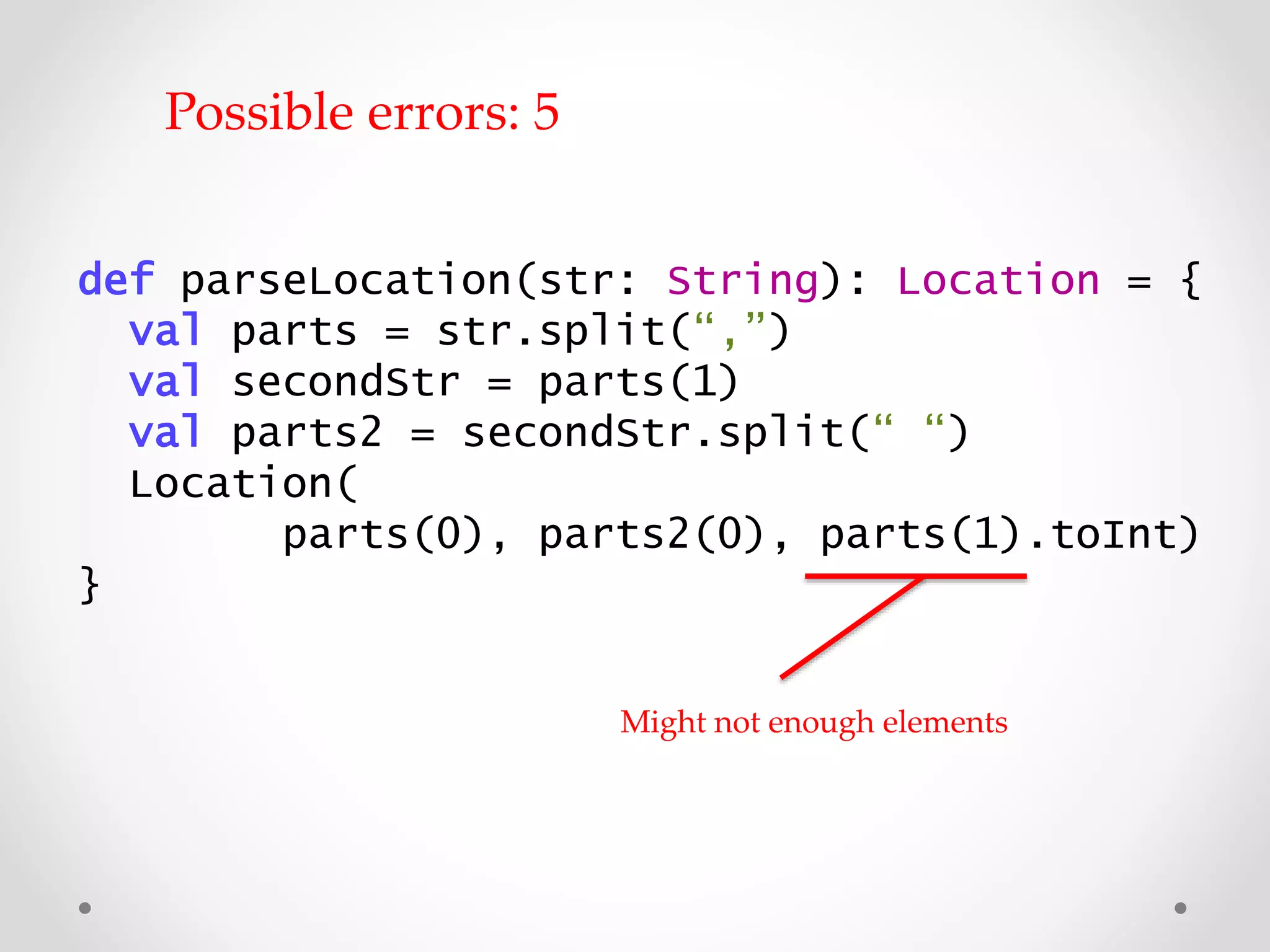
Possible errors: 5
def parseLocation(str: String): Location = {
val parts = str.split(“,”)
val secondStr = parts(1)
val parts2 = secondStr.split(“ “)
Location(
parts(0), parts2(0), parts(1).toInt)
}
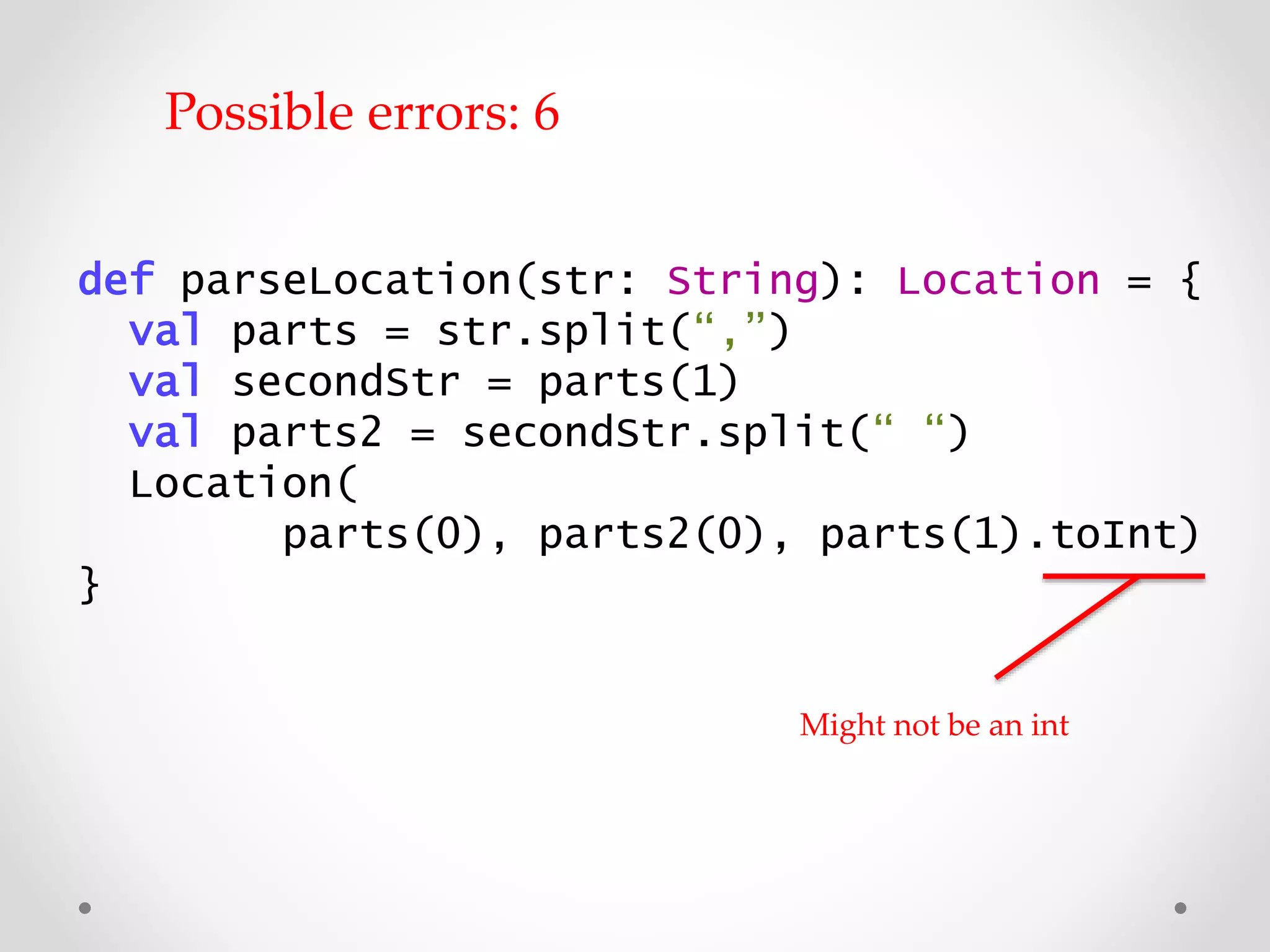
Might not be an int
Possible errors: 6
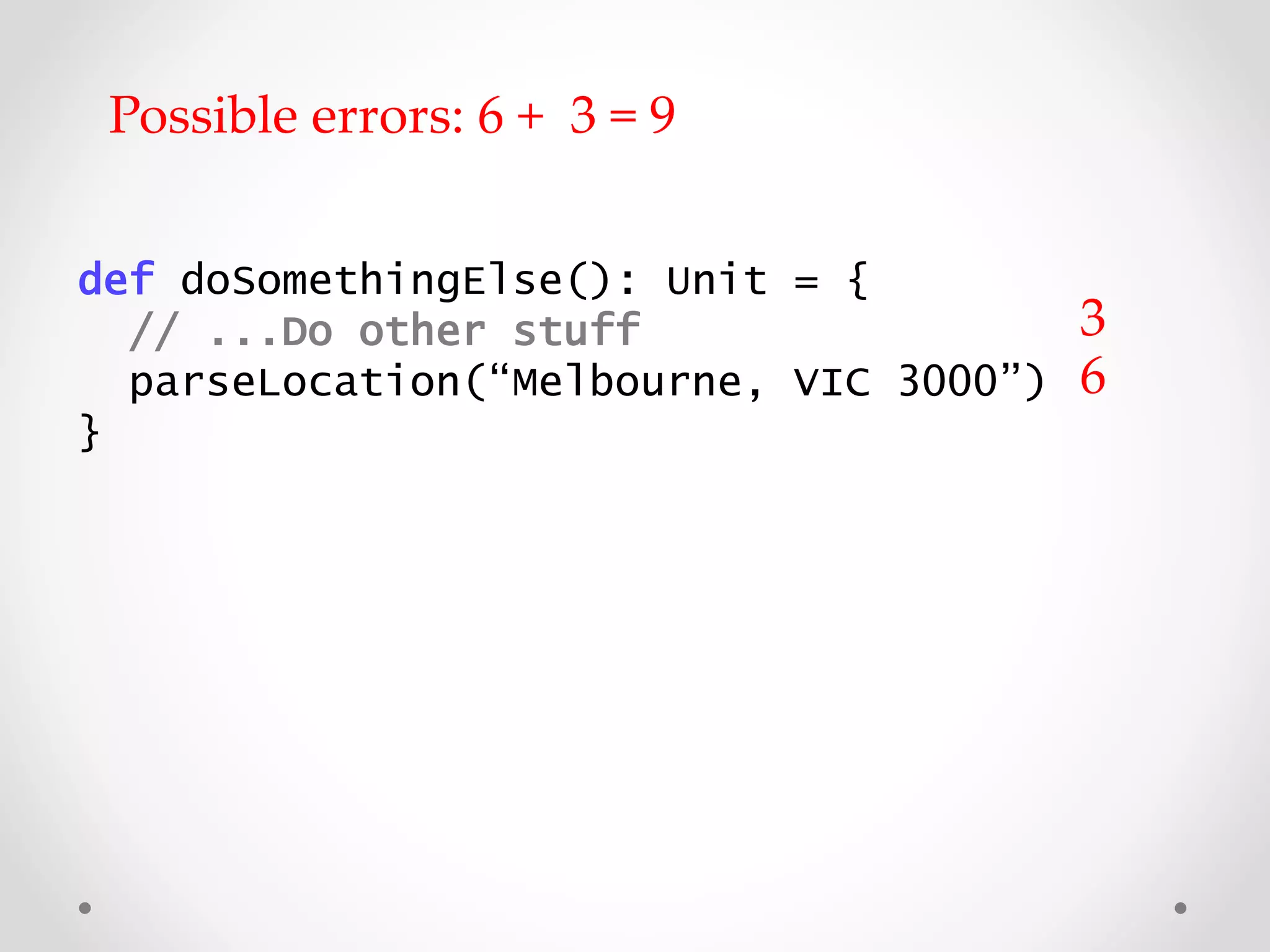
def doSomethingElse(): Unit = {
// ...Do other stuff
parseLocation(“Melbourne, VIC 3000”)
}
Possible errors: 6 + 3 = 9
6
3
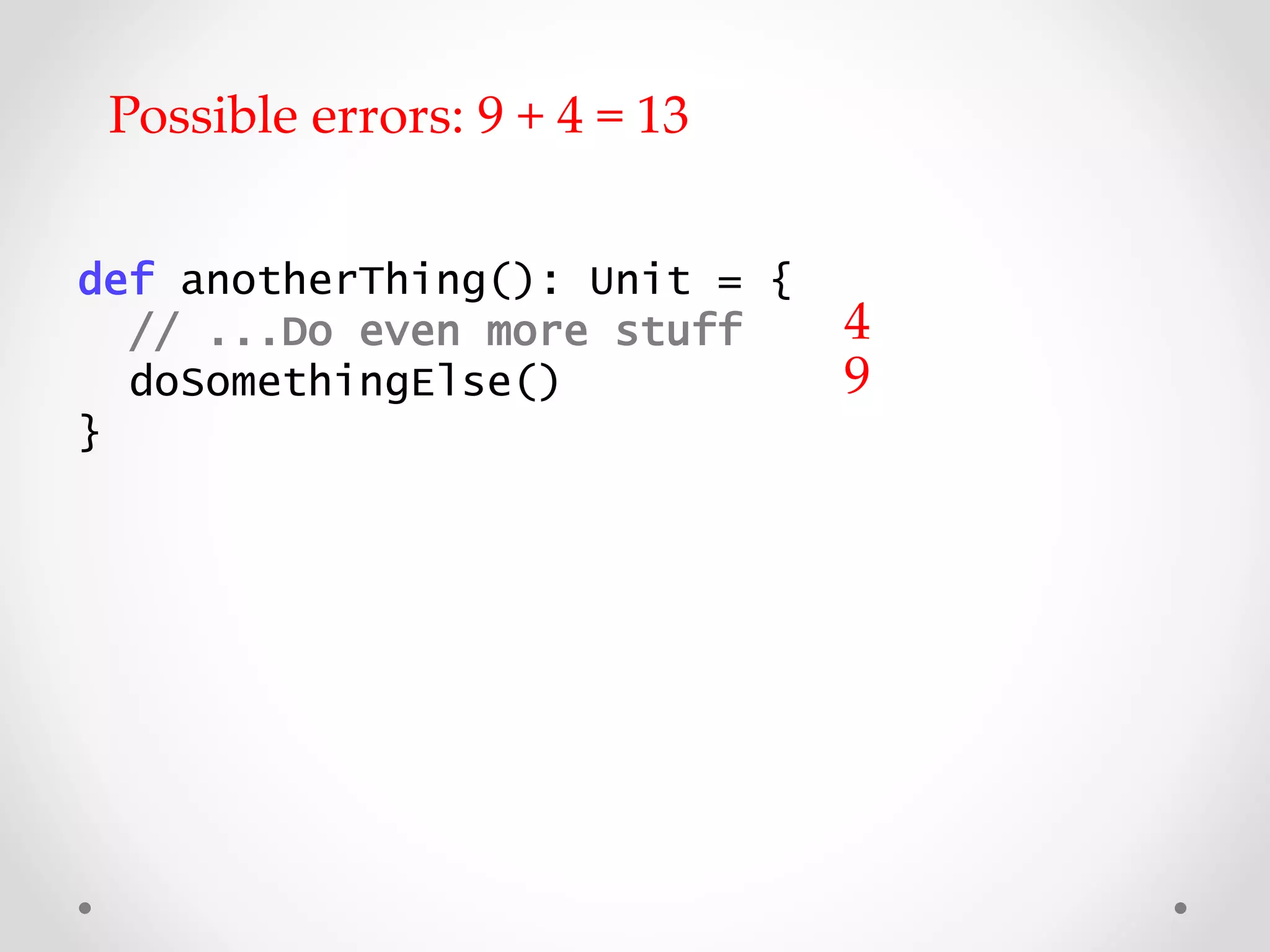
def anotherThing(): Unit = {
// ...Do even more stuff
doSomethingElse()
}
Possible errors: 9 + 4 = 13
4
9
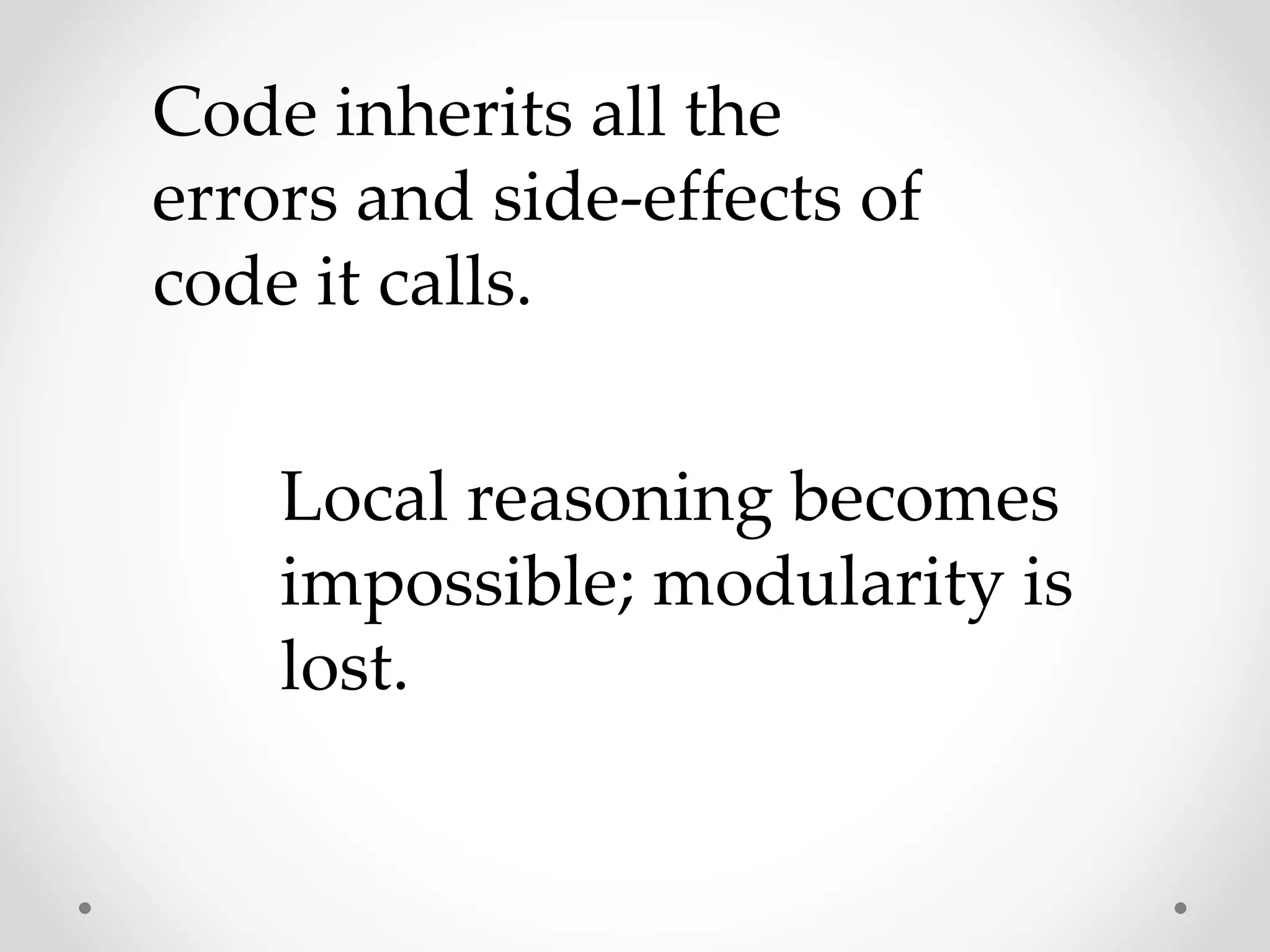
Code inherits all the
errors and side-effects of
code it calls.
Local reasoning becomes
impossible; modularity is
lost.
def parseLocation(str: String):
Option[Location] = {
val parts = str.split(”,")
for {
locality <- parts.optGet(0)
theRestStr <- parts.optGet(1)
theRest = theRestStr.split(" ")
subdivision <- theRest.optGet(0)
postcodeStr <- theRest.optGet(1)
postcode <- postcodeStr.optToInt
} yield
Location(locality, subdivision, postcode)
}
Possible errors: 0
All possibilities have
been elevated into the
type system
Local reasoning is possible!
Local reasoning is possible
about things that call it, etc…
Abstraction
Know as little as
you need
Know as little as
you need
Produce as little as
you can
def sumInts(
list: List[Int]): Int = {
var result = 0
for (x <- list) {
result = result + x
}
return result
}
def flatten[A](
list: List[List[A]]): List[A] = {
var result = List()
for (x <- list) {
result = result ++ x
}
return result
}
def all[A](
list: List[Boolean]): Boolean = {
var result = true
for (x <- list) {
result = result && x
}
return result
}
def sumInts(
list: List[Int]): Int = {
var result = 0
for (x <- list) {
result = result + x
}
return result
}
def flatten[A](
list: List[List[A]]): List[A] = {
var result = List()
for (x <- list) {
result = result ++ x
}
return result
}
def all[A](
list: List[Boolean]): Boolean = {
var result = true
for (x <- list) {
result = result && x
}
return result
}
trait Monoid[M] {
def zero: M
def append(m1: M, m2: M): M
}
Extract the essence!
def fold[M](list: List[M])
(implicit m: Monoid[M]): M
= {
var result = m.zero
for (x <- list) {
result = m.append(result,x)
}
result
}
def fold[M](list: List[M])
(implicit m: Monoid[M]): M
= list.foldLeft(m.zero)(m.append)
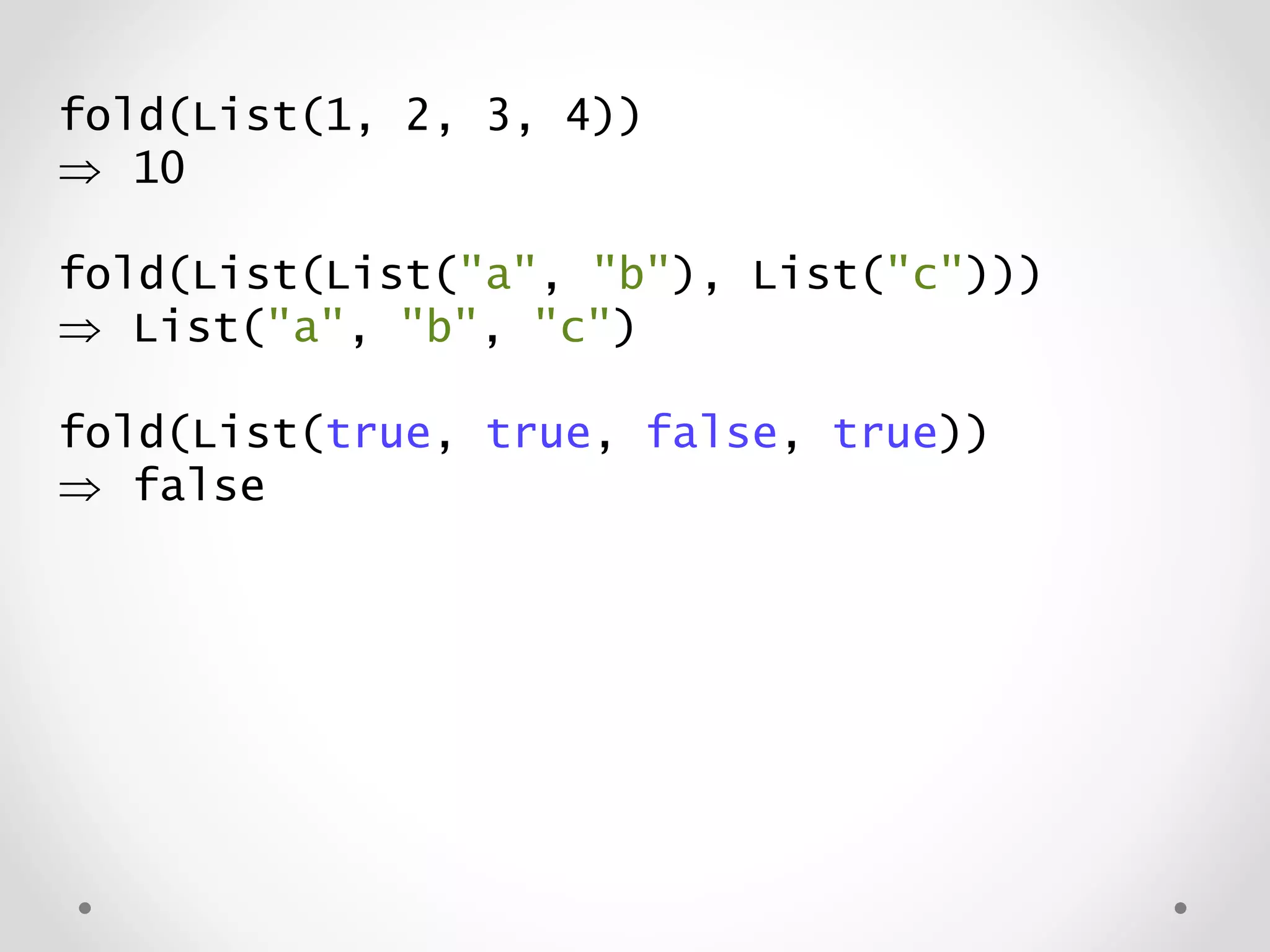
fold(List(1, 2, 3, 4))
 10
fold(List(List("a", "b"), List("c")))
 List("a", "b", "c")
fold(List(true, true, false, true))
 false
Abstraction is always a good thing!
Less repetition More reuse
Less decay, because code can’t
grow tumours around
unnecessary detail
Composability
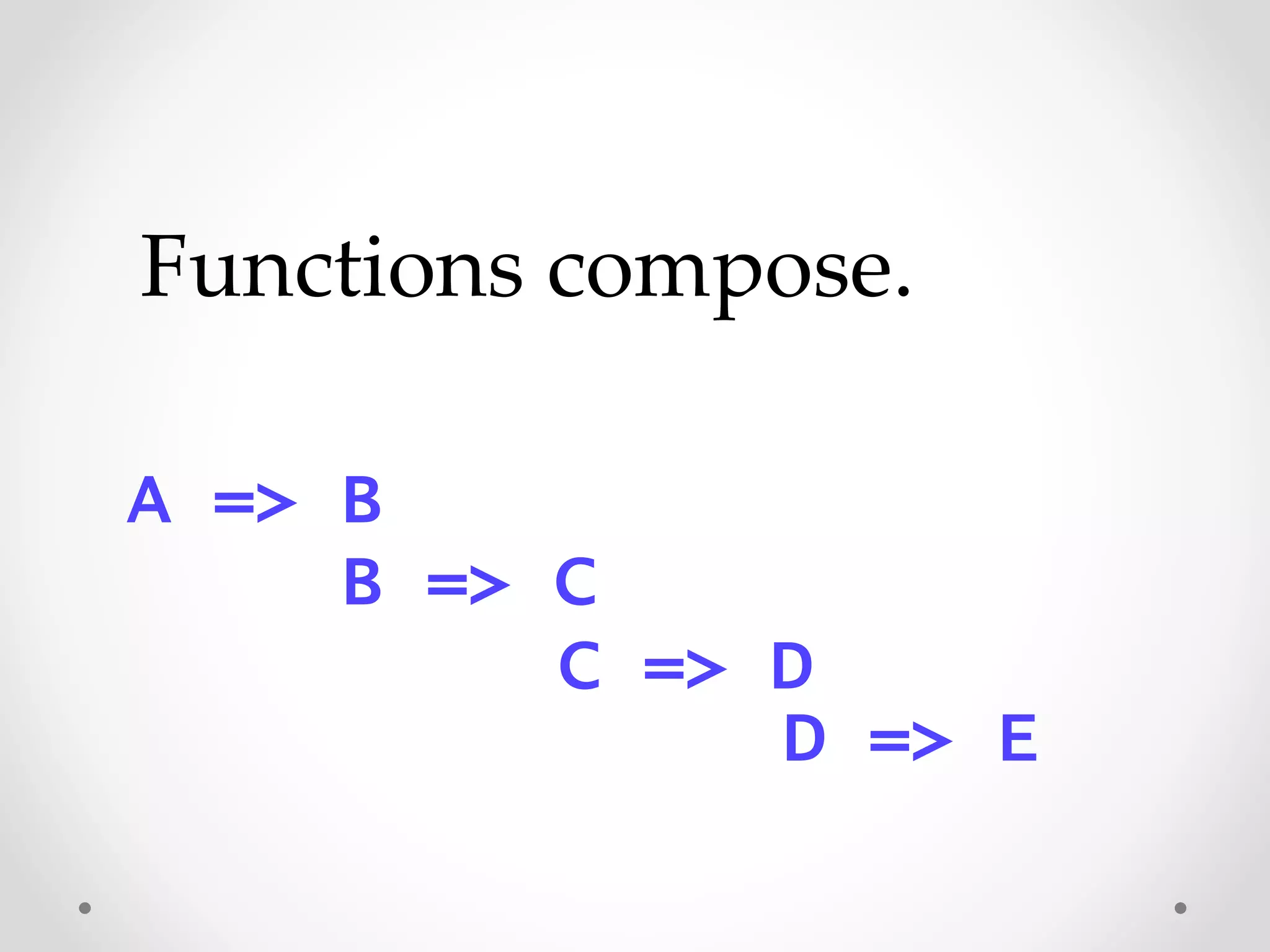
Functions compose.
A => B
B => C
C => D
D => E
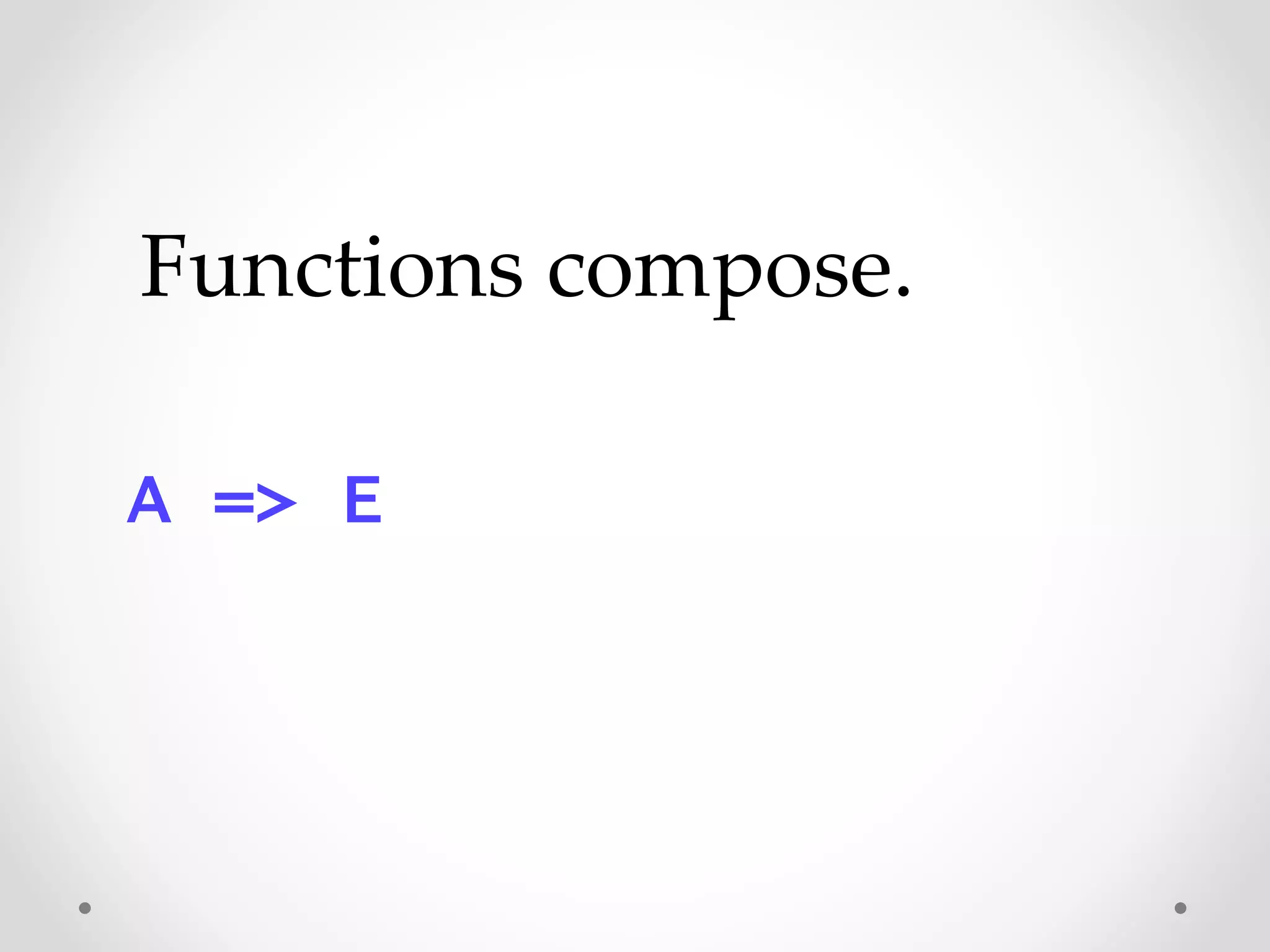
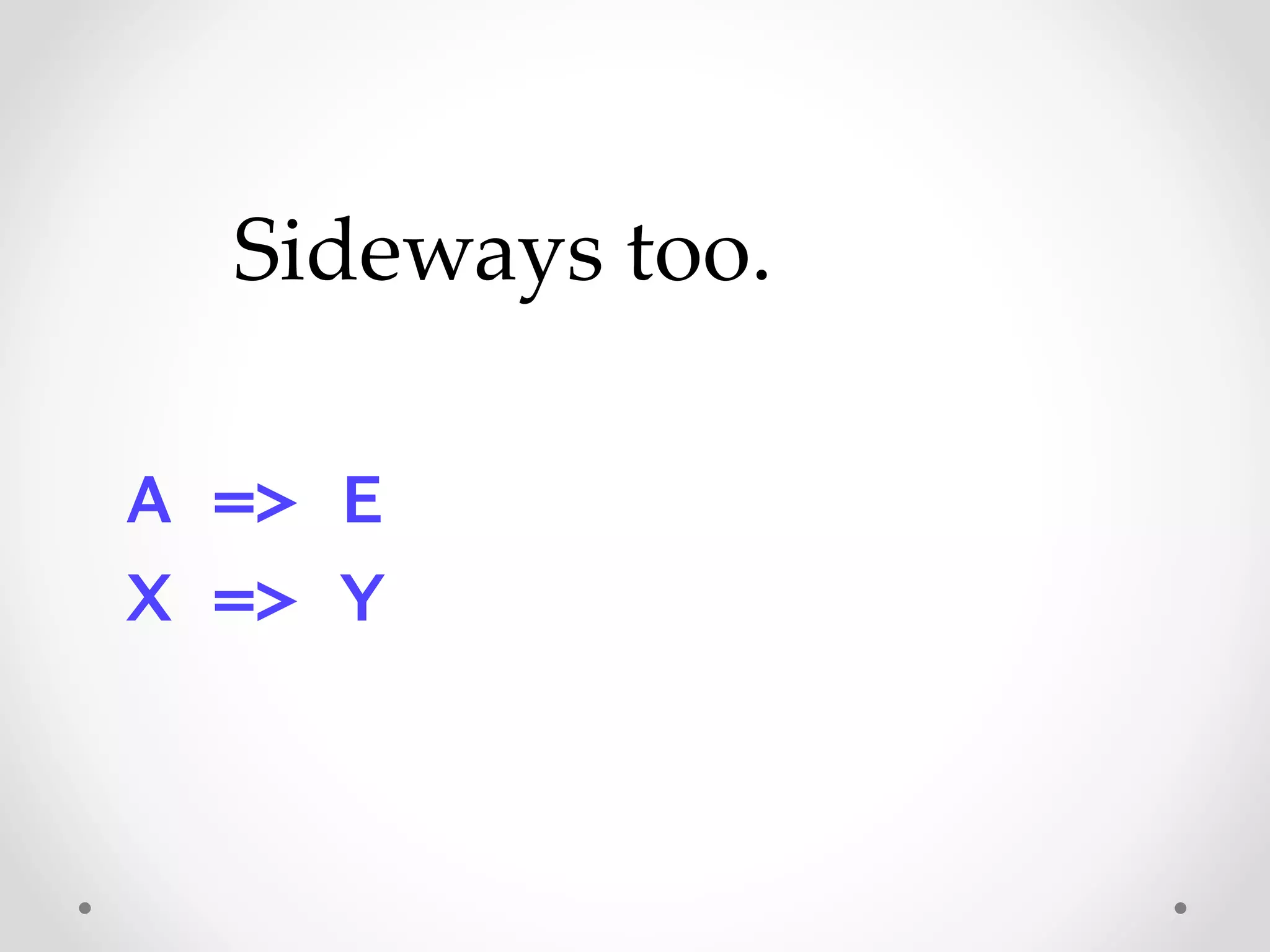
A => E
Functions compose.
Sideways too.
A => E
X => Y
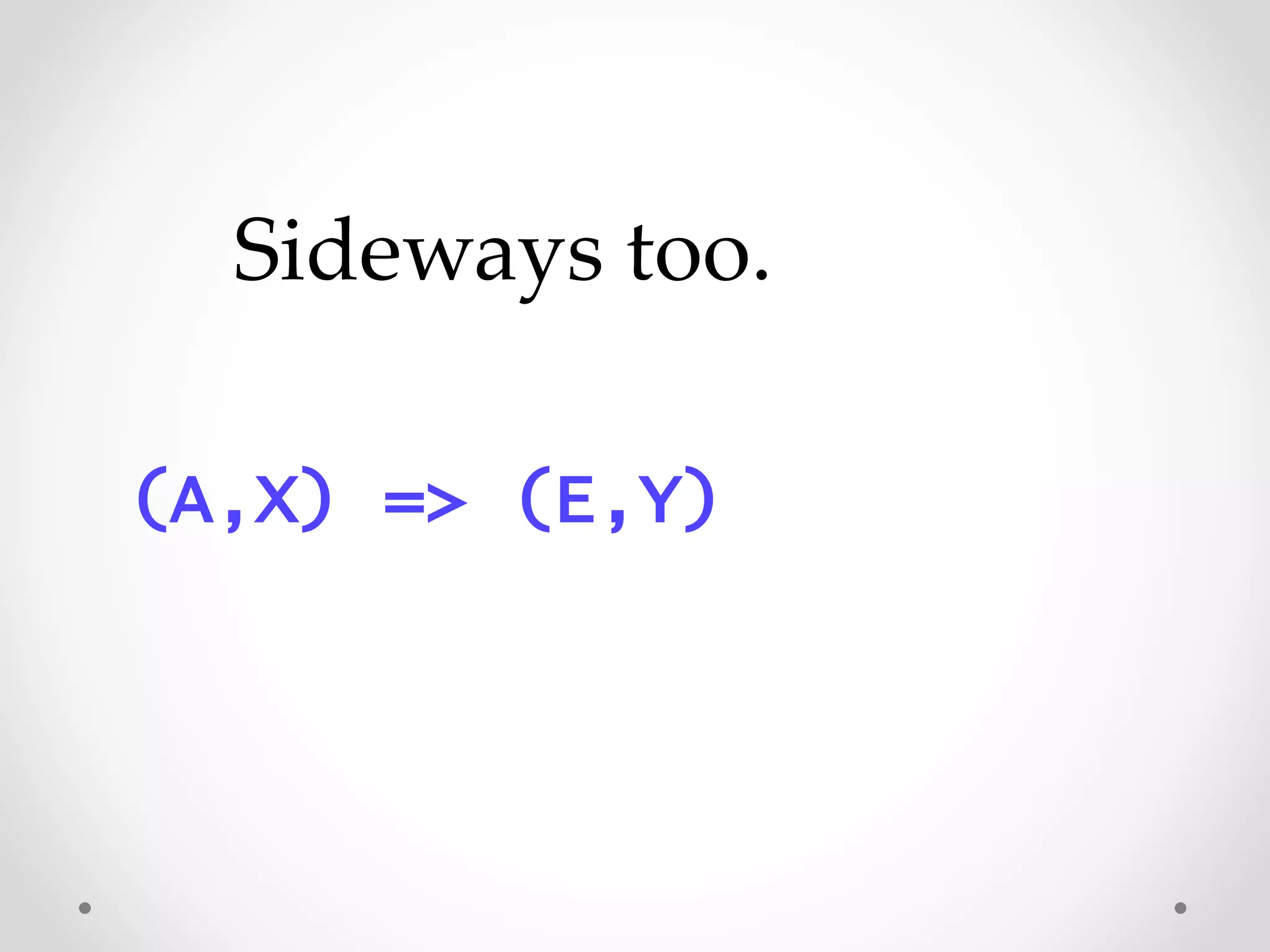
(A,X) => (E,Y)
Sideways too.
This works in the large,
as well as the small!
Entire systems can be
composable like
functions…. without
side effects
Truly composable
systems can accrue
more and more stuff
without getting more
complex!
Simplicity
• Modularity – Reason locally
• Abstraction – say only what you need, hide
everything you don’t
• Composability – scale without accruing complexity
The human process
Technical excellence
isn’t enough!
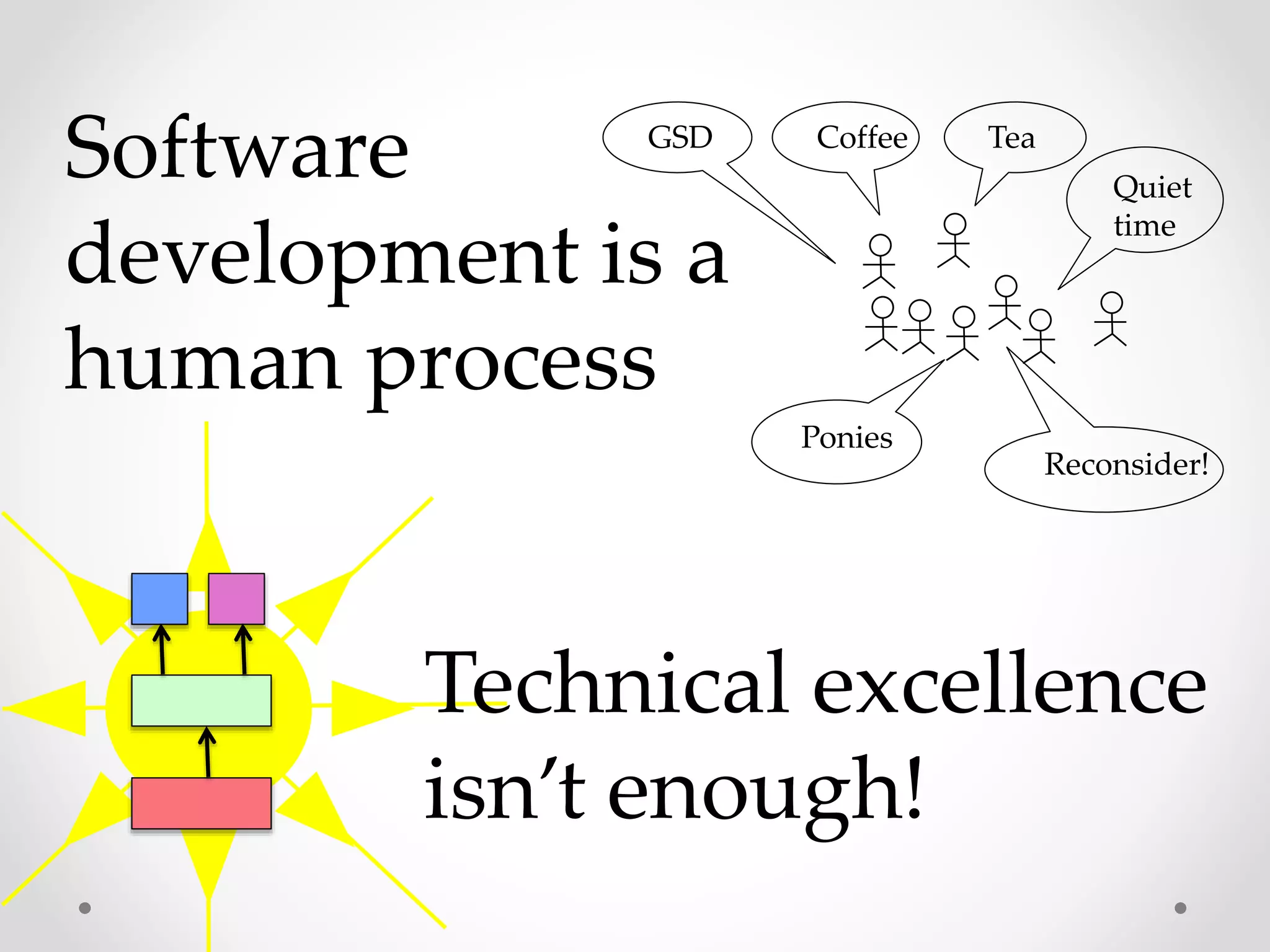
Software
development is a
human process
Coffee Tea
Quiet
time
GSD
Ponies
Reconsider!
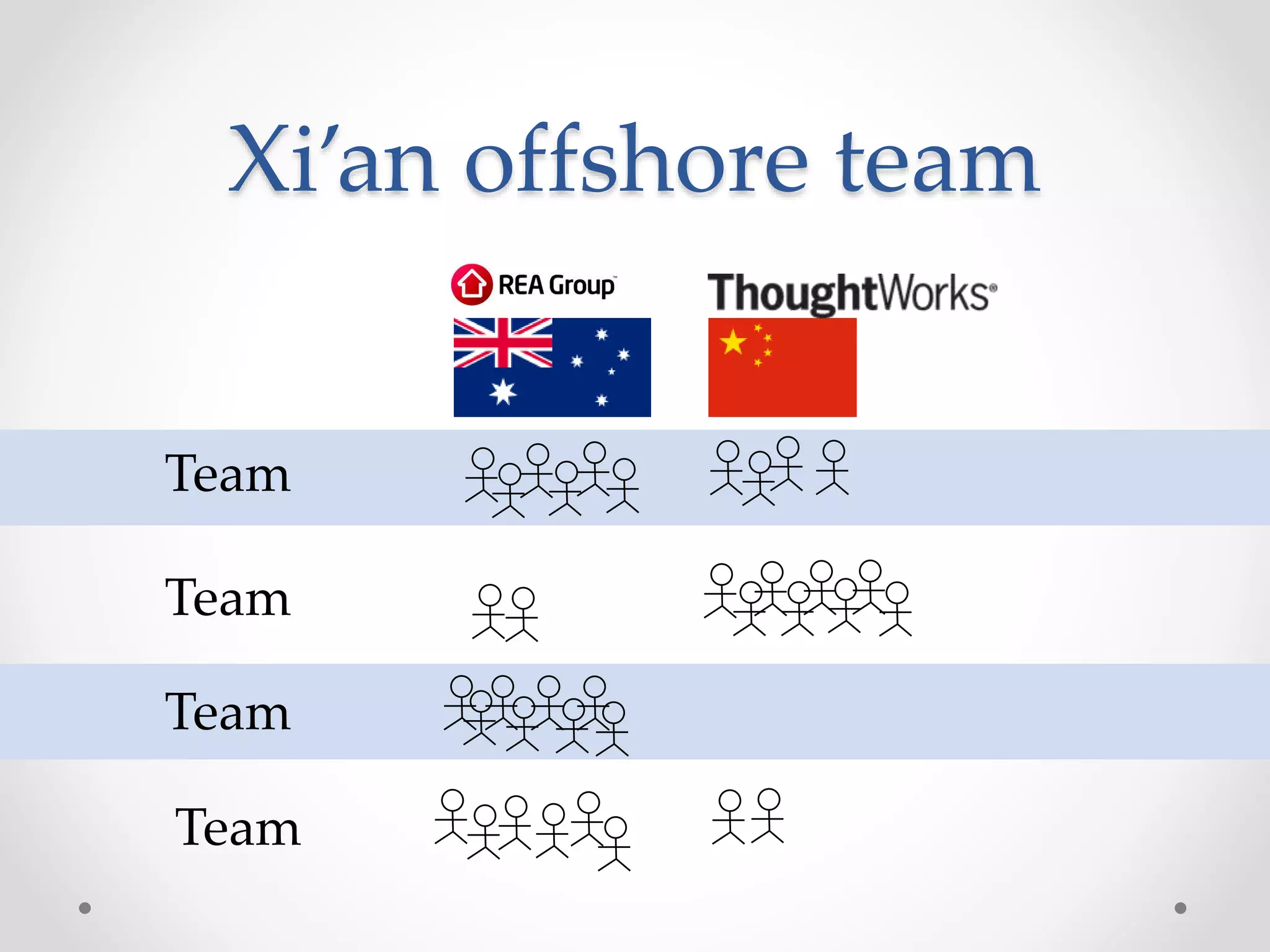
Xi’an offshore team
Team
Team
Team
Team
Xi’an offshore team
• Many teams are partly based in Xi’an.
• They’re very good, but…
• Communication is hard!
• It works, but requires great investment of time and
money
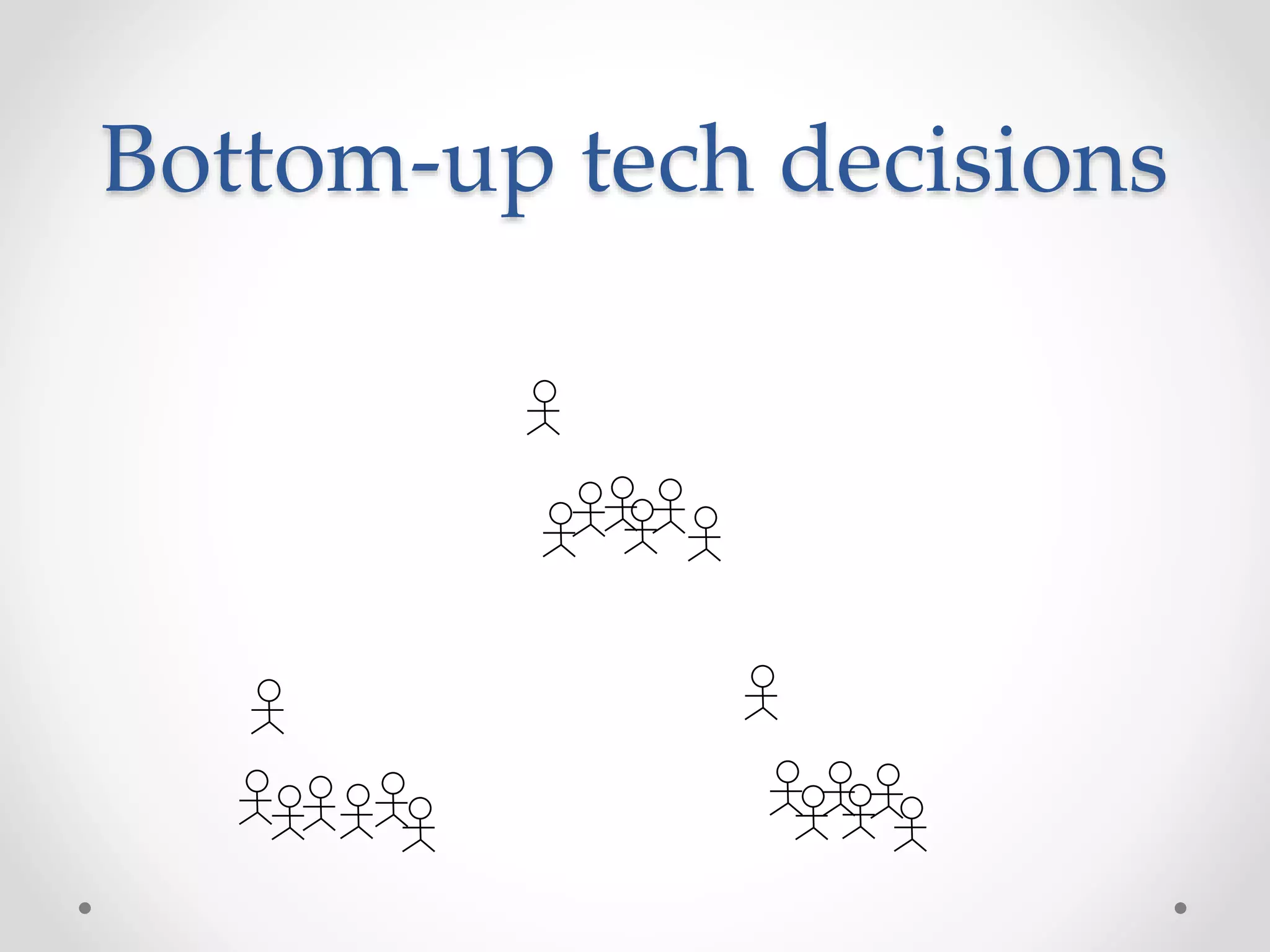
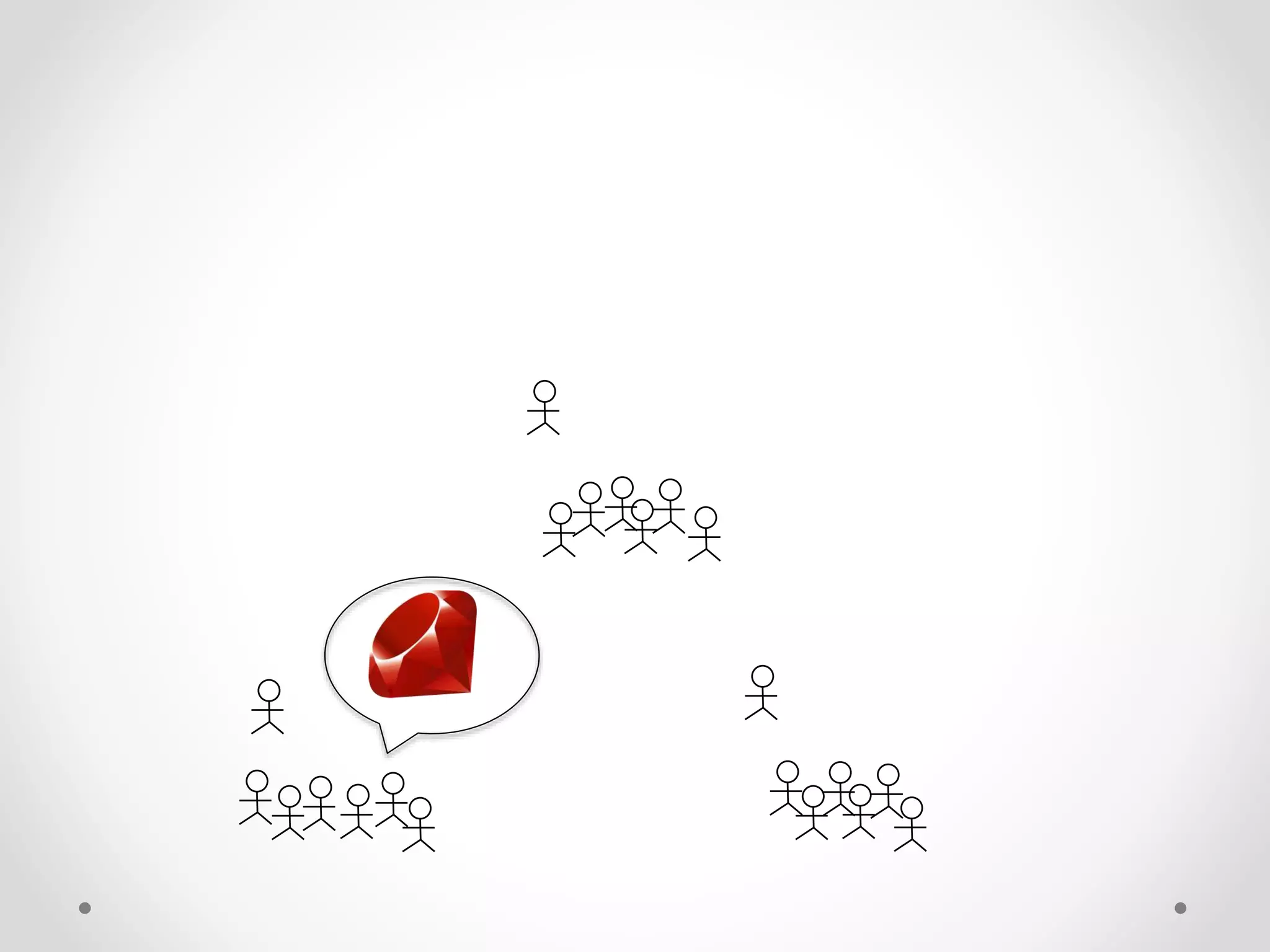
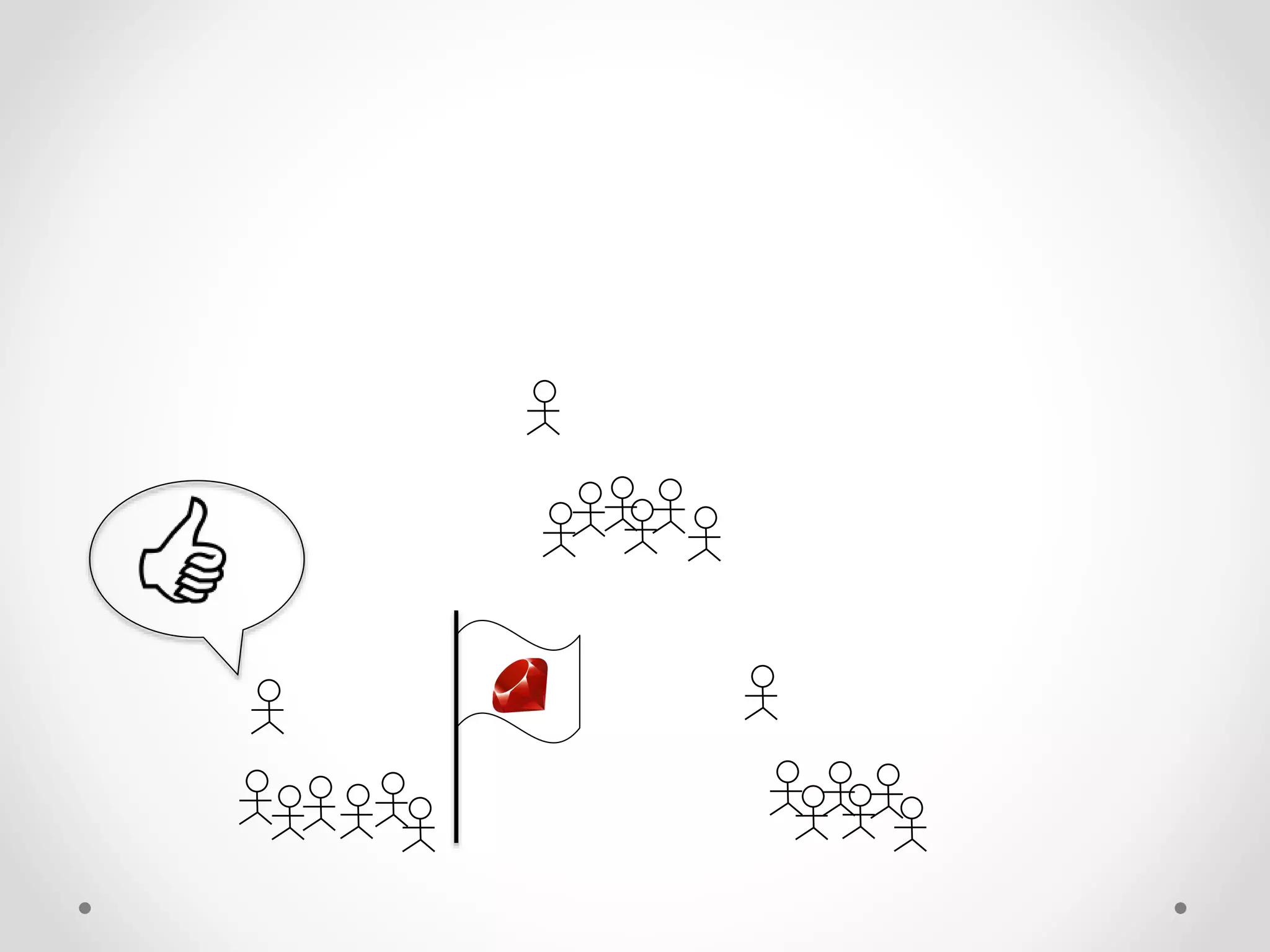
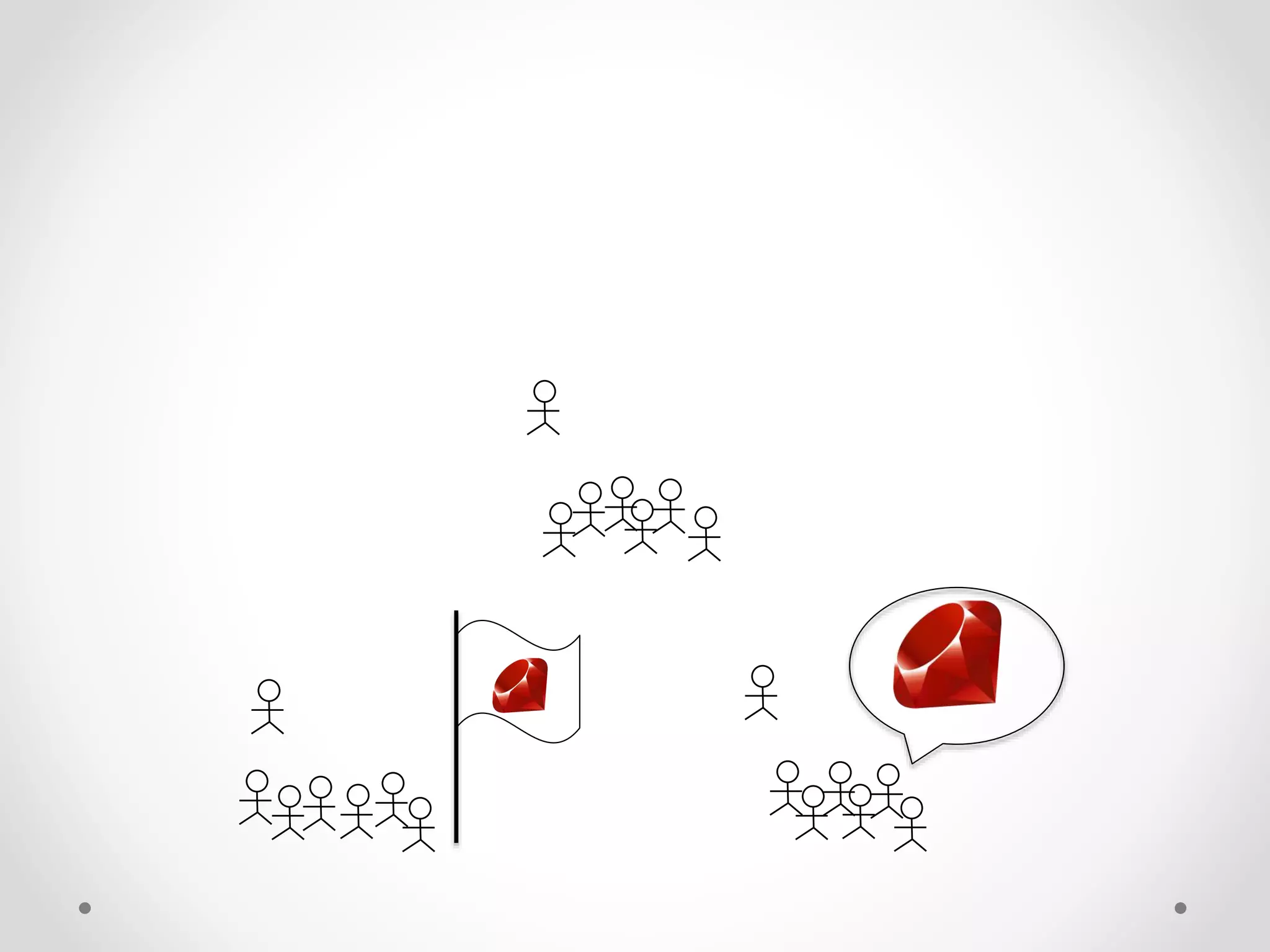
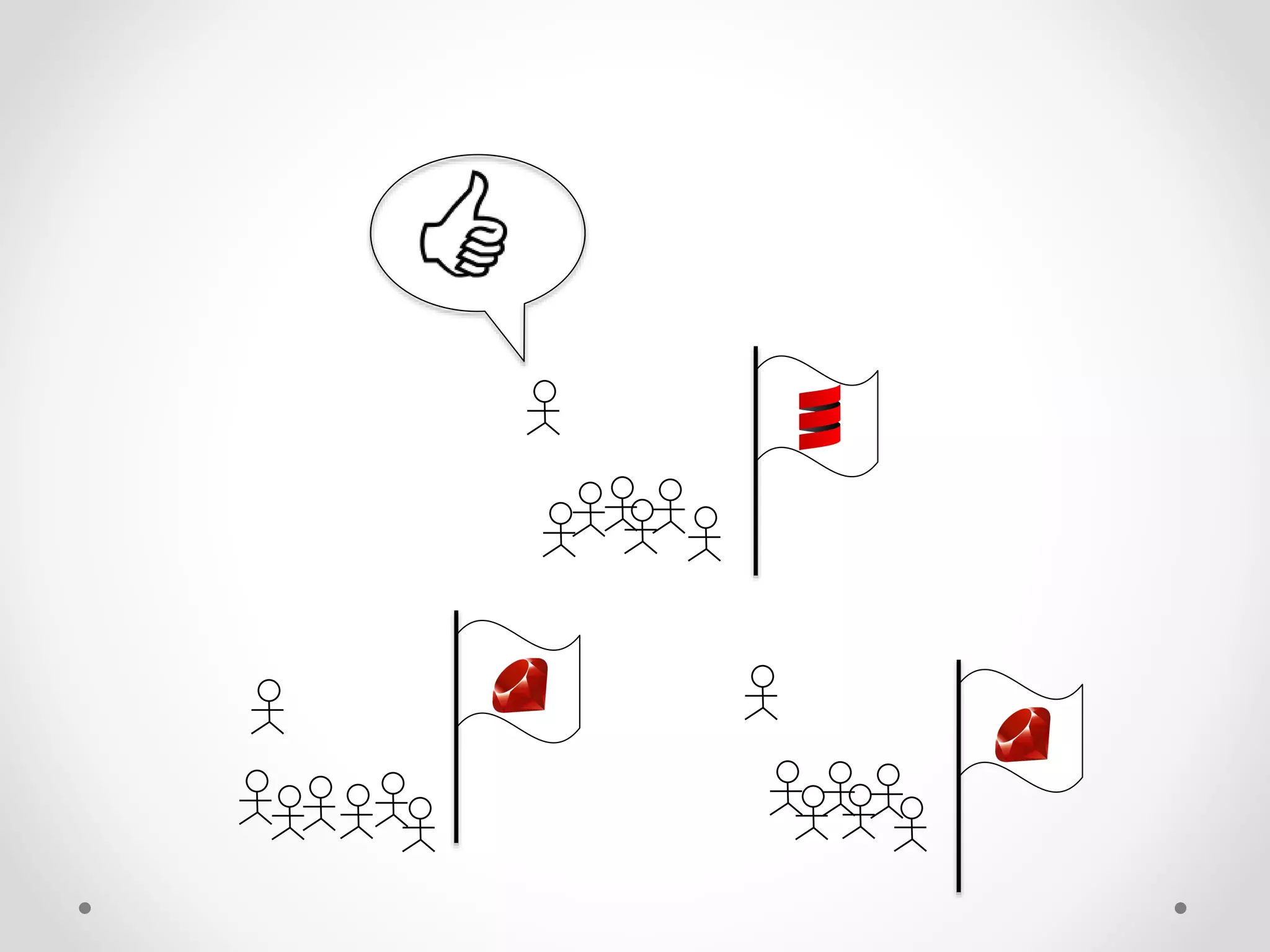
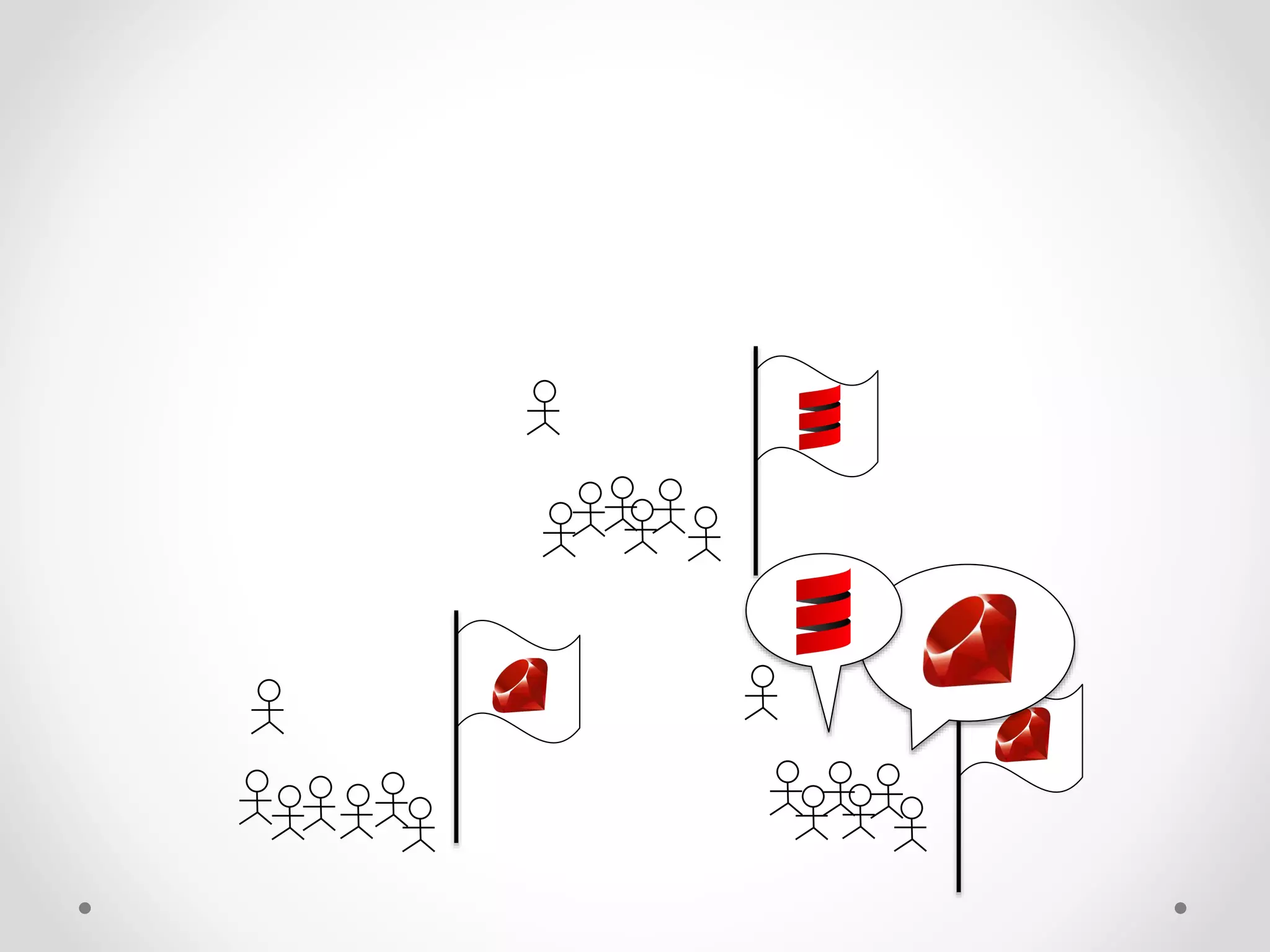
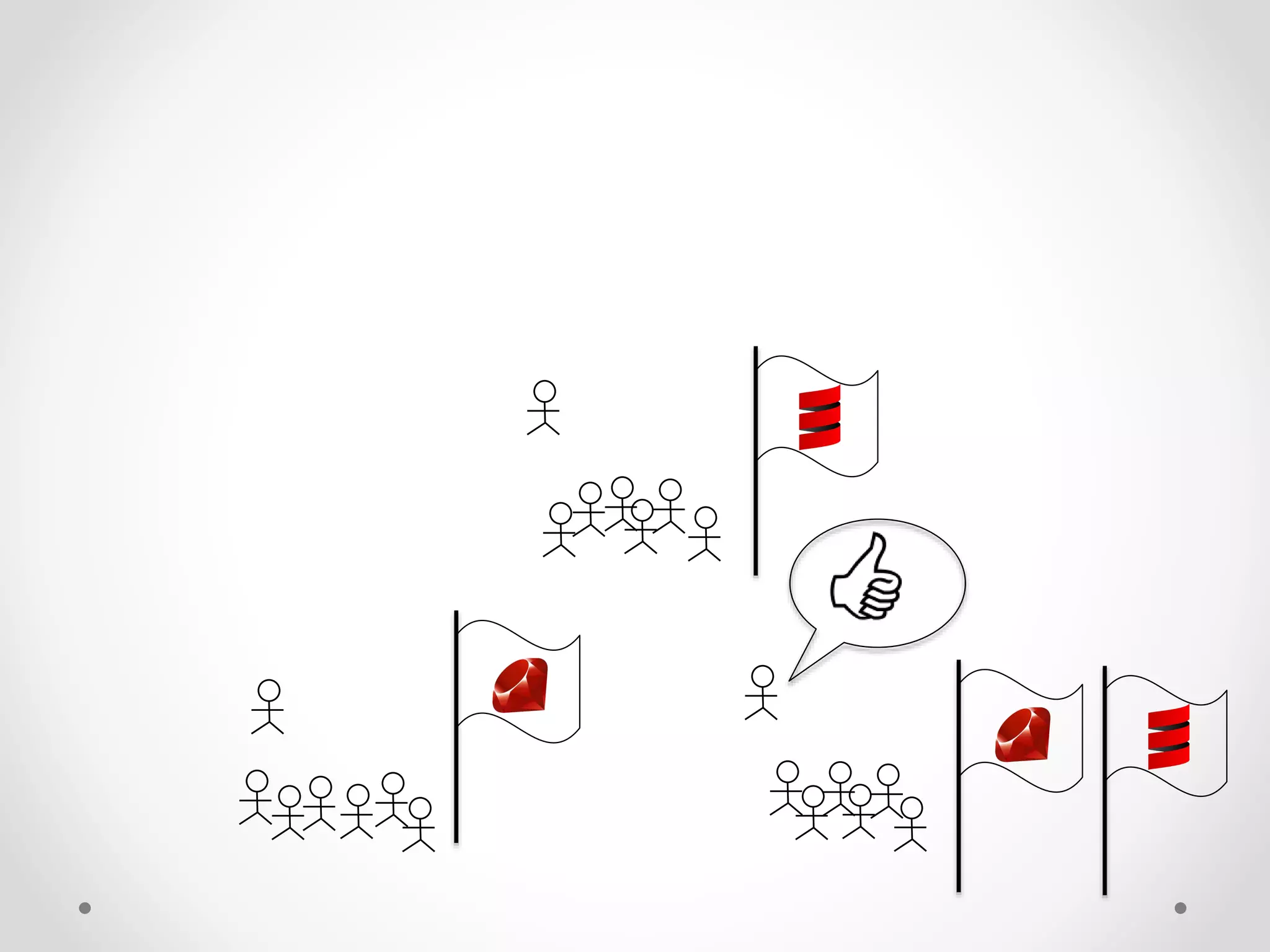
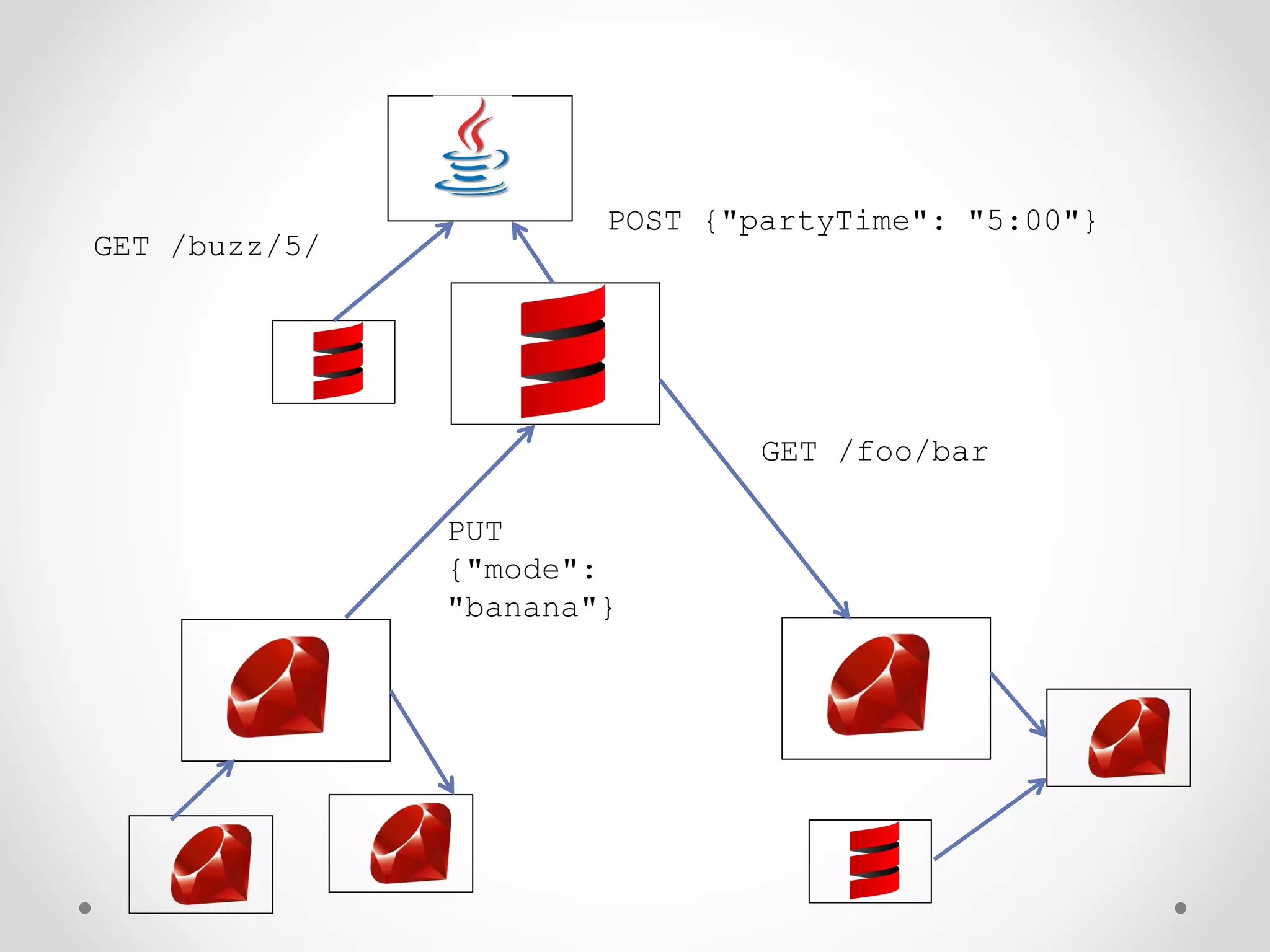
Bottom-up tech decisions
GET /foo/bar
PUT
{"mode":
"banana"}
POST {"partyTime": "5:00"}
GET /buzz/5/
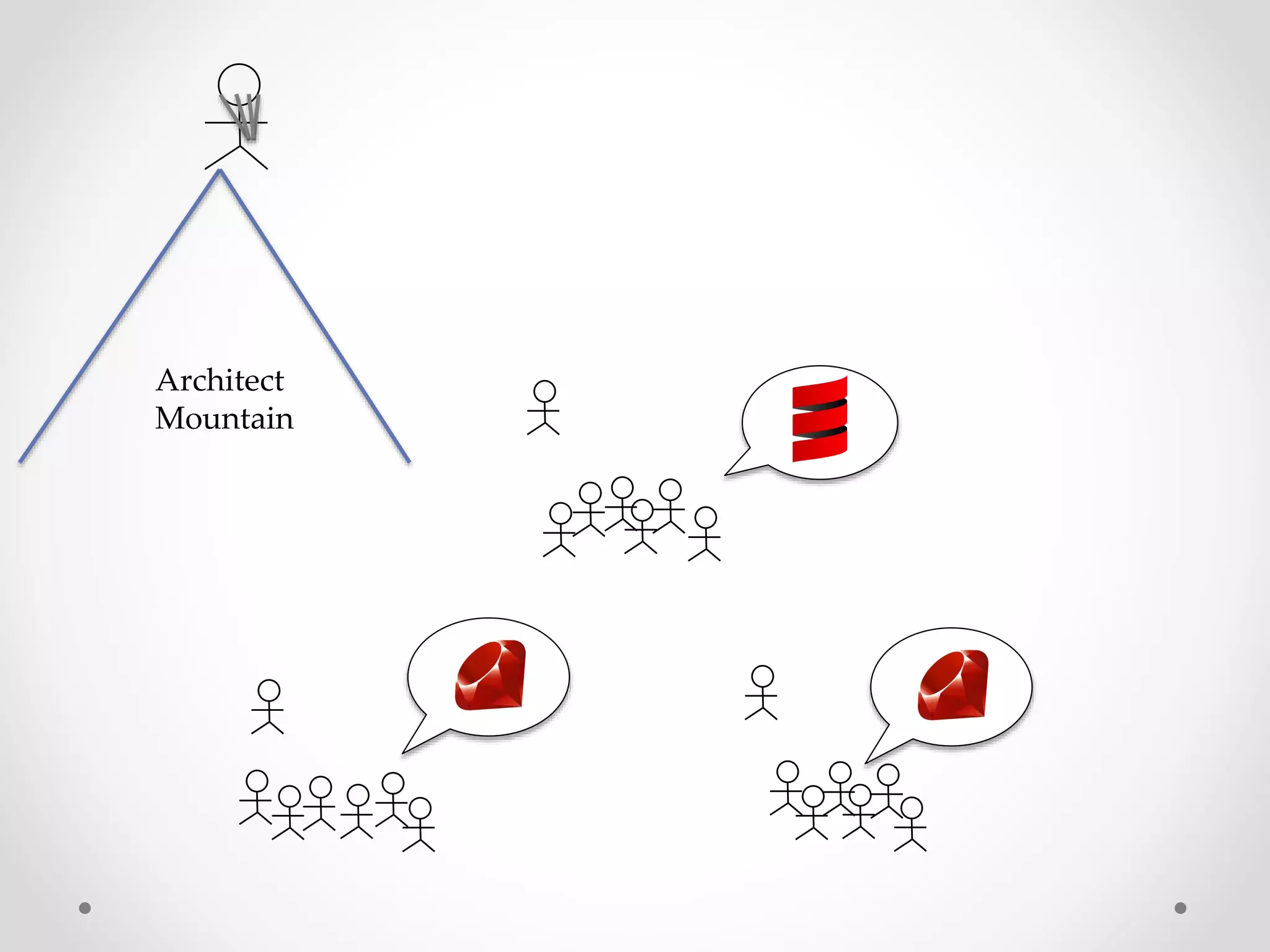
Architect
Mountain
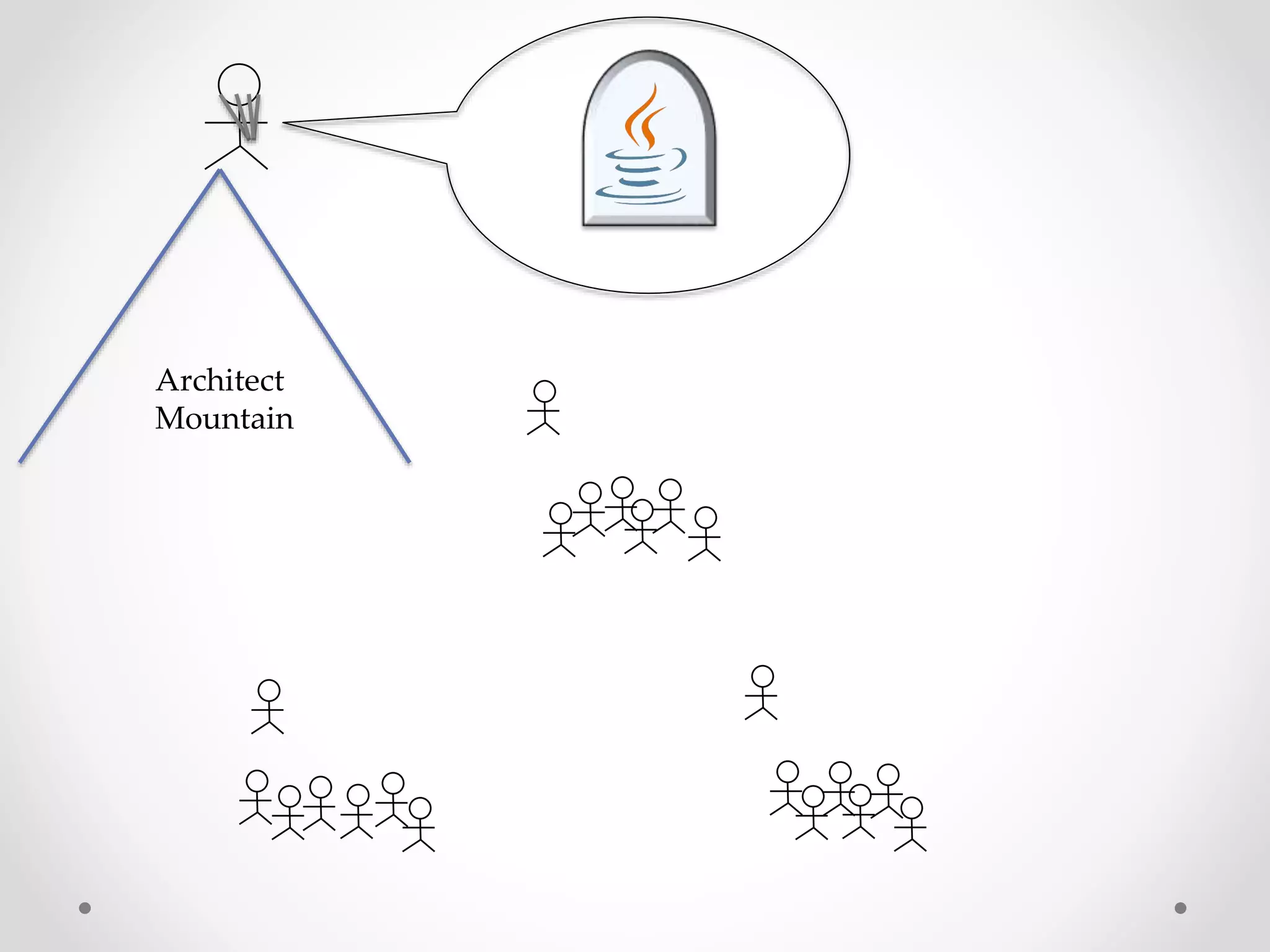
Architect
Mountain
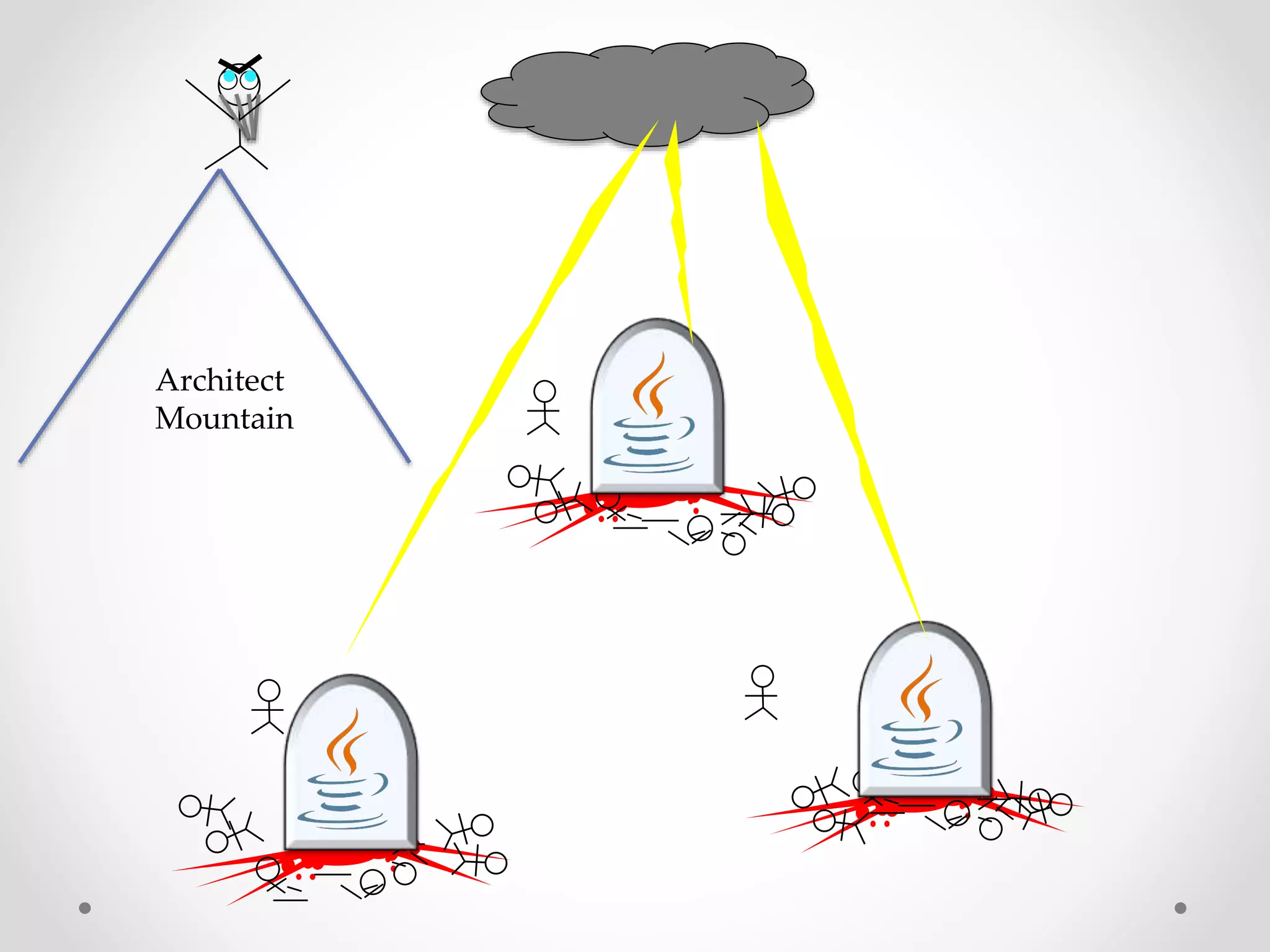
Architect
Mountain
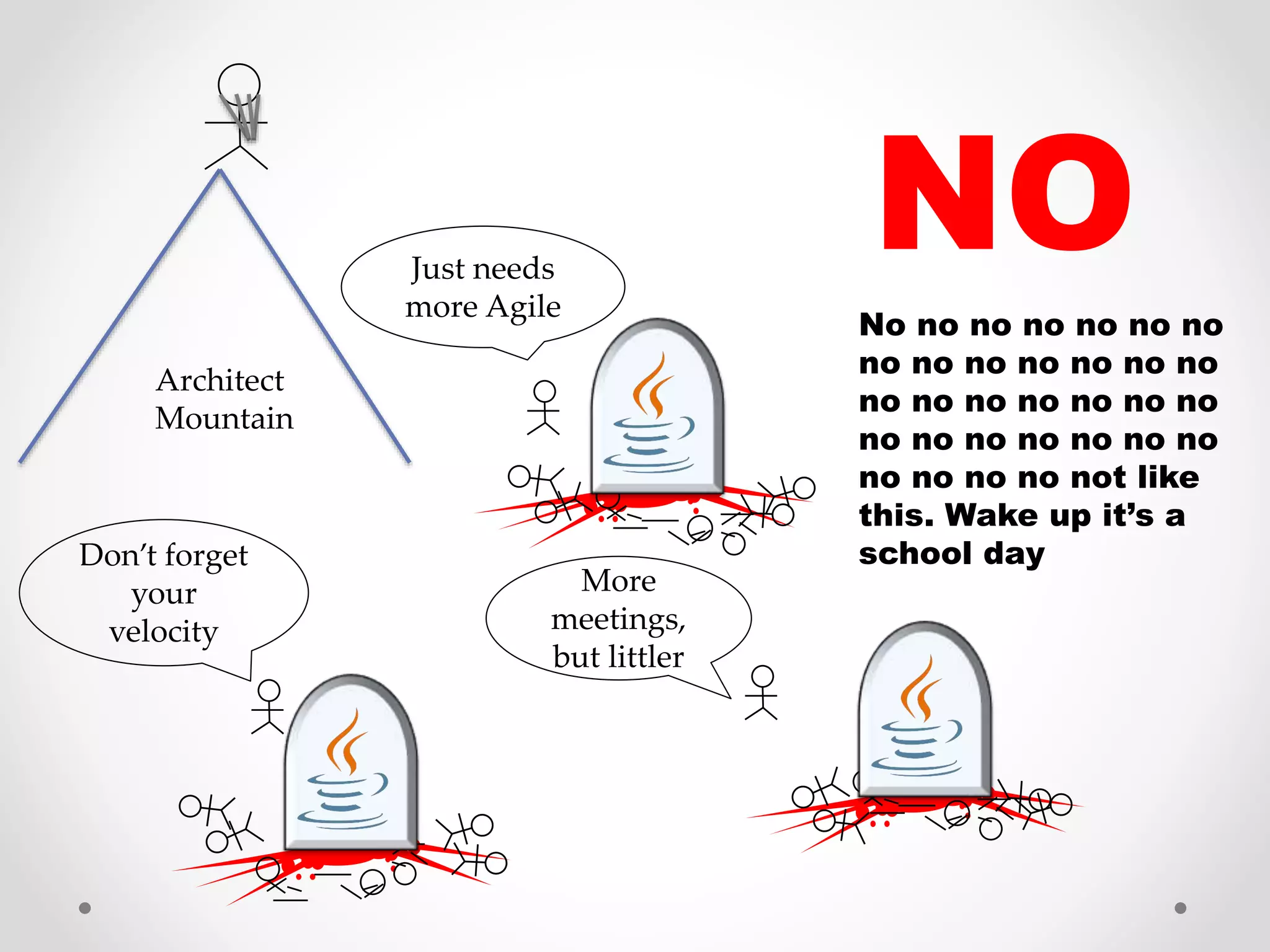
Architect
Mountain
Just needs
more Agile
Don’t forget
your
velocity
More
meetings,
but littler
NO
No no no no no no no
no no no no no no no
no no no no not like
this. Wake up it’s a
school day
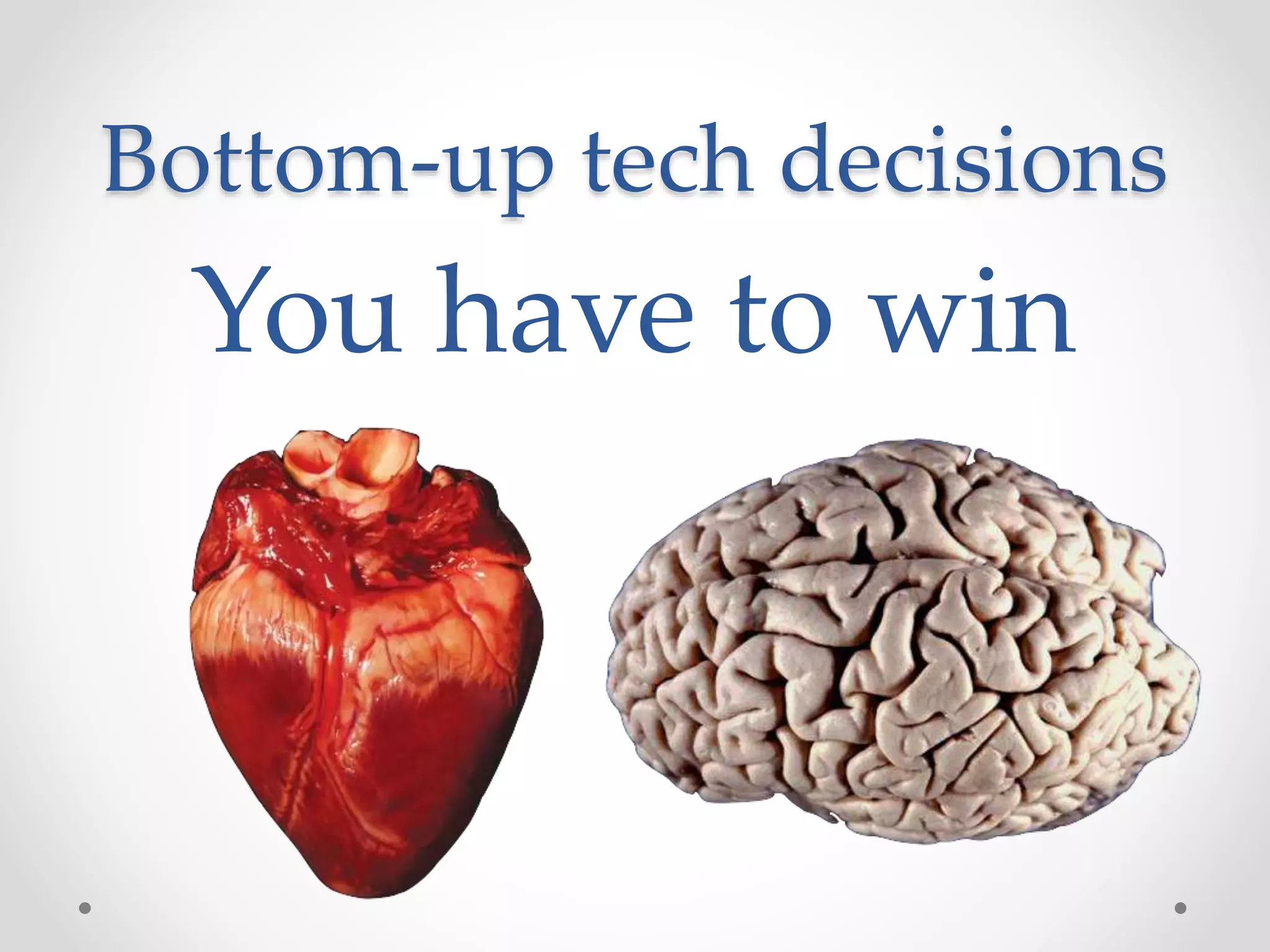
Bottom-up tech decisions
You have to win
Bottom-up tech decisions
You have to win
Bottom-up tech decisions
You have to win
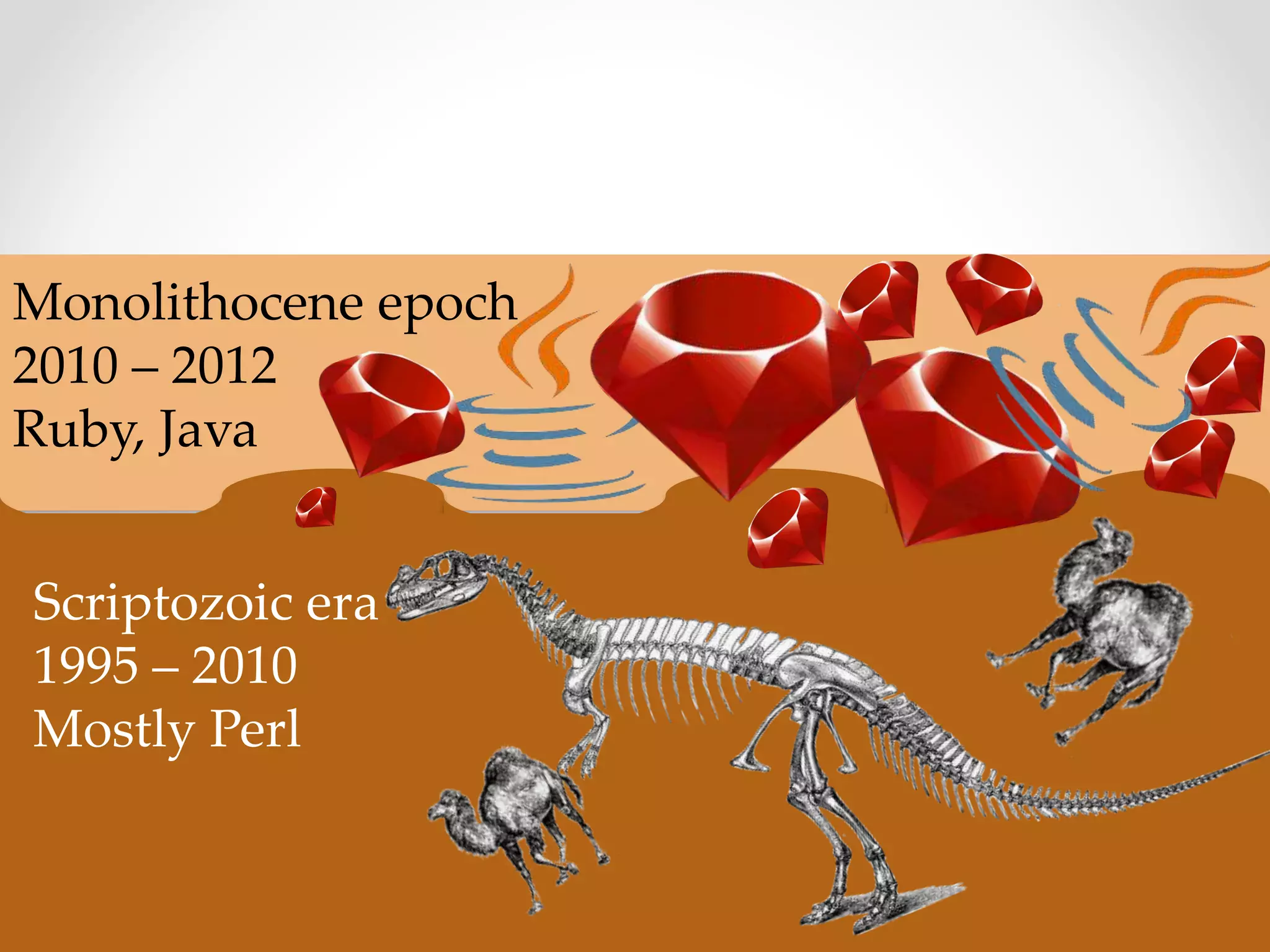
Software Paleontology
Everyone’s got
a history…
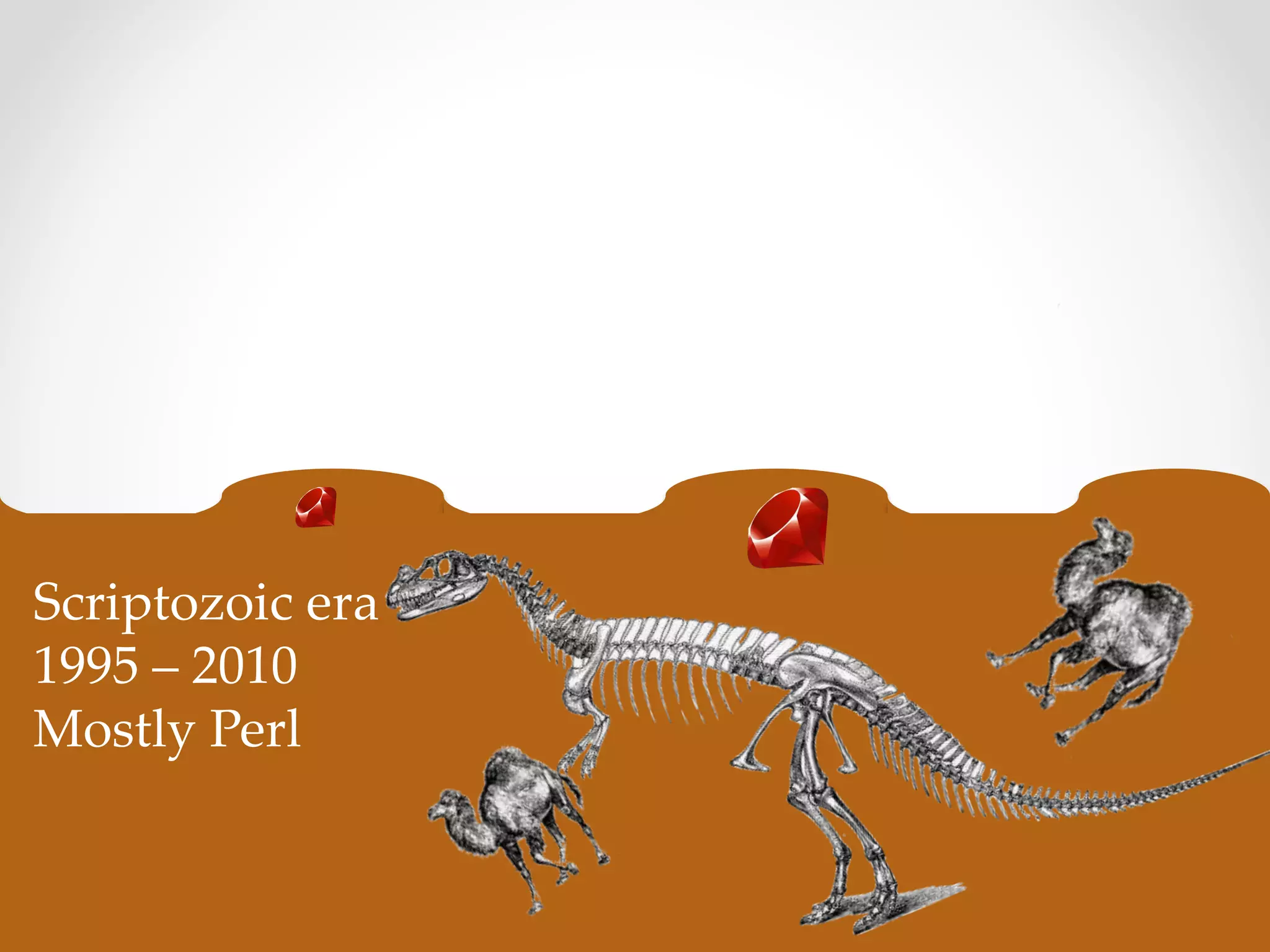
Scriptozoic era
1995 – 2010
Mostly Perl
Monolithocene epoch
2010 – 2012
Ruby, Java
Scriptozoic era
1995 – 2010
Mostly Perl
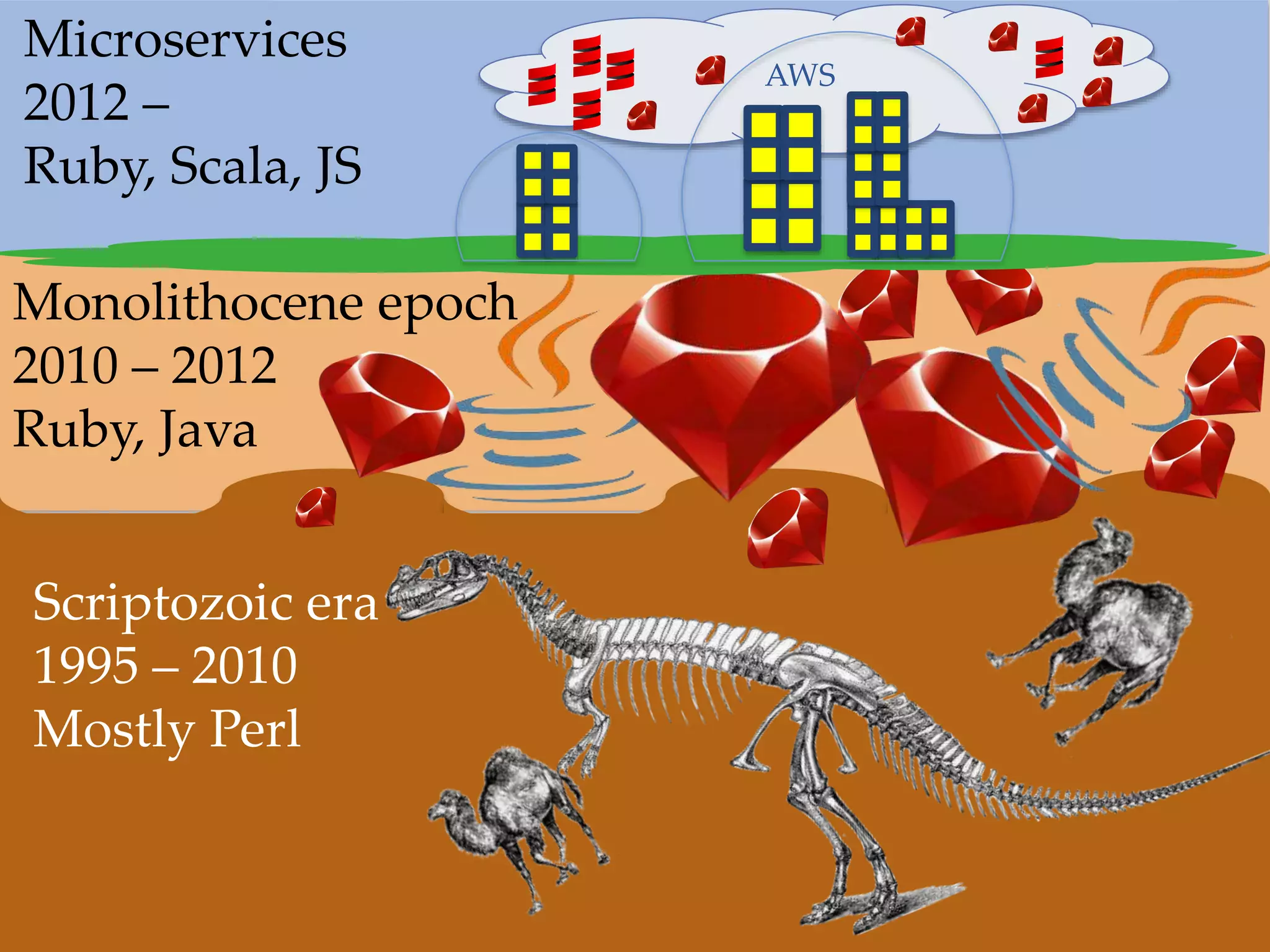
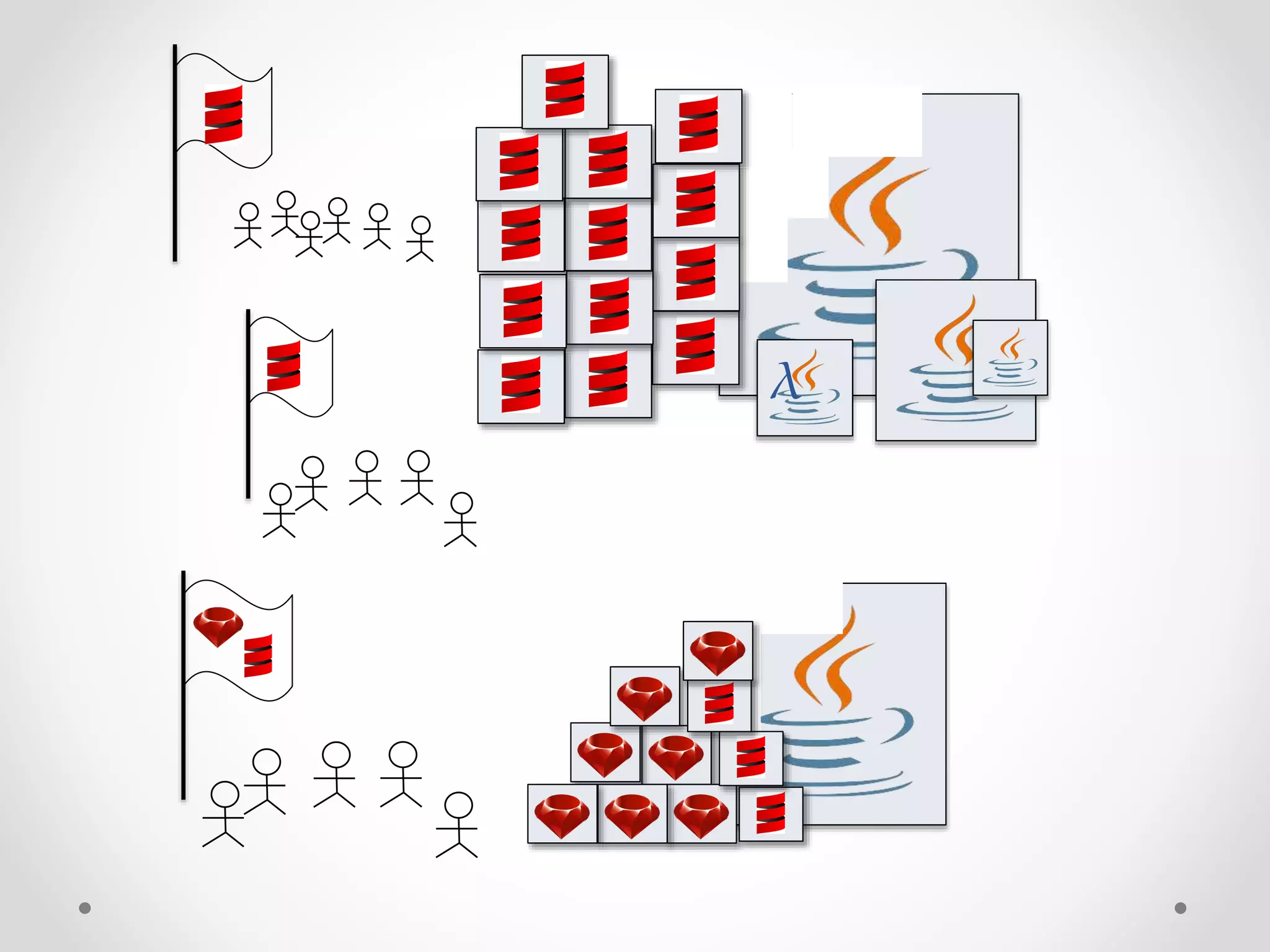
AWS
Monolithocene epoch
2010 – 2012
Ruby, Java
Scriptozoic era
1995 – 2010
Mostly Perl
Microservices
2012 –
Ruby, Scala, JS
Adoption
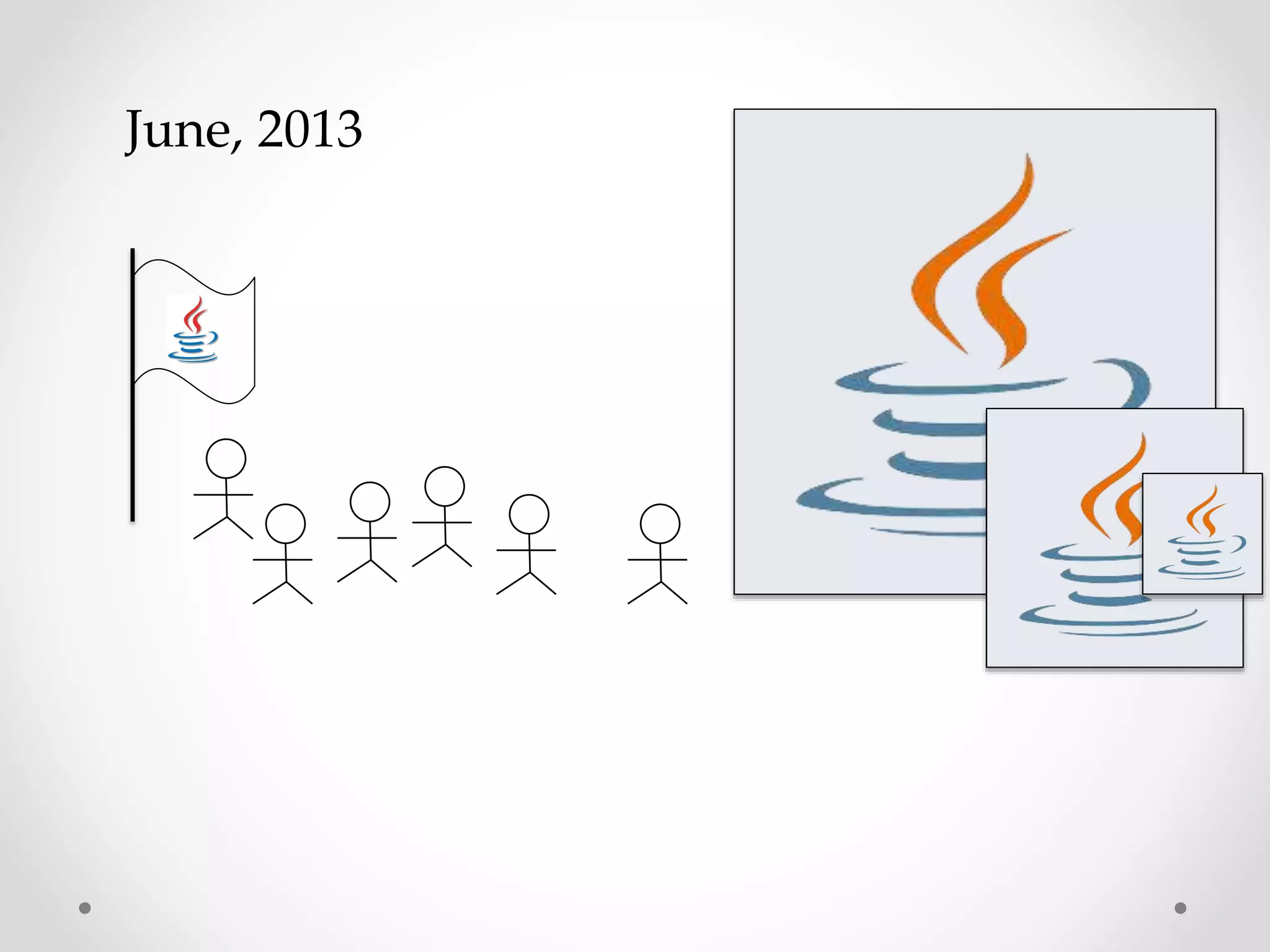
June, 2013
λ
λ
λ
λ
λ
λ
λ
λ
λ
λ
λ
λ
λ
λ
Language choice
Object Oriented
Powerful static types
Functional
JVM
Object Oriented
Powerful static types
Functional
JVM
Functional
JVM
Functional
JVM
Functional
JVM
Functional
JVM
Whatever works for you!
The journey
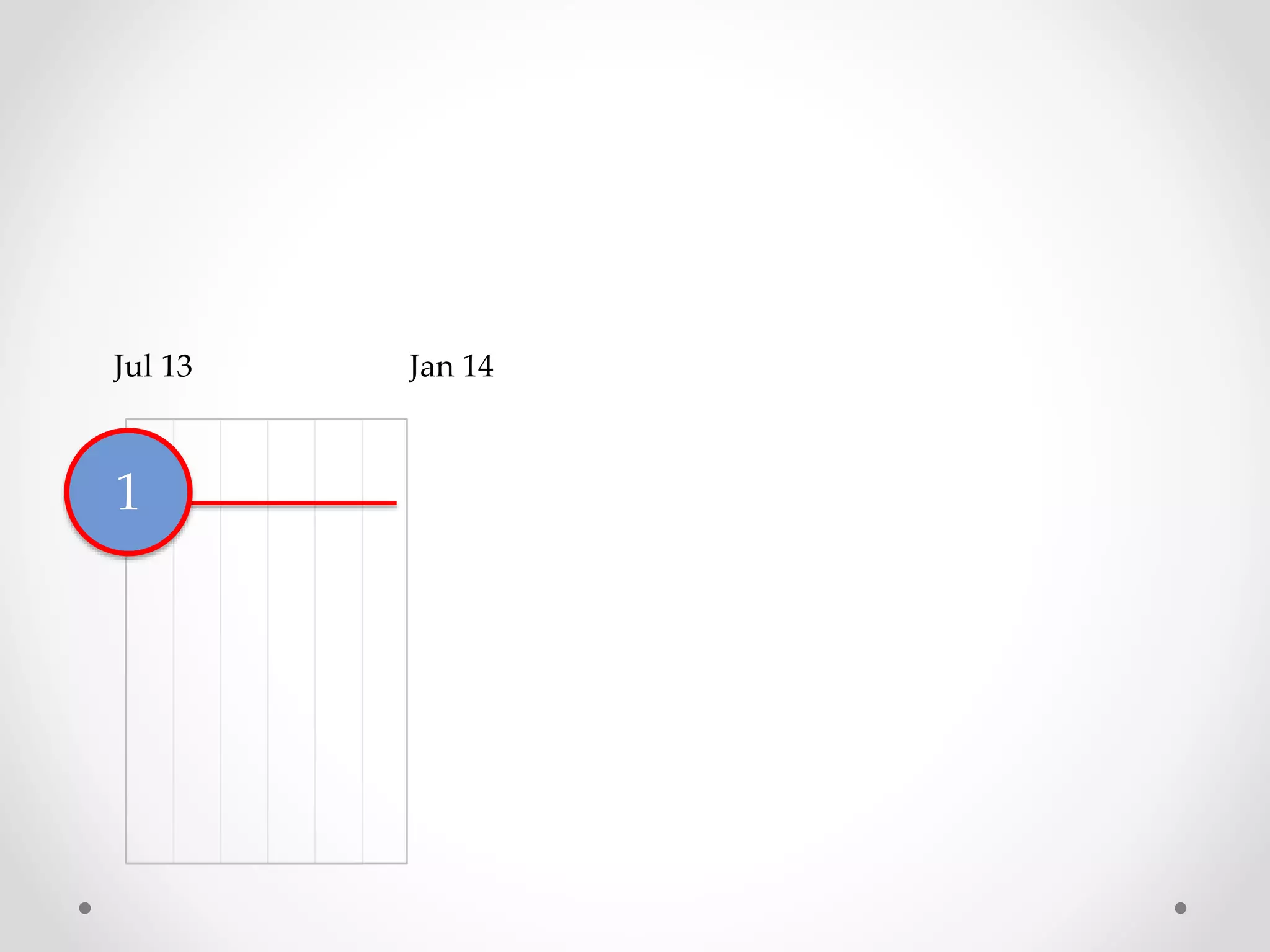
Jul 13 Jan 14
1
LOC
Web
JSON
DB
Dep Inj
Play2
Play2
6K
Squeryl / Play2
Constructors
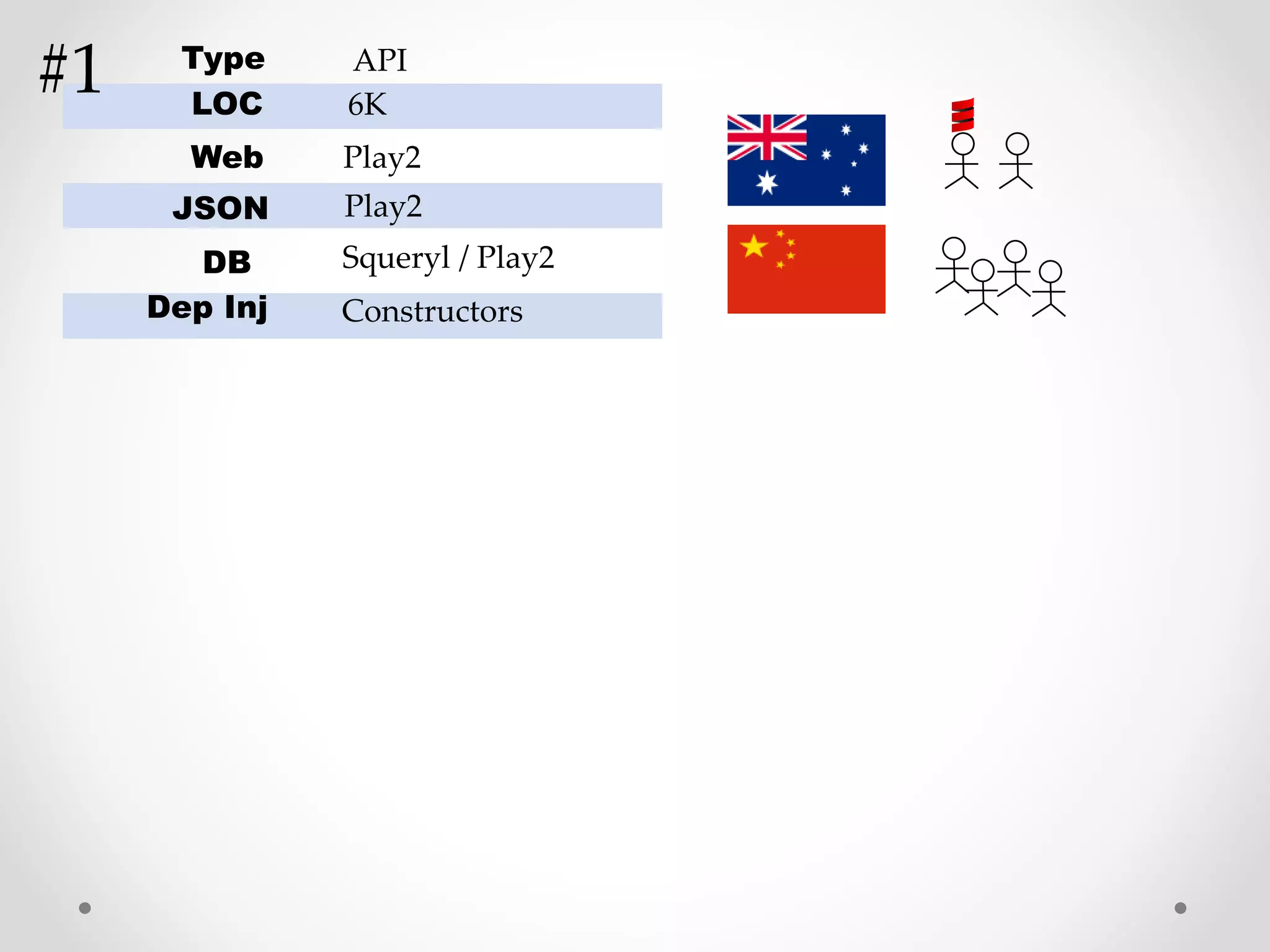
Type API
#1
LOC
Web
JSON
DB
Dep Inj
Play2
Play2
6K
Squeryl / Play2
Constructors
Type API
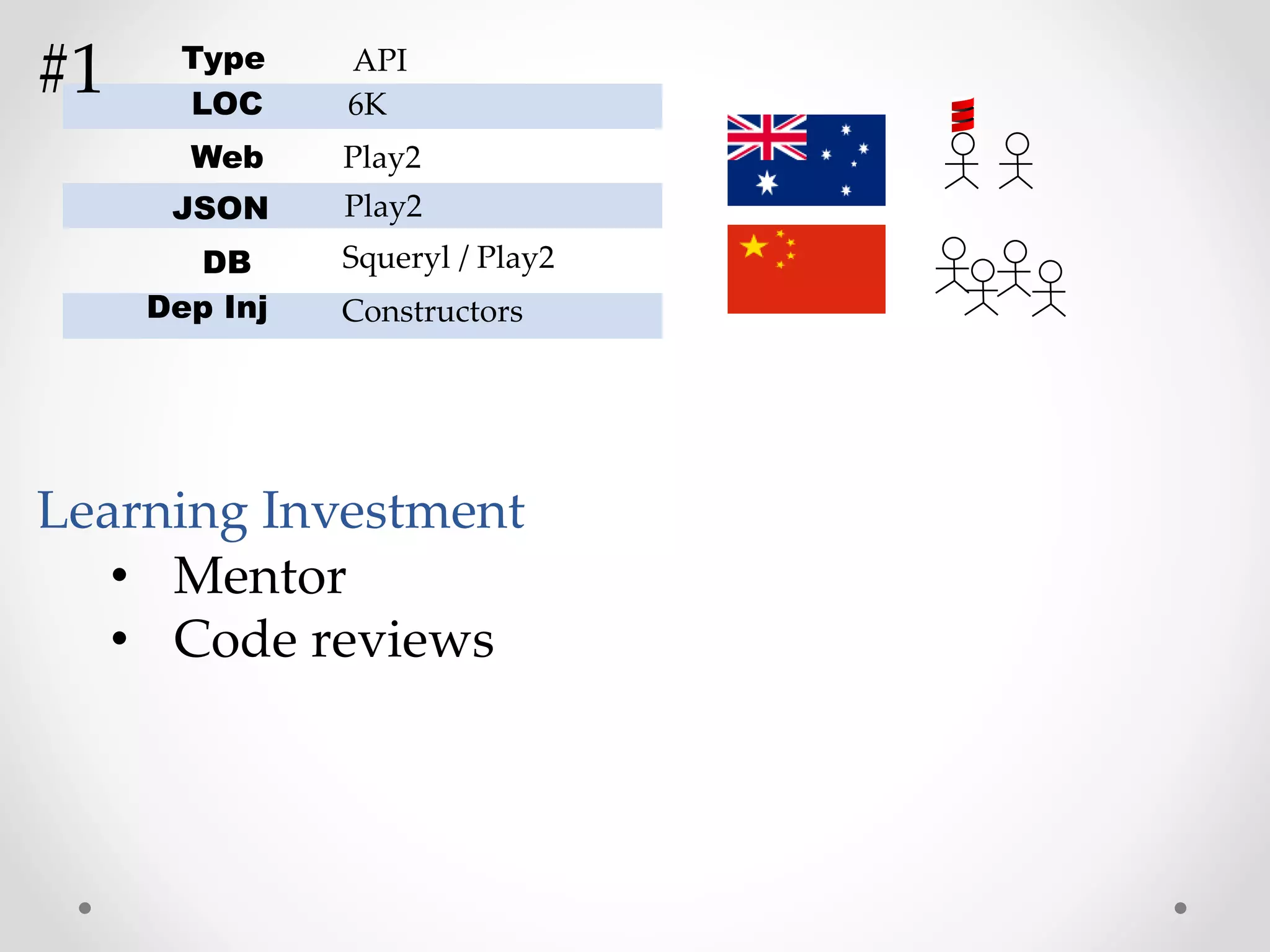
• Mentor
• Code reviews
Learning Investment
#1
LOC
Web
JSON
DB
Dep Inj
Play2
Play2
6K
Squeryl / Play2
Constructors
Type API
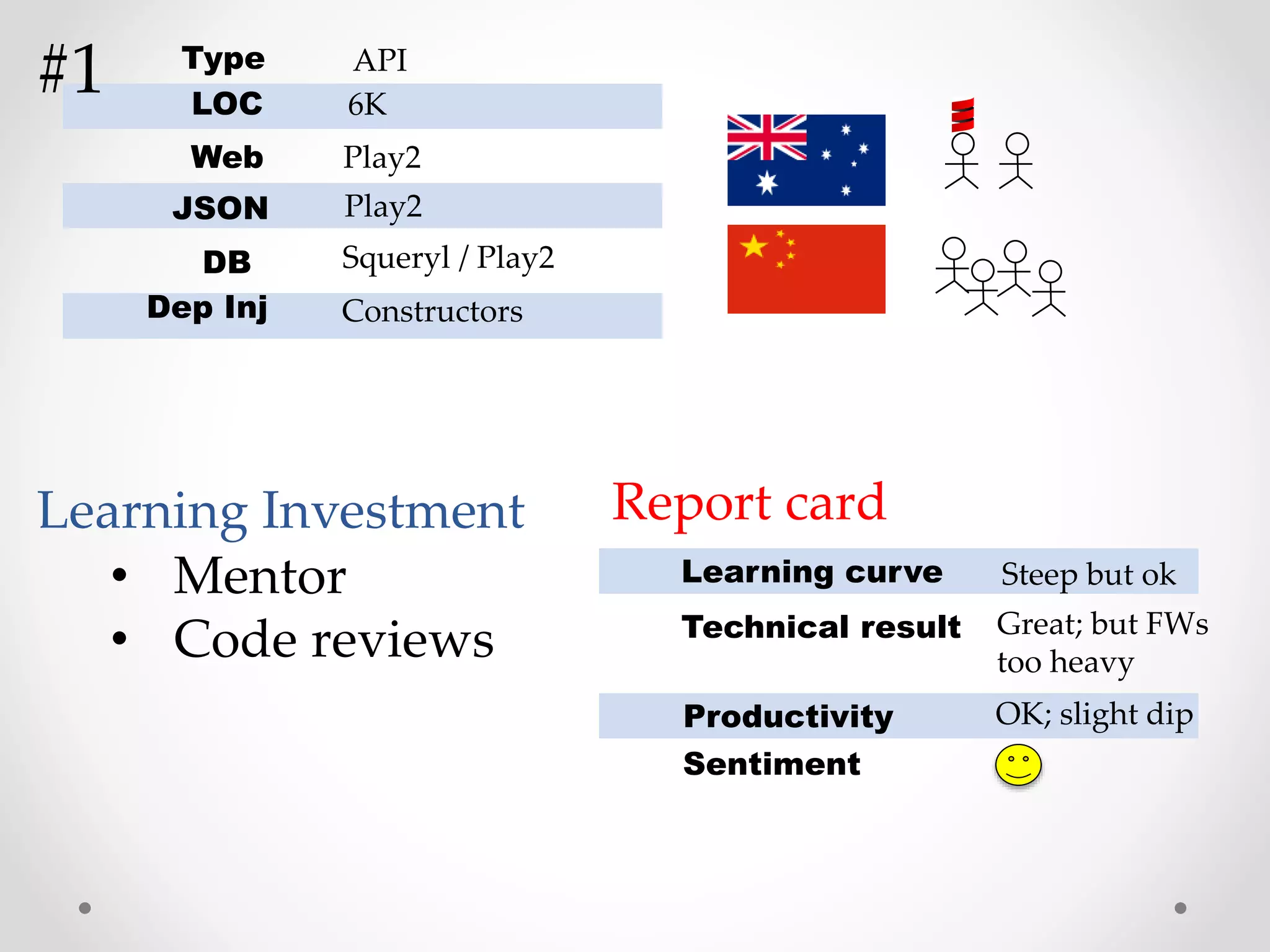
• Mentor
• Code reviews
Learning Investment Report card
Learning curve
Technical result
Productivity
Sentiment
Steep but ok
OK; slight dip
Great; but FWs
too heavy
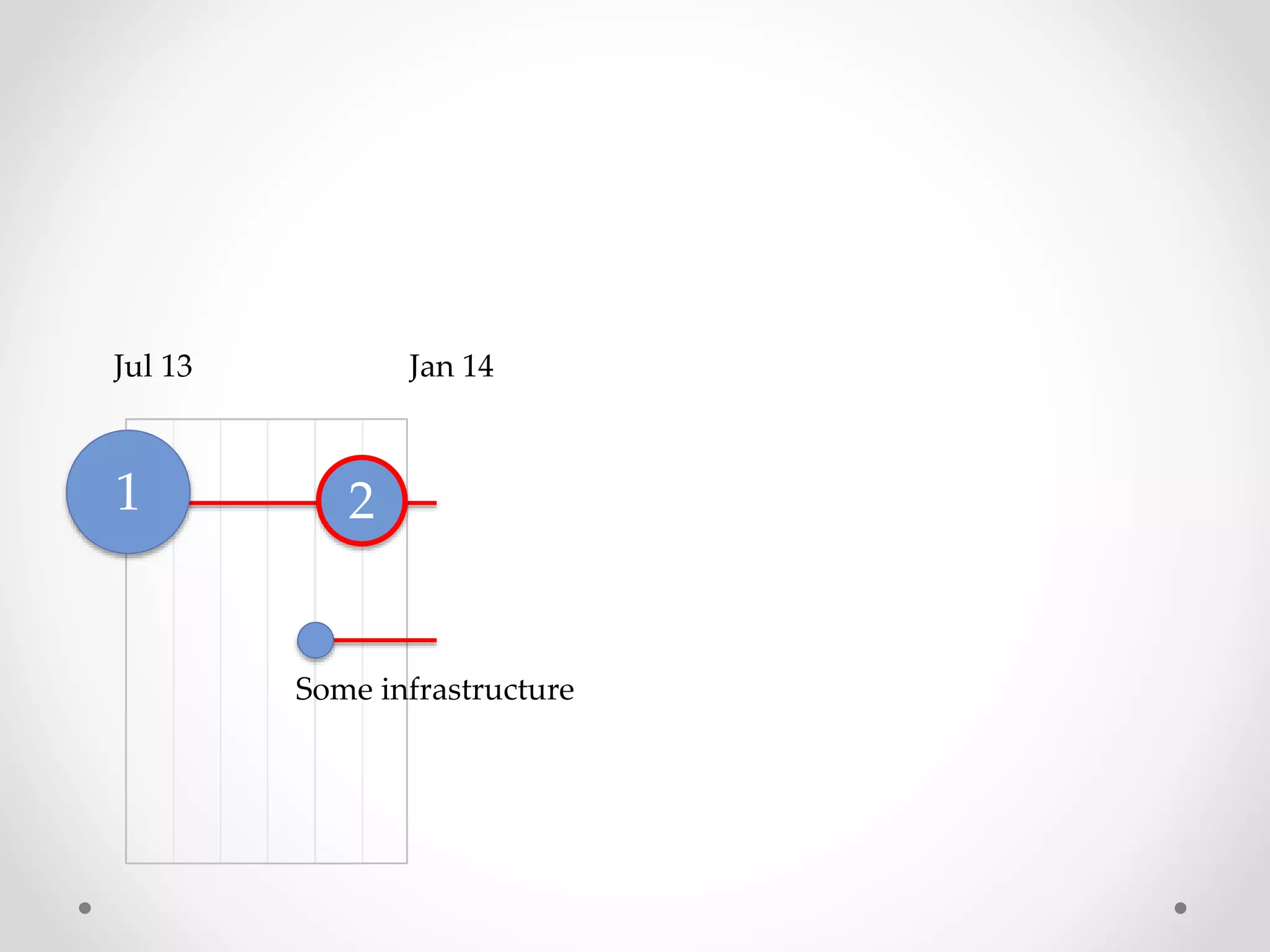
#1
Jul 13 Jan 14
1 2
Some infrastructure
LOC
Web
JSON
DB
Dep Inj
Play2
Argonaut
3K
Squeryl / Play2
Constructors
Type API
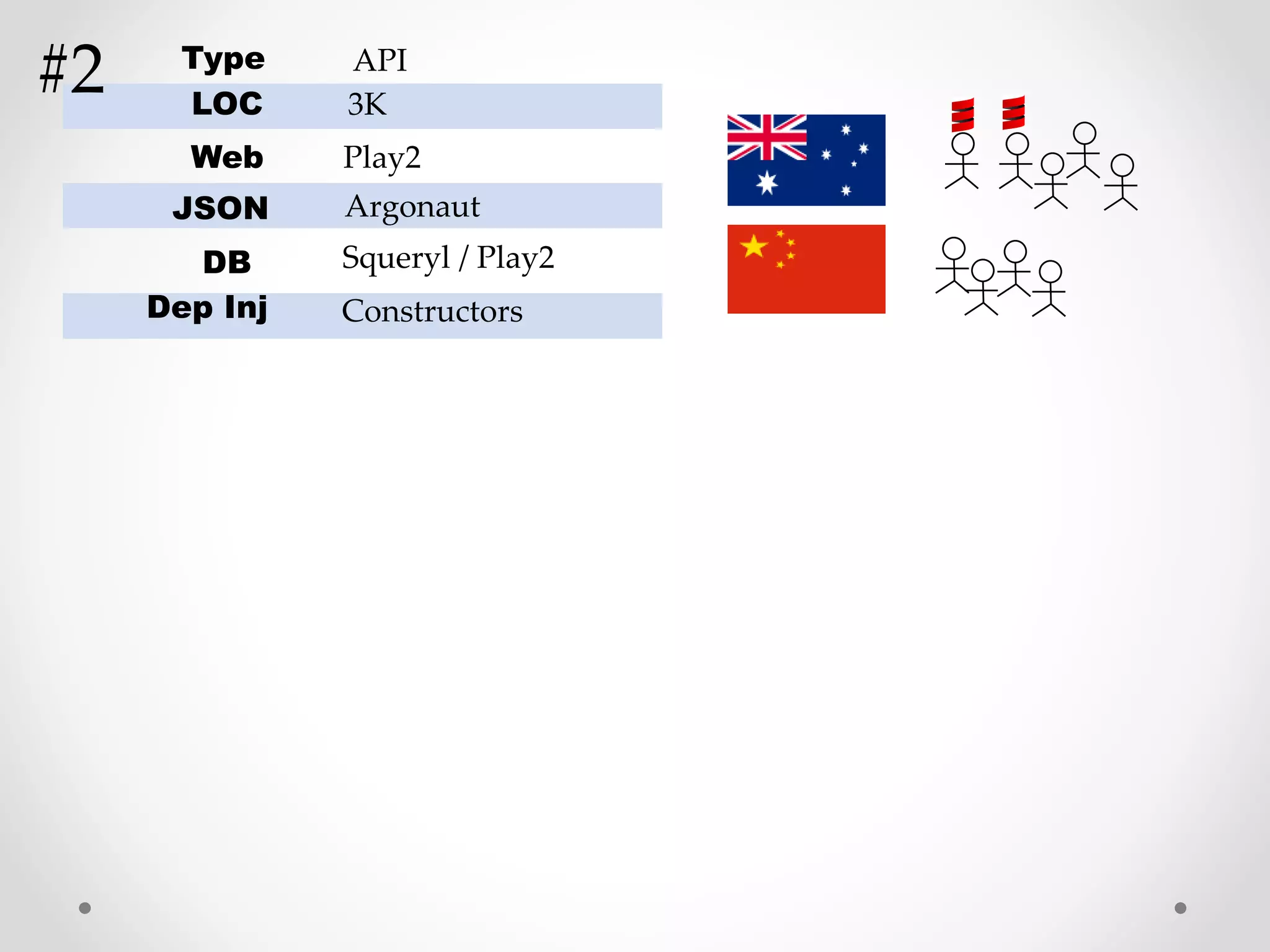
#2
LOC
Web
JSON
DB
Dep Inj
Play2
Argonaut
3K
Squeryl / Play2
Constructors
Type API
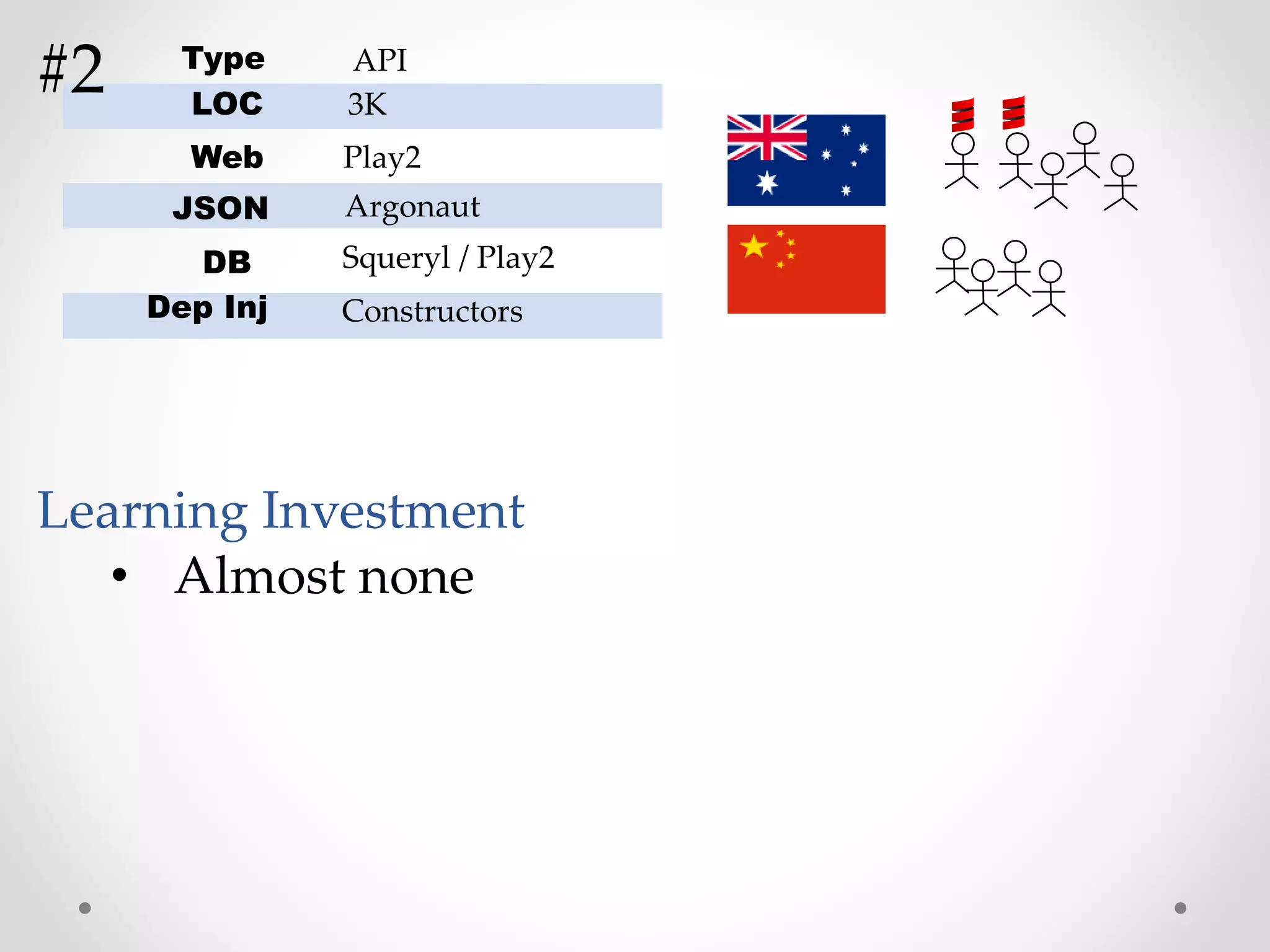
• Almost none
Learning Investment
#2
LOC
Web
JSON
DB
Dep Inj
Play2
Argonaut
3K
Squeryl / Play2
Constructors
Type API
• Almost none
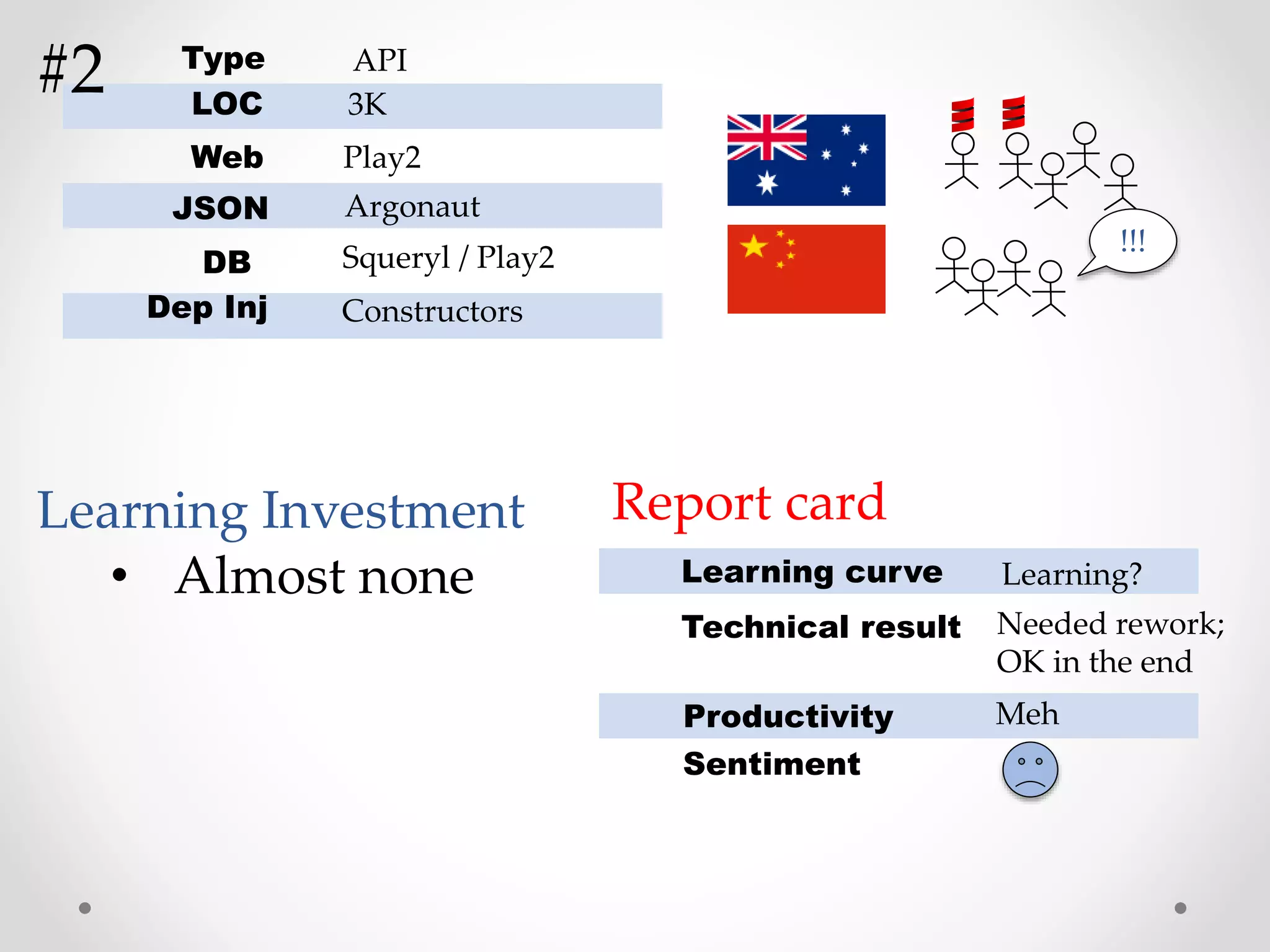
Learning Investment Report card
Learning curve
Technical result
Productivity
Sentiment
Learning?
Meh
Needed rework;
OK in the end
#2
!!!
Lesson #1
New tech, mindset
requires investment in
learning
Invest in your people!
λ
Another team!
λ
“We’ll have some of that!”
λ
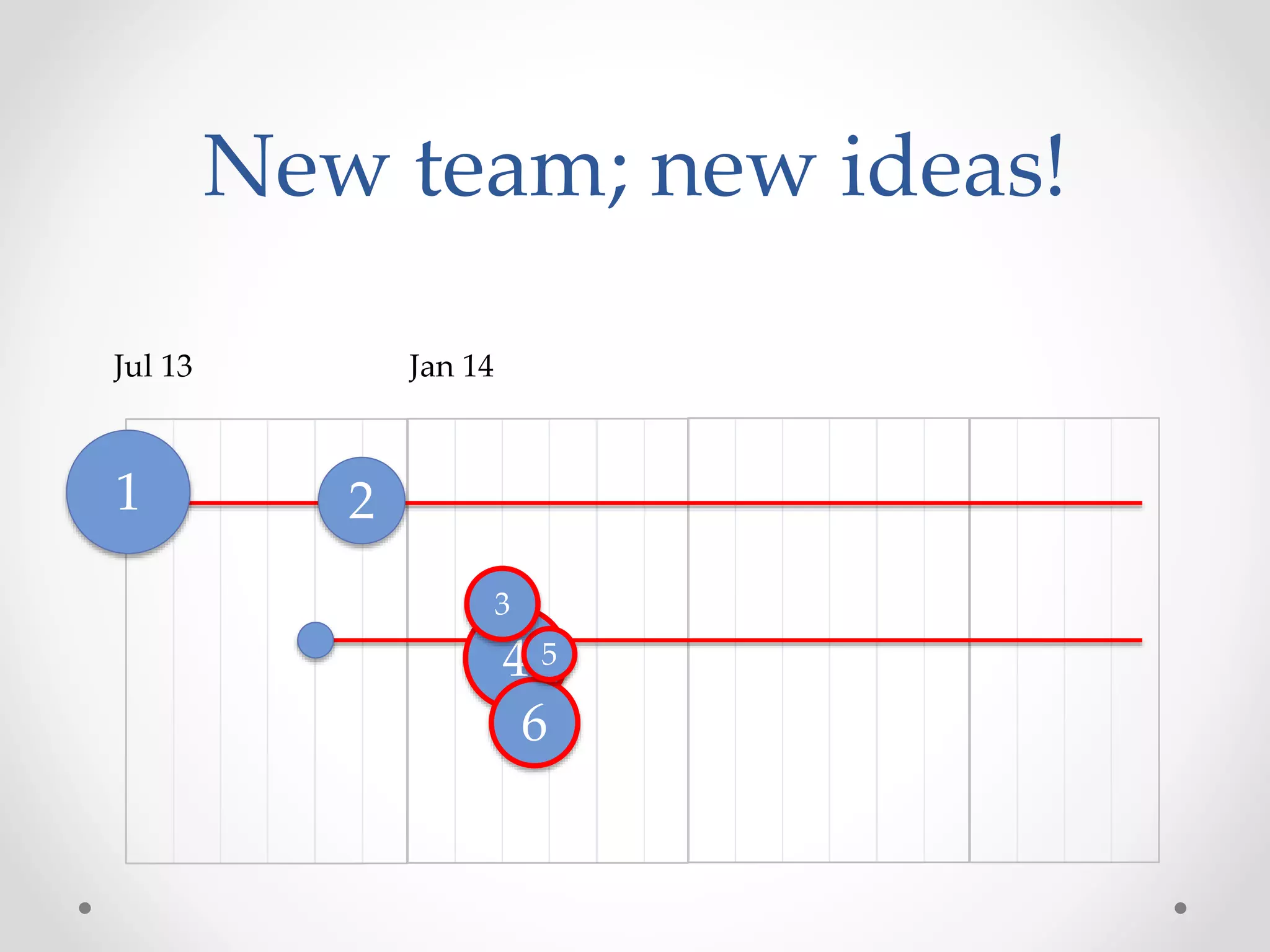
Jul 13 Jan 14
1 2
4
6
5
New team; new ideas!
3
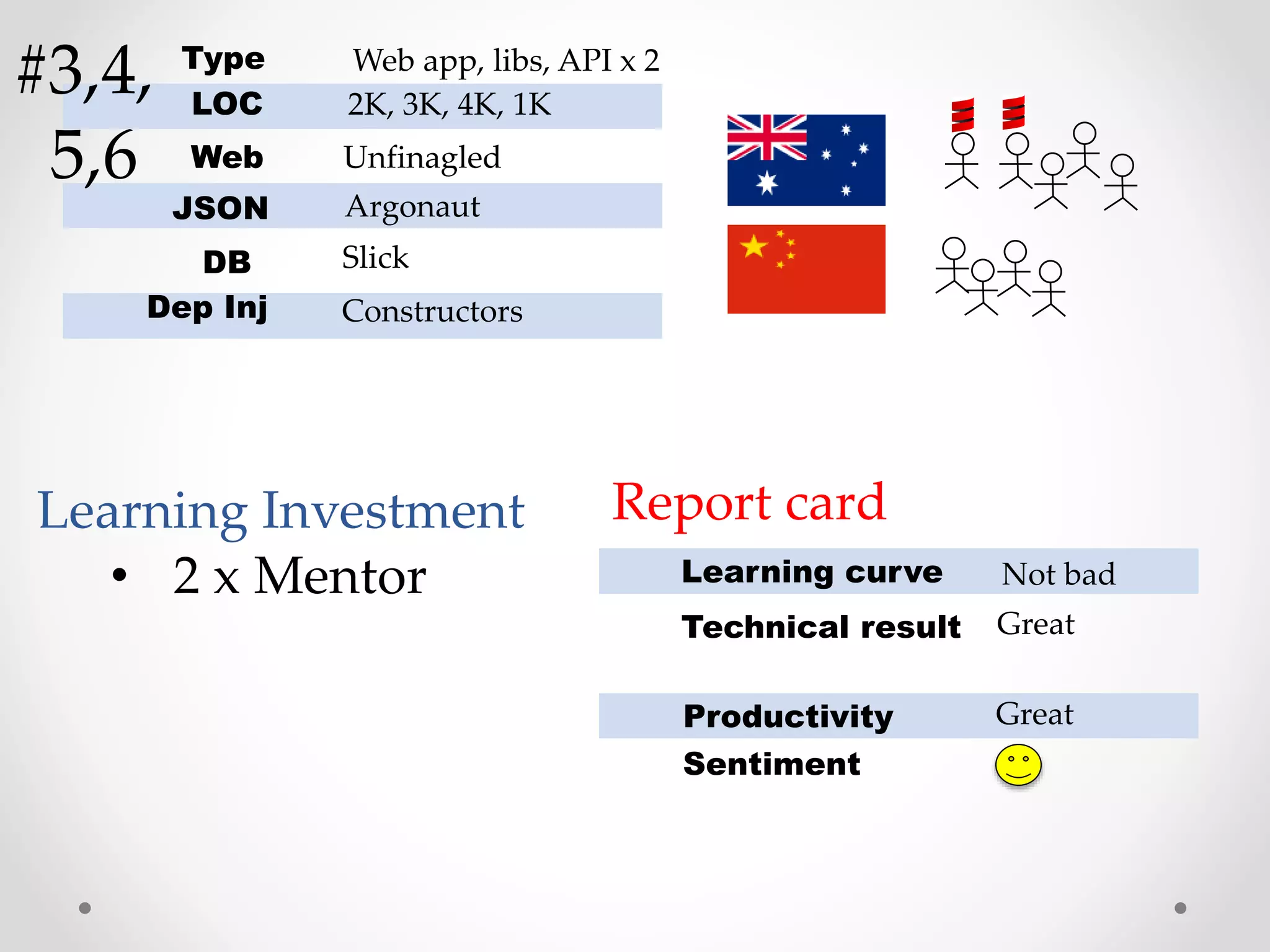
LOC
Web
JSON
DB
Dep Inj
Unfinagled
Argonaut
2K, 3K, 4K, 1K
Slick
Constructors
Type Web app, libs, API x 2
• 2 x Mentor
Learning Investment Report card
Learning curve
Technical result
Productivity
Sentiment
Not bad
Great
Great
#3,4,
5,6
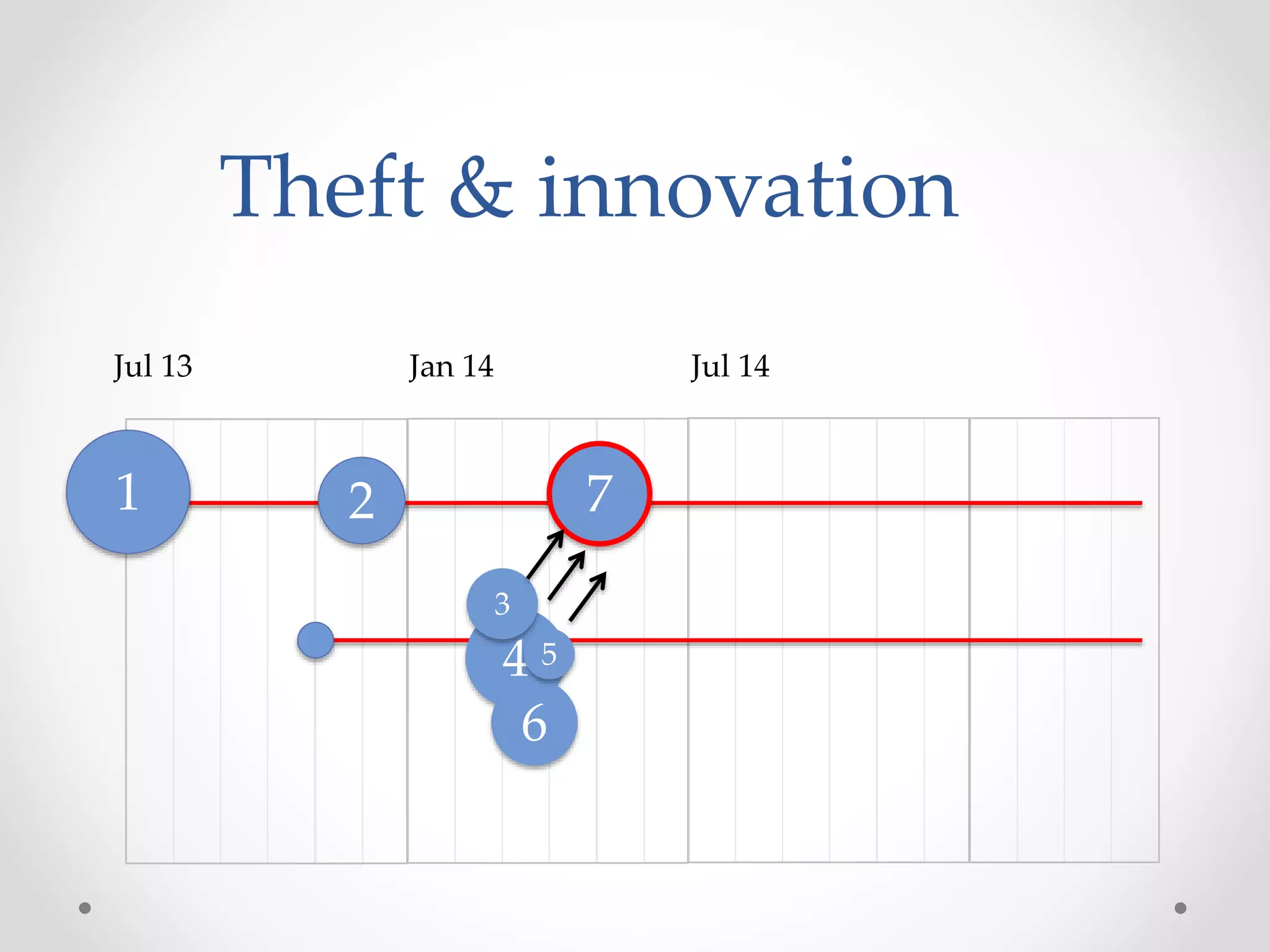
Jul 13 Jan 14
1 2
4
6
5
3
7
Theft & innovation
Jul 14
Lesson #2
Having multiple teams
is great, because you can
steal from each other
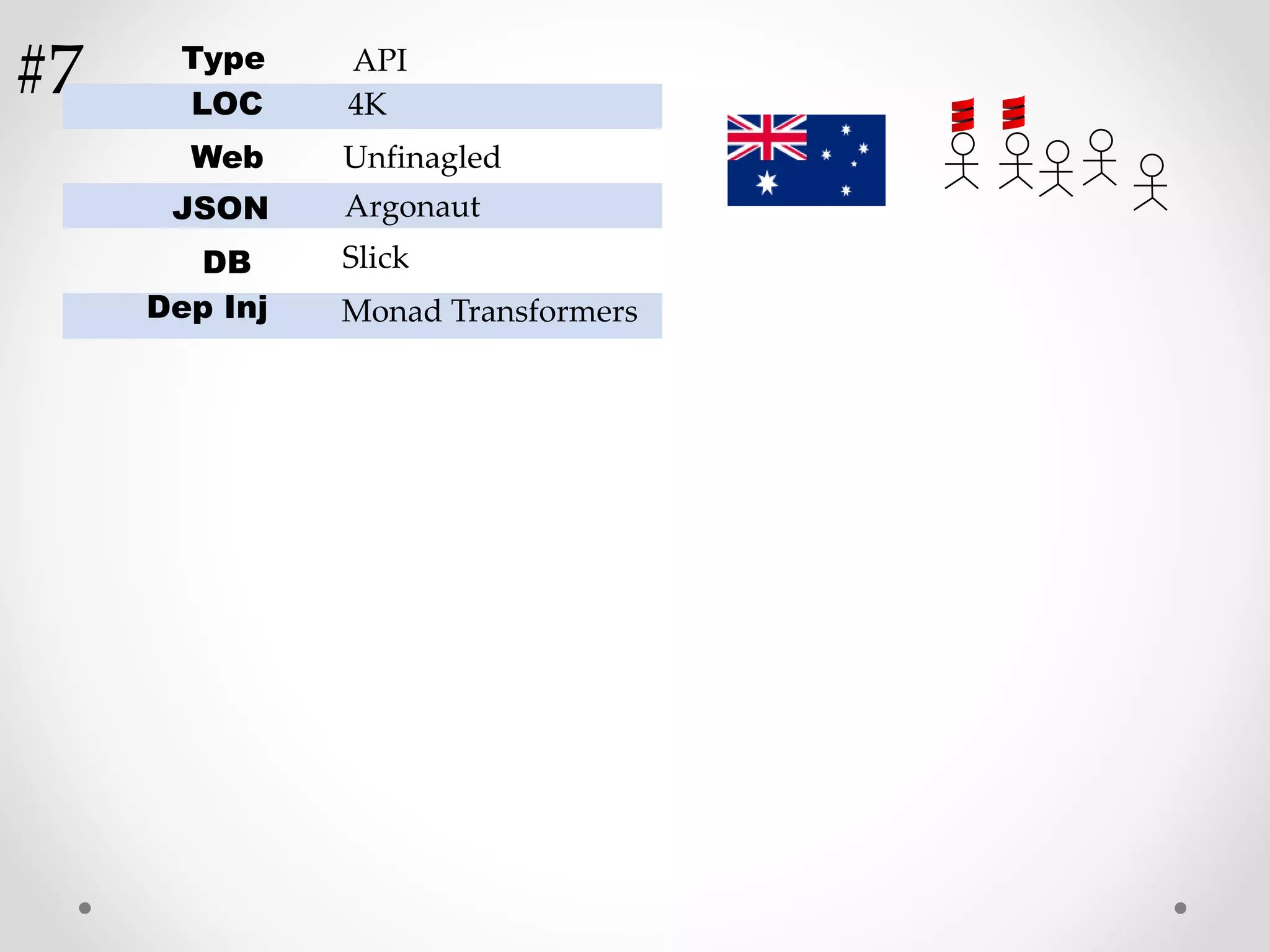
LOC
Web
JSON
DB
Dep Inj
Unfinagled
Argonaut
4K
Slick
Monad Transformers
Type API
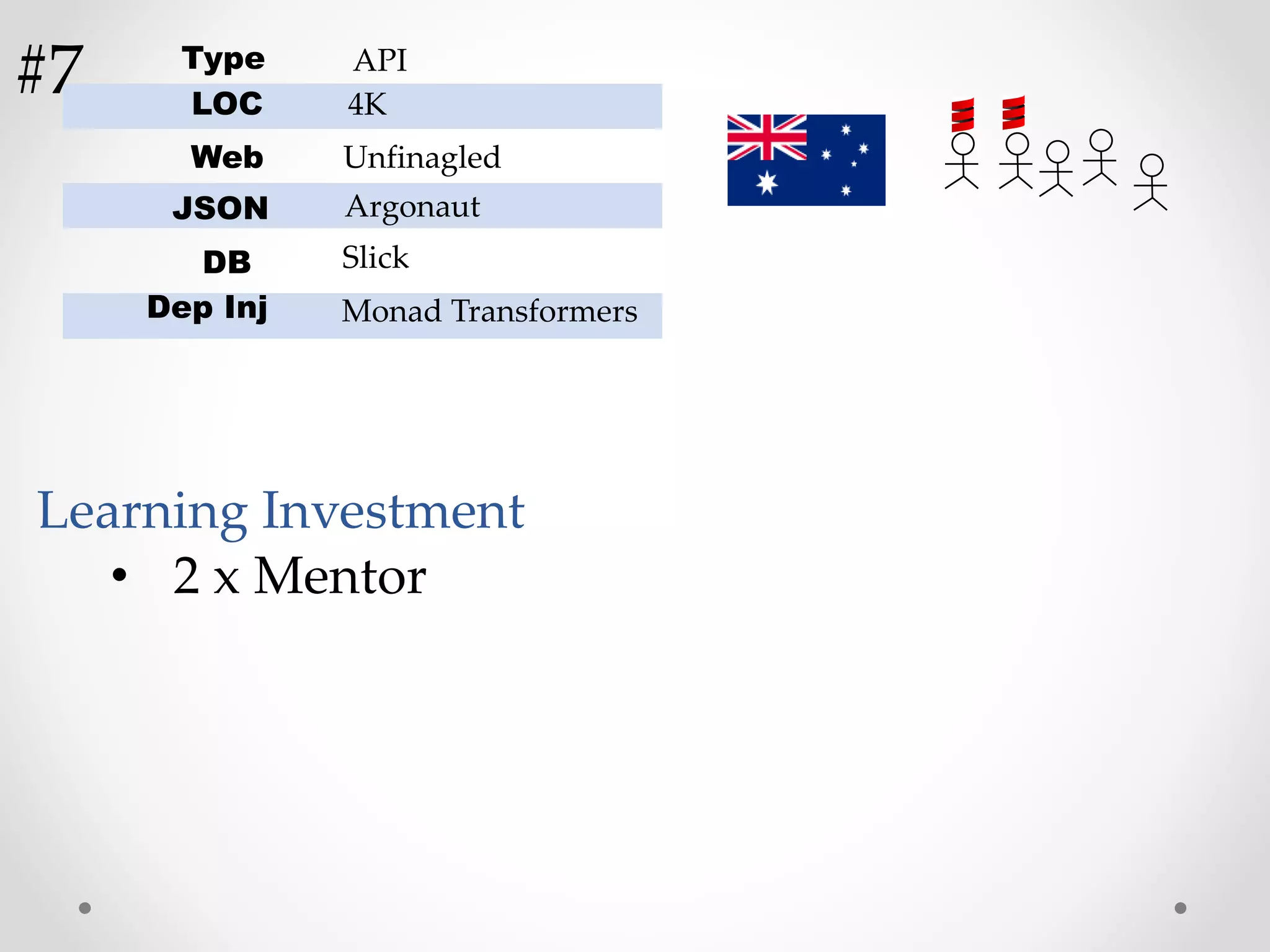
#7
LOC
Web
JSON
DB
Dep Inj
Unfinagled
Argonaut
4K
Slick
Monad Transformers
Type API
• 2 x Mentor
Learning Investment
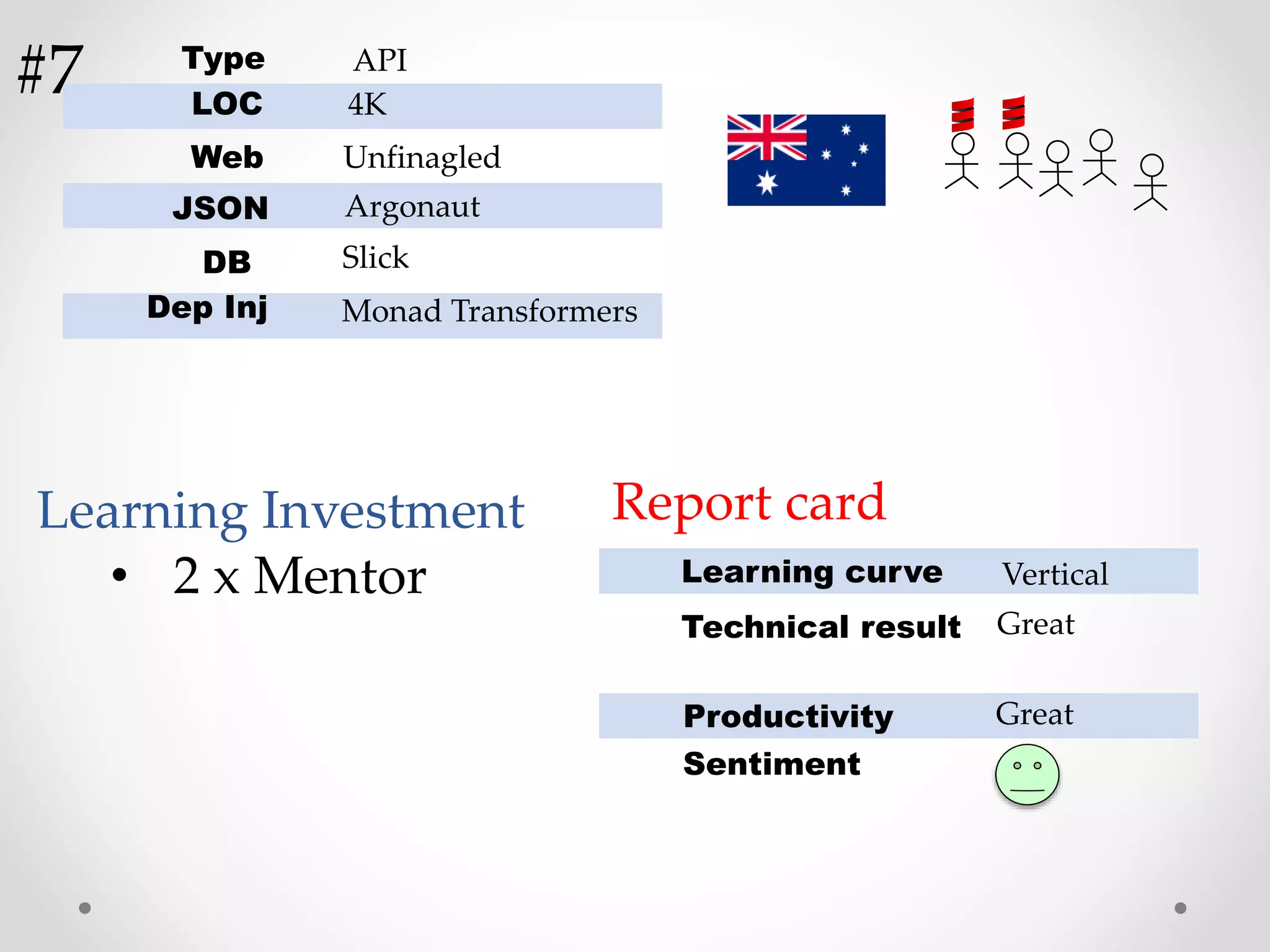
#7
LOC
Web
JSON
DB
Dep Inj
Unfinagled
Argonaut
4K
Slick
Monad Transformers
Type API
• 2 x Mentor
Learning Investment Report card
Learning curve
Technical result
Productivity
Sentiment
Vertical
Great
Great
#7
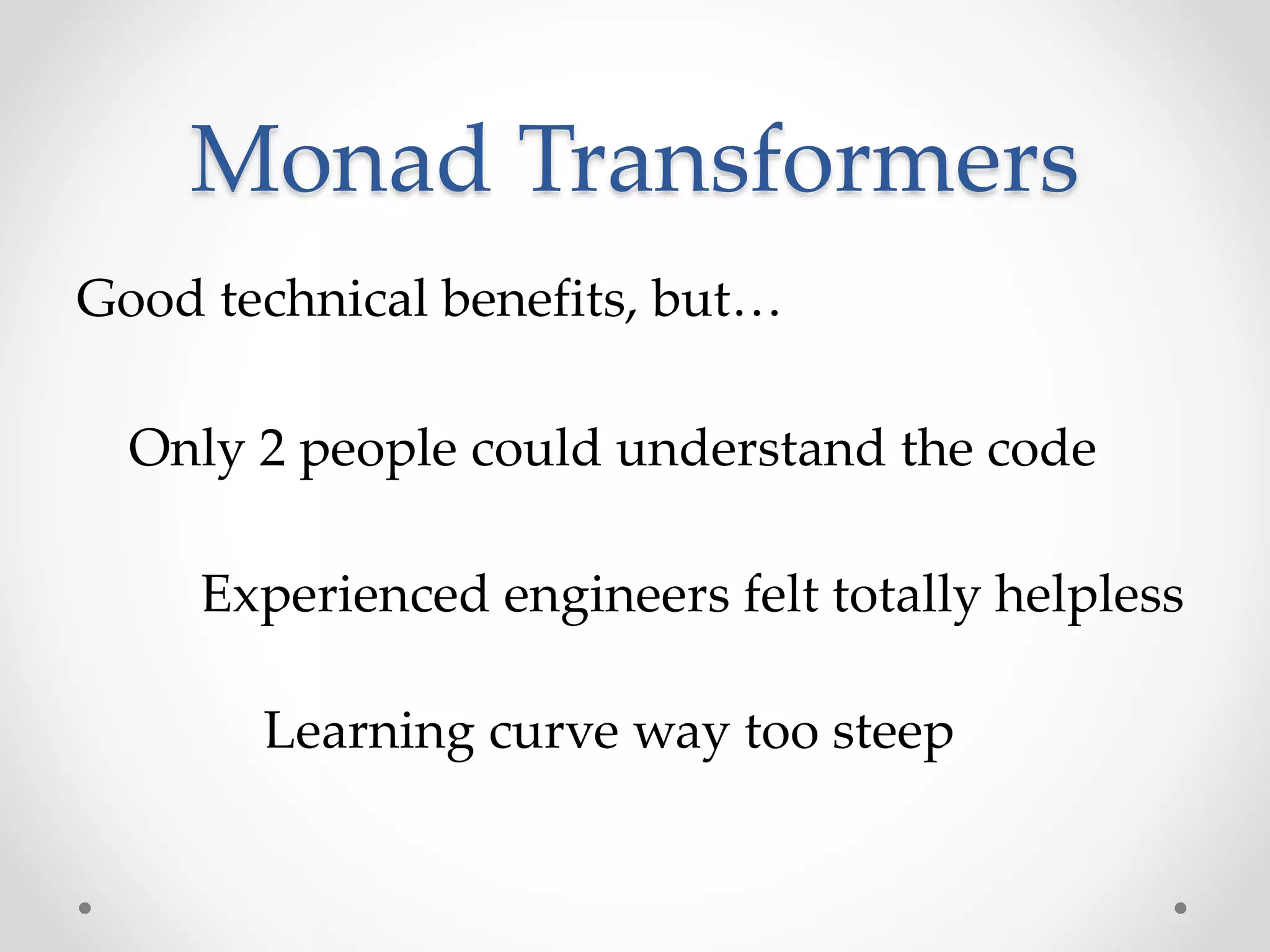
Monad Transformers
Good technical benefits, but…
Only 2 people could understand the code
Experienced engineers felt totally helpless
Learning curve way too steep
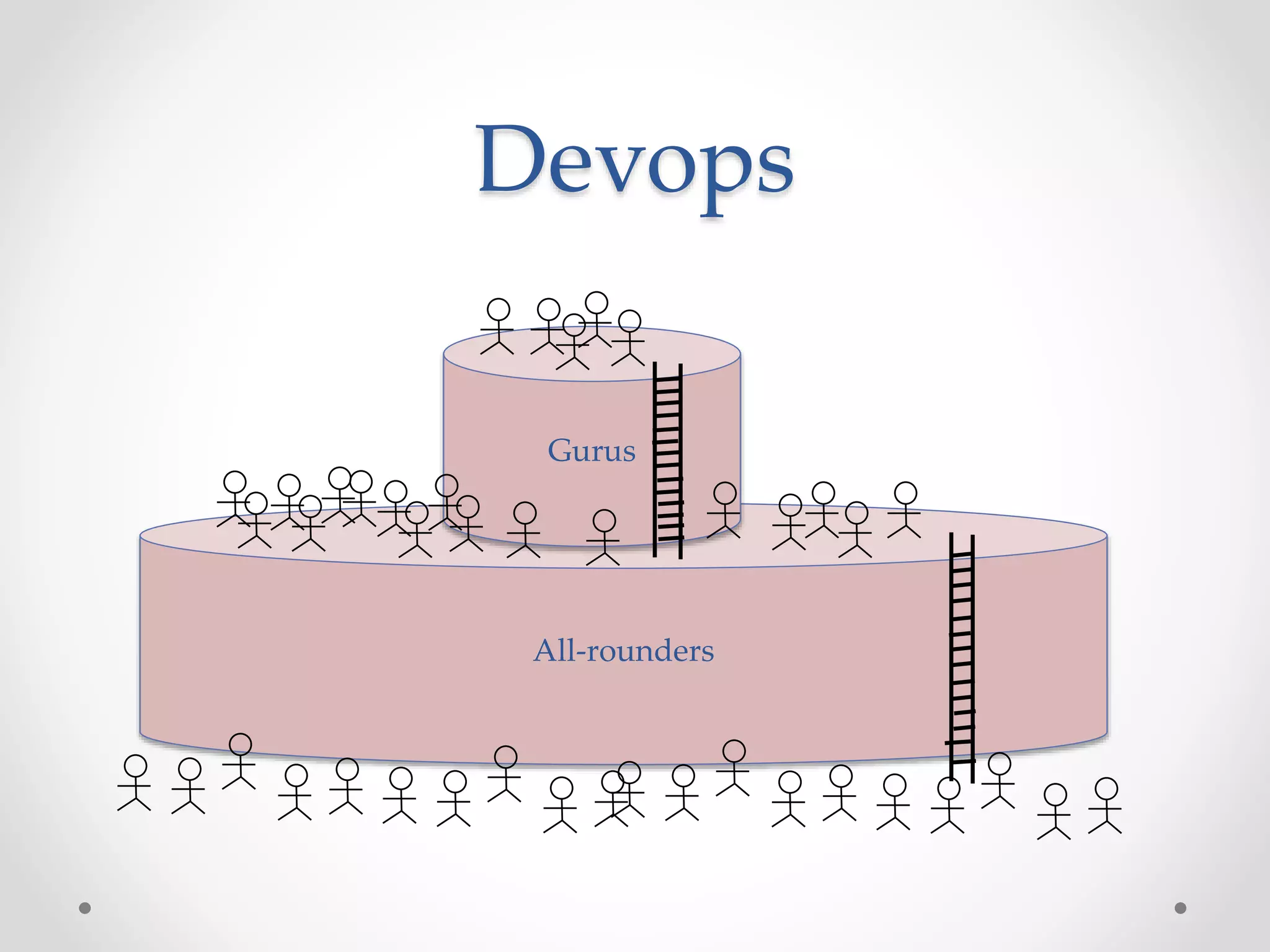
Devops
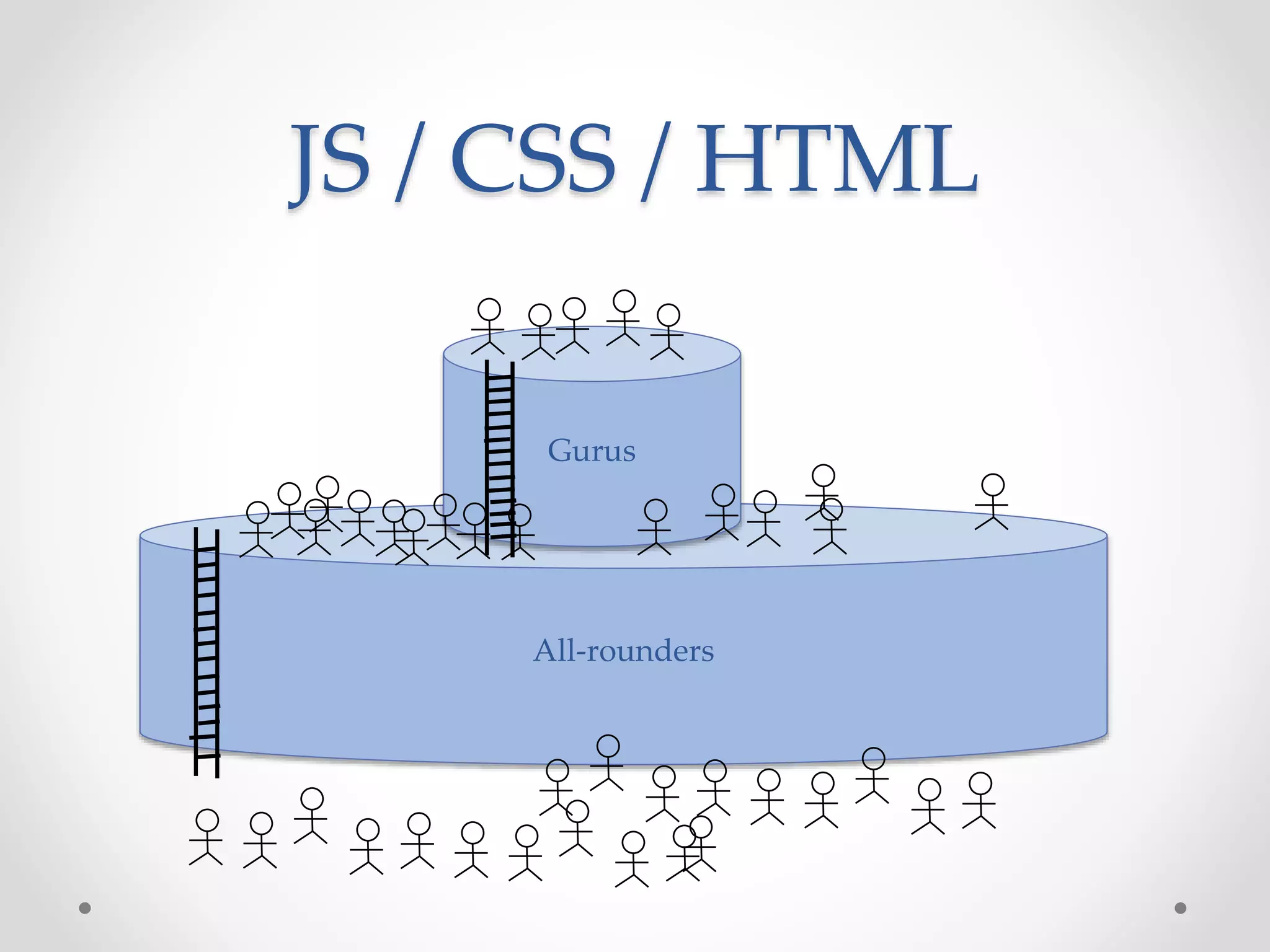
All-rounders
Gurus
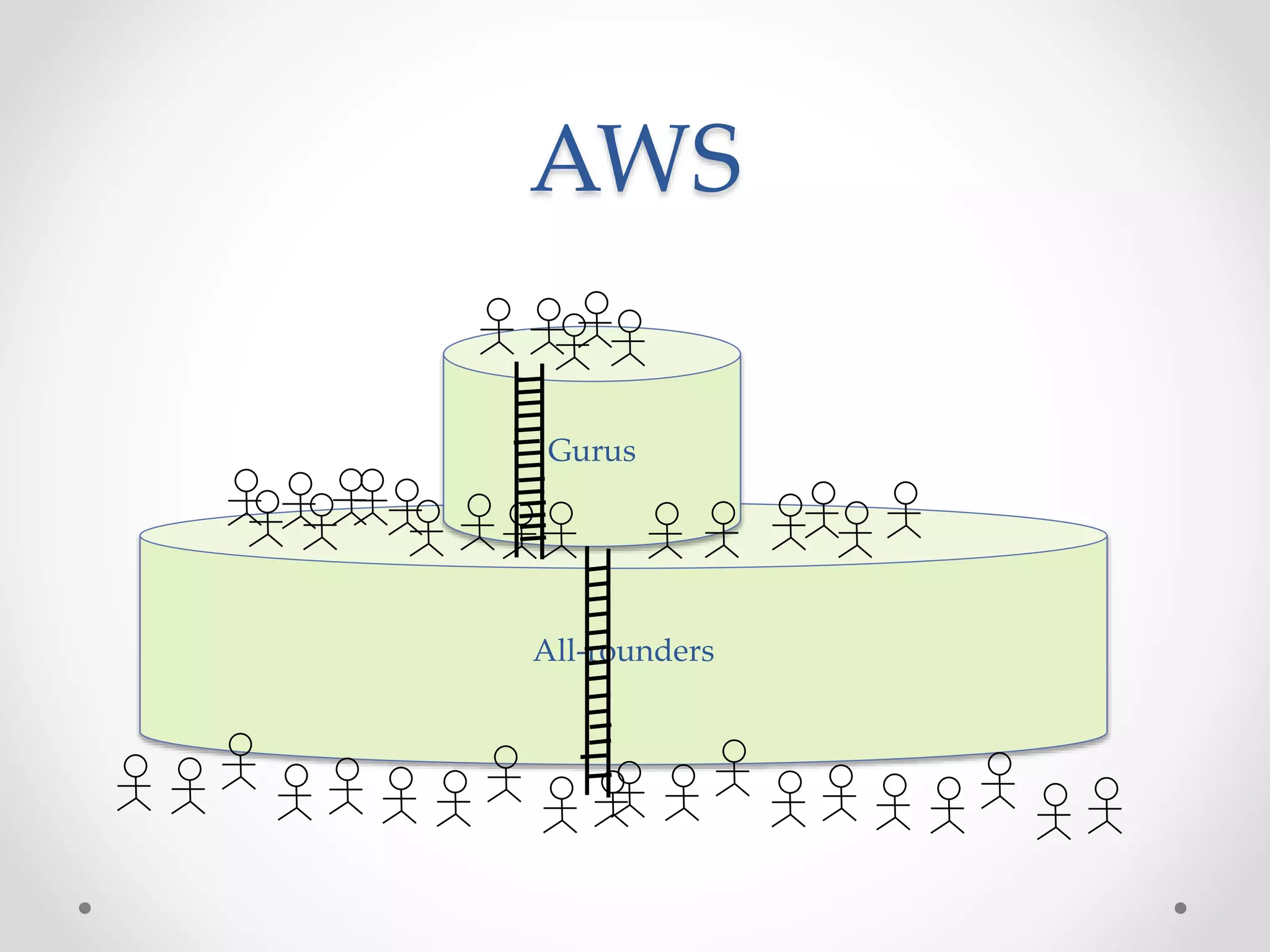
All-rounders
Gurus
JS / CSS / HTML
AWS
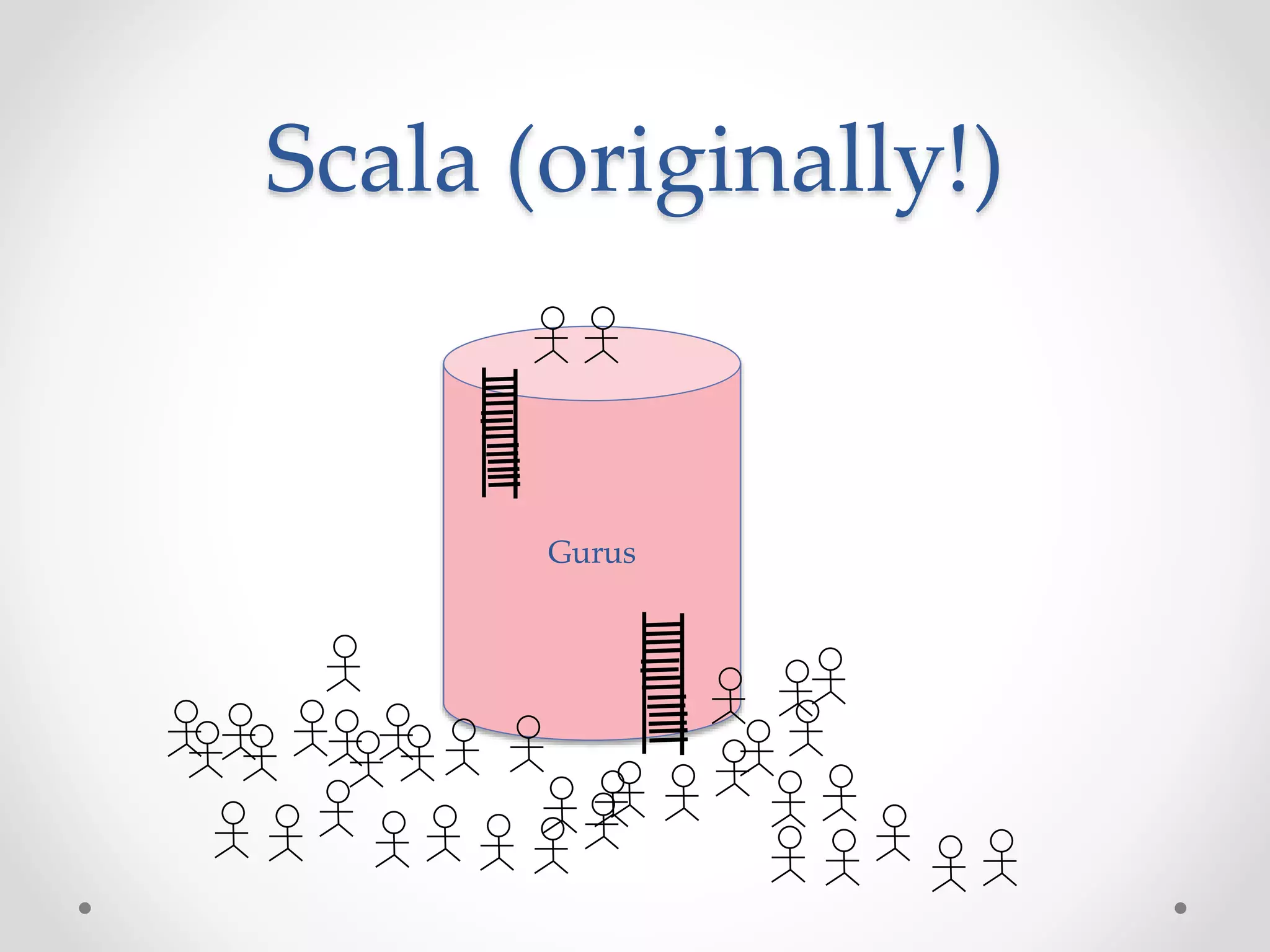
All-rounders
Gurus
Scala (originally!)
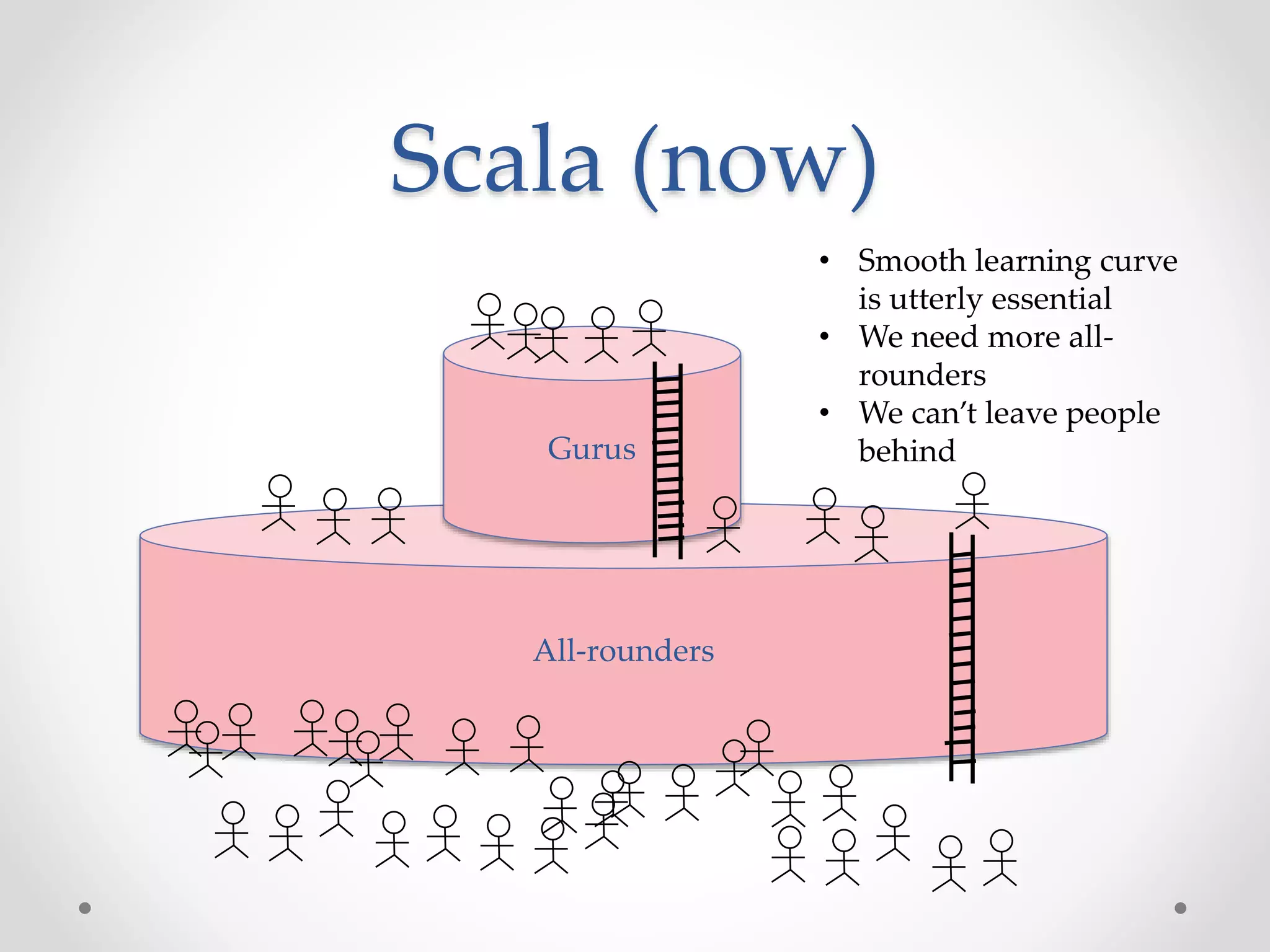
Gurus
All-rounders
Scala (now)
Gurus
• Smooth learning curve
is utterly essential
• We need more all-
rounders
• We can’t leave people
behind
Lesson #3
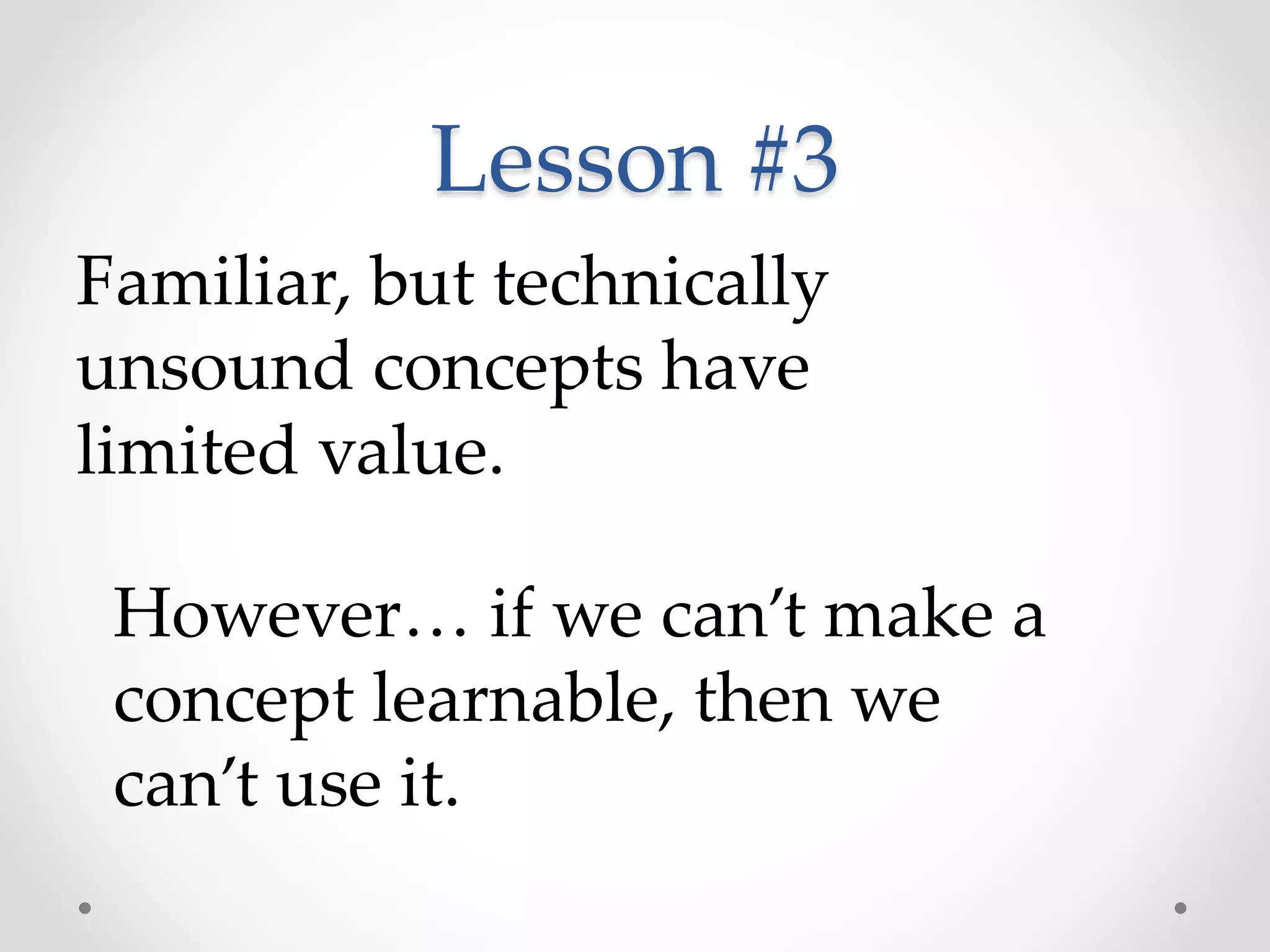
Familiar, but technically
unsound concepts have
limited value.
However… if we can’t make a
concept learnable, then we
can’t use it.
λ
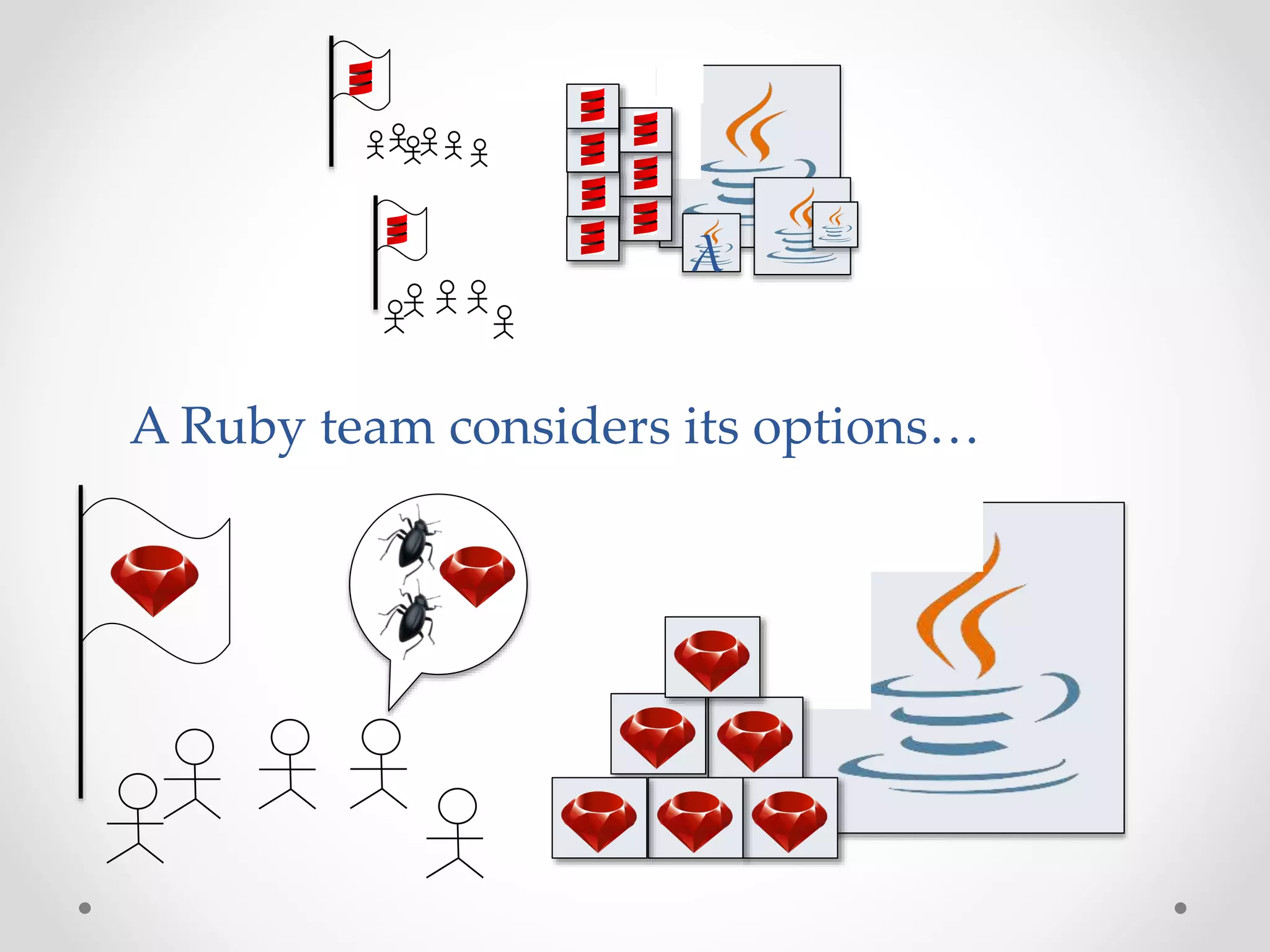
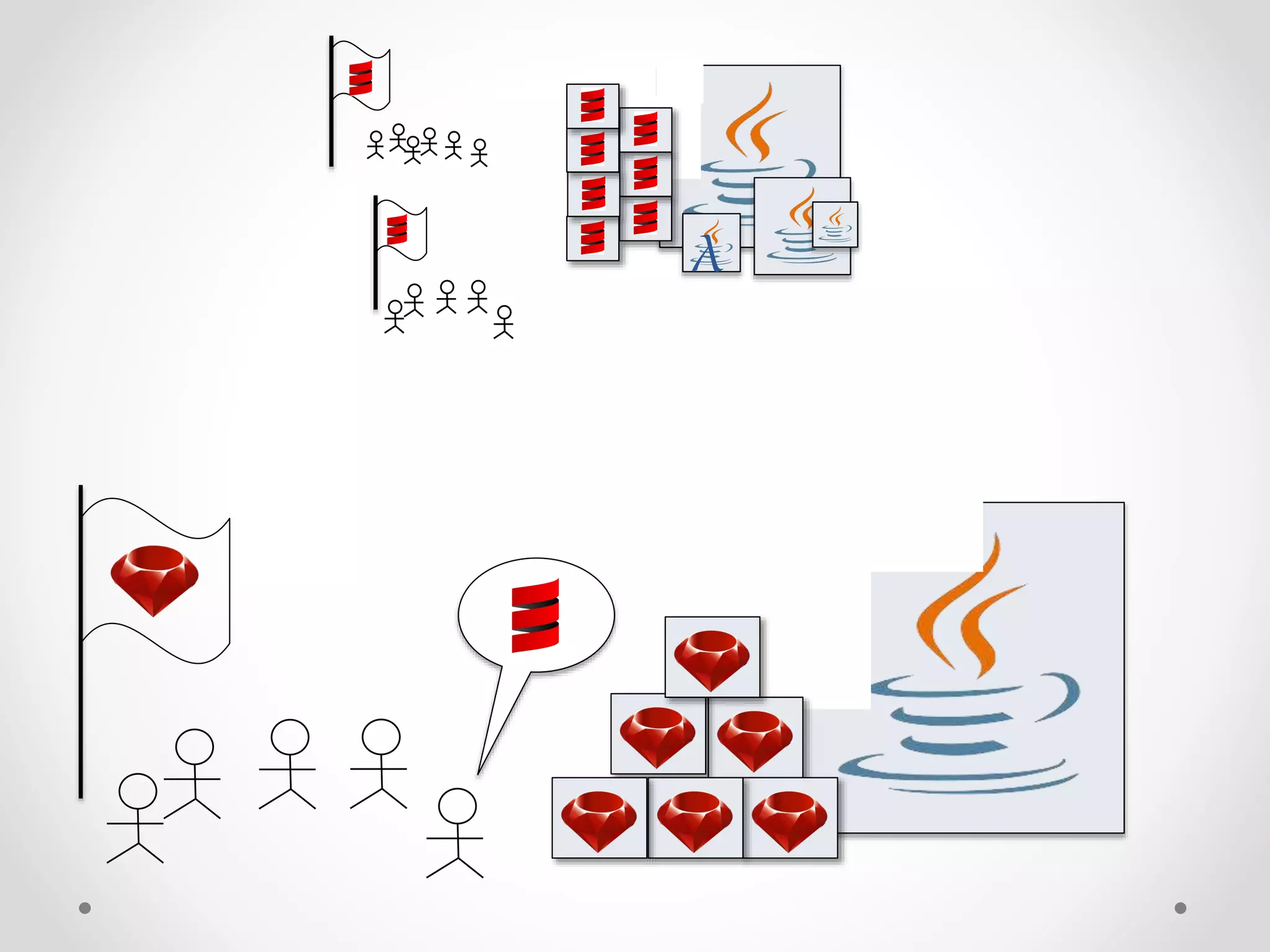
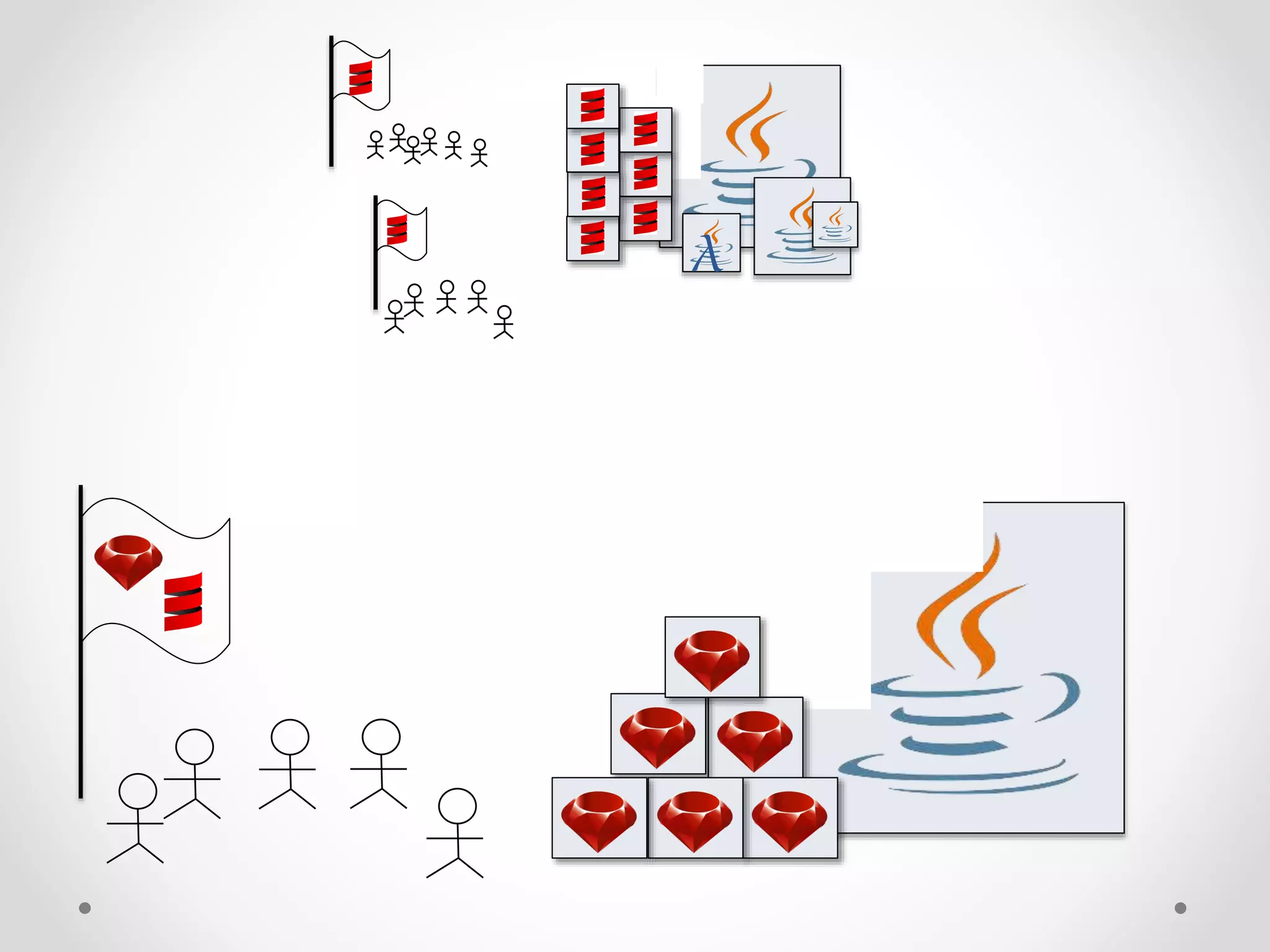
A Ruby team considers its options…
λ
λ
Jul 13 Jan 14
1 2
4
6
5
3
7
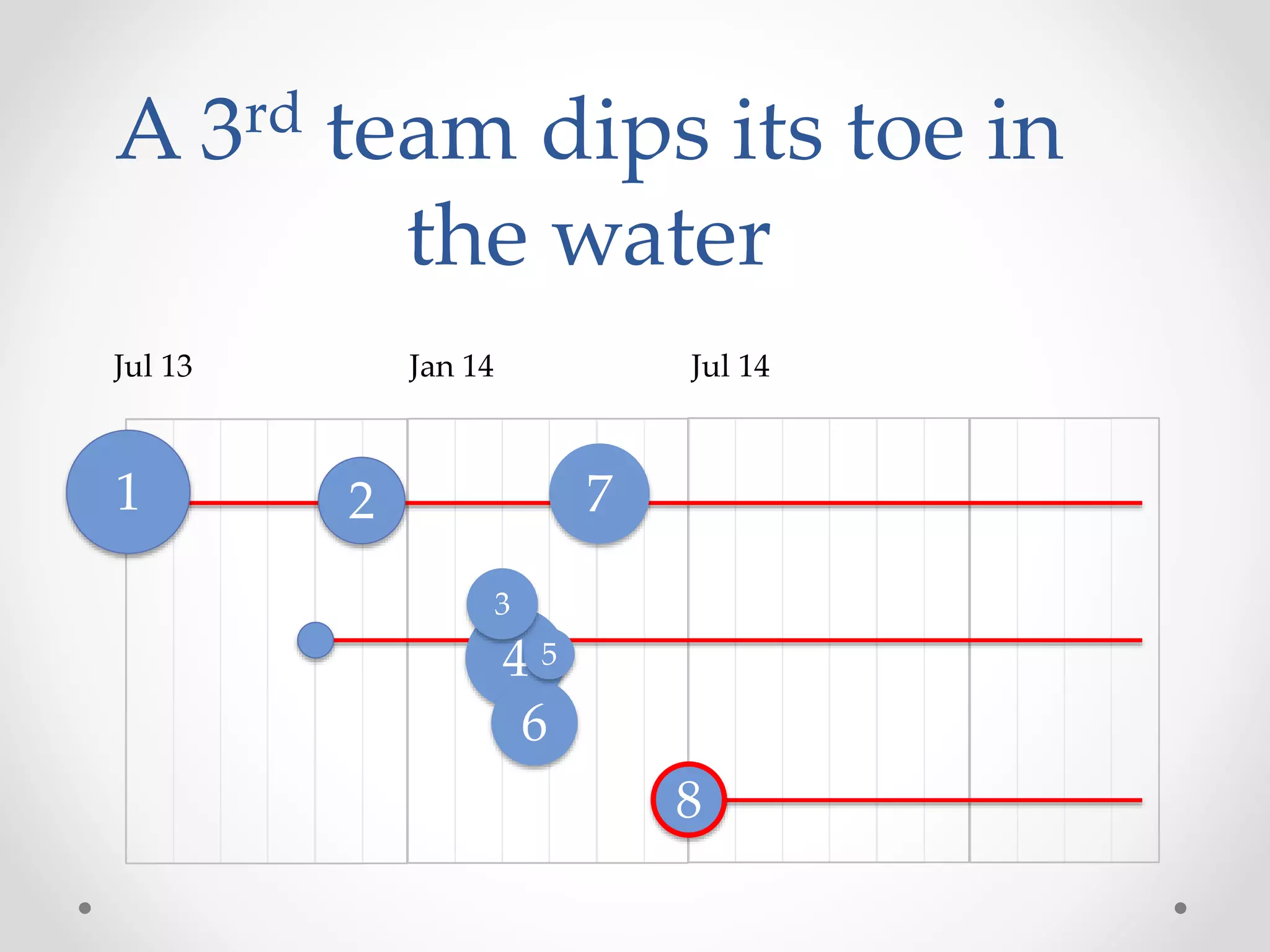
A 3rd team dips its toe in
the water
8
Jul 14
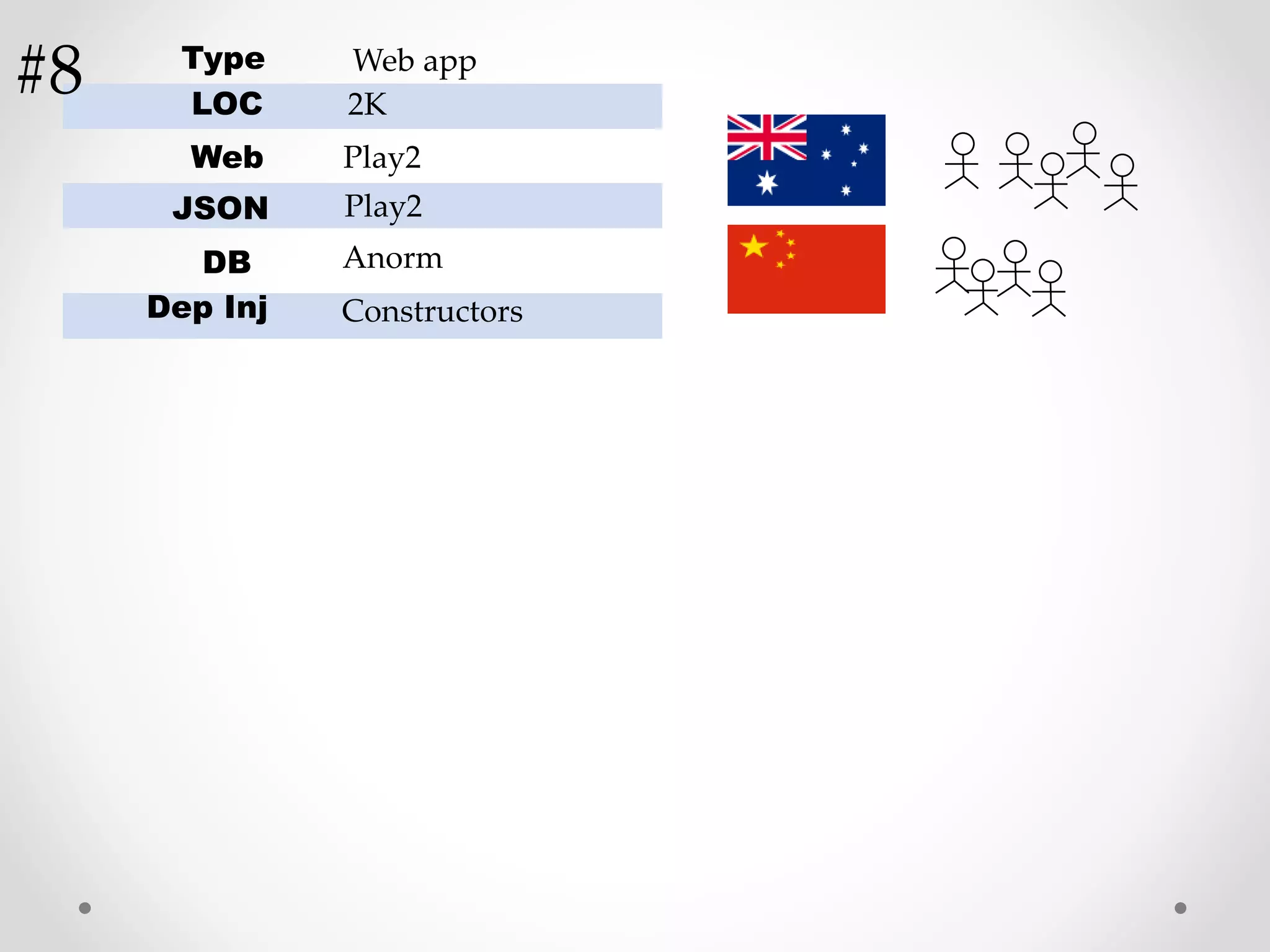
LOC
Web
JSON
DB
Dep Inj
Play2
Play2
2K
Anorm
Constructors
Type Web app
#8
LOC
Web
JSON
DB
Dep Inj
Play2
Play2
2K
Anorm
Constructors
Type Web app
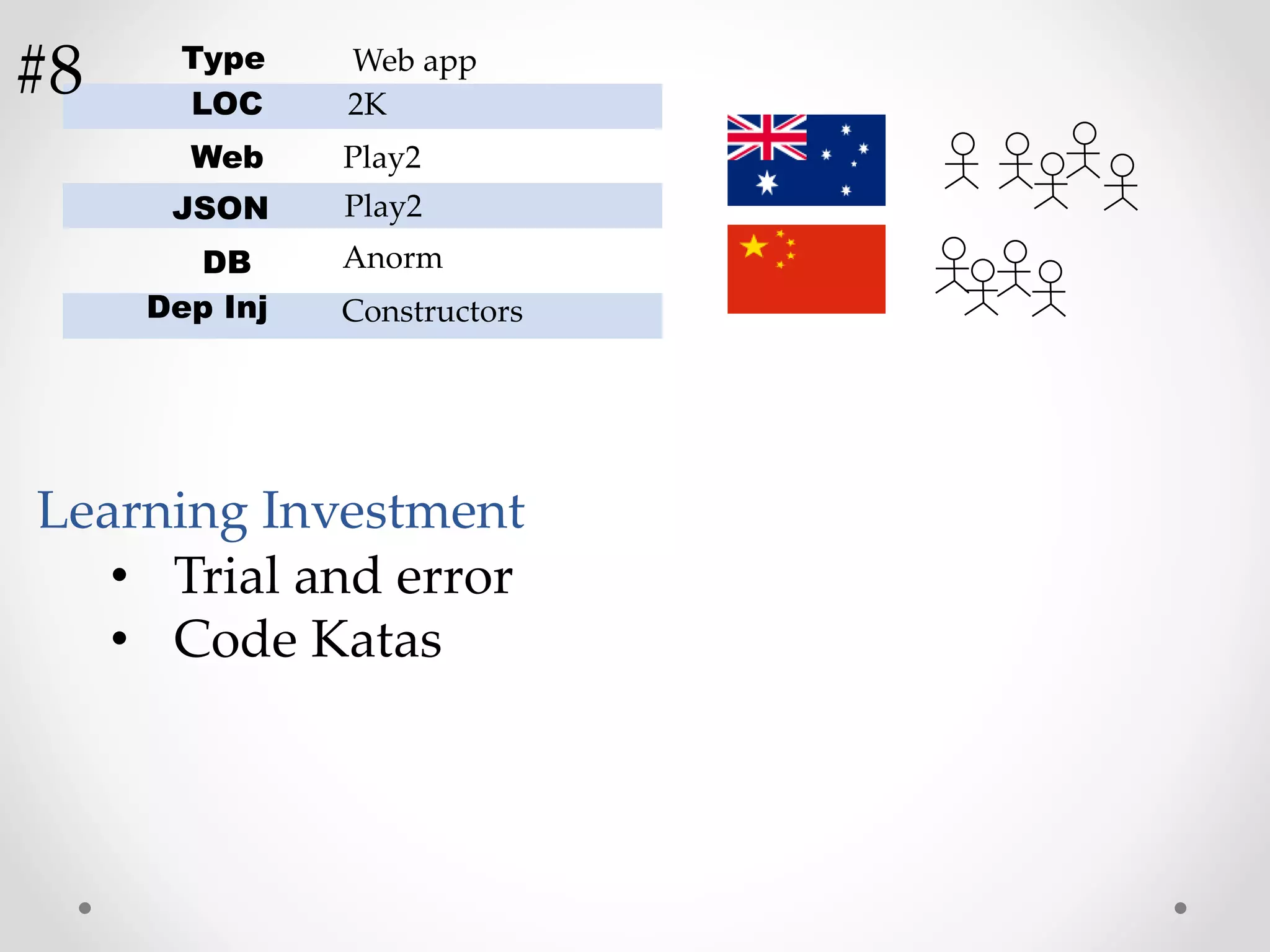
• Trial and error
• Code Katas
Learning Investment
#8
LOC
Web
JSON
DB
Dep Inj
Play2
Play2
2K
Anorm
Constructors
Type Web app
• Trial and error
• Code Katas
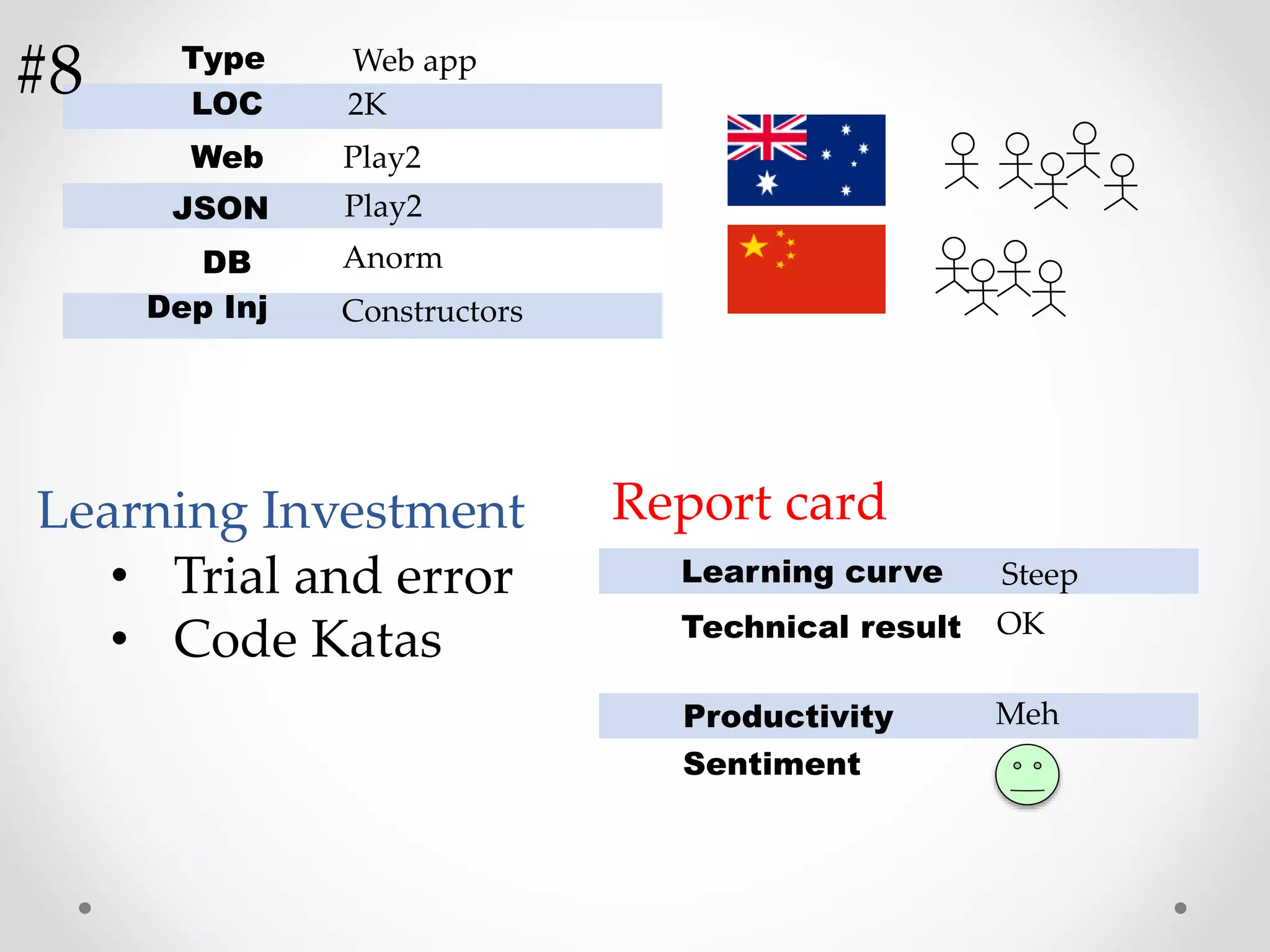
Learning Investment Report card
Learning curve
Technical result
Productivity
Sentiment
Steep
Meh
OK
#8
Lesson #4
It’s really hard learning
from scratch
Be prepared for pain up
front
λ
Jul 13 Jan 14
1 2
4
6
5
3
7
Latest iteration
8
Jul 14 Jan 15
17
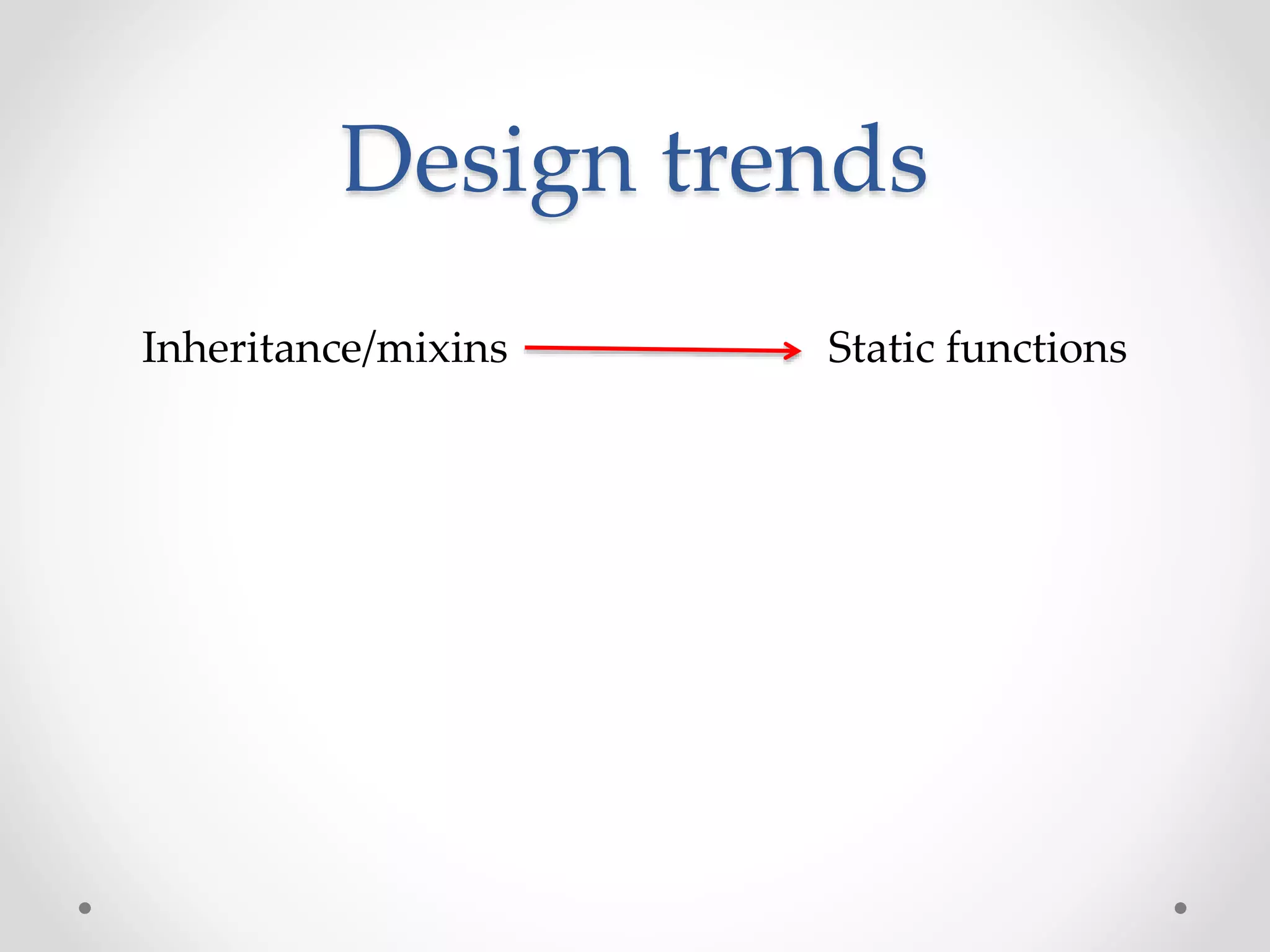
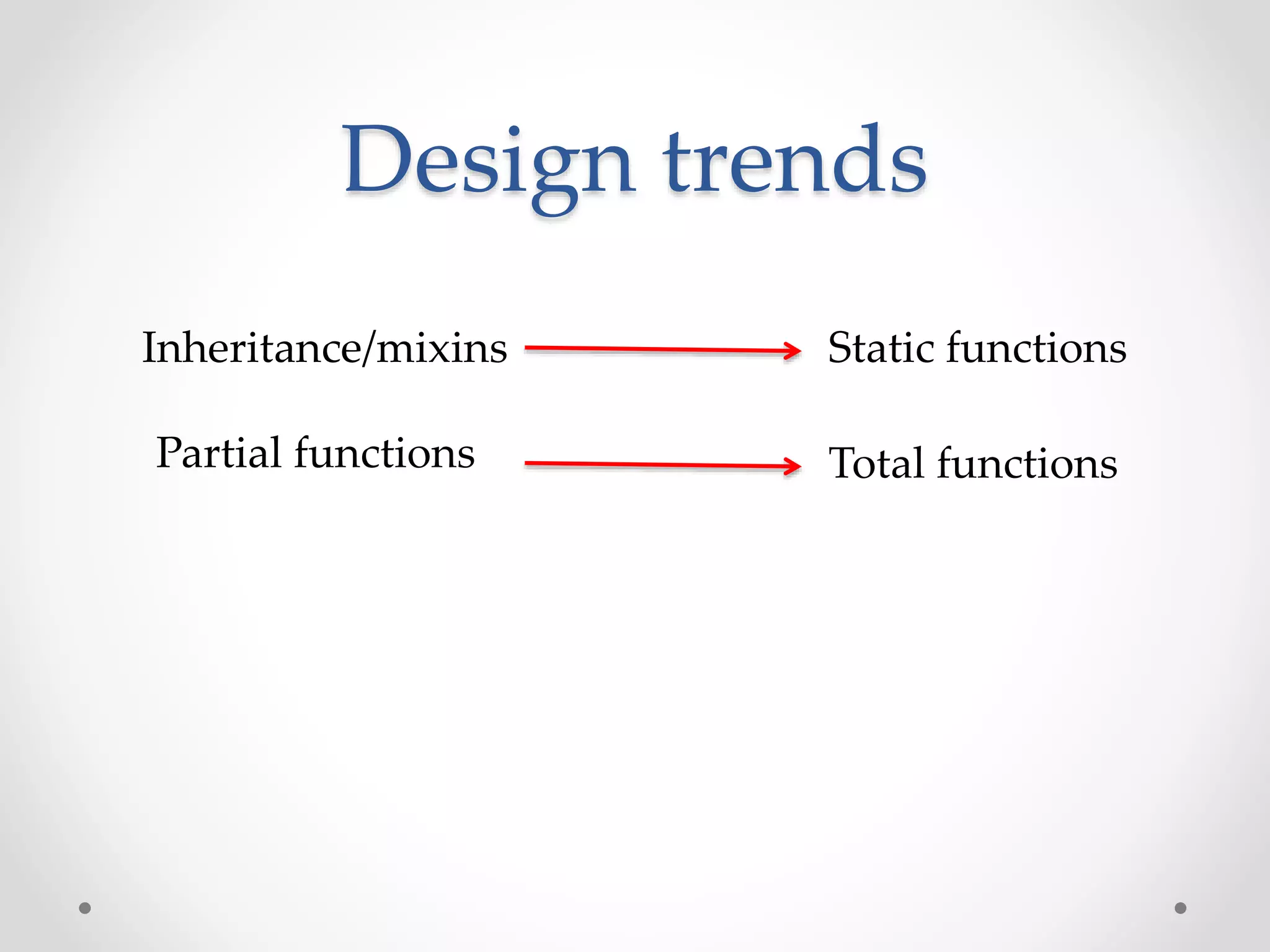
Design trends
Inheritance/mixins Static functions
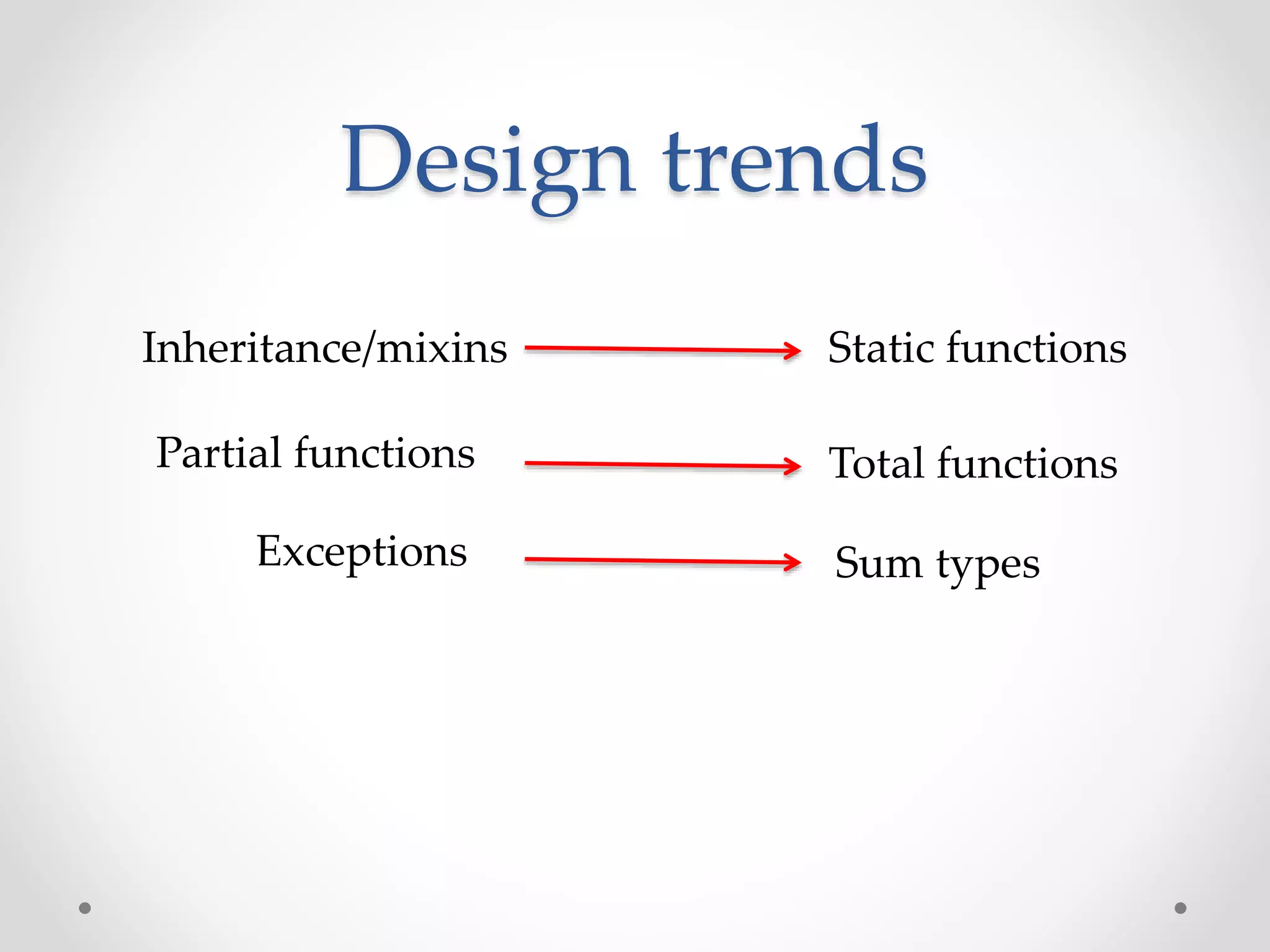
Design trends
Inheritance/mixins Static functions
Partial functions Total functions
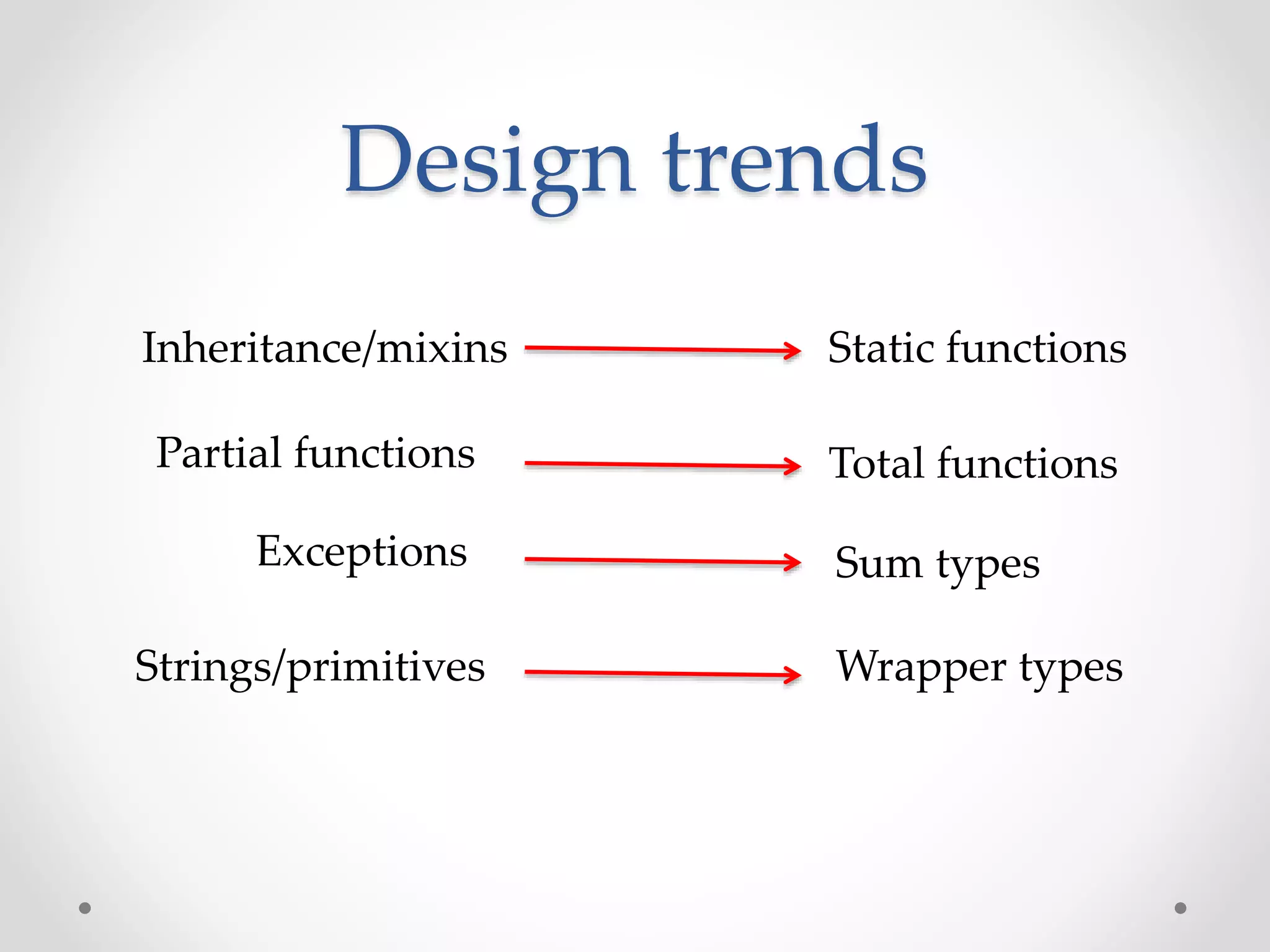
Design trends
Inheritance/mixins Static functions
Partial functions Total functions
Exceptions Sum types
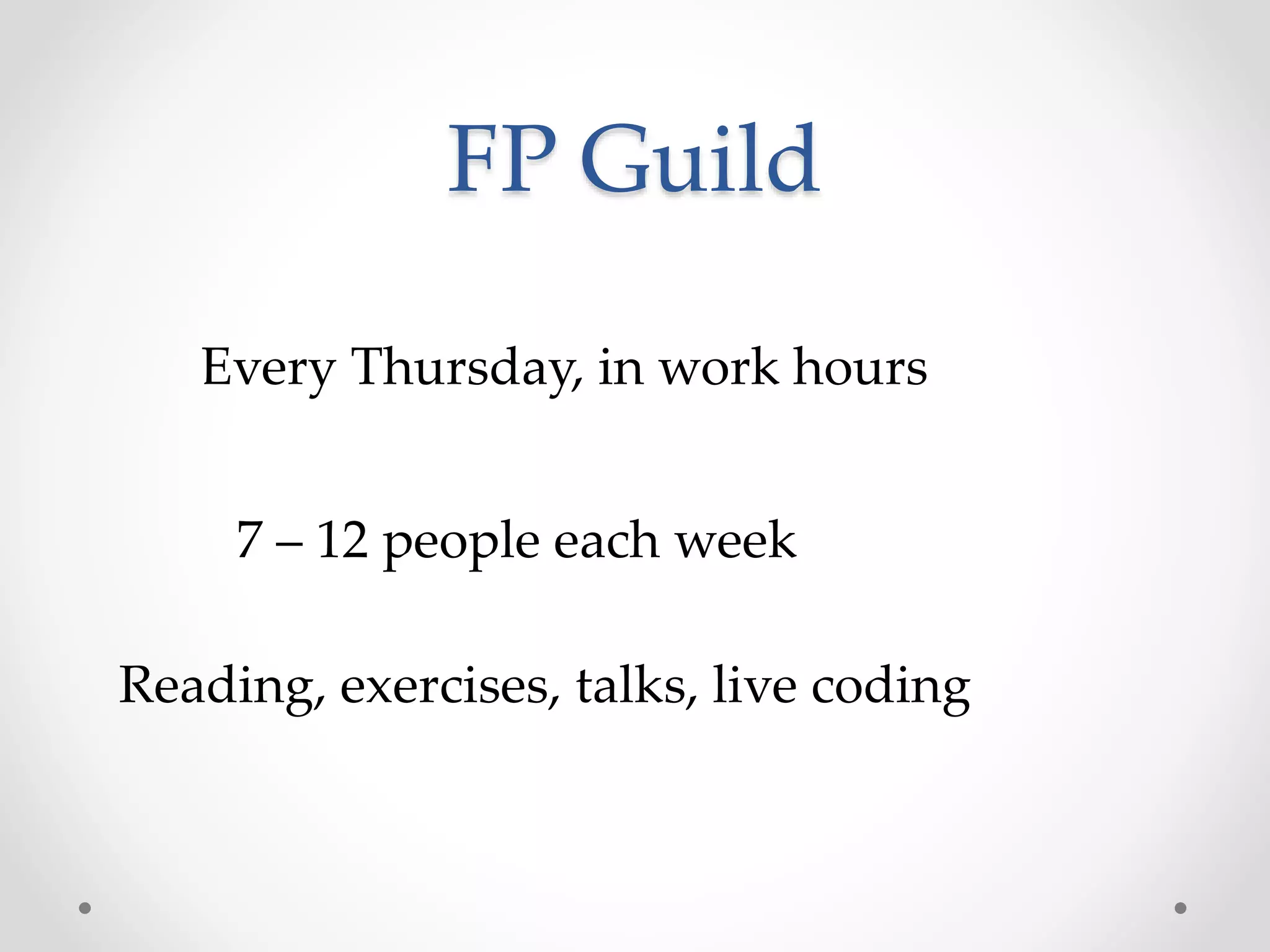
Design trends
Inheritance/mixins Static functions
Partial functions Total functions
Strings/primitives Wrapper types
Exceptions Sum types
FP Guild
Every Thursday, in work hours
7 – 12 people each week
Reading, exercises, talks, live coding
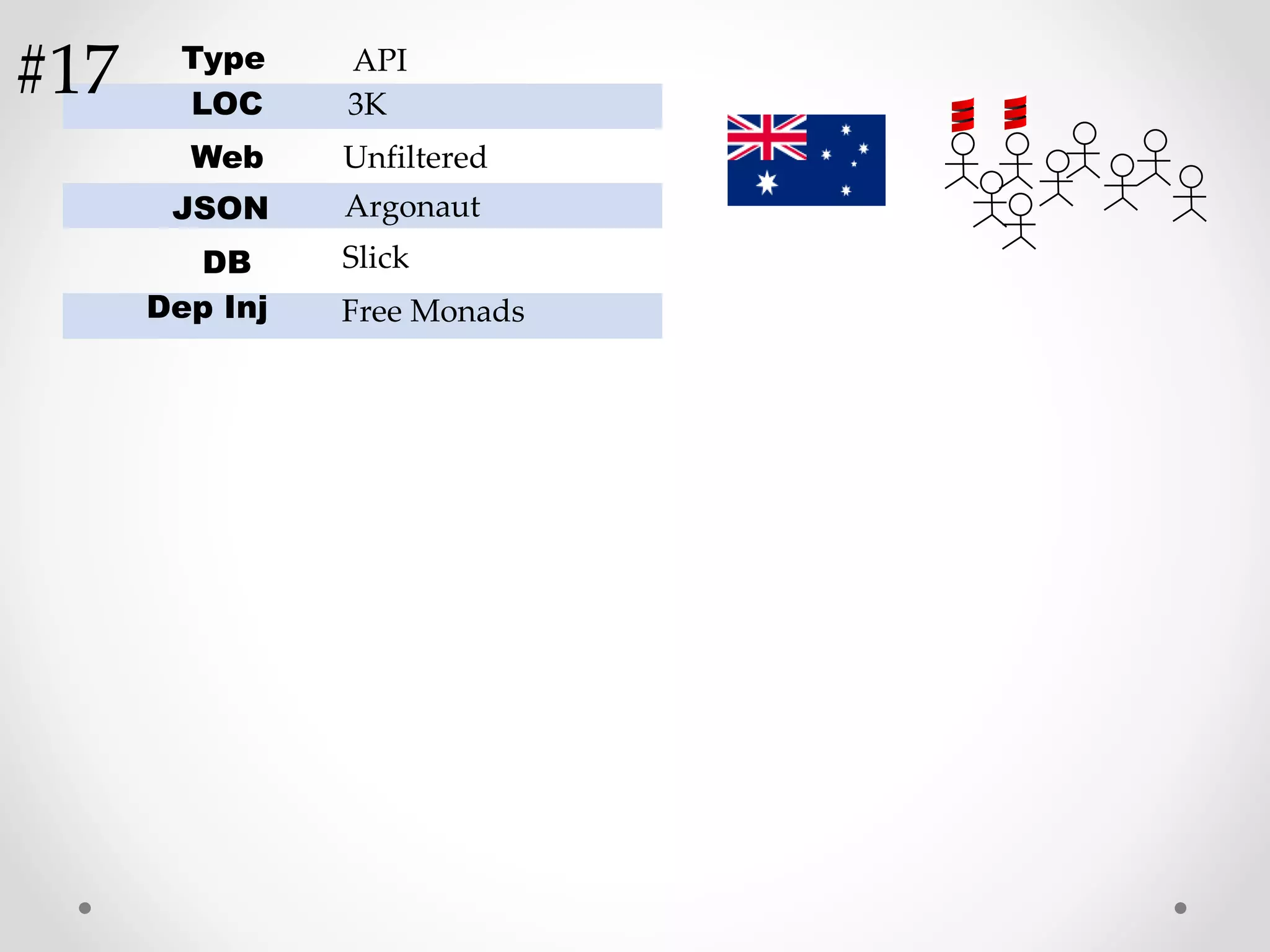
LOC
Web
JSON
DB
Dep Inj
Unfiltered
Argonaut
3K
Slick
Free Monads
Type API
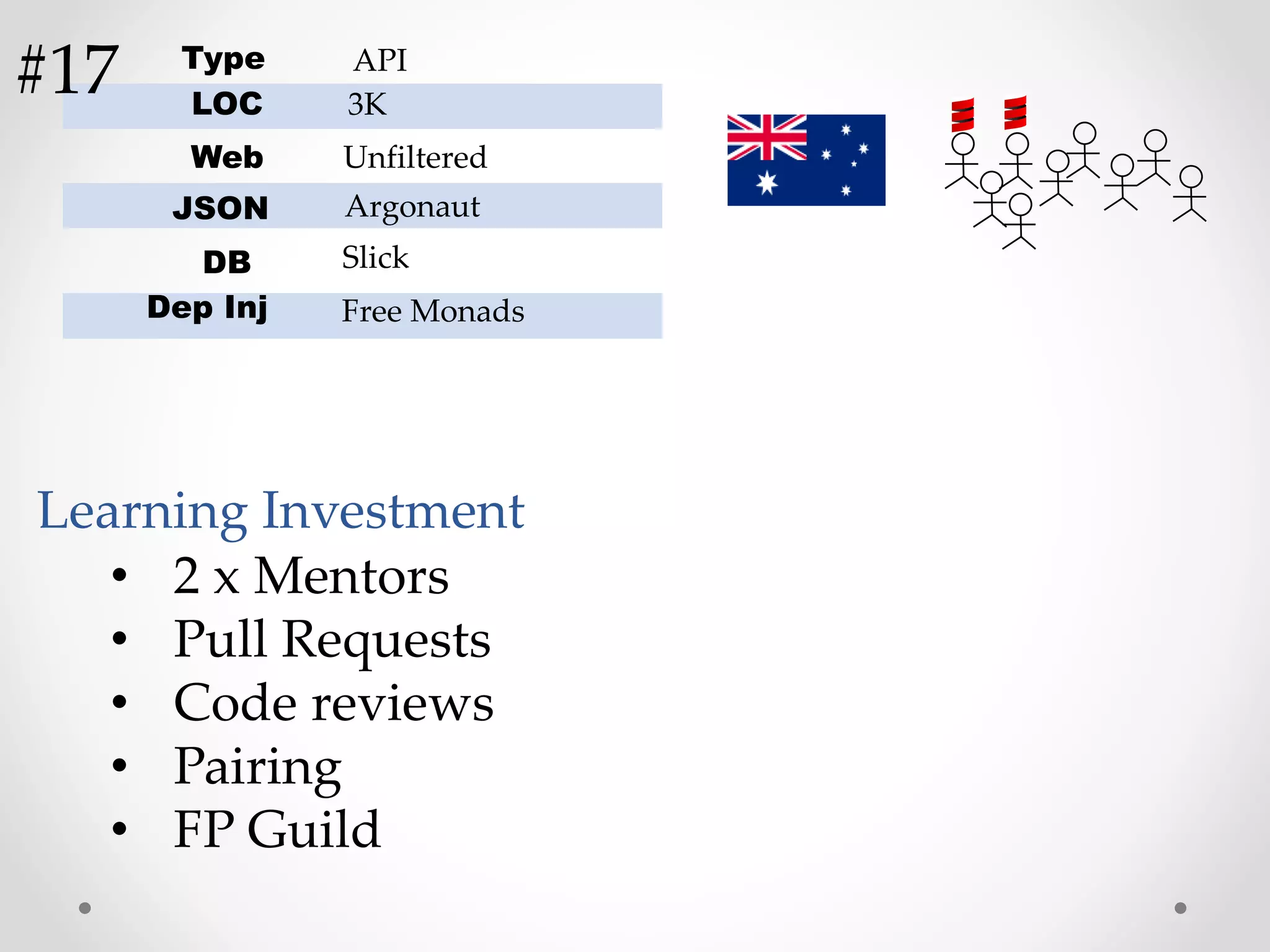
#17
LOC
Web
JSON
DB
Dep Inj
Unfiltered
Argonaut
3K
Slick
Free Monads
Type API
• 2 x Mentors
• Pull Requests
• Code reviews
• Pairing
• FP Guild
Learning Investment
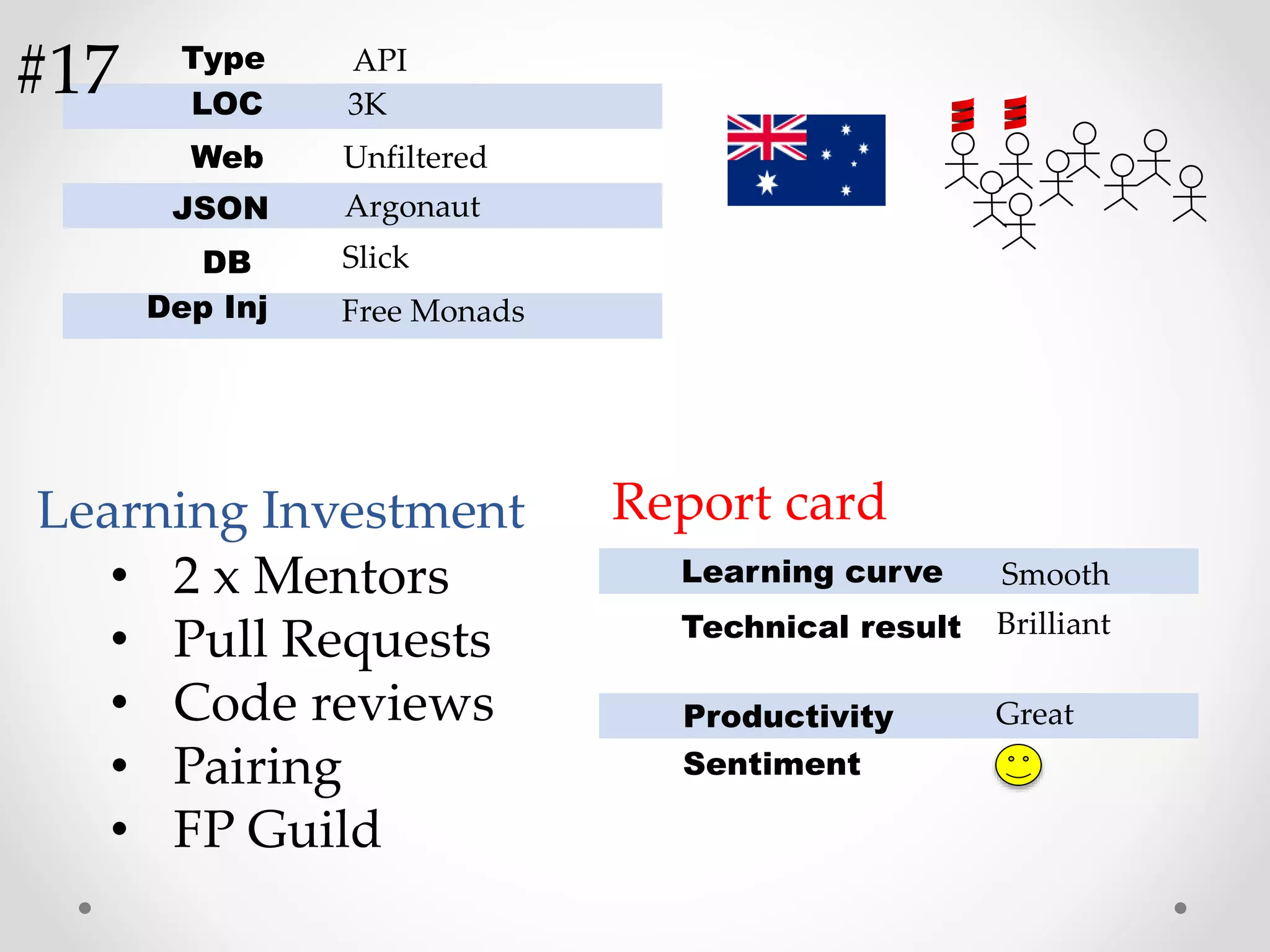
#17
LOC
Web
JSON
DB
Dep Inj
Unfiltered
Argonaut
3K
Slick
Free Monads
Type API
• 2 x Mentors
• Pull Requests
• Code reviews
• Pairing
• FP Guild
Learning Investment Report card
Learning curve
Technical result
Productivity
Sentiment
Smooth
Great
Brilliant
#17
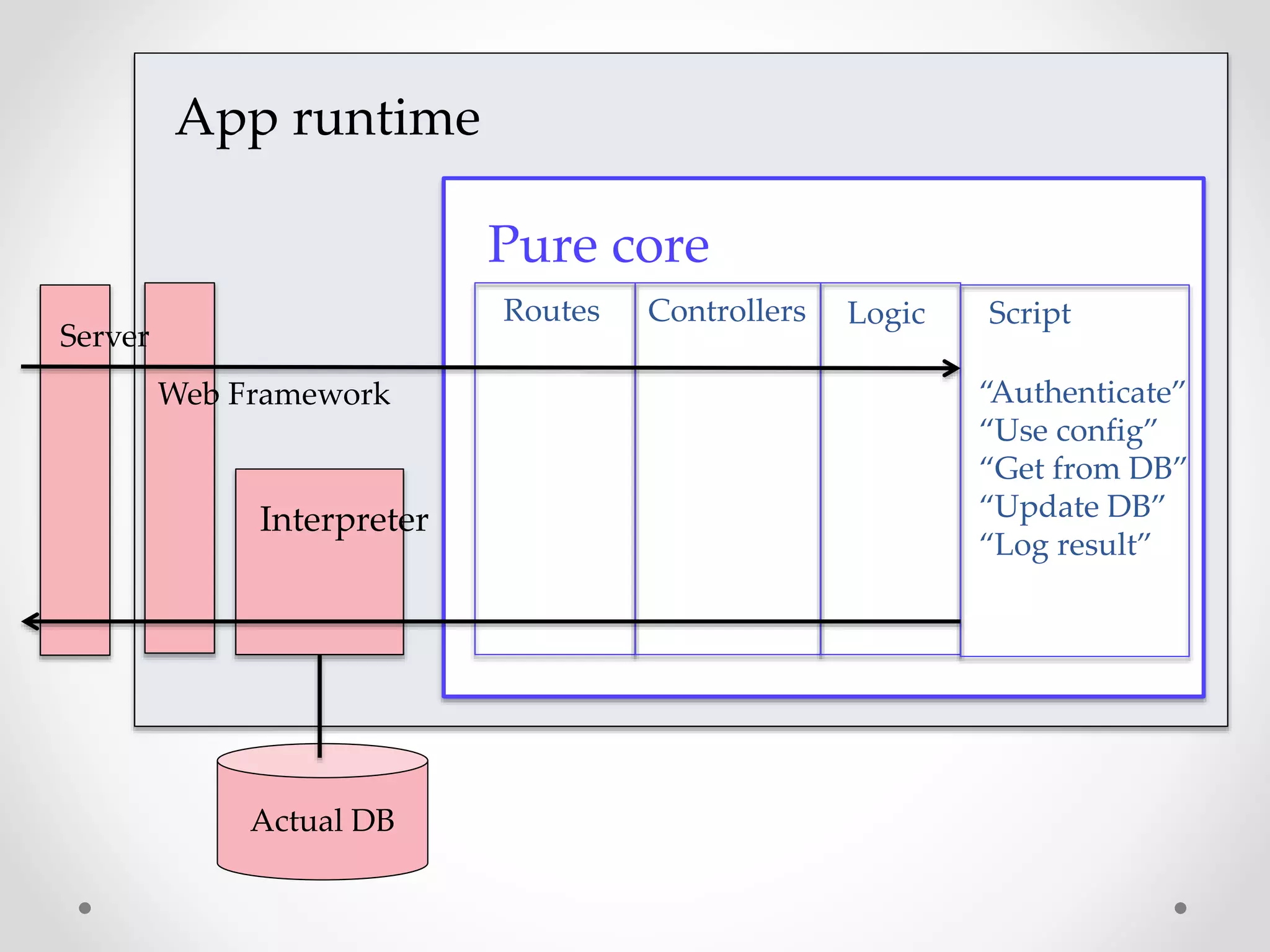
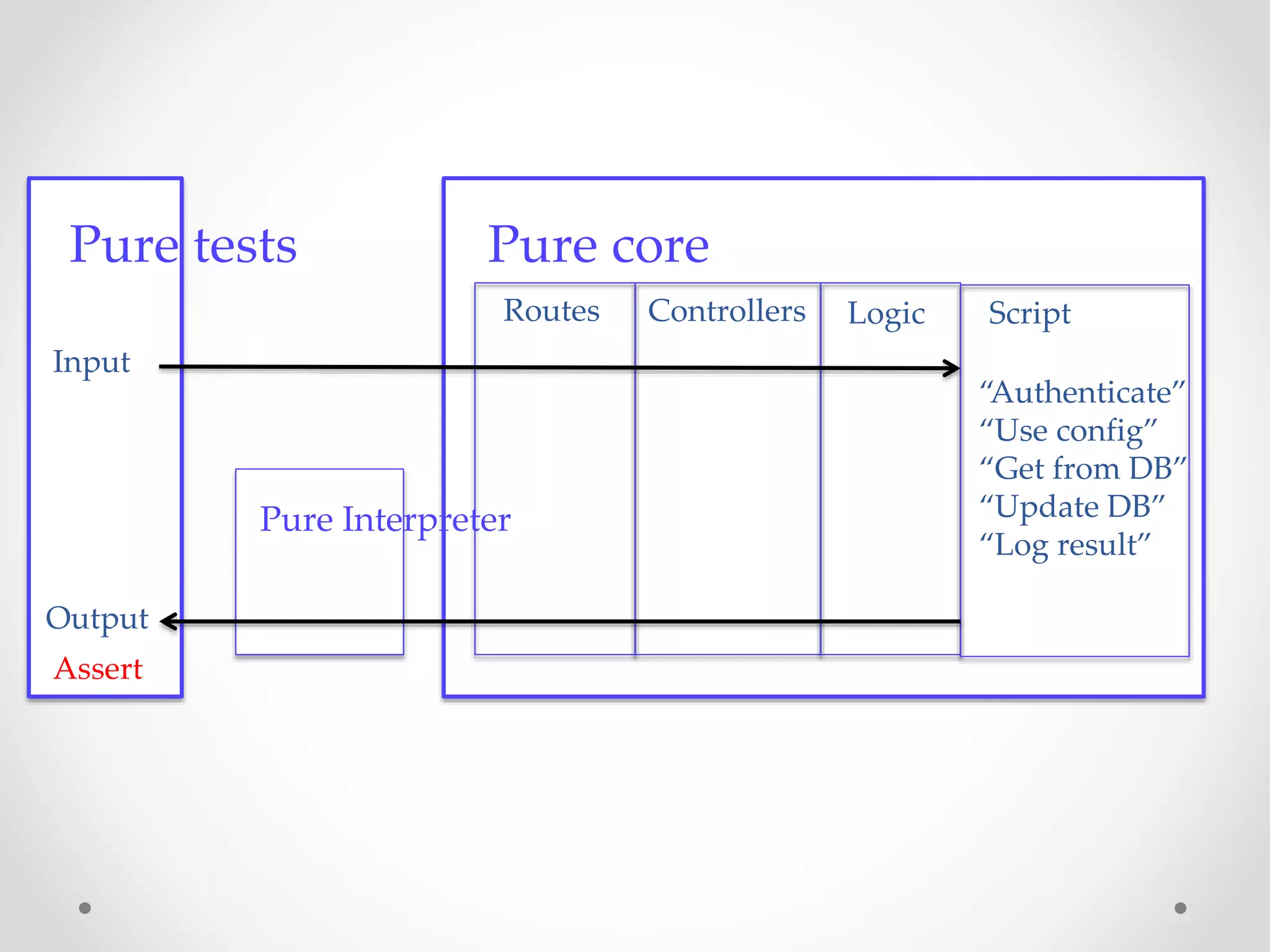
Pure core
Routes Controllers Logic Script
Interpreter
Actual DB
“Authenticate”
“Use config”
“Get from DB”
“Update DB”
“Log result”
Web Framework
Server
App runtime
Pure core
Routes Controllers Logic Script
Pure Interpreter
Pure tests
Input
Output
Assert
“Authenticate”
“Use config”
“Get from DB”
“Update DB”
“Log result”
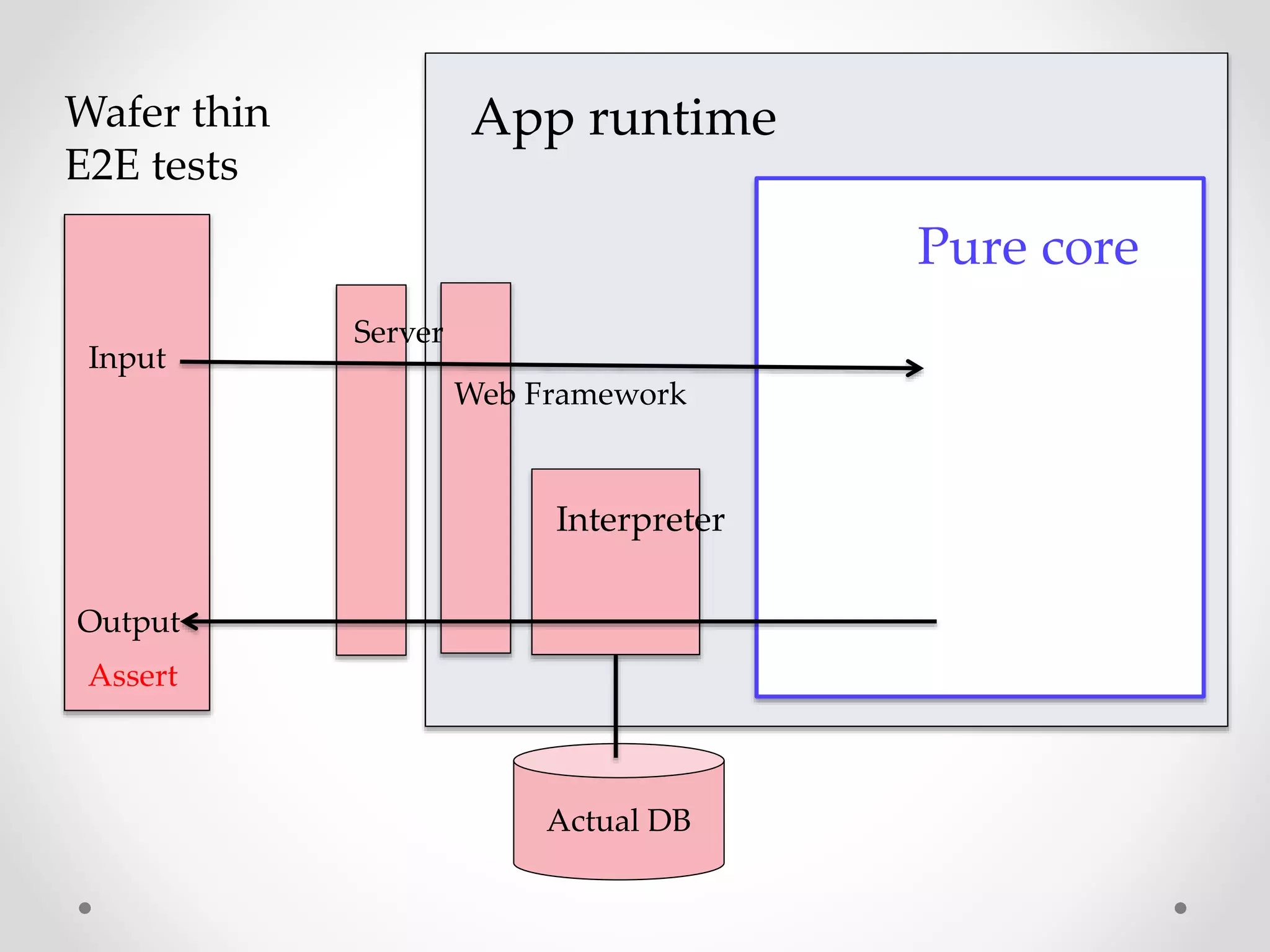
Pure core
Interpreter
Actual DB
Web Framework
Server
App runtimeWafer thin
E2E tests
Input
Output
Assert
object SearchController {
def getList(uid: UserId): Script[Response]
= {
for {
searches <- getSearches(uid)
cfg <- getConfig
results <- addLinks(searches, cfg)
} yield Ok ~> Response(result.toJson)
}
}
Learning curve:
Learning curve:
Smooooth
Mocks
Stubs
Flaky pretend servers
just to check
a response code
Flaky tests
that take
30 min to run
Side effects
everywhere
Exceptions
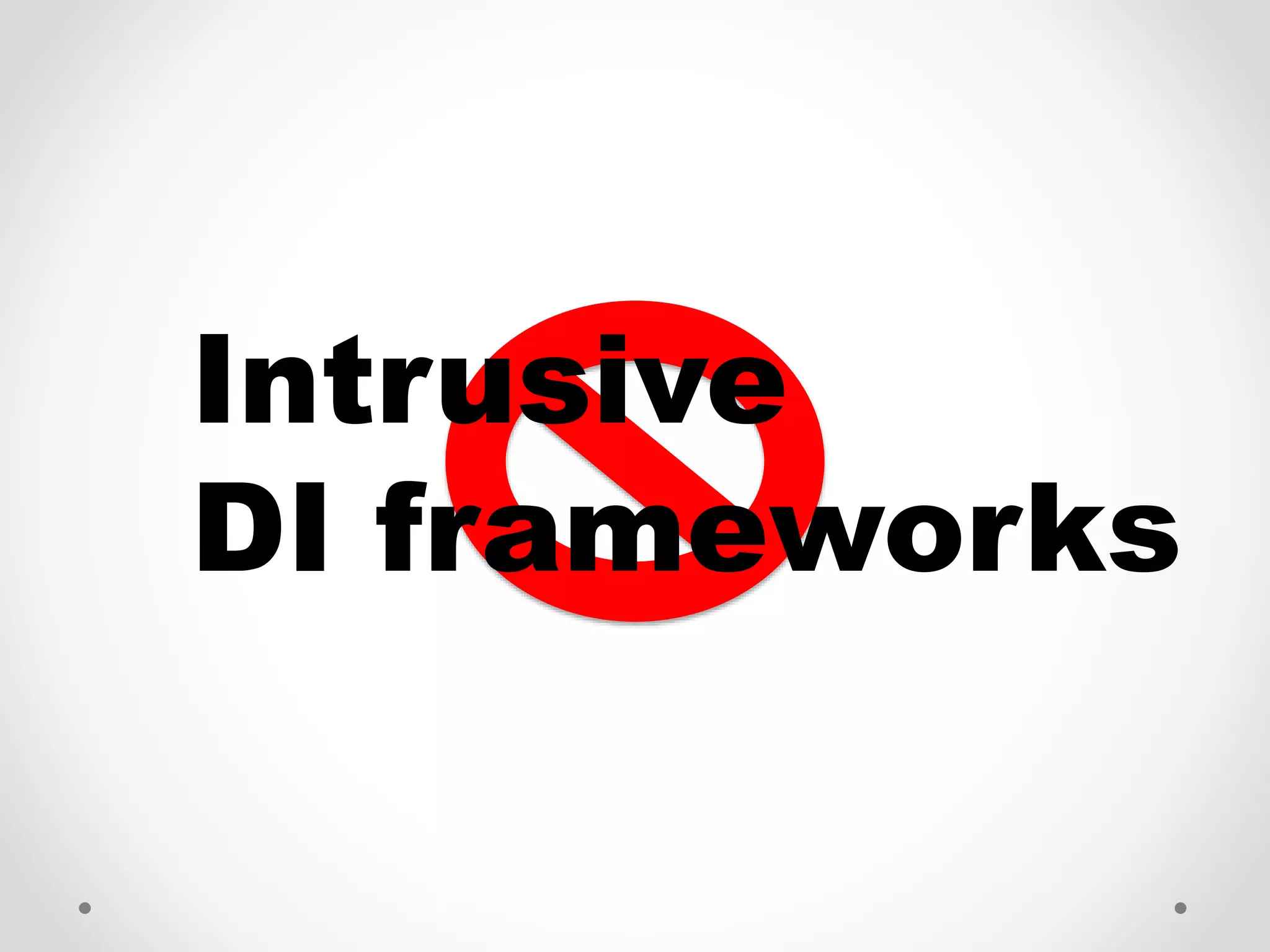
Intrusive
DI frameworks
You shouldn’t be
dealing with all
that complexity
and crap!
Most business software
isn’t rocket science.
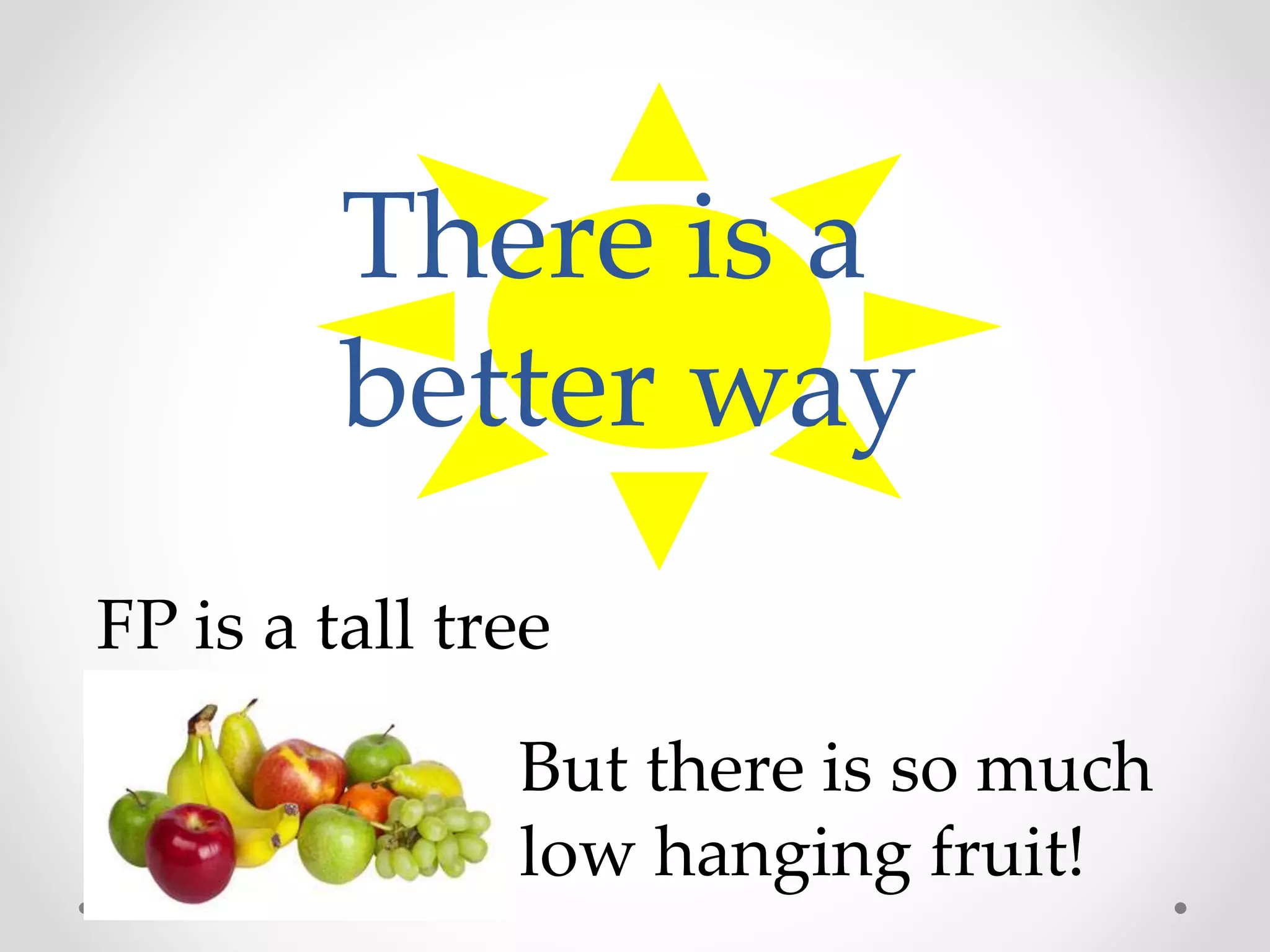
There is a
better way
FP is a tall tree
But there is so much
low hanging fruit!
Thank you!

2 Years of Real World FP at REA