Institutions and Audiences
Some terminology


There are a number of institutions working together in the
videogames industry and we may not realise the work that
goes into the game on the shelf.
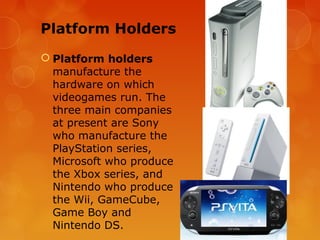
Platform Holders
 Platform holders
  manufacture the
  hardware on which
  videogames run. The
  three main companies
  at present are Sony
  who manufacture the
  PlayStation series,
  Microsoft who produce
  the Xbox series, and
  Nintendo who produce
  the Wii, GameCube,
  Game Boy and
  Nintendo DS.
Developers

 The teams that create the
  videogames (the software
  that runs on consoles, PCs
  and handhelds).
 Developers may be ‘first
  party’ (directly owned by a
  platform holder),
 ‘second party’ where there
  is some platform holder
  support or funding, or
 ‘third party’ who are
  unaffiliated with the
  platform holder.
Publishers

 Publishers provide money and
  support for the development
  teams who create
  videogames.
 Ubisoft and SCI
  (incorporating Eidos) in the
  UK, as well as Sony Computer
  Entertainment, Microsoft,
  Nintendo and Electronic Arts
  are among the larger
  videogame publishers.
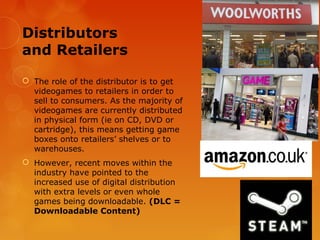
Distributors
and Retailers

 The role of the distributor is to get
  videogames to retailers in order to
  sell to consumers. As the majority of
  videogames are currently distributed
  in physical form (ie on CD, DVD or
  cartridge), this means getting game
  boxes onto retailers’ shelves or to
  warehouses.
 However, recent moves within the
  industry have pointed to the
  increased use of digital distribution
  with extra levels or even whole
  games being downloadable. (DLC =
  Downloadable Content)
Think of any game you might
    have played

 Find out the following and post it as a Blogpost if you’ve set
  it up, otherwise paper is fine.
 Game title: (Include an image of the coverart)
 Available on what platform holders:
 Developer:
 Publisher:
 How much did it cost to make?
 How is it distributed – physical? Digital? Where could you get
  it from? Price?
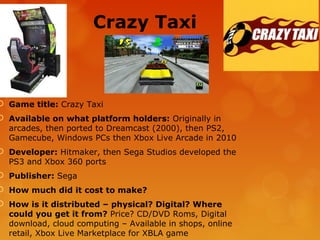
Crazy Taxi


 Game title: Crazy Taxi
 Available on what platform holders: Originally in
  arcades, then ported to Dreamcast (2000), then PS2,
  Gamecube, Windows PCs then Xbox Live Arcade in 2010
 Developer: Hitmaker, then Sega Studios developed the
  PS3 and Xbox 360 ports
 Publisher: Sega
 How much did it cost to make?
 How is it distributed – physical? Digital? Where
  could you get it from? Price? CD/DVD Roms, Digital
  download, cloud computing – Available in shops, online
  retail, Xbox Live Marketplace for XBLA game
For homework/if you finish
this exercise, then try and
find out about the institutions
behind Grand Theft Auto 4

 Find out the following and post it as a Blogpost if you’ve
  set it up, otherwise paper is fine.
 Game title: (Include an image of the coverart)
 Available on what platform holders:
 Developer:
 Publisher:
 How much did it cost to make?
 How is it distributed – physical? Digital? Where could
  you get it from? Price?
Convergence
 Media institutions in the 21st century
  produce and distribute their
  products across several media
  platforms: e.g. The Guardian has a
  paper edition, an online edition,
  podcasts and an iPhone / Android
  app.
 In regards to our industry, the
  three main platform holders
  Nintendo, Microsoft and Sony are
  examples of convergence
Convergence
 Another example would be Warner Brothers making Harry Potter
  the film and then releasing Harry Potter the video game.
 When this happens it is called cross-media convergence.
 With video-game convergence, it has become part of the synergy
  of marketing for many children’s films that a tie-in game is
  released in the run up to the cinema release – compared to many
  other games they are usually rushed and use the IP (Intellectual
  Property) of the film and combine it with an existing game
  engine.
 Synergy: Using more than section of the media to aid the
  promotion and sale of a product
 There are few critically acclaimed movie tie-in games. The classic
  examples many gamers my age mention is Goldeneye on the N64
  – However, this came out two years after the Bond film! It shows
  that sometimes it is good to wait!
 Sometimes it can happen the other way round: Films that
  are adapted from videogames – to varied success!
Technological
  Convergence

 When technologies come together to
  perform more than one function e.g:
   a mobile phone taking photos and videos
   Internet TV
  In the early 90s, when I was recalling my
    NES and SNES adventures last lesson,
    they could only do 1 function – Can you
    note down all the functions that the most
    recent computer consoles can do?
Why audiences are
important

 Shops and businesses are accountable
  to their customers – if they don’t give
  them what they want, they won’t buy
  products and make any money
 Audiences are exactly the same – they
  control the flow of money
 Audiences have changed over time,
  and tracing this change helps us to
  understand why a modern-day
  audience is important
How do you think audiences
have changed?
1980s Audience   2012 Audience

2 convergence and audiences

  • 1.
  • 2.
    Some terminology There area number of institutions working together in the videogames industry and we may not realise the work that goes into the game on the shelf.
  • 3.
    Platform Holders  Platformholders manufacture the hardware on which videogames run. The three main companies at present are Sony who manufacture the PlayStation series, Microsoft who produce the Xbox series, and Nintendo who produce the Wii, GameCube, Game Boy and Nintendo DS.
  • 4.
    Developers  The teamsthat create the videogames (the software that runs on consoles, PCs and handhelds).  Developers may be ‘first party’ (directly owned by a platform holder),  ‘second party’ where there is some platform holder support or funding, or  ‘third party’ who are unaffiliated with the platform holder.
  • 5.
    Publishers  Publishers providemoney and support for the development teams who create videogames.  Ubisoft and SCI (incorporating Eidos) in the UK, as well as Sony Computer Entertainment, Microsoft, Nintendo and Electronic Arts are among the larger videogame publishers.
  • 6.
    Distributors and Retailers  Therole of the distributor is to get videogames to retailers in order to sell to consumers. As the majority of videogames are currently distributed in physical form (ie on CD, DVD or cartridge), this means getting game boxes onto retailers’ shelves or to warehouses.  However, recent moves within the industry have pointed to the increased use of digital distribution with extra levels or even whole games being downloadable. (DLC = Downloadable Content)
  • 7.
    Think of anygame you might have played  Find out the following and post it as a Blogpost if you’ve set it up, otherwise paper is fine.  Game title: (Include an image of the coverart)  Available on what platform holders:  Developer:  Publisher:  How much did it cost to make?  How is it distributed – physical? Digital? Where could you get it from? Price?
  • 8.
    Crazy Taxi  Gametitle: Crazy Taxi  Available on what platform holders: Originally in arcades, then ported to Dreamcast (2000), then PS2, Gamecube, Windows PCs then Xbox Live Arcade in 2010  Developer: Hitmaker, then Sega Studios developed the PS3 and Xbox 360 ports  Publisher: Sega  How much did it cost to make?  How is it distributed – physical? Digital? Where could you get it from? Price? CD/DVD Roms, Digital download, cloud computing – Available in shops, online retail, Xbox Live Marketplace for XBLA game
  • 9.
    For homework/if youfinish this exercise, then try and find out about the institutions behind Grand Theft Auto 4  Find out the following and post it as a Blogpost if you’ve set it up, otherwise paper is fine.  Game title: (Include an image of the coverart)  Available on what platform holders:  Developer:  Publisher:  How much did it cost to make?  How is it distributed – physical? Digital? Where could you get it from? Price?
  • 10.
    Convergence  Media institutionsin the 21st century produce and distribute their products across several media platforms: e.g. The Guardian has a paper edition, an online edition, podcasts and an iPhone / Android app.  In regards to our industry, the three main platform holders Nintendo, Microsoft and Sony are examples of convergence
  • 11.
    Convergence  Another examplewould be Warner Brothers making Harry Potter the film and then releasing Harry Potter the video game.  When this happens it is called cross-media convergence.  With video-game convergence, it has become part of the synergy of marketing for many children’s films that a tie-in game is released in the run up to the cinema release – compared to many other games they are usually rushed and use the IP (Intellectual Property) of the film and combine it with an existing game engine.  Synergy: Using more than section of the media to aid the promotion and sale of a product  There are few critically acclaimed movie tie-in games. The classic examples many gamers my age mention is Goldeneye on the N64 – However, this came out two years after the Bond film! It shows that sometimes it is good to wait!  Sometimes it can happen the other way round: Films that are adapted from videogames – to varied success!
  • 12.
    Technological Convergence When technologies come together to perform more than one function e.g:  a mobile phone taking photos and videos  Internet TV In the early 90s, when I was recalling my NES and SNES adventures last lesson, they could only do 1 function – Can you note down all the functions that the most recent computer consoles can do?
  • 13.
    Why audiences are important Shops and businesses are accountable to their customers – if they don’t give them what they want, they won’t buy products and make any money  Audiences are exactly the same – they control the flow of money  Audiences have changed over time, and tracing this change helps us to understand why a modern-day audience is important
  • 14.
    How do youthink audiences have changed? 1980s Audience 2012 Audience