Anna Ablett
Disability discrimination
(Disablism)
Aim:
• I have produced a strategy to create awareness
and influence to the public on the subject of
disability discrimination.
• My plan is to increase proactive participation of
social inclusion from the audience.
• My chosen target audience is
children/teenagers aged 11-18 ranging over the
start of high school (Year 7) to (Year 13) end of
college.
• I plan to change the way they socially act
towards people with disabilities.
Hate/Stop Want/Encourage
Bullying
Separation
Name calling
Awkwardness
Hate crimes
Inclusion
Friendship
Education of disabilities
Positive attitudes
My plan
We may change together
May
The month of
May is when the
campaign will
promote against
disablism.
Change
The campaign will
strive to change
the public’s
attitudes towards
disability.
Together
The campaign will only
be successful with the
involvement of none-
disabled and disabled
to work together and
encourage interaction.
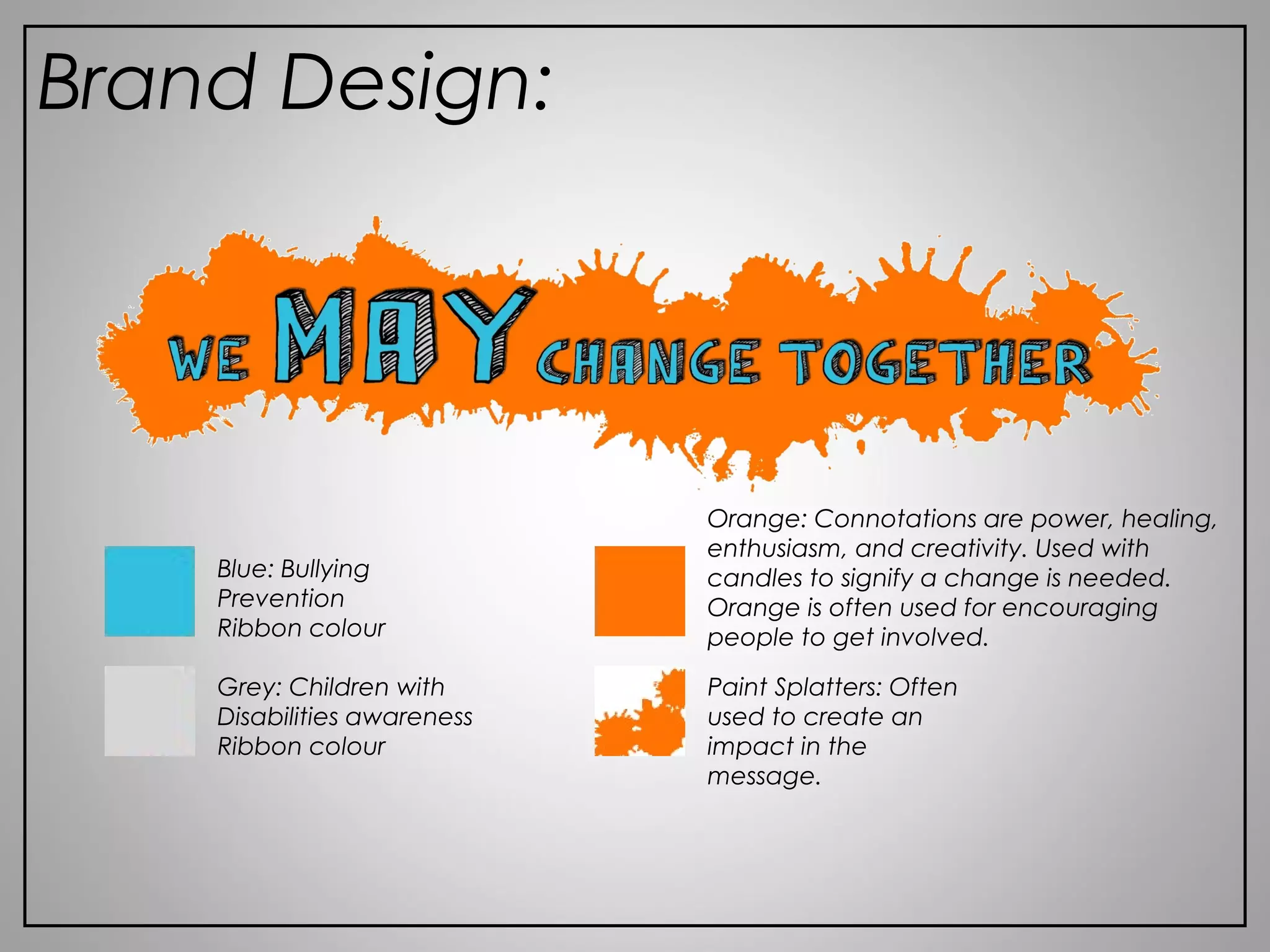
Brand Design:
Blue: Bullying
Prevention
Ribbon colour
Grey: Children with
Disabilities awareness
Ribbon colour
Orange: Connotations are power, healing,
enthusiasm, and creativity. Used with
candles to signify a change is needed.
Orange is often used for encouraging
people to get involved.
Paint Splatters: Often
used to create an
impact in the
message.
• Education
• Volunteer
• School social network
• Speakers and Bands
4 Part Plan:
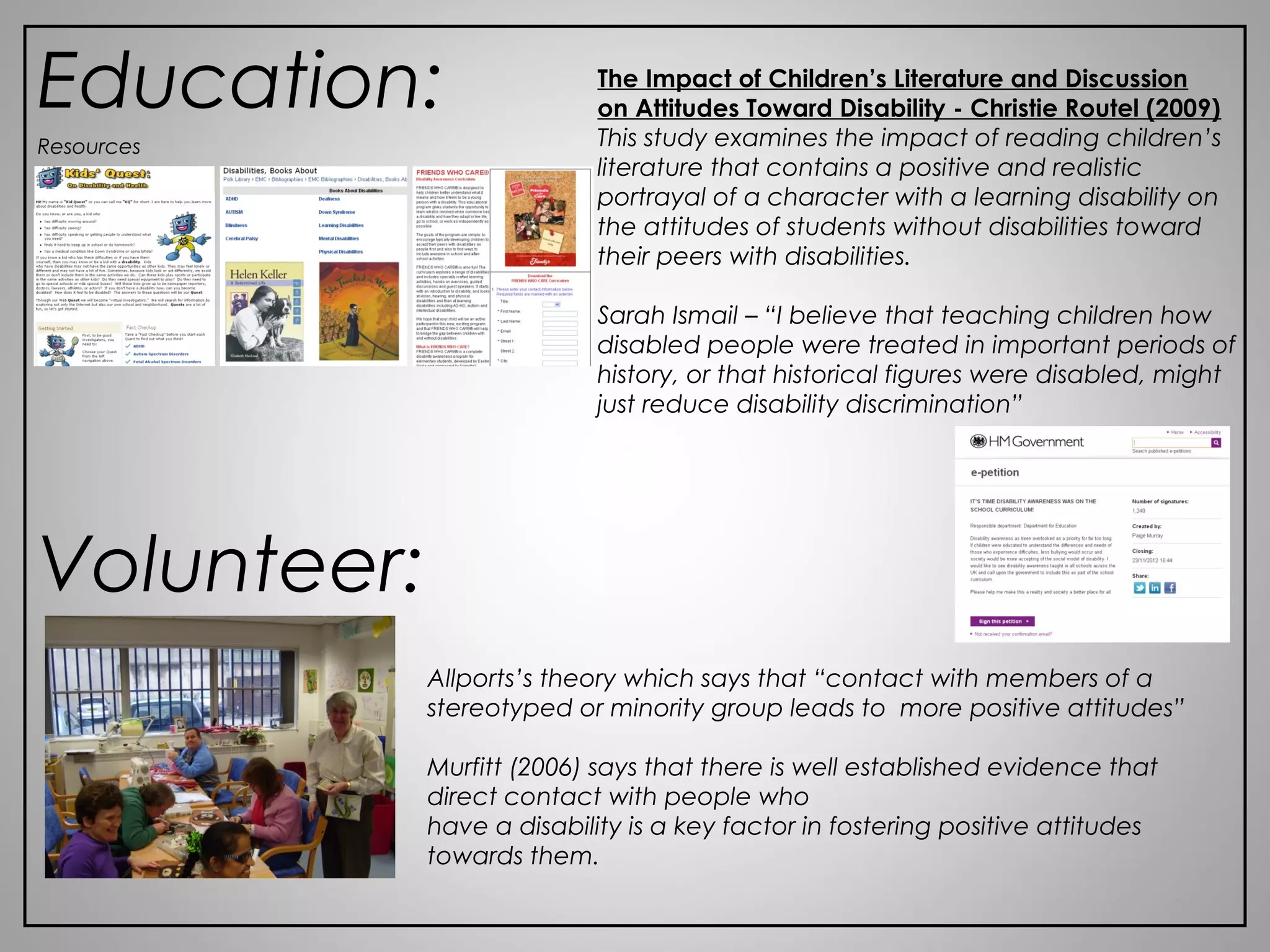
Education: The Impact of Children’s Literature and Discussion
on Attitudes Toward Disability - Christie Routel (2009)
This study examines the impact of reading children’s
literature that contains a positive and realistic
portrayal of a character with a learning disability on
the attitudes of students without disabilities toward
their peers with disabilities.
Sarah Ismail – “I believe that teaching children how
disabled people were treated in important periods of
history, or that historical figures were disabled, might
just reduce disability discrimination”
Resources
Volunteer:
Allports’s theory which says that “contact with members of a
stereotyped or minority group leads to more positive attitudes”
Murfitt (2006) says that there is well established evidence that
direct contact with people who
have a disability is a key factor in fostering positive attitudes
towards them.
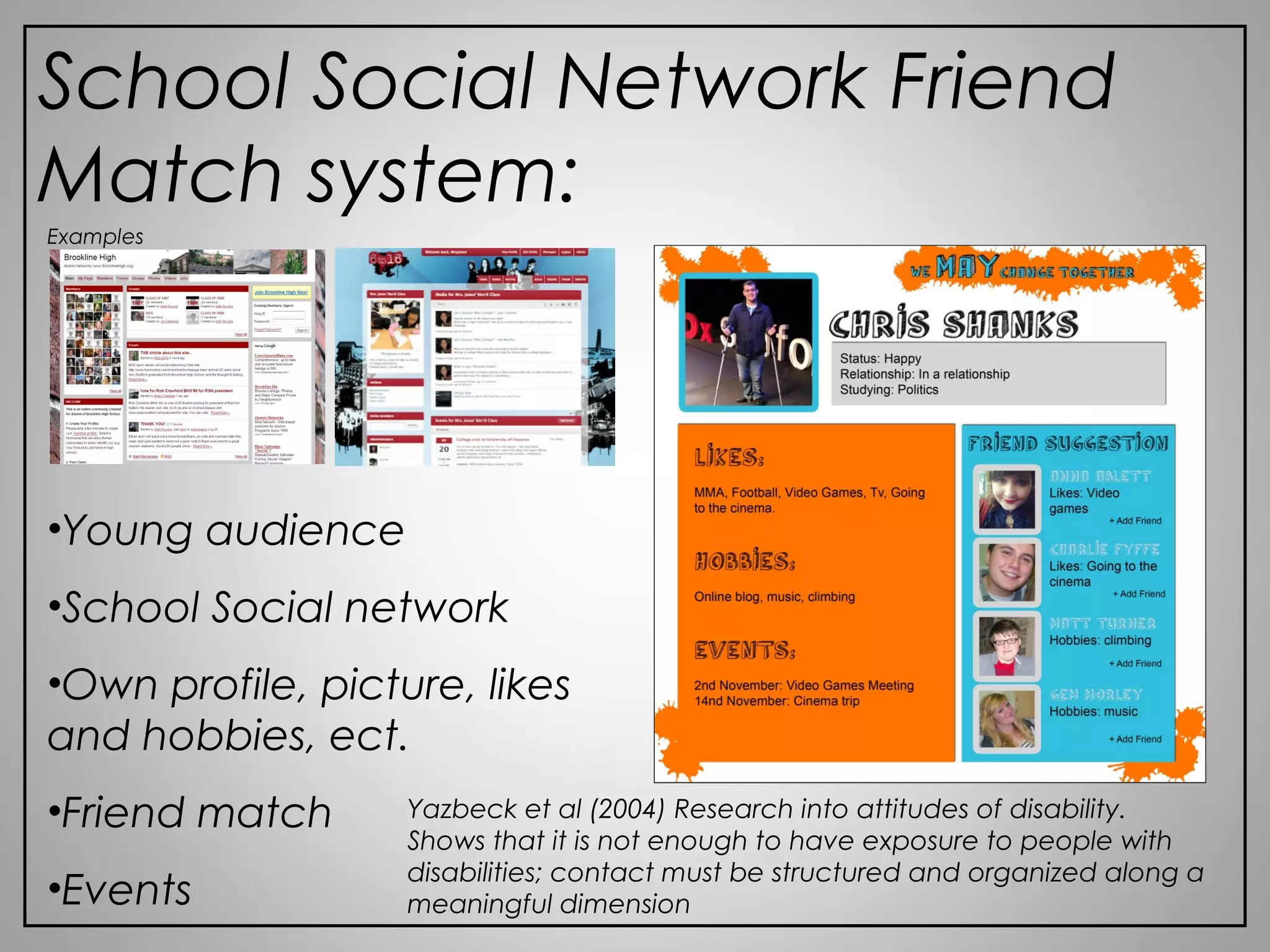
School Social Network Friend
Match system:
Yazbeck et al (2004) Research into attitudes of disability.
Shows that it is not enough to have exposure to people with
disabilities; contact must be structured and organized along a
meaningful dimension
•Young audience
•School Social network
•Own profile, picture, likes
and hobbies, ect.
•Friend match
•Events
Examples
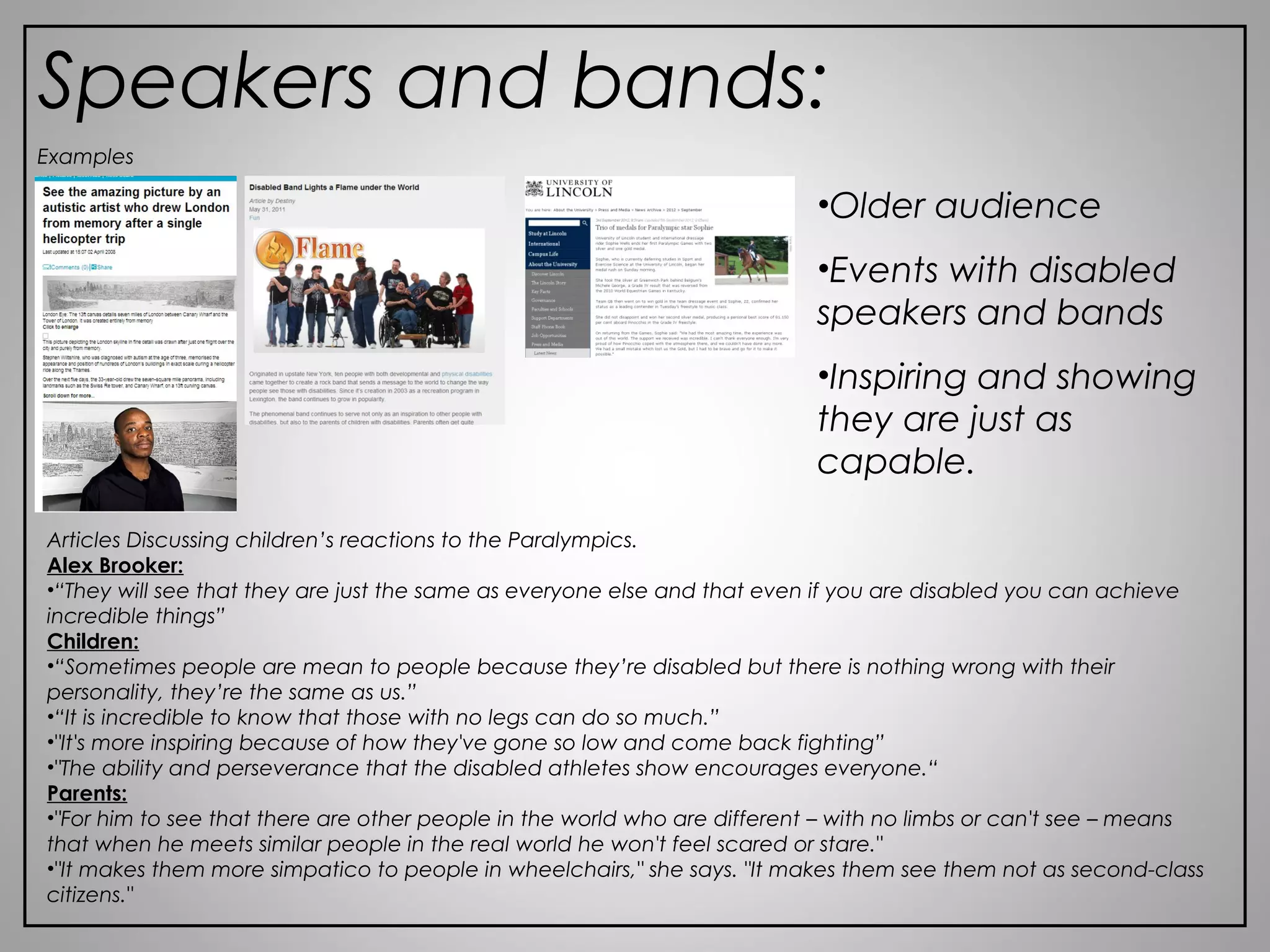
Speakers and bands:
Articles Discussing children’s reactions to the Paralympics.
Alex Brooker:
•“They will see that they are just the same as everyone else and that even if you are disabled you can achieve
incredible things”
Children:
•“Sometimes people are mean to people because they’re disabled but there is nothing wrong with their
personality, they’re the same as us.”
•“It is incredible to know that those with no legs can do so much.”
•"It's more inspiring because of how they've gone so low and come back fighting”
•"The ability and perseverance that the disabled athletes show encourages everyone.“
Parents:
•"For him to see that there are other people in the world who are different – with no limbs or can't see – means
that when he meets similar people in the real world he won't feel scared or stare."
•"It makes them more simpatico to people in wheelchairs," she says. "It makes them see them not as second-class
citizens."
Examples
•Older audience
•Events with disabled
speakers and bands
•Inspiring and showing
they are just as
capable.
Backing and support:
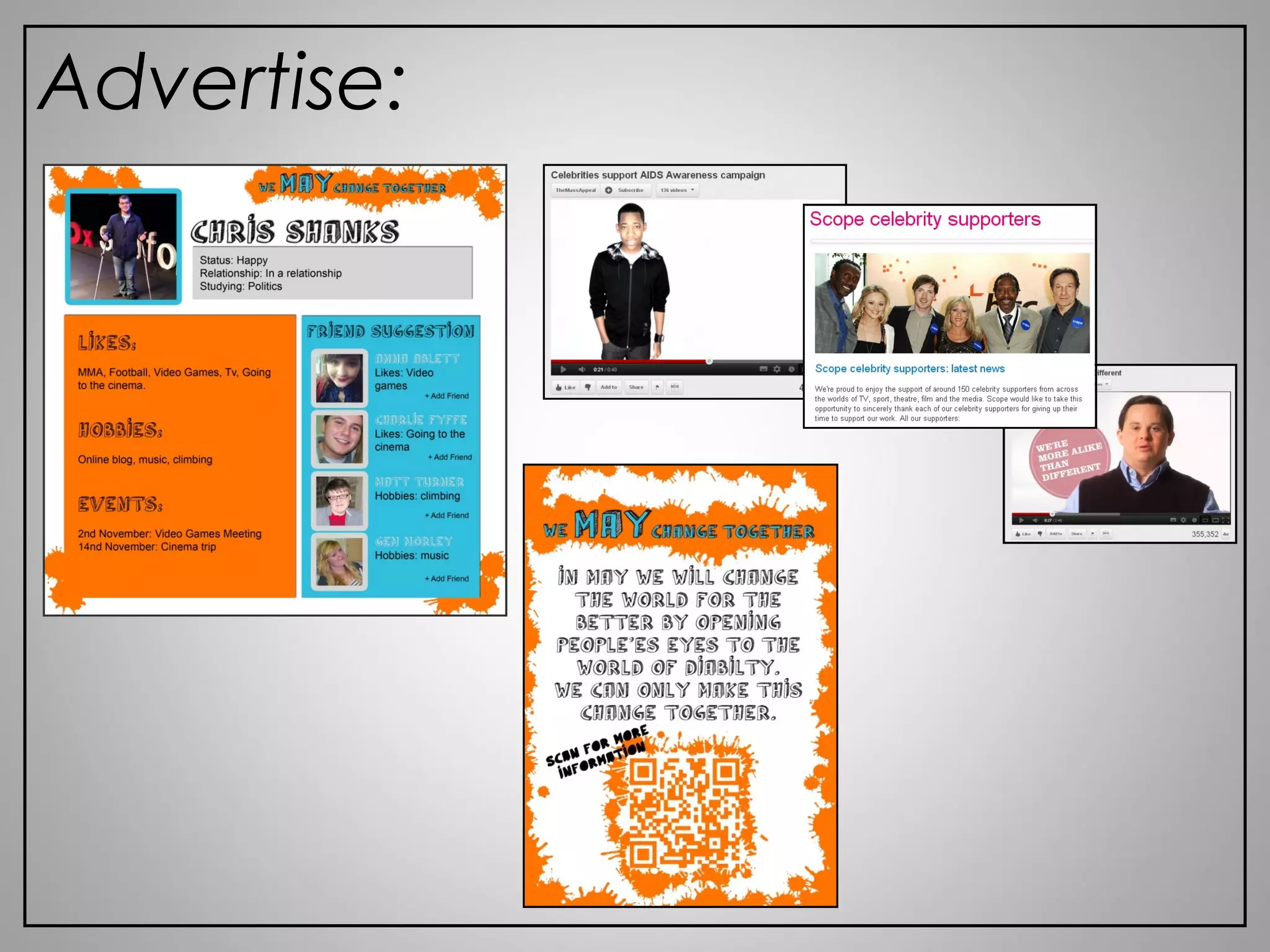
Advertise:
1st presentation

1st presentation

  • 1.
  • 2.
    Aim: • I haveproduced a strategy to create awareness and influence to the public on the subject of disability discrimination. • My plan is to increase proactive participation of social inclusion from the audience. • My chosen target audience is children/teenagers aged 11-18 ranging over the start of high school (Year 7) to (Year 13) end of college. • I plan to change the way they socially act towards people with disabilities.
  • 4.
    Hate/Stop Want/Encourage Bullying Separation Name calling Awkwardness Hatecrimes Inclusion Friendship Education of disabilities Positive attitudes
  • 5.
  • 6.
    We may changetogether May The month of May is when the campaign will promote against disablism. Change The campaign will strive to change the public’s attitudes towards disability. Together The campaign will only be successful with the involvement of none- disabled and disabled to work together and encourage interaction.
  • 7.
    Brand Design: Blue: Bullying Prevention Ribboncolour Grey: Children with Disabilities awareness Ribbon colour Orange: Connotations are power, healing, enthusiasm, and creativity. Used with candles to signify a change is needed. Orange is often used for encouraging people to get involved. Paint Splatters: Often used to create an impact in the message.
  • 8.
    • Education • Volunteer •School social network • Speakers and Bands 4 Part Plan:
  • 9.
    Education: The Impactof Children’s Literature and Discussion on Attitudes Toward Disability - Christie Routel (2009) This study examines the impact of reading children’s literature that contains a positive and realistic portrayal of a character with a learning disability on the attitudes of students without disabilities toward their peers with disabilities. Sarah Ismail – “I believe that teaching children how disabled people were treated in important periods of history, or that historical figures were disabled, might just reduce disability discrimination” Resources Volunteer: Allports’s theory which says that “contact with members of a stereotyped or minority group leads to more positive attitudes” Murfitt (2006) says that there is well established evidence that direct contact with people who have a disability is a key factor in fostering positive attitudes towards them.
  • 10.
    School Social NetworkFriend Match system: Yazbeck et al (2004) Research into attitudes of disability. Shows that it is not enough to have exposure to people with disabilities; contact must be structured and organized along a meaningful dimension •Young audience •School Social network •Own profile, picture, likes and hobbies, ect. •Friend match •Events Examples
  • 11.
    Speakers and bands: ArticlesDiscussing children’s reactions to the Paralympics. Alex Brooker: •“They will see that they are just the same as everyone else and that even if you are disabled you can achieve incredible things” Children: •“Sometimes people are mean to people because they’re disabled but there is nothing wrong with their personality, they’re the same as us.” •“It is incredible to know that those with no legs can do so much.” •"It's more inspiring because of how they've gone so low and come back fighting” •"The ability and perseverance that the disabled athletes show encourages everyone.“ Parents: •"For him to see that there are other people in the world who are different – with no limbs or can't see – means that when he meets similar people in the real world he won't feel scared or stare." •"It makes them more simpatico to people in wheelchairs," she says. "It makes them see them not as second-class citizens." Examples •Older audience •Events with disabled speakers and bands •Inspiring and showing they are just as capable.
  • 12.
  • 13.