School of Computer Studies and Technology
Introduction to Green Computing
Dr. Loriemel E. Ferrera
School of Computer Studies and Technology
ESG Sustainability
Framework
Artificial Intelligence
School of Computer Studies and Technology
Intended Learning
Outcomes
1. Define green computing and explain its
importance in the context of
environmental sustainability.
2. Understand the environmental impact
of ICT, including greenhouse gas
emissions and e-waste generation.
3. Explain the key principles and strategies
of green computing, such as energy
efficiency, resource optimization, and e-
waste management.
4. Learn the role of hardware and software
optimization in reducing the
environmental footprint of computing
devices and infrastructure.
School of Computer Studies and Technology
What is Green Computing?
• Green computing, also known as
sustainable computing, is the practice of
using computer systems and resources
in an environmentally responsible and
eco-friendly manner.
• As computing students, understanding
green computing principles is essential
for developing sustainable and
environmentally conscious solutions.
School of Computer Studies and Technology
Why Green
Computing
Matters?
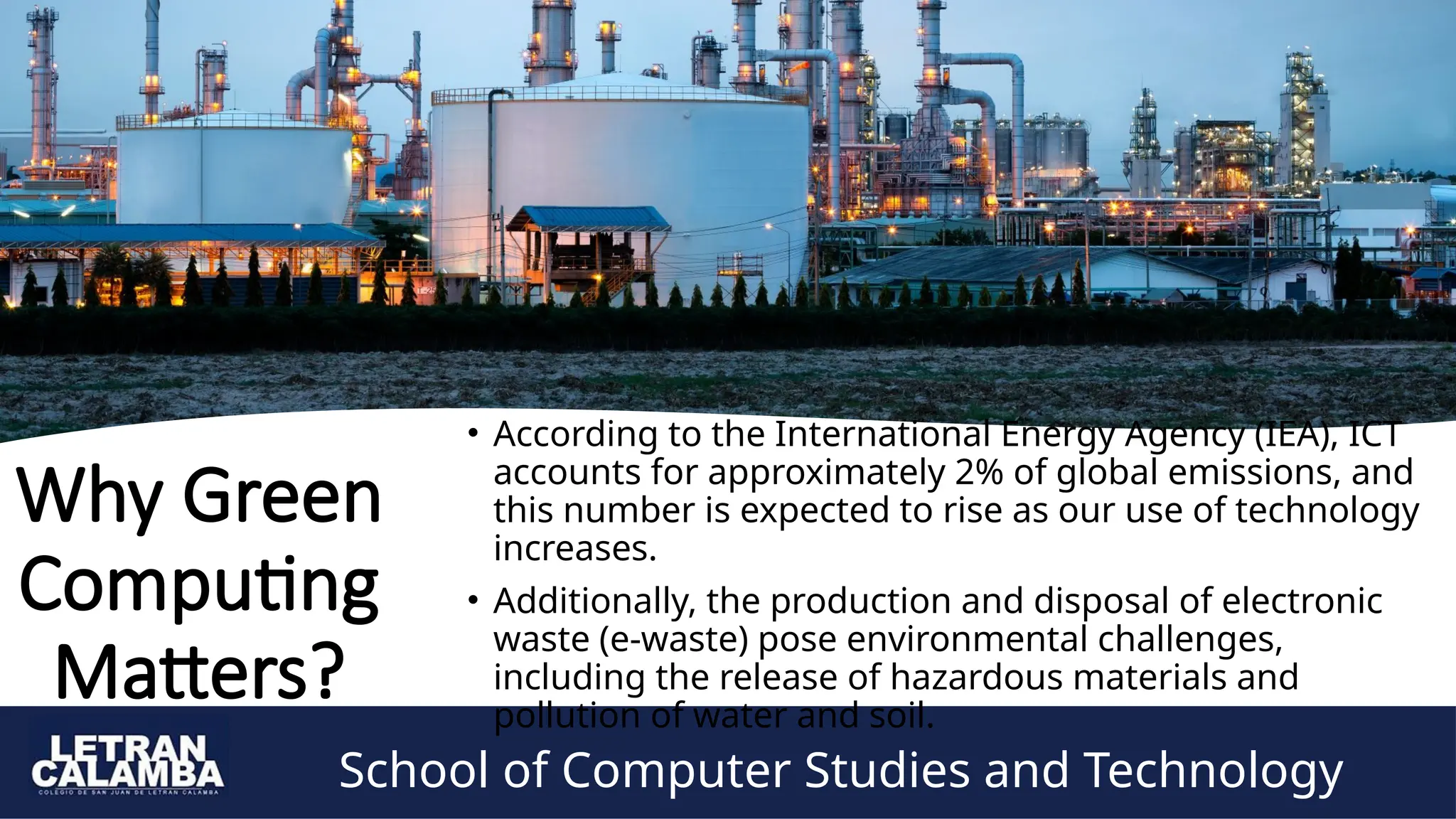
• According to the International Energy Agency (IEA), ICT
accounts for approximately 2% of global emissions, and
this number is expected to rise as our use of technology
increases.
• Additionally, the production and disposal of electronic
waste (e-waste) pose environmental challenges,
including the release of hazardous materials and
pollution of water and soil.
School of Computer Studies and Technology
Principles of
Green Computing
1.Energy Efficiency: Reducing the
energy consumption of computers and
data centers through hardware and
software optimizations, virtualization,
and power management techniques.
2.Resource Optimization: Minimizing
the use of non-renewable resources,
such as paper, through efficient
printing practices, cloud-based
storage, and virtualization.
3.E-waste Management: Implementing
proper disposal and recycling
procedures for electronic waste to
prevent environmental contamination
and resource depletion.
School of Computer Studies and Technology
Energy Efficiency
• Energy efficiency is reducing the
consumption of electricity,
lowering carbon footprint,
alleviate strain on power grids,
and save money on energy
costs.
School of Computer Studies and Technology
What is carbon
footprint?
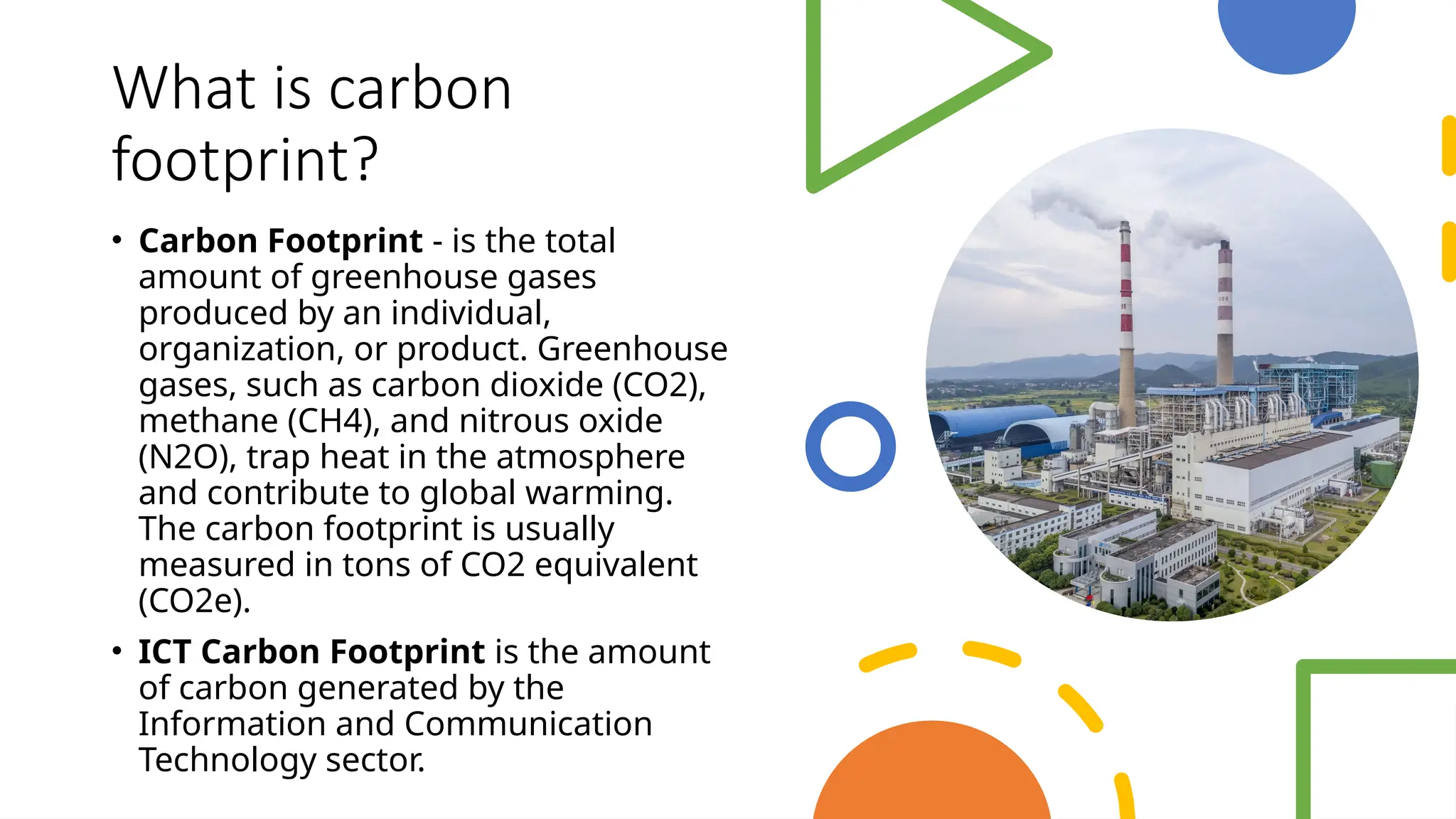
• Carbon Footprint - is the total
amount of greenhouse gases
produced by an individual,
organization, or product. Greenhouse
gases, such as carbon dioxide (CO2),
methane (CH4), and nitrous oxide
(N2O), trap heat in the atmosphere
and contribute to global warming.
The carbon footprint is usually
measured in tons of CO2 equivalent
(CO2e).
• ICT Carbon Footprint is the amount
of carbon generated by the
Information and Communication
Technology sector.
School of Computer Studies and Technology
Additional resources to read…
The ICT sector generates more emissions
than meets the eye. What makes the ICT sector a major
greenhouse gas emitter
18.07.2023
Markus Zimmer, Senior ESG Economist at Allianz
Arne Holzhausen, Head of Wealth, Insurance and Trend Research at Allianz SE
Anand Parmar, ESG Research Associate at Allianz
https://unravel.ink/the-ict-sector-generates-more-emissions-than-meets-the-eye/#:~:text=In%20the
%20business%2Das%2Dusual,which%20explains%20the%20large%20values.
School of Computer Studies and Technology
Strategies on Energy Efficiency
1. Hardware Optimization: Selecting
energy-efficient hardware components is
crucial for reducing power consumption.
• Energy Star Certified Devices: Look for
ENERGY STAR-certified computers, monitors,
and peripherals, which meet strict energy-
efficiency standards.
• Low-Power CPUs and GPUs: Choose
processors and graphics cards designed for
low power consumption.
• Solid-State Drives (SSDs): Replace traditional
hard disk drives (HDDs) with SSDs, which
consume less power and offer faster
performance.
School of Computer Studies and Technology
Strategies on
Energy Efficiency
2. Software Optimization:
Optimizing software settings and
practices can significantly impact
energy consumption. Consider
these measures:
• Power Management Settings: Enable
power management features that put
devices to sleep when not in use.
• Disable Unnecessary Startup Programs:
Disable background applications and
processes that consume power
unnecessarily.
• Utilize Energy-Saving Modes: Switch to
energy-saving modes in operating systems
and applications whenever possible.
School of Computer Studies and Technology
Strategies on Energy Efficiency
3. Virtualization: Allows multiple
virtual machines to run on a single
physical server, consolidating computing
resources and reducing power
consumption. This approach is particularly
beneficial for data centers and enterprise
environments.
4. Cloud Computing: Cloud
computing offers on-demand access to
computing resources, such as storage,
processing power, and applications, over
the internet. By utilizing cloud services,
organizations can reduce their reliance on
on-premises infrastructure and associated
energy consumption.
School of Computer Studies and Technology
Resource Optimization
1. Hardware Optimization:
Optimizing hardware usage can
significantly reduce the consumption of
natural resources and minimize waste
generation. Consider these approaches:
• Extended Hardware Lifetimes:
Maintain and upgrade existing
hardware instead of prematurely
replacing it. This approach extends the
useful life of devices and reduces the
demand for new production.
• Efficient Cooling Systems:
Implement efficient cooling
mechanisms for servers and data
centers to minimize energy
consumption and extend hardware
lifetimes.
• Proper Hardware Disposal: Dispose
of electronic waste responsibly
through certified e-waste recyclers to
prevent hazardous materials from
entering landfills and waterways.
School of Computer Studies and Technology
Resource
Optimization
2. Software Optimization: Optimizing
software resource utilization can
minimize the consumption of energy
and other resources. Consider these
measures:
• Resource-Efficient Software
Development: Employ
programming techniques and
algorithms that prioritize resource
efficiency.
• Memory Management: Implement
memory management strategies to
prevent memory leaks and optimize
memory usage.
• Storage Optimization: Utilize data
compression techniques and
efficient storage management tools
to reduce storage requirements.
This Photo by Unknown Author is licensed under CC BY
School of Computer Studies and Technology
Resource
Optimization
3. Cloud Computing can play a
significant role in resource
optimization by providing on-
demand access to computing
resources, enabling
organizations to scale their IT
infrastructure up or down
based on actual demand. This
approach eliminates the need
to maintain underutilized
hardware and reduces
resource consumption.
School of Computer Studies and Technology
Resource Optimization
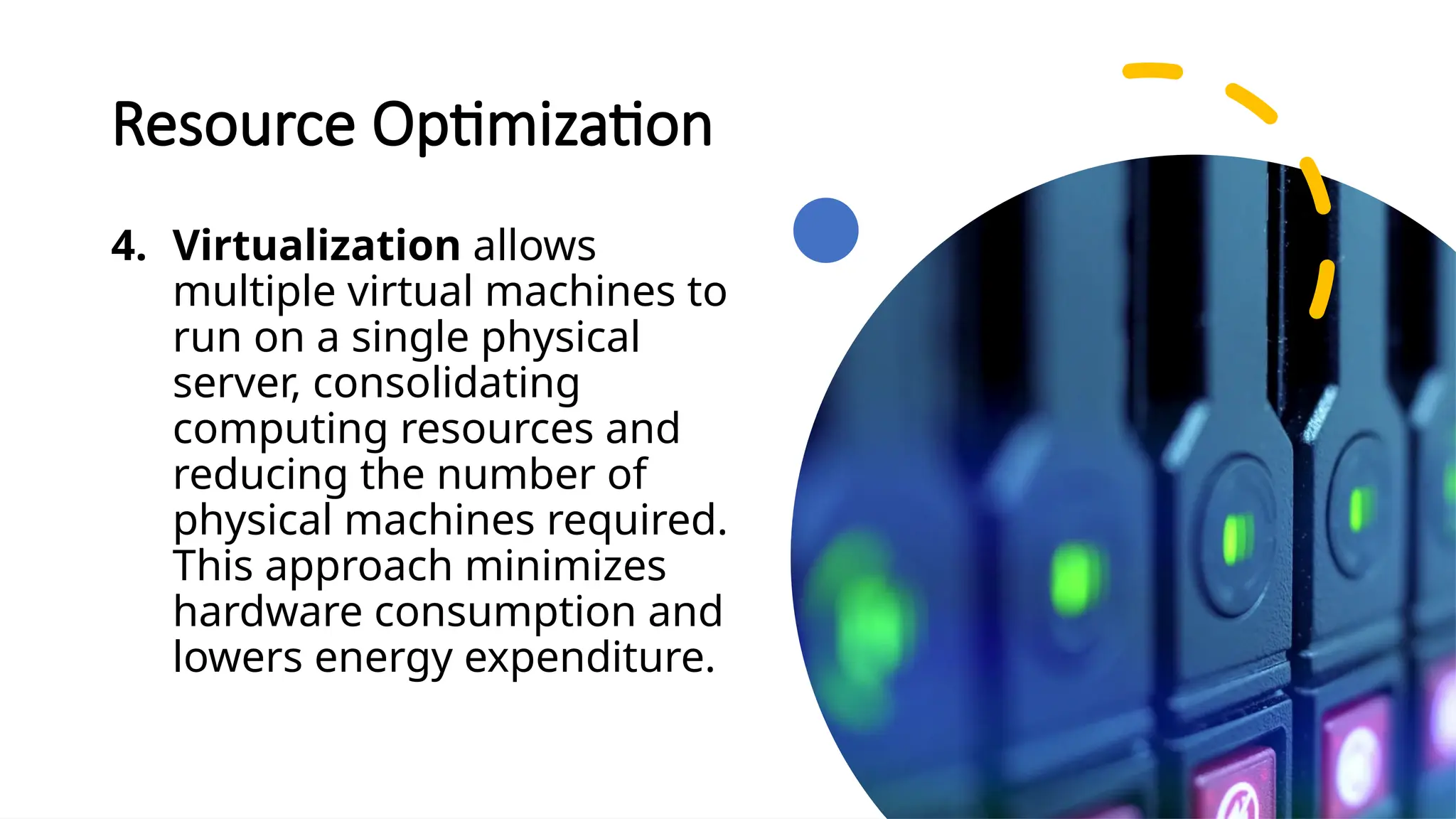
4. Virtualization allows
multiple virtual machines to
run on a single physical
server, consolidating
computing resources and
reducing the number of
physical machines required.
This approach minimizes
hardware consumption and
lowers energy expenditure.
School of Computer Studies and Technology
• These examples demonstrate the practical application of
resource optimization strategies in various computing
environments. By adopting these practices, organizations
and individuals can effectively reduce their environmental
impact and contribute to a more sustainable future.
School of Computer Studies and Technology
Green Computing
Practices
Choose Energy-Efficient Devices: Opt for ENERGY STAR-certified
computers and peripherals, which consume less power and
generate lower emissions.
Power Management: Configure power settings to put
computers and monitors into sleep mode when not in use and
enable automatic shutdown during idle periods.
Virtualization: Utilize virtualization technologies to consolidate
multiple physical servers into a single virtual machine, reducing
energy consumption and hardware requirements.
Cloud Computing: Employ cloud-based services for data storage
and applications, reducing the need for on-premises
infrastructure and associated energy consumption.
Reduce Paper Consumption: Minimize printing, opt for double-
sided printing, and utilize digital documents whenever possible.
Proper E-waste Disposal: Recycle electronic waste responsibly
through certified e-waste recyclers to prevent hazardous
materials from entering landfills and waterways.
School of Computer Studies and Technology
The Role
of
Computin
g
Students
Conduct Research: Explore research
opportunities in green computing, focusing on
energy-efficient algorithms, virtualization
techniques, and sustainable hardware design.
Develop Green Computing Applications:
Design and implement software applications
that promote energy efficiency, resource
optimization, and e-waste management.
Educate and Advocate: Raise awareness about
green computing principles among your
peers, professors, and the broader
community.
Choose Green Computing Employers: Seek
employment opportunities at companies that
prioritize sustainability and incorporate green
computing practices into their business
operations.
School of Computer Studies and Technology
Green computing principles and
practices can minimize the
environmental impact of our
digital lives and contribute to a
healthier planet.
School of Computer Studies and Technology
You have the knowledge
and skills to play a
leading role in shaping a
greener and more
sustainable future for
technology.
School of Computer Studies and Technology
Thank you.

1Introduction to Green Computing. for better envipptx

  • 1.
    School of ComputerStudies and Technology Introduction to Green Computing Dr. Loriemel E. Ferrera School of Computer Studies and Technology
  • 2.
    School of ComputerStudies and Technology ESG Sustainability Framework Artificial Intelligence
  • 3.
    School of ComputerStudies and Technology Intended Learning Outcomes 1. Define green computing and explain its importance in the context of environmental sustainability. 2. Understand the environmental impact of ICT, including greenhouse gas emissions and e-waste generation. 3. Explain the key principles and strategies of green computing, such as energy efficiency, resource optimization, and e- waste management. 4. Learn the role of hardware and software optimization in reducing the environmental footprint of computing devices and infrastructure.
  • 4.
    School of ComputerStudies and Technology What is Green Computing? • Green computing, also known as sustainable computing, is the practice of using computer systems and resources in an environmentally responsible and eco-friendly manner. • As computing students, understanding green computing principles is essential for developing sustainable and environmentally conscious solutions.
  • 5.
    School of ComputerStudies and Technology Why Green Computing Matters? • According to the International Energy Agency (IEA), ICT accounts for approximately 2% of global emissions, and this number is expected to rise as our use of technology increases. • Additionally, the production and disposal of electronic waste (e-waste) pose environmental challenges, including the release of hazardous materials and pollution of water and soil.
  • 6.
    School of ComputerStudies and Technology Principles of Green Computing 1.Energy Efficiency: Reducing the energy consumption of computers and data centers through hardware and software optimizations, virtualization, and power management techniques. 2.Resource Optimization: Minimizing the use of non-renewable resources, such as paper, through efficient printing practices, cloud-based storage, and virtualization. 3.E-waste Management: Implementing proper disposal and recycling procedures for electronic waste to prevent environmental contamination and resource depletion.
  • 7.
    School of ComputerStudies and Technology Energy Efficiency • Energy efficiency is reducing the consumption of electricity, lowering carbon footprint, alleviate strain on power grids, and save money on energy costs.
  • 8.
    School of ComputerStudies and Technology What is carbon footprint? • Carbon Footprint - is the total amount of greenhouse gases produced by an individual, organization, or product. Greenhouse gases, such as carbon dioxide (CO2), methane (CH4), and nitrous oxide (N2O), trap heat in the atmosphere and contribute to global warming. The carbon footprint is usually measured in tons of CO2 equivalent (CO2e). • ICT Carbon Footprint is the amount of carbon generated by the Information and Communication Technology sector.
  • 9.
    School of ComputerStudies and Technology Additional resources to read… The ICT sector generates more emissions than meets the eye. What makes the ICT sector a major greenhouse gas emitter 18.07.2023 Markus Zimmer, Senior ESG Economist at Allianz Arne Holzhausen, Head of Wealth, Insurance and Trend Research at Allianz SE Anand Parmar, ESG Research Associate at Allianz https://unravel.ink/the-ict-sector-generates-more-emissions-than-meets-the-eye/#:~:text=In%20the %20business%2Das%2Dusual,which%20explains%20the%20large%20values.
  • 10.
    School of ComputerStudies and Technology Strategies on Energy Efficiency 1. Hardware Optimization: Selecting energy-efficient hardware components is crucial for reducing power consumption. • Energy Star Certified Devices: Look for ENERGY STAR-certified computers, monitors, and peripherals, which meet strict energy- efficiency standards. • Low-Power CPUs and GPUs: Choose processors and graphics cards designed for low power consumption. • Solid-State Drives (SSDs): Replace traditional hard disk drives (HDDs) with SSDs, which consume less power and offer faster performance.
  • 11.
    School of ComputerStudies and Technology Strategies on Energy Efficiency 2. Software Optimization: Optimizing software settings and practices can significantly impact energy consumption. Consider these measures: • Power Management Settings: Enable power management features that put devices to sleep when not in use. • Disable Unnecessary Startup Programs: Disable background applications and processes that consume power unnecessarily. • Utilize Energy-Saving Modes: Switch to energy-saving modes in operating systems and applications whenever possible.
  • 12.
    School of ComputerStudies and Technology Strategies on Energy Efficiency 3. Virtualization: Allows multiple virtual machines to run on a single physical server, consolidating computing resources and reducing power consumption. This approach is particularly beneficial for data centers and enterprise environments. 4. Cloud Computing: Cloud computing offers on-demand access to computing resources, such as storage, processing power, and applications, over the internet. By utilizing cloud services, organizations can reduce their reliance on on-premises infrastructure and associated energy consumption.
  • 13.
    School of ComputerStudies and Technology Resource Optimization 1. Hardware Optimization: Optimizing hardware usage can significantly reduce the consumption of natural resources and minimize waste generation. Consider these approaches: • Extended Hardware Lifetimes: Maintain and upgrade existing hardware instead of prematurely replacing it. This approach extends the useful life of devices and reduces the demand for new production. • Efficient Cooling Systems: Implement efficient cooling mechanisms for servers and data centers to minimize energy consumption and extend hardware lifetimes. • Proper Hardware Disposal: Dispose of electronic waste responsibly through certified e-waste recyclers to prevent hazardous materials from entering landfills and waterways.
  • 14.
    School of ComputerStudies and Technology Resource Optimization 2. Software Optimization: Optimizing software resource utilization can minimize the consumption of energy and other resources. Consider these measures: • Resource-Efficient Software Development: Employ programming techniques and algorithms that prioritize resource efficiency. • Memory Management: Implement memory management strategies to prevent memory leaks and optimize memory usage. • Storage Optimization: Utilize data compression techniques and efficient storage management tools to reduce storage requirements. This Photo by Unknown Author is licensed under CC BY
  • 15.
    School of ComputerStudies and Technology Resource Optimization 3. Cloud Computing can play a significant role in resource optimization by providing on- demand access to computing resources, enabling organizations to scale their IT infrastructure up or down based on actual demand. This approach eliminates the need to maintain underutilized hardware and reduces resource consumption.
  • 16.
    School of ComputerStudies and Technology Resource Optimization 4. Virtualization allows multiple virtual machines to run on a single physical server, consolidating computing resources and reducing the number of physical machines required. This approach minimizes hardware consumption and lowers energy expenditure.
  • 17.
    School of ComputerStudies and Technology • These examples demonstrate the practical application of resource optimization strategies in various computing environments. By adopting these practices, organizations and individuals can effectively reduce their environmental impact and contribute to a more sustainable future.
  • 18.
    School of ComputerStudies and Technology Green Computing Practices Choose Energy-Efficient Devices: Opt for ENERGY STAR-certified computers and peripherals, which consume less power and generate lower emissions. Power Management: Configure power settings to put computers and monitors into sleep mode when not in use and enable automatic shutdown during idle periods. Virtualization: Utilize virtualization technologies to consolidate multiple physical servers into a single virtual machine, reducing energy consumption and hardware requirements. Cloud Computing: Employ cloud-based services for data storage and applications, reducing the need for on-premises infrastructure and associated energy consumption. Reduce Paper Consumption: Minimize printing, opt for double- sided printing, and utilize digital documents whenever possible. Proper E-waste Disposal: Recycle electronic waste responsibly through certified e-waste recyclers to prevent hazardous materials from entering landfills and waterways.
  • 19.
    School of ComputerStudies and Technology The Role of Computin g Students Conduct Research: Explore research opportunities in green computing, focusing on energy-efficient algorithms, virtualization techniques, and sustainable hardware design. Develop Green Computing Applications: Design and implement software applications that promote energy efficiency, resource optimization, and e-waste management. Educate and Advocate: Raise awareness about green computing principles among your peers, professors, and the broader community. Choose Green Computing Employers: Seek employment opportunities at companies that prioritize sustainability and incorporate green computing practices into their business operations. School of Computer Studies and Technology
  • 20.
    School of ComputerStudies and Technology Green computing principles and practices can minimize the environmental impact of our digital lives and contribute to a healthier planet.
  • 21.
    School of ComputerStudies and Technology You have the knowledge and skills to play a leading role in shaping a greener and more sustainable future for technology.
  • 22.
    School of ComputerStudies and Technology Thank you.

Editor's Notes

  • #4 In today's world, where technology is ubiquitous and our reliance on computers continues to grow, it is crucial to consider the environmental impact of our digital habits
  • #5 The Information and Communications Technology (ICT) industry, which encompasses computers, networking devices, and data centers, is a significant contributor to greenhouse gas emissions.
  • #6 Green computing encompasses a range of strategies and practices aimed at reducing the environmental impact of ICT. These principles can be broadly categorized into three main areas:
  • #7 Energy efficiency is a cornerstone of green computing.
  • #10 Several strategies can be implemented to enhance energy efficiency in the realm of computing:
  • #20 There are numerous practical steps that individuals and organizations can take to adopt green computing practices. Here are some examples:
  • #21 As computer science students, you have a crucial role to play in promoting green computing practices. Your understanding of hardware, software, and algorithms can be applied to develop innovative solutions that reduce the environmental impact of technology. Here are some ways you can contribute:
  • #22 Green computing is not just a passing trend; it is an essential component of a sustainable future. By embracing green computing principles and practices, we can minimize the environmental impact of our digital lives and contribute to a healthier planet. As computer science students, you have the knowledge and skills to play a leading role in shaping a greener and more sustainable future for technology.