ANALYTICAL LISTENING IN PROBLEM SOLVING
MELC 5: EMPLOY ANALYTICAL LISTENING IN PROBLEM SOLVING.
Listening is receiving language through the
ears. Listening involves identifying the sounds of
speech and processing them into words and
sentences. When we listen, we use our ears to
receive individual sounds (letters, stress, rhythm
and pauses) and we use our brain to convert these
into messages that mean something to us.
(englishclub.com)
ANALYTICAL LISTENING
Analytical listening, sometimes called critical or
active listening, deals with one’s ability and capacity
to carefully and properly analyze the sound/s
listened to. This does not only involve
comprehension on what has been heard, but more
importantly, the ability to distinguish and categorize
the information listened to.
ANALYTICAL LISTENING
This is also called active listening as it requires
the listener to provide significant and evaluative
feedback or response on what he/she has heard
from the speaker or the sound platforms. In here,
the listener is able to rephrase or restate the
information heard to check one’s listening
understanding.
ANALYTICAL LISTENING
The features of analytical listening allow listeners
and speakers to avoid miscommunication,
misinterpretation and misinformation. As such,
comprehension and understanding are both
ensured.
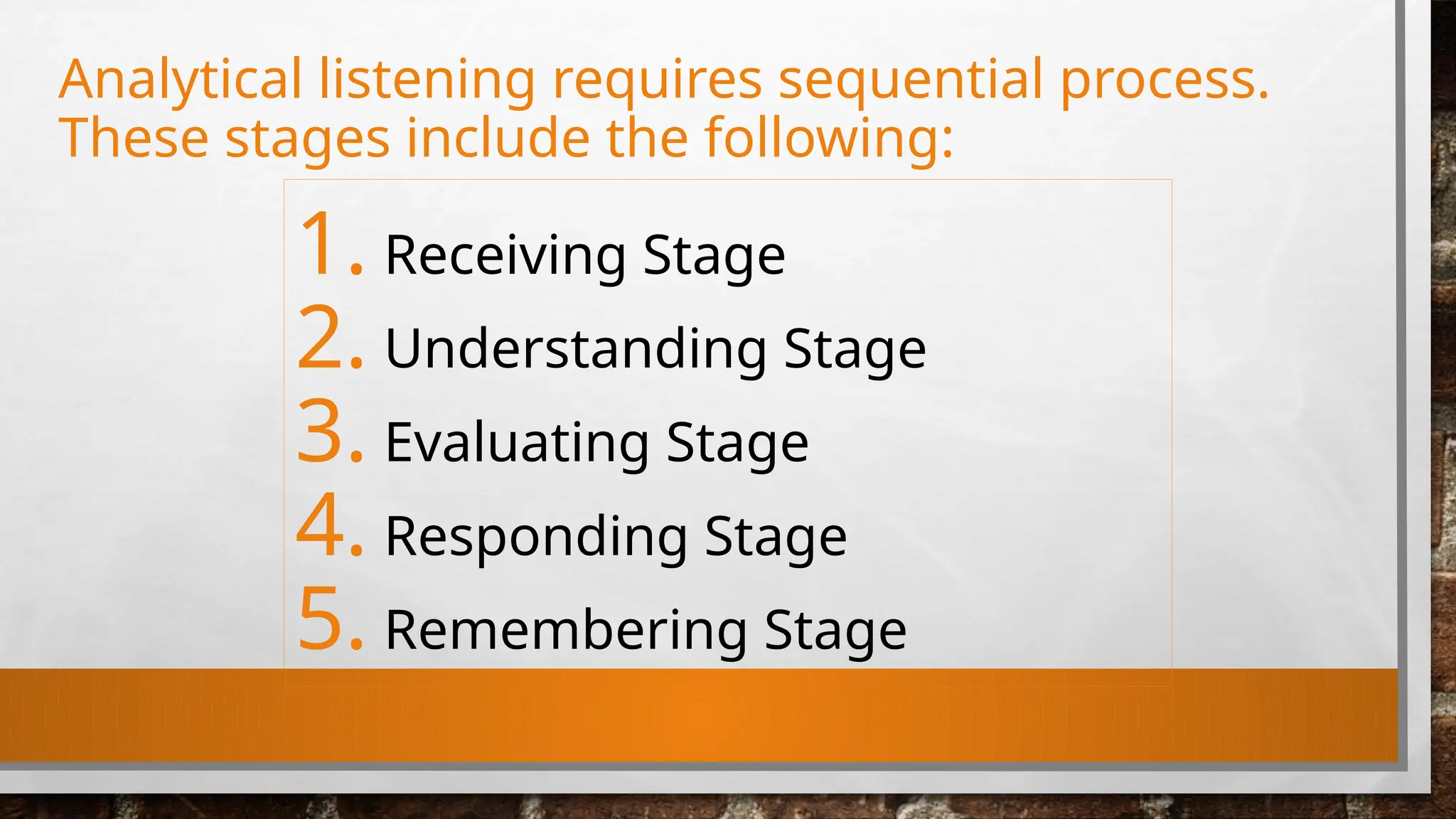
Analytical listening requires sequential process.
These stages include the following:
1. Receiving Stage
2. Understanding Stage
3. Evaluating Stage
4. Responding Stage
5. Remembering Stage
1. RECEIVING STAGE
refers to actual hearing process. In here, the
listener has to check him/herself if he/she is able
to hear clearly the sounds and other sound
points.
2. UNDERSTANDING STAGE
focuses on generating meaning on what has
been heard. In here, the connection on
communication between the listener and the
speaker must be clearly established. This
constitutes the idea that the understanding of the
speaker must be the same with the listener.
3. EVALUATING STAGE
requires both the listener and the speaker to
meet in between regarding the points portrayed
in the listening process. This allows the listener to
critically examine the details of the information
heard. This provides the time for information
segregation.
4. RESPONDING STAGE
allows the listeners to provide verbal and/or
non-verbal feedback and responses based on the
listening contexts.
5. REMEMBERING STAGE
is a personal stage for the listener allowing
his/her to integrate in him/herself the
information heard. This also allows him/ her to
record in his/her system the information listened
to for future access and use.
Analytical listening is a very helpful strategy
in problem-solving activities. In solving a
particular issue or concern, it is important to
identify first the significant information required.
In solving a problem in a listening text, the
first task is to identify the problem.
From the listening texts, find the answers for
the following questions: who, what, how, when,
where and why.
According to American Society for Quality
(2020), there are four (4) steps in solving a
problem which include the following:
1. Define the problem;
2. Generate alternative solutions;
3. Evaluate and select an alternative; and
4. Implement and follow up on the solution.

1Analytical Listening in Problem Solving

  • 1.
    ANALYTICAL LISTENING INPROBLEM SOLVING MELC 5: EMPLOY ANALYTICAL LISTENING IN PROBLEM SOLVING.
  • 2.
    Listening is receivinglanguage through the ears. Listening involves identifying the sounds of speech and processing them into words and sentences. When we listen, we use our ears to receive individual sounds (letters, stress, rhythm and pauses) and we use our brain to convert these into messages that mean something to us. (englishclub.com)
  • 3.
    ANALYTICAL LISTENING Analytical listening,sometimes called critical or active listening, deals with one’s ability and capacity to carefully and properly analyze the sound/s listened to. This does not only involve comprehension on what has been heard, but more importantly, the ability to distinguish and categorize the information listened to.
  • 4.
    ANALYTICAL LISTENING This isalso called active listening as it requires the listener to provide significant and evaluative feedback or response on what he/she has heard from the speaker or the sound platforms. In here, the listener is able to rephrase or restate the information heard to check one’s listening understanding.
  • 5.
    ANALYTICAL LISTENING The featuresof analytical listening allow listeners and speakers to avoid miscommunication, misinterpretation and misinformation. As such, comprehension and understanding are both ensured.
  • 6.
    Analytical listening requiressequential process. These stages include the following: 1. Receiving Stage 2. Understanding Stage 3. Evaluating Stage 4. Responding Stage 5. Remembering Stage
  • 7.
    1. RECEIVING STAGE refersto actual hearing process. In here, the listener has to check him/herself if he/she is able to hear clearly the sounds and other sound points.
  • 8.
    2. UNDERSTANDING STAGE focuseson generating meaning on what has been heard. In here, the connection on communication between the listener and the speaker must be clearly established. This constitutes the idea that the understanding of the speaker must be the same with the listener.
  • 9.
    3. EVALUATING STAGE requiresboth the listener and the speaker to meet in between regarding the points portrayed in the listening process. This allows the listener to critically examine the details of the information heard. This provides the time for information segregation.
  • 10.
    4. RESPONDING STAGE allowsthe listeners to provide verbal and/or non-verbal feedback and responses based on the listening contexts.
  • 11.
    5. REMEMBERING STAGE isa personal stage for the listener allowing his/her to integrate in him/herself the information heard. This also allows him/ her to record in his/her system the information listened to for future access and use.
  • 12.
    Analytical listening isa very helpful strategy in problem-solving activities. In solving a particular issue or concern, it is important to identify first the significant information required.
  • 13.
    In solving aproblem in a listening text, the first task is to identify the problem. From the listening texts, find the answers for the following questions: who, what, how, when, where and why.
  • 14.
    According to AmericanSociety for Quality (2020), there are four (4) steps in solving a problem which include the following: 1. Define the problem; 2. Generate alternative solutions; 3. Evaluate and select an alternative; and 4. Implement and follow up on the solution.