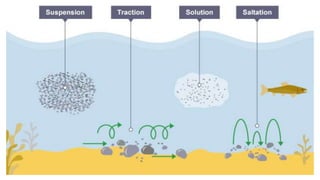
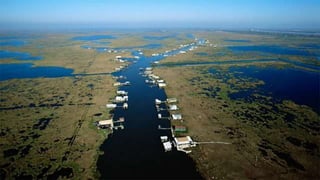
Rivers shape the surrounding land through the processes of erosion, transportation, and deposition as they flow from their source to their mouth. Erosion involves the wearing away of river beds and banks by hydraulic action, abrasion, attrition, and solution. Rivers pick up and carry material in suspension, saltation, and traction. The energy levels of rivers determine what materials can be transported, with higher energy near sources allowing larger objects and lower energy at mouths resulting in deposition. Deposition occurs when a river's energy decreases, such as when entering shallow water or after floods, often building up deltas at river mouths.