
The End of the Beginning,
NOT the Beginning of the End,
for Business Process Management.
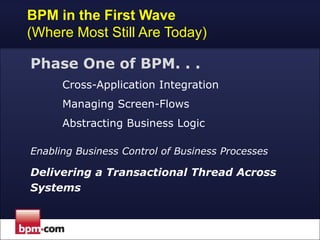
BPM in the First Wave
(Where Most Still Are Today)

Phase One of BPM. . .
Cross-Application Integration
Managing Screen-Flows
Abstracting Business Logic
Enabling Business Control of Business Processes

Delivering a Transactional Thread Across
Systems
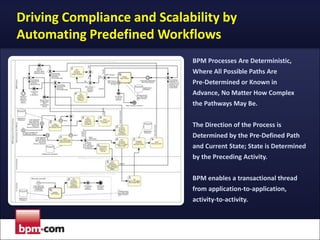
Driving Compliance and Scalability by
Automating Predefined Workflows
BPM Processes Are Deterministic,
Where All Possible Paths Are

Pre-Determined or Known in
Advance, No Matter How Complex
the Pathways May Be.
The Direction of the Process is

Determined by the Pre-Defined Path
and Current State; State is Determined
by the Preceding Activity.
BPM enables a transactional thread

from application-to-application,
activity-to-activity.
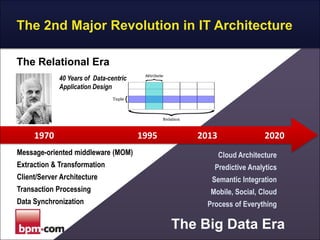
The 2nd Major Revolution in IT Architecture
The Relational Era
40 Years of Data-centric
Application Design

1970
Message-oriented middleware (MOM)
Extraction & Transformation

1995

2013

2020
Cloud Architecture

Predictive Analytics

Client/Server Architecture

Semantic Integration

Transaction Processing

Mobile, Social, Cloud

Data Synchronization

Process of Everything

The Big Data Era
BPM Evolves to Address New Realities
of Digital Business
Accommodating More Comprehensive, Dynamic Process Lifecycles
From Transactional Data (Control) to Data-Driven (Visibility)
“Data-Driven” = Shift to Information-Intensive, Adaptable
Processes Driven by Analytics, Context, and External Events
Shift to “Intelligent BPM” and “Smart Processes” . . .
Leveraging Rules / Policies, Goals and Intelligent Agents
More Agile Execution Models Allows for Adapting to Meet Goals,
Rather Than Sticking Strictly to Predefined Paths
Allows Separating Automation of Mundane Tasks for Efficiency,
While Keeping the Overriding Focus on Effectiveness
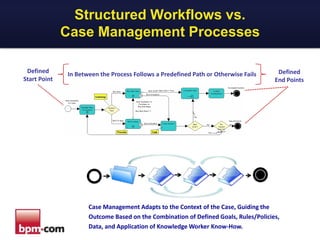
Structured Workflows vs.
Case Management Processes
Defined
Start Point

In Between the Process Follows a Predefined Path or Otherwise Fails

Defined
End Points

Case Management Adapts to the Context of the Case, Guiding the
Outcome Based on the Combination of Defined Goals, Rules/Policies,
Data, and Application of Knowledge Worker Know-How.
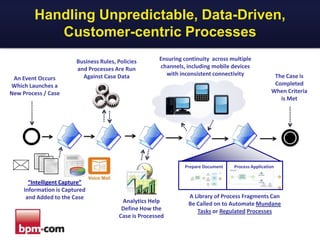
Handling Unpredictable, Data-Driven,
Customer-centric Processes

An Event Occurs
Which Launches a
New Process / Case

Business Rules, Policies
and Processes Are Run
Against Case Data

Ensuring continuity across multiple
channels, including mobile devices
with inconsistent connectivity

Prepare Document

“Intelligent Capture”
Information is Captured
and Added to the Case

Analytics Help
Define How the
Case is Processed

The Case is
Completed
When Criteria
is Met

Process Application

A Library of Process Fragments Can
Be Called on to Automate Mundane
Tasks or Regulated Processes
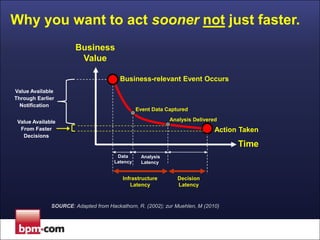
Why you want to act sooner not just faster.
Business
Value
Business-relevant Event Occurs
Value Available
Through Earlier
Notification

Event Data Captured
Analysis Delivered

Value Available
From Faster
Decisions

Action Taken

Time
Data
Latency

Analysis
Latency

Infrastructure
Latency

Decision
Latency

SOURCE: Adapted from Hackathorn, R. (2002); zur Muehlen, M (2010)
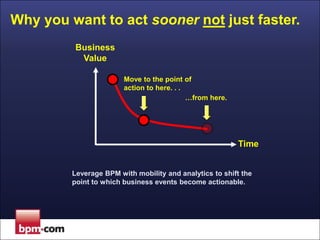
Why you want to act sooner not just faster.
Business
Value
Move to the point of
action to here. . .
…from here.

Time
Leverage BPM with mobility and analytics to shift the
point to which business events become actionable.
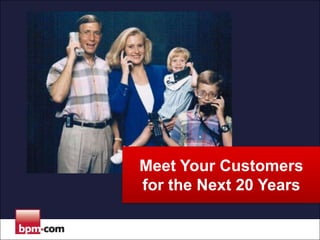
Meet Your Customers
for the Next 20 Years
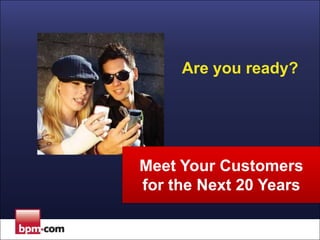
Are you ready?

Meet Your Customers
for the Next 20 Years
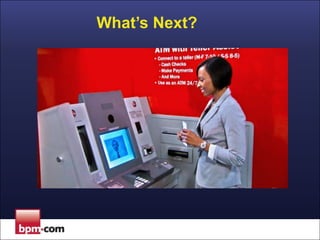
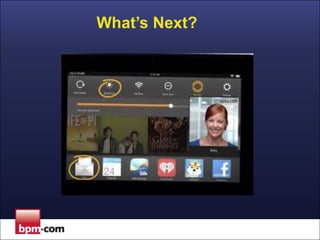
What’s Next?
What’s Next?
How will you keep pace and still
innovate in the post-relational,
post-PC, Internet of Everything
digital marketplace?
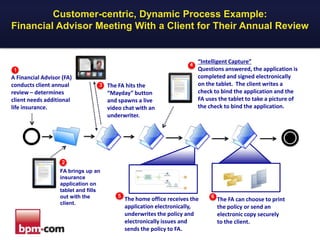
Customer-centric, Dynamic Process Example:
Financial Advisor Meeting With a Client for Their Annual Review

4

1

A Financial Advisor (FA)
conducts client annual
review – determines
client needs additional
life insurance.

3 The FA hits the

“Mayday” button
and spawns a live
video chat with an
underwriter.

“Intelligent Capture”
Questions answered, the application is
completed and signed electronically
on the tablet. The client writes a
check to bind the application and the
FA uses the tablet to take a picture of
the check to bind the application.

2
FA brings up an
insurance
application on
tablet and fills
out with the
client.

6

5

The home office receives the
application electronically,
underwrites the policy and
electronically issues and
sends the policy to FA.

6

The FA can choose to print
the policy or send an
electronic copy securely
to the client.
BPM Going Forward:
The Next 12 Months and Beyond
Shift From Efficiency to Effectiveness
Success Metrics and Performance Objectives are Increasingly
Revenue-Focused not Cost-Driven
Focus on Response Time and Customer Experience
New Investments Must Anticipate Multiple/Legacy
BPMS installations

Transparency of Business Operations Increasingly Means
Gaining Visibility Beyond Core Business Systems
Delivering the Ability to Measure Performance &
Progress in Holistically, Across the Entire Process
Getting Started With BPM:
Picking the Right Targets
As a starting point, avoid processes that:
√ are already well-defined,
√ are overly complex, or
√ are politically-charged.
Look for opportunities and processes that are characterized as:
√ paper-intensive, involving tasks done on a frequent basis (daily),
√ lacking a rigid or controversial definition, and
√ having an immediate and measurably positive impact on
stakeholders, end users, and customers.
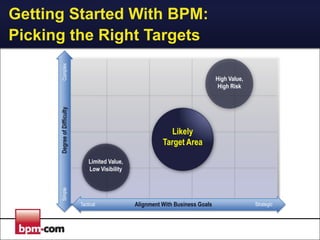
Complex

Getting Started With BPM:
Picking the Right Targets

Degree of Difficulty

High Value,
High Risk

Likely
Target Area

Simple

Limited Value,
Low Visibility

Tactical

Alignment With Business Goals

Strategic
Getting Started With BPM:
Asking the Right Questions
What Metrics Provide the Best Measurement of Success for This Process?

Are the Terms (Vocabulary) Consistent and Mutually Understood?
Who Benefits From The New Process or System?
How Will This Improve The Customer’s Experience?
How Many Systems Need to be Accessed to Perform this Process?
Will the Users of the Process Measure Success the Same as Other
Stakeholders and/or Sponsors?
How Do We Engage Our Customers’ Perspective in the Understanding and
Definition of the Business Process? (“voice of the customer”)
Business Process Management,  Millennials, Mobility and the Future of Digital Business

Business Process Management, Millennials, Mobility and the Future of Digital Business

  • 1.
    The End ofthe Beginning, NOT the Beginning of the End, for Business Process Management.
  • 2.
    BPM in theFirst Wave (Where Most Still Are Today) Phase One of BPM. . . Cross-Application Integration Managing Screen-Flows Abstracting Business Logic Enabling Business Control of Business Processes Delivering a Transactional Thread Across Systems
  • 3.
    Driving Compliance andScalability by Automating Predefined Workflows BPM Processes Are Deterministic, Where All Possible Paths Are Pre-Determined or Known in Advance, No Matter How Complex the Pathways May Be. The Direction of the Process is Determined by the Pre-Defined Path and Current State; State is Determined by the Preceding Activity. BPM enables a transactional thread from application-to-application, activity-to-activity.
  • 4.
    The 2nd MajorRevolution in IT Architecture The Relational Era 40 Years of Data-centric Application Design 1970 Message-oriented middleware (MOM) Extraction & Transformation 1995 2013 2020 Cloud Architecture Predictive Analytics Client/Server Architecture Semantic Integration Transaction Processing Mobile, Social, Cloud Data Synchronization Process of Everything The Big Data Era
  • 5.
    BPM Evolves toAddress New Realities of Digital Business Accommodating More Comprehensive, Dynamic Process Lifecycles From Transactional Data (Control) to Data-Driven (Visibility) “Data-Driven” = Shift to Information-Intensive, Adaptable Processes Driven by Analytics, Context, and External Events Shift to “Intelligent BPM” and “Smart Processes” . . . Leveraging Rules / Policies, Goals and Intelligent Agents More Agile Execution Models Allows for Adapting to Meet Goals, Rather Than Sticking Strictly to Predefined Paths Allows Separating Automation of Mundane Tasks for Efficiency, While Keeping the Overriding Focus on Effectiveness
  • 6.
    Structured Workflows vs. CaseManagement Processes Defined Start Point In Between the Process Follows a Predefined Path or Otherwise Fails Defined End Points Case Management Adapts to the Context of the Case, Guiding the Outcome Based on the Combination of Defined Goals, Rules/Policies, Data, and Application of Knowledge Worker Know-How.
  • 7.
    Handling Unpredictable, Data-Driven, Customer-centricProcesses An Event Occurs Which Launches a New Process / Case Business Rules, Policies and Processes Are Run Against Case Data Ensuring continuity across multiple channels, including mobile devices with inconsistent connectivity Prepare Document “Intelligent Capture” Information is Captured and Added to the Case Analytics Help Define How the Case is Processed The Case is Completed When Criteria is Met Process Application A Library of Process Fragments Can Be Called on to Automate Mundane Tasks or Regulated Processes
  • 8.
    Why you wantto act sooner not just faster. Business Value Business-relevant Event Occurs Value Available Through Earlier Notification Event Data Captured Analysis Delivered Value Available From Faster Decisions Action Taken Time Data Latency Analysis Latency Infrastructure Latency Decision Latency SOURCE: Adapted from Hackathorn, R. (2002); zur Muehlen, M (2010)
  • 9.
    Why you wantto act sooner not just faster. Business Value Move to the point of action to here. . . …from here. Time Leverage BPM with mobility and analytics to shift the point to which business events become actionable.
  • 10.
    Meet Your Customers forthe Next 20 Years
  • 11.
    Are you ready? MeetYour Customers for the Next 20 Years
  • 12.
  • 13.
  • 14.
    How will youkeep pace and still innovate in the post-relational, post-PC, Internet of Everything digital marketplace?
  • 15.
    Customer-centric, Dynamic ProcessExample: Financial Advisor Meeting With a Client for Their Annual Review 4 1 A Financial Advisor (FA) conducts client annual review – determines client needs additional life insurance. 3 The FA hits the “Mayday” button and spawns a live video chat with an underwriter. “Intelligent Capture” Questions answered, the application is completed and signed electronically on the tablet. The client writes a check to bind the application and the FA uses the tablet to take a picture of the check to bind the application. 2 FA brings up an insurance application on tablet and fills out with the client. 6 5 The home office receives the application electronically, underwrites the policy and electronically issues and sends the policy to FA. 6 The FA can choose to print the policy or send an electronic copy securely to the client.
  • 16.
    BPM Going Forward: TheNext 12 Months and Beyond Shift From Efficiency to Effectiveness Success Metrics and Performance Objectives are Increasingly Revenue-Focused not Cost-Driven Focus on Response Time and Customer Experience New Investments Must Anticipate Multiple/Legacy BPMS installations Transparency of Business Operations Increasingly Means Gaining Visibility Beyond Core Business Systems Delivering the Ability to Measure Performance & Progress in Holistically, Across the Entire Process
  • 17.
    Getting Started WithBPM: Picking the Right Targets As a starting point, avoid processes that: √ are already well-defined, √ are overly complex, or √ are politically-charged. Look for opportunities and processes that are characterized as: √ paper-intensive, involving tasks done on a frequent basis (daily), √ lacking a rigid or controversial definition, and √ having an immediate and measurably positive impact on stakeholders, end users, and customers.
  • 18.
    Complex Getting Started WithBPM: Picking the Right Targets Degree of Difficulty High Value, High Risk Likely Target Area Simple Limited Value, Low Visibility Tactical Alignment With Business Goals Strategic
  • 19.
    Getting Started WithBPM: Asking the Right Questions What Metrics Provide the Best Measurement of Success for This Process? Are the Terms (Vocabulary) Consistent and Mutually Understood? Who Benefits From The New Process or System? How Will This Improve The Customer’s Experience? How Many Systems Need to be Accessed to Perform this Process? Will the Users of the Process Measure Success the Same as Other Stakeholders and/or Sponsors? How Do We Engage Our Customers’ Perspective in the Understanding and Definition of the Business Process? (“voice of the customer”)