SVLK Development 
Commitment to Sustainable Forests 
for Sustainable Trade 
The Ministry of Forestry Republic of Indonesia 
Lao, October 2014
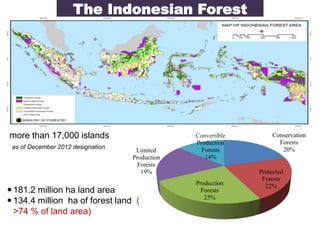
The Indonesian Forest 
Area 
more than 17,000 islands 
as of December 2012 designation 
 181.2 million ha land area 
 134.4 million ha of forest land ( 
>74 % of land area) 
Conservation 
Forests 
20% 
Protected 
Forests 
22% 
Production 
Forests 
25% 
Limited 
Production 
Forests 
19% 
Convertible 
Production 
Forests 
14%
Indonesia’s Forest Resources 
• Indonesia’s Forest Resources are very important to 
sustainable development of the country. 
• Sustainability of Indonesia’s forest resources is a 
necessity. 
• Assured legality and SFM allow Indonesia’s forest 
resource provide economic, social and environmental 
benefits : 
– plywood was the most important non-oil and gas export 
commodity. 
– there are more than 40 million people live in and 
surrounding forests. 
– Indonesia’s forest resources are home of biodiversity, 
and protect water and soil. 
• Illegal logging threaten sustainability forest resources.
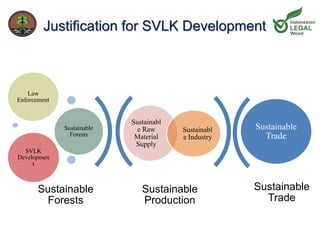
Justification for SVLK Development 
Sustainable 
Production 
Sustainable 
Trade 
Sustainabl 
e Raw 
Material 
Supply 
Sustainabl 
e Industry 
Law 
Enforcement 
Sustainable 
Forests 
SVLK 
Developmen 
t 
Sustainable 
Trade 
Sustainable 
Forests
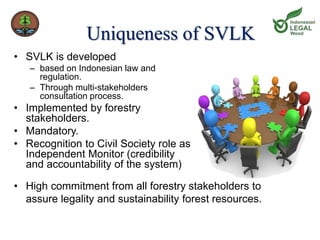
Uniqueness of SVLK 
• SVLK is developed 
– based on Indonesian law and 
regulation. 
– Through multi-stakeholders 
consultation process. 
• Implemented by forestry 
stakeholders. 
• Mandatory. 
• Recognition to Civil Society role as 
Independent Monitor (credibility 
and accountability of the system) 
• High commitment from all forestry stakeholders to 
assure legality and sustainability forest resources.
The Advantages of SVLK 
Development 
• SVLK improves good forestry governance. 
• SVLK meets customer demand for legally 
harvested, transported, processed and traded 
timber, include from sustainable forests. 
• SVLK consists of Legality and SFM Schemes. 
• SVLK provides unique experiences to customer.
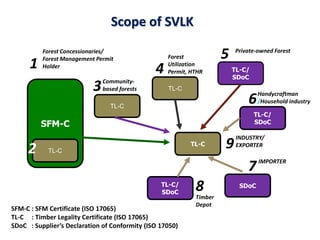
Scope of SVLK 
SFM-C 
TL-C 
TL-C 
TL-C 
TL-C/ 
SDoC 
TL-C/ 
SDoC 
INDUSTRY/ 
TL-C EXPORTER 
Forest Concessionaries/ 
Forest Management Permit 
Holder 
Community-based 
forests 
Forest 
Utilization 
Permit, HTHR 
Private-owned Forest 
2 
3 
4 
5 
6 
1 
TL-C/ 
SDoC 
7 
8 
Handycraftman 
/Household industry 
IMPORTER 
SDoC 
9 
Timber 
Depot 
SFM-C : SFM Certificate (ISO 17065) 
TL-C : Timber Legality Certificate (ISO 17065) 
SDoC : Supplier’s Declaration of Conformity (ISO 17050)
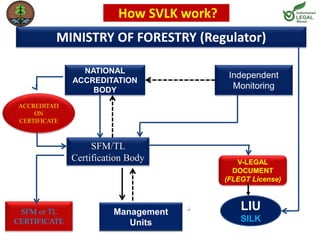
MINISTRY OF FORESTRY (Regulator) 
NATIONAL 
ACCREDITATION 
BODY 
Independent 
Monitoring 
Management 
Units 
SFM/TL 
Certification Body V-LEGAL 
DOCUMENT 
(FLEGT License) 
ACCREDITATI 
ON 
CERTIFICATE 
SFM or TL 
CERTIFICATE 
How SVLK work? 
LIU 
SILK
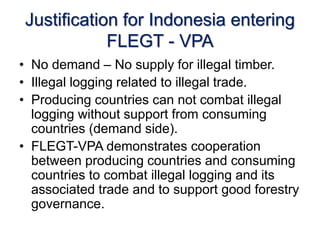
Justification for Indonesia entering 
FLEGT - VPA 
• No demand – No supply for illegal timber. 
• Illegal logging related to illegal trade. 
• Producing countries can not combat illegal 
logging without support from consuming 
countries (demand side). 
• FLEGT-VPA demonstrates cooperation 
between producing countries and consuming 
countries to combat illegal logging and its 
associated trade and to support good forestry 
governance.
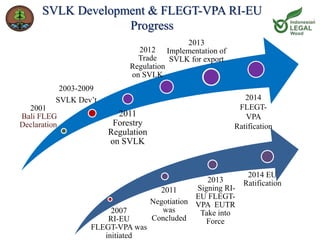
SVLK Development & FLEGT-VPA RI-EU 
Progress 
2001 
2003-2009 
SVLK Dev’t 
Bali FLEG 
Declaration 
2012 
Trade 
Regulation 
on SVLK 
2011 
Forestry 
Regulation 
on SVLK 
2013 
Implementation of 
SVLK for export 
2007 
RI-EU 
FLEGT-VPA was 
initiated 
2011 
Negotiation 
was 
Concluded 
2013 
Ratification 
Signing RI-EU 
FLEGT-VPA 
EUTR 
Take into 
Force 
2014 
FLEGT-VPA 
2014 EU 
Ratification
Current Works 
1. Implementation of ISO 17050 
Supplier’s Declaration of Conformity 
(SDoC) for low risk timber from 
privately-own forest and household 
industry. 
2. Second stage of VPA Joint 
Assessment. 
3. Drafting of Timber Import Regulation.
Impact and Benefit (achievement) 
of Indonesia-EU FLEGT-VPA 
1. Recognition and Confidence. 
2. Improved of good forestry governance. 
3. Integrated system of legality assurance (LIU-MoF), 
Trade (INATRADE-Ministry of Trade), 
and Customs (INSW). 
4. Market acceptance. 
5. Joint effort to halt illegal logging and illegal 
timber trade. 
6. Increase export.
Challenges and What Next ? 
1. Maintain multistakeholder (inter-ministerial, 
civil society, private sector) 
process. 
2. Public procurement policy. 
3. EUTR implementation in supporting to 
VPA implementation. 
4. Wider/other market acceptance/ 
cooperation.
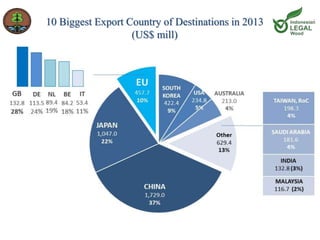
10 Biggest Export Country of Destinations in 2013 
(US$ mill)
10. indonesia country update

10. indonesia country update

  • 1.
    SVLK Development Commitmentto Sustainable Forests for Sustainable Trade The Ministry of Forestry Republic of Indonesia Lao, October 2014
  • 2.
    The Indonesian Forest Area more than 17,000 islands as of December 2012 designation  181.2 million ha land area  134.4 million ha of forest land ( >74 % of land area) Conservation Forests 20% Protected Forests 22% Production Forests 25% Limited Production Forests 19% Convertible Production Forests 14%
  • 3.
    Indonesia’s Forest Resources • Indonesia’s Forest Resources are very important to sustainable development of the country. • Sustainability of Indonesia’s forest resources is a necessity. • Assured legality and SFM allow Indonesia’s forest resource provide economic, social and environmental benefits : – plywood was the most important non-oil and gas export commodity. – there are more than 40 million people live in and surrounding forests. – Indonesia’s forest resources are home of biodiversity, and protect water and soil. • Illegal logging threaten sustainability forest resources.
  • 4.
    Justification for SVLKDevelopment Sustainable Production Sustainable Trade Sustainabl e Raw Material Supply Sustainabl e Industry Law Enforcement Sustainable Forests SVLK Developmen t Sustainable Trade Sustainable Forests
  • 5.
    Uniqueness of SVLK • SVLK is developed – based on Indonesian law and regulation. – Through multi-stakeholders consultation process. • Implemented by forestry stakeholders. • Mandatory. • Recognition to Civil Society role as Independent Monitor (credibility and accountability of the system) • High commitment from all forestry stakeholders to assure legality and sustainability forest resources.
  • 6.
    The Advantages ofSVLK Development • SVLK improves good forestry governance. • SVLK meets customer demand for legally harvested, transported, processed and traded timber, include from sustainable forests. • SVLK consists of Legality and SFM Schemes. • SVLK provides unique experiences to customer.
  • 7.
    Scope of SVLK SFM-C TL-C TL-C TL-C TL-C/ SDoC TL-C/ SDoC INDUSTRY/ TL-C EXPORTER Forest Concessionaries/ Forest Management Permit Holder Community-based forests Forest Utilization Permit, HTHR Private-owned Forest 2 3 4 5 6 1 TL-C/ SDoC 7 8 Handycraftman /Household industry IMPORTER SDoC 9 Timber Depot SFM-C : SFM Certificate (ISO 17065) TL-C : Timber Legality Certificate (ISO 17065) SDoC : Supplier’s Declaration of Conformity (ISO 17050)
  • 8.
    MINISTRY OF FORESTRY(Regulator) NATIONAL ACCREDITATION BODY Independent Monitoring Management Units SFM/TL Certification Body V-LEGAL DOCUMENT (FLEGT License) ACCREDITATI ON CERTIFICATE SFM or TL CERTIFICATE How SVLK work? LIU SILK
  • 9.
    Justification for Indonesiaentering FLEGT - VPA • No demand – No supply for illegal timber. • Illegal logging related to illegal trade. • Producing countries can not combat illegal logging without support from consuming countries (demand side). • FLEGT-VPA demonstrates cooperation between producing countries and consuming countries to combat illegal logging and its associated trade and to support good forestry governance.
  • 10.
    SVLK Development &FLEGT-VPA RI-EU Progress 2001 2003-2009 SVLK Dev’t Bali FLEG Declaration 2012 Trade Regulation on SVLK 2011 Forestry Regulation on SVLK 2013 Implementation of SVLK for export 2007 RI-EU FLEGT-VPA was initiated 2011 Negotiation was Concluded 2013 Ratification Signing RI-EU FLEGT-VPA EUTR Take into Force 2014 FLEGT-VPA 2014 EU Ratification
  • 11.
    Current Works 1.Implementation of ISO 17050 Supplier’s Declaration of Conformity (SDoC) for low risk timber from privately-own forest and household industry. 2. Second stage of VPA Joint Assessment. 3. Drafting of Timber Import Regulation.
  • 12.
    Impact and Benefit(achievement) of Indonesia-EU FLEGT-VPA 1. Recognition and Confidence. 2. Improved of good forestry governance. 3. Integrated system of legality assurance (LIU-MoF), Trade (INATRADE-Ministry of Trade), and Customs (INSW). 4. Market acceptance. 5. Joint effort to halt illegal logging and illegal timber trade. 6. Increase export.
  • 13.
    Challenges and WhatNext ? 1. Maintain multistakeholder (inter-ministerial, civil society, private sector) process. 2. Public procurement policy. 3. EUTR implementation in supporting to VPA implementation. 4. Wider/other market acceptance/ cooperation.
  • 14.
    10 Biggest ExportCountry of Destinations in 2013 (US$ mill)