1 JOHN 5 COMMENTARY
EDITED BY GLENN PEASE
Faith in the Incarnate Son of God
1 Everyone who believes that Jesus is the
Christ is born of God, and everyone who
loves the father loves his child as well.
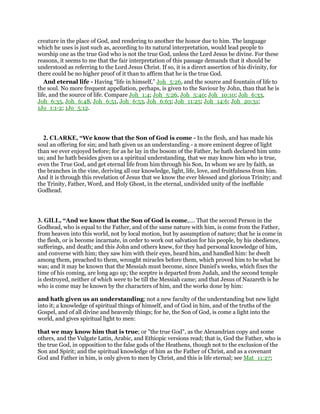
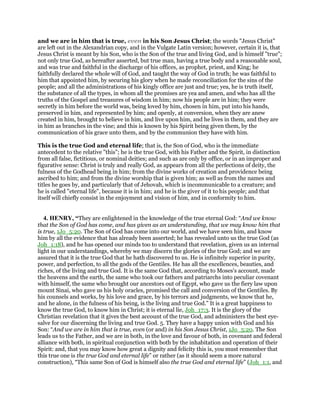
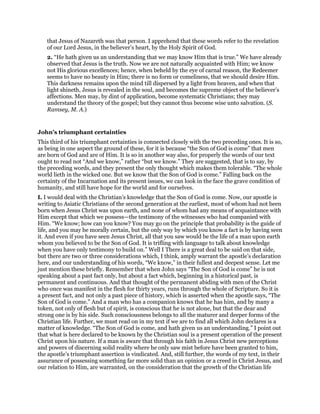
1.BARNES, “Whosoever believeth that Jesus is the Christ - Is the Messiah; the
anointed of God. On the meaning of the word Christ, see the notes at Mat_1:1. Of course, it is
meant here that the proposition, that “Jesus is the Christ,” should be believed or received in the
true and proper sense, in order to furnish evidence that anyone is born of God. Compare the
notes at 1Jo_4:3. It cannot be supposed that a mere intellectual acknowledgment of the
proposition that Jesus is the Messiah is all that is meant, for that is not the proper meaning of
the word believe in the Scriptures. That word, in its just sense, implies that the truth which is
believed should make its fair and legitimate impression on the mind, or that we should feel and
act as if it were true. See the notes at Mar_16:16. If, in the proper sense of the phrase, a man
does believe that Jesus “is the Christ,” receiving him as he is revealed as the Anointed of God,
and a Saviour, it is undoubtedly true that that constitutes him a Christian, for that is what is
required of a man in order that he may be saved. See the notes at Act_8:37.
Is born of God - Or rather, “is begotten of God.” See the notes at Joh_3:3
And everyone that loveth him that begat - That loves that God who has thus begotten
those whom he has received as his children, and to whom he sustains the endearing relation of
Father.
Loveth him also that is begotten of him - That is, he will love all the true children of
God; all Christians. See the notes at 1Jo_4:20. The general idea is, that as all Christians are the
children of the same Father; as they constitute one family; as they all bear the same image; as
they share his favor alike; as they are under the same obligation of gratitude to him, and are
bound to promote the same common cause, and are to dwell together in the same home forever,
they should therefore love one another. As all the children in a family love their common father,
so it should be in the great family of which God is the Head.
2. CLARKE, “Whosoever believeth, etc. - Expressions of this kind are to be taken in
connection with the subjects necessarily implied in them. He that believeth that Jesus is the
Messiah, and confides in him for the remission of sins, is begotten of God; and they who are
pardoned and begotten of God love him in return for his love, and love all those who are his
children.
3. GILL, “Whosoever believeth that Jesus is the Christ,.... Or the Messiah that was
prophesied of old, was long promised to the Jews, and whom they expected; there was a person
spoken of in the writings of the Old Testament under this character, Psa_2:2; and the Jews
looked for him; and Jesus of Nazareth is he, as appears by all the characteristics of the Messiah
in prophecy being found upon him: this the Jews deny, but is the grand article of faith embraced
by the apostles and followers of Jesus, and is of very great importance; he that denies it is a liar,
and he that does not believe it shall die in his sins: the word signifies "anointed", and includes all
the offices of the Son of God, to which he was anointed, as prophet, priest, and King; so that to
believe him to be the Christ, is to believe him to be that prophet Moses said should come, and
who has declared the whole mind and will of his Father; and that he is that priest that should
arise after the order of Melchizedek, and make atonement for sin, and intercession for
transgressors; and that he is that King whom God has set over his holy hill of Zion, whose laws
are to be obeyed, and his commands observed: but to believe that Jesus is the Christ, or the
Messiah, is not barely to give an assent to this truth, or to acknowledge it; so the devils
themselves have done, Luk_4:41; and whole nations of men, multitudes of which were never
born of God; it is not a mere profession of it before men, or an idle, inoperative faith, which is
destitute of love to Christ, and obedience to him; but whereas his work and business, as the
Christ of God, was to bring in an everlasting righteousness, to procure the remission of sin, and
to make peace and reconciliation for it, and to obtain eternal salvation; true faith in him as the
Messiah is a believing with the heart unto righteousness, or a looking to, and trusting in the
righteousness of Christ for justification; and a dealing with his blood for pardon and cleansing,
under a sense of guilt and filth; and a laying hold on his atoning sacrifice for the expiation of sin,
and peace with God; and a reception of him as the only Saviour and Redeemer, or a dependence
on him for life and salvation; and which faith shows itself in love to him, and in a professed
subjection to his Gospel, and cheerful submission to his ordinances: and every such person
is born of God; is a partaker of the divine nature; has Christ formed, and every grace of the
Spirit implanted in him, among which faith in Christ is a considerable one; and such an one in
consequence is openly a child and heir of God, wherefore, to be born of God is an instance of
great grace, and an high honour and privilege, and of the greatest moment and importance.
Regeneration is not owing to the power and will of man, but to the abundant mercy and good
will of God, and is an instance of his rich mercy, great love, and free favour, and commands love
again:
and everyone that loveth him that begat; that is, God the Father, who has begotten them
again to a lively hope, according to his abundant mercy and sovereign will; and as he is their
Father that has begotten them, they cannot but love him: and such an one
loveth him also that is begotten of him; not only Jesus Christ, who by nature is the only
begotten of the Father; for those who know God to be their Father by adoption and regeneration,
will love Christ, who is the Son of God by nature; see Joh_8:42; but also every regenerate
person, all that are born of God; since they are the children of the same Father with them,
belong to the same household and family, and bear the image and likeness of their heavenly
Father on them.
4. HENRY, “I. The apostle having, in the conclusion of the last chapter, as was there observed,
urged Christian love upon those two accounts, as suitable to Christian profession and as suitable
to the divine command, here adds a third: Such love is suitable, and indeed demanded, by their
eminent relation; our Christian brethren or fellow-believers are nearly related to God; they are
his children: Whosoever believeth that Jesus is the Christ is born of God, 1Jo_5:1. Here the
Christian brother is, 1. Described by his faith; he that believeth that Jesus is the Christ - that he
is Messiah the prince, that he is the Son of God by nature and office, that he is the chief of all the
anointed world, chief of all the priests, prophets, or kings, who were ever anointed by God or for
him, that he is perfectly prepared and furnished for the whole work of the eternal salvation -
accordingly yields himself up to his care and direction; and then he is, 2. Dignified by his
descent: He is born of God, 1Jo_5:1. This principle of faith, and the new nature that attends it or
from which it springs, are ingenerated by the Spirit of God; and so sonship and adoption are not
now appropriated to the seed of Abraham according to the flesh, not to the ancient Israel of
God; all believers, though by nature sinners of the Gentiles, are spiritually descended from God,
and accordingly are to be beloved; as it is added: Every one that loveth him that begat loveth
him also that is begotten of him, 1Jo_5:1. It seems but natural that he who loves the Father
should love the children also, and that in some proportion to their resemblance to their Father
and to the Father's love to them; and so we must first and principally love the Son of the Father,
as he is most emphatically styled, 2Jo_1:3, the only (necessarily) begotten, and the Son of his
love, and then those that are voluntarily begotten, and renewed by the Spirit of grace.
5. JAMISON, “
1Jo_5:1-21. Who are the brethren especially to be loved (1Jo_4:21); Obedience, the test of
love, easy through faith, which overcomes the world. Last portion of the epistle. The spirit’s
witness to the believer’s spiritual life. Truths repeated at the close: Farewell warning.
Reason why our “brother” (1Jo_4:21) is entitled to such love, namely, because he is “born
(begotten) of God”: so that if we want to show our love to God, we must show it to God’s visible
representative.
Whosoever — Greek, “Everyone that.” He could not be our “Jesus” (God-Savior) unless He
were “the Christ”; for He could not reveal the way of salvation, except He were a prophet: He
could not work out that salvation, except He were a priest: He could not confer that salvation
upon us, except He were a king: He could not be prophet, priest, and king, except He were the
Christ [Pearson, Exposition of the Creed].
born — Translate, “begotten,” as in the latter part of the verse, the Greek being the same.
Christ is the “only-begotten Son” by generation; we become begotten sons of God by
regeneration and adoption.
every one that loveth him that begat — sincerely, not in mere profession (1Jo_4:20).
loveth him also that is begotten of him — namely, “his brethren” (1Jo_4:21).
6. BI, “Belief in Jesus as the Christ
This is the third virtual repetition of this truth (see 1Jn_4:2; 1Jn_4:15).
Now in the apostles’ days every Christian as such believed that Jesus was the Christ. By this
belief and its confession he was distinguished from a Jew on the one side and a heathen on the
other; and the same might be said of the confession that Jesus Christ is come in the flesh, for
this in the apostle’s eyes would be the same as that Jesus is the Christ, for if He was the Christ,
His assertion of Himself as being the true and only begotten of God, who came down from
heaven, must be true, for God would never send into the world one who would so misrepresent
His truth as to say that He was His special anointed messenger and representative when He was
not; and so with Jesus being the Son of God of 1Jn_4:14.
Faith and regeneration
I. What is the believing intended in the text?
1. The believing here intended is that which our Lord and His apostles exhorted men to
exercise, and to which the promise of salvation is always appended in the Word of God.
2. The faith here intended is the duty of all men. Jesus Christ is worthy of the confidence of
all men; it is therefore the duty of men to confide in Him.
3. At the same time this faith, wherever it exists, is in every case, without exception, the gift
of God and the work of the Holy Spirit. He has wrought all our works in us, and our faith too.
4. The faith intended in the text evidently rests upon a person—upon Jesus. “Whosoever
believeth that Jesus is the Christ is born of God.” What is meant by “Jesus is the Christ,” or
Jesus is the Anointed? First, that He is the Prophet; secondly, that He is the Priest; thirdly,
that He is the King of the Church, for in all these three senses He is the Anointed.
5. True faith is reliance. Have you confidence as well as credence? A creed will not save you,
but reliance upon the anointed Saviour is the way of salvation. Moreover, true faith is not a
flattering presumption, by which a man says, “I believe I am saved, for I have such delightful
feelings, I have had a marvellous dream, I have felt very wonderful sensations;” for all such
confidence may be nothing but sheer assumption. Faith, again, is not the assurance that
Jesus died for me. On such a theory every believer in a universal atonement would
necessarily be born of God, which is very far from being the case. Neither is it faith for me to
be confident that I am saved, for it may be the case that I am not saved, and it can never be
faith to believe a lie.
II. We must now pass on to show that wherever it exists it is the proof of regeneration.
“Whosoever believeth that Jesus is the Christ is born of God.” “Ah!” I hear thee say, poor soul,
“the new birth is a great mystery; I am afraid I am not a partaker in it.” You are born again if you
are relying upon a crucified Saviour. Mystery or no mystery, the new birth is yours if you are a
believer. Electricity is a great mystery, and you cannot see it; but the operator tells you that the
electric current is moving along the wire. How does he know? “I know it by the needle.” How is
that? I could move your needles easily. “Yes; but do not you see the needle has made two
motions to the right, one to the left, and two to the right again? I am reading a message.” “But,”
say you, “I can see nothing in it; I could imitate that clicking and moving very easily.” Yet he who
is taught the art sees before him in those needles, not only electric action, but a deeper mystery
still; he perceives that a mind is directing the invisible force, and speaking by means of it. Not to
all, but to the initiated is it given to see the mystery hidden within the simplicity. The believer
sees in the faith, which is simple as the movements of the needle, an indication that God is
operating on the human mind, and the spiritual man discerns that there is an inner secret
intimated thereby, which the carnal eye cannot decipher. To believe in Jesus is a better indicator
of regeneration than anything else, and in no case did it ever mislead. Now let me reply to
certain questions. Must not a man repent as well as believe? Reply: No man ever believed but
what he repented at the same time. Faith and repentance go together. They must. If I trust
Christ to save me from sin, I am at the same time repenting of sin, and my mind is changed in
relation to sin, and everything else that has to do with its state. All the fruits meet for repentance
are contained in faith itself.
III. Now what flows out of this? Love is the legitimate issue I We must love if we are begotten of
God all those who are also born of God. First, I love God, and therefore I desire to promote
God’s truth, and to keep God’s gospel free from taint. But then I am to love all those whom God
has begotten, despite the infirmities and errors I see in them, being also myself compassed
about with infirmities. Life is the reason for love, the common life which is indicated by the
common faith in the dear Redeemer is to bind us to each other. (C. H. Spurgeon.)
The theory of brotherly love
Four things are here associated, and said to arise out of one another—faith, regeneration, the
love of God, and the love of man.
I. Faith—“whosoever believeth that Jesus is the Christ.” Jesus is found to be all that the
Scripture predictions declared the Messiah should be. They who discover this harmony can say,
“we have found the Messiahs, which is, being interpreted, the Christ.” Even in this state of mind
there are the elements of rich promise, but there is far more in the reception of Jesus as the
Christ. He is acknowledged, not merely in general terms, as a Divine Saviour; but He is
appreciated in the special offices which He bears for the redemption of men.
II. The regeneration connected with it—“is born of God.” Faith and regeneration are united.
This view is brought out still more fully in Joh_1:12-13. We ask what must be the moral effect
produced by accepting Christ in His gracious offices? It is plain it must be vital and saving. We
see at once how just and reasonable is the representation of the text—that faith and regeneration
are united.
III. In every mind thus influenced the love of God obtains a prominent place. “Everyone that
loveth Him that begat.” It must be so, considering the change that has been produced. It is a new
birth. God is seen to be the only Master who can claim unreserved obedience. A mind thus
enlightened must love God. Especially must it be so when it is considered that He is the Author
of this change. In His gracious love He has been pleased to put forth His power, and create the
soul anew in righteousness. How calculated is such a contemplation to call forth the warmest
exercise of love! Add to this, that when such a change is effected in the soul by God, it brings us
into a new relation to Him, and one that eminently calls forth our love. It is that of a child. It is
natural to a child to love his parent. Nor let it be overlooked how God is continually increasing
His claims on His own children. They are constrained to say (Eph_1:3).
IV. The love of God is accompanied by the love of man. “Everyone that loveth Him that begat,
loveth Him also that is begotten of Him.” (J. Morgan, D. D.)
Love to man inspired by new life
If we do not love Him more than what lies around us—houses and lands, father or mother, son
or daughter—we are not worthy of Him. Nor are we worthy of them. Unless we come to them
and they to us in the richness of a life inspired and quickened by Him, in the wealth of
affections, impulses, desires, and hopes thus quickened and inspired by a loftier faith, we come
to one another as trees encased in ice. But if, first of all, we give ourselves to Him, and the
generous hopes and affections which faith in Him may awaken in us, we shall be like these same
trees, lifting up their branches to the spring day sun, till from the lowest root to the highest twig
they feel the pulses of a new life bursting out into leaf and blossom, while birds nestle within
their shade, and the air is burdened with their melodies. (H. W. Beecher.)
7. CALVIN, “1Whosoever believeth He confirms by another reason, that faith and brotherly love are
united; for since God regenerates us by faith he must necessarily be loved by us as a Father; and this
love embraces all his children. Then faith cannot be separated from love.
The first truth is, that all born of God, believe that Jesus is the Christ; where, again, you see that Christ
alone is set forth as the object of faith, as in him it finds righteousness, life, and every blessing that can be
desired, and God in all that he is. (89) Hence the only true way of believing is when we direct our minds to
him. Besides, to believe that he is the Christ, is to hope from him all those things which have been
promised as to the Messiah.
Nor is the title, Christ, given him here without reason, for it designates the office to which he was
appointed by the Father. As, under the Law, the full restoration of all things, righteousness and
happiness, were promised through the Messiah; so at this day the whole of this is more clearly set forth in
the gospel. Then Jesus cannot be received as Christ, except salvation be sought from him, since for this
end he was sent by the Father, and is daily offered to us.
Hence the Apostle declares that all they who really believe have been born of God; for faith is far above
the reach of the human mind, so that we must be drawn to Christ by our heavenly Father; for not any of
us can ascend to him by his own strength. And this is what the Apostle teaches us in his Gospel, when he
says, that those who believe in the name of the only-begotten, were not born of blood nor of the flesh.
(Joh_1:13.) And Paul says, that we are endued,not with the spirit of this world, but with the Spirit that is
from God, that we may know the things given us by him. (1Co_2:12.) For eye hath not seen, nor ear
heard, nor the mind conceived, the reward laid up for those who love God; but the Spirit alone penetrates
into this mystery. And further, as Christ is given to us for sanctification, and brings with it the Spirit of
regeneration, in short, as he unites us to his own body, it is also another reason why no one can have
faith, except he is born of God.
Loveth him also that is begotten of him Augustine and some others of the ancients have applied this to
Christ, but not correctly. For though the Apostle uses the singular number, yet he includes all the faithful;
and the context plainly shows that his purpose was no other than to trace up brotherly love to faith as its
fountain. It is, indeed, an argument drawn from the common course of nature; but what is seen among
men is transferred to God. (90)
But we must observe, that the Apostle does not so speak of the faithful only, and pass by those who are
without, as though the former are alone to be loved, and no care and no account to be had for the latter;
but he teaches us as it were by this first exercise to love all without exception, when he bids us to make a
beginning with the godly. (91)
(89) Literally, “ the whole God — totum Deum .” — Ed.
(90) The literal rendering of the verse is as follows, —
“ one who believes that Jesus is the Christ has been begotten by God; and every one who loves the
begetter loves also the begotten by him.” — Ed.
(91) The subject no doubt is love to the brethren throughout; and this passage shews this most clearly.
Love to all is evidently a duty, but it is not taught here. — Ed.
2
This is how we know that we love the
children of God: by loving God and
carrying out his commands.
1.BARNES, “By this we know that we love the children of God ... - This is repeating
the same truth in another form. “As it is universally true that if we love Him who has begotten
us, we shall also love His children, or our Christian brethren, so it is true also that if we love His
children it will follow that we love Him.” In other places, the apostle says that we may know that
we love God if we love those who bear His image, 1Jo_3:14. He here says, that there is another
way of determining what we are. We may have undoubted evidence that we love God, and from
that, as the basis of an argument, we may infer that we have true love to His children. Of the fact
that we may have evidence that we love God, apart from that which we derive from our love to
His children, there can be no doubt. We may be conscious of it; we may find pleasure in
meditating on His perfections; we may feel sure that we are moved to obey Him by true
attachment to Him, as a child may in reference to a father. But, it may be asked, how can it be
inferred from this that we truly love His children? Is it not easier to ascertain this of itself than it
is to determine whether we love God? Compare 1Jo_4:20. To this it may be answered, that we
may love Christians from many motives: we may love them as personal friends; we may love
them because they belong to our church, or sect, or party; we may love them because they are
naturally amiable: but the apostle says here, that when we are conscious that an attachment
does exist toward Christians, we may ascertain that it is genuine, or that it does not proceed
from any improper motive, by the fact that we love God. We shall then love Him as His children,
whatever other grounds of affection there may be toward them.
And keep his commandments - See the notes at Joh_14:15.
2. CLARKE, “By this we know that we love the children of God - Our love of God’s
followers is a proof that we love God. Our love to God is the cause why we love his children, and
our keeping the commandments of God is the proof that we love him.
3. GILL, “By this we know that we are the children God,.... The Ethiopic version reads,
"by this know that we love God"; which, in connection with what follows, makes a tautology, and
is a proving "idem per idem": whereas the apostle's view is to show when love to the saints is
right; and that is,
when we love God, and keep his commandments: love to the brethren may arise from
such a cause, as may show that it is not brotherly love, or of a spiritual kind; it may arise from
natural relation, or civil friendship, or from a benefit or favour received from them, and from
some natural external excellency seen in them; and a man may do acts of love and kindness to
the brethren, from what may be called good nature in himself, or with sinister views; but true
love to the brethren springs from love to God: such who love the saints aright, and by which they
may know they do so, they love them because they themselves love God, and in obedience to his
command; they love them because they belong to God, and are the objects of his love; because
his grace is wrought in them, and his image stamped upon them.
4. HENRY, “The apostle shows, 1. How we may discern the truth, or the true evangelical nature
of our love to the regenerate. The ground of it must be our love to God, whose they are: By this
we know that we love the children of God, when we love God, 1Jo_5:2. Our love to them
appears to be sound and genuine when we love them not merely upon any secular account, as
because they are rich, or learned, or kind to us, or of our denomination among religious parties;
but because they are God's children, his regenerating grace appears in them, his image and
superscription are upon them, and so in them God himself is loved. Thus we see what that love
to the brethren is that is so pressed in this epistle; it is love to them as the children of God and
the adopted brethren of the Lord Jesus. 2. How we may learn the truth of our love to God - it
appears in our holy obedience: When we love God, and keep his commandments, 1Jo_5:2. Then
we truly, and in gospel account, love God, when we keep his commandments: For this is the love
of God, that we keep his commandments; and the keeping of his commandments requires a
spirit inclined thereto and delighting herein; and so his
5. JAMISON, “By — Greek, “In.” As our love to the brethren is the sign and test of our love
to God, so (John here says) our love to God (tested by our “keeping his commandments”) is,
conversely, the ground and only true basis of love to our brother.
we know — John means here, not the outward criteria of genuine brotherly love, but the
inward spiritual criteria of it, consciousness of love to God manifested in a hearty keeping of
His commandments. When we have this inwardly and outwardly confirmed love to God, we can
know assuredly that we truly love the children of God. “Love to one’s brother is prior, according
to the order of nature (see on 1Jo_4:20); love to God is so, according to the order of grace
(1Jo_5:2). At one time the former is more immediately known, at another time the latter,
according as the mind is more engaged in human relations or in what concerns the divine
honor” [Estius]. John shows what true love is, namely, that which is referred to God as its first
object. As previously John urged the effect, so now he urges the cause. For he wishes mutual
love to be so cultivated among us, as that God should always be placed first [Calvin].
6. BI, “How shall we be certified that we love the brethren
To reply to this inquiry seems to be the specific object of these verses.
Contemplating them in this connection, they suggest four evidences.
I. The first is that we love God. “By this we know,” etc. It must seem strange, at first sight, to
find the love of God cited as a proof of the love of His people. We would expect rather the reverse
order. This too is found to be the usual practice (see 1Jn_4:7-8). At the same time there is a
sense in which the love of God ought to be sought in our hearts as a proof of the love of His
people. It is one that will readily occur to a mind jealous of itself. It is not unnatural to ask, Does
his love of the people of God arise out of the love of God? In this view he might properly seek for
the love of God as a proof of the love of the brethren. The least reflection may show the necessity
for such an inquiry. Brotherly love, or what appears to be such, may arise from other sources
besides the love of God. It may be a natural feeling and not a gracious affection. We may love our
kindred, friends, neighbours, benefactors, and yet not love God. It is possible there may be even
an active benevolence where this heavenly principle does not exist. It will be asked how is such a
subject to be investigated? And we reply in one of two ways, or in both. It may be either by
examining whether our deeds of brotherly love are prompted and influenced by the love of God;
or by inquiring into the general principle, whether the love of God has ever been shed abroad in
our hearts by the Holy Ghost.
II. The profession of brotherly love may be tested by obedience to the commandments of God.
“We know that we love the children of God, when we love God, and keep His commandments.”
Viewing the subject in the restricted light of the context, the meaning of this test must be, that in
our exercises of brotherly love, we are guided by the commandments of God. Assuming this to
be the just interpretation, there are two aspects in which our conduct may be contemplated, the
one a refusal to do that which God forbids, although it may be desired as an expression of
brotherly love, and the other a readiness to exercise it in every way which God has required.
III. The next evidence of brotherly love is akin to the second, and may be regarded indeed as a
summary of the two already considered, and an extension of their meaning and application. “For
this is the love of God, that we keep His commandments.” There is great force in the expression,
“This is the love of God.” This is that in which it consists, by which its existence is manifested,
and without which it cannot be. A child obeys his parent because he loves him, and as he loves
him. The same may be said of the master and servant, the king and his subjects. If there be not
love, uniform and hearty obedience cannot be rendered. In the case of Christ and His people, the
claims are peculiarly strong on the one hand, and the obligations specially felt on the other.
There is no love so strong as that by which they are bound to one another. It takes precedence of
every other. The consequence is, that the love of Christ urges His people to the obedience of
every commandment. No matter how trifling it may seem to be, it is enough that He has
declared it to be His will.
IV. There is one other evidence in the verses before us, but it may almost be regarded as a part
of that which has just been noticed. It is such an apprehension of the commandments of God
that they are not considered to be a burthen. “His commandments are not grievous.” This saying
is universally and absolutely true of the commandments of God in their own nature. They are all
“holy, and just, and good.” Such, however, is not the sentiment of the ungodly. They consider
many of God’s commandments to be grievous. We might instance such commands as these—
“Whatsoever ye do, whether ye eat or drink, do all to the glory of God,” “Abstain from all
appearance of evil,” “The very God of peace sanctify you wholly; your whole spirit, and soul, and
body.” These are felt to be grievous by the ungodly. No so by the godly: They may not obey them
as they would, but they approve of them.
1. The great reason is their love of God. They so love Him that they account nothing which
He has commanded grievous.
2. Another reason is that his heart is in the service itself. He likes it. Prayer and holiness are
agreeable to him. They are not a drudgery, but a delight.
3. He forms, moreover, the habit of obedience, and this greatly confirms his desire for it. The
more he practises it, the better he finds it.
4. Besides, the Holy Spirit helps his infirmities, and furthers his labours.
5. And we may add, he is animated by the prospect of a rich reward. (J. Morgan, D. D.)
Whereby know we that we love God’s children
I. Who are described by this title—“the children of God.” This title, “the children of God,” is
given upon several accounts.
1. By creation the angels are called “the sons of God,” and men His “offspring.” The reason of
the title is—
(1) The manner of their production by His immediate power.
(2) In their spiritual, immortal nature, and the intellectual operations flowing from it,
there is an image and resemblance of God.
2. By external calling and covenant some are denominated His “children”; for by this
evangelical constitution God is pleased to receive believers into a filial relation.
3. There is a sonship that arises from supernatural regeneration.
II. What is included in our love to the children of God.
1. The principle of this love is Divine (1Pe_1:22).
2. The qualifications of this love are as follows:
(1) It is sincere and cordial. A counterfeit, formal affection, set off with artificial colours,
is so far from being pleasing to God, that it is infinitely provoking to Him.
(2) It is pure. The attractive cause of it is the image of God appearing in them.
(3) It is universal, extended to all the saints.
(4) It must be fervent. Not only in truth, but in a degree of eminency. “This is My
commandment, that ye love one another, as I have loved you” (Joh_15:12).
(5) This love includes all kinds of love.
(a) The love of esteem, correspondent to the real worth and special goodness of the
saints.
(b) The love of desire, of their present and future happiness.
(c) The love of delight, in spiritual communion with them.
(d) The love of service and beneficence, that declares itself in all outward offices and
acts for the good of the saints. If Christians thus loved one another, the Church on
earth would be a lively image of the blessed society above.
III. The love of God and obedience to his commands, the product of it.
1. The love of God has its rise from the consideration of His amiable excellences, that render
Him infinitely worthy of the highest affection; and from the blessed benefits of creation,
preservation, redemption, and glorification, that we expect from His pure goodness and
mercy.
2. The obedience that springs from love is—
(1) Uniform and universal.
(2) This is a natural consequence of the former. The Divine law is a rule, not only for our
outward conversation, but of our thoughts and affections, of all the interior workings of
the soul that are open before God.
(3) Chosen and pleasant (1Jn_5:3). The sharpest sufferings for religion are sweetened to
a saint from the love of God, that is then most sincerely, strongly, and purely acted
(2Co_12:10).
(4) The love of God produces persevering obedience. Servile compliance is inconstant.
IV. From the love of God, and willing obedience to his commands, we may convincingly know
the sincerity of our love to his children.
1. The Divine command requires this love.
2. Spiritual love to the saints arises from the sight of the Divine image appearing in their
conversation. As affectionate expressions to the children of God, without the real supply of
their wants, are but the shadows of love, so words of esteem and respect to the law of God,
without unfeigned and universal obedience, are but an empty pretence.
3. The Divine relation of the saints to God as their Father is the motive of spiritual love to
them. (W. Bates, D. D.)
The love of God and universal obedience
I. The nature of true love to God.
1. The peculiar acts of true love to God.
(1) It has a high approbation and esteem of God.
(2) It has a most benevolent disposition towards God.
(3) Its earnest desire is after God.
(4) Its complacency and delight is in God.
(5) It is pleased or displeased with itself, according as it is conscious to its own
aboundings or defects.
2. The properties of true love to God.
(1) It is a judicious love.
(2) It is an extensive love.
(3) It is a supreme love.
(4) It is an abiding love.
3. The effects of this love. A holy imitation of God and devotedness to Him, self-denial,
patience, and resignation to His will, the government of all our passions, appetites and
behaviour, a departure from everything that offends Him, and laborious endeavours by His
grace, to approve ourselves to Him, and glorify His name in all that we do.
II. The influence that true love to God has unto our obedience, or unto our keeping his
commandments.
1. Love to God enters into the very nature of all true and acceptable obedience.
2. Love to God inclines and even constrains us to keep all His commands.
3. Love to God gives us a delight in keeping His commands. They are suited to the holy
nature of a newborn soul, whose prime affection is love to God; this takes off distastes, and
makes all His precepts agreeable to us; it makes them our choice and our pleasure; it
sweetens our obedience, and makes us think nothing a trouble or a burden that God calls us
to, and nothing too great to do or suffer for Him, whereby we may please and honour Him,
and show our gratitude, love and duty to Him.
4. Love to God will make us persevere in keeping His commands.
Use: 1. Let this put us upon serious inquiry whether the love of God dwells in us.
2. Let the sinner against God behold how odious and unworthy the principle is that refuses
to obey Him.
3. Let us prize the gospel of the grace of God, and seek help from thence to engage our love
and obedience.
4. Let us look and long for the heavenly state, where all our love and obedience shall be
perfected. (John Guyse.)
Loving God through human love
The love of man is involved in the love of God. There is no real love of God that does not include
the love of His children. Love is a state of the human spirit; an atmosphere in which one abides;
he who is in that atmosphere loves the human that appeals to him no less than the Divine.
Loving God is not merely a feeling toward Him—a gushing out of emotion: it is a practical
exercise of His Spirit. It is a real doing of His commandments. “What is loving God? Is it
anything more than loving men, and trying in His name to do them good?” “I do not think I love
God, for I do not feel towards Him as I do towards those I love best.” “It is hard to think of God
as the Great Energy that fills all things, and yet to love Him as a Father.” These are all
expressions of sincere minds trying to get into the real atmosphere of the truth and to live the
spiritual life. I should like, if possible, to help clear up the difficulties indicated. Let us recognise
the fact that nothing but emptiness and disappointment can come from the effort to love an
abstract conception. Love goes out only toward personality. And the personality must lie warm
and living in our hearts, or it fails to quicken affection into life. Israel, for instance, was
labouring for a thousand years to bring forth its idea of Godhead. In the old notion of Jahveh as
God of Israel only, there was a sort of personal warmth akin to patriotism; a common affection
which went out in a crude way to their personal champion. When the prophets began to see in
Him much more than this—the God of all the earth, “who formeth the mountains and createth
the wind, and declareth to man His thought”—while there was an immense gain in breadth and
truth of conception, there was a loss of the nearness that begets personal attachment, until, a
little later, God’s relation to the whole nation gave place to the new idea of His direct relation to
every man in all the affairs of his life. That gave birth to all that is best in the Psalms of Israel,
with their outgoing of personal confidence and affection. Then after the coming of Jesus and the
intense feeling that sprang up on His departure that He was God manifest in the flesh, there was
a leap of thought and life which showed how the real heart of man hungered for something more
close and personal than Judaic religion could ever give it. So complete was this change, and so
central to the Apostolic age, that for eighteen hundred years the same phenomenon has been
witnessed of placing Jesus in the central place, with God removed to a vague back ground, the
Being “whom no man hath seen or can see,” dreaded, reverenced, and worshipped, but never
standing in the intimate relation of close fatherhood in which He was the warmth and light of
the life of Jesus Himself. There was abundant reason for this. The human heart, seeking for a
real religion, must have some thing concrete and close and warm; it cannot love an abstract
idea. Jesus was seen as God reduced to the human compass, enshrined in a human and personal
love. The whole responsive life of man went out to Him. And so it came to pass that He did what
He did not in the least aim to do, but rather the contrary—He did not bring the real Godhead of
the universe nearer to the average mind, but took the place of it, letting it even sweep backward,
farther out of sight—farther into the impenetrable mystery. We are pillowed in our infancy on a
bosom of affection. It is long before we know it; but when we do awake, it is to our mothers that
the earliest love goes forth. And if we ever do love God, we come to it by rising from the home
love, or some later and even stronger love that awakes in us, to the higher affection. This makes
the common affections of life sacred and Divine, in that without them there is no ground in us
for the love to God. All love has one source. Do our mothers love us? It is God in them that
breaks out into love in its highest manifestations, with its Divine unselfishness and its clinging
power. Wherever love is, we get a glimpse of the Divine and infinite. It is only as such love
responds to the Spirit of God in it that it does and dares, and clings to us and will not let us go,
though it cost struggle and patience and sacrifice and pain. And this love, as a channel of the
love of God, is the power that most often lifts us up into the clearer realms where we are at one
with the Divine, and its love becomes real to our hungry hearts. The love we have to God is
realised in our love to men. It cannot abide alone. They who have thought to gain it by
retirement and meditation have found it only a will-o’-the-wisp save as it has issued in the love
that seeks men and tries to do them good. For the love of God is not a mere feeling, a gush of
emotion in which the soul is rapt away to things ineffable. It is a spirit, an atmosphere, in which
one lives; and “he who dwelleth in love dwelleth in God, and God in him.” But to dwell in love, to
be really baptized with its spirit, is to have that energy of it within us that seeks continually to
find exercise for itself and actually to give itself to others. Unfortunately, the service of God has
too often been conceived of as the conferring of something on Him by worship or sacrifice, by
which it is thought He will be pleased. But what can we do for Him by our offering of gifts for
His use, or by the singing of His praises, save to give expression to what is in us and thereby
satisfy our own cravings? The real love of God will manifest itself in what we do for men. It will
set itself to help on the kingdom of God on earth as the dearest end it can set before itself. The
Samaritan did not worship in the Jerusalem temple; his own on Mount Gerizim had long been
levelled to the ground. But when he took care of the wounded man on the road to Jericho, he
showed himself a lover of God beyond the priest and Levite of orthodox connections and habits,
who passed by on the other side. Men and women are warned not to love each other too dearly,
lest God be jealous; not to love their children too much, lest He take them away. This is not
religion. Real love does not exhaust itself by giving; it grows by giving. The more you love your
child, if it be unselfish love, the more you will love God, for the loving of a little child brings you
into that atmosphere and spirit of love where the heart is living and warm and goes forth to God
as naturally as the sunlight streams into the ether. You will need to be cautioned lest your love of
human kind become selfish and exclusive, and is indulged as a mere luxury. That vitiates it. But
the more you love your brother whom you have seen, unselfishly, the more you will love God and
see Him, too, with the spiritual vision. To sum up, then, this relation of Divine and human love:
all love is of One, and the line cannot be drawn where the human stops and the Divine begins.
But we may feel sure of this, that to see the love of God in all the love that comes to us, to
recognise it in all the unselfishness we see, is the only way to know it truly, and the most direct
road to the clearer sense of it as an indwelling life. (H. P. De Forest, D. D.)
7. CALVIN, “2By this we know He briefly shows in these words what true love is, even that which is
towards God. He has hitherto taught us that there is never a true love to God, except when our brethren
are also loved; for this is ever its effect. But he now teaches us that men are rightly and duly loved, when
God holds the primacy. And it is a necessary definition; for it often happens, that we love men apart from
God, as unholy and carnal friendships regard only private advantages or some other vanishing objects.
As, then, he had referred first to the effect, so he now refers to the cause; for his purpose is to shew that
mutual love ought to be in such a way cultivated that God may be honored.
To the love of God he joins the keeping of the law, and justly so; for when we love God as our Father and
Lord, reverence must necessarily be connected with love. Besides, God cannot be separated from
himself. As, then, he is the fountain of all righteousness and equity, he who loves him must necessarily
have his heart prepared to render obedience to righteousness. The love of God, then, is not idle or
inactive. (92)
But from this passage we also learn what is the keeping of the law. For if, when constrained only by fear,
we obey God by keeping his commandments, we are very far off from true obedience. Then, the first
thing is, that our hearts should be devoted to God in willing reverence, and then, that our life should be
formed according to the rule of the law. This is what Moses meant when, in giving a summary of the law,
he said,
“ Israel, what does the Lord thy God require of thee, but to love him and to obey him?” (Deu_10:12.)
(92) The love of God,” here clearly means love to God: it is the love of which God is the object. — Ed.
3
In fact, this is love for God: to keep his
commands. And his commands are not
burdensome,
1.BARNES, “For this is the love of God, that we keep his commandments - This
constitutes true love; this furnishes the evidence of it.
And his commandments are not grievous - Greek, “heavy” - βαρεሏαι bareiai; that is,
difficult to be borne as a burden. See Mat_11:30. The meaning is, that his laws are not
unreasonable; the duties which he requires are not beyond our ability; his government is not
oppressive. It is easy to obey God when the heart is right; and those who endeavor in sincerity to
keep his commandments do not complain that they are hard. All complaints of this kind come
from those who are not disposed to keep his commandments. Indeed, they object that his laws
are unreasonable; that they impose improper restraints; that they are not easily complied with;
and that the divine government is one of severity and injustice. But no such complaints come
from true Christians. They find his service easier than the service of sin, and the laws of God
more mild and easy to be complied with than were those of fashion and honor, which they once
endeavored to obey. The service of God is freedom; the service of the world is bondage. No man
ever yet heard a true Christian say that the laws of God, requiring him to lead a holy life, were
stern and “grievous.” But who has not felt this in regard to the inexorable laws of sin? What
votary of the world would not say this if he spoke his real sentiments? Compare the notes at
Joh_8:32.
2. CLARKE, “For this is the love of God - This the love of God necessarily produces. It is
vain to pretend love to God while we live in opposition to his will.
His commandments - To love him with all our heart, and our neighbor as ourselves, are
not grievous - are not burdensome; for no man is burdened with the duties which his own love
imposes. The old proverb explains the meaning of the apostle’s words, Love feels no loads. Love
to God brings strength from God; through his love and his strength, all his commandments are
not only easy and light, but pleasant and delightful.
On the love of God, as being the foundation of all religious worship, there is a good saying in
Sohar Exod., fol. 23, col. 91: “Rabbi Jesa said, how necessary is it that a man should love the
holy blessed God! For he can bring no other worship to God than love; and whoever loves him,
and worships him from a principle of love, him the holy blessed God calls his beloved.”
3. GILL, “For this is the love of God, that we keep his commandments,.... Keeping of
the commandments of God is an evidence of love to God; this shows that love is not in word and
tongue, in profession only, but in deed and in truth; and that such persons have a sense of the
love of God upon their souls, under the influence of which they act; and such shall have, and
may expect to have, greater manifestations of the love of God unto them:
and his commandments are not grievous; heavy, burdensome, and disagreeable; by which
are meant, not so much the precepts of the moral law, which through the weakness of the flesh
are hard to be kept, and cannot be perfectly fulfilled; though believers indeed, being freed from
the rigorous exaction, curse, and condemnation of the law, delight in it after the inward man,
and serve it cheerfully with their spirit; and still less the commands of the ceremonial law, which
were now abolished, and were grievous to be borne; but rather those of faith in Christ, and love
to the saints, 1Jo_3:23; or it may be the ordinances of the Gospel, baptism, and the Lord's
supper, with others, which though disagreeable to unregenerate persons, who do not care to be
under the yoke of Christ, however easy and light it is, yet are not heavy and burdensome to
regenerate ones; and especially when they have the love of God shed abroad in them, the
presence of God with them, communion with Jesus Christ, and a supply of grace and strength
from him; then are these ways ways of pleasantness, and paths of peace, and the tabernacles of
the Lord are amiable and lovely.
4. HENRY, “How we may learn the truth of our love to God - it appears in our holy obedience:
When we love God, and keep his commandments, 1Jo_5:2. Then we truly, and in gospel
account, love God, when we keep his commandments: For this is the love of God, that we keep
his commandments; and the keeping of his commandments requires a spirit inclined thereto
and delighting herein; and so his commandments are not grievous, 1Jo_5:3. Or, This is the love
of God, that, as thereby we are determined to obedience, and to keep the commandments of
God, so his commandments are thereby made easy and pleasant to us. The lover of God says, “O
how I love thy law! I will run the way of thy commandments, when thou shalt enlarge my
heart (Psa_119:32), when thou shalt enlarge it either with love or with thy Spirit, the spring of
love.”
5. JAMISON, “this is — the love of God consists in this.
not grievous — as so many think them. It is “the way of the transgressor” that “is hard.”
What makes them to the regenerate “not grievous,” is faith which “overcometh the world”
(1Jo_5:4): in proportion as faith is strong, the grievousness of God’s commandments to the
rebellious flesh is overcome. The reason why believers feel any degree of irksomeness in God’s
commandments is, they do not realize fully by faith the privileges of their spiritual life.
6. SBC, “Love for God’s Commands.
I. People talk of "going to heaven" as if admission to future happiness had nothing to do with the
bent and tone of their minds and their inward being here on earth. But salvation is the
consummation of that eternal life which begins for Christ’s true servants in this world. This
essence of eternal life is union with Him who is the Eternal, and is the Life. To possess it, in
however imperfect a measure, is to be in moral fellowship with the Father, through the Son, in
the Holy Spirit. There is nothing arbitrary in the Divine awards. Alike for weal and for woe, there
is a true continuity between a man’s character as formed and settled in this world and the
portion assigned to him in the next. Perdition is no vindictive infliction for bygone evil, but the
inevitable, one might say the natural, result of obdurate persistency in evil, or, as it has been
expressed, a free will self-fixed in obstinate refusal of God, and therefore necessarily left to itself;
and salvation must similarly be the complete development of a moral and spiritual condition
which may be described as the renewal of the soul by the joint operation of grace on the one
hand and of responsiveness to the aid of grace on the other, which condition must at any rate
have been inaugurated if the soul is to depart in what is called the state of grace. In short, we
must be grateful for salvation if we would be saved.
II. And how is this to be done? By loving what God commands—that is, by putting our wills into
a line with His will; by giving Him our hearts; by sympathising, if we may so speak, with His
intentions towards us and for us. Thus to love what He commands is accepted by Him as in
substance love for Himself.
W. Bright, The Morality of Doctrine, p. 154.
7. CALVIN, “3His commandments are not grievous This has been added, lest difficulties, as it is
usually the case, should damp or lessen our zeal. For they who with a cheerful mind and great ardor have
pursued a godly and holy life, afterwards grow weary, finding their strength inadequate. Therefore John,
in order to rouse our efforts, says that God’ commandments are not grievous.
But it may, on the other hand, be objected and said that we have found it far otherwise by experience,
and that Scripture testifies that the yoke of the law is insupportable. (Act_15:2.) The reason also is
evident, for as the denial of self is, as it were, a prelude to the keeping of the law, can we say that it is
easy for a man to deny himself? nay, since the law is spiritual, as Paul, in Rom_7:14, teaches us, and we
are nothing but flesh, there must be a great discord between us and the law of God. To this I answer, that
this difficulty does not arise from the nature of the law, but from our corrupt flesh; and this is what Paul
expressly declares; for after having said that it was impossible for the Law to confer righteousness on us,
he immediately throws the blame on our flesh.
This explanation fully reconciles what is said by Paul and by David, which apparently seems wholly
contradictory. Paul makes the law the master of death, declares that it effects nothing but to bring on us
the wrath of God, that it was given to increase sin, that it lives in order to kill us. David, on the other hand,
says that it is sweeter than honey, and more desirable than gold; and among other recommendations he
mentions the following — that it cheers hearts, converts to the Lord, and quickens. But Paul compares the
law with the corrupt nature of man; hence arises the conflict: but David shews how they think and feel
whom God by his Spirit has renewed; hence the sweetness and delight of which the flesh knows nothing.
And John has not omitted this difference; for he confines to God’ children these words, God’
commandments are not grievous, lest any one should take them literally; and he intimates that, it comes
through the power of the Spirit, that it is not grievous nor wearisome to us to obey God.
The question, however, seems not as yet to be fully answered; for the faithful, though ruled by the Spirit,
of God, yet, carry on a hard contest with their own flesh; and how muchsoever they may toil, they yet
hardly perform the half of their duty; nay, they almost fail under their burden, as though they stood, as
they say, between the sanctuary and the steep. We see how Paul groaned as one held captive, and
exclaimed that he was wretched, because he could not fully serve God. My reply to this is, that the law is
said to be easy, as far as we are endued with heavenly power, and overcome the lusts of the flesh. For
however the flesh may resist, yet the faithful find that there is no real enjoyment except in following God.
It must further be observed, that John does not speak of the law only, which contains nothing but
commands, but connects with it the paternal indulgence of God, by which the rigor of the law is mitigated.
As, then, we know that we are graciously forgiven by the Lord, when our works do not come up to the
law, this renders us far more prompt to obey, according to what we find in Psa_130:4,
“ thee is propitiation, that thou mayest be feared.”
Hence, then, is the facility of keeping the law, because the faithful, being sustained by pardon, do not
despond when they come short of what they ought to be. The Apostle, in the meantime, reminds us that
we must fight, in order that we may serve the Lord; for the whole world hinders us to go where the Lord
calls us. Then, he only keeps the law who courageously resists the world.
8. CHARLES SIMEON, “THE COMMANDMENTS NOT GRIEVOUS
1Jn_5:3. His commandments are not grievous.
IT is a painful office which I have to discharge at this time. I must vindicate religion from an aspersion too
generally cast upon it; and stand up in justification of Almighty God himself against the accusation of
being a hard Master. The Apostle evidently supposed that there were in his day, and would from time to
time arise, persons ready to calumniate their Maker, as having imposed upon them burthens which they
were not able to bear, and as having exacted an obedience which it was unreasonable for him to require.
Our own observation abundantly confirms and justifies the supposition: so that I need make no apology
for proceeding to shew,
I. Whence it is that we are apt to account God’s commandments grievous—
That the great mass of mankind does account them grievous, is a fact too notorious to admit of doubt.
And whence is it? Is it that they are indeed unreasonably severe? No; it springs,
1. From our inveterate love of sin—
[Man, in his fallen state, is altogether corrupt: his carnal mind is enmity against God, so that it neither is,
nor can be, subject to the law of God, so as to render to it any willing obedience.
We are alienated from God himself. As Adam, after he had sinned, fled from God, so, at this time, the
language of fallen man to God is, “Depart from us; we desire not the knowledge of thy ways.” And, when
the faithful servants of God endeavour to bring them to a better mind, they reply, “Prophesy not unto us
right things; prophesy unto us smooth things; prophesy deceits: make the Holy One of Israel to cease
from before us.”
To every particular command, not of the law only, but of the Gospel itself, the heart of man is averse.
Repentance is too painful a work: faith in Christ is too humiliating: an unreserved surrender of the soul to
Christ is too strict and rigorous. Man wishes to be a god unto himself. “Who is Lord over us?” is the reply
of all, when urged to renounce their evil ways, and to turn unto their God. They will not endure restraint,
but “will walk after the imagination of their own evil hearts.” Fire and water are not move opposed to each
other, than they are to the commands of God; and hence they regard every injunction, whether of the Law
or Gospel, as a yoke too grievous to be borne.]
2. From the real difficulty which there is in obeying them—
[To man in Paradise the commands of God were easy, because his whole soul was in unison with them:
but to fallen man they are not easy, even after he is renewed by grace. St. Paul justly says, “The flesh
lusteth against the spirit, and the spirit against the flesh; and these are contrary the one to the other: so
that ye cannot do the things that ye would.” Indeed, the metaphors by which the Christian life is set forth
in the Holy Scriptures clearly shew, that it is not maintained without great difficulty. A race is not won
without great exertion, nor a warfare gained without severe conflicts. Indeed, the terms in which our duty
is set forth clearly shew, that obedience, in our present fallen state, is no easy task. We are called to
“mortify our members upon earth,” and to “crucify the flesh with the affections and lusts.” We are enjoined
to “pluck out the right eye, and to cut off the right hand or foot, that may offend us.” No wonder therefore
that the unregenerate man accounts such commandments grievous: for it must be confessed, that they
are altogether against the current of corrupt nature; and that, in order to obey them, we are constrained to
urge our way continually against the stream.]
But, whilst I acknowledge the difficulty which even the best of men experience in obeying the
commandments, I can by no means admit that they are, or ought to be, considered, “grievous.” Indeed, a
little reflection will shew us,
II. How far they are from deserving such a character—
1. They are all most reasonable in themselves—
[Can any thing be more reasonable than that we should improve for God the faculties we have received
from him; and that we should serve Him, in whom we live, and move, and have our being? Is it
unreasonable to require of us that we love the Saviour, who has so loved us as to give himself for us? or
that, when “he has bought us with his own precious blood, we should glorify him with our bodies and our
spirits, which are his?”
If it be said, that we are required even to lay down our lives for Christ’s sake, I answer, True, we are: but
has not he laid down his life for our sake? Has he not done this for us, too, when we were enemies? Is it
not reasonable, then, that we should be ready to die for him who is our greatest Friend? If he endured all
the curses of God’s broken law for us, yea, and for our sakes sustained all the wrath of Almighty God,
should we think it a hard matter to encounter the wrath of feeble man, who, at most, “can only kill the
body, and after that has no more that he can do?” Were there no recompence beyond the grave, we
could not justly complain of this command: but what shall we say, when we reflect on the crowns and
kingdoms which every victorious servant of the Lord shall have awarded to him? Does any man account it
a hard matter to sustain a momentary pain or trouble, in order to procure a prolongation of his bodily life?
How, then, can any thing be considered hard that ensures to us the possession of eternal happiness and
glory?]
2. They are all, without exception, conducive to our happiness—
[Truly, if we would designate obedience to God’s commandments by its right name, we must call it rather
privilege than duty. Was it not Adam’s privilege in Paradise to know, and love, and serve his Creator? and
is it not a privilege to all the saints and angels in heaven to be incessantly occupied in singing praises to
God and to the Lamb? Or if we look at the duties of repentance, and faith in the Lord Jesus Christ, shall
we not esteem them high privileges? Offer them to the unhappy souls that are shut up in the prison of hell
under the wrath of Almighty God, and then tell me, whether they will not be regarded as privileges. But I
will venture to ask of persons in this present life; Who amongst you ever spent a day or an hour in
humiliation before God, and does not at this moment look back to it as the best season of his life? Who
does not regret that such a season has passed away without a due improvement of it? and who would not
be glad to have it renewed, protracted, perfected? In truth, holiness in all its branches is the very
perfection of our nature, and the restoration of our pristine happiness: and if we were as holy as the
glorified saints and angels are, we should be not one atom inferior to them in peacefulness and bliss.
Say, then, whether the commandments of our God deserve to be accounted grievous? No, in truth: “they
are all holy, and just, and good;” and “inkeeping of them there is great reward.”]
Address—
1. Those who entertain prejudices against religion as a hard service—
[Why will ye not believe our blessed Lord and Saviour, when he says to you, “My yoke is easy, and my
burthen is light?” You will say, perhaps, This is contrary to experience; for every one finds how difficult it is
to be truly religious. But what is it that makes it so? It is nothing but your own corruption that renders a
conformity to God’s commandments difficult: and, if once you obtain a new heart, and have the law of
God written on it by his Holy Spirit, I will pledge myself that you will find obedience to be as food to the
hungry, health to the sick, and life to the dead. Nor was there ever a human being turned effectually from
sin to holiness, but he found religion’s “ways to be ways of pleasantness and peace.”]
2. Those who profess to serve God according to his Gospel—
[Men will judge of religion, in a great measure, by what they see in you. If they behold you rendering
service to God on as contracted a scale as you think will consist with your ultimate safety, they will be
confirmed in their notions of religion as a painful yoke, to which no one submits but from necessity. And if
they behold you going to the world for happiness, they will feel assured, that, whatever you may affirm to
the contrary, religion of itself is not sufficient to make you happy. On the other hand, if they behold you
devoting yourselves wholly and unreservedly to the Lord, and walking cheerfully in his holy ways, they will
be constrained to acknowledge, that there is something in religion which they have never tasted, and of
which they at present can form no just conception. Remember then, I pray you, how many eyes are upon
you, and how great may be the influence of your conduct in the world. You may unhappily cast a
stumbling-block before men, and involve them in ruin; or you may recommend the ways of God, and be
the means of saving many souls alive. Get the love of God in your hearts, and then all will be
comparatively easy. You will still, indeed, “find a law in your members warring against the law in your
minds:” but, on the whole, you will “delight in the law of God after your inward man;” and be able so to
walk, that all who shall behold your light shall be constrained to “acknowledge, that God is with you of a
truth.”]
9. EBC. “BIRTH AND VICTORY
ST. JOHN here connects the Christian Birth with Victory. He tells us that of the supernatural life
the destined and (so to speak) natural end is Conquest.
Now in this there is a contrast between the law of nature and the law of grace. No doubt the first
is marvellous. It may even, if we will, in one sense be termed a victory; for it is the proof of a
successful contest with the blind fatalities of natural environment. It is in itself the conquest of a
something which has conquered a world below it. The first faint cry of the baby is a wail, no
doubt; but in its very utterance there is a half triumphant undertone. Boyhood, youth, opening
manhood-at least in those who are physically and intellectually gifted generally possess some
share of "the rapture of the strife" with nature and with their contemporaries.
"Youth hath triumphal mornings; its days bound from night as from a victory."
But sooner or later that which pessimists style "the martyrdom of life" sets in. However brightly
the drama opens, the last scene is always tragic. Our natural birth inevitably ends in defeat.
A birth and a defeat is thus the epitome of each life which is naturally brought into the field of
our present human existence. The defeat is sighed over, sometimes consummated, in every
cradle; it is attested by every grave.
But if birth and defeat is the motto of the natural life, birth and victory is the motto of everyone
born into the city of God.
This victory is spoken of in our verses as a victory along the whole line. It is the conquest of the
collective Church, of the whole mass of regenerate humanity, so far as it has been true to the
principle of its birth-the conquest of the Faith which is "The Faith of us," who are knit together
in one communion and fellowship in the mystical body of the Son of God, Christ our Lord. But it
is something more than that. The general victory is also a victory in detail. Every true individual
believer shares in it. The battle is a battle of soldiers. The abstract ideal victory is realised and
made concrete in each life of struggle which is a life of enduring faith. The triumph is not merely
one of a school, or of a party. The question rings with a triumphant challenge down the ranks-
"who is the ever-conqueror of the world, but the ever-believer that Jesus is the Son of God?"
We are thus brought to two of St. John’s great master conceptions, both of which came to him
from hearing the Lord who is the Life-both of which are to be read in connection with the fourth
Gospel-the Christian’s Birth and his victory.
I The Apostle introduces the idea of the Birth which has its origin from God precisely by the
same process to which attention has already been more than once directed.
St. John frequently mentions some great subject; at first like a musician who with perfect
command of his instrument touches what seems to be an almost random key, faintly, as if
incidentally and half wandering from his theme.
But just as the sound appears to be absorbed by the purpose of the composition, or all but lost in
the distance, the same chord is struck again more decidedly; and then, after more or less
interval, is brought out with a music so full and sonorous, that we perceive that it has been one
of the master’s leading ideas from the very first. So, when the subject is first spoken of, we hear-
"Everyone that doeth righteousness is born of Him." The subject is suspended for a while; then
comes a somewhat. more marked reference. "Whosoever is born of God is not a doer of sin; and
he cannot continue sinning, because of God he is born." There is yet one more tender recurrence
to the favourite theme-"Everyone that loveth is born of God." Then, finally here at last the chord,
so often struck, grown bolder since the prelude, gathers all the music round it. It interweaves
with itself another strain which has similarly been gaining amplitude of volume in its course,
until we have a great Te Deum, dominated by two chords of Birth and Victory. "This is the
conquest that has conquered the world-the Faith which is of us."
We shall never come to any adequate notion of St. John’s conception of the Birth of God,
without tracing the place in his Gospel to which his asterisk in this place refers. To one passage
only can we turn-our Lord’s conversation with Nicodemus. "Except a man be born again, he
cannot see the kingdom of God-except a man be born of water and of the Spirit, he cannot enter
into the kingdom of God." The germ of the idea of entrance into the city, the kingdom of God, by
means of a new birth, is in that storehouse of theological conceptions, the Psalter. There is one
psalm of a Korahite seer, enigmatical it may be, shadowed with the darkness of a divine
compression, obscure from the glory that rings it round, and from the gush of joy in its few and
broken words. The 87th Psalm is the psalm of the font, the hymn of regeneration. The nations
once of the world are mentioned among them that know the Lord. They are counted when He
writeth up the peoples. Glorious things are spoken of the City of God. Three times over the
burden of the song is the new birth by which the aliens were made free of Sion.
This one was born there, This one and that one was born in her, This one was born there.
All joyous life is thus brought into the city of the newborn. "The singers, the solemn dances, the
fresh and glancing springs, are in thee." Hence, from the notification of men being born again in
order to see and enter into the kingdom, our Lord, as if in surprise, meets the Pharisee’s
question-"how can these things be?"-with another -"art thou that teacher in Israel, and
understandest not these things?" Jesus tells His Church forever that every one of His disciples
must be brought into contact with two worlds, with two influences-one outward, the other
inward; one material, the other spiritual; one earthly, the other heavenly; one visible and
sacramental, the other invisible and divine. Out of these he must come forth newborn.
Of course it may be said that "the water" here coupled with the Spirit is figurative. But let it be
observed first, that from the very constitution of St. John’s intellectual and moral being things
outward and visible were not annihilated by the spiritual transparency which he imparted to
them. Water, literal water, is everywhere in his writings. In his Gospel more especially he seems
to be ever seeing, ever hearing it. He loved it from the associations of his own early life, and from
the mention made of it by his Master. And as in the Gospel water is, so to speak, one of the three
great factors and centres of the book; so now in the Epistle, it still seems to glance and murmur
before him. "The water" is one of the three abiding witnesses in the Epistle also. Surely, then,
our Apostle would be eminently unlikely to express "the Spirit of God" without the outward
water by "water and the Spirit." But above all, Christians should beware of a "licentious and
deluding alchemy of interpretation which maketh of anything whatsoever it listeth." In immortal
words-"when the letter of the law hath two things plainly and expressly specified, water and the
Spirit; water, as a duty required on our part, the Spirit, as a gift which God bestoweth; there is
danger in so presuming to interpret it, as if the clause which concerneth ourselves were more
than needed. We may by such rare expositions attain perhaps in the end to be thought witty, but
with ill advice."
But, it will further be asked, whether we bring the Saviour’s saying "except any one be born
again of water and the Spirit"-into direct connection with the baptism of infants? Above all,
whether we are not encouraging every baptised person to hold that somehow or other he will
have a part in the victory of the regenerate?
We need no other answer than that which is implied in the very force of the word here used by
St. John-"all that is born of God conquereth the world." "That is born" is the participle perfect.
The force of the perfect is not simply past action, but such action lasting on in its effects. Our
text, then, speaks only of those who, having been born again into the kingdom, continue in a
corresponding condition, and unfold the life which they have received. The Saviour spoke first
and chiefly of the initial act. The Apostle’s circumstances, now in his old age, naturally led him
to look on from that. St. John is no "idolater of the immediate." Has the gift received by his
spiritual children worn long and lasted well? What of the new life which should have issued from
the New Birth? Regenerate in the past, are they renewed in the present? This simple piece of
exegesis lets us at once perceive that another verse in this Epistle, often considered of almost
hopeless perplexity, is in truth only the perfection of sanctified (nay, it may be said, of moral)
common sense; an intuition of moral and spiritual instinct. "Whosoever is born of God doth not
commit sin: for his seed remaineth in him; and he cannot sin, because he is born of God." We
have just seen the real significance of the words "he that is born of God"-he for whom his past
birth lasts on in its effects. "He doeth not sin," is not a sin-doer, makes it not his "trade," as an
old commentator says. Nay, "he is not able to be" (to keep on) "sinning." "He cannot sin." He
cannot! There is no physical impossibility. Angels will not sweep him away upon their resistless
pinions. The Spirit will not hold him by the hand as if with a mailed grasp, until the blood spurts
from his fingertips, that he may not take the wine cup, or walk out to the guilty assignation. The
compulsion of God is like that which is exercised upon us by some pathetic wounded-looking
face that gazes after us with a sweet reproach. Tell the honest poor man with a large family of
some safe and expeditious way of transferring his neighbour’s money to his own pocket. He will
answer, "I cannot steal"; that is, "I cannot steal, however much it may physically be within my
capacity, without a burning shame, an agony to my nature worse than death." On some day of
fierce heat, hold a draught of iced wine to a total abstainer, and invite him to drink. "I cannot,"
will be his reply. Cannot! He can, so far as his hand goes; he cannot, without doing violence to a
conviction, to a promise, to his own sense of truth. And he who continues in the fulness of his
God-given Birth "does not do sin," "cannot be sinning." Not that he is sinless, not that he never
fails, or does not sometimes fall; not that sin ceases to be sin to him, because he thinks that he
has a standing in Christ. But he cannot go on in sin without being untrue to his birth; without a
stain upon that finer, whiter, more sensitive conscience, which is called "spirit" in a son of God;
without a convulsion in his whole being which is the precursor of death, or an insensibility
which is death actually begun.
How many such texts as these are practically useless to most of us! The armoury of God is full of
keen swords which we refrain from handling, because they have been misused by others. None is
more neglected than this. The fanatic has shrieked out -"Sin in my case! I cannot sin. I may hold
a sin in my bosom; and God may hold me in His arms for all that. At least, I may hold that which
would be a sin in you and most others; but to me it is not sin." On the other hand, stupid
goodness maunders out some unintelligible paraphrase, until pew and reader yawn from very
weariness. Divine truth in its purity and plainness is thus discredited by the exaggeration of the
one, or buried in the leaden winding sheet of the stupidity of the other.
In leaving this portion of our subject we may compare the view latent in the very idea of infant
baptism with that of the leader of a well known sect upon the beginnings of the spiritual life in
children.
"May not children grow up into salvation, without knowing the exact moment of their
conversion?" asks "General" Booth. His answer is-"Yes, it may be so; and we trust that in the
future this will be the usual way in which children may be brought to Christ." The writer goes on
to tell us how the New Birth will take place in future. When the conditions named in the first
pages of this volume are complied with- when the parents are godly, and the children are
surrounded by holy influences and examples from their birth, and trained up in the spirit of
their early dedication-they will doubtless come to know and love and trust their Saviour in the
ordinary course of things. The Holy Ghost will take possession of them from the first. Mothers
and fathers will, as it were, put them into the Saviour’s arms in their swaddling clothes, and He
will take them, and bless them, and sanctify them from the very womb, and make them His own,
without their knowing the hour or the place when they pass from the kingdom of darkness into
the kingdom of light. In fact, with such little ones it shall never be very dark, for their natural
birth shall be, as it were, in the spiritual twilight, which begins with the dim dawn, and increases
gradually until the noonday brightness is reached; so answering to the prophetic description,
"The path of the just is as the shining light, that shineth more and more unto the perfect day."
No one will deny that this is tenderly and beautifully written. But objections to its teaching will
crowd upon the mind of thoughtful Christians. It seems to defer to a period in the future, to a
new era incalculably distant, when Christendom shall be absorbed in Salvationism, that which
St. John in his day contemplated as the normal condition of believers, which the Church has
always held to be capable of realisation, which has been actually realised in no few whom most
of us must have known. Further, the fountainheads of thought, like those of the Nile, are
wrapped in obscurity. By what process grace may work with the very young is an insoluble
problem in psychology, which Christianity has not revealed. We know nothing further than that
Christ blessed little children. That blessing was impartial, for it was communicated to all who
were brought to Him; it was real, otherwise He would not have blessed them at all. That He
conveys to them such grace as they are capable of receiving is all that we can know. And yet
again; the Salvationist theory exalts parents and surroundings into the place of Christ. It
deposes His sacrament, which lies at the root of St. John’s language, and boasts that it will
secure Christ’s end, apparently without any recognition of Christ’s means.
II The second great idea in the verses dealt with in this chapter is Victory. The intended issue of
the New Birth is conquest-"All that is born of God conquers the world."
The idea of victory is almost exclusively confined to St. John’s writings. The idea is first
expressed by Jesus-"Be of good cheer: I have conquered the world." The first prelusive touch in
the Epistle hints at the fulfilment of the Saviour’s comfortable word in one class of the Apostle’s
spiritual children. "I write unto you, young men, because ye have conquered the wicked one. I
have written unto you, young men, because ye have conquered the wicked one." Next, a bolder
and ampler strain-"Ye are of God, little children, and have conquered them: because greater is
He that is in you, than he that is in the world." Then with a magnificent persistence, the trumpet
of Christ wakens echoes to its music all down and round the defile through which the host is
passing-"All that is born of God conquereth the world: and this is the conquest that has
conquered the world-the Faith which is ours." When, in St. John’s other great book, we pass
with the seer into Patmos, the air is, indeed, "full of noises and sweet sounds." But dominant
over all is a storm of triumph, a passionate exultation of victory. Thus each epistle to each of the
seven Churches closes with a promise "to him that conquereth."
The text promises two forms of victory.
1. A victory is promised to the Church universal. "All that is born of God conquereth the world."
This conquest is concentrated in, almost identified with "the Faith." Primarily, in this place, the
term (here alone found in our Epistle) is not the faith by which we believe, but the Faith which is
believed - as in some other places; not faith subjective, but The Faith objectively. Here is the
dogmatic principle. The Faith involves definite knowledge of definite principles. The religious
knowledge which is not capable of being put into definite propositions we need not trouble
ourselves greatly about. But we are guarded from over-dogmatism. The word "of us" which
follows "the Faith" is a mediating link between the objective and the subjective. First, we possess
this Faith as a common heritage. Then, as in the Apostles’ creed, we begin to individualise this
common possession by prefixing "I believe" to every article of it. Then the victory contained in
the creed, the victory which the creed is (for more truly again than of Duty may it be said of
Faith, "thou who art victory"), is made over to each who believes. Each, and each alone, who in
soul is ever believing, in practice is ever victorious.
This declaration is full of promise for missionary work. There is no system of error, however
ancient, subtle, or highly organised, which must not go down before the strong collective life of
the regenerate. No less encouraging is it at home. No form of sin is incapable of being
overthrown. No school of antichristian thought is invulnerable or invincible. There are other
apostates besides Julian who will cry -"Galilaee, vicisti!"
2. The second victory promised is individual, for each of us. Not only where cathedral spires lift
high the triumphant cross; on battlefields which have added kingdoms to Christendom; by the
martyr’s stake, or in the arena of the Coliseum, have these words proved true. The victory comes
down to us. In hospitals, in shops, in courts, in ships, in sick rooms, they are fulfilled for us. We
see their truth in the patience, sweetness, resignation, of little children, of old men, of weak
women. They give a high consecration and a glorious meaning to much of the suffering that we
see. What, we are sometimes tempted to cry-is this Christ’s Army? are these His soldiers, who
can go anywhere and do anything? Poor weary ones with white lips, and the beads of death
sweat on their faces, and the thorns of pain ringed like a crown round their foreheads; so wan, so
worn, so tired, so suffering, that even our love dares not pray for them to live a little longer yet.
Are these the elect of the elect, the vanguard of the regenerate, who carry the flag of the cross
where its folds are waved by the storm of battle; whom St. John sees advancing up the slope
with such a burst of cheers and such a swell of music that the words-"this is the conquest" -
spring spontaneously from his lips? Perhaps the angels answer with a voice which we cannot
hear-"Whatsoever is born of God conquereth the world." May we fight so manfully that each
may render if not his "pure" yet his purified "soul unto his captain Christ, Under whose colours
he hath fought so long":-that we may know something of the great text in the Epistle to the
Romans, with its matchless translation-"we are more than conquerors through Him who loved
us"- that arrogance of victory which is at once so splendid and so saintly.
4
for everyone born of God overcomes the
world. This is the victory that has
overcome the world, even our faith.
1.BARNES, “For whatsoever is born of God overcometh the world - The world, in its
maxims, and precepts, and customs, does not rule him, but he is a freeman. The idea is, that
there is a conflict between religion and the world, and that in the heart of every true Christian
religion secures the victory, or triumphs. In Joh_16:33, the Saviour says, “Be of good cheer; I
have overcome the world.” See the notes at that verse. He obtained a complete triumph over him
“who rules the darkness of the world,” and laid the foundation for a victory by his people over all
vice, error, and sin. John makes this affirmation of all who are born of God. “Whatsoever,” or, as
the Greek is, “Everything which is begotten of God,” (πᇰν τᆵ γεγενηµένον pan to gegenemenon;)
meaning to affirm, undoubtedly, that “in every instance” where one is truly regenerated, there is
this victory over the world. See the Jam_4:4 note; 1Jo_2:15-16 note. It is one of the settled
maxims of religion, that every man who is a true Christian gains a victory over the world; and
consequently a maxim as settled, that where the spirit of the world reigns supremely in the
heart, there is no true religion. But, if this be a true principle, how many professed Christians are
there who are strangers to all claims of piety - for how many are there who are wholly governed
by the spirit of this world!
And this is the victory - This is the source or means of the victory which is thus achieved.
Even our faith - Faith in the Lord Jesus Christ, 1Jo_5:5. He overcame the world, Joh_16:33,
and it is by that faith which makes us one with him, and that imbues us with his Spirit, that we
are able to do it also.
2. CLARKE, “Whatsoever is born of God - Παν το γεγεννηµενον· Whatsoever (the neuter
for the masculine) is begotten of God: overcometh the world. “I understand by this,” says
Schoettgen, “the Jewish Church, or Judaism, which is often termed ‫עולם‬‫הזה‬ olam hazzeh, this
world. The reasons which induce me to think so are,
1. Because this κοσµος, world, denied that the Messiah was come; but the Gentiles did not
oppose this principle.
2. Because he proves the truth of the Christian religion against the Jews, reasoning according
to the Jewish manner; whence it is evident that he contends, not against the Gentiles, but
against the Jews. The sense therefore is, he who possesses the true Christian faith can
easily convict the Jewish religion of falsity.”
That is, He can show the vanity of their expectations, and the falsity of their glosses and
prejudices. Suppose we understand by the world the evil principles and practices which are
among men, and in the human heart; then the influence of God in the soul may be properly said
to overcome this; and by faith in the Son of God a man is able to overcome all that is in the
world, viz., the desire of the flesh, the desire of the eye, and the pride of life.
3. GILL, “For whatsoever is born of God,.... Which may be understood either of persons
born; of God; or of the new creature, or principle of grace wrought in them, particularly faith
hereafter mentioned, which is an heaven born grace, the gift of God, and the operation of his
Spirit: this
overcometh the world; the god of the world, Satan; the lusts which are in the world; false
prophets gone forth into the world; and the wicked men of the world, who by temptations,
snares, evil doctrines, threatenings, promises, and ill examples, would avert regenerate ones
from observing the commands of God; but such are more than conquerors over all these,
through Christ that has loved them:
and this is the victory that overcometh the world, even our faith. The Arabic and
Ethiopic versions read, "your faith"; great things, heroic actions, and wonderful victories, are
ascribed to faith; see Heb_11:33; which must not be understood of the grace itself, as separately
considered, but of Christ the object of it, as supported, strengthened, assisted, and animated by
him: and then it does wonders, when it is enabled to hold Christ, its shield, in its hand, against
every enemy that opposes.
4. HENRY, “What is and ought to be the result and effect of regeneration - an intellectual
spiritual conquest of this world: For whatsoever is born of God, or, as in some copies, whosoever
is born of God, overcometh the world, 1Jo_5:4. He that is born of God is born for God, and
consequently for another world. He has a temper and disposition that tend to a higher and
better world; and he is furnished with such arms, or such a weapon, whereby he can repel and
conquer this; as it is added, And this is the victory that overcometh the world, even our faith,
1Jo_5:4. Faith is the cause of victory, the means, the instrument, the spiritual armour and
artillery by which we overcome; for, (1.) In and by faith we cleave to Christ, in contempt of, and
opposition to, the world. (2.) Faith works in and by love to God and Christ, and so withdraws us
from the love of the world. (3.) Faith sanctifies the heart, and purifies it from those sensual lusts
by which the world obtains such sway and dominion over souls. (4.) It receives and derives
strength from the object of it, the Son of God, for conquering the frowns and flatteries of the
world. (5.) It obtains by gospel promise a right to the indwelling Spirit of grace, that is greater
than he who dwells in the world. (6.) It sees an invisible world at hand, with which this world is
not worthy to be compared, and into which it tells the soul in which it resides it must be
continually prepared to enter; and thereupon,
5. JAMISON, “For — (See on 1Jo_5:3). The reason why “His commandments are not
grievous.” Though there is a conflict in keeping them, the sue for the whole body of the
regenerate is victory over every opposing influence; meanwhile there is a present joy to each
believer in keeping them which makes them “not grievous.”
whatsoever — Greek, “all that is begotten of God.” The neuter expresses the universal
whole, or aggregate of the regenerate, regarded as one collective body Joh_3:6; Joh_6:37,
Joh_6:39, “where Bengel remarks, that in Jesus’ discourses, what the Father has given Him is
called, in the singular number and neuter gender, all whatsoever; those who come to the Son are
described in the masculine gender and plural number, they all, or singular, every one. The
Father has given, as it were, the whole mass to the Son, that all whom He gave may be one
whole: that universal whole the Son singly evolves, in the execution of the divine plan.”
overcometh — habitually.
the world — all that is opposed to keeping the commandments of God, or draws us off from
God, in this world, including our corrupt flesh, on which the world’s blandishments or threats
act, as also including Satan, the prince of this world (Joh_12:31; Joh_14:30; Joh_16:11).
this is the victory that overcometh — Greek aorist, “... that hath (already) overcome the
world”: the victory (where faith is) hereby is implied as having been already obtained
(1Jo_2:13; 1Jo_4:4).
6. BI, “The greatest character and the greatest conquest
I.
The greatest character. “Born of God.” This means a moral generation in men of a Divine
character. It implies three things.
1. Filial devotion.
2. Moral resemblance. Like begets like, children are like their parents. He who is morally
born of God resembles God in spirit and in character.
3. Glorious heirship. “If a son, then an heir of God through Christ.”
II. The greatest conquest. “Overcometh the world.” The world is here used to represent the
mighty aggregation of evil. The conquest of the world includes the subordination—
1. Of matter to mind. The rendering of all material elements, circumstances, and influences,
subservient to the elevating of the reason and the ennobling of the soul. It includes the
subordination—
2. Of the mind to God. The devotion of the intellect to the study of God; of the heart to the
love of God; of the conscience to the will of God. Sublime conquest this! The grand difference
between a man Divinely born and others is this, that he conquers the world whilst others are
conquered by it. (Homilist.)
Worldliness
I. The Christian’s life is a lengthened contest with the three enemies—“sin, the world, the devil.”
What is the “world,” and what is “worldliness”? Can we find in the Scriptures any full lists of acts
which are worldly? No. It is the genius of Christianity to give us principles, and not precise rules.
II. Is this wry liberty consists the strictness of the law. And owing to this, too, there is a difficulty
in obeying it, far beyond that of obeying a law, To escape this difficulty various attempts have
been made to lay down precise rules, and to define exactly what is and what is not “the world”
and “worldly.” The most common of these tests is, as is well known, that of presence at social
reunions and amusements of a particular class. It seems uncharitable to pronounce as
necessarily irreligious those who, with every other token of sincere piety, are found nevertheless
sometimes in places where others of us are never to be seen. If a person whose whole life and
walk is that of a Christian says that he really before God has come to the conclusion that his
spiritual growth is in no wise retarded by the enjoyment of some pleasure—not in itself sinful—
and that his example is not likely to be injurious to others, it does seem monstrous to say to him,
“That is one of the things I have set down as belonging to the world; and as you see no harm in
it, you are outside the covenant.” To our own Master we each of us stand or fall. Moreover, the
test is insufficient, and therefore deceptive. It is quite possible to bear it without a particle of
religion, or without even any profession of religion. Another evil arising from this arbitrary and
most inadequate test of worldliness is, that the persons who apply it are very liable to be
deceived by it themselves. From habitually speaking of one kind of worldliness they lapse into
the practical belief that there is none other; and, having clearly overcome that—sometimes after
a long trial of physical rather than spiritual strength—they imagine that they have given up the
world, and that their contest with that enemy, at all events, is at an end. If we do strip off our
ornaments of gold and cast them into the fire, we must take heed lest we worship the calf into
which they are molten. Another, and not a trifling danger of these false tests arises from the fact
that very many of those who use them are among the best, the most pious, and the most truly
unworldly persons on earth. Now, when such persons use as tests of victory over the world the
forsaking of those two or three courses or habits, the impression conveyed to the thoughtless
votary of dissipation is this—“These amusements, then, are what I have to give up; on the
subject of these is the main difference, between myself and those about whose piety there can be
no doubt. Well, I shall give them up assuredly at some time, as many have done before me, and
then I shall stand in their position.” And, as time and change of circumstances will in many
cases bring about this resemblance, they leave it to time to bring about, and make no effort to
overcome a “world” which, as they have been accustomed to hear it described, will in all
probability one day fly away of its own accord.
III. Precise rules upon matters intrinsically indifferent, but capable of being made occasions of
fostering a worldly spirit, are to be avoided, because they give to those who at present want to be
guided neither by the letter nor the spirit a false impression as to what that world is by the
subjugation of which we are told the child of God is characterised. Before you come to be
Christians you must bear far stricter tests than these. Especially in these cravings for excitement
and gaiety, which are by your own admissions the forms in which the world is most alluring, and
because they are so, you must be completely changed. But the contest does not end there or
then. To you and all of us it ends on earth, and while we live, nowhere and never, For “the
world” is not a time, or a place, or a class of persons, or a definable course of acts, or a definite
set of amusements; it is a system pervading every, place, extending from age to age, tempting us
in all our occupations, mixing itself with all our thoughts, insinuating itself under forms the
most unsuspected, lurking in pursuits the most harmless—yea, in pursuits, without it, the most
holy—checking aspirations the most noble, sullying affections the most pure. (J. C. Coghlan, D.
D.)
The glory of a truly good man
I. He has the highest moral pedigree. In conventional society there are fools who pride
themselves in their ancestry.
1. In him there is a moral resemblance to the greatest Being. As the human offspring
partakes of the nature of his parent, so the good man partakes of the moral character of God,
a character loving, pure, just.
2. Over him there is the tenderest care of the greatest Being. “As a father pitieth his
children,” etc.
3. In him there is the most loyal devotion to the greatest Being. He loves the “Most High”
supremely, constantly, practically.
II. He achieves the highest moral conquest. He overcomes the world. He conquers errors, lusts;
he overcomes bad habits and reforms corrupt institutions. (Homilist.)
Overcoming the world
I. The contest with the world. It is assumed to be universal. None can avoid it. If we follow
Christ we must resist the world. The forms in which this warfare must be maintained are many
and dangerous. The apostle had in his view the persecutions which believers were required to
encounter in his day from the world. We have cause to be thankful that we are not exposed to
the trials of those times. Even supposing, however, that our danger does not lie in this direction,
it may still be great in another. The love of money may eat as a canker into the soul. It may
tempt to practices of very doubtful propriety. It may harden the heart against the claims of
others. Even the enlightened and Godly man finds the extreme danger of this subtle enemy. It is
a principal hindrance to his growth in grace. It can be withstood only by a most determined
resistance.
II. How this victory may be gained.
1. Regeneration. “Whatsoever is born of God overcometh the world.” There is great force in
the term “whatsoever.” It refers to the work of the Spirit in the soul. So far as that prevails
there is a power and principle in direct antagonism to the world. And so far as the new man
prevails, it overcometh the world. Paul reiterates the same sentiment (Rom_12:2). He takes
for granted that unless there be this transformation of mind, there will be conformity to the
world, but that such transformation will overcome it. How it does so may easily be shown.
(1) The mind is then enlightened. It sees the world in its true character.
(2) The conscience is quickened. There is the utmost jealousy lest the world should
obtain the place of God.
(3) The heart is purified. Thus the taste is rendered pure and heavenly. The world,
therefore, cannot please nor satisfy.
2. Faith. “This is the victory,” etc. Show how faith secures such a blessed issue.
(1) It does so by engaging the attention with Jesus Christ. This is prominent in the verse
before us. “He believeth that Jesus is the Son of God.” His mind becomes thus occupied
with the high themes of the person and work of Christ. In comparison with them, all
other things fall into insignificance in his esteem.
(2) Again, the believer is much strengthened in these elevated views by observing that
one design of Christ’s salvation is to secure a victory over the present world.
(3) Further, he is encouraged while he is warned by considering the example of Christ
and of those who have been conformed to Him. They conquered, and so may he.
(4) Finally, his faith carries him into close and constant intercourse with eternity, and
thus a mighty influence is brought to bear upon him, and deaden his attachments to the
present world. It is of the very nature of faith to unveil the eternal world. (J. Morgan, D.
D.)
The conflicts and conquest of the born of God
I. The subject principally spoken of, the born of God. This doctrine, however ridiculed by some,
our Saviour preached with great plainness, as absolutely necessary. To be born of God is to have
a supernatural principle of spiritual life implanted by God in the soul. Concerning this principle
of grace, whereby a dead sinner is made alive, let it be observed that it is infused and not
acquired. The first principle or spring of good actions may, with equal reason, be supposed to be
infused into us as Christians, as it is undoubtedly true that the principle of reasoning is infused
into us as men: none ever supposed that the natural power of reasoning may be acquired,
though a greater facility or degree thereof is gradually attained. Again, as in nature the seed
produces fruit, and in things moral the principle of action produces action, as the principle of
reason produces acts of reason, so in things spiritual the principle of grace produces acts of
grace. And this principle of grace, which is at least in the order of nature antecedent to any act of
grace, is the immediate effect of the power of God. But the words here are not whosoever, in the
masculine gender, but whatsoever, in the neuter; and so may with as much, or more propriety,
be applied to things than persons. They seem to refer to the inward or spiritual embellishments
peculiar to the man of God as a soldier of Christ. As the Christian is one born of God, all his
graces are born so too. To instance in faith, hope, and love, the cardinal or principle and most
leading of them. How little a matter soever some persons make of believing, as if they had faith
at their command, or could believe at pleasure, the Apostle Paul says expressly that “Faith is a
fruit of the Spirit,” so not the work of man. True Christian hope is also of Divine original. “It is
our Lord Jesus Christ Himself, and God, even our Father, who giveth us a good hope, through
grace” (2Th_2:16-17). And that love is a heaven-born grace nothing can be more clear than what
this loving apostle says, “Love is of God, and he that dwelleth in love, dwelleth in God, and God
in him” (1Jn_4:7; 1Jn_4:16). So that He and His Spirit may properly be called the God, or Spirit
of faith, hope, and love. These are a specimen of the rest; for as these, so in like manner the
spiritual peace, joy, and consolation of saints, and all their other graces, are born of God; i.e.,
they receive their birth, rise, and first beginning from Him; and as their first life and all their
motion is from Him, He only can put them into motion. Thus the soldier of Christ is girded of
God Himself, and furnished by the Holy Spirit with every grace that is needful for his office and
exercise.
II. To what is said or predicated of the subject of the words—the born of God. It refers to his
honour, to overcome the world. Neither the gospel of grace nor the graces of the gospel are given
in vain to any person or people. The world is the theatre of action, or field of battle.
1. No man, as a descendant of the first Adam, is born a Christian or a saint, but a sinner.
2. Christians are soldiers by their calling, and their life is a continued warfare.
3. It may animate Christians as soldiers of Christ, insomuch as all their armour and artillery
is proved, and born of God. His Spirit has formed and fitted it for them.
4. We see here the excellency of spiritual grace.
5. To preserve their humility and heighten their thankfulness to God the Spirit, Christians
should always remember that whatever advantages or conquests they gain over their
spiritual enemies are not owing to their wisdom, power, and fortitude of mind, as men, but
to the instrumentality of their graces.
III. How or whereby the Christian’s honour of victory is attained; and it is by his faith—“And
this is the victory that overcometh the world, even our faith.” The gaieties, pleasures, and
advantages of the present life are the arms with which the world has slain its thousands, and
with which it still endeavours to delude and destroy mankind; but faith in Jesus Christ detects
its fallacy and defeats its purpose on believers. If hope wavers, love chills and loses its wonted
fervour, or patience; faith brings in new succours when it tells them, “Yet a little while, and He
that shall come will come, and will not tarry” (Heb_10:37). In a word, faith is the enemy’s killing
and the Christian’s conquering grace. (G. Braithwaite, M. A.)
The world overcome
1. The real Christian, in his way to heaven, has a conquest to make, a victory to win—he must
overcome the world. Why is this? Because the world is fallen from God. Satan is its prince
and ruler; and, therefore, at our very baptism we have vowed to renounce it. The devil finds
in the world temptations suited to each one of us. One is tempted by riches to deny his God.
The smile of the world and hope of its favour make many traitors to God; the fear of its
frown, and still more of its sneers, keeps many from confessing Christ before men.
II. The true Christian doth gain the victory over all: for “whosoever is born of God overcometh
the world.” Such a one hath that within him which is greater than the world, even the Spirit of
God. The grace of God enables him to persevere; to get the better from day to day of his own evil
desires; to resist the world’s temptations.
III. And by what means does the Christian gain the victory? “This is the victory that overcometh
the world, even our faith.” Not as though there were any strength in ourselves; not as though
there were any merit in our faith; but by crediting His testimony, and by daring to act upon it,
we obtain knowledge, and strength, and motives which make us conquerors. Let me show this
by a comparison. A report is brought that in a distant country labour is wanted and high wages
may be gained; that all things are abundant and flourishing. One man who hears the report,
though he is able to go, continues where he is, to struggle with poverty. Another, when he hears
it, forthwith sells all he has, removes his family, crosses the deep, encounters trials, and at
length reaches the promised land of plenty. Why did he go? Because he believed; he had faith in
the report; and his strong belief made him overcome all obstacles. So it is with that far higher
faith, that gospel faith which is the gift of God, which He works in the heart, and which receives
His testimony as true. Let us see how it is that everyone who has a true faith in Christ will
overcome the world.
1. It is because the believer is fully convinced that the world is evil, that therefore the Son of
God came to redeem him from its power, and to bring him to heaven and to God.
2. Again, the believer knows that the Lord Jesus conquered the world, not for Himself but
for His followers, and that they must study and strive to be sharers in His victory.
3. The Christian sees by the example of Jesus Christ, by His life of humiliation and self-
denial, and yet more by His bitter sufferings and death, that the world is to be renounced.
This is the lesson of His Cross.
4. Faith teaches the Christian that the Saviour is able to make all grace abound towards him.
5. And once more, it is by faith in the resurrection of Jesus Christ from the dead, in His
exaltation to Heaven, and His constant intercession for us there, that we are begotten again
unto a lively hope, to an inheritance incorruptible and undefiled, and that fadeth not away.
(E. Blencowe, M. A.)
This is the victory that overcometh the world, even our faith—
Faith’s conquest of the world
I. What did St. John mean by the “world”? The old Greeks had employed the very word which
St. John here uses, to describe the created universe, or this earth, in all its ordered beauty; and
the word often occurs in this sense in Scripture (Rom_1:20; Act_17:24; 2Pe_3:6). But neither of
these senses can belong to the word in the passage before us. This material world is not an
enemy to be conquered; it is a friend to be reverently consulted, that we may know something of
the Eternal Mind that framed it (Psa_19:1; Psa_24:1). Does St. John then mean by the world the
entire human family—the whole world of men? We find the word, undoubtedly, used in this
sense, also in the Bible (Mat_5:14; Mat_13:38; Mat_18:7; Joh_8:12; Joh_8:26; Joh_12:19;
1Co_4:13). This use of the word is popular as well as classical: it is found in Shakespeare and
Milton; but it is not St. John’s meaning in the present passage. For this world, which thus
comprises all human beings, included the Christian Church and St. John himself. Whereas the
world of which St. John is speaking is plainly a world with which St. John has nothing to do; a
world which is hostile to all that he has at heart; a world to be overcome by everyone that is born
of God. In this passage, then, the world means human life and society, so far as it is alienated
from God, through being centred on material objects and aims, and thus opposed to God’s Spirit
and His kingdom. And this is the sense of the word in the majority of cases where it occurs in the
writings of St. John (Joh_7:7; Joh_14:17; Joh_14:27; Joh_14:30; Joh_15:18-19; Joh_17:9;
Joh_17:14; 1Jn_2:15-17; 1Jn_5:4; 1Jn_5:19). This world, according to St. Paul, has a spirit of its
own, opposed to the Spirit of God; and there are “things of the world” opposed to “the things of
God”; and rudiments and elements of the world which are not after Christ; and there is a
“sorrow of the world that worketh death,” as contrasted with a “godly sorrow unto repentance,
not to be repented of”; so that, gazing on the Cross of Christ, St. Paul says “that by it the world is
crucified to him, and he to the world”—so utter is the moral separation between them. To the
same purpose is St. James’s definition of true religion and undefiled, before God and the Father;
it consists not only in active philanthropy, but in a man’s keeping himself unspotted from the
world. And there is the even more solemn warning of the same apostle, “that the friendship of
the world is enmity with God.”
II. This body of language shows that the conception of the world as human life, so far as it is
alienated from God, is one of the most prominent and distinct truths brought before us in the
new testament. The world is a living tradition of disloyalty and dislike to God and His kingdom,
just as the Church is or was meant to be a living tradition of faith, hope, and charity; a mass of
loyal, affectionate, energetic devotion to the cause of God. Of the millions and millions of human
beings who have lived, nearly everyone probably has contributed something, his own little
addition, to the great tradition of materialised life which St. John calls the world. The world of
the apostolic age was the Roman society and empire, with the exception of the small Christian
Church. When a Christian of that day named the world, his thoughts first rested on the vast
array of wealth, prestige, and power, whose centre was at Rome. Both St. Peter in his first
Epistle (1Pe_5:13), and St. John in the Revelation (Rev_18:2), salute pagan Rome as Babylon; as
the typical centre of organised worldly power among the sons of men, at the very height of its
alienation from Almighty God. The world, then, of the apostolic age was primarily a vast
organisation. But it was not a world that could last (Rev_18:1-2; Rev_18:4-5). Alaric the Goth
appeared before Rome; and the city of the Caesars became the prey of the barbarians. The event
produced a sensation much more profound than would now be occasioned by the sack of
London. The work of a thousand years, the greatest effort to organise human life permanently
under a single system of government, the greatest civilisation that the world had known, at once
so vicious and so magnificent, had perished from sight. It seemed to those who witnessed it as
though life would be no longer endurable, and that the end had come. But before the occurrence
of this catastrophe, another and a more remarkable change had been silently taking place. For
nearly three hundred years the Church had been leavening the empire. And the empire, feeling
and dreading the ever-advancing, ever-widening influence, had again and again endeavoured to
extinguish it in a sea of blood. From the year of the crucifixion, A.D. 29, to the Edict of
Toleration, A.D. 313, there were 284 years of almost uninterrupted growth, promoted by almost
perpetual suffering; until at last, in St. Augustine’s language, the Cross passed from the scenes of
public executions to the diadem of the Caesars. The world now to a great extent used Christian
language, it accepted outwardly Christian rules. And in order to keep this world at bay, some
Christians fled from the great highways and centres of life to lead the life of solitaires in the
Egyptian deserts; while others even organised schisms, like that of the Donatists, which, if small
and select, relatively to the great Catholic Church, should at least be unworldly. They forgot that
our Lord had anticipated the new state of things by His parables of the net and of the tares; they
forgot that whether the world presents itself as an organisation or as a temper, a Christian’s
business is to encounter and to overcome it. The great question was and is, how to achieve this;
and St. John gives us explicit instructions. “This is the victory that overcometh the world, even
our faith.”
III. This is, I say, the question for us of today, no less than for our predecessors in the faith of
Christ. For the world is not a piece of the furniture of bygone centuries, which had long since
perished, except in the pages of our ancient and sacred books. It is here, around and among us;
living and energetic, and true to the character which our Lord and His apostles gave it. It is here,
in our business, in our homes, in our conversations, in our literature; it is here, awakening
echoes loud and shrill within our hearts, if, indeed, it be not throned in them. Is the world
temper to be overcome by mental cultivation? We live in days when language is used about
education and literature, as if of themselves they had an elevating and transforming power in
human life. In combination with other and higher influences mental cultivation does much for
man. It softens his manners; it tames his natural ferocity. It refines and stimulates his
understanding, his taste, his imagination. But it has no necessary power of purifying his
affections, or of guiding or invigorating his will. In these respects it leaves him as it finds him.
And, if he is bound heart and soul to the material aspects of this present life, it will not help him
to break his bonds. Is the world, then, to be overcome by sorrow, by failure, by disappointment;
in a word, by the rude teaching of experience? Sorrow and failure are no doubt to many men a
revelation. They show that the material scene in which we pass our days is itself passing. They
rouse into activity from the depths of our souls deep currents of feeling; and we may easily
mistake feeling for something which it is not. Feeling is not faith; it sees nothing beyond the veil.
Feeling is not practice; it may sweep the soul in gusts before it, yet commit us to nothing. Feeling
deplores when it does not resist; it admires and approves of enterprises which it never attempts.
Consequently, self-exhausted, in time it dies back; leaving the soul worse off than it would be, if
it had never felt so strongly; worse off, because at once weaker and less sensitive than before.
Certainly, if the world is to be overcome, it must be, as St. John tells us, by a power which lifts us
above it, and such a power is faith. Faith does two things which are essential to success in this
matter. It enables us to measure the world; to appraise it, not at its own, but at its real value. It
does this by opening to our view that other and higher world of which Christ our Lord is King,
and in which His saints and servants are at home; that world which, unlike this, will last forever.
When “the eyes of a man’s understanding are thus enlightened that he may know what is the
hope of his calling, and what the riches of the glory of his inheritance among the saints,” faith
enables him to take a second step. Faith is a hand whereby the soul lays actual hold on the
unseen realities; and so learns to sit loosely to and detach itself from that which only belongs to
time. (Canon Liddon.)
The victory of faith
I. The Christian’s enemy, the world.
1. The tyranny of the present. Worldliness is the attractive power of something present, in
opposition to something to come. In this respect, worldliness is the spirit of childhood
carried on into manhood. The child lives in the present hour—today to him is everything.
Natural in the child, and therefore pardonable, this spirit, when carried on into manhood, is
coarse—is worldliness. The most distinct illustration given us of this, is the case of Esau. In
this worldliness, moreover, is to be remarked the gamester’s desperate play. There is a
gambling spirit in human nature. Esau distinctly expresses this: “Behold I am at the point to
die, and what shall my birthright profit me?” He might never live to enjoy his birthright; but
the pottage was before him, present, certain, there. Now, observe the utter powerlessness of
mere preaching to cope with this tyrannical power of the present.
2. The tyranny of the sensual. I call it tyranny, because the evidences of the senses are all
powerful, in spite of the protestations of the reason. The man who died yesterday, and whom
the world called a successful man—for what did he live? He lived for this world—he gained
this world. Houses, lands, name, position in society—all that earth could give of
enjoyments—he had. We hear men complain of the sordid love of gold, but gold is merely a
medium of exchange for other things: gold is land, titles, name, comfort—all that the world
can give.
3. The spirit of society. The spirit of the world is forever altering—impalpable; forever
eluding, in fresh forms, your attempts to seize it. In the days of Noah the spirit of the world
was violence. In Elijah’s day it was idolatry. In the day of Christ it was power concentrated
and condensed in the government of Rome. In ours, perhaps, it is the love of money. It
enters in different proportions into different bosoms; it is found in a different form in
contiguous towns; in the fashionable watering place, and in the commercial city: it is this
thing at Athens, and another in Corinth. This is the spirit of the world—a thing in my heart
and sours; to be struggled against not so much in the case of others, as in the silent battle to
be done within our own souls.
II. The victory of faith. Faith is a theological expression; yet it is the commonest principle of
man’s daily life, called in that region prudence, enterprise, or some such name. It is in effect the
principle on which alone any human superiority can be gained. Faith, in religion, is the same
principle as faith in worldly matters, differing only in its object. The difference between the faith
of the Christian and that of the man of the world, or the mere ordinary religionist, is not a
difference in mental operation, but in the object of the faith—to believe that Jesus is the Christ is
the peculiarity of Christian faith. Do you think that the temperate man has overcome the world,
who, instead of the short-lived rapture of intoxication, chooses regular employment, health, and
prosperity? Is it not the world in another form, which has his homage? Or do you suppose that
the so called religious man is really the world’s conqueror by being content to give up seventy
years of enjoyment in order to win innumerable ages of the very same species of enjoyment? Has
he not only made earth a hell, in order that earthly things may be his heaven forever? Thus the
victory of faith proceeds from stage to stage; the first victory is, when the present is conquered
by the future; the last, when the visible and eternal is despised in comparison of the invisible
and eternal. (F. W. Robertson, M. A.)
The victory of faith
I. First, the text speaks of a great victory—the victory of victories the greatest of all. A tough
battle, I warrant you; not one which carpet knights might win; no easy skirmish; not one he shall
gain, who, but a raw recruit today, put on his regimentals, and foolishly imagines that one week
of service will ensure a crown of glory. Nay, it is a life long war—a fight needing the power of a
strong heart.
1. He overcomes the world when it sets up itself as a legislator, wishing to teach him
customs. Men usually swim with the stream like a dead fish; it is only the living fish that goes
against it. It is only the Christian who despises customs, who does not care for
conventionalisms, who only asks himself the question, “Is it right or is it wrong? If it is right,
I will be singular. If there is not another man in this world who will do it, I will do it. I care
not what others do; I shall not be weighed by other men; to my own Master I stand or fall.
Thus I conquer and overcome the customs of the world.”
2. The rebel against the world’s customs. And if we do so, what is the conduct of our enemy?
She changes her aspect. “That man is a heretic; that man is a fanatic; he is a cant, he is a
hypocrite,” says the world directly. She lets no stone be unturned whereby she may injure
him.
3. “Well,” saith the world, “I will try another style,” and this, believe me, is the most
dangerous of all. A smiling world is worse than a frowning one. It is not in the cold wintry
wind that I take off my coat of righteousness and throw it away; it is when the sun comes,
when the weather is warm and the air balmy, that I unguardedly strip off my robes and
become naked. Some men cannot live without a large amount of praise; and if they have no
more than they deserve, let them have it.
4. Sometimes, again, the world turns jailer to a Christian. Many a man has had the chance of
being rich in an hour, affluent in a moment, if he would but clutch something which he dare
not look at, because God within him said, “No.” The world said, “Be rich, be rich”; but the
Holy Spirit said, “No! be honest; serve thy God.” Oh, the stern contest and the manly combat
carried on within the heart!
II. But my text speaks of a great birth. “Whatsoever is born of God overcometh the world.” This
new birth is the mysterious point in all religion. To be born again is to undergo a change so
mysterious that human words cannot speak of it. As we cannot describe our first birth, so it is
impossible for us to describe the second. At the time of the new birth the soul is in great agony—
often drowned in seas of tears. It is “a new heart and a right spirit”; a mysterious but yet an
actual and real change! Let me tell you, moreover, that this change is a supernatural one. It is
not one that a man performs upon himself. It is a new principle infused which works in the
heart, enters the very soul and moves the entire man.
III. There is a great grace. Persons who are born again really do overcome the world. Who are
the men that do anything in the world? Are they not always men of faith? Take it even as natural
faith. Who wins the battle? Why, the man who knows he will win it, and vows that he will be
victor. “Never was a marvel done upon the earth, but it had sprung of faith; nothing noble,
generous, or great, but faith was the root of the achievement; nothing comely, nothing famous,
but its praise is faith. Leonidas fought in human faith as Joshua in Divine. Xenophon trusted to
his skill, and the sons of Matthias to their cause.” Faith is mightiest of the mighty. Faith makes
you almost as omnipotent as God by the borrowed might of its divinity. Give us faith and we can
do all things. I want to tell you how it is that faith helps Christians to overcome the world. It
always does it homeopathically. You say, “That is a singular idea.” So it may be. The principle is
that “like cures like.” So does faith overcome the world by curing like with like. How does faith
trample upon the fear of the world? By the fear of God. How does faith overthrow the world’s
hopes? “There,” says the world, “I will give thee this, I will give thee that, if thou wilt be my
disciple. There is a hope for you; you shall be rich, you shall be great.” But faith says, “I have a
hope laid up in heaven; a hope which fadeth not away,” and the hope of glory overcomes all the
hopes of the world. “Ah! “says the world, “why not follow the example of your fellows?”
“Because,” says faith, “I will follow the example of Christ.” “Well,” says the world, “since thou
wilt not be conquered by all this, come, I will love thee; thou shalt be my friend.” Faith says, “He
that is the friend of this world cannot be the friend of God. God loves me.” So he puts love
against love, fear against fear, hope against hope, dread against dread, and so faith overcomes
the world by like curing like. (C. H. Spurgeon.)
The true hero
I. The Christian’s powerful foe. The “god of this world” seeks to “blind men’s eyes,” and He does
this with the “man born of God,” chiefly by presenting to him the world’s purest good, and
tempting him to centre his affections upon that. The constant and bitter struggle is with that
which is lawful and right, in its attempts to assume an unlawful and a wrong position; the most
arduous contest is with earthly good in its attempts to win back his warmest affections.
II. The Christian’s powerful weapon. The faith spoken of in the text has its foundation in the
belief of the Divine testimony respecting the Son of God. It is the being habitually influenced by
that which is spiritual. It is the Cross ever present and trusted in; heaven ever visible and longed
for. The world points below, faith above. The world influences us to live to ourselves; faith, to
live to Christ. The world would confine our thoughts to time’; faith would fix them on eternity.
III. The Christian’s peculiar triumph. That faith which is the gift of God, in its feeblest influence,
will impart to the soul higher hopes, nobler pursuits, and warmer affections than can belong to
this world. But whilst the Christian thus triumphs over the world, his triumph is peculiar. “Who
is he that over cometh the world but he that believeth that Jesus is the Son of God?” None but
the Christian places himself in opposition to the world. The battle of life indeed rages
everywhere around. Interest clashes with interest, and passion strives with passion; but it is not
against the world, but for it. And not only is the Christian the only man who is contending
against the influence of the world, but he alone possesses the means for such a contest. (J. C.
Rook.)
The faith that over cometh
I. It is a matter of some consequence for a soldier to be aware of the enemy with whom he is
called upon to contend, his resources, and the plans which he is likely to resort to in order to
overcome him. There is less danger in fighting with an enemy who can be seen, however
powerful and determined he may be, than with one who hides himself in a forest and lurks in
inaccessible regions. This is a harassing kind of warfare, which is always intended to weary out
and exhaust those against whom it is employed. The soldiers of the Cross have little ground of
complaint on this head, because they have been told of the enemy who is before and around
them, of his character, and of the artifices to which he is certain to resort.
II. The victory which is promised to those who fight so as to overcome. The victory of faith over
the world differs from all other conquests, which individuals or armies of men obtain over each
other. When men quarrel, and resort to the tribunals of the country to have their differences
settled, the litigant who gains the cause triumphs over his opponent and inflicts upon him
serious loss either in his character or in his means, or both. When nations have recourse to war
to settle their disputes, disasters, losses, physical suffering, and many evils always follow in the
train even of victory. Such are the victories of armies over each other, but such is not the
character of the victory of faith which the children of God achieve over the world. No treasure is
wasted, no lives are lost, and no suffering is inflicted upon the vanquished enemy. The world is
external to the Christian combatant, so that the warfare in its main features is essentially
defensive, the valour of faith being employed to repel attacks and to defeat spiritual aggression.
Temptation must be met and overcome by peculiar tactics, so that every successful act of
resistance is so much gained toward the final victory, with no loss to the vanquished and with
every gain to the victor. Victories over enemies are always followed by great rejoicings, which
drown the cry of suffering and cause the people to forget their previous distresses in the
exultation of the moment. The high song of eternity can only be chanted by the saints who have
overcome the world, proved their valour on the battlefield of spiritual conflict, and received the
guerdon of victory from the hands of the Arbiter of the destinies of the living and the dead.
III. The instrument by which this great victory is to be obtained. “This is the victory that
overcometh the world, even our faith.” Faith is one of the simplest of principles, because it is
nothing more than a confidence in another, which never wavers or hesitates, but it is at the same
time one of the mightiest which can enter into the soul. The power which is ascribed to it in
Scripture is almost surpassing belief. Faith never stops to estimate the nature of a difficulty, but
goes straight forward to its object without turning aside to the right hand or to the left. Faith
laughs to scorn the power of the world. (J. B. Courtenay, M. A.)
Faith’s victory
I. The Christian, by faith, overcomes the temptations of the world.
II. The unkindness of the world a Christian overcomes by faith. Under this head I include
persecution, reproach, calumny, treachery, and misrepresentation. All men are exposed to these
more or less—Christians not excepted. Nothing so sours the temper and breaks the spirit, throws
men off their guard, so provokes them to revenge, as unkind, unjust, and cruel treatment. Men
of the world are overcome by it. They cannot brook an insult—their honour is touched, their
pride wounded. Faith makes a Christian conquer here—faith in such exhortations as these
(Rom_12:14; Rom_12:17-21; 1Pe_2:20-23).
III. The calamities of the world a Christian overcomes by faith. Adversity and misfortune, as it is
called, will overtake us in some shape or other. Men destitute of religion, who have no faith, sink
beneath the weight of the burden, are driven to despair, break forth into loud complaints of
Providence.
1. Let those persons who are the friends of the world remember they are the enemies of God,
.and dying so, will be condemned with it at last.
2. Let the Christian “be of good cheer.” Christ has overcome the world for him, and through
faith in Him he shall overcome it too. (Essex Remembrancer.)
The Christian’s victory
I. The persons to whom this victory belongs. He assigns it to those who are “born of God,” and
are “believers in Jesus Christ.” Both descriptions apply to the same individuals.
1. Regeneration introduces us into the new world of grace—the Christian state. While such is
the Christian’s state, his distinguishing character is that of a believer in Jesus Christ.
2. Regeneration allies us more especially to the Father; faith to the Saviour.
3. Regeneration is the pledge of our victory over the world, and faith is the instrument of
ejecting that victory.
II. Consider the victory itself.
1. Christians overcome the influence of the world as an example. The same passion which
impels us to seek the society of others, impels us to adopt their habits and pursuits. And the
same depravity which leads one class of men to set an evil example, leads another to copy
and follow it. God, however, requires our imitation of others to cease whenever, by
advancing, it would resist His will.
2. Christians overcome the spirit of the world as a guide. “Now,” they say, “we have received,
not the spirit of the world, but the Spirit which is of God, by which we may know the things
which are freely given to us of God.”
3. Christians overcome the love of the world as a portion. Both their judgment and their
taste respecting it are completely changed by regeneration and faith.
4. Christians overcome the fear of the world as an adversary. Born of God, they are under
His special paternal protection; believing in Christ, they are strong in Him, and in the power
of His might; hence the world has no more terrors than it has claims in their view.
5. Christians overcome the hope of the world as a recompense and a rest. Reducing to holy
and habitual practice their belief of the shortness and uncertainty of life, and “knowing that
they have in heaven a better and more enduring substance,” they preserve a constant
anticipation of death and eternity, and say, “I am ready to be offered, when the time of my
departure is come.” (H. Lacey.)
Faith’s victory over the world
The conquest of the world may be considered the highest object of human ambition. But we
cannot renounce the world as a portion without incurring its displeasure.
I. The circumstances of this spiritual warfare vary exceedingly with the condition of the world
and of each individual. Sometimes the battle is fierce and dreadful; while, at other times, there is
the appearance of a truce. This, however, is always a deceitful appearance. On the part of the
enemy there never is any real cessation of hostility; and on the part of the Christian there should
be none. The opposition of the world is of two kinds; or it assumes two aspects, of a very
opposite nature. The first is an aspect of terror. It endeavours to alarm him, by holding out the
prospect of losses to be sustained of things naturally desirable, of pains to be endured which are
abhorrent to our nature, and does not merely threaten these evils, but actually inflicts them, in a
very terrific form. There is another aspect which the world assumes in regard to religion. It does
not always frown, but sometimes insidiously smiles. These are the temptations which are more
dangerous than fires and gibbets. And the danger is greater because it does not appear to be
danger. No apprehensions are awakened. Prosperity and indulgence are naturally agreeable to
everyone. At this point, the world is powerful, and the best of men, left to themselves, are weak.
Indeed, few who have set their faces Zionward, have escaped unhurt in passing over this
enchanted ground.
II. Having shown how the world opposes the Christian, we come next to explain how the
Christian gains the victory. “And this is the victory that overcometh the world, even our faith.”
None achieve this great victory but souls “born of God”; for none beside possess a true faith.
Genuine faith is a conviction, or full persuasion of the truth, produced by the illumination of the
Holy Spirit. The evidence on which this faith is founded, being the beauty and excellence of the
truth perceived, cannot but be operative; for it is impossible that the rational mind should see an
object to be lovely, and not love it. Such a faith must, therefore, “work by love and purify the
heart,” and be fruitful of good works. It will only be necessary to bring to view two principles, to
account for the power of faith, by which it achieves this great victory. The first is, that our
estimation of the value of objects is always comparative. The child knows nothing which it
esteems more valuable than its toys; but when this child rises to maturity, and the interesting
objects of real life are presented to it, the trifling baubles which engaged the affections in
childhood are now utterly disregarded, and considered unworthy of a moment’s thought. The
other principle to which I alluded is this. The true method of expelling from the soul one set of
affections is to introduce others of a different nature and of greater strength. When faith comes
into operation, and love to God becomes the predominant affection, there is not only a great
change, but a moral transformation of the soul, from the sinful love of the creature, to the holy
love of the Creator. Now the world is conquered. Faith working by love has achieved the victory.
(A. Alexander, D. D.)
Faith’s victory
I. Who is the great conqueror of the world? It is not he who out of a restless ambition and
insatiable thirst for glory and empire carries his victorious arms to the remotest parts of the
earth, but the man under this two-fold character:
1. Who hath subdued his inclinations and appetites to all things here below, and moderated
his affections and passions about them.
2. Who, as a consequence of this, will not, either to gain the world or to keep it, do a base
and unworthy action; whom all the glories of the world cannot tempt into a wicked
enterprise, nor all its oppositions hinder from pursuing virtuous ones.
II. What that faith is that overcomes the world. Now of faith there are several kinds: there is a
faith grounded on probable reason, upon likely and promising arguments, which yet are not
evident nor certain, but may possibly prove false, though they seem to be true; and this is rather
opinion than faith. Again, there is a faith grounded on evident and certain reason, wherein if a
man’s faculties themselves are to be trusted, he cannot be mistaken; and this is rather
knowledge than faith. But then there is a faith grounded on Divine revelation, the Word of God;
and this is properly called faith, and that faith that overcomes the world: to wit, an hearty belief
of all those things that God heretofore by His prophets, and in this last age by his Son, hath
made known to the world.
III. What are the strengths and forces of faith by which it obtains this victory?
1. The Christian faith affords many excellent precepts to this purpose (1Jn_2:15; Mat_6:19;
Col_3:2; Rom_12:2; 1Co_7:31; Jas_1:27). Precepts of that direct use and tendency to the
ease and tranquillity, to the honour and perfection of human nature, that, were they not
enforced by Divine authority, would yet be sufficiently recommended by their own intrinsic
worth and excellency.
2. The Christian faith sets before us a most powerful example, that of our blessed Saviour,
who voluntarily deprived Himself of the riches, honours, and pleasures of this world.
3. The Christian faith assures us of supernatural assistances, those of the Holy Spirit.
4. The Christian faith assures us of most glorious rewards after the conquest—rewards so far
surmounting all that this world can pretend to, that they exceed them a whole infinity, and
will outlive them an eternity.
5. The Christian faith represents to us the dismal effects and consequences of being
overcome by the world; no less than the loss of the soul, and all that is glorious and happy,
together with an endless state of insupportable torments.
IV. If the forces of faith are so strong and numerous, how comes it to pass, that notwithstanding
them, faith is so often overcome by the world?
1. Because our faith is many times weak, either through the shallowness of the root it has
taken, or for want of being excited by due consideration.
2. Because it is many times corrupted; and at this door also are we to lay in a great measure
the many shameful overthrows the Christian receives from the world, his corrupt opinions
and doctrines; the false glosses and expositions, the forgeries and inventions of men have
usually the same fatal influence on faith, as sickness and diseases have on the body; they
soon enfeeble and dispirit it, by degrees taint the whole mass, and so alter its very
constitution, that it becomes another faith, and administers to other purposes. The
conclusion of all is this: that since it is faith that overcomes the world, and it is, through the
weakness and corruption of it, that it so often miscarries, that we should use our utmost
diligence to keep our faith strong and vigorous, pure and undefiled. (S. A. Freeman, D. D.)
The victory of faith
1. In the world all seems full of chance and change. One man rises, and another falls, one
hardly knows why: they hardly know themselves. A very slight accident may turn the future
of a man’s whole life, perhaps of a whole nation. What, then, will help us to overcome the
fear of chances and accidents? Where shall we find something abiding and eternal, a refuge
sure and steadfast, in which we may trust, amid all the chances and changes of this mortal
life? In that within you which is born of God.
2. In the world so much seems to go by fixed law and rule. Then comes the awful question,
Are we at the mercy of these laws? Is the world a great machine, which goes grinding on its
own way without any mercy to us or to anything; and are we each of us parts of the machine,
and forced of necessity to do all we do? Where shall we find something to trust in, something
to give us confidence and hope that we can mend ourselves, that self-improvement is of use,
that working is of use, that prudence is of use, for God will reward every man according to
his work? In that within you which is born of God.
3. In the world how much seems to go by selfishness! But is it really to be so? Are we to
thrive only by thinking of ourselves? No. Something in our hearts tells us that this would be
a very miserable world if every man shifted for himself; and that even if we got this world’s
good things by selfishness, they would not be worth having after all, if we had no one but
ourselves to enjoy them with. What is that? St. John answers, That in you which is born of
God.
4. In the world how much seems to go by mere custom and fashion! But there is something
in each of us which tells us that that is not right; that each man should act according to his
own conscience, and not blindly follow his neighbour, not knowing whither, like sheep over a
hedge; that a man is directly responsible at first for his own conduct to God, and that “my
neighbours did so” will be no excuse in God’s sight. What is it which tells us this? That in you
which is born of God; and it, if you will listen to it, will enable you to overcome the world’s
deceit, and its vain fashions, and foolish hearsays, and blind party cries; and not to follow
after a multitude to do evil. What, then, is this thing? St. John tells us that it is born of God;
and that it is our faith. We shall overcome by believing. Have you ever thought of all that
those great words mean, “Jesus is the Son of God”?—That He who died on the cross, and
rose again for us, now sits at God’s right hand, having all power given to Him in heaven and
earth? For, think, if we really believed that, what power it would give us to overcome the
world.
1. Those chances and changes of mortal life of which I spoke first. We should not be afraid of
them, then, if they came. For we should believe that they were not chances and changes at
all, but the loving providence of our Lord and Saviour.
2. Those stern laws and tales by which the world moves, and will move as long as it lasts—we
should not be afraid of them either, as if we were mere parts of a machine forced by fate to
do this thing and that, without a will of our own. For we should believe that these laws were
the laws of the Lord Jesus Christ.
3. If we believed really that Jesus was the Son of God, we should never believe that
selfishness was to be the rule of our lives. One sight of Christ upon His cross would tell us
that not selfishness, but love, was the likeness of God, the path to honour and glory,
happiness and peace.
4. If we really believed this, we should never believe that custom and fashion ought to rule
us. For we should live by the example of some one else: but by the example of only one—of
Jesus Himself. (C. Kingsley, M. A.)
Victory over the world
I. The world, in Holy Scripture, is the creature as opposed to the Creator; what is fleeting, as
opposed to Him who alone is abiding; what is weak, as opposed to Him who alone hath might;
what is dead, as opposed to Him who alone hath life; what is sinful, as separate from Him who
alone is holy. The “world” is everything short of God, when made a rival to God. Since, then, God
is the life of everything which liveth, in whatever degree anything be without God, separate from
God, it is without life; it is death and not life. The world, then, is everything regarded as distinct
from God, beside God; it matters not whether they be the things of the sense or the things of the
mind.
II. What is victory over the world? Plainly, not victory over the one or other thing, while in
others people are led captive; not soundness in one part, while another is diseased; not to
cultivate one or other grace which may be easier to us, leaving undone or imperfect what to us
may be more difficult. It is to cut off, as far as we may, every hold which everything out of God
has over us. And this struggle must be not for a time only, but perseveringly; not in one way, but
in all ways; not in one sort of trials, but in all: whatever temptations God permits Satan to
prepare for us, whatever trials He Himself bring upon us. It avails not to be patient in sorrow or
sickness, if we become careless when it is withdrawn; to be humble to men, if we become self-
satisfied with our humility; to overcome indolence, if we forget God in our activity. God be
thanked, we are not left to ourselves, to perish. Greater is He that is in us than he that is in the
world; we are not only the frail creatures which we seem, flesh and blood, but we are spirit,
through the indwelling Spirit; we have been born, not only of the earth, but “from above,” by a
heavenly birth, of God; and so, since born of God, we are stronger than the world.
III. This is “the victory which overcometh the world, our faith,” which realiseth things invisible,
looks beyond the world. So that we must beware not only that we are in earnest striving, but
striving with the right faith, that is, with the faith in which we were baptized, the faith in the
Holy and Undivided Trinity. (E. B. Pusey, D. D.)
Faith conquering the world
I. What is the true notion of conquering the world? Where did John learn the expression? It
comes from that never-to-be-forgotten night in that upper room, where, with His life’s purpose
apparently crushed into nothing, and the world just ready to exercise its last power over Him by
killing Him, Jesus Christ breaks out into such a strange strain of triumph, and in the midst of
apparent defeat lifts up that clarion note of victory:—“I have overcome the world!” He had not
made much of it according to usual standards, had He? His life had been the life of a poor man.
Neither fame nor influence, nor what people call success had He won, judged from the ordinary
points of view, and at three-and-thirty is about to be murdered; and yet He says, “I have beaten
it all, and here I stand a conqueror!” That threw a flood of light for John, and for all that had
listened to Christ, on the whole conditions of human life, and on what victory and defeat,
success and failure in this world mean. Following in the footsteps of Jesus Christ Himself, the
poor man, the beaten man, the unsuccessful man may yet say, “I have overcome the world.”
What does that mean? Well, it is built upon this,—the world, meaning thereby the sum total of
outward things, considered as apart from God—the world and God we take to be antagonists to
one another. And the world woos me to trust to it, to love it; crowds in upon nay eye and shuts
out the greater things beyond; absorbs my attention, so that if I let it have its own way I have no
leisure to think about anything but itself. And the world conquers me when it succeeds in
hindering me from seeing, loving, holding communion with and serving my Father, God. On the
other hand, I conquer it when I lay my hand upon it and force it to help me to get nearer Him, to
get like Him, to think more often of Him, to do His will more gladly and more constantly. The
one victory over the world is to bend it to serve me in the highest things—the attainment of a
clearer vision of the Divine nature, the attainment of a deeper love to God Himself, and of a
more glad consecration and service to Him. That is the victory—when you can make the world a
ladder to lift you to God.
II. The method by which this victory over the world is to be accomplished. We find, according to
John’s fashion, a three-fold statement in this context upon this matter, each member of which
corresponds to and heightens the preceding. There are, speaking roughly, these three
statements, that the true victory over the world is won by a new life, born of and kindred with
God; that that life is kindled in men’s souls through their faith; that the faith which kindles that
supernatural life, the victorious antagonist of the world, is the definite, specific faith in Jesus as
the Son of God. The first consideration suggested by these statements is that the one victorious
antagonist of all the powers of the world which seek to draw us away from God, is a life in our
hearts kindred with God, and derived from God. God’s nature is breathed into the spirits of men
that will trust Him; and if you will put your confidence in that dear Lord, and live near Him, into
your weakness will come an energy born of the Divine, and you will be able to do all things in the
might of the Christ that strengthens you from within, and is the life of your life, and the soul of
your soul. And then there is the other way of looking at this same thing, viz., you can conquer
the world if you will trust in Jesus Christ, because such trust will bring you into constant, living,
loving contact with the Great Conqueror. He conquered once for all, and the very remembrance
of His conquest by faith will make me strong—will “teach my hands to war and my fingers to
fight.” He conquered once for all, and His victory will pass with electric power into my life if I
trust Him. And then there is the last thought which, though it be not directly expressed in the
words before us, is yet closely connected with them. You can conquer the world if you will trust
Jesus Christ, because your faith will bring into the midst of your lives the grandest and most
solemn and blessed realities. If a man goes to Italy, and lives in the presence of the pictures
there, it is marvellous what daubs the works of art, that he used to admire, look when he comes
back to England again. And if he has been in communion with Jesus Christ, and has found out
what real sweetness is, he will not be over tempted by the coarse dainties that people eat here.
Children spoil their appetites for wholesome food by sweetmeats; we very often do the same in
regard to the bread of God, but if we have once really tasted it, we shall not care very much for
the vulgar dainties on the world’s stall. So, two questions:—Does your faith do anything like that
for you? If it does not, what do you think is the worth of it? Does it deaden the world’s delights?
Does it lift you above them? Does it make you conqueror? If it does not, do you think it is worth
calling faith? And the other question is: Do you want to beat, or to be beaten? When you consult
your true self, does your conscience not tell you that it were better for you to keep God’s
commandments than to obey the world? (A. Maclaren, D. D.)
The victory of faith
Among the many figures to which life is likened in the Bible none commends itself more to the
average human experience than that of a battle. Life goes always from a playground to a
battleground—from playing soldiers when we are children to being soldiers when we are men
and women. We may be having easy times as the world regards us, but as we regard ourselves
we are conscious of more or less fighting. Ah! the life battle is a thing deeper than that old, old
question of “What shall I eat and drink, and wherewithal shall I be clothed?” This is a very
stupid world. Thousands of years have been impressing on us the real significance of life,
disclosing the real conflict; and still men measure by these most superficial estimates and call us
victorious or defeated in proportion as we get or fail to get fat lands and fair houses. I think we
might define the word world, as the Scriptures use it, by these three words—self, sin, and death.
Those words stand for the three divisions of the world army. That is the kingdom of this world.
Over against it is the kingdom of heaven. Against self is God; against sin is holiness; against
death is life. You see how the ranks of this battle are worldwide. No condition escapes it. No soul
without a hindering self, without sin, without the shadow of death. What, now, is the victory? I
said self was the first of the three divisions of the world. What is a victory over self? There is and
has always been a negative Christianity which thinks the way to overcome the world is to crush
it—the way to overcome self or selfishness is to crush self. It is a barren victory. You have left
only a wreck—as in ancient warfare they made a desert by killing the people and called it victory!
Such victories defeated Xerxes. Rome was wiser: she conquered people, then incorporated them
into her own life, and so had their strength and their service. And the only way to win a useful
victory over human selfishness is to get self to be an ally of the kingdom of heaven; not to crush
self—that is both easy and useless; but to win it over from the service of this world to the service
of God. The second division of what is called the world is sin, sin as an inner experience and
condition, and sin as an outward seduction and force. The second branch of the victory, then, is
to overcome sin. Here, again, we may say a true and lasting victory over sin is not accomplished
by repressive measures, by tying it down and crucifying it, by casting it out and leaving the
house empty. Not thus is the devil cast out. You can cast him out in the passion of some moral
struggle, you can drive him away; but if you stop there, there are seven others ready to come
back with him. The intemperate man renounces his cups, but takes no partner in to fill the
vacant place, and the old enemy comes back. It is not a victory; it was only a truce. The only way
to conquer sin is by filling the heart with the love of God. Again, we need a victory over death;
not for the last hour—that spasm is soon over. The fear of dying is seldom a fear that is realised.
But that bondage of which the apostle speaks, when people through fear of death are all their life
long in slavery. Oh, for a sure victory over that dreary part of this world! The shadow of our
mortality we cannot escape. It is constantly flung across our path. Nature writes it before us in
flaming colours every autumn day. Here, once more, we cannot win a victory by repression, by
saying, “Death is common,” or by cultivating stolidity. The only battalion you can effectively set
opposite the grim spectre on life’s battlefield is the battalion of a new life. Death will have no
dominion then. He will be only a porter to open for us a gate to the enjoyment of our life. Now, if
I could give you a weapon to win this kind of a victory would it not be worth while?—a victory
that would give new power to your selfhood, that would hold your manhood against sin, and that
would banish death in glory as sunlight transfigures a cloud! For just such a victory the apostle
provides; the weapon is faith. Faith is making a real connection between the soul and God; it is
like connecting poles in a battery, our negative brought to God’s positive. Some people speak of
faith as if there were some magic potency in it. They trouble themselves for fear their faith is not
the right kind. But it is not the quality of the faith that gains the battle; it is dropping into God’s
hand that does that. (C. L. Thompson, D. D.)
The victory over the world
We do not live long before we come to understand that it has pleased God so to order things in
this life, that no worthy end can be attained without an effort—without encountering and
overcoming opposition. It is difficult to do anything that is good; and the Christian life is in
keeping with all things around it. If we would live the Christian life, if we would reach the
Christian’s home—there is no other course—we must “overcome the world!” And, first, this
world is an obstacle, needing to be overcome—it exerts, that is, an influence which we must
every day be resisting and praying against—just in this: that it looks so solid and so real, that in
comparison with it, the eternal world and its interests look to most men as though they had but
a shadowy and unsubstantial existence. The supreme importance of the life to come is the
doctrine on which all religion rests: but though we often hear and repeat the words, that “all on
earth is shadow, all beyond is substance”—how fast this world of sense grows and greatens upon
us again—while the unseen world and all its concerns seem to recede into distance, to melt into
air, to fade into nothing! And what is there that shall “overcome” this materialising influence of
a present world: what is there that shall give us the “victory” over it;—but Faith—Faith which
believes what it cannot see, with all the vividness of sight? It is too much, perhaps, to expect that
the day should ever come when, for more than short seasons of special elevation, we shall be
able to realise the unseen and eternal as plainly as we do the seen and temporal: we cannot look
to be always so raised above worldly interests, as to feel that not what we grasp, but what we
believe, is the true reality: it will be enough if we carry with us such a conviction as shall
constrain us to “seek first the kingdom of God and His righteousness” and if we ever do so, this
must be “the victory which shall overcome the world, even our faith.” Next we remark that the
world is an obstacle in our Christian course, because its cares, business, interests, tend strongly
and directly to choke the good seed of religion in the heart—to fill up our minds so completely as
that they shall have no room for thoughts of eternity and salvation. How many a time have you
knelt down in your closet to say your evening prayer; and in a little while found that some
worldly anxiety or trouble was coming between you and your God. Only the “faith that
overcometh the world” can save from this. Only that child-like confidence in our Saviour’s love
and wisdom and power, which trusts everything to Him—which “casts all our care upon Him”—
and so feels the crushing burden lifted from our own weak hearts! Give us that faith; and we
have “overcome the world”: it is our tyrant, and we are its slaves, no more! Give us that faith, not
for isolated moments of rapture only, but to be the daily mood and temper of our hearts: and
then we shall engage without fever in the business of this world, as feeling that in a few short
years it will matter nothing whether w, met disappointment or success. There is yet another
sense in which the world is an obstacle to our Christian life, needing to be overcome by faith. As
you know, the phrase the world is sometimes used in contrast with the Church. “They are not of
the world, even as I am not of the world.” Taken in this way, the world means all human beings
who are without the Christian fold: who are devoid of Christian faith, and of Christian ways of
thinking and feeling. And you know well that on the most important subjects there is an
absolute contrariety between the doctrines of the Church and of the world: and many a believer
has found the world’s frown or the world’s sneer something which it needs much faith to resist
and to overcome. How cheaply and lightly will that man hold ridicule and mockery of him and
his religion, who realises to his heart that the all-wise and Almighty God thinks upon that
subject as he does: who realises that God approves the course he follows, whether man does or
no. (A. K. H. Boyd, D. D.)
The true confession of faith
I. How the victory is gained. “Whatsoever is born of God overcometh the world.” Beware of
mere outside enlargement. Accretion is not increase. But where there is true life, you have
growth and increase. The victory of vitality is onward, upward, skyward, heavenward. Look at
this tree—a poor puny twig, you put it in the ground. Yet it is a victor, a conqueror proud and
unbending; the very earth that keeps it up is thrust below it in triumph. One of the mighty forces
of the universe next comes meddling with it, to coerce it downward, to overthrow it. Gravitation,
from its march among the mazes of stellar light, from the holding up in its great hand of the
swinging suns in yon far off abyss, now attacks this little newcomer. But there’s life in the
attacked, and the merest cell of protoplasm is greater than a whole universe of Jupiters and
Saturns and stars and suns. The treeling conquers. Watch it rearing its tufted little head, upward
stretching, upward reaching, upward growing, upward in spite of the steady downward pull of
that blind nigh infinite force, upward. It’s a marvel, a conquest, a triumph, an overcoming
indeed. This shrublet lives, and because of life “born of God” it conquers and overcomes. Take
another view point, for I wish to lead you up to all that is implied in the phrase “born of God.”
The “born” of man: what is that? Intellect, idea, mind, soul, thought. Is there not the march of a
conqueror here? “No!” says the opposing Firth of Forth to the beseeching request of man for
permission to cross, and it stretches out the broad arm of waves and waters to prevent and
protest. No? but the “born” of man says Yes, and Inchgarvie bares its rocky back for the giant
piles, and the great Bridge in levers and cantilevers springs in mocking triumph from shore to
shore, and the roll of ordinary traffic now heralds the conquest in a daily song. Ay, wherever you
look, whatsoever is “born” of man overcometh, rocks rend, valleys rise, and the great sea’s
bosom is beaten by revolving paddles and screws into the very king’s highway. This is the
victory, born of man, “born of God, life!” At conversion the spiritual principle of the new
creation starts its onward programme of evolution to the full stature of the perfect man in a
glorified Christ. The new man lives, the old man dies and disappears. What is involved must be
evolved, and the Creator has pledged Himself to it. “Whatsoever is born of God overcometh the
world.” The world is no friend to grace. It threatens and frightens, annoys, vexes, and checks. It
may deform and deface, but kill? Never. The Mugho pine tree shaken by the headlong winds,
just thrusts its roots more deeply into the crevices of the rock; the threatening vibrations but
make it embrace the cliff and imbed itself in the strong Alpine heart all the more firmly; it’s the
better for all the blaud and bluster of the storm. So if your soul has got life, the merest atom, the
minutest cell, the feeblest flicker, the faintest breath, it will grow the higher and higher for these
assaults of Satan, for all the downward pulling of the gravitation of the pit.
II. The certainty of the victory. The Calvary is over, the great battle in the darkness is by, the
devil is defeated, but it is yours now to pursue and to keep him in the “glorious confusion” of
flight. It is yours, Christians, to be after the fleeing foe. “This is the victory that overcometh the
world, even our faith.” The faith here referred to by the apostle is not so much an attribute of our
poor tired bankrupt hearts, but it is an objective outside thing, in fact, just an outward Creed or
Confession. It is the fides quae and not the fides qua, the faith believed and not the faith
believing. In the present ebb and flow of religious opinion or non-opinion, a creed is as
necessary to the Church as the vertebral column to the human body. In the storm everything
else may go by the board; the whole cargo may be jettisoned on the surf, but one thing is never
flung over the gunwale to lighten the ship, and that is the compass. The binnacle sticks to the
deck, and the faithful needle points on through the dash of the storm to the haven of safety and
rest. (John Robertson.)
Victory over the world
I. Victory or overcoming is a subjugation or bringing under an opposing party to the power and
will of another. And this victory is of two kinds, complete and perfect, or incomplete or
imperfect.
1. The notion of a complete victory is when either the opposing party is totally destroyed, or
at least when despoiled of any possibility of future resistance. Thus the Son of God, the
captain of our salvation, overcame the world (Joh_16:33),
2. There is a victory, but incomplete, such as the victory of the Children of Israel over the
Canaanites. And this is the condition of the Christian militant in this world.
II. The person exercising this act of victory and conquest, he that is born of God.
III. The thing upon which this victory is obtained and conquest made is the world, which
comprehends in its latitude a double world; the world within us and the world without us.
1. The world that is within us taketh in the two great faculties or powers, viz.,
(1) The passions of the soul; and
(2) the sensual appetite; both these are in their own nature good, placed in us by the
wise God of Nature, for most excellent ends and uses. Our business therefore is to keep
them in subjection.
2. The world without us is of three kinds.
(1) The natural world, which is the work of Almighty God, is most certainly in itself
good; and only evil accidentally by man’s abuse of himself or it.
(2) The malignant and evil world, the world of evil angels, and of evil men.
(3) The accidental, or more truly, the providential world in relation to man and his
condition in this world, and is commonly of two kinds, viz., prosperous or adverse.
IV. The faith which thus overcometh the world is nothing else but a deep, real, full persuasion of
and assent unto those great truths revealed in the Scriptures of God.
1. What are those Divine truths which being really and soundly believed, doth enable the
victory over the world?
(1) There is one most powerful, wise, gracious, bountiful, just, and all-seeing God, the
author of all being, that is present in all places, knows our thoughts, our wants, our sins,
our desires, and is ready to supply us with all things that are good and fit for us beyond
all we can ask or think.
(2) This most wise and just and powerful God hath appointed a law or rule according to
which the children of men should conform themselves.
(3) This law and will of His He hath communicated and revealed to men in His holy
Word, especially by the mission of His Son.
(4) He hath given unto mankind, in and through Christ, a full manifestation of a future
life after this of rewards and punishments, and according to that law of His thus
manifested by His Son He will, by the same Jesus Christ, judge every man according to
his works.
(5) The reward of faith and obedience, in that other life to come, shall be an eternal,
blessed, happy estate of soul and body in the glorious heavens, and in the presence and
fruition of the ever glorious and eternal God.
(6) The punishment of the rebellious and disobedient unto His will and law of God thus
manifested by His Son shall be separation from the presence of God.
(7) The Son of God hath given us the greatest assurance imaginable of the truth of this
will of God by taking upon Him our nature, by His miracles, by His death and
resurrection and ascension into glory, and by His mission of the Spirit of wisdom and
revelation into His apostles and disciples.
(8) God, though full of justice and severity against the obstinate and rebellious, yet is full
of tenderness, love, and compassion towards all those that sincerely desire to obey His
will, and to accept of terms of peace and reconciliation with Him, and is ready upon
repentance and amendment to pardon whatsoever is amiss.
2. As touching the act itself, it is no other than a sound, real, and firm belief of those sacred
truths. He that hath this firm persuasion will most certainly repent of his sins past, will most
certainly endeavour obedience to the will of God, which is thus believed by him to be holy,
just, and good.
V. How faith overcometh the world, which takes in these two considerations.
1. Touching the degree of the victory that faith gives, it is a victory, but not without a
continued warfare.
2. Touching the method whereby our faith overcometh the world.
(1) In general the great method whereby faith overcometh the world is by rectifying our
judgments and those mistakes that are in us concerning the world and our own
condition.
(2) But I shall come to particulars, and follow that track that is before given, in the
distribution of the world, as well within as without us, and consider the particular
method of faith in subduing them.
1. As for our passions.
(1) Faith directs their due placing upon their objects by discovering what are the true
and proper objects of them out of that large and comprehensive law of God which
present them as such to the soul, and to be observed under the pain of the displeasure of
the glorious and Almighty God.
(2) Upon the same account it teacheth our passions and affections moderation in their
exercise, even about their proper objects, and due subordination to the supreme love a
man owes to the supreme good, God Almighty.
(3) Upon the same account it teacheth us, under our obligation of duty to God, to cut off
and mortify the diseases and corruptions of passion, as malice, envy, revenge, pride, vain
glory, ostentation.
2. In reference to our desires.
(1) Natural; it teacheth us great moderation, temperance, sobriety. As touching those
degenerate and corrupt lusts, as covetousness, malice, envy; faith doth first of all in
general show us that they are prohibited by the great Lord and Lawgiver of heaven and
earth, and that under severe penalties; again, secondly, it shows us that they are the
great depravers of our nature, the disturbers of the peace, security, and tranquillity of
our minds; again, thirdly, it shows us that they are vain, impertinent, and unnecessary
perturbations, such as can never do us any real good, but feed our vain imaginations with
deceits instead of realities.
3. I come to the consideration of the world without us, as that which possibly is here
principally intended, and the victory of the Christian by his faith over it, and first in relation
to the natural world. This world is a goodly palace fitted with all grateful objects to our
senses, full of variety and pleasantness, and the soul fastening upon them grows careless of
the thoughts of another state after death, or to think of the passage to it, or making provision
for it; but to set up its hope and happiness, and rest in it, and in these delights and
accommodations that it yields our senses. Faith overcometh this part of the world—
(1) By giving us a true estimate of it, to prevent us from overvaluing it.
(2) By frequent reminding of us that it is fitted only to the meridian of life, which is short
and transitory, and passeth away.
(3) By presenting unto us a state of future happiness that infinitely surpasseth it.
(4) By discovering our duty in our walk through it, namely, of great moderation and
vigilancy.
(5) By presenting unto us the example of the Captain of our salvation, His deportment in
it and towards it.
(6) By assuring us that we are but stewards unto the great Lord of the family of heaven
and earth for so much as we have of it, and that to Him we must give an account of our
stewardship.
(7) By assuring us that our great Lord and Master is a constant observer of all our
deportment in it.
(8) And that He will most certainly give a reward proportionable to the management of
our trust and stewardship.
4. As to the malignant world of evil men and evil angels; and therein first in relation to the
evil counsels and evil examples, that solicit or tempt us to the breach of our duty to God. The
methods whereby faith overcometh this part of the malignant world are these.
(1) It presents unto us our duty that we owe to God and which we are bound
indispensably to observe under the great penalty of loss of our happiness.
(2) It presents us with the great advantage that we have in obeying God, above
whatsoever advantage we can have in obeying or following the sinful examples, counsels,
or commands of this world, and the great excess of our disadvantage in obeying or
following the evil examples, or counsels of the world.
(3) It presents Almighty God strictly observing our carriage in relation to these
temptations.
(4) It presents us with the displeasure and indignation of the same God in case we desert
Him, and follow the sinful examples or counsels of men, and with the great favour, love,
approbation, and reward of Almighty God if we keep our fidelity and duty to Him.
(5) It presents us with the noble example of our blessed Saviour.
(6) It presents us with the transcendent love of God in Christ Jesus, who, to redeem us
from the misery of our natural condition, and from the dominion of sin, and to make us a
peculiar people zealous of good works, chose to become a curse and die for us, the
greatest obligation of love and gratitude and duty imaginable.
And secondly, as to the other part or scene of this malignant world persecutions, reproaches,
scorns, yea death itself, faith presents the soul not only with the foregoing considerations, and
that glorious promise, “Be faithful unto death, and I will give thee a crown of life,” but some
other considerations peculiarly proper to this condition.
(1) That it is this state that our blessed Saviour hath not only foretold, but hath annexed
a special promise of blessedness unto.
(2) That there have gone before us a noble cloud of examples in all ages, yea, the Captain
of our salvation was thus made perfect by suffering.
(3) That though it is troublesome, it is but short, and ends with death, which will be the
passage into a state of incorruptible happiness.
3. Concerning the third kind of world, namely, the providential world, consisting in external
dispensations of adversity or prosperity.
1. And first concerning the dark part of the world, namely, adversity, as casualties, issues of
wealth, or friends, sicknesses, the common effects whereof are impatience, distrust,
murmuring, and unquietness.
(1) Faith presents the soul with this assurance, that all external occurrences come from
the wise dispensation or permission of the most glorious God; they come not by chance.
(2) That the glorious God may, even upon the account of His own sovereignty, inflict
what He pleaseth upon any of His creatures in this life.
(3) That yet whatsoever he doth in this kind, is not only an effect of his power and
sovereignty, but of His wisdom, yea, and of His goodness and bounty.
(4) That the best of men deserve far worse at the hands of God than the worst afflictions
that ever did or ever can befall any man in this life.
(5) That there have been examples of greater affliction that have befallen better men in
this life: witness Job.
(6) That these afflictions are sent for the good even of good men, and it is their fault and
weakness if they have not that effect.
(7) That in the midst of the severest afflictions, the favour of God to the soul, discovering
itself like the sun shining through a cloud, gives light and comfort to the soul.
(8) That Almighty God is ready to support them that believe in Him, and to bear them
up under all their afflictions that they shall not sink under them.
(9) That whatsoever or how great soever the afflictions of this life are, yet faith presents
to the believer something that can bear up the soul under these pressures, namely, that
after a few years or days are spent, an eternal state of unchangeable and perfect
happiness shall succeed.
2. As to the second part of this providential world, namely, prosperity, which in truth is the
more dangerous condition of the two without the intervention of the Divine grace.
(1) Faith gives a man a true and equal estimate of this condition, and keeps a man from
over valuing it, or himself for it; lets him know it is very uncertain, very casual, very
dangerous, and cannot outlast this life.
(2) Faith assures him that Almighty God observes his whole deportment in it, that He
hath given him a law of humility, sobriety, temperance, fidelity, and a caution not to
trust in uncertain riches, that he must give an account of his stewardship also.
(3) Faith lets him know that the abundance of wealth, honour, friends, applause,
success, as they last no longer than this short transitory life, and therefore cannot make
up his happiness, no nor give a man any ease or rescue from a fit of the stone or colic; so
there is an everlasting state of happiness or misery that must attend every man after
death. (Sir M. Hale.)
The ability of faith to overcome the world
I. The mere light and strength of nature is not able to subdue the world.
1. Before we can readily give up all that is dear to us in this world, we must be very sure of
something better in the next, and of this we cannot be sufficiently assured by unassisted
reason.
2. An authoritative rule of life was wanting to the Gentile world.
3. A sinner by the light of nature cannot tell what will satisfy for sin.
4. To this want of knowledge we add want of strength in the natural man to perform his duty
when known. ‘Tis not enough that we have eyes, but we must have strength also to walk in
the way that is set before us.
II. The Christian faith is perfectly qualified for this end; for raising a true believer above all the
temptations here on earth.
1. The evidence given for the truth of the Christian faith.
2. The helps and encouragements proposed in the gospel for overcoming the world. (W.
Reeves, M. A.)
Victorious faith
I. The conquest itself “overcometh the world.” We mingle among men of the world, but it must
be as warriors who are ever on the watch, and are aiming at victory. Therefore—
1. We break loose from the world’s customs.
2. We maintain our freedom to obey a higher Master in all things. We are not enslaved by
dread of poverty, greed of riches, official command, personal ambition, love of honour, fear
of shame, or force of numbers.
3. We are raised above circumstances, and find our happiness in invisible things: thus we
overcome the world.
4. We are above the world’s authority. Its ancient customs or novel edicts are for its own
children: we do not own it as a ruler or as a judge.
5. We are above its example, influence, and spirit. We are crucified to the world, and the
world is crucified to us.
6. We are above its religion. We gather our religion from God and His Word, not from
human sources.
II. The conquering future. “Whatsoever is born of God.”
1. This nature alone will undertake the contest with the world.
2. This nature alone can continue it. All else wearies in the fray.
3. This nature is born to conquer. God is the Lord, and that which is born of Him is royal
and ruling.
III. The conquering weapon “even our faith.” We are enabled to be conquerors through
regarding—
1. The unseen reward which awaits us.
2. The unseen presence which surrounds us.
3. The mystic union to Christ which grace has wrought in us.
4. The sanctifying communion which we enjoy with the unseen God.
IV. The speciality of it. “This is the victory.”
1. For salvation, finding the rest of faith.
2. For imitation, finding the wisdom of Jesus, the Son of God.
3. For consolation, seeing victory secured to us in Jesus.
Lessons:
1. Behold your conflict—born to battle.
2. Behold your triumph—bound to conquer. (C. H. Spurgeon.)
Faith the secret of world-victory
A survey of history discovers to us the presence of a constant law, which may be thus described,
progress through conflict. The conflict is of two kinds—physical, as where one nation hurls itself
against another in war, or one party seeks to overcome another by sheer force of numbers; and
moral, where the battle is one of truth against error, of righteousness against injustice, of
religion against the forces of ungodliness. Corresponding to these two kinds of conflict are two
kinds of victories—the one material, where present success is often on the side of the strongest
battalions; and the other moral, where more permanent results are achieved by gradually
transforming men’s ideas, by substituting better institutions for corrupt and defective ones, and
above all, by making men themselves better. Now Christianity, if it is anything, aims at being a
world-conquering principle. This is its ultimate aim, but it has a nearer aim, which is really the
guarantee for its accomplishing the wider result. Its nearer aim is to give the individual in his
own spirit the victory over the world, to implant there the Divine principle of victory, to make
the individual himself a type of that fuller victory which is yet to be realised in society as a whole.
I. There is a power we are to overcome—the world. By the world, in John’s sense, we are to
understand a set of principles, the principles that rule and operate in godless society, and stamp
their character on its thought, habits, and life; or rather, it is society itself, viewed as ruled and
pervaded by these principles, and for that reason hostile to godliness. But if this is what is meant
by the world, it might seem as if the task of overcoming it, or at least of preventing ourselves
from being overcome by it, were one of no great difficulty. We might be tempted to despise our
foe. It might seem as if all we had to do was to withdraw from the world—not to mix with
worldly people, not to mind their opinion, not to follow their example. But in the first place even
this is not so easy a thing to do. The slave of the world may think himself bound to it by only
silken ties; it is when he tries to emancipate himself from its bondage that he finds how really
they are iron fetters. There is, for example, the tyranny of public opinion. How few have the
courage to go against that? There is the tyranny of fashion. Is it so easy, in circles where fashion
is regarded, to emancipate oneself from its imperious mandates, and to take the brave Christian
stand which duty may require; There is the power of old-established custom. What a hold there
is in that! Most difficult of all to escape from is the spirit of the world. You think to escape from
the world, but go where you will its dark, hostile form still confronts you. Thus far I have spoken
only of taking up a defensive attitude to the world—keeping the world at arm’s length—
preventing ourselves from being overcome by it. We must feel, however, that the ringing note of
victory in our text must mean far more than this. To overcome the world is not only to conquer
evil, but to establish good. And though the effort to do this, as regards the world outside, may
sometimes fail—though the world, as has often happened, may rise up against the man who
seeks to make it better, and may crush him; still is he the real victor who has refused to bow his
knee to the Baals that are round about him, for in his own spirit he has the consciousness of
having been able to stand by the good, and withstand the bad, and whatever may be the
immediate result of his witness, he knows it is that which he has contended for which shall in
the end prevail.
II. What is the power by which we are to overcome it? It is, the apostle says, “our faith.” The
words in the original are even more emphatic. The passage reads, “this is the victory that hath
overcome the world, even our faith.” In the power of Christian faith the victory is already won.
Not that long conflict has not still to be carried on, but in principle, in spirit, in the certainty of
the issue, the battle is already decided. Beliefs—I speak here, of course, of real, not merely
nominal beliefs—are the most potent factor in human life, the real power that make and shape
the course of history. The first apostles were men with beliefs, and as they went forth speaking
out the beliefs that were in them, it soon began to be said of them, “Lo, these men that have
turned the world upside down are come hither also.” Columbus was a man with a belief, and this
belief of his gave the world a new continent. Lord Bacon was a man with a belief—belief in a new
method of science—and his belief inaugurated the new era of scientific invention and discovery.
The early political reformers were men with beliefs, and some of the wildest of their beliefs have
already become accomplished realities of legislation. To have in you a belief which is fitted to
benefit and bless your fellow men is to be not only in your own small way a social power; it is to
be in the truest sense a benefactor of mankind. But what is this belief which Christianity
implants in our hearts which has these wondrous effects? The answer is given in the next verse,
“who is he that overcometh the world but he that believeth that Jesus is the Son of God?” Now,
of course, if belief in Jesus as the Son of God were only belief in a theological proposition, it
neither would, nor could, have any effect of the kind alleged. But this is not its real nature. Belief
in Jesus as the Son of God, in him who truly entertains it, is not belief in a theological
proposition, but belief in a great Divine reality, and if we look at the nature of that reality we
have no difficulty in seeing that it not only will have, but must have, the particular virtue here
ascribed to it. To overcome the world, or in plain modern words, to fight successfully the battle
of good against evil, there are at least necessary these conditions: First of all we must have firm
faith in the reality of goodness—of that we are contending for. In the next place we must have
the firm conviction that the powers working on the side of goodness in the world are stronger
than the powers that can be arrayed against them. In the third place, we must know ourselves to
be in our own inmost life linked with these victorious powers. And lastly, as the outcome of all
this, we must have undoubting confidence in the ultimate triumph of our cause. These
conditions are fulfilled in the man who believes from the heart that Jesus is the Son of God.
(James Orr, D. D.)
Faith’s victory over the world
I. What it is in the world that the Christian has to overcome.
1. Its allurements. The world holds out many fair, enticing charms. It addresses the senses
and imagination. Its temptations, are artfully varied.
2. Its terrors.
II. How the Christian’s faith enables him to obtain the victory over the world.
1. Faith enables the Christian to overcome the allurements of the world—
(1) By showing him the vanity and unsatisfying nature of all earthly enjoyments.
(2) By pointing out to him the dangerous consequences of the unlawful pursuits of
worldly men.
(3) By filling his soul with those pure and spiritual delights which produce a disrelish for
the perishing pleasures of sin.
2. Faith enables the Christian to overcome the terrors of the world—
(1) By the gracious supports which it yields under every trial.
(2) By setting before him the example of the great Author and Finisher of our faith.
(3) By the glorious hopes with which it inspires him.
Conclusion:
1. This subject furnishes us with a rule by which to judge whether our faith be genuine.
2. The danger of worldly prosperity. Apt to produce pride, self-sufficiency, forgetfulness of
God, insensibility to spiritual objects.
3. The benefit of sanctified affections. They aid us in the exercise of faith. (D. Black.)
The victory of faith
I. We notice faith as the power for overcoming the world.
II. Faith is itself a victory. Simple as it seems, all will bear witness it is not easy to possess this
faith, and so says the direction here given. It is a victory. Our position stands like this. You have
hitherto been seeking the conquest of the world directly. You have subdued your lusts by turning
away from temptation, and they have smouldered in your hearts. You have kept from sin by
shunning the acquaintance and occasion of open violation. Now, says Christ, instead of doing
this, you must bring your heart into subjection to Me. You must overcome every feeling and
thought which leads you to look away from Me, and you must believe in Me. Again, your course
is not to come to open contest with the world. You are not to go into danger so that you may
prove your strength. But you are to wage war on a smaller ground. You are to contend with your
own hearts, as they would lead you not to trust on that which you cannot see, or on that which
you cannot perfectly understand, until you have that childlike confidence, that trust on Christ
which shall enable you to make your cause the cause of Jesus. This is the victory of faith. That
the possession of this faith is a victory I purpose now to show. It is a victory over self-assertion.
Self is to us naturally the wisest, the most important of all beings. Our own opinions are always
the best, our own interests always those which we most keenly look after. Hence, on the one
hand, we oppose the entrance of Christ into our hearts, because we love self, We form our own
opinions and we act upon them; but when Christ takes possession we are no longer self-assertive
on this matter. Thus the belief that saves is a victory over what I have called our self-assertion.
Another form in which self appears is self-interest. We refuse to hear and to receive because it is
against our supposed interests to do so. We shall suffer some trouble, or lose some preferment.
Full of self; how, then, can Christ find admittance? Dagon must fall before the ark of God: how
much more must self before the Son of God! It is not only so, but self will fight for sole
possession. Shall I mortify myself, inflict injury on myself? So we reason, and so we oftentimes
drive Christ away. This must all be subdued before faith comes. To obtain an entrance into so
well-protected a city, demanding forces of such power and nature may well be called a victory.
But it is also a victory over the natural unbelief of the heart. There is a difficulty in receiving
spiritual things. The natural man is of the earth, earthy. It is as though the choicest music were
played to charm the deaf, or the utmost skill exerted to please the blind by the combination of
colour. Thus it is that men oppose reason and faith, as though the man who had reason could
not have faith. This unbelief must go before a man can receive Christ. All this pride of intellect,
all this self-conceit of wisdom, must give place to the higher and nobler attribute of faith. But
you must see that it is a victory not won by man alone. Yes, men may believe; but it is when
evidence convinces. The Spirit of God must arouse the dormant soul.
III. The world is subjected, or overcome, by this victory. It is overcome to us each as we have
this faith in our Lord.
1. The strength of the world over us lies in the undue value which we set on sensuous things.
Faith overcomes the world by opening up issues and pressing claims which men do not feel
without it.
2. This world has power over us because we feel so dependent on it. When a man is called on
to leave father and mother, all the attractions, the joys, and the comforts of home are a
constraining influence to keep him from the sacrifice. Ah! but faith gives the man something
higher to possess. He is provided for. This is the support of faith, and the world is overcome.
3. Other similar reasons could be given for the victory over the world, all of them fixed,
centred in the person of Jesus Christ. Take Christ away, and there is no ground for faith; but
while Christ lives and is set forth before men, so long faith can keep her hold, and overcome
the world. The soul makes Christ’s work its own; and as He overcame, so also shall all the
faithful. (H. W. Butcher.)
The world overcome by faith
There is a sound of war in this saying. John, apostle of love though he be, has not that solvent
charity which, under an affection of breadth, falls in rectitude, and comes at length to accept
things, morally the most opposite, as equally good.
I. The world, what is it? And here a dozen voices are ready with a definition, which commonly is
an abstract of personal experience or opinion. The most opposite things have been described as
worldly; curiously, men have agreed to condemn worldliness, but they have not agreed what the
thing condemned really is. One man, having no sacred reserves, gives himself wholly to the
pursuits of this life; by diligence and energy he succeeds, and he has his reward. Another
mingles his daily work with some other pursuit; he is fond of pictures, of music, of science, or
what not; and yet a third, as he thinks favoured by his circumstances, gives himself largely to the
enjoyments of life: work is but the fringe, the web of existence is made up of pleasure. After the
lapse of years let these men compare notes; ask each his opinion of the others, and what do you
find? You find probably that they have a sort of good natured contempt for one another as
having lived in a vain and worldly way. Yes, and you may find a fourth man, who has lived a
more austere and closely ordered life than any of the rest, equally ready to condemn them all for
their worldly spirit. Of these several men each had some thing of truth in his opinion, but not the
whole truth, nor that which goes to the root of the matter. Worldliness is a principle, a spirit,
which can take this shape or that: it can be found in purple and fine linen, faring sumptuously
every day, or in the rags and self-denials of the anchorite. The world, then, may lie in the
predominance of things seen and temporal. The Bible is full of examples of this, set out for our
learning by a Divine hand. There was the sunny haired Samson, with a high commission and a
noble energy, forgetting the great work he had to do in the indulgence of the passion of the
moment; there was Esau, who, to satisfy the hunger of the hour, flung away his birthright for a
mess of pottage. When Satan said to our blessed Lord, “All these things will I give Thee if thou
wilt fall down and worship me,” he pitched the temptation upon the same principle; its force lay
in the power of the seen and temporal to obscure the unseen and eternal. Worldliness lies in the
predominance of self, that inseparable foe, that idol of the heart which men carry with them
wherever they go. The world, too, is found in the predominance of the world of men, that care
for human opinion, for the judgment of our fellows which brings with it unreality, eye service,
and a disregard to the supreme will of God. This spirit makes men at once cowardly and
audacious, filling them with the fear of man and yet making them regardless of the fear of God.
We have it exemplified in Saul, king of Israel, that strange sad union of strength and weakness,
magnanimity and folly, he had sinned by directly disobeying the Divine command; but when he
hears his sentence from the lips of Samuel he grieves over the dishonour which might accrue to
himself far more than over his sin against the Most High: “I have sinned, yet honour me now, I
pray thee, before the elders of Israel.” “Have any of the rulers or of the Pharisees believed on
Him?” that is, “has Christ become respectable? have the fashionable party—the men in power—
accepted Him? If they have, then will we, but not otherwise.” This drew from our Lord the
strong exclamation, “How can ye believe which receive honour one of another, and seek not the
honour which cometh from God only?” This form of worldliness is one of the deadliest enemies
of the truth. Everywhere it is potent to keep men from Christ.
II. How is it to be overcome? This is a pressing question for everyone who thinks seriously. How
is it to be kept out of my heart, how shall I be kept in the world and yet not of it? “This is the
victory, even our faith.” This meets the world, not in any particular form of it, but in the heart
where its real root is. Take this principle, faith the world’s victor, in the lower sphere, and it is
true. Faith, a strong over-mastering conviction, even though a poor one, has a wonderful power
to lift men above the world, above themselves. But it is not of faith in a general way that John
speaks. It is of “our faith,” a faith born of God, a faith that lays hold of Jesus Christ, a faith that
works by love; it is faith in a person, that is, trust in Jesus Christ. This is the Divine remedy for
the power of worldliness. It meets the love of the world with another love, a mightier, higher,
nobler love—the love of Jesus Christ. How wonderfully this great principle of faith, fixed on the
Saviour, can meet each of the three great forms of worldliness which have been delineated! We
are in danger of being absorbed in the present, in the things which we taste and touch and
handle; but if we receive Christ into our hearts what do we get with Him? Eternal life, the
opening prospect of glory, honour, immortality. He enables us to “die daily,” because of the
eternity with Christ beyond the veil. See, too, how faith in Christ helps a man to conquer himself
as nothing else can. The ascetic, who proclaims upon the housetops his self-abnegation, yet
worships himself; but when a man can say, “I live, yet not I, but Christ liveth in me,” then Christ
has become the inmate of that heart and the centre of that life. Again, that sensitiveness to
human opinion, that love of praise, can be put under by faith in Jesus Christ, because in Him we
have brought close to us the pure atmosphere of heaven, where the one aim and desire is to
obtain the approval of God. Thus everything is moved up into a higher sphere, and the objects of
life are seen in a true perspective. But this is not all, for us in our weakness and guilt and
cowardice, there is another side to this truth, a side higher than that which lies in the natural
action of faith. For the poorest, weakest, darkest souls that with much trembling lay hold of
Jesus Christ, His strength is pledged. His might becomes their might. A man who soberly
measures the forces of the world about him, who has any experience of the fickle shifting nature
of his own heart, may well feel how helpless he is to overcome the world. Yes, but you are not
alone. The great Captain of Salvation will fight for you, with you, in you. Finally, it is only those
who overcome the world by faith who know rightly how to use it. Look at the Lord Himself. “I,”
said He, “have overcome the world.” He gives the pattern of an absolutely unworldly life, and
what sort of life was His? The lilies pleased Him, the birds sang sweetly to Him, the social
gathering welcomed Him, the children climbed fearlessly upon His knee, sorrowful faces broke
into sunshine when He came. He used the world as not abusing it. Depend upon it we must
either conquer or be conquered—we must be the slaves of the world or its masters. Which shall
it be? (E. Medley.)
The faith which overcomes the world
I. Faith is the divinely appointed medium for the conveyance of God’s power to us. We are
joined to Christ by faith and love both; but let, us now distinguish their respective functions. The
first breath of the Christian life is faith; love is subsequent. The unalterable condition of
salvation is faith, not love. The condition required for Pentecostal power was faith. So all the
gifts of God are according to our faith. But here is the distinction: faith is the receptive attitude,
love the distributive. Love sacrifices, faith appropriates. Faith is before, love after a great
blessing. They form really the same wire in complete circuit, but faith is the current our way,
love the return to God. We can easily penetrate to the philosophy which makes faith the medium
of receiving. It is such a medium between man and man of that which belongs to spirit and
character. The man in whom I believe influences me most and makes my character. I may love
another far more, but unless I also give my confidence to him or have faith in him he does not
mould me. Faith in this marvellous way takes the being it clings to into our innermost nature
and gladly surrenders to him. It alone truly expels haughtiness and pride, which, while they
exist, make it impossible to save. With no more faith in Him than in Socrates or Seneca, they are
never saved nor even sensibly influenced by the Spirit of Jesus. Faith alone, and there is no
substitute whatever, completes the preparation of the heart for Christ. At the same time it gives
Him most agreeable and wondrous honour. Faith is the coronation of Jesus in the heart. Faith is
the only basis for coworking with God. Man selects a business partner whom he can trust, not
because he is his bosom friend nor because he passionately loves him. He must believe In him.
So will man Call upon God to be his partner in all the affairs of life only when he has faith. And
all our qualifications for cooperating with God come by faith. God’s great workers were all men
of mighty faith.
II. To have and to hold such faith is itself an inspiring victory. It is called “victory,” faith, and its
abiding in the soul denotes a complete rout of self-sufficiency, that conceit of little souls and that
real delusion of great ones; it proclaims that the reign of the senses and of sense-fettered reason
is over! The man of faith has already overcome a vast world within himself, which the sinful
world outside had made by hardening and blinding. What declarations there are concerning this
faith! There is a characteristic of that faith which best pleased Jesus not to be overlooked. It goes
beyond express promises to the love and the power of God. The promises are in human language
painfully inadequate. From them bold faith gathers its original conceptions of Jesus, and here
the Centurion and the Syrophenician woman distanced all the Jews and saw, the one the
possibilities of Omnipotence, the other the fulness of love. (C. Roads.)
Victorious in the world by faith
In nature you will find a wonderful illustration of separation in the life of the water spider. That
wonderful little creature needs air to breathe, as we do, and yet it lives in its cocoon under water,
and enjoys life. Why is this? Because in a peculiar way it takes beneath the surface supplies of
fresh air with which to fill its cocoon, and just breathes an atmosphere of its own, surrounded all
the time with an alien element, which, if it rushed in, would speedily kill the little creature. (F. C.
Spurr.)
Soldiers of the overcomer
Believers! forget it not! You are the soldiers of the overcomer. (J. H. Evans.)
Faith conquering worldliness
His mouth will not water after homely provisions, that hath lately tasted of delicate sustenance.
(J. Trapp.)
Conquering faith
A believer walketh about the world as a conqueror. He saith of these things here below, as
Socrates did when he came into a fair, and saw there sundry commodities to be sold, as another
said, I neither have these things, nor need them, nor care for them. (J. Trapp.)
The nobility of faith a defence
Children admire gawds and gewgaws; but let a nobleman that hath been used to the pomp and
bravery of the court, pass by a whole stall of such toys and trifles, he never casts his eye towards
them. (J. Trapp.)
Faith overcoming the world
When a traveller was asked whether he did not admire the admirable structure of some stately
building, “No,” said he, “for I’ve been at Rome, where better are to be seen every day.” Oh,
believer, if the world tempt thee with its rare sights and curious prospects, thou mayest well
scorn them, having been, by contemplation, in heaven, and being able, by faith, to see infinitely
better delights every hour of the day. “This is the victory which overcometh the world, even our
faith.” (C. H. Spurgeon.)
7. CALVIN, “4This is the victory As he had said that all who are born of God overcome the world, he
also sets forth the way of overcoming it. For it might be still asked, whence comes this victory? He then
makes the victory over the world to depend on faith. (93)
This passage is remarkable, for though Satan continually repeats his dreadful and horrible onsets, yet the
Spirit of God, declaring that we are beyond the reach of danger, removes fear, and animates us to fight
with courage. And the past time is more emphatical than the present or the future; for he says, that has
overcome, in order that we might feel certain, as though the enemy had been already put to flight. It is,
indeed, true, that our warfare continues through life, that our conflicts are daily, nay, that new and various
battles are every moment on every side stirred up against us by the enemy; but as God does not arm us
only for one day, and as faith is not that of one day, but is the perpetual work of the Holy Spirit, we are
already partakers of victory, as though we had already conquered.
This confidence does not, however, introduce indifference, but renders us always anxiously intent on
fighting. For the Lord thus bids his people to be certain, while yet he would not have them to be secure;
but on the contrary, he declares that they have already overcome, in order that they may fight more
courageously and more strenuously.
The term world has here a wide meaning, for it includes whatever is adverse to the Spirit of God: thus, the
corruption of our nature is a part of the world; all lusts, all the crafts of Satan, in short, whatever leads us
away from God. Having such a force to contend with, we have an immense war to carry on, and we
should have been already conquered before coming to the contest, and we should be conquered a
hundred times daily, had not God promised to us the victory. But God encourages us to fight by promising
us the victory. But as this promise secures to us perpetually the invincible power of God, so, on the other
hand, it annihilates all the strength of men. For the Apostle does not teach us here that God only brings
some help to us, so that being aided by him, we may be sufficiently able to resist; but he makes victory to
depend on faith alone; and faith receives from another that by which it overcomes. They then take away
from God what is his own, who sing triumph to their own power.
(93) The words literally are, —
“ every thing begotten by God overcomes the world,” etc. The neuter gender is used for the masculine, “
thing” for “ one,” as in the first verse; or according to ‫כל‬ in Hebrew, it is used in a plural sense, for πάντες
as in Joh_17:2, “ all (πᾶν) which thou hast given him, he should give them ( αὐτοῖς) eternal life.”
Macknight and others have said that the neuter gender is used in order to comprehend all sorts of
persons, males and females, young and old, Jews and Gentiles, bond or free. Why, then, was not the
neuter gender used in the first verse? It is clearly a peculiarity of style, and nothing else, and ought not to
be retained in a translation.
“” stands for that which brings victory, the effect for the cause; or it may designate the person, as νίκη
means sometimes the goddess of victory. — “ this the conqueress who conquers the world, even our
faith.” — Ed
8. GREAT TEXTS, “Victory over the World
And this is the victory that hath overcome the world, even our faith.—1Jn_5:4.
1. These words occur in a letter written by St. John to all the different Christian communities in the cities
and towns of the Empire. These little churches or congregations consisted of men and women of humble
position, little or no wealth, not much learning, not much influence, and they were found in cities given up
for the most part to modes of life wholly incompatible with Christianity. The little Christian communities
had gone through the severest persecutions. Hundreds and thousands of Christians had been put to
death for refusal to worship the Roman Emperor; they were condemned as disloyal subjects, as
atheists—because they had no image of their God—as secret conspirators. The power of Rome was
irresistible. They were surrounded with a society which tolerated evils and vices which would shock them,
and on which at present they had made little or no impression. There was wild extravagance of luxury,
and abject poverty and starvation side by side, with no poor law, no hospitals, and but very slender
private charities. There was a cruelty towards slaves and children which was so common that it had
ceased to shock people. There were vices which cannot be named, against which Christians set their
faces like flint. This was the world that St. John saw, and these were the little communities to whom he
wrote. And what he said was: “This is the victory that over-cometh the world, even our faith.” Is it not an
amazing, a sublime audacity, to say that the faith of these little insignificant churches was overcoming this
great powerful world of Roman armies, pagan vices, and heathen cruelties and superstitions? Yet this is
what St. John says: “Our faith is overcoming this world.”
2. Of all the Apostles there was none that dwelt so constantly on “overcoming” as St. John. One can see
that the idea of battle and triumph runs through his Epistles, as well as through the Book of Revelation. It
is he that speaks of “overcoming the wicked one”; it is he that records those glorious promises which we
find in the Epistles to the Seven Churches, promises that belong to the overcoming one. In all these
references we have the thought of a victorious power overcoming a mighty, perpetual, opposing force.
And yet, what is St. John’s ideal of the Christian life? Is it one of feverish excitement and strain? No, it is
the very opposite of this. He more than all the disciples had learned the secret of the rest of faith; he knew
what it was to abide under the shadow of the Almighty. He it was that learned the meaning of the paradox
that the secret of all real activity is stillness of soul, and that the condition of continuous victory is an
attitude of repose on the power of God. Well, that teaches us that the man who knows most about
victorious conflict is not the man of restless energy and intense human activity, but the man who realizes
his own weakness and knows fully what it is to rest in Divine omnipotence. “This is the victory that
overcometh the world, even our faith.”
I
The World that Challenges the Believer
1. What is the world? The term rendered “world” means properly “arrangement”; and is then applied to the
universe of created things in its orderly and systematic conformation, as opposed to the confusion of the
original chaos. In all this, however, the idea is rather that of God’s handiwork than of God’s antagonist: in
this sense, the world is not God’s enemy, but God’s witness. The term passed, however, in the hands of
the inspired writers, into a designation of things visible and temporal, the state of things that now is, and
the persons who have their treasure, their home, and their all, in it, as opposed to things spiritual and
eternal, the state of things that shall be, and the persons who belong, even in this life, as to their home
and higher being, to that Heaven in which God dwells. The world thus became a brief title for all that is
not God nor of God, all that is earthly, sensual, and evil, all that tempts to sin, and all those who live
without God, apart from God, or in enmity against God.
In the Apostle’s time, the world meant, no doubt, the whole mass of human society, with the exception of
the handfuls here and there of those who had embraced the Christian faith. The line of separation
between the Christian and the non-Christian elements of society could be readily and sharply drawn. But
it is not so now. The Church has leavened the world; the world has leavened the Church. The non-
Christian element of society is no longer a distinct and definable aggregation of men. The world exists,
but it is, so to speak, no longer visible and separable. Its existence is as real, but its form is vaguer. It is
the sum of the many forces, principles, and tendencies which oppose and counteract the progress of the
spirit and the spiritual. It exists not only among us, but in us. It is all that part of each one of us which
gives a more or less active resistance to growth in goodness, in knowledge, and in sympathy; the sum of
the influences of fashion, and prejudice, and selfishness: “the lust of the flesh, and the lust of the eyes,
and the pride of life.”
1 [Note: Memorials of Edwin Hatch, 4.]
The world of the nineteenth century is very different indeed from that of the first. There is no Nero or
Domitian now on the world’s throne; there is no Coliseum with its hungry lions, and with its hungrier,
crueller crowd of brutes in human form, to gloat over the sufferings of their innocent victims. The fight of
faith is in another region, perhaps a harder one for us, for it was not of a lesser but of a greater conflict
that the Apostle spoke when he said, “We wrestle not against flesh and blood, but against principalities,
against powers, against the rulers of the darkness of this world, against spiritual wickedness in high
places.” The wrestling of the nineteenth century has been of that high and difficult kind; the great foe has
been Materialism, uttering itself in sceptical thought on the one hand, and in selfish luxury on the other.
The world which is faith’s antagonist has laid aside in our day its bludgeons, and all its apparatus of
torture and intimidation, and has taken up instead flute, sackbut, psaltery, and all kinds of music to soothe
conscience and to allure along the flowery paths of inglorious ease to sunless gulfs of ignominious death.
And it is unutterably sad to think what multitudes allow their faith to lose all its fibre, and permit the
aspirations and enthusiasm of youth to die down into the dullest commonplace, till they find satisfaction
enough for their immortal spirits in coining their hearts, and dropping their blood for drachmas. Not the
ferocious dragon of the Revelation, but the insidious Mammon installed in our time as the prince of the
power of the air, and his wiles are as much to be dreaded as the ferocity of the beast.
1 [Note: J. Munro Gibson.]
This is the world of which Carlyle said, “Understand it, despise it, loathe it; but cheerfully hold on thy way
through it with thine eye on the highest loadstars.” This is the world of which Horace Walpole wrote, “It is
a comedy to those who think, a tragedy to those who feel.” This is the world of which Wordsworth wrote:
The world is too much with us; late and soon,
Getting and spending, we lay waste our powers.
2. This world is a gigantic power, not easily resisted. It is not a thing of yesterday: it is a tradition of many
ages, of many civilizations, which, after flowing on in the great current of human history, has come down,
charged with the force of an accumulated prestige, even to us. To this great tradition of regulated
ungodliness each generation adds something; something of force, something of refinement, something of
social or intellectual power. The world is Protean in its capacity for taking new forms. Sometimes it is a
gross idol-worship; sometimes it is a military empire; sometimes it is a cynical school of philosophers;
sometimes it is the indifference of a blasé society, which agrees in nothing but in proscribing earnestness.
The Church conquered it in the form of the pagan empire. But the world had indeed had its revenge when
it could point to such Popes as were Julius ii., or Alexander vi., or Leo x.; to such courts as were those of
Louis xiv. or Charles ii.; for it had throned itself at the heart of the victorious Church. So now between the
world and Christendom there is no hard and fast line of demarcation. The world is within the fold, within
the sanctuary, within the heart, as well as without. It sweeps round each soul like a torrent of hot air, and
makes itself felt at every pore of the moral system. Not that the world is merely a point of view, a mood of
thought, a temper or frame of mind, having no actual, or, as we should say, no objective existence. It has
an independent existence. Just as the Kingdom of God exists whether we belong to it or no, and yet, if we
do belong to it, is, as our Lord has told us, within us as an atmosphere of moral power and light; so the
world, the kingdom of another being, exists, whether we belong to it or no, although our belonging to it is
a matter of inward motives and character. The world penetrates like a subtle atmosphere in Christendom,
while in heathendom it is organized as a visible system. But it is the same thing at bottom. It is the
essential spirit of corrupt human life, taking no serious account of God, either forgetting Him altogether, or
putting something in His place, or striking a balance between His claims and those of His antagonists.
And thus friendship with it is “enmity with God,” who will have our all. And a first duty in His servants is to
free themselves from its power, or, as St. John says, to overcome it.
(1) Sometimes the world brings its power to bear on us by direct assault. In the first ages of the Church,
when it was confessedly pagan, it made great use of this instrument for enforcing its supremacy. It
imprisoned and killed Christians from the days of Nero to the days of Diocletian. It persecuted by social
exclusiveness, by inflicting loss of property and position, by bodily tortures and by death. The mildest
forms of persecution are all, thank God, that are now possible in this country, but if a man be deprived of
advantages which he would otherwise have enjoyed, if he be met by a cold bow or a vacant gaze where
he expects a cordial greeting, if he feels, in short, that he is under a social ban, and all this because he
has dared to obey his conscience where obedience has been unwelcome or unpopular, he is, to all
intents and purposes, persecuted. And if he can stand this persecution patiently, calmly, silently, so much
the better for him. “Blessed are they which are persecuted for righteousness, sake: for theirs is the
kingdom of heaven.” But how is he to stand it? By “seeing him who is invisible.” Who that has had to
undergo a painful operation does not know the support that is derived from holding the hand of a friend
who stands by, full of love and sympathy, till all is over? And faith links the hands of the persecuted with
the very hand of Christ. “Fear not,” He says, “for I am with thee. I have called thee by my name: thou art
mine.” And it is thus that the world, when it has done its very worst, is vanquished.
(2) The world assails us by offers of compromise, by appealing to our interests, our desires, our passions.
It seeks to throw its spell over us. As music charms the ear, so do the world’s honours, applause and
popularity the hearts of many. Over some they exercise an irresistible sway. Over all they are mighty.
There are few who can bear, without a sense of pain, the turning away from them of the world’s favour. It
may be regarded as a test of the strength and sincerity of one’s religion, that one can bear without
wincing the frown or scorn of the world. It requires more than human strength to contend against and
overcome that for which we have a warm desire. But the more we delight in the favour and approval of
God, the less will we care for that of the world. The approbation of God and our own consciences is a
better support than all the smiles the world can bestow.
(3) The world seizes the opportunity of attacking us when we are worn out by manifold cares and duties
and troubles. Its influence is continuous and persistent. It seeks to absorb us. How many notable
housewives, busy from morning to night with their household affairs, their children, their servants, could
tell us that they scarce can find a minute to read the Bible, or to stop and think where they are going; and
that at morning they are so anxious to get to the avocations of the day, and at evening so completely
wearied and worn out, that they have not time or heart for prayer! How many a toiling, anxious man,
working and scheming to make ends meet, and to maintain his children, and to advance them in life, has
not a thought to spare for the other world—for his own soul’s eternal destiny, or for the eternal destiny of
those he holds dear! It is when we are “careful and troubled about many things,” that we are ready to
forget that “one thing is needful.”
The world overcomes us, not merely by appealing to our reason, or by exciting our passions, but by
imposing on our imagination. So much do the systems of men swerve from the truth as set forth in
Scripture that their very presence becomes a standing fact against Scripture, even when our reason
condemns them, by their persevering assertions, and they gradually overcome those who set out by
contradicting them. In all cases, what is often and unhesitatingly asserted at length finds credit with the
mass of mankind; and so it happens, in this instance, that, admitting as we do from the first that the world
is one of our three chief enemies; maintaining, rather than merely granting, that the outward face of things
speaks a different language from the word of God; yet, when we come to act in the world, we find this
very thing a trial, not merely of our obedience, but even of our faith; that is, the mere fact that the world
turns out to be what we began by actually confessing concerning it.
1 [Note: J. H. Newman, Oxford University Sermons,
122.]
One of the severest trials of Gladstone’s life was the assassination of his trusted lieutenant and most
intimate personal friend, Lord Frederick Cavendish. And it is pathetic to be told that in the stress of duty
and responsibility following on this tragedy he referred sadly to the impossibility of dwelling on his loss as
one of the penalties of his position. But think of the faith that could so rise superior to a gnawing grief as
to be in no wise unfitted by it for the closest thought and most assiduous application. It is an illustration of
the restful side of his faith.
2 [Note: J. Munro Gibson.]
3. If the world is not being overcome by us, then we are being overcome by the world. It is like a stream.
We are either going up against the stream, or we are being carried down by the current. When is it that
the world is conquering us? When we are induced to accept its views, its maxims, instead of the
principles of God’s holy word; when we are influenced by the opinion of men and by the spirit of the age.
The world is conquering us when it is petrifying all our desires after God, when it chills all our aspirations
upward, and when it steals out of our hearts the very inclination to pray to God and to listen to His voice.
The world is overcoming us when it fills us with the fear of man, so that we are afraid to speak for Christ,
and are dumb. The world is conquering us when it fills us with love of earthly things, and leads us to set
our affections upon things below.
This is the victory wherewith the world overcomes us, even our doubt. The world has a principle, a bond
of union, a faith; and the world must conquer us if we have none. It is necessary that we should keep hold
of this truth, which we have, it would seem, almost forgotten, that faith is meant to defend us, not to be
defended, to be an active principle within us, not the dead body round which the battle rages. Faith and
religion ought to be our weapons of warfare, the instruments by which we are to do our duty. But how far
will our present faith answer to this definition? “A man’s religion consists not,” as Carlyle has said, “of the
many things he is in doubt of, and tries to believe, but of the few he is assured of, and has no need of
effort for believing.”
3 [Note: A. T. Lyttelton, in Keble College Sermons, 1877–1888, p. 193.]
The world, which he defined as “the activities of this life with God left out,” seemed to him to invade
everything in London, even the Church, tempting some of the clergy to aim at success and popularity,
and become absorbed in efforts to gather large congregations around them by competing in attractions
with neighbouring churches.
“We have moved to London House till Easter. It makes my work easier for me, as I have not so much
travelling. It also brings me more visitors and makes me feel more in the world. But oh! how much world
there is! The devil and the flesh are not nearly so dangerous combined. The trial of a bishop is that he is
always engaged in outside matters. I really rejoice in Confirmations, which bring me into contact with the
young. I do not find so many human beings in London as there were at Peterborough.”
“I am perpetually overwhelmed with work. I have to express more opinions than I have time to verify. I am
in the very centre of all that is worldly. I am exposed to all the most deteriorating influences. All that I can
do is to realize these facts, and try to possess my soul as well as I can.”
1 [Note: Life and Letters of Mandell Creighton, ii.
224.]
Just when we are safest, there’s a sunset-touch,
A fancy from a flower-bell, some one’s death,
A chorus-ending from Euripides,—
And that’s enough for fifty hopes and fears
As old and new at once as nature’s self,
To rap and knock and enter in our soul,
Take hands and dance there, a fantastic ring,
Round the ancient idol, on his base again,—
The grand Perhaps! We look on helplessly.
There the old misgivings, crooked questions are—
This good God,—what He could do, if He would.
Would, if He could—then must have done long since:
If so, when, where and how? some way must be,—
Once feel about, and soon or late you hit
Some sense, in which it might be, after all.
Why not, “The Way, the Truth, the Life”?
2 [Note: Browning, Bishop Blougram’s Apology.]
II
The Faith that Conquers the World
1. Faith is not a new faculty conferred upon the soul, but the quickening and expansion of a faculty that
we already possess. Cold iron is precisely identical with iron heated in the fire; but though the metal is the
same, the fire that has entered into it entirely transforms its condition, and endows it with a new power.
And the fire also, by entering the iron, takes upon itself new action, making of the metal a vehicle of its
dynamic potency. So does the Spirit of God take and transfuse and transform our ordinary faculties for
His own great ends.
Thus faith is the conquering principle in religion. For Christian faith is not a thing apart from one’s ordinary
human nature and imposed upon it from without; it is the expansion of an original inherent moral quality,
common to us all; it is the spiritualization of a natural faculty; it is the daily energizing, vitalizing power in
which we live and do our best work, brought into contact with the Divine power. So glorified, it overcomes
the world—the worldly spirit with its carnal aims, countless temptations, and unholy methods, being the
hardest there is to overcome. But even unglorified, it has this overcoming power, and if we only come to
see this clearly, we shall not find so much difficulty in transferring to the life of religion a quality which we
have learnt to regard as the supreme essential in every secular sphere.
Without belonging to any religious communion, Renan has his full share of religious feeling. Though he
himself does not believe, he is infinitely apt at seizing all the delicate shades of the popular creeds. I may
perhaps be understood when I say that faith does not possess him, but that he possesses faith.
1 [Note:
Anatole France, On Life and Letters, 284.]
2. The virtue of faith lies in its object. Faith is in itself nothing better than an organ, an instrument; and it
derives its character entirely from that upon which it is fixed. The adorable majesty of God, His
omnipotence, holiness, and love, His nature, so far as it has been revealed to us, the union of perfect
God and perfect Man in the person of Jesus, the full, perfect, and sufficient sacrifice, oblation, and
satisfaction offered by Him for the sins of the whole world, the free and gracious offers of pardon which
are made in Him, His mediatorial sovereignty over the world, the secret and mysterious workings of God
the Holy Ghost—these are the objects proposed to faith, upon which, if we fix the eye of the soul, we shall
assuredly have power to overcome the world in the strength of that Divine vision. And in all this there is
one central figure, even the Son of God made very Man, nailed to the Cross, pouring forth His precious
blood for our sakes and in our stead, and then in triumph risen, exalted, crowned, sitting on the right hand
of God in the glory of the Father.
The Power is all in Christ. Faith is the link that binds us to Him. Is there any power in faith? None
whatever. Is there any power in a railway coupling? No; but look at these carriages, look at that train, look
at that locomotive. Where is the power? You see it moving along, and you say, “All the power is in the
locomotive.” Well, how do these carriages manage to get along if it is all there? You say: “There is a
coupling, a link, a very simple thing.” There is no power in the coupling, but it links the power in the
locomotive with the carriages, and if you break the link, all the power is gone.
1 [Note: E. Hopkins, in The Keswick
Week, 1900, p. 27.]
People say, “Lord, increase our faith.” Did not the Lord rebuke His disciples for that prayer? He said, “You
do not want a great faith, but faith in a great God. If your faith were as small as a grain of mustard-seed, it
would suffice to remove this mountain!”
2 [Note: Hudson Taylor.]
3. The faith that conquers is a personal force or power in the soul. Not only does the truth conquer all that
is false; not only does union with our invincible head make our victory sure; but we also conquer in the
exercise of a personal faith, sustaining us in all the conflicts in which we engage. Such was the faith of
Noah, Abraham, Jacob, Joseph, Moses, and all the host of worthies whose names and deeds illustrate
the eleventh chapter of the Epistle to the Hebrews. It was by faith that “Abraham, when he was called to
go out into a place which he should after receive for an inheritance, obeyed; and he went out, not
knowing whither he went.” It was by faith that “Moses, when he was come to years, refused to be called
the son of Pharaoh’s daughter.” It was by faith that he chose “rather to suffer affliction with the people of
God, than to enjoy the pleasures of sin for a season.” It was by faith that he esteemed “the reproach of
Christ greater riches than the treasures in Egypt.” Faith made men strong, courageous, and capable of
daring exploits. Through faith common men subdued kingdoms, wrought righteousness, obtained
promises, stopped the mouths of lions, quenched the violence of fire, escaped the edge of the sword. By
faith Joseph exercised self-restraint, regarded sin as an offence to God, and said, “How then can I do this
great wickedness, and sin against God?” By faith men still overcome temptations, endure cruel mockings
and scourgings, bear privations and tortures, discharge duties, lay aside besetting sins, achieve the
mastery over themselves and all their enemies.
Faith is not the mere sum of probabilities, conjecture, or reasonings of any kind. It implies the action of
the affections and of the will, the exercise of all those inner powers of our being which the Hebrews called
“the Heart.”
1 [Note: Edward King, 120.]
Often enough our faith beforehand in an uncertified result is the only thing that makes the result come
true. Suppose, for instance, that you are climbing a mountain, and have worked yourself into a position
from which the only escape is by a terrible leap. Have faith that you can successfully make it, and your
feet are nerved to its accomplishment. But mistrust yourself, and think of all the sweet things you have
heard the scientists say of maybes, and you will hesitate so long that, at last, all unstrung and trembling,
and launching yourself in a moment of despair, you roll in the abyss.
2 [Note: W. James, The Will to Believe, 59.]
Yet over sorrow and over death
Cometh at last a song that saith—
“This, this is the victory,
Even our faith.”
Love maketh all the crooked straight,
And love bringeth love to all that wait,
And laughter and light and dewy tear
To the hard, blind eyes of Fate.
All shall look tenderly yet and free
Outside over the lea,
And deep within the heart of me.
4. The Apostle speaks of the victory in the past tense, as if it were already accomplished. Our Lord
Himself exclaimed, “In the world ye shall have tribulation: but be of good cheer; I have overcome the
world.” These words were uttered by Him in the Upper Room in that hour when the burden of a great
mystery rested upon Him, when He stood beneath the chilling shadow of the Cross itself before He
descended into the valley of the Kidron, and crossing the brook, entered into Gethsemane, there amid the
shadows of the Garden to pray more and more earnestly. Thus, before the conflict had as yet reached a
deadly heat, the note of victory was sounded. This was the joyous anticipation of One who knew that
virtually the conflict was now over. That fact was the inspiring assurance which He gave to His disciples.
They, too, would have very similar tribulations, though not in the same degree, but those troubles would
not necessarily mean defeat to them. He had conquered the world, why need they therefore be dispirited?
The fact that He had conquered was the pledge of their final victory if they were His. He had supplied the
great precedent. The world henceforth would be a conquered world. It would to the end of time have to
acknowledge one total defeat at least. Christ, moreover, identified Himself with His followers, so that His
conquering power should be also manifested in them.
5. The text does not say that faith is the means by which the world is overcome. It does not say that by
faith the battle is fought and the victory is gained. It says that faith is the victory itself. It does not bid us
marshal our forces against the world. It does not command us to contend with this or that evil. It does not
require us to array on one side faith and on the other the world, and assure us that when the weary fight
is done, through blood and toil and bitter contest, the latter shall be overcome. It draws us up into a higher
plane. It leaves the world far below. It lets it move on for the time unheeded. It does not care for its
hurried rush, its shout of defiance, its cry of victory. It places before the soul the eternal realities—heaven
and hell, life and death, the power of the sacraments, the influence of prayer, the ministrations of the
angels, the watchful love of an overruling Providence, and, above them all and in them all, the Incarnate
Saviour uniting man and human nature to the Eternal God, Father, Son, and Holy Ghost, Three in One
and One in Three.
The one victory over the world is to bend it to serve me in the highest things—the attainment of a clearer
vision of the Divine nature, the attainment of a deeper love to God Himself, and of a more glad
consecration and service to Him. That is the victory—when you can make the world a ladder to lift you to
God. That is its right use, that is victory, when all its tempting voices do not draw you away from listening
to the Supreme Voice that bids you keep His commandments. When the world comes between you and
God as an obscuring screen, it has conquered you. When the world comes between you and God as a
transparent medium, you have conquered it. To win victory is to get it beneath your feet and stand upon
it, and reach up thereby to God.
1 [Note: A. Maclaren.]
One of our famous philosophers tells of an Italian who was placed upon the rack to secure a confession,
and who bore the agony with courage by crying out continually: “I see it, I see it.” What did he see? The
victim explained afterwards that he had conjured up the direr punishment that awaited him if he revealed
his secret. He used the thought and vision of the scaffold to turn his mind away from the consciousness of
present pain. So by looking at things which are not seen, men and women have borne the greatest
hardships, and triumphed over the fiercest foes. And if it be the case that fear can in a measure expel the
sense of pain and make torture tolerable, what will the passion of a great and thrilling love not do? Faith is
the link that brings our love into contact with the Eternal Love, that puts us alongside the infinite resources
of God. It is
The desire of the moth for the star
Of the night for the morrow,
The devotion to something afar
From the sphere of our sorrow.
(1) Faith has been conquering the world of ignorance and error by the promulgation of truth, which is the
law of the intellectual life. There is now a lessening tendency to acquiesce in what is false, a growing
tendency to find out what is true. Men are beginning to regard facts rather than opinions, the things that
are rather than the things that are imagined. New tracks are being opened up, and every step of the old
tracks is being resurveyed. This spirit of investigation is the spirit of Christianity. There are, no doubt,
unbelievers in the manifoldness of the works and ways of God, who take every discovery as a fresh
rebuff, who would put chains upon the feet of every traveller into the domain of science or of history, lest
his report of what is to be found there should be different from their own or other men’s dreams. But the
number of such timorous doubters is lessening; the number of believers in truth is increasing.
When Dr. Lazeer, in Cuba, made up his mind by experiment that yellow fever was propagated solely
through the bite of a mosquito, and gave his life in supreme testimony to this truth, the world not only
added one more undying name to her roll of heroes, but began forthwith to act upon the new knowledge
sanctified by this sacred test.
1 [Note: D. Scudder, The Passion for Reality, 45.]
What thou of God and of thyself dost know,
So know that none can force thee to forego;
For oh! his knowledge is a worthless art,
Which, forming of himself no vital part,
The foremost man he meets with readier skill
In sleight of words, can rob him of at will.
Faith feels not for her lore more sure nor less,
If all the world deny it or confess:
Did the whole world exclaim, “Like Solomon,
Thou sittest high on Wisdom’s noblest throne,”
She would not, than before, be surer then,
Nor draw more courage from the assent of men.
Or did the whole world cry, “O fond and vain!
What idle dream is this which haunts thy brain?”
To the whole world Faith boldly would reply,
“The whole world can, but I can never, lie.”
2 [Note: R. C. Trench, Poems, 315.]
(2) Faith has been conquering the world of selfishness, by erecting the republic of unselfishness, by
spreading the spirit of love, which is the law of social life. There is a greater desire now to relieve the
burdens of the afflicted and the poor, an increasing effort to reform the criminal, a growing admission of
the possible variety of human beliefs, a lessening disposition to settle all international disputes by the
terrible decision of war, a growth of the mutual respect which is the parent of liberty—for the mutual
respect of each for each means the common liberty of all. The growth of this is a growth of Christian
influence, and of the Christian temper: it is a victory of “our faith,” for it is the victory of Christian love.
Alexander the Great, when he was master of the whole world, was the greatest slave within it, for he was
discontented even with his victories; the pride of conquest held him in captivity by its iron chain. No; he
who aims at the highest greatness in this world may only be more greatly selfish than the rest of mankind,
and what is that but to be really little? He is truly great who is the most unselfish, and he is the least of all
who lives for himself alone.
1 [Note: C. H. Spurgeon.]
In the Patriarchate of Antioch there is a marvellous memorial to the victory of Christianity. In the centre of
it, in a mountain region not far from Antioch, are to be found the ruins of one hundred and fifty cities within
a space of thirty or forty leagues. In the most glorious days of Christianity, when it ruled the Roman world,
these Christian cities were invaded by either the Persians or the Saracens, and, as the story goes,
forsaken by their inhabitants in a single night. Twelve hundred years have passed away since then, and,
in spite of time and earthquake and the burning Syrian sun, the traveller who visits them scarce dares to
call them ruins. Not as thoroughly preserved, indeed, as Pompeii or Herculaneum, they still tell the story
of Christian civilization in the days when the Church had recently won its victory over persecution and
tyranny. The signs of comfort and of peace appear on all sides. Bath-houses and stables, balconies and
shaded porticoes, winepresses, and even jars for preserving wine, yet remain. Still are to be seen
magnificent churches, supported by columns, flanked by towers, surrounded by splendid tombs. Crosses
and monograms of Christ are sculptured on most of the doors, and numerous inscriptions may be read
upon the monuments. He who has visited Pompeii, with its sad record of the refinement and corruption of
Rome, cannot fail to notice the difference, as he reads written over the door of a house, “The Lord shall
preserve thy going out and thy coming in from this time forth for evermore”; and on another, “Lord,
succour this house and them that dwell therein”; or on a tomb where the dead are sleeping, “Thou hast
made the Most High thy refuge; no evil shall approach thee, no plague come nigh thy dwelling.”
But what is most observable is the tone of triumph and victory that the inscriptions seem to breathe. On
the porch of a house is written, “If God be for us, who can be against us?” and a sepulchral monument
records the triumphant sentence, “The earth is the Lord’s, and the fulness thereof.” Even an obscure
painter who, while engaged in decorating a tomb, tried, it would seem, his chisel on the wall of rock, as he
rudely traced a monogram of Christ, in his enthusiasm as a liberated Christian, carved in the stone to
remain for ages, “This conquers.”
2 [Note: J. de Koven.]
“I do not know,” Mazzini says, “speaking historically, a single great conquest of the human spirit, a single
important step for the perfecting of human society, which has not had its roots in a strong religious
faith.”
3 [Note: Bolton King, Mazzini, 223.]
5
Who is it that overcomes the world?
Only the one who believes that Jesus is
the Son of God.
1.BARNES, “Who is he ... - Where is there one who can pretend to have obtained a victory
over the world, except he who believes in the Saviour? All else are worldly, and are governed by
worldly aims and principles. It is true that a man may gain a victory over one worldly passion; he
may subdue some one evil propensity; he may abandon the “happy” circle, may break away from
habits of profaneness, may leave the company of the unprincipled and polluted; but still, unless
he has faith in the Son of God, the spirit of the world will reign supreme in his soul in some
form. The appeal which John so confidently made in his time may be as confidently made now.
we may ask, as he did, where is there one who shows that he has obtained a complete victory
over the world, except the true Christian? Where is there one whose end and aim is not the
present life? Where is there one who shows that all his purposes in regard to this world are
made subordinate to the world to come?
There are those now, as there were then, who break away from one form of sin, and from one
circle of sinful companions; there are those who change the ardent passions of youth for the
soberness of middle or advanced life there are those who see the folly of profaneness, and of
gaiety, and intemperance; there are those who are disappointed in some scheme of ambition,
and who withdraw from political conflicts; there are those who are satiated with pageantry, and
who, oppressed with the cares of state, as Diocletian and Charles V were, retire from public life;
and there are those whose hearts are crushed and broken by losses, and by the death, or what is
worse than death, by the ingratitude of their children, and who cease to cherish the fond hope
that their family will be honored, and their name perpetuated in those whom they tenderly loved
- but still there is no victory over the world. Their deep dejection, their sadness, their brokenness
of spirit, their lamentations, and their want of cheerfulness, all show that the spirit of the world
still reigns in their hearts.
If the calamities which have come upon them could be withdrawn; if the days of prosperity
could be restored, they would show as much of the spirit of the world as ever they did, and
would pursue its follies and its vanities as greedily as they had done before. Not many years or
months elapse before the worldly mother who has followed one daughter to the grave, will
introduce another into the frivolous world with all the brilliancy which fashion prescribes; not
long will a worldly father mourn over the death of a son before, in the whirl of business and the
exciting scenes of ambition, he will show that his heart is as much wedded to the world as it ever
was. If such sorrows and disappointments conduct to the Saviour, as they sometimes do; if they
lead the troubled mind to seek peace in his blood, and support in the hope of heaven, then a real
victory is obtained over the world; and then, when the hand of affliction is withdrawn, it is seen
that there has been a work of grace in the soul that has effectually changed all its feelings, and
secured a triumph that shall be eternal.
2. CLARKE, “He that believeth that Jesus is the Son of God? - That he is the
promised Messiah, that he came by a supernatural generation; and, although truly man, came
not by man, but by the power of the Holy Ghost in the womb of the Virgin Mary. The person who
believes this has the privilege of applying to the Lord for the benefits of the incarnation and
passion of Jesus Christ, and receives the blessings which the Jews cannot have, because they
believe not the Divine mission of Christ.
3. GILL, “Who is he that overcometh the world,.... This question carries in it a strong
affirmation, that no other person is the conqueror of the world:
but he that believeth that Jesus is the Son of God? and this points out what that faith is
which obtains the victory over the world; and shows that it is not that trust and confidence
which has a man's self, or any mere creature, thing, or person, for its object, but only Jesus
Christ, and that as he is the Son of God; and which is not a mere assent to such a proposition, to
which devils and unregenerate persons may assent, and do; but it is a seeing of the Son in the
glory, fulness, and suitableness of his person, office, and grace; a going to him, being drawn by
the Father; and a living upon him as the Son of God, and trusting in him for life, righteousness,
and salvation: and this shows, that the victory over the world is not owing to faith itself, but to
its object Christ, who has overcome it, and makes true believers in him more than conquerors
over it.
4. HENRY, “The apostle concludes that it is the real Christian that is the true conqueror of
the world: Who is he then that overcometh the world, but he that believeth that Jesus is the Son
of God? 1Jo_5:5. It is the world that lies in our way to heaven, and is the great impediment to
our entrance there. But he who believes that Jesus is the Son of God believes therein that Jesus
Came from God to be the Saviour of the world, and powerfully to conduct us from the world to
heaven, and to God, who is fully to be enjoyed there. And he who so believes must needs by this
faith overcome the world. For, 1. He must be well satisfied that this world is a vehement enemy
to his soul, to his holiness, his salvation, and his blessedness. For all that is in the world, the lust
of the flesh, the lust of the eyes, and the pride of life, is not of the Father, but is of the world,
1Jo_2:16. 2. He sees it must be a great part of the Saviour's work, and of his own salvation, to be
redeemed and rescued from this malignant world. Who gave himself for our sins, that he might
deliver us from this present evil world, Gal_1:4. 3. He sees in and by the life and conduct of the
Lord Jesus on earth that this world is to be renounced and overcome. 4. He perceives that the
Lord Jesus conquered the world, not for himself only, but for his followers; and they must study
to be partakers of his victory. Be of good cheer, I have overcome the world. 5. He is taught and
influenced by the Lord Jesus's death to be mortified and crucified to the world. God forbid that I
should glory, save in the cross of our Lord Jesus Christ, by whom the world is crucified to me,
and I unto the world, Gal_6:14. 6. He is begotten by the resurrection of Jesus Christ from the
dead to the lively hope of a blessed world above, 1Pe_1:3. 7. He knows that the Saviour has gone
to heaven, and is there preparing a place for his serious believers, Joh_14:2. 8. He knows that
his Saviour will come again thence, and will put an end to this world, and judge the inhabitants
of it, and receive his believers to his presence and glory, Joh_14:3. 9. He is possessed with a
spirit and disposition that cannot be satisfied with this world, that look beyond it, and are still
tending, striving, and pressing, towards the world in heaven. In this we groan, earnestly
desiring to be clothed upon with our house which is from heaven, 2Co_5:2. So that it is the
Christian religion that affords its proselytes a universal empire. It is the Christian revelation that
is the great means of conquering the world, and gaining another that is most pure and peaceful,
blessed and eternal. It is there, in that revelation, that we see what are the occasion and ground
of the quarrel and contest between the holy God and this rebellious world. It is there that we
meet with sacred doctrine (both speculative and practical), quite contrary to the tenour, temper,
and tendency of this world. It is by that doctrine that a spirit is communicated and diffused
which is superior and adverse to the spirit of the world. It is there we see that the Saviour
himself was not of this world that his kingdom was not and is not so, that it must be separated
from the world and gathered out of it for heaven and for God. There we see that the Saviour
designs not this world for the inheritance and portion of his saved company. As he has gone to
heaven himself, so he assures them he goes to prepare for their residence there, as designing
they should always dwell with him, and allowing them to believe that if in this life, and this
world only, they had hope in him, they should at last be but miserable. It is there that the eternal
blessed world is most clearly revealed and proposed to our affection and pursuit. It is there that
we are furnished with the best arms and artillery against the assaults and attempts of the world.
It is there that we are taught how the world may be out-shot in its own bow, or its artillery
turned against itself; and its oppositions, encounters, and persecutions, be made serviceable to
our conquest of the world, and to our motion and ascent to the higher heavenly world: and there
we are encouraged by a whole army and cloud of holy soldiers, who have in their several ages,
posts, and stations, overcome the world, and won the crown. It is the real Christian that is the
proper hero, who vanquishes the world and rejoices in a universal victory. Nor does he (for he is
far superior to the Grecian monarch) mourn that there is not another world to be subdued, but
lays hold on the eternal world of life, and in a sacred sense takes the kingdom of heaven by
violence too. Who in all the world but the believer on Jesus Christ can thus overcome the world?
5. JAMISON, “Who — “Who” else “but he that believeth that Jesus is the Son of God:” “the
Christ” (1Jo_5:1)? Confirming, by a triumphant question defying all contradiction, as an
undeniable fact, 1Jo_5:4, that the victory which overcomes the world is faith. For it is by
believing: that we are made one with Jesus the Son of God, so that we partake of His victory
over the world, and have dwelling in us One greater than he who is in the world (1Jo_4:4).
“Survey the whole world, and show me even one of whom it can be affirmed with truth that he
overcomes the world, who is not a Christian, and endowed with this faith” [Episcopius in
Alford].
6. K&D, “
7. CALVIN, “5Who is he that overcometh the world This is a reason for the previous sentence; that is,
we conquer by faith, because we derive strength from Christ; as Paul also says,
“ can do all things through him that strengtheneth me,”
(Phi_4:13.)
He only then can conquer Satan and the world, and not succumb to his own flesh, who, diffident as to
himself, recumbs on Christ’ power alone. For byfaith he means a real apprehension of Christ, or an
effectual laying hold on him, by which we apply his power to ourselves.
8. CHARLES SIMEON, “OVERCOMING THE WORLD
1Jn_5:4-5. Whatsoever is born of God, overcometh the world: and this is the victory that overcometh the
world, even our faith. Who is he that overcometh the world, but he that believeth that Jesus is the Son of
God?
CHRISTIANITY is a warfare: every follower of Christ is by profession a soldier. The enemies whom he is
engaged to combat are, the world, the flesh, and the devil. It is of one of these more especially that my
text speaks; and that is, the world. Mankind at large are led captive by it. The Christian combats and
overcomes it. In this respect he differs from, and surpasses, all the human race. These things are plainly
affirmed in the passage before us: which will lead me to shew,
I. The victory which every true Christian gains—
The Christian is here described as “born of God”—
[He is not only born of the flesh, like other men, but has a new nature imparted to him from above, and
which he alone possesses. The Spirit of the living God, who moved upon the face of the waters, and
reduced the whole chaotic mass of this world to order and beauty, has moved upon his soul, to restore it
to the image of his Creator, in which it was originally formed, in righteousness and true holiness. The
person here spoken of as born of God, is also characterized as believing that Jesus is the Son of God.
This shews what the process of the Holy Spirit is, in transforming the soul. He makes us to feel our guilt
before God: he reveals the Lord Jesus Christ to us, as the appointed Saviour of the world: he enables us
to believe in him, and to confess him openly before men, as all our salvation and all our desire. Thus the
regenerate person shews himself to be a believer in Christ; and the believer in Christ approves himself to
be regenerate. And hence the terms, as characterizing the child of God, are convertible, and of the same
import.]
He overcomes the world—
[From the moment that he experiences the regenerating influence of the Holy Spirit, he enters into conflict
with the world, and overcomes it. He overcomes both its allurements and its terrors. Every thing in the
world, the lust of the flesh, the lust of the eye, and the pride of life, is fascinating to the corrupt heart of
man, and gains an ascendant, over all, whilst in their natural and carnal state. But the regenerate person
has higher gratifications, which he affects as his supreme good, and for which he sacrifices all that this
world can give him. He feels that earthly vanities debase the soul: and he will no longer be led captive by
them. He says to them all, “Depart from me, I will keep the commandments of my God” — — —
In like manner, he triumphs over its terrors also. The world will take up arms against those who dare to
oppose its maxims and its habits. Sometimes, by contempt and ridicule it will endeavour to check the
Christian’s progress; and sometimes by the most envenomed hostility and bitter persecution. But the
regenerate person braves all the world’s hostility, and will be deterred by nothing from following the path
of duty. If the whole creation were to rise up against him, he would say, Whether it be right to hearken
unto you more than unto God, judge ye: for I cannot but do what my God has enjoined.
There are those who will have regeneration to consist in baptism. But I would ask, Can it be said of every
baptized person, that he overcomes the world? Does not the whole state of the Christian world contradict
this? Are there any, amongst heathens themselves, more captivated by its allurements or enslaved by its
terrors, than millions of baptized persons are? This shews, incontrovertibly, that, whatever blessing God
may see fit to confer on any particular persons in baptism, baptism itself is not, and cannot be,
regeneration: for, if it were, every baptized person must, of necessity, overcome the world; which we see
and know is far from being true in fact.
There is a peculiarity in the expression in my text, which will serve to throw considerable light on this
subject. It is said, “Whatsoever is born of God [Note: ð ᾶ í ô ὸ ã å ã å í í ç ì Ý í ï í .]” overcometh the world.
In conversion a new nature is formed within us [Note: 2Pe_1:4.]: a new principle, new judgment, new
taste, is imparted to us: and the whole of that is, in its very nature, opposed to the world, even as light is
to darkness: and, as light struggles with darkness till it has overcome it, so does that new and heaven-
born principle, which is imparted to us in conversion, conflict with, and overcome, the world; so that the
bonds in which, during our unregenerate state, we were held, are broken, and we are enabled to walk at
liberty, in the way of God’s commandments. This may be well explained by an expression of our blessed
Lord, who says, “Whosoever drinketh of the water that I shall give him, shall never thirst; but the water
that I shall give him, shall be in him a well of water, springing up into everlasting life [Note: Joh_4:14.].”
The meaning of which passage is, not that the Holy Spirit which he imparts shall infallibly bring us to
everlasting life, but that that will be its constant tendency and operation. A fountain is always sending
forth its waters upwards: and so shall the Holy Spirit within us always operate to raise the soul from earth
to heaven. Let the two passages be compared; and they will shew, not what baptism does, but what the
new nature, which the Spirit of God imparts in conversion, will effect, in all that are truly regenerate.]
Let us now point out,
II. The means by which he achieves it—
The Christian, to his latest hour, is no stronger in himself than others. He is, from first to last, like a new-
born infant in its mother’s arms. But, as we have already seen, he believes in Christ; and, through the
faith which is thus formed in his soul, he is enabled to maintain his conflicts even to the end: “This is the
victory that overcometh the world, even our faith.”
1. From faith he derives his motives—
[He believes all that the Scriptures have spoken respecting the world, and all who belong to it: “It lieth in
wickedness [Note: ver. 19.],” and will finally “be condemned [Note: 1Co_11:32.].” He believes, too, that a
very principal end for which our blessed Saviour gave himself for us was, “that he might deliver us from
this present evil world [Note: Gal_1:4.].” Under this conviction, he engages on the side of his Lord and
Saviour; and determines, through grace, that what HE so desired, shall surely be effected. Hence he
draws the sword, and throws away the scabbard. He will “not be conformed to this world: but will seek to
be transformed by the renewing of his mind, that he may prove what is that good and acceptable and
perfect will of God [Note: Rom_12:2.].” If at any time he be tempted to taste of its cup, he puts it from his
lips, as David did the waters from the well of Bethlehem; saying, ‘Be it far from me, O Lord, that I should
do this: Is not this the blood of my Lord and Saviour, who not only jeoparded his life, but laid it down for
me? I will not drink it [Note: 2Sa_23:16-17.].’ In like manner, if bonds and imprisonments await him for his
fidelity, he will say, “I am ready, not only to be bound, but also to die, at any time, and in any manner, for
my Lord’s sake [Note: Act_21:13.].” “Constrained by the love of Christ,” he “wars a good warfare,” and
thus “endures unto the end [Note:Mat_10:22.].”]
2. From faith he receives his strength—
[By faith he is united to the Lord Jesus Christ, as a branch to the vine; and by faith also he receives, out
of his fulness, grace, according to his necessities [Note: Joh_1:16; Joh_15:5.]. “In Christ he is strong” and
invincible [Note:2Ti_2:1.]: and “through Christ he can do all things [Note: Php_4:13.].” To the natural man
the Christian’s conduct is perfectly inexplicable. He cannot conceive how a poor weak creature like
himself should be able so to overcome all the allurements of sense, and all the terrors of an infuriated
world. But the Christian soldier has armour provided for him, even armour of an heavenly temper; and
through that he is enabled to sustain the unequal combat [Note:Eph_6:11.], and to triumph over all his
enemies [Note: 2Co_2:14.]. Thus does he “fight the good fight of faith [Note: 1Ti_6:12.];” and thus is he
made “more than conqueror, through Him that loved him [Note: Rom_8:37.].”]
But in this victory he stands alone; as you will see, whilst I shew,
III. His exclusive claim to this prowess—
God himself appeals to us: “Who but the regenerate ever effects this?”
[Look through the world, and see, “Who is he that overcometh the world, but he that believeth that Jesus
is the Son of God?” It must be remembered, that a mere speculative faith in Christ is not that which is
here spoken of, but such a faith as leads us altogether to rely on Christ for every thing, and to devote
ourselves entirely to his service. And now, I ask, where will you find one single person, except the
regenerate believer, who so overcomes the world? You may find some who seclude themselves from it:
but they flee from the combat altogether. You may find some who retire from it in disgust: but they are
overcome by it. The person for whom I inquire is, a man who lives in the world, and fulfils all his civil,
social, and personal duties in it; and yet is enabled to discard all its maxims, to set at nought all its
customs, to despise all its vanities, to mortify all its corruptions, and, whilst in it, not to be of it, any more
than the Saviour himself was [Note: Joh_17:14; Joh_17:16.]? Where will you find one who makes the
word of God his sole directory; and determines to adhere to that, in opposition to all the contempt that can
be poured upon him, or the persecution which he may be called to endure? Search amongst the
despisers of spiritual regeneration, and see if you can find one of this character: search amongst the
despisers of a life of faith, and see if you can find one. You may search all the records of the world, and I
will defy you to find one. God himself sets you at defiance. Go, search him out: “Who is he that thus
overcomes the world?” I tell you there is not one on earth, except “he who is born of God,” and “he who
believes in Jesus” as his only hope. There may be found persons who fly from the world: but they do not
act “as good soldiers of Jesus Christ.” The people who fight and overcome, are those only who have
been before described: and it is through faith in Christ alone that they maintain the conflict; “it is by the
cross of Christ alone that the world is crucified unto them, and they unto the world [Note: Gal_6:14.].”]
On the other hand, What truly regenerate man does not effect it?
[Every one that is born of God does effect it. Whatever be his age or condition in life, it makes no
difference; whether he be a king on his throne, or a beggar on the dunghill, this is his spirit, and this his
conduct. In the external habits of men there must, of necessity, he a great difference: because it is not
possible for a monarch to live precisely in the style and manner of a private man: but, in the internal
principles and feelings there will be no difference whatever between the rich man that lives in splendour,
and the poor Lazarus that lies at his gate. The hearts of all, whether young or old, rich or poor, learned or
unlearned, will rise superior to the world; they will all account themselves “pilgrims and sojourners here;”
and “have their conversation in heaven [Note: Heb_11:13 and Php_3:20.],” where their treasure is, and
where they hope to spend a blissful eternity in the presence of their God.]
Behold then here,
1. A test, whereby to try your state—
[You cannot wish for a better touchstone than this. You see that every Christian in the universe will stand
this trial; and that no other person whatever can. To a certain extent, the unregenerate and unbelieving
may resemble the regenerate believer: but when you bring them to this test, the difference between them
will instantly appear. I would not speak disrespectfully of any person, or any body of men; nor would I
presume to sit in judgment upon them. But I will submit a question to you, which I think deserves
consideration. It is well known that names of reproach are given to those who are more religious than
their neighbours, and names of honour assumed by those who differ from them. At the present day, their
respective titles are, the orthodox, and the evangelical: (what they may be at a future period, we know
not: in every age they vary: and my object is, not to designate persons, but characters:) and these are
supposed to differ very widely from each other in principle: but it is in practice, rather than in principle, that
they differ: for you may hold what principles you will; and if you will be of the world, you will be
reputed orthodox: but if you will not be of the world, whatever your principles may be, you may be
infallibly sure that you will be ranked with the evangelical. Here, in fact, is the true point of distinction
between the nominal and the real Christian: the nominal Christian is of this world: and the real Christian is
not of this world, nor has any desire to be of it: for he knows, that even “to desire its friendship, is to be an
avowed enemy of God [Note: Jam_4:4. the Greek.].”]
2. A rule, whereby to regulate our conduct—
[“We must he dead unto the world,” even as our Lord himself was. And does this appear unreasonable, or
impracticable? Let anyone imagine a number of angels, sent down from heaven, to occupy different
stations in the world for a season: how would they conduct themselves? They would take each his
station, whether it were to rule a kingdom, or to sweep the streets. They would look down with contempt
upon all the vanities of the world; and would stand at the remotest distance from its contagion. They
would be intent only on serving God in their respective places, that they might be approved by him when
they should be called to give up their account. Now, what should hinder us from considering ourselves in
this precise point of view? True, we have corruptions, which the angels have not: but these corruptions
are to be mortified, and not indulged: and though our duty is rendered the more difficult by means of
them, it is not a whit altered. Nor need we despair of attaining at least some measure of victory over the
world; because the Spirit within us has always this bearing; and because the Lord Jesus Christ, in whom
we believe, has said, “My grace shall be sufficient for thee.” This, then, I would recommend to every
regenerate soul; “Love not the world, nor any thing that is in the world [Note: 1Jn_2:15-16.]:” but let the
same mind be in you as was in Christ Jesus, and endeavour in all things to “walk as he walked
[Note: 1Jn_2:6.].”]
6
This is the one who came by water and
blood—Jesus Christ. He did not come by
water only, but by water and blood. And
it is the Spirit who testifies, because the
Spirit is the truth.
1.BARNES, “This is he - This Son of God referred to in the previous verse. The object of the
apostle in this verse, in connection with 1Jo_5:8, is to state the nature of the evidence that Jesus
is the Son of God. He refers to three well-known things on which he probably had insisted much
in his preaching - the water, and the blood, and the Spirit. These, he says, furnished evidence on
the very point which he was illustrating, by showing that that Jesus on whom they believed was
the Son of God. “This,” says he, “is the same one, the very person, to whom the well-known and
important testimony is borne; to him, and him alone, these undisputed things appertain, and
not to any other who should claim to be the Messiah and they all agree on the same one point,”
1Jo_5:8.
That came - ᆇ εᅶδᆹν ho eidon. This does not mean that when he came into the world he was
accompanied in some way by water and blood; but the idea is, that the water and the blood were
clearly manifest during his appearing on earth, or that they were remarkable testimonials in
some way to his character and work. An ambassador might be said to come with credentials; a
warrior might be said to come with the spoils of victory; a prince might be said to “come” with
the insignia of royalty; a prophet comes with signs and wonders; and the Lord Jesus might also
be said to have come with power to raise the dead, and to heal disease, and to cast out devils; but
John here fixes the attention on a fact so impressive and remarkable in his view as to be worthy
of special remark, that he “came” by water and blood.
By water - There have been many opinions in regard to the meaning of this phrase. See
Pool’s Synopsis. Compare also Lucke, “in loc.” A mere reference to some of these opinions may
aid in ascertaining the true interpretation.
(1) Clement of Alexandria supposes that by “water” regeneration and faith were denoted, and
by “blood” the public acknowledgment of that.
(2) Some, and among them Wetstein, have held that the words are used to denote the fact that
the Lord Jesus was truly a man, in contradistinction from the doctrine of the “Docetae;” and that
the apostle means to say that he had all the properties of a human being - a spirit or soul, blood,
and the watery humors of the body.
(3) Grotius supposes that by his coming “by water,” there is reference to his pure life, as water
is the emblem of purity; and he refers to Eze_36:25; Isa_1:16; Jer_4:14. As a sign of that purity,
he says that John baptized him, Joh_1:28. A sufficient objection to this view is, that as in the
corresponding word “blood” there is undoubted reference to blood literally, it cannot be
supposed that the word “water” in the same connection would be used figuratively. Moreover, as
Lucke (p. 287) has remarked, water, though a “symbol” of purity, is never used to denote “purity
itself,” and therefore cannot here refer to the pure life of Jesus.
(4) Many expositors suppose that the reference is to the baptism of Jesus, and that by his
“coming by water and blood,” as by the latter there is undoubted reference to his death, so by the
former there is reference to his baptism, or to his entrance on his public work. Of this opinion
were Tertullian, OEcumenius, Theophylact, among the fathers, and Capellus, Heumann, Stroth,
Lange, Ziegler, A. Clarke, Bengel, Rosenmuller, Macknight, and others, among the moderns. A
leading argument for this opinion, as alleged, has been that it was then that the Spirit bare
witness to him, Mat_3:16, and that this is what John here refers to when he says, “It is the Spirit
that beareth witness,” etc. To this view, Locke urges substantially the following objections:
(a) That if it refers to baptism, the phrase would much more appropriately express the fact
that Jesus came baptizing others, if that were so, than that he was baptized himself. The phrase
would be strictly applicable to John the Baptist, who came baptizing, and whose ministry was
distinguished for that, Mat_3:1; and if Jesus had baptized in the same manner, or if this had
been a prominent characteristic of his ministry, it would be applicable to him. Compare
Joh_4:2. But if it means that he was baptized, and that he came in that way “by water,” it was
equally true of all the apostles who were baptized, and of all others, and there was nothing so
remarkable in the fact that he was baptized as to justify the prominence given to the phrase in
this place.
(b) If reference be had here, as is supposed in this view of the passage, to the witness that was
borne to the Lord Jesus on the occasion of his baptism, then the reference should have been not
to the “water” as the witness, but to the “voice that came from heaven,” Mat_3:17, for it was that
which was the witness in the case. Though this occurred at the time of the baptism, yet it was
quite an independent thing, and was important enough to have been referred to. See Lucke,
“Com. in loc.” These objections, however, are not insuperable. Though Jesus did not come
baptizing others himself Joh_4:2, and though the phrase would have expressed that if he had,
yet, as Christian baptism began with him; as this was the first act in his entrance on public life;
as it was by this that he was set apart to his work; and as he designed that this should be always
the initiatory rite of his religion, there was no impropriety in saying that his “coming,” or his
advent in this world, was at the beginning characterized by water, and at the close by blood.
Moreover, though the “witness” at his baptism was really borne by a voice from heaven, yet his
baptism was the prominent thing; and if we take the baptism to denote all that in fact occurred
when he was baptized, all the objections made by Lucke here vanish.
(5) Some, by the “water” here, have understood the ordinance of baptism as it is appointed by
the Saviour to be administered to his people, meaning that the ordinance was instituted by him.
So Beza, Calvin, Piscator, Calovius, Wolf, Beausobre, Knapp, Lucke, and others understand it.
According to this the meaning would be, that he appointed baptism by water as a symbol of the
cleansing of the heart, and shed his blood to effect the ransom of man, and that thus it might be
said that he “came by water and blood;” to wit, by these two things as effecting the salvation of
people. But it seems improbable that the apostle should have grouped these things together in
this way. For.
(a) the “blood” is that which he shed; which pertained to him personally; which he poured out
for the redemption of man; and it is clear that, whatever is meant by the phrase “he came,” his
coming by “water” is to be understood in some sense similar to his coming by “blood;” and it
seems incredible that the apostle should have joined a mere “ordinance” of religion in this way
with the shedding of his blood, and placed them in this manner on an equality.
(b) It cannot be supposed that John meant to attach so much importance to baptism as would
be implied by this. The shedding of his blood was essential to the redemption of people; can it be
supposed that the apostle meant to teach that baptism by water is equally necessary?
(c) If this be understood of baptism, there is no natural connection between that and the
“blood” referred to; nothing by which the one would suggest the other; no reason why they
should be united. If he had said that he came by the appointment of two ordinances for the
edification of the church, “baptism and the supper,” however singular such a statement might be
in some respects, yet there would be a connection, a reason why they should be suggested
together. But why should baptism and the blood shed by the Saviour on the cross be grouped
together as designating the principal things which characterized his coming into the world?
(6) There remains, then, but one other interpretation; to wit, that he refers to the “water and
the blood” which flowed from the side of the Saviour when he was pierced by the spear of the
Roman soldier. John had himself laid great stress on this occurrence, and on the fact that he had
himself witnessed it, (see the notes at Joh_19:34-35); and as, in these Epistles, he is accustomed
to allude to more full statements made in his Gospel, it would seem most natural to refer the
phrase to that event as furnishing a clear and undoubted proof of the death of the Saviour. This
would be the obvious interpretation, and would be entirely clear, if John did not immediately
speak of the “water” and the “blood” as “separate” witnesses, each as bearing witness to an
important point, “as” separate as the “Spirit” and the “water,” or the “Spirit” and the “blood;”
whereas, if he refers to the mingled water and blood flowing from his side, they both witness
only the same fact, to wit, his death.
There was no “special” significancy in the water, no distinct testifying to anything different
from the flowing of the blood; but together they bore witness to the “one” fact that he actually
died. But here he seems to suppose that there is some special significancy in each. “Not by water
only, but by water and blood.” “There are three that bear witness, the Spirit, and the water, and
the blood, and these three agree in one.” These considerations seem to me to make it probable,
on the whole, that the fourth opinion, above referred to, and that which has been commonly
held in the Christian church is correct, and that by the “water” the “baptism” of the Saviour is
intended; his baptism as an emblem of his own purity; as significant of the nature of his religion;
as a rite which was to be observed in his church at all times. That furnished an important
attestation to the fact that he was the Messiah (compare the notes at Mat_3:15), for it was by
that that he entered on his public work, and it was then that a remarkable testimony was borne
to his being the Son of God. He himself came thus by water as an emblem of purity; and the
water used in his church in all ages in baptism, together with the “blood” and the “Spirit” bears
public testimony to the pure nature of his religion.
It is possible that the mention of the “water” in his baptism suggested to John also the water
which flowed from the side of the Saviour at his death, intermingled with blood; and that though
the primary thought in his mind was the fact that Jesus was baptized, and that an important
attestation was then given to his Messiahship, yet he “may” have instantly adverted to the fact
that “water” performed so important a part, and was so important a symbol through all his
work; water at his introduction to his work, as an ordinance in his church, as symbolical of the
nature of his religion, and even at his death, as a public attestation, in connection with flowing
blood, to the fact that he truly “died,” in reality, and not, as the “Docetae” pretended, in
appearance only, thus completing the work of the Messiah, and making an atonement for the
sins of the world. Compare the notes at Joh_19:34-35.
And blood - Referring, doubtless, to the shedding of his blood on the cross. He “came” by
that; that is, he was manifested by that to people, or that was one of the forms in which he
appeared to people, or by which his coming into the world was characterized. The apostle means
to say that the blood shed at his death furnished an important evidence or “witness” of what he
was. In what way this was done, see the notes at 1Jo_5:8.
Not by water only, but by water and blood - John the Baptist came “by water only;” that
is, he came to baptize the people, and to prepare them for the coming of the Messiah. Jesus was
distinguished from him in the fact that his ministry was characterized by the shedding of blood,
or the shedding of his blood constituted one of the peculiarities of his work.
And it is the Spirit - Evidently the Holy Spirit.
That beareth witness - That is, he is the great witness in the matter, confirming all others.
He bears witness to the soul that Jesus came “by water and blood,” for that would not be
received by us without his agency. In what way he does this, see the notes at 1Jo_5:8.
Because the Spirit is truth - Is so eminently true that he may be called truth itself, as God
is so eminently benevolent that he may be called love itself. See the notes at 1Jo_4:8.
2. CLARKE, “This is he that came by water and blood - Jesus was attested to be the
Son of God and promised Messiah by water, i.e. his baptism, when the Spirit of God came down
from heaven upon him, and the voice from heaven said, This is my beloved Son, in whom I am
well pleased. Jesus Christ came also by blood. He shed his blood for the sins of the world; and
this was in accordance with all that the Jewish prophets had written concerning him. Here the
apostle says that the Spirit witnesses this; that he came not by water only - being baptized, and
baptizing men in his own name that they might be his followers and disciples; but by blood also
- by his sacrificial death, without which the world could not be saved, and he could have had no
disciples. As, therefore, the Spirit of God witnessed his being the Son of God at his baptism, and
as the same Spirit in the prophets had witnessed that he should die a cruel, yet a sacrificial,
death; he is said here to bear witness, because he is the Spirit of truth.
Perhaps St. John makes here a mental comparison between Christ, and Moses and Aaron; to
both of whom he opposed our Lord, and shows his superior excellence. Moses came by water -
all the Israelites were baptized unto him in the cloud and in the sea, and thus became his flock
and his disciples; 1Co_11:1, 1Co_11:2. Aaron came by blood - he entered into the holy of holies
with the blood of the victim, to make atonement for sin. Moses initiated the people into the
covenant of God by bringing them under the cloud and through the water. Aaron confirmed that
covenant by shedding the blood, sprinkling part of it upon them, and the rest before the Lord in
the holy of holies. Moses came only by water, Aaron only by blood; and both came as types. But
Christ came both by water and blood, not typically, but really; not by the authority of another,
but by his own. Jesus initiates his followers into the Christian covenant by the baptism of water,
and confirms and seals to them the blessings of the covenant by an application of the blood of
the atonement; thus purging their consciences, and purifying their souls.
Thus, his religion is of infinitely greater efficacy than that in which Moses and Aaron were
ministers. See Schoettgen.
It may be said, also, that the Spirit bears witness of Jesus by his testimony in the souls of
genuine Christians, and by the spiritual gifts and miraculous powers with which he endowed the
apostles and primitive believers. This is agreeable to what St. John says in his gospel,
Joh_15:26, Joh_15:27 : When the Comforter is come, the Spirit of truth, which proceedeth from
the Father, he shall testify of me; and ye also shall bear witness, because ye have been with me
from the beginning. This place the apostle seems to have in his eye; and this would naturally
lead him to speak concerning the three witnesses, the Spirit, the Water, and the Blood, 1Jo_5:8.
3. GILL, “This is he that came by water and blood, even Jesus Christ,.... By "water" is
not meant the ablutions or washings of the ceremonial law; Christ came not by these, but to
make an end of them; his blood, which cleanseth from all sin, being the antitype, and so the
fulfilling end of them: nor the purity of his nature, life, and conversation; though he came into
the world that holy thing which is called the Son of God; and was holy in his nature, and
harmless in his life, and did no sin, and so was fit to be a sacrifice for the sins of others: nor does
it intend the washing and cleansing of his people from their sins; this is what he came to do, and
has done, and not what he came by: but the ordinance of water baptism is designed; and though
Christ did not come baptizing with water, he having a greater baptism to administer, yet that he
might be made manifest, John came baptizing in that way; and Christ, as the Son of God, came,
or was made manifest by John as such, at the waters of Jordan, and at his baptism; there he was
declared to be the Son of God by his Father's voice from heaven:
not by water only; he did not come by water only, as Moses did, who was drawn out of it, and
therefore so called; or as John, who came administering water baptism externally only:
but by water and blood; by "blood" as well as water; by which is meant, not the blood of bulls
and goats; Christ came to put an end unto, and lay aside the shedding of that blood; but his own
blood is intended, and not reconciliation and atonement for the sins of his people, which was
what he came to do, and has done, and not what he came by: but the sense is, that as at baptism,
so at his sufferings and death, he was made manifest to be the Son of God; as he was to the
centurion and others, that were with him, when they observed the earthquake, and the things
that were done; and at his from the dead he was declared to be the Son of God with power: and
this might be seen in the cleansing and atoning virtue of his blood, which is owing to his being
the Son of God. There may be here an allusion to the water and blood which came out of his
side, when pierced on the cross, which this Apostle John was an eyewitness of. Some copies add
here, and in the former clause, "and by the Spirit"; as the Alexandrian copy, three of Beza's
copies, and the Ethiopic version: but it seems unnecessary, since it follows,
and it is the Spirit that beareth witness; by which may be meant, either the Gospel, which
is the Spirit that gives life, and is so called, because by it the Spirit of God, in his gifts and graces,
is received, and which is a testimony of the person, as well as of the offices, and grace of Christ;
or rather those miraculous works which Christ did by the Spirit, to which he often appeals, as
witnesses of his divine sonship, and equality with the Father, as well as of his being the true
Messiah; or else the Holy Spirit, who bore testimony to Christ, by his descent on him at his
baptism, and upon his apostles at the day of Pentecost, and by attending, succeeding, and
confirming the Gospel, which is the testimony of him; and he is elsewhere, as well as here, and
in the context, spoken of as a witness of Christ, Act_5:32;
because the Spirit is truth; he is the Spirit of truth, and truth itself; he is essentially truth;
his testimony is most true, and firmly to be believed. The Vulgate Latin version reads, "because
Christ is the truth".
4. HENRY, “The faith of the Christian believer (or the believer in Christ) being thus mighty
and victorious, it had need to be well founded, to be furnished with unquestionable celestial
evidence concerning the divine mission, authority, and office of the Lord Jesus; and it is so; he
brings his credentials along with him, and he brings them in a way by which he came and in the
witness that attends him.
I. In the way and manner by which he came; not barely by which he came into the world, but
by and with which he came, and appeared, and acted, as a Saviour in the world: This is he that
came by water and blood. He came to save us from our sins, to give us eternal life, and bring us
to God; and, that he might the more assuredly do this, he came by, or with, water and blood.
Even Jesus Christ; Jesus Christ, I say, did so; and none but he. And I say it again, not by or with
water only, but by and with water and blood, 1Jo_5:6. Jesus Christ came with water and
blood, as the notes and signatures of the true effectual Saviour of the world; and he came by
water and blood as the means by which he would heal and save us. That he must and did thus
come in his saving office may appear by our remembering these things: -
1. We are inwardly and outwardly defiled. (1.) Inwardly, by the power and pollution off sin and
in our nature. For our cleansing from this we need spiritual water; such as can reach the soul
and the powers of it. Accordingly, there is in and by Christ Jesus the washing of regeneration
and the renewing of the Holy Ghost. And this was intimated to the apostles by our Lord, when
he washed their feet, and said to Peter, who refused to be washed, Except I wash thee, thou hast
no part in me. (2.) We are defiled outwardly, by the guilt and condemning power of sin upon our
persons. By this we are separated from God, and banished from his favourable, gracious, beatific
presence for ever. From this we must be purged by atoning blood. It is the law or determination
in the court of heaven that without shedding of blood there shall be no remission, Heb_9:22.
The Saviour from sin therefore must come with blood.
2. Both these ways of cleansing were represented in the old ceremonial institutions of God.
Persons and things must be purified by water and blood. There were divers washings and
carnal ordinances imposed till the time of reformation, Heb_9:10. The ashes of a heifer, mixed
with water, sprinkling the unclean, sanctifieth to the purifying of the flesh, Heb_9:13;
Num_19:9. And likewise almost all things are, by the law, purged with blood, Heb_9:22. As
those show us our double defilement, so they indicate the Saviour's two-fold purgation.
3. At and upon the death of Jesus Christ, his side being pierced with a soldier's spear, out of
the wound there immediately issued water and blood. This the beloved apostle saw, and he
seems to have been affected with the sight; he alone records it, and seems to reckon himself
obliged to record it, and seems to reckon himself obliged to record it, as containing something
mysterious in it: And he that saw it bore record, and his record is true. And he knoweth, being
an eye-witness, that he saith true, that you might believe, and that you might believe this
particularly, that out of his pierced side forthwith there came water and blood, Joh_19:34,
Joh_19:35. Now this water and blood are comprehensive of all that is necessary and effectual to
our salvation. By the water our souls are washed and purified for heaven and the region of saints
in light. By the blood God is glorified, his law is honoured, and his vindictive excellences are
illustrated and displayed. Whom God hath set forth, or purposed, or proposed, a propitiation
through faith in his blood, or a propitiation in or by his blood through faith, to declare his
righteousness, that he may be just, and the justifier of him that believeth in Jesus, Rom_3:25,
Rom_3:26. By the blood we are justified, reconciled, and presented righteous to God. By the
blood, the curse of the law being satisfied, and purifying Spirit is obtained for the internal
ablution of our natures. Christ hath redeemed us from the curse of the law, that the blessing of
Abraham might come on the Gentiles, that we might receive the promise of the Spirit, the
promised Spirit, through faith, Gal_3:13, etc. The water, as well as the blood, issued out of the
side of the sacrificed Redeemer. The water and the blood then comprehend all things that can be
requisite to our salvation. They will consecrate and sanctify to that purpose all that God shall
appoint or make use of in order to that great end. He loved the church, and gave himself for it,
that he might sanctify and cleanse it with the washing of water by the word, that he might
present it to himself a glorious church, Eph_5:25-27. He who comes by water and blood is an
accurate perfect Saviour. And this is he who comes by water and blood, even Jesus Christ! Thus
we see in what way and manner, or, if you please, with what utensils, he comes. But we see his
credentials also,
II. In the witness that attends him, and that is, the divine Spirit, that Spirit to whom the
perfecting of the works of God is usually attributed: And it is the Spirit that beareth witness,
1Jo_5:6. It was meet that the commissioned Saviour of the world should have a constant agent
to support his work, and testify of him to the world. It was meet that a divine power should
attend him, his gospel, and servants; and notify to the world upon what errand and office they
came, and by what authority they were sent: this was done in and by the Spirit of God, according
to the Saviour's own prediction, “He shall glorify me, even when I shall be rejected and crucified
by men, for he shall receive or take of mine. He shall not receive my immediate office; he shall
not die and rise again for you; but he shall receive of mine, shall proceed on the foundation I
have laid, shall take up my institution, and truth, and cause, and shall further show it unto you,
and by you to the world,” Joh_16:14. And then the apostle adds the commendation or the
acceptableness of this witness: Because the Spirit is truth, 1Jo_5:6. He is the Spirit of God, and
cannot lie. There is a copy that would afford us a very suitable reading thus: because, or that,
Christ is the truth. And so it indicates the matter of the Spirit's testimony, the thing which he
attests, and that is, the truth of Christ: And it is the Spirit that beareth witness that Christ is the
truth; and consequently that Christianity, or the Christian religion, is the truth of the day, the
truth of God. But it is meet that one or two copies should alter the text; and our present reading
is very agreeable, and so we retain it. The Spirit is truth. He is indeed the Spirit of truth,
Joh_14:17. And that the Spirit is truth, and a witness worthy of all acceptation, appears in that
he is a heavenly witness, or one of the witnesses that in and from heaven bore testimony
concerning the truth and authority of Christ. Because (or for) there are three that bear record in
heaven, the Father, the Word, and the Holy Ghost, and these three are one. And so 1Jo_5:7
most appositely occurs, as a proof of the authenticity of the Spirit's testimony; he must needs be
true, or even truth itself, if he be not only a witness in heaven, but even one (not in testimony
only, for so an angel may be, but in being and essence) with the Father and the Word.
5. JAMISON, “This — the Person mentioned in 1Jo_5:5. This Jesus.
he that came by water and blood — “by water,” when His ministry was inaugurated by
baptism in the Jordan, and He received the Father’s testimony to His Messiahship and divine
Sonship. Compare 1Jo_5:5, “believeth that Jesus is the Son of God,” with Joh_1:33, Joh_1:34,
“The Spirit ... remaining on Him ... I saw and bare record that this is the Son of God”; and
1Jo_5:8, below, “there are three that bear witness in earth, the Spirit, and the water, and the
blood.” Corresponding to this is the baptism of water and the Spirit which He has instituted as
a standing seal and mean of initiatory incorporation with Him.
and blood — He came by “the blood of His cross” (so “by” is used, Heb_9:12 : “by,” that is,
with, “His own blood He entered in once into the holy place”): a fact seen and so solemnly
witnessed to by John. “These two past facts in the Lord’s life are this abiding testimony to us, by
virtue of the permanent application to us of their cleansing and atoning power.”
Jesus Christ — not a mere appellation, but a solemn assertion of the Lord’s Person and
Messiahship.
not by, etc. — Greek, “not IN the water only, but IN the water and IN (so oldest manuscripts
add) the blood.” As “by” implies the mean through, or with, which He came: so “in,” the element
in which He came. “The” implies that the water and the blood were sacred and well-known
symbols. John Baptist came only baptizing with water, and therefore was not the Messiah. Jesus
came first to undergo Himself the double baptism of water and blood, and then to baptize us
with the Spirit-cleansing, of which water is the sacramental seal, and with His atoning blood,
the efficacy of which, once for all shed, is perpetual in the Church; and therefore is the Messiah.
It was His shed blood which first gave water baptism its spiritual significancy. We are baptized
into His death: the grand point of union between us and Him, and, through Him, between us
and God.
it is the Spirit, etc. — The Holy Spirit is an additional witness (compare 1Jo_5:7), besides
the water and the blood, to Jesus’ Sonship and Messiahship. The Spirit attested these truths at
Jesus’ baptism by descending on Him, and throughout His ministry by enabling Him to speak
and do what man never before or since has spoken or, done; and “it is the Spirit that beareth
witness” of Christ, now permanently in the Church: both in the inspired New Testament
Scriptures, and in the hearts of believers, and in the spiritual reception of baptism and the
Lord’s Supper.
because the Spirit is truth — It is His essential truth which gives His witness such
infallible authority.
6. BI, “Christ coming by water and blood
1.
There was living then at Ephesus a conspicuous and enterprising teacher, whom not a few
were likely to regard as more profound and philosophical than St. John, who himself, very
probably, looked down with superb indulgence on the aged Galilean as pious enough in his
simple way, but quite uncultured, without any speculative ability,—with crude and
unspiritual views of God and the universe, and wholly unfit to interpret Hebraic ideas to
men who had breathed the air of Gnostic wisdom. “One confusion,” he would say, “which
John makes, must be most carefully avoided: you must draw a sharp distinction between
‘Jesus’ and ‘Christ.’ ‘Jesus’ was simply a man eminent for wisdom and goodness, but not
supernaturally born,—on whom, at His baptism, a heavenly power called ‘Christ’ descended,
to use Him as an instrument for revealing truth and working miracles, but to depart from
Him before He suffered and died.” Now St. John contradicts this absolutely. He insists that
Jesus is Christ, that Jesus, who is Christ, is also the Son of God. “You must,” he says in effect,
“be quite clear in your minds on this point; Cerinthus has tried to break up one Person into
two; you must keep no terms with that theory of separation; you must hold to the truth of
the oneness. This one Jesus Christ came by water and blood; that is, His Baptism and His
Passion were means to the end for which He came. The selfsame Person who stooped to the
waters of Jordan gave up His blood to be shed for us on Golgotha. This is He, the one
indivisible Christ, in whom to believe is to overcome the world.”
2. But then comes in, we may be sure, a reference to underlying spiritual realities. Water and
blood, in connection with Christ, could not but be invested in St. John’s mind with the ideas
of cleansing and of propitiation, as when he saw the gush of blood and water from the side of
the sacred body he was apparently struck with a combination which seemed to present in a
kind of symbolical unity the purifying and the atoning aspect of Christ’s work. Many will
accept Christ as a peerless model of conduct, and will honestly desire to guide their lives by
the rule of His ethical teaching, who yet recoil from the mystery of what the apostles call
“propitiation,” and explain away the emphasis with which apostles attribute virtue to His
“blood.” And yet the theory which reduces the Atonement to a signal display of sympathy,
whereby One who was Himself sinless identified Himself with the shame and misery of
sinners in order to reclaim them, will be found to impair the belief in our Saviour’s personal
Divinity, and fails to account for, or to justify, the mass of varied language by which
Scripture conveys to us the significance of His death. No, believe it, both sides of truth are
indispensable; our Lord was given “to be a sacrifice”; and also to be “an example”; and the
dependence of purification on the Atonement may at least be illustrated by the order of
those words, “forthwith out of His side came blood and water.”
3. But yet once more: when we hear that He “came by water and blood,” it is well-nigh
impossible not to think of that great ordinance in which water is made the “effectual sign,”
that is, the organ or instrument, of a new birth; and of that still greater rite which embodies
for us, in a concrete form, the new and “better covenant,” and in which, as St. Augustine
says, we “drink that which was paid for us.” By the mercifully considerate provision of Him
who is God and man for us who have souls and bodies, the sacraments of the gospel, with
their outward forms and inward gifts, are the chief means whereby His purifying and
propitiating action is applied to those on whose behalf He came. The whole thought, then,
unfolds itself symmetrically; the events of Christ’s baptism and death call up the idea of His
two-fold spiritual activity, which again presents itself in close revealed connection with the
“laver” or font of our “regeneration,” and with the cup which conveys to us the blood of the
Great Sacrifice, and which, from that point of view, may naturally be taken to represent
“both kinds” of the Holy Eucharist. And here, too, the warning sentence may be needed. The
baptized Churchman who is not a communicant would do well to remember that Christ
came not with water only, but with water and blood. (W. Bright, D. D.)
The water and the blood
By the form of the expression, “not by water only,” it is implied that there are two beliefs as to
the object of Jesus Christ’s coming into the world—one of them going beyond the other, and
taking in something that the other leaves out. There were probably those then, there are
certainly those now, who would have no difficulty in accepting the main facts of Christ’s birth
and biography, would admit Him to be a memorable teacher, a reformer of society, a leader
among moralists and philanthropists; but they would allow nothing further in His claims, as the
Head of the Church or the Saviour of mankind. They would probably declare that nothing
further was needed to make men all that they ought to be. But they were wrong. Four thousand
years of Jewish and Gentile self-righteousness had proved that there is no self-recovering power
in humanity alone. First the “water.” Water is the emblem of spiritual purification, because it is
the common instrument of outward washing. Our Lord Himself, who was able to set all symbols
and all forms aside if He chose, went down into the water, at the beginning of His life’s work, in
order, we are told, that He might fulfil all righteousness. He “came by water.” “Go teach the
nations of the earth and baptize them” with water, was His last commission, when His work was
done. So it is that each individual Christian life, as well as the whole body of Christ, after Him,
came “by water.” Why is this? Because one great part of our Saviour’s work is to purify men’s
lives. He was baptized with their baptism, and they with His. The world was to sneer at Him,
and spit upon Him, in spite of His purity: in being holy for them He will also be washed with
them. He “came by water.” Accordingly one great part of the power of Christ among men,
through the gospel and the Church, is the cleansing away of moral corruptions. “He that hath
this hope in Him purifieth himself.” Stains on the lips, the hands, the habits; stains on social
courtesies, domestic dispositions, and even on Church observances; worst of all, stains on the
sacred temple walls of the soul itself—these all have to be washed away. Christ came to cleanse
His followers from all unrighteousness. He “came by water.” But now shall we not only say,
“This is true,” but shall we go on to say, “This is all that our Saviour gives us, and this is the
whole of His gospel: Christianity is a system of moral education and religious improvement;
nothing more”? “This is He that came by water and blood; not by water only, but by water and
blood.” The daily sacrifice of four thousand preparatory years had presignified it to a waiting
world. As the passion flower sprang out of the common earth, and held up its bright blossom
and natural image of the tree at Calvary, ages before the real Cross was planted in its soil, so the
passion promise of prophecy bloomed in the expectant faith of the race at the very gates of Eden.
The serpent had polluted Paradise; but after all, the woman’s seed should bruise the serpent’s
head. Man knew from the beginning that he must have a Saviour to look to, or humanity itself
would die. Somewhere among the sons of men there must be One Perfect Obedience, One
Sufficient Sacrifice, needing not, like those shadowy sacrifices which prepared the way, to be
often offered, but “once offered.” Then a living and loving faith in Him will work out the true and
healing life in every believing heart. “There is a fountain opened for sin, and for uncleanness”;
but it is not a water fountain. Only he who doeth the deeds of the Law—so it reads—will live by
them. Who of us has done them? Where are we then if there is “water only,” example and
precept only, commandments only, sorrow upon sorrow when they are broken, and the breaking
repeated still? Among the most remarkable of Overbeck’s striking series of pictures illustrating
the life of Jesus, there is one that represents Him as a Child in the carpenter’s shop. Like other
children, He has been playing with the tools, and has taken up the saw. A look of solemnity
passes over His radiant face; and by the shadow that falls on the floor underneath you see that
the block of wood He is sawing out is taking the shape of a cross. Joseph looks on in a kind of
perplexed reverence, and the Virgin mother by His side with a sad admiration, as if Simeon’s
prediction were already beginning to have its accomplishment, and the sword were piercing her
own soul also. This is not imagination; it is rather interpretation. The artist is only an expositor
of the evangelist. “This is He that came by water and blood.” From the outset of His personal
ministry—as it had been from the foundation of the world—the Saviour was pointing to the
sacrifice, journeying always towards Calvary. Other prophets and reformers had come “by
water,” preaching purification for the future. He alone came “by blood,” giving, in Himself,
atonement for past and future both. (Bp. Huntington.)
Redemption by blood
I. This is he that came by water. Our Lord came from Galilee to Jordan, a lengthened journey,
for the purpose of being baptized. This shows the importance of the ordinance.
II. This is He that came by blood—not by water only, but by water and blood. The manner in
which this announcement is made, is well fitted to impress us with its importance. The blood is
noticed with peculiar emphasis. Important as it was, that “Christ came by water,” it was still
more so that “He came by blood.” By the one He undertook the work, but by the other He
executed it.
1. Christ came by blood that the prophecies might be fulfilled.
2. Christ came by blood, and so accomplished the design of the ancient law.
3. When Christ came by blood He secured all the blessings of redemption for His people.
4. When He came by blood He opened up a way of access for the sinner to God and to glory.
III. The confirmation of the spirit’s testimony. “And it is the Spirit that beareth witness, because
the Spirit is truth.” The witness of the Spirit was borne to Christ during the whole period of His
ministry. But the witness of which the text speaks points to that which was borne by the Spirit
after the death of Christ. It began with His resurrection. He was “quickened by the Spirit” on the
third, the appointed day. And oh, what a glorious testimony was borne to Him then (Col_2:15;
Rom_1:4). This testimony was continued in His ascension. During His sojourn of forty days on
earth, subsequent to His resurrection, Jesus spoke much of the Spirit to His disciples. Then, in
due time, was the Spirit poured out from on high. On the Day of Pentecost He came in “a
rushing mighty wind, and in cloven tongues like as of fire.” By the transactions of that day the
triumphs of the Saviour were manifested to all. Nor did the Spirit then cease His testimony. He
continued and increased it in the ministry of the apostles (Mar_16:20). (J. Morgan, D. D.)
The water and the blood; or complete purification
The design of Christ’s death was to procure both the justification and sanctification of the
Church.
I. The first part of this design is declared by St. John, in this epistle (1Jn_1:7). Cleansing is a
term which supposes defilement; and sin is, in Scripture, represented as horribly defiling,
rendering the soul impure, odious, and abominable in the sight of God, who is perfectly pure
and holy. If we are duly sensible of our sinful defilement, we shall certainly be anxious for
cleansing. And how can this be obtained? The tears of repentance will not wash away our sins.
Nor is mere reformation and moral improvement sufficient. But, behold the Divine provision!
Behold the precious blood issuing from the wounded side of the Son of God! The blood of which
we speak, procures the justification of all who believe. We are said to be “justified through faith
in His (Christ’s) blood”; elsewhere, to be “brought nigh by His blood”; and again, to be
“redeemed by His blood”; and to be “washed from our sins in His blood.” But it is “through
faith” that we are thus justified; Jesus Christ is “the propitiation for our sins”: but it is “through
faith in His blood”; it must be received by every man, for himself, in particular. The perfect
efficacy of this blood is frequently expressed in Scripture in very strong terms: “I have blotted
out,” saith God, “thy sins, as a thick cloud.” “Though your sins be as scarlet, they shall be as
white as snow.” Yea, saith the penitent psalmist, “Wash me, and I shall be whiter than snow”;
and again, “As far as the east is from the west, so far hath He removed our transgressions from
us.” “This is He that came by blood.”
II. This is he that came by water. This signifies a second blessed effect of the death of Christ, the
sanctification of believers, in virtue of that death.
1. It is by the mediation of Christ, meritoriously. We owe to Jesus Christ the renovation of
our nature in the image of God; for He died to “bring us to God”; to “redeem us to God”
(Eph_5:25; Eph_5:27).
2. It is through faith in Christ, instrumentally.
3. But it is efficiently, by the Holy Spirit, that believers are sanctified.
4. The sanctification of believers is promoted by the means of grace, as religious ordinances
of Divine appointment are properly called.
5. To these we may add, the various afflictions with which God, in His holy providence, visits
His people.
Conclusion:
1. Let us reflect, with becoming humility, on our natural defilement.
2. If we are by nature thus defiled, how necessary is it that we should be cleansed?
3. Let believers in Christ, already sanctified in part, still look to Jesus for further supplies of
grace. (G. Burder.)
And it is the Spirit that beareth witness, because the Spirit is truth—
Grounds of faith in the resurrection
It is natural to ask, What is the evidence that Christ did really rise from the dead? St. John says,
“It is the Spirit that beareth witness.” St. John, indeed, is speaking immediately of that faith in
our Lord’s eternal Sonship which overcomes the world. But since the resurrection is the main
proof of our Lord’s Divinity, it follows that the Spirit must also bear witness to the resurrection.
And He does this in two ways. It is His work, that those historical proofs of the resurrection
which have come down to us, and which address themselves to our natural reasoning faculties,
have been marshalled, recognised, preserved, transmitted in the Church of Christ. He bears
another witness, as we shall presently see, by His action, not so much on the intelligence, as on
the will of the believing Christian.
I. In order to know that our Lord did really rise from the dead, we have to satisfy ourselves that
three distinct questions can be answered.
1. Whether Jesus Christ did really die upon the Cross. The wonder is not that He died when
He did, after hanging for three hours in agony, but that, after all His sufferings at the hands
of the soldiers and the populace, before His crucifixion, He should have lived so long. Yet
suppose that what looked like death on the Cross was only a fainting fit. Would He have
survived the wound in His side, inflicted by the soldier’s lance, through which the blood yet
remaining in His heart and the water of the pericardium escaped? But suppose, against all
this evidence, that when Jesus was taken down from the Cross, He was still living. Then He
must have been suffocated by Joseph of Arimathaea and Nicodemus when they embalmed
Him. The Jews carefully inspected and sealed His tomb: they had sentinels placed there; and
were satisfied that the work was thoroughly done. To do them justice, the Jews have never
denied the reality of our Lord’s death; it is impossible to do so, without paradox.
2. Whether the disciples did not take our Lord’s dead body out of His sepulchre.
(1) They would not have wished to do it. Why should they? They either believed that He
would rise from the dead, or they did not. If they did believe it, they would have shrunk
from disturbing His grave, as from an act not less unnecessary than profane. If they did
not believe in it, and instead of abandoning themselves to unreflecting grief, allowed
themselves to think steadily, what must have been their estimate of their dead Master?
They must now have thought of Him as of one who had deceived them, or who was
Himself deceived. On either supposition, why should they rouse the anger of the Jews,
and incur the danger of swift and heavy punishment?
(2) But had they desired, they surely would not have dared it. Until Pentecost, they were,
by their own account, very timid men.
(3) And, once more, had they desired and dared to remove our Lord’s body from its
grave, such a feat was obviously beyond their power. The tomb was guarded by soldiers.
3. The amount of positive testimony which goes to show that Jesus Christ did rise from the
dead.
(1) The witness of all the apostles. They gave their lives in attestation of this fact. Their
conduct after the day of Pentecost is throughout that of men whose trustworthiness and
sincerity of purpose are beyond dispute.
(2) The testimony of a large number of persons besides the apostles. Take the case of the
three thousand converts on the day of Pentecost. They had unrivalled opportunities for
satisfying themselves of its being a reality or a fiction. Yet at the risk of comfort, position,
nay, life, they publicly professed their belief in its truth. Or consider the case of the two
hundred and fifty and more persons still living when St. Paul wrote the First Epistle to
the Corinthians, who had seen the risen Jesus on one occasion during the forty days. Five
hundred persons could not be simultaneously deluded. Their testimony would be
considered decisive as to any ordinary occurrence, where men wished only to ascertain
the simple truth.
II. The force of this body of testimony is not really weakened by objections which do not directly
challenge it, and which turn on accessory or subordinate points.
1. For instance, it is said that the evangelical accounts of the resurrection itself, and of our
Lord’s subsequent appearances, are difficult to reconcile with each other. At first sight they
are; but only at first sight. In order to reconcile them two things are necessary: first,
patience, and secondly, a determination to exclude everything from the narrative which does
not lie in the text of the Gospels. The differences are just what might be expected in four
narratives of the same event, composed at different periods, by different authors, who had
distinct sources of information at command. Each says what he has to say with blunt and
simple directness, without an eye to the statements of the others, or to the possible comment
of hostile critics.
2. It is, further, objected that the resurrection was not sufficiently public. Jesus Christ ought
to have left His grave, so it is urged, in the sight of a crowd of lookers on; and, when risen,
He ought to have hastened to show Himself to the persons least likely to believe in His
resurrection—to the Jews at large, to the high priests, to Pilate, to His executioners.
(1) Here it is obvious, first of all, that the guards may very well have seen Jesus leave His
tomb. Scripture says nothing on the point. But they were terrified, almost to death, at the
sight of the angel of the sepulchre. Any number of witnesses who had been present would
have been as much frightened as were the guards.
(2) Nor is the old objection of Celsus, that Jesus Christ ought to have shown Himself to
the Jews and to His judges in order to rebuke their unbelief, more reasonable. Had He
appeared to the chief priests, would they have believed in Him? Would they not have
denied His identity, or argued that a devil had taken His form before their eyes, just as of
old they had ascribed His miracles to Beelzebub? The Jews had ample opportunities of
ascertaining that the resurrection was a fact, if they had desired to do so. But as it was,
they were not in a mood to be convinced, even by the evidence of their senses.
(3) Far deeper than these objections is that which really lies against all miracles
whatever, as being at variance with that conception of a rigid uniformity in the processes
of nature, which is one of the intellectual fashions of our day. Suffice it to say, that any
idea of natural law which is held to make a miracle impossible, is also inconsistent with
belief in the existence of God.
III. Here, then, we are coming round to the point from which we started. For it is natural to ask,
why, if the resurrection can be proved by evidence so generally sufficient, it was at the time, and
is still, rejected by a great many intelligent men? The answer to this natural and legitimate
question is of practical importance to all of us. There can, I apprehend, be no sort of doubt that
if an ordinary historical occurrence, such as the death of Julius Caesar, were attested as clearly
as the resurrection of our Lord—not more clearly, nor less—as having taken place nineteen
centuries ago, all the world would believe it as a matter of course. The reason why the
resurrection was not always believed upon the evidence of those who witnessed to it is, because
to believe it means, for a consistent and thoughtful man, to believe in and to accept a great deal
else. To believe the resurrection is to believe implicitly in the Christian faith. It is no mere
speculative question whether Jesus Christ did or did not rise from the dead; it is an eminently
practical one. The intellect is not more interested in it than the will; perhaps it is even less
interested. The real difficulties of belief lie, generally speaking, with the will. And nothing is
more certain, I may add, more alarming, than the power of the will to shape, check, promote,
control conviction. And such is the power of the will that it can give effect to this decision. It can
baulk and thwart the action of the intellect; give it a perverse twist, and even set it scheming how
best to discredit or refute the truth which but now it was on the point of accepting. And thus we
may understand what it is that the Spirit does to produce faith. He does not set aside or
extinguish the operations of the natural reason; reason too is a guide to truth which God has
given us. But He does change the temper, or the direction of the will. And thus He sets the
reason free to do justice to the evidence before it. It is thus that within us the Spirit beareth
witness. The evidence for the resurrection was not stronger on the Day of Pentecost than it was
on the day before. But the descent of the Spirit made it morally possible for three thousand
converts to do that evidence something like justice. And now we can see why St. Paul makes so
much of faith—especially in a risen Christ—in his great Epistles. If the understanding were alone
concerned there would be no more reason for our being justified by faith in a crucified and risen
Christ than for our being justified by our assent to the conclusion of a problem in Euclid. It is
because the will must endorse the verdict of the understanding, and so must mean obedience as
well as assent, that “by grace are ye saved through faith; and that not of yourselves: it is the gift
of God.” (Canon Liddon.)
The Spirit’s witness to Christ
There are five respects in which that Divine agent may be represented as bearing witness to
Christ.
(1) He bore witness by the types and prophecies of the Jewish dispensation—both of
which foretold Christ’s advent, character, and work.
(2) He bore witness by qualifying Christ, as man, for His mediatorial offices (Isa_11:1-3).
(3) The Spirit bore witness to Christ by the signs and wonders which He enabled the
apostles to perform in attestation of their Divine commission.
(4) He bears witness to Christ in that Holy Bible which so clearly and impressively
unfolds His glory and His grace.
(5) He bears witness also by “revealing God’s Son in” the soul—by bringing the gospel
practically to bear on the understanding, the conscience, and the heart. (A. S. Patterson,
D. D.)
7. EBC, “THE GOSPEL AS A GOSPEL OF WITNESS; THE THREE WITNESSES
IT has been said that Apostles and apostolic men were as far as possible removed from common
sense, and have no conception of evidence in our acceptation of the word. About this statement
there is scarcely even superficial plausibility. Common sense is the measure of ordinary human
tact among palpable realities. In relation to human existence it is the balance of the estimative
faculties; the instinctive summary of inductions which makes us rightly credulous and rightly
incredulous, which teaches us the supreme lesson of life, when to say "yes." and when to say
"no." Uncommon sense is superhuman tact among no less real, but at present impalpable
realities; the spiritual faculty of forming spiritual inductions aright. So St. John, among the
three great canons of primary truth with which he closes his Epistle, writes-"we know that the
Son of God hath come and is present, and hath given us understanding, that we know Him who
is true." So with evidences. Apostles did not draw them out with the same logical precision, or
rather not in the same logical form. Yet they rested their conclusions upon the same abiding
principle of evidence, the primary axiom of our entire social life, that there is a degree of human
evidence which practically cannot deceive. "If we receive the witness of men." The form of
expression implies that we certainly do.
Peculiar difficulty has been felt in understanding the paragraph. And one portion of it remains
difficult after any explanation. But we shall succeed in apprehending it as a whole only upon
condition of taking one guiding principle of interpretation with us.
The word witness is St. John’s central thought here. He is determined to beat it into our
thoughts by the most unsparing iteration. He repeats it ten times over, as substantive or verb, in
six verses. His object is to turn our attention to his Gospel, and to this distinguishing feature of
it-its being from beginning to end a Gospel of witness. This witness he declares to be fivefold.
(1) The witness of the Spirit, of which the fourth Gospel is preeminently full.
(2) The witness of the Divine Humanity, of the God-Man, who is not man deified, but God
humanified. This verse is no doubt partly polemical, against heretics of the day, who would clip
the great picture of the Gospel, and force it into the petty frame of their theory. This is He (the
Apostle urges) who came on the stage of the world’s and the Church’s history as the Messiah,
under the condition, so to speak, of water and blood; bringing with him, accompanied by, not
the water only, but the water and the blood. Cerinthus separated the Christ, the divine Aeon,
from Jesus the holy but mortal man. The two, the divine potency and the human existence, met
at the waters of Jordan, on the day of the Baptism, when the Christ united himself to Jesus. But
the union was brief and unessential. Before the crucifixion, the divine ideal Christ withdrew. The
man suffered. The impassible immortal potency was far away in heaven. St. John denies the
fortuitous juxtaposition of two accidentally united existences. We worship one Lord Jesus
Christ, attested not only by Baptism in Jordan, the witness of water, but by the death on Calvary,
the witness of blood. He came by water and blood, as the means by which His office was
manifested; but with the water and with the blood, as the sphere in which He exercises that
office. When we turn to the Gospel, and look at the pierced side, we read of blood and water, the
order of actual history and physiological fact. Here St. John takes the ideal, mystical,
sacramental order, water and blood-cleansing and redemption- and the sacraments which
perpetually symbolise and convey them. Thus we have Spirit, water, blood. "Three are they who
are ever witnessing." These are three great centres round which St. John’s Gospel turns. These
are the three genuine witnesses, the trinity of witness, the shadow of the Trinity in heaven.
(3) Again the fourth Gospel is a Gospel of human witness, a tissue woven out of many lines of
human attestation. It records the cries of human souls overheard and noted down at the
supreme crisis moment, from the Baptist, Philip, and Nathanael, to the everlasting spontaneous
creed of Christendom on its knees before Jesus, the cry of Thomas ever rushing molten from a
heart of fire-"My Lord and my God."
(4) But if we receive, as we assuredly must and do receive, the overpowering and soul-subduing
mass of attesting human evidence, how much more must we receive the Divine witness, the
witness of God so conspicuously exhibited in the Gospel of St. John! "The witness of God is
greater, because this" (even the history in the pages to which he adverts) "is the witness;
because" (I say with triumphant reiteration) "He hath witnessed concerning His Son." This
witness of God in the last Gospel is given in four forms-by Scripture, by the Father, by the Son
Himself, by His works.
(5) This great volume of witness is consummated and brought home by another; He who not
merely coldly assents to the word of Christ, but lifts the whole burden of his belief on to the Son
of God, hath the witness in him. That which was logical and external becomes internal and
experimental.
In this ever-memorable passage, all know that an interpolation has taken place. The words-"in
heaven the Father, the Word, and the Holy Ghost; and these three are one. And there are three
that bear witness in earth"-are a gloss. A great sentence of one of the first of critics may well
reassure any weak believers who dread the candour of Christian criticism, or suppose that it has
impaired the evidence for the great dogma of the Trinity. "If the fourth century knew that text,
let it come in, in God’s name; but if that age did not know it, then Arianism in its height was
beaten down without the help of that verse; and, let the fact prove as it will, the doctrine is
unshaken." The human material with which they have been clamped should not blind us to the
value of the heavenly jewels which seemed to be marred by their earthly setting.
It is constantly said-as we think with considerable misapprehension-that in his Epistle St. John
may imply, but does not refer directly to any particular incident in, his Gospel. It is our
conviction that St. John very specially includes the Resurrection -the central point of the
evidences of Christianity-among the things attested by the witness of men. We propose in
another chapter to examine the Resurrection from St. John’s point of view.
8. PULPIT, “This (Son of God) is he who came by water and blood, Jesus Christ. This may be regarded
as one of the main propositions of the Epistle—that the eternal Son of God is identical with the historic
Person, Jesus. Of the water and the blood widely differing interpretations have been given. It would be
tedious and unprofitable to enumerate them. Our estimate of Joh_19:34, "the most perplexing incident in
the Gospel," will probably influence our interpretation of this "the most perplexing passage in the Epistle."
Not that we have here any direct reference to the piercing of Christ's side, and its results. Yet both
passages teach similar spiritual truths, viz. the ideas which underlie the two sacraments, and teach them
by reference to facts in the life and death of Jesus Christ. But the facts are not the same in each case. It
is difficult to believe that this passage contains any definite and immediate allusion to Joh_19:34. Why in
that case the marked change of order, "water and blood" instead of "blood and water"? And if it be
thought that this is explained by saying that the one is "the ideal, mystical, sacramental, subjective order,"
the ether "the historical and objective order," and that "the first is appropriately adopted in the Epistle, the
second in the Gospel," we are not at the end of our difficulties. If St. John is here referring to the effusions
from Christ's dead body, what can be the meaning of "not in water only, but in water and blood"? It was
the water, not the blood, that was specially astonishing. And "in" in this case seems a strange expression
to use. We should have expected rather, "not shedding blood only, but blood and water." Moreover, how
can blood and water flowing from the Lord's body be spoken of his "coming through water and blood"?
The simplest interpretation is that which refers ὕδωρ to the baptism of water to which he himself
submitted, and which he enjoined upon his disciples, and αἷµα to the baptism of blood to which he himself
submitted, and which raised the baptism of water from a sign into a sacrament. John came baptizing in
water onlyἐν ὕδατι βαπτίζων (Joh_1:31, Joh_1:33). Jesus came baptizing in water and blood, i.e., in
water which washed away sin through the efficacy of his blood. This interpretation explains the marked
change of preposition. Jesus effected his work through the baptisms of water and blood; and it is by
baptism in these elements that he comes to his followers. Moreover, this interpretation harmonizes with
the polemical purpose of the Epistle, viz. to confute the errors of Cerinthus. Cerinthus taught that the
Divine Loges or Christ descended upon Jesus at the baptism, and departed again when Jesus was
arrested; so that a mere man was born of Mary, and a mere man suffered on the cross. St. John assures
us that there was no such severance. The Divine Son Jesus Christ came not by water only at his baptism,
but by blood also at his death. Besides these two abiding witnesses, there is yet a third still more
convincing. And there is the Spirit that beareth witness (to the Divinity of Christ); because the Spirit
is the truth. There can be no higher testimony than that of the truth itself
(Joh_14:17; Joh_15:26; Joh_16:13). It is surprising that any one should propose to translate, "The Spirit
is that which is witnessing that the Spirit is the truth." What has this to do with the context?
9. CALVIN, “6This is he that came That our faith may rest safely on Christ, he says the real substance
of the shadows of the law appears in him. For I doubt not but that he alludes by the words water and
blood to the ancient rites of the law. The comparison, moreover, is intended for this end, not only that we
may know that the Law of Moses was abolished by the coming of Christ, but that we may seek in him the
fulfillment of those things which the ceremonies formerly typified. And though they were of various kinds,
yet under these two the Apostle denotes the whole perfection of holiness and righteousness, for by water
was all filth washed away, so that men might come before God pure and clean, and by blood was
expiation made, and a pledge given of a full reconciliation with God; but the law only adumbrated by
external symbols what was to be really and fully performed by the Messiah.
John then fitly proves that Jesus is the Christ of the Lord formerly promised, because he brought with him
that by which he sanctifies us wholly.
And, indeed, as to the blood by which Christ reconciled God, there is no doubt, but how he came by water
may be questioned. But that the reference is to baptism is not probable. I certainly think that John sets
forth here the fruit and effect of what he recorded in the Gospel history; for what he says there, that water
and blood flowed from the side of Christ, is no doubt to be deemed a miracle. I know that such a thing
does happen naturally to the dead; but it happened through God’ purpose, that Christ’ side became the
fountain of blood and water, in order that the faithful may know that cleansing (of which the ancient
baptisms were types) is found in him, and that they might know that what all the sprinklings of blood
formerly presignified was fulfilled. On this subject we dwelt more at large on the ninth and tenth chapters
of the Epistle to the Hebrews.
And it is the Spirit that beareth witness He shews in this clause how the faithful know and feel the power
of Christ, even because the Spirit renders them certain; and that their faith might not vacillate, he adds,
that a full and real firmness or stability is produced by the testimony of the Spirit. And he calls the
Spirit truth, because his authority is indubitable, and ought to be abundantly sufficient for us.
8. SBC, “The Spirit, the Water, and the Blood.
I. Consider the testimony of the water. I believe that the reference here is exclusively to
baptism—the baptism of Jesus Himself, and probably also the baptism which He instituted, and
which remains as a permanent ordinance in connection with His name. This is the testimony of
the water. Jesus, the Christ, came not by water only; but He did come by water. He was baptised
by John in the Jordan. The importance attached by the Evangelists to the baptism of Jesus is
surely not without significance. It stands on the very threshold of Christ’s public ministry. It was
His initiation into that ministry. It was His own open consecration of Himself to His own great
work in relation to the new era; and the signs which accompanied His baptism were, so to speak,
the manifest anointing by the Father of His Son. Thus Jesus, the Christ, "came by water." His
public ministry was inaugurated by a baptism, which brought with it a Divine testimony to His
being the Anointed.
II. Consider the testimony of the blood. His was a baptism, not only of consecration, but of
suffering. The blood-shedding of Jesus was really a testimony to His Divine Sonship; it was the
price He was willing to pay for the world’s redemption; it was the completion of His revelation of
the Father. Not until He hung upon the cross could He say, "It is finished."
III. Consider the testimony of the Spirit. Even during His life on earth, the Spirit which
manifestly shone through the character, and conduct, and works of Jesus Christ, bore witness to
Him as the Anointed of the Father. But, again, this Spirit with which Jesus was anointed was a
Spirit which He was also to impart. "The Spirit beareth witness" in the Church "because the
Spirit is truth."
T. C. Finlayson, Christian World Pulpit, vol. xviii., p. 195.
1 John 5:6-11
The Witness of Christ.
"Witness!" The word in its emphatic recurrence is typical of the situation out of which the
Epistle springs. The special perils and anxieties with which the Church is now beset are changed
from those with which we are familiar in the earlier epistles of St. Paul. And it may be worth our
while to remind ourselves of the contrast. There the effort had been to get the message itself of
Christ out in its distinct and native force; to disentangle it from the encompassing matter that
obscured or distorted it; to set it free from the misdirections to which it was liable, whether from
Jewish or Gentile pressure. But now the body of believers has possessed its faith for some years;
some have grown up from childhood within its familiar environment. There they stand, in
compact possession of their position. But over against them they find set, in resolute hostility, a
world, intellectual and moral, that will not yield—a world fierce, hard, and strong. And the task
given them to do begins to look tough and grim. It will be a long business. They are but as a spot
of light in the darkness that shows few signs of breaking. This "world" is, indeed, to be
convinced, convicted, converted, but not, it seems, at a stroke, not in some rapid onset of
victory. A long, slow, plodding fight is evidently ahead, the end of which no eye can yet
recognise. And the faith that is to face this work must look well to itself. It must have recognised
how far it means to go, on what it can rely; it must be complete, and prepared, and explicit.
Christians must not be afraid to look into their faith. Its early simplicity is inadequate for their
task. They must unearth its roots; they must probe it and note, and sort, and distinguish. They
must verify their belief. And this verification they must win out of the fact itself to which belief
commits them. The fact is a living fact, and can make its own answers. By contact with it, by
penetration into it, the fact will bear witness to itself.
I. How can this be? How can a fact be said to bear its own evidence with it? Well, broadly
speaking, all facts, of whatever kind, to which we give internal credit do so—at least, to some
degree. For the credit we give them is derived, not from the mere evidence for their having
occurred, but from their harmonious correspondence with the world into which they arrive.
They fit it; they belong to it; they fall in with it; they take an appropriate place amid the general
body of facts. It is this luminous self-evidential character which St. John would claim for the
Christian fact. Its witness to itself is to be found in its complete correspondence with the
spiritual situation into which it enters. The burden of responsibility for the nature of the proof is
thus thrown back upon ourselves. It operates as a judgment, detecting where we stand and
laying bare the secrets of the heart. The Christian must, if he would be sure of himself in the
awful war with the world, brood and pore over the Divine fact presented to him, the fact in
which he had believed, until the fact itself should grow ever more luminous with the intensity
and the reality of the light that it threw on the tremendous issues which lie about man’s destiny
here and hereafter. Ever as he so pondered the illumination would increase; and in this increase
of illuminative power would lie that evidence of the fact, that intelligent and convincing
assurance, which his anxiety desired.
II. And there was another form of this witness which adhered in the fact—the witness, namely,
which it gave to God the Father. Not only did the Christian fact harmonise with the human
situation which it claimed to explain, but it carried with it a sudden sense of correspondence
with the God in whom men had believed. St. John’s confidence in giving his witness of that
which he had "seen, and heard, and handled" crowns itself in the consciousness that, through
the power of this experience, he found himself brought out of a dark jungle of death into the
clear light of day; he saw the face of God once more, undimmed and spotless. This was what
fortified and corroborated his adherence to the fact. The light had been manifested, and with
this result: that the message which he had now to declare unto his hearers was just this: "that
God was indeed light," and only light, nothing but light; and that in Him was no darkness at all.
III. There is a third form of this witness to the reality of the fact. It is that which is expressed in
the enigmatical reference to the three that bear witness on earth: the Spirit, the water, and the
blood. Water and blood—these are real and concrete witnesses to Him who came in the flesh.
Here on earth, among us, they are still wielded, filled, possessed by the Spirit, applied by the
Spirit to the perpetual proof of the purification and redemption which were once for all made
manifest in Jesus Christ. Here they still are. And through this combined concord of inward with
outward, of living essence with objective factors, of witnessing Spirit with the testifying water
and blood, the proof is decisively given both of the presence and power of the working will of
God, and of the validity of the originating fact in which that will took form and came among us.
"There are three that bear witness on earth, the Spirit, the water, and the blood: these three
agree in one."
H. Scott Holland, Pleas and Claims for Christ, p. 67.
References: 1Jn_5:8.—Spurgeon, Sermons, vol. xx., No. 1187; J. Keble,
9. CHARLES SIMEON, “JUSTIFICATION AND SANCTIFICATION BY CHRIST
1Jn_5:6. This is he that came by water and blood, even Jesus Christ; not by water only, but by water and
blood. And it is the Spirit that beareth witness, because the Spirit is truth.
THERE are in the Scriptures, and especially in the history of our blessed Lord, many circumstances
recorded, which appear to have been accidental and of no moment, whilst they were in reality ordained of
God, and of the utmost importance for the advancement of his glory. For instance, the soldiers offering
him vinegar upon the cross, and dividing some of our Lord’s clothing, and casting lots for the remainder;
what trifles do these circumstances appear, when compared with all the other events of that day! Yet by
means of them were the most improbable prophecies fulfilled, and the strongest possible testimony given
to the Messiahship of Jesus. Another circumstance I will mention as deserving of particular notice,
namely, that of the soldier, without any order from his superiors, piercing our Lord with his spear after he
was dead. This, as far as respected the soldier, was a mere wanton act either of cruelty or contempt; of
cruelty, if he doubted whether he was not yet alive; and of contempt, if he believed him to be really dead.
But that act of his, whilst it fulfilled a very remarkable prophecy, was productive of consequences which
are replete with instruction to the whole world. On his inflicting the wound, there came forth from our
Saviour’s side both water and blood, not blended together, but in streams visibly distinct from each other.
St. John, who was the only Disciple present, took particular notice of this. He saw it with his own eyes:
and, in his Gospel, he records it as a most remarkable event, to which he could bear the most assured
testimony, and of which he was extremely anxious that every one should be informed: “One of the
soldiers with a spear pierced his side: and forthwith came thereout blood and water. And he that saw it
bare record; and his record is true: and he knoweth that he saith true, that ye might
believe[Note: Joh_19:34-35.].” It is to this that the Apostle alludes in the words of our text; “This is he that
came by water and blood, even Jesus Christ; not by water only, but by water and blood:” and the same
anxiety does he manifest to impress it deeply on our minds, when he adds, “The Spirit beareth witness to
it; and the Spirit is truth.” Let me then, in conformity with his example, call your attention to,
I. The truth here specified—
In this event there was a deep stupendous mystery, inasmuch as it declared, in a very striking way, the
great ends of our Saviour’s death. Take the Apostle’s assertion,
1. As simply declared—
[Our Lord “Jesus Christ came by water and blood.” He came as “a teacher sent from God,” to instruct us
in the knowledge of his will, to lead us also by his own example, and by the gift of his grace to strengthen
us for the attainment of universal holiness. This is called “coming by water:” for, as water is of use to
cleanse and purify, so his doctrine was to cleanse and purify our souls from every species of defilement.
But it was not merely as a teacher that Jesus came, but to make an atonement also for sin. This he was
to do by offering himself a sacrifice for us upon the cross: and this he did, shedding his own most
precious blood, that through it we might be purged from guilt, and be reconciled to our offended God. In
this he differed from all who had ever come before him. The different prophets that had been sent from
God, came solely for the former purpose: and John the Baptist, who baptized such multitudes in the
Wilderness, professed that the whole scope of his ministry was to lead men to repentance. But Jesus had
a higher end in view. Repentance, however deep, and reformation, however extensive, would have been
of no avail, if an atonement had not been offered to God for the sins of men: and this office neither men
nor angels could undertake: he alone was sufficient for it: his Divine nature would give a virtue and
efficacy to his blood, which no other blood could have, and would render it a sufficient propitiation for the
sins of the whole world. For that end therefore he assumed our nature, and died upon the cross; so that,
as my text expresses it, “he came by blood.”]
2. As solemnly confirmed—
[There is a peculiar emphasis to be observed in the Apostle’s mode of repeating his assertion. The
circumstance of the blood and water flowing in distinct streams from the wounded side of our Saviour,
was intended emblematically to declare the united ends of his death. The Apostle therefore would not
suffer it to be overlooked, lest by a partial view of Christ, as a Prophet only, we should lose the blessings
which he came to purchase for us. The mode appointed by the law for the purifying of the leper, will place
this matter in a just point of view. Two birds were taken: one of them was killed over running water, and
his blood was mingled with the water. The blood and water were then sprinkled seven times upon the
leper, and the living bird, being dipped in the blood and water, was let loose into the open field, and the
leper was pronounced clean [Note: Lev_14:4-7.]. This was intended to shew how man should be
cleansed from sin. The Lord Jesus Christ should shed his blood as an atonement for sin: he should also
send forth his Spirit upon man: by neither of these separately should he fulfil the office of a Saviour; and
by neither of these separately should man be restored to the favour of his God. The union of the two was
necessary for all; and the two united should be effectual for all: so that, however deep any one’s leprosy
may have been, he shall, the very instant he has been so purified, be pronounced clean.
This then all must carefully notice, if they would possess the full benefits of Christ’s salvation.]
In addition to his own testimony, the Apostle further confirms his assertion, by adducing,
II. The testimony which the Holy Spirit bears to it—
In two ways the Holy Spirit, “the Spirit of truth,” has borne witness to the doctrine inculcated in our text:
1. By established ordinances in the Church of God—
[This doctrine was not unknown to the Church of Israel in the wilderness; for there were ordinances
appointed on purpose that it might be known, and be kept in everlasting remembrance. The Paschal
Lamb which was slain from year to year reminded them, as indeed all the daily sacrifices did, that they
were redeemed by blood. And, in their passage through the Red Sea, they were baptized unto Moses in
the cloud and in the sea, to shew them, that they must also be washed from their pollutions by the Spirit
of God; as indeed all the washings and lustrations appointed by the law yet further taught them. Under
the Christian dispensation, the same truths are constantly inculcated by the two sacraments appointed for
our observance. Our baptismal washing reminds us, that “Christ came by water;” and the sacramental
cup, which is “emblematic of his blood which he shed for the remission of our sins,” reminds us, that “he
came by blood.” And our Apostle himself, in the second verse after my text, declares, that these
ordinances were appointed for these very ends by the Spirit of God, who by them, and with them, bears
testimony to the truth asserted in our text: “There are three that bear record on earth; the Spirit, and the
water, and the blood: and these three agree in one:” they agree in attesting that the Lord Jesus “Christ
came by water and blood; not by water only, but by water and blood.”
How can we be sufficiently thankful for such clear and unquestionable testimonies to these important
truths! Here is nothing left to arbitrary interpretations of a few select passages, which an advocate for
some favourite doctrine might be supposed to pervert for the purpose of establishing his own sentiments:
here are ordinances which speak for themselves, and which cannot be perverted: the spiritual import of
them cannot admit a doubt: so that we may consider the truth of our text as fully declared, and
incontrovertibly established.]
2. By visible operations on the souls of men—
[The Holy Spirit has yet further attested this truth by his immediate agency on the soul. He came down in
a visible shape, in cloven tongues, as of fire, upon the Disciples on the day of Pentecost, in order to
qualify them to proclaim these truths in all manner of languages; and, in confirmation of their word, he
converted not less than three thousand souls to God in one day, enlightening all their minds, renewing all
their souls, and filling them all with the richest consolations. When Peter opened the Gospel to the
Gentiles also in the house of Cornelius, the Holy Spirit again bore witness to the truth in the same
manner. The manner in which this is noticed by the historian, is worthy of particular observation. St. Peter,
in his discourse respecting Christ, said, “To him give all the prophets witness, that through his name
whosoever believeth in him shall receive remission of sins.” Then we are told, “While Peter yet spake
these words, the Holy Ghost fell on all them which heard the word.” Here you perceive, it was at the very
moment when Peter was proclaiming Jesus as a Saviour, not as a teacher, but as a Saviour, who was
“come not by water only, but by water and blood,” that the Holy Spirit descended visibly upon all to attest
that blessed truth. So, in like manner, at the present day, the Holy Spirit bears witness to this truth in
every place: he works by it to the conversion of men to God, to the enriching of them with peace and joy,
to the transforming of them into the Divine image, and to the bringing of them safely to glory. No other
doctrine is ever honoured by him for these ends; but this is invariably, wherever it is proclaimed with that
fidelity which becomes a servant of Christ. The people, who receive this doctrine into their hearts, are
themselves made living witnesses of its truth, being enabled by it to live as no other persons can live, and
to shine as lights in a dark benighted world. In every age this doctrine has been, and to the end of the
world it shall be, “preached with the Holy Ghost sent down from heaven [Note: 1Pe_1:12.].”]
Address—
1. Be careful to receive these truths into your hearts—
[It cannot be that, when so much care has been taken to reveal them to us, we should be at liberty to
neglect them: yet are they most grievously neglected by the great majority of the Christian world. The
blood of Christ is actually denied by many as an atonement for sin: and of those who do not
systematically deny its virtue, many are yet unmindful of it as a source of salvation to their own souls. And
as for the influences of the Holy Spirit, they are derided by the generality as the dreams of a heated
imagination. Ah! brethren, let it not be thus with you. Trample not in this ungodly manner upon “the blood
of the covenant,” whereby alone you can be purged from guilt: and “do not such despite to the Spirit of
God,” by whose all-powerful influence alone you can ever be truly sanctified and saved — — — But
rather seek to be yourselves living witnesses of their truth and efficacy. Seek by the sprinkling of the
blood of Christ upon your souls to obtain peace with God and in your own consciences: and seek by the
effusion of the Spirit of God upon your souls to be renewed in your inward man, and rendered meet for
heaven. So shall you in this world be “epistles of Christ, known and read of all men;” and in the world to
come be everlasting trophies of his redeeming love.]
2. Beware that you never attempt to separate what God has joined together—
[Some there are of a self-righteous turn, who look to sanctification only as the means of recommending
them to God; whilst others of an Antinomian cast think of little but of justification through the Redeemer’s
blood. But both of these are involved in most grievous errors; and, if they obtain not juster views of
Gospel truth, will perish for ever: for, on the one hand, there is no fountain opened for sin and for
uncleanness, but that which was opened on Mount Calvary; nor, on the other hand, can any one that is
unsanctified behold the face of God in peace: for “without holiness no man shall see the Lord.” If any take
refuge in the doctrines of predestination and election, let them know, that God has ordained the means as
well as the end; and that, if we are “elect according to the foreknowledge of God the Father,” it is “through
sanctification of the Spirit unto obedience, and the sprinkling of the blood of Jesus Christ
[Note:1Pe_1:2.].” Whichever of these truths any man confide in as of exclusive importance, we would say
to him, as our Lord said to the self-deceiving Pharisees, “These ought ye to have done, and not to leave
the other undone.”]
7
For there are three that testify:
1.BARNES, “For there are three that bear record in heaven ... - There are three that
“witness,” or that “bear witness” - the same Greek word which, in 1Jo_5:8, is rendered “bear
witness” - µαρτυροሞντες marturountes. There is no passage of the New Testament which has given
rise to so much discussion in regard to its genuineness as this. The supposed importance of the
verse in its bearing on the doctrine of the Trinity has contributed to this, and has given to the
discussion a degree of consequence which has pertained to the examination of the genuineness
of no other passage of the New Testament. On the one hand, the clear testimony which it seems
to bear to the doctrine of the Trinity, has made that portion of the Christian church which holds
the doctrine reluctant in the highest degree to abandon it; and on the other hand, the same
clearness of the testimony to that doctrine, has made those who deny it not less reluctant to
admit the genuineness of the passage.
It is not consistent with the design of these notes to go into a full investigation of a question of
this sort. And all that can be done is to state, in a brief way, the “results” which have been
reached, in an examination of the question. Those who are disposed to pursue the investigation
further, can find all that is to be said in the works referred to at the bottom of the page. The
portion of the passage, in 1Jo_5:7-8, whose genuineness is disputed, is included in brackets in
the following quotation, as it stands in the common editions of the New Testament: “For there
are three that bear record (in heaven, the Father, the Word, and the Holy Spirit: and these three
are one. And there are three that bear witness on earth,) the Spirit, and the water, and the blood;
and these three agree in one.” If the disputed passage, therefore, be omitted as spurious, the
whole passage will read, “For there are three that bear record, the Spirit, and the water, and the
blood; and these three agree in one.” The reasons which seem to me to prove that the passage
included in brackets is spurious, and should not be regarded as a part of the inspired writings,
are briefly the following:
I. It is missing in all the earlier Greek manuscripts, for it is found in no Greek manuscript
written before the 16th century. Indeed, it is found in only two Greek manuscripts of any age -
one the Codex Montfortianus, or Britannicus, written in the beginning of the sixteenth century,
and the other the Codex Ravianus, which is a mere transcript of the text, taken partly from the
third edition of Stephen’s New Testament, and partly from the Complutensian Polyglott. But it is
incredible that a genuine passage of the New Testament should be missing in all the early Greek
manuscripts.
II. It is missing in the earliest versions, and, indeed, in a large part of the versions of the New
Testament which have been made in all former times. It is wanting in both the Syriac versions -
one of which was made probably in the first century; in the Coptic, Armenian, Slavonic,
Ethiopic, and Arabic.
III. It is never quoted by the Greek fathers in their controversies on the doctrine of the Trinity
- a passage which would be so much in point, and which could not have failed to be quoted if it
were genuine; and it is not referred to by the Latin fathers until the time of Vigilius, at the end of
the 5th century. If the passage were believed to be genuine - nay, if it were known at all to be in
existence, and to have any probability in its favor - it is incredible that in all the controversies
which occurred in regard to the divine nature, and in all the efforts to define the doctrine of the
Trinity, this passage should never have been referred to. But it never was; for it must be plain to
anyone who examines the subject with an unbiassed mind, that the passages which are relied on
to prove that it was quoted by Athanasius, Cyprian, Augustin, etc., (Wetstein, II., p. 725) are not
taken from this place, and are not such as they would have made if they had been acquainted
with this passage, and had designed to quote it. IV. The argument against the passage from the
external proof is confirmed by internal evidence, which makes it morally certain that it cannot
be genuine.
(a) The connection does not demand it. It does not contribute to advance what the apostle is
saying, but breaks the thread of his argument entirely. He is speaking of certain things which
bear “witness” to the fact that Jesus is the Messiah; certain things which were well known to
those to whom he was writing - the Spirit, and the water, and the blood. How does it contribute
to strengthen the force of this to say that in heaven there are “three that bear witness” - three not
before referred to, and having no connection with the matter under consideration?
(b) The “language” is not such as John would use. He does, indeed, elsewhere use the term
“Logos,” or “Word” - ᆇ Λόγος ho Logos, Joh_1:1, Joh_1:14; 1Jo_1:1, but it is never in this form,
“The Father, and the Word;” that is, the terms “Father” and “Word” are never used by him, or by
any of the other sacred writers, as correlative. The word “Son” - ᆇ Υᅷός ho Huios - is the term
which is correlative to the “Father” in every other place as used by John, as well as by the other
sacred writers. See 1Jo_1:3; 1Jo_2:22-24; 1Jo_4:14; 2Jo_1:3, 2Jo_1:9; and the Gospel of John,
“passim.” Besides, the correlative of the term “Logos,” or “Word,” with John, is not “Father,” but
“God.” See Joh_1:1. Compare Rev_19:13.
(c) Without this passage, the sense of the argument is clear and appropriate. There are three,
says John, which bear witness that Jesus is the Messiah. These are referred to in 1Jo_5:6; and in
immediate connection with this, in the argument, 1Jo_5:8, it is affirmed that their testimony
goes to one point, and is harmonious. To say that there are other witnesses elsewhere, to say
that they are one, contributes nothing to illustrate the nature of the testimony of these three -
the water, and the blood, and the Spirit; and the internal sense of the passage, therefore,
furnishes as little evidence of its genuineness as the external proof. V. It is easy to imagine how
the passage found a place in the New Testament. It was at first written, perhaps, in the margin of
some Latin manuscript, as expressing the belief of the writer of what was true in heaven, as well
as on earth, and with no more intention to deceive than we have when we make a marginal note
in a book. Some transcriber copied it into the body of the text, perhaps with a sincere belief that
it was a genuine passage, omitted by accident; and then it became too important a passage in the
argument for the Trinity, ever to be displaced but by the most clear critical evidence. It was
rendered into Greek, and inserted in one Greek manuscript of the 16th century, while it was
missing in all the earlier manuscripts.
VI. The passage is now omitted in the best editions of the Greek Testament, and regarded as
spurious by the ablest critics. See Griesbach and Hahn. On the whole, therefore, the evidence
seems to me to be clear that this passage is not a genuine portion of the inspired writings, and
should not be appealed to in proof of the doctrine of the Trinity. One or two remarks may be
made, in addition, in regard to its use.
(1) Even on the supposition that it is genuine, as Bengel believed it was, and as he believed
that some Greek manuscript would still be found which would contain it , yet it is not wise to
adduce it as a proof-text. It would be much easier to prove the doctrine of the Trinity from other
texts, than to demonstrate the genuineness of this.
(2) It is not necessary as a proof-text. The doctrine which it contains can be abundantly
established from other parts of the New Testament, by passages about which there can be no
doubt.
(3) The removal of this text does nothing to weaken the evidence for the doctrine of the
Trinity, or to modify that doctrine. As it was never used to shape the early belief of the Christian
world on the subject, so its rejection, and its removal from the New Testament, will do nothing
to modify that doctrine. The doctrine was embraced, and held, and successfully defended
without it, and it can and will be so still.
2. CLARKE, “There are three that bear record - The Father, who bears testimony to his
Son; the Word or Λογος, Logos, who bears testimony to the Father; and the Holy Ghost, which
bears testimony to the Father and the Son. And these three are one in essence, and agree in the
one testimony, that Jesus came to die for, and give life to, the world.
But it is likely this verse is not genuine. It is wanting in every MS. of this epistle written before
the invention of printing, one excepted, the Codex Montfortii, in Trinity College, Dublin: the
others which omit this verse amount to one hundred and twelve.
It is wanting in both the Syriac, all the Arabic, Ethiopic, the Coptic, Sahidic, Armenian,
Slavonian, etc., in a word, in all the ancient versions but the Vulgate; and even of this version
many of the most ancient and correct MSS. have it not. It is wanting also in all the ancient Greek
fathers; and in most even of the Latin.
The words, as they exist in all the Greek MSS. with the exception of the Codex Montfortii, are
the following: -
“1Jo_5:6. This is he that came by water and blood, Jesus Christ; not by water only, but by
water and blood. And it is the Spirit that beareth witness because the Spirit is truth.
1Jo_5:7. For there are three that bear witness, the Spirit, the water, and the blood; and these
three agree in one.
1Jo_5:9. If we receive the witness of man, the witness of God is greater, etc.”
The words that are omitted by all the MSS., the above excepted, and all the versions, the
Vulgate excepted, are these: -
[In heaven, the Father, the Word, and the Holy Spirit, and these three are one, and there are
three which bear witness in earth].
To make the whole more clear, that every reader may see what has been added, I shall set
down these verses, with the inserted words in brackets.
“1Jo_5:6. And it is the Spirit that beareth witness, because the Spirit is truth.
1Jo_5:7. For there are three that bear record [in heaven, the Father, the Word, and the Holy
Ghost, and these three are one. 1Jo_5:8. And there are three that bear witness in
earth],the Spirit, and the water, and the blood, and these three agree in one.
1Jo_5:9. If we receive the witness of men, the witness of God is greater, etc.”
Any man may see, on examining the words, that if those included in brackets, which are
wanting in the MSS. and versions, be omitted, there is no want of connection; and as to the
sense, it is complete and perfect without them; and, indeed much more so than with them. I
shall conclude this part of the note by observing, with Dr. Dodd, “that there are some internal
and accidental marks which may render the passage suspected; for the sense is complete, and
indeed more clear and better preserved, without it. Besides, the Spirit is mentioned, both as a
witness in heaven and on earth; so that the six witnesses are thereby reduced to five, and the
equality of number, or antithesis between the witnesses in heaven and on earth, is quite taken
away. Besides, what need of witnesses in heaven? No one there doubts that Jesus is the Messiah;
and if it be said that Father, Son, and Spirit are witnesses on earth, then there are five witnesses
on earth, and none in heaven; not to say that there is a little difficulty in interpreting how the
Word or the Son can be a witness to himself.”
It may be necessary to inquire how this verse stood in our earliest English Bibles. In
Coverdale’s Bible, printed about 1535, for it bears no date, the seventh verse is put in brackets
thus: -
And it is the Sprete that beareth wytnes; for the Sprete is the truth. (For there
are thre which beare recorde in heaven: the Father, the Woorde, and the Holy
Ghost, and these thre are one.) And there are thre which beare record in earth:
the Sprete, water, and bloude and these thre are one. If we receyve, etc.
Tindal was as critical as he was conscientious; and though he admitted the words into the text
of the first edition of his New Testament printed in 1526, yet he distinguished them by a
different letter, and put them in brackets, as Coverdale has done; and also the words in earth,
which stand in 1Jo_5:8, without proper authority, and which being excluded make the text the
same as in the MSS., etc.
Two editions of this version are now before me; one printed in English and Latin, quarto, with
the following title: -
The New Testament, both in Englyshe and Laten, of Master Erasmus
translation - and imprinted by William Powell - the yere of out Lorde
M.CCCCC.XLVII. And the fyrste yere of the kynges (Edw. VI.) moste gratious
reygne.
In this edition the text stands thus: -
And it is the Spirite that beareth wytnes, because the Spirite is truth (for there
are thre whiche beare recorde in heaven, the Father, the Worde, and the Holy
Ghost, and these thre are one.) For there are thre which beare recorde, (in earth),
the Spirite, water, and blode, and these thre are one. If we receyve, etc.
The other printed in London “by William Tylle, 4to; without the Latin of Erasmus in
M.CCCCC.XLIX. the thyrde yere of the reigne of our moost dreade Soverayne Lorde Kynge
Edwarde the Syxte,” has, with a small variety of spelling, the text in the same order, and the
same words included in brackets as above.
The English Bible, with the book of Common Prayer, printed by Richard Cardmarden, at
Rouen in Normandy, fol. 1566, exhibits the text faithfully, but in the following singular manner:
-
And it is the Spyryte that beareth witnesse, because the Spyryte is truthe. (for
there are three which beare recorde in heaven, the Father, the Woorde, and the
Holy Ghost; and these Three are One) And three which beare recorde* (in earth)
the Spirite, and water, and bloode; and these three are one.
The first English Bible which I have seen, where these distinctions were omitted, is that called
The Bishops’ Bible, printed by Jugge, fol. 1568. Since that time, all such distinctions have been
generally disregarded.
Though a conscientious believer in the doctrine of the ever blessed, holy, and undivided
Trinity, and in the proper and essential Divinity of our Lord Jesus Christ, which doctrines I have
defended by many, and even new, arguments in the course of this work, I cannot help doubting
the authenticity of the text in question; and, for farther particulars, refer to the observations at
the end of this chapter.
3. GILL, “For there are three that bear record in heaven,.... That is, that Jesus is the
Son of God. The genuineness of this text has been called in question by some, because it is
wanting in the Syriac version, as it also is in the Arabic and Ethiopic versions; and because the
old Latin interpreter has it not; and it is not to be found in many Greek manuscripts; nor cited
by many of the ancient fathers, even by such who wrote against the Arians, when it might have
been of great service to them: to all which it may be replied, that as to the Syriac version, which
is the most ancient, and of the greatest consequence, it is but a version, and a defective one. The
history of the adulterous woman in the eighth of John, the second epistle of Peter, the second
and third epistles of John, the epistle of Jude, and the book of the Revelations, were formerly
wanting in it, till restored from Bishop Usher's copy by De Dieu and Dr. Pocock, and who also,
from an eastern copy, has supplied this version with this text. As to the old Latin interpreter, it is
certain it is to be seen in many Latin manuscripts of an early date, and stands in the Vulgate
Latin edition of the London Polyglot Bible: and the Latin translation, which bears the name of
Jerom, has it, and who, in an epistle of his to Eustochium, prefixed to his translation of these
canonical epistles, complains of the omission of it by unfaithful interpreters. And as to its being
wanting in some Greek manuscripts, as the Alexandrian, and others, it need only be said, that it
is to be found in many others; it is in an old British copy, and in the Complutensian edition, the
compilers of which made use of various copies; and out of sixteen ancient copies of Robert
Stephens's, nine of them had it: and as to its not being cited by some of the ancient fathers, this
can be no sufficient proof of the spuriousness of it, since it might be in the original copy, though
not in the copies used by them, through the carelessness or unfaithfulness of transcribers; or it
might be in their copies, and yet not cited by them, they having Scriptures enough without it, to
defend the doctrine of the Trinity, and the divinity of Christ: and yet, after all, certain it is, that it
is cited by many of them; by Fulgentius (z), in the beginning of the "sixth" century, against the
Arians, without any scruple or hesitation; and Jerom, as before observed, has it in his
translation made in the latter end of the "fourth" century; and it is cited by Athanasius (a) about
the year 350; and before him by Cyprian (b), in the middle, of the "third" century, about the year
250; and is referred to by Tertullian (c) about, the year 200; and which was within a "hundred"
years, or little more, of the writing of the epistle; which may be enough to satisfy anyone of the
genuineness of this passage; and besides, there never was any dispute about it till Erasmus left it
out in the, first edition of his translation of the New Testament; and yet he himself, upon the
credit of the old British copy before mentioned, put it into another edition of his translation. The
heavenly witnesses of Christ's sonship are,
the Father, the Word, and the Holy Ghost. The "Father" is the first Person, so called, not
in, reference to the creatures, angels, or men, he is the Creator, and so the Father of; for this is
common to the other two Persons; but in reference to his Son Jesus Christ, of whose sonship he
bore witness at his baptism and transfiguration upon the mount. The "Word" is the second
Person, who said and it was done; who spoke all things out of nothing in the first creation; who
was in the beginning with God the Father, and was God, and by whom all things were created;
he declared himself to be the Son of God, and proved himself to be so by his works and miracles;
see Mar_14:61, &c. and his witness of himself was good and valid; see Joh_8:13; and because it
is his sonship that is, here testified of, therefore the phrase, "the Word", and not "the Son", is
here used. "The Holy Ghost" is the third Person, who proceeds from the Father, and is also
called the Spirit of the Son, who testified of, Christ's sonship also at his baptism, by descending
on him as a dove, which was the signal given to John the Baptist, by which he knew him, and
bare record of him, that he was the Son of God. Now the number of these witnesses was three,
there being so many persons in the Godhead; and such a number being sufficient, according to
law, for the establishing of any point: to which may be added, that they were witnesses in
heaven, not to the heavenly inhabitants, but to men on earth; they were so called, because they
were in heaven, and from thence gave out their testimony; and which shows the firmness and
excellency of it, it being not from earth, but from heaven, and not human, but divine; to which
may be applied the words of Job, in Job_16:19; it follows,
and these three are one; which is to be understood, not only of their unity and agreement in
their testimony, they testifying of the same thing, the sonship of Christ; but of their unity in
essence or nature, they being the one God. So that, this passage holds forth and asserts the unity
of God, a trinity of persons in the Godhead, the proper deity of each person, and their distinct
personality, the unity of essence in that they are one; a trinity of persons in that they are three,
the Father, the Word, and the Holy Ghost, and are neither more nor fewer; the deity of each
person, for otherwise their testimony would not be the testimony of God, as in 1Jo_5:9; and
their distinct personality; for were they not three distinct persons, they could not be three
testifiers, or three that bare record. This being a proper place, I shall insert the faith of the
ancient Jews concerning the doctrine of the Trinity; and the rather, as it agrees with the
apostle's doctrine in words and language, as well as in matter. They call the three Persons in the
Godhead three degrees: they say (d),
"Jehovah, Elohenu (our God), Jehovah, Deu_6:4; these are the three degrees with respect to this
sublime mystery, in the beginning Elohim, or God, created, Gen_1:1, &c.''
And these three, they say, though they are distinct, yet are one, as appears by what follows (e):
"come see the mystery of the word; there are three degrees, and every degree is by itself, yet they
are all one, and are bound together in one, and one is not separated from the other.''
Again, it is said (f),
"this is the unity of Jehovah the first, Elohenu, Jehovah, lo, all of them are one, and therefore:
called one; lo, the three names are as if they were one, and therefore are called one, and they are
one; but by the revelation of the Holy Spirit it is made known, and they by the sight of the eye
may be known, ‫דתלתא‬‫אלין‬‫אחד‬ , "that these three are one": and this is the mystery of the voice
which is heard; the voice is one, and there are three things, fire, and Spirit, and water, and all of
them are one in the mystery of the voice, and they are but one: so here, Jehovah, Elohenu,
Jehovah, they are one, the three, ‫,גוונין‬ forms, modes, or things, which are one.''
Once more (g),
"there are two, and one is joined unto them, and they are three; and when the three are one, he
says to them, these are the two names which Israel heard, Jehovah, Jehovah, and Elohenu is
joined unto them, and it is the seal of the ring of truth; and when they are joined as one, they are
one in one unity.''
And this they illustrate by the three names of the soul of man (h);
"the three powers are all of them one, the soul, spirit, and breath, they are joined as one, and
they are one; and all is according to the mode of the sublime mystery,''
meaning the Trinity.
"Says R. Isaac (i) worthy are the righteous in this world, and in the world to come, for lo, the
whole of them is holy, their body is holy, their soul is holy, their Spirit is holy, their breath is
holy, holy are these three degrees "according to the form above".--Come see these three degrees
cleave together as one, the soul, Spirit, and breath.''
The three first Sephirot, or numbers, in the Cabalistic tree, intend the three divine Persons; the
first is called the chief crown, and first glory, which essence no creature can comprehend (k),
and designs the Father, Joh_1:18; the second is called wisdom, and the intelligence illuminating,
the crown of the creation, the brightness of equal unity, who is exalted above every head; and he
is called, by the Cabalists, the second glory (l); see 1Co_1:24 Heb_1:3. This is the Son of God: the
third is called understanding sanctifying, and is the foundation of ancient wisdom, which is
called the worker of faith; and he is the parent of faith, and from his power faith flows (m); and
this is the Holy Spirit; see 1Pe_1:2. Now they say (n) that these three first numbers are
intellectual, and are not ‫,מדות‬ "properties", or "attributes", as the other seven are. R. Simeon ben
Jochai says (o),
"of the three superior numbers it is said, Psa_62:11, "God hath spoken once, twice have I heard
this"; one and two, lo the superior numbers of whom it is said, one, one, one, three ones, and
this is the mystery of Psa_62:11.''
Says R. Judah Levi (p),
"behold the mystery of the numberer, the number, and the numbered; in the bosom of God it is
one thing, in the bosom of man three; because he weighs with his understanding, and speaks
with his mouth, and writes with his hand.''
It was usual with the ancient Jews to introduce Jehovah speaking, or doing anything, in this
form, I and my house of judgment; and it is a rule with them, that wherever it is said, "and
Jehovah", he and his house or judgment are intended (q); and Jarchi frequently makes use of
this phrase to explain texts where a plurality in the Godhead is intended, as Gen_1:26; and it is
to be observed, that a house of judgment, or a sanhedrim, among the Jews, never consisted of
less than three. They also had used to write the word "Jehovah" with three "Jods", in the form of
a triangle,
‫י‬ ‫י‬‫י‬
as representing the three divine Persons: one of their more modern (r) writers has this
observation on the blessing of the priest in Num_6:24,
"these three verses begin with a "Jod", in reference to the three "Jods" which we write in the
room of the name, (i.e. Jehovah,) for they have respect to the three superior things.''
4. HENRY, “1. We are stopped in our course by the contest there is about the genuineness of
1Jo_5:7. It is alleged that many old Greek manuscripts have it not. We shall not here enter into
the controversy. It should seem that the critics are not agreed what manuscripts have it and
what not; nor do they sufficiently inform us of the integrity and value of the manuscripts they
peruse. Some may be so faulty, as I have an old printed Greek Testament so full of errata, that
one would think no critic would establish a various lection thereupon. But let the judicious
collators of copies manage that business. There are some rational surmises that seem to support
the present text and reading. As,
(1.) If we admit 1Jo_5:8, in the room of 1Jo_5:7, it looks too like a tautology and repetition of
what was included in 1Jo_5:6, This is he that came by water and blood, not by water only, but
by water and blood; and it is the Spirit that beareth witness. For there are three that bear
witness, the Spirit, the water, and the blood. This does not assign near so noble an introduction
of these three witnesses as our present reading does.
(2.) It is observed that many copies read that distinctive clause, upon the earth: There are
three that bear record upon the earth. Now this bears a visible opposition to some witness or
witnesses elsewhere, and therefore we are told, by the adversaries of the text, that this clause
must be supposed to be omitted in most books that want 1Jo_5:7. But it should for the same
reason be so in all. Take we 1Jo_5:6, This is he that came by water and blood. And it is the
Spirit that beareth witness, because the Spirit is truth. It would not now naturally and properly
be added, For there are three that bear record on earth, unless we should suppose that the
apostle would tell us that all the witnesses are such as are on earth, when yet he would assure us
that one is infallibly true, or even truth itself.
(3.) It is observed that there is a variety of reading even in the Greek text, as in 1Jo_5:7. Some
copies read hen eisi - are one; others (at least the Complutensian) eis to hen eisin - are to one, or
agree in one; and in 1Jo_5:8 (in that part that it is supposed should be admitted), instead of the
common en te ge - in earth, the Complutensian reads epi tes ges - upon earth, which seems to
show that that edition depended upon some Greek authority, and not merely, as some would
have us believe, upon the authority either of the vulgar Latin or of Thomas Aquinas, though his
testimony may be added thereto.
(4.) The seventh verse is very agreeable to the style and the theology of our apostle; as, [1.] He
delights in the title the Father, whether he indicates thereby God only, or a divine person
distinguished from the Son. I and the Father are one. And Yet I am not alone; because the
Father is with me. I will pray the Father, and he shall give you another comforter. If any man
love the world, the love of the Father is not in him. Grace be with you, and peace from God the
Father, and from the Lord Jesus Christ, the Son of the Father, 2Jo_1:3. Then, [2.] The name the
Word is known to be almost (if not quite) peculiar to this apostle. Had the text been devised by
another, it had been more easy and obvious, from the form of baptism, and the common
language of the church, to have used the name Son instead of that of the Word. As it is observed
that Tertullian and Cyprian use that name, even when they refer to this verse; or it is made an
objection against their referring to this verse, because they speak of the Son, not the Word; and
yet Cyprian's expression seems to be very clear by the citation of Facundus himself. Quod
Johannis apostoli testimonium beatus Cyprianus, Carthaginensis antistes et martyr, in
epistolâ sive libro, quem de Trinitate scripsit, de Patre, Filio, et Spiritu sancto dictum intelligit;
ait enim, Dicit Dominus, Ego et Pater unum sumus; et iterum de Patre, Filio, et Spiritu sancto
scriptum est, Et hi tres unum sunt. - Blessed Cyprian, the Carthaginian bishop and martyr, in
the epistle or book he wrote concerning the Trinity, considered the testimony of the apostle
John as relating to the Father, the Son, and Holy Spirit; for he says, the Lord says, I and the
Father are one; and again, of the Father, the Son, and the Holy Spirit it is written, And these
three are one. Now it is nowhere written that these are one, but in 1Jo_5:7. It is probable than
that St. Cyprian, either depending on his memory, or rather intending things more than words,
persons more than names, or calling persons by their names more usual in the church (both in
popular and polemic discourses), called the second by the name of the Son rather than of the
Word. If any man can admit Facundus's fancy, that Cyprian meant that the Spirit, the water, and
the blood, were indeed the Father, Word, and Spirit, that John said were one, he may enjoy his
opinion to himself. For, First, He must suppose that Cyprian not only changed all the names,
but the apostle's order too. For the blood (the Son), which Cyprian puts second, the apostle puts
last. And, Secondly, He must suppose that Cyprian thought that by the blood which issued out of
the side of the Son the apostle intended the Son himself, who might as well have been denoted
by the water, - that by the water, which also issued from the side of the Son, the apostle intended
the person of the Holy Ghost, - that by the Spirit, which in v. 6 is said to be truth, and in the
gospel is called the Spirit of truth, the apostle meant the person of the Father, though he is
nowhere else so called when joined with the Son and the Holy Ghost. We require good proof that
the Carthaginian father could so understand the apostle. He who so understands him must
believe too that the Father, Son, and Holy Spirit, are said to be three witnesses on earth. Thirdly,
Facundus acknowledges that Cyprian says that of his three it is written, Et hi tres unum sunt -
and these three are one. Now these are the words, not of 1Jo_5:8, but of 1Jo_5:7. They are not
used concerning the three on earth, the Spirit, the water, and the blood; but the three in heaven,
the Father, and the Word, and the Holy Ghost. So we are told that the author of the book De
baptismo haereticorum, allowed to be contemporary with Cyprian, cites John's words,
agreeably to the Greek manuscripts and the ancient versions, thus: Ait enim Johannes de
Domino nostro in epistolâ nos docens, Hic es qui venit per aquam et sanguinem, Jesus
Christus, non in aquâ tantum, sed in aquâ et sanguine; et Spiritus est qui testimonium
perhibet, quia Spiritus est veritas; quia tres testimonium perhibent, Spiritus et aqua et
sanguis, et isti tres in unum sunt - For John, in his epistle, says concerning our Lord, This is he,
Jesus Christ, who came by water and blood, not in water only, but in water and blood; and it
is the Spirit that bears witness, because the Spirit is truth; for there are three that bear
witness, the Spirit, the water, and the blood, and these three agree in one. If all the Greek
manuscripts and ancient versions say concerning the Spirit, the water, and the blood, that in
unum sunt - they agree in one, then it was not of them that Cyprian spoke, whatever variety
there might be in the copies in his time, when he said it is written, unum sunt - they are one.
And therefore Cyprian's words seem still to be a firm testimony to v. 7, and an intimation
likewise that a forger of the text would have scarcely so exactly hit upon the apostolical name for
the second witness in heaven, the Word. Them, [3.] As only this apostle records the history of
the water and blood flowing out of the Saviour's side, so it is he only, or he principally, who
registers to us the Saviour's promise and prediction of the Holy spirit's coming to glorify him,
and to testify of him, and to convince the world of its own unbelief and of his righteousness, as
in his gospel, Joh_14:16, Joh_14:17, Joh_14:26; Joh_15:26; Joh_16:7-15. It is most suitable
then to the diction and to the gospel of this apostle thus to mention the Holy Ghost as a witness
for Jesus Christ. Then,
(5.) It was far more easy for a transcriber, by turning away his eye, or by the obscurity of the
copy, it being obliterated or defaced on the top or bottom of a page, or worn away in such
materials as the ancients had to write upon, to lose and omit the passage, than for an
interpolator to devise and insert it. He must be very bold and impudent who could hope to
escape detection and shame; and profane too, who durst venture to make an addition to a
supposed sacred book. And,
5. JAMISON, “three — Two or three witnesses were required by law to constitute adequate
testimony. The only Greek manuscripts in any form which support the words, “in heaven, the
Father, the Word, and the Holy Ghost, and these three are one; and there are three that bear
witness in earth,” are the Montfortianus of Dublin, copied evidently from the modern Latin
Vulgate; the Ravianus, copied from the Complutensian Polyglot; a manuscript at Naples, with
the words added in the Margin by a recent hand; Ottobonianus, 298, of the fifteenth century,
the Greek of which is a mere translation of the accompanying Latin. All the old versions omit the
words. The oldest manuscripts of the Vulgate omit them: the earliest Vulgate manuscript which
has them being Wizanburgensis, 99, of the eighth century. A scholium quoted in Matthaei,
shows that the words did not arise from fraud; for in the words, in all Greek manuscripts “there
are three that bear record,” as the Scholiast notices, the word “three” is masculine, because the
three things (the Spirit, the water, and the blood) are SYMBOLS OF THE TRINITY. To this
Cyprian, 196, also refers, “Of the Father, Son and Holy Spirit, it is written, ‘And these three are
one’ (a unity).” There must be some mystical truth implied in using “three” (Greek) in the
masculine, though the antecedents, “Spirit, water, and blood,” are neuter. That THE TRINITY
was the truth meant is a natural inference: the triad specified pointing to a still Higher Trinity;
as is plain also from 1Jo_5:9, “the witness of God,” referring to the Trinity alluded to in the
Spirit, water, and blood. It was therefore first written as a marginal comment to complete the
sense of the text, and then, as early at least as the eighth century, was introduced into the text of
the Latin Vulgate. The testimony, however, could only be borne on earth to men, not in heaven.
The marginal comment, therefore, that inserted “in heaven,” was inappropriate. It is on earth
that the context evidently requires the witness of the three, the Spirit, the water, and the blood,
to be borne: mystically setting forth the divine triune witnesses, the Father, the Spirit, and the
Son. Luecke notices as internal evidence against the words, John never uses “the Father” and
“the Word” as correlates, but, like other New Testament writers, associates “the Son” with “the
Father,” and always refers “the Word” to “God” as its correlate, not “the Father.” Vigilius, at the
end of the fifth century, is the first who quotes the disputed words as in the text; but no Greek
manuscript earlier than the fifteenth is extant with them. The term “Trinity” occurs first in the
third century in Tertullian [Against Praxeas, 3].
6. BI, “The Scriptural doctrine of the Trinity not repugnant to sound reason
I.
I shall attempt to show what conceptions the Scripture leads us to form of the peculiar mode of
the divine existence.
1. The Scripture leads us to conceive of God, the first and supreme Being, as existing in three
distinct persons. The one living and true God exists in such a manner that there is a proper
foundation in His nature to speak of Himself in the first, second, and third person, and say I,
Thou, and He, meaning only Himself. There is a certain something in the Divine nature
which lays a proper foundation for such a personal distinction. But what that something is
can neither be described nor conceived. Here lies the whole mystery of the Trinity.
2. The Scripture represents the three persons in the sacred Trinity as absolutely equal in
every Divine perfection. We find the same names, the same attributes, and the same works
ascribed to each person.
3. The Scripture represents the three equally Divine persons in the Trinity as acting in a
certain order in the work of redemption. Though they are absolutely equal in nature, yet in
office the first person is superior to the second, and the second is superior to the third. The
Son acts in subordination to the Father, and the Spirit acts in subordination to the Son and
Father both.
4. The Scripture teaches us that each of the Divine persons takes His peculiar name from the
peculiar office which He sustains in the economy of redemption. The first person assumes
the name of Father, because He is by office the Creator or Author of all things, and especially
of the human nature of Christ. The second person assumes the name of Son and Word, by
virtue of His incarnation, and mediatorial conduct. The third person is called the Holy
Ghost, on account of His peculiar office as Sanctifier.
5. The Scripture represents these three Divine persons as one God. This is the plain language
of the text. The Father, Son, and Holy Ghost are three in respect to their personality, and but
one in respect to their nature and essence.
II. This Scriptural account of the mysterious doctrine of the sacred Trinity is not repugnant to
the dictates of sound reason.
1. The doctrine of the Trinity, as represented in Scripture, implies no contradiction. There
may be, for aught we know, an incomprehensible something in the one self-existent Being
which lays a proper foundation for his existing a Trinity in Unity.
2. If it implies no contradiction that the one living and true God should .exist in three
persons, then this mysterious mode of the Divine existence is agreeable to the dictates of
sound reason. We cannot suppose that the uncreated Being should exist in the same manner
in which we and other created beings exist. And if He exists in a different manner from
created beings, then His mode of existence must necessarily be mysterious. And whoever
now objects against the Scripture account of the sacred Trinity would have equally objected
against any other account which God could have given of His peculiar mode of existence.
3. The doctrine of the Trinity, as represented in Scripture, is no more repugnant to the
dictates of sound reason than many other doctrines which all Christians believe concerning
God. It is generally believed that God is a self-existent Being, or that there is no cause or
ground of His existence out of Himself. But who can explain this mode of existence, or even
form any clear conception of it? It is generally believed that God is constantly present in all
places, or that His presence perpetually fills the whole created universe. But can we frame
any clear ideas of this universal presence of the Deity? It is generally believed that God is the
Creator, who has made all things out of nothing. But of that power which is able to create, or
produce something out of nothing, we can form no manner of conception. This attribute of
the Deity, therefore, is as really mysterious and incomprehensible in its operation as the
doctrine of the Trinity. (N. Emmons, D. D.)
And there are three that bear witness in earth, the Spirit, and the water, and the
blood—
The three-fold witnesses on earth
I. The Spirit bears witness. The Holy Ghost is meant. What is the permanent testimony which
He bears to Christ and His gospel? The Scriptures are His witness to Christ. It would be
impossible to overrate the value of this testimony. It is a written Word, and therefore not liable
to change. We can study it in a way altogether different from the attention which we can give to
a spoken discourse. We can carry it with us, whither we go. We can refresh our memory with it
as often as we need it. Not only, however, did the Scriptures proceed from the Spirit at the first,
but they have been preserved by Him in a most remarkable manner. He has used the most
scrupulous care to maintain their purity. Nor does the testimony of the Spirit cease in the
publication and preservation of the Scriptures. He continues to enlighten men in the knowledge
of them, to impress their hearts by the belief of them, and to bring them under their power. But
how are we to speak of the testimony itself which is thus borne by the Spirit to Christ? Then
truly the words are verified, “He shall glorify Me, for He shall receive of Mine, and show it unto
you.” He gives the soul views of Christ such as it never entertained before, the most honourable
to Him and assuring to it. He produces affections towards Him such as never existed before, the
most ardent and self-denying. He causes unreserved submission to His will, so that it is either
borne with patience or done with diligence.
II. The water bears witness to Christ.
1. What are we to understand by this water? There is only one use of water in the Christian
economy. This is in the administration of baptism. But the fact that an ordinance is made to
be a witness to Christ is not to be passed unnoticed. It resembles the Scriptures in being
permanent, but it possesses a feature peculiar to itself. It is a testimony to the eye, and by it
to the understanding and heart.
2. What is the amount of the testimony borne by the water of baptism? It is very simple, yet
very expressive. In this ordinance we behold reflected, as in a mirror, the gospel of Christ. It
is a standing testimony to the depravity of the sinner. If we come to it at all, it is because we
are defiled. At the same time the efficacy of cleansing is no less clearly signified. It says, here
is a fountain, and everyone that washes in it is made clean. Nor is it the pardon of sin only
that is figured in baptism. We are at the same time reminded of the destruction of its power.
A great moral change is made to pass upon the soul that is pardoned. Pardon is received by
faith, but this grace is ever accompanied by regeneration.
III. The blood is a witness unto Christ. How is it to be understood? The reference appears to be
to the Lord’s Supper, as a lively representation of the death of Christ.
1. His person is presented to our faith in the bread and wine. They are emblems of His body,
of its reality, that He was truly a partaker of flesh and blood. But this fact cannot be
separated from His original and higher nature.
2. Equally clear is the representation of His work. It is testified in the broken bread. That
calls up the fact of His crucifixion.
3. We are also taught how we are saved by it. Eating and drinking are essential to the
preservation of life.
4. But these exercises are not observed by us singly and alone. We are associated with
others. The Lord’s table is thus the emblem of the Church of Christ. There is at it the
interchange of a holy and heavenly communion. (James Morgan, D. D.)
The Spirit, and the water, and the blood
We dismiss, without any misgiving, the clause respecting the heavenly Trinity from 1Jn_5:7. The
sentence is irrelevant to this context, and foreign to the apostle’s mode of conception. It is the
Church’s victorious faith in the Son of God, vindicated against the world (1Jn_5:1-5), that the
writer here asserts, and to invoke witnesses for this “in heaven” is nothing to the purpose. The
contrast present to his thought is not that between heaven and earth as spheres of testimony,
but only between the various elements of the testimony itself (1Jn_5:6-10). (For this manner of
combining witnesses, comp. Joh_5:31-47; Joh_8:13-18; Joh_10:25-38; Joh_14:8-13;
Joh_15:26-27) The passage of the three heavenly witnesses is now admitted to be a theological
gloss, which crept first into the Latin manuscripts of the fifth century, making its way probably
from the margin into the text: no Greek codex exhibits it earlier than the fifteenth century.
“This,” the apostle writes in 1Jn_5:6 —this “Jesus” of whom we “believe that He is the Son of
God” (1Jn_5:5)—“is He that came through water and blood—Jesus Christ.” By this time “Jesus
Christ” and “Jesus the Son of God” had become terms synonymous in true Christian speech. The
great controversy of the age turned upon their identification. The Gnostics distinguished Jesus
and Christ as human and Divine persons, united at the baptism and severed on the Cross, when
Jesus cried, “My God, why hast Thou forsaken Me?” St. John asserts, therefore, at every turn the
oneness of Jesus Christ; the belief that “Jesus is the Christ” he makes the test of a genuine
Christianity (1Jn_5:1;comp. 1Jn_2:22; 1Jn_3:23; 1Jn_4:9; 1Jn_4:3; 1Jn_4:15). The name thus
appended to verse 6 is no idle repetition; it is a solemn reassertion and reassumption of the
Christian creed in two words—Jesus Christ. And He is Jesus Christ, inasmuch as He “came
through water and blood—not in the water only.” The heretics allowed and maintained in their
own way that Jesus Christ “came by water” when He received His Messianic anointing at John’s
baptism, and the man Jesus thus became the Christ; but the “coming through blood” they
abhorred. They regarded the death of the Cross, befalling the human Jesus, as a punishment of
shame inflicted on the flesh, in which the Divine or Deiform Christ could have no part. Upon
this Corinthian view, the Christ who came through water went away rather than came through
blood; they saw in the death upon the Cross nothing that witnessed of the Godhead in Jesus
Christ, nothing that spoke of Divine forgiveness and cleansing (1Jn_1:7; 1Jn_1:9), but an eclipse
and abandonment by God, a surrender of the earthly Jesus to the powers of darkness. The
simple words, “that came,” are of marked significance in this context; for “the coming One” (ᆇ ᅚρ
όµενος, Mat_11:3; Joh_1:15; Joh_1:27; Joh_11:27; Heb_10:37; Rev_1:4; Rev_1:8, etc.) was a
standing name for the Messiah, now recognised as the Son of God. “He that came,” therefore,
signifies “He who has assumed this character,” who appeared on earth as the Divine Messiah;
and St. John declares that He thus appeared disclosing Himself through these two signs—of
blood as well as water. So the beginning and the end, the inauguration and consummation of
Christ’s ministry, were marked by the two supreme manifestations of His Messiah-ship; and of
both events this apostle was a near and deeply interested witness. When he speaks of the Lord as
“coming through water and blood,” these are viewed historically as steps in His glorious march,
signal epochs in the continuous disclosure of Himself to men, and crises in His past relations to
the world; when he says, “in the water and in the blood,” they are apprehended as abiding facts,
each making its distinct and living appeal to our faith. This verse stands in much the same
relation to the two sacraments as does the related teaching of chs. 3 and 6 in St. John’s Gospel.
The two sacraments embody the same truths that are symbolised here. Observing them in the
obedience of faith, we associate ourselves visibly with “the water and the blood,” with Christ
baptized and crucified, living and dying for us. But to see in these observances the equivalents of
the water and blood of this passage, to make the apostle say that the water of baptism and the
cup of the Lord’s Supper are the chief witnesses to Him and the essential instruments of our
salvation, and that the former sacrament is unavailing without the addition of the latter, is to
narrow and belittle his declaration and to empty out its historical content. Nearer to St. John’s
thought lies the inference that Christ is our anointed Priest as well as Prophet, making sacrifice
for our sin while He is our guide and light of life. To the virtue of His life and teaching must be
added the virtue of His passion and death. Had He come “in the water” only, had Jesus Christ
stopped short of Calvary and drawn back from the blood baptism, there had been no cleansing
from sin for us, no witness to that chief function of His Christhood. This third manifestation of
the Son of God—the baptism of the Spirit following on that of water and of blood, a baptism in
which Jesus Christ was agent and no longer subject—verified and made good the other two.
“And the Spirit,” he says, “is that which beareth witness” (µαρτυροሞν, “the witnessing power”):
the water and the blood, though they have so much to say, must have spoken in vain, becoming
mere voices of past history, but for this abiding and ever active Witness (Joh_15:26; Joh_16:7-
15). The Spirit, whose witness comes last in the order of distinct manifestation, is first in
principle; His breath animates the whole testimony; hence He takes the lead in the final
enumeration of verse 8. The witness of the water had His silent attestation; the Baptist
“testified, saying, I have seen the Spirit descending as a dove out of heaven, and it abode upon
Him,” etc. (Joh_1:32-33). “It is the Spirit,” therefore, “that bears witness”; in all true witness He
is operative, and there is no testifying without Him. “For the Spirit is truth,” is “the truth”—
Jesus called Him repeatedly “the Spirit of truth” (Joh_14:17; Joh_15:26; 1Jn_4:6; comp.
Joh_4:23-24)—truth in its substance and vital power is lodged with Him; in this element He
works; this effluence He ever breathes forth. Practically, the Spirit is the truth; whatever is
stated in Christian matters without His attestation, is something less or other than the truth.
Such, then, are the “three witnesses” which were gathered “into one” in the Apostle John’s
experience, in the history of Jesus Christ and His disciples: “the three” he says. “agree in one,” or
more strictly, “amount to the one thing” (καᆳ οᅷ τρεሏς εᅶς τᆵ ᅞν εᅶσου, verse 8); they converge upon
this single aim. The Jordan banks, Calvary, the upper chamber in Jerusalem; the beginning, the
end of Jesus Christ’s earthly course, and the new beginning which knows no end; His Divine life
and words and works, His propitiatory death, the promised and perpetual gift of the Spirit to
His Church—these three cohere into one solid and imperishable witness, which is the
demonstration alike of history and personal experience and the Spirit of God. They have one
outcome, as they have one purpose; and it is this—viz. “that God gave us eternal life, and this life
is in His Son” (verse 11). The apostle has indicated in verses 6-8 what are, to his mind, the proofs
of the testimony of Jesus—evidences that must in the end convict and “overcome the world”
(verse 5). So far as the general cause of Christianity is concerned this is enough. But it concerns
each man to whom this evidence comes to realise for himself the weight and seriousness of the
testimony which confronts him. So St. John points with emphasis in verses 9 and 10 to the
Author of the three-fold manifestation. “If we receive the witness of men”—if credible human
testimony wins our ready assent “the witness of God is greater.” The declaration of the gospel
brings every soul that hears it face to face with God (comp. 1Th_2:13). And of all subjects on
which God might speak to men, of all revelations that He has made, or might conceivably make,
to mankind, this, St. John feels, is the supreme and critical matter—“the testimony of God, viz.,
the fact that He has testified concerning His Son.” The gospel is, in St. Paul’s words, “God’s good
news about His Son.” God insists upon our believing this witness; it is that in which He is
supremely concerned, and which He asserts and commends to men above all else. Let the man,
therefore, who with this evidence before him remains unbelieving, understand what he is about;
let him know whom he is rejecting and whom he is contradicting. “He has made God a liar”—he
has given the lie to the All-holy and Almighty One, the Lord God of truth. This apostle said the
same terrible thing about the impenitent denier of his own sin (1Jn_1:10); these two denials are
kindred to each other, and run up into the same condition of defiance toward God. On the other
hand, “he who believes on the Son of God,” “hearing from the Father and coming” to Christ
accordingly (Joh_6:45), he finds “within himself” the confirmation of the witness he received
(verse 10a). The testimony of the Spirit and the water and the blood is no mere historical and
objective proof; it enters the man’s own nature, and becomes the regnant, creative factor in the
shaping of his soul. The apostle might have added this subjective confirmation as a fourth,
experimental witness to the other three; but, to his conception, the sense of inward life and
power attained by Christian faith is the very witness of the Spirit, translated into terms of
experience, realised and operative in personal consciousness. “The water that I will give,” said
Jesus, “will be within him a fountain of water, springing up unto life eternal” (Joh_4:14). It is
thus that the believer on the Son of God sets to his seal that God is true. His testimony is not to
the general fact that there is life and troth in Christ; but “this is the witness, that God gave to us
life eternal, and this life is in His Son”? (verse 11). This witness of God concerning His Son is not
only a truth to be believed or denied, it is a life to be chosen or refused; and on this choice turns
the eternal life or death of all to whom Christ offers Himself: “He that hath the Son, hath life; he
that hath not the Son of God, hath not life” (verse 12). Life appears everywhere in St. John as a
gift, not an acquisition; and faith is a grace rather than a virtue; it is yielding to God’s power
rather than the exerting of our own. It is not so much that we apprehend Christ; rather He
apprehends us, our souls are laid hold of and possessed by the truth concerning Him. Our part is
but to receive God’s bounty pressed upon us in Christ; it is merely to consent to the strong
purpose of His love, and allow Him, as St. Paul puts it, to “work in us to will and to work on
behalf of His good pleasure” (Php_2:13). As this operation proceeds and the truth concerning
Christ takes practical possession of our nature, the assurance of faith, the conviction that we
have eternal life in Him, becomes increasingly settled and firm. Rothe finely says, “Faith is not a
mere witness on the man’s part to the object of his faith; it is a witness which the man receives
from that object … In its first beginnings faith is, no doubt, mainly the acceptance of testimony
from without; but the element of trust involved in this acceptance, includes the beginning of an
inner experience of that which is believed. This trust arises from the attraction which the object
of our faith has exercised upon us; it rests on the consciousness of a vital connection between
ourselves and that object. In the measure in which we accept the Divine witness, our inner
susceptibility to its working increases, and thus there is formed in us a certainty of faith which
rises unassailably above all scepticism.” The language of St. John in this last chapter of his
Epistle breathes the force of a spiritual conviction raised to its highest potency. For him perfect
love has now cast out fear, and perfect faith has banished every shadow of doubt. “Believing on
the name of the Son of God,” he “knows that he has eternal life” (verse 13). With him the
transcendental has become the experimental, and no breach is left any more between them. (G.
G. Findlay, B. A.)
The gospel record
I. The view here given of the gospel testimony.
1. Unspeakably important.
2. Exceedingly comprehensive.
3. Preeminently gracious.
4. Remarkably distinct and definite.
II. The evidence adduced in confirmation of its truths.
1. The voice from heaven.
2. From earth.
3. Scripture testimony.
4. Personal experience.
III. The claims which it has, as thus established, upon our regards. It claims our earnest
attention and most serious study; but, above all, it claims our unwavering faith. This is the main
point which is here set forth.
1. The nature of faith. It is nothing more nor less than receiving the Divine testimony,
especially concerning Jesus Christ.
2. Its reasonableness.
3. Its importance. Through it we have eternal life.
4. The opposite of faith is unbelief—a sin most heinous in its nature, and most awful in its
results. (Expository Outlines.)
The three witnesses
Christianity puts forth very lofty claims. She claims to be the true faith, and the only true one.
She avows her teachings to be Divine, and therefore infallible; while for her great Teacher, the
Son of God, she demands Divine worship, and the unreserved confidence and obedience of men.
Now, to justify such high claims, the gospel ought to produce strong evidence, and it does so.
The armoury of external evidences is well stored with weapons of proof. The gospel also bears
within itself its own evidence, it has a self-proving power. It is so pure, so holy, so altogether
above the inventive capacity of fallen man, that it must be of God. But neither with these
external or internal evidences have we to do now, but I call your attention to the three witnesses
which are spoken of in the text, three great witnesses still among us, whose evidence proves the
truth of our religion, the Divinity of our Lord, and the future supremacy of the faith.
I. Our Lord himself was attested by these three witnesses. If you will carefully read in the twenty
ninth chapter of the Book of Exodus, or in the eighth chapter of the Book of Leviticus, you will
see that every priest came by the anointing Spirit, by water, and by blood, as a matter of type,
and if Jesus Christ be indeed the priest that was for to come, He will be known by these three
signs. Godly men in the olden times also well understood that there was no putting away of sin
except with these three things; in proof of which we will quote David’s prayer, “Purge me with
hyssop”—that is, the hyssop dipped in blood—“and I shall be clean; wash me”—there is the
water—“and I shall be whiter than snow”; and then, “Restore unto me the joy of Thy salvation,
and uphold me with Thy free Spirit.” Thus the blood, the water, and the Spirit were recognised
of old as necessary to cleanse from guilt, and if Jesus of Nazareth be indeed able to save His
people from their sins, He must come with the triple gift—the Spirit, the water, and the blood.
Now it was evidently so. Our Lord was attested by the Spirit. The Spirit of God bore witness to
Christ in the types and prophecies, “Holy men of old spake as they were moved by the Holy
Ghost”; and Jesus Christ answers to those prophecies. The Spirit abode with our Lord all His life
long, and to crown all, after He had died and risen again, the Holy Ghost gave the fullest witness
by descending in full power upon the disciples at Pentecost. It is also manifest that our Lord
came with water too. He came not by the water merely as a symbol, but by that which the water
meant, by unsullied purity of life. With Jesus also was the blood. This distinguished Him from
John the Baptist, who came by water, but Jesus came “not by water only, but by water and
blood.” We must not prefer any one of the three witnesses to another, but what a wonderful
testimony to Christ was the blood! From the very first He came with blood, for John the Baptist
cried, “Behold the Lamb of God, which taketh away the sin of the world!” In His ministry there
was often a clear testimony to His future sufferings and shedding of blood, for to the assembled
crowd He said, “Except a man eat My flesh and drink My blood, there is no life in him”; while to
His disciples He spake of the decease which He should shortly accomplish at Jerusalem.
However pure the life He led, had He never died He could not have been the Saviour appointed
to bear the iniquity of us all. The blood was needed to complete the witness. The blood must flow
with the water, the suffering with the serving.
II. These three remain as standing witnesses to him to all time. And first, the Holy Spirit is
witness at this hour that the religion of Jesus is the truth, and that Jesus is the Son of God. By
His Divine energy He convinces men of the truth of the gospel; and these so convinced are not
only persons who, through their education, are likely to believe it, but men like Saul of Tarsus,
who abhor the whole thing. He pours His influences upon men, and infidelity melts away like
the iceberg in the Gulf Stream; He touches the indifferent and careless, and they repent, believe,
and obey the Saviour. Then, too, the Spirit goes forth among believers, and by them He bears
witness to our Lord and His gospel. How mightily does He comfort the saints! And He does the
same when He gives them guidance, enlightenment, and elevation of soul. The next abiding
witness in the Church is the water—not the water of baptism, but the new life implanted in
Christians, for that is the sense in which John’s Master had used the word “water”: “The water
that I shall give him shall be in him a well of water springing up into everlasting life.” The
world’s conscience knows that the religion of Jesus is the religion of purity, and if professed
Christians fall into uncleanness the world knows that such a course of action does not arise out
of the religion of Christ, but is diametrically opposite to it. The gospel is perfect, and did we
wholly yield to its sway sin would be abhorred by us, and slain in us, and we should live on earth
the life of the perfect ones above. The third abiding witness is the blood. The blood of Christ is
still on the earth, for when Jesus bled it fell upon the ground and was never gathered up. O
earth, thou still art bespattered with the blood of the murdered Son of God, and if thou dost
reject Him this will curse thee. But, O humanity, thou art blessed with the drops of that precious
blood, and believing in Him it doth save thee. The blood of Jesus, after speaking peace to the
conscience, inflames the heart with fervent love, and full often leads men to high deeds of
consecration, self-denial, and self-sacrifice, such as can scarce be understood till they are traced
back to that amazing love which bled upon the tree.
III. This triple yet united witness is peculiarly forcible within believing hearts. John tells us, “He
that believeth on the Son of God hath the witness in himself.” Now, these three witnesses bear
testimony in our souls abidingly. I speak not of years ago, but of last night, when you prayed,
and were heard. Did not the Spirit when He helped you to pray, bear witness that the gospel was
no lie? Was not the answer to your prayer good evidence? The next witness in us is the water, or
the new and pure life. Do you feel the inner life? You are conscious that you are not what you
used to be, you are conscious of a new life within your soul which you never knew till the date of
your conversion, and that new life within you is the living and incorruptible seed which liveth
and abideth forever. Witnessing within us is also the blood. This is a witness which never fails,
speaking in us better things than the blood of Abel. It gives us such peace that we can sweetly
live and calmly die. It gives us such access to God that sometimes when we have felt its power we
have drawn as near to our Father as if we had seen Him face to face. And oh, what safety the
blood causes us to enjoy! We feel that we cannot perish while the crimson canopy of atonement
by blood hangs over our head. Thus I have tried to show that these three witnesses testify in our
souls; I beg you now to notice their order. The Spirit of God first enters the heart, perhaps long
before the man knows that such is the case; the Spirit creates the new life, which repents and
seeks the Saviour, that is the water; and that new life flies to the blood of Jesus and obtains
peace. Having observed their order, now note their combination. “These three agree in one,”
therefore every true believer should have the witness of each one, and if each one does not
witness in due time, there is cause for grave suspicion,
IV. These witnesses certify to us the ultimate triumph of our religion. Is the Spirit working
through the gospel? then the gospel will win the day, because the Spirit of God is almighty, and
complete master over the realm of mind. He has the power to illuminate the intellect, to win the
affections, to curb the will, and change the entire nature of man, for He worketh all things after
His own pleasure, and, like the wind, He “bloweth where He listeth.” Next, the gospel must
conquer, because of the water, which I have explained to be the new life of purity. What says
John? “Whatsoever is born of God overcometh the world.” It is impossible for the gospel to be
vanquished so long as there remains in the world one soul that is born of God. Living and
incorruptible seed abideth forever! Lastly, the gospel must spread and conquer because of the
blood. God, the everlasting Father, has promised to Jesus by covenant, of which the blood is the
seal, that He “shall see His seed, He shall prolong His days, and the pleasure of the Lord shall
prosper in His hand.” As surely as Christ died on the Cross, He must sit on a universal throne.
(C. H. Spurgeon.)
7. CALVIN, “7.There are three than bear record in heaven The whole of this verse has been by some
omitted. Jerome thinks that this has happened through design rather than through mistake, and that
indeed only on the part of the Latins. But as even the Greek copies do not agree, I dare not assert any
thing on the subject. Since, however, the passage flows better when this clause is added, and as I see
that it is found in the best and most approved copies, I am inclined to receive it as the true
reading. (94) And the meaning would be, that God, in order to confirm most abundantly our faith in Christ,
testifies in three ways that we ought to acquiesce in him. For as our faith acknowledges three persons in
the one divine essence, so it is called in so really ways to Christ that it may rest on him.
When he says, These three are one, he refers not to essence, but on the contrary to consent; as though
he had said that the Father and his eternal Word and Spirit harmoniously testify the same thing
respecting Christ. Hence some copies have εἰς ἓν, “ one.” But though you read ἓν εἰσιν, as in other
copies, yet there is no doubt but that the Father, the Word and the Spirit are said to be one, in the same
sense in which afterwards the blood and the water and the Spirit are said to agree in one.
But as the Spirit, who is one witness, is mentioned twice, it seems to be an unnecessary repetition. To
this I reply, that since he testifies of Christ in various ways, a twofold testimony is fitly ascribed to him. For
the Father, together with his eternal Wisdom and Spirit, declares Jesus to be the Christ as it were
authoritatively, then, in this ease, the sole majesty of the deity is to be considered by us. But as the Spirit,
dwelling in our hearts, is an earnest, a pledge, and a seal, to confirm that decree, so he thus again
speaks on earth by his grace.
But inasmuch as all do not receive this reading, I will therefore so expound what follows, as though the
Apostle referred to the witnesses only on the earth.
(94) Calvin probably refers to printed copies in his day, and not to Greek MSS. As far as the authority of
MSS. and versions and quotations goes, the passage is spurious, for it is not found in any of the Greek
MSS prior to the 16thcentury, nor in any of the early versions, except the Latin, nor in some of the copies
of that version; nor is it quoted by any of the early Greek fathers, nor by early Latin fathers, except a very
few, and even their quotations have been disputed. These are facts which no refined conjectures can
upset; and it is to be regretted that learned men, such as the late Bishop Burgess, should have labored
and toiled in an attempt so hopeless as to establish the genuineness of this verse, or rather of a part of
this verse, and of the beginning of the following. The whole passage is as follows, the spurious part being
put within crotchets, —
7. “ there are three who bear witness [in heaven, the Father, the Word, and the Holy Ghost; and these
three are one:
8. And there are three who bear witness in earth,] the Spirit and the water and the blood; and these three
agree in one.”
As to the construction of the passage, as far as grammar and sense are concerned, it may do with or
without the interpolation equally the same. What has been said to the contrary on this point, seems to be
nothing of a decisive character, in no way sufficient to shew that the words are not spurious. Indeed, the
passage reads better without the interpolated words; and as to the sense, that is, the sense in which they
are commonly taken by the advocates of their genuineness, it has no connection whatever with the
general drift of the passage. — Ed.
8. CHARLES SIMEON, “THE DOCTRINE OF THE TRINITY VINDICATED
1Jn_5:7. There are three that bear record in heaven, the Father, the Word, and the Holy Ghost: and these
three are one [Note: Any one who should preach on this subject can use his own discretion about the
mode of introducing it. If he be perfectly assured that the words are an interpolation, he can state his
views of that matter, and adopt the text, in order to shew, that, though the words themselves are not
authentic, the truths contained in them are truly scriptural, and important: or he can take ver. 9. for his
text.].
NEVER was there any record so well attested, so worthy of acceptation, so necessary to be believed, as
that which God has given of his Son. Upon the receiving or rejecting of it depends the eternal welfare of
all mankind. The riches of wisdom, and love, and mercy that are contained in it, surpass all the
comprehension of men or angels. With respect to the truth of it, every species of testimony that could be
given to it by friends or enemies, by angels from heaven, by men on earth, yea, even by devils
themselves, has been given in the most abundant degree. But it has been confirmed by other testimony
still, even by the Three Persons in the adorable Trinity.
From the words before us, we shall be led to shew,
I. Who they are that are here said to “bear record”—
Much has been written, and well written, to disprove the authenticity of this text. Certainly, if the
genuineness of this text be admitted, and the sense be given to it which those who adduce it as
establishing the doctrine of the Trinity, maintain, it will put an end to all controversy on the subject of the
Trinity. But we need not be anxious about the validity of this individual passage, as though the doctrine of
the Trinity rested upon it; since, if the text were expunged from the Bible, there are a multitude of others
which maintain most unequivocally the same important truth.
To establish the mysterious doctrine of a Trinity in Unity, we shall lay down, and substantiate, three
positions:
1. There is but one God—
[The unity of God may be deduced even from reason itself: but it is repeatedly affirmed in Scripture [Note:
Compare Deu_6:4. with Mar_12:29.]; nor must a doubt of it ever be suffered to enter into our minds. It is
true, that in a subordinate sense there are gods many, and lords many; because angels, and magistrates,
and the idols of heathens, are sometimes called by these names on account of the resemblance they
bear to God in the authority vested in them, and the respect paid to them: but there is One Supreme
Being, who alone is self-existent, and from whom all other beings, whether in heaven or earth, derive their
existence. He, and he only, is God [Note: 1Co_8:5-6.].]
2. Though there is only one God, yet there are three distinct Persons in the Godhead—
[In reference to this subject, we use the term persons, because there is no other so suitable: but we mean
not that these persons are in all respects as distinct from each other as Peter, James, and John; but only
that in some respects they are distinguished from each other, though they subsist together in one
undivided essence.
It is certain that there are three persons mentioned in the Scripture: for baptism is ordered to be
administered, not in the name of God merely, but “in the name of the Father, of the Son, and of the Holy
Ghost [Note: Mat_28:19.].”These three are represented as distinct from each other; for the Son has told
us, that “he will send the Holy Spirit from the Father [Note: Joh_15:26.].” They are moreover spoken of as
performing separate offices in the work of redemption; the Father elects [Note: Eph_1:4.]; the Son
redeems [Note: Eph_1:7.]; the Spirit sanctifies [Note: Rom_15:16.]; and St. Peter, comprising in few
words the whole mystery of redemption, ascribes to each of these persons his proper office
[Note: 1Pe_1:2.]. They are also declared to be sources of distinct blessings to the Church; the Apostle
prays, that “the grace of the Lord Jesus Christ, the love of God the Father, and the fellowship of the Holy
Ghost, may be with us all [Note: 2Co_13:14.].]
3. Each of these persons is God, without any difference or inequality—
[We shall not occupy any time with proving the Godhead of the Father; but, taking that for granted, shall
establish the Godhead of the Son and of the Holy Ghost.
To each of these belong the same names as unto the Father. Is the Father God? so is the Word
[Note: Joh_1:1.], (as Christ is called in the text). He is “Emmanuel, God with us [Note: Mat_1:23.],” God
manifest in the flesh [Note:1Ti_3:16.], the mighty God [Note: Isa_9:6.], God over all, blessed for evermore
[Note: Rom_9:5.]. To Him is also given the incommunicable name, Jehovah; for we are to call him,
“Jehovah our Righteousness [Note: Jer_23:6.].” To the Holy Spirit also these names belong. Ananias, in
lying unto the Holy Ghost, lied unto God [Note: Act_5:3-4.]. And we, in being the temples of the Holy
Ghost, are the temples of God [Note: 1Co_3:16.]. The words also which were confessedly spoken by
Jehovah to the Prophet Isaiah [Note: Isa_6:9-10.], are quoted by St. Paul as spoken by the Holy Ghost
[Note: Act_28:25.].
To each of these the same attributes also are ascribed as characterize the Father. Is the Father eternal,
omnipresent, omniscient, almighty? So is the Son
[Note: Mic_5:2 and Heb_13:8. Mat_18:20; Mat_28:20. Joh_2:25; Joh_21:17.Joh_1:3 and Mat_28:18.] —
— — and so is the Holy Ghost [Note: Heb_9:14. Psa_139:7-8. 1Co_2:10. Gen_1:2 and Job_26:13.] — —
—]
What now is the conclusion to be drawn from these premises, but that which is asserted in the text, that
“there are Three that bear record in heaven; and that those Three are One [Note: Hence we see how
properly we are taught to express our belief of this doctrine in the Athanasian Creed: “We worship one
God in Trinity, and Trinity in Unity; neither confounding the persons, nor dividing the substance; for there
is one person of the Father, another of the Son, and another of the Holy Ghost: but the Godhead of the
Father, of the Son, and of the Holy Ghost, is all one, the glory equal, the majesty co-eternal So that in
all things the Unity in Trinity, and Trinity in Unity, is to be worshipped.”]?”
Having shewn that by the Three Witnesses we are to understand the Triune God, we proceed to shew,
II. What that is concerning which they bear record—
We may well expect that the importance of the matter to which these Divine Witnesses have borne
record, is suited to the majesty of the Witnesses themselves. Acccordingly we find, that,
Their testimony relates to the salvation that is in Christ Jesus—
[God, who had passed by the angels that fell, has looked in mercy upon fallen man, and has given us
eternal life, in and through his Son Jesus Christ [Note: ver. 11.]. He sent his dear Son to die in our stead,
and, by his own obedience unto death, to work out a righteousness whereby we might be saved. The
merit whereby we are to be justified, and the grace whereby we are to be renewed, he treasured up for us
in Christ; and he calls all men to receive these blessings out of his fulness. This way of salvation is open
for all, and sufficient for all: but, this rejected, no other remains for us.
This is the sum and substance of the Gospel; and this it is to which the Sacred Three bear record.]
Nor is their testimony at all more than the subject requires—
[If God himself had not revealed such things, who could ever have imagined them? who could ever have
thought of God becoming incarnate, and, by his own death, expiating the guilt of his own creatures? Who
could ever have devised a plan so calculated to exalt the perfections of God; so suited to answer the
necessities of man; and so efficacious to renew us after the Divine image? — — — Besides, supposing
these things to have been reported, who would ever have believed them, if they had not been thus
divinely attested? Notwithstanding the testimonies given by the Sacred Three, there is yet reason to
adopt that reiterated complaint, “Who hath believed our report [Note:Isa_53:1. Joh_12:38. Rom_10:16.]?”
Professions of faith indeed abound amongst us; but a true believer, whose feelings and conduct accord
with his professions, is “a sign and a wonder” in Christendom itself [Note: Isa_8:18.].]
It remains yet to be declared,
III. In what manner they bear record—
Each of these Divine Persons has borne record at divers times, and in different manners—
[The Father thrice bore witness to Christ by an audible voice from heaven; declaring at the same time his
acquiescence in him as the Saviour of men; and requiring us at the peril of our souls to “hear” and receive
him in that character [Note: Mat_3:17; Mat_18:5 and Joh_12:28.]. Moreover, in raising Christ from the
dead, he yet more emphatically testified, that he had discharged the debt for which he had been
imprisoned in the grave, and was “able to save to the uttermost all that should come unto God through
him [Note: Rom_1:4.].”
The Lord Jesus Christ continually bore witness to himself. When asked, “If thou be the Christ, tell us
plainly;” he answered, “I have told you, and ye believe me not [Note: Joh_10:24-25.].” “Before Pontius
Pilate he witnessed the same good confession [Note: 1Ti_6:13.],” though he knew that it would issue in
his death. After his resurrection, he called himself “the true and faithful witness,” and testified, “I am he
that was dead and am alive again, and have the keys of death and of hell [Note: Rev_1:18; Rev_3:14.].”
The Holy Spirit also bore witness to him, when he descended in a bodily shape, like a dove upon him:
and again, when he came down in the likeness of fiery tongues upon the Apostles, and converted three
thousand to the faith of Christ. Similar testimonies he still continued to give [Note: Act_10:44-45.]; and at
this very day, when any are converted to the faith, it is owing to the testimony which the Holy Spirit bears
to Christ; “the Spirit testifies of him,” and thereby produces conviction or consolation in the soul
[Note: Joh_15:26; Joh_16:7-11.].
Thus the Sacred Three bear record in heaven, and by their united testimony encourage our acceptance
of the salvation offered us in the Gospel.]
Infer—
1. How unreasonable and dangerous is unbelief!
[If only men, who are credible and competent witnesses, attest a thing, we think it right to believe them.
What an insult then is it to the Sacred Three to doubt their testimony! Yet this, alas! is the treatment which
their record meets with in the world. Some reject it as “a cunningly-devised fable;” while others, professing
a regard to it in general, deny the most important part of it, the necessity of being saved by Christ alone.
Even those who in their hearts approve the Gospel, are too apt to doubt the freeness and sufficiency of
the salvation revealed in it. Let every one consider the extreme sinfulness of such conduct, and abhor the
thought of “making God a liar [Note: ver. 9, 10.]”.]
2. What obligation lies upon believers to bear an open testimony to the truth!
[It is evident how earnestly God desires that his dear Son should be known, and that the salvation
wrought out by him should be embraced. Now believers are his witnesses in the midst of a blind deluded
world. Ought they then to be ashamed or afraid to bear their testimony for God? What if the world agree
to call the Gospel a delusion, and to consider all as hypocrites or fanatics who embrace it? Should that
deter us from making a public profession of his truth? Should we not rather be the bolder in confessing
Christ, in proportion as others are bold in denying him?
But let us not confine our profession to creeds and forms: the best and most acceptable way of declaring
our affiance in Christ, is by manifesting to the world its efficacy on our hearts and lives. This will make
them think that there is a reality in the Gospel; and may contribute to win many who never would obey the
written word.]
3. How exalted must be the glory which believers will enjoy in heaven!
[It cannot be conceived that the Three Persons of the Godhead would have devised and executed such a
wonderful plan of salvation, if the end to be accomplished by it were not exceeding glorious. Surely all
that the love of the Father can devise, all that the blood of Christ can purchase, all that the Holy Spirit can
impart, is prepared for us in the eternal world, and shall be bestowed on us according to our measure and
capacity to receive it. Yes, in heaven we shall see God as he is, and have the brightest discoveries of his
glory: and, while we have the richest enjoyment of his presence and love, we ourselves shall be
witnesses for him, how far his mercy could reach, what astonishing changes it could effect, and what
blessedness it can bestow on the most unworthy of mankind.]
8
the[a]
Spirit, the water and the blood;
and the three are in agreement.
1.BARNES, “And there are three that bear witness in earth - This is a part of the text,
which, if the reasoning above is correct, is to be omitted. The genuine passage reads, 1Jo_5:7,
“For there are three that bear record (or witness, µαρτυροሞντες marturountes) - the Spirit, and the
water, and the blood.” There is no reference to the fact that it is done “in earth.” The phrase was
introduced to correspond with what was said in the interpolated passage, that there are three
that bear record “in heaven.”
The Spirit - Evidently the Holy Spirit. The assertion here is, that that Spirit bears witness to
the fact that Jesus is the Son of God, 1Jo_5:5. The testimony of the Holy Spirit to this fact is
contained in the following things:
(1) He did it at the baptism of Jesus. Notes, Mat_3:16-17.
(2) Christ was eminently endowed with the influences of the Holy Spirit; as it was predicted
that the Messiah would be, and as it was appropriate he should be, Isa_11:2; Isa_61:1.
Compare Luk_4:18; Notes, Joh_3:34.
(3) The Holy Spirit bore witness to his Messiahship, after his ascension, by descending,
according to his promise, on his apostles, and by accompanying the message which they
delivered with saving power to thousands in Jerusalem, Acts 2.
(4) He still bears the same testimony on every revival of religion, and in the conversion of
every individual who becomes a Christian, convincing them that Jesus is the Son of God.
Compare Joh_16:14-15.
(5) He does it in the hearts of all true Christians, for “no man can say that Jesus is Lord but by
the Holy Ghost,” 1Co_12:3. See the notes at that passage.
The Spirit of God has thus always borne witness to the fact that Jesus is the Christ, and he will
continue to do it to the end of time, convincing yet countless millions that he was sent from God
to redeem and save lost people.
And the water - See the notes at 1Jo_5:6. That is, the baptism of Jesus, and the scenes
which occurred when he was baptized, furnished evidence that he was the Messiah. This was
done in these ways:
(1) It was proper that the Messiah should be baptized when he entered on his work, and
perhaps it was expected; and the fact that he was baptized showed that he had “in fact”
entered on his work as Redeemer. See the notes at Mat_3:15.
(2) An undoubted attestation was then furnished to the fact that he was “the Son of God,” by
the descent of the Holy Spirit in the form of a dove, and by the voice that addressed him
from heaven, Mat_3:16-17.
(3) His baptism with water was an emblem of the purity of his own character, and of the
nature of his religion.
(4) Perhaps it may be implied here, also, that water used in baptism now bears witness to the
same thing,
(a) As it is the ordinance appointed by the Saviour;
(b) As it keeps up his religion in the world;
(c) As it is a public symbol of the purity of his religion;
(d) And as, in every case where it is administered, it is connected with the public
expression of a belief that Jesus is the Son of God.
And the blood - There is undoubted allusion here to the blood shed on the cross; and the
meaning is, that that blood bore witness also to the fact that he was the Son of God. This it did in
the following respects:
(1) The shedding of the blood showed that he was truly dead - that his work was complete -
that he died in “reality,” and not in “appearance” only. See the notes at Joh_19:34-35.
(2) The remarkable circumstances that attended the shedding of this blood - the darkened
sun, the earthquake, the rending of the veil of the temple - showed in a manner that
convinced even the Roman centurion that he was the Son of God. See the notes at
Mat_27:54.
(3) The fact that an “atonement” was thus made for sin was an important “witness” for the
Saviour, showing that he had done that which the Son of God only could do, by disclosing
a way by which the sinner may be pardoned, and the polluted soul be made pure.
(4) Perhaps, also, there may be here an allusion to the Lord’s Supper, as designed to set forth
the shedding of this blood; and the apostle may mean to have it implied that the
representation of the shedding of the blood in this ordinance is intended to keep up the
conviction that Jesus is the Son of God. If so, then the general sense is, that that blood -
however set before the eyes and the hearts of people - on the cross, or by the
representation of its shedding in the Lord’s Supper - is a witness in the world to the truth
that Jesus is the Son of God, and to the nature of his religion. Compare the notes at
1Co_11:26.
And these three agree in one - εᅶς τᆵ ᅟν εᅶσιν eis to hen eisin. They agree in one thing; they
bear on one and the same point, to wit, the fact that Jesus is the Son of God. All are appointed by
God as witnesses of this fact; and all harmonize in the testimony which is borne. The apostle
does not say that there are no other witnesses to the same thing; nor does he even say that these
are the most important or decisive which have been furnished; but he says that these are
important witnesses, and are entirely harmonious in their testimony.
2. CLARKE, “The Spirit, and the water, and the blood - This verse is supposed to
mean “the Spirit - in the word confirmed by miracles; the water - in baptism, wherein we are
dedicated to the Son, (with the Father and the Holy Spirit), typifying his spotless purity, and the
inward purifying of our nature; and the blood - represented in the Lord’s Supper, and applied to
the consciences of believers: and all these harmoniously agree in the same testimony, that Jesus
Christ is the Divine, the complete, the only Savior of the world.” - Mr. Wesley’s notes.
By the written word, which proceeded from the Holy Spirit, that Spirit is continually
witnessing upon earth, that God hath given unto us eternal life.
By baptism, which points out our regeneration, and the renewing of the Holy Ghost, and
which is still maintained as an initiatory rite in the Christian Church, we have another witness
on earth of the truth, certainty, importance, and efficacy of the Christian religion. The same may
be said of the blood, represented by the holy eucharist, which continues to show forth the death
and atoning sacrifice of the Son of God till he comes. See the note on 1Jo_5:6.
3. GILL, “And there are three that bear witness on earth,.... To the same truth of the
sonship of Christ:
the Spirit, and the water, and the blood; by the "Spirit" is not meant the human Spirit or
soul of Christ; for however that may be a witness of the truth of his human nature, yet not of his
divine sonship: and moreover cannot be said to be a witness in earth; rather the Gospel, called
the Spirit, which is a testimony of Christ's person, office, and graces and is preached by men on
earth; or else the gifts of the Spirit bestowed on men on earth, both in an extraordinary and
ordinary way, by which they have been qualified to bear witness to this truth; or it may be the
Holy Spirit itself is intended, as he is in the hearts of his people here on earth, where he not only
witnesses to the truth of their sonship, but also of the sonship of Christ, and is that witness a
believer has within himself of it, mentioned in 1Jo_5:10. By water is designed, not internal
sanctification, which though an evidence of regeneration and adoption, yet not of Christ's
sonship; but water baptism, as administered on earth in the name of the Father, and of the Son,
and of the Holy Ghost; and which is a noble and standing testimony to the proper, natural, and
eternal sonship of Christ: and by "blood" is intended, not justification by the blood of Christ, but
rather the blood of the saints, the martyrs of Jesus, who have shed it on earth, in testimony of
their faith in the Son of God, and thereby sealing the truth of it; or rather the ordinance of the
Lord's supper, which is the communion of the blood of Christ; and represents that blood which
was shed for the remission of sins, and has a continual virtue to cleanse from all sin, which is
owing to his being the Son of God. The three witnesses on earth seem therefore to be the Gospel,
attended with the Spirit and power of God, and the two ordinances of baptism, and the Lord's
supper:
and these agree in one; in their testimony of Christ, the word and ordinances agree together;
and the sum and substance of them is Christ; they come from him, and centre in him; they are
like the cherubim over the mercy seat, that looked to one another, and to that; and the two
ordinances are the church's two breasts, which are equal, and like to one another; there is a
great agreement between them, they are like to two young roes that are twins.
4. HENRY, “
5. JAMISON, “agree in one — “tend unto one result”; their agreeing testimony to Jesus’
Sonship and Messiahship they give by the sacramental grace in the water of baptism, received
by the penitent believer, by the atoning efficacy of His blood, and by the internal witness of His
Spirit (1Jo_5:10): answering to the testimony given to Jesus’ Sonship and Messiahship by His
baptism, His crucifixion, and the Spirit’s manifestations in Him (see on 1Jo_5:6). It was by His
coming by water (that is, His baptism in Jordan) that Jesus was solemnly inaugurated in office,
and revealed Himself as Messiah; this must have been peculiarly important in John’s
estimation, who was first led to Christ by the testimony of the Baptist. By the baptism then
received by Christ, and by His redeeming blood-shedding, and by that which the Spirit of God,
whose witness is infallible, has effected, and still effects, by Him, the Spirit, the water, and the
blood, unite, as the threefold witness, to verify His divine Messiahship [Neander].
6. K&D, “
7. CALVIN, “8There are three He applies what had been said of water and blood to it’ own purpose, in
order that they who reject Christ might have no excuse; for by testimonies abundantly strong and clear,
he proves that it is he who had been formerly promised, inasmuch as water and blood, being the pledges
and the effects of salvation, really testify that he had been sent by God. He adds a third witness, the Holy
Spirit, who yet holds the first place, for without him the wafer and blood would have flowed without any
benefit; for it is he who seals on our hearts the testimony of the water and blood; it is he who by his power
makes the fruit of Christ’ death to come to us; yea, he makes the blood shed for our redemption to
penetrate into our hearts, or, to say all in one word, he makes Christ with all his blessings to become
ours. So Paul, in Rom_1:4, after having said that Christ by his resurrection manifested himself to be the
Son of God, immediately adds, “ the sanctification of the Spirit.” For whatever signs of divine glory may
shine forth in Christ, they would yet be obscure to us and escape our vision, were not the Holy Spirit to
open for us the eyes of faith.
Readers may now understand why John adduced the Spirit as a witness together with the water and the
blood, even because it is the peculiar office of the Spirit, to cleanse our consciences by the blood of
Christ, to cause the cleansing effected by it to be efficacious. On this subject some remarks are made at
the beginning of the Second Epistle of Peter, (95) where he uses nearly the same mode of speaking, that
is, that the Holy Spirit cleanses our hearts by the sprinkling of the blood of Christ. (96)
But from these words we may learn, that faith does not lay hold on a bare or an empty Christ, but that his
power is at the same time vivifying. For to what purpose has Christ been sent on the earth, except to
reconcile God by the sacrifice of his death? except the office of washing had been allotted to him by the
Father?
It may however be objected, that the distinction here mentioned is superfluous, because Christ cleansed
us by expiating our sins; then the Apostle mentions the same thing twice. I indeed allow that cleansing is
included in expiation; therefore I made no difference between the water and the blood, as though they
were distinct; but if any one of us considers his own infirmity, he will readily acknowledge that it is not in
vain or without reason that blood is distinguished from the water. Besides, the Apostle, as it has been
stated, alludes to the rites of the law; and God, on account of human infirmity, had formerly appointed, not
only sacrifices, but also washings. And the Apostle meant distinctly to show that the reality of both has
been exhibited in Christ, and on this account he had said before, “ by water only,” for he means, that not
only some part of our salvation is found in Christ, but the whole of it, so that nothing is to be sought
elsewhere.
(95) Although the commentary in 2Peter1:9 seems to be close to whatCalvin is talking of here, it may be
that perhaps the First Epistle of Peter might be the one he had in mind. - fj.
(96) If we exclude the words deemed interpolated, we may read the passage thus:
“ is he who came with water and blood, even Jesus Christ; not with water only, but with water and blood:
the Spirit also beareth witness, for (or seeing that) the Spirit is truth (or, is true); because there are three
who bear witness, the Spirit, the water, and the blood, and these three agree in one.
We see hence a reason why the Spirit is said to be true, even because he is not alone, for the water and
the blood concur with him. Thus a testimony is formed consistently with the requirement of the law. We
hence also see the import of what is stated when the testimony of men is mentioned, as though he had
said, The testimony of three men is received as valid, how much more valid is the testimony of God,
which has three witnesses in its behalf? It is called God’ testimony, because the witnesses have been
ordered and appointed by him.
When it is said that he came with water and blood, the meaning is, that he came, having water and blood;
the proposition διὰ has sometimes this meaning, and it is changed in the second clause into ἐν. We meet
with similar instances in 2Co_3:11, and in 2Co_4:11. See Rom_2:27
According to this construction, the explanation of Calvin is alone the right one, that the water means
cleansing, and the blood expiation, the terms being borrowed from the rites of the law; and a reference is
also made to the law when the witness of men is mentioned. — Ed.
9
We accept human testimony, but God’s
testimony is greater because it is the
testimony of God,which he has given
about his Son.
1.BARNES, “If we receive the witness of men - As we are accustomed to do, and as we
must do in courts of justice, and in the ordinary daily transactions of life. We are constantly
acting on the belief that what others say is true; that what the members of our families, and our
neighbors say, is true; that what is reported by travelers is true; that what we read in books, and
what is sworn to in courts of justice, is true. We could not get along a single day if we did not act
on this belief; nor are we accustomed to call it in question, unless we have reason to suspect that
it is false. The mind is so made that it must credit the testimony borne by others; and if this
should cease even for a single day, the affairs of the world would come to a pause.
The witness of God is greater - Is more worthy of belief; as God is more true, and wise,
and good than people. People may be deceived, and may undesignedly bear witness to that
which is not true - God never can be; men may, for sinister and base purposes, intend to deceive
- God never can; people may act from partial observation, from rumors unworthy of credence -
God never can; people may desire to excite admiration by the marvelous - God never can; people
have deceived - God never has; and though, from these causes, there are many instances where
we are not certain that the testimony borne by people is true, yet we are always certain that that
which is borne by God is not false. The only question on which the mind ever hesitates is,
whether we actually have his testimony, or certainly know what he bears witness to; when that is
ascertained, the human mind is so made that it cannot believe that God would deliberately
deceive a world. See the notes at Heb_6:18. Compare Tit_1:2.
For this is the witness of God ... - The testimony above referred to - that borne by the
Spirit, and the water, and the blood. Who that saw his baptism, and heard the voice from
heaven, Mat_3:16-17, could doubt that he was the Son of God? Who that saw his death on the
cross, and that witnessed the amazing scenes which occurred there, could fail to join with the
Roman centurion in saying that this was the Son of God? Who that has felt the influences of the
Eternal Spirit on his heart, ever doubted that Jesus was the Son of God? Compare the notes at
1Co_12:3. Any one of these is sufficient to convince the soul of this; all combined bear on the
same point, and confirm it from age to age.
2. CLARKE, “If we receive the witness of men - Which all are obliged to do, and which
is deemed a sufficient testimony to truth in numberless cases; the witness of God is greater - he
can neither be deceived nor deceive, but man may deceive and be deceived.
3. GILL, “If we receive the witness of men,.... The witness of a sufficient number of
credible men, of men of good character and report, is always admitted in any case, and in any
court of judicature; it was allowed of in the law of Moses; everything was proved and established
hereby; upon this men were justified or condemned, cognizance was taken of men's sins, and
punishment inflicted, yea, death itself, Deu_17:6; and even in this case concerning the Son of
God, his coming into the world, and the dignity of his person, the testimony of men is credited;
as that of the wise men, who declared that the King of the Jews was born, and his star had been
seen in the east, which Herod himself gave credit to, and upon it summoned the chief priests,
and inquired of them where he should be born; and also of the shepherds, who testified to the
appearance of angels, who told them that there was then born a Saviour, which is Christ the
Lord, and who also related that they themselves saw the infant at Bethlehem; and especially of
John the Baptist, whose testimony was true, and could not be objected to by the Jews
themselves, who sent to him, before whom he bore a plain and faithful witness. Now if an
human testimony may be, and is received,
the testimony of God is greater; more valuable, surer, and to be more firmly depended on,
since it must be infallible; for God can neither deceive, nor be deceived:
for this is the witness of God, which he hath testified of his Son; even the witness of
the Spirit, the water, and the blood, is the testimony, not of men, but of God; the Gospel,
attended with the Spirit of God, is the testimony of God; and so the ordinances of baptism and
the Lord's supper, which bear witness of Christ, are not of men, but of God; and especially the
witness of the Father, the Word, and the Spirit, must be the testimony of God, since, though
three persons, they are one God; particularly the witness which God the Father testified of his
Son Jesus Christ at his baptism and transfiguration, must be allowed to be the testimony of God,
and far greater than any human testimony, and therefore to be received.
4. HENRY, “It can scarcely be supposed that, when the apostle is representing the Christian's
faith in overcoming the world, and the foundation it relies upon in adhering to Jesus Christ, and
the various testimony that was attended him, especially when we consider that he meant to
infer, as he does (1Jo_5:9), If we receive the witness of men, the witness of God is greater; for
this (which he had rehearsed before) is the witness of God which he hath testified of his Son.
Now in the three witnesses on earth there is neither all the witness of God, nor indeed any
witness who is truly and immediately God. The antitrinitarian opposers of the text will deny that
either the Spirit, or the water, or the blood, is God himself; but, upon our present reading, here
is a noble enumeration of the several witnesses and testimonies supporting the truth of the Lord
Jesus and the divinity of his institution. Here is the most excellent abridgment or breviate of the
motives to faith in Christ, of the credentials the Saviour brings with him, and of the evidences of
our Christianity, that is to be found, I think, in the book of God, upon which single account, even
waiving the doctrine of the divine Trinity, the text is worthy of all acceptation.
2. Having these rational grounds on out side, we proceed. The apostle, having told us that the
Spirit that bears witness to Christ is truth, shows us that he is so, by assuring us that he is in
heaven, and that there are others also who cannot but be true, or truth itself, concurring in
testimony with him: For there are three that bear record in heaven, the Father, the Word, and
the Holy Ghost, and these three are one, 1Jo_5:7.
(1.) Here is a trinity of heavenly witnesses, such as have testified and vouched to the world the
veracity and authority of the Lord Jesus in his office and claims, where, [1.] The first that occurs
in order is the Father; he set his seal to the commission of the Lord Christ all the while he was
here; more especially, First, In proclaiming him at his baptism, Mat_3:17. Secondly, In
confirming his character at the transfiguration, Mat_17:5. Thirdly, In accompanying him with
miraculous power and works: If I do not the works of my Father, believe me not; but if I do,
though you believe not me, believe the works, that you may know and believe that the Father is
in me, and I in him, Joh_10:37, Joh_10:38. Fourthly, In avouching at his death, Mat_27:54.
Fifthly, In raising him from the dead, and receiving him up to his glory: He shall convince the
world - of righteousness, because I go to my Father, and you see me no more, Joh_16:10, and
Rom_1:4. [2.] The second witness in the Word, a mysterious name, importing the highest nature
that belongs to the Saviour of Jesus Christ, wherein he existed before the world was, whereby he
made the world, and whereby he was truly God with the Father. He must bear witness to the
human nature, or to the man Christ Jesus, in and by whom he redeemed and saved us; and he
bore witness, First, By the mighty works that he wrought. Joh_5:17, My Father worketh
hitherto, and I work. Secondly, In conferring a glory upon him at his transfiguration. And we
beheld his glory, the glory as of the only-begotten of the Father, Joh_1:14. Thirdly, In raising
him from the dead. Joh_2:19, Destroy this temple, and in three days will I raise it up. [3.] The
third witness is the Holy Ghost, or the Holy Spirit, and august, venerable name, the possessor,
proprietor, and author of holiness. True and faithful must he be to whom the Spirit of holiness
sets his seal and solemn testimony. So he did to the Lord Jesus, the head of the Christian world;
and that in such instances as these: - First, In the miraculous production of his immaculate
human nature in the virgin's womb. The Holy Ghost shall come upon thee, Luk_1:35, etc.
Secondly, In the visible descent upon him at his baptism. The Holy Ghost descended in a bodily
shape, Luk_3:22, etc. Thirdly, In an effectual conquest of the spirits of hell and darkness. If I
cast out devils by the Spirit of God, then the kingdom of God has come unto you, Mat_12:28.
Fourthly, In the visible potent descent upon the apostles, to furnish them with gifts and powers
to preach him and his gospel to the world after he himself had gone to heaven, Act_1:4, Act_1:5;
Act_2:2-4, etc. Fifthly, In supporting the name, gospel, and interest of Christ, by miraculous
gifts and operations by and upon the disciples, and in the churches, for two hundred years
(1Co_12:7), concerning which see Dr. Whitby's excellent discourse in the preface to the second
volume of his Commentary on the New Testament. These are witnesses in heaven; and they
bear record from heaven; and they are one, it should seem, not only in testimony (for that is
implied in their being three witnesses to one and the same thing), but upon a higher account, as
they are in heaven; they are one in their heavenly being and essence; and, if one with the Father,
they must be one God.
(2.) To these there is opposed, though with them joined, a trinity of witnesses on earth, such
as continue here below: And there are three that bear witness on earth, the spirit, the water,
and the blood; and these three agree in one, 1Jo_5:8. [1.] Of these witnesses the first is the
spirit. This must be distinguished from the person of the Holy Ghost, who is in heaven. We must
say then, with the Saviour (according to what is reported by this apostle), that which is born of
the Spirit is spirit, Joh_3:6. The disciples of the Saviour are, as well as others, born after the
flesh. They come into the world endued with a corrupt carnal disposition, which is enmity to
God. This disposition must be mortified and abolished. A new nature must be communicated.
Old lusts and corruptions must be eradicated, and the true disciple become a new creature. The
regeneration or renovation of souls is a testimony to the Saviour. It is his actual though initial
salvation. It is a testimony on earth, because it continues with the church here, and is not
performed in that conspicuous astonishing manner in which signs from heaven are
accomplished. To this Spirit belong not only the regeneration and conversion of the church, but
its progressive sanctification, victory over the world, her peace, and love, and joy, and all that
grace by which she is made meet for the inheritance of the saints in light. [2.] The second is the
water. This was before considered as a means of salvation, now as a testimony to the Saviour
himself, and intimates his purity and purifying power. And so it seems to comprehend, First,
The purity of his own nature and conduct in the world. He was holy, harmless, and undefiled.
Secondly, The testimony of John's baptism, who bore witness of him, prepared a people for him,
and referred them to him, Mar_1:4, Mar_1:7, Mar_1:8. Thirdly, The purity of his own doctrine,
by which souls are purified and washed. Now you are clean through the word that I have
spoken unto you, Joh_15:3. Fourthly, The actual and active purity and holiness of his disciples.
His body is the holy catholic church. Seeing you have purified your souls in obeying the truth
through the Spirit, 1Pe_1:22. And this signed and sealed by, Fifthly, The baptism that he has
appointed for the initiation or introduction of his disciples, in which he signally (or by that sign)
says, Except I wash thee, thou hast no part in me. Not the putting away of the filth of the flesh,
but the answer of a good conscience towards God, 1Pe_3:21. [3.] The third witness is the blood;
this he shed, and this was our ransom. This testifies for Jesus Christ, First, In that it sealed up
and finished the sacrifices of the Old Testament, Christ, our Passover, was sacrificed for us.
Secondly, In that it confirmed his own predictions, and the truth of all his ministry and doctrine,
Joh_18:37. Thirdly, In that it showed unparalleled love to God, in that he would die a sacrifice
to his honour and glory, in making atonement for the sins of the world, Joh_14:30, Joh_14:31.
Fourthly, In that it demonstrated unspeakable love to us; and none will deceive those whom
they entirely love, Joh_14:13-15. Fifthly, In that it demonstrated the disinterestedness of the
Lord Jesus as to any secular interest and advantage. No impostor and deceiver ever proposes to
himself contempt and a violent cruel death, Joh_18:36. Sixthly, In that it lays obligation on his
disciple to suffer and die for him. No deceiver would invite proselytes to his side and interest at
the rate that the Lord Jesus did. You shall be hated of all men for my sake. They shall put you
out of their synagogues; and the time comes that whosoever kills you will think that he doeth
God service, Joh_16:2. He frequently calls his servants to a conformity with him in sufferings:
Let us go forth therefore unto him without the camp, bearing his reproach, Heb_13:13. This
shows that neither he nor his kingdom is of this world. Seventhly, The benefits accruing and
procured by his blood (well understood) must immediately demonstrate that he is indeed the
Saviour of the world. And then, Eighthly, These are signified and sealed in the institution of his
own supper: This is my blood of the New Testament (which ratifies the New Testament), which
is shed for many, for the remission of sins, Mat_26:28. Such are the witnesses on earth. Such is
the various testimony given to the author of our religion. No wonder if the rejector of all this
evidence he judged as a blasphemer of the Spirit of God, and be left to perish without remedy in
his sins. These three witnesses (being more different than the three former) are not so properly
said to be one as to be for one, to be for one and the same purpose and cause, or to agree in one,
in one and the same thing among themselves, and in the same testimony with those who bear
record from heaven.
III. The apostle justly concludes, If we receive the witness of men, the witness of God is
greater; for this is the witness of God, that he hath testified of his Son, 1Jo_5:9. Here we have,
1. A supposition well founded upon the premises. Here is the witness of God, the witness
whereby God hath testified of his Son, which surely must intimate some immediate irrefragable
testimony, and that of the Father concerning his Son; he has by himself proclaimed and
avouched him to the world. 2. The authority and acceptableness of his testimony; and that
argued from the less to the greater: If we receive the witness of men (and such testimony is and
must be admitted in all judicatories and in all nations), the witness of God is greater. It is truth
itself, of highest authority and most unquestionable infallibility. And then there is, 3. The
application of the rule to the present case: For this is the witness, and here is the witness of God
even of the Father, as well as of the Word and Spirit, which he hath testified of, and wherein he
hath attested, his Son. God, that cannot lie, hath given sufficient assurance to the world that
Jesus Christ is his Son, the Son of his love, and Son by office, to reconcile and recover the world
unto himself; he testified therefore the truth and divine origin of the Christian religion, and that
it is the sure appointed way and means of bringing us to God.
5. JAMISON, “If, etc. — We do accept (and rightly so) the witness of veracious men, fallible
though they be; much more ought we to accept the infallible witness of God (the Father). “The
testimony of the Father is, as it were, the basis of the testimony of the Word and of the Holy
Spirit; just as the testimony of the Spirit is, as it were, the basis of the testimony of the water
and the blood” [Bengel].
for — This principle applies in the present case, FOR, etc.
which — in the oldest manuscripts, “because He hath given testimony concerning His Son.”
What that testimony is we find above in 1Jo_5:1, 1Jo_5:5, “Jesus is the Christ, the Son of God”;
and below in 1Jo_5:10, 1Jo_5:11.
6. BI, “Faith, and the witness upon which it is founded
Faith stands, under the covenant of grace, in a leading position amongst the works of the
regenerate man and the gifts of the Spirit of God.
The promise no longer stands to the man who doeth these things that he shall live in them, else
we were shut out of it, but “the just shall live by faith.” God now biddeth us live by believing in
Him.
I. First, then, since our great business is that we believe God, let us see what reason we have for
believing Him.
I. The external evidence given is stated in the first verse of the text, as the evidence of God to us,
and it is prefaced by the remark that “we receive the witness of men.” We do and must believe
the testimony of men as a general rule; and it is only right that we should account witnesses
honest till they have proved themselves false. Now, God has been pleased to give us a measure of
the witness of men with regard to His Son, Jesus Christ. We have the witness of such men as the
four evangelists and the twelve apostles. We have the witness of men as to the facts that Jesus
Christ, the Son of God, lived and died, and rose again, and ascended into heaven. Further, we
have the testimony of men as to the present power of that same Jesus to forgive men their
trespasses, and to save them from the power of sin. From the first day when our Lord was taken
up till now men and women have come forward, and have said, “We were once lovers of sin;
whatever our neighbours are, such were we, but we are washed, but we are sanctified; and all
this by faith in Jesus.” Some years ago there went into a Methodist class meeting a lawyer who
was a doubter, but at the same time a man of candid spirit. Sitting down on one of the benches,
he listened to a certain number of poor people, his neighbours, whom he knew to be honest
people. He heard some thirteen or fourteen of these persons speak about the power of Divine
grace in their souls, and about their conversion, and so on. He jotted down the particulars, and
went home, and sat down, and said to himself, “Now, these people all bear witness, I will weigh
their evidence.” It struck him that if he could get those twelve or thirteen people into the witness
box, to testify on his side in any question before a court, he could carry anything. They were
persons of different degrees of intellect and education, but they were all of the sort of persons
whom he would like to have for witnesses, persons who could bear cross examination, and by
their very tone and manner would win the confidence of the jury. “Very well,” he said to himself,
“I am as much bound to believe these people about their religious experience as about anything
else.” He did so, and that led to his believing on the Lord Jesus Christ with all his heart. Thus,
you see, the testimony of God to us does in a measure come through men, and we are bound to
receive it. But now comes the text: “If we receive the witness of men, the witness of God is
greater.” God is to be believed if all men contradict Him. “Let God be true, and every man a liar.”
Now, what is the witness of God with regard to Christ? How does He prove to us that Jesus
Christ did really come into the world to save us? God’s witnesses are three: the Spirit, the water,
and the blood. God says, “My Son did come into the world: He is My gift to sinful men; He has
redeemed you, and He is able to save to the uttermost them that come unto Me by Him: and in
proof that He is so the Holy Spirit has been given.” Then the water, that is to say, the purifying
power of the gospel, is also God’s witness to the truth of the gospel. If it does not change men’s
characters when they receive it, it is not true. But as God everywhere, among the most savage
tribes, or amongst the most refined of mankind, makes the gospel to be sacred bath of cleansing
to the hearts and lives of men, He gives another witness that His Son is really Divine, and that
His gospel is true. The blood also witnesses. Does believing in Jesus Christ do what the blood
was said to do, namely, give peace with God through the pardon of sin? Hundreds and
thousands all over the world affirm that they had no peace of conscience till they looked into the
streaming veins of Jesus, and then they saw how God can be just and yet forgive sin.
II. I come now to the internal evidence, or the witness in us. “He that believeth on the Son of
God hath the witness in himself.” When a man is led by the Spirit of God to believe that God
cannot lie, he inquires what it is that God says; and he hears that atonement has been made, and
that whosoever believeth in Jesus shall have eternal life. He sees the witness to be good, and he
believes it. That man is saved. What happens next? Why, this man becomes a new creature. He
is radically changed. “Now,” says he to himself, “I am sure of the truth of the gospel, for this
wonderful change in me, in my heart, my speech, and my life, must be of Divine origin. I was
told that if I believed I should be saved from my former self, and I era. Now, I know, not only by
the external witness, nor even because of the witness of God, but I have an inner consciousness
of a most marvellous birth, and this is a witness in myself.” The man then goes on to enjoy great
peace. Looking alone to Jesus Christ for pardon, he finds his sins taken from him, and his heart
is unburdened of a load of fear, and this rest of heart becomes to him another inward witness. As
the Christian thus goes on from strength to strength he meets with answers to prayer. He goes to
God in trouble. In great perplexity he hastens to the Lord, light comes, and he sees his way. He
wants many favours, he asks for them, and they are bestowed. “He that believeth hath the
witness in himself”; and there is no witness like it. Except the witness of God, which stands first,
and which we are to receive, or perish, there is nothing equal to the witness within yourself.
Many a poor man and woman could illuminate their Bibles after the fashion of the tried saint
who placed a “T. and P.” in the margin. She was asked what it meant, and she replied, “That
means ‘Tried and proved,’ sir.” Yes, we have tried and proved the Word of God, and are sure of
its truth.
III. How are we treating the witness of God? For it is written in our text, “He that believeth not
God hath made Him a liar; because he believeth not the witness that God witnessed of His Son.”
Now, are we believing the witness of God? Do you unconverted people believe that the wrath of
God abideth on you? Then you must be insane if you do not seek to escape from that wrath. If
you believe that Jesus Christ saves from sin, and gives to the soul a treasure far beyond all price,
you will make all speed to obtain the precious boon. Is it not so? He who believes in the value of
a gift will hasten to accept it, unless he be out of his mind. Methinks I hear one say, “I would
believe if I felt something in my heart.” You will never feel that something. You are required to
believe on the witness of God, and will you dare to say that His evidence is not sufficient? If you
will believe on the Divine testimony you shall have the witness within by and by, but you cannot
have that first. The demand of the gospel is, “Believe on the Lord Jesus Christ, and believe upon
God’s testimony.” What testimony do you want more? God has given it you in many forms. By
His inspired book; by the various works of His Spirit, and by the water and the blood in the
Church all around you. Above all, Jesus Himself is the best of witnesses. Believe Him. (C. H.
Spurgeon.)
He that believeth on the Son of God hath the witness in himself—
The inward witness of faith
Testimony and experience constitute two separate and independent grounds of faith. That we
may have full confidence in the skill of a physician, it is not necessary that we should have seen
him, or have personally witnessed any of the cures ejected by him. Our faith may rest simply on
the testimony of competent witnesses. But there is also a faith that grounds itself on our own
personal experience. The physician whom we first employed, because he was recommended to
us by others, may now receive our confidence from what we have ourselves seen and felt of his
skill. Our faith in him began with testimony, but now it has become independent of it. The
general order of God’s moral government is, first belief, afterwards experience. We must begin
by using testimony, not by rejecting it; by cherishing not a proud and sceptical, but a childlike
and confiding spirit. The gospel of Christ comes to us in the form of Divine testimony. We may
have witnessed its effects upon others. We may have heard them telling with joyful accents what
it has done for their souls. But this, too, is testimony; very weighty and valuable when
accompanied by such a life as convinces us of its sincerity, but still only human testimony, with
its usual alloy of error and imperfection. It cannot convey to us an adequate apprehension of the
blessedness and power of faith in Christ, any more than a description of light can be a substitute
for seeing the sun shining in his strength. To understand fully how worthy the gospel is of our
acceptance, we must feel its efficacy. But this we cannot till we have received it. Our reception of
it, then, must rest on God’s testimony. After that, we shall have both the outward and the inward
witness of its truth. It is reasonable, therefore, when God calls upon men to repent and believe
the gospel, that He should furnish them with clear evidence that it is His gospel, and no
invention of man. This He has done from the beginning. Our Saviour did not ask His hearers to
receive Him as the Son of God, without first furnishing them with many “infallible proofs” of His
Divine mission (Joh_5:31; Joh_10:37; Joh_5:36). This outward evidence which Jesus furnished
of His Messiahship left all who rejected Him without excuse. But to those who received Him in
faith and love there was a higher testimony (Mat_16:17). The man who has received the gospel
in faith and love knows, from his own experience, that it satisfies all the wants of his spiritual
nature, and must therefore be true; since it is inconceivable that the soul should be nurtured by
error, and kept by it in a vigorous and healthful condition, as that the body should thrive on
poison.
I. The gospel quiets the conscience, and that on reasonable grounds. The moment the soul
apprehends the mighty truth that God has manifested Himself in the flesh; that in the person of
our Lord Jesus Christ the true God has taken into union with Himself a true human nature, and
in this nature has borne the curse of the law in our stead, it cries out with joy—“This it what I
need; a propitiation of infinite worth to meet the immeasurable guilt of my sin.”
II. The gospel gives the victory over the inward power of sin. Of the greatness and difficulty of
this work the careless and light minded have no conception. But let one who has gained some
true knowledge of the Divine law as a spiritual rule for the regulation of the inner man set
himself in earnest to the work of obeying it inwardly as well as outwardly, and he will soon make
distressing discoveries of his moral impotence; an impotence which lies not in the absence or
defect of any of those faculties which are necessary to qualify him to render to God’s law perfect
obedience, but only in his free guilty preference of earthly above spiritual good. To emancipate
him from this bondage to indwelling sin, and raise him to holiness and communion with God, he
needs help from above. Here the gospel, in the fulness of its grace, comes to his relief. It offers
him the all-sufficient help of the Holy Spirit to illumine his dark mind, cleanse his polluted soul
from the defilement of sin, strengthen his weakness, and give him a victory over the world.
III. The gospel restores the soul to communion with God.
Lessons:
1. Only they who receive the gospel can fully apprehend the evidence Of its truth.
2. It is possible for a man to put himself in such an attitude that he cannot judge rightly of
the evidence by which the gospel is supported.
3. Our assurance of the truth of Christianity is intimately connected with the growth of our
piety. (E. P. Barrows, D. D.)
The inward witness
I. How come we to be believers? You know how faith arises in the heart from the human point of
view. We hear the gospel, we accept it as the message of God, and we trust our selves to it. So far
it is our own work; and be it remembered that in every case faith is and must be the act of man.
But, having said that, let us remember that the Godward history of our believing is quite another
thing, for true faith is always the gift of God and the work of the Holy Spirit. The Holy Spirit
brings us to perform the act of faith by which we are saved; and the process is after this manner,
though varying in different individuals:
1. We are brought attentively to listen to the old, old story of the Cross.
2. Further, the Holy Spirit is also pleased to make us conscious of our sinfulness, our danger,
and our inability, and this is a great way towards faith in Christ.
3. Moreover, while attentively hearing, we perceive the suitability of the gospel to our case.
We feel ourselves sinful, and rejoice that our great Substitute bore our sin, and suffered on
its account, and we say, “That substitution is fall of hope to me; salvation by an atonement is
precisely what I desire; here can my conscience rest.”
4. There is but one more step, and that is, we accept Jesus as set forth in the gospel, and
place all our trust in Him.
5. When the soul accepts the Lord Jesus as Saviour, she believes in Him as God: for she
saith, “How can He have offered so glorious an atonement had He not been Divine?” This is
why we believe, then, and the process is a simple and logical one. The mysterious Spirit
works us to faith, but the states of mind through which He brings us follow each other in a
beautifully simple manner.
II. How know we that believers are saved? for that seems to be a grave question with some. God
declares in His Word, even in that sure Word of testimony, whereunto ye do well to take heed as
unto a light that shineth in a dark place, that every believer in Jesus Christ is saved. Again, we
know on the authority of Scripture that believers are saved, because the privileges which are
ascribed to them prove that they are in a saved condition. John goes to the very root of every
matter, and in Joh_1:12 he tells us, “As many as received Him, to them gave He power to
become the sons of God, even to them that believe on His name.” Once again, the whole tone of
Scripture regards the believer as a saved man. “Believers” is a common synonym for saints, for
sanctified persons; and truth to say the Epistles are written to believers, for they are written to
the Churches, and Churches are but assemblages of believers.
III. How do we know that we are believers? It is clear that if we are believers we are saved, but
how do we know that we are believers? First of all, as a general rule, it is a matter of
consciousness. How do I know that I breathe? How do I know that I think? I know I do, and that
is enough. Faith is to a large extent a matter of consciousness. I believe, and if you ask me how I
know it I reply, “I am sure I do.” Still there is other evidence. How do I know that I am a
believer? Why, by the very remarkable change which I underwent when I believed; for when a
man believes in Jesus Christ there is such a change wrought in him that he must be aware of it.
Things we never dreamed of before we have realised now. I remember one who when he was
converted said, “Well, either the world is new or else I am.” This change is to us strong evidence
that faith is in us, and has exercised its power. We have further evidence that we believe, for our
affections are so altered. The believer can say that the things he once loved he now hates, and
the things he hated he now loves; that which gave him pleasure now causes him pain, and things
which were irksome and unpleasant have now become delightful to him. Especially is there a
great change in us with respect to God. We know, also, that we believe because though very far
from perfect we love holiness and strive after purity. And we know that we have believed in
Jesus Christ because now we have communion with God; we are in the habit of speaking with
God in prayer, and hearing the Lord speak with us when we read His Word. We know that we
have believed in the Lord Jesus because we have over and above all this a secret something,
indescribable to others, but well known by ourselves, which is called in Scripture the witness of
the Holy Spirit: for it is written, “The Spirit Himself also beareth witness with our spirit that we
are born of God.” There comes stealing over the soul sometimes a peace, a joy, a perfect rest, a
heavenly deliciousness, a supreme content, in which, though no voice is heard, yet are we
conscious that there is rushing through our souls, like a strain of heaven’s own music, the
witness of the Spirit of God. In closing, let me ask, Do you believe in Jesus Christ or no? If thou
believest thou art saved; if thou believest not thou art condemned already. Let me next ask, are
any of you seeking after any witness beyond the witness of God? If you are, do you not know that
virtually you are making God a liar? (C. H. Spurgeon.)
The internal witness
I. It includes a consciousness of the existence of faith in our own minds. What is faith? “The
substance of things hoped for, the evidence of things not seen.” It draws aside the curtain which
hides the eternal world from view. It gives reality, in our apprehensions, to the future condition
of rational and immortal beings. It causes us to live under the influence of things unseen by the
eye of sense and that are eternal. It is a grace, because it is the gift of God, produced in the soul
by the operation of His Spirit. It is a saving grace, because wherever it is produced salvation is
its concomitant result. Can it be said that these are exercises which elude our observation?
Surely, if we can be conscious of any thing that passes within us, we may and ought to be
conscious of the existence and operation of faith.
II. By the exercise of faith the experience of the believer is made to harmonise with the
testimony of the divine word, so that the internal witness is confirmed and strengthened. Our
Lord has said, “If any man will do His will, he shall know of the doctrine whether it be of God.”
As we act upon it we find it to be true. This statement admits of a very extensive illustration.
Every doctrine of the Divine Word may be included in it.
III. The effects and concomitants of faith are a constant and growing testimony to its reality. It
is not too much to say that faith produces a complete revolution in the soul. Our views undergo
an entire change. God, and self, and sin, and holiness, and salvation, and time, and eternity, are
seen in a new light. Now, is a work such as this to be maintained in the soul without the
consciousness of the subject of it? It must be most strange if it be so. Of all mysteries and
miracles that is certainly one of the greatest. Surely if it be unobserved we should fear it does not
exist. If the sun shines we behold his light. “He that believeth in God hath the witness in
himself.” (J. Morgan, D. D.)
The witness in oneself
A Christian minister should often press upon his hearers the difference between historical and
saving faith, and entreat them to take heed lest, to the ruin of the soul, they confound things
which are so essentially distinct. The historical faith requires nothing but what are popularly
called the evidences of Christianity; and a volume from Paley or Chalmers gathering to a point
the scattered testimonies to the Divine origin of our religion, suffices, with every inquiring mind,
to produce a conviction that the Bible is no “cunningly devised fable.” But saving faith, whilst it
does not discard the evidences which serve as outworks to Christianity, possesses others which
are peculiar to itself; and just as historical faith being seated in the head, the proofs on which it
rests address themselves to the head, so saving faith being seated in the heart, in the heart dwell
the evidences to which it makes its appeal. The character to which the apostle refers here is
unquestionably that of a true believer in Christ, one who believes to the saving of the soul, and
not merely with the assent of the understanding. The Messiahship of Jesus is a kind of centre
whence emanate those various truths through belief in which we become raised from the ruins
of the Fall; and no man can have faith in Jesus as the Christ, the Anointed of God, except so far
as he has faith in the life-giving doctrines which He was anointed to proclaim. No correct
estimate can be formed of sin unless we measure its enormity by the greatness of the satisfaction
which was required for its pardon. And only so far as the heinousness of sin is discovered can
the fearfulness be felt of our condition by nature; and therefore we may justly maintain that he
alone understands rightly the fall of man who understands rightly the evil of transgression. But
external testimony will never satisfy us of this evil; whereas he who “believes on the Son of God
hath the witness in himself” to the immensity of sin, for he has in himself a vigorous perception
of the mysterious and awful things of the atonement. Sin is beheld through the wounds of the
Saviour; and, thus beheld, its lightest acting is discerned to be infinitely dishonouring to God
and infinitely destructive to man. But it is “in himself” that the believer finds the witness. Faith
brings Christ into his heart; and then the mysteries of Calvary are developed; and the man feels
his own share in the crucifixion; feels, as we have already described, that his own sins alone were
of guilt enough to make his salvation impossible with out that crucifixion. And if such internal
feeling be the necessary accompaniment, or rather a constituent part, of saving faith in the Lord
Jesus Christ, is it not undeniable that “he who believeth on the Son of God hath the witness in
himself” to the heinousness of sin; in other words, “hath the witness in himself” to the ruin
consequent on transgression? We hasten to the second and perhaps more obvious truth—
namely, that “he that believeth on the Son of God hath the witness in him self” to the rescue
perfected by redemption. We enter not now on any proof of this indissoluble connection
between simple faith and active zeal. We refer to believing experience; we appeal to its records.
Has it not always been found that the strongest faith is accompanied by the warmest love; and
that in the very proportion in which the notion has been discarded of works availing to
justification, have works been wrought as evidences and effects of justification? The believer
feels and finds the truth of this “in himself.” His whole soul is drawn out towards God. (H.
Melvill, B. D.)
Christian consciousness as a witness
We acquire knowledge by different witnesses. There is—
1. The witness of the senses.
2. The witness of testimony. All history is but a collection of human testimony regarding
past events.
3. The witness of logic. There is a class of truths, a species of knowledge which we reach by
conclusions drawn from known facts.
4. The witness of consciousness. Consciousness assures us of the reality of all our mental
impulses and states. The text brings under our notice the witness of Christian consciousness.
I offer three remarks concerning this witness.
I. It is the most important of all witnesses. Why is it the most important? Because it bears
witness to the most momentous realities.
1. The truth of the gospel. Fully acknowledging the value of other evidences in favour of
Christianity, such as that of history, prophecy, miracle, and success, none are to be
compared in value to that of consciousness. The gospel “commends itself to every man’s
conscience.” This is the witness that gives to the majority of believers in Christianity their
faith.
2. The soul’s interest in the gospel.
II. It is the most incontrovertible of all witnesses. The evidence of the senses, which often
deceive; of human testimony, which is fallible; of logic, which often errs, is all controvertible.
Doubts may be raised at all the statements of these witnesses. But what consciousness attests is
at once placed beyond argument, beyond debate, beyond doubt. It never lies, it never mistakes.
What consciousness attests, lives, despite the antagonism of all philosophy and logic. The
verities attested by consciousness burn as imperishable stars in the mental hemisphere of the
mind. “One thing I know, that whereas I was blind, now I see.”
III. It is the most available of all witnesses. In some cases, logic, through the natural feebleness
of the understanding, and in other cases, through the lack of data, without which, however
naturally strong, it cannot speak, is not always available even with its feeble testimony. But the
witness of consciousness is always in the court. The availableness of the witness, it must be
remembered, depends upon the possession of personal Christianity. If we have it not,
consciousness cannot attest it. Have we this witness? It is no transient phenomenon. It is a
Paraclete that comes to abide with him forever. (Homilist.)
Evidences of personal piety
I. Conversion. Here we must begin in all our inquiries after religion.
II. Humility.
III. Faith.
IV. Prayer. Without prayer a man cannot have “the witness in himself” that he is the subject of
true piety.
V. Love. The man that would know whether he be a true Christian must search for evidences of
supreme love to God and Christ, and love to the people of God for His sake.
VI. Hatred of sin.
VII. Holiness of life. Essential as the evidences of the heart are to prove a man a Christian, none
of them can be considered as genuine unless they are corroborated by the outward conduct.
(Essex Remembrancer.)
The believer’s “witness in himself”
I. The declaration—“he that believeth on the Son of God, hath the witness in himself.” “The
witness” of what? I do not understand it to be the same as that which we meet with in the eighth
of the Romans, “The Spirit itself beareth witness with our spirit, that we are the children of
God.” I think “the witness” here is to the truth connected with the former verse—“If we receive
the witness of men, the witness of God is greater; for this is the witness of God, which He hath
testified of His Son.” The declaration of the text, then, amounts to this: that he that truly
believes on the Son of God hath internal proof that God’s Word is true. If we take it in its most
general view, it is so. He reads in that book declarations concerning man, as a guilty, lost,
ruined, weak, helpless creature; and he that believeth hath inward witness that it is so. But
especially does it refer to the Lord Jesus, as the great sum and substance of the gospel. The
believer in Him has internal witness “that Jesus is the Christ.”
II. How is it that he has it? it is a thing altogether spiritual. It is the work of the Holy Spirit. If
you ask by what it is that He conveys it, I answer, by faith. “Faith is the substance of things
hoped for, the evidence of things not seen.” A man does not really know a truth till he believes it;
a man does not really know Christ, till he believes in Him. It is faith that gives body to the truth;
it is faith that reveals Christ to the soul of man. But do you ask what it is that confirms it? A man
sees what effects it produces, a man observes the consequences of it. He has been working hard
for righteousness, and he has the revelation of Christ and His righteousness to pacify his
conscience. And if you ask in what school it is that the Lord the Spirit teaches a man and
instructs him, I answer, in the school of experience. “In His Word I read it; in the experience of
my soul I know it.”
III. The qualifies that mark this inward witness. Beloved, it is a Scriptural witness. The Spirit of
God uses His Word as the great medium of all consolation and all sanctification. Not that He is
to be limited by us; who shall say what direct communication He may have with us? I dare not
deny it. But it must be tested by the Word of God. Bring it to the Word of truth; if it be of God, it
will stand the test of truth; for all truth is to be tried by its own test, and whatever comes from
God must be that which leads to God. (J. H. Evans, M. A.)
The true position of the witness within
Here then—
I. Believing on the son of God comes before the inner witness. “He that believeth on the Son of
God hath the witness in himself”; he believes before he has that witness, and it is only as a
believer that he obtains it.
1. The basis of faith is the testimony of God concerning His Son—the testimony of God as we
find it in Holy Scripture. Dare we ask more? We must not go about to buttress the solid pillar
of Divine testimony.
2. Note that the words which follow our text assure us very solemnly that the rejection of
this basis, namely, God’s own testimony, involves the utmost possible guilt. “He that
believeth not God, hath made Him a liar; because he believeth not the record which God
gave of His Son.”
3. Now, this basis of faith is abundantly sufficient. If we were not alienated from God, we
should feel this at once.
4. Now, though this basis is sufficient, the Lord, knowing our unbelief, has been pleased not
to add to it, but to set it before us in a graciously amplified manner. He says, “There are
three which bear witness in earth, the Spirit, the water, and the blood, and these three agree
in one.” There is the witness of the Spirit. Instead of miracles we have the presence of the
Holy Ghost: men quickened from death in sin, hearts renewed, eyes enlightened, souls
regenerated—these are the standing witnesses of God in the Church to the truth of the
gospel. Then, there is the witness of the water. By the water I understand the spiritual life
which abides in the Church—the life and the cleansing which God gives to believers. Then
there is the blood—a third witness—that blood of atonement which brings peace to the guilty
conscience, and ends the strife within. There is no voice like it to believing ears. Beyond this
evidence, the hearer of the gospel may expect nothing. What more can he need? What more
can he desire? If you refuse Christ upon the witness of God, you must refuse Him outright,
for other witness shall never be given unto those who believe not upon the solemn testimony
of God.
5. And let me say that this basis which has been so graciously amplified in the triple witness
of the Spirit, the water, and the blood, has this to commend it, that it is everlasting and
immutable.
6. Now, the faith which will not and cannot rest on this basis is evidently no faith in God at
all, but a proud resolve to demand other evidence than His word. “Well,” saith one, “but
suppose I were to see a vision, I should then believe.” That is to say, you would believe your
vision, but that vision would, in all probability, be the result of a fevered brain, and you
would be deceived. “Oh, but if I could hear a voice, then I could believe.” That is to say, you
refuse the sure word of testimony in the Bible, and will only believe God if He will
condescend to indulge your whims. Voices which you might think you heard are not to be
depended upon, for imagination easily creates them.
7. Let me tell those of you who will not believe in God till you get a certain experience, or
sign, or wonder to be added to God’s word, that those of His people who have been longest
walking by faith have to come back full often to the first foundation of faith in the outer
witness of God in His Word. Whether I am saint or sinner, there standeth the word, “He that
believeth in Him is not condemned.” I do believe in Him and I am not condemned, nor shall
all the devils in hell make me think I am, since God has said I am not. On that rock my faith
shall stand unshaken, come what may.
II. The inner witness naturally follows upon faith. “He that believeth on the Son of God hath the
witness in himself.”
1. It is quite impossible that the inner witness should precede faith. If you refuse to believe
God’s word how can you think that the Spirit will bear witness of anything in you except it be
to your condemnation? There must be faith going before, and then the witness will follow
after.
2. But be it remembered especially that a man may have the witness within him and
sometimes he may not perceive it. Now, what is this witness within? Jesus Christ is the Son
of God, and the Saviour of sinners—that is the main point to be witnessed. First the Spirit,
after we have believed, bears witness in our soul that it is so, because we perceive that the
Spirit has led us to believe in Jesus, and has given us repentance; the Spirit has renewed us,
the Spirit has made us different from what we were. Then the water bears witness within
us—that is to say, we feel a new life. Thirdly, the precious blood within our souls bears
further witness, for then we rejoice before God as cleansed by the blood from all sin. Now we
have confirmatory witness within our spirits, given not because we demanded it, but as a
sweet reward and gracious privilege. We should never have received it if we had not believed
first on the naked word of God, but after that the witness flows naturally into the heart. And
what if I were to speak of growing holiness of character, of increased conformity to Christ’s
image? Do not these form a good inner witness? What if I were to speak of growing strength,
so that the things we dare not once attempt we now accomplish with ease, or of growing
patience under tribulation. Either of these would be noble proofs.
III. This inner witness is exceedingly excellent.
1. Because it is very plain and easy to be understood. Numbers of you have never read
“Butler’s Analogy,” and if you were set to study it you would go to sleep over it. Never mind,
you may have an unanswerable “analogy” in your own souls.
2. That is another point of its excellence—that it is unanswerable. A man is told that a
certain medicine is mere quackery, “See here,” says he, “it healed me.” What do you say to
such an argument? You had better let the man alone. So when a Christian is told that the
gospel is all nonsense he replies, “It saved me. I was a man of strong passions, and it tamed
me, and more.” What can you say to such facts? Why, nothing.
3. Such argument as this is very abiding in its results. A man who has been transformed by
the gospel cannot be baffled, because every day his argument is renewed, and he finds fresh
reasons within himself for knowing that what he believed is true. Such argument is always
ready to hand. Sometimes if you are challenged to a controversy you have to reply, “Wait till
I run upstairs and consult a few books,” but when the evidence is personal—“I have felt it, I
know it, I have tasted it, handled it”—why you have your argument at your fingers’ ends at all
times.
4. Such witness as this gives a man great boldness. He does not begin to conceal his
opinions, or converse with his neighbour with an apologetic air, but he is positive and
certain.
IV. Excellent as this inner witness is, it must never be put in the place of the divine witness in
the word. Why not? Because it would insult the Lord, and be contrary to His rule of salvation by
faith. Because, moreover, it is not always with us in equal clearness, or rather, we cannot equally
discern it. If the brightest Christian begins to base his faith upon his experience and his
attainments, he will be in bondage before long. Build on what God hath said, and not upon your
inward joys. Accept these precious things not as foundation stones, but as pinnacles of your
spiritual temple. Let the main thing be—“I believe because God hath spoken.” (C. H. Spurgeon.)
The evidential importance of the inner witness
All the objective witness is crowned and perfected when it passes inwardly into the soul, into the
heart and life—when the believer on the Son of God hath the witness in himself. The evidential
importance of the inner witness is well stated by Baxter. “I am now much mare apprehensive
than heretofore of the necessity of well grounding men in their religion, and especially of the
witness of the indwelling Spirit; for I more sensibly perceive that the Spirit is the great witness
of Christ and Christianity to the world. And though the folly of fanatics tempted me long to
overlook the strength of the testimony of the Spirit, whilst they placed it in certain internal
affection or enthusiastic inspiration, yet now I see that the Holy Ghost in another manner is the
witness of Christ and His agent in the world. The Spirit in the prophets was His first witness;
and the Spirit by miracles was the second; and the Spirit by renovation and sanctification,
illumination and consolation, assimilating the soul to Christ and heaven, is the continued
witness to all true believers. And therefore ungodly persons have a great disadvantage in their
resisting temptations to unbelief.” (Abp. W. Alexander.)
Believing and knowing
Two and two make four—that is mathematics; hydrogen and oxygen in certain proportions make
water—that is science; Christ and Him crucified is the power and wisdom of God for salvation—
that is revelation. But how do you know? Put two and two together and you have four; count and
see. Put hydrogen and oxygen together and you have water; taste and prove. Believe on the Lord
Jesus Christ and thou shalt be saved; believe and thou shalt know. The last is as clear a
demonstration as the others. (G. F. Pentecost, D. D.)
He that believeth not God hath made Him a liar; because he believeth not the
record that God gave of His Son—
Rejecting the Divine testimony
I. The sin of rejecting Christ is very aggravated, seeing it is an offence against God. “He that
believeth not God hath made Him a liar; because he believeth not the record that God gave of
His Son.” The language is fearfully strong. “He hath made Him a liar.” Strong, however, as it is,
it is only calling the sin by its right name. God has borne witness to His Son in every way that
ought to satisfy the most scrupulous mind. It is the testimony of God Himself which they
withstand. Therefore are they charged with virtually pronouncing His testimony false. Our Lord
presents the subject in the very same light, denouncing the sin of unbelief with equal severity,
and exposing its enormity by tracing it up to the deep seated love of sin in the heart (Joh_3:18-
19). “Because their deeds are evil.” There lies the secret of opposition to Christ and His gospel. It
is the love of sin. “Everyone that doeth evil hateth the light, neither cometh to the light, lest his
deeds should be reproved.”
II. Such conduct is distinguished as much by folly as by sin, considering the nature and value of
that which is rejected. “And this is the record, that God hath given to us eternal life, and this life
is in His Son.”
1. Eternal life. How are we to describe it? It comprehends all the blessedness which man is
capable of enjoying in this life, and in that which is to come. The lowest idea we can attach to
it is the remission of all our sins. The sentence of death which on their account has been
passed upon us is removed. What an unspeakable blessing! Great, however, as such a
blessing is, it is accompanied by another, greater and better. This is “acceptance in the
beloved.” Not merely is there deliverance from condemnation, but admission to favour. The
two blessings arise out of the same source, and that is union with Christ. On the ground of
His atonement we are at once freed from death and crowned with life. Nor is this all. The
same prolific source yields another blessing, which is never separated from pardon and
acceptance. The dead soul is at the same time quickened and made alive unto God. The eyes
are opened to see the vileness of sin and the beauty of holiness. The ears are unstopped to
hear the voice of God in His Word and works. The tongue is unloosed to speak with Him in
prayer, and for Him to man. The hands are emancipated to engage in His service. And the
feet are turned into His ways, and run in the paths of His commandments. The blessings of
life are now enjoyed. There is activity with all its healthful exercises. There is purity, with all
its peace and prosperity. There is enjoyment, with all its precious treasures. In the measure
in which spiritual life is restored, we are made like unto God. To consummate this
blessedness, the stamp of eternity is put upon it.
2. The source from which this blessing is represented to proceed is calculated greatly to
enhance and recommend it. It is the gift of God.
3. Farther, not only has the apostle described the blessedness, and the source from which it
comes, but the very channel through which it is conveyed to us. “This life is in His Son.” The
design of this announcement is at once to instruct and encourage us. It seems to
contemplate the mind awakened by such a blessedness as was proposed to it, and inquiring
where shall I find it? To such a one it is said, go unto Jesus.
III. It is inexcusable, seeing it may be so simply and effectually secured. “He that hath the Son
hath life; and he that hath not the Son of God hath not life.” To “have the Son” is identified, in
the text itself, with believing on Him. We may have Christ and eternal life in Him simply by
believing. This is the constant testimony of the Divine Word. “He that hath the Son hath life.” So
soon as we are united to Christ by faith, we are put in possession of life. This is true of all the
blessings contained in it. But how solemn is the alternative! “He that hath not the Son of God
hath not life.” He cannot have pardon, for “without the shedding of blood is no remission.” He
cannot have favour, for, “if a man shall keep the whole law, and offend in one point, he is guilty
of all.” He cannot have holiness, for, “If any man have not the Spirit of Christ, he is none of His.”
And he cannot be an heir of glory, for Jesus hath said, “I am the way, and the truth, and the life;
no man cometh unto the Father but by Me.” (J. Morgan, D. D.)
A solemn impeachment of unbelievers
It is always well for every man to know exactly what he is at. On the sea of life the oftener we
take observations as to our longitude and latitude the better. I believe there is such a thing as
pitying sinners and comforting them till they consider themselves to be no longer blameworthy,
and even regard themselves as unhappy people who deserve sympathy.
I. The sinner’s inability to believe dissected. He pleads that he cannot believe. He often says this,
and quiets his conscience with it. Let me take your unbelief to pieces and show why it is that you
cannot believe.
1. The inability of many of you lies in the fact that you do not care to think about the matter
at all. You give your mind to your business, your pleasure, or your sin: you dream that there
is time enough yet to think of heavenly things, and you think them to be of secondary
importance. Many, however, say, “Oh, yes, I believe the Bible, I believe it is God’s book, I
believe the gospel to be God’s gospel.” Why, then, do you not believe in Jesus? It must be
because you do not think the gospel message important enough to be obeyed; and in so
doing you are giving God the lie practically, for you tell Him that your soul is not so precious
as He says it is, neither is your state so perilous as He declares it to be.
2. A second reason of the sinner’s inability to believe lies in the fact that the gospel is true.
“No,” you reply, “that is precisely why we would believe it.” Yes, but what does Jesus say in
Joh_8:45? When religious impostures have arisen, the very men who have heard the gospel
from their youth up, and have not received it because it is true, have become dupes of
imposition at once. The truth did not suit their nature, which was under the dominion of the
father of lies, but no sooner was a transparent lie brought under their notice than they
leaped at it at once like a fish at a fly. The monstrous credulity of unbelief amazes me!
3. There are persons who do not receive the gospel because it is despised among men.
Sinner, this is no small offence, to be ready to accept the verdict of your fellow men, but not
ready to accept the declaration of your God.
4. Many, however, do not receive the gospel because they are much too proud to believe it.
The gospel is a very humbling thing.
5. Another reason why men cannot believe God’s testimony concerning Jesus lies in the
holiness of the gospel. The gospel proclaims Jesus, who saves men from their sins, but you
do not want that.
II. The nature of the sin of unbelief, in that it makes God a liar. Those are guilty of this sin who
deny that Jesus is the Messiah, the promised Saviour, the Son of God. When a man says that
Jesus is not God, and the Father says He is, the lie direct is given; but, as I believe there are very
few of that kind of unbelievers, I will leave such persons and pass on. A poor trembling, weeping
sinner comes to me, and amongst other things he says, “My sins are so great that I do not believe
they can be pardoned.” I meet him thus. God says, “Though your sins be as scarlet,” etc. “But,
sir, my sin is very great indeed.” “The blood of Jesus Christ, His Son, cleanseth us from all sin.”
“But my transgressions have been exceedingly aggravated.” “Let the wicked forsake his way,”
etc. “Sir, I cannot believe it.” Stand up, then, and tell the Lord so in the plainest manner.
Another will say, “Oh, but my heart is so hard I cannot believe in the power of God to make a
new man of me and deliver me from the love of sin.” Yet God declares in His Word, “A new heart
also will I give them,” etc. In many there exists a doubt about the willingness of God to save.
They say, “I believe that the blood of Jesus Christ does blot out sin, but is He willing to pardon
me?” Now, listen to what Jehovah says: “As I live, saith the Lord, I have no pleasure in the death
of him that dieth, but had rather that He turn unto Me and live.” “Alas,” cries one, “my ground
for doubt is deeper; I hear that God can pardon, regenerate, and all that, and I believe it, but
then I cannot see that any of this is for me. I do not see that these things are meant for me.”
Listen, then, to what God says, “Ho everyone that thirsteth,” etc. You adroitly reply, “But I do
not thirst.” More shame for you, then! Listen again, “Come unto Me all ye that labour and are
heavy laden, and I will give, you rest.” “But I do not labour.” Do not labour? How do you get
your living? I am sorry for you if you are such a lazy man that you have no labour. That text
includes every labouring man and every heavy laden man under heaven. Listen yet again,
“Whosoever will, let him come.” Does not that invite every living man who is willing to come? If
you say, “I am not willing,” then I leave you, for you confess that you are unwilling to be saved,
and that is exactly what I am trying to prove—you cannot believe because you are unwilling to do
so. Yet hear me once again. Jesus has said to His disciples, “Go ye into all the world and preach
the gospel to every creature; he that believeth and is baptized shall be saved.” Are you a
creature? “Yes, I am a creature.” Well, man, God has put it as plain as it can be put that the
gospel is to be preached to you, and, therefore, it has a relation to you. Would God send it to you
to tantalise you? When you say, “It is not for me,” you give God the lie. “Well,” says one, “but I
cannot see how simply trusting in Christ, and believing God’s witness of Him, would save my
soul.” Are you never to believe anything but what you can see, and how are you to see this thing
till you have tried it? The faith which is commanded in the gospel is faith in the record which
God has given concerning His Son, a faith which takes God at His word. Believe, then, on the
Lord Jesus Christ, and you have believed God to be true: refuse to trust in Jesus Christ, unless
you get some other evidence beyond the witness of God, and you have practically said that God’s
testimony is not enough, that is to say, you have made God a liar.
III. The execration of his sin. To disbelieve God is a sin indeed! It was the mother sin of all, the
door by which all other evil came into the world. Oh, accursed unbelief! How can the absolutely
true submit to be charged with falsehood? This sin of making God a liar I do pray you look at it
very solemnly, for it is a stab at God Himself. Then, remember, this unbelief insults God on a
very tender point. He comes to the guilty sinner and says, “I am ready to forgive.” The sinner
says, “I do not believe Thee.” “Hear Me,” says the Lord. “What proof do you ask? See, I have
given My only-begotten Son—He has died upon the tree to save sinners.” “Still I do not believe
Thee,” says the unbeliever. Now, what further evidence can be given? Infinite mercy has gone its
utmost length in giving the Saviour to bleed and die: God has laid bare His inmost heart in the
wounds of His dying Son, and still He is not believed. Surely man has reached the climax of
enmity to God in this: nothing proves the utter baseness of man so much as this refusal to
believe his God, and nothing proves so much the greatness of almighty grace as that God should
after all this condescend to work faith in a heart so depraved.
IV. The fate of the unbeliever. If this man continues to say he cannot believe God, and that
Christ is not to be trusted, what will happen to him? I wonder what the angels think must befall
a being who calls God a liar? They see His glory, and as they see it they veil their faces, and cry,
“Holy, holy, holy”; what horror would they feel at the idea of making God untrue! The saints in
heaven when they see the glory of God fall down on their faces and adore Him. Ask them what
they think must happen to those who persist in calling God a liar, and a liar in the matter of His
mercy to rebels through Jesus Christ. As for me, I cannot conceive any punishment too severe
for final unbelief. Nothing on earth or in heaven can save you except you believe in Jesus. Not
only will the unbeliever be lost, but he will be lost by his unbelief. Thus saith the Lord, “He that
believeth not is condemned already.” Why? “Because he hath not believed on the Sod of God.”
Has he not committed a great deal else that will condemn him? Oh, yes, a thousand other sins
are upon him, but justice looks for the most flagrant offence, that it may be written as a
superscription over his condemned head, and it selects this monster sin and writes “condemned,
because he hath not believed on the Son of God.” (C. H. Spurgeon.)
The immorality of unbelief
The sources of our knowledge are various. I know that the sun shines because I see it shine. The
man who has travelled most widely has seen but a small fragment of God’s illimitable empire.
The bulk of my knowledge has been derived from other sources than the observation of my
senses. All that I know of other countries or regions than the little spot I call my home I have
learned from others. I know that in Kentucky there is a mammoth cave, extending ten miles or
more under ground, not because I have actually seen it, but because I have been told of it by
those who have seen it. And this knowledge is just as certain as knowledge derived in any other
way. I am just as certain that Queen Victoria rules over the British Empire, though I have never
seen her, as that I am occupying this pulpit today and that you are seated before me. Now, this
principle which holds society together, which is the key to all progress in knowledge, to all
achievements in science, which is the spring of all useful activity in the world, and which, in a
religious sense, is the source of all piety in the soul, is faith. For faith is but dependence upon the
word of another. Now, just as in relation to those countries which lie outside of the limits of our
daily experience and observation, we are indebted for our knowledge to the evidence of others,
so in relation to those worlds which lie beyond the range of this material universe, and those
spiritual truths which transcend the bounds of human experience and reason, we must depend
for our knowledge upon the testimony of another. What can we know of heaven or the state
beyond the grave from our own observation? For this knowledge we must depend upon the
testimony of none other than the Almighty Himself. He alone can disclose to us His purposes
and plans. To accept the testimony of God is to exercise true faith.
I. The text teaches, in the first place, that God hath borne witness concerning His Son—that is,
concerning the character and mission of the Lord Jesus Christ. To the mere facts connected with
the life of Jesus at Nazareth human testimony is a sufficient ground of evidence. But to the fact
that He was the Son of God, the Saviour of the world, Divine testimony is necessary to compel
our assent. His mission must be authenticated by Him from whom He came and in whose name
He professed to act. And Christ’s work was authenticated. God the Father hath set His seal to the
fact that Jesus is His Son. None but an Almighty Mind could have conceived a plan of
redemption such as is made known in this Book. None but God could have accomplished it.
None but God could have made it known. The human imagination has brought forth some grand
conceptions, but no human imagination evolved the grand and glorious scheme of salvation
contained in the Word of God. The true revelation of God’s will may have many counterfeits.
II. The text implies that some men do not credit the testimony of God. Very many, indeed, reject
the evidence which God gives of His Son. It was so when Christ yet dwelt upon the earth.
III. But, finally, the text teaches the rejection of the witness of God with respect to His Son is
not simply an error of judgment, a mistake of the intellect, but an insult of the deepest dye
offered to the greatest of all beings in the universe. Unbelief says: “There is no coming wrath
that we need dread. No hell that we need shun. No heaven to which we need hope to attain. No
fellowship with God and Christ and redeemed spirits beyond the grave.” Unbelief declares:
“There is no sin that needs an expiation; no justifying righteousness required by man; that he
can save himself from all the dangers to which he is exposed.” See what unbelief does. It justifies
the greatest of all crimes, the murder of the Lord Jesus Christ. It enters the chamber of sickness,
and ridicules the prayers that go up from pallid lips, and derides the faith and confidence of
those who fall asleep in Jesus. It enters the sanctuary of God, mocks at the worship of the Most
High, and sneers at the preaching of His Word. Unbelief says: “God is untrue. He is
endeavouring to deceive His creatures. He is imposing upon the world a false system of
doctrines, an untrustworthy scheme of salvation through a crucified Redeemer.” This is the
hideous character of unbelief as painted by the inspired apostle. (S. W. Reigart.)
7. CALVIN, “9If we receive the witness, or testimony, of men He proves, reasoning from the less to the
greater, how ungrateful men are when they reject Christ, who has been approved, as he has related, by
God; for if in worldly affairs we stand to the words of men, who may lie and deceive, how unreasonable it
is that God should have less credit given to him, when sitting as it were on his own throne, where he is
the supreme judge. Then our own corruption alone prevents us to receive Christ,, since he gives us full
proof for believing in his power. Besides, he calls not only that the testimony of God which the Spirit
imprints on our hearts, but also that which we derive from the water and the blood. For that power of
cleansing and expiating was not earthly, but heavenly. Hence the blood of Christ is not to be estimated
according to the common manner of men; but we must rather look to the design of God, who ordained it
for blotting out sins, and also to that divine efficacy which flows from it.
10
Whoever believes in the Son of God
accepts this testimony. Whoever does
not believe God has made him out to be a
liar, because they have not believed the
testimony God has given about his Son.
1.BARNES, “He that believeth on the Son of God hath the witness in himself - The
evidence that Jesus is the Son of God. Compare the notes at Rom_8:16. This cannot refer to any
distinct and immediate “revelation” of that fact, that Jesus is the Christ, to the soul of the
individual, and is not to be understood as independent of the external evidence of that truth, or
as superseding the necessity of that evidence; but the “witness” here referred to is the fruit of all
the evidence, external and internal, on the heart, producing this result; that is, there is the
deepest conviction of the truth that Jesus is the Son of God. There is the evidence derived from
the fact that the soul has found peace by believing on him; from the fact that the troubles and
anxieties of the mind on account of sin have been removed by faith in Christ; from the new views
of God and heaven which have resulted from faith in the Lord Jesus; from the effect of this in
disarming death of its terrors; and from the whole influence of the gospel on the intellect and
the affections - on the heart and the life. These things constitute a mass of evidence for the truth
of the Christian religion, whose force the believer cannot resist, and make the sincere Christian
ready to sacrifice anything rather than his religion; ready to go to the stake rather than to
renounce his Saviour. Compare the notes at 1Pe_3:15.
He that believeth not God hath made him a liar - Compare the notes at 1Jo_1:10.
Because he believeth not the record ... - The idea is, that in various ways - at his
baptism, at his death, by the influences of the Holy Spirit, by the miracles of Jesus, etc. - God
had become a “witness” that the Lord Jesus was sent by him as a Saviour, and that to doubt or
deny this partook of the same character as doubting or denying any other testimony; that is, it
was practically charging him who bore the testimony with falsehood.
2. CLARKE, “He that believeth on the Son of God - This is God’s witness to a truth, the
most important and interesting to mankind. God has witnessed that whosoever believeth on his
Son shall be saved, and have everlasting life; and shall have the witness of it in himself, the
Spirit bearing witness with his spirit that he is a child of God. To know, to feel his sin forgiven, to
have the testimony of this in the heart from the Holy Spirit himself, is the privilege of every true
believer in Christ.
3. GILL, “He that believeth on the Son of God,.... As a divine person who came in the
flesh, and obeyed the law, and brought in everlasting righteousness, and obtained life and
salvation for men: he that with the heart believes in him for righteousness, and eternal life, he
being the Son of God, truly and properly God, and so able to save all that believe in him,
hath the witness in himself; of the need he stands in of Christ, and of the suitableness,
fulness, and excellency of him; the Spirit of God enlightening him into the impurity of his
nature, his impotence to do anything spiritually good, his incapacity to atone for sin, and the
insufficiency of his righteousness to justify him before God; and convincing him that nothing
but the blood of the Son of God can cleanse him from sin, and only his sacrifice can expiate it,
and his righteousness justify him from it, and that without him he can do nothing; testifying also
to the efficacy of his blood, the completeness of his sacrifice and satisfaction, the excellency of
his righteousness, and the energy of his grace and strength: so he comes to have such a witness
in himself, that if ten thousand arguments were ever so artfully formed, in favour of the purity of
human nature, the power of man's free will, and the sufficiency of his righteousness, and against
the sacrifice and righteousness of Christ, the dignity of his person, as the Son of God, which
gives virtue to his blood, sacrifice, and righteousness, they would all signify nothing to him, he
would be proof against them. And such an one very readily receives into him the testimony God
gives of his Son, of the glory and excellency of his person, and retains it in him. The Alexandrian
copy and the Vulgate Latin version read, "hath the witness of God in him"; to which the
Ethiopic, version agrees, and confirm the last observation:
he that believeth not God; does not receive his testimony concerning his Son: the
Alexandrian copy, and two of Stephens's, and the Vulgate Latin version read, "he that believeth
not the Son"; and the Ethiopic version, his Son; and the Arabic version, "the Son of God"; and so
is a direct antithesis to the phrase in the former clause of the verse:
hath made him a liar; not the Son, but God, as the Arabic version renders it, "hath made God
himself a liar"; who is the God, of truth, and cannot lie; it is impossible he should; and as
nothing can be, more contumelious and reproachful to the being and nature of God, so nothing
can more fully expose and aggravate the sin of unbelief, with respect to Christ, as the Son of
God:
because he believeth not the record that God gave of his Son; at the times and places
before observed.
4. HENRY, “In those words we may observe,
I. The privilege and stability of the real Christian: He that believeth on the Son of God, hath
been prevailed with unfeignedly to cleave to him for salvation, hath the witness in himself,
1Jo_5:10. He hath not only the outward evidence that others have, but he hath in his own heart
a testimony for Jesus Christ. He can allege what Christ and the truth of Christ have done for his
soul and what he has seen and found in him. As, 1. He has deeply seen his sin, and guilt, and
misery, and his abundant need of such a Saviour. 2. He has seen the excellency, beauty, and
office of the Son of God, and the incomparable suitableness of such a Saviour to all his spiritual
wants and sorrowful circumstances. 3. He sees and admires the wisdom and love of God in
preparing and sending such a Saviour to deliver him from sin and hell, and to raise him to
pardon, peace, and communion with God. 4. He has found and felt the power of the word and
doctrine of Christ, wounding, humbling, healing, quickening, and comforting his soul. 5. He
finds that the revelation of Christ, as it is the greatest discovery and demonstration of the love of
God, so it is the most apt and powerful means of kindling, fomenting, and inflaming love to the
holy blessed God. 6. He is born of God by the truth of Christ, as 1Jo_5:1. He has a new heart and
nature, a new love, disposition, and delight, and is not the man that formerly he was. 7. He finds
yet such a conflict with himself, with sin, with the flesh, the world, and invisible wicked powers,
as is described and provided for in the doctrine of Christ. 8. He finds such prospects and such
strength afforded him by the faith of Christ, that he can despise and overcome the world, and
travel on towards a better. 9. He finds what interest the Mediator has in heaven, by the audiency
and prevalency of those prayers that are sent thither in his name, according to his will, and
through his intercession. 10. He is begotten again to a lively hope, to a holy confidence in God, in
his good-will and love, to a pleasant victory over terrors of conscience, dread of death and hell,
to a comfortable prospect of life and immortality, being enriched with the earnest of the Spirit
and sealed to the day of redemption. Such assurance has the gospel believer; he has a witness in
himself. Christ is formed in him, and he is growing up to the fulness and perfection, or perfect
image of Christ, in heaven.
II. The aggravation of the unbeliever's sin, the sin of unbelief: He that believeth not God hath
made him a liar. He does, in effect, give God the lie, because he believeth not the record that
God gave of his Son, 1Jo_5:10. He must believe that God did not send his Son into the world,
when he has given us such manifold evidence that he did, or that Jesus Christ was not the Son of
God, when all that evidence relates to and terminates upon him, or that he sent his Son to
deceive the world and to lead it into error and misery, or that he permits men to devise a religion
which, in all the parts of it, is a pure, holy, heavenly, undefiled institution, and so worthy to be
embraced by the reason of mankind, and yet is but a delusion and a lie, and then lends them his
Spirit and power to recommend and obtrude it upon the world, which is to make God the
Father, the author and abettor, of the lie.
5. JAMISON, “hath the witness — of God, by His Spirit (1Jo_5:8).
in himself — God’s Spirit dwelling in him and witnessing that “Jesus is the Lord,” “the
Christ,” and “the Son of God” (1Jo_5:1, 1Jo_5:5). The witness of the Spirit in the believer himself
to his own sonship is not here expressed, but follows as a consequence of believing the witness
of God to Jesus’ divine Sonship.
believeth not God — credits not His witness.
made him a liar — a consequence which many who virtually, or even avowedly, do not
believe, may well startle back from as fearful blasphemy and presumption (1Jo_1:10).
believeth not the record — Greek, “believeth not IN the record, or witness.” Refusal to
credit God’s testimony (“believeth not God”) is involved in refusal to believe IN (to rest one’s
trust in) Jesus Christ, the object of God’s record or testimony. “Divine “faith” is an assent unto
something as credible upon the testimony of God. This is the highest kind of faith; because the
object hath the highest credibility, because grounded upon the testimony of God, which is
infallible” [Pearson, Exposition of the Creed]. “The authority on which we believe is divine; the
doctrine which we follow is divine” [Leo].
gave — Greek, “hath testified, and now testifies.”
of — concerning.
6. PULPIT, “An argument a fortiori. If we receive expresses no doubt, but states an admitted fact gently
(see 1Jn_4:11; and comp. Joh_7:23; Joh_10:35; Joh_13:14). "If we accept human witness [and, of
course, we do], we must accept Divine witness [and, therefore, must believe that the Son of God is Jesus
Christ]; for the witness of God consists in this, that he has borne witness concerning his Son." Note the
pertinacious repetition of the word "witness," thoroughly in St John's style. The
perfect µεµαρτύρηκε indicates that the witness still continues.
7. CALVIN, “9For this is the witness, or testimony, of God The particle ὅτι does not mean here the
cause, but is to be taken as explanatory; for the Apostle, after having reminded us that God deserves to
be believed much more than men, now adds, that we can have no faith in God, except by believing in
Christ, because God sets him alone before us and makes us to stand in him. He hence infers that we
believe safely and with tranquil minds in Christ, because God by his authority warrants our faith. He does
not say that God speaks outwardly, but that every one of the godly feels within that God is the author of
his faith. It hence appears how different from faith is a fading opinion dependent on something else.
10.He that believeth not As the faithful possess this benefit, that they know themselves to be beyond the
danger of erring, because they have God as their foundation; so he makes the ungodly to be guilty of
extreme blasphemy, because they charge God with falsehood. Doubtless nothing is more valued by God
than his own truth, therefore no wrong more atrocious can be done to him, than to rob him of this honor.
Then in order to induce us to believe, he takes an argument from the opposite side; for if to make God a
liar be a horrible and execrable impiety, because then what especially belongs to him is taken away, who
would not dread to withhold faith from the gospel, in which God would have himself to be counted
singularly true and faithful? This ought to be carefully observed.
Some wonder why God commends faith so much, why unbelief is so severely condemned. But the glory
of God is implicated in this; for since he designed to shew a special instance of his truth in the gospel, all
they who reject Christ there offered to them, leave nothing to him. Therefore, though we may grant that a
man in other parts of his life is like an angel, yet his sanctity is diabolical as long as he rejects Christ.
Thus we see some under the Papacy vastly pleased with the mere mask of sanctity, while they still most
obstinately resist the gospel. Let us then understand, that it is the beginning of true religion, obediently to
embrace this doctrine, which he has so strongly confirmed by his testimony.
8. PULPIT, “Hath the witness in him. This rendering is to be preferred to either "in Him," i.e., God, or"
in himself." The former is obscure in meaning; the latter, though probably correct as an interpretation, is
inaccurate as a translation, for the better reading is αὐτῷ , not ἑαυτῷ . But ἐν αὐτῷ may be reflexive. The
believer in the Incarnation has the Divine testimony in his heart, and it abides with him as an additional
source of evidence, supplementing and confirming the external evidence. In its daily experience, the soul
finds ever fresh proof that the declaration, "This is my beloved Son," is true. But even without this internal
corroboration, the external evidence suffices, and he who rejects it makes God a liar; for it is God who
presents the evidence, and presents it as sufficient and true. The second half of the verse is parenthetical,
to show that the unbeliever, though be has no witness in himself, is not therefore excused. In1Jn_5:11 we
return to the main proposition at the beginning of 1Jn_5:10.
9.CHARLES SIMEON, “THE BELIEVER’S INWARD WITNESS
1Jn_5:10. He that believeth on the Son of God hath the witness in himself.
THE truth of our holy religion is confirmed by every kind of evidence that the heart of man can desire. Not
only was it established by an appeal to prophecy, but by miracles without number. Nay more, as the
religion of Moses had at the very time different rites appointed in commemoration of the principal events
with which that dispensation was marked; as the feast of the passover, to commemorate the destruction
of the Egyptian first-born, and the preservation of Israel,—and the feast of Pentecost, to commemorate
the giving of the law,—and the feast of tabernacles, to commemorate their living in tents in the
wilderness;—so has Christianity been attested by the Holy “Spirit” given to the Apostles, and “the water”
of baptism, which was administered on that very day, and “the blood” of the cross commemorated by the
cup which is drank by all in the supper of the Lord.
But, convincing as these testimonies are, the true believer has one peculiar to himself, one abiding in his
own bosom, arising from his own experience: “He that believeth on the Son of God hath the witness in
himself;” the witness of Christ, and of his salvation; of its necessity, its suitableness, its sufficiency. He
has in himself the witness of,
I. Its necessity—
[The generality of persons see no need of such a salvation as the Gospel has provided. Many have no
conception that they merit condemnation at the hands of God: or that there can be any occasion for more
than a mere exercise of mercy, without any atonement offered to divine justice for their sins, or any
righteousness to be imputed to them for their justification before God. But the believer has views of his
own exceeding sinfulness, and of his utter incapacity to reconcile himself to God, and of his need of a
Saviour to effect salvation for him. He is conscious, that no repentance of his can ever suffice to expiate
his guilt, nor any good works of his prevail for the purchase of heaven: and hence he is in his own
apprehension as much lost without a Saviour, as the fallen angels are, for whom no Saviour has been
provided.]
II. Its suitableness—
[Looking into his own bosom to explore his wants, and then examining the Holy Scriptures to see what
provision God has made for him, he sees that the one corresponds with the other as the wards of a lock
with the key that opens it. He has no want in himself for which he does not see in Christ a suitable supply:
nor does he behold in Christ any thing which he does not need. Is Christ both God and man? Such an
one does the believer see that he stands in need of; even man to take on him what man was bound to do
and suffer; and God to render that work effectual for our salvation. Did the believer need an atonement for
his guilt, a righteousness wherein to stand before God? Did he need a divine power to renew his soul?
Did he need an Advocate with the Father to intercede for him? Did he need an Head of vital influence to
impart unto him all seasonable supplies of grace? This, and ten thousand times more than this, does he
find in Christ, whose fulness corresponds with his necessities, as an impression with the seal; in neither
of which is there a jot or tittle either superfluous or defective. The every office of Christ, and every
character is precisely that which the believer needs; to the hungry, Christ is bread; to the thirsty, a living
fountain of water; to the sick, a Physician; yea and life to the dead.]
I. Its sufficiency—
[The believer feels in himself that he is a partaker of those very benefits which Christ came to bestow. He
is alive from the dead, and is enabled to live as no unregenerate man can live. Let any one behold a river
which a few hours ago was running down with a rapid current to the sea, running back again with equal
rapidity to the fountain head; and will he doubt how this is effected? He may not be able to
say what influence that is by which it is produced, or howthat operation is effected: but he sees that there
is a power which has wrought this: he sees it in its effects, just as he sees the trees agitated by the wind,
though he knows not whence that wind comes, or whither it goes. He cannot declare how the Spirit which
Jesus has imparted to him, operates upon his soul: but he can no more doubt who it is that has thus
created him anew, than who it is that formed the universe. He is a perfect wonder to himself; a spark kept
alive in the midst of the ocean, a bush ever burning, yet never consumed. He is a living witness for the
Lord Jesus, that he is able to save to the uttermost all that come unto God by him.]
Behold then here,
1. The true nature of the Gospel—
[The Gospel is a remedy. The whole world are sick: and in Christ Jesus there is all that every sinner
needs [Note: 1Co_1:30.] — — —]
2. The blessedness of those who truly receive it—
[All are in one great hospital: and those who submit not to the physician die: but those who take his
prescriptions live. True, they are not cured at once: it is possible too that they may suffer occasional
relapses for a little season: but through the care of their heavenly Physician, their recovery is progressive;
and when the good work is perfected within them, they are removed to that happy world, of which “no
inhabitant will ever have occasion to complain that he is sick.” And what a witness will the believer have
within himself at that day! At that day there will be amongst all the millions of the saints but one feeling of
perfect health, and but one ascription of praise “to him who loved them, and washed them from their sins,
and made them kings and priests unto their God and Father for ever and ever.”]
11
And this is the testimony: God has
given us eternal life, and this life is in his
Son.
1.BARNES, “And this is the record - This is the sum, or the amount, of the testimony (µα
ρτυρία marturia) which God has given respecting him.
That God hath given to us eternal life - Has provided, through the Saviour, the means of
obtaining eternal life. See the notes at Joh_5:24; Joh_17:2-3.
And this life is in his Son - Is treasured up in him, or is to be obtained through him. See
the Joh_1:4; Joh_11:25; Joh_14:6 notes; Col_3:3 note.
2. CLARKE, “This is the record - The great truth to which the Spirit, the water, and the
blood bear testimony. God hath given us eternal life - a right to endless glory, and a meetness for
it. And this life is in his Son; it comes by and through him; he is its author and its purchaser; it is
only in and through Him. No other scheme of salvation can be effectual; God has provided none
other, and in such a case a man’s invention must be vain.
3. GILL, “And this is the record,.... The sum and substance of it, with respect to the person
of Christ, and the security of salvation in him, who is the true God, and eternal life:
that God hath given to us eternal life; which is a life of glory and happiness hereafter; in
the present state is unseen, but will in the world to come be a life of vision, free from all the
sorrows and imperfections of this; and will be of the utmost perfection and pleasure, and for
ever. This is a pure free grace gift of God the Father, proceeding from his sovereigns good will
and pleasure, and which he gives to all his chosen ones, for they are ordained unto eternal life;
to as many as he has given to his Son; to all that are redeemed by his blood, and are brought to
believe in him: to these he gave it in his Son before the world began; and to the same in time he
gives the right unto it, the meetness for it, and the pledge and earnest of it; and will hereafter
give them the thing itself, the whole of it, to be possessed and enjoyed by them in person, to all
eternity.
And this life is in his Son: not only the purpose and promise of it, but that itself; Christ asked
it of his Father in the covenant of peace, and he gave it to him, that he might have it in himself
for all his people; and here it is safe and secure, it is hid with Christ in God, it is bound up in the
bundle of life with him; and because he lives, this life will never be lost, or they come short of it.
4. HENRY, “The matter, the substance, or contents of all this divine testimony concerning
Jesus Christ: And this is the record, that God hath given to us eternal life, and this life is in his
Son, 1Jo_5:11. This is the sum of the gospel. This is the sum and epitome of the whole record
given us by all the aforesaid six witnesses. 1. That God hath given to us eternal life. He has
designed it for us in his eternal purpose. He has prepared all the means that are necessary to
bring us to it. He has made it over to us by his covenant and promise. And he actually confers a
right and title thereto on all who believe on and actually embrace the Son of God. Then, 2. This
life is in the Son. The Son is life; eternal life in his own essence and person, Joh_1:4; 1Jo_1:2. He
is eternal life to us, the spring of our spiritual and glorious life, Col_3:4. From him life is
communicated to us, both here in heaven. And thereupon it must follow, (1.) He that hath the
Son hath life, 1Jo_5:12. He that is united to the Son is united to life. He who hath a title to the
Son hath a title to life, to eternal life. Such honour hath the Father put upon the Son: such
honour must we put upon him too. We must come and kiss the Son, and we shall have life.
5. JAMISON, “hath given — Greek, aorist: “gave” once for all. Not only “promised” it.
life is in his Son — essentially (Joh_1:4; Joh_11:25; Joh_14:6); bodily (Col_2:9);
operatively (2Ti_1:10) [Lange in Alford]. It is in the second Adam, the Son of God, that this life
is secured to us, which, if left to depend on us, we should lose, like the first Adam.
6. BI, “The Divine record
It is obvious that the designs of God respecting the work of His hands entirely depend on His
own will, and that, unless He please to favour us with an express declaration of those designs,
we may, indeed, by debating about the probabilities of the case, bewilder ourselves in all the
mazes of metaphysical conjecture; but, as for anything like certainty respecting what so deeply
concerns us, that is a point which it is utterly beyond our abilities to attain.
Such a declaration, however, God has been pleased to make. In the record of the Old and New
Testaments we have an express revelation of His will.
I. The unmerited grant of our God.
1. The nature of the blessing here said to be granted to us.
(1) It is life, life worthy of the name, a life perfectly exempt from every kind and degree
of evil, and accompanied by every conceivable and by every inconceivable good.
(2) This life is eternal, not like our present life, which is but as a vapour that appeareth
for a short time and then vanisheth away.
(3) It is a life, too, which includes everything that appertains to it, the pardon of our sins,
reconciliation with God, adoption into His family, and all those sanctifying influences of
the Holy Spirit which constitute the foretaste of this eternal life in the heart of the
Christian.
2. The person to whom this grant is here also said to be made. “To us,” the sinful children of
sinful parents; “to us,” miserable sinners, who thus were lying in darkness and in the shadow
of death, provided only we will accept the boon in His appointed way; “to us” hath God given
eternal life.
3. The gratuitous nature of the grant. For in what way but in that of a free gift could eternal
life be made over to those who have both forfeited the blessing and incurred the curse?
II. The channel through which this grant is conveyed to us.
1. The obstacles which stood in the way of this grant were of the most formidable
description. These were no other than the severer perfections of the Divine nature, and the
honour both of God’s law and of His universal government.
2. But by the determination that this free gift of life should be in the Son of God, to be
sought for through Him alone, all the obstacles to the grant, which presented themselves
from the quarters just referred to, were at once removed.
III. The character of the individuals who will obtain the benefit of this grant and of these who
will fail of it. “He that hath the Son hath life, and he that hath not the Son of God hath not life.”
1. It is clear, then, on the one hand, that we are interested in this grant of eternal life if we
have the Son.
2. And it is the undisputed testimony of the record that he that thus hath the Son hath life,
and that he that hath not the Son of God hath not life. (John Natt, B. D.)
Eternal life a gift
I. The subject of the “record”—“eternal life.” What is it? It is not endless existence. The “record”
refers not to this point. The Bible assumes man’s immortality. “Eternal life” consists in the soul’s
well-being—its intrinsic, internal blessedness: “the kingdom of God is within you.” This life is
“eternal.” It is drawn from the Eternal One; His principles of rectitude imbedded in the heart
and “springing up into everlasting life.”
II. The doctrine of the record, “god hath given to us eternal life, and this is in his son.”
1. It is gift. Not something for which men need to toil, but something to be simply received.
2. It is a gift already given. “God hath given,” etc. The believer has its foretaste.
3. It is a gift already given “in His Son.” Not in systems, churches; “grace and truth” come by
Jesus Christ.
4. This is for “record.” It is testified that men may know it on God’s authority and live.
(Homilist.)
Eternal life
Before opening up the passage there are two preliminary questions that press for answer. In the
first place, what is meant by the Scriptural phrase, “eternal life”? The term, eternal life, is hardly
at all one of quantity, but of quality. Just as there is wheat life in the wheat plant, bird life in the
winged creatures, lion life in the lion, so there is Christ life in the Christian. It is a condition of
existence in which the very life of God pulsates through every faculty of the life of man, bringing
him into affinity of love and purpose and aspiration with the Eternal Himself. Eternal life is,
therefore, the imparting of Christ’s own life to those who accept Him as Saviour and Master. A
second preliminary question presses for answer. When and where is this eternal life attained? It
seems clear from the Word of God that it is attained in this world and not in the world to come.
Men do not go to heaven to get it, but they go to heaven because they have it. If these things are
true it surely becomes a pressing interest to every thoughtful man as to how this priceless gift
may become his own personal possession, as to how he may grow in eternal life and eternal life
grow in him, and as to how he may have the joy, the power, and the prospect of it. These
questions are all clearly answered in the text.
I. Eternal life is provided in Christ. “This life is in His Son.” It is of the very last importance to
note well the fountain of this eternal life. It is not in man as natural, for as natural he is fallen,
and the fall implied the loss of this life of God in the soul of man, the passing away of all
conscious affinity with God, and the coming in of a spirit of alienation and hostility. And as it is
not in man naturally, neither does man find it in what is called his environment. We think that
the power of environment over human life is greatly exaggerated in our day, and is essentially
the reversal of a central principle in God’s dealings with the world. It is never the new
environment that makes the new man, but it is the new man that creates the new environment.
Let us, therefore, face the fact that eternal life is provided only in Jesus Christ our Lord. Those in
quest of it have, therefore, not to wander over a wilderness of abstract thought, and not to whip
the energies of mind and heart to attain this great end; but, as a person deeply convinced that
this gift is not now theirs, to come humbly and trustfully to the feet of the living personality of
the Lord Jesus Christ, who alone has this gift to give, and who is longing to bestow it.
II. Eternal life is published in Christ. “This is the record that God hath given to us eternal life,”
and this life is in His Son essentially. The whole Word of God is an apocalypse or unveiling of
Christ. The testimony of God Himself, of the Holy Spirit, of inspired historian, poet, prophet,
and evangelist, all converges on the Lord Jesus Christ.
III. Eternal life is possessed in Christ. God hath given to us eternal life, and this life is in His
Son; “he that hath the Son hath life.” The gift has not only been provided and published, but it
has in a very real sense actually been given. God has given to us eternal life. We stand firm on
the ground that Christ’s part, both in provision and offer, has already been finished; but
salvation by gift implies the part of the receiver as well as the part of the giver, and while the gift
has been offered there is no salvation, and there can be no salvation till the gift is accepted. This
view of the possession of eternal life delivers man from all perplexity as to the ground of his
acceptance with God, and as to his humble assurance of the certainty of his salvation. It causes
feelings, for example, to fall into due perspective in spiritual experiences. When a man comes to
see that he possesses Christ, and on that possession can call eternal life his own, there will come,
and must come, those feelings of peace and rest and certainty and enjoyment, and until he is
quite sure that he possesses Christ, and with Him all things, the feelings will be fitful and the
whole life will be clouded.
IV. Eternal life is perpetuated in Christ. “These things have I written unto you that believe on
the name of the Son of God that ye may know that ye have eternal life, and that ye may believe
on the name of the Son of God.” The entrance of eternal life into the soul of man is the entrance
of Christ Himself to dwell and reign and unfold the nature that He inhabits and permeates. The
whole Christ, and only Christ, is needed to save, and the whole Christ in perpetual indwelling is
needed to sanctify. There is no possible life for the Christian apart from his abiding in Christ and
Christ abiding in him. Out of this flows all the sweetness of sanctity, all the dignity of lowliness,
all the enlarging of love, all the practical power of obedience, and all the finished graces of a
complete character. (G. Wilson.)
Example and life
It will be admitted, of course, that Christ has given us a perfect example. He has not only told us
what to do, He has shown us how to live. He was Himself, by the method which He followed, the
great object teacher, and His life was the great object lesson. Example is more powerful than
precept; its influence goes deeper and takes hold of us with a stronger grasp; but after all it is of
the same nature as precept. You can give a child in words some idea of the rules of polite
behaviour; you can give him an example of politeness which will be much more instructive and
effective in forming his manner than any verbal rules; but the rules and the example would both
operate in the same way; they would reach and influence him through his intellect and his will.
In both cases the effect produced would be the result of a voluntary effort. It is easier for him to
imitate your actions than it is to remember and obey your rules; but both address the will
through the intelligence. Now, while the imitation of an action is easier and pleasanter than the
obedience of a precept, there is still a great lack of beauty and of vigour in the conduct that is
simply the result of imitation. There is a perceptible hardness and stiffness and unreality about
it; it is artificial. So, then, if a perfect example were put before us, and we should set ourselves
resolutely and carefully to the copying of that example, we should be sure to fail; our lives,
though they might seem outwardly very like the life we were trying to imitate, would resemble it
only as the artificial flower resembles the real one. When God gave you being He gave you
character and personality of your own. What He meant you to be is indicated in the very
constitution of your soul, And although by disobedience and alienation from Him you may have
badly injured your own character, though the Divine perfection in which it ought to shine may
but dimly appear in it, yet the ground plan, so to speak, is there, and that is the plan on which
your character is to be built; the thing for you to do is simply to become what God meant you to
be, and this you cannot do by trying to imitate the character and conduct of some one else. What
men most need is the healing, the quickening, the replenishing of their spiritual life. It is not a
model to live by, it is “new life and fuller that we want.” And this is the want that Christ supplies.
“I am come,” He says, “that they might have life and that they might have it more abundantly.”
How is it that He imparts to men this life? Ah, I do not know that. How does the sun impart life
to the seeds and roots and bulbs that during all this long winter have been waiting for him under
ground? I do not know how he does it, but I know that he does it. Some of them have heard his
voice already and have come forth from their graves. The subtle might of his regenerating rays is
seeking them out; they begin to feel in every fibre the influence of his power; life is quickened
within them by his genial influence. And as many as receive Jesus Christ, as many as will accept
Him as the Lord of their life, and will let Him instruct them and lead them and inspire them,
sweetly yielding to the influences of His grace, will find that He is doing for them something like
what the sun does for the germs beneath the soil; that He is imparting spiritual life to them; that
He is kindling in their souls the love of all things right and true and good, and increasing in
them the power to realise such things in their lives. This is what He does for all who will receive
Him. But the text says that this life is eternal life. The witness is that God has given to us eternal
life and the life is in His Son. Yea, verily! The life whose organising principles are righteousness
and truth and love is a life that takes hold of the aeons to come with a sure grasp. God has so
made the universe that these principles are indestructible; in the nature of things virtue is
immortal; the life that is incorporate with it has the promise of an everlasting day. (W. Gladden,
D. D.)
Life in Christ
Mark the grammatical form. The statement is not part of the record, but “the record” itself, as if
God had given none else. “This is the record,” standing out alone in its sublime grandeur. “This
is the record” that transcends all others by its brilliancy, upon which every conscience might
rest. So in 1Jn_2:25 he uses exactly the same emphatic expression—“This is the promise that He
hath promised us, even eternal life,” as if not a single star shone in the firmament above except
this; as if not one promise had been given except this, standing out distinct, full, alone in hopes
and comfort to all. And not only he, but St. Paul, so different in the characteristic order of
intellect, uses the same kind of expression—“The wages of sin is death, but the gift of God is
eternal life through Jesus Christ our Lord” (Rom_6:23); “the gift,” as if no other boon had been
granted—the gift towering out above all, and standing in its holy Alpine grandeur, the noblest
blessing God had ever given to His people. Put these three passages together, and then we have
brought before us this glorious truth, that He is emphatically the gift, the record to us, the
promise of God of life eternal through His Son.
I. The religion which we profess, true practical Christianity, is life. This truth lies at the
foundation of this passage; and what type can be more glorious of good conferred? The most
despised creature upon earth clings to life. I need not say that the life here spoken of is not
physical life, not a life in common with an ungodly man, not a life in common with the beasts
that perish, but spiritual life, life in the soul, life in the thinking elements of our nature, life in
that part of our nature which links us with God Himself, and which, if lost, consigns us to
everlasting ruin. Such then is the boon; the Christian lives. Religion is no dead thing; it is not
formalism, it is not mere professionalism, it is not the assent of the understanding to certain
dogmas, it is not the experience in the heart even of certain sentimental emotions. Religion, if it
be anything at all, is a living, practical reality. I have the conviction that I have spiritual life,
because I think with God, I feel the presence of God, I move in the ways of God. The Christian,
then, lives; that life may be mysterious, but it is the distinguishing character of the Christian
man that he has this spiritual life in him. I add that it is, moreover, a progressive thing. Here
religion harmonises with all the phenomena and rules of life.
II. This life is divine in its origin—“God hath given to us eternal life.” All life is of Divine
production. Pierce as far as you may into eternity, the deeper and closer our examination of its
realities, the more fully and simply are we thrown on our conviction of the Divine origin. All life
is the production of the eternal God. The spiritual life of which I speak is, therefore, certainly of
His production. The old Greek fable, myth, to use the fashionable expression of modern times,
brings out the truth in a simple shape—“You may take a man and set him up by the pillar of the
temple, but unless the god who inhabits it touches him he cannot move a step.” Or, according to
another Greek fable, you may take clay and form and fashion it into the mould of a man, but
unless the celestial fire penetrates the frame and imparts life it has no power of action. “Paul
may plant, and Apollos may water, but God gives the increase.” All means and appliances are in
vain until the power of God Himself shall visit the Church—all in vain until Jesus Christ, who,
when His message is proclaimed, shall accompany that message with His own living power and
waken up dead spirits into eternal life.
III. This life is in Christ. The source, I say, of that life which is the gift of God, the source of all
life, is Christ Himself. Again, for this purpose He is described as having life in Himself. Mark the
emphatic expression. It corresponds with that expression of the living God, “I am that I am”—
Jehovah. Pray for this gift, but pray for it in union with Christ’s sacrifice, for without His death
the Spirit never had come down.
IV. This life is not only through the Son, but is in the Son, and will just be in us as it is in Him.
In other words, the character of the life of the Son of God is a model character to all the
brotherhood of Christ; every Christian is a Christian just in the degree that he is Christ-like.
V. This life, this divine gift, is eternal. Now the soul is eternal, and as such, therefore, this life
must endure forever. That man is a fool who tries to procure something by great labour which
will last only till tomorrow. But this eternal life never conies to a close. Moreover it is a life
which shall expand. I can set no limits to it.
VI. Who have that life? What man possesses it? Who has a distinct credential that he does
possess it? “He became the author of eternal salvation unto all them that obey Him.” Tell me not
of spasmodic enjoyments of spiritual elevation, of occasional paroxysms of spiritual life. I ask, is
Christ’s life in you? Is His law in your hearts, and is it exemplified in your lives? If so, you have
clear proof of the possession of that gift which is everlasting. (T. Archer, D. D.)
7. CALVIN, “11That God hath given us eternal life Having now set forth the benefit, he invites us to
believe. It is, indeed, a reverence due to God, immediately to receive, as beyond controversy, whatever
he declares to us. But since he freely offers life to us, our ingratitude will be intolerable, except with
prompt faith we receive a doctrine so sweet and so lovely. And, doubtless, the words of the Apostle are
intended to shew, that we ought, not only reverently to obey the gospel, lest we should affront God; but,
that we ought to love it, because it brings to us eternal life. We hence also learn what is especially to be
sought in the gospel, even the free gift of salvation; for that God there exhorts us to repentance and fear,
ought not to be separated from the grace of Christ.
But the Apostle, that he might keep us together in Christ, again repeats that life is found in him; as though
he had said, that no other way of obtaining life has been appointed for us by God the Father. And the
Apostle, indeed, briefly includes here three things: that we are all given up to death until God in his
gratuitous favor restores us to life; for he plainly declares that life is a gift from God: and hence also it
follows that we are destitute of it, and that it cannot be acquired by merits; secondly, he teaches us that
this life is conferred on us by the gospel, because there the goodness and the paternal love of God is
made known to us; lastly, he says that we cannot otherwise become partakers of this life than by
believing in Christ.
8. PULPIT, “"And the substance of the internal testimony is this—we are conscious of the Divine gift
of eternal life, and this we have in the Son of God." St. John's ζωὴ αἰώνιος is not "everlasting life:" the
idea of endlessness may be included in it, but it is not the main one. The distinction between eternity and
time is one which the human mind feels to be real and necessary. But we are apt to lose ourselves when
we try to think of eternity. We admit that it is not time, that it is the very antithesis of time, and yet we
attempt to measure it while we declare it to be immeasurable. We make it simply a very long time. The
main idea of "eternal life" in St. John's writings has no direct reference to time. Eternal life is possessed
already by believers; it is not a thing of the future (Joh_3:36; Joh_5:24; Joh_6:47, Joh_6:54; Joh_17:3). It
is that life in God which includes all blessedness, and which is not broken by physical death (Joh_11:25).
Its opposite is exclusion from God.
9. CHARLES SIMEON, “THE GOSPEL RECORD
1Jn_5:11-12. This is the record, that God hath given to us eternal life, and this life is in his Son. He that
hath the Son hath life; and he that hath not the Son of God hath not life.
IN matters that are established by human testimony, we necessarily proportion our assent to the number
and credibility of the witnesses. And if we will act in the same manner towards the Holy Scriptures, we
shall not entertain a doubt, either of their Divine authority in general, or of the way of salvation contained
in them. Moses and all the prophets concur with the Apostles in directing our eyes to Christ as the only
Saviour of the world: but in the words before us we have the testimony of One whose information cannot
be doubted, and whose veracity cannot be impeached; of One who is too good to deceive, and too wise
to be deceived. This witness is no other than Jehovah himself.
Let us then consider,
I. His testimony concerning his Son, and concerning the way of salvation through him—
This record embraces two points; and asserts,
1. That “God hath given to us eternal life”—
[Since the fall of Adam, man has lost all right to life. In him we died, and through him condemnation is
come upon us all. Moreover, we have all increased our guilt and condemnation by our own personal
transgressions. But God willed not that we should perish, and therefore sent his only dear Son to deliver
us: and, having opened a way for our return to him through the blood and righteousness of his Son, he
has published the glad tidings, and offered freely to give eternal life to as many as would receive it in his
appointed way. He has not tendered it to us as a blessing to be earned or merited, but as a free
unmerited gift to be received [Note: See Rom_6:23. Eph_2:8-9. Tit_2:5.].]
2. That “this life is in his Son”—
[This life, comprehending all the blessings of grace and glory, is in Christ as the Proprietor, the Dispenser,
and the Guardian of it [Note: For this just and elegant mode of expressing this idea, the Author is
indebted to that very judicious author, Mr. Robert Walker, of Edinburgh; whose four volumes of Sermons
are well worthy of every man’s perusal.]. He is the Proprietor of it. As the light is primarily in the sun, so is
all good originally and essentially in Christ. “In him was life,” says St. John; “and the life was the light of
men [Note: Joh_1:4.].” The same writer says of him again at the conclusion of the chapter from whence
the text is taken, “This is the true God, and eternal life [Note: ver. 20.].” He also is the Dispenser of it. As
life was in him essentially as well as in the Father, so was it committed to him officially, in order that he
might impart it to whomsoever he would [Note: Col_1:19. Joh_5:21; Joh_5:26; Joh_17:2.]. He himself
arrogates to himself this honour [Note: Joh_10:28.]; and all his Apostles acknowledge themselves
indebted to him for all that they possessed [Note: Joh_1:16.]. He is moreover the Guardian of it. When life
was entrusted to Adam, he, though perfect, and in Paradise, was soon robbed of it through the devices of
Satan. And if it were now committed to us, we in our present fallen state should not be able to preserve it
one single hour. God has therefore graciously committed it to his dear Son, that, by being “hid with Christ
in God [Note: Col_3:3.],” it might be inaccessible to our subtle enemy. By this mysterious, this merciful
dispensation, “our souls are bound up, as it were, in the bundle of life with the Lord our God
[Note: 1Sa_25:29.].” Christ “lives in us [Note: Gal_2:21.],” and “is our very life [Note: Col_3:4.]:” and
hence, “because he liveth,” and as long as he liveth, “we shall live also [Note: Joh_14:19.].”]
Thus has God testified, that eternal life is to be sought as a free gift from him, and to be only in,
and through, and for the sake of, the Lord Jesus Christ. But to see the full importance of this record, we
must consider,
II. The declaration grounded upon it—
A more solemn declaration is not to be found in all the inspired volume. But let us consider,
1. What is meant by “having the Son of God?”
[The more simply this is explained, the more intelligible it will appear. Christ is represented as God’s gift to
man [Note: Joh_3:16; Joh_4:10.]: and we then receive that gift when we believe in Christ; or, in other
words, when we receive him for all the ends and purposes for which he is given. This is the explanation
which St. John himself gives us [Note: Joh_1:12.]: and consequently we may then be said to “have”
Christ, when we have received him, and are making use of him, as the source and substance of our
spiritual life.]
2. What depends on our “having” the Son of God—
[Behold! nothing less than everlasting happiness or misery depends on this point.
He that has felt a desire after eternal life; and has sought it earnestly through Christ; and has received it
from God as a free unmerited gift; and is looking to Christ to impart it to him yet “more abundantly
[Note: Joh_10:10.],” and to preserve it in his soul; he who thus “lives by faith in the Son of God,” has
both a title to life, and the very beginning and earnest of eternal life in his soul. He can claim eternal life
upon the footing of God’s word. He can plead the promises of God [Note: Joh_6:40.]; and may be fully
assured that he shall not be disappointed of his hope [Note: Isa_45:17.]. Indeed he has eternal life
already begun in his soul [Note: Joh_6:47.]. He was once dead like others; but now he “is passed from
death unto life [Note: Joh_5:24.].” The very act of living by faith in the Son of God proves to a
demonstration, that he is alive, and that Christ liveth in him [Note: See Gal_2:21. before cited.]. He may
not indeed have a comfortable sense and assurance of his happy state; but he really liveth, and shall live
for ever.
On the other hand, he that hath not so received and lived upon the Lord Jesus Christ, has no life in his
soul: he is yet “dead in trespasses and sins:” and, so far from having any title to life, he is under a
sentence of condemnation, and “the wrath of God abideth on him [Note: Joh_3:18; Joh_3:36.].” “Not
having the Son of God, he hath not life.” Whatever he may have, he hath not life. He may have learning,
riches, honour, and even morarily itself, according to the general acceptation of the term, but he has not
life: and if he die in his present state, he must perish for ever: yea, if he were the first monarch upon
earth, he would in this respect be on a level with the meanest of his subjects; he would descend from his
pinnacle of honour to the lowest abyss of shame and misery.]
Infer—
1. How plain is the way of salvation!
[Supposing the way of salvation to be such as has been already stated, how can words express it more
clearly than it is expressed in the text? There is no learning requisite to explain it: it is level with the
comprehension of the most unlettered man in the universe. Nothing is requisite for the understanding of it
but humility of mind, and a willingness to be indebted for every thing to the free grace of God in Christ
Jesus. If there be any difficulty, it arises only from the pride of our hearts that would mix something of our
own with the finished work of Christ. The fact is, that salvation by faith alone is so plain and simple, that
we are offended at it on account of its plainness and simplicity [Note:2Ki_5:10-14.]. But let the weak
rejoice, that what is hid from the wise, is revealed to them [Note: Mat_11:25.].]
2. How suitable is the way of salvation!
[If salvation had been to be merited and earned by our good works, who amongst us could have
entertained a hope? If our works, imperfect as they are, were only to have eked out the merits of Christ,
who could tell us the precise quantity and quality of the works that would have sufficed? In what doubt
and suspense must we have been held all our days! And how would this way of salvation have suited
persons in the situation of the dying thief, who are called away without having sufficient time to “make up
their tale of bricks?” But a gift is suitable to all: a free salvation commends itself to all: and the more
humbled we are under a sense of our own guilt and weakness, the more suitable will it appear, that we
should receive all from Christ, and give all the glory of our salvation to him.]
3. What infatuation is it to substitute any other plan of salvation in the place of that which God has
offered us!
[Suppose for one moment (though it is a horrid and blasphemous supposition) that we were wiser than
God, and that we knew better than he did what was fit for him to do; still are we also “stronger than he?”
and can we oblige him to alter his decrees? Vain hope! We may entertain as strong prejudices as we will,
and load the Gospel with opprobious names; still that will be true and irreversible, “He that hath the Son,
hath life; and he that hath not the Son of God, hath not life.” Let all of us then cease to weave a spider’s
web, and accept with gratitude “the salvation that is in Christ Jesus.”]
12
Whoever has the Son has life; whoever
does not have the Son of God does not
have life.
1.BARNES, “He that hath the Son, hath life - See the notes at Joh_5:24. John evidently
designs to refer to that passage in the verse before us, and to state a principle laid down by the
Saviour himself. This is the sense of all the important testimony that had ever been borne by
God on the subject of salvation, that he who believes in the Lord Jesus already has the elements
of eternal life in his soul, and will certainly obtain salvation. Compare the notes at Joh_17:3.
And he that hath not the Son of God, hath not life - He that does not believe on him
will not attain to eternal life. See the Joh_3:36 note; Mar_16:16 note.
2. CLARKE, “He that hath the Son hath life - As the eternal life is given In the Son of
God, it follows that it cannot be enjoyed without him. No man can have it without having Christ;
therefore he that hath the Son hath life, and he that hath not the Son hath not life. It is in vain to
expect eternal glory, if we have not Christ in our heart. The indwelling Christ gives both a title to
it, and a meetness for it. This is God’s record. Let no man deceive himself here. An indwelling
Christ and Glory; no indwelling Christ, No glory. God’s record must stand.
3. GILL, “He that hath the Son,.... Has a spiritual and experimental knowledge of him, true
faith in him; who has him dwelling in his heart, and living in him:
hath life: not only spiritual life, being quickened by him, and living by faith on him, but eternal
life; the knowledge he has of him is eternal life; he has it in faith and hope, and has a right unto
it, and the earnest of it, as well as has it in Christ his representative, whom he has, and in whom
this life is:
and he that hath not the Son of God; no knowledge of him, nor faith in him, nor enjoyment
of him:
hath not life; he is dead in sin, he is alienated from the life of God, has no title to eternal life,
nor meetness for it, nor shall enjoy it, but shall die the second death.
4. HENRY, “He that hath the Son,.... Has a spiritual and experimental knowledge of him,
true faith in him; who has him dwelling in his heart, and living in him:
hath life: not only spiritual life, being quickened by him, and living by faith on him, but eternal
life; the knowledge he has of him is eternal life; he has it in faith and hope, and has a right unto
it, and the earnest of it, as well as has it in Christ his representative, whom he has, and in whom
this life is:
and he that hath not the Son of God; no knowledge of him, nor faith in him, nor enjoyment
of him:
hath not life; he is dead in sin, he is alienated from the life of God, has no title to eternal life,
nor meetness for it, nor shall enjoy it, but shall die the second death.
5. JAMISON, “the Son ... life — Greek, “THE life.” Bengel remarks, The verse has two
clauses: in the former the Son is mentioned without the addition “of God,” for believers know
the Son: in the second clause the addition “of God” is made, that unbelievers may know thereby
what a serious thing it is not to have Him. In the former clause “has” bears the emphasis; in the
second, life. To have the Son is to be able to say as the bride, “I am my Beloved’s, and my
Beloved is mine” [Son_6:3]. Faith is the mean whereby the regenerate HAVE Christ as a present
possession, and in having Him have life in its germ and reality now, and shall have life in its
fully developed manifestation hereafter. Eternal life here is: (1) initial, and is an earnest of that
which is to follow; in the intermediate state (2) partial, belonging but to a part of a man, though
that is his nobler part, the soul separated from the body; at and after the resurrection (3)
perfectional. This life is not only natural, consisting of the union of the soul and the body (as
that of the reprobate in eternal pain, which ought to be termed death eternal, not life), but also
spiritual, the union of the soul to God, and supremely blessed for ever (for life is another term
for happiness) [Pearson, Exposition of the Creed].
6. BI, “To have Christ is to have life
We may be said to have or receive the Son in these three modes—as a teacher, an example, and a
Saviour; and in each of these He is life to those who have Him.
I. Christ is life in His instructions. He is so, because His instructions are truth, and truth brings
life. In another, and yet a kindred sense, is Christ life by His word. He teaches us how to live,
and for what ends. Honour, happiness, respect, love, usefulness, those things without which life
is only animal, or worse, are most easily and completely to be secured by adopting the principles
and obeying the precepts of the gospel. It is life, by eminence, to live temperately, soberly, justly,
kindly, peacefully, doing good actions, exercising good affections, gaining good opinions. It is
the only proper life of a moral, intellectual, accountable creature of God. He then lives as his
Maker would have him live; lives most acceptably in the sight of heaven, and most profitably to
himself and to the world. He lives, answering the best purposes of life; contributing to the means
of human advancement; making his actions to be counted in the sum of human felicity. In a
moral sense he protracts his life, because he employs it fully and well.
II. He who has or receives Christ as an example has life. The life-giving word is not only taught,
but embodied and made incarnate in the teacher; it is not only didactic, but possesses the merit
and charm of historical interest. The Son not only points the way to the Father, but He precedes
the disciple, and guides him in it and through it. Whoever walks as Christ walked, lives; and in
proportion to the exactness of his imitation is the vigour and health of his life. To know that we
are, in any degree, sharing the life and spirit of our Master, is enough to give us an increase of
vital warmth, to cause the pulse of our spirit to beat firmer and more true, because it beats in
happy and honoured union with the heart of Jesus. If His life was true and eternal, then that
which is borrowed from His is so too. The seeds of corruption are not in it. The process of
dissolution cannot commence in it. It is a sound and pure and heavenly life, for it is the very life
of the Son of God.
III. He who hath the Son by faith, he who receives Him as the Christ of God and the Saviour of
men, by this faith also, as well as by obedience and imitation, hath life. And why? Because the
hope and assurance of eternal life is contained and perfected in such faith. (F. W. P. Greenwood,
D. D.)
Alive or dead—which?
I. Concerning the living. “He that hath the Son hath life.”
1. I shall remark, in the first place, that having the Son is good evidence of eternal life, from
the fact that faith by which a man receives Christ is in itself a living act. Furthermore, faith in
Jesus is good evidence of life, because of the things which accompany it. No soul asks for
pardon or obtains it till he has felt that sin is an evil for which pardon is necessary; that is to
say, repentance always conies with faith. Where there is faith, again, there is always prayer.
So might I say that the consequences of receiving Christ are also good evidences of heavenly
life; for when a man receives the Son of God he obtains a measure of peace and joy; and
peace with God and joy in the Holy Ghost are not to be found in the sepulchres of dead souls.
2. The possession of the Lord Jesus Christ is the evidence of faith in many ways. It is God’s
mark upon a living soul. Whatever else we cannot see, if a simple trust in Jesus is discernible
in a convert, we need feel no suspicions, but receive him at once as a brother beloved.
Moreover, the possession of the Lord Jesus Christ becomes a clear evidence of life, because,
indeed, it is in some sense the source, fountain, and nourishment of life. While the branch is
vitally in the stem it will have life; if it is not always bearing fruit, yet it always has life; and
thus the fact of having the Son becomes an evidence of life, because it is the source of life. In
another aspect of it, having the Son is not only the source of life, but the result of life. Now,
when a man receives Jesus into his soul as life from the dead, his faith is the sure indicator of
a spiritual and mysterious life within him, in the power of which he is able to receive the
Lord. Jesus is freely preached to you, His grace is free as the air, but the dead do not breathe
that air—those who breathe it are, beyond all doubt, alive.
3. Let me further remark that the possession of the Lord Jesus Christ by faith is sufficient
evidence of eternal life. “I do not know,” says one, “when I was converted.” Have you the Son
of God? Do you trust in Jesus Christ? That is quite enough.
4. It is a great mercy that having the Son is abiding evidence. “He that hath the Son hath
life.” I know what it is to see every other evidence I ever gloried in go drifting down the
stream far out of sight.
5. I may close this first head by saying that having the Son is infallible evidence of life. “He
that hath the Son hath life.” It is not said that he may perhaps have it, or that some who have
the Son have life, but there is no exception to the rule.
II. Concerning the dead. “He that hath not the Son of God hath not life”—that is, he hath not
spiritual life, sentence of death is recorded against him in the book of God. His natural life is
spared him in this world, but he is condemned already. Now observe that the not having the Son
of God is clear evidence of the absence of spiritual life; for the man who has not trusted in Jesus
has made God a liar. Shall pure spiritual life make God a liar? Shall he receive life from God who
persists in denying God’s testimony? Let me tell you that for a hearer of the gospel not to believe
on the Son of God must be, in the judgment of angels, a very astounding, crime. Recollect, if you
have never received Christ, that this is overwhelming evidence that you are dead in sin. I tell
thee, moralist, what thou art: thou art a corpse well washed and decently laid out, daintily robed
in fair white linen, sprinkled plenteously with sweet perfumes, and wrapped in myrrh and cassia
and aloes, with flowers wreathed about thy brow and thy bosom bedecked by the hand of
affection with sweetly blushing roses; but thou hast no life, and therefore thy destiny is the
grave, corruption is thy heritage.
III. Concerning the living as they dwell among the dead. As the living are constrained to live
among the dead, as the children of God are mixed up by Providence with the heirs of wrath,
what manner of persons ought they to be?
1. In the first place, let us take care that we do not become contaminated by the corruption
of the dead. You who have the Son of God, mind that you are not injured by those who have
not the Son.
2. If we must in this life, in a measure, mingle with the dead, let us take care that we never
suffer the supremacy of the dead to be acknowledged over the living. It would be a strange
thing if the dead were to rule the living. Yet sometimes I have seen the dead have the
dominion of this world; that is to say, they have set the fashion and living Christians have
followed.
3. What I think we should do towards dead souls is this—we should pity them. “The most of
these I meet with are dead in sin.” Ought not this to make us pray for them: “Eternal Spirit,
quicken them! They cannot have life unless they have the Son of God. Oh, bring them to
receive the Son of God”! (C. H. Spurgeon.)
The sublimest possession
Deep in the soul of man is a desire to appropriate something outside of itself—the instinct for
getting, what phrenologists call the “acquisitive faculty.” But what is the good it really wants, the
chief good, that without which it will never be satisfied?
I. The highest possession of man is the possession of Christ.
1. It is something more than to possess an intellectual knowledge of Him.
2. It is something more than to admire His character and to sympathise with His enterprise.
3. It is to possess His ruling disposition, or, in other words, the moral inspiration of His
soul. It is to have His spirit.
II. The possession of Christ involves the highest life. Eternal life does not mean eternal
existence, but eternal goodness; and eternal goodness is the highest paradise of the soul.
1. The life of supremacy. He will be in the highest sense a king.
2. The life of self-oblivious devotion. “Not my will, but Thine be done.”
3. The life of the highest knowledge. (Homilist.)
The natural man and the spiritual man
The natural man belongs to the present order of things. He is endowed simply with a high
quality of the natural animal life. But it is life of so poor a quality that it is not life at all. He that
hath not the Son hath not life; but he that hath the Son hath life—a new, distinct, and
supernatural endowment. He is not of this world. He is of the timeless state, of eternity. The
difference, then, between the spiritual man and the natural man is not a difference of
development, but of generation. The distinction is one of quality, not of quantity. The scientific
classification of men would be to arrange all natural men, moral or immoral, educated or vulgar,
as one family. One higher than another in the family group, yet all marked by the same set of
characteristics—they eat, sleep, work, think, live, die. But the spiritual man is removed from this
family so utterly by the possession of an additional characteristic that a biologist would not
hesitate to classify him elsewhere, not in another family, but in another kingdom. It is an old-
fashioned theology which divides men into the living and the dead, lost and saved—a stern
phraseology all but fallen into disuse. This difference, so startling as a doctrine, has been
ridiculed or denied. Nevertheless the grim distinction must be retained. It is a scientific
distinction. “He that hath not the Son hath not life.” (Prof. H. Drummond.)
Christ the life of the soul
He, who has a right to speak, has said that there is a certain thing, the possession of which
constitutes “life,” and so constitutes it that he who has it “has life,” and he who has it not “has
not life.” There is a “life,” dependent upon the possession of a certain thing, so much worthier
than anything else of the name of “life,” that, compared to it, nothing besides is real “life.” Could
you at this moment do it by a word, would you immortalise the “life” you are now living? The
real Christian would. To him the change which he wishes is not one of kind, but of degree. He
has that which he only wants purified and increased a thousand fold. The “life” he lives is what
he wishes to be the germ of a “life” which he shall live forever and ever. Now this possession of
Christ appears to me to be made up of three things. Properly speaking, the life which Christ lived
upon this earth before His Cross was not the “life” which He came to communicate to His
people. All that “life” He lived simply that He might purchase the “life” which He was going to
give. The “resurrection life” is the “life” which Christ imparts to man. It is a “life” springing out
of death. It is a “life” out of which the element of death has been altogether extracted. It is a
“life” as essential as the Godhead of the Christ—as the “life” in which that Godhead resides is
essential “life.” “Life” is not what we live, but how we live it. To live indeed you must live livingly.
To this end, then, if a man would “live” indeed, a man’s soul must be always, in some way,
receiving Christ. (J. Vaughan, M. A.)
Christ in man
Before proceeding to analyse this passage, contemplate for one moment the mysterious
grandeur of human nature’s position through the Incarnation; for it is obviously through the
Incarnation that we “have the Son.” Think, then, that in all other works of Deity communication
is the distinction. When God creates, He communicates being to nothing; in nature, God
communicates beauty, form, and harmony to materialism; in providence, God communicates
wisdom, truth, power, responsibility, and so forth, to agents and agencies; in legislation God
communicates will and law to moral nature; and in revelation God communicates grace and
truth to mankind; but in the Incarnation God does not communicate, but He assumes. Observe
the words, “He that hath the Son hath life.” There is no man named. God Almighty, when He
speaks from the throne of revelation, speaks to human nature. He does not by tits word lay hold
on the conventional, the local, the chronological, or the transitory in man. Now mark the
decisive grandeur of this; for it intimates a connection between our nature now and our
condition hereafter. Christianity now is Christianity forever; every stone which is now laid to
your spiritual fabric is to form part of an ascending structure of conscious humanity, which is to
rise higher and higher towards perfection throughout the everlasting ages. He, therefore, “that
hath the Son hath life,” and the same life that he will have hereafter.
I. What is it to “have the Son”? We say, then, in the first place, every human being on God’s
earth “hath the Son.” There is not a pulse in your body but proclaims Calvary; there is not a drop
in your veins but preaches Christ. You are not to imagine creation proceeding by one principle,
providence administered by another, and grace acting by a third; the same God who acts in
creation and rules in providence bestows in grace. And therefore I charge it upon every
unconverted man, with this truth bound upon his heart, “Verily Christ is in me, and I knew it
not.” But more particularly, to take the words spiritually: a man may be said to “have the Son”
when He is the sovereign of his intellect. He will ascertain upon clear grounds and through an
honest logic whether this book be or be not Divine; but the moment the man has come to the
conclusion, “Verily God is in this thing, verily God is in these syllables,” then all that he has to do
is to submit his intellect to Christ, then he “has the Son.” Secondly, a man may be said to “have
the Son” when he hath Him as the ruler of his desires. If we “have the Son” our desires are
submitted to Christ even as our intellect. Thirdly, Jesus Christ may be said to be ours, or we
“have the Son,” when He is the pacifier of our conscience. Lastly, a man may be said to “have the
Son” when Jesus Christ is the centre of his affections. The worldling’s centre is the world; the
sensualist’s centre is the enjoyment of the passions; the rationalist’s is the cultivation of the
intellect; the politician’s the progress of his party. But the Christian hath one centre and one
circumference—Jesus Christ in the beginning and the middle and without end. His supreme
attractor is Christ.
II. The possession of Christ is tantamount to the possession of life. In the first place, then, this
connection contains (though not here stated) three marvellous views. First, it is the
unfathomable mystery of heaven; secondly, it is the infinite mercy of earth; and, thirdly, it is the
unrivalled miracle of all eternity. Lastly, we go on to show you the right connection between
“having Christ” and “having life.” It is to be drawn from the contrast to the fall. The fall of man
was the death of man through the first Adam; the rise of man is the life of man in the second
Adam. (R. Montgomery, M. A.)
7. SBC, “The Lord and Giver of Life.
I. If religion had nothing to do with this life, it would be enough to become religious when we are
on the point of departing from life, when we are on the borders of another world; but it is never
thus that the Bible speaks of religion. Rather it tells us that religion has the promise of this life as
well as of that which is to come; that it is not a mere death-bed ornament, but something that
beautifies, elevates, and makes noble this present life. Without it a man cannot live the highest
life of which he is capable. There may be existence without religion, but not the sort of life which
his Creator intended man to live. This being so, we are not surprised that the text speaks of
religion as something which we should have in our present life. It does not say that he that hath
the Son shall have life, but "He that hath the Son hath life." As the oak is contained in the acorn,
so eternal life has its seed and first beginnings in the life we are living now.
II. Having the Son seems to mean, in the first instance, having the revelation which God gave by
His Son. God taught us through Jesus Christ that sin is a very terrible thing, so terrible that it
cost the death of the Son of God. But He did not stop here: He proved to us at the same time His
great love to us sinners. Let a man once realise that the revelation made by Jesus Christ is true
for him personally, and a new life will be communicated to his soul from the Lord and Giver of
life. He has the Son now; and therefore he realises the fact that he has a share of the life,
spiritual, regenerate, eternal, which Christ promised to His faithful disciples.
III. A true Christian is one who lives a double life: the ordinary life which all men live and an
inner, secret life which is hid with Christ in God. This life is the scene, so to speak, of his greatest
joys and sorrows, and Christ is the Sharer of both. He is the Head, and each true believer one of
His members. He is the Vine, and we are His branches; and we are strong, healthy, and fruitful
only by deriving sap and nourishment from the Vine.
E. J. Hardy, Faint yet Pursuing, p. 231.
1 John 5:12
Christ the Life of the Soul.
It is a very difficult thing to define accurately what we mean by life. Perhaps we shall not be very
far wrong if we say that in its highest sense life is that state of which any being is, or feels that it
is, capable. So that when anything has reached its true condition, that is its life.
I. The life of every one lies in that Divine particle which man originally received. That particle is
lost—quite lost. Christ is the only Son of God. Therefore in Christ the Divine particle has
descended. It is only in Christ, it can only be by connection with Christ, that any son of Adam
can regain the Divine particle of life wherewith he was originally endowed, and which is
essentially man’s life. Therefore "he that hath the Son hath life."
II. We all have felt the difference between the cold effect of a picture we look at and the glow of
the touch of its living original. We are too accustomed to deal with the holy truths of our religion
as pictures. We look at them, but they do not speak to us; we admire them, but we are not
influenced by them; we dream about them, but it is not action. The sentiment is strong, but
there is little principle. There is much poetry, but it is not life. All this is "not to have Christ."
Possession of Christ appears to me to be made up of three things. (1) The Christian has Christ’s
work. Believe it, as a matter of actual historical fact, that Christ did bear the cross for you, and
the life for man He has received back from the Father He now holds in heaven for you; and that
assent of your heart to that great truth immediately makes that great truth your own. (2) The
Christian has Christ Himself. We want a presence, an all-pervading, happy, constant presence,
with us. We want a love which we can grasp, which we are conscious shall never decrease. We
want the glory of an eternity thrown over us. All this we have if we have Christ (3) But a man’s
life does not lie only in these things. There is a deep, secret, mystic being which every one
holds—a life within life. It is the life of the Holy Ghost. There must be the real feeding upon
Christ in the soul of a man if he would maintain what is, after all, his truest life. If a man would
live, he must lay up Christ always in the recesses of his innermost, secret affections.
J. Vaughan, Fifty Sermons, 2nd series, p. 228.
8. CALVIN, “12He that hath not the Son This is a confirmation of the last sentence. It ought, indeed, to
have been sufficient, that God made life to be in none but in Christ, that it might be sought in him; but lest
any one should turn away to another, he excludes all from the hope of life who seek it not in Christ. We
know what it is to have Christ, for he is possessed by faith. He then shews that all who are separated
from the body of Christ are without life.
But this seems inconsistent with reason; for history shews that there have been great men, endued with
heroic virtues, who yet were wholly unacquainted with Christ; and it seems unreasonable that men of so
great eminence had no honor. To this I answer, that we are greatly mistaken if we think that whatever is
eminent in our eyes is approved by God; for, as it is said in Luke,
“ is highly esteemed by men is an abomination with God.” (Luk_16:15)
For as the filthiness of the heart is hid from us, we are satisfied with the external appearance; but God
sees that under this is concealed the foulest filth. It is, therefore, no wonder if specious virtues, flowing
from an impure heart, and tending to no right end, have an ill odor to him. Besides, whence comes purity,
whence a genuine regard for religion, except from the Spirit of Christ? There is, then, nothing worthy of
praise except in Christ.
There is, further, another reason which removes every doubt; for the righteousness of men is in the
remission of sins. If you take away this, the sure curse of God and eternal death awaits all. Christ alone is
he who reconciles the Father to us, as he has once for all pacified him by the sacrifice of the cross. It
hence follows, that God is propitious to none but in Christ, nor is there righteousness but in him.
Were any one to object and say, that Cornelius, as mentioned by Luke, (Act_10:2,) was accepted of God
before he was called to the faith of the gospel: to this I answer shortly, that God sometimes so deals with
us, that the seed of faith appears immediately on the first day. Cornelius had no clear and distinct
knowledge of Christ; but as he had some perception of God’ mercy, he must at the same time understand
something of a Mediator. But as God acts in ways hidden and wonderful, let us disregard those
speculations which profit nothing, and hold only to that plain way of salvation, which he has made known
to us.
Concluding Affirmations
13
I write these things to you who believe
in the name of the Son of God so that you
may know that you have eternal life.
1.BARNES, “
These things have I written unto you - The things in this Epistle respecting the
testimony borne to the Lord Jesus.
That believe on the name of the Son of God - To believe on his name, is to believe on
himself - the word “name” often being used to denote the person. See the notes at Mat_28:19.
That ye may know that ye have eternal life - That you may see the evidence that eternal
life has been provided, and that you may be able, by self-examination, to determine whether you
possess it. Compare the notes at Joh_20:31.
And that ye may believe ... - That you may continue to believe, or may persevere in
believing. He was assured that they actually did believe on him then; but he was desirous of so
setting before them the nature of religion, that they would continue to exercise faith in him. It is
often one of the most important duties of ministers of the gospel, to present to real Christians
such views of the nature, the claims, the evidences, and the hopes of religion, as shall be adapted
to secure their perseverance in the faith. In the human heart, even when converted, there is such
a proneness to unbelief; the religious affections so easily become cold; there are so many cares
pertaining to the world that are suited to distract the mind; there are so many allurements of sin
to draw the affections away from the Saviour; that there is need of being constantly reminded of
the nature of religion, in order that the heart may not be wholly estranged from the Saviour. No
small part of preaching, therefore, must consist of the re-statement of arguments with which the
mind has been before fully convinced; of motives whose force has been once felt and
acknowledged; and of the grounds of hope and peace and joy which have already, on former
occasions, diffused comfort through the soul. It is not less important to keep the soul, than it is
to “convert” it; to save it from coldness, and deadness, and formality, than it was to impart to it
the elements of spiritual life at first. It may be as important to trim a vine, if one would have
grapes, as it is to set it out; to keep a garden from being overrun with weeds in the summer, as it
was to plant it in the spring.
2. CLARKE, “That ye may know that ye have eternal life - I write to show your
privileges - to lead you into this holy of holies - to show what believing on the Son of God is, by
the glorious effects it produces: it is not a blind reliance for, but an actual enjoyment of,
salvation; Christ living, working, and reigning in the heart.
And that ye may believe - That is, continue to believe: for Christ dwells in the heart only by
Faith, and faith lives only by Love, and love continues only by Obedience; he who Believes loves,
and he who Loves obeys. He who obeys loves; he who loves believes; he who believes has the
witness in himself: he who has this witness has Christ in his heart, the hope of glory; and he who
believes, loves, and obeys, has Christ in his heart, and is a man of prayer.
3. GILL, “These things have I written unto you,.... Which are contained in the epistle in
general, and particularly what is written in the context, concerning the victory of the world,
being ascribed to him who believes that Christ is the Son of God; and concerning the six
witnesses of his sonship, and the record bore by God, that the gift of eternal life is in him: and
which are especially written to them,
that believe on the name of the Son of God; who not only believed that Christ is the Son of
God, which this six fold testimony would confirm them in, but also believed in his name for
righteousness, life, and salvation; in which name there is all this, and in no other; and who also
professed their faith in him, and were baptized in his name, and continued believing in him, and
holding fast their profession of him. The end of writing these things to them was,
that ye may know that ye have eternal life; that there is such a thing as eternal life; that
this is in Christ; that believers have it in him, and the beginning of it in themselves; and that
they have a right unto it, and meetness for it, and shall certainly enjoy it; the knowledge of which
is had by faith, under the testimony of the Spirit of God, and particularly what is above written
concerning eternal life, being a free grace gift of God; and this being in Christ, and the assurance
of it, that such who have him, or believe in him, have that which might serve to communicate,
cultivate, and increase such knowledge:
and that ye may believe on the name of the Son of God; which they had done already,
and still did; the sense is, the above things were written to them concerning the Son of God, that
they might be encouraged to continue believing in him, as such; to hold fast the faith of him and
go on believing in him to the end; and that their faith in him might be increased; for faith is
imperfect and is capable of increasing, and growing exceedingly: and nothing more tends unto,
or is a more proper means of it, than the sacred writings, the reading and hearing them
explained, and especially that part of them which respects the person, office, and grace of Christ.
The Alexandrian copy, and one of Beza's manuscripts, the Vulgate Latin, Syriac, and Ethiopic
versions, read, "these things have I written unto you, that ye may know that ye have eternal life,
who believe in the name of the Son of God".
4. HENRY, “The end and reason of the apostle's preaching this to believers. 1. For their
satisfaction and comfort: These things have I written unto you that believe on the name of the
Son of God, that you may know that you have eternal life, 1Jo_5:13. Upon all this evidence, and
these witnesses, it is but just and meet that there should be those who believe on the name of the
Son of God. God increase their number! How much testimony from heaven has the world to
answer for! And to three witnesses in heaven must the world be accountable. These believers
have eternal life. They have it in the covenant of the gospel, in the beginning and first-fruits of it
within them, and in their Lord and head in heaven. These believers may come to know that they
have eternal life, and should be quickened, encouraged, and comforted, in the prospect of it: and
they should value the scriptures, which are so much written for their consolation and salvation.
2. For their confirmation and progress in their holy faith: And that you may believe on the name
of the Son of God (1Jo_5:13), may go on believing. Believers must persevere, or they do nothing.
To withdraw from believing on the name of the Son of God is to renounce eternal life, and draw
back unto perdition. Therefore the evidences of religion and the advantage of faith are to be
presented to believers, in order to hearten and encourage them to persevere to the end.
5. JAMISON, “The oldest manuscripts and versions read, “These things have I written unto
you [omitting ‘that believe on the name of the Son of God’] that ye may know that ye have
eternal life (compare 1Jo_5:11), THOSE (of you I mean) WHO believe (not as English Version
reads, ‘and that ye may believe’) on the name of the Son of God.” English Version, in the latter
clause, will mean, “that ye may continue to believe,” etc. (compare 1Jo_5:12).
These things — This Epistle. He, towards the close of his Gospel (Joh_20:30, Joh_20:31),
wrote similarly, stating his purpose in having written. In 1Jo_1:4 he states the object of his
writing this Epistle to be, “that your joy may be full.” To “know that we have eternal life” is the
sure way to “joy in God.”
6. BI, “Helps to full assurance
I. To whom was this written? It is important to observe the direction of a letter; for I may be
reading a communication meant for somebody else, and if it should contain good tidings, I may
be deceiving myself by appropriating the news.
1. This Epistle, and this particular text in it, were written for all those who believe on the
name of the Son of God.
2. To unbelievers this text is not written: it is for all who trust in Jesus; but it is for none
beside. If you inquire why it is not addressed to unbelievers, I answer, simply because it
would be preposterous to wish men to be assured of that which is not true.
3. We may gather from this address being made to all the people of God and to none beside,
that there are some believers in the world, and true believers too, who do not know that they
have eternal life. Again, a large number of Christ’s people who may be perfectly sound in the
doctrinal view of the nature of this life do not know that they possess it at this present
moment if they are believers. We want children of God who believe in Jesus to feel that the
holy flame which kindles their lamp today is the same fire which will shine forth before the
throne of God forever; they have begun already to exercise those holy emotions of delight
and joy which will be their heaven: they already possess in measure those perceptions and
faculties which will be theirs in glory. Yet again, there are some Christians who believe all
this, and are perfectly right in theory, but yet they each one cry, “I want to know that I have
eternal life. I want a fuller assurance of salvation than I have already obtained.” That is also
our desire for you.
II. To what end John has written.
1. When he says, “that ye may know that ye have eternal life,” I think his first meaning is that
you may know that everybody who believes in Jesus Christ has eternal life. You are not to
form an opinion upon it, but to believe it, for the Lord hath said it.
2. I think that John in this passage meant, and we will consider him as meaning, something
more—namely, he would have us know that we personally have eternal life by having us
know that we do personally believe in Jesus. Rationally a living man should know that he is
alive. No man should give sleep to his eyes or slumber to his eyelids while he has a doubt
about his eternal state. It is possible, and it is very desirable; for when a man knows that he
has eternal life, what a comfort it is to him! What gratitude it produces in his spirit! How it
helps him to live above the world! And it is our duty to obtain full assurance. We should not
have been commanded to give diligence to make our calling and election sure if it were not
right for us to be sure.
III. What has John said in this epistle which conduces to our full assurance? How does he help
us to know that we are believers, and consequently to know that we have eternal life?
1. You will find, first, that John mentions as an evidence truthful dealing with God, in faith
and confession of sin. Naturally men walk in darkness or falsehood towards God; but when
we have believed in Jesus we come to walk in the light of truth. Read in the first chapter of
the Epistle from verse 6 to 9.
2. Next, John gives us obedience as a test of the child of God. Look to the second chapter,
and begin to read at the third verse.
3. Follow me as I call attention, next, to the evidence of love in the heart. In the second
chapter read at the ninth verse. Then go on to the fourteenth verse of the third chapter. This
will greatly help you to decide your case. Do you hate anybody? Are you seeking revenge?
Then you are not dwelling in the light; you are of Cain and not of Christ.
4. Next to that comes separation from the world. Read in the second chapter at the fifteenth
verse. This is backed up by the first verse of the third chapter. Thus slander, abuse, and other
forms of persecution may turn to your comfort by showing that you are of that sect which is
everywhere spoken against.
5. Next to that, in the second chapter, we have the evidence of continuance in the faith. “And
the world passeth away, and the lust,” etc.
6. The next evidence you will find in the third chapter, the third verse, namely, purification.
Do you every day endeavour to keep clear of sin; and, when you have sinned, do you at night
go with bitter repentance to God, and beg to be delivered from it?
7. Again, in the twenty-first verse of the third chapter, we meet with another blessed
evidence, and that is a clear conscience.
8. Furthermore, we find an evidence in answer to prayer: “And whatsoever we ask, we
receive of Him, because we keep His commandments, and do those things that are pleasing
in His sight.”
9. Adherence to the truth is another help to full assurance. Read the whole fourth chapter. If
you bear witness to the truth, the truth bears witness to you. Blessed are those who are not
removed from the hope of their calling.
10. One of the best evidences of true faith, and one of the best helps to full assurance, is a
holy familiarity with God. Read in the fourth chapter the sixteenth verse. When you have no
longer that slavish fear which makes you stand back, but that childlike confidence which
draws you nearer and yet nearer unto God, then are you His child. He who can call God his
exceeding joy is among the living in Zion.
IV. The appendix to John’s design. “That ye may believe on the name of the Son of God.” I think
he means this—you are never to get into such a state that you say, “I have eternal life, and
therefore I need not trust simply in the blood and righteousness of Jesus Christ. Years ago I was
born again, and so I can now live without the daily exercise of faith.” “No,” says the apostle, “I
am writing this to believers, and I tell them that while they may have full assurance, it cannot be
a substitute for habitual faith in the Lord Jesus.” Every vessel, whether it be a great flagon or a
little cup, must hang upon the one nail which is fastened in a sure place. If you get from Jesus,
you wander into a land of darkness and of the shadow of death. (C. H. Spurgeon.)
The blessing of full assurance
I. John wrote with a special purpose.
1. To begin with, John wrote that we might enjoy the full assurance of our salvation. Full
assurance is not essential to salvation, but it is essential to satisfaction. May you get it—may
you get it at once; at any rate, may you never be satisfied to live without it. You may have full
assurance. You may have it without personal revelations; it is wrought in us by the word of
God. He begins thus: “Whosoever believeth that Jesus is the Christ is born of God.” Can
anything be more clear than this? The loving spirit of John leads him to say, “Everyone that
loveth Him that begat, loveth Him also that is begotten of Him.” Do you love God? Do you
love His only-begotten Son? You can answer those two questions surely. John goes on to give
another evidence: “By this we know that we love the children of God, when we love God, and
keep His commandments.” You can tell whether you love the brethren, as such, for their
Master’s sake, and for the truth’s sake that is in them; and if you can truly say that you thus
love them, then you may know that you have eternal life. Our apostle gives us this further
evidence: “This is the love of God, that we keep His commandments; and His
commandments are not grievous.” Obedience is the grand test of love. By the fruit you can
test the root and the sap. But note that this obedience must be cheerful and willing. “His
commandments are not grievous.” I said to one who came to join the Church the other day,
“I suppose you are not perfect?” and the reply was, “No, sir, I wish I might be.” I said, “And
suppose you were?” “Oh, then,” she said, “that would be heaven to me.” So it would be to me.
We delight in the law of God after the inward man. Oh, that we could perfectly obey in
thought, and word, and deed! John then proceeds to mention three witnesses. Do you know
anything about these three witnesses? Do you know “the Spirit”? Has the Spirit of God
quickened you, changed you, illuminated you, sanctified you? Next, do you know “the
water,” the purifying power of the death of Christ? Do you also know “the blood”? Do you
know the power of the blood to take away sin? Then in the mouth of these three witnesses
shall the fact of your having eternal life be fully established. One thing more I would notice.
Read the ninth verse: the apostle puts our faith and assurance on the ground that we receive
“the witness of God.” The inmost heart of Christian faith is that we take God at His Word;
and we must accept that Word, not because of the probabilities of its statements, nor
because of the confirmatory evidence of science and philosophy, but simply and alone
because the Lord has spoken it.
2. Furthermore, John wrote that we might know our spiritual life to be eternal. We are said
to be “made partakers of the Divine nature.” Immortality is of the essence of the life of God.
If our life is Christ’s life, we shall not die until Christ dies. Let us rest in this.
3. Once more, John desired the increase and confirmation of their faith. “That ye might
believe on the name of the Son of God.” Many a Christian man is narrow in the range of his
faith from ignorance of the Lord’s mind. Like certain tribes of Israel, they have conquered a
scanty territory as yet, though all the land is theirs from Dan to Beersheba. John would have
us push out our fences, and increase the enclosure of our faith. Let us believe all that God
has revealed, for every truth is precious and practically useful. It will be well for you if your
faith also increases intensively. Oh that you may more fully believe what you do believe! We
need deeper insight and firmer conviction. This is John’s desire for you, that you believe
with all your heart, and soul, and strength. He would have you believe more constantly, so
that you may say, “My heart is fixed, O God, my heart is fixed; I will sing and give praise.” He
would have us trust courageously. Some can believe in a small way about small things. Oh,
for a boundless trust in the infinite God! We need more of a venturesome faith; the faith to
do and dare. We need also to have our faith increased in the sense of its becoming more
practical. We want an everyday faith, not to look at, but to use. God give to you that you may
believe on the name of the Son of God with a sound, common sense faith, which will be
found wearable, and washable, and workable throughout life. We need to believe more
joyfully. Oh, what a blessed thing it is when you reach the rest and joy of faith! If we would
truly believe the promise of God, and rest in the Lord’s certain fulfilment of it, we might be
as happy as the angels.
II. The purpose which John had in his mind we ought to follow up. If he wished us to know that
we have eternal life, let us try to know it. The Word of God was written for this purpose; let us
use it for its proper end. Our conscience tells us that we ought to seek full assurance of salvation.
It cannot be right for us to be children of God, and not to know our own Father. Are you not
bidden to make your calling and election sure? Are you not a thousand times over exhorted to
rejoice in the Lord, and to give thanks continually? But how can you rejoice, if the dark
suspicion haunts you, that perhaps, after all, you have not the life of God? (C. H. Spurgeon.)
The Christian’s title
Suppose I should come to you some day and call in question your ownership of your house, and
demand that you give it up—a homestead bequeathed to you by your father. “Why do you make
such a demand upon me?” you ask. “Because,” I reply, “it is not your house; you have no right to
it; at least you do not know that it is yours.” “Oh, yes,” you reply, “I am quite sure it is my
house.” “How do you know? what is your reason for believing that it is your house”? “Why,
because my father lived here before me.” “That is no good reason.” “Well, I have lived here
undisturbed for five years myself.” “It does not hence follow that the house is yours.” “But I am
very happy in it: I enjoy myself here.” “Well, but, my dear sir, that you may do and still have no
right to it.” At last, pushed to the wall, you take me with you down to the courthouse, and show
me your father’s will, duly written, signed, sealed and recorded. This may serve to illustrate the
point. A great many Christians are at a loss where and how to ground their “title.” It is not in the
fact that you are a descendant of a saintly family, a child of believing parents: for as old Matthew
Henry says: “Grace does not run in the blood”: nor is it that you have membership in the visible
Church of Christ; nor is it to be found in delightful frames and feelings—in a word, not even a
genuine Christian experience constitutes your “title deed.” Where then are we to lay the
foundation of our hope? Why, just in the naked, bare Word of God (Joh_5:24). Straight to the
record do we appeal for a final test as to our possession in God (1Jn_5:11-12). (G. F. Pentecost,
D. D.)
Eternal life
Eternal life is not in the Scriptures limited to God as an incommunicable attribute or essence,
nor to the angels even as a possession shut up within the walls of heaven; but is spoken of as
something that may be conveyed to and shared with men. Eternal life is the life of the spiritual
nature, the life of sentiment and affection, of moral and religious principle. Indeed, in the New
Testament, many phrases might equally well be translated either eternal or spiritual life; as, for
example, “No murderer hath eternal life,” hath spiritual, holy, religious, divine life, “abiding in
him.” Moreover, that eternal life is not simply enduring, or literally and only everlasting life, is
plain, because we never speak of the devil and his angels as having eternal life, though it is
supposed in our theology they have a life that endures through all the future,
contemporaneously with that of Divinity and seraph. The bad surely do not live the eternal life,
though they have before them the same unbounded prospect of existence with the good. Theirs
is a state of eternal or spiritual death. Eternal life in God is the life of absolute goodness, purity,
rectitude, and truth. Eternal life in man is the life of justice and love, of fidelity in all his
relations. It is a right, holy, and becoming life. When we are elevated above selfish and trifling
cares into noble thought and generous feeling, our life, so far from having the character of a life
that simply endures or is to endure for a long succession of time, seems no longer concerned
with time at all, but to have risen above it. Days and weeks are no longer the terms of our
existence; but thoughts, emotions, dictates of conscience, impulses of kindness, and aspirations
of worship—these make the eternal life, because we feel there is something really fixed and
impregnable in them, which neither time can alter, nor age wrinkle, nor the revolutions of the
world waste, nor the grave bury, but the eternity of God alone embrace and preserve. It is true,
that in that life, as in the absolute and perfect Spirit of God, is involved also the quality of
permanence. The pure, loving, righteous, and devoted heart feels its own imperishableness. Its
immortality is secretly whispered to it in a great assurance. The Spirit bears witness with it to its
incorruptible nature. Even here, rising above the earth, “nor feeling its idle whirl,” it shall
vindicate its superiority to all that is material, as it drops the flesh, and takes the celestial body.
But the heavenly and indissoluble life begins in this world. Jesus Christ had it here. For who
thinks of Him as any more immortal after His resurrection and ascension than before? Jesus
Christ, the only perfect possessor on earth, is accordingly the great and incomparable
communicator of this eternal life. To Him, especially and above all, we are to go for it. Shall this
spiritual or eternal life become at length universal throughout the intelligent and moral
creation? The theme is perhaps too great for the comprehension of the human mind, nor is it
even by the light of inspiration so cleared up that we can hope for an entire agreement
respecting it among equally wise and good men. Better is it that we should, by all the motives
and sanctions, hopes and fears, of the gospel, try to awaken the moral and spiritual nature in our
own and in others’ hearts, than that we should exercise the fancy with predicting the fortunes to
arise in the coming ages. (C. A. Bartol.)
7. CALVIN, “13These things have I written unto you As there ought to be a daily progress in faith, so
he says that he wrote to those who had already believed, so that they might believe more firmly and with
greater certainty, and thus enjoy a fuller confidence as to eternal life. Then the use of doctrine is, not only
to initiate the ignorant in the knowledge of Christ, but also to confirm those more and more who have
been already taught. It therefore becomes us assiduously to attend to the duty of learning, that our faith
may increase through the whole course of our life. For there are still in us many remnants of unbelief, and
so weak is our faith that what we believe is not yet really believed except there be a fuller confirmation.
But we ought to observe the way in which faith is confirmed, even by having the office and power of
Christ explained to us. For the Apostle says that he wrote these things, that is, that eternal life is to be
sought nowhere else but in Christ, in order that they who were believers already might believe, that is,
make progress in believing. It is therefore the duty of a godly teacher, in order to confirm disciples in the
faith, to extol as much as possible the grace of Christ, so that being satisfied with that, we may seek
nothing else.
As the Papists obscure this truth in various ways, and extenuate it, they shew sufficiently by this one thing
that they care for nothing less than for the right doctrine of faith; yea, on this account, their schools ought
to be more shunned than all the Scyllas and Charybdises in the world; for hardly any one can enter them
without a sure shipwreck to his faith.
The Apostle teaches further in this passage, that Christ is the peculiar object of faith, and that to the faith
which we have in his name is annexed the hope of salvation. For in this case the end of believing is, that
we become the children and the heirs of God.
8. PULPIT, “These things I have written to you sums up the Epistle as a whole. At the outset the
apostle said, "These things we write, that our joy [yours as well as mine] may be fulfilled;" and now, as he
draws to a close, he says the same thing in other words. Their joy is the knowledge that they have eternal
life through belief in the Son of God. There is considerable variety of reading in this verse, but that of the
T.R., represented by the Authorized Version, is a manifest simplification. That represented by the Revised
Version is probably right. The awkwardness of the last clause produced various alterations with a view to
greater smoothness. The verse, both as regards construction and meaning, should be carefully compared
with Joh_1:12. In both we have the epexegetic addition at the end. In both we have St. John's
favourite πιστεύειν εἰς , expressing the very strongest belief; motion to and repose upon the object of
belief. In both we have the remarkable expression, "believe on his Name." This is no mere periphrasis for
"believe on him." Names in Jewish history were so often significant, being sometimes given by God
himself, that they served not merely to distinguish one man from another, but to indicate his character. So
also with the Divine Name: it suggests the Divine attributes. "To believe on the Name of the Son of God"
is to give entire adhesion to him as having the qualities of the Divine Son.
9. CHARLES SIMEON, “USE OF THE SCRIPTURES TO BELIEVERS
1Jn_5:13. These things have I written unto you that believe on the name of the Son of God; that ye may
know that ye have eternal life, and that ye may believe on the name of the Son of God.
THE Scriptures of the New Testament were written doubtless for the whole world. Yet perhaps we may
say, that the Gospels were written more immediately for unbelievers, in order to convince them of the
Messiahship of Jesus; and that the epistles were written rather for believers, to bring them to a life
becoming their high and holy calling. This idea seems to be sanctioned by St. John: for, at the end of his
Gospel, he says, “These are written that ye might believe that Jesus is the Christ, the Son of God; and
that, believing, ye might have life through his name [Note: Joh_20:31.].” But, at the end of this epistle, he
says, “These things have I written unto you that believe on the name of the Son of God.” In truth, he had
in his mind all the different classes of believers—children, young men, and fathers: “I write unto you, little
children, because your sins are forgiven you for His name’s sake. I write unto you, fathers, because ye
have known him that is from the beginning. I write unto you, young men, because ye have overcome the
wicked one [Note: 1Jn_2:12-14.].” Of course, there is much in this, as well as in all the epistles, profitable
to unconverted men: but I must, on the present occasion, attend rather to believers, and mark of what use
this epistle is intended to be to them. It is intended,
I. To assure them, that in Christ they have all that they can need—
All who truly believe “have eternal life:” they have,
1. The substance of it, treasured up for them in Christ—
[The Lord Jesus Christ is the depository in which eternal life is placed: as the Apostle says in the
preceding context; “This is the record, that God hath given to us eternal life; and this life is in his Son.”
The Lord Jesus purchased it for us, by his own obedience unto death: and to him it was granted, for our
use and benefit; “that he might bestow it on as many as have been given him by the Father
[Note: Joh_17:2.].” “In Him, through the good pleasure of the Father, it dwells, even all the fulness of it
[Note: Col_1:19.].” “Whatever can be conceived to be comprehended in eternal life, to him it is all
committed; and out of his fulness it must be received [Note: Joh_1:16.].”]
2. A title to it, conferred on them by Christ—
[The Lord Jesus, when he sent forth his Disciples to the Gospel to the whole world, commissioned them
to declare to all, without exception, “He that believeth, and is baptized, shall be saved.” No one was
required to bring any measure of worthiness with him as a title: on the contrary, there was to be but one
plea for all mankind; namely, the promise of God to the believing soul. On that all were to rest; and that
was to be the one ground of hope to every child of man. Life was to be, “not of works, but of grace
[Note: Eph_2:8.]:” and “it was to be by faith, that it might be by grace [Note: Rom_4:16.].” The only thing
required on our part, was to receive thankfully what God offered freely in the Son of his love. In receiving
Christ therefore by faith, we have a title to every thing else; according as it is said, “All things are yours;
and ye are Christ’s.”]
3. The actual possession of it, derived to them from Christ—
[Of this, also, the Apostle speaks strongly, in the preceding context: “He that hath the Son, hath life: and
he that hath not the Son of God, hath not life:” that is, life is the exclusive possession of the believing
soul. This is no less plainly affirmed by our Lord himself: “Verily, verily, I say unto you, He that heareth my
words, and believeth in Him that sent me, hath everlasting life, and shall not come into condemnation; but
is passed from death unto life [Note:Joh_5:24.].” Whatever is comprehended in all the glory and felicity of
heaven, is now begun in the believer’s soul: “He has the witness of it in himself [Note: ver. 10.];” yea, and
“the earnest” and foretaste of it [Note: Eph_1:13-14.]. In fact, as an embryo in the womb has all the parts
of which manhood is the perfection, so grace is glory begun; and glory is grace consummated.]
But the Scriptures are of yet further use to believers,
II. To confirm and augment their affiance in him—
It is necessary that they should grow in faith, as well as in every other grace [Note: 2Th_1:3.]. The faith of
all should daily become,
1. More simple in its exercise—
[The world at large have very little idea how difficult it is to exercise a pure “unfeigned faith.” It is easy
to say, ‘I believe:’ but to “renounce all confidence in the flesh” is inconceivably difficult. A stone does not
more naturally fall to the ground, than we cleave to our own wisdom, strength, and righteousness, as
grounds of hope, and sources of acceptance before God. To derive all from the Lord Jesus Christ, and
depend on Him alone, as an infant on its mother’s care, is the very summit of Christian perfection. And
where is the person that has attained to it? But, to aid us in this attainment, the Holy Scriptures are of
wonderful use: they shew us the fulness that is in Christ, and the emptiness of the creature, that is only as
“a broken cistern, that can hold no water:” and they set before us all the great and precious promises of
our reconciled God, who has engaged to “work all his works in us,” and to “perfect that which concerneth
us.” After being made to feel, in ten thousand instances, the weakness of human nature, we are made at
last to “have our strength in the Lord alone [Note: Eph_6:10.],” and to be willing that “his strength should
be perfected in our weakness [Note: 2Co_12:9.].”]
2. More firm in its actings—
[Our faith, when tried, is apt to waver. Peter, when the waves began to rise, brought on himself this just
rebuke, “O thou of little faith, wherefore didst thou doubt?” And Sarah too “laughed” through unbelief,
when, at her advanced age, she was taught to expect a progeny, and to become a mother of nations.
Yes, and Abraham himself, through the weakness of his faith, repeatedly desired Sarah to deny her
relation to him, lest an acknowledgment of it should lead to his ruin. Thus we all find it, when we come
into heavy trials. But by seeing in the Scriptures what God has done for his people in every age, and what
he has engaged to do for them even to the end of the world, we learn, at last, to trust our God in all
possible circumstances, and to be “strong in faith, giving glory to God [Note: Rom_4:20.].”]
3. More uniform in its operations—
[Faith ought not to consist in acts, so much as to be one continued habit of the mind. The believer should
live upon the Lord Jesus Christ, as a branch upon the vine. Whether winds or frosts menace its existence,
the branch still cleaves to the stock, and derives from it the sap which is necessary to its preservation:
and so must the believer cleave to the Lord Jesus Christ; and say with the Apostle, “I live; yet not I,
but Christ liveth in me: and the life which I now live in the flesh, I live by the faith of the Son of God, who
hath loved me, and given himself for me [Note: Gal_2:20.].” In himself he must “be dead,” if I may so
speak; and “his life must be hid with Christ in God:” it is by having “Christ as his life,” that he will insure his
future “appearance with Christ in glory [Note: Col_3:3-4.].”]
Application—
1. Study then, my brethren, the blessed word of God—
[“Search the Scriptures,” says our blessed Lord; “for in them ye think ye have eternal life: and they are
they that testify of me [Note: Joh_5:39.].” Yes, “the testimony of Jesus is the spirit of prophecy,” and of the
whole Scriptures [Note:Rev_19:10.]. It is in them that you will behold his whole character portrayed; and
by them will you have his whole work carried on and perfected within you [Note: Eph_5:26. Joh_17:17.].
Study them, then, with prayer. Nothing will be gained from them without prayer. From human
compositions, you may acquire all that they contain by the mere force of intellectual exertion: but the
Scriptures are “a sealed book,” till God himself shall open them to your minds. But, if God shine upon his
word, and enable you to comprehend the truths contained in it, you will derive from thence such views of
Christ, as shall change you into the Divine image, and “fill you with all the fulness of God [Note:Eph_3:18-
19.].” “As new-born babes, then, desire the sincere milk of the word, that ye may grow thereby
[Note: 1Pe_2:2.].”]
2. Apply to yourselves every thing that is the proper object of faith—
[All the glory of heaven is unfolded in the Scriptures to the believing soul. Make the Scriptures, then, a
ladder, whereby to ascend to heaven. Go thither, and there “behold Him that is invisible
[Note: Heb_11:27.].” There get a sight of his covenant: there see your own “name written in the Lamb’s
book of life.” There survey the throne prepared for you, with the crown of glory, and the golden harp
already tuned for your touch. Survey it all as yours—your property, your portion, your inheritance. Rise
thus upon the wings of faith, and all that is here on earth will vanish from before your eyes, or become like
a mere speck in the unbounded regions of space. This is the proper office of faith; and this is the privilege
of the believing soul, even to have “your conversation in heaven [Note: Php_3:20.];” and to occupy “your
seat there with Christ [Note: Eph_2:6.],” almost as you will do when you shall be personally dwelling in the
realms of bliss. Verily, it is no mean thing to be a Christian. If you believe in Christ, “all things are yours;
whether Paul, or Apollos, or Cephas, or the world, or life, or death, or things present, or things to come,
all are yours; and ye are Christ’s, and Christ is God’s [Note: 1Co_3:21-23.].”]
14
This is the confidence we have in
approaching God: that if we ask anything
according to his will, he hears us.
1.BARNES, “And this is the confidence that we have in him - Margin, “concerning.”
Greek, “toward him,” or in respect to him - πρᆵς αᆒτᆵν pros auton. The confidence referred to
here is that which relates to the answer to prayer. The apostle does not say that this is the only
thing in respect to which there is to be confidence in him, but that it is one which is worthy of
special consideration. The sense is, that one of the effects of believing on the Lord Jesus
1Jo_5:13 is, that we have the assurance that our prayers will be answered. On the word
“confidence,” see the notes at 1Jo_3:21; 1Jo_4:17.
That, if we ask anything according to his will, he heareth us - This is the proper and
the necessary limitation in all prayer. God has not promised to grant anything that shall be
contrary to his will, and it could not be right that he should do it. We ought not to wish to receive
anything that should be contrary to what he judges to be best. No man could hope for good who
should esteem his own wishes to be a better guide than the will of God; and it is one of the most
desirable of all arrangements that the promise of any blessing to be obtained by prayer should
be limited and bounded by the will of God. The limitation here, “according to his will,” probably
implies the following things:
(1) In accordance with what he has “declared” that he is willing to grant. Here the range is
large, for there are many things which we know to be in accordance with his will, if they are
sought in a proper manner - as the forgiveness of sins, the sanctification of the soul, 1Th_4:3,
comfort in trial, the needful supply of our wants, grace that we may do our duty, wisdom to
direct and guide us, Jam_1:5, deliverance from the evils which beset us, the influences of his
Spirit to promote the cause of religion in the world, and our final salvation. Here is a range of
subjects of petition that may gratify the largest wishes of prayer.
(2) The expression, “according to his will,” must limit the answer to prayer to what “he” sees
to be best for us. Of that we are not always good judges. We never perceive it as clearly as our
Maker does, and in many things we might be wholly mistaken. Certainly we ought not to desire
to be permitted to ask anything which “God” would judge not to be for our good.
(3) The expression must limit the petition to what it will be “consistent” for God to bestow
upon us. We cannot expect that he will work a miracle in answer to our prayers; we cannot ask
him to bestow blessings in violation of any of the laws which he has ordained, or in any other
way than that which he has appointed. It is better that the particular blessing should be withheld
from us, than that the laws which he has appointed should be disregarded. It is better that an
idle man should not have a harvest, though he should pray for it, than that God should violate
the laws by which he has determined to bestow such favors as a reward of industry, and work a
special miracle in answer to a lazy man’s prayers.
(4) The expression, “according to his will,” must limit the promise to what will be for the good
of the whole. God presides over the universe: and though in him there is an infinite fulness, and
he regards the wants of every individual throughout his immense empire, yet the interests of the
whole, as well as of the individual, are to be consulted and regarded. In a family, it is conceivable
that a child might ask for some favor whose bestowment would interfere materially with the
rights of others, or be inconsistent with the good of the whole, and in such a case a just father
would of course withhold it. With these necessary limitations the range of the promise in prayer
is ample; and, with these limitations, it is true beyond a question that he does hear and answer
prayer.
2. CLARKE, “This is the confidence - Παρምησια, The liberty of access and speech, that if
we ask any thing according to his will, that is, which he has promised in his word. His word is a
revelation of his will, in the things which concern the salvation of man. All that God has
promised we are justified in expecting; and what he has promised, and we expect, we should
pray for. Prayer is the language of the children of God. He who is begotten of God speaks this
language. He calls God Abba, Father, in the true spirit of supplication. Prayer is the language of
dependence on God; where the soul is dumb, there is neither life, love, nor faith. Faith and
prayer are not boldly to advance claims upon God; we must take heed that what we ask and
believe for is agreeable to the revealed will of God. What we find promised, that we may plead.
3. GILL, “And this is the confidence that we have in him,.... Either in God, to whom
prayer is made; or in the Son of God, through whose blood and righteousness believers in him
have confidence with God at the throne of grace; they can come with boldness and intrepidity,
and use freedom and liberty of speech, as the word here used signifies; especially when they
have the Spirit of Christ with them, and are under the sprinklings of the blood of Christ, and
have a comfortable assurance of being heard and answered; and this is what the Jews call ‫עייון‬
‫,תפלה‬ "the consideration", or "attention of prayer" (s), which they explain thus;
"after a man has prayed, he judges in his heart that the holy blessed God will give him his
reward, and will do everything needful for him, and will hear his prayer, because he has prayed
with intention;''
but this is much better expressed, and upon a much better foundation, by our apostle here:
that if we ask anything according to his will, he heareth us; to ask anything according
to the will of God, is to ask, as to matter, what, and in a manner which, is agreeably to it; by
which is meant, not his secret will, or his purposes and decrees, which are unknown, though, so
far as these are made known, they are not to be prayed against, for they can never be made void;
and therefore, when God had declared it as his purposing will, that the Israelites in the
wilderness should not enter into Canaan's land, and that he had rejected Saul from the kingdom,
in these cases it would have been wrong for Moses to have prayed for the one, or Samuel for the
other; 1Sa_16:1; and though no one person is to be excluded from our prayers on the account of
the decree of reprobation, since no man can certainly be known to be a reprobate; yet it does not
become us to pray for the conversion and salvation of reprobates in general, since this would be
contrary to the decree of God: and such purposes which God has declared by prophecy he has
purposed in himself, as the conversion of the Jews, the bringing in the fulness of the Gentiles,
the destruction of antichrist, and the glory of the Gospel church, for these we should pray that
God would hasten them in his own time, and we are sure of being heard; but the revealed will of
God is here intended, by which it appears that all grace is laid up in Christ, and all spiritual
blessings are with him, and that the covenant of grace is ordered in all things, and full of the
sure mercies of David, and of exceeding great and precious promises; all which are treasured up
for the benefit and use of the people of God; and if, therefore, they ask for any grace, or supply of
grace, for any spiritual blessing or mercy laid up in Christ, in the covenant, or in any of the
promises, they ask that for matter which is according to the will of God, and which they may be
assured they shall have, sooner or later: and to ask in a manner agreeably to his will, is to come
in the name of Christ, and make mention of his righteousness, and ask for his sake; to put up all
petitions in faith, with fervency, in sincerity, and uprightness; with reverence, humility, and
submission to the divine will, and with importunity; and such askers God hears, even so as to
answer, and grant their requests in his own time, though not always in theirs; in some cases
sooner, in others later, according to his infinite wisdom, and in his own way, which is always the
best, though not in theirs, as in the case of the Apostle Paul, 2Co_12:7. The Alexandrian copy
and the Ethiopic version read, "if we ask anything according to", or in his name: that is, of
Christ, and which agrees with Joh_14:13.
4. HENRY, “I. A privilege belonging to faith in Christ, namely, audience in prayer: This is the
confidence that we have in him, that, if we ask any thing according to his will, he heareth us,
1Jo_5:14. The Lord Christ emboldens us to come to God in all circumstances, with all our
supplications and requests. Through him our petitions are admitted and accepted of God. The
matter of our prayer must be agreeable to the declared will of God. It is not fit that we should ask
what is contrary either to his majesty and glory or to our own good, who are his and dependent
on him. And then we may have confidence that the prayer of faith shall be heard in heaven.
5. JAMISON, “the confidence — boldness (1Jo_4:17) in prayer, which results from
knowing that we have eternal life (1Jo_5:13; 1Jo_3:19, 1Jo_3:22).
according to his will — which is the believer’s will, and which is therefore no restraint to
his prayers. In so far as God’s will is not our will, we are not abiding in faith, and our prayers are
not accepted. Alford well says, If we knew God’s will thoroughly, and submitted to it heartily, it
would be impossible for us to ask anything for the spirit or for the body which He should not
perform; it is this ideal state which the apostle has in view. It is the Spirit who teaches us
inwardly, and Himself in us asks according to the will of God.
6. BI, “The answer to prayer received by faith
A very considerable amount of error prevails in regard to the answer of prayer.
That answer is by many supposed to be a more tangible and ascertainable result than it really is.
To answer prayer God has promised; to make the answer of prayer evident He has not promised.
Religion is in all its departments a business of faith. In all that it calls us to do, we “walk by faith
and not by sight.” Prayer is no exception. “He that cometh to God must believe that He is, and
that He is a rewarder of them that diligently seek Him.” In pursuing our subject further, then, let
us consider first, that—
I. God in answering our prayers allows Himself great latitude of time. We are impatient
creatures, eager for speedy and immediate results. But God is always calm, deliberate, judicious.
He waiteth to be gracious, not capriciously but discreetly. A benefit often owes its chief value to
its being seasonable, opportune. And the discipline of delay is frequently even a greater profit
than the bliss of fruition.
II. Consider that the answer of prayer is without limitation in regard to the mode. God binds
Himself to grant our requests, but He limits Himself to no particular method of granting them.
God is not wont to bestow His favours, especially spiritual favours, on men directly. He far more
commonly employs indirect and circuitous processes for their conveyance. Hence, we do not
often perceive the success of our petitions as the fruit of God’s immediate agency. We lose sight
of its connection with its true source in the multiplicity of intermediate objects and events, not
for the most part evidently relevant or suitable to the end. We pray for a new heart, and we
expect our answer in the up springing and operation within us of new desires. Or we ask for the
production or increase of some spiritual grace. But the real answer may come in changes of our
external state unlooked for and unwelcome, such as will call us to toil and suffering, under the
operation of which, by the secret influences of the Divine Spirit, the result we desire may be
slowly and painfully developed. We looked for the blessing by immediate and easy
communications; it comes under a course of prolonged and afflictive discipline.
III. Consider that God in answering prayer holds Himself at perfect liberty in regard to the
shape of its answer. Whether that which we ask for be really or only apparently good for us, or
whether it be compatible with higher interests pertaining to ourselves or others must be left to
His decision. “Our ignorance in asking,” and especially in reference to temporal things, we ought
not to overlook. In all true prayer, “the Spirit helpeth our infirmities.” He will in all such cases
hear us according to the Spirit’s meaning, and not according to our own. The removal of a
trouble, for instance, may not be so great a blessing to us as grace to bear it; and in that case God
will withhold the inferior good which we ask. From all these considerations it must appear to
reflecting minds that the answer of prayer must necessarily be a thing of great obscurity and of
manifold disguises; and that our confidence in it, and consequent satisfaction from it, must rest
far more on the Word of God than upon direct experience, observation, recognition,
consciousness. (R. A. Hallam, D. D.)
Praying and waiting
I. Explanation: and let the explanation be taken from instances in Holy Writ. Elijah bowed his
knee on the top of Carmel, and prayed to God for rain. He sent his servant till at last he brought
back the news, “There is a little cloud the size of a man’s hand.” Quite enough for Elijah’s faith.
He acts upon the belief that he has the petition, though not a drop of rain has fallen.
II. Commendation. Expect answers to prayer.
1. By this means you put an honour upon God’s ordinance of prayer.
2. Such a spirit, in the next place, having honoured prayer, also honours God’s attributes. To
believe that the Lord will hear my prayer is honour to His truthfulness. He has said that He
will, and I believe that He will keep His word. It is honourable to His power. I believe that
He can make the word of His mouth stand fast and stedfast. It is honourable to His love. The
larger things I ask the more do I honour the liberality, grace, and love of God. It is
honourable to His wisdom, for I believe that His word is wise and may safely be kept.
3. Again, to believe that God hears prayer, and to look for an answer, is truly to reverence
God Himself. If I stand side by side with a friend, and I ask him a favour, and when he is
about to reply to me I turn away and open the door and go to my business, why what an
insult is this! Merely to knock at mercy’s door without waiting a reply, is but like the
runaway knocks of idle boys in the street: you cannot expect an answer to Such prayers.
4. Furthermore, thus to believe in the result of prayer tries and manifests faith.
5. Such a habit, moreover, helps to bring out our gratitude to God. None sing so sweetly as
those who get answers to prayer. Let me add how this would make your faith grow, how it
would make your love burn, how every grace would be put in active exercise if, believing in
the power of prayer, you watched for the answer, and when the answer came went with a
song of praise to the Saviour’s feet.
III. Having thus spoken by way of commendation, we pause awhile, and turn to speak by way of
gentle rebuke. I am communing this morning with those persons to whom John wrote; you who
believe on the name of the Son of God; you who do believe in the efficacy of prayer. How is it
that you do not expect an answer? I think I hear you say, “One reason is my own unworthiness;
how can I think that God will hear such prayers as mine?” Let me remind thee that it is not the
man who prays that commends the prayer to God, but the fervency of the prayer, and in the
virtue of the great Intercessor. Why, think you, did the apostle write these words: “Elias was a,
man of like passions with us”? Why, precisely to meet the case of those who say, “My prayer is
not heard because I have such and such faults.” Here is a case in point with yours. “Yes,” say
you, “but, sir, you do not know the particular state of mind I have been in when I have prayed. I
am so fluttered, and worried, and vexed, that I cannot expect my prayer, offered in such a state
of mind, to prevail with God.” Did you ever read the thirty-fourth psalm, and care fully consider
where David was when his prayer had such good speed with God? Do not, I pray you, get into
the ill habit of judging that your prayers are not heard because of your failings in spirit. “Yes,”
says a third, “it is not merely that I do not so much doubt the efficacy of prayer on account of
myself, but my prayers themselves are such poor things.” This is your sin as well as your
infirmity. Be humbled and pray God to make you like the importunate widow, for so only will
you prevail. But at the same time let me remind you that if your prayers be sincere it shall often
happen that even their weakness shall not destroy them. He may rebuke the unbelief of your
prayer, and yet in infinite mercy He may exceed His promise. Further, I have no doubt many of
God’s people cannot think their prayers will be heard, because they have had as yet such very
few manifest replies. You say you have had no answers! How know you? God may have
answered you, though you have not seen the answer. God has not promised to give you the
particular mercy in kind, but He will give it you somehow or other. Many do not pray expecting
an answer, because they pray in such a sluggish spirit. They called some of the early Christians
on the Continent, “Beghards,” because they did pray hard to God; and none can prevail but
those who pray hard. Then there are so many, again, who pray in a legal spirit. Why do you
pray? Because it is my duty? A child does not cry because the time to cry has come, nor does a
sick man groan because it is the hour of groaning, but they cry and groan because they cannot
help it. When the newborn nature says, “Let us draw nigh unto God,” then is the time and the
place. A legal spirit would prevent our expecting answers to prayer. Inconsistencies after prayer,
and a failure to press our suit, will bring us to doubt the power of prayer. If we do not plead with
God again and again, we shall not keep up our faith that God hears us.
IV. Exhortation. Let us believe in God’s answering prayer, I mean those of us who have believed
in Jesus; and that because we have God’s promise for us. Hear what He says, “Thou shalt make
thy prayer unto Him, and He shall hear thee.” Again, prayer must be answered, because of the
character of God our Father. Will He let His children cry and not hear them? He heareth the
young ravens, and will He not hear His own people? Then think of the efficacy of the blood of
Jesus. When you pray it is the blood that speaks. Think, again, that Jesus pleads. Shall the
Father deny the Son? Besides, the Holy Spirit Himself is the Author of your prayers. Will God
indite the desire, and then not hear it? (C. H. Spurgeon.)
Confidence in prayer
I. The spirit of prayer is expressed in the words, “This is the confidence that we have in Him.”
The nature of this confidence is determined by the connection. It is not the confidence of
presumption, but of children in a father. God is dishonoured by distrust. Christ is dishonoured
by unbelief.
II. The rule of prayer prescribed in the text—“If we ask anything according to His will.” It is
clear this rule is intended to remind us there is to be a limitation in our prayers. It plainly
suggests there are many things which we may not ask of God in prayer. We must not suppose we
are to follow our own desires in our supplications. We may wish for many things which we ought
not to obtain. They may be wrong in themselves. Or, though proper in themselves, they might be
hurtful to us. In either of these cases it would be contrary to the wisdom and goodness of God to
grant them. This rule also reminds us there are certain blessings which are right in themselves,
and which it may be the will of God to bestow, but which we must ask only in subservience to
His pleasure, and service, and glory. For example, I am justified in asking for health within these
limitations. So also may I ask a reason able share of temporal prosperity. With all these
exceptions, however, the rule before us assumes there are some things clearly declared to be in
such full harmony with the will of God, that we may ask them absolutely and confidently, and
without any reserve. They contain all that is essential to our real interests, for both time and
eternity. We may ask at once for the pardon of our sins. The promise is plain and universal
(Isa_1:18). The same is true of the renewal of the soul in righteousness. So also may we ask for
increasing holiness. “This is the will of God, even your sanctification.” We need set no limits to
our desires after holiness. God has set none. In a word, we may ask for the Holy Spirit, and this
is the sum and centre of all blessings. We may go beyond ourselves, too, and ask for others. We
may pray for the conversion and godliness of our household; for the advancement of the cause of
Christ in earth.
III. The acceptance of our prayers and their gracious answers. “He heareth us.” This is
universally true. He is more ready to hear than we are to ask. God then often hears and answers
our prayers, although it may not seem to be so at the time of our entreaty. Or He may hear and
answer, but not in the way we desire. Besides, we may have answers to our prayers, although we
know neither the time nor the manner of them. The very exercise is good. Still, we may have
manifest answers to our prayers. If we mark the providence of God we shall discover that He has
heard us. But it is in eternity we shall see all the answers to all our prayers. (J. Morgan, D. D.)
Prayer
I. Prayer is the expression of confidence in God.
1. In general, the language of want, desire, and necessity.
2. Specially, the language of the soul enlightened by the Spirit of God to discover its
necessities, and to desire what the Divine bounty has provided for them.
3. It is intelligent, discriminating, definite—embracing the exercise of faith in the Divine
purpose and integrity.
II. Our petitions, embodying, the soul’s confidences, are regulated by God’s promise and
warrant. His will as revealed. Precepts concerning our progress in holiness to which everything
else is subordinate. Promise—revelation of Divine intention in relation to the moral progress of
the soul. God hath said—then faith may confide.
III. Faith brings within the range of our experience the blessings we thus desire. Faith, not an
opinion, nor a bare persuasion, but an intelligent, active principle.
1. Apprehending the good promised and sought.
2. By its moral influence it prepares and qualifies for the enjoyment of the promised good.
3. The love thus relying on the promise becomes conscious of the blessings bestowed. (John
A. Williams, B. A.)
Confidence in Him
Faith towards God in Jesus Christ is the essential activity of the Christian religion. Salvation
begins where faith begins. When man opens his hand to receive, God opens His to give. Again,
prayer is the essential function of faith—its natural activity. Prayer comes from faith, from the
confidence we have in Him. Let us see, then, what is the confidence on which prayer is founded.
I. That if we ask anything, he heareth us—that it is possible to make known our thoughts,
feelings, and desires to God. I cannot believe that He who built the cells of hearing is Himself
deaf; nor that amid the myriad eyes His hands fashioned, and in the blaze of all the suns kindled
by His power, God alone is blind! No, it is infinitely more consonant to right reason to believe
with John that He heareth us.
II. Yes, no doubt He can; but will He? Will He pay any attention to the woes and the wants of so
insignificant a creature as man is? Well, shifting the emphasis one word on, I say, “This is the
confidence that we have in Him, that He heareth us”—men and women with nothing special
about them except their mere humanity. God Himself, by His love, has proved the greatness and
value of man.
III. “That if we ask anything according to his will, we know that we have the petitions that we
desired of Him.” I said that without faith in God’s being and intellect prayer would be
impossible; and now I say that without this saving clause—without the confidence that God only
grants petitions which accord with His own will—prayer would be dangerous. What could be
more fatal than for the power of God to be at the disposal of human caprice? But, thank God, He
will not yield. God is inexorable. Love always is inexorable. The doctor’s child wishes to have the
run of the surgery, that he may play with the keen blades and taste of every coloured powder and
potion; and the servant may yield to his importunities, simply because her love is weak; but the
father is inexorable, deaf, unyielding. Why? Because he loves his child intensely. I can venture to
draw near to God; it is safe, because I have this confidence in God that He will not yield to me
against His own wisdom and will. He is inexorable for my highest good. But God’s refusal of one
thing always means a grant of something better. “According to His will.” Why so? Because
nothing that is not on a level with that will is good enough for thee. (J. M. Gibbon.)
Prayer
I. Regenerate humanity as the subject of continual necessity. Man is a suppliant. There is no
moment in his immortality in which he can declare absolute independence of a Superior Power.
Our salvation has not lessened our dependence on the Divine bounty. We feel necessities now of
which in our natural state we are totally unconscious.
1. There is our want of a world conquering faith. Without faith man is the mere sport of
swelling waves or changeful winds—faith gives him majesty by ensuring for all his energies
an immovable consolidation!
2. There is our need of infallible wisdom. The realities of life rebuke our self-sufficiency. The
countless errors for whose existence we are unhappily responsible are teaching us that our
unaided powers are unequal to the right solution of life’s problems.
3. There is our need of renewing and protective grace. All who know the subtlety of sin feel
their danger of being undermined by its insidious influence. Without the “daily bread” of
heaven we must inevitably perish.
II. Regenerate humanity introduced to the infinite source of blessing.
1. This source is revealed by the highest authority. It is the Son revealing the Father—the
Well-beloved who is intimately acquainted with the feelings which characterise the Infinite
Being in regard to an apostate race; so that in accepting this testimony we accept it at the
lips of a Divine witness.
2. This source is continually accessible. It would indeed have been graciously condescending
had God appointed periodical seasons at which He would have listened to human cries; but
He has appointed us audience hours—He is ever ready to hear man’s song and to attend
man’s suit.
3. This source is inexhaustible. The ages have drunk at this fountain, but it flows as
copiously as though no lip had been applied to the living stream.
III. Regenerate humanity engaged in social devotion.
1. Prayer is the mightiest of all forces (Mat_18:19-20).
2. Special encouragement is given to social worship.
3. Am I surrounded by those who inquire how they can serve their race? I point to the text
for answer: you can agree to beseech the enriching blessing of God!
IV. Regenerate humanity causing a distribution of the riches of the universe. While man is a
moral alien he has no influence in the distribution of Divine bounty: but when he becomes a
child he may affect the diffusion of celestial blessings. If God has given us His Son will He not
with Him freely give us all things? If He has given us the ocean we know that He will not
withhold the drop! This assurance is solemnly suggestive.
1. It silences all complaints as to the Divine bounty. Do you wail that you feel so little of holy
influence? The reason is at hand: “Ye have not because ye asked not, or because ye asked
amiss.”
2. It places the Church in a solemn relation to the unsaved world. That world is given us as a
vineyard. The fruitful rain and glorious light may be had for asking. Are we clear of the
world’s blood in the matter of prayer?
3. It defines the limit of our supplication. “If we ask anything according to His will.” There is
a mysterious boundary separating confidence and presumption. We must not interfere in the
settled purposes of God.
Conclusion:
1. Earth is intended to be a great sanctuary—“if two of you shall agree on earth.”
2. All worship is to be rendered in connection with the name of Christ.
3. The true suppliant retires from the altar in actual possession of the blessings which he
besought. “We know that we have the petitions that we desired of Him.” We have too long
acted as though we wished some visible manifestation or audible proof of answered prayer,
whereas the scriptural doctrine is—believe and have. (Joseph Parker, D. D.)
Life and prayer
Very naturally, very opportunely, does the doctrine of prayer follow that of eternal life. For the
new life brings with it new needs. Every higher grade of life brings with it a sense of need
undreamt of in the lower grades of life. Buddha, for instance, preached a very noble doctrine and
lived a very noble life. He preached salvation by self-control and love. He set up in India a
sublime ideal of character, and dying, left behind him the memory of a singularly pathetic and
beautiful career. And by his life and teaching he raised India to something like a higher life. But
he forgot the main thing. He forgot that the soul of man pants for the living God; that it must
have God. It cannot live on words however true, nor on an example however noble. It can only
rest in God. Mahomet, too, woke in his people the sense of a new life to be lived by them. To a
people that had worshipped gods he proclaimed God. “God is one, and God is great. Bow down
before Him in all things.” A noble message surely as far as it went. But it did not go far enough.
It did not bring God near enough. Man wants something human, something tender, something
near and dear in God. And the fierce followers of Mahomet were driven by the love hunger in
them to half deify the Prophet, and to invent a system of saint worship, a ladder of sympathetic
human souls by which they hoped to come a little nearer to God. The vision of a higher life had
awakened new needs within them. “Necessity,” says the proverb, “is the mother of invention,”
and man’s religious inventions bear startling witness to the great religious necessity, the
imperative God hunger that is in him. “Let us take the precepts of Christ and follow the example
of Christ, leaving all the doctrinal and redemptive parts behind.” No! The life without the love
will crush you. The law of God without the grace of God will bear you down. Dr. Martineau says
that since Christ lived a profound sense of sin has filled the whole air with a plaint of penitence.
He who despises the blood of Christ as Saviour has not yet seen the life of Christ as his example.
But eternal life, while it brings new seeds, brings also a new boldness in prayer. “We know that
He heareth us.” Love does not exhaust itself by what it gives. We kneel securely when we kneel
on Calvary. The Cross is the inspiration and justification of prayer. We can ask anything there.
There no prayer seems too great, no petition too daring. (J. M. Gibbon.)
The qualifications of prayer, with respect to the subject matter of it
I. The proper qualifications of prayer, with respect to the subject matter of it.
1. What we pray for must be as to the matter of it, innocent and lawful. To pray that God
would prosper us in any wicked design is not to present ourselves as humble suppliants to
His mercy, but directly to affront His holiness and justice.
2. What we pray for must not only be lawful in itself, but designed for innocent and lawful
ends.
3. The subject matter of our prayers must be according to the ordinary course and events of
God’s providence, something possible. We must not expect that God will interpose by a
miraculous power, to accomplish what we pray for.
4. What we pray for ought to tend chiefly to our spiritual improvement and growth in grace.
II. How far, when we pray according to God’s will, we may, with humble confidence, rely on the
success of our prayers.
1. Whatever God has promised absolutely, He will faithfully and to all intents and purposes
perform (Num_23:19).
2. Where the promises of God are made to us upon certain conditions or reserves, we have
no right to the performance of them any further than is agreeable to the reason of such
conditions.
(1) God alone perfectly knows what would be the consequence of His granting us our
requests.
(2) The heart of a man is very deceitful; it is not easy for him at all times to discover the
secret insincerity which lies at the bottom of it.
Conclusion:
1. If prayer be a means of giving us access to God, and procuring for us so many and great
blessings, it is just matter of reproof to Christians especially that this duty is so generally
neglected among them.
2. What has been said affords good men matter of great consolation, even when they do not
find the return of their prayers in the blessings they pray for. God intends the very denial of
their requests to them for good. (R. Fiddes, D. D.)
The power of believing prayer
Some of the natural forces of the universe can only be manifested through the special elements
and agencies that are adapted to transmit them. Electricity must have a pathway of susceptible
matter over which to travel, even if that pathway be one of indefinitely minute particles of ether
only. So with the spiritual forces of the universe. If the power of the mediatorial presence have
no conducting lines of faith along which to travel, it must sleep forever, and the world be left to
swing on in its old grooves of evil and death. The manifestation of all the energies of that
presence can only come through the believing request of the disciples. (T. G. Selby.)
7. CALVIN, “14And this is the confidence He commends the faith which he mentioned by its fruit, or he
shews that in which our confidence especially is, that is, that the godly dare confidently to call on God; as
also Paul speaks in Eph_3:12, thatwe have by faith access to God with confidence; and also
in Rom_8:15, that the Spirit gives us a mouth to cry Abba, Father. And doubtless, were we driven away
from an access to God, nothing could make us more miserable; but, on the other hand, provided this
asylum be opened to us, we should be happy even in extreme evils; nay, this one thing renders our
troubles blessed, because we surely know that God will be our deliverer, and relying on his paternal love
towards us, we flee to him.
Let us, then, bear in mind this declaration of the Apostle, that calling on God is the chief trial of our faith,
and that God is not rightly nor in faith called upon except we be fully persuaded that our prayers will not
be in vain. For the Apostle denies that those who, being doubtful, hesitate, are endued with faith.
It hence appears that the doctrine of faith is buried and nearly extinct under the Papacy, for all certainty is
taken away. They indeed mutter many prayers, and prattle much about praying to God; but they pray with
doubtful and fluctuating hearts, and bid us to pray; and yet they even condemn this confidence which the
Apostle requires as necessary.
According to his will By this expression he meant by the way to remind us what is the right way or rule of
praying, even when men subject their own wishes to God. For though God has promised to do
whatsoever his people may ask, yet he does not allow them an unbridled liberty to ask whatever may
come to their minds; but he has at the same time prescribed to them a law according to which they are to
pray. And doubtless nothing is better for us than this restriction; for if it was allowed to every one of us to
ask what he pleased, and if God were to indulge us in our wishes, it would be to provide very badly for us.
For what may be expedient we know not; nay, we boil over with corrupt and hurtful desires. But God
supplies a twofold remedy, lest we should pray otherwise than according to what his own will has
prescribed; for he teaches us by his word what he would have us to ask, and he has also set over us his
Spirit as our guide and ruler, to restrain our feelings, so as not to suffer them to wander beyond due
bounds. For what or how to pray, we know not, says Paul, but the Spirit helpeth our infirmity, and excites
in us unutterable groans.(Rom_8:26.) We ought also to ask the mouth of the Lord to direct and guide our
prayers; for God in his promises has fixed for us, as it has been said, the right way of praying.
8. SBC, “Right Petitions Heard by God.
The power by which we overcome the world is the Divine life which we have in the Lord Jesus
Christ; but in order to our obtaining that life two conditions must be fulfilled: first, God must
give it; and secondly, we must take it.
I. God must give it, for although there may be many things that we could earn or produce for
ourselves, obviously there is one thing which we could neither earn nor create, into which, it is
plain, we must be born—that is, our life. Now this is true of all life, whether the life that we
possess by nature, or the life that we possess by grace. Nevertheless, respecting the Divine life
that is in Christ Jesus a further affirmation must needs be made. It must not only be given us by
God, but it must be taken through our faith. And this arises from the very nature of spiritual
things, for when God is said to have made us free and responsible creatures He is said in effect
to have ordained that our obedience should be of a certain quality, that it should not be that of
the world, unconscious and constrained, not that of the beasts, unconscious and instinctive, but
that of the holy angels, the voluntary obedience of a free and virtuous choice.
II. What is meant by asking according to God’s will? We must make both the matter and the
spirit of our prayers correspond to His will. We must ask first in the right spirit, and then for the
right thing. (1) We must ask in the right spirit. We must, as the Apostle says, lift up holy hands.
In the hands of supplication which we raise to heaven there must be found no sinful and
inordinate desires. (2) We must ask the right thing. You will find what is according to God’s will,
what you not only may expect, but must expect, to receive, in the pages of God’s holy word. Lord
Clive, we are told, once when he was in India was taken into a vaulted chamber which was filled
from end to end with all kinds of treasure: there were heaps of gold, heaps of silver, heaps of
precious trinkets, heaps of jewels; and he was told by the native ruler of Bengal to take as much
as he pleased. And recalling that incident of his life, it is said that he exclaimed, "I am amazed at
my own moderation!" Now the Bible is God’s treasure-house, filled from end to end with
precious jewels; and we are bidden to take as many of the rarest and richest as we please,
without money and without price.
J. Moorhouse, Penny Pulpit, New Series, No. 624.
References: 1Jn_5:14.—T. V. Tymms, Christian World Pulpit, vol. xxxiii., p. 181. 1Jn_5:14,
1Jn_5:15.—Homilist, 2nd series, vol. ii., p. 37; Homiletic Quarterly, vol. iv., p. 162.
1 John 5:14-17
The Sin unto Death.
St. John appears to speak of some one sin as standing apart from all others, as a sin unto
death—a sin so fatal, so entirely beyond the possibility of pardon, that Christians should even
refrain from making petitions to God on behalf of one who had committed this sin. A little
consideration, however, may lead us to conclude that such was not precisely the meaning which
was in St. John’s mind when he wrote. The Apostle is speaking of the power of a Christian’s
prayers. He shows it to be an immediate consequence of our faith in Jesus Christ as the Son of
God that we should offer up our prayers in full confidence that those prayers will be heard, and
that they will be answered, provided only that the petition is in accordance with God’s holy will.
He then goes on to show that a Christian may obtain forgiveness for his brother by intercession,
provided that the sin for which he prays has not been a deadly sin, a sin unto death. St. John is
evidently anxious that his doctrine of intercession should not be abused, and therefore he limits
his doctrine by saying that there is a kind of sin for which he cannot venture to encourage
Christians to pray with the hope that the sin will be pardoned. St. John is not laying down a rule
as to what sins can be pardoned and what not, but as to what sins form a fair and proper subject
for Christian intercession. Let us learn from the subject that sin is certainly a more deadly thing
than many men suppose, and that there is danger lest those whom Christ has redeemed should
fall away from grace and never rise again. Therefore let him who thinks that he stands take heed
lest he fall.
Harvey Goodwin, Parish Sermons, vol. iii., p. 383.
9.CHARLES SIMEON, “ANSWERS TO PRAYER
1Jn_5:14-15. This is the confidence that we have in him, that, if we ask any thing according to his will, he
heareth us: and if we know that he hear us, whatsoever we ask, we know that we have the petitions that
we desired of him.
PRAYER is universally acknowledged to be a service proper for sinful men to perform; yet few have any
just idea of its efficacy. If a man were to speak of having received an answer to his prayers, he would be
considered as an enthusiast, who was deceiving his own soul. Yet it is clear that we are taught to expect
answers from Almighty God, and that too even in relation to the specific petitions which we have
presented before him. The words which we have just read abundantly attest this, and naturally lead me to
shew,
I. The confidence which a believer may enjoy in drawing nigh to God—
He may possess a confidence,
1. Respecting the acceptance of his prayers in general—
[God has been pleased to make himself known to us under this very character, “A God that heareth
prayer [Note: Psa_65:2.].” And in the most explicit terms has he assured us, that “no man shall seek his
face in vain [Note:Isa_45:19.]:” Ask, and ye shall have; seek, and ye shall find; knock, and it shall be
opened unto you: for every one that asketh, receiveth; and he that seeketh, findeth; and to him that
knocketh, it shall be opened [Note: Mat_7:7-8.].” In truth, if this hope were not held out to us, it would be
in vain to approach our God at all. Thus far, therefore, the world at large will admit the efficacy of prayer:
they will acknowledge that some good will proceed from it; though their idea is, that the benefit will accrue
rather from the meritoriousness of the act of prayer, than from any attention paid to the prayer itself. But
we must go further, and assert, that the believer is warranted to enjoy a confidence also,]
2. Respecting specific answers to each particular petition—
[This is plainly declared in the passage before us, and therefore it may certainly be expected. But here it
will be proper to mark the different limitations with which the subject must be understood. If these be not
carefully noted, I grant that much error may prevail in relation to it; but if these be kept in view, we may
take to ourselves all the comfort which this subject is calculated to convey.
First, then, the text itself limits our petitions, and supposes them to be in accordance with the will of God:
“If we ask any thing according to his will.” It were absurd to imagine that we could, by any request of ours,
prevail on the Deity to do any thing which was contrary to his will. This limit, therefore, must be admitted
of course. Besides, our prayers must be offered in the name of Jesus Christ. He is our Mediator; nor is
there any access to God for us, except through him. Hence he himself, in order to the acceptance of our
prayers, requires that they be offered in his name [Note: Joh_14:13-14; Joh_16:23; Joh_16:26.]. They
must also be offered up in faith. A man that doubts and “wavers in his petitions must not expect to receive
any thing from the Lord [Note: Jam_1:5-7.].” Our Lord therefore declares this to be essential; “Whatsoever
ye ask in prayer, believing, ye shall receive [Note: Mat_21:22.].” And peculiarly strong is his declaration in
another place, where he says, “What things soever ye desire, when ye pray, believe that ye receive them,
and ye shall have them [Note: Mar_11:24.].” Our prayers, too, must be presented with a pure and holy
end;not for the gratification of any unhallowed feeling of our own, but with a view to the honour of our God
[Note: Jam_4:3.].
Moreover as proper limits must be assigned to our prayers, so a proper latitude must be conceded to God
for his answers to them. He is not bound in relation to the time when he shall answer them, or the manner
in which he shall answer them. He may suffer us to wait long before he answers us; that so we may feel
the deeper need of his mercy, and be better prepared to receive it, and be led more devoutly to praise
him when he has answered. In answering us, too, it must be left to him to grant what, in his infinite
wisdom, he may judge most conducive to our welfare. “He heard his dear Son always;” yet he did not
take the bitter cup out of his hands; but enabled him to drink it [Note:Mat_26:39.], and for his sake took it
out of the hands of a dying world. He did not extract the thorn from the flesh of his servant Paul; but he
made use of it, to prevent the risings of pride, which would have been an infinitely sorer plague; and
enabled him to rejoice and glory in it, as the means of honouring more abundantly his Lord and Saviour
Jesus Christ [Note: 2Co_12:9.]. Even to an angel he refused the specific request; but “answered him with
good and comfortable words,” which were eventually a more suitable and substantial blessing
[Note: Zec_1:12-13.].
Take these limitations, then, with respect to our prayers, and these exceptions respecting God’s answers
to them; and then we need not fear to entertain the confidence described in our text: we may not only be
“sure that God hears us, but we either have, or shall have, the petitions that we desired of him.”
And now you will readily see,
II. The encouragement which this affords him to abound in that duty—
What is there that man can need at the hands of God? Whatever it may be, he is at liberty to ask it: and
may be confident, that, in answer to his petitions, it shall be granted to him. Needest thou, believer,
1. The forgiveness of thy sins?
[Call them to remembrance from thine earliest infancy, and spread them all before him: fear not, either on
account of their number or malignity; but go with confidence to thy God, in the name of Jesus; and “he will
blot them out as a morning cloud,” and “cast them all behind him, into the very depths of the sea
[Note: Isa_44:22. Mic_7:19.].”]
2. A supply of grace, to sanctify thy soul?
[Look not at the inveteracy of thy lusts, as though they were too great to be subdued; but look rather at
the extent of God’s gracious promises; and expect that he will enable you to “cleanse yourselves from all
filthiness both of flesh and spirit, and to perfect holiness in the fear of God [Note: 2Co_7:1.].” Restrain not
prayer before him; and he will transform you into “his perfect image, even from glory to glory,” “by the
mighty working of his Spirit, who raised Christ himself from the dead [Note: 2Co_3:18. Eph_1:19-20.]” —
— —]
3. All the glory and blessedness of heaven?
[“Be not straitened in yourselves, my brethren; for ye are not straitened in God.” He himself says to you,
“Open your mouth wide, and I will fill it [Note: Psa_81:10.]:” and therefore spread before him your every
want, assured that, as he is able, so also is he willing, to “give you exceeding abundantly above all that ye
can ask, or even think [Note: Eph_3:20.]” — — —
If it be said, that such confidence is not warranted at this day, I ask, Are our privileges diminished under
the Christian dispensation? or, Are we less entitled to expect these blessings, than the Jews were, under
their less perfect economy? I grant, that we are not authorized to expect such visible interpositions as
they enjoyed: but ours shall not be a whit less real, or less certain. We have not the Urim and Thummim,
whereby to consult God, and obtain an answer that shall be legible by acknowledged marks upon the
breast-plate; but God will nevertheless hear us when we call upon him; and cause us also, in doubtful
circumstances, to hear a voice behind us, saying, “This is the way; walk ye in it.” Though therefore I
acknowledge, that, as being under a theocracy, the Jews enjoyed privileges peculiar to themselves, I
affirm that, so far as those privileges will conduce to our spiritual welfare, we possess them in as high a
degree as ever they did; and it is our own fault if we avail not ourselves of them, for the advancement of
our souls in peace, in holiness, and in glory. Did the Prophet Elijah shut and open the windows of
heaven? it is recorded to shew the efficacy of prayer, for whatever it be made, and by whomsoever it be
offered [Note: Jam_5:16-18.].]
I would not however conclude without suggesting a caution, in reference to your exercise of this
confidence—
[Take care to exercise it with modesty and holy fear. It is possible enough to mistake our own feelings for
an answer to prayer; and to persuade ourselves that God is directing us, when we are following only the
imaginations of our own hearts. Let us, on all occasions, take the written word for our guide; and, in all
doubtful circumstancess, wait the issue, before we presume to refer them to God as expressions of his
will in answer to our prayers. The truth in our text is to be improved rather for our encouragement to
commit our ways to God, than for the purpose of determining positively what God has done, or will do. Let
us take it with this limitation, that God will fulfil our requests, if they will really conduce to our welfare and
to his glory; and then we cannot err, nor can our confidence ever be misplaced.]
15
And if we know that he hears us—
whatever we ask—we know that we have
what we asked of him.
1.BARNES, “And if we know that he hear us - That is, if we are assured of this as a true
doctrine, then, even though we may not “see” immediately that the prayer is answered, we may
have the utmost confidence that it is not disregarded, and that it will be answered in the way
best adapted to promote our good. The specific thing that we asked may not indeed be granted,
(compare Luk_22:42; 2Co_12:8-9), but the prayer will not be disregarded, and the thing which
is most for our good will be bestowed upon us. The “argument” here is derived from the
faithfulness of God; from the assurance which we feel that when he has promised to hear us,
there will be, sooner or later, a real answer to the prayer.
We know that we have the petitions ... - That is, evidently, we now that we “shall” have
them, or that the prayer will be answered. It cannot mean that we already have the precise thing
for which we prayed, or that will be a real answer to the prayer, for
(a) The prayer may relate to something future, as protection on a journey, or a harvest, or
restoration to health, or the safe return of a son from a voyage at sea, or the salvation of
our souls - all of which are “future,” and which cannot be expected to be granted at once;
and,
(b) The answer to prayer is sometimes delayed, though ultimately granted. There may be
reasons why the answer should be deferred, and the promise is not that it shall be
immediate. The “delay” may arise from such causes as these:
(1) To try our faith, and see whether the blessing is earnestly desired.
(2) Perhaps it could not be at once answered without a miracle.
(3) It might not be consistent with the divine arrangements respecting others to grant it
to us at once.
(4) Our own condition may not be such that it would be best to answer it at once.
We may need further trial, further chastisement, before the affliction, for example, shall be
removed; and the answer to the prayer may be delayed for months or years. Yet, in the
meantime, we may have the firmest assurance that the prayer is heard, and that it will be
answered in the way and at the period when God shall see it to be best.
2. CLARKE, “And if we know that he hear us - Seeing we are satisfied that he hears the
prayer of faith, requesting the things which himself has promised; we know, consequently, that
we have the petitions - the answer to the petitions, that we desired of him; for he cannot deny
himself; and we may consider them as sure as if we had them; and we shall have them as soon as
we plead for and need them. We are not to ask to-day for mercy that we now need, and not
receive it till to-morrow, or some future time. God gives it to him who prays, when it is needful.
3. GILL, “And if we know that he hear us,.... As it may be assured he does hear and answer
all such persons that ask according to his will:
whatsoever we ask, we know, or are assured,
that we have the petitions that we desired of him: for as it is the nature of that holy
confidence, which believers have in God, to believe whatever they ask according to his will, in
general, shall be grappled, so every request in particular; yea, before the mercy desired, or the
favour asked for is conferred, they are as sure of having it in God's own time and way, as if they
now had it in hand and fact.
4. HENRY, “The advantage accruing to us by such privilege: If we know that he heareth us,
whatsoever we ask, we know that we have the petitions that we desired of him, 1Jo_5:15. Great
are the deliverances, mercies, and blessings, which the holy petitioner needs. To know that his
petitions are heard or accepted is as good as to know that they are answered; and therefore that
he is so pitied, pardoned, or counselled, sanctified, assisted, and saved (or shall be so) as he is
allowed to ask of God.
5. JAMISON, “hear — Greek, “that He heareth us.”
we have the petitions that we desired of him — We have, as present possessions,
everything whatsoever we desired (asked) from Him. Not one of our past prayers offered in
faith, according to His will, is lost. Like Hannah, we can rejoice over them as granted even
before the event; and can recognize the event when it comes to pass, as not from chance, but
obtained by our past prayers. Compare also Jehoshaphat’s believing confidence in the issue of
his prayers, so much so that he appointed singers to praise the Lord beforehand.
6. PULPIT, “The point is not, that if God hears our prayers he grants them (as if we could ever pray to
him without his being aware of it); but that if we know that he hears our prayers (i.e., trust him without
reserve), we already have what we have asked in accordance with his will. It may be years before we
perceive that our prayers have been answered: perhaps in this world we may never be able to see this;
but we know that God has answered them. The peculiar construction, ἐάν with the indicative, is not
uncommon in the New Testament as a variant reading. It seems to be genuine
in Luk_19:40 and Act_8:31 with the future indicative, and in 1Th_3:8 with the present. Here the reading is
undisputed. Of course, οἴδαµεν is virtually present; but even the past tenses of the indicative are
sometimes found after ἐάν .
7. CALVIN, “15And if we know This is not a superfluous repetition, as it seems to be; for what the
Apostle declared in general respecting the success of prayer, he now affirms in a special manner that the
godly pray or ask for nothing from God but what they obtain. But when he says that all the petitions of the
faithful are heard, he speaks of right and humble petitions, and such as are consistent with the rule of
obedience. For the faithful do not give loose reins to their desires, nor indulge in anything that may please
them, but always regard in their prayers what God commands.
This, then, is an application of the general doctrine to the special and private benefit of every one, lest the
faithful should doubt that God is propitious to prayers of each individual, so that with quiet minds they may
wait until the Lord should perform what they pray for, and that being thus relieved from all trouble and
anxiety, they may cast on God the burden of their cares. This ease and security ought not, however, to
abate in them their earnestness in prayer, for he who is certain of a happy event ought not to abstain from
praying to God. For the certainty of faith by no means generates indifference or sloth. The Apostle meant;
that every one should be tranquil in these necessities when he has deposited his sighs in the bosom of
God.
16
If you see any brother or sister commit
a sin that does not lead to death, you
should pray and God will give them life. I
refer to those whose sin does not lead to
death. There is a sin that leads to
death. I am not saying that you should
pray about that.
1.BARNES, “If a man see his brother sin a sin ... - From the general assurance that God
hears prayer, the apostle turns to a particular case in which it may be benevolently and
effectually employed, in rescuing a brother from death. There has been great diversity of opinion
in regard to the meaning of this passage, and the views of expositors of the New Testament are
by no means settled as to its true sense. It does not comport with the design of these notes to
examine the opinions which have been held in detail. A bare reference, however, to some of
them will show the difficulty of determining with certainty what the passage means, and the
impropriety of any very great confidence in one’s own judgment in the case. Among these
opinions are the following. Some have supposed that the sin against the Holy Spirit is intended;
some that the phrase denotes any great and enormous sin, as murder, idolatry, adultery; some
that it denotes some sin that was punishable by death by the laws of Moses; some that it denotes
a sin that subjected the offender to excommunication from the synagogue or the church; some
that it refers to sins which brought fatal disease upon the offender, as in the case of those who
abused the Lord’s Supper at Corinth, (see the notes at 1Co_11:30); some that it refers to crimes
committed against the laws, for which the offender was sentenced to death, meaning that when
the charge alleged was false, and the condemnation unjust, they ought to pray for the one who
was condemned to death, and that he would be spared; but that when the offence was one which
had been really committed, and the offender deserved to die, they ought not to pray for him, or,
in other words, that by “the sin unto death,” offences against the civil law are referred to, which
the magistrate had no power to pardon, and the punishment of which he could not commute;
and by the “sin not unto death,” offences are referred to which might be pardoned, and when the
punishment might be commuted; some that it refers to sins “before” and “after” baptism, the
former of which might be pardoned, but the latter of which might not be; and some, and
perhaps this is the common opinion among the Roman Catholics, that it refers to sins that might
or might not be pardoned after death, thus referring to the doctrine of purgatory.
These various opinions may be seen stated more at length in Rosenmuller, Lucke, Pool
(Synopsis,) and Clarke, “in loc.” To go into an examination of all these opinions would require a
volume by itself, and all that can be done here is to furnish what seems to me to be the fair
exposition of the passage. The word “brother” may refer either to a member of the church,
whether of the particular church to which one was attached or to another, or it may be used in
the larger sense which is common as denoting a fellow-man, a member of the great family of
mankind. There is nothing in the word which necessarily limits it to one in the church; there is
nothing in the connection, or in the reason assigned, why what is said should be limited to such
an one. The “duty” here enjoined would be the same whether the person referred to was in the
church or not; for it is our duty to pray for those who sin, and to seek the salvation of those
whom we see to be going astray, and to be in danger of ruin, wherever they are, or whoever they
may be. At the same time, the correct interpretation of the passage does not depend on
determining whether the word “brother” refers to one who is a professed Christian or not.
A sin which is not unto death - The great question in the interpretation of the whole
passage is, what is meant by the “sin unto death.” The Greek (ᅋµαρτία πρᆵς θάνατον hamartia pros
thanaton) would mean properly a sin which “tends” to death; which would “terminate” in death;
of which death was the penalty, or would be the result, unless it were arrested; a sin which, if it
had its own course, would terminate thus, as we should speak of a disease “unto death.”
Compare the notes at Joh_11:4. The word “death” is used in three significations in the New
Testament, and as employed here might, so far as the word is concerned, be applied in any one
of those senses. It is used to denote:
(a) Literally, the death of the body;
(b) Spiritual death, or death “in trespasses and sin,” Eph_2:1;
(c) The “second death,” death in the world of woe and despair.
If the sin here mentioned refers to “temporal” death, it means such a sin that temporal death
must inevitably follow, either by the disease which it has produced, or by a judicial sentence
where there was no hope of pardon or of a commutation of the punishment; if it refers to death
in the future world, the second death, then it means such a sin as is unpardonable. That this last
is the reference here seems to me to be probable, if not clear, from the following considerations:
(1) There is such a sin referred to in the New Testament, a sin for which there is forgiveness
“neither in this life nor the life to come.” See the notes at Mat_12:31-32. Compare
Mar_3:29. If there is such a sin, there is no impropriety in supposing that John would
refer to it here.
(2) This is the “obvious” interpretation. It is that which would occur to the mass of the readers
of the New Testament, and which it is presumed they do adopt; and this, in general, is one
of the best means of ascertaining the sense of a passage in the Bible.
(3) The other significations attached to the word “death,” would be quite inappropriate here.
(a) It cannot mean “unto spiritual death,” that is, to a continuance in sin, for how could
that be known? and if such a case occurred, why would it be improper to pray for it?
Besides, the phrase “a sin unto spiritual death,” or “unto continuance in sin,” is one that
is unmeaning.
(b) It cannot be shown to refer to a disease that should be unto death, miraculously
inflicted on account of sin, because, if such cases occurred, they were very rare, and even
if a disease came upon a man miraculously in consequence of sin, it could not be
certainly known whether it was, or was not, unto death. All who were visited in this way
did not certainly die. Compare 1Co_5:4-5, with 2Co_2:6-7. See also 1Co_11:30.
(c) It cannot be shown that it refers to the case of those who were condenmed by the civil
magistrate to death, and for whom there was no hope of reprieve or pardon, for it is not
certain that there were such cases; and if there were, and the person condemned were
innocent, there was every reason to pray that God would interpose and save them, even
when there was no hope from man; and if they were guilty, and deserved to die, there
was no reason why they should not pray that the sin might be forgiven, and that they
might be prepared to die, unless it were a case where the sin was unpardonable. It
seems probable, therefore, to me, that the reference here is to the sin against the Holy
Spirit, and that John means here to illustrate the duty and the power of prayer, by
showing that for any sin short of that, however aggravated, it was their duty to pray that
a brother might be forgiven. Though it might not be easy to determine what was the
unpardonable sin, and John does not say that those to whom he wrote could determine
that with certainty, yet there were many sins which were manifestly not of that
aggravated character, and for those sins it was proper to pray.
There was clearly but one sin that was unpardonable - “there is a sin unto death;” there might
be many which were not of this description, and in relation to them there was ample scope for
the exercise of the prayer of faith. The same thing is true now. It is not easy to define the
unpardonable sin, and it is impossible for us to determine in any case with absolute certainty
that a man has committed it. But there are multitudes of sins which people commit, which upon
no proper interpretation of the passages respecting the sin which “hath never forgiveness,” can
come under the description of that sin, and for which it is proper, therefore, to pray that they
may be pardoned. We know of cases enough where sin “may” be forgiven; and, without allowing
the mind to be disturbed about the question respecting the unpardonable sin, it is our duty to
bear such cases on our hearts before God, and to plead with him that our erring brethren may be
saved.
He shall ask - That is, he shall pray that the offender may be brought to true repentance, and
may be saved.
And he shall give him life for them that sin not unto death - That is, God shall give
life, and he shall be saved from the eternal death to which he was exposed. This, it is said, would
be given to him who offers the prayer; that is, his prayer would be the means of saving the
offending brother. What a motive is this to prayer! How faithful and constant should we be in
pleading for our fellow-sinners, that we may be instrumental in saving their souls! What joy will
await those in heaven who shall see there many who were rescued from ruin in answer to their
prayers! Compare the notes at Jam_5:15, Jam_5:19-20.
There is a sin unto death - A sin which is of such a character that it throws the offender
beyond the reach of mercy, and which is not to be pardoned. See Mar_3:28-29. The apostle does
not here say what that sin is; nor how they might know what it is; nor even that in any case they
could determine that it had been committed. He merely says that there is such a sin, and that he
does not design that his remark about the efficacy of prayer should be understood as extending
to that.
I do not say that he shall pray for it - “I do not intend that my remark shall be extended
to all sin, or mean to affirm that all possible forms of guilt are the proper subjects of prayer, for I
am aware that there is one sin which is an exception, and my remark is not to be applied to
that.” He does not say that this sin was of common occurrence: or that they could know when it
had been committed; or even that a case could ever occur in which they could determine that; he
merely says that in respect to that sin he did not say that prayer should be offered. It is indeed
implied in a most delicate way that it would not be proper to pray for the forgiveness of such a
sin, but he does not say that a case would ever happen in which they would know certainly that
the sin had been committed. There were instances in the times of the prophets in which the sin
of the people became so universal and so aggravated, that they were forbidden to pray for them.
Isa_14:11, “then said the Lord unto me, Pray not for this people for their good;” Isa_15:1,
“Then said the Lord unto me, Though Moses and Samuel stood before me, yet my mind could
not be toward this people; cast them out of my sight, and let them go forth.” Compare the notes
at Isa_1:15. But these were cases in which the prophets were directly instructed by God not to
pray for a people. We have no such instruction; and it may be said now with truth, that as we can
never be certain respecting anyone that he has committed the unpardonable sin, there is no one
for whom we may not with propriety pray. There may be those who are so far gone in sin that
there may seem to be little, or almost no ground of hope. They may have cast off all the
restraints of religion, of morality, of decency; they may disregard all the counsels of parents and
friends; they may be sceptical, sensual, profane; they may be the companions of infidels and of
mockers; they may have forsaken the sanctuary, and learned to despise the sabbath; they may
have been professors of religion, and now may have renounced the faith of the gospel altogether,
but still, while there is life it is our duty to pray for them, “if peradventure God will give them
repentance to the acknowledging of the truth,” 2Ti_2:25.
“All things are possible with God;” and he has reclaimed offenders more hardened, probably,
than any that we have known, and has demonstrated that there is no form of depravity which he
has not the power to subdue. Let us remember the cases of Manasseh, of Saul of Tarsus, of
Augustine, of Bunyan, of Newton, of tens of thousands who have been reclaimed from the vilest
forms of iniquity, and then let us never despair of the conversion of any, in answer to prayer,
who may have gone astray, as long as they are in this world of probation and of hope. Let no
parent despair who has an abandoned son; let no wife cease to pray who has a dissipated
husband. How many a prodigal son has come back to fill with happiness an aged parent’s heart!
How many a dissipated husband has been reformed to give joy again to the wife of his youth,
and to make a paradise again of his miserable home!
2. CLARKE, “A sin which is not unto death - This is an extremely difficult passage, and
has been variously interpreted. What is the sin not unto death, for which we should ask, and life
shall be given to him that commits it? And what is the sin unto death, for which we should not
pray?
I shall note three of the chief opinions on this subject: -
1. It is supposed that there is here an allusion to a distinction in the Jewish law, where there
was ‫חטאה‬‫למיתה‬ chattaah lemithah, “a sin unto death;” and ‫חטאה‬‫לא‬‫למיתה‬ chattaah lo lemithah,
“a sin not unto death;” that is,
1. A sin, or transgression, to which the law had assigned the punishment of death; such as
idolatry, incest, blasphemy, breach of the Sabbath, and the like. And
2. A sin not unto death, i.e. transgressions of ignorance, inadvertence, etc., and such is, in
their own nature, appear to be comparatively light and trivial. That such distinctions did
exist in the Jewish synagogue both Schoettgen and Carpzovius have proved.
2. By the sin not unto death, for which intercession might be made, and unto death, for
which prayer might not be made, we are to understand transgressions of the civil law of a
particular place, some of which must be punished with death, according to the statutes,
the crime admitting of no pardon: others might be punished with death, but the
magistrate had the power of commuting the punishments, i.e. of changing death into
banishment, etc., for reasons that might appear to him satisfactory, or at the intercession
of powerful friends. To intercede in the former case would be useless, because the law
would not relax, therefore they need not pray for it; but intercession in the latter case
might be prevalent, therefore they might pray; and if they did not, the person might suffer
the punishment of death. This opinion, which has been advanced by Rosenmuller,
intimates that men should feel for each other’s distresses, and use their influence in behalf
of the wretched, nor ever abandon the unfortunate but where the case is utterly hopeless.
3. The sin unto death means a case of transgression, particularly of grievous backsliding
from the life and power of godliness, which God determines to punish with temporal
death, while at the same time he extends mercy to the penitent soul. The disobedient
prophet, 1 Kings 13:1-32, is, on this interpretation, a case in point: many others occur in
the history of the Church, and of every religious community. The sin not unto death is any
sin which God does not choose thus to punish. This view of the subject is that taken by the
late Rev. J. Wesley, in a sermon entitled, A Call to Backsliders. - Works, vol ii. page 239.
I do not think the passage has any thing to do with what is termed the sin against the Holy
Ghost; much less with the popish doctrine of purgatory; nor with sins committed before and
after baptism, the former pardonable, the latter unpardonable, according to some of the fathers.
Either of the last opinions (viz., 2 and 3) make a good sense; and the first (1) is not unlikely: the
apostle may allude to some maxim or custom in the Jewish Church which is not now distinctly
known. However, this we know, that any penitent may find mercy through Christ Jesus; for
through him every kind of sin may be forgiven to man, except the sin against the Holy Ghost;
which I have proved no man can now commit. See the note on Mat_12:31, Mat_12:39 (note).
3. GILL, “If anyone see his brother sin,.... Those who have such an interest at the throne of
grace, and such boldness and freedom there, should make use of it for others, as well as
themselves, and particularly for fallen believers; for a "brother"; not in a natural or civil sense,
but in a spiritual sense, one that is judged to be born again, and belongs to the family and
household of God, and is a member of a Gospel church; and so is under the watch, inspection,
and care of the saints; and is observed to sin, as the best of men are not without it, nor the
commission of it, in thought, word, or deed: and this sin of his is
a sin which is not unto death; every sin, even the least sin, is in its own nature mortal, or
deserving of death; the proper wages of sin is death, yea, death eternal; yet none of the sins of
God's elect are unto death, or issue in death, in fact; which is owing not to any different nature
there is in their sins, or to their good works which counterbalance them; but to the grace of God,
and to the blood and righteousness of Christ, by which they are pardoned and justified, and
freed from obligation to punishment, or eternal death, the just demerits of them: but how
should another man know that a brother's sin is not unto death, when it is of the same nature
and kind with another man's? it is known by this, that he does not continue in it; he does not live
in the constant commission of it; his life is not a course of iniquity; that sin he sins is not a
governing one in him; though he falls into it, he rises up out of it through divine grace, and
abides not in it; and he has a sense of it, and is sorry for it, after a godly sort, loaths it, and
himself for it; is ashamed of it, ingenuously confesses it, and mourns over it and forsakes it: now
when any strong believer or spiritual man sees or knows that a brother has sinned, and this is
his case,
he shall ask; he shall pray to God for him, that he would administer comfort to him, discover
his love, and apply his pardoning grace to him, and indulge him with his presence and the light
of his countenance:
and he shall give him life; that is, God shall give the sinning brother life; by which may be
meant comfort, that which will revive his drooping spirits, and cause him to live cheerfully and
comfortably, that so he may not be swallowed up with over much sorrow; or he shall grant a
discovery of the pardon of his sin unto him, which will be as life from the dead, and will give him
a comfortable hope of eternal life, of his right unto it, and meetness for it:
for them, or "to them"
that sin not unto death, as the Syriac and Arabic versions render it; for this phrase is only
descriptive of the persons to whom life is given by God, upon the prayers of saints for them, and
not that this life is given to him that prays, and by him to be given to the sinning person. The
Vulgate Latin version renders the whole thus, "and life shall be given to him that sins not unto
death"; which leaves the words without any difficulty: the Ethiopic version indeed renders it,
"and he that prays shall quicken him that sins a sin not unto death"; and this sense some
interpreters incline to, and would have with this text compared 1Ti_4:16.
There is a sin unto death; which is not only deserving of death, as every other sin is, but
which certainly and inevitably issues in death in all that commit it, without exception; and that
is the sin against the Holy Ghost, which is neither forgiven in this world nor in that to come, and
therefore must be unto death; it is a sinning wilfully, not in a practical, but doctrinal way, after a
man has received the knowledge of the truth; it is a wilful denial of the truth of the Gospel,
particularly that peace, pardon, righteousness, eternal life, and salvation, are by Jesus Christ,
contrary to the light of his mind, and this joined with malice and obstinacy; so that there is no
more or other sacrifice for such a sin; there is nothing but a fearful looking for of wrath and fury
to fall on such opposers of the way of life; and as the presumptuous sinners under Moses's law
died without mercy, so must these despiteful ones under the Gospel; see Mat_12:31. Some think
there is an allusion to one of the kinds of excommunication among the Jews, called
"shammatha", the etymology of which, according to some Jewish writers, is ‫שם‬‫מיתה‬ , "there is
death" (t).
I do not say that he shall pray for it; the apostle does not expressly forbid to pray for the
forgiveness of this sin, yet what he says amounts unto it; he gives no encouragement to it, or any
hopes of succeeding, but rather the reverse; and indeed where this sin is known, or can be
known, it is not to be prayed for, because it is irremissible; but as it is a most difficult point to
know when a man has sinned it, the apostle expresses himself with great caution.
4. HENRY, “Direction in prayer in reference to the sins of others: If any man see his brother
sin a sin which is not unto death, he shall ask, and he shall give him life for those that sin not
unto death. There is a sin unto death: I do not say that he shall pray for it, 1Jo_5:16. Here we
may observe, 1. We ought to pray for others as well as for ourselves; for our brethren of
mankind, that they may be enlightened, converted, and saved; for our brethren in the Christian
profession, that they may be sincere, that their sins may be pardoned, and that they may be
delivered from evils and the chastisements of God, and preserved in Christ Jesus. 2. There is a
great distinction in the heinousness and guilt of sin: There is a sin unto death (1Jo_5:16), and
there is a sin not unto death, 1Jo_5:17. (1.) There is a sin unto death. All sin, as to the merit and
legal sentence of it, is unto death. The wages of sin is death; and cursed is every one that
continueth not in all things that are written in the book of the law, to do them, Gal_3:10. But
there is a sin unto death in opposition to such sin as is here said not to be unto death. There is
therefore, (2.) A sin not unto death. This surely must include all such sin as by divine or human
constitution may consist with life; in the human constitution with temporal or corporal life, in
the divine constitution with corporal or with spiritual evangelical life. [1.] There are sins which,
by human righteous constitution, are not unto death; as divers pieces of injustice, which may be
compensated without the death of the delinquent. In opposition to this there are sins which, by
righteous constitution, are to death, or to a legal forfeiture of life; such as we call capital crimes.
[2.] Then there are sins which, by divine constitution, are unto death; and that either death
corporal or spiritual and evangelical. First, Such as are, or may be, to death corporal. Such may
the sins be either of gross hypocrites, as Ananias and Sapphira, or, for aught we know, of sincere
Christian brethren, as when the apostle says of the offending members of the church of Corinth,
For this cause many are weak and sickly among you, and many sleep, 1Co_11:30. There may
be sin unto corporal death among those who may not be condemned with the world. Such sin, I
said, is, or may be, to corporal death. The divine penal constitution in the gospel does not
positively and peremptorily threaten death to the more visible sins of the members of Christ, but
only some gospel-chastisement; for whom the Lord loveth he chasteneth, and scourgeth every
son whom he receiveth, Heb_12:6. There is room left for divine wisdom or goodness, or even
gospel severity, to determine how far the chastisement or the scourge shall proceed. And we
cannot say but that sometimes it may (in terrorem - for warning to others) proceed even to
death. Then, Secondly, There are sins which, by divine constitution, are unto death spiritual and
evangelical, that is, are inconsistent with spiritual and evangelical life, with spiritual life in the
soul and with an evangelical right to life above. Such are total impenitence and unbelief for the
present. Final impenitence and unbelief are infallibly to death eternal, as also a blaspheming of
the Spirit of God in the testimony that he has given to Christ and his gospel, and a total apostasy
from the light and convictive evidence of the truth of the Christian religion. These are sins
involving the guilt of everlasting death. Then comes,
IV. The application of the direction for prayer according to the different sorts of sin thus
distinguished. The prayer is supposed to be for life: He shall ask, and he (God) shall give them
life. Life is to be asked of God. He is the God of life; he gives it when and to whom he pleases,
and takes it away either by his constitution or providence, or both, as he thinks meet. In the case
of a brother's sin, which is not (in the manner already mentioned) unto death, we may in faith
and hope pray for him; and particularly for the life of soul and body. But, in case of the sin unto
death in the forementioned ways, we have no allowance to pray. Perhaps the apostle's
expression, I do not say, He shall pray for it, may intend no more than, “I have no promise for
you in that case; no foundation for the prayer of faith.” 1. The laws of punitive justice must be
executed, for the common safety and benefit of mankind: and even an offending brother in such
a case must be resigned to public justice (which in the foundation of it is divine), and at the same
time also to the mercy of God. 2. The removal of evangelical penalties (as they may be called), or
the prevention of death (which may seem to be so consequential upon, or inflicted for, some
particular sin), can be prayed for only conditionally or provisionally, that is, with proviso that it
consist with the wisdom, will, and glory of God that they should be removed, and particularly
such death prevented. 3. We cannot pray that the sins of the impenitent and unbelieving should,
while they are such, be forgiven them, or that any mercy of life or soul, that suppose the
forgiveness of sin, should be granted to them, while they continue such. But we may pray for
their repentance (supposing them but in the common case of the impenitent world), for their
being enriched with faith in Christ, and thereupon for all other saving mercies. 4. In case it
should appear that any have committed the irremissible blasphemy against the Holy Ghost, and
the total apostasy from the illuminating convictive powers of the Christian religion, it should
seem that they are not to be prayed for at all. For what remains but a certain fearful
expectation of judgment, to consume such adversaries? Heb_10:27. And these last seem to be
the sins chiefly intended by the apostle by the name of sins unto death.
5. JAMISON, “If any ... see — on any particular occasion; Greek aorist.
his brother — a fellow Christian.
sin a sin — in the act of sinning, and continuing in the sin: present.
not unto death — provided that it is not unto death.
he shall give — The asker shall be the means, by his intercessory prayer, of God giving life
to the sinning brother. Kindly reproof ought to accompany his intercessions. Life was in process
of being forfeited by the sinning brother when the believer’s intercession obtained its
restoration.
for them — resuming the proviso put forth in the beginning of the verse. “Provided that the
sin is not unto death.” “Shall give life,” I say, to, that is, obtain life “for (in the case of) them that
sin not unto death.”
I do not say that he shall pray for it — The Greek for “pray” means a REQUEST as of one
on an equality, or at least on terms of familiarity, with him from whom the favor is sought. “The
Christian intercessor for his brethren, John declares, shall not assume the authority which
would be implied in making request for a sinner who has sinned the sin unto death (1Sa_15:35;
1Sa_16:1; Mar_3:29), that it might be forgiven him” [Trench, Greek Synonyms of the New
Testament]. Compare Deu_3:26. Greek “ask” implies the humble petition of an inferior; so that
our Lord never uses it, but always uses (Greek) “request.” Martha, from ignorance, once uses
“ask” in His case (Joh_11:22). “Asking” for a brother sinning not unto death, is a humble
petition in consonance with God’s will. To “request” for a sin unto death [intercede, as it were,
authoritatively for it, as though we were more merciful than God] would savor of presumption;
prescribing to God in a matter which lies out of the bounds of our brotherly yearning (because
one sinning unto death would thereby be demonstrated not to be, nor ever to have been, truly a
brother, 1Jo_2:19), how He shall inflict and withhold His righteous judgments. Jesus Himself
intercedes, not for the world which hardens itself in unbelief, but for those given to Him out of
the world.
6. BI, “The sin unto death
The sin mentioned here is not the same as the “sin against the Holy Ghost.
” The persons spoken of as respectively guilty are very different from each other. In the latter sin
it is the Scribes and Pharisees, the malignant enemies of Christ; in the case before us it is a
Christian brother that is the offender: “If any man see ‘his brother’ sin.” This clears the way so
far, or at least it narrows the ground, and so facilitates our inquiry. Much depends on the
meaning of the expression, “a sin unto death.” Death may mean either temporal or eternal
death; either the death of the soul or that of the body. In the passage before us it seems to mean
such a sin as God would chastise with disease and death, though He would not exclude the doer
of it from His kingdom. In the case of Moses, we have this paternal chastisement involving
death. The most remarkable instance of the kind is in the Corinthian Church (1Co_11:30).
Weakness, sickliness, and death were the three forms of chastisement with which the Corinthian
Church was visited. These passages show the true meaning of our text. The sin unto death is a
sin such as God chastises by the infliction of disease and death. What this sin is we do not know.
It was not the same sin in all, but different in each. In the case of the Corinthian Church
unworthy communicating was “the sin unto death”; but what it was in others is not recorded.
But then the question would arise, How are we to know when a sin is unto death, and when it is
not unto death, so that we may pray in faith? The last clause of the 16th verse answers this
question. It admits that there is a sin unto death: which admission is thus put in the 17th verse:
“All unrighteousness is sin; but all sin is not unto death.” But what does the apostle mean by
saying, in the end of the 16th verse, “I do not say that he shall pray for it”? If we cannot know
when a sin is unto death, and when not, what is the use of saying, “I do not say that he shall pray
for it”? The word translated “pray” means also “inquire,” and is elsewhere translated so
(Joh_1:19). (See also Joh_1:21; Joh_1:25; Joh_5:12; Joh_9:2; Joh_19:21) If thus rendered the
meaning would be, “I say he is to ask no questions about that.” That is to say, if he sees a brother
sick and ready to die, he is not to say, Has he committed a sin unto death, or has he not? He is
just to pray, letting alone all such inquiries, and leaving the matter in the hands of God, who, in
answer to prayer, will raise him up, if he have not committed the sin unto death. Let us now
come to the lessons of our text.
1. Don’t puzzle yourself with hard questions about the particular kind of sins committed. Be
satisfied that it is sin, and deal with it as such. It is not the nature or the measure of its
punishment that you have to consider, but its own exceeding sinfulness.
2. Be concerned about a brother’s welfare.
3. Don’t trifle with sin. Count no sin trivial, either in yourself or another. Do not extenuate
guilt.
4. Take it at once to God. (H. Bonar, D. D.)
The sin unto death
Noble men and women have gone mad over this sentence. In the shadows of this mystery the
gentle spirit of William Cowper wandered many a weary month, wounding itself with bitterest
accusations—the noble intellect distraught, “like sweet bells jangled out of tune,” weaving the
phantasies of despair—the burden of its sad song being, “There is a sin unto death.”
I. There are degrees in sin. Guilt has its gradations. There are sins of ignorance and of
deliberation—of weakness and of wickedness: sins which show a lack of goodwill, and others
that express intense malignity of will. There are the sins of a Peter, and there are the sins of a
Judas.
II. Every one sin tends to others more guilty than itself. It gives the will a wrong bias. It breaks
the prestige of virtue. Fact tries to become precedent. Acts become habits. Choice hardens into
destiny. Sin becomes master and the sinner a slave.
III. This sad development reaches its climax in the sin unto death. Beyond this it cannot go.
What then can it be? It is evidently not any one act or word. It .is a condition, a settled state of
heart and mind—a state of opposition to and hatred of good as good, and God as God. The sin
unto death is unbelief of heart and mind: rejection of the holy as holy.
IV. This is sin unto death. It hath no forgiveness under law or gospel. Why? How so? Because
God will not? No. The way of return to God is closed against no one who does not close it against
himself. The unholy cannot be saved.
V. Let us look at our relation to the sin unto death. With regard to ourselves let us not yield to
morbid fears, nor sleep in over security. The door is never closed till we close it, and yet all sin
tends to the sin unto death. Let us then beware of all sin. (J. M. Gibbon.)
The sin unto death
The leading thought which St. John had in his mind was not the distinction between different
kinds of sin, but the efficacy of a Christian’s prayers. He shows it to be an immediate
consequence of our faith in Jesus Christ as the Son of God, that we should offer up our prayers
in full confidence that those prayers will be heard, and that they will be answered, provided only
that the petition is in accordance with God’s holy will; and then he applies it to the question of
intercession one for another; he would have us to remember, that if we have the privilege of
coming to God’s mercy seat, we ought not to use the privilege merely on our own behalf, but that
we ought to pray for our brethren as well; and we may even pray for the forgiveness of their sins.
But does this direction extend to all kinds of sins? Is there no limit to the power of intercession
to obtain forgiveness of sin? St. John asserts that there is a limitation; he says that a Christian
may obtain forgiveness for his brother by intercession, provided that the sin for which he prays
has not been a deadly sin, a sin unto death. And though it may be very difficult to draw an exact
line between the two kinds of sin of which the apostle speaks, yet we may sufficiently illustrate
his meaning by taking two extreme cases. On the one hand, take the faults and failings which
beset the very best amongst Christ’s disciples; or again, taking the great question of
steadfastness in the faith, which in St. John’s day was a question of overwhelming importance to
every Christian, one Christian might see his “brother sinning a sin not unto death” in this
respect; then the faults of a weak brother such as this would be, as I conceive, a proper subject
for the intercession of his brethren. But take the other extreme, suppose a man who has known
what is right to have turned his back upon his convictions and to have wallowed in the filth of
sin, or suppose you knew him to have committed any atrocious sin, would you have any
reasonable ground to intercede for such a person at the throne of grace, and to expect to obtain
forgiveness for him? Or suppose a person not merely to have shown some faltering and
weakness concerning the faith, but to have openly and expressly denied the faith (which may
have been the case that St. John had chiefly in his mind), then would a Christian have any right
to ask for the forgiveness of this sin? It seems to me that in this case the very nature of the sin
cuts off all possibility of intercession; for to intercede for pardon would be to plead those merits
of Christ the virtue of which the apostate has himself expressly renounced. (Bp. Harvey
Goodwin.)
The mortal sin
In very deed there is no sin that is not unto death, in a momentous sense of the words, although
the inspired penman, when viewing the subject under another aspect, affirms that “there is a sin
which is not unto death.” Alienation from God is the essence of sin; and since God is life, the
slightest estrangement from Him is a tendency to death.
1. The sin unto death appears sometimes to be a single deed of extraordinary wickedness. It
seems to extinguish conscience at a blast, and to rob the moral sense of all its energy and
discernment. It breaks down the barriers which had hitherto restrained the vicious
tendencies of nature; and forth they flow in a vast irrepressible torrent. In a moment it
produces an impassable gulf between God and the soul. It turns the man into a bravo: it
makes him desperate and reckless. He has taken the leap; he has made the plunge; and on he
goes, wherever unbridled concupiscence or malignity may urge him, “as a horse rusheth into
the battle.”
2. Still more common is that ruin of the soul which grows out of the long indulgence of
comparatively small sins. When people go on sipping sin, although abstaining from a large
draught; when, in spite of a reproving conscience, they persist in practices to which the lust
of gain, or of pleasure, incites them, not pretending that these practices are altogether right,
but only that they are not extremely wrong; when the protest of the inward monitor against
this or the other misdeed is put aside with the base apology, But, “is it not a little one”; it
may well be feared that the Holy Ghost, disgusted with such double dealing, will leave the
heart a prey to its own deceitfulness.
3. Habitual carelessness in matters of religion is also a sin against the Holy Ghost, which,
after a certain continuance, “bringeth forth death.” If absolute, irretrievable ruin is no rare
fruit of careless indolence, in the business of this world, or, I should rather say, is its natural
consequence, why should we deem it unlikely that everlasting ruin, in another world, will
prove the consequence of having neglected in our lifetime religion and the interests of the
soul? To slight the message, and hardly give it a thought, seems to me an outrage even more
atrocious than that of rejecting it after examination.
4. Unprofitableness under means of grace, there is reason to suspect, becomes in numerous
instances the sin unto death. A dull insensibility steals over the soul that has repeatedly been
plied in vain with spiritual incentives, till at length a lethargy possesses it, invincible to
human urgency, from which it will not awake till the day of judgment. (J. N. Pearson, M. A.)
7. PULPIT, “How does this position respecting God's hearing our prayers affect the question of
intercession for the salvation of others, and especially of an erring brother? If any prayer can be made
with confidence of success, surely it is this. It is an unselfish prayer; a prayer of love. It is also a prayer in
harmony with God's will; a prayer for the extension of his kingdom. St. John points out that this
reasonable expectation has limits. The prayer of one human being can never cancel another's free-will. If God's
will does not override man's will, neither can a fellow-man's prayer. When a human will has been firmly
and persistently set in opposition to the Divine will, our intercession will be of no avail. And this seems to
be the meaning of "sin unto death; "willful and obstinate rejection of God's grace and persistence in
unrepented sin. "Death" corresponds to the life spoken of above; and if the one is eternal (verse 13), so is
the other. Sins punished with loss of life in this world, whether by human law or by Divine retribution,
cannot be meant. Christians have before now suffered agonies of mind, fearing that they have committed
what they suppose to be the "sin unto death." Their fear is evidence that they have not committed any
such sin. But if they despair of pardon, they may come near to it. There are certain statements made
respecting this mysterious passage against which we must be on our guard. It is laid down as a canon of
interpretation that the sin unto death is one which can be known, which can be recognized as such by the
intercessor. St. John neither says nor implies this. He implies that some sins may be known to be not unto
death. Again, it is asserted that he forbids us to pray concerning sin which is unto death. The apostle is
much more reserved. lie encourages us to intercede for a sinning brother with full confidence of success.
But there is a limit to this. The sinner may be sinning unto death; and in that case St. John cannot
encourage us to pray. Casuistical classifications of sins under the heads of mortal and venial have been
based upon this passage. It lends no authority to such attempts; and they have worked untold mischief in
the Church. The apostle tells us that the distinction between mortal and venial exists; but he supplies us
with no test by which one man can judge another in this respect. By pointedly abstaining from making any
classification of sins into mortal and venial, he virtually condemns the making. What neither he nor St.
Paul ventured to do we may well shrink from doing. The same overt act may be mortal sin in one case
and not in another. It is the attitude of mind with which the sinner contemplates his act before and after
commission that makes all the difference; and how seldom can this be known to his fellow-men! The
change from αἰτεῖν to ἐρωτᾷν is noteworthy. The former is used in verses 14, 15, and the beginning of
verse 16; the latter at the end of verse 16. The latter is the less humble word of the two, being often used
of equals or superiors requesting compliance with their wishes. Perhaps St. John uses it here to indicate
that a prayer of this kind is not a humble one.
8. CALVIN, “16If any man The Apostle extends still further the benefits of that faith which he has
mentioned, so that our prayers may also avail for our brethren. It is a great thing, that as soon as we are
oppressed, God kindly invites us to himself, and is ready to give us help; but that he hears us asking for
others, is no small confirmation to our faith in order that we may be fully assured that we shall never meet
with a repulse in our own case.
The Apostle in the meantime exhorts us to be mutually solicitous for the salvation of one another; and he
would also have us to regard the falls of the brethren as stimulants to prayer. And surely it is an iron
hardness to be touched with no pity, when we see souls redeemed by Christ’ blood going to ruin. But he
shews that there is at hand a remedy, by which brethren can aid brethren. He who will pray for the
perishing, will, he says, restore life to him; though the words, “ shall give,” may be applied to God, as
though it was said, God will grant to your prayers the life of a brother. But the sense will still be the same,
that the prayers of the faithful so far avail as to rescue a brother from death. If we understand man to be
intended, that he will give life to a brother, it is a hyperbolical expression; it however contains nothing
inconsistent; for what is given to us by the gratuitous goodness of God, yea, what is granted to others for
our sake, we are said to give to others. So great a benefit ought to stimulate us not a little to ask for our
brethren the forgiveness of sins. And when the Apostle recommends sympathy to us, he at the same time
reminds us how much we ought to avoid the cruelty of condemning our brethren, or an extreme rigor in
despairing of their salvation.
A sin which is not unto death That we may not cast away all hope of the salvation of those who sin, he
shews that God does not so grievously punish their falls as to repudiate them. It hence follows that we
ought to deem them brethren, since God retains them in the number of his children. For he denies that
sins are to death, not only those by which the saints daily offend, but even when it happens that God’
wrath is grievously provoked by them. For as long as room for pardon is left, death does not wholly retain
its dominion.
The Apostle, however, does not here distinguish between venial and mortal sin, as it was afterwards
commonly done. For altogether foolish is that distinction which prevails under the Papacy. The Sorbons
acknowledge that there is hardly a mortal sin, except there be the grossest baseness, such as may be, as
it were, tangible. Thus in venial sins they think that there may be the greatest filth, if hidden in the soul. In
short, they suppose that all the fruits of original sin, provided they appear not outwardly, are washed away
by the slight sprinkling of holy water! And what wonder is it, since they regard not as blasphemous sins,
doubts respecting God’ grace, or any lusts or evil desires, except they are consented to? If the soul of
man be assailed by unbelief, if impatience tempts him to rage against God, whatever monstrous lusts
may allure him, all these are to the Papists lighter than to be deemed sins, at least after baptism. It is then
no wonder, that they make venial offenses of the greatest crimes; for they weigh them in their own
balance and not in the balance of God.
But among the faithful this ought to be an indubitable truth, that whatever is contrary to God’ law is sin,
and in its nature mortal; for where there is a transgression of the law, there is sin and death.
What, then, is the meaning of the Apostle? He denies that sins are mortal, which, though worthy of death,
are yet not thus punished by God. He therefore does not estimate sins in themselves, but forms a
judgment of them according to the paternal kindness of God, which pardons the guilt, where yet the fault
is. In short, God does not give over to death those whom he has restored to life, though it depends not on
them that they are not alienated from life.
There is a sin unto death I have already said that the sin to which there is no hope of pardon left, is thus
called. But it may be asked, what this is; for it must be very atrocious, when God thus so severely
punishes it. It may be gathered from the context, that it is not, as they say, a partial fall, or a transgression
of a single commandment, but apostasy, by which men wholly alienate themselves from God. For the
Apostle afterwards adds, that the children of God do not sin, that is, that they do not forsake God, and
wholly surrender themselves to Satan, to be his slaves. Such a defection, it is no wonder that it is mortal;
for God never thus deprives his own people of the grace of the Spirit; but they ever retain some spark of
true religion. They must then be reprobate and given up to destruction, who thus fall away so as to have
no fear of God.
Were any one to ask, whether the door of salvation is closed against their repentance; the answer is
obvious, that as they are given up to a reprobate mind, and are destitute of the Holy Spirit, they cannot do
anything else, than with obstinate minds, become worse and worse, and add sins to sins. Moreover, as
the sin and blasphemy against the Spirit ever brings with it a defection of this kind, there is no doubt but
that it is here pointed out.
But it may be asked again, by what evidences can we know that a man’ fall is fatal; for except the
knowledge of this was certain, in vain would the Apostle have made this exception, that they were not to
pray for a sin of this kind. It is then right to determine sometimes, whether the fallen is without hope, or
whether there is still a place for a remedy. This, indeed, is what I allow, and what is evident beyond
dispute from this passage; but as this very seldom happens, and as God sets before us the infinite riches
of his grace, and bids us to be merciful according to his own example, we ought not rashly to conclude
that any one has brought on himself the judgment of eternal death; on the contrary, love should dispose
us to hope well. But if the impiety of some appear to us not otherwise than hopeless, as though the Lord
pointed it out by the finger, we ought not to contend with the just judgment of God, or seek to be more
merciful than he is.
17
All wrongdoing is sin, and there is sin
that does not lead to death.
1.BARNES, “All unrighteousness is sin ... - This seems to be thrown in to guard what he
had just said, and there is “one” great and enormous sin, a sin which could not be forgiven. But
he says also that there are many other forms and degrees of sin, sin for which prayer may be
made. Everything, he says, which is unrighteous - ᅊδικία adikia - everything which does not
conform to the holy law of God, and which is not right in the view of that law, is to be regarded
as sin; but we are not to suppose that all sin of that kind is of such a character that it cannot
possibly be forgiven. There are many who commit sin who we may hope will be recovered, and
for them it is proper to pray. Deeply affected as we may be in view of the fact that there is a sin
which can never be pardoned, and much as we may pity one who has been guilty of such a sin,
yet we should not hastily conclude in any case that it has been committed, and should bear
constantly in mind that while there is one such sin, there are multitudes that may be pardoned,
and that for them it is our duty unceasingly to pray.
2. CLARKE, “All unrighteousness is sin - Πασα αδικια, Every act contrary to justice is
sin - is a transgression of the law which condemns all injustice.
3. GILL, “All unrighteousness is sin,.... All unrighteousness against God or man is a sin
against the law of God, and the wrath of God is revealed against it, and it is deserving of death;
yet all unrighteousness is not unto death, as the sins of David, which were unrighteousness both
to God and man, and yet they were put away, and he died not; Peter sinned very foully, and did
great injustice to his dear Lord, and yet his sin was not unto death; he had repentance unto life
given him, and a fresh application of pardoning grace:
and there is a sin not unto death; this is added for the relief of weak believers, who hearing
of a sin unto death, not to be prayed for, might fear that theirs were of that kind, whereas none
of them are; for though they are guilty of many unrighteousnesses, yet God is merciful to them
and forgives, Heb_8:12, and so they are not unto death.
4. HENRY, “The apostle seems to argue that there is sin that is not unto death; thus, All
unrighteousness is sin (1Jo_5:17); but, were all unrighteousness unto death (since we have all
some unrighteousness towards God or man, or both, in omitting and neglecting something that
is their due), then we were all peremptorily bound over to death, and, since it is not so (the
Christian brethren, generally speaking, having right to life), there must be sin that is not to
death. Though there is no venial sin (in the common acceptation), there is pardoned sin, sin that
does not involve a plenary obligation to eternal death. If it were not so, there could be no
justification nor continuance of the justified state. The gospel constitution or covenant
abbreviates, abridges, or rescinds the guilt of sin.
5. JAMISON, ““Every unrighteousness (even that of believers, compare 1Jo_1:9; 1Jo_3:4.
Every coming short of right) is sin”; (but) not every sin is the sin unto death.
and there is a sin not unto death — in the case of which, therefore, believers may
intercede. Death and life stand in correlative opposition (1Jo_5:11-13). The sin unto death must
be one tending “towards” (so the Greek), and so resulting in, death. Alford makes it to be an
appreciable ACT of sin, namely, the denying Jesus to be the Christ, the Son of God (in contrast
to confess this truth, 1Jo_5:1, 1Jo_5:5), 1Jo_2:19, 1Jo_2:22; 1Jo_4:2, 1Jo_4:3; 1Jo_5:10. Such
willful deniers of Christ are not to be received into one’s house, or wished “God speed.” Still, I
think with Bengel, not merely the act, but also the state of apostasy accompanying the act, is
included - a “state of soul in which faith, love, and hope, in short, the new life, is extinguished.
The chief commandment is faith and love. Therefore, the chief sin is that by which faith and love
are destroyed. In the former case is life; in the latter, death. As long as it is not evident (see on
1Jo_5:16, on ‘see’) that it is a sin unto death, it is lawful to pray. But when it is deliberate
rejection of grace, and the man puts from him life thereby, how can others procure for him life?”
Contrast Jam_5:14-18. Compare Mat_12:31, Mat_12:32 as to the willful rejection of Christ, and
resistance to the Holy Ghost’s plain testimony to Him as the divine Messiah. Jesus, on the cross,
pleaded only for those who KNEW NOT what they were doing in crucifying Him, not for those
willfully resisting grace and knowledge. If we pray for the impenitent, it must be with humble
reference of the matter to God’s will, not with the intercessory request which we should offer for
a brother when erring.
6. EBC, “SIN UNTO DEATH
THE Church has ever spoken of seven deadly sins. Here is the ugly catalogue. Pride,
covetousness, lust, envy, gluttony, hatred, sloth. Many of us pray often "from fornication and all
other deadly sin, Good Lord deliver us." This language rightly understood is sound and true; yet,
without careful thought, the term may lead us into two errors.
1. On hearing of deadly sin we are apt instinctively to oppose it to venial. But we cannot define
by any quantitative test what venial sin may be for any given soul. To do that we must know the
complete history of each soul; and the complete genealogy, conception, birth, and autobiography
of each sin. Men catch at the term venial because they love to minimise a thing so tremendous as
sin. The world sides with the casuists whom it satirises; and speaks of a "white lie," of a foible, of
an inaccuracy, when "the ‘white lie’ may be that of St. Peter, the foible that of David, and the
inaccuracy that of Ananias!"
2. There is a second mistake into which we often fall in speaking of deadly sin. Our imagination
nearly always assumes some one definite outward act; some single individual sin. This may
partly be due to a seemingly slight mistranslation in the text. It should not run "there is a sin,"
but "there is sin unto" (e.g., in the direction of, towards) "death."
The text means something deeper and further reaching than any single sin, deadly though it may
be justly called.
The author of the fourth Gospel learned a whole mystic language from the life of Jesus. Death, in
the great Master’s vocabulary, was more than a single action. It was again wholly different from
bodily death by the visitation of God. There are two realms for man’s soul coextensive with the
universe and with itself. One which leads towards God is called Life; one which leads from Him
is called Death. There is a radiant passage by which the soul is translated from the death which
is death indeed, to the life which is life indeed. There is another passage by which we pass from
life to death; i.e., fall back towards spiritual (which is not necessarily eternal) death. There is
then a general condition and contexture; there is an atmosphere and position of soul in which
the true life flickers, and is on the way to death. One who visited an island on the coast of
Scotland has told how he found in a valley open to the spray of the northwest ocean a clump of
fir trees. For a time they grew well, until they became high enough to catch the prevalent blast.
They were still standing, but had taken a fixed set, and were reddened as if singed by the breath
of fire. The island glen might be "swept on starry nights by balms of spring"; the summer sun as
it sank might touch the poor stems with a momentary radiance. The trees were still living, but
only with that cortical vitality which is the tree’s death in life. Their doom was evident; they
could have but a few more seasons. If the traveller cared some years hence to visit that islet set
in stormy waters, he would find the firs blanched like a skeleton’s bones. Nothing remained for
them but the sure fall, and the fated rottenness.
The analogy indeed is not complete. The tree in such surroundings must die; it can make for
itself no new condition of existence; it can hear no sweet question on the breeze that washes
through the grove, "why will ye die?" It cannot look upward-as it is scourged by the driving
spray, and tormented by the fierce wind-and cry, "O God of my life, give me life." It has no will;
it cannot transplant itself. But the human tree can root itself in a happier place. Some divine
spring may clothe it with green again. As it was passing from life toward death, so by the grace of
God in prayers and sacraments, through penitence and faith, it may pass from death to life.
The Church then is not wrong when she speaks of "deadly sin." The number seven is not merely
a mystic fancy. But the seven "deadly sins" are seven attributes of the whole character; seven
master ideas; seven general conditions of a human soul alienated from God; seven forms of
aversion from true life, and of reversion to true death. The style of St. John has often been called
"senile"; it certainly has the oracular and sententious quietude of old age in its almost lapidary
repose. Yet a terrible light sometimes leaps from its simple and stately lines. Are there not a
hundred hearts among us who know that as years pass they are drifting further and further from
Him who is the Life? Will they not allow that St. John was right when, looking round the range
of the Church, he asserted that there is such a thing as "sin unto death"?
It may be useful to take that one of the seven deadly sins which people are the most surprised to
find in the list.
How and why is sloth deadly sin?
There is a distinction between sloth as vice and sloth as sin. The deadly sin of sloth often exists
where the vice has no place. The sleepy music of Thomson’s "Castle of Indolence" does not
describe the slumber of the spiritual sluggard. Spiritual sloth is want of care and of love for all
things in the spiritual order. Its conceptions are shallow and hasty. For it the Church is a
department of the civil service; her worship and rites are submitted to, as one submits to a
minor surgical operation. Prayer is the waste of a few minutes daily in concession to a sentiment
which it might require trouble to eradicate. For the slothful Christian, saints are incorrigibly
stupid; martyrs incorrigibly obstinate; clergymen incorrigibly professional; missionaries
incorrigibly restless; sisterhoods incorrigibly tender; white lips that can just whisper Jesus
incorrigibly awful. For the slothful, God, Christ, death, judgment have no real significance. The
Atonement is a plank far away to be clutched by dying fingers in the article of death, that we may
gurgle out "yes," when asked "are you happy?" Hell is an ugly word, Heaven a beautiful one
which means a sky or a Utopia. Apathy in all spiritual thought, languor in every work of God,
fear of injudicious and expensive zeal; secret dislike of those whose fervour puts us to shame,
and a miserable adroitness in keeping out of their way; such are the signs of the spirit of sloth.
And with this a long series of sins of omission-"slumbering and sleeping while the Bridegroom
tarries"-"unprofitable servants."
We have said that the vice of sloth is generally distinct from the sin. There is, however, one day
of the week on which the sin is apt to wear the drowsy features of the vice-Sunday. If there is any
day on which we might be supposed to do something towards the spiritual world it must be
Sunday. Yet what have any of us done for God on any Sunday? Probably we can scarcely tell. We
slept late, we lingered over our dressing, we never thought of Holy Communion; after Church (if
we went there) we loitered with friends; we lounged in the Park; we whiled away an hour at
lunch; we turned over a novel, with secret dislike of the benevolent arrangements which give the
postman some rest. Such have been in the main our past Sundays. Such will be our others, more
or fewer, till the arrival of a date written in a calendar which eye hath not seen. The last evening
of the closing year is called by an old poet, "the twilight of two years, nor past, nor next." What
shall we call the last Sunday of our year of life?
Turn to the first chapter of St. Mark. Think of that day of our Lord’s ministry which is recorded
more fully than any other. What a day! First that teaching in the Synagogue, when men "were
astonished," not at His volubility, but at His "doctrine," drawn from depths of thought. Then the
awful meeting with the powers of the world unseen. Next the utterance of the words in the sick
room which renovated the fevered frame. Afterwards an interval for the simple festival of home.
And then we see the sin, the sorrow, the sufferings crowded at the door. A few hours more, while
yet there is but the pale dawn before the meteor sunrise of Syria, He rises from sleep to plunge
His wearied brow in the dews of prayer. And finally the intrusion of others upon that sacred
solitude, and the work of preaching, helping, pitying, healing closes in upon Him. again with a
circle which is of steel, because it is duty-of delight, because it is love. Oh, the divine monotony
of one of those golden days of God upon earth! And yet we are offended because He who is the
same forever, sends from heaven that message with its terrible plainness-"because thou art
lukewarm, I will spew thee out of my mouth." We are angry that the Church classes sloth as
deadly sin, when the Church’s Master has said-"thou wicked and slothful servant."
1 John 5:17
THE TERRIBLE TRUISM WHICH HAS NO EXCEPTION
LET US begin by detaching awhile from its context this oracular utterance: "all unrighteousness
is sin." Is this true universally, or is it not?
A clear, consistent answer is necessary, because a strange form of the doctrine of indulgences
(long whispered in the ears) has lately been proclaimed from the housetops, with a considerable
measure of apparent acceptance.
Here is the singular dispensation from St. John’s rigorous canon to which we refer.
Three such indulgences have been accorded at various times to certain favoured classes or
persons.
(1) "The moral law does not exist for the elect." This was the doctrine of certain Gnostics in
St. John’s day; of certain fanatics in every age.
(2) "Things absolutely forbidden to the mass of mankind are allowable for people of
commanding rank." Accommodating Prelates and accommodating Reformers have left the
burden of defending these ignoble concessions to future generations.
(3) A yet baser dispensation has been freely given by very vulgar casuists. "The chosen of
Fortune"-the men at whose magic touch every stock seems to rise-may be allowed unusual
forms of enjoying the unusual success which has crowned their career.
Such are, or such were, the dispensations from St. John’s canon permitted to themselves, or to
others, by the elect of Heaven, by the elect of station, and by the elect of fortune.
Another election hath obtained the perilous exception now-the election of genius. Those who
endow the world with music, with art, with romance, with poetry, are entitled to the reversion.
"All unrighteousness is sin"-except for them.
(1) The indulgence is no longer valid for those who affect intimacy with heaven (partly
perhaps because it is suspected that there is no heaven to be intimate with).
(2) The indulgence is not extended to the men who apparently rule over nations, since it has
been discovered that nations rule over them.
(3) It is not accorded to the constructors of fortunes; they are too many, and too
uninteresting, though possibly figures could be conceived almost capable of buying it. But
(generally speaking) men of these three classes must pace along the dust of the narrow road
by the signpost of the law, if they would escape the censure of society.
For genius alone there is no such inconvenient restriction. Many men, of course, deliberately
prefer the "primrose path," but they can no more avoid indignant hisses by the way than they
can extinguish the "everlasting bonfire" at the awful close of their journey. With the man of
genius it seems that it is otherwise. He shall "walk in the ways of his heart, and in the sight of his
eyes"; but, "for all these things" the tribunals of certain schools of a delicate criticism (delicate
criticism can be so indelicate) will never allow him "to be brought into judgment." Some literary
oracles, biographers, or reviewers, are not content to keep a reverential silence, and to murmur
a secret prayer. They will drag into light the saddest, the meanest, the most selfish doings of
genius. Not the least service to his generation, and to English literature, of the true poet and
critic lately taken from us, was the superb scorn, the exquisite wit, with which his indignant
purity transfixed such doctrines. A strange winged thing, no doubt, genius sometimes is;
alternately beating the abyss with splendid pinions, and eating dust which is the "serpent’s
meat." But for all that, we cannot see with the critic when he tries to prove that the reptile’s
crawling is part of the angel’s flight; and the dust on which he grovels one with the infinite purity
of the azure distances.
The arguments of the apologists for moral eccentricity of genius may be thus summed up:-The
man of genius bestows upon humanity gifts which are on a different line from any other. He
enriches it on the side where it is poorest; the side of the Ideal. But the very temperament in
virtue of which a man is capable of such transcendent work makes him passionate and
capricious. To be imaginative is to be exceptional; and these exceptional beings live for mankind
rather than for themselves. When their conduct comes to be discussed, the only question is
whether that conduct was adapted to forward the superb self-development which is of such
inestimable value to the world. If the gratification of any desire was necessary for that self-
development, genius itself being the judge, the cause is ended. In winning that gratification
hearts may be broken, souls defiled, lives wrecked. The daintiest songs of the man of genius may
rise to the accompaniment of domestic sobs, and the music which he seems to warble at the
gates of heaven may be trilled over the white upturned face of one who has died in misery. What
matter! Morality is so icy and so intolerant; its doctrines have the ungentlemanlike rigour of the
Athanasian Creed. Genius breaks hearts with such supreme gracefulness, such perfect wit, that
they are arrant Philistines who refuse to smile.
We who have the text full in our mind answer all this in the words of the old man of Ephesus.
For all that angel softness which he learned from the heart of Christ, his voice is as strong as it is
sweet and calm. Over all the storm of passion, over all the babble of successive sophistries, clear
and eternal it rings out-"all unrighteousness is sin." To which the apologist, little abashed,
replies-"of course we all know that; quite true as a general rule, but then men of genius have
bought a splendid dispensation by paying a splendid price, and so their inconsistencies are not
sin." There are two assumptions at the root of this apology for the aberrations of genius which
should be examined.
(1) The temperament of men of genius is held to constitute an excuse from which there is no
appeal. Such men indeed are sometimes not slow to put forward this plea for themselves. No
doubt there are trials peculiar to every temperament. Those of men of genius are probably very
great. They are children of the sunshine and of the storm; the grey monotony of ordinary life is
distasteful to them. Things which others find it easy to accept convulse their sensitive
organisation: Many can produce their finest works only on condition of being sheltered where
no bills shall find their way by the post; where no sound, not even the crowing of cocks, shall
break the haunted silence. If the letter comes in one case, and if the cock crows in the other, the
first may possibly never be remembered, but the second is never forgotten.
For this, as for every other form of human temperament-that of the dunce, as well as of the
genius-allowance must in truth be made. In that one of the lives of the English Poets, where the
great moralist has gone nearest to making concessions to this fallacy of temperament, he utters
this just warning: "No wise man will easily presume to say, had I been in Savage’s condition I
should have lived better than Savage." But we must not bring in the temperament of the man of
genius as the standard of his conduct, unless we are prepared to admit the same standard in
every other case. God is no respecter of persons. For each, conscience is of the same texture, law
of the same material. As all have the same cross of infinite mercy, the same judgment of perfect
impartiality, so have they the same law of inexorable duty.
(2) The necessary disorder and feverishness of high literary and artistic inspiration is a second
postulate of the pleas to which I refer. But, is it true that disorder creates inspiration; or is a
condition of it?
All great work is ordered work; and in producing it the faculties must be exercised harmoniously
and with order. True inspiration, therefore, should not be caricatured into a flushed and
dishevelled thing. Labour always precedes it. It has been prepared for by education. And that
education would have been painful but for the glorious efflorescence of materials collected and
assimilated, which is the compensation for any toil. The very dissatisfaction with its own
performances, the result of the lofty ideal which is inseparable from genius, is at once a stimulus
and a balm. The man of genius apparently writes, or paints, as the birds sing, or as the spring
colours the flowers; but his subject has long possessed his mind, and the inspiration is the child
of thought and of ordered labour. Destroying the peace of one’s own family or of another’s, being
flushed with the preoccupation of guilty passion, will not accelerate, but retard the advent of
those happy moments which are not without reason called creative. Thus, the inspiration of
genius is akin to the inspiration of prophecy. The prophet tutored himself by a fitting education.
He became assimilated to the noble things in the future which he foresaw. Isaiah’s heart grew
royal; his style wore the majesty of a king, before he sang the King of sorrow with His infinite
pathos, and the King of righteousness with His infinite glory. Many prophets attuned their
spirits by listening to such music as lulls, not inflames passion. Others walked where "beauty
born of murmuring sound" might pass into their strain. Think of Ezekiel by the river of Chebar,
with the soft sweep of waters in his ear, and their cool breath upon his cheek. Think of St. John
with the shaft of light from heaven’s opened door upon his upturned brow, and the boom of the
Aegean upon the rocks of Patmos around him. "The note of the heathen seer" (said the greatest
preacher of the Greek Church) "is to be contorted, constrained, excited, like a maniac; the note
of a prophet is to be wakeful, self-possessed, nobly self-conscious." We may apply this test to the
distinction between genius and the dissipated affectation of genius.
Let us then refuse our assent to a doctrine of indulgences applied to genius on the ground of
temperament or of literary and artistic inspiration. "Why," we are often asked, "why force your
narrow judgment upon an angry or a laughing world?" What have you to do with the conduct of
gifted men? Genius means exuberant. Why "blame the Niagara River" because it will not assume
the pace and manner of "a Dutch canal"? Never indeed should we force that judgment upon any,
unless they force it upon us. Let us avoid, as far as we may, posthumous gossip over the grave of
genius. It is an unwholesome curiosity which rewards the blackbird for that bubbling song of
ecstasy in the thicket, by gloating upon the ugly worm which he swallows greedily after the
shower. The pen or pencil has dropped from the cold fingers. After all its thought and sin, after
all its toil and agony, the soul is with its Judge. Let the painter of the lovely picture, the writer of
the deathless words, be for us like the priest. The washing of regeneration is no less wrought
through the unworthy minister; the precious gift is no less conveyed when a polluted hand has
broken the bread and blessed the cup. But if we are forced to speak, let us refuse to accept an ex
post facto morality invented to excuse a worthless absolution. Especially so when the most
sacred of all rights is concerned. It is not enough to say that a man of genius dissents from the
received standard of conduct. He cannot make fugitive inclination the only principle of a
connection which he promised to recognise as paramount. A passage in the Psalms, (See
Psa_15:1-5. Cf. Psa_24:3-7) has been called "The catechism of Heaven." "The catechism of
Fame" differs from "the catechism of Heaven." "Who shall ascend unto the hill of Fame? He that
possesses genius." "Who shall ascend unto the hill of the Lord?" "He that hath clean hands, and
a pure heart; He that hath sworn to his neighbour and disappointeth him not" (or disappointeth
her not) "though it were to his own hindrance"-aye, to the hindrance of his self-development.
Strange that the rough Hebrew should still have to teach us chivalry as well as religion! In St.
John’s Epistle we find the two great axioms about sin, in its two essential aspects. "Sin is the
transgression of the law": there is its aspect chiefly Godward. "All unrighteousness" (mainly
injustice, denial of the rights of others) "is sin": there is its aspect chiefly manward.
Yes, the principle of the text is rigid, inexorable, eternal. Nothing can make its way out of those
terrible meshes. It is without favour, without exception. It gives no dispensation, and proclaims
no indulgences, to the man of genius, or to any other: If it were otherwise, the righteous God, the
Author of creation and redemption, would be dethroned. And that is a graver thing than to
dethrone even the author of "Queen Mab," and of "The Epipsychidion." Here is the
jurisprudence of the "great white Throne" summed up in four words: "all unrighteousness is
sin."
So far, in the last chapter, and in this, we have ventured to isolate these two great principles
from their context. But this process is always attended with peculiar loss in St. John’s writings.
And as some may think perhaps that the promise (1Jn_5:15) is falsified we must here run the
risk of bringing in another thread of thought. Yet indeed the whole paragraph has its source in
an intense faith in the efficacy of prayer, specially as exercised in intercessory prayer.
(1) The efficacy of prayer. This is the very sign of contrast with, of opposition to, the modern
spirit, which is the negation of prayer.
What is the real value of prayer?
Very little, says the modern spirit. Prayer is the stimulant, the Dutch courage of the moral world.
Prayer is a power, not because it is efficacious, but because it is believed to be so.
A modern Rabbi, with nothing of his Judaism left but a rabid antipathy to the Founder of the
Church, guided by Spinoza and Kant, has turned fiercely upon the Lord’s prayer. He takes those
petitions which stand alone among the liturgies of earth in being capable of being translated into
every language. He cuts off one pearl after another from the string. Take one specimen. "Our
Father which art in Heaven." Heaven! the very name has a breath of magic, a suggestion of
beauty, of grandeur, of purity in it. It moves us as nothing else can. We instinctively lift our
heads; the brow grows proud of that splendid home, and the eye is wetted with a tear and
lighted with a ray, as it looks into those depths of golden sunset which are full for the young of
the radiant mystery of life, for the old of the pathetic mystery of death. Yes, but for modern
science Heaven means air, or atmosphere, and the address itself is contradictory. "Forgive us."
But surely the guilt cannot be forgiven, except by the person against whom it is committed.
There is no other forgiveness. A mother (whose daughter went out upon the cruel London
streets) carried into execution a thought bestowed upon her by the inexhaustible ingenuity of
love. The poor woman got her own photograph taken, and a friend managed to have copies of it
hung in several halls and haunts of infamy with these words clearly written below-"come home,
I forgive you." The tender subtlety of love was successful at last; and the poor haggard outcast’s
face was touched by her mother’s lips. "But the heart of God," says this enemy of prayer, "is not
as a woman’s heart." (Pardon the words, O loving Father! Thou who hast said "Yea, she may
forget, yet will I not forget thee." Pardon, O pierced Human Love! who hast graven the name of
every soul on the palms of Thy hands with the nails of the crucifixion.) Repentance subjectively
seems a reality when mother and child meet with a burst of passionate tears, and the polluted
brow feels purified by their molten downfall; but repentance objectively is seen to be an
absurdity by everyone who grasps the conception of law. The penitential Psalms may be the
lyrics of repentance, the Gospel for the third Sunday after Trinity its idyll, the cross its symbol,
the wounds of Christ its theology and inspiration. But the course of Nature, the hard logic of life
is its refutation-the flames that burn, the waves that drown, the machine that crushes, the
society that condemns, and that neither can, nor wilt forgive.
Enough, and more than enough of this. The monster of ignorance who has never learnt a prayer
has hitherto been looked upon as one of the saddest of sights. But there is something sadder-the
monster of over cultivation, the wreck of schools, the priggish fanatic of godlessness. Alas! for
the nature which has become like a plant artificially trained and twisted to turn away from the
light. Alas! for the heart which has hardened itself into stone until it cannot beat faster, or soar
higher, even when men are saying with happy enthusiasm, or when the organ is lifting upward
to the heaven of heavens the cry which is at once the creed of an everlasting dogma and the
hymn of a triumphant hope-"with Thee is the well of Life, and in Thy light shall we see light."
Now having heard the answer of the modern spirit to the question "What is the real value of
prayer?" think of the answer of the spirit of the Church as given by St. John in this paragraph.
That answer is not drawn out in a syllogism. St. John appeals to our consciousness of a divine
life. "That ye may know that ye have eternal life." This knowledge issues in confidence, i.e.,
literally the sweet possibility of saying out all to God. And this confidence is never disappointed
for any believing child of God. "If we know that He hear us, we know that we have the petitions
that we desired of Him."
On the sixteenth verse we need only say, that the greatness of our brother’s spiritual need does
not cease to be a title to our sympathy. St. John is not speaking of all requests, but of the fulness
of brotherly intercession.
One question and one warning in conclusion; and that question is this. Do we take part in this
great ministry of love? Is our voice heard in the full music of the prayers of intercession that are
ever going up to the Throne, and bringing down the gift of life? Do we pray for others?
In one sense all who know true affection and the sweetness of true prayer do pray for others. We
have never loved with supreme affection any for whom we have not interceded, whose names we
have not baptised in the fountain of prayer. Prayer takes up a tablet from the hand of love
written over with names; that tablet death itself can only break when the heart has turned
Sadducee.
Jesus (we sometimes think) gives one strange proof of the love which yet passeth knowledge.
"Now Jesus loved Martha and her sister and Lazarus"; "when He had heard therefore" [O that
strange therefore!] "that Lazarus was sick, He abode two days still in the same place where He
was." Ah! sometimes not two days, but two years, and sometimes evermore, He seems to
remain. When the income dwindles with the dwindling span of life; when the best beloved must
leave us for many years, and carries away our sunshine with him; when the life of a husband is
in danger- then we pray; "O Father, for Jesu’s sake spare that precious life; enable me to provide
for these helpless ones; bless these children in their going out and coming in, and let me see
them once again before the night cometh, and my hands are folded for the long rest." Yes, but
have we prayed at our Communion "because of that Holy Sacrament in it, and with it," that He
would give them the grace which they need- the life which shall save them from sin unto death?
Round us, close to us in our homes, there are cold hands, hearts that beat feebly. Let us fulfil St.
John’s teaching, by praying to Him who is the life that He would chafe those cold hands with His
hand of love, and quicken those dying hearts by contact with that wounded heart which is a
heart of fire.
7. CALVIN, “17All unrighteousness This passage may be explained variously. If you take it
adversatively, the sense would not be unsuitable, “ all unrighteousness is sin, yet every sin is not unto
death.” And equally suitable is another meaning, “ sin is every unrighteousness, hence it follows that
every sin is not unto death.” Some take all unrighteousness for complete unrighteousness, as though the
Apostle had said, that the sin of which he spoke was the summit of unrighteousness. I, however, am more
disposed to embrace the first or the second explanation; and as the result is nearly the same, I leave it to
the judgment of readers to determine which of the two is the more appropriate.
18
We know that anyone born of God does
not continue to sin; the One who was
born of God keeps them safe, and the
evil one cannot harm them.
1.BARNES, “We know that whosoever is born of God sinneth not - Is not habitually
and characteristically a sinner; does not ultimately and finally sin and perish; cannot, therefore,
commit the unpardonable sin. Though he may fall into sin, and grieve his brethren, yet we are
never to cease to pray for a true Christian: we are never to feel that he has committed the sin
which has never forgiveness, and that he has thrown himself beyond the reach of our prayers.
This passage, in its connection, is a full proof that a true Christian “will” never commit the
unpardonable sin, and, therefore, is a proof that he will never fall from grace. Compare the notes
at Heb_6:4-8; Heb_10:26. On the meaning of the assertion here made, that “whosoever is born
of God sinneth not,” see the notes at 1Jo_3:6-9.
Keepeth himself - It is not said that he does it by his own strength, but he will put forth his
best efforts to keep himself from sin, and by divine assistance he will be able to accomplish it.
Compare the 1Jo_3:3 note; Jud_1:21 note.
And that wicked one toucheth him not - The great enemy of all good is repelled in his
assaults, and he is kept from falling into his snares. The word “toucheth” (ᅏπτεται haptetai) is
used here in the sense of harm or injure.
2. CLARKE, “Whosoever is born of God sinneth not - This is spoken of adult
Christians; they are cleansed from all unrighteousness, consequently from all sin, 1Jo_1:7-9.
Keepeth himself - That is, in the love of God, Jud_1:21, by building up himself on his most
holy faith, and praying in the Holy Ghost; and that wicked one - the devil, toucheth him not -
finds nothing of his own nature in him on which he can work, Christ dwelling in his heart by
faith.
3. GILL, “We know that whosoever is born of God,.... Who is regenerated by his Spirit
and grace, and quickened by his power; who has Christ formed in him, and is made a partaker of
the divine nature, and has every grace implanted in him:
sinneth not; the sin unto death; nor does he live in sin, or is under the power and dominion of
it, though he does not live without it; See Gill on 1Jo_3:9;
but he that is begotten of God; the Vulgate Latin version reads, "the generation of God
keeps or preserves him"; that is, that which is born in him, the new man, the principle of grace,
or seed of God in him, keeps him from notorious crimes, particularly from sinning the sin unto
death, and from the governing power of all other sins; but all other versions, as well as copies,
read as we do, and as follows:
keepeth himself; not that any man can keep himself by his own power and strength;
otherwise what mean the petitions of the saints to God that he would keep them, and even of
Christ himself to God for them on the same account? God only is the keeper of his people, and
they are only kept in safety whom he keeps, and it is by his power they are kept; but the sense is,
that a believer defends himself by taking to him the whole armour of God, and especially the
shield of faith, against the corruptions of his own heart, the snares of the world, and particularly
the temptations of Satan:
and that wicked one toucheth him not; he cannot come at him so as to wound him to the
heart, or destroy that principle of life that is in him, or so as to overcome and devour him; he
may tempt him, and sift him, and buffet him, and greatly afflict and grieve him, but he can not
touch his life, or hurt him with the second death; nay, sometimes the believer is so enabled to
wield the shield of faith, or to hold up Christ the shield by faith, and turn it every way in such a
manner, that Satan, who is here meant by the wicked one, because he is notoriously so, cannot
come near him, nor in with him; cannot work upon him at all with his temptations, nor in the
least hurt his peace, joy, and comfort: the saints know their perseverance from the promises of
God and declarations of Christ; Psa_125:1.
4. HENRY, “I. A recapitulation of the privileges and advantages of sound Christian believers. 1.
They are secured against sin, against the fulness of its dominion or the fulness of its guilt: We
know that whosoever is born of God (and the believer in Christ is born of God, 1Jo_5:1) sinneth
not (1Jo_5:18), sinneth not with that fulness of heart and spirit that the unregenerate do (as was
said 1Jo_3:6, 1Jo_3:9), and consequently not with that fulness of guilt that attends the sins of
others; and so he is secured against that sin which is unavoidably unto death, or which infallibly
binds the sinner over unto the wages of eternal death; the new nature, and the inhabitation of
the divine Spirit thereby, prevent the admission of such unpardonable sin. 2. They are fortified
against the devil's destructive attempts: He that is begotten of God keepeth himself, that is, is
enabled to guard himself, and the wicked one toucheth him not (1Jo_5:18), that is, that the
wicked one may not touch him, namely, to death. It seems not to be barely a narration of the
duty or the practice of the regenerate; but an indication of their power by virtue of their
regeneration. They are thereby prepared and principled against the fatal touches, the sting, of
the wicked one; he touches not their souls, to infuse his venom there a he does in others, or to
expel that regenerative principle which is an antidote to his poison, or to induce them to that sin
which by the gospel constitution conveys an indissoluble obligation to eternal death. He may
prevail too far with them, to draw them to some acts of sin; but it seems to be the design of the
apostle to assert that their regeneration secures them from such assaults of the devil as will
bring them into the same case and actual condemnation with the devil.
5. JAMISON, “(1Jo_3:9.)
We know — Thrice repeated emphatically, to enforce the three truths which the words
preface, as matters of the brethren’s joint experimental knowledge. This 1Jo_5:18 warns against
abusing 1Jo_5:16, 1Jo_5:17, as warranting carnal security.
whosoever — Greek, “every one who.” Not only advanced believers, but every one who is
born again, “sinneth not.”
he that is begotten — Greek aorist, “has been (once for all in past time) begotten of God”; in
the beginning of the verse it is perfect. “Is begotten,” or “born,” as a continuing state.
keepeth himself — The Vulgate translates, “The having been begotten of God keepeth HIM”
(so one of the oldest manuscripts reads): so Alford. Literally, “He having been begotten of God
(nominative pendent), it (the divine generation implied in the nominative) keepeth him.” So
1Jo_3:9, “His seed remaineth in him.” Still, in English Version reading, God’s working by His
Spirit inwardly, and man’s working under the power of that Spirit as a responsible agent, is what
often occurs elsewhere. That God must keep us, if we are to keep ourselves from evil, is certain.
Compare Joh_17:15 especially with this verse.
that wicked one toucheth him not — so as to hurt him. In so far as he realizes his
regeneration-life, the prince of this world hath nothing in him to fasten his deadly temptations
on, as in Christ’s own case. His divine regeneration has severed once for all his connection with
the prince of this world.
6. BI, “Three views of the truly regenerate man
1.
He “sinneth not.” As regenerate, he has a new nature. The power of sin is broken in his soul,
and therefore its influence over his character and conduct is subdued.
2. He “keepeth himself.” The Holy Spirit, indeed, regulates his mind. But still, his own
faculties and affections are in exercise; he voluntarily and earnestly endeavours to avoid sin
and to practise righteousness; he steadily and energetically sets himself in opposition to the
temptations by which he is beset, and, by the grace of God, he is successful.
3. The “wicked one toucheth him not.” The devil may stand up against him; he may even
sometimes gain an advantage over him. But to overpower—to conquer—him, is beyond the
utmost of Satan’s arts and efforts. (A. S. Patterson, D. D.)
Whosoever is born of God sinneth not
John closes his letter with a series of triumphant certainties, which he considers as certified to
every Christian by his own experience. “We know that whosoever is born of God sinneth not …
we know that we are of God … and we know that the Son of God is come.”
I. Who is the apostle talking about here? “We know that whosoever is born of God”—or, as the
Revised Version reads it, “begotten of God”—“sinneth not.” This new birth, and the new Divine
life which is its result, co-exists along with the old nature in which it is planted, and which it has
to coerce and subdue, sometimes to crucify, and always to govern. This apostle puts great
emphasis upon that idea of advancement in the Divine life. So the new life has to grow—grow in
its own strength, grow in its own sphere of influence, grow in the power with which it purges
and hallows the old nature in the midst of which it is implanted. And growth is not the only
word for its development. That new life has to fight for its life. There must be effort, in order that
it may rule. Thus we have the necessary foundation laid for that which characterises the
Christian life, from the beginning to the end, that it is a working out of that which is implanted,
a working out, with ever-widening area of influence, and a working in with ever deeper and
more thorough power of transforming the character. There may be indefinite approximation to
the entire suppression and sanctification of the old man; and whatsoever is born of God
manifests its Divine kindred in this, that sooner or later it overcomes the world. Now if all this is
true, I come to a very plain answer to the first question that I raised: Who is it that John is
speaking about? “Whosoever is born of God” is the Christian man, in so far as the Divine life
which he has from God by fellowship with His Son, through his own personal faith, has attained
the supremacy in him. The Divine nature that is in a man is that which is born of God. And that
the apostle does not mean the man in whom that nature is implanted, whether he is true to the
nature or no, is obvious from the fact that in another pal! of this same chapter he substitutes
“whatsoever” for “whosoever,” as if he would have us mark that the thing which he declares to be
victorious and sinless is not so much the person as the power that is lodged in the person. That
is my answer to the first question.
II. What is asserted about this divine life? “Whosoever is born of God sinneth not.” That is by no
means a unique expression in this letter. For, to say nothing about the general drift of it, we have
precisely similar statements in a previous chapter, twice uttered. “Whosoever abideth in Him
sinneth not”; “whosoever is born of God doth not commit sin, for his seed remaineth in him, and
he cannot sin, because he is born of God.” Nothing can be stronger than that. Yes, and nothing
can be more obvious. I think, then, that the apostle does not thereby mean to declare that unless
a man is absolutely sinless in regard of his individual acts he has not that Divine life in him. For
look at what precedes our text. Just before he has said, and it is the saying which leads him to
my text, “If any man seeth his brother sin a sin which is not unto death, he shall ask, and he
shall give him life.” And do you suppose that any man, in the very same breath in which he thus
declared that brotherhood was to be manifested by the way in which we help a brother to get rid
of his sins, would have stultified himself by a blank, staring contradiction such as has been
extracted from the words of my text? I take the text to mean—not that a Christian is, or must be,
in order to vindicate his right to be called a Christian, sinless, but that there is a power in him, a
life principle in him which is sinless, and whatsoever in him is born of God, overcometh the
world and “sinneth not.” Now, then, that seems to me to be the extent of the apostle’s
affirmation here; and I desire to draw two plain, practical conclusions. One is, that this notion of
a Divine life power, lodged in, and growing through, and fighting with the old nature, makes the
hideousness and the criminality of a Christian man’s transgressions more hideous and more
criminal. The teaching of my text has sometimes been used in the very opposite direction. There
have been people that have said, “It is no more I, but sin, that dwelleth in me; I am not
responsible.” The opposite inference is what I urge now. In addition to all the other foulnesses
which attach to any man’s lust, or drunkenness, or ambition, or covetousness, this super-
eminent brand and stigma is burned in upon yours and mine, Christian men and women, that it
is dead against, absolutely inconsistent with, the principle of life that is bedded within us. “To
whomsoever much is given, of him shall much be required.” Another consideration may fairly be
urged, as drawn from this text, and that is that the one task of Christians ought to be to deepen
and to strengthen the life of God, which is in their souls, by faith. There is no limit, except one of
my own making, to the extent to which my whole being may be penetrated through and through
and ruled absolutely by that new life which God has given. It is all very well to cultivate specific
and sporadic virtues and graces. Get a firmer hold and a fuller possession of the life of Christ in
your own souls, and all the graces and virtues will come.
III. What is the ground of John’s assertion about Him “that is born of God”? My text runs on,
“But he that is begotten of God keepeth himself.” If any of you are using the Revised Version,
you will see a change there, small in extent, but large in significance, It reads, “He that is
begotten of God keepeth him.” Let me just say in a sentence that the original has considerable
variation in expression in these two clauses, which variation makes it impossible, I think, to
adopt the idea contained in the Authorised Version, that the same person is referred to in both
clauses. The difference is this. In the first clause, “He that is begotten of God” is the Christian
man; in the second, “He that is begotten of God” is Christ the Saviour. There is the guarantee
that “Whosoever is begotten of God sinneth not,” because round his weakness is cast the strong
defence of the Elder Brother’s hand; and the Son of God keeps all the sons who, through Him,
have derived into their natures the life of God. If, then, they are kept by the only-begotten Son of
the Father, then the one thing for us to do, in order to strengthen our poor natures, is to take
care that we do not run away from the keeping hand nor wander far from the only safety. When
a little child is sent out for a walk by the parent with an elder brother, if it goes staring into shop
windows and gaping at anything that it sees upon the road, and loses hold of the brother’s hand,
it is lost, and breaks into tears, and can only be consoled and secured by being brought back.
Then the little fingers clasp round the larger hand, and there is a sense of relief and of safety. If
we stray away from Christ we lose ourselves in muddy ways. (A. Maclaren, D. D.)
The keeping
A lady was leaving home, and was concerned for the safety of a jewel box too precious to be left
in an empty house. Asking a friend to undertake the charge, responsible as it was, and receiving
a promise that she would do so, she left it with her. But, reflecting that in her absence she might
wish to wear some of her trinkets, the lady took three of them with her. On her return home, her
first concern was with the box which contained so many precious things. It was safe. Yes, there it
was; and one by one the jewels were examined and found all there. The friend had been faithful;
she had kept them all in safety. But of the three which had been taken with her, one had been
dropped somewhere on the journey and could not be found! Who was to blame? Was it the fault
of the friend who took charge of the box? Nay, she could only keep “that which had been
committed” to her. She would, no doubt, have kept this other also, had it been left in her care.
That which you have not committed to Christ you cannot expect Him to keep. (J. B. Figgis.)
7. EBC, “THE IMAGE OF ST. JOHN’S SOUL IN HIS EPISTLE
Much has been said in the last few years of a series of subtle and delicate experiments in sound.
Means have been devised of doing for the ear something analogous to that which glasses do for
another sense, and of making the results palpable by a system of notation. We are told that every
tree, for instance, according to its foliage, its position, and the direction of the winds, has its own
prevalent note or tone, which can be marked down, and its timbre made first visible by this
notation, and then audible. So is it with the souls of the saints of God, and chiefly of the
Apostles. Each has its own note, the prevalent key on which its peculiar music is set. Or we may
employ another image which possibly has St. John’s own authority. Each of the Twelve has his
own emblem among the twelve vast and precious foundation stones which underlie the whole
wall of the Church. St. John may thus differ from St. Peter, as the sapphire’s azure differs from
the jasper’s strength and radiance. Each is beautiful, but with its own characteristic tint of
beauty.
We propose to examine the peculiarities of St. John’s spiritual nature which may be traced in
this Epistle. We try to form some conception of the key on which it is set, of the colour which it
reflects in the light of heaven, of the image of a soul which it presents. In this attempt we cannot
be deceived. St. John is so transparently honest; he takes such a deep, almost terribly severe
view of truth. We find him using an expression about truth which is perhaps without a parallel
in any other writer. "If we say that we have fellowship with Him and walk in darkness we lie, and
are not doing the truth." The truth then for him is something co-extensive with our whole nature
and whole life. Truth is not only to be spoken-that is but a fragmentary manifestation of it. It is
to be done. It would have been for him the darkest of lies to have put forth a spiritual
commentary on his Gospel which was not realised in himself. In the Epistle, no doubt, he uses
the first person singular sparingly, modestly including himself in the simple "we" of Christian
association. Yet we are as sure of the perfect accuracy of the picture of his soul, of the music in
his heart which he makes visible and audible in his letter, as we are that he heard the voice of
many waters, and saw the city coming down from God out of heaven; as sure, as if at the close of
this fifth chapter he had added with the triumphant emphasis of truth, in his simple and stately
way, "I John heard these things and saw them." He closes this letter with a threefold affirmation
of certain primary postulates of the Christian life; of its purity, of its privilege, of its Presence, -"
we know," "we know," "we know." In each case the plural might be exchanged for the singular.
He says "we know," because he is sure "I know."
In studying the Epistles of St. John we may well ask what we see and hear therein of St. John’s
character,
(1) as a sacred writer,
(2) as a saintly soul.
I We consider first the indications in the Epistle of the Apostle’s character as a sacred writer. For
help in this direction we do not turn with much satisfaction to essays or annotations pervaded
by the modern spirit. The textual criticism of minute scholarship is no doubt much, but it is not
all. Aorists are made for man; not man for the aorist. He indeed who has not traced every fibre
of the sacred text with grammar and lexicon cannot quite honestly claim, to be an expositor of it.
But in the case of a book like Scripture this, after all, is but an important preliminary. The frigid
subtlety of the commentator who always seems to have the questions for a divinity examination
before his eyes, fails in the glow and elevation necessary to bring us into communion with the
spirit of St. John. Led by such guides, the Apostle passes under our review as a third-rate writer
of a magnificent language in decadence, not as the greatest of theologians and masters of the
spiritual life-with whatever defects of literary style, at once the Plato of the Twelve in one region,
and the Aristotle in the other; the first by his "lofty inspiration," the second by his "judicious
utilitarianism." The deepest thought of the Church has been brooding for seventeen centuries
over these pregnant and many-sided words, so many of which are the very words of Christ. To
separate ourselves from this vast and beautiful commentary is to place ourselves out of the
atmosphere in which we can best feel the influence of St. John.
Let us read Chrysostom’s description of the style and thought of the author of the fourth Gospel.
"The son of thunder, the loved of Christ, the pillar of the Churches, who leaned on Jesus’ bosom,
makes his entrance. He plays no drama, he covers his head with no mask. Yet he wears array of
inimitable beauty. For he comes having his feet shod with the preparation of the Gospel of
peace, and his loins girt, not with fleece dyed in purple, or be dropped with gold, but woven
through and through with, and composed of, the truth itself. He will now appear before us, not
dramatically, for with him there is no theatrical effect or fiction, but with his head bared he tells
the bare truth. All these things he will speak with absolute accuracy, being the friend of the King
Himself-aye, having the King speaking within him, and hearing all things from Him which He
heareth from the Father; as He saith-‘you I have called friends, for all things that I have heard
from My Father, I have made known unto you.’ Wherefore, as if we all at once saw one stooping
down from yonder heaven, and promising to tell us truly of things there, we should all flock to
listen to him, so let us now dispose ourselves. For it is from up there that this man speaks down
to us. And the fisherman is not carried away by the whirling current of his own exuberant
verbosity; but all that he utters is with the steadfast accuracy of truth, and as if he stood upon a
rock he budges not. All time is his witness. Seest thou the boldness, and the great authority of
his words! how he utters nothing by way of doubtful conjecture, but all demonstratively, as if
passing sentence. Very lofty is this Apostle, and full of dogmas, and lingers over them more than
over other things!" This admirable passage, with its fresh and noble enthusiasm, nowhere
reminds us of the glacial subtleties of the schools. It is the utterance of an expositor who spoke
the language in which his master wrote, and breathed the same spiritual atmosphere. It is
scarcely less true of the Epistle than of the Gospel of St. John.
Here also "He is full of dogmas," here again he is the theologian of the Church. But we are not to
estimate the amount of dogma merely by the number of words in which it is expressed. Dogma,
indeed, is not really composed of isolated texts-as pollen showered from conifers and germs
scattered from mosses, accidentally brought together and compacted, are found upon chemical
analysis to make up certain lumps of coal. It is primary and structural. The Divinity and
Incarnation of Jesus pervade the First Epistle. Its whole structure is Trinitarian. It contains two
of the three great three-word dogmatic utterances of the New Testament about the nature of
God (the first being in the fourth Gospel)-"God is Spirit," "God is light," "God is love." The chief
dogmatic statements of the Atonement are found in these few chapters. "The blood of Jesus His
Son cleanseth us from all sin." "We have an Advocate with the Father, Jesus Christ the
Righteous." "He is the propitiation for the whole world." "God loved us, and sent His Son the
propitiation for our sins." Where the Apostle passes on to deal with the spiritual life, he once
more "is full of dogmas," i.e., of eternal, self-evidenced, oracular sentences, spoken as if "down
from heaven," or by one "whose foot is upon a rock,"-apparently identical propositions, all-
inclusive, the dogmas of moral and spiritual life, as those upon the Trinity, the Incarnation, the
Atonement, are of strictly theological truth. A further characteristic of St. John as a sacred writer
in his Epistle is, that he appears to indicate throughout the moral and spiritual conditions which
were necessary for receiving the Gospel with which he endowed the Church as the life of their
life. These conditions are three. The first is spirituality, submission to the teaching of the Spirit,
that they may know by it the meaning of the words of Jesus-the "anointing" of the Holy Ghost,
which is ever "teaching all things" that He said. The second condition is purity, at least the
continuing effort after self-purification which is incumbent even upon those who have received
the great pardon. This involves the following in life’s daily walk of the One perfect life walk, the
imitation of that which is supremely good, "incarnated in an actual earthly career." All must be
purity, or effort after purity, on the side of those who would read aright the Gospel of the
immaculate Lamb of God. The third condition for such readers is love- charity. When he comes
to deal fully with that great theme, the eagle of God wheels far out of sight. In the depths of His
Eternal Being, "God is love." Then this truth comes closer to us as believers. It stands completely
and forever manifested in its work in us, because "God hath sent" (a mission in the past, but
with abiding consequences) "His Son, His only begotten Son into the world, that we may live
through Him." Yet again, he rises higher from the manifestation of this love to the eternal and
essential principle in which it stands present forever. "In this is the love, not that we loved God,
but that God loved us, and once for all sent His Son a propitiation for our sins." Then follows the
manifestation of our love. "If God so loved us, we also are bound to love one another." Do we
think it strange that St. John does not first draw the lesson-"If God so loved us, we also are
bound to love God"? It has been in his heart all along, but he utters it in his own way, in the
solemn pathetic question-"He that loveth not his brother whom he hath seen, God whom he
hath not seen how can he love?" Yet once more he sums up the creed in a few short words. "We
have believed the love that God hath in us." Truly and deeply has it been said that this creed of
the heart, suffused with the softest tints and sweetest colours, goes to the root of all heresies
upon the Incarnation, whether in St. John’s time or later. That God should give up His Son by
sending Him forth in humanity; that the Word made flesh should humble Himself to the death
upon the cross, the Sinless offer Himself for sinners, this is what heresy cannot bring itself to
understand. It is the excess of such love which makes it incredible. "We have believed the love"
is the whole faith of a Christian man. It is St. John’s creed in three words.
Such are the chief characteristics of St. John as a sacred writer, which may be traced in his
Epistle. These characteristics of the author imply corresponding characteristics of the man. He
who states with such inevitable precision, with such noble and self-contained enthusiasm, the
great dogmas of the Christian faith, the great laws of the Christian life, must himself have
entirely believed them. He who insists upon these conditions in the readers of his Gospel must
himself have aimed at, and possessed, spirituality, purity, and love.
II We proceed to look at the First Epistle as a picture of the soul of its author.
(1) His was a life free from the dominion of wilful and habitual sin of any kind. "Whosoever is
born of God doth not commit sin, and he cannot continue sinning." "Whosoever abideth in Him
sinneth not; whosoever sinneth hath not seen Him, neither known Him." A man so entirely true,
if conscious to himself of any reigning sin, dare not have deliberately written these words.
(2) But if St. John’s was a life free from subjection to any form of the power of sin, he shows us
that sanctity is not sinlessness, in language which it is alike unwise and unsafe to attempt to
explain away. "If we say that we have no sin, we deceive ourselves." "If we say that we have not
sinned and are not sinners, we make Him a liar." But so long as we do not fall back into
darkness, the blood of Jesus is ever purifying us from all sin. This he has written that the fulness
of the Christian life may be realised in believers; that each step of their walk may follow the
blessed footprints of the most holy life; that each successive act of a consecrated existence may
be free from sin. And yet, if any fail in some such single act, if he swerve, for a moment, from the
"true tenour" of the course which he is shaping, there is no reason to despair. Beautiful humility
of this pure and lofty soul! How tenderly, with what lowly graciousness he places himself among
those who have and who need an Advocate. "Mark John’s humility," cries St. Augustine; "he says
not ‘ye have,’ nor ‘ye have me,’ nor even ‘ye have Christ.’ But he puts forward Christ, not himself;
and he says ‘we have,’ not ‘ye have,’ thus placing himself in the rank of sinners." Nor does St.
John cover himself under the subterfuges by which men at different times have tried to get rid of
a truth so humiliating to spiritual pride-sometimes by asserting that they so stand accepted in
Christ that no sin is accounted to them for such; sometimes by pleading personal exemption for
themselves as believers.
This Epistle stands alone in the New Testament in being addressed to two generations-one of
which after conversion had grown old in a Christian atmosphere, whilst the other had been
educated from the cradle under the influences of the Christian Church. It is therefore natural
that such a letter should give prominence to the constant need of pardon. It certainly does not
speak so much of the great initial pardon, as of the continuing pardons needed by human frailty.
In dwelling upon pardon once given, upon sanctification once begun, men are possibly apt to
forget the pardon that is daily wanting, the purification that is never to cease. We are to walk
daily from pardon to pardon, from purification to purification. Yesterday’s surrender of self to
Christ may grow ineffectual if it be not renewed today. This is sometimes said to be a
humiliating view of the Christian life. Perhaps so-but it is the view of the Church, which places in
its offices a daily confession of sin; of St. John in this Epistle; nay, of Him who teaches us, after
our prayers for bread day by day, to pray for a daily forgiveness. This may be more humiliating,
but it is safer teaching than that which proclaims a pardon to be appropriated in a moment for
all sins past, present, and to come.
This humility may be traced incidentally in other regions of the Christian life. Thus he speaks of
the possibility at least of his being among those who might "shrink with shame from Christ in
His coming." He does not disdain to write as if, in hours of spiritual depression, there were tests
by which he too might need to lull and "persuade his heart before God."
(3) St. John again has a boundless faith in prayer. It is the key put into the child’s hand by which
he may let himself into the house, and come into his Father’s presence when he will, at any hour
of the night or day. And prayer made according to the conditions which God has laid down is
never quite lost. The particular thing asked for may not indeed be given; but the substance of the
request-the holier wish, the better purpose underlying its weakness and imperfection-never fails
to be granted.
(4) All but superficial readers must perceive that in the writings and character of St. John there
is from time to time a tonic and wholesome severity. Art and modern literature have agreed to
bestow upon the Apostle of love the features of a languid and inert tenderness. It is forgotten
that St. John was the son of thunder; that he could once wish to bring down fire from heaven;
and that the natural character is transfigured, not inverted, by grace. The Apostle uses great
plainness of speech. For him a lie is a lie, and darkness is never courteously called light. He
abhors and shudders at those heresies which rob the soul first of Christ, and then of God. Those
who undermine the Incarnation are for him not interesting and original speculators, but "lying
prophets." He underlines his warnings against such men with his roughest and blackest pencil
mark. "Whoso sayeth to him ‘good speed’ hath fellowship with his works, those wicked works"-
for such heresy is not simply one work, but a series of works. The schismatic prelate or
pretender Diotrephes may "babble," but his babblings are wicked words for all that, and are in
truth the "works which he is doing."
The influence of every great Christian teacher lasts long beyond the day of his death. It is felt in
a general tone and spirit, in a special appropriation of certain parts of the creed, in a peculiar
method of the Christian life. This influence is very discernible in the remains of two disciples of
St. John, Ignatius and Polycarp. In writing to the Ephesians Ignatius does not indeed explicitly
refer to St. John’s Epistle, as he does to that of St. Paul to the Ephesians. But he draws in a few
bold lines a picture of the Christian life which is imbued with the very spirit of St. John. The
character which the Apostle loved was quiet and real; we feel that his heart is not with "him that
sayeth." So Ignatius writes-"it is better to keep silence, and yet to be, than to talk and not to be.
It is good to teach if ‘he that sayeth doeth.’ He who has gotten to himself the word of Jesus truly
is able to hear the silence of Jesus also, so that he may act through that which he speaks, and be
known through the things wherein he is silent. Let us therefore do all things as in His presence
who dwelleth in us, that we may be His temple, and that He may be in us our God." This is the
very spirit of St. John. We feel in it at once his severe common sense and his glorious mysticism.
We must add that the influence of St. John may be traced in matters which are often considered
alien to his simple and spiritual piety. It seems that Episcopacy was consolidated and extended
under his fostering care. The language of his disciple Ignatius, upon the necessity of union with
the Episcopate is, after all conceivable deductions, of startling strength. A few decades could not
possibly have remove Ignatius so far from the lines marked out to him by St. John as he must
have advanced, this teaching upon Church government was a new departure. And with this
conception of Church government we must associate other matters also. The immediate
successors of St. John, who had learned from his lips, held deep sacramental views. The
Eucharist is "the bread of God, the bread of heaven, the bread of life, the flesh of Christ." Again
Ignatius cries-"Desire to use one Eucharist, for one is the flesh of our Lord Jesus Christ, and one
cup unto oneness of His blood, one altar, as one Bishop, with the Presbytery and deacons."
Hints are not wanting that sweetness and light in public worship derived inspiration from this
same quarter. The language of Ignatius deeply tinged with his passion for music. The beautiful
story, how he set down, immediately after a vision, the melody to which he had heard the angels
chanting, and caused it to be use in his church at Antioch, attests the impression of enthusiasm
and care for sacred song which was associated with the memory of Ignatius. Nor can we be
surprised at these features of Ephesian Christianity, when we remember who was the founder of
those Churches. He was the writer of three books. These books come to us with a continuous
living interpretation more than seventeen centuries of historical Christianity. From the fourth
Gospel in large measure has arisen the sacramental instinct, from the Apocalypse the esthetic
instinct, which has been certainly exaggerated both in the East and West. The third and sixth
chapters of St John’s Gospel permeate every baptismal and eucharistic office. Given an inspired
book which represents the worship of the redeemed as one of perfect majesty and beauty, men
may well in the presence of noble churches and stately liturgies, adopt the words of our great
English Christian poet-
"Things which shed upon the outward frame
Of worship glory and grace-which who shall blame
That ever look’d to heaven for final rest?"
The third book in this group of writings supplies the sweet and quiet spirituality which is the
foundation of every regenerate nature.
Such is the image of the soul which is presented to us by St. John himself. It is based upon a firm
conviction of the nature of God, of the Divinity, the Incarnation, the Atonement of our Lord. It is
spiritual. It is pure, or being purified. The highest theological truth-"God is Love"-supremely
realised in the Holy Trinity, supremely manifested in the sending forth of God’s only Son,
becomes the law of its common social life, made visible in gentle patience, in giving and
forgiving. Such a life will be free from the degradation of habitual sin. Yet it is at best an
imperfect representation of the one perfect life. It needs unceasing purification by the blood of
Jesus, the continual advocacy of One who is sinless. Such a nature, however full of charity, will
not be weakly indulgent to vital error or to ambitious schism; for it knows the value of truth and
unity. It feels the sweetness of a calm conscience, and of a simple belief in the efficacy of prayer.
Over every such life-over all the grief that may be, all the temptation that must be-is the
purifying hope of a great Advent, the ennobling assurance of a perfect victory, the knowledge
that if we continue true to the principle of our new birth we are safe. And our safety is, not that
we keep ourselves, but that we are kept by arms which are as soft as love, and as strong as
eternity.
These Epistles are full of instruction and of comfort for us, just because they are written in an
atmosphere of the Church which, in one respect at least, resembles our own. There is in them no
reference whatever to a continuance of miraculous powers, to raptures, or to extraordinary
phenomena. All in them which is supernatural continues even to this day, in the possession of
an inspired record, in sacramental grace, in the pardon and holiness, the peace and strength of
believers. The apocryphal "Acts of John" contain some fragments of real beauty almost lost in
questionable stories and prolix declamation. It is probably not literally true that when St. John
in early life wished to make himself a home, his Lord said to him, "I have need of thee, John";
that that thrilling Voice once came to him, wafted over the still darkened sea-"John, hadst thou
not been Mine, I would have suffered thee to marry." But the Epistle shows us much more
effectually that he had a pure heart and virgin will. It is scarcely probable that the son of
Zebedee ever drained a cup of hemlock with impunity; but he bore within him an effectual
charm against the poison of sin. We of this nineteenth century may smile when we read that he
possessed the power of turning leaves into gold, of transmuting pebbles into jewels, of fusing
shattered gems into one; but he carried with him wherever he went that most excellent gift of
charity, which makes the commonest things of earth radiant with beauty. He may not actually
have praised his Master during his last hour in words which seem to us not quite unworthy even
of such lips-"Thou art the only Lord, the root of immortality, the fountain of incorruption. Thou
who madest our rough wild nature soft and quiet, who deliveredst me from the imagination of
the moment, and didst keep me safe within the guard of that which abideth forever." But such
thoughts in life or death were never far from him for whom Christ was the Word and the Life;
who knew that while "the world passeth away and the lust thereof, he that doeth the will of God
abideth forever."
May we so look upon this image of the Apostle’s soul in his Epistle that we may reflect
something of its brightness! May we be able to think, as we turn to this threefold assertion of
knowledge-"I know something of the security of this keeping. I know something of the sweetness
of being in the Church, that isle of light surrounded by a darkened world. I know something of
the beauty of the perfect human life recorded by St. John, something of the continued presence
of the Son of God, something of the new sense which He gives, that we may know Him who is
the Very God." Blessed exchange-not to be vaunted loudly, but spoken reverently in our own
hearts-the exchange of we, for I. There is much divinity in these pronouns.
8. PULPIT, “We know; οἴδαµεν , as in 1Jn_3:2, 1Jn_3:14, and Joh_21:24, which should be compared
with this passage. These expressions of Christian certitude explain the undialectical character of St.
John's Epistles as compared with those of St. Paul. What need to argue and prove when both he and his
readers already knew and believed? We must have "begotten" in both clauses, as in the Revised Version,
not "born" in one and "begotten" in the other, as in the Authorized Version. In the Greek there is a change
of tense ὁ γεγεννηµένος and ὁ γεννηθείς , but no change of verb. The whole should run, "We know that
whosoever is begotten of God sinneth not, but the Begotten of God keepethhim." For the perfect
participle, comp. 1Jn_3:9; 1Jn_5:1, 1Jn_5:4; 1Jn_3:6, 1Jn_3:8 : it expresses him who has come to be,
and still continues to be, a son of God. The aorist participle occurs nowhere else in St. John: it expresses
him who, without relation to time past or present, is the Son of God. The reading αὐτόν is preferable
to ἑαυτόν . The Vulgate has conservat eum, not conserver seipsum, which Calvin adopts. The eternal
Son of the Father preserves the frail children of the Father from the common foe, so that the evil
one toucheth them not. The verb for "touch ἅπτεσθαι is the same as in "Touch me not" (Joh_20:17). In
both cases "touch" is somewhat too weak a rendering; the meaning is rather, "lay hold of," "hold fast."
The Magdalene wished, not merely to touch, but to hold the Lord fast, so as to have his bodily presence
continually. And here the meaning is that, though the evil one may attack the children of God, yet he
cannot get them into his power.
9. CALVIN, “18We know that whosoever is born of God If you suppose that God’ children are
wholly pure and free from all sin, as the fanatics contend, then the Apostle is inconsistent with himself; for
he would thus take away the duty of mutual prayer among brethren. Then he says that those sin not who
do not wholly fall away from the grace of God; and hence he inferred that prayer ought to be made for all
the children of God, because they sin not unto death. A proof is added, that every one, born of God,
keeps himself, that is, keeps himself in the fear of God; nor does he suffer himself to be so led away, as
to lose all sense of religion, and to surrender himself wholly to the devil and the flesh.
For when he says, that he is not touched by that wicked one, reference is made to a deadly wound; for
the children of God do not remain untouched by the assaults of Satan, but they ward off his strokes by the
shield of faith, so that they do not penetrate into the heart. Hence spiritual life is never extinguished in
them. This is not to sin. Though the faithful indeed fall through the infirmity of the flesh, yet they groan
under the burden of sin, loathe themselves, and cease not to fear God.
Keepeth himself. What properly belongs to God he transfers to us; for were any one of us the keeper of
his own salvation, it would be a miserable protection. Therefore Christ asks the Father to keep us,
intimating that it is not done by our own strength. The advocates of freewill lay hold on this expression,
that they may thence prove, that we are preserved from sin, partly by God’ grace, and partly by our own
power. But they do not perceive that the faithful have not from themselves the power of preservation of
which the Apostle speaks. Nor does he, indeed, speak of their power, as though they could keep
themselves by their own strength; but he only shews that they ought to resist Satan, so that they may
never be fatally wounded by his darts. And we know that we fight with no other weapons but those of
God. Hence the faithful keep themselves from sin, as far as they are kept by God. (Joh_17:11.)
19
We know that we are children of
God, and that the whole world is under
the control of the evil one.
1.BARNES, “And we know that we are of God - We who are Christians. The apostle
supposed that true Christians might have so clear evidence on that subject as to leave no doubt
on their own minds that they were the children of God. Compare 1Jo_3:14; 2Ti_1:12.
And the whole world - The term “world” here evidently means not the material world, but
the people who dwell on the earth, including all idolaters, and all sinners of every grade and
kind.
Lieth in wickedness - “In the wicked one,” or under the power of the wicked one - ᅚν τሬ πον
ηρሬ en to ponero. It is true that the word πονηρሬ ponero may be used here in the neuter gender,
as our translators have rendered it, meaning “in that which is evil,” or in “wickedness;” but it
may be in the masculine gender, meaning “the wicked one;” and then the sense would be that
the whole world is under his control or dominion. That this is the meaning of the apostle seems
to be clear, because:
(1) The corresponding phrase, 1Jo_5:20, ᅚν τሬ ᅊληθινሬ en to alethino, “in him that is true,” is
evidently to be construed in the masculine, referring to God the Saviour, and meaning “him that
is true,” and not that we are “in truth.”
(2) It makes better sense to say that the world lies under the control of the wicked one, than to
say that it lies “in wickedness.”
(3) This accords better with the other representations in the Bible, and the usuage of the word
elsewhere. Compare 1Jo_2:13, “Ye have overcome the “wicked” one;” 1Jo_5:14, “ye have
overcome the “wicked” one;” 1Jo_3:12, “who was of that “wicked” one.” See also the notes at
2Co_4:4, on the expression “the god of this world;” Joh_12:31, where he is called “the prince of
this world;” and Eph_2:2, where he is called “the prince of the power of the air.” In all these
passages it is supposed that Satan has control over the world, especially the pagan world.
Compare Eph_6:12; 1Co_10:20. In regard to the fact that the pagan world was pervaded by
wickedness, see the notes at Rom_1:21-32.
(4) It may be added, that this interpretation is adopted by the most eminent critics and
commentators. It is that of Calvin, Beza, Benson, Macknight, Bloomfield, Piscator, Lucke, etc.
The word “lieth” here (κεሏται keitai) means, properly, to lie; to be laid; to recline; to be situated,
etc. It seems here to refer to the “passive” and “torpid” state of a wicked world under the
dominion of the prince of evil, as acquiescing in his reign; making no resistance; not even
struggling to be free. It lies thus as a beast that is subdued, a body that is dead, or anything that
is wholly passive, quiet, and inert. There is no energy; no effort to throw off the reign; no
resistance; no struggling. The dominion is complete, and body and soul, individuals and nations,
are entirely subject to his will. This striking expression will not unaptly now describe the
condition of the pagan world, or of sinners in general. There would seem to be no government
under which people are so little restive, and against which they have so little disposition to rebel,
as that of Satan. Compare 2Ti_2:26.
2. CLARKE, “We know that we are of God - Have the fullest proof of the truth of
Christianity, and of our own reconciliation to God through the death of his Son.
The whole world lieth in wickedness - Εν τሩ πονηρሩ κειται· Lieth in the wicked one - is
embraced in the arms of the devil, where it lies fast asleep and carnally secure, deriving its heat
and power from its infernal fosterer. What a truly awful state! And do not the actions, tempers,
propensities, opinions and maxims of all worldly men prove and illustrate this? “In this short
expression,” says Mr. Wesley, “the horrible state of the world is painted in the most lively colors;
a comment on which we have in the actions, conversations, contracts, quarrels and friendships
of worldly men.” Yes, their Actions are opposed to the law of God; their Conversations shallow,
simulous, and false; their Contracts forced, interested, and deceitful; their Quarrels puerile,
ridiculous, and ferocious; and their Friendships hollow, insincere, capricious, and fickle: - all, all
the effect of their lying in the arms of the wicked one; for thus they become instinct with his own
spirit: and because they are of their father the devil, therefore his lusts they will do.
3. GILL, “And we know that we are of God,.... The sons of God, and regenerated by him;
this is known by the Spirit of God, which witnesses to the spirits of the saints that they are the
children of God; and by the fruits and effects of regenerating grace, as love to the brethren, and
the like:
and the whole world lies in wickedness; that is, the men of the world, the greater part of
the inhabitants of it, who are as they were when they came into it, not being born of God; these
are addicted to sin and, wickedness; the bias of their minds is to it, they are set upon it, and give
themselves up to it, are immersed in it, and are under the power of it: or "in the wicked one";
Satan, the god of this world; they are under his influence, and led according to his will, and they
are governed by him, and are at his beck and command; and this is known, by sad experience, it
is easy of observation;
"And cannot comprehend the things that are promised to the righteous in time to come: for this
world is full of unrighteousness and infirmities.'' (2 Esdras 4:27)
4. HENRY, “they are on God's side and interest, in opposition to the state of the world: And we
know that we are of God, and the whole world lieth in wickedness, 1Jo_5:19. Mankind are
divided into two great parties of dominions, that which belongs to God and that which belongs
to wickedness or to the wicked one. The Christian believers belong to God. They are of God, and
from him, and to him, and for him. They succeed into the right and room of the ancient Israel of
God, of whom it is said, The Lord's people is his portion, his estate in this world; Jacob is the lot
of his inheritance, the dividend that has fallen to him by the lot of his own determination
(Deu_32:9); while, on the contrary, the whole world, the rest, being by far the major part, lieth
in wickedness, in the jaws in the bowels of the wicked one. There are, indeed, were we to
consider the individuals, many wicked ones, many wicked spirits, in the heavenly or the ethereal
places; but they are united in wicked nature, policy, and principle, and they are united also in
one head. there is the prince of the devils and of the diabolical kingdom. There is a head of the
malignity and of the malignant world; and he has such sway here that he is called the god of this
world. Strange that such a knowing spirit should be so implacably incensed against the
Almighty and all his interests, when he cannot but know that it must end in his own overthrow
and everlasting damnation! How tremendous is the judgment of God upon that wicked one! May
the God of the Christian world continually demolish his dominion in this world, and translate
souls into the kingdom of his dear Son!
5. JAMISON, “world lieth in wickedness — rather, “lieth in the wicked one,” as the
Greek is translated in 1Jo_5:18; 1Jo_2:13, 1Jo_2:14; compare 1Jo_4:4; Joh_17:14, Joh_17:15.
The world lieth in the power of, and abiding in, the wicked one, as the resting-place and lord of
his slaves; compare “abideth in death,” 1Jo_3:14; contrast 1Jo_5:20, “we are in Him that is
true.” While the believer has been delivered out of his power, the whole world lieth helpless and
motionless still in it, just as it was; including the wise, great, respectable, and all who are not by
vital union in Christ.
6. BI, “All true believers are of God, and so separated from the world lying in
wickedness
I.
How true believers are of God.
1. By creation; and so all things are of God (Rom_11:36). Thus the devils themselves are of
God as their Creator, and so is the world. But this is not the being of God here meant.
2. By generation, as a son is of the father.
3. The work of regeneration is held forth under a double notion, showing the regenerate to
be of God.
(1) It is a being begotten of God (1Jn_5:18). God Himself is the Father of the new
creature: it is of no lower original (Jas_1:18; 1Pe_1:23; 1Pe_1:25).
(2) It is a being born of God (1Jn_5:18). By His Spirit alone the new creature is formed
in all its parts, and brought forth into the new world of grace (Joh_3:5).
II. How believers, as they are of God, regenerate persons, are separated from the world lying in
wickedness.
1. Negatively.
(1) Not in respect of place (1Co_5:9-10).
(2) Not in respect of gathering them into pure unmixed societies for worship. There are
no such visible Church societies in the world (Mat_13:28-30).
2. But positively, the regenerate as such are separated from the world—
(1) In respect of their being broken off from that corrupt mass, and become a part of a
new lump. They are become members of Christ’s mystical body, of the invisible Church, a
distinct though invisible society.
(2) Their being delivered from under the power of the god of this world, viz., Satan
(Act_26:18).
(3) Their having a Spirit, even the Spirit of God dwelling in them, which the world have
not (Rom_8:9; Jud_1:19).
(4) Their having a disposition, and cast of heart and soul, opposite to that of the world;
so that they are as much separated from the world as enemies are one from another
(Gen_3:15). From this doctrine we may learn the following things.
1. This speaks the dignity of believers. They are the truly honourable ones, as being of God;
they are the excellent of the earth.
2. It speaks the privilege of believers. Everyone will care and provide for his own: be sure
God will then take special concern about believers (Mat_6:31-32).
3. It speaks the duty of believers. Carry yourselves as becomes your dignity and privilege, as
those that are of God.
4. It shows the self-deceit of unbelievers, pretenders to a saving interest in God, while in the
meantime they are lying together with the world in wickedness. (T. Boston, D. D.)
People’s being of God may be knower to themselves
I. Men may know themselves to be of God, by giving diligence to make their calling and election
sure (2Pe_1:10). Spiritual discerning, a spiritual sight, taste, or feeling of the things of God, in
ourselves or others (1Co_2:14). Spiritual reasoning on Scripture grounds (1Jn_5:13).
1. One may know that others are of God, and separated from the world, discerning the image
of God shining forth in them.
2. A true believer may know himself to belong to God, and not to the world. We should not
be rash in giving or refusing that judgment, but hold pace with the appearance or non-
appearance of the grace of God in them. The love bestowed on hypocrites is not all lost, and
therefore it is safest erring on the charitable side. Let us carry our judgment of others no
farther than that of charity, and not pretend to a certainty, which is net competent to us in
that case, but to God only. In our own case, we may have by rational evidence a judgment of
certainty, without extraordinary revelation. What moves ourselves so to walk, we can
assuredly know; but what moves others, we cannot know that. A true child of God may
assuredly know his relative state in the favour of God.
II. I exhort you to be concerned to know whether ye are of God, separated from the world or
not. To press you thereto, consider—
1. We are all of us naturally, and by our first birth, of the world lying in wickedness
(Eph_2:2-3).
2. The world lying in wickedness is the society appointed to destruction, as in a state and
course of enmity against God (Eph_2:3). Therefore all that are to be saved are delivered and
gathered out of it (Gal_1:4).
3. Many deceive themselves in this mutter, as the foolish virgins (Mat_25:1-46). Christ’s
flock is certainly a little flock (Luk_12:32; Mat_5:13-14).
4. Death is approaching; and if it were come, there will be no separating more from the
world.
5. It is uncertain when death comes to us, and hew (Mat_24:42). At best it is hardly the fit
time of being new born, when a-dying.
6. It is an excellent and useful thing to know our state in this point. For if we find that we are
not of God, but of the world, we are awakened to see to it in time. (T. Boston, D. D.)
The triumphant Christian certainties
I. I ask you, then, to look first at the Christian certainty of belonging to God. “We know that we
are of God.” Where did John get that form of expression? He got it where he got most of his
terminology, from the lips of the Master. For, if you remember, our Lord Himself speaks more
than once of men being “of God.” As, for instance, when He says, “He that is of God heareth
God’s words.” “Ye therefore hear them not because ye are not of God.” The first conception in
the phrase is that of life derived, communicated from God Himself. Fathers of flesh
communicate the life, and it is thenceforth independent. But the life of the Spirit, which we draw
from God, is only sustained by the continual repetition of the same gift by which it was
originated. The better life in the Christian soul is as certain to fade and die if the supply from
heaven is cut off or dammed back, as is the bed of a stream, to become parched and glistering in
the fierce sunshine if the headwaters flow into it no more. You can no more have the life of the
Spirit in the spirit of a man without continual communication from Him than a sunbeam can
subsist if it be cut off from the central source. Divine preservation is as necessary in grace as in
nature. If that life is thus derived and dependent, there follows the last idea in our pregnant
phrase—viz., that it is correspondent with its source. “Ye are of God,” kindred with Him and
developing a life which, in its measure, is cognate with, and assimilated to, His own. Then there
is another step to be taken. The man that has that life knows it. “We know,” says the apostle,
“that we are of God.” That word “know” has been usurped by certain forms of knowledge. But
surely the inward facts of my own consciousness are as much reliable as are facts in other
regions which are attested by the senses, or arrived at by reasoning. Christian people have the
same right to lay hold of that great word “we know,” and to apply it to the facts of their spiritual
experience, as any scientist in the world has to apply it to the facts of his science. How do you
know that you are at all? The only answer is, “I feel that I am.” And precisely the same evidence
applies in regard to these lofty thoughts of a Divine kindred and a spiritual life. But that is not
all. For the condition of being “born of God” is laid plainly down in this very chapter by the
apostle as being the simple act of faith in Jesus Christ. So, then, if any man is sure that he
believes, he knows that he is born of God, and is of God. Ah! But you say, “Do you not know how
men deceive themselves by a profession of being Christians, and how many of us estimate their
professions at a very different rate of genuineness from what they estimate them at?” Yes! I
know that. And this whole letter of John goes to guard us against the presumption of
entertaining inflated thoughts about ourselves. You remember how continually in this Epistle
there crops up by the side of the most thoroughgoing mysticism, as people call it, the plainest,
homespun, practical morality. “Let no man deceive you; he that doeth not righteousness is not of
God; neither he that loveth not his brother.” There is another test which the Master laid down in
the words, “He that is of God heareth God’s words. Ye, therefore, hear them not because ye are
not of God.” Christian people, take these two plain tests—first, righteousness of life, common
practical morality; and, second, an ear attuned and attent to catch God’s voice. It is a shame, and
a weakening of any Christian life, that this triumphant confidence should not be clear in it. “We
know that we are of God.” Can you and I echo that with calm confidence? “I sometimes half
hope that I am.” “I am almost afraid to say it.” “I do not know whether I am or not.” “I trust I
may be.” That is the kind of creeping attitude in which hosts of Christian people are contented to
live. Why should our skies be as grey and sunless as those of this northern winter’s day when all
the while, away down on the sunny seas, to which we may voyage if we will, there is unbroken
sunshine, ethereal blue, and a perpetual blaze of light?
II. We have here the Christian view of the surrounding world. I need not, I suppose, remind you
that John learned from Jesus to use that phrase “the world,” not as meaning the aggregate of
material things, but as meaning the aggregate of godless men. Now, the more a man is conscious
that he himself, by faith in Jesus Christ, has passed into the family of God, and possesses the life
that comes from Him, the more keen will be his sense of the evil that lies round him. Just as a
native of Central Africa brought to England for a while, when he gets back to his kraal, will see
its foulnesses as he did not before, the measure of our conscious belonging to God is the
measure of our perception of the contrast between us and the ways of the men about us. I am
not concerned for a moment to deny, rather, I most thankfully recognise the truth, that a great
deal of the world has been ransomed by the Cross, and the Christian way of looking at things has
passed into the general atmosphere in which we live. But the world is a world still, and the
antagonism is there. The only way by which the antagonism can be ended is for the kingdoms of
this world to become the kingdoms of our God and of His Christ.
III. Lastly, consider the consequent Christian duty. Let me put two or three plain exhortations. I
beseech you, Christian people, cultivate the sense of belonging to a higher order than that in
which you dwell. A man in a heathen land loses his sense of home, and of its ways; and it needs a
perpetual effort in order that we should not forget our true affinities. So I say, cultivate the sense
of belonging to God. Again, I say, be careful to avoid infection. Go as men do in a plague-stricken
city. Go as our soldiers in that Ashanti expedition had to go, on your guard against malaria, the
“pestilence that walketh in darkness.” Go as these same soldiers did, on the watch for
ambuscades and lurking enemies behind the trees. And remember that the only safety is keeping
hold of Christ’s hand. Look on the world as Christ looked on it. There must be no contempt;
there must be no self-righteousness. There must be sorrow caught from Him, and tenderness of
pity. Work for the deliverance of your brethren from the alien tyrant. The solemn alternative
opens before everyone of us—Either I am “of God,” or I am “in the wicked one.” (A. Maclaren, D.
D.)
Certainties
This has been called the Epistle of Love, and it well deserves that title, but it might be almost
more appropriately called the Epistle of Certainties; there is the ring of absolute assurance from
the opening words to the finish.
I. The strength and prevailing power of the early disciples were in their certainties; they went
forth with decision upon their lips, with the fire of intense conviction in their hearts, and it made
their testimony irresistible, and gave them their victory over the world. It was the age of the
sceptic, a period of almost universal uncertainty. Agnosticism was bringing forth its inevitable
fruit of pessimism and despair. Man hungers for the spiritual food which he has cast away. That
was the secret sigh and groan of all the world in the days of the apostles. And then these men
appeared, declaring in tones to which the world had long been unaccustomed that they had
found the Truth, and the Eternal Life. It was the one clear beacon light in a waste of darkness.
No wonder that men gathered around them. “This is the victory which overcometh the world,
even our faith.”
II. It was the certainties of the Apostolic Church that made it a Missionary Church. Each
illumined soul passed on the light to another. Each convert was as good as two, for each one
made a second. Prisoners whispered the glad news to their gaolers, soldiers to their comrades,
slaves to their masters, women to everyone who would listen. Nor could it be otherwise. They
were swayed by the force of a mighty conviction. There was no hesitation because there was no
doubt.
III. The measure of our certainty is the measure of our power. We cannot lift others on the rock
unless our own feet are there. No man ever wrought conviction in his fellow men until
conviction had first swept hesitation out of him like a whirlwind, and cleansed his heart from
doubt like a fire. No man believes the witness who only half believes himself. If there be no
certainty there will be no fervour, no enthusiasm, no pathos in the voice, no pity in the eyes, no
thrill of sympathy. There will only be cold words falling on cold hearts, and returning, as they
went out, void. The whole Church is beginning to feel and rejoice in a powerful reaction towards
positive beliefs. Those who talk somewhat boastfully of their advanced thought are being left
behind, though they do not know it, by advance of a nobler kind. The Church sweeps past them
in the impatience of a renewed assurance. Missions can only march to the music of the words
“We know.” If the steps are taken with dubious feet and trembling misgivings in the heart there
will be perpetual haltings and paralysing weariness. If we are not sure that our Bible is the very
Word of God, and our Christ the only possible Saviour of the world, shall we expend treasure
and blood and send men out to solitude and danger, and often into the very grip of death, to
make them known? There will be an end of all our missionary zeal if we are to believe or be
influenced by that talk about the heathen systems which students of comparative religion have
recently made current. Many hands have been busy of late whitewashing the darkness and
laying gilt upon corruption. It has become fashionable in certain quarters to extol Buddha and
Confucius and Mahomet, and by implication to depreciate Christ; to hold up to admiration the
light of Asia, and by implication to bedim the Light of the World. And the levelling down of the
Bible and the levelling up of the heathen writings have gone on together until the two are made
to meet almost on common ground. If we had nothing more to carry to the heathen world than
our moral precepts, who would waste the least effort or treasure on that task? Christ did not
come so much to teach men what they ought to be and do, not to mock them by a revelation of
their own impotence, but to give them that which is more than human, and to enable them to
ascend to the heights which He showed.
IV. We come back, then, ever to this confession of the apostle, for to question it is to make
missionary enterprise, if not a laughing stock, at least a “much ado about nothing.” “We are of
God, and the whole world lieth in wickedness.” Perhaps in Christian lands we cannot draw the
line so clearly as it was drawn of old. The darkness shades into the light where Christian
influences are working in all societies, and permeating all thought. And the measure of
assurance is the measure of obligation. The more absolutely we know these things the heavier is
our burden of responsibility. (J. G. Greenhough, M. A.)
The regenerate and the unregenerate
I. The regenerate.
1. Their relation to God.
(1) Of His family.
(2) Of His school.
(3) His willing servants.
2. Their consciousness of this relation.
II. The unregenerate. “Lieth in the wicked one”—in his power, dominion, influence. Some lie
there as a sow in the mire; they are satisfied with their filth, they luxuriate in the pollution.
Some as sufferers in a hospital; they writhe in agony, and long to get away. What a condition to
be in! Better lie on the deck of a vessel about going down, or on the bosom of a volcanic hill
about to break into flame. (Homilist.)
The whole world lieth in wickedness—
The unregenerate world described
That world is (as it were two hemispheres) two-fold.
1. The lower world lying in wickedness. That is the region of eternal death; the lake of fire.
2. The upper world lying in wickedness. That is the land of the living, this present evil world.
(1) The lower and upper unregenerate world are indeed one world, one kingdom of
Satan, one family of his.
(2) But they are in different circumstances.
(a) The state of the one is alterable, as of those who are upon a trial; of the other
unalterable, as those on whom a definite sentence is passed.
(b) So the case of the one is not without hope, but that of the other absolutely
hopeless.
(c) Here they lie in wickedness with some ease and pleasure; there they lie in it with
none at all. Their pleasurable sins are there at an end (Rev_18:14).
I. The parts of the unregenerate world.
1. The religious part of it. Wonder not that we speak of the religious part of the world lying in
wickedness; for there is some religion, but of the wrong stamp.
(1) A natural conscience, which dictates that there is a God, a difference betwixt good
and evil, rewards and punishments after this life (Rom_2:15).
(2) Interest, which sways the men of the world to it several ways. In some times and
places religion is fashionable, gains men credit.
2. The moral part of it. Some such there have been among heathens, and some among
Christians. Two things, besides natural conscience and interest, bring in morality into the
world lying in wickedness.
(1) Civil society, by which means men may live at peace in the world, and be protected
from injuries.
(2) Natural modesty and temper, in respect of which there is a great difference among
even worldly men.
3. The immoral part of it. This is the far greatest part of that world (1Co_6:9; Gal_5:19-21;
Tit_3:3).
(1) The corruption of human nature, the natural bent of which lies to all enormities. This
was the spring of the flood of wickedness, and of water, that overflowed the old world
(Gen_6:5).
(2) Occasions of sin and temptations thereto, which offer themselves thick in this evil
world; because the multitude is of that sort (Mat_18:7).
(a) The wealth of the rich makes immorality abound among them. It swells the heart
in pride, and fills them with admiration of themselves; it ministers much fuel to their
lusts, and affords them occasions of fulfilling them.
(b) The poor, those who are in extreme poverty. Their condition deprives them of
many advantages others have.
4. If we compare the immoral part of the world lying in wickedness with the other two,
though it is true they are all of the same world, and will perish if they be not separated from
it; yet the religious and moral have the advantage of the immoral.
(1) In this life, in many respects. They walk more agreeable to the dignity of human
nature than the immoral. They are more useful and beneficial to mankind. They have
more inward quiet, and are not put on the rack that immorality brings on men. And so
they have more outward safety, their regular lives being a fence to them, both from
danger without and within.
2. In the life to come. Though the world, the unregenerate world’s religion and morality will
not bring them to heaven, yet it will make them a softer hell than the immoral shall have
(Rev_20:12-13).
II. The state of the unregenerate world.
1. I am to confirm and evince the truth of the doctrine in the general.
(1) Satan is the god of the whole unregenerate world; how can it miss then to be wholly
lying in wickedness? (2Co_4:4).
(2) Spiritual darkness, thick darkness, is over the whole of that world (Eph_5:8), how
can anything but works of darkness be found in it? The sun went down on all mankind in
Adam’s transgressing the covenant; the light of God’s countenance was then withdrawn.
(3) They are all lying under the curse (Gal_3:10). For not being in Christ, they are under
the law as a covenant of works (Rom_3:19). The curse always implies wickedness.
(4) They are all destitute of every principle of holiness, and there cannot be an effect
without a cause of it; there can be no acts of holiness without a principle to proceed from.
They are destitute of the Spirit of God; He dwells not in them (Jud_1:19; comp.
1Co_2:14).
II. Explain this state of the unregenerate world, there lying in wickedness.
1. What of wickedness they lie in.
(1) In a state of sin and wickedness (Act_8:23). They are all over sinful and wicked, as
over head and ears in the mire (Rev_3:17).
(a) Their nature is wholly corrupted with sin and wickedness (Mat_7:18).
(b) Their lives and conversations are wholly corrupted (Psa_14:3). For the fountain
being poisoned, no pure streams can come forth from thence (Mat_12:34).
(2) The whole unregenerate world lies under the dominion and reigning power of sin
and wickedness (Rom_6:17)
(a) Sin is in them in its full strength and vigour, and therefore rules and commands
all.
(b) It possesses them alone without an opposite principle.
(3) They lie in the habitual practice of sin and wickedness (Psa_14:1). The best things
they do are sin, unapproved, unaccepted of God (Pro_15:8; Isa_66:3).
2. How the unregenerate world lies in wickedness. They lie in it in the most hopeless case;
which we may take up in three things.
(1) Bound in it (Act_8:1-40), bound in it like prisoners (Isa_61:1). They are in chains of
guilt, which they cannot break off; there are fetters of strong lusts upon them, which hold
them fast.
(2) Asleep in it (Eph_5:14). They have drunk of the intoxicating cup, and are fast asleep,
though within the sea mark of vengeance.
(3) Dead in it (Eph_2:1). A natural life, through the union of a soul with their body, they
have; but their spiritual life is gone, the union of their souls with God being quite broken
(Eph_4:18).
Use 1. Of information. See here—
1. The spring and fountain of the abounding sin in our day. The whole world lies in
wickedness; and wickedness proceedeth from the wicked (1Sa_24:13). Hence—
(1) The apostacy in principles, men departing from the faith.
(2) Apostacy in practice. There is a deluge of profanity gone over the land.
2. The spring of all the miseries that are lying on us, and we are threatened with. The world
is lying in wickedness, and therefore lies in misery;” for God is a sin hating and sin revenging
God. Men will carry themselves agreeable to their state of regeneracy or irregeneracy; and to
find unregenerate men lying in this and the other wickedness, is no more strange than to
find fish swimming in the water, and birds flying in the air; it is their element.
4. The world must be an infectious society; it must be a pestilential air that is breathed in it,
and wickedness in it must be of a growing and spreading nature.
5. This accounts for the uneasy life that the serious godly have in the world. For unto them—
(1) It is a loathsome world, where their eyes must behold abominations that they cannot
help (Hab_1:3).
(2) It is a vexatious world; the temper of the parties is so different, so opposite, that they
can never hit it, but must needs be heavy one to another.
(3) It is an ensnaring world, wherein snares of all sorts are going, and they are many
times caught in the trap ere they are aware (2Ti_3:1-2).
(4) It is a world wherein wickedness thrives apace as in its native soil, but any good has
much ado to get up its head (Jer_4:22).
6. This accounts for the frightful end this visible world will make, by the general
conflagration (2Pe_3:10).
7. This shows the dangerous state of the unregenerate world; they lie in wickedness.
(1) They now lie under wrath, hanging in the threatening and curse which is over their
heads (Eph_2:8).
(2) They will perish under that wrath, whoever continue and come not out from among
them (Mat_25:1-46; Rev_20:14-15).
Use 2. Of exhortation.
1. To all I would say, Search and try what society ye belong to, whether ye are still of, or
separated from, the world lying in wickedness.
2. To saints separated from the world, I would say—
(1) Do not much wonder at the harsh entertainment ye meet with in it.
(2) Watch against it while ye are in it, as being in hazard of sins and snares in a world
lying in wickedness.
(3) Look homeward, and long to be with Christ, where you shall be forever out of the
reach of all evil, and enjoy such peace and freedom as your enemies can disturb no more.
3. To sinners of the world lying in wickedness, I would say, Come out from among them, and
be separated, as ye would not be ruined with them, and perish eternally in their destruction.
(T. Boston, D. D.)
7. CALVIN, “19We are of God He deduces an exhortation from his previous doctrine; for what he had
declared in common as to the children of God, he now applies to those he was writing to; and this he did,
to stimulate them to beware of sin, and to encourage them to repel the onsets of Satan.
Let readers observe, that it is only true faith, that applies to us, so to speak, the grace of God; for the
Apostle acknowledges none as faithful, but those who have the dignity of being God’ children. Nor does
he indeed put probable conjecture, as the Sophists speak, for confidence; for he says that we know. The
meaning is, that as we have been born of God, we ought to strive to prove by our separation from the
world, and by the sanctity of our life, that we have not been in vain called to so great all honor.
Now, this is an admonition very necessary for all the godly; for wherever they turn their eyes, Satan has
his allurements prepared, by which he seeks to draw them away from God. It would then be difficult for
them to hold on in their course, were they not so to value their calling as to disregard all the hindrances of
the world. Then, in order to be well prepared for the contest, these two things must be borne in mind, that
the world is wicked, and that our calling is from God.
Under the term world, the Apostle no doubt includes the whole human race. By saying that it lieth in the
wicked one, he represents it as being under the dominion of Satan. There is then no reason why we
should hesitate to shun the world, which condemns God and delivers up itself into the bondage of Satan:
nor is there a reason why we should fear its enmity, because it is alienated from God. In short, since
corruption pervades all nature, the faithful ought to study self-denial; and since nothing is seen in the
world but wickedness and corruption, they must necessarily disregard flesh and blood that they may
follow God. At the same time the other thing ought to be added, that God is he who has called them, that
under this protection they may oppose all the machinations of the world and Satan.
20
We know also that the Son of God has
come and has given us understanding, so
that we may know him who is true. And
we are in him who is true by being in his
Son Jesus Christ. He is the true God and
eternal life.
1.BARNES, “And we know that the Son of God is come - We know this by the evidence
that John had referred to in this Epistle, 1Jo_1:1-4; 1Jo_5:6-8.
And hath given us an understanding - Not an “understanding” considered as a faculty of
the mind, for religion gives us no new faculties; but he has so instructed us that we do
understand the great truths referred to. Compare the notes at Luk_24:45. All the correct
knowledge which we have of God and his government, is to be traced directly or indirectly to the
great Prophet whom God has sent into the world, Joh_1:4, Joh_1:18; Joh_8:12; Joh_9:5;
Heb_1:1-3; Mat_11:27.
That we may know him that is true - That is, the true God. See the notes at Joh_17:3.
And we are in him that is true - That is, we are united to him; we belong to him; we are
his friends. This idea is often expressed in the Scriptures by being “in him.” It denotes a most
intimate union, as if we were one with him - or were a part of him - as the branch is in the vine,
Joh_15:4, Joh_15:6. The Greek construction is the same as that applied to “the wicked one,”
1Jo_5:19, (ᅚν τሬ ᅊληθινᇢ en to alethino.)
This is the true God - o There has been much difference of opinion in regard to this
important passage; whether it refers to the Lord Jesus Christ, the immediate antecedent, or to a
more remote antecedent - referring to God, as such. The question is of importance in its bearing
on the doctrine of the divinity of the Saviour; for if it refers to him, it furnishes an unequivocal
declaration that he is divine. The question is, whether John “meant” that it should be referred to
him? Without going into an extended examination of the passage, the following considerations
seem to me to make it morally certain that by the phrase “this is the true God,” etc., he did refer
to the Lord Jesus Christ.
(1) The grammatical construction favors it. Christ is the immediate antecedent of the pronoun
“this” - οᆘτος houtos. This would be regarded as the obvious and certain construction so far as
the grammar is concerned, unless there were something in the thing affirmed which led us to
seek some more remote and less obvious antecedent. No doubt would have been ever
entertained on this point, if it had not been for the reluctance to admit that the Lord Jesus is the
true God. If the assertion had been that “this is the true Messiah;” or that “this is the Son of
God;” or that “this is he who was born of the Virgin Mary,” there would have been no difficulty
in the construction. I admit that his argument is not absolutely decisive; for cases do occur
where a pronoun refers, not to the immediate antecedent, but to one more remote; but cases of
that kind depend on the ground of necessity, and can be applied only when it would be a clear
violation of the sense of the author to refer it to the immediate antecedent.
(2) This construction seems to be demanded by the adjunct which John has assigned to the
phrase “the true God” - “eternal life.” This is an expression which John would be likely to apply
to the Lord Jesus, considered as “life,” and the “source of life,” and not to God as such. “How
familiar is this language with John, as applied to Christ! “In him (i. e. Christ) was life, and the
life was the light of people - giving life to the world - the bread of life - my words are spirit and
life - I am the way, and the truth, and the life. This life (Christ) was manifested, and we have
“seen it,” and do testify to you, and declare the eternal life which was with the Father, and was
manifested to us,” 1Jo_1:2.” - Prof. Stuart’s Letters to Dr. Channing, p. 83. There is no instance
in the writings of John, in which the appellation life, and “eternal” life is bestowed upon the
Father, to designate him as the author of spiritual and eternal life; and as this occurs so
frequently in John’s writings as applied to Christ, the laws of exegesis require that both the
phrase “the true God,” and “eternal life,” should be applied to him.
(3) If it refers to God as such, or to the word “true” - τᆵν ᅊληθινόν (Θεᆵν) ton alethinon (Theon)
it would be mere tautology, or a mere truism. The rendering would then be, “That we may know
the true God, and we are in the true God: this is the true God, and eternal life.” Can we believe
that an inspired man would affirm gravely, and with so much solemnity, and as if it were a truth
of so much magnitude, that the true God is the true God?
(4) This interpretation accords with what we are sure John would affirm respecting the Lord
Jesus Christ. Can there be any doubt that he who said, “In the beginning was the Word, and the
Word was with God, and the Word was God;” that he who said, “all things were made by him,
and without him was not anything made that was made;” that he who recorded the declaration
of the Saviour, “I and my Father are one,” and the declaration of Thomas, “my Lord and my
God,” would apply to him the appellation “the true God!”
(5) If John did not mean to affirm this, he has made use of an expression which was liable to
be misunderstood, and which, as facts have shown, would be misconstrued by the great portion
of those who might read what he had written; and, moreover, an expression that would lead to
the very sin against which he endeavors to guard in the next verse - the sin of substituting a
creature in the place of God, and rendering to another the honor due to him. The language
which he uses is just such as, according to its natural interpretation, would lead people to
worship one as the true God who is not the true God, unless the Lord Jesus be divine. For these
reasons, it seems to me that the fair interpretation of this passage demands that it should be
understood as referring to the Lord Jesus Christ. If so, it is a direct assertion of his divinity, for
there could be no higher proof of it than to affirm that he is the true God.
And eternal life - Having “life in himself,” Joh_5:26, and the source and fountain of life to
the soul. No more frequent appellation, perhaps, is given to the Saviour by John, than that he is
life, and the source of life. Compare Joh_1:4; Joh_5:26, Joh_5:40; Joh_10:10; Joh_6:33,
Joh_6:35, Joh_6:48, Joh_6:51, Joh_6:53, Joh_6:63; Joh_11:25; Joh_14:6; Joh_20:31;
1Jo_1:1-2; 1Jo_5:12.
2. CLARKE, “We know that the Son of God is come - In the flesh, and has made his
soul an offering for sin; and hath given us an understanding - a more eminent degree of light
than we ever enjoyed before; for as he lay in the bosom of the Father, he hath declared him unto
us; and he hath besides given us a spiritual understanding, that we may know him who is true,
even the True God, and get eternal life from him through his Son, In whom we are by faith, as
the branches in the vine, deriving all our knowledge, light, life, love, and fruitfulness from him.
And it is through this revelation of Jesus that we know the ever blessed and glorious Trinity; and
the Trinity, Father, Word, and Holy Ghost, in the eternal, undivided unity of the ineffable
Godhead.
3. GILL, “And we know that the Son of God is come,.... That the second Person in the
Godhead, who is equal to the Father, and of the same nature with him, is come from the Father,
from heaven into this world, not by local motion, but by assumption of nature; that he is come in
the flesh, or is become incarnate, in order to work out salvation for his people, by his obedience,
sufferings, and death; and this John and others knew, for they had personal knowledge of him,
and converse with him; they saw him with their eyes, heard him, and handled him: he dwelt
among them, preached to them, wrought miracles before them, which proved him to be what he
was; and it may be known that the Messiah must become, since Daniel's weeks, which fixes the
time of his coming, are long ago up; the sceptre is departed from Judah, and the second temple
is destroyed, neither of which were to be till the Messiah came; and that Jesus of Nazareth is he
who is come may be known by the characters of him, and the works done by him:
and hath given us an understanding; not a new faculty of the understanding but new light
into it; a knowledge of spiritual things of himself, and of God in him, and of the truths of the
Gospel, and of all divine and heavenly things; for he, the Son of God, is come a light into the
world, and gives spiritual light to men:
that we may know him that is true; or "the true God", as the Alexandrian copy and some
others, and the Vulgate Latin, Arabic, and Ethiopic versions read; that is, God the Father, who is
the true God, in opposition to the false gods of the Heathens, though not to the exclusion of the
Son and Spirit; and the spiritual knowledge of him as the Father of Christ, and as a covenant
God and Father in him, is only given to men by Christ, and this is life eternal; see Mat_11:27;
and we are in him that is true, even in his Son Jesus Christ; the words "Jesus Christ"
are left out in the Alexandrian copy, and in the Vulgate Latin version; however, certain it is, that
Jesus Christ is meant by his Son, who is the Son of the true and living God, and is himself "true";
not only true God, as hereafter asserted, but true man, having a true body and a reasonable soul,
and was true and faithful in the discharge of his offices, as prophet, priest, and King; he
faithfully declared the whole will of God, and taught the way of God in truth; he was faithful to
him that appointed him, by securing his glory when he made reconciliation for the sins of the
people; and all the administrations of his kingly office are just and true; yea, he is truth itself,
the substance of all the types, in whom all the promises are yea and amen, and who has all the
truths of the Gospel and treasures of wisdom in him; now his people are in him; they were
secretly in him before the world was, being loved by him, chosen in him, put into his hands,
preserved in him, and represented by him; and openly, at conversion, when they are anew
created in him, brought to believe in him, and live upon him, and he lives in them, and they are
in him as branches in the vine; and this is known by his Spirit being given them, by the
communication of his grace unto them, and by the communion they have with him.
This is the true God and eternal life; that is, the Son of God, who is the immediate
antecedent to the relative "this"; he is the true God, with his Father and the Spirit, in distinction
from all false, fictitious, or nominal deities; and such as are only by office, or in an improper and
figurative sense: Christ is truly and really God, as appears from all the perfections of deity, the
fulness of the Godhead being in him; from the divine works of creation and providence being
ascribed to him; and from the divine worship that is given him; as well as from the names and
titles he goes by, and particularly that of Jehovah, which is incommunicable to a creature; and
he is called "eternal life", because it is in him; and he is the giver of it to his people; and that
itself will chiefly consist in the enjoyment and vision of him, and in conformity to him.
4. HENRY, “They are enlightened in the knowledge of the true eternal God: “And we know
that the Son of God has come, and has given as an understanding, that we may know him that
is true, 1Jo_5:20. The Son of God has come into our world, and we have seen him, and know
him by all the evidence that has already been asserted; he has revealed unto us the true God (as
Joh_1:18), and he has opened our minds too to understand that revelation, given us an internal
light in our understandings, whereby we may discern the glories of the true God; and we are
assured that it is the true God that he hath discovered to us. He is infinitely superior in purity,
power, and perfection, to all the gods of the Gentiles. He has all the excellences, beauties, and
riches, of the living and true God. It is the same God that, according to Moses's account, made
the heavens and the earth, the same who took our fathers and patriarchs into peculiar covenant
with himself, the same who brought our ancestors out of Egypt, who gave us the fiery law upon
mount Sinai, who gave us his holy oracles, promised the call and conversion of the Gentiles. By
his counsels and works, by his love and grace, by his terrors and judgments, we know that he,
and he alone, in the fulness of his being, is the living and true God.” It is a great happiness to
know the true God, to know him in Christ; it is eternal lie, Joh_17:3. It is the glory of the
Christian revelation that it gives the best account of the true God, and administers the best eye-
salve for our discerning the living and true God. 5. They have a happy union with God and his
Son: “And we are in him that is true, even (or and) in his Son Jesus Christ, 1Jo_5:20. The Son
leads us to the Father, and we are in both, in the love and favour of both, in covenant and federal
alliance with both, in spiritual conjunction with both by the inhabitation and operation of their
Spirit: and, that you may know how great a dignity and felicity this is, you must remember that
this true one is the true God and eternal life” or rather (as it should seem a more natural
construction), “This same Son of God is himself also the true God and eternal life” (Joh_1:1, and
here, 1Jo_1:2), “so that in union with either, much more with both, we are united to the true
God and eternal life.” Then we have,
5. JAMISON, “Summary of our Christian privileges.
is come — is present, having come. “HE IS HERE - all is full of Him - His incarnation, work,
and abiding presence, is to us a living fact” [Alford].
given us an understanding — Christ’s, office is to give the inner spiritual understanding to
discern the things of God.
that we may know — Some oldest manuscripts read, “(so) that we know.”
him that is true — God, as opposed to every kind of idol or false god (1Jo_5:21). Jesus, by
virtue of His oneness with God, is also “He that is true” (Rev_3:7).
even - “we are in the true” God, by virtue of being “in His Son Jesus Christ.”
This is the true God — “This Jesus Christ (the last-named Person) is the true God”
(identifying Him thus with the Father in His attribute, “the only true God,” Joh_17:3, primarily
attributed to the Father).
and eternal life — predicated of the Son of God; Alford wrongly says, He was the life, but
not eternal life. The Father is indeed eternal life as its source, but the Son also is that eternal life
manifested, as the very passage (1Jo_1:2) which Alford quotes, proves against him. Compare
also 1Jo_5:11, 1Jo_5:13. Plainly it is as the Mediator of ETERNAL LIFE to us that Christ is here
contemplated. The Greek is, “The true God and eternal life is this” Jesus Christ, that is, In
believing in Him we believe in the true God, and have eternal life. The Son is called “He that is
TRUE,” Rev_3:7, as here. This naturally prepares the way for warning against false gods
(1Jo_5:21). Jesus Christ is the only “express image of God’s person” which is sanctioned, the
only true visible manifestation of God. All other representations of God are forbidden as idols.
Thus the Epistle closes as it began (1Jo_1:1, 1Jo_1:2).
6. BI, “The gospel of the Incarnation
“He is coining” is the word of the Old Testament; “He is come” is the better word of the blew.
John knew Jesus as the Son of God; and in his writings he only tells us what he knows. “We
know that the Son of God is come.” Weft, this is a simple fact, simply stated; but if you go down
deep enough into it, you will find a whole gospel inside.
I. By His coming He has “given us an understanding that we may know Him that is true.” Now
this does not mean, of course, that Christ gives men any new intellectual power, that He adds to
the faculties of the mind any more than to the senses of the body. “Understanding” here signifies
rather the means of knowing, the power of understanding. By word and life He has given us
ideas about Fatherhood, holiness, pity, kindness, and love, that we had not before. Purity,
meekness, patience, and all the graces, mean more now than they did before Christ lived and
died. The horizon of language has been widened, and its heaven lifted higher than before.
II. Well, for what purpose has Christ given us these new ideas and opened the eyes of our
understandings? In order that we may “know Him that is true,” in order that we may know God.
In Christ you will find the truth about God. There are mysteries still? Yes, but they are all
mysteries of goodness, holiness, and love. In a recently published book of travel the authoress
tells of gigantic camellia trees in Madeira, and says that one man made an excursion to see
them, and came back much disappointed, having failed to find them. He was desired to pay a
second visit to the spot, and was told by his friends to look upwards this time, and was much
surprised and gladdened to see a glorious canopy of scarlet and white blossoms fifty feet
overhead! Is not that the story of many more in our days? They grub and moil amid molluscs
and ocean slime; “they turn back the strata granite, limestone, coal and clay, concluding coldly
with, Here is law! Where is God? I have swept the heavens with my telescope,” said Lalande,
“but have nowhere found a God!” Sirs, you are looking in the wrong direction: look higher l Look
as Ezekiel looked—above the firmament. In the presence of Christ Jesus you will find what you
shall in vain seek elsewhere, God, in all that He is, made manifest in the flesh.
III. “We know that the Son of God is come, and we are in Him that is true, in His Son Jesus
Christ,” i.e., in Christ we are in God. Dr. Arnold used to say that though the revelation of the
splendour of God in the infinite fulness of His nature may be something awaiting him in the
world to come, he felt sure that in this world he had only to do with Christ. Yes! it is with Christ
we have to do. God Himself is the ultimate, but Christ is the immediate object of our faith. In
our penitence we go straight as the Magdalene went, and, sitting at the feet of Jesus, we know
that we are confessing our sins to God. Our prayers are as direct as that of Peter, when,
beginning to sink in the boiling sea, he cried, saying, “Lord, save me!” and we know that we are
crying to God for help.
IV. Lastly, the Son of God is come, and to be in Him is to have eternal life. “This is the true God
(the God in Christ) and eternal life.” Victor Hugo said on his deathbed in a fit of great pain, “This
is death: this is the battle of the day and the night.” Yes, but for those who are in Christ the day
wins, not the night, and death is the gate leading to a larger life. (J. M. Gibbon.)
Three greatest things
In this verse we have three of the greatest things.
I. The greatest fact in human history. That the Son of God has come. There are many great facts
in the history of our race. But of all the facts the advent of Christ to our world eighteen centuries
ago is the greatest. This fact is the most—
1. Undeniable.
2. Influential.
3. Vital to the interests of every man.
II. The greatest capability of the human mind. What is that? “An understanding, that we may
know Him that is true.” Men are endowed with many distinguishing faculties—imagination,
memory, intellect. But the capacity to know Him who is true is for many reasons greater than all.
1. It is a rare faculty. The mighty millions have not this power, “O righteous Father, the
world hath not known Thee.”
2. It is a Christ-imparted faculty—“He hath given us.” What is it? It is love. “He that loveth
not, knoweth not God.” Christ generates this love. Love alone can interpret love, “God is
love.”
III. The greatest privilege in human life. “We are in Him that is true, even in His Son Jesus
Christ.” This means, Jesus Christ is the true God. (Homilist.)
Soul evidence of the divinity of Christ
Christ was Divine. As there can be no argument of chemistry in proof of odours like a present
perfume itself; as the shining of the stars is a better proof of their existence than the figures of an
astronomer; as the restored health of his patients is a better argument of skill in a physician
than laboured examinations and certificates; as the testimony of the almanac that summer
comes with June is not so convincing as is the coming of summer itself in the sky, in the air, in
the fields, on hill and mountain, so the power of Christ upon the human soul is to the soul
evidence of His divinity based upon a living experience, and transcending in conclusiveness any
convictions of the intellect alone, founded upon a contemplation of mere ideas, however just and
sound. (H. W. Beecher.)
Christ manifested in the heart the life of His people
I. The character here given of our Lord Jesus Christ—“Him that is true,” “the true God and
eternal life,” “the Son of God.”
1. The first object in this glorious description which claims our notice refers to the truth of
our Saviour’s character and mission—“Him that is true.” This title is descriptive of our
blessed Lord’s faithfulness, and His punctuality in the performance of every engagement; He
is true to His word of promise, though “heaven and earth shall pass away, yet His word shall
not pass away till all be fulfilled.” This title also refers to the validity of His claim to the
character of Messiah. He was no pretender to a station which did not of right pertain unto
Him—He was the true Messiah. Jesus Christ is also called “true,” to express that all the types
and shadows of the Levitical dispensation received a complete fulfilment in Him, “who is the
end of the law for righteousness to everyone that believeth.”
2. The next appellation is, “the true God.” This epithet is not conferred upon the Redeemer
merely as an honorary distinction—no, it is given to Him as asserting His Divine nature; a
declaration, that He is “very God of very God.” If Christ be not truly and properly God, He
cannot be the Saviour of sinners.
3. Another epithet here applied to Christ is, “eternal life.” He is so called with reference to
His glorious work, as the Saviour of sinners. By the gospel He has “abolished death, and
brought life and immortality to light,”—has “opened the kingdom of heaven to all believers”;
and by His meritorious death has obtained life for them; hence He is called the Prince of life.
By His mighty power spiritual life is revealed in the hearts of His people.
4. The concluding words of the clause now under consideration are, “His Son Jesus Christ,”
which confirms His claim to the Divine character. The Father and the Son are one in nature,
as well as in affection.
II. The present state of true believers. “We are in Him that is true, even in His Son Jesus Christ.”
To be in Christ is to be united to Him by faith, which worketh by love. The nature and necessity
of this union with the Lord Jesus are most beautifully illustrated in His last discourse with His
disciples previous to His sufferings: “I am the true vine,” etc. Believers are “cut out of the olive
tree which is wild by nature, and are grafted contrary to nature into a good olive tree,” the
influences of Divine grace flow into their souls, they bring forth fruit unto perfection, and are at
length gathered into the garner of God.
III. The knowledge and experience of believers.
1. “We know that the Son of God is come.” The import of these words appears to be this—we
are satisfied the promised Christ has actually made His appearance in the flesh; and believe
that Jesus of Nazareth was that person. I apprehend that these words refer to the revelation
of our Lord Jesus, in the believer’s heart, by the Holy Spirit of God.
2. “He hath given us an understanding that we may know Him that is true.” We have already
observed that Jesus is the truth. Now we are not naturally acquainted with Him; we know
not His glorious excellences; hence, when beheld by the eye of carnal reason, the Redeemer
seems to have no beauty in Him; there is no form or comeliness, that we should desire Him.
This darkness remains upon the mind till dispersed by a light from heaven, and when that
light shineth, Jesus is revealed in the soul, and becomes the supreme object of the believer’s
affections. Men may, by dint of application, become systematic Christians; they may
understand the theory of the gospel; but they cannot thus become wise unto salvation. (S.
Ramsey, M. A.)
John’s triumphant certainties
This third of his triumphant certainties is connected closely with the two preceding ones. It is so,
as being in one aspect the ground of these, for it is because “the Son of God is come” that men
are born of God and are of Him. It is so in another way also, for properly the words of our text
ought to read not “And we know,” rather “but we know.” They are suggested, that is to say, by
the preceding words, and they present the only thought which makes them tolerable. “The whole
world lieth in the wicked one. But we know that the Son of God is come.” Falling back on the
certainty of the Incarnation and its present issues, we can look in the face the grave condition of
humanity, and still have hope for the world and for ourselves.
I. I would deal with the Christian’s knowledge that the Son of God is come. Now, our apostle is
writing to Asiatic Christians of the second generation at the earliest, most of whom had not been
born when Jesus Christ was upon earth, and none of whom had any means of acquaintance with
Him except that which we possess—the testimony of the witnesses who had companied with
Him. “We know; how can you know? You may go on the principle that probability is the guide of
life, and you may be morally certain, but the only way by which you know a fact is by having seen
it. And even if you have seen Jesus Christ, all that you saw would be the life of a man upon earth
whom you believed to be the Son of God. It is trifling with language to talk about knowledge
when you have only testimony to build on.” Well I There is a great deal to be said on that side,
but there are two or three considerations which, I think, amply warrant the apostle’s declaration
here, and our understanding of his words, “We know,” in their fullest and deepest sense. Let me
just mention these briefly. Remember that when John says “The Son of God is come” he is not
speaking about a past fact only, but about a fact which, beginning in a historical past, is
permanent and continuous. And that thought of the permanent abiding with men of the Christ
who once was manifest in the flesh for thirty years, runs through the whole of Scripture. So it is
a present fact, and not only a past piece of history, which is asserted when the apostle says, “The
Son of God is come.” And a man who has a companion knows that he has him, and by many a
token, not only of flesh but of spirit, is conscious that he is not alone, but that the dear and
strong one is by his side. Such consciousness belongs to all the maturer and deeper forms of the
Christian life. Further, we must read on in my text if we are to find all which John declares is a
matter of knowledge. “The Son of God is come, and hath given us an understanding.” I point out
that what is here declared to be known by the Christian soul is a present operation of the present
Christ upon his nature. If a man is aware that through his faith in Jesus Christ new perceptions
and powers of discerning solid reality where he only saw mist before have been granted to him,
the apostle’s triumphant assertion is vindicated. And, still further, the words of my text, in their
assurance of possessing something far more solid than an opinion or a creed in Christ Jesus, and
our relation to Him, are warranted, on the consideration that the growth of the Christian life
largely consists in changing a belief that rests on testimony for knowledge grounded in vital
experience. “Now we believe, not because of your saying, but because we have seen Him
ourselves, and know that this is indeed the Christ, the Saviour of the world.” That is the advance
which Christian men should all make from the infantile, rudimentary days, when they accepted
Christ on the witness of others, to the time when they accepted Him because, in the depth of
their own experience, they have found Him to be all that they took Him to be. The true test of
creed is life. The true way of knowing that a shelter is adequate is to house in it, and be defended
from the pelting of every pitiless storm. The medicine we know to be powerful when it has cured
us.
II. Note the new power of knowing God given by the Son who is to come. John says that one
issue of that Incarnation and permanent presence of the Lord Christ with us is that “He hath
given us an understanding that we may know Him that is true.” Now, I do not suppose that He
means thereby that any absolutely new faculty is conferred upon men, but that new direction is
given to old ones, and dormant powers are awakened. That gift of a clarified nature, a pure
heart, which is the condition, as the Master Himself said, of seeing God—that gift is bestowed
upon all who, trusting in the Incarnate Son, submit themselves to His cleansing hand. In the
Incarnation Jesus Christ gave us God to see; by His present work in our souls He gives us the
power to see God. The knowledge of which my text speaks is the knowledge of “Him that is
true,” by which pregnant word the apostle means, to contrast the Father whom Jesus Christ sets
before us with all men’s conceptions of a Divine nature, and to declare that whilst these
conceptions, in one way or another, fall beneath or diverge from reality and fact, our God
manifested to us by Jesus Christ is the only One whose nature corresponds to the name, and
who is essentially that which is included in it. But what I would dwell on especially is that this
gift, thus given by the Incarnate and present Christ, is not an intellectual gift only, but
something far deeper. Inasmuch as the apostle declares that the object of this knowledge is not a
truth about God but God Himself, it necessarily follows that the knowledge is such as we have of
a person, and not of a doctrine. Or, to put it into simpler words, to know about God is one thing,
and to know God is quite another. To know about God is theology, to know Him is religion. That
knowledge, if it is real and living, will be progressive. More and more we shall come to know. As
we grow like Him we shall draw closer to Him; as we draw closer to Him we shall grow like Him.
So, if we have Christ for our medium both of light and of sight, if He both gives us God to see
and the power to see Him, we shall begin a course which eternity itself will not see completed.
III. Lastly, note here the Christian indwelling of God which is possible through the son who is
come. “We are in Him that is true.” Of old Abraham was called the Friend of God, but an
auguster title belongs to us. “Know ye not that ye are the temples of the living God, and that the
Spirit of God dwelleth in you?” But notice the words of my text for a moment, where the apostle
goes on to explain and define how “we are in Him that is true,” because we are “in His Son Jesus
Christ.” That carries us away back to “Abide in Me, and I in you.” John caught the whole strain
of such thoughts from those sacred words in the upper room. And will not a man “know” that?
Wilt it not be something deeper and better than intellectual perception by which he is aware of
the presence of Christ in his heart? (A. Maclaren, D. D.)
That we may know Him that is true—
Ultimates of knowledge and beginnings of faith
How can we now reach such heights of assurance as are marked by these words of St. John?
First of all, we need to go straight through our own experiences, thoughts, and questionings,
until we find ourselves facing the ultimates of our life and knowledge. Many a young man comes
nowadays to church in a state of mental reserve; and this is one of the real practical hindrances
to clear, bright discipleship. It hinders the progress of the Church as fogs hinder navigation.
Men in this state listen to the great commandments of the gospel—repent, believe, confess
Christ before men—and while not intentionally or deliberately rejecting them, they receive them
and lose sight of them in this great fog bank of mental uncertainty which lies in their minds all
around the horizons of present and near duties. Back, then, let us force ourselves to the
ultimates of our life! Back in all honesty and urgency let us go, until we face “the flaming bounds
of the universe”! I find four ultimates, then, upon which to stand; four fundamentals of human
life and knowledge from which to survey all passing clouds and turmoil. One of these ultimates—
the one nearest to the common sense of mankind, and which I only need to mention—is the final
fact that there is some all-embracing Power in the universe. This is the last word which the
senses, and the science of the senses, have to speak to us—force. But when I look this physical
ultimate of things in the face, and ask what it is, or how I have learned to give this name of
power to it; then I find myself standing before a second ultimate of knowledge. That is the fact of
intelligence. I cannot, in my thought, go before or behind that last fact of mind, and reason
compels me to go up to it and admit it; there is mind above matter; there is intelligence running
through things. Upon the shores then, of this restless mystery of our life are standing, calm and
eternal, these two ultimates of knowledge, Power and Reason, Intelligence and Force; and they
stand bound together—an intelligent Power, a Force of Mind in things. But there is another line
of facts in our common experience, the end of which is not reached in these ultimates of science
and philosophy. You and I had not merely a cause for our existence; I had a mother, and you had
before you a fact of love in the mother who gave you birth. Love breathes through life and
pervades history. It is the deathless heart of our mortality. Moreover, this fact of love in which
our being is cradled, and in which, as in our true element, man finds himself, has in it law and
empire. In obedience to this supreme authority men will even dare to die. There are, then, for us
such realities as love, devotion, duty. And with this it might seem as though I had gone around
the compass of our being and said all that can be said of the last facts of our lives. But I have not.
There is another last fact in this world which not only cannot be resolved into anything simpler
than itself, and with which, therefore, we must rest, but which, also, is itself the truth abiding as
the light of day over these fundamental facts of our knowledge. It is the illumination of man’s
whole life. I refer, of course, to the character of Jesus Christ. The Person of the Christ is the
ultimate fact of light in the history of man. We cannot resolve the character of Jesus into
anything before itself. We cannot explain Him by anything else in history. The more definite we
make the comparison between Jesus and men the more striking appears His final
unaccountableness upon the ordinary principles and by the common laws of human descent. We
can bring all human genius into organic line with its ancestry, or into spiritual unity with its
nationality or age. Rome and the Caesar explain each the other. Human nature in Greece, vexed
by the sophists, must give birth both to an Aristotle and a Socrates. These two types of mind are
constantly reproduced. And the Buddha is the in carnation of the Oriental mind. But Jesus is
something more than Judaea incarnate. Jesus is something unknown on earth before incarnated
in a most human life. He was in this world but not of it. He was the fulfilment of the history of
God in Israel, yet He was not the product of His times. He chose to call Himself, not a Hebrew of
the Hebrews, not a Greek of the Gentiles, but simply and solely the Son of Man. And we can find
no better name for Him. He is for us an ultimate fact, then, unaccounted for by the lives of other
men, unaccountable except by Himself; as much as any element of nature is an original thing
not to be explained by any thing else that is made, so is the character of Jesus Christ elemental
in history, the ultimate fact of God’s presence with man. Now, then, such being the fundamental
facts of our knowledge—the ultimates of bureau experience—it is perfectly legitimate for us to
build upon them; and any man who wishes to build his life upon the rock, and not upon the
sands, will build upon them. A Power not ourselves upon which we are dependent—a first
intelligence and love, source of all our reason and life of our heart—and Jesus Christ the final
proof of God with us and for us—such are the elemental realities upon which our souls should
rest. He who stands upon these Divine facts in the creation and in history shall not be
confounded. (N. Smyth, D. D.)
The Holy Trinity
“The Son of God is come and hath given us an understanding that we may know Him that is
true.” That advent lays open God’s judgment on good and evil as it is involved in the Divine
nature. That advent gives us the power of an ever-increasing insight into an eternal life and the
strength of an eternal fellowship. It teaches us to wait as God waits. To this end, how ever, we
must use ungrudging labour. “The Son of God … hath given us an understanding that we may
know … ” He does not—we may say, without presumption, He cannot—give us the knowledge,
but the power and the opportunity of gaining the knowledge. Revelation is not so much the
disclosure of the truth as the presentment of the facts in which the truth can be discerned. It is
given through life and to living men. We are required each in some sense to win for ourselves the
inheritance which is given to us, if the inheritance is to be a blessing. We learn through the
experience of history, and through the experience of life, how God acts, the Father, the Son, and
the Holy Spirit, and by the very necessity of thought we are constrained to gather up these
lessons into the simplest possible formula. So we come to recognise a Divine Trinity, which is
not sterile, monotonous simplicity; we come to recognise a Divine Trinity which is not the
transitory manifestation of separate aspects of One Person or a combination of Three distinct
Beings. We come to recognise One in whom is the fulness of all conceivable existence in the
richest energy, One absolutely self-sufficient and perfect, One in whom love finds internally
absolute consummation, One who is in Himself a living God, the fountain and the end of all life.
Our powers of thought and language are indeed very feeble, but we can both see and to some
extent point out how this idea of the Father revealed through the Son, of the Son revealed
through the Spirit, one God, involves no contradiction, but offers in the simplest completeness
of life the union of the “one” and the “many” which thought has always striven to gain: how it
preserves what we speak of as “personality” from all associations of finiteness; how it guards us
from the opposite errors which are generally summed under the terms Pantheism and Deism,
the last issues of Gentile and Jewish philosophy; how it indicates the sovereignty of the Creator
and gives support to the trust of the creature. We linger reverently over the conception, and we
feel that the whole world is indeed a manifestation of the Triune God, yet so that He is not
included in that which reflects the active energy of His love. We feel that the Triune God is Lord
over the works of His will, yet so that His Presence is not excluded from any part of His
Universe. We ponder that which is made known to us, that when time began “the Word was with
God” in the completeness of personal communion; that the life which was manifested to men
was already in the beginning with the Father (1Jn_1:2) realised absolutely in the Divine essence.
We contemplate this archetypal life, self-contained and self-fulfilled in the Divine Being, and we
are led to believe with deep thankfulness that the finite life which flows from it by a free act of
grace corresponds with the source from which it flows. In this way it will at once appear how the
conception of the Triune God illuminates the central religious ideas of the Creation and the
Incarnation. It illuminates the idea of Creation. It enables us to gain firm hold of the truth that
the “becoming” which we observe under the condition of time answers to “a being” beyond time;
that history is the writing out at length of that which we may speak of as a Divine thought. It
enables us to take up on our part the words of the four-and-twenty elders, the representatives of
the whole Church, when they cast their crowns before the throne and worshipped Him that sits
thereon, saying, “Worthy art Thou, our Lord, and our God, to receive the glory and the honour
and the power; for Thou didst create all things, and because of Thy will they are and were
created;” they were absolutely in the ineffable depths of the mind of God, they were created
under the limitations of earthly existence. The same conception illuminates also the idea of the
Incarnation. It enables us to see that the Incarnation in its essence is the crown of the Creation,
and that man being made capable of fellowship with God, has in his very constitution a promise
of the fulfil meat of his highest destiny. It enables us to feel that the childly relation in which we
stand to God has its ground in the Divine Being; and to understand that not even sin has been
able to destroy the sure hope of its consummation, however sadly it may have modified in time
the course by which the end is reached. Anyone who believes, however imperfectly, that the
universe with all it offers in a slow succession to his gaze is in its very nature the expression of
that love which is the Divine Being and the Divine Life; who believes that the whole sum of life
defaced and disfigured on the surface to our sight “means intensely and means good”; who
believes that the laws which he patiently traces are the expressions of a Father’s will, that the
manhood which he shares has been taken into God by the Son, that at every moment, in every
trial, a Spirit is with him waiting to sanctify thought, and word, and deed; must in his own
character receive something from the Divine glory on which he looks. What calm reserve he will
keep in face of the perilous boldness with which controversialists deal in human reasonings with
things infinite and eternal. What tender reverence he will cherish towards those who have seen
some thing of the King in His beauty. With what enthusiasm he will be kindled while he
remembers that, in spite of every failure and every disappointment, his cause is won already.
After what holiness he will strain while he sees the light fall about his path, that light which is
fire, and knows the inexorable doom of everything which defiles. So we are brought back to the
beginning. The revelation of God is given to us that we may be fashioned after His likeness. “God
first loved us” that knowing His love we might love Him in our fellow men. Without spiritual
sympathy there can be no knowledge. But where sympathy exists there is the transforming
power of a Divine affection. (Bp. Westcott.)
This is the true God and eternal life.
The eternal life
These are the strongest words that can be used in reference to any object.
I. The apostle’s knowledge of Christ.
1. John knew that the long expected and earnestly looked for Saviour had made His
appearance among men. What mere man could talk of going to and coming from heaven, as
though he were speaking of going into and coming out of a room in a house and claim to be
sane? He was “Emmanuel, God with us,” who, while here below, remained there always.
“And we know that the Son of God is come.”
2. The apostle received a priceless gift from the “Son of God.” And hath given us an
“understanding.” The importance of the “understanding” that Christ gives may be seen in
the object which it understands. A teacher who succeeds in making a great and difficult
subject clear to our minds deserves our profoundest gratitude and highest admiration. The
“Son of God” gives mankind an understanding that apprehends the greatest of all objects—
“Him that is true.” The Son comprehends God and He gives us understandings to apprehend
Him. Such an understanding is truly a great gift, the greatest of its kind possible. When we
bear in mind that by it Christ places us in the light in which we may see and know God, we
cannot fail to feel that it is indeed such. For, like all objects of the mind, God can only be
known in His own light. The only way we can possibly understand a great author is to
possess the light in which he wrote his work—we must see with his intellectual eyes as it
were—then we shall understand him, not otherwise. The understanding which Christ gives
us includes much more than a mere capacity to apprehend an object, it includes a suitable
spirit in which to enter upon the study of it. Indeed, unless we are in fullest sympathy with
the spirit of the object we are studying we shall fail to understand it. It is something to be
able to understand the great works that have been produced by the illustrious men of the
different ages; their sublime and inspiring poetry, their wise and informing philosophy, their
splendid pictures, their fine statuary, and their grand architecture. But the “understanding”
which the “Son of God” gives apprehends God; it knows “Him that is true.” Such a mind
must be capacious indeed.
II. The apostle’s relation to Christ and God.
1. “And we are in Him that is true, even in His Son Jesus Christ.” A closer relationship than
these words describe cannot be conceived; they imply that the most thorough and vital union
subsists between God, Christ, and the Christian. That is a triple union the strong hand of
death cannot sever, nor will the damps and chills of the grave impair the golden cord that
binds the Christian to God and the Saviour. Eternity will only add to its power and
perpetuity. To be in Him that is true is to know Him.
2. They possessed an intelligent assurance of the intimate relation which they sustained to
Christ: “And we are in Him that is true, even in His Son Jesus Christ.” They had entered into
the close union with God by means of Christ, but they had not severed themselves from
Christ in order to keep up the union with God; they were in Him that is true, “even in His
Son Jesus Christ.” All who are in “His Son Jesus Christ” see God from the only standpoint
from whence it is possible for the soul to see Him really and satisfactorily. A visitor who went
to Trafalgar Square to view Landseer’s lions, selected a position on low ground from which
he could look up at them, where the stately proportions of the whole column could be seen to
the greatest advantage. Quite another effect is produced by looking down upon them from
the terrace in the front of the National Gallery; the column seems dwarfed and the lions out
of proportion. The standpoint made all the difference in the view. Christ is the only
standpoint from which we can see God really: in Christ we “stand on the mount of God, with
sunlight in our souls,” and see the Father of our spirits.
III. The apostle’s sublime testimony to Christ. “This is the true God and eternal life.” Jesus
Christ was not a Divine man merely: if He were not more than that John would not have said
that He was “the true God.” He was the best of men, but He was infinitely more; He was “the
true God and eternal life.” As the earth is the source of the life of all the fields and forests—as
much the source of the life of the majestic oak as the sweet and fragrant violet—so Christ is the
source of the soul’s life. Separated from the earth, the most vital plant or tree would wither,
droop, and die; no plant, however vigorous and beautiful, has life in itself. Jesus Christ is, in the
fullest sense, the source of the soul’s life; “For it pleased the Father that in Him should all
fulness dwell. In Him was life, and the life was the light of men.” As the fountain of eternal life
He imparts it to all who possess it. “I give unto them eternal life.” The source of all the waters of
the world must be an immense reservoir. If it were possible for the question to be put to all the
waters found on the earth, to all streams, rivers, and lakes, “Where is your source?” do you think
that they would answer, “Oh, some spring that takes its rise at the foot of a distant little hill.” No,
if anyone hinted that such a spring was their source they would scout the idea at once as the very
acme of absurdity. Their united answer would be, “Our source must be an inexhaustible ocean.”
Then can a mere man be the author of “eternal life”? Impossible. (D. Rhys Jenkins.)
The last words of the last apostle
I. Here we have the sum of all that we need to know about God. “This is the true God.” When he
says, “This is the true God” he means to say, “This God of whom I have been affirming that Jesus
Christ is His sole Revealer, and of whom I have been declaring that through Jesus Christ We
may know Him and dwell abidingly in Him.” “This”—and none else—“is the true God.” What
does John mean by “true”? By that expression he means, wherever he uses it, some person or
thing whose nature and character correspond to his or its name, and who is essentially and
perfectly that which the name expresses. If we take that as the signification of the word, we just
come to this, that the God revealed in Jesus Christ, and with whom a man through Jesus Christ
may have fellowship of knowledge and friendship, that He and none but He answers to all that
men mean when they speak of a God; that He, if I might use such expressions, fully fills the part.
If we only think that, however it comes (no matter about that) every man has in him a capacity
of conceiving of a perfect being, of righteousness, power, purity, and love, and that all through
the ages of the world’s yearnings there has never been presented to it the embodiment of that
dim conception, but that all idolatry, all worship, has failed in bodying out a person who would
answer to the requirements of a man’s spirit, then we come to the position in which these final
words of the old fisherman go down to a deeper depth than all the world’s wisdom, and carry a
message of consolation and a true gospel to be found nowhere besides. Whatsoever
embodiments men may have tried to give to their dim conception of a God, these have been
always limitations, and often corruptions of it. And to limit or to separate is, in this case, to
destroy. No Pantheon can ever satisfy the soul of man who yearns for One Person in whom all
that he can dream of beauty, truth, goodness shall be ensphered. “This is the true God.” And all
others are corruptions, or limitations, or divisions, of the indissoluble unity. Then are men to go
forever and ever with the blank misgivings of a creature moving about in worlds not realised?
For, consider what it is that the world owes to Jesus Christ in its knowledge of God. Remember
that to us as orphaned men He has come and said, as none ever said, and showed as none ever
showed: “Ye are not fatherless, there is a Father in the heavens.” “God is a Spirit.” “God is love.”
And put these four revelations together, the Father; Spirit; unsullied Light; absolute Love; and
then let us bow down and say, “Thou hast said the truth, O aged Seer.” This is our God; we have
waited for Him, and He will save us. “This”—and none beside—“is the true God.” I know not
what the modern world is to do for a God if it drifts away from Jesus Christ and His revelations.
II. Here we have the sum of his gifts to us. “This is the true God, and eternal life.” By “eternal
life” He means something a great deal more august than endless existence. He means a life
which not only is not ended by time, but which is above time, not subject to its conditions at all.
Eternity is not time spun out forever. That seems to part us utterly from God. He is “eternal life”;
then, we poor creatures down here, whose being is all “cribbed, cabin’d, and confined” by
succession, and duration, and the partitions of time, what can we have in common with Him?
John answers for us. For remember that in the earlier part of this Epistle he writes that “the life
was manifested, and we show unto you that eternal life which was with the Father, and was
manifested unto us, and we declare it unto you; and we declare it unto you, that ye also may
have fellowship with us, and our fellowship is with the Father, and with His Son.” But we are not
left to wander about in regions of mysticism and darkness. For we know this, that however
strange and difficult the thought of eternal life, as possessed by a creature, may be, to give it was
the very purpose for which Jesus Christ came on earth. “I am come that they might have life,
and have it more abundantly.” And we are not left to grope in doubt as to what that eternal life
consists in; for He has said: “This is life eternal, that they might know Thee, the only true God,
and Jesus Christ whom Thou hast sent.” Thus, then, there is a life which belongs to God on His
throne, a life lifted above the limitations of time, a life communicated by Jesus Christ, as the
waters of some land locked lake may flow down through a sparkling river, a life which consists in
fellowship with God, a life which may be, and is, ours, on the simple condition of trusting Him
who gives it, and a life which, eternal as it is, is destined to a future all undreamed of, in that
future beyond the grave, is now the possession of every man that puts forth the faith which is its
condition.
III. Lastly, we have here the consequent sum of Christian action. “Little children, keep
yourselves from ‘idols’”—seeing that “this is the true God”—the only One that answers to your
requirements, and will satisfy your desires. Do not go rushing to these shrines of false deities
that crowd every corner of Ephesus—ay! and every corner of Manchester. Is the exhortation not
needed? In Ephesus it was hard to have nothing to do with heathenism. In that ancient world
their religion, though it was a superficial thing, was intertwined with daily life in a fashion that
puts us to shame. Every meal had its libation, and almost every art was knit by some ceremony
or other to a god. So that Christian men and women had almost to go out of the world in order to
be free from complicity in the all-pervading idol worship. You and I call ourselves Christians. We
say we believe that there is nothing else, and nobody else, in the whole sweep of the universe
that can satisfy our hearts, or be what our imagination can conceive but God only. Having said
that on the Sunday, what about Monday? “They have forsaken Me, the Fountain of living water,
and hewed to themselves broken cisterns that can hold no water.” “Little children”—for we are
scarcely more mature than that—“little children, keep yourselves from idols.” And how is it to be
done? “Keep yourselves.” Then you can do it, and you have to make a dead lift of an effort, or be
sure of this—that the subtle seduction will slide into your heart, and before you know it you will
be out of God’s sanctuary, and grovelling in Diana’s temple. But it is not only our own effort that
is needed, for just a sentence or two before, the apostle had said: “He that is born of God”—that
is, Christ—“keepeth us.” So our keeping of ourselves is essentially our letting Him keep us. Here
is the sum of the whole matter. There is one truth on which we can stay our hearts, on God in
whom we can utterly trust, the God revealed in Jesus Christ. If we do not see Him in Christ we
shalt not see Him at all, but wander about all our days in a world empty of solid reality. (A.
Maclaren, D. D.)
7. MACLAREN, “TRIUMPHANT CERTAINTIES—III
ONCE more John triumphantly proclaims ‘We know.’ Whole-souled conviction rings in his
voice. He is sure of his footing. He does not say ‘ We incline to think,’ or even ‘We believe and
firmly hold,’ but he says ‘ We know.’ A very different tone that from that of many of us, who,
influenced by currents of present opinions, feel as if what was rock to our fathers had become
quagmire to us! But John in his simplicity thinks that it is a tone which is characteristic of every
Christian. I wonder what he would say about some Christians now.
This third of his triumphant certainties is connected closely with the two preceding ones, which
have been occupying us in former sermons. It is so, as being in one aspect the ground of these,
for it is because ‘the Son of God is come’ that men are born of God, and are of Him. It is so in
another way also, for properly the words of our text ought to read not ‘And we know,’ rather ‘But
we know.’ They are suggested, that is to say, by the preceding words, and they present the only
thought which makes them tolerable. ‘The whole world lieth in the wicked one. But we know
that the Son of God is come.’ Falling back on the certainty of the Incarnation and its present
issues, we can look in the face the grave condition of humanity, and still have hope for the world
and for ourselves. The certainty of the Incarnation and its issues, I say. For in my text John not
only points to the past fact that Christ has come in the flesh, but to a present fact, the operation
of that Christ upon Christian souls-’He hath given us an understanding.’ And not only so, but he
points, further, to a dwelling in God and God in us as being the abiding issue of that past
manifestation. So these three things -the coming of Christ, the knowledge of God which flows
into a believing heart through that Incarnate Son, and the dwelling in God which is the climax of
all His gifts to us-these three things are in John’s estimation certified to a Christian heart, and
are not merely matters of opinion and faith, but matters of knowledge.
Ah I brethren, if our Christianity had that firm strain, and was conscious of that verification, it
would be less at the mercy of every wind of doctrine; it would be less afraid of every new
thought; it would be more powerful to rule and to calm our own spirits, and it would be more
mighty to utter persuasive words to others. We must know for ourselves, if we would lead others
to believe. So I desire to look now at these three points which emerge from my text, and
I. I would deal with the Christian’s knowledge that the Son of God is come.
Now, our Apostle is writing to Asiatic Christians of the second generation at the earliest, most of
whom had not been born when Jesus Christ was upon earth, and none of whom had any means
of acquaintance with Him except that which we possess-the testimony of the witnesses who had
companied with Him. And yet, to these men-whose whole contact with Christ and the Gospel
was, like yours and mine, the result of hearsay -he says, ‘We know.’ Was he misusing words in
his eagerness to find a firm foundation for a soul to rest on? Many would say that he was, and
would answer this certainty of his ‘We know,’ with, How can he know? You may go on the
principle that probability is the guide of life, and you may be morally certain, but the only way by
which you know a fact is by having seen it; and even if you have seen Jesus Christ, all that you
saw would be the life of a man upon earth whom you believed to be the Son of God. It is trifling
with language to talk about knowledge when you have only testimony to build on.
Well! there is a great deal to be said on that side, but there are two or three considerations
which, I think, amply warrant the Apostle’s declaration here, and our understanding of his
words, ‘We know,’ in their fullest and deepest sense. Let me just mention these briefly.
Remember that when John says ‘The Son of God is come’ he is not speaking-as his language, if
any of you can consult the original, distinctly shows -about a past fact only, but about a fact
which, beginning in a historical past, is permanent and continuous. In one aspect, no doubt,
Jesus Christ had come and gone, before any of the people to whom this letter was addressed
heard it for the first time, but in another aspect, if I may use a colloquial expression, when Jesus
Christ came, He ‘came to stay.’ And that thought, of the permanent abiding with men, of the
Christ who once was manifest in the flesh for thirty years, and
‘Walked the acres of those blessed fields
For our advantage,’
runs through the whole of Scripture. Nor shall we understand the meaning of Christ’s
Incarnation unless we see in it the point of beginning of a permanent reality. He has come, and
He has not gone-’Lo! I am with you alway’-and that thought of the fullness and permanence of
our Lord’s presence with Christian souls is lodged deep and all-pervading, not only in John’s
gospel, but in the whole teaching of the New Testament. So it is a present fact, and not only a
past piece of history, which is asserted when the Apostle says ‘The Son of God is come.’ And a
man who has a companion knows that he has him, and by many a token not only of flesh but of
spirit, is conscious that he is not alone, but that the dear and strong one is by his side. Such
consciousness belongs to all the maturer and deeper forms of the Christian life.
Further, we must read on in my text if we are to find all which John declares to be a matter of
knowledge. ‘The Son of God is come, and hath given us an understanding.’ I shall have a word or
two more to say about that presently, but in the meantime I simply point out that what is here
declared to be known by the Christian soul is a present operation of the present Christ upon his
nature. If a man is aware that, through his faith in Jesus Christ, new perceptions and powers of
discerning solid reality where he only saw mist before have been granted to him, the Apostle’s
triumphant assertion is vindicated.
And, still further, the words of my text, in their assurance of possessing something far more
solid than an opinion or a creed, in Christ Jesus and our relation to Him, are warranted, on the
consideration that the growth of the Christian life largely consists in changing belief that rests
on testimony into knowledge grounded in vital experience. At first a man accepts Jesus Christ
because, for one reason or another, he is led to give credence to the evangelical testimony and to
the apostolic teaching: but as he goes on learning more and more of the realities of the Christian
life, creed changes into consciousness; and we can turn round to apostles and prophets, and say
to them, with thankfulness for all that we have received from them, ‘Now we believe, not
because of your saying, but because we have seen Him ourselves, and know that this is indeed
the Christ, the Saviour of the world.’ That is the advance which Christian men should all make,
from the infantile, rudimentary days, when they accepted Christ on the witness of others, to the
time when they .accepted Him because, in the depth of their own experience, they have found
Him to be all that they took Him to be. The true test of creed is life. The true way of knowing
that a shelter is adequate is to house in it, and be defended from the pelting of every pitiless
storm. The medicine we know to be powerful when it has cured us. And every man that truly
grasps Jesus Christ, and is faithful and persevering in his hold, can set his seal to that which to
others is but a thing believed on hearsay, and accepted on testimony.
‘We know that the Son of God is come.’ Christian people, have you such a first-hand
acquaintance with the articles which constitute your Christian creed as that? Over and above all
the intellectual reasons which may lead to the acceptance, as a theory, of the truths of
Christianity, have you that living experience of them which warrants you in saying ‘We know’?
Alas! Alas! I am afraid that this supreme ground of certitude is rarely trodden by multitudes of
professing Christians. And so in days of criticism and upheaval they are frightened out of their
wits, and all but out of their faith, and are nervous and anxious lest from this corner or that
corner or the other corner of the field of honest study and research, there may come some
sudden shock that will blow the whole fabric of their belief to pieces. ‘He that believeth shall not
make haste,’ and a man who knows what Christ has done for him may calmly welcome the
advent of any new light, sure that nothing that can be established can touch that serene centre in
which his certitude sits enshrined and calm. Brother, do you seek to be able to say,’ I know in
whom I have believed’?
II. Note the new power of knowing God given by the Son who is come.
John says that one issue of that Incarnation and permanent presence of the Lord Christ with us
is that ‘He hath given us an understanding that we may know Him that is true.’ Now, I do not
suppose that he means thereby that any absolutely new faculty is conferred upon men, but that
new direction is given to old ones, and dormant powers are awakened. Just as in the miracles of
our Lord the blind men had eyes, but it needed the touch of His finger before the sight came to
them, so man, that was made in the image of God, which he has not altogether lost by any
wandering, has therein lying dormant and oppressed the capacity of knowing Him from whom
he comes, but he needs the couching hand of the Christ Himself, in order that the blind eyes
may be capable of seeing and the slumbering power of perception be awakened. That gift of a
clarified nature, a pure heart, which is the condition, as the Master Himself said, of seeing God-
that gift is bestowed upon all who, trusting in the Incarnate Son, submit themselves to His
cleansing hand.
In the Incarnation Jesus Christ gave us God to see; by His present work in our souls He gives us
the power to see God. The knowledge of which my text speaks is the knowledge of ‘ Him that is
true,’ by which pregnant word the Apostle means to contrast the Father whom Jesus Christ sets
before us with all men’s conceptions of a Divine nature; and to declare that whilst these
conceptions, in one way or another, fall beneath or diverge from reality and fact, our God
manifested to us by Jesus Christ is the only One whose nature corresponds to the name, and
who is essentially that which is included in it.
But what I would dwell on especially for a moment is that this gift, thus given by the Incarnate
and present Christ, is not an intellectual gift only, but something far deeper. Inasmuch as the
Apostle declares that the object of this knowledge is not a truth about God but God Himself, it
necessarily follows that the knowledge is such as we have of a person, and not of a doctrine. Or,
to put it into simpler words: to know about God is one thing, and to know God is quite another.
We may know all about the God that Christ has revealed and yet not know Him in the very
slightest degree. To know about God is theology, to know Him is religion. You are not a bit
better, though you comprehend the whole sweep of Christ’s revelation of God, if the God whom
you in so far comprehend remain a stranger to you. That we may know Him as a man knows his
friend, and that we may enter into relations of familiar acquaintance with Him, Jesus Christ has
come in the flesh, and this is the blessing that He gives us-not an accurate theology, but a loving
friendship. Has Christ done that for you, my brother?
That knowledge, if it is real and living, will be progressive. More and more we shall come to
know. As we grow like Him we shall draw closer to Him; as we draw closer to Him we shall grow
like Him. So the Christian life is destined to an endless progress, like one of those mathematical
spirals which ever climb, ever approximate to, but never reach, the summit and the centre of the
coil. So, if we have Christ for our medium both of light and of sight, if He both gives us God to
see and the power to see Him, we shall begin a course which eternity itself will not witness
completed. We have landed on the shores of a mighty continent, and for ever and for ever and
ever we shall be pressing deeper and deeper into the bosom of the land, and learning more and
more of its wealth and loveliness. ‘We know that we know Him that is true.’ If the Son of God
has come to us, we know God, and we know that we know Him. Do you?
III. Lastly, note here the Christian indwelling of God, which is possible through the
Son who is come.
Friendship, familiar intercourse, intimate knowledge as of one with whom we have long dwelt,
instinctive sympathy of heart and mind, are not all which, in John’s estimation, Jesus Christ
brings to them that love Him, and live in Him. For he adds, ‘We are in Him that is true.’ Of old
Abraham was called the Friend of God, but an auguster title belongs to us. ‘Know ye not that ye
are the temples of the living God, and that the Spirit of God dwelleth in you?’ Oh brethren, do
not be tempted, by any dread of mysticism, to deprive yourselves of that crown and summit of
all the gifts and blessings of the Gospel, but open your hearts and your minds to expect and to
believe in the actual abiding of the Divine nature in us. Mysticism? Yes! And I do not know what
religion is worth if there is not mysticism in it, for the very heart of it seems to me to be the
possible interpenetration and union of man and God-not in the sense of obliterating the
personalities, but in the deep, wholesome sense in which Christ Himself and all His apostles
taught it, and in which every man who has had any profound experience of the Christian life
feels it to be true.
But notice the words of my text for a moment, where the Apostle goes on to explain and define
how ‘we are in Him that is true,’ because we are ‘in His Son Jesus Christ.’ That carries us away
back to ‘Abide in Me, and I in you.’ John caught the whole strain of such thoughts from those
sacred words in the upper room. Christ in us is the deepest truth of Christianity. And that God is
in us, if Christ is in us, is the teaching not only of my text but of the Lord Himself, when He said,
‘We will come unto him and make our abode with him.’
And will not a man ‘know’ that? Will it not be something deeper and better than intellectual
perception by which he is aware of the presence of the Christ in his heart? Cannot we all have it
if we will? There is only one way to it, and that is by simple trust in Jesus Christ. Then, as I said,
the trust with which we began will not leave us, but will be glorified into experience with which
the trust will be enriched.
Brethren, the sum and substance of all that I have been trying to say is just this: lay your poor
personalities in Christ’s hands, and lean yourselves upon Him; and there will come into your
hearts a Divine power, and, if you are faithful to your faith, you will know that it is not in vain.
There is a tremendous alternative, as I have already pointed out, suggested by the sequence of
thoughts in my text, ‘the whole world lieth in the wicked one’ but’ we are in Him that is true.’ We
have to choose our dwelling-place, whether we shall dwell in that dark region of evil, or whether
we shall dwell in God, and know that God is in us.
If we are true to the conditions, we shall receive the promises. And then our Christian faith will
not be dashed with hesitations, nor shall we be afraid lest any new light shall eclipse the Sun of
Righteousness, but, in the midst of the babble of controversy, we may be content to be ignorant
of much, to hold much in suspense, to part with not a little, but yet with quiet hearts to be sure
of the one thing needful, and with unfaltering tongues to proclaim ‘We know that the Son of God
is come, and we are in Him that is true.’
1 John 5:20-21
THE LAST WORDS OF THE LAST APOSTLE
So the Apostle ends his letter. These words are probably not only the close of this epistle, but the
last words, chronologically, of Scripture. The old man gathers together his ebbing force to sum
up his life’s work in a sentence, which might be remembered though much else was forgotten.
Last words stick. Perhaps, too, some thought of future generations, to whom his witness might
come, passed across his mind. At all events, some thought that we are here listening to the last
words of the last Apostle may well be in ours. You will observe that, in this final utterance, the
Apostle drops the triumphant ‘we know,’ which we have found in previous sermons reiterated
with such emphasis. He does so, not because he doubted that all his brethren would gladly attest
and confirm what he was about to say, but because it was fitting that his last words should be his
very own; the utterance of personal experience, and weighty with it, and with apostolic
authority. So he smelts all that he had learned from Christ, and had been teaching for fifty years,
into that one sentence. The feeble voice rings out clear and strong; and then softens into
tremulous tones of earnest exhortation, and almost of entreaty. The dying light leaps up in one
bright flash: the lamp is broken, but the flash remains. And if we will let it shine into our lives,
we shall not walk in darkness, but have the light of life.
I. Here we have the sum of all that we need to know about God.
‘This is the true God.’ The first question is, What or whom does John mean by ‘this’?
Grammatically, we may refer the word to the immediately preceding name, Jesus Christ. But it
is extremely improbable that the Apostle should so suddenly shift his point of view, as he would
do if, having just drawn a clear distinction between ‘Him that is true,’ and the Christ who reveals
Him, he immediately proceeded to apply the former designation to Jesus Christ Himself. It is far
more in accordance with his teaching, and with the whole scope of the passage, if by ‘ this’ we
understand the Father of whom he has just been speaking. It is no tautology that he reiterates in
this connection that He is ‘ true.’ For he has separated now his own final attestation from the
common consciousness of the Christian community with which he has previously been dealing.
And when he says, ‘This is the true God’ he means to say, ‘ This God of whom I have been
affirming that Jesus Christ is His sole Revealer, and of whom I have been declaring that through
Jesus Christ we may know Him and dwell abidingly in Him,’’ this’-and none else-’ is the true
God.’
Then the second question that I have to answer briefly is, what does John mean by ‘true’? I had
occasion, in a previous sermon on the foregoing words, to point out that by that expression he
means, whenever he uses it, some person or thing whose nature and character correspond to his
or its name, and who is essentially and perfectly that which the name expresses. If we take that
as the signification of the word, we just come to this, that the final assertion into which the old
Apostle flings all his force, and which he wishes to stand out prominent as his last word to his
brethren and to the world, is that the God revealed in Jesus Christ, and with whom a man
through Jesus Christ may have fellowship of knowledge and friendship-that He and none but He
answers to all that men mean when they speak of a God; that He, if I might use such an
expression, fully fills the part.
Brethren, if we but think that, however it comes (no matter about that), every man has in him a
capacity of conceiving of a perfect Being, of righteousness, power, purity, and love, and that all
through the ages of the world’s yearnings there has never been presented to it the realization of
that dim conception, but that all idolatry, all worship, has failed in bodying out a Person who
would answer to the requirements of a man’s spirit, then we come to the position in which these
final words of the old fisherman go down to a deeper depth than all the world’s wisdom, and
carry a message of consolation and a true gospel to be found nowhere besides.
Whatsoever embodiments men may have tried to give to their dim conception of a God, these
have been always limitations, and often corruptions, of it. And to limit or to separate is, in this
case, to destroy. No pantheon can ever satisfy the soul of man who yearns for One Person in
whom all that he can dream of beauty, truth, and goodness shall be ensphered. A galaxy of stars,
white as the whitest spot in the Milky Way, can never be a substitute for the sun. ‘This is the true
God’; and all others are corruptions, or limitations, or divisions, of the indissoluble unity.
Then, are men to go for ever and ever with ‘the blank misgivings of a creature, moving about in
worlds not realized’? Is it true that I can fancy some one far greater than is? Is it true that my
imagination can paint a nobler form than reality acknowledges? It is so, alas! unless we take
John’s swan-song and last testimony as true, and say:-This God, manifest in Jesus Christ, on
whose heart I can lay my head, and into whose undying and unstained light I can gaze, and in
whose righteousness I can participate, this God is the real God; no dream, no projection from
my own nature, magnified and cleansed, and thrown up first from the earth that it may come
down from heaven, but the reality, of whom all human imaginations are but the faint
transcripts, though they be the faithful prophets.
For, consider what it is that the world owes to Jesus Christ, in its knowledge of God. Remember
that to us orphaned men He has come and said, as none ever said, and showed as none ever
showed: ‘Ye are not fatherless; there is a Father in the heavens.’ Consider that to the world, sunk
in sense and flesh, and blotting its most radiant imaginations of the Divine by some veil and
hindrance, of corporeity and materialism, He comes, and has said, ‘God is a Spirit.’ Consider
that, taught of Him, this Apostle, to whom was committed the great distinction of in
monosyllables preaching central truths and in words that a child can apprehend, setting forth
the depths that eternity and angels cannot comprehend, has said, ‘God is Light, and in Him is no
darkness at all.’ And consider that he has set the apex on the shining pyramid, and spoken the
last word when he has told us, ‘God is Love.’ And put these four revelations together, the Father;
Spirit; unsullied Light; absolutely Love; and then let us bow down and say, ‘Thou hast said the
truth, O aged Seer. This is our God; we have waited for Him, and He will save us. This-and none
beside-is the true God,’ I know not what the modern world is to do for a God if it drifts away
from Jesus Christ and His revelations. I know that it is always a dangerous way of arguing to try
to force people upon alternatives, one of which is so repellent as to compel them to cling to the
other. But it does seem to me that the whole progress of modern thought, with the advancement
of modern physical science, and other branches of knowledge which perhaps are not yet to be
called science, are all steadily converging on forcing us to this choice -will you have God in
Christ, or, will you wander about in a Godless world, and for your highest certitude have to say,’
Perhaps’? ‘This is the true God,’ and if we go away from Him I do not know where we are to go.
II. Here we have the sum of His gifts to us.
‘This is the true God, and eternal life.’ Now, let us distinctly and emphatically put first that what
is here declared is primarily something about God, and not about His gift to men; and that the
two clauses, ‘the true God,’ and ‘eternal life,’ stand in precisely the same relation to the
preceding words, ‘This is.’ That is to say, the revelation which John would lay upon our hearts,
that from it there may spring up in them a wondrous hope, is that, in His own essential self, the
God revealed in Jesus Christ, and brought into living fellowship with us by Him, is ‘eternal life.’
By ‘eternal life’ he means something a great deal more august than endless existence. He means
a life which not only is not ended by time, but which is above time, and not subject to its
conditions at all. Eternity is not time spun out for ever. And so we are not lifted up into a region
where there is little light, but where the very darkness is light, just as the curtain was the picture,
in the old story of the painter,
That seems to part us utterly from God. He is ‘eternal life’; then, we poor creatures down here,
whose being is all ‘cribbed, cabined, and confined’ by succession, and duration, and the
partitions of time, what can we have in common with Him? John answers for us. For, remember
that in the earlier part of this epistle he writes that ‘the life was manifested, and we shew unto
you that eternal life which was with the Father, and was manifested unto us,’ and ‘we declare it
unto you; that ye also may have fellowship with us; and our fellowship is with the Father and
with His Son.’ So, then, strange as it is, and beyond our thoughts as it is, there may pass into
creatures that very eternal life which is in God, and was manifested in Jesus. We have to think of
Him because we know Him to be love, as in essence self-communicating, and whatsoever a
creature can receive, a loving Father, the true God, will surely give.
But we are not left to wander about in regions of mysticism and darkness. For we know this, that
however strange and difficult the thought of eternal life as possessed by a creature may be, to
give it was the very purpose for which Jesus Christ came on earth. ‘I am that Bread of Life.’ ‘I am
come that they might have life, and have it more abundantly.’ And we are not left to grope in
doubt as to what that eternal life consists in; for He has said:’ This is life eternal, that they might
know Thee, the only true God, and Jesus Christ whom Thou hast sent.’ Nor are we left in any
more doubt as to that bond by which the whole fullness of this Divine gift may flow into a man’s
spirit. For over and over again the Master Himself has declared, ‘He that believeth hath
everlasting life.’
Thus, then, there is a life which belongs to God on His throne, a life lifted above the limitations
of time, a life communicated by Jesus Christ, as the waters of some land-locked lake may flow
down through a sparkling river, a life which consists in fellowship with God, a life which may be,
and is, ours, on the simple condition of trusting Him who gives it, and a life which, eternal as it
is, and destined to a glory all undreamed of, in that future beyond the grave, is now the
possession of every man that puts forth the faith which is its condition. ‘He that believeth hath’-
not shall have, in some distant future, but has to-day-’everlasting life,’ verily here and now. And
so John lays this upon our hearts, as the ripe fruit of all his experience, and the meaning of all
his message to the world, that God revealed in Christ ‘is the true God,’ and as Himself the
possessor, is the source for us all, of life eternal.
III. Lastly, we have here the consequent sum of Christian effort.
‘Little children, keep yourselves from idols,’ seeing that ‘this is the true God,’ the only One that
answers to your requirements, and will satisfy your desires. Do not go rushing to these shrines
of false deities that crowd every corner of Ephesus-ay, and every corner of Manchester. For what
does John mean by an idol? Does he mean that barbarous figure of Diana that stood in the great
temple, hideous and monstrous? No! He means anything, or any person, that comes into the
heart and takes the place which ought to be filled by God, and by Him only. What I prize most,
what I trust most utterly, what I should be most forlorn if I lost; what is the working aim of my
life, and the hunger of my heart-that is my idol. We all know that.
Is the exhortation not needed, my brother? In Ephesus it was hard to have nothing to do with
heathenism. In that ancient world their religion, though it was a superficial thing, was
intertwined with daily life in a fashion that puts us to shame. Every meal had its libation, and
almost every act was knit by some ceremony or other to a god. So that Christian men and
women had almost to go out of the world, in order to be free from complicity in the all-
pervading idol-worship. Now, although the form has changed, and the fascinations of old
idolatry belong only to a certain stage in the world’s culture and history, the temptation to
idolatry remains just as subtle, just as all-pervasive, and the yielding to it just as absurd. You
and I call ourselves Christians. We say we believe that there is nothing else, and nobody else, in
the whole sweep of the universe that can satisfy our hearts, or be what our imagination can
conceive, but God only. Having said that on the Sunday, what about Monday? They have
forsaken Me, the fountain of living water, and hewed to themselves broken cisterns that can
hold no water.’ ‘Little children’-for we are scarcely more mature than that-’little children, keep
yourselves from idols.’
And how is it to be done? ‘Keep yourselves.’ Then you can do it, and you have to make a dead lift
of effort, or be sure of this-that the subtle seduction will slide into your heart, and before you
know it, you will be out of God’s sanctuary, and groveling in Diana’s temple. But it is not only
our own effort that is needed, for just a sentence or two before, the Apostle had said: ‘He that is
born of God ‘-that is, Christ- ‘keepeth us.’ So our keeping of ourselves is essentially our letting
Him keep us. Stay inside the walls of the citadel, and you need not be afraid of the besiegers; go
outside by letting your faith flag, and you will be captured or killed. Keep yourselves by clinging
‘to Him that is able to keep you from falling, and to present you faultless.’ Make experience by
fellowship with Him who is the only true God, and able to satisfy your whole nature, mind,
heart, will, and these false deities, the whole rabble of them, will have no power to tempt you to
bow the knee.
Brethren! Here is the sum of the whole matter. There is one truth on which we can stay our
hearts, one God in whom we can utterly trust, the God revealed in Jesus Christ. If we do not see
Him in Christ, we shall not see Him at all, but wander about all our days in a world empty of
solid reality. There is one gift which will satisfy all our needs, the gift of eternal life in Jesus
Christ. There is one practical injunction which will save us from many a heartache, and which
our weakness can never afford to neglect, and that is to keep ourselves from all false worship.
These golden words of my text, in their simplicity, in their depth, in their certainty, in their
comprehensiveness, are worthy to be the last words of Revelation; and to stand to all the world,
through all ages, as the shining apex, or the solid foundation, or the central core of Christianity.
‘This’-this, and none else- ‘is the true God and eternal life. Little children, keep yourselves from
idols.’
8. PULPIT, “And we know. The "and" δέ is here rightly given—it sums up the whole with a final
asseveration. Whatever the world and its philosophy chooses to assert, Christians know that the Son of
God has come in the flesh, and has endowed them with mental faculties capable of attaining to a
knowledge of the true God. The Christian's certainty is not fanaticism or superstition; he is "ready always
to give answer to every man that asketh a reason concerning the hope that is in him" (1Pe_3:15); by the
gift of Christ he is able to obtain an intelligent knowledge of him who is indeed God. "Him that is true"
does not mean God, who is not, like the devil, a liar, but "very God," as opposed to the idols against which
St. John goes on to warn them. The Greek is ἀληθινός , not ἀληθής . Thus the Epistle ends as it began,
with a fulfillment of Christ's prayer. In Joh_1:3 we had, "That ye also may have fellowship with us," which
is identical with "That they may be one, even as we are" (Joh_17:11). And here we have, "That we know
him that is true," which coincides with "That they should know thee the only true God" (Joh_17:3). This
prayer of the great High Priest is fulfilled. "We are in him that is true," says the apostle, "(by being) in his
Son Jesus Christ." This is the true God, and eternal life. Does "this" refer to God or to Christ? We must
be content to leave the question open; both interpretations make excellent sense, and none of the
arguments in favour of either are decisive. The question is not important. "That Jesus is the Christ, the
Son of God," who was with the Father from all eternity, is the very foundation of St. John's teaching in
Gospel and Epistles; and it is not of much moment whether this particular text contains the doctrine of the
Divinity of Christ or not. But if, with St. Athanasius, we interpret "this" of Christ, the conclusion of the letter
is brought into striking harmony with the opening of it, in which (1Jn_1:2) Christ is spoken of as
"the Eternal Life which was with the Father, and was manifested to us." Moreover, we obtain a striking
contrast with what follows. "This Man, Jesus Christ, is the true God: it is no idolatry to worship him.
Whosoever says that he is not God makes us idolaters. But idolatry is to us an abomination."
9. CALVIN, “20And we know that the Son of God is come As the children of God are assailed on
every side, he, as we have said, encourages and exhorts them to persevere in resisting their enemies,
and for this reason, because they fight under the banner of God, and certainly know that they are ruled by
his Spirit; but he now reminds them where this knowledge is especially to be found.
He then says that God has been so made known to us, that now there is no reason for doubting. The
Apostle does not without reason dwell on this point; for except our faith is really founded on God, we shall
never stand firm in the contest. For this purpose the Apostle shews that we have obtained through Christ
a sure knowledge of the true God, so that we may not fluctuate in uncertainty.
By true God he does not mean one who tells the truth, but him who is really God; and he so calls him to
distinguishing him from all idols. Thus true is in opposition to what is fictitious; for it is ἀληθινὸς, and
not ἀληθής A similar passage is in John
“ is eternal life, to know thee,
the only true God,
and him whom thou hast sent,
Jesus Christ.”
(Joh_17:3)
And he justly ascribes to Christ this office of illuminating our minds as to the knowledge of God. For, as
he is the only true image of the invisible God, as he is the only interpreter of the Father, as he is the only
guide of life, yea, as he is the life and light of the world and the truth, as soon as we depart from him, we
necessarily become vain in our own devices.
And Christ is said to have given us an understanding, not only because he shews us in the gospel what
sort of being is the true God, and also illuminates us by his Spirit; but because in Christ himself we have
God manifested in the flesh, as Paul says, since in him dwells all the fullness of the Deity, and are hid all
the treasures of knowledge and wisdom. (Col_2:9.) Thus it is that the face of God in a manner appears to
us in Christ; not that there was no knowledge, or a doubtful knowledge of God, before the coming of
Christ,, but that now he manifests himself more fully and more clearly. And this is what Paul says
in 2Co_4:6, that
God, who formerly commanded light to shine out of darkness at the creation of the world, hath now shone
in our hearts through the brightness of the knowledge of his glory in the face of Christ.
And it must be observed, that this gift is peculiar to the elect. Christ, indeed, kindles for all indiscriminately
the torch of his gospel; but all have not the eyes of their minds opened to see it, but on the contrary Satan
spreads the veil of blindness over many. Then the Apostle means the light which Christ kindles within in
the hearts of his people, and which when once kindled, is never extinguished, though in some it may for a
time be smothered.
We are in him that is true By these words he reminds us how efficacious is that knowledge which he
mentions, even because by it we are united to Christ; and become one with God; for it has a living root,
fixed in the heart, by which it comes that God lives in us and we in him. As he says, without a copulative,
that: we are in him that is true, in his Son, he seems to express the manner of our union with God, as
though he had said, that we are in God through Christ.(97)
This is the true God Though the Arians have attempted to elude this passage, and some agree with them
at this day, yet we have here a remarkable testimony to the divinity of Christ. The Arians apply this
passage to the Father, as though the Apostle should again repeat that he is the true God. But nothing
could be more frigid than such a repetition. It has already twice testified that the true God is he who has
been made known to us in Christ, why should he again add, This is the true God ? It applies, indeed,
most suitably to Christ; for after having taught us that Christ is the guide by whose hand we are led to
God, he now, by way of amplifying, affirms that Christ is that God, lest we should think that we are to seek
further; and he confirms this view by what is added, and eternal life. It is doubtless the same that is
spoken of, as being the true God and eternal life. I pass by this, that the relative οὗτος usually refers to
the last person. I say, then, that Christ is properly called eternal life; and that this mode of speaking
perpetually occurs in John, no one can deny.
The meaning is, that when we have Christ, we enjoy the true and eternal God, for nowhere else is he to
be sought; and, secondly, that we become thus partakers of eternal life, because it is offered to us in
Christ though hid in the Father. The origin of life is, indeed, the Father; but the fountain from which we are
to draw it, is Christ.
(97) It is rendered by some, “ his Son Jesus Christ.” Our version, “ in his Son Jesus Christ,” seems not to
be right, as it makes “ that is true,” to be the Son, while the reference is to God, as in the previous clause.
The true meaning would be thus conveyed, “ we are in the true God, being in his Son Jesus Christ;” for to
be in Christ, is to be in God. Three MSS., the Vulgate, and several of the Fathers, read thus, “ we are in
his true Son Jesus Christ” — Ed.
9. CHARLES SIMEON, “THE CHRISTIAN’S KNOWLEDGE OF CHRIST
1Jn_5:20. We know that the Son of God is come, and hath given us an understanding, that we may know
him that is true, and we are in him that is true, even in his Son Jesus Christ. This is the true God, and
eternal life.
IT is thought by many, that the doctrines of the Gospel are uncertain speculations, and that the
experience of them in the soul is nothing more than an enthusiastic conceit. We acknowledge that the
mysteries of religion are in many respects beyond the grasp of our reason; and that the inward feelings
arising from them can be judged of by those only in whose bosom they are found: yet neither the one nor
the other can on this account be considered as uncertain: on the contrary, whenever they are mentioned
in the Scriptures, they are spoken of as matters that are plain and unquestionable. In the text, and the two
verses that precede it, the Apostle thrice repeats the assertion, “Weknow:”—“We know that he that is born
of God sinneth not:” “We know that we are of God:” and then, in reference both to the Gospel itself, and to
his experience of its truth, he adds a third time, “We know that the Son of God is come,” &c.
From these words we shall be led to notice three things which Christians know in relation to their Lord
and Saviour:
I. His advent—
The first Christians knew assuredly that the Messiah was come—
[To state all the grounds of their conviction, would be superfluous, and indeed impossible in a single
sermon. We shall confine ourselves to those which were most obvious and incontrovertible, namely, the
prophecies that were accomplished in him, and the miracles that were wrought by him. When they saw
that so many, so various, so minute, and (to appearance) so contradictory prophecies all united in him,
and were fulfilled by him, they could not doubt but that Jesus was the person to whom they all referred.
When, moreover, they beheld such numerous, such undoubted, such benevolent, and such stupendous
miracles wrought by him in confirmation of his word, it was impossible for them to withhold their assent to
the justice of his claims, unless they were altogether blinded by Satan and their own lusts.]
But we have, if possible, yet clearer evidence than they—
[Many of the most remarkable prophecies were either not quite accomplished, or but just accomplished,
when our Lord died; so that the fulfilment of them might then be questioned. But who can doubt whether
Daniel’s weeks of years [Note: Dan_9:24.] have not expired many centuries ago? Who can doubt whether
“the sceptre which was not to depart from Judah, till Shiloh should come [Note: Gen_49:10.],” has not
departed long since? Who can doubt whether the second “Temple to which the Messiah was to come
[Note: Mal_3:1.],” has not long since been demolished?
But a further and most satisfactory proof of Christ’s Messiahship is, that his Gospel was propagated so
extensively, in so short a time, by such instruments, in opposition to all the prejudices and passions of
mankind; and that, though every effort of men and devils has been exerted to root out Christianity from
the earth, none have ever been able to prevail against the Church.
On these grounds then, in addition to the former, we may say, “We know that the Son of God is come.”]
Moreover, we know also,
II. His character—
Many had been the impostors who had laid claim to the title of the Messiah. In opposition to all of these,
the Apostle twice designates our Lord as “the true, the only true,” Messiah; and, in the close of the text,
specifies more particularly,
1. His personal character—
[Jesus is “the true God.” St. John, more than all the Apostles, seems to have been studious to assert the
divinity of Christ. With this he opens his history of Jesus: “In the beginning was the Word, and the Word
was with God, and the Word was God [Note: Joh_1:1.].” The whole Scriptures also concur to establish
this important doctrine, that he who was “a Son born, was also the mighty God [Note: Isa_9:6.];” that he
was Emmanuel, “God with us [Note: Mat_1:23.];” even “God manifest in the flesh [Note: 1Ti_3:16.],” yea,
“God over all blessed for ever [Note: Rom_9:5.].” Nothing can be more clear than this fundamental point.
Indeed the very name, “Son of God,” so far from militating against his equality with the Father, was in the
apprehension of the Jews themselves an assertion of that equality [Note: Joh_5:18.].]
2. His official character—
[Christ, as God, has life in himself essentially [Note: Joh_1:4; Joh_5:26.]: but he is also “the Author of
eternal salvation” to all his followers [Note: Heb_5:9.]. As there is no other God but he, so is there no
other Saviour [Note:Act_4:12.]. It was he who purchased eternal life for us: none can claim any part of his
glory in this respect: “his life was the ransom paid for us;” and by his obedience unto death we obtain
righteousness and life. Moreover it is he whoimparts eternal life to us: we receive it from him, who “is
exalted to give it,” and from “whose fulness alone it can be received.” As we cannot merit it, so neither
can we obtain it, by any efforts of our own: it is purely the gift of God through Christ [Note: Rom_6:23.]:
and Christ, as “Head over all things to the Church,” bestows it on whomsoever he will
[Note: Joh_5:21; Joh_10:28.]. We know from Christ’s own express assertion (and stronger evidence than
that we cannot have), that he is “the way, the truth, and the life [Note: Joh_14:6.];” and to all eternity shall
we ascribe our salvation “to him that loved us, and washed us from our sins in his own blood
[Note: Rev_1:5-6.].”]
But it is yet further the privilege of all Christ’s followers to know,
III. Their interest in him—
The knowledge which his people have of him is not a mere speculative acquaintance with his history, but
an intimate connexion, or rather, a oneness with him [Note: Joh_17:21.]. They are “in Christ,”
1. By a federal relation—
[As Adam was a head and representative to all his descendants, so is Christ to all his spiritual seed
[Note: 1Co_15:22.]. They have communion with him in all his transactions upon earth, and in heaven:
they are circumcised in him, baptized in him, dead with him, quickened with him, risen with him, seated in
heaven with him [Note: Rom_6:4; Rom_6:8. Col_2:12-13. Eph_2:5-6.]. We cannot indeed be said to have
done or suffered the same things as Christ, (for to assert that we had fulfilled the law, or made atonement
for sin, would be blasphemy,) yet by virtue of our relation to him as our Head and Representative, every
thing which he either did or suffered, is, as far as respects the beneficial effects of it, considered as
though we had done or suffered it: and on this account we may claim, on the footing of justice as well as
of mercy, all that he purchased for us, and merited on our behalf [Note: Rom_3:25-26. 1Jn_1:9.].”]
2. By a vital union—
[The union of a member with the head [Note: Col_2:19.], or of a branch with the vine [Note: Joh_15:1.],
justly characterizes our onion with Christ. Separate from him, we can do nothing [Note: Joh_15:5.]: we
can perform no one act, of the spiritual life, nor bring forth any spiritual fruit. The body and the soul are
not more closely united than Christ and his people: he lives in them [Note: Gal_2:20.]; he is their very life
[Note: Col_3:4.]; they are one spirit with him [Note:1Co_6:17.].
Now this, no less than their federal relation to Christ, is known to all true Christians. They do not indeed at
all times equally enjoy a sense of it in their minds; but, in proportion as they live nigh to God in the
exercise of faith and love, they “have the witness of these things within, themselves [Note: 1Jn_5:10.].”
Temptation or sin may so weaken the assurance, that it shall be scarcely discerned: but when these
obstructions are removed, and the believer is walking closely with God, a holy confidence will almost
invariably crown his labours, and fill his soul with peace [Note: 1Jn_3:21.].]
We shall conclude this subject with answering two questions:
1. How do Christians obtain this knowledge?
[The text informs us: It is not from human teaching, or the power of reason, that this light springs up in the
soul: it is Christ who “gives us an understanding to know him:” He, who opened the heart of Lydia
[Note: Act_16:14.], and the understandings of his own Apostles [Note: Luk_24:45.], enlightens the minds
of believers at this day, and “reveals unto babes and sucklings the things that are hid from the wise and
prudent [Note: Mat_11:25.].” If then we would obtain this knowledge, let us not lean to our own
understanding, but pray to him to open our eyes, and to “guide us into all truth” — — —]
2. What benefit do they derive from it?
[A merely speculative knowledge of Christianity expands the mind, and leads it to high and heavenly
contemplations. But no tongue can utter the benefits arising from an experimental acquaintance with
Christ: What just views does it give us of every thing in the world! What peace does it bring into the
conscience! How does it disarm death of its sting! And what bright prospects does it open to us in the
eternal world! O let a desire after the full blessings of salvation animate us in our inquiries after truth! Let
us seek to have more enlarged views of Christ, and of our interest in him; and thus shall we be prepared
for that complete vision of his glory, in comparison of which our present knowledge is but as a taper
before the sun.]
21
Dear children, keep yourselves from
idols.
1.BARNES, “Little children - This is a favorite mode of address with John, (see the notes
at 1Jo_2:1), and it was proper to use it in giving his parting counsel; embracing, in fact, all that
he had to say - that they should keep themselves from idols, and suffer nothing to alienate their
affections from the true God. His great object had been to lead them to the knowledge and love
of God, and all his counsels would be practically followed, if, amidst the temptations of idolatry,
and the allurements of sin, nothing were allowed to estrange their hearts from him.
Keep yourselves from idols - From worshipping them; from all that would imply
communion with them or their devotees. Compare the notes at 1Co_10:14. The word rendered
“idols” here (εᅶδώλων eidolon) means, properly, an image, specter, shade - as of the dead; then
any image or figure which would represent anything, particularly anything invisible; and hence
anything designed to represent God, and that was set up with a view to be acknowledged as
representing him, or to bring, him, or his perfections, more vividly before the mind. The word is
applicable to idol-gods - pagan deities, 1Co_8:4, 1Co_8:7; 1Co_10:19; Rom_2:22; 2Co_6:16;
1Th_1:9; but it would, also, be applicable to any “image” designed to represent the true God, and
through or by which the true God was to be adored. The essential things in the word seem to be:
(a) An image or representation of the Deity, and,
(b) The making of that an object of adoration instead of the true God.
Since one of these things would be likely to lead to the other, both are forbidden in the
prohibitions of idolatry, Exo_20:4-5. This would forbid all attempts to represent God by
paintings or statuary; all idol-worship, or worship of pagan gods; all images and pictures that
would be substituted in the place of God as objects of devotion, or that might transfer the
homage from God to the image; and all giving of those affections to other beings or objects
which are due to God. why the apostle closed this Epistle with this injunction he has not stated,
and it may not be easy to determine. It may have been for such reasons as these:
(1) Those to whom he wrote were surrounded by idolaters, and there was danger that they
might fall into the prevailing sin, or in some way so act as to be understood to lend their
sanction to idolatry.
(2) In a world full of alluring objects, there was danger then, as there is at all times, that the
affections should be fixed on other objects than the supreme God, and that what is due to
him should be withheld.
It may be added, in the conclusion of the exposition of this Epistle, that the same caution is as
needful for us as it was for those to whom John wrote. We are not in danger, indeed, of bowing
down to idols, or of engaging in the grosser forms of idol-worship. But we may be in no less
danger than they to whom John wrote were, of substituting other things in our affections in the
place of the true God, and of devoting to them the time and the affection which are due to him.
Our children it is possible to love with such an attachment as shall effectually exclude the true
God from the heart. The world - “its wealth, and pleasures, and honors - we may love with a
degree of attachment such as even an idolater would hardly shew to his idol-gods; and all the
time which he would take in performing his devotions in an idol-temple, we may devote with
equal fervor to the service of the world. There is practical idolatry all over the world; in
nominally Christian lands as well as among the pagan; in families that acknowledge no God but
wealth and fashion; in the hearts of multitudes of individuals who would scorn the thought of
worshipping at a pagan altar; and it is even to be found in the heart of many a one who professes
to be acquainted with the true God, and to be an heir of heaven. God should have the supreme
place in our affections. The love of everything else should be held in strict subordination to the
love of him.
He should reign in our hearts; be acknowledged in our closets, our families, and in the place of
public worship; be submitted to at all times as having a right to command and control us; be
obeyed in all the expressions of his will, by his word, by his providence, and by his Spirit; be so
loved that we shall be willing to part without a complaint with the dearest object of affection
when he takes it from us; and so that, with joy and triumph, we shall welcome his messenger,
“the angel of death,” when he shall come to summon us into his presence. To all who may read
these illustrations of the Epistle of the “beloved disciple,” may God grant this inestimable
blessing and honor. Amen.
2. CLARKE, “Little children - Τεκνια· Beloved children; he concludes with the same
affectionate feeling with which he commenced.
Keep yourselves from idols - Avoid the idolatry of the heathens; not only have no false
gods, but have the true God. Have no idols in your houses, none in your churches, none in your
hearts. Have no object of idolatrous worship; no pictures, relics, consecrated tapers, wafers,
crosses, etc., by attending to which your minds may be divided, and prevented from worshipping
the infinite Spirit in spirit and in truth.
The apostle, says Dr. Macknight cautioned his disciples against going with the heathens into
the temple of their idol gods, to eat of their feasts upon the sacrifices they had offered to these
gods; and against being present at any act of worship which they paid them; because, by being
present, they participated of that worship, as is plain from what St. Paul has written on the
subject, 1Co_8:10 (note).
That is a man’s idol or god from which he seeks his happiness; no matter whether it be
Jupiter, Juno, Apollo, Minerva, Venus, or Diana; or pleasure, wealth, fame, a fine house, superb
furniture, splendid equipage, medals, curiosities, books, titles, human friendships, or any
earthly or heavenly thing, God, the supreme good, only excepted. That is a man’s idol which
prevents him from seeking and finding his All in God.
Wiclif ends his epistle thus: My little sones, kepe ye you fro mawmitis, i.e. puppets, dolls, and
such like; for thus Wiclif esteemed all images employed in religious worship. They are the dolls
of a spurious Christianity, and the drivellings of religion in nonage and dotage. Protestants, keep
yourselves from such mawmets!
Amen - So be it! So let it be! And so it shall be, God being our helper, for ever and ever!
Subscriptions in the Versions: -
The end of the Epistle of the Apostle John. - Syriac.
The First Epistle of John the apostle is ended. - Syr. Philoxenian.
Nothing in either the Coptic or Vulgate.
Continual and eternal praise be to God! - Arabic.
The end. - Aethiopic;
In this version the epistle is thus introduced: -
In the name of the Father, and of the Son, and of the Holy Spirit, one God, the Epistle of John,
the son of Zebedee, the evangelist and apostle of our Lord Jesus Christ; may his intercession be
with us for ever and ever! Amen.
In the Manuscripts: -
The First of John. - AB.
The First Epistle of John the evangelist.
The First catholic Epistle of St. John the divine, written from Ephesus.
The Epistle to the Parthians. - See several Latin MSS.
The word amen is wanting in all the best MSS. and in most of the versions.
For other matters relative to the epistle itself see the preface: and for its heavenly doctrine and
unction read the text, in the original if you can; if not, in our own excellent translation.
3. GILL, “Little children, keep yourselves from idols, Amen. From Heathen idols and
idolatry, into which the saints in those times might be liable to be drawn, by reason of their
dwelling among Heathen idolaters, and being related to them, and by the too great freedom
used in eating things sacrificed to idols in their temples; and from all other idols that might be
introduced by some who went by the name of Christians, as the Gnostics, who worshipped the
images of Simon and Helena; and the passage may be an antidote against the worshipping of
images, afterwards introduced by the Papists. Moreover, errors and false doctrines, which are
the figments of men's minds, and what they are fond of, may be called idols, and should be
guarded against, and abstained from; as also the lusts of men's hearts, and all the evil things that
are in the world, which are adored by the men of it; and even every creature that is loved too
much is an idol; hence covetousness is called idolatry; nor should any creature or thing be loved
more than God or Christ: the one only living and true God, Father, Son, and Spirit, he is only to
be worshipped, feared, and loved.
4. HENRY, “The apostle's concluding monition: “Little children” (dear children, as it has been
interpreted), “keep yourselves from idols, 1Jo_5:21. Since you know the true God, and are in
him, let your light and love guard you against all that is advanced in opposition to him, or
competition with him. Flee from the false gods of the heathen world. They are not comparable to
the God whose you are and whom you serve. Adore not your God by statues and images, which
share in his worship. Your God is an incomprehensible Spirit, and is disgraced by such sordid
representations. Hold no communion with your heathen neighbours in their idolatrous worship.
Your God is jealous, and would have you come out, and be separated from among them; mortify
the flesh, and be crucified to the world, that they may not usurp the throne of dominion in the
heart, which is due only to God. The God whom you have known is he who made you, who
redeemed you by his Son, who has sent his gospel to you, who has pardoned your sins, begotten
you unto himself by his Spirit, and given you eternal life. Cleave to him in faith, and love, and
constant obedience, in opposition to all things that would alienate your mind and heart from
God. To this living and true God be glory and dominion for ever and ever. Amen.”
5. JAMISON, “Affectionate parting caution.
from idols — Christians were then everywhere surrounded by idolaters, with whom it was
impossible to avoid intercourse. Hence the need of being on their guard against any even
indirect compromise or act of communion with idolatry. Some at Pergamos, in the region
whence John wrote, fell into the snare of eating things sacrificed to idols. The moment we cease
to abide “in Him that is true (by abiding) in Jesus Christ,” we become part of “the world that
lieth in the wicked one," given up to spiritual, if not in all places literal, idolatry (Eph_5:5;
Col_3:5).
6. BI, “The sin of idolising
I.
What is the right notion of idolatry, as it still prevails even among nominal Christians?” I answer
generally; whatever is so desired and loved, so trusted in or honoured, as to displace God from
His preeminence is an idol. Accordingly the objects of human idolatry are exceedingly
numerous; and one individual is far from being constant to the same. We see the idol of
yesterday cast to the moles and bats today; and that which is deified today may probably be
trampled in the mire tomorrow. This multiplicity of idols, this unsteadiness of taste and
affection appeared among the heathen polytheists. It is the proper curse and punishment of
forsaking the Creator that the heart roam from creature to creature with a sickly capriciousness,
and never know where to settle. Consider, then, whether or not you are immoderately attached
to any earthly object; to any friend or relation; to money, power, learning, reputation, pleasure,
popularity.
II. The way of detecting these idolatrous propensities in ourselves.
1. What is their effect in filling your mind, and memory, and imagination? What do your
thoughts chiefly run upon? To what do they naturally tend—God or Mammon? Your memory
too, what scenes and discourses does it most fondly review? Those of a spiritual and devout,
or those of a worldly cast? Tell me, also, which way your fancy flies when it makes
excursions. To airy castles of augumented wealth and importance in this world; to higher
distinctions, and finer houses, and more abundant comforts; or to scenes of heavenly
holiness and bliss? Try yourselves, again, as to the influence of temporal things upon your
religious exercises.
2. Is your sensibility to sin as lively as ever? If you have lost ground in this respect, and are
less particular than once you were, what has so sadly altered you? Has it not been too warm
an attachment to this or that person; too keen a solicitude for this or the other acquisition?
3. Are you greatly elated by gain, and greatly dejected by loss in your worldly affairs and
connections? In thought survey your possessions and still more your friends. Now, which of
all these is dearest to you? Have you ascertained? Then I ask whether you could bear to part
with that possession by the stroke of misfortune; with that friend by the stroke of death? Ah,
you exclaim, it would break my heart to be deprived of such a blessing. Would that indeed be
the ease? Then tremble lest that blessing turn into a curse by proving your idol.
III. Some of God’s methods of dealing with such idolaters; for He is a jealous God. “The idols He
will utterly abolish.” Sometimes He sweeps them away as with a whirlwind. They are smitten to
the ground and disappear in a moment. Health, strength, beauty, knowledge, fame, wealth, just
now they were flourishing like a flower; and like a flower they have faded away. Sometimes the
cup of idolatrous happiness is not dashed from our lips, but wormwood is mingled with it. God
embitters to us our darling enjoyments, so that where we looked for peace and comfort we find
nothing but misery. Was it the husband you loved more than God? That husband becomes
faithless and unkind. Was it the wife? She grows sickly and fretful. The child? He turns out wild;
or is lost to you in some other way. Be assured that the over-eager pursuit of any worldly good is
full of mischief and peril. And this dreadful consummation occurs when God leaves us to our
idols; when he suffers them to take and keep possession of our souls. “Ephraim is joined to
idols; let him alone. Leave him to his fatal infatuation. Let him take his fill of carnal delights till
the day of repentance is closed and judgment bursts upon him.” Merciful God, sever us from our
idols by whatever visitation thou mayest see fit; only leave us not bound up with them to perish
in the day of Thy coming!
IV. The means of keeping ourselves from idols.
1. Exercise a sleepless vigilance, kept awake by a sense of your proneness to fall into this evil;
and be much in prayer for Divine help, conscious that you are too weak to preserve
yourselves without assistance from above. Understand, however, that what you have mainly
to guard against is not any particular object, but the turning of that object into an idol.
2. Do not heedlessly form such connections and acquaintances, whether by marriage or
partnership in business or domestic service, as threaten to absorb the heart and alienate the
affections from God. Recollect that it is easier to abstain from making idols than afterwards
to put them away.
3. Think much of the vanity of human things; what they really are and of what account.
Often the dearest idol gives birth to the greatest sorrow. How common the remark upon
something of which high expectations were conceived, “It has turned out quite the reverse.”
Oh, truly, it is most unwise to set our heart upon a gourd which may wither away at any
moment and leave us more painfully sensible than ever of the scorching sunbeams.
4. Never forget that it is the prime end of the gospel to unbind your heart from the creature
in order to its being reunited to your Father in heaven. Are you not to be “temples of the
Holy Ghost”; to be sanctified into “an habitation of God through the Spirit”? What then have
you “to do any more with idols”? (J. N. Pearson, M. A.)
The true God and shadows
By the “true God” St. John means the God not only truth speaking, but true in essence, genuine,
real; by “shadows” or “idols” he means the false principles which take possession of the senses—
the unreal reflections of the only Real. There was in deed plenty of need for this warning in St.
John’s day and in the Churches under his care. Perhaps the antithesis of Christianity and the
world is not now so sharply apparent. But the contrast still exists. Although the twilight realm
may be vast, yet broad and deep are the shadows which men take for realities, and live in them,
and worship them, and believe in them. Can there be a more evident example of shadow worship
than the devotion of the world to the material—which in reality is the immaterial? In every form
of matter there is indeed the hint of God, but it is a hint only, the pledge of the reality, not the
great Reality Itself. It is from heedlessness of this great truth that the First Commandment of the
Decalogue, which some imagine completely needless for themselves, is perhaps really more
necessary than any of the other nine. For all around us is a world worshipping sham gods of its
own deification. How then does Christ teach us the eternal distinction between shadows and
realities? In His temptation we have exhibited to us the whole matter in a nutshell. Temptation
is the battle of alternatives, the choice between the high and the low, the real and the shadowy.
Alexander, conqueror of the world, wept for worlds beyond to conquer: Caesar, with his hand
grasping Satan’s gift of the world empire, dreamed of something more real when he told the
Egyptian priest he would give up all, even Cleopatra herself, to discover the mysterious sources
of the Nile. It is this reality, this wider con quest, this source of eternal life, which has been
man’s search in all his philosophies and religious systems. Napoleon, beset with quagmires in
Egypt, bade his officers ride out in all directions, the first to find firm ground to return and lead
the way for the rest. So man’s heart has bidden him ride out in every direction to seek the Real,
and St. John comes back from his fellowship with Jesus, and cries, “This is the real God and the
life which is eternal. Little children, guard yourselves from the sham gods.” (H. H. Gowen.)
Idolatry
If an idol is a thing which draws the heathen away from the living God, anything which does this
for us may be named an idol.
I. Self. Love of self is born in us, and if not early checked will be our master. It feeds upon
falsehood, unkindness, greediness, and pride. You must gratify it at whatever cost, and then it
demands more and more. Self is a dreadful idol. Beware of it.
II. Dress. You may forget the pearl in anxiety about its setting.
III. Pleasure. Do not children encourage the passion for exciting amusements till they are
miserable without them, though so many innocent recreations remain to them? We have known
children whose Sundays were a weariness to them, and their studies a punishment. Their
pleasures were their idols. (British Weekly Pulpit.)
7. PULPIT, “Keep yourselves from idols; or, guard yourselves from the idols. In 1Jn_5:18 we
had τηρεῖ ; here the verb is φυλάχατε . The aorist, rather than the present imperative, is used to make the
command more forcible, although the guarding is not momentary, but will have to continue
(Compare µείνατε ἐν ἐµοί , Joh_15:4; τὰς ἐντολὰς τὰς ἐµὰς τηρήσατε Joh_14:15). What is the meaning of
"the idols" τῶν εἰδώλων here? In answering this question it will be well to hold fast to the common canon
of exegesis, that where the literal interpretation makes good sense, the literal interpretation is probably
right. Here the literal interpretation makes excellent sense. Ephesus was famous for its idols. To be
"temple-keeper of the great Artemis" (Act_19:35) was its pride. The moral evils which had resulted from
the abuse of the right of sanctuary had caused the Roman senate to cite the Ephesians and other states
to submit their charters to the government for inspection. Ephesus had been the first to answer to the
summons, and bad strenuously defended its claims. It was famous, moreover, for its charms and
incantations; and folly of this kind had found its way into the Christian Church (Act_19:13-20). As so often
happens with converts from a religion full of gross superstition, a good many of the superstitious
observances survived the adoption of Christianity. With facts such as these before us, we can hardly be
wrong in interpreting "the idols" quite literally. The apostle's "little children" could not live in Ephesus
without coming constantly in contact with these polluting but attractive influences. They must have
absolutely nothing to do with them: "Guard yourselves and abjure ἀπό them." Of course, this literal
interpretation places no limit on the application of the text. To a Christian anything is an idol
which usurps the place of God in the heart, whether this be a person, or a system, or a project, or wealth,
or what not. All such usurpations come within the sweep of the apostle's injunction, "Guard yourselves
from your idols."
8. CALVIN, “21Keep yourselves from idols Though this be a separate sentence, yet it is as it were an
appendix to the preceding doctrine. For the vivifying light of the Gospel ought to scatter and dissipate, not
only darkness, but also all mists, from the minds of the godly. The Apostle not only condemns idolatry, but
commands us to beware of all images and idols; by which he intimates, that the worship of God cannot
continue uncorrupted and pure whenever men begin to be in love with idols or images. For so innate in us
is superstition, that the least occasion will infect us with its contagion. Dry wood will not so easily burn
when coals are put under it, as idolatry will lay hold on and engross the minds of men, when an occasion
is given to them. And who does not see that images are the sparks? What sparks do I say? nay, rather
torches, which are sufficient to set the whole world on fire.
The Apostle at the same time does not only speak of statues, but also of altars, and includes all the
instruments of superstitions. Moreover, the Papists are ridiculous, who pervert this passage and apply it
to the statues of Jupiter and Mercury and the like, as though the Apostle did not teach generally, that
there is a corruption of religion whenever a corporeal form is ascribed to God, or whenever statues and
pictures form a part of his worship. Let us then remember that we ought carefully to continue in the
spiritual worship of God, so as to banish far from us everything that may turn us aside to gross and carnal
superstitions.
end of the first epistle of John
8. GREAT TEXTS, “The Peril of Idolatry
My little children, guard yourselves from idols.—1Jn_5:21.
These would seem to be the last words of Scripture that were written, the last charge of the last Apostle,
the last solemn warning in which the Holy Spirit sums up the Gospel for all generations. Yet they sound
strange. Surely we have no idols. What need have we of such a charge as this?
Not much, if wood and stone are needed to make an idol; but if we are putting anything whatever in God’s
place, we are not so clear. Some calling themselves Christians have worshipped saints on every high hill
and under every green tree; some have made the Church an idol, and some the Bible; some have made
money their god, others have worshipped success, and others have sold themselves for pleasure.
1 [Note: H.
M. Gwatkin, The Eye for Spiritual Things, 91.]
It may well be that the Spirit had brought before St. John’s mind the danger arising from the fact that
Jesus, the Son of God, was spoken of to them as a man like themselves; a fact that might lead them from
the Deity of the man Christ Jesus to deifying other creatures, and investing these with Divine attributes,
and attributing to them Divine power, and approaching them with prayer and praise, which, though fitting
worship in the case of Jesus Christ, would be idolatry addressed to other creatures. And so St. John adds
these words to the end of his Epistle, lest the doctrine he had just insisted on should be misused and
perverted, as indeed we know from Church history it has been.
2 [Note: W. E. Jelf, A Commentary on the First Epistle of St.
John, 82.]
I
Tendencies to Idolatry
1. Man everywhere has some appreciation of the spiritual. We may describe it as we will, but everywhere
man is conscious of it, in some form or fashion. If we take the lowest form of that conception of which we
know anything, that which is called “fetish worship,” what is the root idea? It is a recognition of the
spiritual, it is an expression of fear. A fetish worshipper, if he be unaccompanied by his fetish, will refuse
to trade with you, will refuse to have any dealings with you. Why? Because he thinks that the carrying of
his particular fetish keeps away evil spirits. His conception of the supernatural is the conception of
antagonistic forces, and he endeavours to charm them away. All charms, all necromancy, all attempts to
avert some catastrophe by this kind of thing, are of the same nature. They are a recognition of that which
is beyond. And it is not only a recognition of the spiritual as beyond the material; it is also a recognition of
relationship of some kind. Idolatry is always born out of this recognition, and out of a consciousness of
need. The need is an anxiety. It may simply be a need of protection, or it may be a need of communion;
but whether this or that, every idol is a demonstration of the Divine origin of man. As St. Augustine said
long ago, God has made the human heart so that it can never find rest save in Himself. After that rest
humanity everywhere is seeking, and all idolatry is a demonstration of the search.
When the populace of Paris adorned the statue of Strasbourg with immortelles, none, even the simplest
of the pious decorators, would suppose that the city of Strasbourg itself, or any spirit or ghost of the city,
was actually there, sitting in the Place de la Concorde. The figure was delightful to them as a visible
nucleus for their fond thoughts about Strasbourg; but never for a moment supposed to be Strasbourg.
Similarly, they might have taken delight in a statue purporting to represent a river instead of a city,—the
Rhine, or Garonne, suppose,—and have been touched with strong emotion in looking at it, if the real river
were dear to them, and yet never think for an instant that the statue was the river.
And yet again, similarly, but much more distinctly, they might take delight in the beautiful image of a god,
because it gathered and perpetuated their thoughts about that god; and yet never suppose, nor be
capable of being deceived by any arguments into supposing, that the statue was the god.
On the other hand, if a meteoric stone fell from the sky in the sight of a savage, and he picked it up hot,
he would most probably lay it aside in some, to him, sacred place, and believe the stone itself to be a kind
of god, and offer prayer and sacrifice to it.
In like manner, any other strange or terrifying object, such, for instance, as a powerfully noxious animal or
plant, he would be apt to regard in the same way; and very possibly also construct for himself frightful
idols of some kind, calculated to produce upon him a vague impression of their being alive; whose
imaginary anger he might deprecate or avert with sacrifice, although incapable of conceiving in them any
one attribute of exalted intellectual or moral nature.
1 [Note: Ruskin, Aratra Pentelici (Works, xx. 229).]
2. Man must have a God, and when he loses the vision of the true God, he makes a God for himself. The
making of idols is an attempt to find God, and God is always built up out of the imagination, and according
to the pattern of the builder himself. Every idol is the result of a conception of God which is the magnified
personal self-consciousness of the man who creates his idol. Or to put it in another form, idolatry is self-
projection. First man imagines his God, and the God he imagines is himself enlarged. “Eyes have they,
noses have they, hands have they, feet have they.” The Psalmist in those words took the physical facts,
and showed how man in making a God projects his own personality; and calls that magnified personality
God. It is seen at once that the result is magnified failure, intensified evil. So all human conditions which
are evil, being active in the thinking of the man who would construct his deity, are to be found intensified
in that deity. To go back to the Old Testament, we have Baal, Molech, and all the evil deities. What are
they but the evil things of humanity magnified? And so everywhere we find that men have made idols
according to their own understanding.
Dear God and Father of us all
Forgive our faith in cruel lies,
Forgive the blindness that denies,
Forgive Thy creature, when he takes
For the all-perfect love Thou art
Some grim creation of his heart.
Cast down our idols; overturn
Our bloody altars: let us see
Thyself in Thy humanity.
3. The whole history of the Jews, of which the Bible is the record, is one long warning and protest against
idolatry. Abraham became the father of the faithful because he obeyed the call of God to abandon the
idols which his fathers had worshipped beyond the Euphrates. Jacob made his family bury under the
Terebinth of Shechem their Syrian amulets and Syrian gods. But Israel was constantly starting aside into
idolatry like a broken bow. Even in the wilderness they took up the tabernacle of Molech, and the star of
their god Remphan, idols which they had made to worship. Even under the burning crags of Sinai, “they
made a calf in Horeb, and worshipped the molten image”; and for centuries afterwards the apostate kings
of northern Israel doubled that sin in Dan and Bethel.
The seven servitudes of the Book of Judges were the appropriate retribution for seven apostasies. From
Solomon to Manasseh, king after king, even of Judah, forsook Jehovah. Then came the crashing blow of
the Exile, the utter ruin of every hope of domination or of independence. The agony of being thus torn
from their temple and their home and the land they loved cured them forever of material idolatry; but they
fell headlong into another and subtler idolatry—the idolatry of forms and ceremonies, the idolatry of the
dead letter of their law. Pharisaism was only a new idolatry, and it was, in some respects, more
dangerous than the old. It was more dangerous because more self-satisfied, more hopelessly impenitent;
more dangerous because, being idolatry, it passed itself off as the perfection of faithful worship. Hence it
plunged them into a yet deadlier iniquity. Baal worshippers had murdered the Prophets; Pharisees
crucified the Lord of Life.
4. What gives this tendency its strength? The Jews were tempted to worship these idols because they
saw in the lives of the nations around them that emancipation from shame, from conscience, from
restraint, from the stern and awful laws of morality, for which all bad men sigh. They longed for that
slavery of sin which would be freedom from righteousness. It was not the revolting image of Molech that
allured them; it was the spirit of hatred, the fierce delight of the natural wild beast which lurks in the
human heart. Molech was but the projection into the outward of ghastly fears born of man’s own guilt; the
consequent impulse to look on God as a wrathful, avenging Being, to be propitiated only by human agony
and human blood; and as One whom (so whispered to them a terrified selfishness) it was better to
propitiate by passing their children through the fire than to let themselves suffer from His rage. It was not
any image of Mammon that allured them to worship that abject spirit. It was the love of money, which is a
root of all evil; it was covetousness, which is idolatry. And why should they worship the degraded Baal-
Peor? Just because he was degraded; just because of “those wanton rites which cost them woe.”
Idolatry, kneeling to a monster. The contrary of Faith—not want of Faith. Idolatry is faith in the wrong
thing, and quite distinct from Faith in No thing, the “Dixit Insipiens.” Very wise men may be idolaters, but
they cannot be atheists.
1[Note: Ruskin, The Bible of Amiens (Works, xxxiii. 154).]
Do these tendencies not reveal themselves still? Is it not possible that we form to ourselves false
conceptions of God? We think of Him on the one hand as a self-willed despot, or we think of Him on the
other hand as a sentimental father, who has within Him no power of anger or of passion. Again, have we
not thought of Him too often as an indifferent proprietor,—forgive the homeliness of the figure of
speech,—an absentee landlord, who collects rents on Sundays, and cares nothing about what happens
to His property during the week? How often shall we have to plead guilty to this charge, that we have a
god to suit our own convenience; that we accommodate the doctrine of God which the Bible contains, and
which Jesus uttered finally for the world, to our own low level of life; that we have allowed our selfishness
to blur the vision of God, and to make or create a new god according to our own understanding?
2[Note: G.
Campbell Morgan.]
II
Forms of Idolatry
1. Idolatry manifests itself at times in gross and material forms.—What was the sin of Jeroboam? That he
set up golden images at Dan and Bethel, and in doing so provided for the people a representation of God.
When Jeroboam set up those golden images, he had no idea of setting up new gods. That was not the
sin of Jeroboam. In the wilderness, when the men, waiting for Moses, according to the ancient story,
made a golden calf, they were not making any new god. When we read the story carefully, we discover
that they were making a likeness of Jehovah, and when they had made their golden calf and bowed
themselves before it, they observed a feast of Jehovah. That was the sin of Jeroboam also; not the
setting up of a new deity, not the introduction into the national life of a god borrowed from surrounding
countries, but an attempt to help Israel to know Jehovah by a likeness, a representation of Him which
should be set up at Dan and Bethel. In so doing, Jeroboam was not breaking the first commandment,
“Thou shalt have no other gods,” but the second, “Thou shalt not make any likeness of God.”
We go a little further on in the history of Israel, and we find Ahab. The sin of Ahab was different from
Jeroboam’s in that he introduced other deities and placed them beside Jehovah. He built temples for Baal
and established the worship of Baal. That was not a representation of Jehovah, but another deity. The sin
of Ahab was that he broke the first of the words of the Decalogue. The breach of the second word of the
Decalogue always precedes the breach of the first in the history of believing peoples. First, something to
set up to help us to see and understand God; and then presently other gods usurping the place of God.
First, a false conception of God, and we worship it; secondly, some other deity by the side of God.
Dr. Buchanan, who was an eye-witness of the worship of Juggernaut in India, describes what he saw.
The Temple of Juggernaut has been standing for eight or nine hundred years. The idol is like a man, with
large diamonds for eyes; with a black face, and a mouth foaming with blood. Well, he says he saw this
idol put upon a large carriage, nine or ten times as high as the biggest man one ever saw. And then the
men, women and children (tens and hundreds of thousands were there together) began to draw the
carriage along. The wheels made deep marks in the ground as it went along. And here there was a man
who lay down before it, and the wheels went over him and killed him on the spot. And again there was a
woman, who in the same way lay down before the idol, thinking she was sure to get to heaven if she was
crushed beneath that idol’s carriage wheels. And he saw children there drawing the idol. And he tells
about two little children sitting crying beside their dying mother, who had come to the city of the idol, and
perished there from fatigue and want. And when they were asked where their home was, they said they
had no home but where their mother was. And that mother was dying before her time because of her
idolatry. Well might he have told such little ones how foolish and how wrong such conduct was, and said
to them, “Little children, keep yourselves from idols.”
1 [Note: W. H. Gray, The Children’s Friend, 111.]
As we were preparing a foundation for the Church, a huge and singular-looking round stone was dug up,
at sight of which the Tannese stood aghast. The eldest Chief said,—
“Missi, that stone was either brought there by Karapanamun (the Evil Spirit), or hid there by our great
Chief who is dead. That is the Stone God to which our forefathers offered human sacrifices; these holes
held the blood of the victim till drunk up by the Spirit. The Spirit of that stone eats up men and women and
drinks their blood, as our fathers taught us. We are in greatest fear!”
A Sacred Man claimed possession, and was exceedingly desirous to carry it off; but I managed to keep it,
and did everything in my power to show them the absurdity of these foolish notions. Idolatry had not,
indeed, yet fallen throughout Tanna, but one cruel idol, at least, had to give way for the erection of God’s
House on that benighted land.
2 [Note: John G. Paton, i. 201.]
2. There is also an intellectual idolatry when our own false notions are allowed to usurp the place of truth.
The first meaning of the word “idols” is false, shadowy, fleeting images; subjective phantoms; wilful
illusions; cherished fallacies. This is the sense in which the word is used by our great English philosopher,
Lord Bacon. He speaks of “idols of the tribe,” false notions which seem inherent in the nature of man, and
which, like an unequal mirror mingling its own nature with that of the light, distort and refract it. There are
also “idols of the cave.” Every man has in his heart some secret cavern in which an idol lurks, reared
there by his temperament or his training, and fed with the incense of his passions, so that a man, not
seeking God in His word or works, but only in the microcosm of his own heart, thinks of God not as He is,
but as he chooses to imagine Him to be. And there are “idols of the market-place,” false conceptions of
God which spring from men’s intercourse with one another, and from the fatal force of words. And there
are “idols of the school,” false notions which come from the spirit of sect, and system, and party, and
formal theology.
All sin is an untruth, a defiance of the true order of earth and heaven. In one of Hort’s great sayings,
Every thought which is base or vile or selfish is first of all untrue. These are the idols from which we have
to keep ourselves. Whatever you think of God in your inmost heart, you will live accordingly. Whatever
idol you make Him into, that idol will make you like itself.
1 [Note: H. M. Gwatkin, The Eye for Spiritual Things, 94.]
George Herbert says that if you look on the pane of glass in a window, you may either let your eye rest on
the glass, or you may look through the glass at the blue heaven beyond it. Now Beauty, Truth, and
Goodness are windows through which we may see God. But, on the other hand, just as a man who looks
at a window may let his eye rest on the pane of glass, instead of using the glass as a medium through
which he can look at the glowing scene beyond, so we may allow our minds to rest on Beauty, or Truth,
or Goodness, instead of using these as media through which to contemplate God.
2 [Note: Hugh Price Hughes, The
Philanthropy of God, 229.]
Like all those who find their vent in Art, Jenny Lind seemed always as if her soul was a homeless stranger
here amid the thick of earthly affairs, never quite comprehending why the imperfect should exist, never
quite able to come down from the lighted above and form her eyes to the twilight of the prison and the
cave.
3 [Note: H. Scott Holland, Personal Studies, 18.]
3. But most frequently idolatry assumes a practical shape.—What does St. John mean by an idol? Does
he mean that barbarous figure of Diana which stood in the great temple, hideous and monstrous? No! he
means anything, or any person, that comes into the heart and takes the place which ought to be filled by
God, and by Him only. What I prize most, what I trust most utterly, what I should be most forlorn if I lost,
what is the working aim of my heart—that is my idol. In Ephesus it was difficult to have nothing to do with
heathenism. In that ancient world their religion, though it was a superficial thing, was intertwined with daily
life in a fashion that puts us to shame. Every meal had its libation, and almost every act was knit by some
ceremony or other to a god; so that Christian men and women had almost to go out of the world, in order
to be free from complicity in the all-pervading idol-worship. Now, although the form has changed, and the
fascinations of old idolatry belong only to a certain stage in the world’s culture and history, the temptation
to idolatry remains just as subtle, just as all-pervasive, and the yielding to it just as absurd.
Just consider what your feelings would be, were a heathen king to conquer this land, and to set up the
images of his gods in the beautiful cathedral at Salisbury, where so many generations have been
accustomed to worship God and His Son. Yet the heart of a Christian is far more beautiful, and far more
precious, and far dearer to God, than that cathedral. The cathedral at Salisbury will not last for ever;
Christ did not die for it, He did not purchase it with His own blood. But us He has bought; for us He has
paid a price, that we might be His for all eternity. What, then, must be His feelings, to see His own hearts
defiled and polluted by being given up to idols?
1 [Note: A. W. Hare, The Alton Sermons, 493.]
Hear, Father! hear and aid!
If I have loved too well, if I have shed,
In my vain fondness, o’er a mortal head
Gifts, on Thy shrine, my God, more fitly laid,
If I have sought to live
But in one light, and made a mortal eye
The lonely star of my idolatry,
Thou that art Love, oh! pity and forgive!
2 [Note: Mrs. Hemans.]
Many people spend their life as some African tribes do,—constructing idols, finding they are not the
oracles they fancied, and breaking them in pieces to seek others. They have an uninteresting succession
of perfect friends and infallible teachers. How many need the angel’s word, “See thou do it not.”
3 [Note: John
Ker, Thoughts for Heart and Life, 3.]
I went out into the garden to walk before dinner, and with difficulty refrained my tears to think how oft and
with what sweet delight I had borne my dear, dear boy along that walk, with my dear wife at my side; but
had faith given me to see his immortality in another world, and rest satisfied with my Maker’s will. Sir
Peter Lawrie called after dinner, and besought me, as indeed have many, to go and live with him; but
nothing shall tempt me from this sweet solitude of retirement, and activity of consolation, and ministry to
the afflicted. When he was gone I went forth upon my outdoor ministry, and as I walked to Mr. Whyte’s,
along the terraces overlooking those fields where we used to walk, three in one, I was sore, sore
distressed, and found the temptation to “idolatry of the memory”; which the Lord delivered me from—at
the same time giving the clue to the subject which has been taking form in my mind lately, to be treated
as arising out of my trial; and the form in which it presented itself is “the idolatry of the affections,” which
will embrace the whole evil, the whole remedy, and the sound condition of all relations.
1 [Note: The Life of Edward
Irving, i. 258.]
4. But we must not imagine that God calls upon us to hide every sign of affection.—It is true that Jesus
said “He that loveth father or mother more than me is not worthy of me”; but He also denounced those
Pharisees who refused to help their parents under the pretence that they gave so liberally to the Temple
treasury.
William Black, in his story In Far Lochaber, describes a household “where every natural instinct was
repressed as being in itself something lawless; where the father held that he could not love God truly if he
showed any demonstrative affection for his children.” In his own early home in Glasgow, Black had been
brought up in that way. There was genuine family affection but no outward token of it. He revolted from
that afterwards, very naturally, and the training of his own three children was very different. But that was
the old Scottish idea, having its root in religion—“Keep yourselves from idols.” Mothers, losing a child,
have sometimes said, “I made too much of an idol of my child, and God has punished me by taking it
away.” No, no. Do not hide, do not limit natural affection in the name of religion. You make an idol of your
child if you would do anything dishonourable for the child’s sake; if you say, as it were, my love for the
child justifies me; or if you spoil the child by over-indulgence, or by want of rebuke when it does wrong.
But do not in the name of religion hide or diminish the tokens of affection. There cannot be too much of
that in the home life.
I took the poker, a few minutes before writing this, to break a piece of coal on the fire, and got a painful
shock. I struck again, and struck harder, without feeling anything. I had struck the second time in the right
place, about a third from the end of the poker. And human love may be more manifested, instead of less,
when the love of God is at the root of it. The tokens of the earthly love will not then by any means injure or
impair the heavenly.
I could not love thee, dear, so much
Loved I not honour more.
1 [Note: John S. Maver.]
We cannot know or enjoy or love the world too much, if God’s will controls us. Has a mother anything but
joy in watching the little daughter’s devotion to her doll? Not until the child is so absorbed that she cannot
hear her mother’s voice. Did anyone ever love the world more than Jesus did? Yet was anyone ever so
loyal to the Father’s will? Worldliness is not love of the world but slavishness to it.
2 [Note: M. D. Babcock, Thoughts
for Every-Day Living, 10.]
III
Defence against Idolatry
How are we to guard ourselves against idols? What is the defence?
1. We must cherish the vision of the true God and eternal life.—We have that vision in Christ. If I would
know God, I must see Him in Christ. And if the God I am worshipping is any other than the Christ who
came to reveal Him then the God I am worshipping is not the true God, and I have become an idolater.
We cannot see God, cannot apprehend God, save as by the revelation that He has made of Himself. In
that holy and infinite mystery of incarnation there is an adaptation of God Himself to man’s own method of
finding God.
2. Another defence will be found in our love of truth.—It is not by learning or by culture or even by worship
that we come to the knowledge of God. The utmost that even worship can do is to cleanse us for our
higher duties—those duties of common life in which our God reveals Himself, in joy and sorrow, in
sickness and in health alike. Even the Supper of the Lord would be a mockery, if Christ were not as near
us in every other work of truth we do. Only let us be true, true in every fibre of our being, and truth of
thought shall cleanse our eyes to see the truth of God which is the light of life.
The easiest lesson in the school of truth is to do our work in the spirit of truth. Petty as it may seem, it is
the earthward end of a ladder that reaches up to heaven. It is a greater work to give the cup of cold water
than raise the dead. Our single duty here on earth is to bend all our heart and all our soul and all our mind
to the single task of learning the love of truth, for the love of truth is the love of God.
1 [Note: H. M. Gwatkin, The
Eye for Spiritual Things, 94.]
3. But it is not only our own effort that is needed; for just a sentence or two before, the Apostle had said:
“He that is born of God”—that is, Christ—“keepeth us.” So our keeping of ourselves is essentially our
letting Him keep us. Stay inside the walls of the citadel, and you need not be afraid of the besiegers; go
outside by letting your faith flag, and you will be captured or killed. Keep yourselves by clinging to “him
that is able to keep you from falling, and to present you faultless.” Seek fellowship with Him who is the
only true God, and is able to satisfy your whole nature, mind, heart, will; and these false deities will have
no power to tempt you to bow the knee.
“The Lord thy Keeper,” then: ’tis writ for thee,
By night and day, wayworn and feeble sheep!
Without, within, He shall thy Guardian be;
And e’en to endless ages He shall keep
Thy wandering heart.
Footnotes:
a. 1 John 5:8 Late manuscripts of the Vulgate testify in heaven: the Father, the Word and the
Holy Spirit, and these three are one. 8
And there are three that testify on earth: the (not found
in any Greek manuscript before the fourteenth century)
New International Version (NIV)
Holy Bible, New International Version®, NIV® Copyright © 1973, 1978, 1984, 2011 by Biblica,
Inc.®Used by permission. All rights reserved worldwide.

1 john 5 commentary

  • 1.
    1 JOHN 5COMMENTARY EDITED BY GLENN PEASE Faith in the Incarnate Son of God 1 Everyone who believes that Jesus is the Christ is born of God, and everyone who loves the father loves his child as well. 1.BARNES, “Whosoever believeth that Jesus is the Christ - Is the Messiah; the anointed of God. On the meaning of the word Christ, see the notes at Mat_1:1. Of course, it is meant here that the proposition, that “Jesus is the Christ,” should be believed or received in the true and proper sense, in order to furnish evidence that anyone is born of God. Compare the notes at 1Jo_4:3. It cannot be supposed that a mere intellectual acknowledgment of the proposition that Jesus is the Messiah is all that is meant, for that is not the proper meaning of the word believe in the Scriptures. That word, in its just sense, implies that the truth which is believed should make its fair and legitimate impression on the mind, or that we should feel and act as if it were true. See the notes at Mar_16:16. If, in the proper sense of the phrase, a man does believe that Jesus “is the Christ,” receiving him as he is revealed as the Anointed of God, and a Saviour, it is undoubtedly true that that constitutes him a Christian, for that is what is required of a man in order that he may be saved. See the notes at Act_8:37. Is born of God - Or rather, “is begotten of God.” See the notes at Joh_3:3 And everyone that loveth him that begat - That loves that God who has thus begotten those whom he has received as his children, and to whom he sustains the endearing relation of Father. Loveth him also that is begotten of him - That is, he will love all the true children of God; all Christians. See the notes at 1Jo_4:20. The general idea is, that as all Christians are the children of the same Father; as they constitute one family; as they all bear the same image; as they share his favor alike; as they are under the same obligation of gratitude to him, and are bound to promote the same common cause, and are to dwell together in the same home forever, they should therefore love one another. As all the children in a family love their common father, so it should be in the great family of which God is the Head. 2. CLARKE, “Whosoever believeth, etc. - Expressions of this kind are to be taken in connection with the subjects necessarily implied in them. He that believeth that Jesus is the Messiah, and confides in him for the remission of sins, is begotten of God; and they who are pardoned and begotten of God love him in return for his love, and love all those who are his children.
  • 2.
    3. GILL, “Whosoeverbelieveth that Jesus is the Christ,.... Or the Messiah that was prophesied of old, was long promised to the Jews, and whom they expected; there was a person spoken of in the writings of the Old Testament under this character, Psa_2:2; and the Jews looked for him; and Jesus of Nazareth is he, as appears by all the characteristics of the Messiah in prophecy being found upon him: this the Jews deny, but is the grand article of faith embraced by the apostles and followers of Jesus, and is of very great importance; he that denies it is a liar, and he that does not believe it shall die in his sins: the word signifies "anointed", and includes all the offices of the Son of God, to which he was anointed, as prophet, priest, and King; so that to believe him to be the Christ, is to believe him to be that prophet Moses said should come, and who has declared the whole mind and will of his Father; and that he is that priest that should arise after the order of Melchizedek, and make atonement for sin, and intercession for transgressors; and that he is that King whom God has set over his holy hill of Zion, whose laws are to be obeyed, and his commands observed: but to believe that Jesus is the Christ, or the Messiah, is not barely to give an assent to this truth, or to acknowledge it; so the devils themselves have done, Luk_4:41; and whole nations of men, multitudes of which were never born of God; it is not a mere profession of it before men, or an idle, inoperative faith, which is destitute of love to Christ, and obedience to him; but whereas his work and business, as the Christ of God, was to bring in an everlasting righteousness, to procure the remission of sin, and to make peace and reconciliation for it, and to obtain eternal salvation; true faith in him as the Messiah is a believing with the heart unto righteousness, or a looking to, and trusting in the righteousness of Christ for justification; and a dealing with his blood for pardon and cleansing, under a sense of guilt and filth; and a laying hold on his atoning sacrifice for the expiation of sin, and peace with God; and a reception of him as the only Saviour and Redeemer, or a dependence on him for life and salvation; and which faith shows itself in love to him, and in a professed subjection to his Gospel, and cheerful submission to his ordinances: and every such person is born of God; is a partaker of the divine nature; has Christ formed, and every grace of the Spirit implanted in him, among which faith in Christ is a considerable one; and such an one in consequence is openly a child and heir of God, wherefore, to be born of God is an instance of great grace, and an high honour and privilege, and of the greatest moment and importance. Regeneration is not owing to the power and will of man, but to the abundant mercy and good will of God, and is an instance of his rich mercy, great love, and free favour, and commands love again: and everyone that loveth him that begat; that is, God the Father, who has begotten them again to a lively hope, according to his abundant mercy and sovereign will; and as he is their Father that has begotten them, they cannot but love him: and such an one loveth him also that is begotten of him; not only Jesus Christ, who by nature is the only begotten of the Father; for those who know God to be their Father by adoption and regeneration, will love Christ, who is the Son of God by nature; see Joh_8:42; but also every regenerate person, all that are born of God; since they are the children of the same Father with them, belong to the same household and family, and bear the image and likeness of their heavenly Father on them. 4. HENRY, “I. The apostle having, in the conclusion of the last chapter, as was there observed, urged Christian love upon those two accounts, as suitable to Christian profession and as suitable
  • 3.
    to the divinecommand, here adds a third: Such love is suitable, and indeed demanded, by their eminent relation; our Christian brethren or fellow-believers are nearly related to God; they are his children: Whosoever believeth that Jesus is the Christ is born of God, 1Jo_5:1. Here the Christian brother is, 1. Described by his faith; he that believeth that Jesus is the Christ - that he is Messiah the prince, that he is the Son of God by nature and office, that he is the chief of all the anointed world, chief of all the priests, prophets, or kings, who were ever anointed by God or for him, that he is perfectly prepared and furnished for the whole work of the eternal salvation - accordingly yields himself up to his care and direction; and then he is, 2. Dignified by his descent: He is born of God, 1Jo_5:1. This principle of faith, and the new nature that attends it or from which it springs, are ingenerated by the Spirit of God; and so sonship and adoption are not now appropriated to the seed of Abraham according to the flesh, not to the ancient Israel of God; all believers, though by nature sinners of the Gentiles, are spiritually descended from God, and accordingly are to be beloved; as it is added: Every one that loveth him that begat loveth him also that is begotten of him, 1Jo_5:1. It seems but natural that he who loves the Father should love the children also, and that in some proportion to their resemblance to their Father and to the Father's love to them; and so we must first and principally love the Son of the Father, as he is most emphatically styled, 2Jo_1:3, the only (necessarily) begotten, and the Son of his love, and then those that are voluntarily begotten, and renewed by the Spirit of grace. 5. JAMISON, “ 1Jo_5:1-21. Who are the brethren especially to be loved (1Jo_4:21); Obedience, the test of love, easy through faith, which overcomes the world. Last portion of the epistle. The spirit’s witness to the believer’s spiritual life. Truths repeated at the close: Farewell warning. Reason why our “brother” (1Jo_4:21) is entitled to such love, namely, because he is “born (begotten) of God”: so that if we want to show our love to God, we must show it to God’s visible representative. Whosoever — Greek, “Everyone that.” He could not be our “Jesus” (God-Savior) unless He were “the Christ”; for He could not reveal the way of salvation, except He were a prophet: He could not work out that salvation, except He were a priest: He could not confer that salvation upon us, except He were a king: He could not be prophet, priest, and king, except He were the Christ [Pearson, Exposition of the Creed]. born — Translate, “begotten,” as in the latter part of the verse, the Greek being the same. Christ is the “only-begotten Son” by generation; we become begotten sons of God by regeneration and adoption. every one that loveth him that begat — sincerely, not in mere profession (1Jo_4:20). loveth him also that is begotten of him — namely, “his brethren” (1Jo_4:21). 6. BI, “Belief in Jesus as the Christ
  • 4.
    This is thethird virtual repetition of this truth (see 1Jn_4:2; 1Jn_4:15). Now in the apostles’ days every Christian as such believed that Jesus was the Christ. By this belief and its confession he was distinguished from a Jew on the one side and a heathen on the other; and the same might be said of the confession that Jesus Christ is come in the flesh, for this in the apostle’s eyes would be the same as that Jesus is the Christ, for if He was the Christ, His assertion of Himself as being the true and only begotten of God, who came down from heaven, must be true, for God would never send into the world one who would so misrepresent His truth as to say that He was His special anointed messenger and representative when He was not; and so with Jesus being the Son of God of 1Jn_4:14. Faith and regeneration I. What is the believing intended in the text? 1. The believing here intended is that which our Lord and His apostles exhorted men to exercise, and to which the promise of salvation is always appended in the Word of God. 2. The faith here intended is the duty of all men. Jesus Christ is worthy of the confidence of all men; it is therefore the duty of men to confide in Him. 3. At the same time this faith, wherever it exists, is in every case, without exception, the gift of God and the work of the Holy Spirit. He has wrought all our works in us, and our faith too. 4. The faith intended in the text evidently rests upon a person—upon Jesus. “Whosoever believeth that Jesus is the Christ is born of God.” What is meant by “Jesus is the Christ,” or Jesus is the Anointed? First, that He is the Prophet; secondly, that He is the Priest; thirdly, that He is the King of the Church, for in all these three senses He is the Anointed. 5. True faith is reliance. Have you confidence as well as credence? A creed will not save you, but reliance upon the anointed Saviour is the way of salvation. Moreover, true faith is not a flattering presumption, by which a man says, “I believe I am saved, for I have such delightful feelings, I have had a marvellous dream, I have felt very wonderful sensations;” for all such confidence may be nothing but sheer assumption. Faith, again, is not the assurance that Jesus died for me. On such a theory every believer in a universal atonement would necessarily be born of God, which is very far from being the case. Neither is it faith for me to be confident that I am saved, for it may be the case that I am not saved, and it can never be faith to believe a lie. II. We must now pass on to show that wherever it exists it is the proof of regeneration. “Whosoever believeth that Jesus is the Christ is born of God.” “Ah!” I hear thee say, poor soul, “the new birth is a great mystery; I am afraid I am not a partaker in it.” You are born again if you are relying upon a crucified Saviour. Mystery or no mystery, the new birth is yours if you are a believer. Electricity is a great mystery, and you cannot see it; but the operator tells you that the electric current is moving along the wire. How does he know? “I know it by the needle.” How is that? I could move your needles easily. “Yes; but do not you see the needle has made two motions to the right, one to the left, and two to the right again? I am reading a message.” “But,” say you, “I can see nothing in it; I could imitate that clicking and moving very easily.” Yet he who is taught the art sees before him in those needles, not only electric action, but a deeper mystery still; he perceives that a mind is directing the invisible force, and speaking by means of it. Not to all, but to the initiated is it given to see the mystery hidden within the simplicity. The believer sees in the faith, which is simple as the movements of the needle, an indication that God is operating on the human mind, and the spiritual man discerns that there is an inner secret intimated thereby, which the carnal eye cannot decipher. To believe in Jesus is a better indicator of regeneration than anything else, and in no case did it ever mislead. Now let me reply to certain questions. Must not a man repent as well as believe? Reply: No man ever believed but what he repented at the same time. Faith and repentance go together. They must. If I trust
  • 5.
    Christ to saveme from sin, I am at the same time repenting of sin, and my mind is changed in relation to sin, and everything else that has to do with its state. All the fruits meet for repentance are contained in faith itself. III. Now what flows out of this? Love is the legitimate issue I We must love if we are begotten of God all those who are also born of God. First, I love God, and therefore I desire to promote God’s truth, and to keep God’s gospel free from taint. But then I am to love all those whom God has begotten, despite the infirmities and errors I see in them, being also myself compassed about with infirmities. Life is the reason for love, the common life which is indicated by the common faith in the dear Redeemer is to bind us to each other. (C. H. Spurgeon.) The theory of brotherly love Four things are here associated, and said to arise out of one another—faith, regeneration, the love of God, and the love of man. I. Faith—“whosoever believeth that Jesus is the Christ.” Jesus is found to be all that the Scripture predictions declared the Messiah should be. They who discover this harmony can say, “we have found the Messiahs, which is, being interpreted, the Christ.” Even in this state of mind there are the elements of rich promise, but there is far more in the reception of Jesus as the Christ. He is acknowledged, not merely in general terms, as a Divine Saviour; but He is appreciated in the special offices which He bears for the redemption of men. II. The regeneration connected with it—“is born of God.” Faith and regeneration are united. This view is brought out still more fully in Joh_1:12-13. We ask what must be the moral effect produced by accepting Christ in His gracious offices? It is plain it must be vital and saving. We see at once how just and reasonable is the representation of the text—that faith and regeneration are united. III. In every mind thus influenced the love of God obtains a prominent place. “Everyone that loveth Him that begat.” It must be so, considering the change that has been produced. It is a new birth. God is seen to be the only Master who can claim unreserved obedience. A mind thus enlightened must love God. Especially must it be so when it is considered that He is the Author of this change. In His gracious love He has been pleased to put forth His power, and create the soul anew in righteousness. How calculated is such a contemplation to call forth the warmest exercise of love! Add to this, that when such a change is effected in the soul by God, it brings us into a new relation to Him, and one that eminently calls forth our love. It is that of a child. It is natural to a child to love his parent. Nor let it be overlooked how God is continually increasing His claims on His own children. They are constrained to say (Eph_1:3). IV. The love of God is accompanied by the love of man. “Everyone that loveth Him that begat, loveth Him also that is begotten of Him.” (J. Morgan, D. D.) Love to man inspired by new life If we do not love Him more than what lies around us—houses and lands, father or mother, son or daughter—we are not worthy of Him. Nor are we worthy of them. Unless we come to them and they to us in the richness of a life inspired and quickened by Him, in the wealth of affections, impulses, desires, and hopes thus quickened and inspired by a loftier faith, we come to one another as trees encased in ice. But if, first of all, we give ourselves to Him, and the generous hopes and affections which faith in Him may awaken in us, we shall be like these same trees, lifting up their branches to the spring day sun, till from the lowest root to the highest twig
  • 6.
    they feel thepulses of a new life bursting out into leaf and blossom, while birds nestle within their shade, and the air is burdened with their melodies. (H. W. Beecher.) 7. CALVIN, “1Whosoever believeth He confirms by another reason, that faith and brotherly love are united; for since God regenerates us by faith he must necessarily be loved by us as a Father; and this love embraces all his children. Then faith cannot be separated from love. The first truth is, that all born of God, believe that Jesus is the Christ; where, again, you see that Christ alone is set forth as the object of faith, as in him it finds righteousness, life, and every blessing that can be desired, and God in all that he is. (89) Hence the only true way of believing is when we direct our minds to him. Besides, to believe that he is the Christ, is to hope from him all those things which have been promised as to the Messiah. Nor is the title, Christ, given him here without reason, for it designates the office to which he was appointed by the Father. As, under the Law, the full restoration of all things, righteousness and happiness, were promised through the Messiah; so at this day the whole of this is more clearly set forth in the gospel. Then Jesus cannot be received as Christ, except salvation be sought from him, since for this end he was sent by the Father, and is daily offered to us. Hence the Apostle declares that all they who really believe have been born of God; for faith is far above the reach of the human mind, so that we must be drawn to Christ by our heavenly Father; for not any of us can ascend to him by his own strength. And this is what the Apostle teaches us in his Gospel, when he says, that those who believe in the name of the only-begotten, were not born of blood nor of the flesh. (Joh_1:13.) And Paul says, that we are endued,not with the spirit of this world, but with the Spirit that is from God, that we may know the things given us by him. (1Co_2:12.) For eye hath not seen, nor ear heard, nor the mind conceived, the reward laid up for those who love God; but the Spirit alone penetrates into this mystery. And further, as Christ is given to us for sanctification, and brings with it the Spirit of regeneration, in short, as he unites us to his own body, it is also another reason why no one can have faith, except he is born of God. Loveth him also that is begotten of him Augustine and some others of the ancients have applied this to Christ, but not correctly. For though the Apostle uses the singular number, yet he includes all the faithful; and the context plainly shows that his purpose was no other than to trace up brotherly love to faith as its fountain. It is, indeed, an argument drawn from the common course of nature; but what is seen among
  • 7.
    men is transferredto God. (90) But we must observe, that the Apostle does not so speak of the faithful only, and pass by those who are without, as though the former are alone to be loved, and no care and no account to be had for the latter; but he teaches us as it were by this first exercise to love all without exception, when he bids us to make a beginning with the godly. (91) (89) Literally, “ the whole God — totum Deum .” — Ed. (90) The literal rendering of the verse is as follows, — “ one who believes that Jesus is the Christ has been begotten by God; and every one who loves the begetter loves also the begotten by him.” — Ed. (91) The subject no doubt is love to the brethren throughout; and this passage shews this most clearly. Love to all is evidently a duty, but it is not taught here. — Ed. 2 This is how we know that we love the children of God: by loving God and carrying out his commands. 1.BARNES, “By this we know that we love the children of God ... - This is repeating the same truth in another form. “As it is universally true that if we love Him who has begotten us, we shall also love His children, or our Christian brethren, so it is true also that if we love His children it will follow that we love Him.” In other places, the apostle says that we may know that we love God if we love those who bear His image, 1Jo_3:14. He here says, that there is another way of determining what we are. We may have undoubted evidence that we love God, and from that, as the basis of an argument, we may infer that we have true love to His children. Of the fact that we may have evidence that we love God, apart from that which we derive from our love to His children, there can be no doubt. We may be conscious of it; we may find pleasure in meditating on His perfections; we may feel sure that we are moved to obey Him by true
  • 8.
    attachment to Him,as a child may in reference to a father. But, it may be asked, how can it be inferred from this that we truly love His children? Is it not easier to ascertain this of itself than it is to determine whether we love God? Compare 1Jo_4:20. To this it may be answered, that we may love Christians from many motives: we may love them as personal friends; we may love them because they belong to our church, or sect, or party; we may love them because they are naturally amiable: but the apostle says here, that when we are conscious that an attachment does exist toward Christians, we may ascertain that it is genuine, or that it does not proceed from any improper motive, by the fact that we love God. We shall then love Him as His children, whatever other grounds of affection there may be toward them. And keep his commandments - See the notes at Joh_14:15. 2. CLARKE, “By this we know that we love the children of God - Our love of God’s followers is a proof that we love God. Our love to God is the cause why we love his children, and our keeping the commandments of God is the proof that we love him. 3. GILL, “By this we know that we are the children God,.... The Ethiopic version reads, "by this know that we love God"; which, in connection with what follows, makes a tautology, and is a proving "idem per idem": whereas the apostle's view is to show when love to the saints is right; and that is, when we love God, and keep his commandments: love to the brethren may arise from such a cause, as may show that it is not brotherly love, or of a spiritual kind; it may arise from natural relation, or civil friendship, or from a benefit or favour received from them, and from some natural external excellency seen in them; and a man may do acts of love and kindness to the brethren, from what may be called good nature in himself, or with sinister views; but true love to the brethren springs from love to God: such who love the saints aright, and by which they may know they do so, they love them because they themselves love God, and in obedience to his command; they love them because they belong to God, and are the objects of his love; because his grace is wrought in them, and his image stamped upon them. 4. HENRY, “The apostle shows, 1. How we may discern the truth, or the true evangelical nature of our love to the regenerate. The ground of it must be our love to God, whose they are: By this we know that we love the children of God, when we love God, 1Jo_5:2. Our love to them appears to be sound and genuine when we love them not merely upon any secular account, as because they are rich, or learned, or kind to us, or of our denomination among religious parties; but because they are God's children, his regenerating grace appears in them, his image and superscription are upon them, and so in them God himself is loved. Thus we see what that love to the brethren is that is so pressed in this epistle; it is love to them as the children of God and the adopted brethren of the Lord Jesus. 2. How we may learn the truth of our love to God - it appears in our holy obedience: When we love God, and keep his commandments, 1Jo_5:2. Then
  • 9.
    we truly, andin gospel account, love God, when we keep his commandments: For this is the love of God, that we keep his commandments; and the keeping of his commandments requires a spirit inclined thereto and delighting herein; and so his 5. JAMISON, “By — Greek, “In.” As our love to the brethren is the sign and test of our love to God, so (John here says) our love to God (tested by our “keeping his commandments”) is, conversely, the ground and only true basis of love to our brother. we know — John means here, not the outward criteria of genuine brotherly love, but the inward spiritual criteria of it, consciousness of love to God manifested in a hearty keeping of His commandments. When we have this inwardly and outwardly confirmed love to God, we can know assuredly that we truly love the children of God. “Love to one’s brother is prior, according to the order of nature (see on 1Jo_4:20); love to God is so, according to the order of grace (1Jo_5:2). At one time the former is more immediately known, at another time the latter, according as the mind is more engaged in human relations or in what concerns the divine honor” [Estius]. John shows what true love is, namely, that which is referred to God as its first object. As previously John urged the effect, so now he urges the cause. For he wishes mutual love to be so cultivated among us, as that God should always be placed first [Calvin]. 6. BI, “How shall we be certified that we love the brethren To reply to this inquiry seems to be the specific object of these verses. Contemplating them in this connection, they suggest four evidences. I. The first is that we love God. “By this we know,” etc. It must seem strange, at first sight, to find the love of God cited as a proof of the love of His people. We would expect rather the reverse order. This too is found to be the usual practice (see 1Jn_4:7-8). At the same time there is a sense in which the love of God ought to be sought in our hearts as a proof of the love of His people. It is one that will readily occur to a mind jealous of itself. It is not unnatural to ask, Does his love of the people of God arise out of the love of God? In this view he might properly seek for the love of God as a proof of the love of the brethren. The least reflection may show the necessity for such an inquiry. Brotherly love, or what appears to be such, may arise from other sources besides the love of God. It may be a natural feeling and not a gracious affection. We may love our kindred, friends, neighbours, benefactors, and yet not love God. It is possible there may be even an active benevolence where this heavenly principle does not exist. It will be asked how is such a subject to be investigated? And we reply in one of two ways, or in both. It may be either by examining whether our deeds of brotherly love are prompted and influenced by the love of God; or by inquiring into the general principle, whether the love of God has ever been shed abroad in our hearts by the Holy Ghost. II. The profession of brotherly love may be tested by obedience to the commandments of God. “We know that we love the children of God, when we love God, and keep His commandments.” Viewing the subject in the restricted light of the context, the meaning of this test must be, that in our exercises of brotherly love, we are guided by the commandments of God. Assuming this to be the just interpretation, there are two aspects in which our conduct may be contemplated, the one a refusal to do that which God forbids, although it may be desired as an expression of brotherly love, and the other a readiness to exercise it in every way which God has required. III. The next evidence of brotherly love is akin to the second, and may be regarded indeed as a summary of the two already considered, and an extension of their meaning and application. “For this is the love of God, that we keep His commandments.” There is great force in the expression,
  • 10.
    “This is thelove of God.” This is that in which it consists, by which its existence is manifested, and without which it cannot be. A child obeys his parent because he loves him, and as he loves him. The same may be said of the master and servant, the king and his subjects. If there be not love, uniform and hearty obedience cannot be rendered. In the case of Christ and His people, the claims are peculiarly strong on the one hand, and the obligations specially felt on the other. There is no love so strong as that by which they are bound to one another. It takes precedence of every other. The consequence is, that the love of Christ urges His people to the obedience of every commandment. No matter how trifling it may seem to be, it is enough that He has declared it to be His will. IV. There is one other evidence in the verses before us, but it may almost be regarded as a part of that which has just been noticed. It is such an apprehension of the commandments of God that they are not considered to be a burthen. “His commandments are not grievous.” This saying is universally and absolutely true of the commandments of God in their own nature. They are all “holy, and just, and good.” Such, however, is not the sentiment of the ungodly. They consider many of God’s commandments to be grievous. We might instance such commands as these— “Whatsoever ye do, whether ye eat or drink, do all to the glory of God,” “Abstain from all appearance of evil,” “The very God of peace sanctify you wholly; your whole spirit, and soul, and body.” These are felt to be grievous by the ungodly. No so by the godly: They may not obey them as they would, but they approve of them. 1. The great reason is their love of God. They so love Him that they account nothing which He has commanded grievous. 2. Another reason is that his heart is in the service itself. He likes it. Prayer and holiness are agreeable to him. They are not a drudgery, but a delight. 3. He forms, moreover, the habit of obedience, and this greatly confirms his desire for it. The more he practises it, the better he finds it. 4. Besides, the Holy Spirit helps his infirmities, and furthers his labours. 5. And we may add, he is animated by the prospect of a rich reward. (J. Morgan, D. D.) Whereby know we that we love God’s children I. Who are described by this title—“the children of God.” This title, “the children of God,” is given upon several accounts. 1. By creation the angels are called “the sons of God,” and men His “offspring.” The reason of the title is— (1) The manner of their production by His immediate power. (2) In their spiritual, immortal nature, and the intellectual operations flowing from it, there is an image and resemblance of God. 2. By external calling and covenant some are denominated His “children”; for by this evangelical constitution God is pleased to receive believers into a filial relation. 3. There is a sonship that arises from supernatural regeneration. II. What is included in our love to the children of God. 1. The principle of this love is Divine (1Pe_1:22). 2. The qualifications of this love are as follows:
  • 11.
    (1) It issincere and cordial. A counterfeit, formal affection, set off with artificial colours, is so far from being pleasing to God, that it is infinitely provoking to Him. (2) It is pure. The attractive cause of it is the image of God appearing in them. (3) It is universal, extended to all the saints. (4) It must be fervent. Not only in truth, but in a degree of eminency. “This is My commandment, that ye love one another, as I have loved you” (Joh_15:12). (5) This love includes all kinds of love. (a) The love of esteem, correspondent to the real worth and special goodness of the saints. (b) The love of desire, of their present and future happiness. (c) The love of delight, in spiritual communion with them. (d) The love of service and beneficence, that declares itself in all outward offices and acts for the good of the saints. If Christians thus loved one another, the Church on earth would be a lively image of the blessed society above. III. The love of God and obedience to his commands, the product of it. 1. The love of God has its rise from the consideration of His amiable excellences, that render Him infinitely worthy of the highest affection; and from the blessed benefits of creation, preservation, redemption, and glorification, that we expect from His pure goodness and mercy. 2. The obedience that springs from love is— (1) Uniform and universal. (2) This is a natural consequence of the former. The Divine law is a rule, not only for our outward conversation, but of our thoughts and affections, of all the interior workings of the soul that are open before God. (3) Chosen and pleasant (1Jn_5:3). The sharpest sufferings for religion are sweetened to a saint from the love of God, that is then most sincerely, strongly, and purely acted (2Co_12:10). (4) The love of God produces persevering obedience. Servile compliance is inconstant. IV. From the love of God, and willing obedience to his commands, we may convincingly know the sincerity of our love to his children. 1. The Divine command requires this love. 2. Spiritual love to the saints arises from the sight of the Divine image appearing in their conversation. As affectionate expressions to the children of God, without the real supply of their wants, are but the shadows of love, so words of esteem and respect to the law of God, without unfeigned and universal obedience, are but an empty pretence. 3. The Divine relation of the saints to God as their Father is the motive of spiritual love to them. (W. Bates, D. D.) The love of God and universal obedience I. The nature of true love to God.
  • 12.
    1. The peculiaracts of true love to God. (1) It has a high approbation and esteem of God. (2) It has a most benevolent disposition towards God. (3) Its earnest desire is after God. (4) Its complacency and delight is in God. (5) It is pleased or displeased with itself, according as it is conscious to its own aboundings or defects. 2. The properties of true love to God. (1) It is a judicious love. (2) It is an extensive love. (3) It is a supreme love. (4) It is an abiding love. 3. The effects of this love. A holy imitation of God and devotedness to Him, self-denial, patience, and resignation to His will, the government of all our passions, appetites and behaviour, a departure from everything that offends Him, and laborious endeavours by His grace, to approve ourselves to Him, and glorify His name in all that we do. II. The influence that true love to God has unto our obedience, or unto our keeping his commandments. 1. Love to God enters into the very nature of all true and acceptable obedience. 2. Love to God inclines and even constrains us to keep all His commands. 3. Love to God gives us a delight in keeping His commands. They are suited to the holy nature of a newborn soul, whose prime affection is love to God; this takes off distastes, and makes all His precepts agreeable to us; it makes them our choice and our pleasure; it sweetens our obedience, and makes us think nothing a trouble or a burden that God calls us to, and nothing too great to do or suffer for Him, whereby we may please and honour Him, and show our gratitude, love and duty to Him. 4. Love to God will make us persevere in keeping His commands. Use: 1. Let this put us upon serious inquiry whether the love of God dwells in us. 2. Let the sinner against God behold how odious and unworthy the principle is that refuses to obey Him. 3. Let us prize the gospel of the grace of God, and seek help from thence to engage our love and obedience. 4. Let us look and long for the heavenly state, where all our love and obedience shall be perfected. (John Guyse.) Loving God through human love The love of man is involved in the love of God. There is no real love of God that does not include the love of His children. Love is a state of the human spirit; an atmosphere in which one abides; he who is in that atmosphere loves the human that appeals to him no less than the Divine. Loving God is not merely a feeling toward Him—a gushing out of emotion: it is a practical
  • 13.
    exercise of HisSpirit. It is a real doing of His commandments. “What is loving God? Is it anything more than loving men, and trying in His name to do them good?” “I do not think I love God, for I do not feel towards Him as I do towards those I love best.” “It is hard to think of God as the Great Energy that fills all things, and yet to love Him as a Father.” These are all expressions of sincere minds trying to get into the real atmosphere of the truth and to live the spiritual life. I should like, if possible, to help clear up the difficulties indicated. Let us recognise the fact that nothing but emptiness and disappointment can come from the effort to love an abstract conception. Love goes out only toward personality. And the personality must lie warm and living in our hearts, or it fails to quicken affection into life. Israel, for instance, was labouring for a thousand years to bring forth its idea of Godhead. In the old notion of Jahveh as God of Israel only, there was a sort of personal warmth akin to patriotism; a common affection which went out in a crude way to their personal champion. When the prophets began to see in Him much more than this—the God of all the earth, “who formeth the mountains and createth the wind, and declareth to man His thought”—while there was an immense gain in breadth and truth of conception, there was a loss of the nearness that begets personal attachment, until, a little later, God’s relation to the whole nation gave place to the new idea of His direct relation to every man in all the affairs of his life. That gave birth to all that is best in the Psalms of Israel, with their outgoing of personal confidence and affection. Then after the coming of Jesus and the intense feeling that sprang up on His departure that He was God manifest in the flesh, there was a leap of thought and life which showed how the real heart of man hungered for something more close and personal than Judaic religion could ever give it. So complete was this change, and so central to the Apostolic age, that for eighteen hundred years the same phenomenon has been witnessed of placing Jesus in the central place, with God removed to a vague back ground, the Being “whom no man hath seen or can see,” dreaded, reverenced, and worshipped, but never standing in the intimate relation of close fatherhood in which He was the warmth and light of the life of Jesus Himself. There was abundant reason for this. The human heart, seeking for a real religion, must have some thing concrete and close and warm; it cannot love an abstract idea. Jesus was seen as God reduced to the human compass, enshrined in a human and personal love. The whole responsive life of man went out to Him. And so it came to pass that He did what He did not in the least aim to do, but rather the contrary—He did not bring the real Godhead of the universe nearer to the average mind, but took the place of it, letting it even sweep backward, farther out of sight—farther into the impenetrable mystery. We are pillowed in our infancy on a bosom of affection. It is long before we know it; but when we do awake, it is to our mothers that the earliest love goes forth. And if we ever do love God, we come to it by rising from the home love, or some later and even stronger love that awakes in us, to the higher affection. This makes the common affections of life sacred and Divine, in that without them there is no ground in us for the love to God. All love has one source. Do our mothers love us? It is God in them that breaks out into love in its highest manifestations, with its Divine unselfishness and its clinging power. Wherever love is, we get a glimpse of the Divine and infinite. It is only as such love responds to the Spirit of God in it that it does and dares, and clings to us and will not let us go, though it cost struggle and patience and sacrifice and pain. And this love, as a channel of the love of God, is the power that most often lifts us up into the clearer realms where we are at one with the Divine, and its love becomes real to our hungry hearts. The love we have to God is realised in our love to men. It cannot abide alone. They who have thought to gain it by retirement and meditation have found it only a will-o’-the-wisp save as it has issued in the love that seeks men and tries to do them good. For the love of God is not a mere feeling, a gush of emotion in which the soul is rapt away to things ineffable. It is a spirit, an atmosphere, in which one lives; and “he who dwelleth in love dwelleth in God, and God in him.” But to dwell in love, to be really baptized with its spirit, is to have that energy of it within us that seeks continually to find exercise for itself and actually to give itself to others. Unfortunately, the service of God has too often been conceived of as the conferring of something on Him by worship or sacrifice, by
  • 14.
    which it isthought He will be pleased. But what can we do for Him by our offering of gifts for His use, or by the singing of His praises, save to give expression to what is in us and thereby satisfy our own cravings? The real love of God will manifest itself in what we do for men. It will set itself to help on the kingdom of God on earth as the dearest end it can set before itself. The Samaritan did not worship in the Jerusalem temple; his own on Mount Gerizim had long been levelled to the ground. But when he took care of the wounded man on the road to Jericho, he showed himself a lover of God beyond the priest and Levite of orthodox connections and habits, who passed by on the other side. Men and women are warned not to love each other too dearly, lest God be jealous; not to love their children too much, lest He take them away. This is not religion. Real love does not exhaust itself by giving; it grows by giving. The more you love your child, if it be unselfish love, the more you will love God, for the loving of a little child brings you into that atmosphere and spirit of love where the heart is living and warm and goes forth to God as naturally as the sunlight streams into the ether. You will need to be cautioned lest your love of human kind become selfish and exclusive, and is indulged as a mere luxury. That vitiates it. But the more you love your brother whom you have seen, unselfishly, the more you will love God and see Him, too, with the spiritual vision. To sum up, then, this relation of Divine and human love: all love is of One, and the line cannot be drawn where the human stops and the Divine begins. But we may feel sure of this, that to see the love of God in all the love that comes to us, to recognise it in all the unselfishness we see, is the only way to know it truly, and the most direct road to the clearer sense of it as an indwelling life. (H. P. De Forest, D. D.) 7. CALVIN, “2By this we know He briefly shows in these words what true love is, even that which is towards God. He has hitherto taught us that there is never a true love to God, except when our brethren are also loved; for this is ever its effect. But he now teaches us that men are rightly and duly loved, when God holds the primacy. And it is a necessary definition; for it often happens, that we love men apart from God, as unholy and carnal friendships regard only private advantages or some other vanishing objects. As, then, he had referred first to the effect, so he now refers to the cause; for his purpose is to shew that mutual love ought to be in such a way cultivated that God may be honored. To the love of God he joins the keeping of the law, and justly so; for when we love God as our Father and Lord, reverence must necessarily be connected with love. Besides, God cannot be separated from himself. As, then, he is the fountain of all righteousness and equity, he who loves him must necessarily have his heart prepared to render obedience to righteousness. The love of God, then, is not idle or inactive. (92) But from this passage we also learn what is the keeping of the law. For if, when constrained only by fear, we obey God by keeping his commandments, we are very far off from true obedience. Then, the first thing is, that our hearts should be devoted to God in willing reverence, and then, that our life should be formed according to the rule of the law. This is what Moses meant when, in giving a summary of the law, he said,
  • 15.
    “ Israel, whatdoes the Lord thy God require of thee, but to love him and to obey him?” (Deu_10:12.) (92) The love of God,” here clearly means love to God: it is the love of which God is the object. — Ed. 3 In fact, this is love for God: to keep his commands. And his commands are not burdensome, 1.BARNES, “For this is the love of God, that we keep his commandments - This constitutes true love; this furnishes the evidence of it. And his commandments are not grievous - Greek, “heavy” - βαρεሏαι bareiai; that is, difficult to be borne as a burden. See Mat_11:30. The meaning is, that his laws are not unreasonable; the duties which he requires are not beyond our ability; his government is not oppressive. It is easy to obey God when the heart is right; and those who endeavor in sincerity to keep his commandments do not complain that they are hard. All complaints of this kind come from those who are not disposed to keep his commandments. Indeed, they object that his laws are unreasonable; that they impose improper restraints; that they are not easily complied with; and that the divine government is one of severity and injustice. But no such complaints come from true Christians. They find his service easier than the service of sin, and the laws of God more mild and easy to be complied with than were those of fashion and honor, which they once endeavored to obey. The service of God is freedom; the service of the world is bondage. No man ever yet heard a true Christian say that the laws of God, requiring him to lead a holy life, were stern and “grievous.” But who has not felt this in regard to the inexorable laws of sin? What votary of the world would not say this if he spoke his real sentiments? Compare the notes at Joh_8:32. 2. CLARKE, “For this is the love of God - This the love of God necessarily produces. It is vain to pretend love to God while we live in opposition to his will. His commandments - To love him with all our heart, and our neighbor as ourselves, are not grievous - are not burdensome; for no man is burdened with the duties which his own love imposes. The old proverb explains the meaning of the apostle’s words, Love feels no loads. Love to God brings strength from God; through his love and his strength, all his commandments are not only easy and light, but pleasant and delightful.
  • 16.
    On the loveof God, as being the foundation of all religious worship, there is a good saying in Sohar Exod., fol. 23, col. 91: “Rabbi Jesa said, how necessary is it that a man should love the holy blessed God! For he can bring no other worship to God than love; and whoever loves him, and worships him from a principle of love, him the holy blessed God calls his beloved.” 3. GILL, “For this is the love of God, that we keep his commandments,.... Keeping of the commandments of God is an evidence of love to God; this shows that love is not in word and tongue, in profession only, but in deed and in truth; and that such persons have a sense of the love of God upon their souls, under the influence of which they act; and such shall have, and may expect to have, greater manifestations of the love of God unto them: and his commandments are not grievous; heavy, burdensome, and disagreeable; by which are meant, not so much the precepts of the moral law, which through the weakness of the flesh are hard to be kept, and cannot be perfectly fulfilled; though believers indeed, being freed from the rigorous exaction, curse, and condemnation of the law, delight in it after the inward man, and serve it cheerfully with their spirit; and still less the commands of the ceremonial law, which were now abolished, and were grievous to be borne; but rather those of faith in Christ, and love to the saints, 1Jo_3:23; or it may be the ordinances of the Gospel, baptism, and the Lord's supper, with others, which though disagreeable to unregenerate persons, who do not care to be under the yoke of Christ, however easy and light it is, yet are not heavy and burdensome to regenerate ones; and especially when they have the love of God shed abroad in them, the presence of God with them, communion with Jesus Christ, and a supply of grace and strength from him; then are these ways ways of pleasantness, and paths of peace, and the tabernacles of the Lord are amiable and lovely. 4. HENRY, “How we may learn the truth of our love to God - it appears in our holy obedience: When we love God, and keep his commandments, 1Jo_5:2. Then we truly, and in gospel account, love God, when we keep his commandments: For this is the love of God, that we keep his commandments; and the keeping of his commandments requires a spirit inclined thereto and delighting herein; and so his commandments are not grievous, 1Jo_5:3. Or, This is the love of God, that, as thereby we are determined to obedience, and to keep the commandments of God, so his commandments are thereby made easy and pleasant to us. The lover of God says, “O how I love thy law! I will run the way of thy commandments, when thou shalt enlarge my heart (Psa_119:32), when thou shalt enlarge it either with love or with thy Spirit, the spring of love.” 5. JAMISON, “this is — the love of God consists in this. not grievous — as so many think them. It is “the way of the transgressor” that “is hard.” What makes them to the regenerate “not grievous,” is faith which “overcometh the world” (1Jo_5:4): in proportion as faith is strong, the grievousness of God’s commandments to the rebellious flesh is overcome. The reason why believers feel any degree of irksomeness in God’s commandments is, they do not realize fully by faith the privileges of their spiritual life.
  • 17.
    6. SBC, “Lovefor God’s Commands. I. People talk of "going to heaven" as if admission to future happiness had nothing to do with the bent and tone of their minds and their inward being here on earth. But salvation is the consummation of that eternal life which begins for Christ’s true servants in this world. This essence of eternal life is union with Him who is the Eternal, and is the Life. To possess it, in however imperfect a measure, is to be in moral fellowship with the Father, through the Son, in the Holy Spirit. There is nothing arbitrary in the Divine awards. Alike for weal and for woe, there is a true continuity between a man’s character as formed and settled in this world and the portion assigned to him in the next. Perdition is no vindictive infliction for bygone evil, but the inevitable, one might say the natural, result of obdurate persistency in evil, or, as it has been expressed, a free will self-fixed in obstinate refusal of God, and therefore necessarily left to itself; and salvation must similarly be the complete development of a moral and spiritual condition which may be described as the renewal of the soul by the joint operation of grace on the one hand and of responsiveness to the aid of grace on the other, which condition must at any rate have been inaugurated if the soul is to depart in what is called the state of grace. In short, we must be grateful for salvation if we would be saved. II. And how is this to be done? By loving what God commands—that is, by putting our wills into a line with His will; by giving Him our hearts; by sympathising, if we may so speak, with His intentions towards us and for us. Thus to love what He commands is accepted by Him as in substance love for Himself. W. Bright, The Morality of Doctrine, p. 154. 7. CALVIN, “3His commandments are not grievous This has been added, lest difficulties, as it is usually the case, should damp or lessen our zeal. For they who with a cheerful mind and great ardor have pursued a godly and holy life, afterwards grow weary, finding their strength inadequate. Therefore John, in order to rouse our efforts, says that God’ commandments are not grievous. But it may, on the other hand, be objected and said that we have found it far otherwise by experience, and that Scripture testifies that the yoke of the law is insupportable. (Act_15:2.) The reason also is evident, for as the denial of self is, as it were, a prelude to the keeping of the law, can we say that it is easy for a man to deny himself? nay, since the law is spiritual, as Paul, in Rom_7:14, teaches us, and we are nothing but flesh, there must be a great discord between us and the law of God. To this I answer, that this difficulty does not arise from the nature of the law, but from our corrupt flesh; and this is what Paul expressly declares; for after having said that it was impossible for the Law to confer righteousness on us, he immediately throws the blame on our flesh. This explanation fully reconciles what is said by Paul and by David, which apparently seems wholly contradictory. Paul makes the law the master of death, declares that it effects nothing but to bring on us
  • 18.
    the wrath ofGod, that it was given to increase sin, that it lives in order to kill us. David, on the other hand, says that it is sweeter than honey, and more desirable than gold; and among other recommendations he mentions the following — that it cheers hearts, converts to the Lord, and quickens. But Paul compares the law with the corrupt nature of man; hence arises the conflict: but David shews how they think and feel whom God by his Spirit has renewed; hence the sweetness and delight of which the flesh knows nothing. And John has not omitted this difference; for he confines to God’ children these words, God’ commandments are not grievous, lest any one should take them literally; and he intimates that, it comes through the power of the Spirit, that it is not grievous nor wearisome to us to obey God. The question, however, seems not as yet to be fully answered; for the faithful, though ruled by the Spirit, of God, yet, carry on a hard contest with their own flesh; and how muchsoever they may toil, they yet hardly perform the half of their duty; nay, they almost fail under their burden, as though they stood, as they say, between the sanctuary and the steep. We see how Paul groaned as one held captive, and exclaimed that he was wretched, because he could not fully serve God. My reply to this is, that the law is said to be easy, as far as we are endued with heavenly power, and overcome the lusts of the flesh. For however the flesh may resist, yet the faithful find that there is no real enjoyment except in following God. It must further be observed, that John does not speak of the law only, which contains nothing but commands, but connects with it the paternal indulgence of God, by which the rigor of the law is mitigated. As, then, we know that we are graciously forgiven by the Lord, when our works do not come up to the law, this renders us far more prompt to obey, according to what we find in Psa_130:4, “ thee is propitiation, that thou mayest be feared.” Hence, then, is the facility of keeping the law, because the faithful, being sustained by pardon, do not despond when they come short of what they ought to be. The Apostle, in the meantime, reminds us that we must fight, in order that we may serve the Lord; for the whole world hinders us to go where the Lord calls us. Then, he only keeps the law who courageously resists the world. 8. CHARLES SIMEON, “THE COMMANDMENTS NOT GRIEVOUS 1Jn_5:3. His commandments are not grievous. IT is a painful office which I have to discharge at this time. I must vindicate religion from an aspersion too generally cast upon it; and stand up in justification of Almighty God himself against the accusation of
  • 19.
    being a hardMaster. The Apostle evidently supposed that there were in his day, and would from time to time arise, persons ready to calumniate their Maker, as having imposed upon them burthens which they were not able to bear, and as having exacted an obedience which it was unreasonable for him to require. Our own observation abundantly confirms and justifies the supposition: so that I need make no apology for proceeding to shew, I. Whence it is that we are apt to account God’s commandments grievous— That the great mass of mankind does account them grievous, is a fact too notorious to admit of doubt. And whence is it? Is it that they are indeed unreasonably severe? No; it springs, 1. From our inveterate love of sin— [Man, in his fallen state, is altogether corrupt: his carnal mind is enmity against God, so that it neither is, nor can be, subject to the law of God, so as to render to it any willing obedience. We are alienated from God himself. As Adam, after he had sinned, fled from God, so, at this time, the language of fallen man to God is, “Depart from us; we desire not the knowledge of thy ways.” And, when the faithful servants of God endeavour to bring them to a better mind, they reply, “Prophesy not unto us right things; prophesy unto us smooth things; prophesy deceits: make the Holy One of Israel to cease from before us.” To every particular command, not of the law only, but of the Gospel itself, the heart of man is averse. Repentance is too painful a work: faith in Christ is too humiliating: an unreserved surrender of the soul to Christ is too strict and rigorous. Man wishes to be a god unto himself. “Who is Lord over us?” is the reply of all, when urged to renounce their evil ways, and to turn unto their God. They will not endure restraint, but “will walk after the imagination of their own evil hearts.” Fire and water are not move opposed to each other, than they are to the commands of God; and hence they regard every injunction, whether of the Law or Gospel, as a yoke too grievous to be borne.] 2. From the real difficulty which there is in obeying them— [To man in Paradise the commands of God were easy, because his whole soul was in unison with them: but to fallen man they are not easy, even after he is renewed by grace. St. Paul justly says, “The flesh lusteth against the spirit, and the spirit against the flesh; and these are contrary the one to the other: so that ye cannot do the things that ye would.” Indeed, the metaphors by which the Christian life is set forth
  • 20.
    in the HolyScriptures clearly shew, that it is not maintained without great difficulty. A race is not won without great exertion, nor a warfare gained without severe conflicts. Indeed, the terms in which our duty is set forth clearly shew, that obedience, in our present fallen state, is no easy task. We are called to “mortify our members upon earth,” and to “crucify the flesh with the affections and lusts.” We are enjoined to “pluck out the right eye, and to cut off the right hand or foot, that may offend us.” No wonder therefore that the unregenerate man accounts such commandments grievous: for it must be confessed, that they are altogether against the current of corrupt nature; and that, in order to obey them, we are constrained to urge our way continually against the stream.] But, whilst I acknowledge the difficulty which even the best of men experience in obeying the commandments, I can by no means admit that they are, or ought to be, considered, “grievous.” Indeed, a little reflection will shew us, II. How far they are from deserving such a character— 1. They are all most reasonable in themselves— [Can any thing be more reasonable than that we should improve for God the faculties we have received from him; and that we should serve Him, in whom we live, and move, and have our being? Is it unreasonable to require of us that we love the Saviour, who has so loved us as to give himself for us? or that, when “he has bought us with his own precious blood, we should glorify him with our bodies and our spirits, which are his?” If it be said, that we are required even to lay down our lives for Christ’s sake, I answer, True, we are: but has not he laid down his life for our sake? Has he not done this for us, too, when we were enemies? Is it not reasonable, then, that we should be ready to die for him who is our greatest Friend? If he endured all the curses of God’s broken law for us, yea, and for our sakes sustained all the wrath of Almighty God, should we think it a hard matter to encounter the wrath of feeble man, who, at most, “can only kill the body, and after that has no more that he can do?” Were there no recompence beyond the grave, we could not justly complain of this command: but what shall we say, when we reflect on the crowns and kingdoms which every victorious servant of the Lord shall have awarded to him? Does any man account it a hard matter to sustain a momentary pain or trouble, in order to procure a prolongation of his bodily life? How, then, can any thing be considered hard that ensures to us the possession of eternal happiness and glory?] 2. They are all, without exception, conducive to our happiness—
  • 21.
    [Truly, if wewould designate obedience to God’s commandments by its right name, we must call it rather privilege than duty. Was it not Adam’s privilege in Paradise to know, and love, and serve his Creator? and is it not a privilege to all the saints and angels in heaven to be incessantly occupied in singing praises to God and to the Lamb? Or if we look at the duties of repentance, and faith in the Lord Jesus Christ, shall we not esteem them high privileges? Offer them to the unhappy souls that are shut up in the prison of hell under the wrath of Almighty God, and then tell me, whether they will not be regarded as privileges. But I will venture to ask of persons in this present life; Who amongst you ever spent a day or an hour in humiliation before God, and does not at this moment look back to it as the best season of his life? Who does not regret that such a season has passed away without a due improvement of it? and who would not be glad to have it renewed, protracted, perfected? In truth, holiness in all its branches is the very perfection of our nature, and the restoration of our pristine happiness: and if we were as holy as the glorified saints and angels are, we should be not one atom inferior to them in peacefulness and bliss. Say, then, whether the commandments of our God deserve to be accounted grievous? No, in truth: “they are all holy, and just, and good;” and “inkeeping of them there is great reward.”] Address— 1. Those who entertain prejudices against religion as a hard service— [Why will ye not believe our blessed Lord and Saviour, when he says to you, “My yoke is easy, and my burthen is light?” You will say, perhaps, This is contrary to experience; for every one finds how difficult it is to be truly religious. But what is it that makes it so? It is nothing but your own corruption that renders a conformity to God’s commandments difficult: and, if once you obtain a new heart, and have the law of God written on it by his Holy Spirit, I will pledge myself that you will find obedience to be as food to the hungry, health to the sick, and life to the dead. Nor was there ever a human being turned effectually from sin to holiness, but he found religion’s “ways to be ways of pleasantness and peace.”] 2. Those who profess to serve God according to his Gospel— [Men will judge of religion, in a great measure, by what they see in you. If they behold you rendering service to God on as contracted a scale as you think will consist with your ultimate safety, they will be confirmed in their notions of religion as a painful yoke, to which no one submits but from necessity. And if they behold you going to the world for happiness, they will feel assured, that, whatever you may affirm to the contrary, religion of itself is not sufficient to make you happy. On the other hand, if they behold you devoting yourselves wholly and unreservedly to the Lord, and walking cheerfully in his holy ways, they will
  • 22.
    be constrained toacknowledge, that there is something in religion which they have never tasted, and of which they at present can form no just conception. Remember then, I pray you, how many eyes are upon you, and how great may be the influence of your conduct in the world. You may unhappily cast a stumbling-block before men, and involve them in ruin; or you may recommend the ways of God, and be the means of saving many souls alive. Get the love of God in your hearts, and then all will be comparatively easy. You will still, indeed, “find a law in your members warring against the law in your minds:” but, on the whole, you will “delight in the law of God after your inward man;” and be able so to walk, that all who shall behold your light shall be constrained to “acknowledge, that God is with you of a truth.”] 9. EBC. “BIRTH AND VICTORY ST. JOHN here connects the Christian Birth with Victory. He tells us that of the supernatural life the destined and (so to speak) natural end is Conquest. Now in this there is a contrast between the law of nature and the law of grace. No doubt the first is marvellous. It may even, if we will, in one sense be termed a victory; for it is the proof of a successful contest with the blind fatalities of natural environment. It is in itself the conquest of a something which has conquered a world below it. The first faint cry of the baby is a wail, no doubt; but in its very utterance there is a half triumphant undertone. Boyhood, youth, opening manhood-at least in those who are physically and intellectually gifted generally possess some share of "the rapture of the strife" with nature and with their contemporaries. "Youth hath triumphal mornings; its days bound from night as from a victory." But sooner or later that which pessimists style "the martyrdom of life" sets in. However brightly the drama opens, the last scene is always tragic. Our natural birth inevitably ends in defeat. A birth and a defeat is thus the epitome of each life which is naturally brought into the field of our present human existence. The defeat is sighed over, sometimes consummated, in every cradle; it is attested by every grave. But if birth and defeat is the motto of the natural life, birth and victory is the motto of everyone born into the city of God. This victory is spoken of in our verses as a victory along the whole line. It is the conquest of the collective Church, of the whole mass of regenerate humanity, so far as it has been true to the principle of its birth-the conquest of the Faith which is "The Faith of us," who are knit together in one communion and fellowship in the mystical body of the Son of God, Christ our Lord. But it is something more than that. The general victory is also a victory in detail. Every true individual believer shares in it. The battle is a battle of soldiers. The abstract ideal victory is realised and made concrete in each life of struggle which is a life of enduring faith. The triumph is not merely one of a school, or of a party. The question rings with a triumphant challenge down the ranks- "who is the ever-conqueror of the world, but the ever-believer that Jesus is the Son of God?" We are thus brought to two of St. John’s great master conceptions, both of which came to him from hearing the Lord who is the Life-both of which are to be read in connection with the fourth Gospel-the Christian’s Birth and his victory.
  • 23.
    I The Apostleintroduces the idea of the Birth which has its origin from God precisely by the same process to which attention has already been more than once directed. St. John frequently mentions some great subject; at first like a musician who with perfect command of his instrument touches what seems to be an almost random key, faintly, as if incidentally and half wandering from his theme. But just as the sound appears to be absorbed by the purpose of the composition, or all but lost in the distance, the same chord is struck again more decidedly; and then, after more or less interval, is brought out with a music so full and sonorous, that we perceive that it has been one of the master’s leading ideas from the very first. So, when the subject is first spoken of, we hear- "Everyone that doeth righteousness is born of Him." The subject is suspended for a while; then comes a somewhat. more marked reference. "Whosoever is born of God is not a doer of sin; and he cannot continue sinning, because of God he is born." There is yet one more tender recurrence to the favourite theme-"Everyone that loveth is born of God." Then, finally here at last the chord, so often struck, grown bolder since the prelude, gathers all the music round it. It interweaves with itself another strain which has similarly been gaining amplitude of volume in its course, until we have a great Te Deum, dominated by two chords of Birth and Victory. "This is the conquest that has conquered the world-the Faith which is of us." We shall never come to any adequate notion of St. John’s conception of the Birth of God, without tracing the place in his Gospel to which his asterisk in this place refers. To one passage only can we turn-our Lord’s conversation with Nicodemus. "Except a man be born again, he cannot see the kingdom of God-except a man be born of water and of the Spirit, he cannot enter into the kingdom of God." The germ of the idea of entrance into the city, the kingdom of God, by means of a new birth, is in that storehouse of theological conceptions, the Psalter. There is one psalm of a Korahite seer, enigmatical it may be, shadowed with the darkness of a divine compression, obscure from the glory that rings it round, and from the gush of joy in its few and broken words. The 87th Psalm is the psalm of the font, the hymn of regeneration. The nations once of the world are mentioned among them that know the Lord. They are counted when He writeth up the peoples. Glorious things are spoken of the City of God. Three times over the burden of the song is the new birth by which the aliens were made free of Sion. This one was born there, This one and that one was born in her, This one was born there. All joyous life is thus brought into the city of the newborn. "The singers, the solemn dances, the fresh and glancing springs, are in thee." Hence, from the notification of men being born again in order to see and enter into the kingdom, our Lord, as if in surprise, meets the Pharisee’s question-"how can these things be?"-with another -"art thou that teacher in Israel, and understandest not these things?" Jesus tells His Church forever that every one of His disciples must be brought into contact with two worlds, with two influences-one outward, the other inward; one material, the other spiritual; one earthly, the other heavenly; one visible and sacramental, the other invisible and divine. Out of these he must come forth newborn. Of course it may be said that "the water" here coupled with the Spirit is figurative. But let it be observed first, that from the very constitution of St. John’s intellectual and moral being things outward and visible were not annihilated by the spiritual transparency which he imparted to them. Water, literal water, is everywhere in his writings. In his Gospel more especially he seems to be ever seeing, ever hearing it. He loved it from the associations of his own early life, and from the mention made of it by his Master. And as in the Gospel water is, so to speak, one of the three great factors and centres of the book; so now in the Epistle, it still seems to glance and murmur before him. "The water" is one of the three abiding witnesses in the Epistle also. Surely, then, our Apostle would be eminently unlikely to express "the Spirit of God" without the outward water by "water and the Spirit." But above all, Christians should beware of a "licentious and
  • 24.
    deluding alchemy ofinterpretation which maketh of anything whatsoever it listeth." In immortal words-"when the letter of the law hath two things plainly and expressly specified, water and the Spirit; water, as a duty required on our part, the Spirit, as a gift which God bestoweth; there is danger in so presuming to interpret it, as if the clause which concerneth ourselves were more than needed. We may by such rare expositions attain perhaps in the end to be thought witty, but with ill advice." But, it will further be asked, whether we bring the Saviour’s saying "except any one be born again of water and the Spirit"-into direct connection with the baptism of infants? Above all, whether we are not encouraging every baptised person to hold that somehow or other he will have a part in the victory of the regenerate? We need no other answer than that which is implied in the very force of the word here used by St. John-"all that is born of God conquereth the world." "That is born" is the participle perfect. The force of the perfect is not simply past action, but such action lasting on in its effects. Our text, then, speaks only of those who, having been born again into the kingdom, continue in a corresponding condition, and unfold the life which they have received. The Saviour spoke first and chiefly of the initial act. The Apostle’s circumstances, now in his old age, naturally led him to look on from that. St. John is no "idolater of the immediate." Has the gift received by his spiritual children worn long and lasted well? What of the new life which should have issued from the New Birth? Regenerate in the past, are they renewed in the present? This simple piece of exegesis lets us at once perceive that another verse in this Epistle, often considered of almost hopeless perplexity, is in truth only the perfection of sanctified (nay, it may be said, of moral) common sense; an intuition of moral and spiritual instinct. "Whosoever is born of God doth not commit sin: for his seed remaineth in him; and he cannot sin, because he is born of God." We have just seen the real significance of the words "he that is born of God"-he for whom his past birth lasts on in its effects. "He doeth not sin," is not a sin-doer, makes it not his "trade," as an old commentator says. Nay, "he is not able to be" (to keep on) "sinning." "He cannot sin." He cannot! There is no physical impossibility. Angels will not sweep him away upon their resistless pinions. The Spirit will not hold him by the hand as if with a mailed grasp, until the blood spurts from his fingertips, that he may not take the wine cup, or walk out to the guilty assignation. The compulsion of God is like that which is exercised upon us by some pathetic wounded-looking face that gazes after us with a sweet reproach. Tell the honest poor man with a large family of some safe and expeditious way of transferring his neighbour’s money to his own pocket. He will answer, "I cannot steal"; that is, "I cannot steal, however much it may physically be within my capacity, without a burning shame, an agony to my nature worse than death." On some day of fierce heat, hold a draught of iced wine to a total abstainer, and invite him to drink. "I cannot," will be his reply. Cannot! He can, so far as his hand goes; he cannot, without doing violence to a conviction, to a promise, to his own sense of truth. And he who continues in the fulness of his God-given Birth "does not do sin," "cannot be sinning." Not that he is sinless, not that he never fails, or does not sometimes fall; not that sin ceases to be sin to him, because he thinks that he has a standing in Christ. But he cannot go on in sin without being untrue to his birth; without a stain upon that finer, whiter, more sensitive conscience, which is called "spirit" in a son of God; without a convulsion in his whole being which is the precursor of death, or an insensibility which is death actually begun. How many such texts as these are practically useless to most of us! The armoury of God is full of keen swords which we refrain from handling, because they have been misused by others. None is more neglected than this. The fanatic has shrieked out -"Sin in my case! I cannot sin. I may hold a sin in my bosom; and God may hold me in His arms for all that. At least, I may hold that which would be a sin in you and most others; but to me it is not sin." On the other hand, stupid goodness maunders out some unintelligible paraphrase, until pew and reader yawn from very
  • 25.
    weariness. Divine truthin its purity and plainness is thus discredited by the exaggeration of the one, or buried in the leaden winding sheet of the stupidity of the other. In leaving this portion of our subject we may compare the view latent in the very idea of infant baptism with that of the leader of a well known sect upon the beginnings of the spiritual life in children. "May not children grow up into salvation, without knowing the exact moment of their conversion?" asks "General" Booth. His answer is-"Yes, it may be so; and we trust that in the future this will be the usual way in which children may be brought to Christ." The writer goes on to tell us how the New Birth will take place in future. When the conditions named in the first pages of this volume are complied with- when the parents are godly, and the children are surrounded by holy influences and examples from their birth, and trained up in the spirit of their early dedication-they will doubtless come to know and love and trust their Saviour in the ordinary course of things. The Holy Ghost will take possession of them from the first. Mothers and fathers will, as it were, put them into the Saviour’s arms in their swaddling clothes, and He will take them, and bless them, and sanctify them from the very womb, and make them His own, without their knowing the hour or the place when they pass from the kingdom of darkness into the kingdom of light. In fact, with such little ones it shall never be very dark, for their natural birth shall be, as it were, in the spiritual twilight, which begins with the dim dawn, and increases gradually until the noonday brightness is reached; so answering to the prophetic description, "The path of the just is as the shining light, that shineth more and more unto the perfect day." No one will deny that this is tenderly and beautifully written. But objections to its teaching will crowd upon the mind of thoughtful Christians. It seems to defer to a period in the future, to a new era incalculably distant, when Christendom shall be absorbed in Salvationism, that which St. John in his day contemplated as the normal condition of believers, which the Church has always held to be capable of realisation, which has been actually realised in no few whom most of us must have known. Further, the fountainheads of thought, like those of the Nile, are wrapped in obscurity. By what process grace may work with the very young is an insoluble problem in psychology, which Christianity has not revealed. We know nothing further than that Christ blessed little children. That blessing was impartial, for it was communicated to all who were brought to Him; it was real, otherwise He would not have blessed them at all. That He conveys to them such grace as they are capable of receiving is all that we can know. And yet again; the Salvationist theory exalts parents and surroundings into the place of Christ. It deposes His sacrament, which lies at the root of St. John’s language, and boasts that it will secure Christ’s end, apparently without any recognition of Christ’s means. II The second great idea in the verses dealt with in this chapter is Victory. The intended issue of the New Birth is conquest-"All that is born of God conquers the world." The idea of victory is almost exclusively confined to St. John’s writings. The idea is first expressed by Jesus-"Be of good cheer: I have conquered the world." The first prelusive touch in the Epistle hints at the fulfilment of the Saviour’s comfortable word in one class of the Apostle’s spiritual children. "I write unto you, young men, because ye have conquered the wicked one. I have written unto you, young men, because ye have conquered the wicked one." Next, a bolder and ampler strain-"Ye are of God, little children, and have conquered them: because greater is He that is in you, than he that is in the world." Then with a magnificent persistence, the trumpet of Christ wakens echoes to its music all down and round the defile through which the host is passing-"All that is born of God conquereth the world: and this is the conquest that has conquered the world-the Faith which is ours." When, in St. John’s other great book, we pass with the seer into Patmos, the air is, indeed, "full of noises and sweet sounds." But dominant over all is a storm of triumph, a passionate exultation of victory. Thus each epistle to each of the seven Churches closes with a promise "to him that conquereth."
  • 26.
    The text promisestwo forms of victory. 1. A victory is promised to the Church universal. "All that is born of God conquereth the world." This conquest is concentrated in, almost identified with "the Faith." Primarily, in this place, the term (here alone found in our Epistle) is not the faith by which we believe, but the Faith which is believed - as in some other places; not faith subjective, but The Faith objectively. Here is the dogmatic principle. The Faith involves definite knowledge of definite principles. The religious knowledge which is not capable of being put into definite propositions we need not trouble ourselves greatly about. But we are guarded from over-dogmatism. The word "of us" which follows "the Faith" is a mediating link between the objective and the subjective. First, we possess this Faith as a common heritage. Then, as in the Apostles’ creed, we begin to individualise this common possession by prefixing "I believe" to every article of it. Then the victory contained in the creed, the victory which the creed is (for more truly again than of Duty may it be said of Faith, "thou who art victory"), is made over to each who believes. Each, and each alone, who in soul is ever believing, in practice is ever victorious. This declaration is full of promise for missionary work. There is no system of error, however ancient, subtle, or highly organised, which must not go down before the strong collective life of the regenerate. No less encouraging is it at home. No form of sin is incapable of being overthrown. No school of antichristian thought is invulnerable or invincible. There are other apostates besides Julian who will cry -"Galilaee, vicisti!" 2. The second victory promised is individual, for each of us. Not only where cathedral spires lift high the triumphant cross; on battlefields which have added kingdoms to Christendom; by the martyr’s stake, or in the arena of the Coliseum, have these words proved true. The victory comes down to us. In hospitals, in shops, in courts, in ships, in sick rooms, they are fulfilled for us. We see their truth in the patience, sweetness, resignation, of little children, of old men, of weak women. They give a high consecration and a glorious meaning to much of the suffering that we see. What, we are sometimes tempted to cry-is this Christ’s Army? are these His soldiers, who can go anywhere and do anything? Poor weary ones with white lips, and the beads of death sweat on their faces, and the thorns of pain ringed like a crown round their foreheads; so wan, so worn, so tired, so suffering, that even our love dares not pray for them to live a little longer yet. Are these the elect of the elect, the vanguard of the regenerate, who carry the flag of the cross where its folds are waved by the storm of battle; whom St. John sees advancing up the slope with such a burst of cheers and such a swell of music that the words-"this is the conquest" - spring spontaneously from his lips? Perhaps the angels answer with a voice which we cannot hear-"Whatsoever is born of God conquereth the world." May we fight so manfully that each may render if not his "pure" yet his purified "soul unto his captain Christ, Under whose colours he hath fought so long":-that we may know something of the great text in the Epistle to the Romans, with its matchless translation-"we are more than conquerors through Him who loved us"- that arrogance of victory which is at once so splendid and so saintly.
  • 27.
    4 for everyone bornof God overcomes the world. This is the victory that has overcome the world, even our faith. 1.BARNES, “For whatsoever is born of God overcometh the world - The world, in its maxims, and precepts, and customs, does not rule him, but he is a freeman. The idea is, that there is a conflict between religion and the world, and that in the heart of every true Christian religion secures the victory, or triumphs. In Joh_16:33, the Saviour says, “Be of good cheer; I have overcome the world.” See the notes at that verse. He obtained a complete triumph over him “who rules the darkness of the world,” and laid the foundation for a victory by his people over all vice, error, and sin. John makes this affirmation of all who are born of God. “Whatsoever,” or, as the Greek is, “Everything which is begotten of God,” (πᇰν τᆵ γεγενηµένον pan to gegenemenon;) meaning to affirm, undoubtedly, that “in every instance” where one is truly regenerated, there is this victory over the world. See the Jam_4:4 note; 1Jo_2:15-16 note. It is one of the settled maxims of religion, that every man who is a true Christian gains a victory over the world; and consequently a maxim as settled, that where the spirit of the world reigns supremely in the heart, there is no true religion. But, if this be a true principle, how many professed Christians are there who are strangers to all claims of piety - for how many are there who are wholly governed by the spirit of this world! And this is the victory - This is the source or means of the victory which is thus achieved. Even our faith - Faith in the Lord Jesus Christ, 1Jo_5:5. He overcame the world, Joh_16:33, and it is by that faith which makes us one with him, and that imbues us with his Spirit, that we are able to do it also. 2. CLARKE, “Whatsoever is born of God - Παν το γεγεννηµενον· Whatsoever (the neuter for the masculine) is begotten of God: overcometh the world. “I understand by this,” says Schoettgen, “the Jewish Church, or Judaism, which is often termed ‫עולם‬‫הזה‬ olam hazzeh, this world. The reasons which induce me to think so are, 1. Because this κοσµος, world, denied that the Messiah was come; but the Gentiles did not oppose this principle. 2. Because he proves the truth of the Christian religion against the Jews, reasoning according to the Jewish manner; whence it is evident that he contends, not against the Gentiles, but against the Jews. The sense therefore is, he who possesses the true Christian faith can easily convict the Jewish religion of falsity.” That is, He can show the vanity of their expectations, and the falsity of their glosses and prejudices. Suppose we understand by the world the evil principles and practices which are among men, and in the human heart; then the influence of God in the soul may be properly said to overcome this; and by faith in the Son of God a man is able to overcome all that is in the world, viz., the desire of the flesh, the desire of the eye, and the pride of life.
  • 28.
    3. GILL, “Forwhatsoever is born of God,.... Which may be understood either of persons born; of God; or of the new creature, or principle of grace wrought in them, particularly faith hereafter mentioned, which is an heaven born grace, the gift of God, and the operation of his Spirit: this overcometh the world; the god of the world, Satan; the lusts which are in the world; false prophets gone forth into the world; and the wicked men of the world, who by temptations, snares, evil doctrines, threatenings, promises, and ill examples, would avert regenerate ones from observing the commands of God; but such are more than conquerors over all these, through Christ that has loved them: and this is the victory that overcometh the world, even our faith. The Arabic and Ethiopic versions read, "your faith"; great things, heroic actions, and wonderful victories, are ascribed to faith; see Heb_11:33; which must not be understood of the grace itself, as separately considered, but of Christ the object of it, as supported, strengthened, assisted, and animated by him: and then it does wonders, when it is enabled to hold Christ, its shield, in its hand, against every enemy that opposes. 4. HENRY, “What is and ought to be the result and effect of regeneration - an intellectual spiritual conquest of this world: For whatsoever is born of God, or, as in some copies, whosoever is born of God, overcometh the world, 1Jo_5:4. He that is born of God is born for God, and consequently for another world. He has a temper and disposition that tend to a higher and better world; and he is furnished with such arms, or such a weapon, whereby he can repel and conquer this; as it is added, And this is the victory that overcometh the world, even our faith, 1Jo_5:4. Faith is the cause of victory, the means, the instrument, the spiritual armour and artillery by which we overcome; for, (1.) In and by faith we cleave to Christ, in contempt of, and opposition to, the world. (2.) Faith works in and by love to God and Christ, and so withdraws us from the love of the world. (3.) Faith sanctifies the heart, and purifies it from those sensual lusts by which the world obtains such sway and dominion over souls. (4.) It receives and derives strength from the object of it, the Son of God, for conquering the frowns and flatteries of the world. (5.) It obtains by gospel promise a right to the indwelling Spirit of grace, that is greater than he who dwells in the world. (6.) It sees an invisible world at hand, with which this world is not worthy to be compared, and into which it tells the soul in which it resides it must be continually prepared to enter; and thereupon, 5. JAMISON, “For — (See on 1Jo_5:3). The reason why “His commandments are not grievous.” Though there is a conflict in keeping them, the sue for the whole body of the regenerate is victory over every opposing influence; meanwhile there is a present joy to each believer in keeping them which makes them “not grievous.” whatsoever — Greek, “all that is begotten of God.” The neuter expresses the universal whole, or aggregate of the regenerate, regarded as one collective body Joh_3:6; Joh_6:37, Joh_6:39, “where Bengel remarks, that in Jesus’ discourses, what the Father has given Him is called, in the singular number and neuter gender, all whatsoever; those who come to the Son are described in the masculine gender and plural number, they all, or singular, every one. The Father has given, as it were, the whole mass to the Son, that all whom He gave may be one whole: that universal whole the Son singly evolves, in the execution of the divine plan.”
  • 29.
    overcometh — habitually. theworld — all that is opposed to keeping the commandments of God, or draws us off from God, in this world, including our corrupt flesh, on which the world’s blandishments or threats act, as also including Satan, the prince of this world (Joh_12:31; Joh_14:30; Joh_16:11). this is the victory that overcometh — Greek aorist, “... that hath (already) overcome the world”: the victory (where faith is) hereby is implied as having been already obtained (1Jo_2:13; 1Jo_4:4). 6. BI, “The greatest character and the greatest conquest I. The greatest character. “Born of God.” This means a moral generation in men of a Divine character. It implies three things. 1. Filial devotion. 2. Moral resemblance. Like begets like, children are like their parents. He who is morally born of God resembles God in spirit and in character. 3. Glorious heirship. “If a son, then an heir of God through Christ.” II. The greatest conquest. “Overcometh the world.” The world is here used to represent the mighty aggregation of evil. The conquest of the world includes the subordination— 1. Of matter to mind. The rendering of all material elements, circumstances, and influences, subservient to the elevating of the reason and the ennobling of the soul. It includes the subordination— 2. Of the mind to God. The devotion of the intellect to the study of God; of the heart to the love of God; of the conscience to the will of God. Sublime conquest this! The grand difference between a man Divinely born and others is this, that he conquers the world whilst others are conquered by it. (Homilist.) Worldliness I. The Christian’s life is a lengthened contest with the three enemies—“sin, the world, the devil.” What is the “world,” and what is “worldliness”? Can we find in the Scriptures any full lists of acts which are worldly? No. It is the genius of Christianity to give us principles, and not precise rules. II. Is this wry liberty consists the strictness of the law. And owing to this, too, there is a difficulty in obeying it, far beyond that of obeying a law, To escape this difficulty various attempts have been made to lay down precise rules, and to define exactly what is and what is not “the world” and “worldly.” The most common of these tests is, as is well known, that of presence at social reunions and amusements of a particular class. It seems uncharitable to pronounce as necessarily irreligious those who, with every other token of sincere piety, are found nevertheless sometimes in places where others of us are never to be seen. If a person whose whole life and walk is that of a Christian says that he really before God has come to the conclusion that his spiritual growth is in no wise retarded by the enjoyment of some pleasure—not in itself sinful— and that his example is not likely to be injurious to others, it does seem monstrous to say to him, “That is one of the things I have set down as belonging to the world; and as you see no harm in it, you are outside the covenant.” To our own Master we each of us stand or fall. Moreover, the
  • 30.
    test is insufficient,and therefore deceptive. It is quite possible to bear it without a particle of religion, or without even any profession of religion. Another evil arising from this arbitrary and most inadequate test of worldliness is, that the persons who apply it are very liable to be deceived by it themselves. From habitually speaking of one kind of worldliness they lapse into the practical belief that there is none other; and, having clearly overcome that—sometimes after a long trial of physical rather than spiritual strength—they imagine that they have given up the world, and that their contest with that enemy, at all events, is at an end. If we do strip off our ornaments of gold and cast them into the fire, we must take heed lest we worship the calf into which they are molten. Another, and not a trifling danger of these false tests arises from the fact that very many of those who use them are among the best, the most pious, and the most truly unworldly persons on earth. Now, when such persons use as tests of victory over the world the forsaking of those two or three courses or habits, the impression conveyed to the thoughtless votary of dissipation is this—“These amusements, then, are what I have to give up; on the subject of these is the main difference, between myself and those about whose piety there can be no doubt. Well, I shall give them up assuredly at some time, as many have done before me, and then I shall stand in their position.” And, as time and change of circumstances will in many cases bring about this resemblance, they leave it to time to bring about, and make no effort to overcome a “world” which, as they have been accustomed to hear it described, will in all probability one day fly away of its own accord. III. Precise rules upon matters intrinsically indifferent, but capable of being made occasions of fostering a worldly spirit, are to be avoided, because they give to those who at present want to be guided neither by the letter nor the spirit a false impression as to what that world is by the subjugation of which we are told the child of God is characterised. Before you come to be Christians you must bear far stricter tests than these. Especially in these cravings for excitement and gaiety, which are by your own admissions the forms in which the world is most alluring, and because they are so, you must be completely changed. But the contest does not end there or then. To you and all of us it ends on earth, and while we live, nowhere and never, For “the world” is not a time, or a place, or a class of persons, or a definable course of acts, or a definite set of amusements; it is a system pervading every, place, extending from age to age, tempting us in all our occupations, mixing itself with all our thoughts, insinuating itself under forms the most unsuspected, lurking in pursuits the most harmless—yea, in pursuits, without it, the most holy—checking aspirations the most noble, sullying affections the most pure. (J. C. Coghlan, D. D.) The glory of a truly good man I. He has the highest moral pedigree. In conventional society there are fools who pride themselves in their ancestry. 1. In him there is a moral resemblance to the greatest Being. As the human offspring partakes of the nature of his parent, so the good man partakes of the moral character of God, a character loving, pure, just. 2. Over him there is the tenderest care of the greatest Being. “As a father pitieth his children,” etc. 3. In him there is the most loyal devotion to the greatest Being. He loves the “Most High” supremely, constantly, practically. II. He achieves the highest moral conquest. He overcomes the world. He conquers errors, lusts; he overcomes bad habits and reforms corrupt institutions. (Homilist.)
  • 31.
    Overcoming the world I.The contest with the world. It is assumed to be universal. None can avoid it. If we follow Christ we must resist the world. The forms in which this warfare must be maintained are many and dangerous. The apostle had in his view the persecutions which believers were required to encounter in his day from the world. We have cause to be thankful that we are not exposed to the trials of those times. Even supposing, however, that our danger does not lie in this direction, it may still be great in another. The love of money may eat as a canker into the soul. It may tempt to practices of very doubtful propriety. It may harden the heart against the claims of others. Even the enlightened and Godly man finds the extreme danger of this subtle enemy. It is a principal hindrance to his growth in grace. It can be withstood only by a most determined resistance. II. How this victory may be gained. 1. Regeneration. “Whatsoever is born of God overcometh the world.” There is great force in the term “whatsoever.” It refers to the work of the Spirit in the soul. So far as that prevails there is a power and principle in direct antagonism to the world. And so far as the new man prevails, it overcometh the world. Paul reiterates the same sentiment (Rom_12:2). He takes for granted that unless there be this transformation of mind, there will be conformity to the world, but that such transformation will overcome it. How it does so may easily be shown. (1) The mind is then enlightened. It sees the world in its true character. (2) The conscience is quickened. There is the utmost jealousy lest the world should obtain the place of God. (3) The heart is purified. Thus the taste is rendered pure and heavenly. The world, therefore, cannot please nor satisfy. 2. Faith. “This is the victory,” etc. Show how faith secures such a blessed issue. (1) It does so by engaging the attention with Jesus Christ. This is prominent in the verse before us. “He believeth that Jesus is the Son of God.” His mind becomes thus occupied with the high themes of the person and work of Christ. In comparison with them, all other things fall into insignificance in his esteem. (2) Again, the believer is much strengthened in these elevated views by observing that one design of Christ’s salvation is to secure a victory over the present world. (3) Further, he is encouraged while he is warned by considering the example of Christ and of those who have been conformed to Him. They conquered, and so may he. (4) Finally, his faith carries him into close and constant intercourse with eternity, and thus a mighty influence is brought to bear upon him, and deaden his attachments to the present world. It is of the very nature of faith to unveil the eternal world. (J. Morgan, D. D.) The conflicts and conquest of the born of God I. The subject principally spoken of, the born of God. This doctrine, however ridiculed by some, our Saviour preached with great plainness, as absolutely necessary. To be born of God is to have a supernatural principle of spiritual life implanted by God in the soul. Concerning this principle of grace, whereby a dead sinner is made alive, let it be observed that it is infused and not
  • 32.
    acquired. The firstprinciple or spring of good actions may, with equal reason, be supposed to be infused into us as Christians, as it is undoubtedly true that the principle of reasoning is infused into us as men: none ever supposed that the natural power of reasoning may be acquired, though a greater facility or degree thereof is gradually attained. Again, as in nature the seed produces fruit, and in things moral the principle of action produces action, as the principle of reason produces acts of reason, so in things spiritual the principle of grace produces acts of grace. And this principle of grace, which is at least in the order of nature antecedent to any act of grace, is the immediate effect of the power of God. But the words here are not whosoever, in the masculine gender, but whatsoever, in the neuter; and so may with as much, or more propriety, be applied to things than persons. They seem to refer to the inward or spiritual embellishments peculiar to the man of God as a soldier of Christ. As the Christian is one born of God, all his graces are born so too. To instance in faith, hope, and love, the cardinal or principle and most leading of them. How little a matter soever some persons make of believing, as if they had faith at their command, or could believe at pleasure, the Apostle Paul says expressly that “Faith is a fruit of the Spirit,” so not the work of man. True Christian hope is also of Divine original. “It is our Lord Jesus Christ Himself, and God, even our Father, who giveth us a good hope, through grace” (2Th_2:16-17). And that love is a heaven-born grace nothing can be more clear than what this loving apostle says, “Love is of God, and he that dwelleth in love, dwelleth in God, and God in him” (1Jn_4:7; 1Jn_4:16). So that He and His Spirit may properly be called the God, or Spirit of faith, hope, and love. These are a specimen of the rest; for as these, so in like manner the spiritual peace, joy, and consolation of saints, and all their other graces, are born of God; i.e., they receive their birth, rise, and first beginning from Him; and as their first life and all their motion is from Him, He only can put them into motion. Thus the soldier of Christ is girded of God Himself, and furnished by the Holy Spirit with every grace that is needful for his office and exercise. II. To what is said or predicated of the subject of the words—the born of God. It refers to his honour, to overcome the world. Neither the gospel of grace nor the graces of the gospel are given in vain to any person or people. The world is the theatre of action, or field of battle. 1. No man, as a descendant of the first Adam, is born a Christian or a saint, but a sinner. 2. Christians are soldiers by their calling, and their life is a continued warfare. 3. It may animate Christians as soldiers of Christ, insomuch as all their armour and artillery is proved, and born of God. His Spirit has formed and fitted it for them. 4. We see here the excellency of spiritual grace. 5. To preserve their humility and heighten their thankfulness to God the Spirit, Christians should always remember that whatever advantages or conquests they gain over their spiritual enemies are not owing to their wisdom, power, and fortitude of mind, as men, but to the instrumentality of their graces. III. How or whereby the Christian’s honour of victory is attained; and it is by his faith—“And this is the victory that overcometh the world, even our faith.” The gaieties, pleasures, and advantages of the present life are the arms with which the world has slain its thousands, and with which it still endeavours to delude and destroy mankind; but faith in Jesus Christ detects its fallacy and defeats its purpose on believers. If hope wavers, love chills and loses its wonted fervour, or patience; faith brings in new succours when it tells them, “Yet a little while, and He that shall come will come, and will not tarry” (Heb_10:37). In a word, faith is the enemy’s killing and the Christian’s conquering grace. (G. Braithwaite, M. A.) The world overcome
  • 33.
    1. The realChristian, in his way to heaven, has a conquest to make, a victory to win—he must overcome the world. Why is this? Because the world is fallen from God. Satan is its prince and ruler; and, therefore, at our very baptism we have vowed to renounce it. The devil finds in the world temptations suited to each one of us. One is tempted by riches to deny his God. The smile of the world and hope of its favour make many traitors to God; the fear of its frown, and still more of its sneers, keeps many from confessing Christ before men. II. The true Christian doth gain the victory over all: for “whosoever is born of God overcometh the world.” Such a one hath that within him which is greater than the world, even the Spirit of God. The grace of God enables him to persevere; to get the better from day to day of his own evil desires; to resist the world’s temptations. III. And by what means does the Christian gain the victory? “This is the victory that overcometh the world, even our faith.” Not as though there were any strength in ourselves; not as though there were any merit in our faith; but by crediting His testimony, and by daring to act upon it, we obtain knowledge, and strength, and motives which make us conquerors. Let me show this by a comparison. A report is brought that in a distant country labour is wanted and high wages may be gained; that all things are abundant and flourishing. One man who hears the report, though he is able to go, continues where he is, to struggle with poverty. Another, when he hears it, forthwith sells all he has, removes his family, crosses the deep, encounters trials, and at length reaches the promised land of plenty. Why did he go? Because he believed; he had faith in the report; and his strong belief made him overcome all obstacles. So it is with that far higher faith, that gospel faith which is the gift of God, which He works in the heart, and which receives His testimony as true. Let us see how it is that everyone who has a true faith in Christ will overcome the world. 1. It is because the believer is fully convinced that the world is evil, that therefore the Son of God came to redeem him from its power, and to bring him to heaven and to God. 2. Again, the believer knows that the Lord Jesus conquered the world, not for Himself but for His followers, and that they must study and strive to be sharers in His victory. 3. The Christian sees by the example of Jesus Christ, by His life of humiliation and self- denial, and yet more by His bitter sufferings and death, that the world is to be renounced. This is the lesson of His Cross. 4. Faith teaches the Christian that the Saviour is able to make all grace abound towards him. 5. And once more, it is by faith in the resurrection of Jesus Christ from the dead, in His exaltation to Heaven, and His constant intercession for us there, that we are begotten again unto a lively hope, to an inheritance incorruptible and undefiled, and that fadeth not away. (E. Blencowe, M. A.) This is the victory that overcometh the world, even our faith— Faith’s conquest of the world I. What did St. John mean by the “world”? The old Greeks had employed the very word which St. John here uses, to describe the created universe, or this earth, in all its ordered beauty; and the word often occurs in this sense in Scripture (Rom_1:20; Act_17:24; 2Pe_3:6). But neither of these senses can belong to the word in the passage before us. This material world is not an enemy to be conquered; it is a friend to be reverently consulted, that we may know something of the Eternal Mind that framed it (Psa_19:1; Psa_24:1). Does St. John then mean by the world the entire human family—the whole world of men? We find the word, undoubtedly, used in this sense, also in the Bible (Mat_5:14; Mat_13:38; Mat_18:7; Joh_8:12; Joh_8:26; Joh_12:19;
  • 34.
    1Co_4:13). This useof the word is popular as well as classical: it is found in Shakespeare and Milton; but it is not St. John’s meaning in the present passage. For this world, which thus comprises all human beings, included the Christian Church and St. John himself. Whereas the world of which St. John is speaking is plainly a world with which St. John has nothing to do; a world which is hostile to all that he has at heart; a world to be overcome by everyone that is born of God. In this passage, then, the world means human life and society, so far as it is alienated from God, through being centred on material objects and aims, and thus opposed to God’s Spirit and His kingdom. And this is the sense of the word in the majority of cases where it occurs in the writings of St. John (Joh_7:7; Joh_14:17; Joh_14:27; Joh_14:30; Joh_15:18-19; Joh_17:9; Joh_17:14; 1Jn_2:15-17; 1Jn_5:4; 1Jn_5:19). This world, according to St. Paul, has a spirit of its own, opposed to the Spirit of God; and there are “things of the world” opposed to “the things of God”; and rudiments and elements of the world which are not after Christ; and there is a “sorrow of the world that worketh death,” as contrasted with a “godly sorrow unto repentance, not to be repented of”; so that, gazing on the Cross of Christ, St. Paul says “that by it the world is crucified to him, and he to the world”—so utter is the moral separation between them. To the same purpose is St. James’s definition of true religion and undefiled, before God and the Father; it consists not only in active philanthropy, but in a man’s keeping himself unspotted from the world. And there is the even more solemn warning of the same apostle, “that the friendship of the world is enmity with God.” II. This body of language shows that the conception of the world as human life, so far as it is alienated from God, is one of the most prominent and distinct truths brought before us in the new testament. The world is a living tradition of disloyalty and dislike to God and His kingdom, just as the Church is or was meant to be a living tradition of faith, hope, and charity; a mass of loyal, affectionate, energetic devotion to the cause of God. Of the millions and millions of human beings who have lived, nearly everyone probably has contributed something, his own little addition, to the great tradition of materialised life which St. John calls the world. The world of the apostolic age was the Roman society and empire, with the exception of the small Christian Church. When a Christian of that day named the world, his thoughts first rested on the vast array of wealth, prestige, and power, whose centre was at Rome. Both St. Peter in his first Epistle (1Pe_5:13), and St. John in the Revelation (Rev_18:2), salute pagan Rome as Babylon; as the typical centre of organised worldly power among the sons of men, at the very height of its alienation from Almighty God. The world, then, of the apostolic age was primarily a vast organisation. But it was not a world that could last (Rev_18:1-2; Rev_18:4-5). Alaric the Goth appeared before Rome; and the city of the Caesars became the prey of the barbarians. The event produced a sensation much more profound than would now be occasioned by the sack of London. The work of a thousand years, the greatest effort to organise human life permanently under a single system of government, the greatest civilisation that the world had known, at once so vicious and so magnificent, had perished from sight. It seemed to those who witnessed it as though life would be no longer endurable, and that the end had come. But before the occurrence of this catastrophe, another and a more remarkable change had been silently taking place. For nearly three hundred years the Church had been leavening the empire. And the empire, feeling and dreading the ever-advancing, ever-widening influence, had again and again endeavoured to extinguish it in a sea of blood. From the year of the crucifixion, A.D. 29, to the Edict of Toleration, A.D. 313, there were 284 years of almost uninterrupted growth, promoted by almost perpetual suffering; until at last, in St. Augustine’s language, the Cross passed from the scenes of public executions to the diadem of the Caesars. The world now to a great extent used Christian language, it accepted outwardly Christian rules. And in order to keep this world at bay, some Christians fled from the great highways and centres of life to lead the life of solitaires in the Egyptian deserts; while others even organised schisms, like that of the Donatists, which, if small and select, relatively to the great Catholic Church, should at least be unworldly. They forgot that our Lord had anticipated the new state of things by His parables of the net and of the tares; they
  • 35.
    forgot that whetherthe world presents itself as an organisation or as a temper, a Christian’s business is to encounter and to overcome it. The great question was and is, how to achieve this; and St. John gives us explicit instructions. “This is the victory that overcometh the world, even our faith.” III. This is, I say, the question for us of today, no less than for our predecessors in the faith of Christ. For the world is not a piece of the furniture of bygone centuries, which had long since perished, except in the pages of our ancient and sacred books. It is here, around and among us; living and energetic, and true to the character which our Lord and His apostles gave it. It is here, in our business, in our homes, in our conversations, in our literature; it is here, awakening echoes loud and shrill within our hearts, if, indeed, it be not throned in them. Is the world temper to be overcome by mental cultivation? We live in days when language is used about education and literature, as if of themselves they had an elevating and transforming power in human life. In combination with other and higher influences mental cultivation does much for man. It softens his manners; it tames his natural ferocity. It refines and stimulates his understanding, his taste, his imagination. But it has no necessary power of purifying his affections, or of guiding or invigorating his will. In these respects it leaves him as it finds him. And, if he is bound heart and soul to the material aspects of this present life, it will not help him to break his bonds. Is the world, then, to be overcome by sorrow, by failure, by disappointment; in a word, by the rude teaching of experience? Sorrow and failure are no doubt to many men a revelation. They show that the material scene in which we pass our days is itself passing. They rouse into activity from the depths of our souls deep currents of feeling; and we may easily mistake feeling for something which it is not. Feeling is not faith; it sees nothing beyond the veil. Feeling is not practice; it may sweep the soul in gusts before it, yet commit us to nothing. Feeling deplores when it does not resist; it admires and approves of enterprises which it never attempts. Consequently, self-exhausted, in time it dies back; leaving the soul worse off than it would be, if it had never felt so strongly; worse off, because at once weaker and less sensitive than before. Certainly, if the world is to be overcome, it must be, as St. John tells us, by a power which lifts us above it, and such a power is faith. Faith does two things which are essential to success in this matter. It enables us to measure the world; to appraise it, not at its own, but at its real value. It does this by opening to our view that other and higher world of which Christ our Lord is King, and in which His saints and servants are at home; that world which, unlike this, will last forever. When “the eyes of a man’s understanding are thus enlightened that he may know what is the hope of his calling, and what the riches of the glory of his inheritance among the saints,” faith enables him to take a second step. Faith is a hand whereby the soul lays actual hold on the unseen realities; and so learns to sit loosely to and detach itself from that which only belongs to time. (Canon Liddon.) The victory of faith I. The Christian’s enemy, the world. 1. The tyranny of the present. Worldliness is the attractive power of something present, in opposition to something to come. In this respect, worldliness is the spirit of childhood carried on into manhood. The child lives in the present hour—today to him is everything. Natural in the child, and therefore pardonable, this spirit, when carried on into manhood, is coarse—is worldliness. The most distinct illustration given us of this, is the case of Esau. In this worldliness, moreover, is to be remarked the gamester’s desperate play. There is a gambling spirit in human nature. Esau distinctly expresses this: “Behold I am at the point to die, and what shall my birthright profit me?” He might never live to enjoy his birthright; but
  • 36.
    the pottage wasbefore him, present, certain, there. Now, observe the utter powerlessness of mere preaching to cope with this tyrannical power of the present. 2. The tyranny of the sensual. I call it tyranny, because the evidences of the senses are all powerful, in spite of the protestations of the reason. The man who died yesterday, and whom the world called a successful man—for what did he live? He lived for this world—he gained this world. Houses, lands, name, position in society—all that earth could give of enjoyments—he had. We hear men complain of the sordid love of gold, but gold is merely a medium of exchange for other things: gold is land, titles, name, comfort—all that the world can give. 3. The spirit of society. The spirit of the world is forever altering—impalpable; forever eluding, in fresh forms, your attempts to seize it. In the days of Noah the spirit of the world was violence. In Elijah’s day it was idolatry. In the day of Christ it was power concentrated and condensed in the government of Rome. In ours, perhaps, it is the love of money. It enters in different proportions into different bosoms; it is found in a different form in contiguous towns; in the fashionable watering place, and in the commercial city: it is this thing at Athens, and another in Corinth. This is the spirit of the world—a thing in my heart and sours; to be struggled against not so much in the case of others, as in the silent battle to be done within our own souls. II. The victory of faith. Faith is a theological expression; yet it is the commonest principle of man’s daily life, called in that region prudence, enterprise, or some such name. It is in effect the principle on which alone any human superiority can be gained. Faith, in religion, is the same principle as faith in worldly matters, differing only in its object. The difference between the faith of the Christian and that of the man of the world, or the mere ordinary religionist, is not a difference in mental operation, but in the object of the faith—to believe that Jesus is the Christ is the peculiarity of Christian faith. Do you think that the temperate man has overcome the world, who, instead of the short-lived rapture of intoxication, chooses regular employment, health, and prosperity? Is it not the world in another form, which has his homage? Or do you suppose that the so called religious man is really the world’s conqueror by being content to give up seventy years of enjoyment in order to win innumerable ages of the very same species of enjoyment? Has he not only made earth a hell, in order that earthly things may be his heaven forever? Thus the victory of faith proceeds from stage to stage; the first victory is, when the present is conquered by the future; the last, when the visible and eternal is despised in comparison of the invisible and eternal. (F. W. Robertson, M. A.) The victory of faith I. First, the text speaks of a great victory—the victory of victories the greatest of all. A tough battle, I warrant you; not one which carpet knights might win; no easy skirmish; not one he shall gain, who, but a raw recruit today, put on his regimentals, and foolishly imagines that one week of service will ensure a crown of glory. Nay, it is a life long war—a fight needing the power of a strong heart. 1. He overcomes the world when it sets up itself as a legislator, wishing to teach him customs. Men usually swim with the stream like a dead fish; it is only the living fish that goes against it. It is only the Christian who despises customs, who does not care for conventionalisms, who only asks himself the question, “Is it right or is it wrong? If it is right, I will be singular. If there is not another man in this world who will do it, I will do it. I care not what others do; I shall not be weighed by other men; to my own Master I stand or fall. Thus I conquer and overcome the customs of the world.”
  • 37.
    2. The rebelagainst the world’s customs. And if we do so, what is the conduct of our enemy? She changes her aspect. “That man is a heretic; that man is a fanatic; he is a cant, he is a hypocrite,” says the world directly. She lets no stone be unturned whereby she may injure him. 3. “Well,” saith the world, “I will try another style,” and this, believe me, is the most dangerous of all. A smiling world is worse than a frowning one. It is not in the cold wintry wind that I take off my coat of righteousness and throw it away; it is when the sun comes, when the weather is warm and the air balmy, that I unguardedly strip off my robes and become naked. Some men cannot live without a large amount of praise; and if they have no more than they deserve, let them have it. 4. Sometimes, again, the world turns jailer to a Christian. Many a man has had the chance of being rich in an hour, affluent in a moment, if he would but clutch something which he dare not look at, because God within him said, “No.” The world said, “Be rich, be rich”; but the Holy Spirit said, “No! be honest; serve thy God.” Oh, the stern contest and the manly combat carried on within the heart! II. But my text speaks of a great birth. “Whatsoever is born of God overcometh the world.” This new birth is the mysterious point in all religion. To be born again is to undergo a change so mysterious that human words cannot speak of it. As we cannot describe our first birth, so it is impossible for us to describe the second. At the time of the new birth the soul is in great agony— often drowned in seas of tears. It is “a new heart and a right spirit”; a mysterious but yet an actual and real change! Let me tell you, moreover, that this change is a supernatural one. It is not one that a man performs upon himself. It is a new principle infused which works in the heart, enters the very soul and moves the entire man. III. There is a great grace. Persons who are born again really do overcome the world. Who are the men that do anything in the world? Are they not always men of faith? Take it even as natural faith. Who wins the battle? Why, the man who knows he will win it, and vows that he will be victor. “Never was a marvel done upon the earth, but it had sprung of faith; nothing noble, generous, or great, but faith was the root of the achievement; nothing comely, nothing famous, but its praise is faith. Leonidas fought in human faith as Joshua in Divine. Xenophon trusted to his skill, and the sons of Matthias to their cause.” Faith is mightiest of the mighty. Faith makes you almost as omnipotent as God by the borrowed might of its divinity. Give us faith and we can do all things. I want to tell you how it is that faith helps Christians to overcome the world. It always does it homeopathically. You say, “That is a singular idea.” So it may be. The principle is that “like cures like.” So does faith overcome the world by curing like with like. How does faith trample upon the fear of the world? By the fear of God. How does faith overthrow the world’s hopes? “There,” says the world, “I will give thee this, I will give thee that, if thou wilt be my disciple. There is a hope for you; you shall be rich, you shall be great.” But faith says, “I have a hope laid up in heaven; a hope which fadeth not away,” and the hope of glory overcomes all the hopes of the world. “Ah! “says the world, “why not follow the example of your fellows?” “Because,” says faith, “I will follow the example of Christ.” “Well,” says the world, “since thou wilt not be conquered by all this, come, I will love thee; thou shalt be my friend.” Faith says, “He that is the friend of this world cannot be the friend of God. God loves me.” So he puts love against love, fear against fear, hope against hope, dread against dread, and so faith overcomes the world by like curing like. (C. H. Spurgeon.) The true hero
  • 38.
    I. The Christian’spowerful foe. The “god of this world” seeks to “blind men’s eyes,” and He does this with the “man born of God,” chiefly by presenting to him the world’s purest good, and tempting him to centre his affections upon that. The constant and bitter struggle is with that which is lawful and right, in its attempts to assume an unlawful and a wrong position; the most arduous contest is with earthly good in its attempts to win back his warmest affections. II. The Christian’s powerful weapon. The faith spoken of in the text has its foundation in the belief of the Divine testimony respecting the Son of God. It is the being habitually influenced by that which is spiritual. It is the Cross ever present and trusted in; heaven ever visible and longed for. The world points below, faith above. The world influences us to live to ourselves; faith, to live to Christ. The world would confine our thoughts to time’; faith would fix them on eternity. III. The Christian’s peculiar triumph. That faith which is the gift of God, in its feeblest influence, will impart to the soul higher hopes, nobler pursuits, and warmer affections than can belong to this world. But whilst the Christian thus triumphs over the world, his triumph is peculiar. “Who is he that over cometh the world but he that believeth that Jesus is the Son of God?” None but the Christian places himself in opposition to the world. The battle of life indeed rages everywhere around. Interest clashes with interest, and passion strives with passion; but it is not against the world, but for it. And not only is the Christian the only man who is contending against the influence of the world, but he alone possesses the means for such a contest. (J. C. Rook.) The faith that over cometh I. It is a matter of some consequence for a soldier to be aware of the enemy with whom he is called upon to contend, his resources, and the plans which he is likely to resort to in order to overcome him. There is less danger in fighting with an enemy who can be seen, however powerful and determined he may be, than with one who hides himself in a forest and lurks in inaccessible regions. This is a harassing kind of warfare, which is always intended to weary out and exhaust those against whom it is employed. The soldiers of the Cross have little ground of complaint on this head, because they have been told of the enemy who is before and around them, of his character, and of the artifices to which he is certain to resort. II. The victory which is promised to those who fight so as to overcome. The victory of faith over the world differs from all other conquests, which individuals or armies of men obtain over each other. When men quarrel, and resort to the tribunals of the country to have their differences settled, the litigant who gains the cause triumphs over his opponent and inflicts upon him serious loss either in his character or in his means, or both. When nations have recourse to war to settle their disputes, disasters, losses, physical suffering, and many evils always follow in the train even of victory. Such are the victories of armies over each other, but such is not the character of the victory of faith which the children of God achieve over the world. No treasure is wasted, no lives are lost, and no suffering is inflicted upon the vanquished enemy. The world is external to the Christian combatant, so that the warfare in its main features is essentially defensive, the valour of faith being employed to repel attacks and to defeat spiritual aggression. Temptation must be met and overcome by peculiar tactics, so that every successful act of resistance is so much gained toward the final victory, with no loss to the vanquished and with every gain to the victor. Victories over enemies are always followed by great rejoicings, which drown the cry of suffering and cause the people to forget their previous distresses in the exultation of the moment. The high song of eternity can only be chanted by the saints who have overcome the world, proved their valour on the battlefield of spiritual conflict, and received the guerdon of victory from the hands of the Arbiter of the destinies of the living and the dead.
  • 39.
    III. The instrumentby which this great victory is to be obtained. “This is the victory that overcometh the world, even our faith.” Faith is one of the simplest of principles, because it is nothing more than a confidence in another, which never wavers or hesitates, but it is at the same time one of the mightiest which can enter into the soul. The power which is ascribed to it in Scripture is almost surpassing belief. Faith never stops to estimate the nature of a difficulty, but goes straight forward to its object without turning aside to the right hand or to the left. Faith laughs to scorn the power of the world. (J. B. Courtenay, M. A.) Faith’s victory I. The Christian, by faith, overcomes the temptations of the world. II. The unkindness of the world a Christian overcomes by faith. Under this head I include persecution, reproach, calumny, treachery, and misrepresentation. All men are exposed to these more or less—Christians not excepted. Nothing so sours the temper and breaks the spirit, throws men off their guard, so provokes them to revenge, as unkind, unjust, and cruel treatment. Men of the world are overcome by it. They cannot brook an insult—their honour is touched, their pride wounded. Faith makes a Christian conquer here—faith in such exhortations as these (Rom_12:14; Rom_12:17-21; 1Pe_2:20-23). III. The calamities of the world a Christian overcomes by faith. Adversity and misfortune, as it is called, will overtake us in some shape or other. Men destitute of religion, who have no faith, sink beneath the weight of the burden, are driven to despair, break forth into loud complaints of Providence. 1. Let those persons who are the friends of the world remember they are the enemies of God, .and dying so, will be condemned with it at last. 2. Let the Christian “be of good cheer.” Christ has overcome the world for him, and through faith in Him he shall overcome it too. (Essex Remembrancer.) The Christian’s victory I. The persons to whom this victory belongs. He assigns it to those who are “born of God,” and are “believers in Jesus Christ.” Both descriptions apply to the same individuals. 1. Regeneration introduces us into the new world of grace—the Christian state. While such is the Christian’s state, his distinguishing character is that of a believer in Jesus Christ. 2. Regeneration allies us more especially to the Father; faith to the Saviour. 3. Regeneration is the pledge of our victory over the world, and faith is the instrument of ejecting that victory. II. Consider the victory itself. 1. Christians overcome the influence of the world as an example. The same passion which impels us to seek the society of others, impels us to adopt their habits and pursuits. And the same depravity which leads one class of men to set an evil example, leads another to copy and follow it. God, however, requires our imitation of others to cease whenever, by advancing, it would resist His will. 2. Christians overcome the spirit of the world as a guide. “Now,” they say, “we have received, not the spirit of the world, but the Spirit which is of God, by which we may know the things which are freely given to us of God.”
  • 40.
    3. Christians overcomethe love of the world as a portion. Both their judgment and their taste respecting it are completely changed by regeneration and faith. 4. Christians overcome the fear of the world as an adversary. Born of God, they are under His special paternal protection; believing in Christ, they are strong in Him, and in the power of His might; hence the world has no more terrors than it has claims in their view. 5. Christians overcome the hope of the world as a recompense and a rest. Reducing to holy and habitual practice their belief of the shortness and uncertainty of life, and “knowing that they have in heaven a better and more enduring substance,” they preserve a constant anticipation of death and eternity, and say, “I am ready to be offered, when the time of my departure is come.” (H. Lacey.) Faith’s victory over the world The conquest of the world may be considered the highest object of human ambition. But we cannot renounce the world as a portion without incurring its displeasure. I. The circumstances of this spiritual warfare vary exceedingly with the condition of the world and of each individual. Sometimes the battle is fierce and dreadful; while, at other times, there is the appearance of a truce. This, however, is always a deceitful appearance. On the part of the enemy there never is any real cessation of hostility; and on the part of the Christian there should be none. The opposition of the world is of two kinds; or it assumes two aspects, of a very opposite nature. The first is an aspect of terror. It endeavours to alarm him, by holding out the prospect of losses to be sustained of things naturally desirable, of pains to be endured which are abhorrent to our nature, and does not merely threaten these evils, but actually inflicts them, in a very terrific form. There is another aspect which the world assumes in regard to religion. It does not always frown, but sometimes insidiously smiles. These are the temptations which are more dangerous than fires and gibbets. And the danger is greater because it does not appear to be danger. No apprehensions are awakened. Prosperity and indulgence are naturally agreeable to everyone. At this point, the world is powerful, and the best of men, left to themselves, are weak. Indeed, few who have set their faces Zionward, have escaped unhurt in passing over this enchanted ground. II. Having shown how the world opposes the Christian, we come next to explain how the Christian gains the victory. “And this is the victory that overcometh the world, even our faith.” None achieve this great victory but souls “born of God”; for none beside possess a true faith. Genuine faith is a conviction, or full persuasion of the truth, produced by the illumination of the Holy Spirit. The evidence on which this faith is founded, being the beauty and excellence of the truth perceived, cannot but be operative; for it is impossible that the rational mind should see an object to be lovely, and not love it. Such a faith must, therefore, “work by love and purify the heart,” and be fruitful of good works. It will only be necessary to bring to view two principles, to account for the power of faith, by which it achieves this great victory. The first is, that our estimation of the value of objects is always comparative. The child knows nothing which it esteems more valuable than its toys; but when this child rises to maturity, and the interesting objects of real life are presented to it, the trifling baubles which engaged the affections in childhood are now utterly disregarded, and considered unworthy of a moment’s thought. The other principle to which I alluded is this. The true method of expelling from the soul one set of affections is to introduce others of a different nature and of greater strength. When faith comes into operation, and love to God becomes the predominant affection, there is not only a great change, but a moral transformation of the soul, from the sinful love of the creature, to the holy love of the Creator. Now the world is conquered. Faith working by love has achieved the victory.
  • 41.
    (A. Alexander, D.D.) Faith’s victory I. Who is the great conqueror of the world? It is not he who out of a restless ambition and insatiable thirst for glory and empire carries his victorious arms to the remotest parts of the earth, but the man under this two-fold character: 1. Who hath subdued his inclinations and appetites to all things here below, and moderated his affections and passions about them. 2. Who, as a consequence of this, will not, either to gain the world or to keep it, do a base and unworthy action; whom all the glories of the world cannot tempt into a wicked enterprise, nor all its oppositions hinder from pursuing virtuous ones. II. What that faith is that overcomes the world. Now of faith there are several kinds: there is a faith grounded on probable reason, upon likely and promising arguments, which yet are not evident nor certain, but may possibly prove false, though they seem to be true; and this is rather opinion than faith. Again, there is a faith grounded on evident and certain reason, wherein if a man’s faculties themselves are to be trusted, he cannot be mistaken; and this is rather knowledge than faith. But then there is a faith grounded on Divine revelation, the Word of God; and this is properly called faith, and that faith that overcomes the world: to wit, an hearty belief of all those things that God heretofore by His prophets, and in this last age by his Son, hath made known to the world. III. What are the strengths and forces of faith by which it obtains this victory? 1. The Christian faith affords many excellent precepts to this purpose (1Jn_2:15; Mat_6:19; Col_3:2; Rom_12:2; 1Co_7:31; Jas_1:27). Precepts of that direct use and tendency to the ease and tranquillity, to the honour and perfection of human nature, that, were they not enforced by Divine authority, would yet be sufficiently recommended by their own intrinsic worth and excellency. 2. The Christian faith sets before us a most powerful example, that of our blessed Saviour, who voluntarily deprived Himself of the riches, honours, and pleasures of this world. 3. The Christian faith assures us of supernatural assistances, those of the Holy Spirit. 4. The Christian faith assures us of most glorious rewards after the conquest—rewards so far surmounting all that this world can pretend to, that they exceed them a whole infinity, and will outlive them an eternity. 5. The Christian faith represents to us the dismal effects and consequences of being overcome by the world; no less than the loss of the soul, and all that is glorious and happy, together with an endless state of insupportable torments. IV. If the forces of faith are so strong and numerous, how comes it to pass, that notwithstanding them, faith is so often overcome by the world? 1. Because our faith is many times weak, either through the shallowness of the root it has taken, or for want of being excited by due consideration. 2. Because it is many times corrupted; and at this door also are we to lay in a great measure the many shameful overthrows the Christian receives from the world, his corrupt opinions and doctrines; the false glosses and expositions, the forgeries and inventions of men have usually the same fatal influence on faith, as sickness and diseases have on the body; they soon enfeeble and dispirit it, by degrees taint the whole mass, and so alter its very
  • 42.
    constitution, that itbecomes another faith, and administers to other purposes. The conclusion of all is this: that since it is faith that overcomes the world, and it is, through the weakness and corruption of it, that it so often miscarries, that we should use our utmost diligence to keep our faith strong and vigorous, pure and undefiled. (S. A. Freeman, D. D.) The victory of faith 1. In the world all seems full of chance and change. One man rises, and another falls, one hardly knows why: they hardly know themselves. A very slight accident may turn the future of a man’s whole life, perhaps of a whole nation. What, then, will help us to overcome the fear of chances and accidents? Where shall we find something abiding and eternal, a refuge sure and steadfast, in which we may trust, amid all the chances and changes of this mortal life? In that within you which is born of God. 2. In the world so much seems to go by fixed law and rule. Then comes the awful question, Are we at the mercy of these laws? Is the world a great machine, which goes grinding on its own way without any mercy to us or to anything; and are we each of us parts of the machine, and forced of necessity to do all we do? Where shall we find something to trust in, something to give us confidence and hope that we can mend ourselves, that self-improvement is of use, that working is of use, that prudence is of use, for God will reward every man according to his work? In that within you which is born of God. 3. In the world how much seems to go by selfishness! But is it really to be so? Are we to thrive only by thinking of ourselves? No. Something in our hearts tells us that this would be a very miserable world if every man shifted for himself; and that even if we got this world’s good things by selfishness, they would not be worth having after all, if we had no one but ourselves to enjoy them with. What is that? St. John answers, That in you which is born of God. 4. In the world how much seems to go by mere custom and fashion! But there is something in each of us which tells us that that is not right; that each man should act according to his own conscience, and not blindly follow his neighbour, not knowing whither, like sheep over a hedge; that a man is directly responsible at first for his own conduct to God, and that “my neighbours did so” will be no excuse in God’s sight. What is it which tells us this? That in you which is born of God; and it, if you will listen to it, will enable you to overcome the world’s deceit, and its vain fashions, and foolish hearsays, and blind party cries; and not to follow after a multitude to do evil. What, then, is this thing? St. John tells us that it is born of God; and that it is our faith. We shall overcome by believing. Have you ever thought of all that those great words mean, “Jesus is the Son of God”?—That He who died on the cross, and rose again for us, now sits at God’s right hand, having all power given to Him in heaven and earth? For, think, if we really believed that, what power it would give us to overcome the world. 1. Those chances and changes of mortal life of which I spoke first. We should not be afraid of them, then, if they came. For we should believe that they were not chances and changes at all, but the loving providence of our Lord and Saviour. 2. Those stern laws and tales by which the world moves, and will move as long as it lasts—we should not be afraid of them either, as if we were mere parts of a machine forced by fate to do this thing and that, without a will of our own. For we should believe that these laws were the laws of the Lord Jesus Christ. 3. If we believed really that Jesus was the Son of God, we should never believe that selfishness was to be the rule of our lives. One sight of Christ upon His cross would tell us
  • 43.
    that not selfishness,but love, was the likeness of God, the path to honour and glory, happiness and peace. 4. If we really believed this, we should never believe that custom and fashion ought to rule us. For we should live by the example of some one else: but by the example of only one—of Jesus Himself. (C. Kingsley, M. A.) Victory over the world I. The world, in Holy Scripture, is the creature as opposed to the Creator; what is fleeting, as opposed to Him who alone is abiding; what is weak, as opposed to Him who alone hath might; what is dead, as opposed to Him who alone hath life; what is sinful, as separate from Him who alone is holy. The “world” is everything short of God, when made a rival to God. Since, then, God is the life of everything which liveth, in whatever degree anything be without God, separate from God, it is without life; it is death and not life. The world, then, is everything regarded as distinct from God, beside God; it matters not whether they be the things of the sense or the things of the mind. II. What is victory over the world? Plainly, not victory over the one or other thing, while in others people are led captive; not soundness in one part, while another is diseased; not to cultivate one or other grace which may be easier to us, leaving undone or imperfect what to us may be more difficult. It is to cut off, as far as we may, every hold which everything out of God has over us. And this struggle must be not for a time only, but perseveringly; not in one way, but in all ways; not in one sort of trials, but in all: whatever temptations God permits Satan to prepare for us, whatever trials He Himself bring upon us. It avails not to be patient in sorrow or sickness, if we become careless when it is withdrawn; to be humble to men, if we become self- satisfied with our humility; to overcome indolence, if we forget God in our activity. God be thanked, we are not left to ourselves, to perish. Greater is He that is in us than he that is in the world; we are not only the frail creatures which we seem, flesh and blood, but we are spirit, through the indwelling Spirit; we have been born, not only of the earth, but “from above,” by a heavenly birth, of God; and so, since born of God, we are stronger than the world. III. This is “the victory which overcometh the world, our faith,” which realiseth things invisible, looks beyond the world. So that we must beware not only that we are in earnest striving, but striving with the right faith, that is, with the faith in which we were baptized, the faith in the Holy and Undivided Trinity. (E. B. Pusey, D. D.) Faith conquering the world I. What is the true notion of conquering the world? Where did John learn the expression? It comes from that never-to-be-forgotten night in that upper room, where, with His life’s purpose apparently crushed into nothing, and the world just ready to exercise its last power over Him by killing Him, Jesus Christ breaks out into such a strange strain of triumph, and in the midst of apparent defeat lifts up that clarion note of victory:—“I have overcome the world!” He had not made much of it according to usual standards, had He? His life had been the life of a poor man. Neither fame nor influence, nor what people call success had He won, judged from the ordinary points of view, and at three-and-thirty is about to be murdered; and yet He says, “I have beaten it all, and here I stand a conqueror!” That threw a flood of light for John, and for all that had listened to Christ, on the whole conditions of human life, and on what victory and defeat, success and failure in this world mean. Following in the footsteps of Jesus Christ Himself, the poor man, the beaten man, the unsuccessful man may yet say, “I have overcome the world.”
  • 44.
    What does thatmean? Well, it is built upon this,—the world, meaning thereby the sum total of outward things, considered as apart from God—the world and God we take to be antagonists to one another. And the world woos me to trust to it, to love it; crowds in upon nay eye and shuts out the greater things beyond; absorbs my attention, so that if I let it have its own way I have no leisure to think about anything but itself. And the world conquers me when it succeeds in hindering me from seeing, loving, holding communion with and serving my Father, God. On the other hand, I conquer it when I lay my hand upon it and force it to help me to get nearer Him, to get like Him, to think more often of Him, to do His will more gladly and more constantly. The one victory over the world is to bend it to serve me in the highest things—the attainment of a clearer vision of the Divine nature, the attainment of a deeper love to God Himself, and of a more glad consecration and service to Him. That is the victory—when you can make the world a ladder to lift you to God. II. The method by which this victory over the world is to be accomplished. We find, according to John’s fashion, a three-fold statement in this context upon this matter, each member of which corresponds to and heightens the preceding. There are, speaking roughly, these three statements, that the true victory over the world is won by a new life, born of and kindred with God; that that life is kindled in men’s souls through their faith; that the faith which kindles that supernatural life, the victorious antagonist of the world, is the definite, specific faith in Jesus as the Son of God. The first consideration suggested by these statements is that the one victorious antagonist of all the powers of the world which seek to draw us away from God, is a life in our hearts kindred with God, and derived from God. God’s nature is breathed into the spirits of men that will trust Him; and if you will put your confidence in that dear Lord, and live near Him, into your weakness will come an energy born of the Divine, and you will be able to do all things in the might of the Christ that strengthens you from within, and is the life of your life, and the soul of your soul. And then there is the other way of looking at this same thing, viz., you can conquer the world if you will trust in Jesus Christ, because such trust will bring you into constant, living, loving contact with the Great Conqueror. He conquered once for all, and the very remembrance of His conquest by faith will make me strong—will “teach my hands to war and my fingers to fight.” He conquered once for all, and His victory will pass with electric power into my life if I trust Him. And then there is the last thought which, though it be not directly expressed in the words before us, is yet closely connected with them. You can conquer the world if you will trust Jesus Christ, because your faith will bring into the midst of your lives the grandest and most solemn and blessed realities. If a man goes to Italy, and lives in the presence of the pictures there, it is marvellous what daubs the works of art, that he used to admire, look when he comes back to England again. And if he has been in communion with Jesus Christ, and has found out what real sweetness is, he will not be over tempted by the coarse dainties that people eat here. Children spoil their appetites for wholesome food by sweetmeats; we very often do the same in regard to the bread of God, but if we have once really tasted it, we shall not care very much for the vulgar dainties on the world’s stall. So, two questions:—Does your faith do anything like that for you? If it does not, what do you think is the worth of it? Does it deaden the world’s delights? Does it lift you above them? Does it make you conqueror? If it does not, do you think it is worth calling faith? And the other question is: Do you want to beat, or to be beaten? When you consult your true self, does your conscience not tell you that it were better for you to keep God’s commandments than to obey the world? (A. Maclaren, D. D.) The victory of faith Among the many figures to which life is likened in the Bible none commends itself more to the average human experience than that of a battle. Life goes always from a playground to a battleground—from playing soldiers when we are children to being soldiers when we are men
  • 45.
    and women. Wemay be having easy times as the world regards us, but as we regard ourselves we are conscious of more or less fighting. Ah! the life battle is a thing deeper than that old, old question of “What shall I eat and drink, and wherewithal shall I be clothed?” This is a very stupid world. Thousands of years have been impressing on us the real significance of life, disclosing the real conflict; and still men measure by these most superficial estimates and call us victorious or defeated in proportion as we get or fail to get fat lands and fair houses. I think we might define the word world, as the Scriptures use it, by these three words—self, sin, and death. Those words stand for the three divisions of the world army. That is the kingdom of this world. Over against it is the kingdom of heaven. Against self is God; against sin is holiness; against death is life. You see how the ranks of this battle are worldwide. No condition escapes it. No soul without a hindering self, without sin, without the shadow of death. What, now, is the victory? I said self was the first of the three divisions of the world. What is a victory over self? There is and has always been a negative Christianity which thinks the way to overcome the world is to crush it—the way to overcome self or selfishness is to crush self. It is a barren victory. You have left only a wreck—as in ancient warfare they made a desert by killing the people and called it victory! Such victories defeated Xerxes. Rome was wiser: she conquered people, then incorporated them into her own life, and so had their strength and their service. And the only way to win a useful victory over human selfishness is to get self to be an ally of the kingdom of heaven; not to crush self—that is both easy and useless; but to win it over from the service of this world to the service of God. The second division of what is called the world is sin, sin as an inner experience and condition, and sin as an outward seduction and force. The second branch of the victory, then, is to overcome sin. Here, again, we may say a true and lasting victory over sin is not accomplished by repressive measures, by tying it down and crucifying it, by casting it out and leaving the house empty. Not thus is the devil cast out. You can cast him out in the passion of some moral struggle, you can drive him away; but if you stop there, there are seven others ready to come back with him. The intemperate man renounces his cups, but takes no partner in to fill the vacant place, and the old enemy comes back. It is not a victory; it was only a truce. The only way to conquer sin is by filling the heart with the love of God. Again, we need a victory over death; not for the last hour—that spasm is soon over. The fear of dying is seldom a fear that is realised. But that bondage of which the apostle speaks, when people through fear of death are all their life long in slavery. Oh, for a sure victory over that dreary part of this world! The shadow of our mortality we cannot escape. It is constantly flung across our path. Nature writes it before us in flaming colours every autumn day. Here, once more, we cannot win a victory by repression, by saying, “Death is common,” or by cultivating stolidity. The only battalion you can effectively set opposite the grim spectre on life’s battlefield is the battalion of a new life. Death will have no dominion then. He will be only a porter to open for us a gate to the enjoyment of our life. Now, if I could give you a weapon to win this kind of a victory would it not be worth while?—a victory that would give new power to your selfhood, that would hold your manhood against sin, and that would banish death in glory as sunlight transfigures a cloud! For just such a victory the apostle provides; the weapon is faith. Faith is making a real connection between the soul and God; it is like connecting poles in a battery, our negative brought to God’s positive. Some people speak of faith as if there were some magic potency in it. They trouble themselves for fear their faith is not the right kind. But it is not the quality of the faith that gains the battle; it is dropping into God’s hand that does that. (C. L. Thompson, D. D.) The victory over the world We do not live long before we come to understand that it has pleased God so to order things in this life, that no worthy end can be attained without an effort—without encountering and overcoming opposition. It is difficult to do anything that is good; and the Christian life is in
  • 46.
    keeping with allthings around it. If we would live the Christian life, if we would reach the Christian’s home—there is no other course—we must “overcome the world!” And, first, this world is an obstacle, needing to be overcome—it exerts, that is, an influence which we must every day be resisting and praying against—just in this: that it looks so solid and so real, that in comparison with it, the eternal world and its interests look to most men as though they had but a shadowy and unsubstantial existence. The supreme importance of the life to come is the doctrine on which all religion rests: but though we often hear and repeat the words, that “all on earth is shadow, all beyond is substance”—how fast this world of sense grows and greatens upon us again—while the unseen world and all its concerns seem to recede into distance, to melt into air, to fade into nothing! And what is there that shall “overcome” this materialising influence of a present world: what is there that shall give us the “victory” over it;—but Faith—Faith which believes what it cannot see, with all the vividness of sight? It is too much, perhaps, to expect that the day should ever come when, for more than short seasons of special elevation, we shall be able to realise the unseen and eternal as plainly as we do the seen and temporal: we cannot look to be always so raised above worldly interests, as to feel that not what we grasp, but what we believe, is the true reality: it will be enough if we carry with us such a conviction as shall constrain us to “seek first the kingdom of God and His righteousness” and if we ever do so, this must be “the victory which shall overcome the world, even our faith.” Next we remark that the world is an obstacle in our Christian course, because its cares, business, interests, tend strongly and directly to choke the good seed of religion in the heart—to fill up our minds so completely as that they shall have no room for thoughts of eternity and salvation. How many a time have you knelt down in your closet to say your evening prayer; and in a little while found that some worldly anxiety or trouble was coming between you and your God. Only the “faith that overcometh the world” can save from this. Only that child-like confidence in our Saviour’s love and wisdom and power, which trusts everything to Him—which “casts all our care upon Him”— and so feels the crushing burden lifted from our own weak hearts! Give us that faith; and we have “overcome the world”: it is our tyrant, and we are its slaves, no more! Give us that faith, not for isolated moments of rapture only, but to be the daily mood and temper of our hearts: and then we shall engage without fever in the business of this world, as feeling that in a few short years it will matter nothing whether w, met disappointment or success. There is yet another sense in which the world is an obstacle to our Christian life, needing to be overcome by faith. As you know, the phrase the world is sometimes used in contrast with the Church. “They are not of the world, even as I am not of the world.” Taken in this way, the world means all human beings who are without the Christian fold: who are devoid of Christian faith, and of Christian ways of thinking and feeling. And you know well that on the most important subjects there is an absolute contrariety between the doctrines of the Church and of the world: and many a believer has found the world’s frown or the world’s sneer something which it needs much faith to resist and to overcome. How cheaply and lightly will that man hold ridicule and mockery of him and his religion, who realises to his heart that the all-wise and Almighty God thinks upon that subject as he does: who realises that God approves the course he follows, whether man does or no. (A. K. H. Boyd, D. D.) The true confession of faith I. How the victory is gained. “Whatsoever is born of God overcometh the world.” Beware of mere outside enlargement. Accretion is not increase. But where there is true life, you have growth and increase. The victory of vitality is onward, upward, skyward, heavenward. Look at this tree—a poor puny twig, you put it in the ground. Yet it is a victor, a conqueror proud and unbending; the very earth that keeps it up is thrust below it in triumph. One of the mighty forces of the universe next comes meddling with it, to coerce it downward, to overthrow it. Gravitation,
  • 47.
    from its marchamong the mazes of stellar light, from the holding up in its great hand of the swinging suns in yon far off abyss, now attacks this little newcomer. But there’s life in the attacked, and the merest cell of protoplasm is greater than a whole universe of Jupiters and Saturns and stars and suns. The treeling conquers. Watch it rearing its tufted little head, upward stretching, upward reaching, upward growing, upward in spite of the steady downward pull of that blind nigh infinite force, upward. It’s a marvel, a conquest, a triumph, an overcoming indeed. This shrublet lives, and because of life “born of God” it conquers and overcomes. Take another view point, for I wish to lead you up to all that is implied in the phrase “born of God.” The “born” of man: what is that? Intellect, idea, mind, soul, thought. Is there not the march of a conqueror here? “No!” says the opposing Firth of Forth to the beseeching request of man for permission to cross, and it stretches out the broad arm of waves and waters to prevent and protest. No? but the “born” of man says Yes, and Inchgarvie bares its rocky back for the giant piles, and the great Bridge in levers and cantilevers springs in mocking triumph from shore to shore, and the roll of ordinary traffic now heralds the conquest in a daily song. Ay, wherever you look, whatsoever is “born” of man overcometh, rocks rend, valleys rise, and the great sea’s bosom is beaten by revolving paddles and screws into the very king’s highway. This is the victory, born of man, “born of God, life!” At conversion the spiritual principle of the new creation starts its onward programme of evolution to the full stature of the perfect man in a glorified Christ. The new man lives, the old man dies and disappears. What is involved must be evolved, and the Creator has pledged Himself to it. “Whatsoever is born of God overcometh the world.” The world is no friend to grace. It threatens and frightens, annoys, vexes, and checks. It may deform and deface, but kill? Never. The Mugho pine tree shaken by the headlong winds, just thrusts its roots more deeply into the crevices of the rock; the threatening vibrations but make it embrace the cliff and imbed itself in the strong Alpine heart all the more firmly; it’s the better for all the blaud and bluster of the storm. So if your soul has got life, the merest atom, the minutest cell, the feeblest flicker, the faintest breath, it will grow the higher and higher for these assaults of Satan, for all the downward pulling of the gravitation of the pit. II. The certainty of the victory. The Calvary is over, the great battle in the darkness is by, the devil is defeated, but it is yours now to pursue and to keep him in the “glorious confusion” of flight. It is yours, Christians, to be after the fleeing foe. “This is the victory that overcometh the world, even our faith.” The faith here referred to by the apostle is not so much an attribute of our poor tired bankrupt hearts, but it is an objective outside thing, in fact, just an outward Creed or Confession. It is the fides quae and not the fides qua, the faith believed and not the faith believing. In the present ebb and flow of religious opinion or non-opinion, a creed is as necessary to the Church as the vertebral column to the human body. In the storm everything else may go by the board; the whole cargo may be jettisoned on the surf, but one thing is never flung over the gunwale to lighten the ship, and that is the compass. The binnacle sticks to the deck, and the faithful needle points on through the dash of the storm to the haven of safety and rest. (John Robertson.) Victory over the world I. Victory or overcoming is a subjugation or bringing under an opposing party to the power and will of another. And this victory is of two kinds, complete and perfect, or incomplete or imperfect. 1. The notion of a complete victory is when either the opposing party is totally destroyed, or at least when despoiled of any possibility of future resistance. Thus the Son of God, the captain of our salvation, overcame the world (Joh_16:33),
  • 48.
    2. There isa victory, but incomplete, such as the victory of the Children of Israel over the Canaanites. And this is the condition of the Christian militant in this world. II. The person exercising this act of victory and conquest, he that is born of God. III. The thing upon which this victory is obtained and conquest made is the world, which comprehends in its latitude a double world; the world within us and the world without us. 1. The world that is within us taketh in the two great faculties or powers, viz., (1) The passions of the soul; and (2) the sensual appetite; both these are in their own nature good, placed in us by the wise God of Nature, for most excellent ends and uses. Our business therefore is to keep them in subjection. 2. The world without us is of three kinds. (1) The natural world, which is the work of Almighty God, is most certainly in itself good; and only evil accidentally by man’s abuse of himself or it. (2) The malignant and evil world, the world of evil angels, and of evil men. (3) The accidental, or more truly, the providential world in relation to man and his condition in this world, and is commonly of two kinds, viz., prosperous or adverse. IV. The faith which thus overcometh the world is nothing else but a deep, real, full persuasion of and assent unto those great truths revealed in the Scriptures of God. 1. What are those Divine truths which being really and soundly believed, doth enable the victory over the world? (1) There is one most powerful, wise, gracious, bountiful, just, and all-seeing God, the author of all being, that is present in all places, knows our thoughts, our wants, our sins, our desires, and is ready to supply us with all things that are good and fit for us beyond all we can ask or think. (2) This most wise and just and powerful God hath appointed a law or rule according to which the children of men should conform themselves. (3) This law and will of His He hath communicated and revealed to men in His holy Word, especially by the mission of His Son. (4) He hath given unto mankind, in and through Christ, a full manifestation of a future life after this of rewards and punishments, and according to that law of His thus manifested by His Son He will, by the same Jesus Christ, judge every man according to his works. (5) The reward of faith and obedience, in that other life to come, shall be an eternal, blessed, happy estate of soul and body in the glorious heavens, and in the presence and fruition of the ever glorious and eternal God. (6) The punishment of the rebellious and disobedient unto His will and law of God thus manifested by His Son shall be separation from the presence of God. (7) The Son of God hath given us the greatest assurance imaginable of the truth of this will of God by taking upon Him our nature, by His miracles, by His death and resurrection and ascension into glory, and by His mission of the Spirit of wisdom and revelation into His apostles and disciples.
  • 49.
    (8) God, thoughfull of justice and severity against the obstinate and rebellious, yet is full of tenderness, love, and compassion towards all those that sincerely desire to obey His will, and to accept of terms of peace and reconciliation with Him, and is ready upon repentance and amendment to pardon whatsoever is amiss. 2. As touching the act itself, it is no other than a sound, real, and firm belief of those sacred truths. He that hath this firm persuasion will most certainly repent of his sins past, will most certainly endeavour obedience to the will of God, which is thus believed by him to be holy, just, and good. V. How faith overcometh the world, which takes in these two considerations. 1. Touching the degree of the victory that faith gives, it is a victory, but not without a continued warfare. 2. Touching the method whereby our faith overcometh the world. (1) In general the great method whereby faith overcometh the world is by rectifying our judgments and those mistakes that are in us concerning the world and our own condition. (2) But I shall come to particulars, and follow that track that is before given, in the distribution of the world, as well within as without us, and consider the particular method of faith in subduing them. 1. As for our passions. (1) Faith directs their due placing upon their objects by discovering what are the true and proper objects of them out of that large and comprehensive law of God which present them as such to the soul, and to be observed under the pain of the displeasure of the glorious and Almighty God. (2) Upon the same account it teacheth our passions and affections moderation in their exercise, even about their proper objects, and due subordination to the supreme love a man owes to the supreme good, God Almighty. (3) Upon the same account it teacheth us, under our obligation of duty to God, to cut off and mortify the diseases and corruptions of passion, as malice, envy, revenge, pride, vain glory, ostentation. 2. In reference to our desires. (1) Natural; it teacheth us great moderation, temperance, sobriety. As touching those degenerate and corrupt lusts, as covetousness, malice, envy; faith doth first of all in general show us that they are prohibited by the great Lord and Lawgiver of heaven and earth, and that under severe penalties; again, secondly, it shows us that they are the great depravers of our nature, the disturbers of the peace, security, and tranquillity of our minds; again, thirdly, it shows us that they are vain, impertinent, and unnecessary perturbations, such as can never do us any real good, but feed our vain imaginations with deceits instead of realities. 3. I come to the consideration of the world without us, as that which possibly is here principally intended, and the victory of the Christian by his faith over it, and first in relation to the natural world. This world is a goodly palace fitted with all grateful objects to our senses, full of variety and pleasantness, and the soul fastening upon them grows careless of the thoughts of another state after death, or to think of the passage to it, or making provision for it; but to set up its hope and happiness, and rest in it, and in these delights and accommodations that it yields our senses. Faith overcometh this part of the world—
  • 50.
    (1) By givingus a true estimate of it, to prevent us from overvaluing it. (2) By frequent reminding of us that it is fitted only to the meridian of life, which is short and transitory, and passeth away. (3) By presenting unto us a state of future happiness that infinitely surpasseth it. (4) By discovering our duty in our walk through it, namely, of great moderation and vigilancy. (5) By presenting unto us the example of the Captain of our salvation, His deportment in it and towards it. (6) By assuring us that we are but stewards unto the great Lord of the family of heaven and earth for so much as we have of it, and that to Him we must give an account of our stewardship. (7) By assuring us that our great Lord and Master is a constant observer of all our deportment in it. (8) And that He will most certainly give a reward proportionable to the management of our trust and stewardship. 4. As to the malignant world of evil men and evil angels; and therein first in relation to the evil counsels and evil examples, that solicit or tempt us to the breach of our duty to God. The methods whereby faith overcometh this part of the malignant world are these. (1) It presents unto us our duty that we owe to God and which we are bound indispensably to observe under the great penalty of loss of our happiness. (2) It presents us with the great advantage that we have in obeying God, above whatsoever advantage we can have in obeying or following the sinful examples, counsels, or commands of this world, and the great excess of our disadvantage in obeying or following the evil examples, or counsels of the world. (3) It presents Almighty God strictly observing our carriage in relation to these temptations. (4) It presents us with the displeasure and indignation of the same God in case we desert Him, and follow the sinful examples or counsels of men, and with the great favour, love, approbation, and reward of Almighty God if we keep our fidelity and duty to Him. (5) It presents us with the noble example of our blessed Saviour. (6) It presents us with the transcendent love of God in Christ Jesus, who, to redeem us from the misery of our natural condition, and from the dominion of sin, and to make us a peculiar people zealous of good works, chose to become a curse and die for us, the greatest obligation of love and gratitude and duty imaginable. And secondly, as to the other part or scene of this malignant world persecutions, reproaches, scorns, yea death itself, faith presents the soul not only with the foregoing considerations, and that glorious promise, “Be faithful unto death, and I will give thee a crown of life,” but some other considerations peculiarly proper to this condition. (1) That it is this state that our blessed Saviour hath not only foretold, but hath annexed a special promise of blessedness unto. (2) That there have gone before us a noble cloud of examples in all ages, yea, the Captain of our salvation was thus made perfect by suffering.
  • 51.
    (3) That thoughit is troublesome, it is but short, and ends with death, which will be the passage into a state of incorruptible happiness. 3. Concerning the third kind of world, namely, the providential world, consisting in external dispensations of adversity or prosperity. 1. And first concerning the dark part of the world, namely, adversity, as casualties, issues of wealth, or friends, sicknesses, the common effects whereof are impatience, distrust, murmuring, and unquietness. (1) Faith presents the soul with this assurance, that all external occurrences come from the wise dispensation or permission of the most glorious God; they come not by chance. (2) That the glorious God may, even upon the account of His own sovereignty, inflict what He pleaseth upon any of His creatures in this life. (3) That yet whatsoever he doth in this kind, is not only an effect of his power and sovereignty, but of His wisdom, yea, and of His goodness and bounty. (4) That the best of men deserve far worse at the hands of God than the worst afflictions that ever did or ever can befall any man in this life. (5) That there have been examples of greater affliction that have befallen better men in this life: witness Job. (6) That these afflictions are sent for the good even of good men, and it is their fault and weakness if they have not that effect. (7) That in the midst of the severest afflictions, the favour of God to the soul, discovering itself like the sun shining through a cloud, gives light and comfort to the soul. (8) That Almighty God is ready to support them that believe in Him, and to bear them up under all their afflictions that they shall not sink under them. (9) That whatsoever or how great soever the afflictions of this life are, yet faith presents to the believer something that can bear up the soul under these pressures, namely, that after a few years or days are spent, an eternal state of unchangeable and perfect happiness shall succeed. 2. As to the second part of this providential world, namely, prosperity, which in truth is the more dangerous condition of the two without the intervention of the Divine grace. (1) Faith gives a man a true and equal estimate of this condition, and keeps a man from over valuing it, or himself for it; lets him know it is very uncertain, very casual, very dangerous, and cannot outlast this life. (2) Faith assures him that Almighty God observes his whole deportment in it, that He hath given him a law of humility, sobriety, temperance, fidelity, and a caution not to trust in uncertain riches, that he must give an account of his stewardship also. (3) Faith lets him know that the abundance of wealth, honour, friends, applause, success, as they last no longer than this short transitory life, and therefore cannot make up his happiness, no nor give a man any ease or rescue from a fit of the stone or colic; so there is an everlasting state of happiness or misery that must attend every man after death. (Sir M. Hale.) The ability of faith to overcome the world
  • 52.
    I. The merelight and strength of nature is not able to subdue the world. 1. Before we can readily give up all that is dear to us in this world, we must be very sure of something better in the next, and of this we cannot be sufficiently assured by unassisted reason. 2. An authoritative rule of life was wanting to the Gentile world. 3. A sinner by the light of nature cannot tell what will satisfy for sin. 4. To this want of knowledge we add want of strength in the natural man to perform his duty when known. ‘Tis not enough that we have eyes, but we must have strength also to walk in the way that is set before us. II. The Christian faith is perfectly qualified for this end; for raising a true believer above all the temptations here on earth. 1. The evidence given for the truth of the Christian faith. 2. The helps and encouragements proposed in the gospel for overcoming the world. (W. Reeves, M. A.) Victorious faith I. The conquest itself “overcometh the world.” We mingle among men of the world, but it must be as warriors who are ever on the watch, and are aiming at victory. Therefore— 1. We break loose from the world’s customs. 2. We maintain our freedom to obey a higher Master in all things. We are not enslaved by dread of poverty, greed of riches, official command, personal ambition, love of honour, fear of shame, or force of numbers. 3. We are raised above circumstances, and find our happiness in invisible things: thus we overcome the world. 4. We are above the world’s authority. Its ancient customs or novel edicts are for its own children: we do not own it as a ruler or as a judge. 5. We are above its example, influence, and spirit. We are crucified to the world, and the world is crucified to us. 6. We are above its religion. We gather our religion from God and His Word, not from human sources. II. The conquering future. “Whatsoever is born of God.” 1. This nature alone will undertake the contest with the world. 2. This nature alone can continue it. All else wearies in the fray. 3. This nature is born to conquer. God is the Lord, and that which is born of Him is royal and ruling. III. The conquering weapon “even our faith.” We are enabled to be conquerors through regarding— 1. The unseen reward which awaits us. 2. The unseen presence which surrounds us.
  • 53.
    3. The mysticunion to Christ which grace has wrought in us. 4. The sanctifying communion which we enjoy with the unseen God. IV. The speciality of it. “This is the victory.” 1. For salvation, finding the rest of faith. 2. For imitation, finding the wisdom of Jesus, the Son of God. 3. For consolation, seeing victory secured to us in Jesus. Lessons: 1. Behold your conflict—born to battle. 2. Behold your triumph—bound to conquer. (C. H. Spurgeon.) Faith the secret of world-victory A survey of history discovers to us the presence of a constant law, which may be thus described, progress through conflict. The conflict is of two kinds—physical, as where one nation hurls itself against another in war, or one party seeks to overcome another by sheer force of numbers; and moral, where the battle is one of truth against error, of righteousness against injustice, of religion against the forces of ungodliness. Corresponding to these two kinds of conflict are two kinds of victories—the one material, where present success is often on the side of the strongest battalions; and the other moral, where more permanent results are achieved by gradually transforming men’s ideas, by substituting better institutions for corrupt and defective ones, and above all, by making men themselves better. Now Christianity, if it is anything, aims at being a world-conquering principle. This is its ultimate aim, but it has a nearer aim, which is really the guarantee for its accomplishing the wider result. Its nearer aim is to give the individual in his own spirit the victory over the world, to implant there the Divine principle of victory, to make the individual himself a type of that fuller victory which is yet to be realised in society as a whole. I. There is a power we are to overcome—the world. By the world, in John’s sense, we are to understand a set of principles, the principles that rule and operate in godless society, and stamp their character on its thought, habits, and life; or rather, it is society itself, viewed as ruled and pervaded by these principles, and for that reason hostile to godliness. But if this is what is meant by the world, it might seem as if the task of overcoming it, or at least of preventing ourselves from being overcome by it, were one of no great difficulty. We might be tempted to despise our foe. It might seem as if all we had to do was to withdraw from the world—not to mix with worldly people, not to mind their opinion, not to follow their example. But in the first place even this is not so easy a thing to do. The slave of the world may think himself bound to it by only silken ties; it is when he tries to emancipate himself from its bondage that he finds how really they are iron fetters. There is, for example, the tyranny of public opinion. How few have the courage to go against that? There is the tyranny of fashion. Is it so easy, in circles where fashion is regarded, to emancipate oneself from its imperious mandates, and to take the brave Christian stand which duty may require; There is the power of old-established custom. What a hold there is in that! Most difficult of all to escape from is the spirit of the world. You think to escape from the world, but go where you will its dark, hostile form still confronts you. Thus far I have spoken only of taking up a defensive attitude to the world—keeping the world at arm’s length— preventing ourselves from being overcome by it. We must feel, however, that the ringing note of victory in our text must mean far more than this. To overcome the world is not only to conquer evil, but to establish good. And though the effort to do this, as regards the world outside, may sometimes fail—though the world, as has often happened, may rise up against the man who
  • 54.
    seeks to makeit better, and may crush him; still is he the real victor who has refused to bow his knee to the Baals that are round about him, for in his own spirit he has the consciousness of having been able to stand by the good, and withstand the bad, and whatever may be the immediate result of his witness, he knows it is that which he has contended for which shall in the end prevail. II. What is the power by which we are to overcome it? It is, the apostle says, “our faith.” The words in the original are even more emphatic. The passage reads, “this is the victory that hath overcome the world, even our faith.” In the power of Christian faith the victory is already won. Not that long conflict has not still to be carried on, but in principle, in spirit, in the certainty of the issue, the battle is already decided. Beliefs—I speak here, of course, of real, not merely nominal beliefs—are the most potent factor in human life, the real power that make and shape the course of history. The first apostles were men with beliefs, and as they went forth speaking out the beliefs that were in them, it soon began to be said of them, “Lo, these men that have turned the world upside down are come hither also.” Columbus was a man with a belief, and this belief of his gave the world a new continent. Lord Bacon was a man with a belief—belief in a new method of science—and his belief inaugurated the new era of scientific invention and discovery. The early political reformers were men with beliefs, and some of the wildest of their beliefs have already become accomplished realities of legislation. To have in you a belief which is fitted to benefit and bless your fellow men is to be not only in your own small way a social power; it is to be in the truest sense a benefactor of mankind. But what is this belief which Christianity implants in our hearts which has these wondrous effects? The answer is given in the next verse, “who is he that overcometh the world but he that believeth that Jesus is the Son of God?” Now, of course, if belief in Jesus as the Son of God were only belief in a theological proposition, it neither would, nor could, have any effect of the kind alleged. But this is not its real nature. Belief in Jesus as the Son of God, in him who truly entertains it, is not belief in a theological proposition, but belief in a great Divine reality, and if we look at the nature of that reality we have no difficulty in seeing that it not only will have, but must have, the particular virtue here ascribed to it. To overcome the world, or in plain modern words, to fight successfully the battle of good against evil, there are at least necessary these conditions: First of all we must have firm faith in the reality of goodness—of that we are contending for. In the next place we must have the firm conviction that the powers working on the side of goodness in the world are stronger than the powers that can be arrayed against them. In the third place, we must know ourselves to be in our own inmost life linked with these victorious powers. And lastly, as the outcome of all this, we must have undoubting confidence in the ultimate triumph of our cause. These conditions are fulfilled in the man who believes from the heart that Jesus is the Son of God. (James Orr, D. D.) Faith’s victory over the world I. What it is in the world that the Christian has to overcome. 1. Its allurements. The world holds out many fair, enticing charms. It addresses the senses and imagination. Its temptations, are artfully varied. 2. Its terrors. II. How the Christian’s faith enables him to obtain the victory over the world. 1. Faith enables the Christian to overcome the allurements of the world— (1) By showing him the vanity and unsatisfying nature of all earthly enjoyments.
  • 55.
    (2) By pointingout to him the dangerous consequences of the unlawful pursuits of worldly men. (3) By filling his soul with those pure and spiritual delights which produce a disrelish for the perishing pleasures of sin. 2. Faith enables the Christian to overcome the terrors of the world— (1) By the gracious supports which it yields under every trial. (2) By setting before him the example of the great Author and Finisher of our faith. (3) By the glorious hopes with which it inspires him. Conclusion: 1. This subject furnishes us with a rule by which to judge whether our faith be genuine. 2. The danger of worldly prosperity. Apt to produce pride, self-sufficiency, forgetfulness of God, insensibility to spiritual objects. 3. The benefit of sanctified affections. They aid us in the exercise of faith. (D. Black.) The victory of faith I. We notice faith as the power for overcoming the world. II. Faith is itself a victory. Simple as it seems, all will bear witness it is not easy to possess this faith, and so says the direction here given. It is a victory. Our position stands like this. You have hitherto been seeking the conquest of the world directly. You have subdued your lusts by turning away from temptation, and they have smouldered in your hearts. You have kept from sin by shunning the acquaintance and occasion of open violation. Now, says Christ, instead of doing this, you must bring your heart into subjection to Me. You must overcome every feeling and thought which leads you to look away from Me, and you must believe in Me. Again, your course is not to come to open contest with the world. You are not to go into danger so that you may prove your strength. But you are to wage war on a smaller ground. You are to contend with your own hearts, as they would lead you not to trust on that which you cannot see, or on that which you cannot perfectly understand, until you have that childlike confidence, that trust on Christ which shall enable you to make your cause the cause of Jesus. This is the victory of faith. That the possession of this faith is a victory I purpose now to show. It is a victory over self-assertion. Self is to us naturally the wisest, the most important of all beings. Our own opinions are always the best, our own interests always those which we most keenly look after. Hence, on the one hand, we oppose the entrance of Christ into our hearts, because we love self, We form our own opinions and we act upon them; but when Christ takes possession we are no longer self-assertive on this matter. Thus the belief that saves is a victory over what I have called our self-assertion. Another form in which self appears is self-interest. We refuse to hear and to receive because it is against our supposed interests to do so. We shall suffer some trouble, or lose some preferment. Full of self; how, then, can Christ find admittance? Dagon must fall before the ark of God: how much more must self before the Son of God! It is not only so, but self will fight for sole possession. Shall I mortify myself, inflict injury on myself? So we reason, and so we oftentimes drive Christ away. This must all be subdued before faith comes. To obtain an entrance into so well-protected a city, demanding forces of such power and nature may well be called a victory. But it is also a victory over the natural unbelief of the heart. There is a difficulty in receiving spiritual things. The natural man is of the earth, earthy. It is as though the choicest music were played to charm the deaf, or the utmost skill exerted to please the blind by the combination of colour. Thus it is that men oppose reason and faith, as though the man who had reason could
  • 56.
    not have faith.This unbelief must go before a man can receive Christ. All this pride of intellect, all this self-conceit of wisdom, must give place to the higher and nobler attribute of faith. But you must see that it is a victory not won by man alone. Yes, men may believe; but it is when evidence convinces. The Spirit of God must arouse the dormant soul. III. The world is subjected, or overcome, by this victory. It is overcome to us each as we have this faith in our Lord. 1. The strength of the world over us lies in the undue value which we set on sensuous things. Faith overcomes the world by opening up issues and pressing claims which men do not feel without it. 2. This world has power over us because we feel so dependent on it. When a man is called on to leave father and mother, all the attractions, the joys, and the comforts of home are a constraining influence to keep him from the sacrifice. Ah! but faith gives the man something higher to possess. He is provided for. This is the support of faith, and the world is overcome. 3. Other similar reasons could be given for the victory over the world, all of them fixed, centred in the person of Jesus Christ. Take Christ away, and there is no ground for faith; but while Christ lives and is set forth before men, so long faith can keep her hold, and overcome the world. The soul makes Christ’s work its own; and as He overcame, so also shall all the faithful. (H. W. Butcher.) The world overcome by faith There is a sound of war in this saying. John, apostle of love though he be, has not that solvent charity which, under an affection of breadth, falls in rectitude, and comes at length to accept things, morally the most opposite, as equally good. I. The world, what is it? And here a dozen voices are ready with a definition, which commonly is an abstract of personal experience or opinion. The most opposite things have been described as worldly; curiously, men have agreed to condemn worldliness, but they have not agreed what the thing condemned really is. One man, having no sacred reserves, gives himself wholly to the pursuits of this life; by diligence and energy he succeeds, and he has his reward. Another mingles his daily work with some other pursuit; he is fond of pictures, of music, of science, or what not; and yet a third, as he thinks favoured by his circumstances, gives himself largely to the enjoyments of life: work is but the fringe, the web of existence is made up of pleasure. After the lapse of years let these men compare notes; ask each his opinion of the others, and what do you find? You find probably that they have a sort of good natured contempt for one another as having lived in a vain and worldly way. Yes, and you may find a fourth man, who has lived a more austere and closely ordered life than any of the rest, equally ready to condemn them all for their worldly spirit. Of these several men each had some thing of truth in his opinion, but not the whole truth, nor that which goes to the root of the matter. Worldliness is a principle, a spirit, which can take this shape or that: it can be found in purple and fine linen, faring sumptuously every day, or in the rags and self-denials of the anchorite. The world, then, may lie in the predominance of things seen and temporal. The Bible is full of examples of this, set out for our learning by a Divine hand. There was the sunny haired Samson, with a high commission and a noble energy, forgetting the great work he had to do in the indulgence of the passion of the moment; there was Esau, who, to satisfy the hunger of the hour, flung away his birthright for a mess of pottage. When Satan said to our blessed Lord, “All these things will I give Thee if thou wilt fall down and worship me,” he pitched the temptation upon the same principle; its force lay in the power of the seen and temporal to obscure the unseen and eternal. Worldliness lies in the predominance of self, that inseparable foe, that idol of the heart which men carry with them
  • 57.
    wherever they go.The world, too, is found in the predominance of the world of men, that care for human opinion, for the judgment of our fellows which brings with it unreality, eye service, and a disregard to the supreme will of God. This spirit makes men at once cowardly and audacious, filling them with the fear of man and yet making them regardless of the fear of God. We have it exemplified in Saul, king of Israel, that strange sad union of strength and weakness, magnanimity and folly, he had sinned by directly disobeying the Divine command; but when he hears his sentence from the lips of Samuel he grieves over the dishonour which might accrue to himself far more than over his sin against the Most High: “I have sinned, yet honour me now, I pray thee, before the elders of Israel.” “Have any of the rulers or of the Pharisees believed on Him?” that is, “has Christ become respectable? have the fashionable party—the men in power— accepted Him? If they have, then will we, but not otherwise.” This drew from our Lord the strong exclamation, “How can ye believe which receive honour one of another, and seek not the honour which cometh from God only?” This form of worldliness is one of the deadliest enemies of the truth. Everywhere it is potent to keep men from Christ. II. How is it to be overcome? This is a pressing question for everyone who thinks seriously. How is it to be kept out of my heart, how shall I be kept in the world and yet not of it? “This is the victory, even our faith.” This meets the world, not in any particular form of it, but in the heart where its real root is. Take this principle, faith the world’s victor, in the lower sphere, and it is true. Faith, a strong over-mastering conviction, even though a poor one, has a wonderful power to lift men above the world, above themselves. But it is not of faith in a general way that John speaks. It is of “our faith,” a faith born of God, a faith that lays hold of Jesus Christ, a faith that works by love; it is faith in a person, that is, trust in Jesus Christ. This is the Divine remedy for the power of worldliness. It meets the love of the world with another love, a mightier, higher, nobler love—the love of Jesus Christ. How wonderfully this great principle of faith, fixed on the Saviour, can meet each of the three great forms of worldliness which have been delineated! We are in danger of being absorbed in the present, in the things which we taste and touch and handle; but if we receive Christ into our hearts what do we get with Him? Eternal life, the opening prospect of glory, honour, immortality. He enables us to “die daily,” because of the eternity with Christ beyond the veil. See, too, how faith in Christ helps a man to conquer himself as nothing else can. The ascetic, who proclaims upon the housetops his self-abnegation, yet worships himself; but when a man can say, “I live, yet not I, but Christ liveth in me,” then Christ has become the inmate of that heart and the centre of that life. Again, that sensitiveness to human opinion, that love of praise, can be put under by faith in Jesus Christ, because in Him we have brought close to us the pure atmosphere of heaven, where the one aim and desire is to obtain the approval of God. Thus everything is moved up into a higher sphere, and the objects of life are seen in a true perspective. But this is not all, for us in our weakness and guilt and cowardice, there is another side to this truth, a side higher than that which lies in the natural action of faith. For the poorest, weakest, darkest souls that with much trembling lay hold of Jesus Christ, His strength is pledged. His might becomes their might. A man who soberly measures the forces of the world about him, who has any experience of the fickle shifting nature of his own heart, may well feel how helpless he is to overcome the world. Yes, but you are not alone. The great Captain of Salvation will fight for you, with you, in you. Finally, it is only those who overcome the world by faith who know rightly how to use it. Look at the Lord Himself. “I,” said He, “have overcome the world.” He gives the pattern of an absolutely unworldly life, and what sort of life was His? The lilies pleased Him, the birds sang sweetly to Him, the social gathering welcomed Him, the children climbed fearlessly upon His knee, sorrowful faces broke into sunshine when He came. He used the world as not abusing it. Depend upon it we must either conquer or be conquered—we must be the slaves of the world or its masters. Which shall it be? (E. Medley.)
  • 58.
    The faith whichovercomes the world I. Faith is the divinely appointed medium for the conveyance of God’s power to us. We are joined to Christ by faith and love both; but let, us now distinguish their respective functions. The first breath of the Christian life is faith; love is subsequent. The unalterable condition of salvation is faith, not love. The condition required for Pentecostal power was faith. So all the gifts of God are according to our faith. But here is the distinction: faith is the receptive attitude, love the distributive. Love sacrifices, faith appropriates. Faith is before, love after a great blessing. They form really the same wire in complete circuit, but faith is the current our way, love the return to God. We can easily penetrate to the philosophy which makes faith the medium of receiving. It is such a medium between man and man of that which belongs to spirit and character. The man in whom I believe influences me most and makes my character. I may love another far more, but unless I also give my confidence to him or have faith in him he does not mould me. Faith in this marvellous way takes the being it clings to into our innermost nature and gladly surrenders to him. It alone truly expels haughtiness and pride, which, while they exist, make it impossible to save. With no more faith in Him than in Socrates or Seneca, they are never saved nor even sensibly influenced by the Spirit of Jesus. Faith alone, and there is no substitute whatever, completes the preparation of the heart for Christ. At the same time it gives Him most agreeable and wondrous honour. Faith is the coronation of Jesus in the heart. Faith is the only basis for coworking with God. Man selects a business partner whom he can trust, not because he is his bosom friend nor because he passionately loves him. He must believe In him. So will man Call upon God to be his partner in all the affairs of life only when he has faith. And all our qualifications for cooperating with God come by faith. God’s great workers were all men of mighty faith. II. To have and to hold such faith is itself an inspiring victory. It is called “victory,” faith, and its abiding in the soul denotes a complete rout of self-sufficiency, that conceit of little souls and that real delusion of great ones; it proclaims that the reign of the senses and of sense-fettered reason is over! The man of faith has already overcome a vast world within himself, which the sinful world outside had made by hardening and blinding. What declarations there are concerning this faith! There is a characteristic of that faith which best pleased Jesus not to be overlooked. It goes beyond express promises to the love and the power of God. The promises are in human language painfully inadequate. From them bold faith gathers its original conceptions of Jesus, and here the Centurion and the Syrophenician woman distanced all the Jews and saw, the one the possibilities of Omnipotence, the other the fulness of love. (C. Roads.) Victorious in the world by faith In nature you will find a wonderful illustration of separation in the life of the water spider. That wonderful little creature needs air to breathe, as we do, and yet it lives in its cocoon under water, and enjoys life. Why is this? Because in a peculiar way it takes beneath the surface supplies of fresh air with which to fill its cocoon, and just breathes an atmosphere of its own, surrounded all the time with an alien element, which, if it rushed in, would speedily kill the little creature. (F. C. Spurr.) Soldiers of the overcomer Believers! forget it not! You are the soldiers of the overcomer. (J. H. Evans.)
  • 59.
    Faith conquering worldliness Hismouth will not water after homely provisions, that hath lately tasted of delicate sustenance. (J. Trapp.) Conquering faith A believer walketh about the world as a conqueror. He saith of these things here below, as Socrates did when he came into a fair, and saw there sundry commodities to be sold, as another said, I neither have these things, nor need them, nor care for them. (J. Trapp.) The nobility of faith a defence Children admire gawds and gewgaws; but let a nobleman that hath been used to the pomp and bravery of the court, pass by a whole stall of such toys and trifles, he never casts his eye towards them. (J. Trapp.) Faith overcoming the world When a traveller was asked whether he did not admire the admirable structure of some stately building, “No,” said he, “for I’ve been at Rome, where better are to be seen every day.” Oh, believer, if the world tempt thee with its rare sights and curious prospects, thou mayest well scorn them, having been, by contemplation, in heaven, and being able, by faith, to see infinitely better delights every hour of the day. “This is the victory which overcometh the world, even our faith.” (C. H. Spurgeon.) 7. CALVIN, “4This is the victory As he had said that all who are born of God overcome the world, he also sets forth the way of overcoming it. For it might be still asked, whence comes this victory? He then makes the victory over the world to depend on faith. (93) This passage is remarkable, for though Satan continually repeats his dreadful and horrible onsets, yet the Spirit of God, declaring that we are beyond the reach of danger, removes fear, and animates us to fight with courage. And the past time is more emphatical than the present or the future; for he says, that has overcome, in order that we might feel certain, as though the enemy had been already put to flight. It is, indeed, true, that our warfare continues through life, that our conflicts are daily, nay, that new and various battles are every moment on every side stirred up against us by the enemy; but as God does not arm us only for one day, and as faith is not that of one day, but is the perpetual work of the Holy Spirit, we are already partakers of victory, as though we had already conquered. This confidence does not, however, introduce indifference, but renders us always anxiously intent on fighting. For the Lord thus bids his people to be certain, while yet he would not have them to be secure;
  • 60.
    but on thecontrary, he declares that they have already overcome, in order that they may fight more courageously and more strenuously. The term world has here a wide meaning, for it includes whatever is adverse to the Spirit of God: thus, the corruption of our nature is a part of the world; all lusts, all the crafts of Satan, in short, whatever leads us away from God. Having such a force to contend with, we have an immense war to carry on, and we should have been already conquered before coming to the contest, and we should be conquered a hundred times daily, had not God promised to us the victory. But God encourages us to fight by promising us the victory. But as this promise secures to us perpetually the invincible power of God, so, on the other hand, it annihilates all the strength of men. For the Apostle does not teach us here that God only brings some help to us, so that being aided by him, we may be sufficiently able to resist; but he makes victory to depend on faith alone; and faith receives from another that by which it overcomes. They then take away from God what is his own, who sing triumph to their own power. (93) The words literally are, — “ every thing begotten by God overcomes the world,” etc. The neuter gender is used for the masculine, “ thing” for “ one,” as in the first verse; or according to ‫כל‬ in Hebrew, it is used in a plural sense, for πάντες as in Joh_17:2, “ all (πᾶν) which thou hast given him, he should give them ( αὐτοῖς) eternal life.” Macknight and others have said that the neuter gender is used in order to comprehend all sorts of persons, males and females, young and old, Jews and Gentiles, bond or free. Why, then, was not the neuter gender used in the first verse? It is clearly a peculiarity of style, and nothing else, and ought not to be retained in a translation. “” stands for that which brings victory, the effect for the cause; or it may designate the person, as νίκη means sometimes the goddess of victory. — “ this the conqueress who conquers the world, even our faith.” — Ed 8. GREAT TEXTS, “Victory over the World And this is the victory that hath overcome the world, even our faith.—1Jn_5:4.
  • 61.
    1. These wordsoccur in a letter written by St. John to all the different Christian communities in the cities and towns of the Empire. These little churches or congregations consisted of men and women of humble position, little or no wealth, not much learning, not much influence, and they were found in cities given up for the most part to modes of life wholly incompatible with Christianity. The little Christian communities had gone through the severest persecutions. Hundreds and thousands of Christians had been put to death for refusal to worship the Roman Emperor; they were condemned as disloyal subjects, as atheists—because they had no image of their God—as secret conspirators. The power of Rome was irresistible. They were surrounded with a society which tolerated evils and vices which would shock them, and on which at present they had made little or no impression. There was wild extravagance of luxury, and abject poverty and starvation side by side, with no poor law, no hospitals, and but very slender private charities. There was a cruelty towards slaves and children which was so common that it had ceased to shock people. There were vices which cannot be named, against which Christians set their faces like flint. This was the world that St. John saw, and these were the little communities to whom he wrote. And what he said was: “This is the victory that over-cometh the world, even our faith.” Is it not an amazing, a sublime audacity, to say that the faith of these little insignificant churches was overcoming this great powerful world of Roman armies, pagan vices, and heathen cruelties and superstitions? Yet this is what St. John says: “Our faith is overcoming this world.” 2. Of all the Apostles there was none that dwelt so constantly on “overcoming” as St. John. One can see that the idea of battle and triumph runs through his Epistles, as well as through the Book of Revelation. It is he that speaks of “overcoming the wicked one”; it is he that records those glorious promises which we find in the Epistles to the Seven Churches, promises that belong to the overcoming one. In all these references we have the thought of a victorious power overcoming a mighty, perpetual, opposing force. And yet, what is St. John’s ideal of the Christian life? Is it one of feverish excitement and strain? No, it is the very opposite of this. He more than all the disciples had learned the secret of the rest of faith; he knew what it was to abide under the shadow of the Almighty. He it was that learned the meaning of the paradox that the secret of all real activity is stillness of soul, and that the condition of continuous victory is an attitude of repose on the power of God. Well, that teaches us that the man who knows most about victorious conflict is not the man of restless energy and intense human activity, but the man who realizes his own weakness and knows fully what it is to rest in Divine omnipotence. “This is the victory that overcometh the world, even our faith.” I The World that Challenges the Believer 1. What is the world? The term rendered “world” means properly “arrangement”; and is then applied to the universe of created things in its orderly and systematic conformation, as opposed to the confusion of the original chaos. In all this, however, the idea is rather that of God’s handiwork than of God’s antagonist: in this sense, the world is not God’s enemy, but God’s witness. The term passed, however, in the hands of the inspired writers, into a designation of things visible and temporal, the state of things that now is, and the persons who have their treasure, their home, and their all, in it, as opposed to things spiritual and eternal, the state of things that shall be, and the persons who belong, even in this life, as to their home and higher being, to that Heaven in which God dwells. The world thus became a brief title for all that is not God nor of God, all that is earthly, sensual, and evil, all that tempts to sin, and all those who live without God, apart from God, or in enmity against God. In the Apostle’s time, the world meant, no doubt, the whole mass of human society, with the exception of the handfuls here and there of those who had embraced the Christian faith. The line of separation between the Christian and the non-Christian elements of society could be readily and sharply drawn. But it is not so now. The Church has leavened the world; the world has leavened the Church. The non- Christian element of society is no longer a distinct and definable aggregation of men. The world exists, but it is, so to speak, no longer visible and separable. Its existence is as real, but its form is vaguer. It is
  • 62.
    the sum ofthe many forces, principles, and tendencies which oppose and counteract the progress of the spirit and the spiritual. It exists not only among us, but in us. It is all that part of each one of us which gives a more or less active resistance to growth in goodness, in knowledge, and in sympathy; the sum of the influences of fashion, and prejudice, and selfishness: “the lust of the flesh, and the lust of the eyes, and the pride of life.” 1 [Note: Memorials of Edwin Hatch, 4.] The world of the nineteenth century is very different indeed from that of the first. There is no Nero or Domitian now on the world’s throne; there is no Coliseum with its hungry lions, and with its hungrier, crueller crowd of brutes in human form, to gloat over the sufferings of their innocent victims. The fight of faith is in another region, perhaps a harder one for us, for it was not of a lesser but of a greater conflict that the Apostle spoke when he said, “We wrestle not against flesh and blood, but against principalities, against powers, against the rulers of the darkness of this world, against spiritual wickedness in high places.” The wrestling of the nineteenth century has been of that high and difficult kind; the great foe has been Materialism, uttering itself in sceptical thought on the one hand, and in selfish luxury on the other. The world which is faith’s antagonist has laid aside in our day its bludgeons, and all its apparatus of torture and intimidation, and has taken up instead flute, sackbut, psaltery, and all kinds of music to soothe conscience and to allure along the flowery paths of inglorious ease to sunless gulfs of ignominious death. And it is unutterably sad to think what multitudes allow their faith to lose all its fibre, and permit the aspirations and enthusiasm of youth to die down into the dullest commonplace, till they find satisfaction enough for their immortal spirits in coining their hearts, and dropping their blood for drachmas. Not the ferocious dragon of the Revelation, but the insidious Mammon installed in our time as the prince of the power of the air, and his wiles are as much to be dreaded as the ferocity of the beast. 1 [Note: J. Munro Gibson.] This is the world of which Carlyle said, “Understand it, despise it, loathe it; but cheerfully hold on thy way through it with thine eye on the highest loadstars.” This is the world of which Horace Walpole wrote, “It is a comedy to those who think, a tragedy to those who feel.” This is the world of which Wordsworth wrote: The world is too much with us; late and soon, Getting and spending, we lay waste our powers. 2. This world is a gigantic power, not easily resisted. It is not a thing of yesterday: it is a tradition of many ages, of many civilizations, which, after flowing on in the great current of human history, has come down, charged with the force of an accumulated prestige, even to us. To this great tradition of regulated ungodliness each generation adds something; something of force, something of refinement, something of social or intellectual power. The world is Protean in its capacity for taking new forms. Sometimes it is a gross idol-worship; sometimes it is a military empire; sometimes it is a cynical school of philosophers; sometimes it is the indifference of a blasé society, which agrees in nothing but in proscribing earnestness. The Church conquered it in the form of the pagan empire. But the world had indeed had its revenge when it could point to such Popes as were Julius ii., or Alexander vi., or Leo x.; to such courts as were those of Louis xiv. or Charles ii.; for it had throned itself at the heart of the victorious Church. So now between the world and Christendom there is no hard and fast line of demarcation. The world is within the fold, within the sanctuary, within the heart, as well as without. It sweeps round each soul like a torrent of hot air, and makes itself felt at every pore of the moral system. Not that the world is merely a point of view, a mood of thought, a temper or frame of mind, having no actual, or, as we should say, no objective existence. It has an independent existence. Just as the Kingdom of God exists whether we belong to it or no, and yet, if we do belong to it, is, as our Lord has told us, within us as an atmosphere of moral power and light; so the world, the kingdom of another being, exists, whether we belong to it or no, although our belonging to it is a matter of inward motives and character. The world penetrates like a subtle atmosphere in Christendom, while in heathendom it is organized as a visible system. But it is the same thing at bottom. It is the essential spirit of corrupt human life, taking no serious account of God, either forgetting Him altogether, or putting something in His place, or striking a balance between His claims and those of His antagonists. And thus friendship with it is “enmity with God,” who will have our all. And a first duty in His servants is to free themselves from its power, or, as St. John says, to overcome it.
  • 63.
    (1) Sometimes theworld brings its power to bear on us by direct assault. In the first ages of the Church, when it was confessedly pagan, it made great use of this instrument for enforcing its supremacy. It imprisoned and killed Christians from the days of Nero to the days of Diocletian. It persecuted by social exclusiveness, by inflicting loss of property and position, by bodily tortures and by death. The mildest forms of persecution are all, thank God, that are now possible in this country, but if a man be deprived of advantages which he would otherwise have enjoyed, if he be met by a cold bow or a vacant gaze where he expects a cordial greeting, if he feels, in short, that he is under a social ban, and all this because he has dared to obey his conscience where obedience has been unwelcome or unpopular, he is, to all intents and purposes, persecuted. And if he can stand this persecution patiently, calmly, silently, so much the better for him. “Blessed are they which are persecuted for righteousness, sake: for theirs is the kingdom of heaven.” But how is he to stand it? By “seeing him who is invisible.” Who that has had to undergo a painful operation does not know the support that is derived from holding the hand of a friend who stands by, full of love and sympathy, till all is over? And faith links the hands of the persecuted with the very hand of Christ. “Fear not,” He says, “for I am with thee. I have called thee by my name: thou art mine.” And it is thus that the world, when it has done its very worst, is vanquished. (2) The world assails us by offers of compromise, by appealing to our interests, our desires, our passions. It seeks to throw its spell over us. As music charms the ear, so do the world’s honours, applause and popularity the hearts of many. Over some they exercise an irresistible sway. Over all they are mighty. There are few who can bear, without a sense of pain, the turning away from them of the world’s favour. It may be regarded as a test of the strength and sincerity of one’s religion, that one can bear without wincing the frown or scorn of the world. It requires more than human strength to contend against and overcome that for which we have a warm desire. But the more we delight in the favour and approval of God, the less will we care for that of the world. The approbation of God and our own consciences is a better support than all the smiles the world can bestow. (3) The world seizes the opportunity of attacking us when we are worn out by manifold cares and duties and troubles. Its influence is continuous and persistent. It seeks to absorb us. How many notable housewives, busy from morning to night with their household affairs, their children, their servants, could tell us that they scarce can find a minute to read the Bible, or to stop and think where they are going; and that at morning they are so anxious to get to the avocations of the day, and at evening so completely wearied and worn out, that they have not time or heart for prayer! How many a toiling, anxious man, working and scheming to make ends meet, and to maintain his children, and to advance them in life, has not a thought to spare for the other world—for his own soul’s eternal destiny, or for the eternal destiny of those he holds dear! It is when we are “careful and troubled about many things,” that we are ready to forget that “one thing is needful.” The world overcomes us, not merely by appealing to our reason, or by exciting our passions, but by imposing on our imagination. So much do the systems of men swerve from the truth as set forth in Scripture that their very presence becomes a standing fact against Scripture, even when our reason condemns them, by their persevering assertions, and they gradually overcome those who set out by contradicting them. In all cases, what is often and unhesitatingly asserted at length finds credit with the mass of mankind; and so it happens, in this instance, that, admitting as we do from the first that the world is one of our three chief enemies; maintaining, rather than merely granting, that the outward face of things speaks a different language from the word of God; yet, when we come to act in the world, we find this very thing a trial, not merely of our obedience, but even of our faith; that is, the mere fact that the world turns out to be what we began by actually confessing concerning it. 1 [Note: J. H. Newman, Oxford University Sermons, 122.] One of the severest trials of Gladstone’s life was the assassination of his trusted lieutenant and most intimate personal friend, Lord Frederick Cavendish. And it is pathetic to be told that in the stress of duty and responsibility following on this tragedy he referred sadly to the impossibility of dwelling on his loss as one of the penalties of his position. But think of the faith that could so rise superior to a gnawing grief as to be in no wise unfitted by it for the closest thought and most assiduous application. It is an illustration of the restful side of his faith. 2 [Note: J. Munro Gibson.]
  • 64.
    3. If theworld is not being overcome by us, then we are being overcome by the world. It is like a stream. We are either going up against the stream, or we are being carried down by the current. When is it that the world is conquering us? When we are induced to accept its views, its maxims, instead of the principles of God’s holy word; when we are influenced by the opinion of men and by the spirit of the age. The world is conquering us when it is petrifying all our desires after God, when it chills all our aspirations upward, and when it steals out of our hearts the very inclination to pray to God and to listen to His voice. The world is overcoming us when it fills us with the fear of man, so that we are afraid to speak for Christ, and are dumb. The world is conquering us when it fills us with love of earthly things, and leads us to set our affections upon things below. This is the victory wherewith the world overcomes us, even our doubt. The world has a principle, a bond of union, a faith; and the world must conquer us if we have none. It is necessary that we should keep hold of this truth, which we have, it would seem, almost forgotten, that faith is meant to defend us, not to be defended, to be an active principle within us, not the dead body round which the battle rages. Faith and religion ought to be our weapons of warfare, the instruments by which we are to do our duty. But how far will our present faith answer to this definition? “A man’s religion consists not,” as Carlyle has said, “of the many things he is in doubt of, and tries to believe, but of the few he is assured of, and has no need of effort for believing.” 3 [Note: A. T. Lyttelton, in Keble College Sermons, 1877–1888, p. 193.] The world, which he defined as “the activities of this life with God left out,” seemed to him to invade everything in London, even the Church, tempting some of the clergy to aim at success and popularity, and become absorbed in efforts to gather large congregations around them by competing in attractions with neighbouring churches. “We have moved to London House till Easter. It makes my work easier for me, as I have not so much travelling. It also brings me more visitors and makes me feel more in the world. But oh! how much world there is! The devil and the flesh are not nearly so dangerous combined. The trial of a bishop is that he is always engaged in outside matters. I really rejoice in Confirmations, which bring me into contact with the young. I do not find so many human beings in London as there were at Peterborough.” “I am perpetually overwhelmed with work. I have to express more opinions than I have time to verify. I am in the very centre of all that is worldly. I am exposed to all the most deteriorating influences. All that I can do is to realize these facts, and try to possess my soul as well as I can.” 1 [Note: Life and Letters of Mandell Creighton, ii. 224.] Just when we are safest, there’s a sunset-touch, A fancy from a flower-bell, some one’s death, A chorus-ending from Euripides,— And that’s enough for fifty hopes and fears As old and new at once as nature’s self, To rap and knock and enter in our soul, Take hands and dance there, a fantastic ring, Round the ancient idol, on his base again,— The grand Perhaps! We look on helplessly. There the old misgivings, crooked questions are—
  • 65.
    This good God,—whatHe could do, if He would. Would, if He could—then must have done long since: If so, when, where and how? some way must be,— Once feel about, and soon or late you hit Some sense, in which it might be, after all. Why not, “The Way, the Truth, the Life”? 2 [Note: Browning, Bishop Blougram’s Apology.] II The Faith that Conquers the World 1. Faith is not a new faculty conferred upon the soul, but the quickening and expansion of a faculty that we already possess. Cold iron is precisely identical with iron heated in the fire; but though the metal is the same, the fire that has entered into it entirely transforms its condition, and endows it with a new power. And the fire also, by entering the iron, takes upon itself new action, making of the metal a vehicle of its dynamic potency. So does the Spirit of God take and transfuse and transform our ordinary faculties for His own great ends. Thus faith is the conquering principle in religion. For Christian faith is not a thing apart from one’s ordinary human nature and imposed upon it from without; it is the expansion of an original inherent moral quality, common to us all; it is the spiritualization of a natural faculty; it is the daily energizing, vitalizing power in which we live and do our best work, brought into contact with the Divine power. So glorified, it overcomes the world—the worldly spirit with its carnal aims, countless temptations, and unholy methods, being the hardest there is to overcome. But even unglorified, it has this overcoming power, and if we only come to see this clearly, we shall not find so much difficulty in transferring to the life of religion a quality which we have learnt to regard as the supreme essential in every secular sphere. Without belonging to any religious communion, Renan has his full share of religious feeling. Though he himself does not believe, he is infinitely apt at seizing all the delicate shades of the popular creeds. I may perhaps be understood when I say that faith does not possess him, but that he possesses faith. 1 [Note: Anatole France, On Life and Letters, 284.] 2. The virtue of faith lies in its object. Faith is in itself nothing better than an organ, an instrument; and it derives its character entirely from that upon which it is fixed. The adorable majesty of God, His
  • 66.
    omnipotence, holiness, andlove, His nature, so far as it has been revealed to us, the union of perfect God and perfect Man in the person of Jesus, the full, perfect, and sufficient sacrifice, oblation, and satisfaction offered by Him for the sins of the whole world, the free and gracious offers of pardon which are made in Him, His mediatorial sovereignty over the world, the secret and mysterious workings of God the Holy Ghost—these are the objects proposed to faith, upon which, if we fix the eye of the soul, we shall assuredly have power to overcome the world in the strength of that Divine vision. And in all this there is one central figure, even the Son of God made very Man, nailed to the Cross, pouring forth His precious blood for our sakes and in our stead, and then in triumph risen, exalted, crowned, sitting on the right hand of God in the glory of the Father. The Power is all in Christ. Faith is the link that binds us to Him. Is there any power in faith? None whatever. Is there any power in a railway coupling? No; but look at these carriages, look at that train, look at that locomotive. Where is the power? You see it moving along, and you say, “All the power is in the locomotive.” Well, how do these carriages manage to get along if it is all there? You say: “There is a coupling, a link, a very simple thing.” There is no power in the coupling, but it links the power in the locomotive with the carriages, and if you break the link, all the power is gone. 1 [Note: E. Hopkins, in The Keswick Week, 1900, p. 27.] People say, “Lord, increase our faith.” Did not the Lord rebuke His disciples for that prayer? He said, “You do not want a great faith, but faith in a great God. If your faith were as small as a grain of mustard-seed, it would suffice to remove this mountain!” 2 [Note: Hudson Taylor.] 3. The faith that conquers is a personal force or power in the soul. Not only does the truth conquer all that is false; not only does union with our invincible head make our victory sure; but we also conquer in the exercise of a personal faith, sustaining us in all the conflicts in which we engage. Such was the faith of Noah, Abraham, Jacob, Joseph, Moses, and all the host of worthies whose names and deeds illustrate the eleventh chapter of the Epistle to the Hebrews. It was by faith that “Abraham, when he was called to go out into a place which he should after receive for an inheritance, obeyed; and he went out, not knowing whither he went.” It was by faith that “Moses, when he was come to years, refused to be called the son of Pharaoh’s daughter.” It was by faith that he chose “rather to suffer affliction with the people of God, than to enjoy the pleasures of sin for a season.” It was by faith that he esteemed “the reproach of Christ greater riches than the treasures in Egypt.” Faith made men strong, courageous, and capable of daring exploits. Through faith common men subdued kingdoms, wrought righteousness, obtained promises, stopped the mouths of lions, quenched the violence of fire, escaped the edge of the sword. By faith Joseph exercised self-restraint, regarded sin as an offence to God, and said, “How then can I do this great wickedness, and sin against God?” By faith men still overcome temptations, endure cruel mockings
  • 67.
    and scourgings, bearprivations and tortures, discharge duties, lay aside besetting sins, achieve the mastery over themselves and all their enemies. Faith is not the mere sum of probabilities, conjecture, or reasonings of any kind. It implies the action of the affections and of the will, the exercise of all those inner powers of our being which the Hebrews called “the Heart.” 1 [Note: Edward King, 120.] Often enough our faith beforehand in an uncertified result is the only thing that makes the result come true. Suppose, for instance, that you are climbing a mountain, and have worked yourself into a position from which the only escape is by a terrible leap. Have faith that you can successfully make it, and your feet are nerved to its accomplishment. But mistrust yourself, and think of all the sweet things you have heard the scientists say of maybes, and you will hesitate so long that, at last, all unstrung and trembling, and launching yourself in a moment of despair, you roll in the abyss. 2 [Note: W. James, The Will to Believe, 59.] Yet over sorrow and over death Cometh at last a song that saith— “This, this is the victory, Even our faith.” Love maketh all the crooked straight, And love bringeth love to all that wait, And laughter and light and dewy tear To the hard, blind eyes of Fate. All shall look tenderly yet and free Outside over the lea, And deep within the heart of me.
  • 68.
    4. The Apostlespeaks of the victory in the past tense, as if it were already accomplished. Our Lord Himself exclaimed, “In the world ye shall have tribulation: but be of good cheer; I have overcome the world.” These words were uttered by Him in the Upper Room in that hour when the burden of a great mystery rested upon Him, when He stood beneath the chilling shadow of the Cross itself before He descended into the valley of the Kidron, and crossing the brook, entered into Gethsemane, there amid the shadows of the Garden to pray more and more earnestly. Thus, before the conflict had as yet reached a deadly heat, the note of victory was sounded. This was the joyous anticipation of One who knew that virtually the conflict was now over. That fact was the inspiring assurance which He gave to His disciples. They, too, would have very similar tribulations, though not in the same degree, but those troubles would not necessarily mean defeat to them. He had conquered the world, why need they therefore be dispirited? The fact that He had conquered was the pledge of their final victory if they were His. He had supplied the great precedent. The world henceforth would be a conquered world. It would to the end of time have to acknowledge one total defeat at least. Christ, moreover, identified Himself with His followers, so that His conquering power should be also manifested in them. 5. The text does not say that faith is the means by which the world is overcome. It does not say that by faith the battle is fought and the victory is gained. It says that faith is the victory itself. It does not bid us marshal our forces against the world. It does not command us to contend with this or that evil. It does not require us to array on one side faith and on the other the world, and assure us that when the weary fight is done, through blood and toil and bitter contest, the latter shall be overcome. It draws us up into a higher plane. It leaves the world far below. It lets it move on for the time unheeded. It does not care for its hurried rush, its shout of defiance, its cry of victory. It places before the soul the eternal realities—heaven and hell, life and death, the power of the sacraments, the influence of prayer, the ministrations of the angels, the watchful love of an overruling Providence, and, above them all and in them all, the Incarnate Saviour uniting man and human nature to the Eternal God, Father, Son, and Holy Ghost, Three in One and One in Three. The one victory over the world is to bend it to serve me in the highest things—the attainment of a clearer vision of the Divine nature, the attainment of a deeper love to God Himself, and of a more glad consecration and service to Him. That is the victory—when you can make the world a ladder to lift you to God. That is its right use, that is victory, when all its tempting voices do not draw you away from listening to the Supreme Voice that bids you keep His commandments. When the world comes between you and God as an obscuring screen, it has conquered you. When the world comes between you and God as a transparent medium, you have conquered it. To win victory is to get it beneath your feet and stand upon it, and reach up thereby to God. 1 [Note: A. Maclaren.]
  • 69.
    One of ourfamous philosophers tells of an Italian who was placed upon the rack to secure a confession, and who bore the agony with courage by crying out continually: “I see it, I see it.” What did he see? The victim explained afterwards that he had conjured up the direr punishment that awaited him if he revealed his secret. He used the thought and vision of the scaffold to turn his mind away from the consciousness of present pain. So by looking at things which are not seen, men and women have borne the greatest hardships, and triumphed over the fiercest foes. And if it be the case that fear can in a measure expel the sense of pain and make torture tolerable, what will the passion of a great and thrilling love not do? Faith is the link that brings our love into contact with the Eternal Love, that puts us alongside the infinite resources of God. It is The desire of the moth for the star Of the night for the morrow, The devotion to something afar From the sphere of our sorrow. (1) Faith has been conquering the world of ignorance and error by the promulgation of truth, which is the law of the intellectual life. There is now a lessening tendency to acquiesce in what is false, a growing tendency to find out what is true. Men are beginning to regard facts rather than opinions, the things that are rather than the things that are imagined. New tracks are being opened up, and every step of the old tracks is being resurveyed. This spirit of investigation is the spirit of Christianity. There are, no doubt, unbelievers in the manifoldness of the works and ways of God, who take every discovery as a fresh rebuff, who would put chains upon the feet of every traveller into the domain of science or of history, lest his report of what is to be found there should be different from their own or other men’s dreams. But the number of such timorous doubters is lessening; the number of believers in truth is increasing. When Dr. Lazeer, in Cuba, made up his mind by experiment that yellow fever was propagated solely through the bite of a mosquito, and gave his life in supreme testimony to this truth, the world not only added one more undying name to her roll of heroes, but began forthwith to act upon the new knowledge sanctified by this sacred test. 1 [Note: D. Scudder, The Passion for Reality, 45.] What thou of God and of thyself dost know, So know that none can force thee to forego;
  • 70.
    For oh! hisknowledge is a worthless art, Which, forming of himself no vital part, The foremost man he meets with readier skill In sleight of words, can rob him of at will. Faith feels not for her lore more sure nor less, If all the world deny it or confess: Did the whole world exclaim, “Like Solomon, Thou sittest high on Wisdom’s noblest throne,” She would not, than before, be surer then, Nor draw more courage from the assent of men. Or did the whole world cry, “O fond and vain! What idle dream is this which haunts thy brain?” To the whole world Faith boldly would reply, “The whole world can, but I can never, lie.” 2 [Note: R. C. Trench, Poems, 315.] (2) Faith has been conquering the world of selfishness, by erecting the republic of unselfishness, by spreading the spirit of love, which is the law of social life. There is a greater desire now to relieve the burdens of the afflicted and the poor, an increasing effort to reform the criminal, a growing admission of the possible variety of human beliefs, a lessening disposition to settle all international disputes by the terrible decision of war, a growth of the mutual respect which is the parent of liberty—for the mutual respect of each for each means the common liberty of all. The growth of this is a growth of Christian influence, and of the Christian temper: it is a victory of “our faith,” for it is the victory of Christian love.
  • 71.
    Alexander the Great,when he was master of the whole world, was the greatest slave within it, for he was discontented even with his victories; the pride of conquest held him in captivity by its iron chain. No; he who aims at the highest greatness in this world may only be more greatly selfish than the rest of mankind, and what is that but to be really little? He is truly great who is the most unselfish, and he is the least of all who lives for himself alone. 1 [Note: C. H. Spurgeon.] In the Patriarchate of Antioch there is a marvellous memorial to the victory of Christianity. In the centre of it, in a mountain region not far from Antioch, are to be found the ruins of one hundred and fifty cities within a space of thirty or forty leagues. In the most glorious days of Christianity, when it ruled the Roman world, these Christian cities were invaded by either the Persians or the Saracens, and, as the story goes, forsaken by their inhabitants in a single night. Twelve hundred years have passed away since then, and, in spite of time and earthquake and the burning Syrian sun, the traveller who visits them scarce dares to call them ruins. Not as thoroughly preserved, indeed, as Pompeii or Herculaneum, they still tell the story of Christian civilization in the days when the Church had recently won its victory over persecution and tyranny. The signs of comfort and of peace appear on all sides. Bath-houses and stables, balconies and shaded porticoes, winepresses, and even jars for preserving wine, yet remain. Still are to be seen magnificent churches, supported by columns, flanked by towers, surrounded by splendid tombs. Crosses and monograms of Christ are sculptured on most of the doors, and numerous inscriptions may be read upon the monuments. He who has visited Pompeii, with its sad record of the refinement and corruption of Rome, cannot fail to notice the difference, as he reads written over the door of a house, “The Lord shall preserve thy going out and thy coming in from this time forth for evermore”; and on another, “Lord, succour this house and them that dwell therein”; or on a tomb where the dead are sleeping, “Thou hast made the Most High thy refuge; no evil shall approach thee, no plague come nigh thy dwelling.” But what is most observable is the tone of triumph and victory that the inscriptions seem to breathe. On the porch of a house is written, “If God be for us, who can be against us?” and a sepulchral monument records the triumphant sentence, “The earth is the Lord’s, and the fulness thereof.” Even an obscure painter who, while engaged in decorating a tomb, tried, it would seem, his chisel on the wall of rock, as he rudely traced a monogram of Christ, in his enthusiasm as a liberated Christian, carved in the stone to remain for ages, “This conquers.” 2 [Note: J. de Koven.] “I do not know,” Mazzini says, “speaking historically, a single great conquest of the human spirit, a single important step for the perfecting of human society, which has not had its roots in a strong religious faith.” 3 [Note: Bolton King, Mazzini, 223.]
  • 72.
    5 Who is itthat overcomes the world? Only the one who believes that Jesus is the Son of God. 1.BARNES, “Who is he ... - Where is there one who can pretend to have obtained a victory over the world, except he who believes in the Saviour? All else are worldly, and are governed by worldly aims and principles. It is true that a man may gain a victory over one worldly passion; he may subdue some one evil propensity; he may abandon the “happy” circle, may break away from habits of profaneness, may leave the company of the unprincipled and polluted; but still, unless he has faith in the Son of God, the spirit of the world will reign supreme in his soul in some form. The appeal which John so confidently made in his time may be as confidently made now. we may ask, as he did, where is there one who shows that he has obtained a complete victory over the world, except the true Christian? Where is there one whose end and aim is not the present life? Where is there one who shows that all his purposes in regard to this world are made subordinate to the world to come? There are those now, as there were then, who break away from one form of sin, and from one circle of sinful companions; there are those who change the ardent passions of youth for the soberness of middle or advanced life there are those who see the folly of profaneness, and of gaiety, and intemperance; there are those who are disappointed in some scheme of ambition, and who withdraw from political conflicts; there are those who are satiated with pageantry, and who, oppressed with the cares of state, as Diocletian and Charles V were, retire from public life; and there are those whose hearts are crushed and broken by losses, and by the death, or what is worse than death, by the ingratitude of their children, and who cease to cherish the fond hope that their family will be honored, and their name perpetuated in those whom they tenderly loved - but still there is no victory over the world. Their deep dejection, their sadness, their brokenness of spirit, their lamentations, and their want of cheerfulness, all show that the spirit of the world still reigns in their hearts. If the calamities which have come upon them could be withdrawn; if the days of prosperity could be restored, they would show as much of the spirit of the world as ever they did, and would pursue its follies and its vanities as greedily as they had done before. Not many years or months elapse before the worldly mother who has followed one daughter to the grave, will introduce another into the frivolous world with all the brilliancy which fashion prescribes; not long will a worldly father mourn over the death of a son before, in the whirl of business and the exciting scenes of ambition, he will show that his heart is as much wedded to the world as it ever was. If such sorrows and disappointments conduct to the Saviour, as they sometimes do; if they lead the troubled mind to seek peace in his blood, and support in the hope of heaven, then a real victory is obtained over the world; and then, when the hand of affliction is withdrawn, it is seen
  • 73.
    that there hasbeen a work of grace in the soul that has effectually changed all its feelings, and secured a triumph that shall be eternal. 2. CLARKE, “He that believeth that Jesus is the Son of God? - That he is the promised Messiah, that he came by a supernatural generation; and, although truly man, came not by man, but by the power of the Holy Ghost in the womb of the Virgin Mary. The person who believes this has the privilege of applying to the Lord for the benefits of the incarnation and passion of Jesus Christ, and receives the blessings which the Jews cannot have, because they believe not the Divine mission of Christ. 3. GILL, “Who is he that overcometh the world,.... This question carries in it a strong affirmation, that no other person is the conqueror of the world: but he that believeth that Jesus is the Son of God? and this points out what that faith is which obtains the victory over the world; and shows that it is not that trust and confidence which has a man's self, or any mere creature, thing, or person, for its object, but only Jesus Christ, and that as he is the Son of God; and which is not a mere assent to such a proposition, to which devils and unregenerate persons may assent, and do; but it is a seeing of the Son in the glory, fulness, and suitableness of his person, office, and grace; a going to him, being drawn by the Father; and a living upon him as the Son of God, and trusting in him for life, righteousness, and salvation: and this shows, that the victory over the world is not owing to faith itself, but to its object Christ, who has overcome it, and makes true believers in him more than conquerors over it. 4. HENRY, “The apostle concludes that it is the real Christian that is the true conqueror of the world: Who is he then that overcometh the world, but he that believeth that Jesus is the Son of God? 1Jo_5:5. It is the world that lies in our way to heaven, and is the great impediment to our entrance there. But he who believes that Jesus is the Son of God believes therein that Jesus Came from God to be the Saviour of the world, and powerfully to conduct us from the world to heaven, and to God, who is fully to be enjoyed there. And he who so believes must needs by this faith overcome the world. For, 1. He must be well satisfied that this world is a vehement enemy to his soul, to his holiness, his salvation, and his blessedness. For all that is in the world, the lust of the flesh, the lust of the eyes, and the pride of life, is not of the Father, but is of the world, 1Jo_2:16. 2. He sees it must be a great part of the Saviour's work, and of his own salvation, to be redeemed and rescued from this malignant world. Who gave himself for our sins, that he might deliver us from this present evil world, Gal_1:4. 3. He sees in and by the life and conduct of the Lord Jesus on earth that this world is to be renounced and overcome. 4. He perceives that the Lord Jesus conquered the world, not for himself only, but for his followers; and they must study to be partakers of his victory. Be of good cheer, I have overcome the world. 5. He is taught and influenced by the Lord Jesus's death to be mortified and crucified to the world. God forbid that I should glory, save in the cross of our Lord Jesus Christ, by whom the world is crucified to me, and I unto the world, Gal_6:14. 6. He is begotten by the resurrection of Jesus Christ from the dead to the lively hope of a blessed world above, 1Pe_1:3. 7. He knows that the Saviour has gone to heaven, and is there preparing a place for his serious believers, Joh_14:2. 8. He knows that his Saviour will come again thence, and will put an end to this world, and judge the inhabitants of it, and receive his believers to his presence and glory, Joh_14:3. 9. He is possessed with a
  • 74.
    spirit and dispositionthat cannot be satisfied with this world, that look beyond it, and are still tending, striving, and pressing, towards the world in heaven. In this we groan, earnestly desiring to be clothed upon with our house which is from heaven, 2Co_5:2. So that it is the Christian religion that affords its proselytes a universal empire. It is the Christian revelation that is the great means of conquering the world, and gaining another that is most pure and peaceful, blessed and eternal. It is there, in that revelation, that we see what are the occasion and ground of the quarrel and contest between the holy God and this rebellious world. It is there that we meet with sacred doctrine (both speculative and practical), quite contrary to the tenour, temper, and tendency of this world. It is by that doctrine that a spirit is communicated and diffused which is superior and adverse to the spirit of the world. It is there we see that the Saviour himself was not of this world that his kingdom was not and is not so, that it must be separated from the world and gathered out of it for heaven and for God. There we see that the Saviour designs not this world for the inheritance and portion of his saved company. As he has gone to heaven himself, so he assures them he goes to prepare for their residence there, as designing they should always dwell with him, and allowing them to believe that if in this life, and this world only, they had hope in him, they should at last be but miserable. It is there that the eternal blessed world is most clearly revealed and proposed to our affection and pursuit. It is there that we are furnished with the best arms and artillery against the assaults and attempts of the world. It is there that we are taught how the world may be out-shot in its own bow, or its artillery turned against itself; and its oppositions, encounters, and persecutions, be made serviceable to our conquest of the world, and to our motion and ascent to the higher heavenly world: and there we are encouraged by a whole army and cloud of holy soldiers, who have in their several ages, posts, and stations, overcome the world, and won the crown. It is the real Christian that is the proper hero, who vanquishes the world and rejoices in a universal victory. Nor does he (for he is far superior to the Grecian monarch) mourn that there is not another world to be subdued, but lays hold on the eternal world of life, and in a sacred sense takes the kingdom of heaven by violence too. Who in all the world but the believer on Jesus Christ can thus overcome the world? 5. JAMISON, “Who — “Who” else “but he that believeth that Jesus is the Son of God:” “the Christ” (1Jo_5:1)? Confirming, by a triumphant question defying all contradiction, as an undeniable fact, 1Jo_5:4, that the victory which overcomes the world is faith. For it is by believing: that we are made one with Jesus the Son of God, so that we partake of His victory over the world, and have dwelling in us One greater than he who is in the world (1Jo_4:4). “Survey the whole world, and show me even one of whom it can be affirmed with truth that he overcomes the world, who is not a Christian, and endowed with this faith” [Episcopius in Alford]. 6. K&D, “ 7. CALVIN, “5Who is he that overcometh the world This is a reason for the previous sentence; that is, we conquer by faith, because we derive strength from Christ; as Paul also says, “ can do all things through him that strengtheneth me,”
  • 75.
    (Phi_4:13.) He only thencan conquer Satan and the world, and not succumb to his own flesh, who, diffident as to himself, recumbs on Christ’ power alone. For byfaith he means a real apprehension of Christ, or an effectual laying hold on him, by which we apply his power to ourselves. 8. CHARLES SIMEON, “OVERCOMING THE WORLD 1Jn_5:4-5. Whatsoever is born of God, overcometh the world: and this is the victory that overcometh the world, even our faith. Who is he that overcometh the world, but he that believeth that Jesus is the Son of God? CHRISTIANITY is a warfare: every follower of Christ is by profession a soldier. The enemies whom he is engaged to combat are, the world, the flesh, and the devil. It is of one of these more especially that my text speaks; and that is, the world. Mankind at large are led captive by it. The Christian combats and overcomes it. In this respect he differs from, and surpasses, all the human race. These things are plainly affirmed in the passage before us: which will lead me to shew, I. The victory which every true Christian gains— The Christian is here described as “born of God”— [He is not only born of the flesh, like other men, but has a new nature imparted to him from above, and which he alone possesses. The Spirit of the living God, who moved upon the face of the waters, and reduced the whole chaotic mass of this world to order and beauty, has moved upon his soul, to restore it to the image of his Creator, in which it was originally formed, in righteousness and true holiness. The person here spoken of as born of God, is also characterized as believing that Jesus is the Son of God. This shews what the process of the Holy Spirit is, in transforming the soul. He makes us to feel our guilt before God: he reveals the Lord Jesus Christ to us, as the appointed Saviour of the world: he enables us to believe in him, and to confess him openly before men, as all our salvation and all our desire. Thus the regenerate person shews himself to be a believer in Christ; and the believer in Christ approves himself to be regenerate. And hence the terms, as characterizing the child of God, are convertible, and of the same import.] He overcomes the world—
  • 76.
    [From the momentthat he experiences the regenerating influence of the Holy Spirit, he enters into conflict with the world, and overcomes it. He overcomes both its allurements and its terrors. Every thing in the world, the lust of the flesh, the lust of the eye, and the pride of life, is fascinating to the corrupt heart of man, and gains an ascendant, over all, whilst in their natural and carnal state. But the regenerate person has higher gratifications, which he affects as his supreme good, and for which he sacrifices all that this world can give him. He feels that earthly vanities debase the soul: and he will no longer be led captive by them. He says to them all, “Depart from me, I will keep the commandments of my God” — — — In like manner, he triumphs over its terrors also. The world will take up arms against those who dare to oppose its maxims and its habits. Sometimes, by contempt and ridicule it will endeavour to check the Christian’s progress; and sometimes by the most envenomed hostility and bitter persecution. But the regenerate person braves all the world’s hostility, and will be deterred by nothing from following the path of duty. If the whole creation were to rise up against him, he would say, Whether it be right to hearken unto you more than unto God, judge ye: for I cannot but do what my God has enjoined. There are those who will have regeneration to consist in baptism. But I would ask, Can it be said of every baptized person, that he overcomes the world? Does not the whole state of the Christian world contradict this? Are there any, amongst heathens themselves, more captivated by its allurements or enslaved by its terrors, than millions of baptized persons are? This shews, incontrovertibly, that, whatever blessing God may see fit to confer on any particular persons in baptism, baptism itself is not, and cannot be, regeneration: for, if it were, every baptized person must, of necessity, overcome the world; which we see and know is far from being true in fact. There is a peculiarity in the expression in my text, which will serve to throw considerable light on this subject. It is said, “Whatsoever is born of God [Note: ð ᾶ í ô ὸ ã å ã å í í ç ì Ý í ï í .]” overcometh the world. In conversion a new nature is formed within us [Note: 2Pe_1:4.]: a new principle, new judgment, new taste, is imparted to us: and the whole of that is, in its very nature, opposed to the world, even as light is to darkness: and, as light struggles with darkness till it has overcome it, so does that new and heaven- born principle, which is imparted to us in conversion, conflict with, and overcome, the world; so that the bonds in which, during our unregenerate state, we were held, are broken, and we are enabled to walk at liberty, in the way of God’s commandments. This may be well explained by an expression of our blessed Lord, who says, “Whosoever drinketh of the water that I shall give him, shall never thirst; but the water that I shall give him, shall be in him a well of water, springing up into everlasting life [Note: Joh_4:14.].” The meaning of which passage is, not that the Holy Spirit which he imparts shall infallibly bring us to everlasting life, but that that will be its constant tendency and operation. A fountain is always sending
  • 77.
    forth its watersupwards: and so shall the Holy Spirit within us always operate to raise the soul from earth to heaven. Let the two passages be compared; and they will shew, not what baptism does, but what the new nature, which the Spirit of God imparts in conversion, will effect, in all that are truly regenerate.] Let us now point out, II. The means by which he achieves it— The Christian, to his latest hour, is no stronger in himself than others. He is, from first to last, like a new- born infant in its mother’s arms. But, as we have already seen, he believes in Christ; and, through the faith which is thus formed in his soul, he is enabled to maintain his conflicts even to the end: “This is the victory that overcometh the world, even our faith.” 1. From faith he derives his motives— [He believes all that the Scriptures have spoken respecting the world, and all who belong to it: “It lieth in wickedness [Note: ver. 19.],” and will finally “be condemned [Note: 1Co_11:32.].” He believes, too, that a very principal end for which our blessed Saviour gave himself for us was, “that he might deliver us from this present evil world [Note: Gal_1:4.].” Under this conviction, he engages on the side of his Lord and Saviour; and determines, through grace, that what HE so desired, shall surely be effected. Hence he draws the sword, and throws away the scabbard. He will “not be conformed to this world: but will seek to be transformed by the renewing of his mind, that he may prove what is that good and acceptable and perfect will of God [Note: Rom_12:2.].” If at any time he be tempted to taste of its cup, he puts it from his lips, as David did the waters from the well of Bethlehem; saying, ‘Be it far from me, O Lord, that I should do this: Is not this the blood of my Lord and Saviour, who not only jeoparded his life, but laid it down for me? I will not drink it [Note: 2Sa_23:16-17.].’ In like manner, if bonds and imprisonments await him for his fidelity, he will say, “I am ready, not only to be bound, but also to die, at any time, and in any manner, for my Lord’s sake [Note: Act_21:13.].” “Constrained by the love of Christ,” he “wars a good warfare,” and thus “endures unto the end [Note:Mat_10:22.].”] 2. From faith he receives his strength— [By faith he is united to the Lord Jesus Christ, as a branch to the vine; and by faith also he receives, out of his fulness, grace, according to his necessities [Note: Joh_1:16; Joh_15:5.]. “In Christ he is strong” and invincible [Note:2Ti_2:1.]: and “through Christ he can do all things [Note: Php_4:13.].” To the natural man the Christian’s conduct is perfectly inexplicable. He cannot conceive how a poor weak creature like
  • 78.
    himself should beable so to overcome all the allurements of sense, and all the terrors of an infuriated world. But the Christian soldier has armour provided for him, even armour of an heavenly temper; and through that he is enabled to sustain the unequal combat [Note:Eph_6:11.], and to triumph over all his enemies [Note: 2Co_2:14.]. Thus does he “fight the good fight of faith [Note: 1Ti_6:12.];” and thus is he made “more than conqueror, through Him that loved him [Note: Rom_8:37.].”] But in this victory he stands alone; as you will see, whilst I shew, III. His exclusive claim to this prowess— God himself appeals to us: “Who but the regenerate ever effects this?” [Look through the world, and see, “Who is he that overcometh the world, but he that believeth that Jesus is the Son of God?” It must be remembered, that a mere speculative faith in Christ is not that which is here spoken of, but such a faith as leads us altogether to rely on Christ for every thing, and to devote ourselves entirely to his service. And now, I ask, where will you find one single person, except the regenerate believer, who so overcomes the world? You may find some who seclude themselves from it: but they flee from the combat altogether. You may find some who retire from it in disgust: but they are overcome by it. The person for whom I inquire is, a man who lives in the world, and fulfils all his civil, social, and personal duties in it; and yet is enabled to discard all its maxims, to set at nought all its customs, to despise all its vanities, to mortify all its corruptions, and, whilst in it, not to be of it, any more than the Saviour himself was [Note: Joh_17:14; Joh_17:16.]? Where will you find one who makes the word of God his sole directory; and determines to adhere to that, in opposition to all the contempt that can be poured upon him, or the persecution which he may be called to endure? Search amongst the despisers of spiritual regeneration, and see if you can find one of this character: search amongst the despisers of a life of faith, and see if you can find one. You may search all the records of the world, and I will defy you to find one. God himself sets you at defiance. Go, search him out: “Who is he that thus overcomes the world?” I tell you there is not one on earth, except “he who is born of God,” and “he who believes in Jesus” as his only hope. There may be found persons who fly from the world: but they do not act “as good soldiers of Jesus Christ.” The people who fight and overcome, are those only who have been before described: and it is through faith in Christ alone that they maintain the conflict; “it is by the cross of Christ alone that the world is crucified unto them, and they unto the world [Note: Gal_6:14.].”] On the other hand, What truly regenerate man does not effect it? [Every one that is born of God does effect it. Whatever be his age or condition in life, it makes no
  • 79.
    difference; whether hebe a king on his throne, or a beggar on the dunghill, this is his spirit, and this his conduct. In the external habits of men there must, of necessity, he a great difference: because it is not possible for a monarch to live precisely in the style and manner of a private man: but, in the internal principles and feelings there will be no difference whatever between the rich man that lives in splendour, and the poor Lazarus that lies at his gate. The hearts of all, whether young or old, rich or poor, learned or unlearned, will rise superior to the world; they will all account themselves “pilgrims and sojourners here;” and “have their conversation in heaven [Note: Heb_11:13 and Php_3:20.],” where their treasure is, and where they hope to spend a blissful eternity in the presence of their God.] Behold then here, 1. A test, whereby to try your state— [You cannot wish for a better touchstone than this. You see that every Christian in the universe will stand this trial; and that no other person whatever can. To a certain extent, the unregenerate and unbelieving may resemble the regenerate believer: but when you bring them to this test, the difference between them will instantly appear. I would not speak disrespectfully of any person, or any body of men; nor would I presume to sit in judgment upon them. But I will submit a question to you, which I think deserves consideration. It is well known that names of reproach are given to those who are more religious than their neighbours, and names of honour assumed by those who differ from them. At the present day, their respective titles are, the orthodox, and the evangelical: (what they may be at a future period, we know not: in every age they vary: and my object is, not to designate persons, but characters:) and these are supposed to differ very widely from each other in principle: but it is in practice, rather than in principle, that they differ: for you may hold what principles you will; and if you will be of the world, you will be reputed orthodox: but if you will not be of the world, whatever your principles may be, you may be infallibly sure that you will be ranked with the evangelical. Here, in fact, is the true point of distinction between the nominal and the real Christian: the nominal Christian is of this world: and the real Christian is not of this world, nor has any desire to be of it: for he knows, that even “to desire its friendship, is to be an avowed enemy of God [Note: Jam_4:4. the Greek.].”] 2. A rule, whereby to regulate our conduct— [“We must he dead unto the world,” even as our Lord himself was. And does this appear unreasonable, or impracticable? Let anyone imagine a number of angels, sent down from heaven, to occupy different stations in the world for a season: how would they conduct themselves? They would take each his station, whether it were to rule a kingdom, or to sweep the streets. They would look down with contempt
  • 80.
    upon all thevanities of the world; and would stand at the remotest distance from its contagion. They would be intent only on serving God in their respective places, that they might be approved by him when they should be called to give up their account. Now, what should hinder us from considering ourselves in this precise point of view? True, we have corruptions, which the angels have not: but these corruptions are to be mortified, and not indulged: and though our duty is rendered the more difficult by means of them, it is not a whit altered. Nor need we despair of attaining at least some measure of victory over the world; because the Spirit within us has always this bearing; and because the Lord Jesus Christ, in whom we believe, has said, “My grace shall be sufficient for thee.” This, then, I would recommend to every regenerate soul; “Love not the world, nor any thing that is in the world [Note: 1Jn_2:15-16.]:” but let the same mind be in you as was in Christ Jesus, and endeavour in all things to “walk as he walked [Note: 1Jn_2:6.].”] 6 This is the one who came by water and blood—Jesus Christ. He did not come by water only, but by water and blood. And it is the Spirit who testifies, because the Spirit is the truth. 1.BARNES, “This is he - This Son of God referred to in the previous verse. The object of the apostle in this verse, in connection with 1Jo_5:8, is to state the nature of the evidence that Jesus is the Son of God. He refers to three well-known things on which he probably had insisted much in his preaching - the water, and the blood, and the Spirit. These, he says, furnished evidence on the very point which he was illustrating, by showing that that Jesus on whom they believed was the Son of God. “This,” says he, “is the same one, the very person, to whom the well-known and important testimony is borne; to him, and him alone, these undisputed things appertain, and not to any other who should claim to be the Messiah and they all agree on the same one point,” 1Jo_5:8. That came - ᆇ εᅶδᆹν ho eidon. This does not mean that when he came into the world he was accompanied in some way by water and blood; but the idea is, that the water and the blood were
  • 81.
    clearly manifest duringhis appearing on earth, or that they were remarkable testimonials in some way to his character and work. An ambassador might be said to come with credentials; a warrior might be said to come with the spoils of victory; a prince might be said to “come” with the insignia of royalty; a prophet comes with signs and wonders; and the Lord Jesus might also be said to have come with power to raise the dead, and to heal disease, and to cast out devils; but John here fixes the attention on a fact so impressive and remarkable in his view as to be worthy of special remark, that he “came” by water and blood. By water - There have been many opinions in regard to the meaning of this phrase. See Pool’s Synopsis. Compare also Lucke, “in loc.” A mere reference to some of these opinions may aid in ascertaining the true interpretation. (1) Clement of Alexandria supposes that by “water” regeneration and faith were denoted, and by “blood” the public acknowledgment of that. (2) Some, and among them Wetstein, have held that the words are used to denote the fact that the Lord Jesus was truly a man, in contradistinction from the doctrine of the “Docetae;” and that the apostle means to say that he had all the properties of a human being - a spirit or soul, blood, and the watery humors of the body. (3) Grotius supposes that by his coming “by water,” there is reference to his pure life, as water is the emblem of purity; and he refers to Eze_36:25; Isa_1:16; Jer_4:14. As a sign of that purity, he says that John baptized him, Joh_1:28. A sufficient objection to this view is, that as in the corresponding word “blood” there is undoubted reference to blood literally, it cannot be supposed that the word “water” in the same connection would be used figuratively. Moreover, as Lucke (p. 287) has remarked, water, though a “symbol” of purity, is never used to denote “purity itself,” and therefore cannot here refer to the pure life of Jesus. (4) Many expositors suppose that the reference is to the baptism of Jesus, and that by his “coming by water and blood,” as by the latter there is undoubted reference to his death, so by the former there is reference to his baptism, or to his entrance on his public work. Of this opinion were Tertullian, OEcumenius, Theophylact, among the fathers, and Capellus, Heumann, Stroth, Lange, Ziegler, A. Clarke, Bengel, Rosenmuller, Macknight, and others, among the moderns. A leading argument for this opinion, as alleged, has been that it was then that the Spirit bare witness to him, Mat_3:16, and that this is what John here refers to when he says, “It is the Spirit that beareth witness,” etc. To this view, Locke urges substantially the following objections: (a) That if it refers to baptism, the phrase would much more appropriately express the fact that Jesus came baptizing others, if that were so, than that he was baptized himself. The phrase would be strictly applicable to John the Baptist, who came baptizing, and whose ministry was distinguished for that, Mat_3:1; and if Jesus had baptized in the same manner, or if this had been a prominent characteristic of his ministry, it would be applicable to him. Compare Joh_4:2. But if it means that he was baptized, and that he came in that way “by water,” it was equally true of all the apostles who were baptized, and of all others, and there was nothing so remarkable in the fact that he was baptized as to justify the prominence given to the phrase in this place. (b) If reference be had here, as is supposed in this view of the passage, to the witness that was borne to the Lord Jesus on the occasion of his baptism, then the reference should have been not to the “water” as the witness, but to the “voice that came from heaven,” Mat_3:17, for it was that which was the witness in the case. Though this occurred at the time of the baptism, yet it was quite an independent thing, and was important enough to have been referred to. See Lucke, “Com. in loc.” These objections, however, are not insuperable. Though Jesus did not come baptizing others himself Joh_4:2, and though the phrase would have expressed that if he had, yet, as Christian baptism began with him; as this was the first act in his entrance on public life; as it was by this that he was set apart to his work; and as he designed that this should be always the initiatory rite of his religion, there was no impropriety in saying that his “coming,” or his
  • 82.
    advent in thisworld, was at the beginning characterized by water, and at the close by blood. Moreover, though the “witness” at his baptism was really borne by a voice from heaven, yet his baptism was the prominent thing; and if we take the baptism to denote all that in fact occurred when he was baptized, all the objections made by Lucke here vanish. (5) Some, by the “water” here, have understood the ordinance of baptism as it is appointed by the Saviour to be administered to his people, meaning that the ordinance was instituted by him. So Beza, Calvin, Piscator, Calovius, Wolf, Beausobre, Knapp, Lucke, and others understand it. According to this the meaning would be, that he appointed baptism by water as a symbol of the cleansing of the heart, and shed his blood to effect the ransom of man, and that thus it might be said that he “came by water and blood;” to wit, by these two things as effecting the salvation of people. But it seems improbable that the apostle should have grouped these things together in this way. For. (a) the “blood” is that which he shed; which pertained to him personally; which he poured out for the redemption of man; and it is clear that, whatever is meant by the phrase “he came,” his coming by “water” is to be understood in some sense similar to his coming by “blood;” and it seems incredible that the apostle should have joined a mere “ordinance” of religion in this way with the shedding of his blood, and placed them in this manner on an equality. (b) It cannot be supposed that John meant to attach so much importance to baptism as would be implied by this. The shedding of his blood was essential to the redemption of people; can it be supposed that the apostle meant to teach that baptism by water is equally necessary? (c) If this be understood of baptism, there is no natural connection between that and the “blood” referred to; nothing by which the one would suggest the other; no reason why they should be united. If he had said that he came by the appointment of two ordinances for the edification of the church, “baptism and the supper,” however singular such a statement might be in some respects, yet there would be a connection, a reason why they should be suggested together. But why should baptism and the blood shed by the Saviour on the cross be grouped together as designating the principal things which characterized his coming into the world? (6) There remains, then, but one other interpretation; to wit, that he refers to the “water and the blood” which flowed from the side of the Saviour when he was pierced by the spear of the Roman soldier. John had himself laid great stress on this occurrence, and on the fact that he had himself witnessed it, (see the notes at Joh_19:34-35); and as, in these Epistles, he is accustomed to allude to more full statements made in his Gospel, it would seem most natural to refer the phrase to that event as furnishing a clear and undoubted proof of the death of the Saviour. This would be the obvious interpretation, and would be entirely clear, if John did not immediately speak of the “water” and the “blood” as “separate” witnesses, each as bearing witness to an important point, “as” separate as the “Spirit” and the “water,” or the “Spirit” and the “blood;” whereas, if he refers to the mingled water and blood flowing from his side, they both witness only the same fact, to wit, his death. There was no “special” significancy in the water, no distinct testifying to anything different from the flowing of the blood; but together they bore witness to the “one” fact that he actually died. But here he seems to suppose that there is some special significancy in each. “Not by water only, but by water and blood.” “There are three that bear witness, the Spirit, and the water, and the blood, and these three agree in one.” These considerations seem to me to make it probable, on the whole, that the fourth opinion, above referred to, and that which has been commonly held in the Christian church is correct, and that by the “water” the “baptism” of the Saviour is intended; his baptism as an emblem of his own purity; as significant of the nature of his religion; as a rite which was to be observed in his church at all times. That furnished an important attestation to the fact that he was the Messiah (compare the notes at Mat_3:15), for it was by that that he entered on his public work, and it was then that a remarkable testimony was borne to his being the Son of God. He himself came thus by water as an emblem of purity; and the
  • 83.
    water used inhis church in all ages in baptism, together with the “blood” and the “Spirit” bears public testimony to the pure nature of his religion. It is possible that the mention of the “water” in his baptism suggested to John also the water which flowed from the side of the Saviour at his death, intermingled with blood; and that though the primary thought in his mind was the fact that Jesus was baptized, and that an important attestation was then given to his Messiahship, yet he “may” have instantly adverted to the fact that “water” performed so important a part, and was so important a symbol through all his work; water at his introduction to his work, as an ordinance in his church, as symbolical of the nature of his religion, and even at his death, as a public attestation, in connection with flowing blood, to the fact that he truly “died,” in reality, and not, as the “Docetae” pretended, in appearance only, thus completing the work of the Messiah, and making an atonement for the sins of the world. Compare the notes at Joh_19:34-35. And blood - Referring, doubtless, to the shedding of his blood on the cross. He “came” by that; that is, he was manifested by that to people, or that was one of the forms in which he appeared to people, or by which his coming into the world was characterized. The apostle means to say that the blood shed at his death furnished an important evidence or “witness” of what he was. In what way this was done, see the notes at 1Jo_5:8. Not by water only, but by water and blood - John the Baptist came “by water only;” that is, he came to baptize the people, and to prepare them for the coming of the Messiah. Jesus was distinguished from him in the fact that his ministry was characterized by the shedding of blood, or the shedding of his blood constituted one of the peculiarities of his work. And it is the Spirit - Evidently the Holy Spirit. That beareth witness - That is, he is the great witness in the matter, confirming all others. He bears witness to the soul that Jesus came “by water and blood,” for that would not be received by us without his agency. In what way he does this, see the notes at 1Jo_5:8. Because the Spirit is truth - Is so eminently true that he may be called truth itself, as God is so eminently benevolent that he may be called love itself. See the notes at 1Jo_4:8. 2. CLARKE, “This is he that came by water and blood - Jesus was attested to be the Son of God and promised Messiah by water, i.e. his baptism, when the Spirit of God came down from heaven upon him, and the voice from heaven said, This is my beloved Son, in whom I am well pleased. Jesus Christ came also by blood. He shed his blood for the sins of the world; and this was in accordance with all that the Jewish prophets had written concerning him. Here the apostle says that the Spirit witnesses this; that he came not by water only - being baptized, and baptizing men in his own name that they might be his followers and disciples; but by blood also - by his sacrificial death, without which the world could not be saved, and he could have had no disciples. As, therefore, the Spirit of God witnessed his being the Son of God at his baptism, and as the same Spirit in the prophets had witnessed that he should die a cruel, yet a sacrificial, death; he is said here to bear witness, because he is the Spirit of truth. Perhaps St. John makes here a mental comparison between Christ, and Moses and Aaron; to both of whom he opposed our Lord, and shows his superior excellence. Moses came by water - all the Israelites were baptized unto him in the cloud and in the sea, and thus became his flock and his disciples; 1Co_11:1, 1Co_11:2. Aaron came by blood - he entered into the holy of holies with the blood of the victim, to make atonement for sin. Moses initiated the people into the covenant of God by bringing them under the cloud and through the water. Aaron confirmed that covenant by shedding the blood, sprinkling part of it upon them, and the rest before the Lord in the holy of holies. Moses came only by water, Aaron only by blood; and both came as types. But
  • 84.
    Christ came bothby water and blood, not typically, but really; not by the authority of another, but by his own. Jesus initiates his followers into the Christian covenant by the baptism of water, and confirms and seals to them the blessings of the covenant by an application of the blood of the atonement; thus purging their consciences, and purifying their souls. Thus, his religion is of infinitely greater efficacy than that in which Moses and Aaron were ministers. See Schoettgen. It may be said, also, that the Spirit bears witness of Jesus by his testimony in the souls of genuine Christians, and by the spiritual gifts and miraculous powers with which he endowed the apostles and primitive believers. This is agreeable to what St. John says in his gospel, Joh_15:26, Joh_15:27 : When the Comforter is come, the Spirit of truth, which proceedeth from the Father, he shall testify of me; and ye also shall bear witness, because ye have been with me from the beginning. This place the apostle seems to have in his eye; and this would naturally lead him to speak concerning the three witnesses, the Spirit, the Water, and the Blood, 1Jo_5:8. 3. GILL, “This is he that came by water and blood, even Jesus Christ,.... By "water" is not meant the ablutions or washings of the ceremonial law; Christ came not by these, but to make an end of them; his blood, which cleanseth from all sin, being the antitype, and so the fulfilling end of them: nor the purity of his nature, life, and conversation; though he came into the world that holy thing which is called the Son of God; and was holy in his nature, and harmless in his life, and did no sin, and so was fit to be a sacrifice for the sins of others: nor does it intend the washing and cleansing of his people from their sins; this is what he came to do, and has done, and not what he came by: but the ordinance of water baptism is designed; and though Christ did not come baptizing with water, he having a greater baptism to administer, yet that he might be made manifest, John came baptizing in that way; and Christ, as the Son of God, came, or was made manifest by John as such, at the waters of Jordan, and at his baptism; there he was declared to be the Son of God by his Father's voice from heaven: not by water only; he did not come by water only, as Moses did, who was drawn out of it, and therefore so called; or as John, who came administering water baptism externally only: but by water and blood; by "blood" as well as water; by which is meant, not the blood of bulls and goats; Christ came to put an end unto, and lay aside the shedding of that blood; but his own blood is intended, and not reconciliation and atonement for the sins of his people, which was what he came to do, and has done, and not what he came by: but the sense is, that as at baptism, so at his sufferings and death, he was made manifest to be the Son of God; as he was to the centurion and others, that were with him, when they observed the earthquake, and the things that were done; and at his from the dead he was declared to be the Son of God with power: and this might be seen in the cleansing and atoning virtue of his blood, which is owing to his being the Son of God. There may be here an allusion to the water and blood which came out of his side, when pierced on the cross, which this Apostle John was an eyewitness of. Some copies add here, and in the former clause, "and by the Spirit"; as the Alexandrian copy, three of Beza's copies, and the Ethiopic version: but it seems unnecessary, since it follows, and it is the Spirit that beareth witness; by which may be meant, either the Gospel, which is the Spirit that gives life, and is so called, because by it the Spirit of God, in his gifts and graces, is received, and which is a testimony of the person, as well as of the offices, and grace of Christ; or rather those miraculous works which Christ did by the Spirit, to which he often appeals, as witnesses of his divine sonship, and equality with the Father, as well as of his being the true
  • 85.
    Messiah; or elsethe Holy Spirit, who bore testimony to Christ, by his descent on him at his baptism, and upon his apostles at the day of Pentecost, and by attending, succeeding, and confirming the Gospel, which is the testimony of him; and he is elsewhere, as well as here, and in the context, spoken of as a witness of Christ, Act_5:32; because the Spirit is truth; he is the Spirit of truth, and truth itself; he is essentially truth; his testimony is most true, and firmly to be believed. The Vulgate Latin version reads, "because Christ is the truth". 4. HENRY, “The faith of the Christian believer (or the believer in Christ) being thus mighty and victorious, it had need to be well founded, to be furnished with unquestionable celestial evidence concerning the divine mission, authority, and office of the Lord Jesus; and it is so; he brings his credentials along with him, and he brings them in a way by which he came and in the witness that attends him. I. In the way and manner by which he came; not barely by which he came into the world, but by and with which he came, and appeared, and acted, as a Saviour in the world: This is he that came by water and blood. He came to save us from our sins, to give us eternal life, and bring us to God; and, that he might the more assuredly do this, he came by, or with, water and blood. Even Jesus Christ; Jesus Christ, I say, did so; and none but he. And I say it again, not by or with water only, but by and with water and blood, 1Jo_5:6. Jesus Christ came with water and blood, as the notes and signatures of the true effectual Saviour of the world; and he came by water and blood as the means by which he would heal and save us. That he must and did thus come in his saving office may appear by our remembering these things: - 1. We are inwardly and outwardly defiled. (1.) Inwardly, by the power and pollution off sin and in our nature. For our cleansing from this we need spiritual water; such as can reach the soul and the powers of it. Accordingly, there is in and by Christ Jesus the washing of regeneration and the renewing of the Holy Ghost. And this was intimated to the apostles by our Lord, when he washed their feet, and said to Peter, who refused to be washed, Except I wash thee, thou hast no part in me. (2.) We are defiled outwardly, by the guilt and condemning power of sin upon our persons. By this we are separated from God, and banished from his favourable, gracious, beatific presence for ever. From this we must be purged by atoning blood. It is the law or determination in the court of heaven that without shedding of blood there shall be no remission, Heb_9:22. The Saviour from sin therefore must come with blood. 2. Both these ways of cleansing were represented in the old ceremonial institutions of God. Persons and things must be purified by water and blood. There were divers washings and carnal ordinances imposed till the time of reformation, Heb_9:10. The ashes of a heifer, mixed with water, sprinkling the unclean, sanctifieth to the purifying of the flesh, Heb_9:13; Num_19:9. And likewise almost all things are, by the law, purged with blood, Heb_9:22. As those show us our double defilement, so they indicate the Saviour's two-fold purgation. 3. At and upon the death of Jesus Christ, his side being pierced with a soldier's spear, out of the wound there immediately issued water and blood. This the beloved apostle saw, and he seems to have been affected with the sight; he alone records it, and seems to reckon himself obliged to record it, and seems to reckon himself obliged to record it, as containing something mysterious in it: And he that saw it bore record, and his record is true. And he knoweth, being an eye-witness, that he saith true, that you might believe, and that you might believe this particularly, that out of his pierced side forthwith there came water and blood, Joh_19:34, Joh_19:35. Now this water and blood are comprehensive of all that is necessary and effectual to our salvation. By the water our souls are washed and purified for heaven and the region of saints in light. By the blood God is glorified, his law is honoured, and his vindictive excellences are
  • 86.
    illustrated and displayed.Whom God hath set forth, or purposed, or proposed, a propitiation through faith in his blood, or a propitiation in or by his blood through faith, to declare his righteousness, that he may be just, and the justifier of him that believeth in Jesus, Rom_3:25, Rom_3:26. By the blood we are justified, reconciled, and presented righteous to God. By the blood, the curse of the law being satisfied, and purifying Spirit is obtained for the internal ablution of our natures. Christ hath redeemed us from the curse of the law, that the blessing of Abraham might come on the Gentiles, that we might receive the promise of the Spirit, the promised Spirit, through faith, Gal_3:13, etc. The water, as well as the blood, issued out of the side of the sacrificed Redeemer. The water and the blood then comprehend all things that can be requisite to our salvation. They will consecrate and sanctify to that purpose all that God shall appoint or make use of in order to that great end. He loved the church, and gave himself for it, that he might sanctify and cleanse it with the washing of water by the word, that he might present it to himself a glorious church, Eph_5:25-27. He who comes by water and blood is an accurate perfect Saviour. And this is he who comes by water and blood, even Jesus Christ! Thus we see in what way and manner, or, if you please, with what utensils, he comes. But we see his credentials also, II. In the witness that attends him, and that is, the divine Spirit, that Spirit to whom the perfecting of the works of God is usually attributed: And it is the Spirit that beareth witness, 1Jo_5:6. It was meet that the commissioned Saviour of the world should have a constant agent to support his work, and testify of him to the world. It was meet that a divine power should attend him, his gospel, and servants; and notify to the world upon what errand and office they came, and by what authority they were sent: this was done in and by the Spirit of God, according to the Saviour's own prediction, “He shall glorify me, even when I shall be rejected and crucified by men, for he shall receive or take of mine. He shall not receive my immediate office; he shall not die and rise again for you; but he shall receive of mine, shall proceed on the foundation I have laid, shall take up my institution, and truth, and cause, and shall further show it unto you, and by you to the world,” Joh_16:14. And then the apostle adds the commendation or the acceptableness of this witness: Because the Spirit is truth, 1Jo_5:6. He is the Spirit of God, and cannot lie. There is a copy that would afford us a very suitable reading thus: because, or that, Christ is the truth. And so it indicates the matter of the Spirit's testimony, the thing which he attests, and that is, the truth of Christ: And it is the Spirit that beareth witness that Christ is the truth; and consequently that Christianity, or the Christian religion, is the truth of the day, the truth of God. But it is meet that one or two copies should alter the text; and our present reading is very agreeable, and so we retain it. The Spirit is truth. He is indeed the Spirit of truth, Joh_14:17. And that the Spirit is truth, and a witness worthy of all acceptation, appears in that he is a heavenly witness, or one of the witnesses that in and from heaven bore testimony concerning the truth and authority of Christ. Because (or for) there are three that bear record in heaven, the Father, the Word, and the Holy Ghost, and these three are one. And so 1Jo_5:7 most appositely occurs, as a proof of the authenticity of the Spirit's testimony; he must needs be
  • 87.
    true, or eventruth itself, if he be not only a witness in heaven, but even one (not in testimony only, for so an angel may be, but in being and essence) with the Father and the Word. 5. JAMISON, “This — the Person mentioned in 1Jo_5:5. This Jesus. he that came by water and blood — “by water,” when His ministry was inaugurated by baptism in the Jordan, and He received the Father’s testimony to His Messiahship and divine Sonship. Compare 1Jo_5:5, “believeth that Jesus is the Son of God,” with Joh_1:33, Joh_1:34, “The Spirit ... remaining on Him ... I saw and bare record that this is the Son of God”; and 1Jo_5:8, below, “there are three that bear witness in earth, the Spirit, and the water, and the blood.” Corresponding to this is the baptism of water and the Spirit which He has instituted as a standing seal and mean of initiatory incorporation with Him. and blood — He came by “the blood of His cross” (so “by” is used, Heb_9:12 : “by,” that is, with, “His own blood He entered in once into the holy place”): a fact seen and so solemnly witnessed to by John. “These two past facts in the Lord’s life are this abiding testimony to us, by virtue of the permanent application to us of their cleansing and atoning power.” Jesus Christ — not a mere appellation, but a solemn assertion of the Lord’s Person and Messiahship. not by, etc. — Greek, “not IN the water only, but IN the water and IN (so oldest manuscripts add) the blood.” As “by” implies the mean through, or with, which He came: so “in,” the element in which He came. “The” implies that the water and the blood were sacred and well-known symbols. John Baptist came only baptizing with water, and therefore was not the Messiah. Jesus came first to undergo Himself the double baptism of water and blood, and then to baptize us with the Spirit-cleansing, of which water is the sacramental seal, and with His atoning blood, the efficacy of which, once for all shed, is perpetual in the Church; and therefore is the Messiah. It was His shed blood which first gave water baptism its spiritual significancy. We are baptized into His death: the grand point of union between us and Him, and, through Him, between us and God. it is the Spirit, etc. — The Holy Spirit is an additional witness (compare 1Jo_5:7), besides the water and the blood, to Jesus’ Sonship and Messiahship. The Spirit attested these truths at Jesus’ baptism by descending on Him, and throughout His ministry by enabling Him to speak and do what man never before or since has spoken or, done; and “it is the Spirit that beareth witness” of Christ, now permanently in the Church: both in the inspired New Testament Scriptures, and in the hearts of believers, and in the spiritual reception of baptism and the Lord’s Supper. because the Spirit is truth — It is His essential truth which gives His witness such infallible authority. 6. BI, “Christ coming by water and blood 1. There was living then at Ephesus a conspicuous and enterprising teacher, whom not a few were likely to regard as more profound and philosophical than St. John, who himself, very probably, looked down with superb indulgence on the aged Galilean as pious enough in his simple way, but quite uncultured, without any speculative ability,—with crude and unspiritual views of God and the universe, and wholly unfit to interpret Hebraic ideas to
  • 88.
    men who hadbreathed the air of Gnostic wisdom. “One confusion,” he would say, “which John makes, must be most carefully avoided: you must draw a sharp distinction between ‘Jesus’ and ‘Christ.’ ‘Jesus’ was simply a man eminent for wisdom and goodness, but not supernaturally born,—on whom, at His baptism, a heavenly power called ‘Christ’ descended, to use Him as an instrument for revealing truth and working miracles, but to depart from Him before He suffered and died.” Now St. John contradicts this absolutely. He insists that Jesus is Christ, that Jesus, who is Christ, is also the Son of God. “You must,” he says in effect, “be quite clear in your minds on this point; Cerinthus has tried to break up one Person into two; you must keep no terms with that theory of separation; you must hold to the truth of the oneness. This one Jesus Christ came by water and blood; that is, His Baptism and His Passion were means to the end for which He came. The selfsame Person who stooped to the waters of Jordan gave up His blood to be shed for us on Golgotha. This is He, the one indivisible Christ, in whom to believe is to overcome the world.” 2. But then comes in, we may be sure, a reference to underlying spiritual realities. Water and blood, in connection with Christ, could not but be invested in St. John’s mind with the ideas of cleansing and of propitiation, as when he saw the gush of blood and water from the side of the sacred body he was apparently struck with a combination which seemed to present in a kind of symbolical unity the purifying and the atoning aspect of Christ’s work. Many will accept Christ as a peerless model of conduct, and will honestly desire to guide their lives by the rule of His ethical teaching, who yet recoil from the mystery of what the apostles call “propitiation,” and explain away the emphasis with which apostles attribute virtue to His “blood.” And yet the theory which reduces the Atonement to a signal display of sympathy, whereby One who was Himself sinless identified Himself with the shame and misery of sinners in order to reclaim them, will be found to impair the belief in our Saviour’s personal Divinity, and fails to account for, or to justify, the mass of varied language by which Scripture conveys to us the significance of His death. No, believe it, both sides of truth are indispensable; our Lord was given “to be a sacrifice”; and also to be “an example”; and the dependence of purification on the Atonement may at least be illustrated by the order of those words, “forthwith out of His side came blood and water.” 3. But yet once more: when we hear that He “came by water and blood,” it is well-nigh impossible not to think of that great ordinance in which water is made the “effectual sign,” that is, the organ or instrument, of a new birth; and of that still greater rite which embodies for us, in a concrete form, the new and “better covenant,” and in which, as St. Augustine says, we “drink that which was paid for us.” By the mercifully considerate provision of Him who is God and man for us who have souls and bodies, the sacraments of the gospel, with their outward forms and inward gifts, are the chief means whereby His purifying and propitiating action is applied to those on whose behalf He came. The whole thought, then, unfolds itself symmetrically; the events of Christ’s baptism and death call up the idea of His two-fold spiritual activity, which again presents itself in close revealed connection with the “laver” or font of our “regeneration,” and with the cup which conveys to us the blood of the Great Sacrifice, and which, from that point of view, may naturally be taken to represent “both kinds” of the Holy Eucharist. And here, too, the warning sentence may be needed. The baptized Churchman who is not a communicant would do well to remember that Christ came not with water only, but with water and blood. (W. Bright, D. D.) The water and the blood By the form of the expression, “not by water only,” it is implied that there are two beliefs as to the object of Jesus Christ’s coming into the world—one of them going beyond the other, and
  • 89.
    taking in somethingthat the other leaves out. There were probably those then, there are certainly those now, who would have no difficulty in accepting the main facts of Christ’s birth and biography, would admit Him to be a memorable teacher, a reformer of society, a leader among moralists and philanthropists; but they would allow nothing further in His claims, as the Head of the Church or the Saviour of mankind. They would probably declare that nothing further was needed to make men all that they ought to be. But they were wrong. Four thousand years of Jewish and Gentile self-righteousness had proved that there is no self-recovering power in humanity alone. First the “water.” Water is the emblem of spiritual purification, because it is the common instrument of outward washing. Our Lord Himself, who was able to set all symbols and all forms aside if He chose, went down into the water, at the beginning of His life’s work, in order, we are told, that He might fulfil all righteousness. He “came by water.” “Go teach the nations of the earth and baptize them” with water, was His last commission, when His work was done. So it is that each individual Christian life, as well as the whole body of Christ, after Him, came “by water.” Why is this? Because one great part of our Saviour’s work is to purify men’s lives. He was baptized with their baptism, and they with His. The world was to sneer at Him, and spit upon Him, in spite of His purity: in being holy for them He will also be washed with them. He “came by water.” Accordingly one great part of the power of Christ among men, through the gospel and the Church, is the cleansing away of moral corruptions. “He that hath this hope in Him purifieth himself.” Stains on the lips, the hands, the habits; stains on social courtesies, domestic dispositions, and even on Church observances; worst of all, stains on the sacred temple walls of the soul itself—these all have to be washed away. Christ came to cleanse His followers from all unrighteousness. He “came by water.” But now shall we not only say, “This is true,” but shall we go on to say, “This is all that our Saviour gives us, and this is the whole of His gospel: Christianity is a system of moral education and religious improvement; nothing more”? “This is He that came by water and blood; not by water only, but by water and blood.” The daily sacrifice of four thousand preparatory years had presignified it to a waiting world. As the passion flower sprang out of the common earth, and held up its bright blossom and natural image of the tree at Calvary, ages before the real Cross was planted in its soil, so the passion promise of prophecy bloomed in the expectant faith of the race at the very gates of Eden. The serpent had polluted Paradise; but after all, the woman’s seed should bruise the serpent’s head. Man knew from the beginning that he must have a Saviour to look to, or humanity itself would die. Somewhere among the sons of men there must be One Perfect Obedience, One Sufficient Sacrifice, needing not, like those shadowy sacrifices which prepared the way, to be often offered, but “once offered.” Then a living and loving faith in Him will work out the true and healing life in every believing heart. “There is a fountain opened for sin, and for uncleanness”; but it is not a water fountain. Only he who doeth the deeds of the Law—so it reads—will live by them. Who of us has done them? Where are we then if there is “water only,” example and precept only, commandments only, sorrow upon sorrow when they are broken, and the breaking repeated still? Among the most remarkable of Overbeck’s striking series of pictures illustrating the life of Jesus, there is one that represents Him as a Child in the carpenter’s shop. Like other children, He has been playing with the tools, and has taken up the saw. A look of solemnity passes over His radiant face; and by the shadow that falls on the floor underneath you see that the block of wood He is sawing out is taking the shape of a cross. Joseph looks on in a kind of perplexed reverence, and the Virgin mother by His side with a sad admiration, as if Simeon’s prediction were already beginning to have its accomplishment, and the sword were piercing her own soul also. This is not imagination; it is rather interpretation. The artist is only an expositor of the evangelist. “This is He that came by water and blood.” From the outset of His personal ministry—as it had been from the foundation of the world—the Saviour was pointing to the sacrifice, journeying always towards Calvary. Other prophets and reformers had come “by water,” preaching purification for the future. He alone came “by blood,” giving, in Himself, atonement for past and future both. (Bp. Huntington.)
  • 90.
    Redemption by blood I.This is he that came by water. Our Lord came from Galilee to Jordan, a lengthened journey, for the purpose of being baptized. This shows the importance of the ordinance. II. This is He that came by blood—not by water only, but by water and blood. The manner in which this announcement is made, is well fitted to impress us with its importance. The blood is noticed with peculiar emphasis. Important as it was, that “Christ came by water,” it was still more so that “He came by blood.” By the one He undertook the work, but by the other He executed it. 1. Christ came by blood that the prophecies might be fulfilled. 2. Christ came by blood, and so accomplished the design of the ancient law. 3. When Christ came by blood He secured all the blessings of redemption for His people. 4. When He came by blood He opened up a way of access for the sinner to God and to glory. III. The confirmation of the spirit’s testimony. “And it is the Spirit that beareth witness, because the Spirit is truth.” The witness of the Spirit was borne to Christ during the whole period of His ministry. But the witness of which the text speaks points to that which was borne by the Spirit after the death of Christ. It began with His resurrection. He was “quickened by the Spirit” on the third, the appointed day. And oh, what a glorious testimony was borne to Him then (Col_2:15; Rom_1:4). This testimony was continued in His ascension. During His sojourn of forty days on earth, subsequent to His resurrection, Jesus spoke much of the Spirit to His disciples. Then, in due time, was the Spirit poured out from on high. On the Day of Pentecost He came in “a rushing mighty wind, and in cloven tongues like as of fire.” By the transactions of that day the triumphs of the Saviour were manifested to all. Nor did the Spirit then cease His testimony. He continued and increased it in the ministry of the apostles (Mar_16:20). (J. Morgan, D. D.) The water and the blood; or complete purification The design of Christ’s death was to procure both the justification and sanctification of the Church. I. The first part of this design is declared by St. John, in this epistle (1Jn_1:7). Cleansing is a term which supposes defilement; and sin is, in Scripture, represented as horribly defiling, rendering the soul impure, odious, and abominable in the sight of God, who is perfectly pure and holy. If we are duly sensible of our sinful defilement, we shall certainly be anxious for cleansing. And how can this be obtained? The tears of repentance will not wash away our sins. Nor is mere reformation and moral improvement sufficient. But, behold the Divine provision! Behold the precious blood issuing from the wounded side of the Son of God! The blood of which we speak, procures the justification of all who believe. We are said to be “justified through faith in His (Christ’s) blood”; elsewhere, to be “brought nigh by His blood”; and again, to be “redeemed by His blood”; and to be “washed from our sins in His blood.” But it is “through faith” that we are thus justified; Jesus Christ is “the propitiation for our sins”: but it is “through faith in His blood”; it must be received by every man, for himself, in particular. The perfect efficacy of this blood is frequently expressed in Scripture in very strong terms: “I have blotted out,” saith God, “thy sins, as a thick cloud.” “Though your sins be as scarlet, they shall be as white as snow.” Yea, saith the penitent psalmist, “Wash me, and I shall be whiter than snow”;
  • 91.
    and again, “Asfar as the east is from the west, so far hath He removed our transgressions from us.” “This is He that came by blood.” II. This is he that came by water. This signifies a second blessed effect of the death of Christ, the sanctification of believers, in virtue of that death. 1. It is by the mediation of Christ, meritoriously. We owe to Jesus Christ the renovation of our nature in the image of God; for He died to “bring us to God”; to “redeem us to God” (Eph_5:25; Eph_5:27). 2. It is through faith in Christ, instrumentally. 3. But it is efficiently, by the Holy Spirit, that believers are sanctified. 4. The sanctification of believers is promoted by the means of grace, as religious ordinances of Divine appointment are properly called. 5. To these we may add, the various afflictions with which God, in His holy providence, visits His people. Conclusion: 1. Let us reflect, with becoming humility, on our natural defilement. 2. If we are by nature thus defiled, how necessary is it that we should be cleansed? 3. Let believers in Christ, already sanctified in part, still look to Jesus for further supplies of grace. (G. Burder.) And it is the Spirit that beareth witness, because the Spirit is truth— Grounds of faith in the resurrection It is natural to ask, What is the evidence that Christ did really rise from the dead? St. John says, “It is the Spirit that beareth witness.” St. John, indeed, is speaking immediately of that faith in our Lord’s eternal Sonship which overcomes the world. But since the resurrection is the main proof of our Lord’s Divinity, it follows that the Spirit must also bear witness to the resurrection. And He does this in two ways. It is His work, that those historical proofs of the resurrection which have come down to us, and which address themselves to our natural reasoning faculties, have been marshalled, recognised, preserved, transmitted in the Church of Christ. He bears another witness, as we shall presently see, by His action, not so much on the intelligence, as on the will of the believing Christian. I. In order to know that our Lord did really rise from the dead, we have to satisfy ourselves that three distinct questions can be answered. 1. Whether Jesus Christ did really die upon the Cross. The wonder is not that He died when He did, after hanging for three hours in agony, but that, after all His sufferings at the hands of the soldiers and the populace, before His crucifixion, He should have lived so long. Yet suppose that what looked like death on the Cross was only a fainting fit. Would He have survived the wound in His side, inflicted by the soldier’s lance, through which the blood yet remaining in His heart and the water of the pericardium escaped? But suppose, against all this evidence, that when Jesus was taken down from the Cross, He was still living. Then He must have been suffocated by Joseph of Arimathaea and Nicodemus when they embalmed Him. The Jews carefully inspected and sealed His tomb: they had sentinels placed there; and were satisfied that the work was thoroughly done. To do them justice, the Jews have never denied the reality of our Lord’s death; it is impossible to do so, without paradox.
  • 92.
    2. Whether thedisciples did not take our Lord’s dead body out of His sepulchre. (1) They would not have wished to do it. Why should they? They either believed that He would rise from the dead, or they did not. If they did believe it, they would have shrunk from disturbing His grave, as from an act not less unnecessary than profane. If they did not believe in it, and instead of abandoning themselves to unreflecting grief, allowed themselves to think steadily, what must have been their estimate of their dead Master? They must now have thought of Him as of one who had deceived them, or who was Himself deceived. On either supposition, why should they rouse the anger of the Jews, and incur the danger of swift and heavy punishment? (2) But had they desired, they surely would not have dared it. Until Pentecost, they were, by their own account, very timid men. (3) And, once more, had they desired and dared to remove our Lord’s body from its grave, such a feat was obviously beyond their power. The tomb was guarded by soldiers. 3. The amount of positive testimony which goes to show that Jesus Christ did rise from the dead. (1) The witness of all the apostles. They gave their lives in attestation of this fact. Their conduct after the day of Pentecost is throughout that of men whose trustworthiness and sincerity of purpose are beyond dispute. (2) The testimony of a large number of persons besides the apostles. Take the case of the three thousand converts on the day of Pentecost. They had unrivalled opportunities for satisfying themselves of its being a reality or a fiction. Yet at the risk of comfort, position, nay, life, they publicly professed their belief in its truth. Or consider the case of the two hundred and fifty and more persons still living when St. Paul wrote the First Epistle to the Corinthians, who had seen the risen Jesus on one occasion during the forty days. Five hundred persons could not be simultaneously deluded. Their testimony would be considered decisive as to any ordinary occurrence, where men wished only to ascertain the simple truth. II. The force of this body of testimony is not really weakened by objections which do not directly challenge it, and which turn on accessory or subordinate points. 1. For instance, it is said that the evangelical accounts of the resurrection itself, and of our Lord’s subsequent appearances, are difficult to reconcile with each other. At first sight they are; but only at first sight. In order to reconcile them two things are necessary: first, patience, and secondly, a determination to exclude everything from the narrative which does not lie in the text of the Gospels. The differences are just what might be expected in four narratives of the same event, composed at different periods, by different authors, who had distinct sources of information at command. Each says what he has to say with blunt and simple directness, without an eye to the statements of the others, or to the possible comment of hostile critics. 2. It is, further, objected that the resurrection was not sufficiently public. Jesus Christ ought to have left His grave, so it is urged, in the sight of a crowd of lookers on; and, when risen, He ought to have hastened to show Himself to the persons least likely to believe in His resurrection—to the Jews at large, to the high priests, to Pilate, to His executioners. (1) Here it is obvious, first of all, that the guards may very well have seen Jesus leave His tomb. Scripture says nothing on the point. But they were terrified, almost to death, at the sight of the angel of the sepulchre. Any number of witnesses who had been present would have been as much frightened as were the guards.
  • 93.
    (2) Nor isthe old objection of Celsus, that Jesus Christ ought to have shown Himself to the Jews and to His judges in order to rebuke their unbelief, more reasonable. Had He appeared to the chief priests, would they have believed in Him? Would they not have denied His identity, or argued that a devil had taken His form before their eyes, just as of old they had ascribed His miracles to Beelzebub? The Jews had ample opportunities of ascertaining that the resurrection was a fact, if they had desired to do so. But as it was, they were not in a mood to be convinced, even by the evidence of their senses. (3) Far deeper than these objections is that which really lies against all miracles whatever, as being at variance with that conception of a rigid uniformity in the processes of nature, which is one of the intellectual fashions of our day. Suffice it to say, that any idea of natural law which is held to make a miracle impossible, is also inconsistent with belief in the existence of God. III. Here, then, we are coming round to the point from which we started. For it is natural to ask, why, if the resurrection can be proved by evidence so generally sufficient, it was at the time, and is still, rejected by a great many intelligent men? The answer to this natural and legitimate question is of practical importance to all of us. There can, I apprehend, be no sort of doubt that if an ordinary historical occurrence, such as the death of Julius Caesar, were attested as clearly as the resurrection of our Lord—not more clearly, nor less—as having taken place nineteen centuries ago, all the world would believe it as a matter of course. The reason why the resurrection was not always believed upon the evidence of those who witnessed to it is, because to believe it means, for a consistent and thoughtful man, to believe in and to accept a great deal else. To believe the resurrection is to believe implicitly in the Christian faith. It is no mere speculative question whether Jesus Christ did or did not rise from the dead; it is an eminently practical one. The intellect is not more interested in it than the will; perhaps it is even less interested. The real difficulties of belief lie, generally speaking, with the will. And nothing is more certain, I may add, more alarming, than the power of the will to shape, check, promote, control conviction. And such is the power of the will that it can give effect to this decision. It can baulk and thwart the action of the intellect; give it a perverse twist, and even set it scheming how best to discredit or refute the truth which but now it was on the point of accepting. And thus we may understand what it is that the Spirit does to produce faith. He does not set aside or extinguish the operations of the natural reason; reason too is a guide to truth which God has given us. But He does change the temper, or the direction of the will. And thus He sets the reason free to do justice to the evidence before it. It is thus that within us the Spirit beareth witness. The evidence for the resurrection was not stronger on the Day of Pentecost than it was on the day before. But the descent of the Spirit made it morally possible for three thousand converts to do that evidence something like justice. And now we can see why St. Paul makes so much of faith—especially in a risen Christ—in his great Epistles. If the understanding were alone concerned there would be no more reason for our being justified by faith in a crucified and risen Christ than for our being justified by our assent to the conclusion of a problem in Euclid. It is because the will must endorse the verdict of the understanding, and so must mean obedience as well as assent, that “by grace are ye saved through faith; and that not of yourselves: it is the gift of God.” (Canon Liddon.) The Spirit’s witness to Christ There are five respects in which that Divine agent may be represented as bearing witness to Christ. (1) He bore witness by the types and prophecies of the Jewish dispensation—both of which foretold Christ’s advent, character, and work.
  • 94.
    (2) He borewitness by qualifying Christ, as man, for His mediatorial offices (Isa_11:1-3). (3) The Spirit bore witness to Christ by the signs and wonders which He enabled the apostles to perform in attestation of their Divine commission. (4) He bears witness to Christ in that Holy Bible which so clearly and impressively unfolds His glory and His grace. (5) He bears witness also by “revealing God’s Son in” the soul—by bringing the gospel practically to bear on the understanding, the conscience, and the heart. (A. S. Patterson, D. D.) 7. EBC, “THE GOSPEL AS A GOSPEL OF WITNESS; THE THREE WITNESSES IT has been said that Apostles and apostolic men were as far as possible removed from common sense, and have no conception of evidence in our acceptation of the word. About this statement there is scarcely even superficial plausibility. Common sense is the measure of ordinary human tact among palpable realities. In relation to human existence it is the balance of the estimative faculties; the instinctive summary of inductions which makes us rightly credulous and rightly incredulous, which teaches us the supreme lesson of life, when to say "yes." and when to say "no." Uncommon sense is superhuman tact among no less real, but at present impalpable realities; the spiritual faculty of forming spiritual inductions aright. So St. John, among the three great canons of primary truth with which he closes his Epistle, writes-"we know that the Son of God hath come and is present, and hath given us understanding, that we know Him who is true." So with evidences. Apostles did not draw them out with the same logical precision, or rather not in the same logical form. Yet they rested their conclusions upon the same abiding principle of evidence, the primary axiom of our entire social life, that there is a degree of human evidence which practically cannot deceive. "If we receive the witness of men." The form of expression implies that we certainly do. Peculiar difficulty has been felt in understanding the paragraph. And one portion of it remains difficult after any explanation. But we shall succeed in apprehending it as a whole only upon condition of taking one guiding principle of interpretation with us. The word witness is St. John’s central thought here. He is determined to beat it into our thoughts by the most unsparing iteration. He repeats it ten times over, as substantive or verb, in six verses. His object is to turn our attention to his Gospel, and to this distinguishing feature of it-its being from beginning to end a Gospel of witness. This witness he declares to be fivefold. (1) The witness of the Spirit, of which the fourth Gospel is preeminently full. (2) The witness of the Divine Humanity, of the God-Man, who is not man deified, but God humanified. This verse is no doubt partly polemical, against heretics of the day, who would clip the great picture of the Gospel, and force it into the petty frame of their theory. This is He (the Apostle urges) who came on the stage of the world’s and the Church’s history as the Messiah, under the condition, so to speak, of water and blood; bringing with him, accompanied by, not the water only, but the water and the blood. Cerinthus separated the Christ, the divine Aeon, from Jesus the holy but mortal man. The two, the divine potency and the human existence, met at the waters of Jordan, on the day of the Baptism, when the Christ united himself to Jesus. But the union was brief and unessential. Before the crucifixion, the divine ideal Christ withdrew. The man suffered. The impassible immortal potency was far away in heaven. St. John denies the fortuitous juxtaposition of two accidentally united existences. We worship one Lord Jesus
  • 95.
    Christ, attested notonly by Baptism in Jordan, the witness of water, but by the death on Calvary, the witness of blood. He came by water and blood, as the means by which His office was manifested; but with the water and with the blood, as the sphere in which He exercises that office. When we turn to the Gospel, and look at the pierced side, we read of blood and water, the order of actual history and physiological fact. Here St. John takes the ideal, mystical, sacramental order, water and blood-cleansing and redemption- and the sacraments which perpetually symbolise and convey them. Thus we have Spirit, water, blood. "Three are they who are ever witnessing." These are three great centres round which St. John’s Gospel turns. These are the three genuine witnesses, the trinity of witness, the shadow of the Trinity in heaven. (3) Again the fourth Gospel is a Gospel of human witness, a tissue woven out of many lines of human attestation. It records the cries of human souls overheard and noted down at the supreme crisis moment, from the Baptist, Philip, and Nathanael, to the everlasting spontaneous creed of Christendom on its knees before Jesus, the cry of Thomas ever rushing molten from a heart of fire-"My Lord and my God." (4) But if we receive, as we assuredly must and do receive, the overpowering and soul-subduing mass of attesting human evidence, how much more must we receive the Divine witness, the witness of God so conspicuously exhibited in the Gospel of St. John! "The witness of God is greater, because this" (even the history in the pages to which he adverts) "is the witness; because" (I say with triumphant reiteration) "He hath witnessed concerning His Son." This witness of God in the last Gospel is given in four forms-by Scripture, by the Father, by the Son Himself, by His works. (5) This great volume of witness is consummated and brought home by another; He who not merely coldly assents to the word of Christ, but lifts the whole burden of his belief on to the Son of God, hath the witness in him. That which was logical and external becomes internal and experimental. In this ever-memorable passage, all know that an interpolation has taken place. The words-"in heaven the Father, the Word, and the Holy Ghost; and these three are one. And there are three that bear witness in earth"-are a gloss. A great sentence of one of the first of critics may well reassure any weak believers who dread the candour of Christian criticism, or suppose that it has impaired the evidence for the great dogma of the Trinity. "If the fourth century knew that text, let it come in, in God’s name; but if that age did not know it, then Arianism in its height was beaten down without the help of that verse; and, let the fact prove as it will, the doctrine is unshaken." The human material with which they have been clamped should not blind us to the value of the heavenly jewels which seemed to be marred by their earthly setting. It is constantly said-as we think with considerable misapprehension-that in his Epistle St. John may imply, but does not refer directly to any particular incident in, his Gospel. It is our conviction that St. John very specially includes the Resurrection -the central point of the evidences of Christianity-among the things attested by the witness of men. We propose in another chapter to examine the Resurrection from St. John’s point of view. 8. PULPIT, “This (Son of God) is he who came by water and blood, Jesus Christ. This may be regarded as one of the main propositions of the Epistle—that the eternal Son of God is identical with the historic Person, Jesus. Of the water and the blood widely differing interpretations have been given. It would be tedious and unprofitable to enumerate them. Our estimate of Joh_19:34, "the most perplexing incident in the Gospel," will probably influence our interpretation of this "the most perplexing passage in the Epistle."
  • 96.
    Not that wehave here any direct reference to the piercing of Christ's side, and its results. Yet both passages teach similar spiritual truths, viz. the ideas which underlie the two sacraments, and teach them by reference to facts in the life and death of Jesus Christ. But the facts are not the same in each case. It is difficult to believe that this passage contains any definite and immediate allusion to Joh_19:34. Why in that case the marked change of order, "water and blood" instead of "blood and water"? And if it be thought that this is explained by saying that the one is "the ideal, mystical, sacramental, subjective order," the ether "the historical and objective order," and that "the first is appropriately adopted in the Epistle, the second in the Gospel," we are not at the end of our difficulties. If St. John is here referring to the effusions from Christ's dead body, what can be the meaning of "not in water only, but in water and blood"? It was the water, not the blood, that was specially astonishing. And "in" in this case seems a strange expression to use. We should have expected rather, "not shedding blood only, but blood and water." Moreover, how can blood and water flowing from the Lord's body be spoken of his "coming through water and blood"? The simplest interpretation is that which refers ὕδωρ to the baptism of water to which he himself submitted, and which he enjoined upon his disciples, and αἷµα to the baptism of blood to which he himself submitted, and which raised the baptism of water from a sign into a sacrament. John came baptizing in water onlyἐν ὕδατι βαπτίζων (Joh_1:31, Joh_1:33). Jesus came baptizing in water and blood, i.e., in water which washed away sin through the efficacy of his blood. This interpretation explains the marked change of preposition. Jesus effected his work through the baptisms of water and blood; and it is by baptism in these elements that he comes to his followers. Moreover, this interpretation harmonizes with the polemical purpose of the Epistle, viz. to confute the errors of Cerinthus. Cerinthus taught that the Divine Loges or Christ descended upon Jesus at the baptism, and departed again when Jesus was arrested; so that a mere man was born of Mary, and a mere man suffered on the cross. St. John assures us that there was no such severance. The Divine Son Jesus Christ came not by water only at his baptism, but by blood also at his death. Besides these two abiding witnesses, there is yet a third still more convincing. And there is the Spirit that beareth witness (to the Divinity of Christ); because the Spirit is the truth. There can be no higher testimony than that of the truth itself (Joh_14:17; Joh_15:26; Joh_16:13). It is surprising that any one should propose to translate, "The Spirit is that which is witnessing that the Spirit is the truth." What has this to do with the context? 9. CALVIN, “6This is he that came That our faith may rest safely on Christ, he says the real substance of the shadows of the law appears in him. For I doubt not but that he alludes by the words water and blood to the ancient rites of the law. The comparison, moreover, is intended for this end, not only that we may know that the Law of Moses was abolished by the coming of Christ, but that we may seek in him the fulfillment of those things which the ceremonies formerly typified. And though they were of various kinds, yet under these two the Apostle denotes the whole perfection of holiness and righteousness, for by water
  • 97.
    was all filthwashed away, so that men might come before God pure and clean, and by blood was expiation made, and a pledge given of a full reconciliation with God; but the law only adumbrated by external symbols what was to be really and fully performed by the Messiah. John then fitly proves that Jesus is the Christ of the Lord formerly promised, because he brought with him that by which he sanctifies us wholly. And, indeed, as to the blood by which Christ reconciled God, there is no doubt, but how he came by water may be questioned. But that the reference is to baptism is not probable. I certainly think that John sets forth here the fruit and effect of what he recorded in the Gospel history; for what he says there, that water and blood flowed from the side of Christ, is no doubt to be deemed a miracle. I know that such a thing does happen naturally to the dead; but it happened through God’ purpose, that Christ’ side became the fountain of blood and water, in order that the faithful may know that cleansing (of which the ancient baptisms were types) is found in him, and that they might know that what all the sprinklings of blood formerly presignified was fulfilled. On this subject we dwelt more at large on the ninth and tenth chapters of the Epistle to the Hebrews. And it is the Spirit that beareth witness He shews in this clause how the faithful know and feel the power of Christ, even because the Spirit renders them certain; and that their faith might not vacillate, he adds, that a full and real firmness or stability is produced by the testimony of the Spirit. And he calls the Spirit truth, because his authority is indubitable, and ought to be abundantly sufficient for us. 8. SBC, “The Spirit, the Water, and the Blood. I. Consider the testimony of the water. I believe that the reference here is exclusively to baptism—the baptism of Jesus Himself, and probably also the baptism which He instituted, and which remains as a permanent ordinance in connection with His name. This is the testimony of the water. Jesus, the Christ, came not by water only; but He did come by water. He was baptised by John in the Jordan. The importance attached by the Evangelists to the baptism of Jesus is surely not without significance. It stands on the very threshold of Christ’s public ministry. It was His initiation into that ministry. It was His own open consecration of Himself to His own great work in relation to the new era; and the signs which accompanied His baptism were, so to speak, the manifest anointing by the Father of His Son. Thus Jesus, the Christ, "came by water." His public ministry was inaugurated by a baptism, which brought with it a Divine testimony to His being the Anointed. II. Consider the testimony of the blood. His was a baptism, not only of consecration, but of suffering. The blood-shedding of Jesus was really a testimony to His Divine Sonship; it was the price He was willing to pay for the world’s redemption; it was the completion of His revelation of the Father. Not until He hung upon the cross could He say, "It is finished."
  • 98.
    III. Consider thetestimony of the Spirit. Even during His life on earth, the Spirit which manifestly shone through the character, and conduct, and works of Jesus Christ, bore witness to Him as the Anointed of the Father. But, again, this Spirit with which Jesus was anointed was a Spirit which He was also to impart. "The Spirit beareth witness" in the Church "because the Spirit is truth." T. C. Finlayson, Christian World Pulpit, vol. xviii., p. 195. 1 John 5:6-11 The Witness of Christ. "Witness!" The word in its emphatic recurrence is typical of the situation out of which the Epistle springs. The special perils and anxieties with which the Church is now beset are changed from those with which we are familiar in the earlier epistles of St. Paul. And it may be worth our while to remind ourselves of the contrast. There the effort had been to get the message itself of Christ out in its distinct and native force; to disentangle it from the encompassing matter that obscured or distorted it; to set it free from the misdirections to which it was liable, whether from Jewish or Gentile pressure. But now the body of believers has possessed its faith for some years; some have grown up from childhood within its familiar environment. There they stand, in compact possession of their position. But over against them they find set, in resolute hostility, a world, intellectual and moral, that will not yield—a world fierce, hard, and strong. And the task given them to do begins to look tough and grim. It will be a long business. They are but as a spot of light in the darkness that shows few signs of breaking. This "world" is, indeed, to be convinced, convicted, converted, but not, it seems, at a stroke, not in some rapid onset of victory. A long, slow, plodding fight is evidently ahead, the end of which no eye can yet recognise. And the faith that is to face this work must look well to itself. It must have recognised how far it means to go, on what it can rely; it must be complete, and prepared, and explicit. Christians must not be afraid to look into their faith. Its early simplicity is inadequate for their task. They must unearth its roots; they must probe it and note, and sort, and distinguish. They must verify their belief. And this verification they must win out of the fact itself to which belief commits them. The fact is a living fact, and can make its own answers. By contact with it, by penetration into it, the fact will bear witness to itself. I. How can this be? How can a fact be said to bear its own evidence with it? Well, broadly speaking, all facts, of whatever kind, to which we give internal credit do so—at least, to some degree. For the credit we give them is derived, not from the mere evidence for their having occurred, but from their harmonious correspondence with the world into which they arrive. They fit it; they belong to it; they fall in with it; they take an appropriate place amid the general body of facts. It is this luminous self-evidential character which St. John would claim for the Christian fact. Its witness to itself is to be found in its complete correspondence with the spiritual situation into which it enters. The burden of responsibility for the nature of the proof is thus thrown back upon ourselves. It operates as a judgment, detecting where we stand and laying bare the secrets of the heart. The Christian must, if he would be sure of himself in the awful war with the world, brood and pore over the Divine fact presented to him, the fact in which he had believed, until the fact itself should grow ever more luminous with the intensity and the reality of the light that it threw on the tremendous issues which lie about man’s destiny here and hereafter. Ever as he so pondered the illumination would increase; and in this increase of illuminative power would lie that evidence of the fact, that intelligent and convincing assurance, which his anxiety desired.
  • 99.
    II. And therewas another form of this witness which adhered in the fact—the witness, namely, which it gave to God the Father. Not only did the Christian fact harmonise with the human situation which it claimed to explain, but it carried with it a sudden sense of correspondence with the God in whom men had believed. St. John’s confidence in giving his witness of that which he had "seen, and heard, and handled" crowns itself in the consciousness that, through the power of this experience, he found himself brought out of a dark jungle of death into the clear light of day; he saw the face of God once more, undimmed and spotless. This was what fortified and corroborated his adherence to the fact. The light had been manifested, and with this result: that the message which he had now to declare unto his hearers was just this: "that God was indeed light," and only light, nothing but light; and that in Him was no darkness at all. III. There is a third form of this witness to the reality of the fact. It is that which is expressed in the enigmatical reference to the three that bear witness on earth: the Spirit, the water, and the blood. Water and blood—these are real and concrete witnesses to Him who came in the flesh. Here on earth, among us, they are still wielded, filled, possessed by the Spirit, applied by the Spirit to the perpetual proof of the purification and redemption which were once for all made manifest in Jesus Christ. Here they still are. And through this combined concord of inward with outward, of living essence with objective factors, of witnessing Spirit with the testifying water and blood, the proof is decisively given both of the presence and power of the working will of God, and of the validity of the originating fact in which that will took form and came among us. "There are three that bear witness on earth, the Spirit, the water, and the blood: these three agree in one." H. Scott Holland, Pleas and Claims for Christ, p. 67. References: 1Jn_5:8.—Spurgeon, Sermons, vol. xx., No. 1187; J. Keble, 9. CHARLES SIMEON, “JUSTIFICATION AND SANCTIFICATION BY CHRIST 1Jn_5:6. This is he that came by water and blood, even Jesus Christ; not by water only, but by water and blood. And it is the Spirit that beareth witness, because the Spirit is truth. THERE are in the Scriptures, and especially in the history of our blessed Lord, many circumstances recorded, which appear to have been accidental and of no moment, whilst they were in reality ordained of God, and of the utmost importance for the advancement of his glory. For instance, the soldiers offering him vinegar upon the cross, and dividing some of our Lord’s clothing, and casting lots for the remainder; what trifles do these circumstances appear, when compared with all the other events of that day! Yet by means of them were the most improbable prophecies fulfilled, and the strongest possible testimony given to the Messiahship of Jesus. Another circumstance I will mention as deserving of particular notice, namely, that of the soldier, without any order from his superiors, piercing our Lord with his spear after he was dead. This, as far as respected the soldier, was a mere wanton act either of cruelty or contempt; of cruelty, if he doubted whether he was not yet alive; and of contempt, if he believed him to be really dead. But that act of his, whilst it fulfilled a very remarkable prophecy, was productive of consequences which
  • 100.
    are replete withinstruction to the whole world. On his inflicting the wound, there came forth from our Saviour’s side both water and blood, not blended together, but in streams visibly distinct from each other. St. John, who was the only Disciple present, took particular notice of this. He saw it with his own eyes: and, in his Gospel, he records it as a most remarkable event, to which he could bear the most assured testimony, and of which he was extremely anxious that every one should be informed: “One of the soldiers with a spear pierced his side: and forthwith came thereout blood and water. And he that saw it bare record; and his record is true: and he knoweth that he saith true, that ye might believe[Note: Joh_19:34-35.].” It is to this that the Apostle alludes in the words of our text; “This is he that came by water and blood, even Jesus Christ; not by water only, but by water and blood:” and the same anxiety does he manifest to impress it deeply on our minds, when he adds, “The Spirit beareth witness to it; and the Spirit is truth.” Let me then, in conformity with his example, call your attention to, I. The truth here specified— In this event there was a deep stupendous mystery, inasmuch as it declared, in a very striking way, the great ends of our Saviour’s death. Take the Apostle’s assertion, 1. As simply declared— [Our Lord “Jesus Christ came by water and blood.” He came as “a teacher sent from God,” to instruct us in the knowledge of his will, to lead us also by his own example, and by the gift of his grace to strengthen us for the attainment of universal holiness. This is called “coming by water:” for, as water is of use to cleanse and purify, so his doctrine was to cleanse and purify our souls from every species of defilement. But it was not merely as a teacher that Jesus came, but to make an atonement also for sin. This he was to do by offering himself a sacrifice for us upon the cross: and this he did, shedding his own most precious blood, that through it we might be purged from guilt, and be reconciled to our offended God. In this he differed from all who had ever come before him. The different prophets that had been sent from God, came solely for the former purpose: and John the Baptist, who baptized such multitudes in the Wilderness, professed that the whole scope of his ministry was to lead men to repentance. But Jesus had a higher end in view. Repentance, however deep, and reformation, however extensive, would have been of no avail, if an atonement had not been offered to God for the sins of men: and this office neither men nor angels could undertake: he alone was sufficient for it: his Divine nature would give a virtue and efficacy to his blood, which no other blood could have, and would render it a sufficient propitiation for the sins of the whole world. For that end therefore he assumed our nature, and died upon the cross; so that, as my text expresses it, “he came by blood.”]
  • 101.
    2. As solemnlyconfirmed— [There is a peculiar emphasis to be observed in the Apostle’s mode of repeating his assertion. The circumstance of the blood and water flowing in distinct streams from the wounded side of our Saviour, was intended emblematically to declare the united ends of his death. The Apostle therefore would not suffer it to be overlooked, lest by a partial view of Christ, as a Prophet only, we should lose the blessings which he came to purchase for us. The mode appointed by the law for the purifying of the leper, will place this matter in a just point of view. Two birds were taken: one of them was killed over running water, and his blood was mingled with the water. The blood and water were then sprinkled seven times upon the leper, and the living bird, being dipped in the blood and water, was let loose into the open field, and the leper was pronounced clean [Note: Lev_14:4-7.]. This was intended to shew how man should be cleansed from sin. The Lord Jesus Christ should shed his blood as an atonement for sin: he should also send forth his Spirit upon man: by neither of these separately should he fulfil the office of a Saviour; and by neither of these separately should man be restored to the favour of his God. The union of the two was necessary for all; and the two united should be effectual for all: so that, however deep any one’s leprosy may have been, he shall, the very instant he has been so purified, be pronounced clean. This then all must carefully notice, if they would possess the full benefits of Christ’s salvation.] In addition to his own testimony, the Apostle further confirms his assertion, by adducing, II. The testimony which the Holy Spirit bears to it— In two ways the Holy Spirit, “the Spirit of truth,” has borne witness to the doctrine inculcated in our text: 1. By established ordinances in the Church of God— [This doctrine was not unknown to the Church of Israel in the wilderness; for there were ordinances appointed on purpose that it might be known, and be kept in everlasting remembrance. The Paschal Lamb which was slain from year to year reminded them, as indeed all the daily sacrifices did, that they were redeemed by blood. And, in their passage through the Red Sea, they were baptized unto Moses in the cloud and in the sea, to shew them, that they must also be washed from their pollutions by the Spirit of God; as indeed all the washings and lustrations appointed by the law yet further taught them. Under the Christian dispensation, the same truths are constantly inculcated by the two sacraments appointed for our observance. Our baptismal washing reminds us, that “Christ came by water;” and the sacramental
  • 102.
    cup, which is“emblematic of his blood which he shed for the remission of our sins,” reminds us, that “he came by blood.” And our Apostle himself, in the second verse after my text, declares, that these ordinances were appointed for these very ends by the Spirit of God, who by them, and with them, bears testimony to the truth asserted in our text: “There are three that bear record on earth; the Spirit, and the water, and the blood: and these three agree in one:” they agree in attesting that the Lord Jesus “Christ came by water and blood; not by water only, but by water and blood.” How can we be sufficiently thankful for such clear and unquestionable testimonies to these important truths! Here is nothing left to arbitrary interpretations of a few select passages, which an advocate for some favourite doctrine might be supposed to pervert for the purpose of establishing his own sentiments: here are ordinances which speak for themselves, and which cannot be perverted: the spiritual import of them cannot admit a doubt: so that we may consider the truth of our text as fully declared, and incontrovertibly established.] 2. By visible operations on the souls of men— [The Holy Spirit has yet further attested this truth by his immediate agency on the soul. He came down in a visible shape, in cloven tongues, as of fire, upon the Disciples on the day of Pentecost, in order to qualify them to proclaim these truths in all manner of languages; and, in confirmation of their word, he converted not less than three thousand souls to God in one day, enlightening all their minds, renewing all their souls, and filling them all with the richest consolations. When Peter opened the Gospel to the Gentiles also in the house of Cornelius, the Holy Spirit again bore witness to the truth in the same manner. The manner in which this is noticed by the historian, is worthy of particular observation. St. Peter, in his discourse respecting Christ, said, “To him give all the prophets witness, that through his name whosoever believeth in him shall receive remission of sins.” Then we are told, “While Peter yet spake these words, the Holy Ghost fell on all them which heard the word.” Here you perceive, it was at the very moment when Peter was proclaiming Jesus as a Saviour, not as a teacher, but as a Saviour, who was “come not by water only, but by water and blood,” that the Holy Spirit descended visibly upon all to attest that blessed truth. So, in like manner, at the present day, the Holy Spirit bears witness to this truth in every place: he works by it to the conversion of men to God, to the enriching of them with peace and joy, to the transforming of them into the Divine image, and to the bringing of them safely to glory. No other doctrine is ever honoured by him for these ends; but this is invariably, wherever it is proclaimed with that fidelity which becomes a servant of Christ. The people, who receive this doctrine into their hearts, are themselves made living witnesses of its truth, being enabled by it to live as no other persons can live, and to shine as lights in a dark benighted world. In every age this doctrine has been, and to the end of the world it shall be, “preached with the Holy Ghost sent down from heaven [Note: 1Pe_1:12.].”]
  • 103.
    Address— 1. Be carefulto receive these truths into your hearts— [It cannot be that, when so much care has been taken to reveal them to us, we should be at liberty to neglect them: yet are they most grievously neglected by the great majority of the Christian world. The blood of Christ is actually denied by many as an atonement for sin: and of those who do not systematically deny its virtue, many are yet unmindful of it as a source of salvation to their own souls. And as for the influences of the Holy Spirit, they are derided by the generality as the dreams of a heated imagination. Ah! brethren, let it not be thus with you. Trample not in this ungodly manner upon “the blood of the covenant,” whereby alone you can be purged from guilt: and “do not such despite to the Spirit of God,” by whose all-powerful influence alone you can ever be truly sanctified and saved — — — But rather seek to be yourselves living witnesses of their truth and efficacy. Seek by the sprinkling of the blood of Christ upon your souls to obtain peace with God and in your own consciences: and seek by the effusion of the Spirit of God upon your souls to be renewed in your inward man, and rendered meet for heaven. So shall you in this world be “epistles of Christ, known and read of all men;” and in the world to come be everlasting trophies of his redeeming love.] 2. Beware that you never attempt to separate what God has joined together— [Some there are of a self-righteous turn, who look to sanctification only as the means of recommending them to God; whilst others of an Antinomian cast think of little but of justification through the Redeemer’s blood. But both of these are involved in most grievous errors; and, if they obtain not juster views of Gospel truth, will perish for ever: for, on the one hand, there is no fountain opened for sin and for uncleanness, but that which was opened on Mount Calvary; nor, on the other hand, can any one that is unsanctified behold the face of God in peace: for “without holiness no man shall see the Lord.” If any take refuge in the doctrines of predestination and election, let them know, that God has ordained the means as well as the end; and that, if we are “elect according to the foreknowledge of God the Father,” it is “through sanctification of the Spirit unto obedience, and the sprinkling of the blood of Jesus Christ [Note:1Pe_1:2.].” Whichever of these truths any man confide in as of exclusive importance, we would say to him, as our Lord said to the self-deceiving Pharisees, “These ought ye to have done, and not to leave the other undone.”]
  • 104.
    7 For there arethree that testify: 1.BARNES, “For there are three that bear record in heaven ... - There are three that “witness,” or that “bear witness” - the same Greek word which, in 1Jo_5:8, is rendered “bear witness” - µαρτυροሞντες marturountes. There is no passage of the New Testament which has given rise to so much discussion in regard to its genuineness as this. The supposed importance of the verse in its bearing on the doctrine of the Trinity has contributed to this, and has given to the discussion a degree of consequence which has pertained to the examination of the genuineness of no other passage of the New Testament. On the one hand, the clear testimony which it seems to bear to the doctrine of the Trinity, has made that portion of the Christian church which holds the doctrine reluctant in the highest degree to abandon it; and on the other hand, the same clearness of the testimony to that doctrine, has made those who deny it not less reluctant to admit the genuineness of the passage. It is not consistent with the design of these notes to go into a full investigation of a question of this sort. And all that can be done is to state, in a brief way, the “results” which have been reached, in an examination of the question. Those who are disposed to pursue the investigation further, can find all that is to be said in the works referred to at the bottom of the page. The portion of the passage, in 1Jo_5:7-8, whose genuineness is disputed, is included in brackets in the following quotation, as it stands in the common editions of the New Testament: “For there are three that bear record (in heaven, the Father, the Word, and the Holy Spirit: and these three are one. And there are three that bear witness on earth,) the Spirit, and the water, and the blood; and these three agree in one.” If the disputed passage, therefore, be omitted as spurious, the whole passage will read, “For there are three that bear record, the Spirit, and the water, and the blood; and these three agree in one.” The reasons which seem to me to prove that the passage included in brackets is spurious, and should not be regarded as a part of the inspired writings, are briefly the following: I. It is missing in all the earlier Greek manuscripts, for it is found in no Greek manuscript written before the 16th century. Indeed, it is found in only two Greek manuscripts of any age - one the Codex Montfortianus, or Britannicus, written in the beginning of the sixteenth century, and the other the Codex Ravianus, which is a mere transcript of the text, taken partly from the third edition of Stephen’s New Testament, and partly from the Complutensian Polyglott. But it is incredible that a genuine passage of the New Testament should be missing in all the early Greek manuscripts. II. It is missing in the earliest versions, and, indeed, in a large part of the versions of the New Testament which have been made in all former times. It is wanting in both the Syriac versions - one of which was made probably in the first century; in the Coptic, Armenian, Slavonic, Ethiopic, and Arabic. III. It is never quoted by the Greek fathers in their controversies on the doctrine of the Trinity - a passage which would be so much in point, and which could not have failed to be quoted if it were genuine; and it is not referred to by the Latin fathers until the time of Vigilius, at the end of the 5th century. If the passage were believed to be genuine - nay, if it were known at all to be in existence, and to have any probability in its favor - it is incredible that in all the controversies which occurred in regard to the divine nature, and in all the efforts to define the doctrine of the Trinity, this passage should never have been referred to. But it never was; for it must be plain to anyone who examines the subject with an unbiassed mind, that the passages which are relied on to prove that it was quoted by Athanasius, Cyprian, Augustin, etc., (Wetstein, II., p. 725) are not taken from this place, and are not such as they would have made if they had been acquainted
  • 105.
    with this passage,and had designed to quote it. IV. The argument against the passage from the external proof is confirmed by internal evidence, which makes it morally certain that it cannot be genuine. (a) The connection does not demand it. It does not contribute to advance what the apostle is saying, but breaks the thread of his argument entirely. He is speaking of certain things which bear “witness” to the fact that Jesus is the Messiah; certain things which were well known to those to whom he was writing - the Spirit, and the water, and the blood. How does it contribute to strengthen the force of this to say that in heaven there are “three that bear witness” - three not before referred to, and having no connection with the matter under consideration? (b) The “language” is not such as John would use. He does, indeed, elsewhere use the term “Logos,” or “Word” - ᆇ Λόγος ho Logos, Joh_1:1, Joh_1:14; 1Jo_1:1, but it is never in this form, “The Father, and the Word;” that is, the terms “Father” and “Word” are never used by him, or by any of the other sacred writers, as correlative. The word “Son” - ᆇ Υᅷός ho Huios - is the term which is correlative to the “Father” in every other place as used by John, as well as by the other sacred writers. See 1Jo_1:3; 1Jo_2:22-24; 1Jo_4:14; 2Jo_1:3, 2Jo_1:9; and the Gospel of John, “passim.” Besides, the correlative of the term “Logos,” or “Word,” with John, is not “Father,” but “God.” See Joh_1:1. Compare Rev_19:13. (c) Without this passage, the sense of the argument is clear and appropriate. There are three, says John, which bear witness that Jesus is the Messiah. These are referred to in 1Jo_5:6; and in immediate connection with this, in the argument, 1Jo_5:8, it is affirmed that their testimony goes to one point, and is harmonious. To say that there are other witnesses elsewhere, to say that they are one, contributes nothing to illustrate the nature of the testimony of these three - the water, and the blood, and the Spirit; and the internal sense of the passage, therefore, furnishes as little evidence of its genuineness as the external proof. V. It is easy to imagine how the passage found a place in the New Testament. It was at first written, perhaps, in the margin of some Latin manuscript, as expressing the belief of the writer of what was true in heaven, as well as on earth, and with no more intention to deceive than we have when we make a marginal note in a book. Some transcriber copied it into the body of the text, perhaps with a sincere belief that it was a genuine passage, omitted by accident; and then it became too important a passage in the argument for the Trinity, ever to be displaced but by the most clear critical evidence. It was rendered into Greek, and inserted in one Greek manuscript of the 16th century, while it was missing in all the earlier manuscripts. VI. The passage is now omitted in the best editions of the Greek Testament, and regarded as spurious by the ablest critics. See Griesbach and Hahn. On the whole, therefore, the evidence seems to me to be clear that this passage is not a genuine portion of the inspired writings, and should not be appealed to in proof of the doctrine of the Trinity. One or two remarks may be made, in addition, in regard to its use. (1) Even on the supposition that it is genuine, as Bengel believed it was, and as he believed that some Greek manuscript would still be found which would contain it , yet it is not wise to adduce it as a proof-text. It would be much easier to prove the doctrine of the Trinity from other texts, than to demonstrate the genuineness of this. (2) It is not necessary as a proof-text. The doctrine which it contains can be abundantly established from other parts of the New Testament, by passages about which there can be no doubt. (3) The removal of this text does nothing to weaken the evidence for the doctrine of the Trinity, or to modify that doctrine. As it was never used to shape the early belief of the Christian world on the subject, so its rejection, and its removal from the New Testament, will do nothing to modify that doctrine. The doctrine was embraced, and held, and successfully defended without it, and it can and will be so still.
  • 106.
    2. CLARKE, “Thereare three that bear record - The Father, who bears testimony to his Son; the Word or Λογος, Logos, who bears testimony to the Father; and the Holy Ghost, which bears testimony to the Father and the Son. And these three are one in essence, and agree in the one testimony, that Jesus came to die for, and give life to, the world. But it is likely this verse is not genuine. It is wanting in every MS. of this epistle written before the invention of printing, one excepted, the Codex Montfortii, in Trinity College, Dublin: the others which omit this verse amount to one hundred and twelve. It is wanting in both the Syriac, all the Arabic, Ethiopic, the Coptic, Sahidic, Armenian, Slavonian, etc., in a word, in all the ancient versions but the Vulgate; and even of this version many of the most ancient and correct MSS. have it not. It is wanting also in all the ancient Greek fathers; and in most even of the Latin. The words, as they exist in all the Greek MSS. with the exception of the Codex Montfortii, are the following: - “1Jo_5:6. This is he that came by water and blood, Jesus Christ; not by water only, but by water and blood. And it is the Spirit that beareth witness because the Spirit is truth. 1Jo_5:7. For there are three that bear witness, the Spirit, the water, and the blood; and these three agree in one. 1Jo_5:9. If we receive the witness of man, the witness of God is greater, etc.” The words that are omitted by all the MSS., the above excepted, and all the versions, the Vulgate excepted, are these: - [In heaven, the Father, the Word, and the Holy Spirit, and these three are one, and there are three which bear witness in earth]. To make the whole more clear, that every reader may see what has been added, I shall set down these verses, with the inserted words in brackets. “1Jo_5:6. And it is the Spirit that beareth witness, because the Spirit is truth. 1Jo_5:7. For there are three that bear record [in heaven, the Father, the Word, and the Holy Ghost, and these three are one. 1Jo_5:8. And there are three that bear witness in earth],the Spirit, and the water, and the blood, and these three agree in one. 1Jo_5:9. If we receive the witness of men, the witness of God is greater, etc.” Any man may see, on examining the words, that if those included in brackets, which are wanting in the MSS. and versions, be omitted, there is no want of connection; and as to the sense, it is complete and perfect without them; and, indeed much more so than with them. I shall conclude this part of the note by observing, with Dr. Dodd, “that there are some internal and accidental marks which may render the passage suspected; for the sense is complete, and indeed more clear and better preserved, without it. Besides, the Spirit is mentioned, both as a witness in heaven and on earth; so that the six witnesses are thereby reduced to five, and the equality of number, or antithesis between the witnesses in heaven and on earth, is quite taken away. Besides, what need of witnesses in heaven? No one there doubts that Jesus is the Messiah; and if it be said that Father, Son, and Spirit are witnesses on earth, then there are five witnesses on earth, and none in heaven; not to say that there is a little difficulty in interpreting how the Word or the Son can be a witness to himself.” It may be necessary to inquire how this verse stood in our earliest English Bibles. In Coverdale’s Bible, printed about 1535, for it bears no date, the seventh verse is put in brackets thus: -
  • 107.
    And it isthe Sprete that beareth wytnes; for the Sprete is the truth. (For there are thre which beare recorde in heaven: the Father, the Woorde, and the Holy Ghost, and these thre are one.) And there are thre which beare record in earth: the Sprete, water, and bloude and these thre are one. If we receyve, etc. Tindal was as critical as he was conscientious; and though he admitted the words into the text of the first edition of his New Testament printed in 1526, yet he distinguished them by a different letter, and put them in brackets, as Coverdale has done; and also the words in earth, which stand in 1Jo_5:8, without proper authority, and which being excluded make the text the same as in the MSS., etc. Two editions of this version are now before me; one printed in English and Latin, quarto, with the following title: - The New Testament, both in Englyshe and Laten, of Master Erasmus translation - and imprinted by William Powell - the yere of out Lorde M.CCCCC.XLVII. And the fyrste yere of the kynges (Edw. VI.) moste gratious reygne. In this edition the text stands thus: - And it is the Spirite that beareth wytnes, because the Spirite is truth (for there are thre whiche beare recorde in heaven, the Father, the Worde, and the Holy Ghost, and these thre are one.) For there are thre which beare recorde, (in earth), the Spirite, water, and blode, and these thre are one. If we receyve, etc. The other printed in London “by William Tylle, 4to; without the Latin of Erasmus in M.CCCCC.XLIX. the thyrde yere of the reigne of our moost dreade Soverayne Lorde Kynge Edwarde the Syxte,” has, with a small variety of spelling, the text in the same order, and the same words included in brackets as above. The English Bible, with the book of Common Prayer, printed by Richard Cardmarden, at Rouen in Normandy, fol. 1566, exhibits the text faithfully, but in the following singular manner: - And it is the Spyryte that beareth witnesse, because the Spyryte is truthe. (for there are three which beare recorde in heaven, the Father, the Woorde, and the Holy Ghost; and these Three are One) And three which beare recorde* (in earth) the Spirite, and water, and bloode; and these three are one. The first English Bible which I have seen, where these distinctions were omitted, is that called The Bishops’ Bible, printed by Jugge, fol. 1568. Since that time, all such distinctions have been generally disregarded. Though a conscientious believer in the doctrine of the ever blessed, holy, and undivided Trinity, and in the proper and essential Divinity of our Lord Jesus Christ, which doctrines I have defended by many, and even new, arguments in the course of this work, I cannot help doubting the authenticity of the text in question; and, for farther particulars, refer to the observations at the end of this chapter. 3. GILL, “For there are three that bear record in heaven,.... That is, that Jesus is the Son of God. The genuineness of this text has been called in question by some, because it is
  • 108.
    wanting in theSyriac version, as it also is in the Arabic and Ethiopic versions; and because the old Latin interpreter has it not; and it is not to be found in many Greek manuscripts; nor cited by many of the ancient fathers, even by such who wrote against the Arians, when it might have been of great service to them: to all which it may be replied, that as to the Syriac version, which is the most ancient, and of the greatest consequence, it is but a version, and a defective one. The history of the adulterous woman in the eighth of John, the second epistle of Peter, the second and third epistles of John, the epistle of Jude, and the book of the Revelations, were formerly wanting in it, till restored from Bishop Usher's copy by De Dieu and Dr. Pocock, and who also, from an eastern copy, has supplied this version with this text. As to the old Latin interpreter, it is certain it is to be seen in many Latin manuscripts of an early date, and stands in the Vulgate Latin edition of the London Polyglot Bible: and the Latin translation, which bears the name of Jerom, has it, and who, in an epistle of his to Eustochium, prefixed to his translation of these canonical epistles, complains of the omission of it by unfaithful interpreters. And as to its being wanting in some Greek manuscripts, as the Alexandrian, and others, it need only be said, that it is to be found in many others; it is in an old British copy, and in the Complutensian edition, the compilers of which made use of various copies; and out of sixteen ancient copies of Robert Stephens's, nine of them had it: and as to its not being cited by some of the ancient fathers, this can be no sufficient proof of the spuriousness of it, since it might be in the original copy, though not in the copies used by them, through the carelessness or unfaithfulness of transcribers; or it might be in their copies, and yet not cited by them, they having Scriptures enough without it, to defend the doctrine of the Trinity, and the divinity of Christ: and yet, after all, certain it is, that it is cited by many of them; by Fulgentius (z), in the beginning of the "sixth" century, against the Arians, without any scruple or hesitation; and Jerom, as before observed, has it in his translation made in the latter end of the "fourth" century; and it is cited by Athanasius (a) about the year 350; and before him by Cyprian (b), in the middle, of the "third" century, about the year 250; and is referred to by Tertullian (c) about, the year 200; and which was within a "hundred" years, or little more, of the writing of the epistle; which may be enough to satisfy anyone of the genuineness of this passage; and besides, there never was any dispute about it till Erasmus left it out in the, first edition of his translation of the New Testament; and yet he himself, upon the credit of the old British copy before mentioned, put it into another edition of his translation. The heavenly witnesses of Christ's sonship are, the Father, the Word, and the Holy Ghost. The "Father" is the first Person, so called, not in, reference to the creatures, angels, or men, he is the Creator, and so the Father of; for this is common to the other two Persons; but in reference to his Son Jesus Christ, of whose sonship he bore witness at his baptism and transfiguration upon the mount. The "Word" is the second Person, who said and it was done; who spoke all things out of nothing in the first creation; who was in the beginning with God the Father, and was God, and by whom all things were created; he declared himself to be the Son of God, and proved himself to be so by his works and miracles; see Mar_14:61, &c. and his witness of himself was good and valid; see Joh_8:13; and because it is his sonship that is, here testified of, therefore the phrase, "the Word", and not "the Son", is here used. "The Holy Ghost" is the third Person, who proceeds from the Father, and is also called the Spirit of the Son, who testified of, Christ's sonship also at his baptism, by descending on him as a dove, which was the signal given to John the Baptist, by which he knew him, and bare record of him, that he was the Son of God. Now the number of these witnesses was three, there being so many persons in the Godhead; and such a number being sufficient, according to law, for the establishing of any point: to which may be added, that they were witnesses in heaven, not to the heavenly inhabitants, but to men on earth; they were so called, because they were in heaven, and from thence gave out their testimony; and which shows the firmness and excellency of it, it being not from earth, but from heaven, and not human, but divine; to which may be applied the words of Job, in Job_16:19; it follows,
  • 109.
    and these threeare one; which is to be understood, not only of their unity and agreement in their testimony, they testifying of the same thing, the sonship of Christ; but of their unity in essence or nature, they being the one God. So that, this passage holds forth and asserts the unity of God, a trinity of persons in the Godhead, the proper deity of each person, and their distinct personality, the unity of essence in that they are one; a trinity of persons in that they are three, the Father, the Word, and the Holy Ghost, and are neither more nor fewer; the deity of each person, for otherwise their testimony would not be the testimony of God, as in 1Jo_5:9; and their distinct personality; for were they not three distinct persons, they could not be three testifiers, or three that bare record. This being a proper place, I shall insert the faith of the ancient Jews concerning the doctrine of the Trinity; and the rather, as it agrees with the apostle's doctrine in words and language, as well as in matter. They call the three Persons in the Godhead three degrees: they say (d), "Jehovah, Elohenu (our God), Jehovah, Deu_6:4; these are the three degrees with respect to this sublime mystery, in the beginning Elohim, or God, created, Gen_1:1, &c.'' And these three, they say, though they are distinct, yet are one, as appears by what follows (e): "come see the mystery of the word; there are three degrees, and every degree is by itself, yet they are all one, and are bound together in one, and one is not separated from the other.'' Again, it is said (f), "this is the unity of Jehovah the first, Elohenu, Jehovah, lo, all of them are one, and therefore: called one; lo, the three names are as if they were one, and therefore are called one, and they are one; but by the revelation of the Holy Spirit it is made known, and they by the sight of the eye may be known, ‫דתלתא‬‫אלין‬‫אחד‬ , "that these three are one": and this is the mystery of the voice which is heard; the voice is one, and there are three things, fire, and Spirit, and water, and all of them are one in the mystery of the voice, and they are but one: so here, Jehovah, Elohenu, Jehovah, they are one, the three, ‫,גוונין‬ forms, modes, or things, which are one.'' Once more (g), "there are two, and one is joined unto them, and they are three; and when the three are one, he says to them, these are the two names which Israel heard, Jehovah, Jehovah, and Elohenu is joined unto them, and it is the seal of the ring of truth; and when they are joined as one, they are one in one unity.'' And this they illustrate by the three names of the soul of man (h); "the three powers are all of them one, the soul, spirit, and breath, they are joined as one, and they are one; and all is according to the mode of the sublime mystery,'' meaning the Trinity. "Says R. Isaac (i) worthy are the righteous in this world, and in the world to come, for lo, the whole of them is holy, their body is holy, their soul is holy, their Spirit is holy, their breath is holy, holy are these three degrees "according to the form above".--Come see these three degrees cleave together as one, the soul, Spirit, and breath.''
  • 110.
    The three firstSephirot, or numbers, in the Cabalistic tree, intend the three divine Persons; the first is called the chief crown, and first glory, which essence no creature can comprehend (k), and designs the Father, Joh_1:18; the second is called wisdom, and the intelligence illuminating, the crown of the creation, the brightness of equal unity, who is exalted above every head; and he is called, by the Cabalists, the second glory (l); see 1Co_1:24 Heb_1:3. This is the Son of God: the third is called understanding sanctifying, and is the foundation of ancient wisdom, which is called the worker of faith; and he is the parent of faith, and from his power faith flows (m); and this is the Holy Spirit; see 1Pe_1:2. Now they say (n) that these three first numbers are intellectual, and are not ‫,מדות‬ "properties", or "attributes", as the other seven are. R. Simeon ben Jochai says (o), "of the three superior numbers it is said, Psa_62:11, "God hath spoken once, twice have I heard this"; one and two, lo the superior numbers of whom it is said, one, one, one, three ones, and this is the mystery of Psa_62:11.'' Says R. Judah Levi (p), "behold the mystery of the numberer, the number, and the numbered; in the bosom of God it is one thing, in the bosom of man three; because he weighs with his understanding, and speaks with his mouth, and writes with his hand.'' It was usual with the ancient Jews to introduce Jehovah speaking, or doing anything, in this form, I and my house of judgment; and it is a rule with them, that wherever it is said, "and Jehovah", he and his house or judgment are intended (q); and Jarchi frequently makes use of this phrase to explain texts where a plurality in the Godhead is intended, as Gen_1:26; and it is to be observed, that a house of judgment, or a sanhedrim, among the Jews, never consisted of less than three. They also had used to write the word "Jehovah" with three "Jods", in the form of a triangle, ‫י‬ ‫י‬‫י‬ as representing the three divine Persons: one of their more modern (r) writers has this observation on the blessing of the priest in Num_6:24, "these three verses begin with a "Jod", in reference to the three "Jods" which we write in the room of the name, (i.e. Jehovah,) for they have respect to the three superior things.'' 4. HENRY, “1. We are stopped in our course by the contest there is about the genuineness of 1Jo_5:7. It is alleged that many old Greek manuscripts have it not. We shall not here enter into the controversy. It should seem that the critics are not agreed what manuscripts have it and what not; nor do they sufficiently inform us of the integrity and value of the manuscripts they peruse. Some may be so faulty, as I have an old printed Greek Testament so full of errata, that one would think no critic would establish a various lection thereupon. But let the judicious collators of copies manage that business. There are some rational surmises that seem to support the present text and reading. As, (1.) If we admit 1Jo_5:8, in the room of 1Jo_5:7, it looks too like a tautology and repetition of what was included in 1Jo_5:6, This is he that came by water and blood, not by water only, but by water and blood; and it is the Spirit that beareth witness. For there are three that bear
  • 111.
    witness, the Spirit,the water, and the blood. This does not assign near so noble an introduction of these three witnesses as our present reading does. (2.) It is observed that many copies read that distinctive clause, upon the earth: There are three that bear record upon the earth. Now this bears a visible opposition to some witness or witnesses elsewhere, and therefore we are told, by the adversaries of the text, that this clause must be supposed to be omitted in most books that want 1Jo_5:7. But it should for the same reason be so in all. Take we 1Jo_5:6, This is he that came by water and blood. And it is the Spirit that beareth witness, because the Spirit is truth. It would not now naturally and properly be added, For there are three that bear record on earth, unless we should suppose that the apostle would tell us that all the witnesses are such as are on earth, when yet he would assure us that one is infallibly true, or even truth itself. (3.) It is observed that there is a variety of reading even in the Greek text, as in 1Jo_5:7. Some copies read hen eisi - are one; others (at least the Complutensian) eis to hen eisin - are to one, or agree in one; and in 1Jo_5:8 (in that part that it is supposed should be admitted), instead of the common en te ge - in earth, the Complutensian reads epi tes ges - upon earth, which seems to show that that edition depended upon some Greek authority, and not merely, as some would have us believe, upon the authority either of the vulgar Latin or of Thomas Aquinas, though his testimony may be added thereto. (4.) The seventh verse is very agreeable to the style and the theology of our apostle; as, [1.] He delights in the title the Father, whether he indicates thereby God only, or a divine person distinguished from the Son. I and the Father are one. And Yet I am not alone; because the Father is with me. I will pray the Father, and he shall give you another comforter. If any man love the world, the love of the Father is not in him. Grace be with you, and peace from God the Father, and from the Lord Jesus Christ, the Son of the Father, 2Jo_1:3. Then, [2.] The name the Word is known to be almost (if not quite) peculiar to this apostle. Had the text been devised by another, it had been more easy and obvious, from the form of baptism, and the common language of the church, to have used the name Son instead of that of the Word. As it is observed that Tertullian and Cyprian use that name, even when they refer to this verse; or it is made an objection against their referring to this verse, because they speak of the Son, not the Word; and yet Cyprian's expression seems to be very clear by the citation of Facundus himself. Quod Johannis apostoli testimonium beatus Cyprianus, Carthaginensis antistes et martyr, in epistolâ sive libro, quem de Trinitate scripsit, de Patre, Filio, et Spiritu sancto dictum intelligit; ait enim, Dicit Dominus, Ego et Pater unum sumus; et iterum de Patre, Filio, et Spiritu sancto scriptum est, Et hi tres unum sunt. - Blessed Cyprian, the Carthaginian bishop and martyr, in the epistle or book he wrote concerning the Trinity, considered the testimony of the apostle John as relating to the Father, the Son, and Holy Spirit; for he says, the Lord says, I and the Father are one; and again, of the Father, the Son, and the Holy Spirit it is written, And these three are one. Now it is nowhere written that these are one, but in 1Jo_5:7. It is probable than that St. Cyprian, either depending on his memory, or rather intending things more than words, persons more than names, or calling persons by their names more usual in the church (both in popular and polemic discourses), called the second by the name of the Son rather than of the Word. If any man can admit Facundus's fancy, that Cyprian meant that the Spirit, the water, and the blood, were indeed the Father, Word, and Spirit, that John said were one, he may enjoy his opinion to himself. For, First, He must suppose that Cyprian not only changed all the names, but the apostle's order too. For the blood (the Son), which Cyprian puts second, the apostle puts last. And, Secondly, He must suppose that Cyprian thought that by the blood which issued out of the side of the Son the apostle intended the Son himself, who might as well have been denoted by the water, - that by the water, which also issued from the side of the Son, the apostle intended the person of the Holy Ghost, - that by the Spirit, which in v. 6 is said to be truth, and in the gospel is called the Spirit of truth, the apostle meant the person of the Father, though he is
  • 112.
    nowhere else socalled when joined with the Son and the Holy Ghost. We require good proof that the Carthaginian father could so understand the apostle. He who so understands him must believe too that the Father, Son, and Holy Spirit, are said to be three witnesses on earth. Thirdly, Facundus acknowledges that Cyprian says that of his three it is written, Et hi tres unum sunt - and these three are one. Now these are the words, not of 1Jo_5:8, but of 1Jo_5:7. They are not used concerning the three on earth, the Spirit, the water, and the blood; but the three in heaven, the Father, and the Word, and the Holy Ghost. So we are told that the author of the book De baptismo haereticorum, allowed to be contemporary with Cyprian, cites John's words, agreeably to the Greek manuscripts and the ancient versions, thus: Ait enim Johannes de Domino nostro in epistolâ nos docens, Hic es qui venit per aquam et sanguinem, Jesus Christus, non in aquâ tantum, sed in aquâ et sanguine; et Spiritus est qui testimonium perhibet, quia Spiritus est veritas; quia tres testimonium perhibent, Spiritus et aqua et sanguis, et isti tres in unum sunt - For John, in his epistle, says concerning our Lord, This is he, Jesus Christ, who came by water and blood, not in water only, but in water and blood; and it is the Spirit that bears witness, because the Spirit is truth; for there are three that bear witness, the Spirit, the water, and the blood, and these three agree in one. If all the Greek manuscripts and ancient versions say concerning the Spirit, the water, and the blood, that in unum sunt - they agree in one, then it was not of them that Cyprian spoke, whatever variety there might be in the copies in his time, when he said it is written, unum sunt - they are one. And therefore Cyprian's words seem still to be a firm testimony to v. 7, and an intimation likewise that a forger of the text would have scarcely so exactly hit upon the apostolical name for the second witness in heaven, the Word. Them, [3.] As only this apostle records the history of the water and blood flowing out of the Saviour's side, so it is he only, or he principally, who registers to us the Saviour's promise and prediction of the Holy spirit's coming to glorify him, and to testify of him, and to convince the world of its own unbelief and of his righteousness, as in his gospel, Joh_14:16, Joh_14:17, Joh_14:26; Joh_15:26; Joh_16:7-15. It is most suitable then to the diction and to the gospel of this apostle thus to mention the Holy Ghost as a witness for Jesus Christ. Then, (5.) It was far more easy for a transcriber, by turning away his eye, or by the obscurity of the copy, it being obliterated or defaced on the top or bottom of a page, or worn away in such materials as the ancients had to write upon, to lose and omit the passage, than for an interpolator to devise and insert it. He must be very bold and impudent who could hope to escape detection and shame; and profane too, who durst venture to make an addition to a supposed sacred book. And, 5. JAMISON, “three — Two or three witnesses were required by law to constitute adequate testimony. The only Greek manuscripts in any form which support the words, “in heaven, the Father, the Word, and the Holy Ghost, and these three are one; and there are three that bear witness in earth,” are the Montfortianus of Dublin, copied evidently from the modern Latin Vulgate; the Ravianus, copied from the Complutensian Polyglot; a manuscript at Naples, with the words added in the Margin by a recent hand; Ottobonianus, 298, of the fifteenth century, the Greek of which is a mere translation of the accompanying Latin. All the old versions omit the words. The oldest manuscripts of the Vulgate omit them: the earliest Vulgate manuscript which has them being Wizanburgensis, 99, of the eighth century. A scholium quoted in Matthaei, shows that the words did not arise from fraud; for in the words, in all Greek manuscripts “there are three that bear record,” as the Scholiast notices, the word “three” is masculine, because the three things (the Spirit, the water, and the blood) are SYMBOLS OF THE TRINITY. To this Cyprian, 196, also refers, “Of the Father, Son and Holy Spirit, it is written, ‘And these three are one’ (a unity).” There must be some mystical truth implied in using “three” (Greek) in the masculine, though the antecedents, “Spirit, water, and blood,” are neuter. That THE TRINITY
  • 113.
    was the truthmeant is a natural inference: the triad specified pointing to a still Higher Trinity; as is plain also from 1Jo_5:9, “the witness of God,” referring to the Trinity alluded to in the Spirit, water, and blood. It was therefore first written as a marginal comment to complete the sense of the text, and then, as early at least as the eighth century, was introduced into the text of the Latin Vulgate. The testimony, however, could only be borne on earth to men, not in heaven. The marginal comment, therefore, that inserted “in heaven,” was inappropriate. It is on earth that the context evidently requires the witness of the three, the Spirit, the water, and the blood, to be borne: mystically setting forth the divine triune witnesses, the Father, the Spirit, and the Son. Luecke notices as internal evidence against the words, John never uses “the Father” and “the Word” as correlates, but, like other New Testament writers, associates “the Son” with “the Father,” and always refers “the Word” to “God” as its correlate, not “the Father.” Vigilius, at the end of the fifth century, is the first who quotes the disputed words as in the text; but no Greek manuscript earlier than the fifteenth is extant with them. The term “Trinity” occurs first in the third century in Tertullian [Against Praxeas, 3]. 6. BI, “The Scriptural doctrine of the Trinity not repugnant to sound reason I. I shall attempt to show what conceptions the Scripture leads us to form of the peculiar mode of the divine existence. 1. The Scripture leads us to conceive of God, the first and supreme Being, as existing in three distinct persons. The one living and true God exists in such a manner that there is a proper foundation in His nature to speak of Himself in the first, second, and third person, and say I, Thou, and He, meaning only Himself. There is a certain something in the Divine nature which lays a proper foundation for such a personal distinction. But what that something is can neither be described nor conceived. Here lies the whole mystery of the Trinity. 2. The Scripture represents the three persons in the sacred Trinity as absolutely equal in every Divine perfection. We find the same names, the same attributes, and the same works ascribed to each person. 3. The Scripture represents the three equally Divine persons in the Trinity as acting in a certain order in the work of redemption. Though they are absolutely equal in nature, yet in office the first person is superior to the second, and the second is superior to the third. The Son acts in subordination to the Father, and the Spirit acts in subordination to the Son and Father both. 4. The Scripture teaches us that each of the Divine persons takes His peculiar name from the peculiar office which He sustains in the economy of redemption. The first person assumes the name of Father, because He is by office the Creator or Author of all things, and especially of the human nature of Christ. The second person assumes the name of Son and Word, by virtue of His incarnation, and mediatorial conduct. The third person is called the Holy Ghost, on account of His peculiar office as Sanctifier. 5. The Scripture represents these three Divine persons as one God. This is the plain language of the text. The Father, Son, and Holy Ghost are three in respect to their personality, and but one in respect to their nature and essence. II. This Scriptural account of the mysterious doctrine of the sacred Trinity is not repugnant to the dictates of sound reason.
  • 114.
    1. The doctrineof the Trinity, as represented in Scripture, implies no contradiction. There may be, for aught we know, an incomprehensible something in the one self-existent Being which lays a proper foundation for his existing a Trinity in Unity. 2. If it implies no contradiction that the one living and true God should .exist in three persons, then this mysterious mode of the Divine existence is agreeable to the dictates of sound reason. We cannot suppose that the uncreated Being should exist in the same manner in which we and other created beings exist. And if He exists in a different manner from created beings, then His mode of existence must necessarily be mysterious. And whoever now objects against the Scripture account of the sacred Trinity would have equally objected against any other account which God could have given of His peculiar mode of existence. 3. The doctrine of the Trinity, as represented in Scripture, is no more repugnant to the dictates of sound reason than many other doctrines which all Christians believe concerning God. It is generally believed that God is a self-existent Being, or that there is no cause or ground of His existence out of Himself. But who can explain this mode of existence, or even form any clear conception of it? It is generally believed that God is constantly present in all places, or that His presence perpetually fills the whole created universe. But can we frame any clear ideas of this universal presence of the Deity? It is generally believed that God is the Creator, who has made all things out of nothing. But of that power which is able to create, or produce something out of nothing, we can form no manner of conception. This attribute of the Deity, therefore, is as really mysterious and incomprehensible in its operation as the doctrine of the Trinity. (N. Emmons, D. D.) And there are three that bear witness in earth, the Spirit, and the water, and the blood— The three-fold witnesses on earth I. The Spirit bears witness. The Holy Ghost is meant. What is the permanent testimony which He bears to Christ and His gospel? The Scriptures are His witness to Christ. It would be impossible to overrate the value of this testimony. It is a written Word, and therefore not liable to change. We can study it in a way altogether different from the attention which we can give to a spoken discourse. We can carry it with us, whither we go. We can refresh our memory with it as often as we need it. Not only, however, did the Scriptures proceed from the Spirit at the first, but they have been preserved by Him in a most remarkable manner. He has used the most scrupulous care to maintain their purity. Nor does the testimony of the Spirit cease in the publication and preservation of the Scriptures. He continues to enlighten men in the knowledge of them, to impress their hearts by the belief of them, and to bring them under their power. But how are we to speak of the testimony itself which is thus borne by the Spirit to Christ? Then truly the words are verified, “He shall glorify Me, for He shall receive of Mine, and show it unto you.” He gives the soul views of Christ such as it never entertained before, the most honourable to Him and assuring to it. He produces affections towards Him such as never existed before, the most ardent and self-denying. He causes unreserved submission to His will, so that it is either borne with patience or done with diligence. II. The water bears witness to Christ. 1. What are we to understand by this water? There is only one use of water in the Christian economy. This is in the administration of baptism. But the fact that an ordinance is made to be a witness to Christ is not to be passed unnoticed. It resembles the Scriptures in being permanent, but it possesses a feature peculiar to itself. It is a testimony to the eye, and by it to the understanding and heart.
  • 115.
    2. What isthe amount of the testimony borne by the water of baptism? It is very simple, yet very expressive. In this ordinance we behold reflected, as in a mirror, the gospel of Christ. It is a standing testimony to the depravity of the sinner. If we come to it at all, it is because we are defiled. At the same time the efficacy of cleansing is no less clearly signified. It says, here is a fountain, and everyone that washes in it is made clean. Nor is it the pardon of sin only that is figured in baptism. We are at the same time reminded of the destruction of its power. A great moral change is made to pass upon the soul that is pardoned. Pardon is received by faith, but this grace is ever accompanied by regeneration. III. The blood is a witness unto Christ. How is it to be understood? The reference appears to be to the Lord’s Supper, as a lively representation of the death of Christ. 1. His person is presented to our faith in the bread and wine. They are emblems of His body, of its reality, that He was truly a partaker of flesh and blood. But this fact cannot be separated from His original and higher nature. 2. Equally clear is the representation of His work. It is testified in the broken bread. That calls up the fact of His crucifixion. 3. We are also taught how we are saved by it. Eating and drinking are essential to the preservation of life. 4. But these exercises are not observed by us singly and alone. We are associated with others. The Lord’s table is thus the emblem of the Church of Christ. There is at it the interchange of a holy and heavenly communion. (James Morgan, D. D.) The Spirit, and the water, and the blood We dismiss, without any misgiving, the clause respecting the heavenly Trinity from 1Jn_5:7. The sentence is irrelevant to this context, and foreign to the apostle’s mode of conception. It is the Church’s victorious faith in the Son of God, vindicated against the world (1Jn_5:1-5), that the writer here asserts, and to invoke witnesses for this “in heaven” is nothing to the purpose. The contrast present to his thought is not that between heaven and earth as spheres of testimony, but only between the various elements of the testimony itself (1Jn_5:6-10). (For this manner of combining witnesses, comp. Joh_5:31-47; Joh_8:13-18; Joh_10:25-38; Joh_14:8-13; Joh_15:26-27) The passage of the three heavenly witnesses is now admitted to be a theological gloss, which crept first into the Latin manuscripts of the fifth century, making its way probably from the margin into the text: no Greek codex exhibits it earlier than the fifteenth century. “This,” the apostle writes in 1Jn_5:6 —this “Jesus” of whom we “believe that He is the Son of God” (1Jn_5:5)—“is He that came through water and blood—Jesus Christ.” By this time “Jesus Christ” and “Jesus the Son of God” had become terms synonymous in true Christian speech. The great controversy of the age turned upon their identification. The Gnostics distinguished Jesus and Christ as human and Divine persons, united at the baptism and severed on the Cross, when Jesus cried, “My God, why hast Thou forsaken Me?” St. John asserts, therefore, at every turn the oneness of Jesus Christ; the belief that “Jesus is the Christ” he makes the test of a genuine Christianity (1Jn_5:1;comp. 1Jn_2:22; 1Jn_3:23; 1Jn_4:9; 1Jn_4:3; 1Jn_4:15). The name thus appended to verse 6 is no idle repetition; it is a solemn reassertion and reassumption of the Christian creed in two words—Jesus Christ. And He is Jesus Christ, inasmuch as He “came through water and blood—not in the water only.” The heretics allowed and maintained in their own way that Jesus Christ “came by water” when He received His Messianic anointing at John’s baptism, and the man Jesus thus became the Christ; but the “coming through blood” they abhorred. They regarded the death of the Cross, befalling the human Jesus, as a punishment of shame inflicted on the flesh, in which the Divine or Deiform Christ could have no part. Upon
  • 116.
    this Corinthian view,the Christ who came through water went away rather than came through blood; they saw in the death upon the Cross nothing that witnessed of the Godhead in Jesus Christ, nothing that spoke of Divine forgiveness and cleansing (1Jn_1:7; 1Jn_1:9), but an eclipse and abandonment by God, a surrender of the earthly Jesus to the powers of darkness. The simple words, “that came,” are of marked significance in this context; for “the coming One” (ᆇ ᅚρ όµενος, Mat_11:3; Joh_1:15; Joh_1:27; Joh_11:27; Heb_10:37; Rev_1:4; Rev_1:8, etc.) was a standing name for the Messiah, now recognised as the Son of God. “He that came,” therefore, signifies “He who has assumed this character,” who appeared on earth as the Divine Messiah; and St. John declares that He thus appeared disclosing Himself through these two signs—of blood as well as water. So the beginning and the end, the inauguration and consummation of Christ’s ministry, were marked by the two supreme manifestations of His Messiah-ship; and of both events this apostle was a near and deeply interested witness. When he speaks of the Lord as “coming through water and blood,” these are viewed historically as steps in His glorious march, signal epochs in the continuous disclosure of Himself to men, and crises in His past relations to the world; when he says, “in the water and in the blood,” they are apprehended as abiding facts, each making its distinct and living appeal to our faith. This verse stands in much the same relation to the two sacraments as does the related teaching of chs. 3 and 6 in St. John’s Gospel. The two sacraments embody the same truths that are symbolised here. Observing them in the obedience of faith, we associate ourselves visibly with “the water and the blood,” with Christ baptized and crucified, living and dying for us. But to see in these observances the equivalents of the water and blood of this passage, to make the apostle say that the water of baptism and the cup of the Lord’s Supper are the chief witnesses to Him and the essential instruments of our salvation, and that the former sacrament is unavailing without the addition of the latter, is to narrow and belittle his declaration and to empty out its historical content. Nearer to St. John’s thought lies the inference that Christ is our anointed Priest as well as Prophet, making sacrifice for our sin while He is our guide and light of life. To the virtue of His life and teaching must be added the virtue of His passion and death. Had He come “in the water” only, had Jesus Christ stopped short of Calvary and drawn back from the blood baptism, there had been no cleansing from sin for us, no witness to that chief function of His Christhood. This third manifestation of the Son of God—the baptism of the Spirit following on that of water and of blood, a baptism in which Jesus Christ was agent and no longer subject—verified and made good the other two. “And the Spirit,” he says, “is that which beareth witness” (µαρτυροሞν, “the witnessing power”): the water and the blood, though they have so much to say, must have spoken in vain, becoming mere voices of past history, but for this abiding and ever active Witness (Joh_15:26; Joh_16:7- 15). The Spirit, whose witness comes last in the order of distinct manifestation, is first in principle; His breath animates the whole testimony; hence He takes the lead in the final enumeration of verse 8. The witness of the water had His silent attestation; the Baptist “testified, saying, I have seen the Spirit descending as a dove out of heaven, and it abode upon Him,” etc. (Joh_1:32-33). “It is the Spirit,” therefore, “that bears witness”; in all true witness He is operative, and there is no testifying without Him. “For the Spirit is truth,” is “the truth”— Jesus called Him repeatedly “the Spirit of truth” (Joh_14:17; Joh_15:26; 1Jn_4:6; comp. Joh_4:23-24)—truth in its substance and vital power is lodged with Him; in this element He works; this effluence He ever breathes forth. Practically, the Spirit is the truth; whatever is stated in Christian matters without His attestation, is something less or other than the truth. Such, then, are the “three witnesses” which were gathered “into one” in the Apostle John’s experience, in the history of Jesus Christ and His disciples: “the three” he says. “agree in one,” or more strictly, “amount to the one thing” (καᆳ οᅷ τρεሏς εᅶς τᆵ ᅞν εᅶσου, verse 8); they converge upon this single aim. The Jordan banks, Calvary, the upper chamber in Jerusalem; the beginning, the end of Jesus Christ’s earthly course, and the new beginning which knows no end; His Divine life
  • 117.
    and words andworks, His propitiatory death, the promised and perpetual gift of the Spirit to His Church—these three cohere into one solid and imperishable witness, which is the demonstration alike of history and personal experience and the Spirit of God. They have one outcome, as they have one purpose; and it is this—viz. “that God gave us eternal life, and this life is in His Son” (verse 11). The apostle has indicated in verses 6-8 what are, to his mind, the proofs of the testimony of Jesus—evidences that must in the end convict and “overcome the world” (verse 5). So far as the general cause of Christianity is concerned this is enough. But it concerns each man to whom this evidence comes to realise for himself the weight and seriousness of the testimony which confronts him. So St. John points with emphasis in verses 9 and 10 to the Author of the three-fold manifestation. “If we receive the witness of men”—if credible human testimony wins our ready assent “the witness of God is greater.” The declaration of the gospel brings every soul that hears it face to face with God (comp. 1Th_2:13). And of all subjects on which God might speak to men, of all revelations that He has made, or might conceivably make, to mankind, this, St. John feels, is the supreme and critical matter—“the testimony of God, viz., the fact that He has testified concerning His Son.” The gospel is, in St. Paul’s words, “God’s good news about His Son.” God insists upon our believing this witness; it is that in which He is supremely concerned, and which He asserts and commends to men above all else. Let the man, therefore, who with this evidence before him remains unbelieving, understand what he is about; let him know whom he is rejecting and whom he is contradicting. “He has made God a liar”—he has given the lie to the All-holy and Almighty One, the Lord God of truth. This apostle said the same terrible thing about the impenitent denier of his own sin (1Jn_1:10); these two denials are kindred to each other, and run up into the same condition of defiance toward God. On the other hand, “he who believes on the Son of God,” “hearing from the Father and coming” to Christ accordingly (Joh_6:45), he finds “within himself” the confirmation of the witness he received (verse 10a). The testimony of the Spirit and the water and the blood is no mere historical and objective proof; it enters the man’s own nature, and becomes the regnant, creative factor in the shaping of his soul. The apostle might have added this subjective confirmation as a fourth, experimental witness to the other three; but, to his conception, the sense of inward life and power attained by Christian faith is the very witness of the Spirit, translated into terms of experience, realised and operative in personal consciousness. “The water that I will give,” said Jesus, “will be within him a fountain of water, springing up unto life eternal” (Joh_4:14). It is thus that the believer on the Son of God sets to his seal that God is true. His testimony is not to the general fact that there is life and troth in Christ; but “this is the witness, that God gave to us life eternal, and this life is in His Son”? (verse 11). This witness of God concerning His Son is not only a truth to be believed or denied, it is a life to be chosen or refused; and on this choice turns the eternal life or death of all to whom Christ offers Himself: “He that hath the Son, hath life; he that hath not the Son of God, hath not life” (verse 12). Life appears everywhere in St. John as a gift, not an acquisition; and faith is a grace rather than a virtue; it is yielding to God’s power rather than the exerting of our own. It is not so much that we apprehend Christ; rather He apprehends us, our souls are laid hold of and possessed by the truth concerning Him. Our part is but to receive God’s bounty pressed upon us in Christ; it is merely to consent to the strong purpose of His love, and allow Him, as St. Paul puts it, to “work in us to will and to work on behalf of His good pleasure” (Php_2:13). As this operation proceeds and the truth concerning Christ takes practical possession of our nature, the assurance of faith, the conviction that we have eternal life in Him, becomes increasingly settled and firm. Rothe finely says, “Faith is not a mere witness on the man’s part to the object of his faith; it is a witness which the man receives from that object … In its first beginnings faith is, no doubt, mainly the acceptance of testimony from without; but the element of trust involved in this acceptance, includes the beginning of an inner experience of that which is believed. This trust arises from the attraction which the object of our faith has exercised upon us; it rests on the consciousness of a vital connection between ourselves and that object. In the measure in which we accept the Divine witness, our inner
  • 118.
    susceptibility to itsworking increases, and thus there is formed in us a certainty of faith which rises unassailably above all scepticism.” The language of St. John in this last chapter of his Epistle breathes the force of a spiritual conviction raised to its highest potency. For him perfect love has now cast out fear, and perfect faith has banished every shadow of doubt. “Believing on the name of the Son of God,” he “knows that he has eternal life” (verse 13). With him the transcendental has become the experimental, and no breach is left any more between them. (G. G. Findlay, B. A.) The gospel record I. The view here given of the gospel testimony. 1. Unspeakably important. 2. Exceedingly comprehensive. 3. Preeminently gracious. 4. Remarkably distinct and definite. II. The evidence adduced in confirmation of its truths. 1. The voice from heaven. 2. From earth. 3. Scripture testimony. 4. Personal experience. III. The claims which it has, as thus established, upon our regards. It claims our earnest attention and most serious study; but, above all, it claims our unwavering faith. This is the main point which is here set forth. 1. The nature of faith. It is nothing more nor less than receiving the Divine testimony, especially concerning Jesus Christ. 2. Its reasonableness. 3. Its importance. Through it we have eternal life. 4. The opposite of faith is unbelief—a sin most heinous in its nature, and most awful in its results. (Expository Outlines.) The three witnesses Christianity puts forth very lofty claims. She claims to be the true faith, and the only true one. She avows her teachings to be Divine, and therefore infallible; while for her great Teacher, the Son of God, she demands Divine worship, and the unreserved confidence and obedience of men. Now, to justify such high claims, the gospel ought to produce strong evidence, and it does so. The armoury of external evidences is well stored with weapons of proof. The gospel also bears within itself its own evidence, it has a self-proving power. It is so pure, so holy, so altogether above the inventive capacity of fallen man, that it must be of God. But neither with these external or internal evidences have we to do now, but I call your attention to the three witnesses which are spoken of in the text, three great witnesses still among us, whose evidence proves the truth of our religion, the Divinity of our Lord, and the future supremacy of the faith.
  • 119.
    I. Our Lordhimself was attested by these three witnesses. If you will carefully read in the twenty ninth chapter of the Book of Exodus, or in the eighth chapter of the Book of Leviticus, you will see that every priest came by the anointing Spirit, by water, and by blood, as a matter of type, and if Jesus Christ be indeed the priest that was for to come, He will be known by these three signs. Godly men in the olden times also well understood that there was no putting away of sin except with these three things; in proof of which we will quote David’s prayer, “Purge me with hyssop”—that is, the hyssop dipped in blood—“and I shall be clean; wash me”—there is the water—“and I shall be whiter than snow”; and then, “Restore unto me the joy of Thy salvation, and uphold me with Thy free Spirit.” Thus the blood, the water, and the Spirit were recognised of old as necessary to cleanse from guilt, and if Jesus of Nazareth be indeed able to save His people from their sins, He must come with the triple gift—the Spirit, the water, and the blood. Now it was evidently so. Our Lord was attested by the Spirit. The Spirit of God bore witness to Christ in the types and prophecies, “Holy men of old spake as they were moved by the Holy Ghost”; and Jesus Christ answers to those prophecies. The Spirit abode with our Lord all His life long, and to crown all, after He had died and risen again, the Holy Ghost gave the fullest witness by descending in full power upon the disciples at Pentecost. It is also manifest that our Lord came with water too. He came not by the water merely as a symbol, but by that which the water meant, by unsullied purity of life. With Jesus also was the blood. This distinguished Him from John the Baptist, who came by water, but Jesus came “not by water only, but by water and blood.” We must not prefer any one of the three witnesses to another, but what a wonderful testimony to Christ was the blood! From the very first He came with blood, for John the Baptist cried, “Behold the Lamb of God, which taketh away the sin of the world!” In His ministry there was often a clear testimony to His future sufferings and shedding of blood, for to the assembled crowd He said, “Except a man eat My flesh and drink My blood, there is no life in him”; while to His disciples He spake of the decease which He should shortly accomplish at Jerusalem. However pure the life He led, had He never died He could not have been the Saviour appointed to bear the iniquity of us all. The blood was needed to complete the witness. The blood must flow with the water, the suffering with the serving. II. These three remain as standing witnesses to him to all time. And first, the Holy Spirit is witness at this hour that the religion of Jesus is the truth, and that Jesus is the Son of God. By His Divine energy He convinces men of the truth of the gospel; and these so convinced are not only persons who, through their education, are likely to believe it, but men like Saul of Tarsus, who abhor the whole thing. He pours His influences upon men, and infidelity melts away like the iceberg in the Gulf Stream; He touches the indifferent and careless, and they repent, believe, and obey the Saviour. Then, too, the Spirit goes forth among believers, and by them He bears witness to our Lord and His gospel. How mightily does He comfort the saints! And He does the same when He gives them guidance, enlightenment, and elevation of soul. The next abiding witness in the Church is the water—not the water of baptism, but the new life implanted in Christians, for that is the sense in which John’s Master had used the word “water”: “The water that I shall give him shall be in him a well of water springing up into everlasting life.” The world’s conscience knows that the religion of Jesus is the religion of purity, and if professed Christians fall into uncleanness the world knows that such a course of action does not arise out of the religion of Christ, but is diametrically opposite to it. The gospel is perfect, and did we wholly yield to its sway sin would be abhorred by us, and slain in us, and we should live on earth the life of the perfect ones above. The third abiding witness is the blood. The blood of Christ is still on the earth, for when Jesus bled it fell upon the ground and was never gathered up. O earth, thou still art bespattered with the blood of the murdered Son of God, and if thou dost reject Him this will curse thee. But, O humanity, thou art blessed with the drops of that precious blood, and believing in Him it doth save thee. The blood of Jesus, after speaking peace to the conscience, inflames the heart with fervent love, and full often leads men to high deeds of
  • 120.
    consecration, self-denial, andself-sacrifice, such as can scarce be understood till they are traced back to that amazing love which bled upon the tree. III. This triple yet united witness is peculiarly forcible within believing hearts. John tells us, “He that believeth on the Son of God hath the witness in himself.” Now, these three witnesses bear testimony in our souls abidingly. I speak not of years ago, but of last night, when you prayed, and were heard. Did not the Spirit when He helped you to pray, bear witness that the gospel was no lie? Was not the answer to your prayer good evidence? The next witness in us is the water, or the new and pure life. Do you feel the inner life? You are conscious that you are not what you used to be, you are conscious of a new life within your soul which you never knew till the date of your conversion, and that new life within you is the living and incorruptible seed which liveth and abideth forever. Witnessing within us is also the blood. This is a witness which never fails, speaking in us better things than the blood of Abel. It gives us such peace that we can sweetly live and calmly die. It gives us such access to God that sometimes when we have felt its power we have drawn as near to our Father as if we had seen Him face to face. And oh, what safety the blood causes us to enjoy! We feel that we cannot perish while the crimson canopy of atonement by blood hangs over our head. Thus I have tried to show that these three witnesses testify in our souls; I beg you now to notice their order. The Spirit of God first enters the heart, perhaps long before the man knows that such is the case; the Spirit creates the new life, which repents and seeks the Saviour, that is the water; and that new life flies to the blood of Jesus and obtains peace. Having observed their order, now note their combination. “These three agree in one,” therefore every true believer should have the witness of each one, and if each one does not witness in due time, there is cause for grave suspicion, IV. These witnesses certify to us the ultimate triumph of our religion. Is the Spirit working through the gospel? then the gospel will win the day, because the Spirit of God is almighty, and complete master over the realm of mind. He has the power to illuminate the intellect, to win the affections, to curb the will, and change the entire nature of man, for He worketh all things after His own pleasure, and, like the wind, He “bloweth where He listeth.” Next, the gospel must conquer, because of the water, which I have explained to be the new life of purity. What says John? “Whatsoever is born of God overcometh the world.” It is impossible for the gospel to be vanquished so long as there remains in the world one soul that is born of God. Living and incorruptible seed abideth forever! Lastly, the gospel must spread and conquer because of the blood. God, the everlasting Father, has promised to Jesus by covenant, of which the blood is the seal, that He “shall see His seed, He shall prolong His days, and the pleasure of the Lord shall prosper in His hand.” As surely as Christ died on the Cross, He must sit on a universal throne. (C. H. Spurgeon.) 7. CALVIN, “7.There are three than bear record in heaven The whole of this verse has been by some omitted. Jerome thinks that this has happened through design rather than through mistake, and that indeed only on the part of the Latins. But as even the Greek copies do not agree, I dare not assert any thing on the subject. Since, however, the passage flows better when this clause is added, and as I see that it is found in the best and most approved copies, I am inclined to receive it as the true reading. (94) And the meaning would be, that God, in order to confirm most abundantly our faith in Christ, testifies in three ways that we ought to acquiesce in him. For as our faith acknowledges three persons in the one divine essence, so it is called in so really ways to Christ that it may rest on him.
  • 121.
    When he says,These three are one, he refers not to essence, but on the contrary to consent; as though he had said that the Father and his eternal Word and Spirit harmoniously testify the same thing respecting Christ. Hence some copies have εἰς ἓν, “ one.” But though you read ἓν εἰσιν, as in other copies, yet there is no doubt but that the Father, the Word and the Spirit are said to be one, in the same sense in which afterwards the blood and the water and the Spirit are said to agree in one. But as the Spirit, who is one witness, is mentioned twice, it seems to be an unnecessary repetition. To this I reply, that since he testifies of Christ in various ways, a twofold testimony is fitly ascribed to him. For the Father, together with his eternal Wisdom and Spirit, declares Jesus to be the Christ as it were authoritatively, then, in this ease, the sole majesty of the deity is to be considered by us. But as the Spirit, dwelling in our hearts, is an earnest, a pledge, and a seal, to confirm that decree, so he thus again speaks on earth by his grace. But inasmuch as all do not receive this reading, I will therefore so expound what follows, as though the Apostle referred to the witnesses only on the earth. (94) Calvin probably refers to printed copies in his day, and not to Greek MSS. As far as the authority of MSS. and versions and quotations goes, the passage is spurious, for it is not found in any of the Greek MSS prior to the 16thcentury, nor in any of the early versions, except the Latin, nor in some of the copies of that version; nor is it quoted by any of the early Greek fathers, nor by early Latin fathers, except a very few, and even their quotations have been disputed. These are facts which no refined conjectures can upset; and it is to be regretted that learned men, such as the late Bishop Burgess, should have labored and toiled in an attempt so hopeless as to establish the genuineness of this verse, or rather of a part of this verse, and of the beginning of the following. The whole passage is as follows, the spurious part being put within crotchets, — 7. “ there are three who bear witness [in heaven, the Father, the Word, and the Holy Ghost; and these three are one: 8. And there are three who bear witness in earth,] the Spirit and the water and the blood; and these three agree in one.” As to the construction of the passage, as far as grammar and sense are concerned, it may do with or
  • 122.
    without the interpolationequally the same. What has been said to the contrary on this point, seems to be nothing of a decisive character, in no way sufficient to shew that the words are not spurious. Indeed, the passage reads better without the interpolated words; and as to the sense, that is, the sense in which they are commonly taken by the advocates of their genuineness, it has no connection whatever with the general drift of the passage. — Ed. 8. CHARLES SIMEON, “THE DOCTRINE OF THE TRINITY VINDICATED 1Jn_5:7. There are three that bear record in heaven, the Father, the Word, and the Holy Ghost: and these three are one [Note: Any one who should preach on this subject can use his own discretion about the mode of introducing it. If he be perfectly assured that the words are an interpolation, he can state his views of that matter, and adopt the text, in order to shew, that, though the words themselves are not authentic, the truths contained in them are truly scriptural, and important: or he can take ver. 9. for his text.]. NEVER was there any record so well attested, so worthy of acceptation, so necessary to be believed, as that which God has given of his Son. Upon the receiving or rejecting of it depends the eternal welfare of all mankind. The riches of wisdom, and love, and mercy that are contained in it, surpass all the comprehension of men or angels. With respect to the truth of it, every species of testimony that could be given to it by friends or enemies, by angels from heaven, by men on earth, yea, even by devils themselves, has been given in the most abundant degree. But it has been confirmed by other testimony still, even by the Three Persons in the adorable Trinity. From the words before us, we shall be led to shew, I. Who they are that are here said to “bear record”— Much has been written, and well written, to disprove the authenticity of this text. Certainly, if the genuineness of this text be admitted, and the sense be given to it which those who adduce it as establishing the doctrine of the Trinity, maintain, it will put an end to all controversy on the subject of the Trinity. But we need not be anxious about the validity of this individual passage, as though the doctrine of the Trinity rested upon it; since, if the text were expunged from the Bible, there are a multitude of others which maintain most unequivocally the same important truth. To establish the mysterious doctrine of a Trinity in Unity, we shall lay down, and substantiate, three
  • 123.
    positions: 1. There isbut one God— [The unity of God may be deduced even from reason itself: but it is repeatedly affirmed in Scripture [Note: Compare Deu_6:4. with Mar_12:29.]; nor must a doubt of it ever be suffered to enter into our minds. It is true, that in a subordinate sense there are gods many, and lords many; because angels, and magistrates, and the idols of heathens, are sometimes called by these names on account of the resemblance they bear to God in the authority vested in them, and the respect paid to them: but there is One Supreme Being, who alone is self-existent, and from whom all other beings, whether in heaven or earth, derive their existence. He, and he only, is God [Note: 1Co_8:5-6.].] 2. Though there is only one God, yet there are three distinct Persons in the Godhead— [In reference to this subject, we use the term persons, because there is no other so suitable: but we mean not that these persons are in all respects as distinct from each other as Peter, James, and John; but only that in some respects they are distinguished from each other, though they subsist together in one undivided essence. It is certain that there are three persons mentioned in the Scripture: for baptism is ordered to be administered, not in the name of God merely, but “in the name of the Father, of the Son, and of the Holy Ghost [Note: Mat_28:19.].”These three are represented as distinct from each other; for the Son has told us, that “he will send the Holy Spirit from the Father [Note: Joh_15:26.].” They are moreover spoken of as performing separate offices in the work of redemption; the Father elects [Note: Eph_1:4.]; the Son redeems [Note: Eph_1:7.]; the Spirit sanctifies [Note: Rom_15:16.]; and St. Peter, comprising in few words the whole mystery of redemption, ascribes to each of these persons his proper office [Note: 1Pe_1:2.]. They are also declared to be sources of distinct blessings to the Church; the Apostle prays, that “the grace of the Lord Jesus Christ, the love of God the Father, and the fellowship of the Holy Ghost, may be with us all [Note: 2Co_13:14.].] 3. Each of these persons is God, without any difference or inequality— [We shall not occupy any time with proving the Godhead of the Father; but, taking that for granted, shall establish the Godhead of the Son and of the Holy Ghost. To each of these belong the same names as unto the Father. Is the Father God? so is the Word
  • 124.
    [Note: Joh_1:1.], (asChrist is called in the text). He is “Emmanuel, God with us [Note: Mat_1:23.],” God manifest in the flesh [Note:1Ti_3:16.], the mighty God [Note: Isa_9:6.], God over all, blessed for evermore [Note: Rom_9:5.]. To Him is also given the incommunicable name, Jehovah; for we are to call him, “Jehovah our Righteousness [Note: Jer_23:6.].” To the Holy Spirit also these names belong. Ananias, in lying unto the Holy Ghost, lied unto God [Note: Act_5:3-4.]. And we, in being the temples of the Holy Ghost, are the temples of God [Note: 1Co_3:16.]. The words also which were confessedly spoken by Jehovah to the Prophet Isaiah [Note: Isa_6:9-10.], are quoted by St. Paul as spoken by the Holy Ghost [Note: Act_28:25.]. To each of these the same attributes also are ascribed as characterize the Father. Is the Father eternal, omnipresent, omniscient, almighty? So is the Son [Note: Mic_5:2 and Heb_13:8. Mat_18:20; Mat_28:20. Joh_2:25; Joh_21:17.Joh_1:3 and Mat_28:18.] — — — and so is the Holy Ghost [Note: Heb_9:14. Psa_139:7-8. 1Co_2:10. Gen_1:2 and Job_26:13.] — — —] What now is the conclusion to be drawn from these premises, but that which is asserted in the text, that “there are Three that bear record in heaven; and that those Three are One [Note: Hence we see how properly we are taught to express our belief of this doctrine in the Athanasian Creed: “We worship one God in Trinity, and Trinity in Unity; neither confounding the persons, nor dividing the substance; for there is one person of the Father, another of the Son, and another of the Holy Ghost: but the Godhead of the Father, of the Son, and of the Holy Ghost, is all one, the glory equal, the majesty co-eternal So that in all things the Unity in Trinity, and Trinity in Unity, is to be worshipped.”]?” Having shewn that by the Three Witnesses we are to understand the Triune God, we proceed to shew, II. What that is concerning which they bear record— We may well expect that the importance of the matter to which these Divine Witnesses have borne record, is suited to the majesty of the Witnesses themselves. Acccordingly we find, that, Their testimony relates to the salvation that is in Christ Jesus— [God, who had passed by the angels that fell, has looked in mercy upon fallen man, and has given us eternal life, in and through his Son Jesus Christ [Note: ver. 11.]. He sent his dear Son to die in our stead, and, by his own obedience unto death, to work out a righteousness whereby we might be saved. The merit whereby we are to be justified, and the grace whereby we are to be renewed, he treasured up for us
  • 125.
    in Christ; andhe calls all men to receive these blessings out of his fulness. This way of salvation is open for all, and sufficient for all: but, this rejected, no other remains for us. This is the sum and substance of the Gospel; and this it is to which the Sacred Three bear record.] Nor is their testimony at all more than the subject requires— [If God himself had not revealed such things, who could ever have imagined them? who could ever have thought of God becoming incarnate, and, by his own death, expiating the guilt of his own creatures? Who could ever have devised a plan so calculated to exalt the perfections of God; so suited to answer the necessities of man; and so efficacious to renew us after the Divine image? — — — Besides, supposing these things to have been reported, who would ever have believed them, if they had not been thus divinely attested? Notwithstanding the testimonies given by the Sacred Three, there is yet reason to adopt that reiterated complaint, “Who hath believed our report [Note:Isa_53:1. Joh_12:38. Rom_10:16.]?” Professions of faith indeed abound amongst us; but a true believer, whose feelings and conduct accord with his professions, is “a sign and a wonder” in Christendom itself [Note: Isa_8:18.].] It remains yet to be declared, III. In what manner they bear record— Each of these Divine Persons has borne record at divers times, and in different manners— [The Father thrice bore witness to Christ by an audible voice from heaven; declaring at the same time his acquiescence in him as the Saviour of men; and requiring us at the peril of our souls to “hear” and receive him in that character [Note: Mat_3:17; Mat_18:5 and Joh_12:28.]. Moreover, in raising Christ from the dead, he yet more emphatically testified, that he had discharged the debt for which he had been imprisoned in the grave, and was “able to save to the uttermost all that should come unto God through him [Note: Rom_1:4.].” The Lord Jesus Christ continually bore witness to himself. When asked, “If thou be the Christ, tell us plainly;” he answered, “I have told you, and ye believe me not [Note: Joh_10:24-25.].” “Before Pontius Pilate he witnessed the same good confession [Note: 1Ti_6:13.],” though he knew that it would issue in his death. After his resurrection, he called himself “the true and faithful witness,” and testified, “I am he that was dead and am alive again, and have the keys of death and of hell [Note: Rev_1:18; Rev_3:14.].”
  • 126.
    The Holy Spiritalso bore witness to him, when he descended in a bodily shape, like a dove upon him: and again, when he came down in the likeness of fiery tongues upon the Apostles, and converted three thousand to the faith of Christ. Similar testimonies he still continued to give [Note: Act_10:44-45.]; and at this very day, when any are converted to the faith, it is owing to the testimony which the Holy Spirit bears to Christ; “the Spirit testifies of him,” and thereby produces conviction or consolation in the soul [Note: Joh_15:26; Joh_16:7-11.]. Thus the Sacred Three bear record in heaven, and by their united testimony encourage our acceptance of the salvation offered us in the Gospel.] Infer— 1. How unreasonable and dangerous is unbelief! [If only men, who are credible and competent witnesses, attest a thing, we think it right to believe them. What an insult then is it to the Sacred Three to doubt their testimony! Yet this, alas! is the treatment which their record meets with in the world. Some reject it as “a cunningly-devised fable;” while others, professing a regard to it in general, deny the most important part of it, the necessity of being saved by Christ alone. Even those who in their hearts approve the Gospel, are too apt to doubt the freeness and sufficiency of the salvation revealed in it. Let every one consider the extreme sinfulness of such conduct, and abhor the thought of “making God a liar [Note: ver. 9, 10.]”.] 2. What obligation lies upon believers to bear an open testimony to the truth! [It is evident how earnestly God desires that his dear Son should be known, and that the salvation wrought out by him should be embraced. Now believers are his witnesses in the midst of a blind deluded world. Ought they then to be ashamed or afraid to bear their testimony for God? What if the world agree to call the Gospel a delusion, and to consider all as hypocrites or fanatics who embrace it? Should that deter us from making a public profession of his truth? Should we not rather be the bolder in confessing Christ, in proportion as others are bold in denying him? But let us not confine our profession to creeds and forms: the best and most acceptable way of declaring our affiance in Christ, is by manifesting to the world its efficacy on our hearts and lives. This will make them think that there is a reality in the Gospel; and may contribute to win many who never would obey the written word.]
  • 127.
    3. How exaltedmust be the glory which believers will enjoy in heaven! [It cannot be conceived that the Three Persons of the Godhead would have devised and executed such a wonderful plan of salvation, if the end to be accomplished by it were not exceeding glorious. Surely all that the love of the Father can devise, all that the blood of Christ can purchase, all that the Holy Spirit can impart, is prepared for us in the eternal world, and shall be bestowed on us according to our measure and capacity to receive it. Yes, in heaven we shall see God as he is, and have the brightest discoveries of his glory: and, while we have the richest enjoyment of his presence and love, we ourselves shall be witnesses for him, how far his mercy could reach, what astonishing changes it could effect, and what blessedness it can bestow on the most unworthy of mankind.] 8 the[a] Spirit, the water and the blood; and the three are in agreement. 1.BARNES, “And there are three that bear witness in earth - This is a part of the text, which, if the reasoning above is correct, is to be omitted. The genuine passage reads, 1Jo_5:7, “For there are three that bear record (or witness, µαρτυροሞντες marturountes) - the Spirit, and the water, and the blood.” There is no reference to the fact that it is done “in earth.” The phrase was introduced to correspond with what was said in the interpolated passage, that there are three that bear record “in heaven.” The Spirit - Evidently the Holy Spirit. The assertion here is, that that Spirit bears witness to the fact that Jesus is the Son of God, 1Jo_5:5. The testimony of the Holy Spirit to this fact is contained in the following things: (1) He did it at the baptism of Jesus. Notes, Mat_3:16-17. (2) Christ was eminently endowed with the influences of the Holy Spirit; as it was predicted that the Messiah would be, and as it was appropriate he should be, Isa_11:2; Isa_61:1. Compare Luk_4:18; Notes, Joh_3:34. (3) The Holy Spirit bore witness to his Messiahship, after his ascension, by descending, according to his promise, on his apostles, and by accompanying the message which they delivered with saving power to thousands in Jerusalem, Acts 2. (4) He still bears the same testimony on every revival of religion, and in the conversion of every individual who becomes a Christian, convincing them that Jesus is the Son of God. Compare Joh_16:14-15.
  • 128.
    (5) He doesit in the hearts of all true Christians, for “no man can say that Jesus is Lord but by the Holy Ghost,” 1Co_12:3. See the notes at that passage. The Spirit of God has thus always borne witness to the fact that Jesus is the Christ, and he will continue to do it to the end of time, convincing yet countless millions that he was sent from God to redeem and save lost people. And the water - See the notes at 1Jo_5:6. That is, the baptism of Jesus, and the scenes which occurred when he was baptized, furnished evidence that he was the Messiah. This was done in these ways: (1) It was proper that the Messiah should be baptized when he entered on his work, and perhaps it was expected; and the fact that he was baptized showed that he had “in fact” entered on his work as Redeemer. See the notes at Mat_3:15. (2) An undoubted attestation was then furnished to the fact that he was “the Son of God,” by the descent of the Holy Spirit in the form of a dove, and by the voice that addressed him from heaven, Mat_3:16-17. (3) His baptism with water was an emblem of the purity of his own character, and of the nature of his religion. (4) Perhaps it may be implied here, also, that water used in baptism now bears witness to the same thing, (a) As it is the ordinance appointed by the Saviour; (b) As it keeps up his religion in the world; (c) As it is a public symbol of the purity of his religion; (d) And as, in every case where it is administered, it is connected with the public expression of a belief that Jesus is the Son of God. And the blood - There is undoubted allusion here to the blood shed on the cross; and the meaning is, that that blood bore witness also to the fact that he was the Son of God. This it did in the following respects: (1) The shedding of the blood showed that he was truly dead - that his work was complete - that he died in “reality,” and not in “appearance” only. See the notes at Joh_19:34-35. (2) The remarkable circumstances that attended the shedding of this blood - the darkened sun, the earthquake, the rending of the veil of the temple - showed in a manner that convinced even the Roman centurion that he was the Son of God. See the notes at Mat_27:54. (3) The fact that an “atonement” was thus made for sin was an important “witness” for the Saviour, showing that he had done that which the Son of God only could do, by disclosing a way by which the sinner may be pardoned, and the polluted soul be made pure. (4) Perhaps, also, there may be here an allusion to the Lord’s Supper, as designed to set forth the shedding of this blood; and the apostle may mean to have it implied that the representation of the shedding of the blood in this ordinance is intended to keep up the conviction that Jesus is the Son of God. If so, then the general sense is, that that blood - however set before the eyes and the hearts of people - on the cross, or by the representation of its shedding in the Lord’s Supper - is a witness in the world to the truth that Jesus is the Son of God, and to the nature of his religion. Compare the notes at 1Co_11:26. And these three agree in one - εᅶς τᆵ ᅟν εᅶσιν eis to hen eisin. They agree in one thing; they bear on one and the same point, to wit, the fact that Jesus is the Son of God. All are appointed by God as witnesses of this fact; and all harmonize in the testimony which is borne. The apostle does not say that there are no other witnesses to the same thing; nor does he even say that these
  • 129.
    are the mostimportant or decisive which have been furnished; but he says that these are important witnesses, and are entirely harmonious in their testimony. 2. CLARKE, “The Spirit, and the water, and the blood - This verse is supposed to mean “the Spirit - in the word confirmed by miracles; the water - in baptism, wherein we are dedicated to the Son, (with the Father and the Holy Spirit), typifying his spotless purity, and the inward purifying of our nature; and the blood - represented in the Lord’s Supper, and applied to the consciences of believers: and all these harmoniously agree in the same testimony, that Jesus Christ is the Divine, the complete, the only Savior of the world.” - Mr. Wesley’s notes. By the written word, which proceeded from the Holy Spirit, that Spirit is continually witnessing upon earth, that God hath given unto us eternal life. By baptism, which points out our regeneration, and the renewing of the Holy Ghost, and which is still maintained as an initiatory rite in the Christian Church, we have another witness on earth of the truth, certainty, importance, and efficacy of the Christian religion. The same may be said of the blood, represented by the holy eucharist, which continues to show forth the death and atoning sacrifice of the Son of God till he comes. See the note on 1Jo_5:6. 3. GILL, “And there are three that bear witness on earth,.... To the same truth of the sonship of Christ: the Spirit, and the water, and the blood; by the "Spirit" is not meant the human Spirit or soul of Christ; for however that may be a witness of the truth of his human nature, yet not of his divine sonship: and moreover cannot be said to be a witness in earth; rather the Gospel, called the Spirit, which is a testimony of Christ's person, office, and graces and is preached by men on earth; or else the gifts of the Spirit bestowed on men on earth, both in an extraordinary and ordinary way, by which they have been qualified to bear witness to this truth; or it may be the Holy Spirit itself is intended, as he is in the hearts of his people here on earth, where he not only witnesses to the truth of their sonship, but also of the sonship of Christ, and is that witness a believer has within himself of it, mentioned in 1Jo_5:10. By water is designed, not internal sanctification, which though an evidence of regeneration and adoption, yet not of Christ's sonship; but water baptism, as administered on earth in the name of the Father, and of the Son, and of the Holy Ghost; and which is a noble and standing testimony to the proper, natural, and eternal sonship of Christ: and by "blood" is intended, not justification by the blood of Christ, but rather the blood of the saints, the martyrs of Jesus, who have shed it on earth, in testimony of their faith in the Son of God, and thereby sealing the truth of it; or rather the ordinance of the Lord's supper, which is the communion of the blood of Christ; and represents that blood which was shed for the remission of sins, and has a continual virtue to cleanse from all sin, which is owing to his being the Son of God. The three witnesses on earth seem therefore to be the Gospel, attended with the Spirit and power of God, and the two ordinances of baptism, and the Lord's supper: and these agree in one; in their testimony of Christ, the word and ordinances agree together; and the sum and substance of them is Christ; they come from him, and centre in him; they are like the cherubim over the mercy seat, that looked to one another, and to that; and the two ordinances are the church's two breasts, which are equal, and like to one another; there is a great agreement between them, they are like to two young roes that are twins.
  • 130.
    4. HENRY, “ 5.JAMISON, “agree in one — “tend unto one result”; their agreeing testimony to Jesus’ Sonship and Messiahship they give by the sacramental grace in the water of baptism, received by the penitent believer, by the atoning efficacy of His blood, and by the internal witness of His Spirit (1Jo_5:10): answering to the testimony given to Jesus’ Sonship and Messiahship by His baptism, His crucifixion, and the Spirit’s manifestations in Him (see on 1Jo_5:6). It was by His coming by water (that is, His baptism in Jordan) that Jesus was solemnly inaugurated in office, and revealed Himself as Messiah; this must have been peculiarly important in John’s estimation, who was first led to Christ by the testimony of the Baptist. By the baptism then received by Christ, and by His redeeming blood-shedding, and by that which the Spirit of God, whose witness is infallible, has effected, and still effects, by Him, the Spirit, the water, and the blood, unite, as the threefold witness, to verify His divine Messiahship [Neander]. 6. K&D, “ 7. CALVIN, “8There are three He applies what had been said of water and blood to it’ own purpose, in order that they who reject Christ might have no excuse; for by testimonies abundantly strong and clear, he proves that it is he who had been formerly promised, inasmuch as water and blood, being the pledges and the effects of salvation, really testify that he had been sent by God. He adds a third witness, the Holy Spirit, who yet holds the first place, for without him the wafer and blood would have flowed without any benefit; for it is he who seals on our hearts the testimony of the water and blood; it is he who by his power makes the fruit of Christ’ death to come to us; yea, he makes the blood shed for our redemption to penetrate into our hearts, or, to say all in one word, he makes Christ with all his blessings to become ours. So Paul, in Rom_1:4, after having said that Christ by his resurrection manifested himself to be the Son of God, immediately adds, “ the sanctification of the Spirit.” For whatever signs of divine glory may shine forth in Christ, they would yet be obscure to us and escape our vision, were not the Holy Spirit to open for us the eyes of faith. Readers may now understand why John adduced the Spirit as a witness together with the water and the blood, even because it is the peculiar office of the Spirit, to cleanse our consciences by the blood of Christ, to cause the cleansing effected by it to be efficacious. On this subject some remarks are made at the beginning of the Second Epistle of Peter, (95) where he uses nearly the same mode of speaking, that is, that the Holy Spirit cleanses our hearts by the sprinkling of the blood of Christ. (96) But from these words we may learn, that faith does not lay hold on a bare or an empty Christ, but that his power is at the same time vivifying. For to what purpose has Christ been sent on the earth, except to
  • 131.
    reconcile God bythe sacrifice of his death? except the office of washing had been allotted to him by the Father? It may however be objected, that the distinction here mentioned is superfluous, because Christ cleansed us by expiating our sins; then the Apostle mentions the same thing twice. I indeed allow that cleansing is included in expiation; therefore I made no difference between the water and the blood, as though they were distinct; but if any one of us considers his own infirmity, he will readily acknowledge that it is not in vain or without reason that blood is distinguished from the water. Besides, the Apostle, as it has been stated, alludes to the rites of the law; and God, on account of human infirmity, had formerly appointed, not only sacrifices, but also washings. And the Apostle meant distinctly to show that the reality of both has been exhibited in Christ, and on this account he had said before, “ by water only,” for he means, that not only some part of our salvation is found in Christ, but the whole of it, so that nothing is to be sought elsewhere. (95) Although the commentary in 2Peter1:9 seems to be close to whatCalvin is talking of here, it may be that perhaps the First Epistle of Peter might be the one he had in mind. - fj. (96) If we exclude the words deemed interpolated, we may read the passage thus: “ is he who came with water and blood, even Jesus Christ; not with water only, but with water and blood: the Spirit also beareth witness, for (or seeing that) the Spirit is truth (or, is true); because there are three who bear witness, the Spirit, the water, and the blood, and these three agree in one. We see hence a reason why the Spirit is said to be true, even because he is not alone, for the water and the blood concur with him. Thus a testimony is formed consistently with the requirement of the law. We hence also see the import of what is stated when the testimony of men is mentioned, as though he had said, The testimony of three men is received as valid, how much more valid is the testimony of God, which has three witnesses in its behalf? It is called God’ testimony, because the witnesses have been ordered and appointed by him. When it is said that he came with water and blood, the meaning is, that he came, having water and blood; the proposition διὰ has sometimes this meaning, and it is changed in the second clause into ἐν. We meet with similar instances in 2Co_3:11, and in 2Co_4:11. See Rom_2:27
  • 132.
    According to thisconstruction, the explanation of Calvin is alone the right one, that the water means cleansing, and the blood expiation, the terms being borrowed from the rites of the law; and a reference is also made to the law when the witness of men is mentioned. — Ed. 9 We accept human testimony, but God’s testimony is greater because it is the testimony of God,which he has given about his Son. 1.BARNES, “If we receive the witness of men - As we are accustomed to do, and as we must do in courts of justice, and in the ordinary daily transactions of life. We are constantly acting on the belief that what others say is true; that what the members of our families, and our neighbors say, is true; that what is reported by travelers is true; that what we read in books, and what is sworn to in courts of justice, is true. We could not get along a single day if we did not act on this belief; nor are we accustomed to call it in question, unless we have reason to suspect that it is false. The mind is so made that it must credit the testimony borne by others; and if this should cease even for a single day, the affairs of the world would come to a pause. The witness of God is greater - Is more worthy of belief; as God is more true, and wise, and good than people. People may be deceived, and may undesignedly bear witness to that which is not true - God never can be; men may, for sinister and base purposes, intend to deceive - God never can; people may act from partial observation, from rumors unworthy of credence - God never can; people may desire to excite admiration by the marvelous - God never can; people have deceived - God never has; and though, from these causes, there are many instances where we are not certain that the testimony borne by people is true, yet we are always certain that that which is borne by God is not false. The only question on which the mind ever hesitates is, whether we actually have his testimony, or certainly know what he bears witness to; when that is ascertained, the human mind is so made that it cannot believe that God would deliberately deceive a world. See the notes at Heb_6:18. Compare Tit_1:2. For this is the witness of God ... - The testimony above referred to - that borne by the Spirit, and the water, and the blood. Who that saw his baptism, and heard the voice from heaven, Mat_3:16-17, could doubt that he was the Son of God? Who that saw his death on the cross, and that witnessed the amazing scenes which occurred there, could fail to join with the Roman centurion in saying that this was the Son of God? Who that has felt the influences of the Eternal Spirit on his heart, ever doubted that Jesus was the Son of God? Compare the notes at 1Co_12:3. Any one of these is sufficient to convince the soul of this; all combined bear on the same point, and confirm it from age to age.
  • 133.
    2. CLARKE, “Ifwe receive the witness of men - Which all are obliged to do, and which is deemed a sufficient testimony to truth in numberless cases; the witness of God is greater - he can neither be deceived nor deceive, but man may deceive and be deceived. 3. GILL, “If we receive the witness of men,.... The witness of a sufficient number of credible men, of men of good character and report, is always admitted in any case, and in any court of judicature; it was allowed of in the law of Moses; everything was proved and established hereby; upon this men were justified or condemned, cognizance was taken of men's sins, and punishment inflicted, yea, death itself, Deu_17:6; and even in this case concerning the Son of God, his coming into the world, and the dignity of his person, the testimony of men is credited; as that of the wise men, who declared that the King of the Jews was born, and his star had been seen in the east, which Herod himself gave credit to, and upon it summoned the chief priests, and inquired of them where he should be born; and also of the shepherds, who testified to the appearance of angels, who told them that there was then born a Saviour, which is Christ the Lord, and who also related that they themselves saw the infant at Bethlehem; and especially of John the Baptist, whose testimony was true, and could not be objected to by the Jews themselves, who sent to him, before whom he bore a plain and faithful witness. Now if an human testimony may be, and is received, the testimony of God is greater; more valuable, surer, and to be more firmly depended on, since it must be infallible; for God can neither deceive, nor be deceived: for this is the witness of God, which he hath testified of his Son; even the witness of the Spirit, the water, and the blood, is the testimony, not of men, but of God; the Gospel, attended with the Spirit of God, is the testimony of God; and so the ordinances of baptism and the Lord's supper, which bear witness of Christ, are not of men, but of God; and especially the witness of the Father, the Word, and the Spirit, must be the testimony of God, since, though three persons, they are one God; particularly the witness which God the Father testified of his Son Jesus Christ at his baptism and transfiguration, must be allowed to be the testimony of God, and far greater than any human testimony, and therefore to be received. 4. HENRY, “It can scarcely be supposed that, when the apostle is representing the Christian's faith in overcoming the world, and the foundation it relies upon in adhering to Jesus Christ, and the various testimony that was attended him, especially when we consider that he meant to infer, as he does (1Jo_5:9), If we receive the witness of men, the witness of God is greater; for this (which he had rehearsed before) is the witness of God which he hath testified of his Son. Now in the three witnesses on earth there is neither all the witness of God, nor indeed any witness who is truly and immediately God. The antitrinitarian opposers of the text will deny that either the Spirit, or the water, or the blood, is God himself; but, upon our present reading, here is a noble enumeration of the several witnesses and testimonies supporting the truth of the Lord Jesus and the divinity of his institution. Here is the most excellent abridgment or breviate of the motives to faith in Christ, of the credentials the Saviour brings with him, and of the evidences of our Christianity, that is to be found, I think, in the book of God, upon which single account, even waiving the doctrine of the divine Trinity, the text is worthy of all acceptation. 2. Having these rational grounds on out side, we proceed. The apostle, having told us that the Spirit that bears witness to Christ is truth, shows us that he is so, by assuring us that he is in heaven, and that there are others also who cannot but be true, or truth itself, concurring in
  • 134.
    testimony with him:For there are three that bear record in heaven, the Father, the Word, and the Holy Ghost, and these three are one, 1Jo_5:7. (1.) Here is a trinity of heavenly witnesses, such as have testified and vouched to the world the veracity and authority of the Lord Jesus in his office and claims, where, [1.] The first that occurs in order is the Father; he set his seal to the commission of the Lord Christ all the while he was here; more especially, First, In proclaiming him at his baptism, Mat_3:17. Secondly, In confirming his character at the transfiguration, Mat_17:5. Thirdly, In accompanying him with miraculous power and works: If I do not the works of my Father, believe me not; but if I do, though you believe not me, believe the works, that you may know and believe that the Father is in me, and I in him, Joh_10:37, Joh_10:38. Fourthly, In avouching at his death, Mat_27:54. Fifthly, In raising him from the dead, and receiving him up to his glory: He shall convince the world - of righteousness, because I go to my Father, and you see me no more, Joh_16:10, and Rom_1:4. [2.] The second witness in the Word, a mysterious name, importing the highest nature that belongs to the Saviour of Jesus Christ, wherein he existed before the world was, whereby he made the world, and whereby he was truly God with the Father. He must bear witness to the human nature, or to the man Christ Jesus, in and by whom he redeemed and saved us; and he bore witness, First, By the mighty works that he wrought. Joh_5:17, My Father worketh hitherto, and I work. Secondly, In conferring a glory upon him at his transfiguration. And we beheld his glory, the glory as of the only-begotten of the Father, Joh_1:14. Thirdly, In raising him from the dead. Joh_2:19, Destroy this temple, and in three days will I raise it up. [3.] The third witness is the Holy Ghost, or the Holy Spirit, and august, venerable name, the possessor, proprietor, and author of holiness. True and faithful must he be to whom the Spirit of holiness sets his seal and solemn testimony. So he did to the Lord Jesus, the head of the Christian world; and that in such instances as these: - First, In the miraculous production of his immaculate human nature in the virgin's womb. The Holy Ghost shall come upon thee, Luk_1:35, etc. Secondly, In the visible descent upon him at his baptism. The Holy Ghost descended in a bodily shape, Luk_3:22, etc. Thirdly, In an effectual conquest of the spirits of hell and darkness. If I cast out devils by the Spirit of God, then the kingdom of God has come unto you, Mat_12:28. Fourthly, In the visible potent descent upon the apostles, to furnish them with gifts and powers to preach him and his gospel to the world after he himself had gone to heaven, Act_1:4, Act_1:5; Act_2:2-4, etc. Fifthly, In supporting the name, gospel, and interest of Christ, by miraculous gifts and operations by and upon the disciples, and in the churches, for two hundred years (1Co_12:7), concerning which see Dr. Whitby's excellent discourse in the preface to the second volume of his Commentary on the New Testament. These are witnesses in heaven; and they bear record from heaven; and they are one, it should seem, not only in testimony (for that is implied in their being three witnesses to one and the same thing), but upon a higher account, as they are in heaven; they are one in their heavenly being and essence; and, if one with the Father, they must be one God. (2.) To these there is opposed, though with them joined, a trinity of witnesses on earth, such as continue here below: And there are three that bear witness on earth, the spirit, the water, and the blood; and these three agree in one, 1Jo_5:8. [1.] Of these witnesses the first is the spirit. This must be distinguished from the person of the Holy Ghost, who is in heaven. We must say then, with the Saviour (according to what is reported by this apostle), that which is born of the Spirit is spirit, Joh_3:6. The disciples of the Saviour are, as well as others, born after the flesh. They come into the world endued with a corrupt carnal disposition, which is enmity to God. This disposition must be mortified and abolished. A new nature must be communicated. Old lusts and corruptions must be eradicated, and the true disciple become a new creature. The regeneration or renovation of souls is a testimony to the Saviour. It is his actual though initial salvation. It is a testimony on earth, because it continues with the church here, and is not performed in that conspicuous astonishing manner in which signs from heaven are accomplished. To this Spirit belong not only the regeneration and conversion of the church, but
  • 135.
    its progressive sanctification,victory over the world, her peace, and love, and joy, and all that grace by which she is made meet for the inheritance of the saints in light. [2.] The second is the water. This was before considered as a means of salvation, now as a testimony to the Saviour himself, and intimates his purity and purifying power. And so it seems to comprehend, First, The purity of his own nature and conduct in the world. He was holy, harmless, and undefiled. Secondly, The testimony of John's baptism, who bore witness of him, prepared a people for him, and referred them to him, Mar_1:4, Mar_1:7, Mar_1:8. Thirdly, The purity of his own doctrine, by which souls are purified and washed. Now you are clean through the word that I have spoken unto you, Joh_15:3. Fourthly, The actual and active purity and holiness of his disciples. His body is the holy catholic church. Seeing you have purified your souls in obeying the truth through the Spirit, 1Pe_1:22. And this signed and sealed by, Fifthly, The baptism that he has appointed for the initiation or introduction of his disciples, in which he signally (or by that sign) says, Except I wash thee, thou hast no part in me. Not the putting away of the filth of the flesh, but the answer of a good conscience towards God, 1Pe_3:21. [3.] The third witness is the blood; this he shed, and this was our ransom. This testifies for Jesus Christ, First, In that it sealed up and finished the sacrifices of the Old Testament, Christ, our Passover, was sacrificed for us. Secondly, In that it confirmed his own predictions, and the truth of all his ministry and doctrine, Joh_18:37. Thirdly, In that it showed unparalleled love to God, in that he would die a sacrifice to his honour and glory, in making atonement for the sins of the world, Joh_14:30, Joh_14:31. Fourthly, In that it demonstrated unspeakable love to us; and none will deceive those whom they entirely love, Joh_14:13-15. Fifthly, In that it demonstrated the disinterestedness of the Lord Jesus as to any secular interest and advantage. No impostor and deceiver ever proposes to himself contempt and a violent cruel death, Joh_18:36. Sixthly, In that it lays obligation on his disciple to suffer and die for him. No deceiver would invite proselytes to his side and interest at the rate that the Lord Jesus did. You shall be hated of all men for my sake. They shall put you out of their synagogues; and the time comes that whosoever kills you will think that he doeth God service, Joh_16:2. He frequently calls his servants to a conformity with him in sufferings: Let us go forth therefore unto him without the camp, bearing his reproach, Heb_13:13. This shows that neither he nor his kingdom is of this world. Seventhly, The benefits accruing and procured by his blood (well understood) must immediately demonstrate that he is indeed the Saviour of the world. And then, Eighthly, These are signified and sealed in the institution of his own supper: This is my blood of the New Testament (which ratifies the New Testament), which is shed for many, for the remission of sins, Mat_26:28. Such are the witnesses on earth. Such is the various testimony given to the author of our religion. No wonder if the rejector of all this evidence he judged as a blasphemer of the Spirit of God, and be left to perish without remedy in his sins. These three witnesses (being more different than the three former) are not so properly said to be one as to be for one, to be for one and the same purpose and cause, or to agree in one, in one and the same thing among themselves, and in the same testimony with those who bear record from heaven. III. The apostle justly concludes, If we receive the witness of men, the witness of God is greater; for this is the witness of God, that he hath testified of his Son, 1Jo_5:9. Here we have, 1. A supposition well founded upon the premises. Here is the witness of God, the witness whereby God hath testified of his Son, which surely must intimate some immediate irrefragable testimony, and that of the Father concerning his Son; he has by himself proclaimed and avouched him to the world. 2. The authority and acceptableness of his testimony; and that argued from the less to the greater: If we receive the witness of men (and such testimony is and must be admitted in all judicatories and in all nations), the witness of God is greater. It is truth itself, of highest authority and most unquestionable infallibility. And then there is, 3. The application of the rule to the present case: For this is the witness, and here is the witness of God even of the Father, as well as of the Word and Spirit, which he hath testified of, and wherein he hath attested, his Son. God, that cannot lie, hath given sufficient assurance to the world that
  • 136.
    Jesus Christ ishis Son, the Son of his love, and Son by office, to reconcile and recover the world unto himself; he testified therefore the truth and divine origin of the Christian religion, and that it is the sure appointed way and means of bringing us to God. 5. JAMISON, “If, etc. — We do accept (and rightly so) the witness of veracious men, fallible though they be; much more ought we to accept the infallible witness of God (the Father). “The testimony of the Father is, as it were, the basis of the testimony of the Word and of the Holy Spirit; just as the testimony of the Spirit is, as it were, the basis of the testimony of the water and the blood” [Bengel]. for — This principle applies in the present case, FOR, etc. which — in the oldest manuscripts, “because He hath given testimony concerning His Son.” What that testimony is we find above in 1Jo_5:1, 1Jo_5:5, “Jesus is the Christ, the Son of God”; and below in 1Jo_5:10, 1Jo_5:11. 6. BI, “Faith, and the witness upon which it is founded Faith stands, under the covenant of grace, in a leading position amongst the works of the regenerate man and the gifts of the Spirit of God. The promise no longer stands to the man who doeth these things that he shall live in them, else we were shut out of it, but “the just shall live by faith.” God now biddeth us live by believing in Him. I. First, then, since our great business is that we believe God, let us see what reason we have for believing Him. I. The external evidence given is stated in the first verse of the text, as the evidence of God to us, and it is prefaced by the remark that “we receive the witness of men.” We do and must believe the testimony of men as a general rule; and it is only right that we should account witnesses honest till they have proved themselves false. Now, God has been pleased to give us a measure of the witness of men with regard to His Son, Jesus Christ. We have the witness of such men as the four evangelists and the twelve apostles. We have the witness of men as to the facts that Jesus Christ, the Son of God, lived and died, and rose again, and ascended into heaven. Further, we have the testimony of men as to the present power of that same Jesus to forgive men their trespasses, and to save them from the power of sin. From the first day when our Lord was taken up till now men and women have come forward, and have said, “We were once lovers of sin; whatever our neighbours are, such were we, but we are washed, but we are sanctified; and all this by faith in Jesus.” Some years ago there went into a Methodist class meeting a lawyer who was a doubter, but at the same time a man of candid spirit. Sitting down on one of the benches, he listened to a certain number of poor people, his neighbours, whom he knew to be honest people. He heard some thirteen or fourteen of these persons speak about the power of Divine grace in their souls, and about their conversion, and so on. He jotted down the particulars, and went home, and sat down, and said to himself, “Now, these people all bear witness, I will weigh their evidence.” It struck him that if he could get those twelve or thirteen people into the witness box, to testify on his side in any question before a court, he could carry anything. They were persons of different degrees of intellect and education, but they were all of the sort of persons whom he would like to have for witnesses, persons who could bear cross examination, and by their very tone and manner would win the confidence of the jury. “Very well,” he said to himself,
  • 137.
    “I am asmuch bound to believe these people about their religious experience as about anything else.” He did so, and that led to his believing on the Lord Jesus Christ with all his heart. Thus, you see, the testimony of God to us does in a measure come through men, and we are bound to receive it. But now comes the text: “If we receive the witness of men, the witness of God is greater.” God is to be believed if all men contradict Him. “Let God be true, and every man a liar.” Now, what is the witness of God with regard to Christ? How does He prove to us that Jesus Christ did really come into the world to save us? God’s witnesses are three: the Spirit, the water, and the blood. God says, “My Son did come into the world: He is My gift to sinful men; He has redeemed you, and He is able to save to the uttermost them that come unto Me by Him: and in proof that He is so the Holy Spirit has been given.” Then the water, that is to say, the purifying power of the gospel, is also God’s witness to the truth of the gospel. If it does not change men’s characters when they receive it, it is not true. But as God everywhere, among the most savage tribes, or amongst the most refined of mankind, makes the gospel to be sacred bath of cleansing to the hearts and lives of men, He gives another witness that His Son is really Divine, and that His gospel is true. The blood also witnesses. Does believing in Jesus Christ do what the blood was said to do, namely, give peace with God through the pardon of sin? Hundreds and thousands all over the world affirm that they had no peace of conscience till they looked into the streaming veins of Jesus, and then they saw how God can be just and yet forgive sin. II. I come now to the internal evidence, or the witness in us. “He that believeth on the Son of God hath the witness in himself.” When a man is led by the Spirit of God to believe that God cannot lie, he inquires what it is that God says; and he hears that atonement has been made, and that whosoever believeth in Jesus shall have eternal life. He sees the witness to be good, and he believes it. That man is saved. What happens next? Why, this man becomes a new creature. He is radically changed. “Now,” says he to himself, “I am sure of the truth of the gospel, for this wonderful change in me, in my heart, my speech, and my life, must be of Divine origin. I was told that if I believed I should be saved from my former self, and I era. Now, I know, not only by the external witness, nor even because of the witness of God, but I have an inner consciousness of a most marvellous birth, and this is a witness in myself.” The man then goes on to enjoy great peace. Looking alone to Jesus Christ for pardon, he finds his sins taken from him, and his heart is unburdened of a load of fear, and this rest of heart becomes to him another inward witness. As the Christian thus goes on from strength to strength he meets with answers to prayer. He goes to God in trouble. In great perplexity he hastens to the Lord, light comes, and he sees his way. He wants many favours, he asks for them, and they are bestowed. “He that believeth hath the witness in himself”; and there is no witness like it. Except the witness of God, which stands first, and which we are to receive, or perish, there is nothing equal to the witness within yourself. Many a poor man and woman could illuminate their Bibles after the fashion of the tried saint who placed a “T. and P.” in the margin. She was asked what it meant, and she replied, “That means ‘Tried and proved,’ sir.” Yes, we have tried and proved the Word of God, and are sure of its truth. III. How are we treating the witness of God? For it is written in our text, “He that believeth not God hath made Him a liar; because he believeth not the witness that God witnessed of His Son.” Now, are we believing the witness of God? Do you unconverted people believe that the wrath of God abideth on you? Then you must be insane if you do not seek to escape from that wrath. If you believe that Jesus Christ saves from sin, and gives to the soul a treasure far beyond all price, you will make all speed to obtain the precious boon. Is it not so? He who believes in the value of a gift will hasten to accept it, unless he be out of his mind. Methinks I hear one say, “I would believe if I felt something in my heart.” You will never feel that something. You are required to believe on the witness of God, and will you dare to say that His evidence is not sufficient? If you will believe on the Divine testimony you shall have the witness within by and by, but you cannot have that first. The demand of the gospel is, “Believe on the Lord Jesus Christ, and believe upon
  • 138.
    God’s testimony.” Whattestimony do you want more? God has given it you in many forms. By His inspired book; by the various works of His Spirit, and by the water and the blood in the Church all around you. Above all, Jesus Himself is the best of witnesses. Believe Him. (C. H. Spurgeon.) He that believeth on the Son of God hath the witness in himself— The inward witness of faith Testimony and experience constitute two separate and independent grounds of faith. That we may have full confidence in the skill of a physician, it is not necessary that we should have seen him, or have personally witnessed any of the cures ejected by him. Our faith may rest simply on the testimony of competent witnesses. But there is also a faith that grounds itself on our own personal experience. The physician whom we first employed, because he was recommended to us by others, may now receive our confidence from what we have ourselves seen and felt of his skill. Our faith in him began with testimony, but now it has become independent of it. The general order of God’s moral government is, first belief, afterwards experience. We must begin by using testimony, not by rejecting it; by cherishing not a proud and sceptical, but a childlike and confiding spirit. The gospel of Christ comes to us in the form of Divine testimony. We may have witnessed its effects upon others. We may have heard them telling with joyful accents what it has done for their souls. But this, too, is testimony; very weighty and valuable when accompanied by such a life as convinces us of its sincerity, but still only human testimony, with its usual alloy of error and imperfection. It cannot convey to us an adequate apprehension of the blessedness and power of faith in Christ, any more than a description of light can be a substitute for seeing the sun shining in his strength. To understand fully how worthy the gospel is of our acceptance, we must feel its efficacy. But this we cannot till we have received it. Our reception of it, then, must rest on God’s testimony. After that, we shall have both the outward and the inward witness of its truth. It is reasonable, therefore, when God calls upon men to repent and believe the gospel, that He should furnish them with clear evidence that it is His gospel, and no invention of man. This He has done from the beginning. Our Saviour did not ask His hearers to receive Him as the Son of God, without first furnishing them with many “infallible proofs” of His Divine mission (Joh_5:31; Joh_10:37; Joh_5:36). This outward evidence which Jesus furnished of His Messiahship left all who rejected Him without excuse. But to those who received Him in faith and love there was a higher testimony (Mat_16:17). The man who has received the gospel in faith and love knows, from his own experience, that it satisfies all the wants of his spiritual nature, and must therefore be true; since it is inconceivable that the soul should be nurtured by error, and kept by it in a vigorous and healthful condition, as that the body should thrive on poison. I. The gospel quiets the conscience, and that on reasonable grounds. The moment the soul apprehends the mighty truth that God has manifested Himself in the flesh; that in the person of our Lord Jesus Christ the true God has taken into union with Himself a true human nature, and in this nature has borne the curse of the law in our stead, it cries out with joy—“This it what I need; a propitiation of infinite worth to meet the immeasurable guilt of my sin.” II. The gospel gives the victory over the inward power of sin. Of the greatness and difficulty of this work the careless and light minded have no conception. But let one who has gained some true knowledge of the Divine law as a spiritual rule for the regulation of the inner man set himself in earnest to the work of obeying it inwardly as well as outwardly, and he will soon make distressing discoveries of his moral impotence; an impotence which lies not in the absence or defect of any of those faculties which are necessary to qualify him to render to God’s law perfect obedience, but only in his free guilty preference of earthly above spiritual good. To emancipate
  • 139.
    him from thisbondage to indwelling sin, and raise him to holiness and communion with God, he needs help from above. Here the gospel, in the fulness of its grace, comes to his relief. It offers him the all-sufficient help of the Holy Spirit to illumine his dark mind, cleanse his polluted soul from the defilement of sin, strengthen his weakness, and give him a victory over the world. III. The gospel restores the soul to communion with God. Lessons: 1. Only they who receive the gospel can fully apprehend the evidence Of its truth. 2. It is possible for a man to put himself in such an attitude that he cannot judge rightly of the evidence by which the gospel is supported. 3. Our assurance of the truth of Christianity is intimately connected with the growth of our piety. (E. P. Barrows, D. D.) The inward witness I. How come we to be believers? You know how faith arises in the heart from the human point of view. We hear the gospel, we accept it as the message of God, and we trust our selves to it. So far it is our own work; and be it remembered that in every case faith is and must be the act of man. But, having said that, let us remember that the Godward history of our believing is quite another thing, for true faith is always the gift of God and the work of the Holy Spirit. The Holy Spirit brings us to perform the act of faith by which we are saved; and the process is after this manner, though varying in different individuals: 1. We are brought attentively to listen to the old, old story of the Cross. 2. Further, the Holy Spirit is also pleased to make us conscious of our sinfulness, our danger, and our inability, and this is a great way towards faith in Christ. 3. Moreover, while attentively hearing, we perceive the suitability of the gospel to our case. We feel ourselves sinful, and rejoice that our great Substitute bore our sin, and suffered on its account, and we say, “That substitution is fall of hope to me; salvation by an atonement is precisely what I desire; here can my conscience rest.” 4. There is but one more step, and that is, we accept Jesus as set forth in the gospel, and place all our trust in Him. 5. When the soul accepts the Lord Jesus as Saviour, she believes in Him as God: for she saith, “How can He have offered so glorious an atonement had He not been Divine?” This is why we believe, then, and the process is a simple and logical one. The mysterious Spirit works us to faith, but the states of mind through which He brings us follow each other in a beautifully simple manner. II. How know we that believers are saved? for that seems to be a grave question with some. God declares in His Word, even in that sure Word of testimony, whereunto ye do well to take heed as unto a light that shineth in a dark place, that every believer in Jesus Christ is saved. Again, we know on the authority of Scripture that believers are saved, because the privileges which are ascribed to them prove that they are in a saved condition. John goes to the very root of every matter, and in Joh_1:12 he tells us, “As many as received Him, to them gave He power to become the sons of God, even to them that believe on His name.” Once again, the whole tone of Scripture regards the believer as a saved man. “Believers” is a common synonym for saints, for sanctified persons; and truth to say the Epistles are written to believers, for they are written to the Churches, and Churches are but assemblages of believers.
  • 140.
    III. How dowe know that we are believers? It is clear that if we are believers we are saved, but how do we know that we are believers? First of all, as a general rule, it is a matter of consciousness. How do I know that I breathe? How do I know that I think? I know I do, and that is enough. Faith is to a large extent a matter of consciousness. I believe, and if you ask me how I know it I reply, “I am sure I do.” Still there is other evidence. How do I know that I am a believer? Why, by the very remarkable change which I underwent when I believed; for when a man believes in Jesus Christ there is such a change wrought in him that he must be aware of it. Things we never dreamed of before we have realised now. I remember one who when he was converted said, “Well, either the world is new or else I am.” This change is to us strong evidence that faith is in us, and has exercised its power. We have further evidence that we believe, for our affections are so altered. The believer can say that the things he once loved he now hates, and the things he hated he now loves; that which gave him pleasure now causes him pain, and things which were irksome and unpleasant have now become delightful to him. Especially is there a great change in us with respect to God. We know, also, that we believe because though very far from perfect we love holiness and strive after purity. And we know that we have believed in Jesus Christ because now we have communion with God; we are in the habit of speaking with God in prayer, and hearing the Lord speak with us when we read His Word. We know that we have believed in the Lord Jesus because we have over and above all this a secret something, indescribable to others, but well known by ourselves, which is called in Scripture the witness of the Holy Spirit: for it is written, “The Spirit Himself also beareth witness with our spirit that we are born of God.” There comes stealing over the soul sometimes a peace, a joy, a perfect rest, a heavenly deliciousness, a supreme content, in which, though no voice is heard, yet are we conscious that there is rushing through our souls, like a strain of heaven’s own music, the witness of the Spirit of God. In closing, let me ask, Do you believe in Jesus Christ or no? If thou believest thou art saved; if thou believest not thou art condemned already. Let me next ask, are any of you seeking after any witness beyond the witness of God? If you are, do you not know that virtually you are making God a liar? (C. H. Spurgeon.) The internal witness I. It includes a consciousness of the existence of faith in our own minds. What is faith? “The substance of things hoped for, the evidence of things not seen.” It draws aside the curtain which hides the eternal world from view. It gives reality, in our apprehensions, to the future condition of rational and immortal beings. It causes us to live under the influence of things unseen by the eye of sense and that are eternal. It is a grace, because it is the gift of God, produced in the soul by the operation of His Spirit. It is a saving grace, because wherever it is produced salvation is its concomitant result. Can it be said that these are exercises which elude our observation? Surely, if we can be conscious of any thing that passes within us, we may and ought to be conscious of the existence and operation of faith. II. By the exercise of faith the experience of the believer is made to harmonise with the testimony of the divine word, so that the internal witness is confirmed and strengthened. Our Lord has said, “If any man will do His will, he shall know of the doctrine whether it be of God.” As we act upon it we find it to be true. This statement admits of a very extensive illustration. Every doctrine of the Divine Word may be included in it. III. The effects and concomitants of faith are a constant and growing testimony to its reality. It is not too much to say that faith produces a complete revolution in the soul. Our views undergo an entire change. God, and self, and sin, and holiness, and salvation, and time, and eternity, are seen in a new light. Now, is a work such as this to be maintained in the soul without the consciousness of the subject of it? It must be most strange if it be so. Of all mysteries and
  • 141.
    miracles that iscertainly one of the greatest. Surely if it be unobserved we should fear it does not exist. If the sun shines we behold his light. “He that believeth in God hath the witness in himself.” (J. Morgan, D. D.) The witness in oneself A Christian minister should often press upon his hearers the difference between historical and saving faith, and entreat them to take heed lest, to the ruin of the soul, they confound things which are so essentially distinct. The historical faith requires nothing but what are popularly called the evidences of Christianity; and a volume from Paley or Chalmers gathering to a point the scattered testimonies to the Divine origin of our religion, suffices, with every inquiring mind, to produce a conviction that the Bible is no “cunningly devised fable.” But saving faith, whilst it does not discard the evidences which serve as outworks to Christianity, possesses others which are peculiar to itself; and just as historical faith being seated in the head, the proofs on which it rests address themselves to the head, so saving faith being seated in the heart, in the heart dwell the evidences to which it makes its appeal. The character to which the apostle refers here is unquestionably that of a true believer in Christ, one who believes to the saving of the soul, and not merely with the assent of the understanding. The Messiahship of Jesus is a kind of centre whence emanate those various truths through belief in which we become raised from the ruins of the Fall; and no man can have faith in Jesus as the Christ, the Anointed of God, except so far as he has faith in the life-giving doctrines which He was anointed to proclaim. No correct estimate can be formed of sin unless we measure its enormity by the greatness of the satisfaction which was required for its pardon. And only so far as the heinousness of sin is discovered can the fearfulness be felt of our condition by nature; and therefore we may justly maintain that he alone understands rightly the fall of man who understands rightly the evil of transgression. But external testimony will never satisfy us of this evil; whereas he who “believes on the Son of God hath the witness in himself” to the immensity of sin, for he has in himself a vigorous perception of the mysterious and awful things of the atonement. Sin is beheld through the wounds of the Saviour; and, thus beheld, its lightest acting is discerned to be infinitely dishonouring to God and infinitely destructive to man. But it is “in himself” that the believer finds the witness. Faith brings Christ into his heart; and then the mysteries of Calvary are developed; and the man feels his own share in the crucifixion; feels, as we have already described, that his own sins alone were of guilt enough to make his salvation impossible with out that crucifixion. And if such internal feeling be the necessary accompaniment, or rather a constituent part, of saving faith in the Lord Jesus Christ, is it not undeniable that “he who believeth on the Son of God hath the witness in himself” to the heinousness of sin; in other words, “hath the witness in himself” to the ruin consequent on transgression? We hasten to the second and perhaps more obvious truth— namely, that “he that believeth on the Son of God hath the witness in him self” to the rescue perfected by redemption. We enter not now on any proof of this indissoluble connection between simple faith and active zeal. We refer to believing experience; we appeal to its records. Has it not always been found that the strongest faith is accompanied by the warmest love; and that in the very proportion in which the notion has been discarded of works availing to justification, have works been wrought as evidences and effects of justification? The believer feels and finds the truth of this “in himself.” His whole soul is drawn out towards God. (H. Melvill, B. D.) Christian consciousness as a witness We acquire knowledge by different witnesses. There is—
  • 142.
    1. The witnessof the senses. 2. The witness of testimony. All history is but a collection of human testimony regarding past events. 3. The witness of logic. There is a class of truths, a species of knowledge which we reach by conclusions drawn from known facts. 4. The witness of consciousness. Consciousness assures us of the reality of all our mental impulses and states. The text brings under our notice the witness of Christian consciousness. I offer three remarks concerning this witness. I. It is the most important of all witnesses. Why is it the most important? Because it bears witness to the most momentous realities. 1. The truth of the gospel. Fully acknowledging the value of other evidences in favour of Christianity, such as that of history, prophecy, miracle, and success, none are to be compared in value to that of consciousness. The gospel “commends itself to every man’s conscience.” This is the witness that gives to the majority of believers in Christianity their faith. 2. The soul’s interest in the gospel. II. It is the most incontrovertible of all witnesses. The evidence of the senses, which often deceive; of human testimony, which is fallible; of logic, which often errs, is all controvertible. Doubts may be raised at all the statements of these witnesses. But what consciousness attests is at once placed beyond argument, beyond debate, beyond doubt. It never lies, it never mistakes. What consciousness attests, lives, despite the antagonism of all philosophy and logic. The verities attested by consciousness burn as imperishable stars in the mental hemisphere of the mind. “One thing I know, that whereas I was blind, now I see.” III. It is the most available of all witnesses. In some cases, logic, through the natural feebleness of the understanding, and in other cases, through the lack of data, without which, however naturally strong, it cannot speak, is not always available even with its feeble testimony. But the witness of consciousness is always in the court. The availableness of the witness, it must be remembered, depends upon the possession of personal Christianity. If we have it not, consciousness cannot attest it. Have we this witness? It is no transient phenomenon. It is a Paraclete that comes to abide with him forever. (Homilist.) Evidences of personal piety I. Conversion. Here we must begin in all our inquiries after religion. II. Humility. III. Faith. IV. Prayer. Without prayer a man cannot have “the witness in himself” that he is the subject of true piety. V. Love. The man that would know whether he be a true Christian must search for evidences of supreme love to God and Christ, and love to the people of God for His sake. VI. Hatred of sin. VII. Holiness of life. Essential as the evidences of the heart are to prove a man a Christian, none of them can be considered as genuine unless they are corroborated by the outward conduct. (Essex Remembrancer.)
  • 143.
    The believer’s “witnessin himself” I. The declaration—“he that believeth on the Son of God, hath the witness in himself.” “The witness” of what? I do not understand it to be the same as that which we meet with in the eighth of the Romans, “The Spirit itself beareth witness with our spirit, that we are the children of God.” I think “the witness” here is to the truth connected with the former verse—“If we receive the witness of men, the witness of God is greater; for this is the witness of God, which He hath testified of His Son.” The declaration of the text, then, amounts to this: that he that truly believes on the Son of God hath internal proof that God’s Word is true. If we take it in its most general view, it is so. He reads in that book declarations concerning man, as a guilty, lost, ruined, weak, helpless creature; and he that believeth hath inward witness that it is so. But especially does it refer to the Lord Jesus, as the great sum and substance of the gospel. The believer in Him has internal witness “that Jesus is the Christ.” II. How is it that he has it? it is a thing altogether spiritual. It is the work of the Holy Spirit. If you ask by what it is that He conveys it, I answer, by faith. “Faith is the substance of things hoped for, the evidence of things not seen.” A man does not really know a truth till he believes it; a man does not really know Christ, till he believes in Him. It is faith that gives body to the truth; it is faith that reveals Christ to the soul of man. But do you ask what it is that confirms it? A man sees what effects it produces, a man observes the consequences of it. He has been working hard for righteousness, and he has the revelation of Christ and His righteousness to pacify his conscience. And if you ask in what school it is that the Lord the Spirit teaches a man and instructs him, I answer, in the school of experience. “In His Word I read it; in the experience of my soul I know it.” III. The qualifies that mark this inward witness. Beloved, it is a Scriptural witness. The Spirit of God uses His Word as the great medium of all consolation and all sanctification. Not that He is to be limited by us; who shall say what direct communication He may have with us? I dare not deny it. But it must be tested by the Word of God. Bring it to the Word of truth; if it be of God, it will stand the test of truth; for all truth is to be tried by its own test, and whatever comes from God must be that which leads to God. (J. H. Evans, M. A.) The true position of the witness within Here then— I. Believing on the son of God comes before the inner witness. “He that believeth on the Son of God hath the witness in himself”; he believes before he has that witness, and it is only as a believer that he obtains it. 1. The basis of faith is the testimony of God concerning His Son—the testimony of God as we find it in Holy Scripture. Dare we ask more? We must not go about to buttress the solid pillar of Divine testimony. 2. Note that the words which follow our text assure us very solemnly that the rejection of this basis, namely, God’s own testimony, involves the utmost possible guilt. “He that believeth not God, hath made Him a liar; because he believeth not the record which God gave of His Son.” 3. Now, this basis of faith is abundantly sufficient. If we were not alienated from God, we should feel this at once.
  • 144.
    4. Now, thoughthis basis is sufficient, the Lord, knowing our unbelief, has been pleased not to add to it, but to set it before us in a graciously amplified manner. He says, “There are three which bear witness in earth, the Spirit, the water, and the blood, and these three agree in one.” There is the witness of the Spirit. Instead of miracles we have the presence of the Holy Ghost: men quickened from death in sin, hearts renewed, eyes enlightened, souls regenerated—these are the standing witnesses of God in the Church to the truth of the gospel. Then, there is the witness of the water. By the water I understand the spiritual life which abides in the Church—the life and the cleansing which God gives to believers. Then there is the blood—a third witness—that blood of atonement which brings peace to the guilty conscience, and ends the strife within. There is no voice like it to believing ears. Beyond this evidence, the hearer of the gospel may expect nothing. What more can he need? What more can he desire? If you refuse Christ upon the witness of God, you must refuse Him outright, for other witness shall never be given unto those who believe not upon the solemn testimony of God. 5. And let me say that this basis which has been so graciously amplified in the triple witness of the Spirit, the water, and the blood, has this to commend it, that it is everlasting and immutable. 6. Now, the faith which will not and cannot rest on this basis is evidently no faith in God at all, but a proud resolve to demand other evidence than His word. “Well,” saith one, “but suppose I were to see a vision, I should then believe.” That is to say, you would believe your vision, but that vision would, in all probability, be the result of a fevered brain, and you would be deceived. “Oh, but if I could hear a voice, then I could believe.” That is to say, you refuse the sure word of testimony in the Bible, and will only believe God if He will condescend to indulge your whims. Voices which you might think you heard are not to be depended upon, for imagination easily creates them. 7. Let me tell those of you who will not believe in God till you get a certain experience, or sign, or wonder to be added to God’s word, that those of His people who have been longest walking by faith have to come back full often to the first foundation of faith in the outer witness of God in His Word. Whether I am saint or sinner, there standeth the word, “He that believeth in Him is not condemned.” I do believe in Him and I am not condemned, nor shall all the devils in hell make me think I am, since God has said I am not. On that rock my faith shall stand unshaken, come what may. II. The inner witness naturally follows upon faith. “He that believeth on the Son of God hath the witness in himself.” 1. It is quite impossible that the inner witness should precede faith. If you refuse to believe God’s word how can you think that the Spirit will bear witness of anything in you except it be to your condemnation? There must be faith going before, and then the witness will follow after. 2. But be it remembered especially that a man may have the witness within him and sometimes he may not perceive it. Now, what is this witness within? Jesus Christ is the Son of God, and the Saviour of sinners—that is the main point to be witnessed. First the Spirit, after we have believed, bears witness in our soul that it is so, because we perceive that the Spirit has led us to believe in Jesus, and has given us repentance; the Spirit has renewed us, the Spirit has made us different from what we were. Then the water bears witness within us—that is to say, we feel a new life. Thirdly, the precious blood within our souls bears further witness, for then we rejoice before God as cleansed by the blood from all sin. Now we have confirmatory witness within our spirits, given not because we demanded it, but as a sweet reward and gracious privilege. We should never have received it if we had not believed
  • 145.
    first on thenaked word of God, but after that the witness flows naturally into the heart. And what if I were to speak of growing holiness of character, of increased conformity to Christ’s image? Do not these form a good inner witness? What if I were to speak of growing strength, so that the things we dare not once attempt we now accomplish with ease, or of growing patience under tribulation. Either of these would be noble proofs. III. This inner witness is exceedingly excellent. 1. Because it is very plain and easy to be understood. Numbers of you have never read “Butler’s Analogy,” and if you were set to study it you would go to sleep over it. Never mind, you may have an unanswerable “analogy” in your own souls. 2. That is another point of its excellence—that it is unanswerable. A man is told that a certain medicine is mere quackery, “See here,” says he, “it healed me.” What do you say to such an argument? You had better let the man alone. So when a Christian is told that the gospel is all nonsense he replies, “It saved me. I was a man of strong passions, and it tamed me, and more.” What can you say to such facts? Why, nothing. 3. Such argument as this is very abiding in its results. A man who has been transformed by the gospel cannot be baffled, because every day his argument is renewed, and he finds fresh reasons within himself for knowing that what he believed is true. Such argument is always ready to hand. Sometimes if you are challenged to a controversy you have to reply, “Wait till I run upstairs and consult a few books,” but when the evidence is personal—“I have felt it, I know it, I have tasted it, handled it”—why you have your argument at your fingers’ ends at all times. 4. Such witness as this gives a man great boldness. He does not begin to conceal his opinions, or converse with his neighbour with an apologetic air, but he is positive and certain. IV. Excellent as this inner witness is, it must never be put in the place of the divine witness in the word. Why not? Because it would insult the Lord, and be contrary to His rule of salvation by faith. Because, moreover, it is not always with us in equal clearness, or rather, we cannot equally discern it. If the brightest Christian begins to base his faith upon his experience and his attainments, he will be in bondage before long. Build on what God hath said, and not upon your inward joys. Accept these precious things not as foundation stones, but as pinnacles of your spiritual temple. Let the main thing be—“I believe because God hath spoken.” (C. H. Spurgeon.) The evidential importance of the inner witness All the objective witness is crowned and perfected when it passes inwardly into the soul, into the heart and life—when the believer on the Son of God hath the witness in himself. The evidential importance of the inner witness is well stated by Baxter. “I am now much mare apprehensive than heretofore of the necessity of well grounding men in their religion, and especially of the witness of the indwelling Spirit; for I more sensibly perceive that the Spirit is the great witness of Christ and Christianity to the world. And though the folly of fanatics tempted me long to overlook the strength of the testimony of the Spirit, whilst they placed it in certain internal affection or enthusiastic inspiration, yet now I see that the Holy Ghost in another manner is the witness of Christ and His agent in the world. The Spirit in the prophets was His first witness; and the Spirit by miracles was the second; and the Spirit by renovation and sanctification, illumination and consolation, assimilating the soul to Christ and heaven, is the continued witness to all true believers. And therefore ungodly persons have a great disadvantage in their resisting temptations to unbelief.” (Abp. W. Alexander.)
  • 146.
    Believing and knowing Twoand two make four—that is mathematics; hydrogen and oxygen in certain proportions make water—that is science; Christ and Him crucified is the power and wisdom of God for salvation— that is revelation. But how do you know? Put two and two together and you have four; count and see. Put hydrogen and oxygen together and you have water; taste and prove. Believe on the Lord Jesus Christ and thou shalt be saved; believe and thou shalt know. The last is as clear a demonstration as the others. (G. F. Pentecost, D. D.) He that believeth not God hath made Him a liar; because he believeth not the record that God gave of His Son— Rejecting the Divine testimony I. The sin of rejecting Christ is very aggravated, seeing it is an offence against God. “He that believeth not God hath made Him a liar; because he believeth not the record that God gave of His Son.” The language is fearfully strong. “He hath made Him a liar.” Strong, however, as it is, it is only calling the sin by its right name. God has borne witness to His Son in every way that ought to satisfy the most scrupulous mind. It is the testimony of God Himself which they withstand. Therefore are they charged with virtually pronouncing His testimony false. Our Lord presents the subject in the very same light, denouncing the sin of unbelief with equal severity, and exposing its enormity by tracing it up to the deep seated love of sin in the heart (Joh_3:18- 19). “Because their deeds are evil.” There lies the secret of opposition to Christ and His gospel. It is the love of sin. “Everyone that doeth evil hateth the light, neither cometh to the light, lest his deeds should be reproved.” II. Such conduct is distinguished as much by folly as by sin, considering the nature and value of that which is rejected. “And this is the record, that God hath given to us eternal life, and this life is in His Son.” 1. Eternal life. How are we to describe it? It comprehends all the blessedness which man is capable of enjoying in this life, and in that which is to come. The lowest idea we can attach to it is the remission of all our sins. The sentence of death which on their account has been passed upon us is removed. What an unspeakable blessing! Great, however, as such a blessing is, it is accompanied by another, greater and better. This is “acceptance in the beloved.” Not merely is there deliverance from condemnation, but admission to favour. The two blessings arise out of the same source, and that is union with Christ. On the ground of His atonement we are at once freed from death and crowned with life. Nor is this all. The same prolific source yields another blessing, which is never separated from pardon and acceptance. The dead soul is at the same time quickened and made alive unto God. The eyes are opened to see the vileness of sin and the beauty of holiness. The ears are unstopped to hear the voice of God in His Word and works. The tongue is unloosed to speak with Him in prayer, and for Him to man. The hands are emancipated to engage in His service. And the feet are turned into His ways, and run in the paths of His commandments. The blessings of life are now enjoyed. There is activity with all its healthful exercises. There is purity, with all its peace and prosperity. There is enjoyment, with all its precious treasures. In the measure in which spiritual life is restored, we are made like unto God. To consummate this blessedness, the stamp of eternity is put upon it. 2. The source from which this blessing is represented to proceed is calculated greatly to enhance and recommend it. It is the gift of God.
  • 147.
    3. Farther, notonly has the apostle described the blessedness, and the source from which it comes, but the very channel through which it is conveyed to us. “This life is in His Son.” The design of this announcement is at once to instruct and encourage us. It seems to contemplate the mind awakened by such a blessedness as was proposed to it, and inquiring where shall I find it? To such a one it is said, go unto Jesus. III. It is inexcusable, seeing it may be so simply and effectually secured. “He that hath the Son hath life; and he that hath not the Son of God hath not life.” To “have the Son” is identified, in the text itself, with believing on Him. We may have Christ and eternal life in Him simply by believing. This is the constant testimony of the Divine Word. “He that hath the Son hath life.” So soon as we are united to Christ by faith, we are put in possession of life. This is true of all the blessings contained in it. But how solemn is the alternative! “He that hath not the Son of God hath not life.” He cannot have pardon, for “without the shedding of blood is no remission.” He cannot have favour, for, “if a man shall keep the whole law, and offend in one point, he is guilty of all.” He cannot have holiness, for, “If any man have not the Spirit of Christ, he is none of His.” And he cannot be an heir of glory, for Jesus hath said, “I am the way, and the truth, and the life; no man cometh unto the Father but by Me.” (J. Morgan, D. D.) A solemn impeachment of unbelievers It is always well for every man to know exactly what he is at. On the sea of life the oftener we take observations as to our longitude and latitude the better. I believe there is such a thing as pitying sinners and comforting them till they consider themselves to be no longer blameworthy, and even regard themselves as unhappy people who deserve sympathy. I. The sinner’s inability to believe dissected. He pleads that he cannot believe. He often says this, and quiets his conscience with it. Let me take your unbelief to pieces and show why it is that you cannot believe. 1. The inability of many of you lies in the fact that you do not care to think about the matter at all. You give your mind to your business, your pleasure, or your sin: you dream that there is time enough yet to think of heavenly things, and you think them to be of secondary importance. Many, however, say, “Oh, yes, I believe the Bible, I believe it is God’s book, I believe the gospel to be God’s gospel.” Why, then, do you not believe in Jesus? It must be because you do not think the gospel message important enough to be obeyed; and in so doing you are giving God the lie practically, for you tell Him that your soul is not so precious as He says it is, neither is your state so perilous as He declares it to be. 2. A second reason of the sinner’s inability to believe lies in the fact that the gospel is true. “No,” you reply, “that is precisely why we would believe it.” Yes, but what does Jesus say in Joh_8:45? When religious impostures have arisen, the very men who have heard the gospel from their youth up, and have not received it because it is true, have become dupes of imposition at once. The truth did not suit their nature, which was under the dominion of the father of lies, but no sooner was a transparent lie brought under their notice than they leaped at it at once like a fish at a fly. The monstrous credulity of unbelief amazes me! 3. There are persons who do not receive the gospel because it is despised among men. Sinner, this is no small offence, to be ready to accept the verdict of your fellow men, but not ready to accept the declaration of your God. 4. Many, however, do not receive the gospel because they are much too proud to believe it. The gospel is a very humbling thing.
  • 148.
    5. Another reasonwhy men cannot believe God’s testimony concerning Jesus lies in the holiness of the gospel. The gospel proclaims Jesus, who saves men from their sins, but you do not want that. II. The nature of the sin of unbelief, in that it makes God a liar. Those are guilty of this sin who deny that Jesus is the Messiah, the promised Saviour, the Son of God. When a man says that Jesus is not God, and the Father says He is, the lie direct is given; but, as I believe there are very few of that kind of unbelievers, I will leave such persons and pass on. A poor trembling, weeping sinner comes to me, and amongst other things he says, “My sins are so great that I do not believe they can be pardoned.” I meet him thus. God says, “Though your sins be as scarlet,” etc. “But, sir, my sin is very great indeed.” “The blood of Jesus Christ, His Son, cleanseth us from all sin.” “But my transgressions have been exceedingly aggravated.” “Let the wicked forsake his way,” etc. “Sir, I cannot believe it.” Stand up, then, and tell the Lord so in the plainest manner. Another will say, “Oh, but my heart is so hard I cannot believe in the power of God to make a new man of me and deliver me from the love of sin.” Yet God declares in His Word, “A new heart also will I give them,” etc. In many there exists a doubt about the willingness of God to save. They say, “I believe that the blood of Jesus Christ does blot out sin, but is He willing to pardon me?” Now, listen to what Jehovah says: “As I live, saith the Lord, I have no pleasure in the death of him that dieth, but had rather that He turn unto Me and live.” “Alas,” cries one, “my ground for doubt is deeper; I hear that God can pardon, regenerate, and all that, and I believe it, but then I cannot see that any of this is for me. I do not see that these things are meant for me.” Listen, then, to what God says, “Ho everyone that thirsteth,” etc. You adroitly reply, “But I do not thirst.” More shame for you, then! Listen again, “Come unto Me all ye that labour and are heavy laden, and I will give, you rest.” “But I do not labour.” Do not labour? How do you get your living? I am sorry for you if you are such a lazy man that you have no labour. That text includes every labouring man and every heavy laden man under heaven. Listen yet again, “Whosoever will, let him come.” Does not that invite every living man who is willing to come? If you say, “I am not willing,” then I leave you, for you confess that you are unwilling to be saved, and that is exactly what I am trying to prove—you cannot believe because you are unwilling to do so. Yet hear me once again. Jesus has said to His disciples, “Go ye into all the world and preach the gospel to every creature; he that believeth and is baptized shall be saved.” Are you a creature? “Yes, I am a creature.” Well, man, God has put it as plain as it can be put that the gospel is to be preached to you, and, therefore, it has a relation to you. Would God send it to you to tantalise you? When you say, “It is not for me,” you give God the lie. “Well,” says one, “but I cannot see how simply trusting in Christ, and believing God’s witness of Him, would save my soul.” Are you never to believe anything but what you can see, and how are you to see this thing till you have tried it? The faith which is commanded in the gospel is faith in the record which God has given concerning His Son, a faith which takes God at His word. Believe, then, on the Lord Jesus Christ, and you have believed God to be true: refuse to trust in Jesus Christ, unless you get some other evidence beyond the witness of God, and you have practically said that God’s testimony is not enough, that is to say, you have made God a liar. III. The execration of his sin. To disbelieve God is a sin indeed! It was the mother sin of all, the door by which all other evil came into the world. Oh, accursed unbelief! How can the absolutely true submit to be charged with falsehood? This sin of making God a liar I do pray you look at it very solemnly, for it is a stab at God Himself. Then, remember, this unbelief insults God on a very tender point. He comes to the guilty sinner and says, “I am ready to forgive.” The sinner says, “I do not believe Thee.” “Hear Me,” says the Lord. “What proof do you ask? See, I have given My only-begotten Son—He has died upon the tree to save sinners.” “Still I do not believe Thee,” says the unbeliever. Now, what further evidence can be given? Infinite mercy has gone its utmost length in giving the Saviour to bleed and die: God has laid bare His inmost heart in the wounds of His dying Son, and still He is not believed. Surely man has reached the climax of
  • 149.
    enmity to Godin this: nothing proves the utter baseness of man so much as this refusal to believe his God, and nothing proves so much the greatness of almighty grace as that God should after all this condescend to work faith in a heart so depraved. IV. The fate of the unbeliever. If this man continues to say he cannot believe God, and that Christ is not to be trusted, what will happen to him? I wonder what the angels think must befall a being who calls God a liar? They see His glory, and as they see it they veil their faces, and cry, “Holy, holy, holy”; what horror would they feel at the idea of making God untrue! The saints in heaven when they see the glory of God fall down on their faces and adore Him. Ask them what they think must happen to those who persist in calling God a liar, and a liar in the matter of His mercy to rebels through Jesus Christ. As for me, I cannot conceive any punishment too severe for final unbelief. Nothing on earth or in heaven can save you except you believe in Jesus. Not only will the unbeliever be lost, but he will be lost by his unbelief. Thus saith the Lord, “He that believeth not is condemned already.” Why? “Because he hath not believed on the Sod of God.” Has he not committed a great deal else that will condemn him? Oh, yes, a thousand other sins are upon him, but justice looks for the most flagrant offence, that it may be written as a superscription over his condemned head, and it selects this monster sin and writes “condemned, because he hath not believed on the Son of God.” (C. H. Spurgeon.) The immorality of unbelief The sources of our knowledge are various. I know that the sun shines because I see it shine. The man who has travelled most widely has seen but a small fragment of God’s illimitable empire. The bulk of my knowledge has been derived from other sources than the observation of my senses. All that I know of other countries or regions than the little spot I call my home I have learned from others. I know that in Kentucky there is a mammoth cave, extending ten miles or more under ground, not because I have actually seen it, but because I have been told of it by those who have seen it. And this knowledge is just as certain as knowledge derived in any other way. I am just as certain that Queen Victoria rules over the British Empire, though I have never seen her, as that I am occupying this pulpit today and that you are seated before me. Now, this principle which holds society together, which is the key to all progress in knowledge, to all achievements in science, which is the spring of all useful activity in the world, and which, in a religious sense, is the source of all piety in the soul, is faith. For faith is but dependence upon the word of another. Now, just as in relation to those countries which lie outside of the limits of our daily experience and observation, we are indebted for our knowledge to the evidence of others, so in relation to those worlds which lie beyond the range of this material universe, and those spiritual truths which transcend the bounds of human experience and reason, we must depend for our knowledge upon the testimony of another. What can we know of heaven or the state beyond the grave from our own observation? For this knowledge we must depend upon the testimony of none other than the Almighty Himself. He alone can disclose to us His purposes and plans. To accept the testimony of God is to exercise true faith. I. The text teaches, in the first place, that God hath borne witness concerning His Son—that is, concerning the character and mission of the Lord Jesus Christ. To the mere facts connected with the life of Jesus at Nazareth human testimony is a sufficient ground of evidence. But to the fact that He was the Son of God, the Saviour of the world, Divine testimony is necessary to compel our assent. His mission must be authenticated by Him from whom He came and in whose name He professed to act. And Christ’s work was authenticated. God the Father hath set His seal to the fact that Jesus is His Son. None but an Almighty Mind could have conceived a plan of redemption such as is made known in this Book. None but God could have accomplished it. None but God could have made it known. The human imagination has brought forth some grand
  • 150.
    conceptions, but nohuman imagination evolved the grand and glorious scheme of salvation contained in the Word of God. The true revelation of God’s will may have many counterfeits. II. The text implies that some men do not credit the testimony of God. Very many, indeed, reject the evidence which God gives of His Son. It was so when Christ yet dwelt upon the earth. III. But, finally, the text teaches the rejection of the witness of God with respect to His Son is not simply an error of judgment, a mistake of the intellect, but an insult of the deepest dye offered to the greatest of all beings in the universe. Unbelief says: “There is no coming wrath that we need dread. No hell that we need shun. No heaven to which we need hope to attain. No fellowship with God and Christ and redeemed spirits beyond the grave.” Unbelief declares: “There is no sin that needs an expiation; no justifying righteousness required by man; that he can save himself from all the dangers to which he is exposed.” See what unbelief does. It justifies the greatest of all crimes, the murder of the Lord Jesus Christ. It enters the chamber of sickness, and ridicules the prayers that go up from pallid lips, and derides the faith and confidence of those who fall asleep in Jesus. It enters the sanctuary of God, mocks at the worship of the Most High, and sneers at the preaching of His Word. Unbelief says: “God is untrue. He is endeavouring to deceive His creatures. He is imposing upon the world a false system of doctrines, an untrustworthy scheme of salvation through a crucified Redeemer.” This is the hideous character of unbelief as painted by the inspired apostle. (S. W. Reigart.) 7. CALVIN, “9If we receive the witness, or testimony, of men He proves, reasoning from the less to the greater, how ungrateful men are when they reject Christ, who has been approved, as he has related, by God; for if in worldly affairs we stand to the words of men, who may lie and deceive, how unreasonable it is that God should have less credit given to him, when sitting as it were on his own throne, where he is the supreme judge. Then our own corruption alone prevents us to receive Christ,, since he gives us full proof for believing in his power. Besides, he calls not only that the testimony of God which the Spirit imprints on our hearts, but also that which we derive from the water and the blood. For that power of cleansing and expiating was not earthly, but heavenly. Hence the blood of Christ is not to be estimated according to the common manner of men; but we must rather look to the design of God, who ordained it for blotting out sins, and also to that divine efficacy which flows from it. 10 Whoever believes in the Son of God accepts this testimony. Whoever does not believe God has made him out to be a liar, because they have not believed the testimony God has given about his Son.
  • 151.
    1.BARNES, “He thatbelieveth on the Son of God hath the witness in himself - The evidence that Jesus is the Son of God. Compare the notes at Rom_8:16. This cannot refer to any distinct and immediate “revelation” of that fact, that Jesus is the Christ, to the soul of the individual, and is not to be understood as independent of the external evidence of that truth, or as superseding the necessity of that evidence; but the “witness” here referred to is the fruit of all the evidence, external and internal, on the heart, producing this result; that is, there is the deepest conviction of the truth that Jesus is the Son of God. There is the evidence derived from the fact that the soul has found peace by believing on him; from the fact that the troubles and anxieties of the mind on account of sin have been removed by faith in Christ; from the new views of God and heaven which have resulted from faith in the Lord Jesus; from the effect of this in disarming death of its terrors; and from the whole influence of the gospel on the intellect and the affections - on the heart and the life. These things constitute a mass of evidence for the truth of the Christian religion, whose force the believer cannot resist, and make the sincere Christian ready to sacrifice anything rather than his religion; ready to go to the stake rather than to renounce his Saviour. Compare the notes at 1Pe_3:15. He that believeth not God hath made him a liar - Compare the notes at 1Jo_1:10. Because he believeth not the record ... - The idea is, that in various ways - at his baptism, at his death, by the influences of the Holy Spirit, by the miracles of Jesus, etc. - God had become a “witness” that the Lord Jesus was sent by him as a Saviour, and that to doubt or deny this partook of the same character as doubting or denying any other testimony; that is, it was practically charging him who bore the testimony with falsehood. 2. CLARKE, “He that believeth on the Son of God - This is God’s witness to a truth, the most important and interesting to mankind. God has witnessed that whosoever believeth on his Son shall be saved, and have everlasting life; and shall have the witness of it in himself, the Spirit bearing witness with his spirit that he is a child of God. To know, to feel his sin forgiven, to have the testimony of this in the heart from the Holy Spirit himself, is the privilege of every true believer in Christ. 3. GILL, “He that believeth on the Son of God,.... As a divine person who came in the flesh, and obeyed the law, and brought in everlasting righteousness, and obtained life and salvation for men: he that with the heart believes in him for righteousness, and eternal life, he being the Son of God, truly and properly God, and so able to save all that believe in him, hath the witness in himself; of the need he stands in of Christ, and of the suitableness, fulness, and excellency of him; the Spirit of God enlightening him into the impurity of his nature, his impotence to do anything spiritually good, his incapacity to atone for sin, and the insufficiency of his righteousness to justify him before God; and convincing him that nothing but the blood of the Son of God can cleanse him from sin, and only his sacrifice can expiate it, and his righteousness justify him from it, and that without him he can do nothing; testifying also to the efficacy of his blood, the completeness of his sacrifice and satisfaction, the excellency of his righteousness, and the energy of his grace and strength: so he comes to have such a witness in himself, that if ten thousand arguments were ever so artfully formed, in favour of the purity of
  • 152.
    human nature, thepower of man's free will, and the sufficiency of his righteousness, and against the sacrifice and righteousness of Christ, the dignity of his person, as the Son of God, which gives virtue to his blood, sacrifice, and righteousness, they would all signify nothing to him, he would be proof against them. And such an one very readily receives into him the testimony God gives of his Son, of the glory and excellency of his person, and retains it in him. The Alexandrian copy and the Vulgate Latin version read, "hath the witness of God in him"; to which the Ethiopic, version agrees, and confirm the last observation: he that believeth not God; does not receive his testimony concerning his Son: the Alexandrian copy, and two of Stephens's, and the Vulgate Latin version read, "he that believeth not the Son"; and the Ethiopic version, his Son; and the Arabic version, "the Son of God"; and so is a direct antithesis to the phrase in the former clause of the verse: hath made him a liar; not the Son, but God, as the Arabic version renders it, "hath made God himself a liar"; who is the God, of truth, and cannot lie; it is impossible he should; and as nothing can be, more contumelious and reproachful to the being and nature of God, so nothing can more fully expose and aggravate the sin of unbelief, with respect to Christ, as the Son of God: because he believeth not the record that God gave of his Son; at the times and places before observed. 4. HENRY, “In those words we may observe, I. The privilege and stability of the real Christian: He that believeth on the Son of God, hath been prevailed with unfeignedly to cleave to him for salvation, hath the witness in himself, 1Jo_5:10. He hath not only the outward evidence that others have, but he hath in his own heart a testimony for Jesus Christ. He can allege what Christ and the truth of Christ have done for his soul and what he has seen and found in him. As, 1. He has deeply seen his sin, and guilt, and misery, and his abundant need of such a Saviour. 2. He has seen the excellency, beauty, and office of the Son of God, and the incomparable suitableness of such a Saviour to all his spiritual wants and sorrowful circumstances. 3. He sees and admires the wisdom and love of God in preparing and sending such a Saviour to deliver him from sin and hell, and to raise him to pardon, peace, and communion with God. 4. He has found and felt the power of the word and doctrine of Christ, wounding, humbling, healing, quickening, and comforting his soul. 5. He finds that the revelation of Christ, as it is the greatest discovery and demonstration of the love of God, so it is the most apt and powerful means of kindling, fomenting, and inflaming love to the holy blessed God. 6. He is born of God by the truth of Christ, as 1Jo_5:1. He has a new heart and nature, a new love, disposition, and delight, and is not the man that formerly he was. 7. He finds yet such a conflict with himself, with sin, with the flesh, the world, and invisible wicked powers, as is described and provided for in the doctrine of Christ. 8. He finds such prospects and such strength afforded him by the faith of Christ, that he can despise and overcome the world, and travel on towards a better. 9. He finds what interest the Mediator has in heaven, by the audiency and prevalency of those prayers that are sent thither in his name, according to his will, and through his intercession. 10. He is begotten again to a lively hope, to a holy confidence in God, in his good-will and love, to a pleasant victory over terrors of conscience, dread of death and hell, to a comfortable prospect of life and immortality, being enriched with the earnest of the Spirit and sealed to the day of redemption. Such assurance has the gospel believer; he has a witness in himself. Christ is formed in him, and he is growing up to the fulness and perfection, or perfect image of Christ, in heaven.
  • 153.
    II. The aggravationof the unbeliever's sin, the sin of unbelief: He that believeth not God hath made him a liar. He does, in effect, give God the lie, because he believeth not the record that God gave of his Son, 1Jo_5:10. He must believe that God did not send his Son into the world, when he has given us such manifold evidence that he did, or that Jesus Christ was not the Son of God, when all that evidence relates to and terminates upon him, or that he sent his Son to deceive the world and to lead it into error and misery, or that he permits men to devise a religion which, in all the parts of it, is a pure, holy, heavenly, undefiled institution, and so worthy to be embraced by the reason of mankind, and yet is but a delusion and a lie, and then lends them his Spirit and power to recommend and obtrude it upon the world, which is to make God the Father, the author and abettor, of the lie. 5. JAMISON, “hath the witness — of God, by His Spirit (1Jo_5:8). in himself — God’s Spirit dwelling in him and witnessing that “Jesus is the Lord,” “the Christ,” and “the Son of God” (1Jo_5:1, 1Jo_5:5). The witness of the Spirit in the believer himself to his own sonship is not here expressed, but follows as a consequence of believing the witness of God to Jesus’ divine Sonship. believeth not God — credits not His witness. made him a liar — a consequence which many who virtually, or even avowedly, do not believe, may well startle back from as fearful blasphemy and presumption (1Jo_1:10). believeth not the record — Greek, “believeth not IN the record, or witness.” Refusal to credit God’s testimony (“believeth not God”) is involved in refusal to believe IN (to rest one’s trust in) Jesus Christ, the object of God’s record or testimony. “Divine “faith” is an assent unto something as credible upon the testimony of God. This is the highest kind of faith; because the object hath the highest credibility, because grounded upon the testimony of God, which is infallible” [Pearson, Exposition of the Creed]. “The authority on which we believe is divine; the doctrine which we follow is divine” [Leo]. gave — Greek, “hath testified, and now testifies.” of — concerning. 6. PULPIT, “An argument a fortiori. If we receive expresses no doubt, but states an admitted fact gently (see 1Jn_4:11; and comp. Joh_7:23; Joh_10:35; Joh_13:14). "If we accept human witness [and, of course, we do], we must accept Divine witness [and, therefore, must believe that the Son of God is Jesus Christ]; for the witness of God consists in this, that he has borne witness concerning his Son." Note the pertinacious repetition of the word "witness," thoroughly in St John's style. The perfect µεµαρτύρηκε indicates that the witness still continues. 7. CALVIN, “9For this is the witness, or testimony, of God The particle ὅτι does not mean here the cause, but is to be taken as explanatory; for the Apostle, after having reminded us that God deserves to
  • 154.
    be believed muchmore than men, now adds, that we can have no faith in God, except by believing in Christ, because God sets him alone before us and makes us to stand in him. He hence infers that we believe safely and with tranquil minds in Christ, because God by his authority warrants our faith. He does not say that God speaks outwardly, but that every one of the godly feels within that God is the author of his faith. It hence appears how different from faith is a fading opinion dependent on something else. 10.He that believeth not As the faithful possess this benefit, that they know themselves to be beyond the danger of erring, because they have God as their foundation; so he makes the ungodly to be guilty of extreme blasphemy, because they charge God with falsehood. Doubtless nothing is more valued by God than his own truth, therefore no wrong more atrocious can be done to him, than to rob him of this honor. Then in order to induce us to believe, he takes an argument from the opposite side; for if to make God a liar be a horrible and execrable impiety, because then what especially belongs to him is taken away, who would not dread to withhold faith from the gospel, in which God would have himself to be counted singularly true and faithful? This ought to be carefully observed. Some wonder why God commends faith so much, why unbelief is so severely condemned. But the glory of God is implicated in this; for since he designed to shew a special instance of his truth in the gospel, all they who reject Christ there offered to them, leave nothing to him. Therefore, though we may grant that a man in other parts of his life is like an angel, yet his sanctity is diabolical as long as he rejects Christ. Thus we see some under the Papacy vastly pleased with the mere mask of sanctity, while they still most obstinately resist the gospel. Let us then understand, that it is the beginning of true religion, obediently to embrace this doctrine, which he has so strongly confirmed by his testimony. 8. PULPIT, “Hath the witness in him. This rendering is to be preferred to either "in Him," i.e., God, or" in himself." The former is obscure in meaning; the latter, though probably correct as an interpretation, is inaccurate as a translation, for the better reading is αὐτῷ , not ἑαυτῷ . But ἐν αὐτῷ may be reflexive. The believer in the Incarnation has the Divine testimony in his heart, and it abides with him as an additional source of evidence, supplementing and confirming the external evidence. In its daily experience, the soul finds ever fresh proof that the declaration, "This is my beloved Son," is true. But even without this internal corroboration, the external evidence suffices, and he who rejects it makes God a liar; for it is God who presents the evidence, and presents it as sufficient and true. The second half of the verse is parenthetical, to show that the unbeliever, though be has no witness in himself, is not therefore excused. In1Jn_5:11 we return to the main proposition at the beginning of 1Jn_5:10. 9.CHARLES SIMEON, “THE BELIEVER’S INWARD WITNESS
  • 155.
    1Jn_5:10. He thatbelieveth on the Son of God hath the witness in himself. THE truth of our holy religion is confirmed by every kind of evidence that the heart of man can desire. Not only was it established by an appeal to prophecy, but by miracles without number. Nay more, as the religion of Moses had at the very time different rites appointed in commemoration of the principal events with which that dispensation was marked; as the feast of the passover, to commemorate the destruction of the Egyptian first-born, and the preservation of Israel,—and the feast of Pentecost, to commemorate the giving of the law,—and the feast of tabernacles, to commemorate their living in tents in the wilderness;—so has Christianity been attested by the Holy “Spirit” given to the Apostles, and “the water” of baptism, which was administered on that very day, and “the blood” of the cross commemorated by the cup which is drank by all in the supper of the Lord. But, convincing as these testimonies are, the true believer has one peculiar to himself, one abiding in his own bosom, arising from his own experience: “He that believeth on the Son of God hath the witness in himself;” the witness of Christ, and of his salvation; of its necessity, its suitableness, its sufficiency. He has in himself the witness of, I. Its necessity— [The generality of persons see no need of such a salvation as the Gospel has provided. Many have no conception that they merit condemnation at the hands of God: or that there can be any occasion for more than a mere exercise of mercy, without any atonement offered to divine justice for their sins, or any righteousness to be imputed to them for their justification before God. But the believer has views of his own exceeding sinfulness, and of his utter incapacity to reconcile himself to God, and of his need of a Saviour to effect salvation for him. He is conscious, that no repentance of his can ever suffice to expiate his guilt, nor any good works of his prevail for the purchase of heaven: and hence he is in his own apprehension as much lost without a Saviour, as the fallen angels are, for whom no Saviour has been provided.] II. Its suitableness— [Looking into his own bosom to explore his wants, and then examining the Holy Scriptures to see what provision God has made for him, he sees that the one corresponds with the other as the wards of a lock with the key that opens it. He has no want in himself for which he does not see in Christ a suitable supply: nor does he behold in Christ any thing which he does not need. Is Christ both God and man? Such an one does the believer see that he stands in need of; even man to take on him what man was bound to do
  • 156.
    and suffer; andGod to render that work effectual for our salvation. Did the believer need an atonement for his guilt, a righteousness wherein to stand before God? Did he need a divine power to renew his soul? Did he need an Advocate with the Father to intercede for him? Did he need an Head of vital influence to impart unto him all seasonable supplies of grace? This, and ten thousand times more than this, does he find in Christ, whose fulness corresponds with his necessities, as an impression with the seal; in neither of which is there a jot or tittle either superfluous or defective. The every office of Christ, and every character is precisely that which the believer needs; to the hungry, Christ is bread; to the thirsty, a living fountain of water; to the sick, a Physician; yea and life to the dead.] I. Its sufficiency— [The believer feels in himself that he is a partaker of those very benefits which Christ came to bestow. He is alive from the dead, and is enabled to live as no unregenerate man can live. Let any one behold a river which a few hours ago was running down with a rapid current to the sea, running back again with equal rapidity to the fountain head; and will he doubt how this is effected? He may not be able to say what influence that is by which it is produced, or howthat operation is effected: but he sees that there is a power which has wrought this: he sees it in its effects, just as he sees the trees agitated by the wind, though he knows not whence that wind comes, or whither it goes. He cannot declare how the Spirit which Jesus has imparted to him, operates upon his soul: but he can no more doubt who it is that has thus created him anew, than who it is that formed the universe. He is a perfect wonder to himself; a spark kept alive in the midst of the ocean, a bush ever burning, yet never consumed. He is a living witness for the Lord Jesus, that he is able to save to the uttermost all that come unto God by him.] Behold then here, 1. The true nature of the Gospel— [The Gospel is a remedy. The whole world are sick: and in Christ Jesus there is all that every sinner needs [Note: 1Co_1:30.] — — —] 2. The blessedness of those who truly receive it— [All are in one great hospital: and those who submit not to the physician die: but those who take his prescriptions live. True, they are not cured at once: it is possible too that they may suffer occasional relapses for a little season: but through the care of their heavenly Physician, their recovery is progressive; and when the good work is perfected within them, they are removed to that happy world, of which “no
  • 157.
    inhabitant will everhave occasion to complain that he is sick.” And what a witness will the believer have within himself at that day! At that day there will be amongst all the millions of the saints but one feeling of perfect health, and but one ascription of praise “to him who loved them, and washed them from their sins, and made them kings and priests unto their God and Father for ever and ever.”] 11 And this is the testimony: God has given us eternal life, and this life is in his Son. 1.BARNES, “And this is the record - This is the sum, or the amount, of the testimony (µα ρτυρία marturia) which God has given respecting him. That God hath given to us eternal life - Has provided, through the Saviour, the means of obtaining eternal life. See the notes at Joh_5:24; Joh_17:2-3. And this life is in his Son - Is treasured up in him, or is to be obtained through him. See the Joh_1:4; Joh_11:25; Joh_14:6 notes; Col_3:3 note. 2. CLARKE, “This is the record - The great truth to which the Spirit, the water, and the blood bear testimony. God hath given us eternal life - a right to endless glory, and a meetness for it. And this life is in his Son; it comes by and through him; he is its author and its purchaser; it is only in and through Him. No other scheme of salvation can be effectual; God has provided none other, and in such a case a man’s invention must be vain. 3. GILL, “And this is the record,.... The sum and substance of it, with respect to the person of Christ, and the security of salvation in him, who is the true God, and eternal life: that God hath given to us eternal life; which is a life of glory and happiness hereafter; in the present state is unseen, but will in the world to come be a life of vision, free from all the sorrows and imperfections of this; and will be of the utmost perfection and pleasure, and for ever. This is a pure free grace gift of God the Father, proceeding from his sovereigns good will and pleasure, and which he gives to all his chosen ones, for they are ordained unto eternal life; to as many as he has given to his Son; to all that are redeemed by his blood, and are brought to believe in him: to these he gave it in his Son before the world began; and to the same in time he gives the right unto it, the meetness for it, and the pledge and earnest of it; and will hereafter give them the thing itself, the whole of it, to be possessed and enjoyed by them in person, to all eternity.
  • 158.
    And this lifeis in his Son: not only the purpose and promise of it, but that itself; Christ asked it of his Father in the covenant of peace, and he gave it to him, that he might have it in himself for all his people; and here it is safe and secure, it is hid with Christ in God, it is bound up in the bundle of life with him; and because he lives, this life will never be lost, or they come short of it. 4. HENRY, “The matter, the substance, or contents of all this divine testimony concerning Jesus Christ: And this is the record, that God hath given to us eternal life, and this life is in his Son, 1Jo_5:11. This is the sum of the gospel. This is the sum and epitome of the whole record given us by all the aforesaid six witnesses. 1. That God hath given to us eternal life. He has designed it for us in his eternal purpose. He has prepared all the means that are necessary to bring us to it. He has made it over to us by his covenant and promise. And he actually confers a right and title thereto on all who believe on and actually embrace the Son of God. Then, 2. This life is in the Son. The Son is life; eternal life in his own essence and person, Joh_1:4; 1Jo_1:2. He is eternal life to us, the spring of our spiritual and glorious life, Col_3:4. From him life is communicated to us, both here in heaven. And thereupon it must follow, (1.) He that hath the Son hath life, 1Jo_5:12. He that is united to the Son is united to life. He who hath a title to the Son hath a title to life, to eternal life. Such honour hath the Father put upon the Son: such honour must we put upon him too. We must come and kiss the Son, and we shall have life. 5. JAMISON, “hath given — Greek, aorist: “gave” once for all. Not only “promised” it. life is in his Son — essentially (Joh_1:4; Joh_11:25; Joh_14:6); bodily (Col_2:9); operatively (2Ti_1:10) [Lange in Alford]. It is in the second Adam, the Son of God, that this life is secured to us, which, if left to depend on us, we should lose, like the first Adam. 6. BI, “The Divine record It is obvious that the designs of God respecting the work of His hands entirely depend on His own will, and that, unless He please to favour us with an express declaration of those designs, we may, indeed, by debating about the probabilities of the case, bewilder ourselves in all the mazes of metaphysical conjecture; but, as for anything like certainty respecting what so deeply concerns us, that is a point which it is utterly beyond our abilities to attain. Such a declaration, however, God has been pleased to make. In the record of the Old and New Testaments we have an express revelation of His will. I. The unmerited grant of our God. 1. The nature of the blessing here said to be granted to us. (1) It is life, life worthy of the name, a life perfectly exempt from every kind and degree of evil, and accompanied by every conceivable and by every inconceivable good.
  • 159.
    (2) This lifeis eternal, not like our present life, which is but as a vapour that appeareth for a short time and then vanisheth away. (3) It is a life, too, which includes everything that appertains to it, the pardon of our sins, reconciliation with God, adoption into His family, and all those sanctifying influences of the Holy Spirit which constitute the foretaste of this eternal life in the heart of the Christian. 2. The person to whom this grant is here also said to be made. “To us,” the sinful children of sinful parents; “to us,” miserable sinners, who thus were lying in darkness and in the shadow of death, provided only we will accept the boon in His appointed way; “to us” hath God given eternal life. 3. The gratuitous nature of the grant. For in what way but in that of a free gift could eternal life be made over to those who have both forfeited the blessing and incurred the curse? II. The channel through which this grant is conveyed to us. 1. The obstacles which stood in the way of this grant were of the most formidable description. These were no other than the severer perfections of the Divine nature, and the honour both of God’s law and of His universal government. 2. But by the determination that this free gift of life should be in the Son of God, to be sought for through Him alone, all the obstacles to the grant, which presented themselves from the quarters just referred to, were at once removed. III. The character of the individuals who will obtain the benefit of this grant and of these who will fail of it. “He that hath the Son hath life, and he that hath not the Son of God hath not life.” 1. It is clear, then, on the one hand, that we are interested in this grant of eternal life if we have the Son. 2. And it is the undisputed testimony of the record that he that thus hath the Son hath life, and that he that hath not the Son of God hath not life. (John Natt, B. D.) Eternal life a gift I. The subject of the “record”—“eternal life.” What is it? It is not endless existence. The “record” refers not to this point. The Bible assumes man’s immortality. “Eternal life” consists in the soul’s well-being—its intrinsic, internal blessedness: “the kingdom of God is within you.” This life is “eternal.” It is drawn from the Eternal One; His principles of rectitude imbedded in the heart and “springing up into everlasting life.” II. The doctrine of the record, “god hath given to us eternal life, and this is in his son.” 1. It is gift. Not something for which men need to toil, but something to be simply received. 2. It is a gift already given. “God hath given,” etc. The believer has its foretaste. 3. It is a gift already given “in His Son.” Not in systems, churches; “grace and truth” come by Jesus Christ. 4. This is for “record.” It is testified that men may know it on God’s authority and live. (Homilist.) Eternal life
  • 160.
    Before opening upthe passage there are two preliminary questions that press for answer. In the first place, what is meant by the Scriptural phrase, “eternal life”? The term, eternal life, is hardly at all one of quantity, but of quality. Just as there is wheat life in the wheat plant, bird life in the winged creatures, lion life in the lion, so there is Christ life in the Christian. It is a condition of existence in which the very life of God pulsates through every faculty of the life of man, bringing him into affinity of love and purpose and aspiration with the Eternal Himself. Eternal life is, therefore, the imparting of Christ’s own life to those who accept Him as Saviour and Master. A second preliminary question presses for answer. When and where is this eternal life attained? It seems clear from the Word of God that it is attained in this world and not in the world to come. Men do not go to heaven to get it, but they go to heaven because they have it. If these things are true it surely becomes a pressing interest to every thoughtful man as to how this priceless gift may become his own personal possession, as to how he may grow in eternal life and eternal life grow in him, and as to how he may have the joy, the power, and the prospect of it. These questions are all clearly answered in the text. I. Eternal life is provided in Christ. “This life is in His Son.” It is of the very last importance to note well the fountain of this eternal life. It is not in man as natural, for as natural he is fallen, and the fall implied the loss of this life of God in the soul of man, the passing away of all conscious affinity with God, and the coming in of a spirit of alienation and hostility. And as it is not in man naturally, neither does man find it in what is called his environment. We think that the power of environment over human life is greatly exaggerated in our day, and is essentially the reversal of a central principle in God’s dealings with the world. It is never the new environment that makes the new man, but it is the new man that creates the new environment. Let us, therefore, face the fact that eternal life is provided only in Jesus Christ our Lord. Those in quest of it have, therefore, not to wander over a wilderness of abstract thought, and not to whip the energies of mind and heart to attain this great end; but, as a person deeply convinced that this gift is not now theirs, to come humbly and trustfully to the feet of the living personality of the Lord Jesus Christ, who alone has this gift to give, and who is longing to bestow it. II. Eternal life is published in Christ. “This is the record that God hath given to us eternal life,” and this life is in His Son essentially. The whole Word of God is an apocalypse or unveiling of Christ. The testimony of God Himself, of the Holy Spirit, of inspired historian, poet, prophet, and evangelist, all converges on the Lord Jesus Christ. III. Eternal life is possessed in Christ. God hath given to us eternal life, and this life is in His Son; “he that hath the Son hath life.” The gift has not only been provided and published, but it has in a very real sense actually been given. God has given to us eternal life. We stand firm on the ground that Christ’s part, both in provision and offer, has already been finished; but salvation by gift implies the part of the receiver as well as the part of the giver, and while the gift has been offered there is no salvation, and there can be no salvation till the gift is accepted. This view of the possession of eternal life delivers man from all perplexity as to the ground of his acceptance with God, and as to his humble assurance of the certainty of his salvation. It causes feelings, for example, to fall into due perspective in spiritual experiences. When a man comes to see that he possesses Christ, and on that possession can call eternal life his own, there will come, and must come, those feelings of peace and rest and certainty and enjoyment, and until he is quite sure that he possesses Christ, and with Him all things, the feelings will be fitful and the whole life will be clouded. IV. Eternal life is perpetuated in Christ. “These things have I written unto you that believe on the name of the Son of God that ye may know that ye have eternal life, and that ye may believe on the name of the Son of God.” The entrance of eternal life into the soul of man is the entrance of Christ Himself to dwell and reign and unfold the nature that He inhabits and permeates. The whole Christ, and only Christ, is needed to save, and the whole Christ in perpetual indwelling is
  • 161.
    needed to sanctify.There is no possible life for the Christian apart from his abiding in Christ and Christ abiding in him. Out of this flows all the sweetness of sanctity, all the dignity of lowliness, all the enlarging of love, all the practical power of obedience, and all the finished graces of a complete character. (G. Wilson.) Example and life It will be admitted, of course, that Christ has given us a perfect example. He has not only told us what to do, He has shown us how to live. He was Himself, by the method which He followed, the great object teacher, and His life was the great object lesson. Example is more powerful than precept; its influence goes deeper and takes hold of us with a stronger grasp; but after all it is of the same nature as precept. You can give a child in words some idea of the rules of polite behaviour; you can give him an example of politeness which will be much more instructive and effective in forming his manner than any verbal rules; but the rules and the example would both operate in the same way; they would reach and influence him through his intellect and his will. In both cases the effect produced would be the result of a voluntary effort. It is easier for him to imitate your actions than it is to remember and obey your rules; but both address the will through the intelligence. Now, while the imitation of an action is easier and pleasanter than the obedience of a precept, there is still a great lack of beauty and of vigour in the conduct that is simply the result of imitation. There is a perceptible hardness and stiffness and unreality about it; it is artificial. So, then, if a perfect example were put before us, and we should set ourselves resolutely and carefully to the copying of that example, we should be sure to fail; our lives, though they might seem outwardly very like the life we were trying to imitate, would resemble it only as the artificial flower resembles the real one. When God gave you being He gave you character and personality of your own. What He meant you to be is indicated in the very constitution of your soul, And although by disobedience and alienation from Him you may have badly injured your own character, though the Divine perfection in which it ought to shine may but dimly appear in it, yet the ground plan, so to speak, is there, and that is the plan on which your character is to be built; the thing for you to do is simply to become what God meant you to be, and this you cannot do by trying to imitate the character and conduct of some one else. What men most need is the healing, the quickening, the replenishing of their spiritual life. It is not a model to live by, it is “new life and fuller that we want.” And this is the want that Christ supplies. “I am come,” He says, “that they might have life and that they might have it more abundantly.” How is it that He imparts to men this life? Ah, I do not know that. How does the sun impart life to the seeds and roots and bulbs that during all this long winter have been waiting for him under ground? I do not know how he does it, but I know that he does it. Some of them have heard his voice already and have come forth from their graves. The subtle might of his regenerating rays is seeking them out; they begin to feel in every fibre the influence of his power; life is quickened within them by his genial influence. And as many as receive Jesus Christ, as many as will accept Him as the Lord of their life, and will let Him instruct them and lead them and inspire them, sweetly yielding to the influences of His grace, will find that He is doing for them something like what the sun does for the germs beneath the soil; that He is imparting spiritual life to them; that He is kindling in their souls the love of all things right and true and good, and increasing in them the power to realise such things in their lives. This is what He does for all who will receive Him. But the text says that this life is eternal life. The witness is that God has given to us eternal life and the life is in His Son. Yea, verily! The life whose organising principles are righteousness and truth and love is a life that takes hold of the aeons to come with a sure grasp. God has so made the universe that these principles are indestructible; in the nature of things virtue is immortal; the life that is incorporate with it has the promise of an everlasting day. (W. Gladden, D. D.)
  • 162.
    Life in Christ Markthe grammatical form. The statement is not part of the record, but “the record” itself, as if God had given none else. “This is the record,” standing out alone in its sublime grandeur. “This is the record” that transcends all others by its brilliancy, upon which every conscience might rest. So in 1Jn_2:25 he uses exactly the same emphatic expression—“This is the promise that He hath promised us, even eternal life,” as if not a single star shone in the firmament above except this; as if not one promise had been given except this, standing out distinct, full, alone in hopes and comfort to all. And not only he, but St. Paul, so different in the characteristic order of intellect, uses the same kind of expression—“The wages of sin is death, but the gift of God is eternal life through Jesus Christ our Lord” (Rom_6:23); “the gift,” as if no other boon had been granted—the gift towering out above all, and standing in its holy Alpine grandeur, the noblest blessing God had ever given to His people. Put these three passages together, and then we have brought before us this glorious truth, that He is emphatically the gift, the record to us, the promise of God of life eternal through His Son. I. The religion which we profess, true practical Christianity, is life. This truth lies at the foundation of this passage; and what type can be more glorious of good conferred? The most despised creature upon earth clings to life. I need not say that the life here spoken of is not physical life, not a life in common with an ungodly man, not a life in common with the beasts that perish, but spiritual life, life in the soul, life in the thinking elements of our nature, life in that part of our nature which links us with God Himself, and which, if lost, consigns us to everlasting ruin. Such then is the boon; the Christian lives. Religion is no dead thing; it is not formalism, it is not mere professionalism, it is not the assent of the understanding to certain dogmas, it is not the experience in the heart even of certain sentimental emotions. Religion, if it be anything at all, is a living, practical reality. I have the conviction that I have spiritual life, because I think with God, I feel the presence of God, I move in the ways of God. The Christian, then, lives; that life may be mysterious, but it is the distinguishing character of the Christian man that he has this spiritual life in him. I add that it is, moreover, a progressive thing. Here religion harmonises with all the phenomena and rules of life. II. This life is divine in its origin—“God hath given to us eternal life.” All life is of Divine production. Pierce as far as you may into eternity, the deeper and closer our examination of its realities, the more fully and simply are we thrown on our conviction of the Divine origin. All life is the production of the eternal God. The spiritual life of which I speak is, therefore, certainly of His production. The old Greek fable, myth, to use the fashionable expression of modern times, brings out the truth in a simple shape—“You may take a man and set him up by the pillar of the temple, but unless the god who inhabits it touches him he cannot move a step.” Or, according to another Greek fable, you may take clay and form and fashion it into the mould of a man, but unless the celestial fire penetrates the frame and imparts life it has no power of action. “Paul may plant, and Apollos may water, but God gives the increase.” All means and appliances are in vain until the power of God Himself shall visit the Church—all in vain until Jesus Christ, who, when His message is proclaimed, shall accompany that message with His own living power and waken up dead spirits into eternal life. III. This life is in Christ. The source, I say, of that life which is the gift of God, the source of all life, is Christ Himself. Again, for this purpose He is described as having life in Himself. Mark the emphatic expression. It corresponds with that expression of the living God, “I am that I am”— Jehovah. Pray for this gift, but pray for it in union with Christ’s sacrifice, for without His death the Spirit never had come down.
  • 163.
    IV. This lifeis not only through the Son, but is in the Son, and will just be in us as it is in Him. In other words, the character of the life of the Son of God is a model character to all the brotherhood of Christ; every Christian is a Christian just in the degree that he is Christ-like. V. This life, this divine gift, is eternal. Now the soul is eternal, and as such, therefore, this life must endure forever. That man is a fool who tries to procure something by great labour which will last only till tomorrow. But this eternal life never conies to a close. Moreover it is a life which shall expand. I can set no limits to it. VI. Who have that life? What man possesses it? Who has a distinct credential that he does possess it? “He became the author of eternal salvation unto all them that obey Him.” Tell me not of spasmodic enjoyments of spiritual elevation, of occasional paroxysms of spiritual life. I ask, is Christ’s life in you? Is His law in your hearts, and is it exemplified in your lives? If so, you have clear proof of the possession of that gift which is everlasting. (T. Archer, D. D.) 7. CALVIN, “11That God hath given us eternal life Having now set forth the benefit, he invites us to believe. It is, indeed, a reverence due to God, immediately to receive, as beyond controversy, whatever he declares to us. But since he freely offers life to us, our ingratitude will be intolerable, except with prompt faith we receive a doctrine so sweet and so lovely. And, doubtless, the words of the Apostle are intended to shew, that we ought, not only reverently to obey the gospel, lest we should affront God; but, that we ought to love it, because it brings to us eternal life. We hence also learn what is especially to be sought in the gospel, even the free gift of salvation; for that God there exhorts us to repentance and fear, ought not to be separated from the grace of Christ. But the Apostle, that he might keep us together in Christ, again repeats that life is found in him; as though he had said, that no other way of obtaining life has been appointed for us by God the Father. And the Apostle, indeed, briefly includes here three things: that we are all given up to death until God in his gratuitous favor restores us to life; for he plainly declares that life is a gift from God: and hence also it follows that we are destitute of it, and that it cannot be acquired by merits; secondly, he teaches us that this life is conferred on us by the gospel, because there the goodness and the paternal love of God is made known to us; lastly, he says that we cannot otherwise become partakers of this life than by believing in Christ. 8. PULPIT, “"And the substance of the internal testimony is this—we are conscious of the Divine gift of eternal life, and this we have in the Son of God." St. John's ζωὴ αἰώνιος is not "everlasting life:" the idea of endlessness may be included in it, but it is not the main one. The distinction between eternity and time is one which the human mind feels to be real and necessary. But we are apt to lose ourselves when we try to think of eternity. We admit that it is not time, that it is the very antithesis of time, and yet we
  • 164.
    attempt to measureit while we declare it to be immeasurable. We make it simply a very long time. The main idea of "eternal life" in St. John's writings has no direct reference to time. Eternal life is possessed already by believers; it is not a thing of the future (Joh_3:36; Joh_5:24; Joh_6:47, Joh_6:54; Joh_17:3). It is that life in God which includes all blessedness, and which is not broken by physical death (Joh_11:25). Its opposite is exclusion from God. 9. CHARLES SIMEON, “THE GOSPEL RECORD 1Jn_5:11-12. This is the record, that God hath given to us eternal life, and this life is in his Son. He that hath the Son hath life; and he that hath not the Son of God hath not life. IN matters that are established by human testimony, we necessarily proportion our assent to the number and credibility of the witnesses. And if we will act in the same manner towards the Holy Scriptures, we shall not entertain a doubt, either of their Divine authority in general, or of the way of salvation contained in them. Moses and all the prophets concur with the Apostles in directing our eyes to Christ as the only Saviour of the world: but in the words before us we have the testimony of One whose information cannot be doubted, and whose veracity cannot be impeached; of One who is too good to deceive, and too wise to be deceived. This witness is no other than Jehovah himself. Let us then consider, I. His testimony concerning his Son, and concerning the way of salvation through him— This record embraces two points; and asserts, 1. That “God hath given to us eternal life”— [Since the fall of Adam, man has lost all right to life. In him we died, and through him condemnation is come upon us all. Moreover, we have all increased our guilt and condemnation by our own personal transgressions. But God willed not that we should perish, and therefore sent his only dear Son to deliver us: and, having opened a way for our return to him through the blood and righteousness of his Son, he has published the glad tidings, and offered freely to give eternal life to as many as would receive it in his appointed way. He has not tendered it to us as a blessing to be earned or merited, but as a free unmerited gift to be received [Note: See Rom_6:23. Eph_2:8-9. Tit_2:5.].]
  • 165.
    2. That “thislife is in his Son”— [This life, comprehending all the blessings of grace and glory, is in Christ as the Proprietor, the Dispenser, and the Guardian of it [Note: For this just and elegant mode of expressing this idea, the Author is indebted to that very judicious author, Mr. Robert Walker, of Edinburgh; whose four volumes of Sermons are well worthy of every man’s perusal.]. He is the Proprietor of it. As the light is primarily in the sun, so is all good originally and essentially in Christ. “In him was life,” says St. John; “and the life was the light of men [Note: Joh_1:4.].” The same writer says of him again at the conclusion of the chapter from whence the text is taken, “This is the true God, and eternal life [Note: ver. 20.].” He also is the Dispenser of it. As life was in him essentially as well as in the Father, so was it committed to him officially, in order that he might impart it to whomsoever he would [Note: Col_1:19. Joh_5:21; Joh_5:26; Joh_17:2.]. He himself arrogates to himself this honour [Note: Joh_10:28.]; and all his Apostles acknowledge themselves indebted to him for all that they possessed [Note: Joh_1:16.]. He is moreover the Guardian of it. When life was entrusted to Adam, he, though perfect, and in Paradise, was soon robbed of it through the devices of Satan. And if it were now committed to us, we in our present fallen state should not be able to preserve it one single hour. God has therefore graciously committed it to his dear Son, that, by being “hid with Christ in God [Note: Col_3:3.],” it might be inaccessible to our subtle enemy. By this mysterious, this merciful dispensation, “our souls are bound up, as it were, in the bundle of life with the Lord our God [Note: 1Sa_25:29.].” Christ “lives in us [Note: Gal_2:21.],” and “is our very life [Note: Col_3:4.]:” and hence, “because he liveth,” and as long as he liveth, “we shall live also [Note: Joh_14:19.].”] Thus has God testified, that eternal life is to be sought as a free gift from him, and to be only in, and through, and for the sake of, the Lord Jesus Christ. But to see the full importance of this record, we must consider, II. The declaration grounded upon it— A more solemn declaration is not to be found in all the inspired volume. But let us consider, 1. What is meant by “having the Son of God?” [The more simply this is explained, the more intelligible it will appear. Christ is represented as God’s gift to man [Note: Joh_3:16; Joh_4:10.]: and we then receive that gift when we believe in Christ; or, in other words, when we receive him for all the ends and purposes for which he is given. This is the explanation which St. John himself gives us [Note: Joh_1:12.]: and consequently we may then be said to “have” Christ, when we have received him, and are making use of him, as the source and substance of our
  • 166.
    spiritual life.] 2. Whatdepends on our “having” the Son of God— [Behold! nothing less than everlasting happiness or misery depends on this point. He that has felt a desire after eternal life; and has sought it earnestly through Christ; and has received it from God as a free unmerited gift; and is looking to Christ to impart it to him yet “more abundantly [Note: Joh_10:10.],” and to preserve it in his soul; he who thus “lives by faith in the Son of God,” has both a title to life, and the very beginning and earnest of eternal life in his soul. He can claim eternal life upon the footing of God’s word. He can plead the promises of God [Note: Joh_6:40.]; and may be fully assured that he shall not be disappointed of his hope [Note: Isa_45:17.]. Indeed he has eternal life already begun in his soul [Note: Joh_6:47.]. He was once dead like others; but now he “is passed from death unto life [Note: Joh_5:24.].” The very act of living by faith in the Son of God proves to a demonstration, that he is alive, and that Christ liveth in him [Note: See Gal_2:21. before cited.]. He may not indeed have a comfortable sense and assurance of his happy state; but he really liveth, and shall live for ever. On the other hand, he that hath not so received and lived upon the Lord Jesus Christ, has no life in his soul: he is yet “dead in trespasses and sins:” and, so far from having any title to life, he is under a sentence of condemnation, and “the wrath of God abideth on him [Note: Joh_3:18; Joh_3:36.].” “Not having the Son of God, he hath not life.” Whatever he may have, he hath not life. He may have learning, riches, honour, and even morarily itself, according to the general acceptation of the term, but he has not life: and if he die in his present state, he must perish for ever: yea, if he were the first monarch upon earth, he would in this respect be on a level with the meanest of his subjects; he would descend from his pinnacle of honour to the lowest abyss of shame and misery.] Infer— 1. How plain is the way of salvation! [Supposing the way of salvation to be such as has been already stated, how can words express it more clearly than it is expressed in the text? There is no learning requisite to explain it: it is level with the comprehension of the most unlettered man in the universe. Nothing is requisite for the understanding of it but humility of mind, and a willingness to be indebted for every thing to the free grace of God in Christ Jesus. If there be any difficulty, it arises only from the pride of our hearts that would mix something of our
  • 167.
    own with thefinished work of Christ. The fact is, that salvation by faith alone is so plain and simple, that we are offended at it on account of its plainness and simplicity [Note:2Ki_5:10-14.]. But let the weak rejoice, that what is hid from the wise, is revealed to them [Note: Mat_11:25.].] 2. How suitable is the way of salvation! [If salvation had been to be merited and earned by our good works, who amongst us could have entertained a hope? If our works, imperfect as they are, were only to have eked out the merits of Christ, who could tell us the precise quantity and quality of the works that would have sufficed? In what doubt and suspense must we have been held all our days! And how would this way of salvation have suited persons in the situation of the dying thief, who are called away without having sufficient time to “make up their tale of bricks?” But a gift is suitable to all: a free salvation commends itself to all: and the more humbled we are under a sense of our own guilt and weakness, the more suitable will it appear, that we should receive all from Christ, and give all the glory of our salvation to him.] 3. What infatuation is it to substitute any other plan of salvation in the place of that which God has offered us! [Suppose for one moment (though it is a horrid and blasphemous supposition) that we were wiser than God, and that we knew better than he did what was fit for him to do; still are we also “stronger than he?” and can we oblige him to alter his decrees? Vain hope! We may entertain as strong prejudices as we will, and load the Gospel with opprobious names; still that will be true and irreversible, “He that hath the Son, hath life; and he that hath not the Son of God, hath not life.” Let all of us then cease to weave a spider’s web, and accept with gratitude “the salvation that is in Christ Jesus.”] 12 Whoever has the Son has life; whoever does not have the Son of God does not have life.
  • 168.
    1.BARNES, “He thathath the Son, hath life - See the notes at Joh_5:24. John evidently designs to refer to that passage in the verse before us, and to state a principle laid down by the Saviour himself. This is the sense of all the important testimony that had ever been borne by God on the subject of salvation, that he who believes in the Lord Jesus already has the elements of eternal life in his soul, and will certainly obtain salvation. Compare the notes at Joh_17:3. And he that hath not the Son of God, hath not life - He that does not believe on him will not attain to eternal life. See the Joh_3:36 note; Mar_16:16 note. 2. CLARKE, “He that hath the Son hath life - As the eternal life is given In the Son of God, it follows that it cannot be enjoyed without him. No man can have it without having Christ; therefore he that hath the Son hath life, and he that hath not the Son hath not life. It is in vain to expect eternal glory, if we have not Christ in our heart. The indwelling Christ gives both a title to it, and a meetness for it. This is God’s record. Let no man deceive himself here. An indwelling Christ and Glory; no indwelling Christ, No glory. God’s record must stand. 3. GILL, “He that hath the Son,.... Has a spiritual and experimental knowledge of him, true faith in him; who has him dwelling in his heart, and living in him: hath life: not only spiritual life, being quickened by him, and living by faith on him, but eternal life; the knowledge he has of him is eternal life; he has it in faith and hope, and has a right unto it, and the earnest of it, as well as has it in Christ his representative, whom he has, and in whom this life is: and he that hath not the Son of God; no knowledge of him, nor faith in him, nor enjoyment of him: hath not life; he is dead in sin, he is alienated from the life of God, has no title to eternal life, nor meetness for it, nor shall enjoy it, but shall die the second death. 4. HENRY, “He that hath the Son,.... Has a spiritual and experimental knowledge of him, true faith in him; who has him dwelling in his heart, and living in him: hath life: not only spiritual life, being quickened by him, and living by faith on him, but eternal life; the knowledge he has of him is eternal life; he has it in faith and hope, and has a right unto it, and the earnest of it, as well as has it in Christ his representative, whom he has, and in whom this life is: and he that hath not the Son of God; no knowledge of him, nor faith in him, nor enjoyment of him: hath not life; he is dead in sin, he is alienated from the life of God, has no title to eternal life, nor meetness for it, nor shall enjoy it, but shall die the second death.
  • 169.
    5. JAMISON, “theSon ... life — Greek, “THE life.” Bengel remarks, The verse has two clauses: in the former the Son is mentioned without the addition “of God,” for believers know the Son: in the second clause the addition “of God” is made, that unbelievers may know thereby what a serious thing it is not to have Him. In the former clause “has” bears the emphasis; in the second, life. To have the Son is to be able to say as the bride, “I am my Beloved’s, and my Beloved is mine” [Son_6:3]. Faith is the mean whereby the regenerate HAVE Christ as a present possession, and in having Him have life in its germ and reality now, and shall have life in its fully developed manifestation hereafter. Eternal life here is: (1) initial, and is an earnest of that which is to follow; in the intermediate state (2) partial, belonging but to a part of a man, though that is his nobler part, the soul separated from the body; at and after the resurrection (3) perfectional. This life is not only natural, consisting of the union of the soul and the body (as that of the reprobate in eternal pain, which ought to be termed death eternal, not life), but also spiritual, the union of the soul to God, and supremely blessed for ever (for life is another term for happiness) [Pearson, Exposition of the Creed]. 6. BI, “To have Christ is to have life We may be said to have or receive the Son in these three modes—as a teacher, an example, and a Saviour; and in each of these He is life to those who have Him. I. Christ is life in His instructions. He is so, because His instructions are truth, and truth brings life. In another, and yet a kindred sense, is Christ life by His word. He teaches us how to live, and for what ends. Honour, happiness, respect, love, usefulness, those things without which life is only animal, or worse, are most easily and completely to be secured by adopting the principles and obeying the precepts of the gospel. It is life, by eminence, to live temperately, soberly, justly, kindly, peacefully, doing good actions, exercising good affections, gaining good opinions. It is the only proper life of a moral, intellectual, accountable creature of God. He then lives as his Maker would have him live; lives most acceptably in the sight of heaven, and most profitably to himself and to the world. He lives, answering the best purposes of life; contributing to the means of human advancement; making his actions to be counted in the sum of human felicity. In a moral sense he protracts his life, because he employs it fully and well. II. He who has or receives Christ as an example has life. The life-giving word is not only taught, but embodied and made incarnate in the teacher; it is not only didactic, but possesses the merit and charm of historical interest. The Son not only points the way to the Father, but He precedes the disciple, and guides him in it and through it. Whoever walks as Christ walked, lives; and in proportion to the exactness of his imitation is the vigour and health of his life. To know that we are, in any degree, sharing the life and spirit of our Master, is enough to give us an increase of vital warmth, to cause the pulse of our spirit to beat firmer and more true, because it beats in happy and honoured union with the heart of Jesus. If His life was true and eternal, then that which is borrowed from His is so too. The seeds of corruption are not in it. The process of dissolution cannot commence in it. It is a sound and pure and heavenly life, for it is the very life of the Son of God. III. He who hath the Son by faith, he who receives Him as the Christ of God and the Saviour of men, by this faith also, as well as by obedience and imitation, hath life. And why? Because the hope and assurance of eternal life is contained and perfected in such faith. (F. W. P. Greenwood, D. D.)
  • 170.
    Alive or dead—which? I.Concerning the living. “He that hath the Son hath life.” 1. I shall remark, in the first place, that having the Son is good evidence of eternal life, from the fact that faith by which a man receives Christ is in itself a living act. Furthermore, faith in Jesus is good evidence of life, because of the things which accompany it. No soul asks for pardon or obtains it till he has felt that sin is an evil for which pardon is necessary; that is to say, repentance always conies with faith. Where there is faith, again, there is always prayer. So might I say that the consequences of receiving Christ are also good evidences of heavenly life; for when a man receives the Son of God he obtains a measure of peace and joy; and peace with God and joy in the Holy Ghost are not to be found in the sepulchres of dead souls. 2. The possession of the Lord Jesus Christ is the evidence of faith in many ways. It is God’s mark upon a living soul. Whatever else we cannot see, if a simple trust in Jesus is discernible in a convert, we need feel no suspicions, but receive him at once as a brother beloved. Moreover, the possession of the Lord Jesus Christ becomes a clear evidence of life, because, indeed, it is in some sense the source, fountain, and nourishment of life. While the branch is vitally in the stem it will have life; if it is not always bearing fruit, yet it always has life; and thus the fact of having the Son becomes an evidence of life, because it is the source of life. In another aspect of it, having the Son is not only the source of life, but the result of life. Now, when a man receives Jesus into his soul as life from the dead, his faith is the sure indicator of a spiritual and mysterious life within him, in the power of which he is able to receive the Lord. Jesus is freely preached to you, His grace is free as the air, but the dead do not breathe that air—those who breathe it are, beyond all doubt, alive. 3. Let me further remark that the possession of the Lord Jesus Christ by faith is sufficient evidence of eternal life. “I do not know,” says one, “when I was converted.” Have you the Son of God? Do you trust in Jesus Christ? That is quite enough. 4. It is a great mercy that having the Son is abiding evidence. “He that hath the Son hath life.” I know what it is to see every other evidence I ever gloried in go drifting down the stream far out of sight. 5. I may close this first head by saying that having the Son is infallible evidence of life. “He that hath the Son hath life.” It is not said that he may perhaps have it, or that some who have the Son have life, but there is no exception to the rule. II. Concerning the dead. “He that hath not the Son of God hath not life”—that is, he hath not spiritual life, sentence of death is recorded against him in the book of God. His natural life is spared him in this world, but he is condemned already. Now observe that the not having the Son of God is clear evidence of the absence of spiritual life; for the man who has not trusted in Jesus has made God a liar. Shall pure spiritual life make God a liar? Shall he receive life from God who persists in denying God’s testimony? Let me tell you that for a hearer of the gospel not to believe on the Son of God must be, in the judgment of angels, a very astounding, crime. Recollect, if you have never received Christ, that this is overwhelming evidence that you are dead in sin. I tell thee, moralist, what thou art: thou art a corpse well washed and decently laid out, daintily robed in fair white linen, sprinkled plenteously with sweet perfumes, and wrapped in myrrh and cassia and aloes, with flowers wreathed about thy brow and thy bosom bedecked by the hand of affection with sweetly blushing roses; but thou hast no life, and therefore thy destiny is the grave, corruption is thy heritage.
  • 171.
    III. Concerning theliving as they dwell among the dead. As the living are constrained to live among the dead, as the children of God are mixed up by Providence with the heirs of wrath, what manner of persons ought they to be? 1. In the first place, let us take care that we do not become contaminated by the corruption of the dead. You who have the Son of God, mind that you are not injured by those who have not the Son. 2. If we must in this life, in a measure, mingle with the dead, let us take care that we never suffer the supremacy of the dead to be acknowledged over the living. It would be a strange thing if the dead were to rule the living. Yet sometimes I have seen the dead have the dominion of this world; that is to say, they have set the fashion and living Christians have followed. 3. What I think we should do towards dead souls is this—we should pity them. “The most of these I meet with are dead in sin.” Ought not this to make us pray for them: “Eternal Spirit, quicken them! They cannot have life unless they have the Son of God. Oh, bring them to receive the Son of God”! (C. H. Spurgeon.) The sublimest possession Deep in the soul of man is a desire to appropriate something outside of itself—the instinct for getting, what phrenologists call the “acquisitive faculty.” But what is the good it really wants, the chief good, that without which it will never be satisfied? I. The highest possession of man is the possession of Christ. 1. It is something more than to possess an intellectual knowledge of Him. 2. It is something more than to admire His character and to sympathise with His enterprise. 3. It is to possess His ruling disposition, or, in other words, the moral inspiration of His soul. It is to have His spirit. II. The possession of Christ involves the highest life. Eternal life does not mean eternal existence, but eternal goodness; and eternal goodness is the highest paradise of the soul. 1. The life of supremacy. He will be in the highest sense a king. 2. The life of self-oblivious devotion. “Not my will, but Thine be done.” 3. The life of the highest knowledge. (Homilist.) The natural man and the spiritual man The natural man belongs to the present order of things. He is endowed simply with a high quality of the natural animal life. But it is life of so poor a quality that it is not life at all. He that hath not the Son hath not life; but he that hath the Son hath life—a new, distinct, and supernatural endowment. He is not of this world. He is of the timeless state, of eternity. The difference, then, between the spiritual man and the natural man is not a difference of development, but of generation. The distinction is one of quality, not of quantity. The scientific classification of men would be to arrange all natural men, moral or immoral, educated or vulgar, as one family. One higher than another in the family group, yet all marked by the same set of characteristics—they eat, sleep, work, think, live, die. But the spiritual man is removed from this family so utterly by the possession of an additional characteristic that a biologist would not
  • 172.
    hesitate to classifyhim elsewhere, not in another family, but in another kingdom. It is an old- fashioned theology which divides men into the living and the dead, lost and saved—a stern phraseology all but fallen into disuse. This difference, so startling as a doctrine, has been ridiculed or denied. Nevertheless the grim distinction must be retained. It is a scientific distinction. “He that hath not the Son hath not life.” (Prof. H. Drummond.) Christ the life of the soul He, who has a right to speak, has said that there is a certain thing, the possession of which constitutes “life,” and so constitutes it that he who has it “has life,” and he who has it not “has not life.” There is a “life,” dependent upon the possession of a certain thing, so much worthier than anything else of the name of “life,” that, compared to it, nothing besides is real “life.” Could you at this moment do it by a word, would you immortalise the “life” you are now living? The real Christian would. To him the change which he wishes is not one of kind, but of degree. He has that which he only wants purified and increased a thousand fold. The “life” he lives is what he wishes to be the germ of a “life” which he shall live forever and ever. Now this possession of Christ appears to me to be made up of three things. Properly speaking, the life which Christ lived upon this earth before His Cross was not the “life” which He came to communicate to His people. All that “life” He lived simply that He might purchase the “life” which He was going to give. The “resurrection life” is the “life” which Christ imparts to man. It is a “life” springing out of death. It is a “life” out of which the element of death has been altogether extracted. It is a “life” as essential as the Godhead of the Christ—as the “life” in which that Godhead resides is essential “life.” “Life” is not what we live, but how we live it. To live indeed you must live livingly. To this end, then, if a man would “live” indeed, a man’s soul must be always, in some way, receiving Christ. (J. Vaughan, M. A.) Christ in man Before proceeding to analyse this passage, contemplate for one moment the mysterious grandeur of human nature’s position through the Incarnation; for it is obviously through the Incarnation that we “have the Son.” Think, then, that in all other works of Deity communication is the distinction. When God creates, He communicates being to nothing; in nature, God communicates beauty, form, and harmony to materialism; in providence, God communicates wisdom, truth, power, responsibility, and so forth, to agents and agencies; in legislation God communicates will and law to moral nature; and in revelation God communicates grace and truth to mankind; but in the Incarnation God does not communicate, but He assumes. Observe the words, “He that hath the Son hath life.” There is no man named. God Almighty, when He speaks from the throne of revelation, speaks to human nature. He does not by tits word lay hold on the conventional, the local, the chronological, or the transitory in man. Now mark the decisive grandeur of this; for it intimates a connection between our nature now and our condition hereafter. Christianity now is Christianity forever; every stone which is now laid to your spiritual fabric is to form part of an ascending structure of conscious humanity, which is to rise higher and higher towards perfection throughout the everlasting ages. He, therefore, “that hath the Son hath life,” and the same life that he will have hereafter. I. What is it to “have the Son”? We say, then, in the first place, every human being on God’s earth “hath the Son.” There is not a pulse in your body but proclaims Calvary; there is not a drop in your veins but preaches Christ. You are not to imagine creation proceeding by one principle, providence administered by another, and grace acting by a third; the same God who acts in creation and rules in providence bestows in grace. And therefore I charge it upon every
  • 173.
    unconverted man, withthis truth bound upon his heart, “Verily Christ is in me, and I knew it not.” But more particularly, to take the words spiritually: a man may be said to “have the Son” when He is the sovereign of his intellect. He will ascertain upon clear grounds and through an honest logic whether this book be or be not Divine; but the moment the man has come to the conclusion, “Verily God is in this thing, verily God is in these syllables,” then all that he has to do is to submit his intellect to Christ, then he “has the Son.” Secondly, a man may be said to “have the Son” when he hath Him as the ruler of his desires. If we “have the Son” our desires are submitted to Christ even as our intellect. Thirdly, Jesus Christ may be said to be ours, or we “have the Son,” when He is the pacifier of our conscience. Lastly, a man may be said to “have the Son” when Jesus Christ is the centre of his affections. The worldling’s centre is the world; the sensualist’s centre is the enjoyment of the passions; the rationalist’s is the cultivation of the intellect; the politician’s the progress of his party. But the Christian hath one centre and one circumference—Jesus Christ in the beginning and the middle and without end. His supreme attractor is Christ. II. The possession of Christ is tantamount to the possession of life. In the first place, then, this connection contains (though not here stated) three marvellous views. First, it is the unfathomable mystery of heaven; secondly, it is the infinite mercy of earth; and, thirdly, it is the unrivalled miracle of all eternity. Lastly, we go on to show you the right connection between “having Christ” and “having life.” It is to be drawn from the contrast to the fall. The fall of man was the death of man through the first Adam; the rise of man is the life of man in the second Adam. (R. Montgomery, M. A.) 7. SBC, “The Lord and Giver of Life. I. If religion had nothing to do with this life, it would be enough to become religious when we are on the point of departing from life, when we are on the borders of another world; but it is never thus that the Bible speaks of religion. Rather it tells us that religion has the promise of this life as well as of that which is to come; that it is not a mere death-bed ornament, but something that beautifies, elevates, and makes noble this present life. Without it a man cannot live the highest life of which he is capable. There may be existence without religion, but not the sort of life which his Creator intended man to live. This being so, we are not surprised that the text speaks of religion as something which we should have in our present life. It does not say that he that hath the Son shall have life, but "He that hath the Son hath life." As the oak is contained in the acorn, so eternal life has its seed and first beginnings in the life we are living now. II. Having the Son seems to mean, in the first instance, having the revelation which God gave by His Son. God taught us through Jesus Christ that sin is a very terrible thing, so terrible that it cost the death of the Son of God. But He did not stop here: He proved to us at the same time His great love to us sinners. Let a man once realise that the revelation made by Jesus Christ is true for him personally, and a new life will be communicated to his soul from the Lord and Giver of life. He has the Son now; and therefore he realises the fact that he has a share of the life, spiritual, regenerate, eternal, which Christ promised to His faithful disciples. III. A true Christian is one who lives a double life: the ordinary life which all men live and an inner, secret life which is hid with Christ in God. This life is the scene, so to speak, of his greatest joys and sorrows, and Christ is the Sharer of both. He is the Head, and each true believer one of His members. He is the Vine, and we are His branches; and we are strong, healthy, and fruitful only by deriving sap and nourishment from the Vine. E. J. Hardy, Faint yet Pursuing, p. 231.
  • 174.
    1 John 5:12 Christthe Life of the Soul. It is a very difficult thing to define accurately what we mean by life. Perhaps we shall not be very far wrong if we say that in its highest sense life is that state of which any being is, or feels that it is, capable. So that when anything has reached its true condition, that is its life. I. The life of every one lies in that Divine particle which man originally received. That particle is lost—quite lost. Christ is the only Son of God. Therefore in Christ the Divine particle has descended. It is only in Christ, it can only be by connection with Christ, that any son of Adam can regain the Divine particle of life wherewith he was originally endowed, and which is essentially man’s life. Therefore "he that hath the Son hath life." II. We all have felt the difference between the cold effect of a picture we look at and the glow of the touch of its living original. We are too accustomed to deal with the holy truths of our religion as pictures. We look at them, but they do not speak to us; we admire them, but we are not influenced by them; we dream about them, but it is not action. The sentiment is strong, but there is little principle. There is much poetry, but it is not life. All this is "not to have Christ." Possession of Christ appears to me to be made up of three things. (1) The Christian has Christ’s work. Believe it, as a matter of actual historical fact, that Christ did bear the cross for you, and the life for man He has received back from the Father He now holds in heaven for you; and that assent of your heart to that great truth immediately makes that great truth your own. (2) The Christian has Christ Himself. We want a presence, an all-pervading, happy, constant presence, with us. We want a love which we can grasp, which we are conscious shall never decrease. We want the glory of an eternity thrown over us. All this we have if we have Christ (3) But a man’s life does not lie only in these things. There is a deep, secret, mystic being which every one holds—a life within life. It is the life of the Holy Ghost. There must be the real feeding upon Christ in the soul of a man if he would maintain what is, after all, his truest life. If a man would live, he must lay up Christ always in the recesses of his innermost, secret affections. J. Vaughan, Fifty Sermons, 2nd series, p. 228. 8. CALVIN, “12He that hath not the Son This is a confirmation of the last sentence. It ought, indeed, to have been sufficient, that God made life to be in none but in Christ, that it might be sought in him; but lest any one should turn away to another, he excludes all from the hope of life who seek it not in Christ. We know what it is to have Christ, for he is possessed by faith. He then shews that all who are separated from the body of Christ are without life. But this seems inconsistent with reason; for history shews that there have been great men, endued with heroic virtues, who yet were wholly unacquainted with Christ; and it seems unreasonable that men of so great eminence had no honor. To this I answer, that we are greatly mistaken if we think that whatever is eminent in our eyes is approved by God; for, as it is said in Luke, “ is highly esteemed by men is an abomination with God.” (Luk_16:15)
  • 175.
    For as thefilthiness of the heart is hid from us, we are satisfied with the external appearance; but God sees that under this is concealed the foulest filth. It is, therefore, no wonder if specious virtues, flowing from an impure heart, and tending to no right end, have an ill odor to him. Besides, whence comes purity, whence a genuine regard for religion, except from the Spirit of Christ? There is, then, nothing worthy of praise except in Christ. There is, further, another reason which removes every doubt; for the righteousness of men is in the remission of sins. If you take away this, the sure curse of God and eternal death awaits all. Christ alone is he who reconciles the Father to us, as he has once for all pacified him by the sacrifice of the cross. It hence follows, that God is propitious to none but in Christ, nor is there righteousness but in him. Were any one to object and say, that Cornelius, as mentioned by Luke, (Act_10:2,) was accepted of God before he was called to the faith of the gospel: to this I answer shortly, that God sometimes so deals with us, that the seed of faith appears immediately on the first day. Cornelius had no clear and distinct knowledge of Christ; but as he had some perception of God’ mercy, he must at the same time understand something of a Mediator. But as God acts in ways hidden and wonderful, let us disregard those speculations which profit nothing, and hold only to that plain way of salvation, which he has made known to us. Concluding Affirmations 13 I write these things to you who believe in the name of the Son of God so that you may know that you have eternal life. 1.BARNES, “ These things have I written unto you - The things in this Epistle respecting the testimony borne to the Lord Jesus. That believe on the name of the Son of God - To believe on his name, is to believe on himself - the word “name” often being used to denote the person. See the notes at Mat_28:19.
  • 176.
    That ye mayknow that ye have eternal life - That you may see the evidence that eternal life has been provided, and that you may be able, by self-examination, to determine whether you possess it. Compare the notes at Joh_20:31. And that ye may believe ... - That you may continue to believe, or may persevere in believing. He was assured that they actually did believe on him then; but he was desirous of so setting before them the nature of religion, that they would continue to exercise faith in him. It is often one of the most important duties of ministers of the gospel, to present to real Christians such views of the nature, the claims, the evidences, and the hopes of religion, as shall be adapted to secure their perseverance in the faith. In the human heart, even when converted, there is such a proneness to unbelief; the religious affections so easily become cold; there are so many cares pertaining to the world that are suited to distract the mind; there are so many allurements of sin to draw the affections away from the Saviour; that there is need of being constantly reminded of the nature of religion, in order that the heart may not be wholly estranged from the Saviour. No small part of preaching, therefore, must consist of the re-statement of arguments with which the mind has been before fully convinced; of motives whose force has been once felt and acknowledged; and of the grounds of hope and peace and joy which have already, on former occasions, diffused comfort through the soul. It is not less important to keep the soul, than it is to “convert” it; to save it from coldness, and deadness, and formality, than it was to impart to it the elements of spiritual life at first. It may be as important to trim a vine, if one would have grapes, as it is to set it out; to keep a garden from being overrun with weeds in the summer, as it was to plant it in the spring. 2. CLARKE, “That ye may know that ye have eternal life - I write to show your privileges - to lead you into this holy of holies - to show what believing on the Son of God is, by the glorious effects it produces: it is not a blind reliance for, but an actual enjoyment of, salvation; Christ living, working, and reigning in the heart. And that ye may believe - That is, continue to believe: for Christ dwells in the heart only by Faith, and faith lives only by Love, and love continues only by Obedience; he who Believes loves, and he who Loves obeys. He who obeys loves; he who loves believes; he who believes has the witness in himself: he who has this witness has Christ in his heart, the hope of glory; and he who believes, loves, and obeys, has Christ in his heart, and is a man of prayer. 3. GILL, “These things have I written unto you,.... Which are contained in the epistle in general, and particularly what is written in the context, concerning the victory of the world, being ascribed to him who believes that Christ is the Son of God; and concerning the six witnesses of his sonship, and the record bore by God, that the gift of eternal life is in him: and which are especially written to them, that believe on the name of the Son of God; who not only believed that Christ is the Son of God, which this six fold testimony would confirm them in, but also believed in his name for righteousness, life, and salvation; in which name there is all this, and in no other; and who also professed their faith in him, and were baptized in his name, and continued believing in him, and holding fast their profession of him. The end of writing these things to them was, that ye may know that ye have eternal life; that there is such a thing as eternal life; that this is in Christ; that believers have it in him, and the beginning of it in themselves; and that
  • 177.
    they have aright unto it, and meetness for it, and shall certainly enjoy it; the knowledge of which is had by faith, under the testimony of the Spirit of God, and particularly what is above written concerning eternal life, being a free grace gift of God; and this being in Christ, and the assurance of it, that such who have him, or believe in him, have that which might serve to communicate, cultivate, and increase such knowledge: and that ye may believe on the name of the Son of God; which they had done already, and still did; the sense is, the above things were written to them concerning the Son of God, that they might be encouraged to continue believing in him, as such; to hold fast the faith of him and go on believing in him to the end; and that their faith in him might be increased; for faith is imperfect and is capable of increasing, and growing exceedingly: and nothing more tends unto, or is a more proper means of it, than the sacred writings, the reading and hearing them explained, and especially that part of them which respects the person, office, and grace of Christ. The Alexandrian copy, and one of Beza's manuscripts, the Vulgate Latin, Syriac, and Ethiopic versions, read, "these things have I written unto you, that ye may know that ye have eternal life, who believe in the name of the Son of God". 4. HENRY, “The end and reason of the apostle's preaching this to believers. 1. For their satisfaction and comfort: These things have I written unto you that believe on the name of the Son of God, that you may know that you have eternal life, 1Jo_5:13. Upon all this evidence, and these witnesses, it is but just and meet that there should be those who believe on the name of the Son of God. God increase their number! How much testimony from heaven has the world to answer for! And to three witnesses in heaven must the world be accountable. These believers have eternal life. They have it in the covenant of the gospel, in the beginning and first-fruits of it within them, and in their Lord and head in heaven. These believers may come to know that they have eternal life, and should be quickened, encouraged, and comforted, in the prospect of it: and they should value the scriptures, which are so much written for their consolation and salvation. 2. For their confirmation and progress in their holy faith: And that you may believe on the name of the Son of God (1Jo_5:13), may go on believing. Believers must persevere, or they do nothing. To withdraw from believing on the name of the Son of God is to renounce eternal life, and draw back unto perdition. Therefore the evidences of religion and the advantage of faith are to be presented to believers, in order to hearten and encourage them to persevere to the end. 5. JAMISON, “The oldest manuscripts and versions read, “These things have I written unto you [omitting ‘that believe on the name of the Son of God’] that ye may know that ye have eternal life (compare 1Jo_5:11), THOSE (of you I mean) WHO believe (not as English Version reads, ‘and that ye may believe’) on the name of the Son of God.” English Version, in the latter clause, will mean, “that ye may continue to believe,” etc. (compare 1Jo_5:12). These things — This Epistle. He, towards the close of his Gospel (Joh_20:30, Joh_20:31), wrote similarly, stating his purpose in having written. In 1Jo_1:4 he states the object of his writing this Epistle to be, “that your joy may be full.” To “know that we have eternal life” is the sure way to “joy in God.” 6. BI, “Helps to full assurance
  • 178.
    I. To whomwas this written? It is important to observe the direction of a letter; for I may be reading a communication meant for somebody else, and if it should contain good tidings, I may be deceiving myself by appropriating the news. 1. This Epistle, and this particular text in it, were written for all those who believe on the name of the Son of God. 2. To unbelievers this text is not written: it is for all who trust in Jesus; but it is for none beside. If you inquire why it is not addressed to unbelievers, I answer, simply because it would be preposterous to wish men to be assured of that which is not true. 3. We may gather from this address being made to all the people of God and to none beside, that there are some believers in the world, and true believers too, who do not know that they have eternal life. Again, a large number of Christ’s people who may be perfectly sound in the doctrinal view of the nature of this life do not know that they possess it at this present moment if they are believers. We want children of God who believe in Jesus to feel that the holy flame which kindles their lamp today is the same fire which will shine forth before the throne of God forever; they have begun already to exercise those holy emotions of delight and joy which will be their heaven: they already possess in measure those perceptions and faculties which will be theirs in glory. Yet again, there are some Christians who believe all this, and are perfectly right in theory, but yet they each one cry, “I want to know that I have eternal life. I want a fuller assurance of salvation than I have already obtained.” That is also our desire for you. II. To what end John has written. 1. When he says, “that ye may know that ye have eternal life,” I think his first meaning is that you may know that everybody who believes in Jesus Christ has eternal life. You are not to form an opinion upon it, but to believe it, for the Lord hath said it. 2. I think that John in this passage meant, and we will consider him as meaning, something more—namely, he would have us know that we personally have eternal life by having us know that we do personally believe in Jesus. Rationally a living man should know that he is alive. No man should give sleep to his eyes or slumber to his eyelids while he has a doubt about his eternal state. It is possible, and it is very desirable; for when a man knows that he has eternal life, what a comfort it is to him! What gratitude it produces in his spirit! How it helps him to live above the world! And it is our duty to obtain full assurance. We should not have been commanded to give diligence to make our calling and election sure if it were not right for us to be sure. III. What has John said in this epistle which conduces to our full assurance? How does he help us to know that we are believers, and consequently to know that we have eternal life? 1. You will find, first, that John mentions as an evidence truthful dealing with God, in faith and confession of sin. Naturally men walk in darkness or falsehood towards God; but when we have believed in Jesus we come to walk in the light of truth. Read in the first chapter of the Epistle from verse 6 to 9. 2. Next, John gives us obedience as a test of the child of God. Look to the second chapter, and begin to read at the third verse. 3. Follow me as I call attention, next, to the evidence of love in the heart. In the second chapter read at the ninth verse. Then go on to the fourteenth verse of the third chapter. This will greatly help you to decide your case. Do you hate anybody? Are you seeking revenge? Then you are not dwelling in the light; you are of Cain and not of Christ.
  • 179.
    4. Next tothat comes separation from the world. Read in the second chapter at the fifteenth verse. This is backed up by the first verse of the third chapter. Thus slander, abuse, and other forms of persecution may turn to your comfort by showing that you are of that sect which is everywhere spoken against. 5. Next to that, in the second chapter, we have the evidence of continuance in the faith. “And the world passeth away, and the lust,” etc. 6. The next evidence you will find in the third chapter, the third verse, namely, purification. Do you every day endeavour to keep clear of sin; and, when you have sinned, do you at night go with bitter repentance to God, and beg to be delivered from it? 7. Again, in the twenty-first verse of the third chapter, we meet with another blessed evidence, and that is a clear conscience. 8. Furthermore, we find an evidence in answer to prayer: “And whatsoever we ask, we receive of Him, because we keep His commandments, and do those things that are pleasing in His sight.” 9. Adherence to the truth is another help to full assurance. Read the whole fourth chapter. If you bear witness to the truth, the truth bears witness to you. Blessed are those who are not removed from the hope of their calling. 10. One of the best evidences of true faith, and one of the best helps to full assurance, is a holy familiarity with God. Read in the fourth chapter the sixteenth verse. When you have no longer that slavish fear which makes you stand back, but that childlike confidence which draws you nearer and yet nearer unto God, then are you His child. He who can call God his exceeding joy is among the living in Zion. IV. The appendix to John’s design. “That ye may believe on the name of the Son of God.” I think he means this—you are never to get into such a state that you say, “I have eternal life, and therefore I need not trust simply in the blood and righteousness of Jesus Christ. Years ago I was born again, and so I can now live without the daily exercise of faith.” “No,” says the apostle, “I am writing this to believers, and I tell them that while they may have full assurance, it cannot be a substitute for habitual faith in the Lord Jesus.” Every vessel, whether it be a great flagon or a little cup, must hang upon the one nail which is fastened in a sure place. If you get from Jesus, you wander into a land of darkness and of the shadow of death. (C. H. Spurgeon.) The blessing of full assurance I. John wrote with a special purpose. 1. To begin with, John wrote that we might enjoy the full assurance of our salvation. Full assurance is not essential to salvation, but it is essential to satisfaction. May you get it—may you get it at once; at any rate, may you never be satisfied to live without it. You may have full assurance. You may have it without personal revelations; it is wrought in us by the word of God. He begins thus: “Whosoever believeth that Jesus is the Christ is born of God.” Can anything be more clear than this? The loving spirit of John leads him to say, “Everyone that loveth Him that begat, loveth Him also that is begotten of Him.” Do you love God? Do you love His only-begotten Son? You can answer those two questions surely. John goes on to give another evidence: “By this we know that we love the children of God, when we love God, and keep His commandments.” You can tell whether you love the brethren, as such, for their Master’s sake, and for the truth’s sake that is in them; and if you can truly say that you thus love them, then you may know that you have eternal life. Our apostle gives us this further evidence: “This is the love of God, that we keep His commandments; and His
  • 180.
    commandments are notgrievous.” Obedience is the grand test of love. By the fruit you can test the root and the sap. But note that this obedience must be cheerful and willing. “His commandments are not grievous.” I said to one who came to join the Church the other day, “I suppose you are not perfect?” and the reply was, “No, sir, I wish I might be.” I said, “And suppose you were?” “Oh, then,” she said, “that would be heaven to me.” So it would be to me. We delight in the law of God after the inward man. Oh, that we could perfectly obey in thought, and word, and deed! John then proceeds to mention three witnesses. Do you know anything about these three witnesses? Do you know “the Spirit”? Has the Spirit of God quickened you, changed you, illuminated you, sanctified you? Next, do you know “the water,” the purifying power of the death of Christ? Do you also know “the blood”? Do you know the power of the blood to take away sin? Then in the mouth of these three witnesses shall the fact of your having eternal life be fully established. One thing more I would notice. Read the ninth verse: the apostle puts our faith and assurance on the ground that we receive “the witness of God.” The inmost heart of Christian faith is that we take God at His Word; and we must accept that Word, not because of the probabilities of its statements, nor because of the confirmatory evidence of science and philosophy, but simply and alone because the Lord has spoken it. 2. Furthermore, John wrote that we might know our spiritual life to be eternal. We are said to be “made partakers of the Divine nature.” Immortality is of the essence of the life of God. If our life is Christ’s life, we shall not die until Christ dies. Let us rest in this. 3. Once more, John desired the increase and confirmation of their faith. “That ye might believe on the name of the Son of God.” Many a Christian man is narrow in the range of his faith from ignorance of the Lord’s mind. Like certain tribes of Israel, they have conquered a scanty territory as yet, though all the land is theirs from Dan to Beersheba. John would have us push out our fences, and increase the enclosure of our faith. Let us believe all that God has revealed, for every truth is precious and practically useful. It will be well for you if your faith also increases intensively. Oh that you may more fully believe what you do believe! We need deeper insight and firmer conviction. This is John’s desire for you, that you believe with all your heart, and soul, and strength. He would have you believe more constantly, so that you may say, “My heart is fixed, O God, my heart is fixed; I will sing and give praise.” He would have us trust courageously. Some can believe in a small way about small things. Oh, for a boundless trust in the infinite God! We need more of a venturesome faith; the faith to do and dare. We need also to have our faith increased in the sense of its becoming more practical. We want an everyday faith, not to look at, but to use. God give to you that you may believe on the name of the Son of God with a sound, common sense faith, which will be found wearable, and washable, and workable throughout life. We need to believe more joyfully. Oh, what a blessed thing it is when you reach the rest and joy of faith! If we would truly believe the promise of God, and rest in the Lord’s certain fulfilment of it, we might be as happy as the angels. II. The purpose which John had in his mind we ought to follow up. If he wished us to know that we have eternal life, let us try to know it. The Word of God was written for this purpose; let us use it for its proper end. Our conscience tells us that we ought to seek full assurance of salvation. It cannot be right for us to be children of God, and not to know our own Father. Are you not bidden to make your calling and election sure? Are you not a thousand times over exhorted to rejoice in the Lord, and to give thanks continually? But how can you rejoice, if the dark suspicion haunts you, that perhaps, after all, you have not the life of God? (C. H. Spurgeon.) The Christian’s title
  • 181.
    Suppose I shouldcome to you some day and call in question your ownership of your house, and demand that you give it up—a homestead bequeathed to you by your father. “Why do you make such a demand upon me?” you ask. “Because,” I reply, “it is not your house; you have no right to it; at least you do not know that it is yours.” “Oh, yes,” you reply, “I am quite sure it is my house.” “How do you know? what is your reason for believing that it is your house”? “Why, because my father lived here before me.” “That is no good reason.” “Well, I have lived here undisturbed for five years myself.” “It does not hence follow that the house is yours.” “But I am very happy in it: I enjoy myself here.” “Well, but, my dear sir, that you may do and still have no right to it.” At last, pushed to the wall, you take me with you down to the courthouse, and show me your father’s will, duly written, signed, sealed and recorded. This may serve to illustrate the point. A great many Christians are at a loss where and how to ground their “title.” It is not in the fact that you are a descendant of a saintly family, a child of believing parents: for as old Matthew Henry says: “Grace does not run in the blood”: nor is it that you have membership in the visible Church of Christ; nor is it to be found in delightful frames and feelings—in a word, not even a genuine Christian experience constitutes your “title deed.” Where then are we to lay the foundation of our hope? Why, just in the naked, bare Word of God (Joh_5:24). Straight to the record do we appeal for a final test as to our possession in God (1Jn_5:11-12). (G. F. Pentecost, D. D.) Eternal life Eternal life is not in the Scriptures limited to God as an incommunicable attribute or essence, nor to the angels even as a possession shut up within the walls of heaven; but is spoken of as something that may be conveyed to and shared with men. Eternal life is the life of the spiritual nature, the life of sentiment and affection, of moral and religious principle. Indeed, in the New Testament, many phrases might equally well be translated either eternal or spiritual life; as, for example, “No murderer hath eternal life,” hath spiritual, holy, religious, divine life, “abiding in him.” Moreover, that eternal life is not simply enduring, or literally and only everlasting life, is plain, because we never speak of the devil and his angels as having eternal life, though it is supposed in our theology they have a life that endures through all the future, contemporaneously with that of Divinity and seraph. The bad surely do not live the eternal life, though they have before them the same unbounded prospect of existence with the good. Theirs is a state of eternal or spiritual death. Eternal life in God is the life of absolute goodness, purity, rectitude, and truth. Eternal life in man is the life of justice and love, of fidelity in all his relations. It is a right, holy, and becoming life. When we are elevated above selfish and trifling cares into noble thought and generous feeling, our life, so far from having the character of a life that simply endures or is to endure for a long succession of time, seems no longer concerned with time at all, but to have risen above it. Days and weeks are no longer the terms of our existence; but thoughts, emotions, dictates of conscience, impulses of kindness, and aspirations of worship—these make the eternal life, because we feel there is something really fixed and impregnable in them, which neither time can alter, nor age wrinkle, nor the revolutions of the world waste, nor the grave bury, but the eternity of God alone embrace and preserve. It is true, that in that life, as in the absolute and perfect Spirit of God, is involved also the quality of permanence. The pure, loving, righteous, and devoted heart feels its own imperishableness. Its immortality is secretly whispered to it in a great assurance. The Spirit bears witness with it to its incorruptible nature. Even here, rising above the earth, “nor feeling its idle whirl,” it shall vindicate its superiority to all that is material, as it drops the flesh, and takes the celestial body. But the heavenly and indissoluble life begins in this world. Jesus Christ had it here. For who thinks of Him as any more immortal after His resurrection and ascension than before? Jesus Christ, the only perfect possessor on earth, is accordingly the great and incomparable
  • 182.
    communicator of thiseternal life. To Him, especially and above all, we are to go for it. Shall this spiritual or eternal life become at length universal throughout the intelligent and moral creation? The theme is perhaps too great for the comprehension of the human mind, nor is it even by the light of inspiration so cleared up that we can hope for an entire agreement respecting it among equally wise and good men. Better is it that we should, by all the motives and sanctions, hopes and fears, of the gospel, try to awaken the moral and spiritual nature in our own and in others’ hearts, than that we should exercise the fancy with predicting the fortunes to arise in the coming ages. (C. A. Bartol.) 7. CALVIN, “13These things have I written unto you As there ought to be a daily progress in faith, so he says that he wrote to those who had already believed, so that they might believe more firmly and with greater certainty, and thus enjoy a fuller confidence as to eternal life. Then the use of doctrine is, not only to initiate the ignorant in the knowledge of Christ, but also to confirm those more and more who have been already taught. It therefore becomes us assiduously to attend to the duty of learning, that our faith may increase through the whole course of our life. For there are still in us many remnants of unbelief, and so weak is our faith that what we believe is not yet really believed except there be a fuller confirmation. But we ought to observe the way in which faith is confirmed, even by having the office and power of Christ explained to us. For the Apostle says that he wrote these things, that is, that eternal life is to be sought nowhere else but in Christ, in order that they who were believers already might believe, that is, make progress in believing. It is therefore the duty of a godly teacher, in order to confirm disciples in the faith, to extol as much as possible the grace of Christ, so that being satisfied with that, we may seek nothing else. As the Papists obscure this truth in various ways, and extenuate it, they shew sufficiently by this one thing that they care for nothing less than for the right doctrine of faith; yea, on this account, their schools ought to be more shunned than all the Scyllas and Charybdises in the world; for hardly any one can enter them without a sure shipwreck to his faith. The Apostle teaches further in this passage, that Christ is the peculiar object of faith, and that to the faith which we have in his name is annexed the hope of salvation. For in this case the end of believing is, that we become the children and the heirs of God. 8. PULPIT, “These things I have written to you sums up the Epistle as a whole. At the outset the apostle said, "These things we write, that our joy [yours as well as mine] may be fulfilled;" and now, as he draws to a close, he says the same thing in other words. Their joy is the knowledge that they have eternal
  • 183.
    life through beliefin the Son of God. There is considerable variety of reading in this verse, but that of the T.R., represented by the Authorized Version, is a manifest simplification. That represented by the Revised Version is probably right. The awkwardness of the last clause produced various alterations with a view to greater smoothness. The verse, both as regards construction and meaning, should be carefully compared with Joh_1:12. In both we have the epexegetic addition at the end. In both we have St. John's favourite πιστεύειν εἰς , expressing the very strongest belief; motion to and repose upon the object of belief. In both we have the remarkable expression, "believe on his Name." This is no mere periphrasis for "believe on him." Names in Jewish history were so often significant, being sometimes given by God himself, that they served not merely to distinguish one man from another, but to indicate his character. So also with the Divine Name: it suggests the Divine attributes. "To believe on the Name of the Son of God" is to give entire adhesion to him as having the qualities of the Divine Son. 9. CHARLES SIMEON, “USE OF THE SCRIPTURES TO BELIEVERS 1Jn_5:13. These things have I written unto you that believe on the name of the Son of God; that ye may know that ye have eternal life, and that ye may believe on the name of the Son of God. THE Scriptures of the New Testament were written doubtless for the whole world. Yet perhaps we may say, that the Gospels were written more immediately for unbelievers, in order to convince them of the Messiahship of Jesus; and that the epistles were written rather for believers, to bring them to a life becoming their high and holy calling. This idea seems to be sanctioned by St. John: for, at the end of his Gospel, he says, “These are written that ye might believe that Jesus is the Christ, the Son of God; and that, believing, ye might have life through his name [Note: Joh_20:31.].” But, at the end of this epistle, he says, “These things have I written unto you that believe on the name of the Son of God.” In truth, he had in his mind all the different classes of believers—children, young men, and fathers: “I write unto you, little children, because your sins are forgiven you for His name’s sake. I write unto you, fathers, because ye have known him that is from the beginning. I write unto you, young men, because ye have overcome the wicked one [Note: 1Jn_2:12-14.].” Of course, there is much in this, as well as in all the epistles, profitable to unconverted men: but I must, on the present occasion, attend rather to believers, and mark of what use this epistle is intended to be to them. It is intended, I. To assure them, that in Christ they have all that they can need— All who truly believe “have eternal life:” they have, 1. The substance of it, treasured up for them in Christ—
  • 184.
    [The Lord JesusChrist is the depository in which eternal life is placed: as the Apostle says in the preceding context; “This is the record, that God hath given to us eternal life; and this life is in his Son.” The Lord Jesus purchased it for us, by his own obedience unto death: and to him it was granted, for our use and benefit; “that he might bestow it on as many as have been given him by the Father [Note: Joh_17:2.].” “In Him, through the good pleasure of the Father, it dwells, even all the fulness of it [Note: Col_1:19.].” “Whatever can be conceived to be comprehended in eternal life, to him it is all committed; and out of his fulness it must be received [Note: Joh_1:16.].”] 2. A title to it, conferred on them by Christ— [The Lord Jesus, when he sent forth his Disciples to the Gospel to the whole world, commissioned them to declare to all, without exception, “He that believeth, and is baptized, shall be saved.” No one was required to bring any measure of worthiness with him as a title: on the contrary, there was to be but one plea for all mankind; namely, the promise of God to the believing soul. On that all were to rest; and that was to be the one ground of hope to every child of man. Life was to be, “not of works, but of grace [Note: Eph_2:8.]:” and “it was to be by faith, that it might be by grace [Note: Rom_4:16.].” The only thing required on our part, was to receive thankfully what God offered freely in the Son of his love. In receiving Christ therefore by faith, we have a title to every thing else; according as it is said, “All things are yours; and ye are Christ’s.”] 3. The actual possession of it, derived to them from Christ— [Of this, also, the Apostle speaks strongly, in the preceding context: “He that hath the Son, hath life: and he that hath not the Son of God, hath not life:” that is, life is the exclusive possession of the believing soul. This is no less plainly affirmed by our Lord himself: “Verily, verily, I say unto you, He that heareth my words, and believeth in Him that sent me, hath everlasting life, and shall not come into condemnation; but is passed from death unto life [Note:Joh_5:24.].” Whatever is comprehended in all the glory and felicity of heaven, is now begun in the believer’s soul: “He has the witness of it in himself [Note: ver. 10.];” yea, and “the earnest” and foretaste of it [Note: Eph_1:13-14.]. In fact, as an embryo in the womb has all the parts of which manhood is the perfection, so grace is glory begun; and glory is grace consummated.] But the Scriptures are of yet further use to believers, II. To confirm and augment their affiance in him—
  • 185.
    It is necessarythat they should grow in faith, as well as in every other grace [Note: 2Th_1:3.]. The faith of all should daily become, 1. More simple in its exercise— [The world at large have very little idea how difficult it is to exercise a pure “unfeigned faith.” It is easy to say, ‘I believe:’ but to “renounce all confidence in the flesh” is inconceivably difficult. A stone does not more naturally fall to the ground, than we cleave to our own wisdom, strength, and righteousness, as grounds of hope, and sources of acceptance before God. To derive all from the Lord Jesus Christ, and depend on Him alone, as an infant on its mother’s care, is the very summit of Christian perfection. And where is the person that has attained to it? But, to aid us in this attainment, the Holy Scriptures are of wonderful use: they shew us the fulness that is in Christ, and the emptiness of the creature, that is only as “a broken cistern, that can hold no water:” and they set before us all the great and precious promises of our reconciled God, who has engaged to “work all his works in us,” and to “perfect that which concerneth us.” After being made to feel, in ten thousand instances, the weakness of human nature, we are made at last to “have our strength in the Lord alone [Note: Eph_6:10.],” and to be willing that “his strength should be perfected in our weakness [Note: 2Co_12:9.].”] 2. More firm in its actings— [Our faith, when tried, is apt to waver. Peter, when the waves began to rise, brought on himself this just rebuke, “O thou of little faith, wherefore didst thou doubt?” And Sarah too “laughed” through unbelief, when, at her advanced age, she was taught to expect a progeny, and to become a mother of nations. Yes, and Abraham himself, through the weakness of his faith, repeatedly desired Sarah to deny her relation to him, lest an acknowledgment of it should lead to his ruin. Thus we all find it, when we come into heavy trials. But by seeing in the Scriptures what God has done for his people in every age, and what he has engaged to do for them even to the end of the world, we learn, at last, to trust our God in all possible circumstances, and to be “strong in faith, giving glory to God [Note: Rom_4:20.].”] 3. More uniform in its operations— [Faith ought not to consist in acts, so much as to be one continued habit of the mind. The believer should live upon the Lord Jesus Christ, as a branch upon the vine. Whether winds or frosts menace its existence, the branch still cleaves to the stock, and derives from it the sap which is necessary to its preservation: and so must the believer cleave to the Lord Jesus Christ; and say with the Apostle, “I live; yet not I, but Christ liveth in me: and the life which I now live in the flesh, I live by the faith of the Son of God, who
  • 186.
    hath loved me,and given himself for me [Note: Gal_2:20.].” In himself he must “be dead,” if I may so speak; and “his life must be hid with Christ in God:” it is by having “Christ as his life,” that he will insure his future “appearance with Christ in glory [Note: Col_3:3-4.].”] Application— 1. Study then, my brethren, the blessed word of God— [“Search the Scriptures,” says our blessed Lord; “for in them ye think ye have eternal life: and they are they that testify of me [Note: Joh_5:39.].” Yes, “the testimony of Jesus is the spirit of prophecy,” and of the whole Scriptures [Note:Rev_19:10.]. It is in them that you will behold his whole character portrayed; and by them will you have his whole work carried on and perfected within you [Note: Eph_5:26. Joh_17:17.]. Study them, then, with prayer. Nothing will be gained from them without prayer. From human compositions, you may acquire all that they contain by the mere force of intellectual exertion: but the Scriptures are “a sealed book,” till God himself shall open them to your minds. But, if God shine upon his word, and enable you to comprehend the truths contained in it, you will derive from thence such views of Christ, as shall change you into the Divine image, and “fill you with all the fulness of God [Note:Eph_3:18- 19.].” “As new-born babes, then, desire the sincere milk of the word, that ye may grow thereby [Note: 1Pe_2:2.].”] 2. Apply to yourselves every thing that is the proper object of faith— [All the glory of heaven is unfolded in the Scriptures to the believing soul. Make the Scriptures, then, a ladder, whereby to ascend to heaven. Go thither, and there “behold Him that is invisible [Note: Heb_11:27.].” There get a sight of his covenant: there see your own “name written in the Lamb’s book of life.” There survey the throne prepared for you, with the crown of glory, and the golden harp already tuned for your touch. Survey it all as yours—your property, your portion, your inheritance. Rise thus upon the wings of faith, and all that is here on earth will vanish from before your eyes, or become like a mere speck in the unbounded regions of space. This is the proper office of faith; and this is the privilege of the believing soul, even to have “your conversation in heaven [Note: Php_3:20.];” and to occupy “your seat there with Christ [Note: Eph_2:6.],” almost as you will do when you shall be personally dwelling in the realms of bliss. Verily, it is no mean thing to be a Christian. If you believe in Christ, “all things are yours; whether Paul, or Apollos, or Cephas, or the world, or life, or death, or things present, or things to come, all are yours; and ye are Christ’s, and Christ is God’s [Note: 1Co_3:21-23.].”]
  • 187.
    14 This is theconfidence we have in approaching God: that if we ask anything according to his will, he hears us. 1.BARNES, “And this is the confidence that we have in him - Margin, “concerning.” Greek, “toward him,” or in respect to him - πρᆵς αᆒτᆵν pros auton. The confidence referred to here is that which relates to the answer to prayer. The apostle does not say that this is the only thing in respect to which there is to be confidence in him, but that it is one which is worthy of special consideration. The sense is, that one of the effects of believing on the Lord Jesus 1Jo_5:13 is, that we have the assurance that our prayers will be answered. On the word “confidence,” see the notes at 1Jo_3:21; 1Jo_4:17. That, if we ask anything according to his will, he heareth us - This is the proper and the necessary limitation in all prayer. God has not promised to grant anything that shall be contrary to his will, and it could not be right that he should do it. We ought not to wish to receive anything that should be contrary to what he judges to be best. No man could hope for good who should esteem his own wishes to be a better guide than the will of God; and it is one of the most desirable of all arrangements that the promise of any blessing to be obtained by prayer should be limited and bounded by the will of God. The limitation here, “according to his will,” probably implies the following things: (1) In accordance with what he has “declared” that he is willing to grant. Here the range is large, for there are many things which we know to be in accordance with his will, if they are sought in a proper manner - as the forgiveness of sins, the sanctification of the soul, 1Th_4:3, comfort in trial, the needful supply of our wants, grace that we may do our duty, wisdom to direct and guide us, Jam_1:5, deliverance from the evils which beset us, the influences of his Spirit to promote the cause of religion in the world, and our final salvation. Here is a range of subjects of petition that may gratify the largest wishes of prayer. (2) The expression, “according to his will,” must limit the answer to prayer to what “he” sees to be best for us. Of that we are not always good judges. We never perceive it as clearly as our Maker does, and in many things we might be wholly mistaken. Certainly we ought not to desire to be permitted to ask anything which “God” would judge not to be for our good. (3) The expression must limit the petition to what it will be “consistent” for God to bestow upon us. We cannot expect that he will work a miracle in answer to our prayers; we cannot ask him to bestow blessings in violation of any of the laws which he has ordained, or in any other way than that which he has appointed. It is better that the particular blessing should be withheld from us, than that the laws which he has appointed should be disregarded. It is better that an idle man should not have a harvest, though he should pray for it, than that God should violate the laws by which he has determined to bestow such favors as a reward of industry, and work a special miracle in answer to a lazy man’s prayers. (4) The expression, “according to his will,” must limit the promise to what will be for the good of the whole. God presides over the universe: and though in him there is an infinite fulness, and
  • 188.
    he regards thewants of every individual throughout his immense empire, yet the interests of the whole, as well as of the individual, are to be consulted and regarded. In a family, it is conceivable that a child might ask for some favor whose bestowment would interfere materially with the rights of others, or be inconsistent with the good of the whole, and in such a case a just father would of course withhold it. With these necessary limitations the range of the promise in prayer is ample; and, with these limitations, it is true beyond a question that he does hear and answer prayer. 2. CLARKE, “This is the confidence - Παρምησια, The liberty of access and speech, that if we ask any thing according to his will, that is, which he has promised in his word. His word is a revelation of his will, in the things which concern the salvation of man. All that God has promised we are justified in expecting; and what he has promised, and we expect, we should pray for. Prayer is the language of the children of God. He who is begotten of God speaks this language. He calls God Abba, Father, in the true spirit of supplication. Prayer is the language of dependence on God; where the soul is dumb, there is neither life, love, nor faith. Faith and prayer are not boldly to advance claims upon God; we must take heed that what we ask and believe for is agreeable to the revealed will of God. What we find promised, that we may plead. 3. GILL, “And this is the confidence that we have in him,.... Either in God, to whom prayer is made; or in the Son of God, through whose blood and righteousness believers in him have confidence with God at the throne of grace; they can come with boldness and intrepidity, and use freedom and liberty of speech, as the word here used signifies; especially when they have the Spirit of Christ with them, and are under the sprinklings of the blood of Christ, and have a comfortable assurance of being heard and answered; and this is what the Jews call ‫עייון‬ ‫,תפלה‬ "the consideration", or "attention of prayer" (s), which they explain thus; "after a man has prayed, he judges in his heart that the holy blessed God will give him his reward, and will do everything needful for him, and will hear his prayer, because he has prayed with intention;'' but this is much better expressed, and upon a much better foundation, by our apostle here: that if we ask anything according to his will, he heareth us; to ask anything according to the will of God, is to ask, as to matter, what, and in a manner which, is agreeably to it; by which is meant, not his secret will, or his purposes and decrees, which are unknown, though, so far as these are made known, they are not to be prayed against, for they can never be made void; and therefore, when God had declared it as his purposing will, that the Israelites in the wilderness should not enter into Canaan's land, and that he had rejected Saul from the kingdom, in these cases it would have been wrong for Moses to have prayed for the one, or Samuel for the other; 1Sa_16:1; and though no one person is to be excluded from our prayers on the account of the decree of reprobation, since no man can certainly be known to be a reprobate; yet it does not become us to pray for the conversion and salvation of reprobates in general, since this would be contrary to the decree of God: and such purposes which God has declared by prophecy he has purposed in himself, as the conversion of the Jews, the bringing in the fulness of the Gentiles, the destruction of antichrist, and the glory of the Gospel church, for these we should pray that
  • 189.
    God would hastenthem in his own time, and we are sure of being heard; but the revealed will of God is here intended, by which it appears that all grace is laid up in Christ, and all spiritual blessings are with him, and that the covenant of grace is ordered in all things, and full of the sure mercies of David, and of exceeding great and precious promises; all which are treasured up for the benefit and use of the people of God; and if, therefore, they ask for any grace, or supply of grace, for any spiritual blessing or mercy laid up in Christ, in the covenant, or in any of the promises, they ask that for matter which is according to the will of God, and which they may be assured they shall have, sooner or later: and to ask in a manner agreeably to his will, is to come in the name of Christ, and make mention of his righteousness, and ask for his sake; to put up all petitions in faith, with fervency, in sincerity, and uprightness; with reverence, humility, and submission to the divine will, and with importunity; and such askers God hears, even so as to answer, and grant their requests in his own time, though not always in theirs; in some cases sooner, in others later, according to his infinite wisdom, and in his own way, which is always the best, though not in theirs, as in the case of the Apostle Paul, 2Co_12:7. The Alexandrian copy and the Ethiopic version read, "if we ask anything according to", or in his name: that is, of Christ, and which agrees with Joh_14:13. 4. HENRY, “I. A privilege belonging to faith in Christ, namely, audience in prayer: This is the confidence that we have in him, that, if we ask any thing according to his will, he heareth us, 1Jo_5:14. The Lord Christ emboldens us to come to God in all circumstances, with all our supplications and requests. Through him our petitions are admitted and accepted of God. The matter of our prayer must be agreeable to the declared will of God. It is not fit that we should ask what is contrary either to his majesty and glory or to our own good, who are his and dependent on him. And then we may have confidence that the prayer of faith shall be heard in heaven. 5. JAMISON, “the confidence — boldness (1Jo_4:17) in prayer, which results from knowing that we have eternal life (1Jo_5:13; 1Jo_3:19, 1Jo_3:22). according to his will — which is the believer’s will, and which is therefore no restraint to his prayers. In so far as God’s will is not our will, we are not abiding in faith, and our prayers are not accepted. Alford well says, If we knew God’s will thoroughly, and submitted to it heartily, it would be impossible for us to ask anything for the spirit or for the body which He should not perform; it is this ideal state which the apostle has in view. It is the Spirit who teaches us inwardly, and Himself in us asks according to the will of God. 6. BI, “The answer to prayer received by faith A very considerable amount of error prevails in regard to the answer of prayer. That answer is by many supposed to be a more tangible and ascertainable result than it really is. To answer prayer God has promised; to make the answer of prayer evident He has not promised. Religion is in all its departments a business of faith. In all that it calls us to do, we “walk by faith and not by sight.” Prayer is no exception. “He that cometh to God must believe that He is, and that He is a rewarder of them that diligently seek Him.” In pursuing our subject further, then, let us consider first, that— I. God in answering our prayers allows Himself great latitude of time. We are impatient creatures, eager for speedy and immediate results. But God is always calm, deliberate, judicious.
  • 190.
    He waiteth tobe gracious, not capriciously but discreetly. A benefit often owes its chief value to its being seasonable, opportune. And the discipline of delay is frequently even a greater profit than the bliss of fruition. II. Consider that the answer of prayer is without limitation in regard to the mode. God binds Himself to grant our requests, but He limits Himself to no particular method of granting them. God is not wont to bestow His favours, especially spiritual favours, on men directly. He far more commonly employs indirect and circuitous processes for their conveyance. Hence, we do not often perceive the success of our petitions as the fruit of God’s immediate agency. We lose sight of its connection with its true source in the multiplicity of intermediate objects and events, not for the most part evidently relevant or suitable to the end. We pray for a new heart, and we expect our answer in the up springing and operation within us of new desires. Or we ask for the production or increase of some spiritual grace. But the real answer may come in changes of our external state unlooked for and unwelcome, such as will call us to toil and suffering, under the operation of which, by the secret influences of the Divine Spirit, the result we desire may be slowly and painfully developed. We looked for the blessing by immediate and easy communications; it comes under a course of prolonged and afflictive discipline. III. Consider that God in answering prayer holds Himself at perfect liberty in regard to the shape of its answer. Whether that which we ask for be really or only apparently good for us, or whether it be compatible with higher interests pertaining to ourselves or others must be left to His decision. “Our ignorance in asking,” and especially in reference to temporal things, we ought not to overlook. In all true prayer, “the Spirit helpeth our infirmities.” He will in all such cases hear us according to the Spirit’s meaning, and not according to our own. The removal of a trouble, for instance, may not be so great a blessing to us as grace to bear it; and in that case God will withhold the inferior good which we ask. From all these considerations it must appear to reflecting minds that the answer of prayer must necessarily be a thing of great obscurity and of manifold disguises; and that our confidence in it, and consequent satisfaction from it, must rest far more on the Word of God than upon direct experience, observation, recognition, consciousness. (R. A. Hallam, D. D.) Praying and waiting I. Explanation: and let the explanation be taken from instances in Holy Writ. Elijah bowed his knee on the top of Carmel, and prayed to God for rain. He sent his servant till at last he brought back the news, “There is a little cloud the size of a man’s hand.” Quite enough for Elijah’s faith. He acts upon the belief that he has the petition, though not a drop of rain has fallen. II. Commendation. Expect answers to prayer. 1. By this means you put an honour upon God’s ordinance of prayer. 2. Such a spirit, in the next place, having honoured prayer, also honours God’s attributes. To believe that the Lord will hear my prayer is honour to His truthfulness. He has said that He will, and I believe that He will keep His word. It is honourable to His power. I believe that He can make the word of His mouth stand fast and stedfast. It is honourable to His love. The larger things I ask the more do I honour the liberality, grace, and love of God. It is honourable to His wisdom, for I believe that His word is wise and may safely be kept. 3. Again, to believe that God hears prayer, and to look for an answer, is truly to reverence God Himself. If I stand side by side with a friend, and I ask him a favour, and when he is about to reply to me I turn away and open the door and go to my business, why what an insult is this! Merely to knock at mercy’s door without waiting a reply, is but like the runaway knocks of idle boys in the street: you cannot expect an answer to Such prayers.
  • 191.
    4. Furthermore, thusto believe in the result of prayer tries and manifests faith. 5. Such a habit, moreover, helps to bring out our gratitude to God. None sing so sweetly as those who get answers to prayer. Let me add how this would make your faith grow, how it would make your love burn, how every grace would be put in active exercise if, believing in the power of prayer, you watched for the answer, and when the answer came went with a song of praise to the Saviour’s feet. III. Having thus spoken by way of commendation, we pause awhile, and turn to speak by way of gentle rebuke. I am communing this morning with those persons to whom John wrote; you who believe on the name of the Son of God; you who do believe in the efficacy of prayer. How is it that you do not expect an answer? I think I hear you say, “One reason is my own unworthiness; how can I think that God will hear such prayers as mine?” Let me remind thee that it is not the man who prays that commends the prayer to God, but the fervency of the prayer, and in the virtue of the great Intercessor. Why, think you, did the apostle write these words: “Elias was a, man of like passions with us”? Why, precisely to meet the case of those who say, “My prayer is not heard because I have such and such faults.” Here is a case in point with yours. “Yes,” say you, “but, sir, you do not know the particular state of mind I have been in when I have prayed. I am so fluttered, and worried, and vexed, that I cannot expect my prayer, offered in such a state of mind, to prevail with God.” Did you ever read the thirty-fourth psalm, and care fully consider where David was when his prayer had such good speed with God? Do not, I pray you, get into the ill habit of judging that your prayers are not heard because of your failings in spirit. “Yes,” says a third, “it is not merely that I do not so much doubt the efficacy of prayer on account of myself, but my prayers themselves are such poor things.” This is your sin as well as your infirmity. Be humbled and pray God to make you like the importunate widow, for so only will you prevail. But at the same time let me remind you that if your prayers be sincere it shall often happen that even their weakness shall not destroy them. He may rebuke the unbelief of your prayer, and yet in infinite mercy He may exceed His promise. Further, I have no doubt many of God’s people cannot think their prayers will be heard, because they have had as yet such very few manifest replies. You say you have had no answers! How know you? God may have answered you, though you have not seen the answer. God has not promised to give you the particular mercy in kind, but He will give it you somehow or other. Many do not pray expecting an answer, because they pray in such a sluggish spirit. They called some of the early Christians on the Continent, “Beghards,” because they did pray hard to God; and none can prevail but those who pray hard. Then there are so many, again, who pray in a legal spirit. Why do you pray? Because it is my duty? A child does not cry because the time to cry has come, nor does a sick man groan because it is the hour of groaning, but they cry and groan because they cannot help it. When the newborn nature says, “Let us draw nigh unto God,” then is the time and the place. A legal spirit would prevent our expecting answers to prayer. Inconsistencies after prayer, and a failure to press our suit, will bring us to doubt the power of prayer. If we do not plead with God again and again, we shall not keep up our faith that God hears us. IV. Exhortation. Let us believe in God’s answering prayer, I mean those of us who have believed in Jesus; and that because we have God’s promise for us. Hear what He says, “Thou shalt make thy prayer unto Him, and He shall hear thee.” Again, prayer must be answered, because of the character of God our Father. Will He let His children cry and not hear them? He heareth the young ravens, and will He not hear His own people? Then think of the efficacy of the blood of Jesus. When you pray it is the blood that speaks. Think, again, that Jesus pleads. Shall the Father deny the Son? Besides, the Holy Spirit Himself is the Author of your prayers. Will God indite the desire, and then not hear it? (C. H. Spurgeon.)
  • 192.
    Confidence in prayer I.The spirit of prayer is expressed in the words, “This is the confidence that we have in Him.” The nature of this confidence is determined by the connection. It is not the confidence of presumption, but of children in a father. God is dishonoured by distrust. Christ is dishonoured by unbelief. II. The rule of prayer prescribed in the text—“If we ask anything according to His will.” It is clear this rule is intended to remind us there is to be a limitation in our prayers. It plainly suggests there are many things which we may not ask of God in prayer. We must not suppose we are to follow our own desires in our supplications. We may wish for many things which we ought not to obtain. They may be wrong in themselves. Or, though proper in themselves, they might be hurtful to us. In either of these cases it would be contrary to the wisdom and goodness of God to grant them. This rule also reminds us there are certain blessings which are right in themselves, and which it may be the will of God to bestow, but which we must ask only in subservience to His pleasure, and service, and glory. For example, I am justified in asking for health within these limitations. So also may I ask a reason able share of temporal prosperity. With all these exceptions, however, the rule before us assumes there are some things clearly declared to be in such full harmony with the will of God, that we may ask them absolutely and confidently, and without any reserve. They contain all that is essential to our real interests, for both time and eternity. We may ask at once for the pardon of our sins. The promise is plain and universal (Isa_1:18). The same is true of the renewal of the soul in righteousness. So also may we ask for increasing holiness. “This is the will of God, even your sanctification.” We need set no limits to our desires after holiness. God has set none. In a word, we may ask for the Holy Spirit, and this is the sum and centre of all blessings. We may go beyond ourselves, too, and ask for others. We may pray for the conversion and godliness of our household; for the advancement of the cause of Christ in earth. III. The acceptance of our prayers and their gracious answers. “He heareth us.” This is universally true. He is more ready to hear than we are to ask. God then often hears and answers our prayers, although it may not seem to be so at the time of our entreaty. Or He may hear and answer, but not in the way we desire. Besides, we may have answers to our prayers, although we know neither the time nor the manner of them. The very exercise is good. Still, we may have manifest answers to our prayers. If we mark the providence of God we shall discover that He has heard us. But it is in eternity we shall see all the answers to all our prayers. (J. Morgan, D. D.) Prayer I. Prayer is the expression of confidence in God. 1. In general, the language of want, desire, and necessity. 2. Specially, the language of the soul enlightened by the Spirit of God to discover its necessities, and to desire what the Divine bounty has provided for them. 3. It is intelligent, discriminating, definite—embracing the exercise of faith in the Divine purpose and integrity. II. Our petitions, embodying, the soul’s confidences, are regulated by God’s promise and warrant. His will as revealed. Precepts concerning our progress in holiness to which everything else is subordinate. Promise—revelation of Divine intention in relation to the moral progress of the soul. God hath said—then faith may confide. III. Faith brings within the range of our experience the blessings we thus desire. Faith, not an opinion, nor a bare persuasion, but an intelligent, active principle.
  • 193.
    1. Apprehending thegood promised and sought. 2. By its moral influence it prepares and qualifies for the enjoyment of the promised good. 3. The love thus relying on the promise becomes conscious of the blessings bestowed. (John A. Williams, B. A.) Confidence in Him Faith towards God in Jesus Christ is the essential activity of the Christian religion. Salvation begins where faith begins. When man opens his hand to receive, God opens His to give. Again, prayer is the essential function of faith—its natural activity. Prayer comes from faith, from the confidence we have in Him. Let us see, then, what is the confidence on which prayer is founded. I. That if we ask anything, he heareth us—that it is possible to make known our thoughts, feelings, and desires to God. I cannot believe that He who built the cells of hearing is Himself deaf; nor that amid the myriad eyes His hands fashioned, and in the blaze of all the suns kindled by His power, God alone is blind! No, it is infinitely more consonant to right reason to believe with John that He heareth us. II. Yes, no doubt He can; but will He? Will He pay any attention to the woes and the wants of so insignificant a creature as man is? Well, shifting the emphasis one word on, I say, “This is the confidence that we have in Him, that He heareth us”—men and women with nothing special about them except their mere humanity. God Himself, by His love, has proved the greatness and value of man. III. “That if we ask anything according to his will, we know that we have the petitions that we desired of Him.” I said that without faith in God’s being and intellect prayer would be impossible; and now I say that without this saving clause—without the confidence that God only grants petitions which accord with His own will—prayer would be dangerous. What could be more fatal than for the power of God to be at the disposal of human caprice? But, thank God, He will not yield. God is inexorable. Love always is inexorable. The doctor’s child wishes to have the run of the surgery, that he may play with the keen blades and taste of every coloured powder and potion; and the servant may yield to his importunities, simply because her love is weak; but the father is inexorable, deaf, unyielding. Why? Because he loves his child intensely. I can venture to draw near to God; it is safe, because I have this confidence in God that He will not yield to me against His own wisdom and will. He is inexorable for my highest good. But God’s refusal of one thing always means a grant of something better. “According to His will.” Why so? Because nothing that is not on a level with that will is good enough for thee. (J. M. Gibbon.) Prayer I. Regenerate humanity as the subject of continual necessity. Man is a suppliant. There is no moment in his immortality in which he can declare absolute independence of a Superior Power. Our salvation has not lessened our dependence on the Divine bounty. We feel necessities now of which in our natural state we are totally unconscious. 1. There is our want of a world conquering faith. Without faith man is the mere sport of swelling waves or changeful winds—faith gives him majesty by ensuring for all his energies an immovable consolidation!
  • 194.
    2. There isour need of infallible wisdom. The realities of life rebuke our self-sufficiency. The countless errors for whose existence we are unhappily responsible are teaching us that our unaided powers are unequal to the right solution of life’s problems. 3. There is our need of renewing and protective grace. All who know the subtlety of sin feel their danger of being undermined by its insidious influence. Without the “daily bread” of heaven we must inevitably perish. II. Regenerate humanity introduced to the infinite source of blessing. 1. This source is revealed by the highest authority. It is the Son revealing the Father—the Well-beloved who is intimately acquainted with the feelings which characterise the Infinite Being in regard to an apostate race; so that in accepting this testimony we accept it at the lips of a Divine witness. 2. This source is continually accessible. It would indeed have been graciously condescending had God appointed periodical seasons at which He would have listened to human cries; but He has appointed us audience hours—He is ever ready to hear man’s song and to attend man’s suit. 3. This source is inexhaustible. The ages have drunk at this fountain, but it flows as copiously as though no lip had been applied to the living stream. III. Regenerate humanity engaged in social devotion. 1. Prayer is the mightiest of all forces (Mat_18:19-20). 2. Special encouragement is given to social worship. 3. Am I surrounded by those who inquire how they can serve their race? I point to the text for answer: you can agree to beseech the enriching blessing of God! IV. Regenerate humanity causing a distribution of the riches of the universe. While man is a moral alien he has no influence in the distribution of Divine bounty: but when he becomes a child he may affect the diffusion of celestial blessings. If God has given us His Son will He not with Him freely give us all things? If He has given us the ocean we know that He will not withhold the drop! This assurance is solemnly suggestive. 1. It silences all complaints as to the Divine bounty. Do you wail that you feel so little of holy influence? The reason is at hand: “Ye have not because ye asked not, or because ye asked amiss.” 2. It places the Church in a solemn relation to the unsaved world. That world is given us as a vineyard. The fruitful rain and glorious light may be had for asking. Are we clear of the world’s blood in the matter of prayer? 3. It defines the limit of our supplication. “If we ask anything according to His will.” There is a mysterious boundary separating confidence and presumption. We must not interfere in the settled purposes of God. Conclusion: 1. Earth is intended to be a great sanctuary—“if two of you shall agree on earth.” 2. All worship is to be rendered in connection with the name of Christ. 3. The true suppliant retires from the altar in actual possession of the blessings which he besought. “We know that we have the petitions that we desired of Him.” We have too long acted as though we wished some visible manifestation or audible proof of answered prayer, whereas the scriptural doctrine is—believe and have. (Joseph Parker, D. D.)
  • 195.
    Life and prayer Verynaturally, very opportunely, does the doctrine of prayer follow that of eternal life. For the new life brings with it new needs. Every higher grade of life brings with it a sense of need undreamt of in the lower grades of life. Buddha, for instance, preached a very noble doctrine and lived a very noble life. He preached salvation by self-control and love. He set up in India a sublime ideal of character, and dying, left behind him the memory of a singularly pathetic and beautiful career. And by his life and teaching he raised India to something like a higher life. But he forgot the main thing. He forgot that the soul of man pants for the living God; that it must have God. It cannot live on words however true, nor on an example however noble. It can only rest in God. Mahomet, too, woke in his people the sense of a new life to be lived by them. To a people that had worshipped gods he proclaimed God. “God is one, and God is great. Bow down before Him in all things.” A noble message surely as far as it went. But it did not go far enough. It did not bring God near enough. Man wants something human, something tender, something near and dear in God. And the fierce followers of Mahomet were driven by the love hunger in them to half deify the Prophet, and to invent a system of saint worship, a ladder of sympathetic human souls by which they hoped to come a little nearer to God. The vision of a higher life had awakened new needs within them. “Necessity,” says the proverb, “is the mother of invention,” and man’s religious inventions bear startling witness to the great religious necessity, the imperative God hunger that is in him. “Let us take the precepts of Christ and follow the example of Christ, leaving all the doctrinal and redemptive parts behind.” No! The life without the love will crush you. The law of God without the grace of God will bear you down. Dr. Martineau says that since Christ lived a profound sense of sin has filled the whole air with a plaint of penitence. He who despises the blood of Christ as Saviour has not yet seen the life of Christ as his example. But eternal life, while it brings new seeds, brings also a new boldness in prayer. “We know that He heareth us.” Love does not exhaust itself by what it gives. We kneel securely when we kneel on Calvary. The Cross is the inspiration and justification of prayer. We can ask anything there. There no prayer seems too great, no petition too daring. (J. M. Gibbon.) The qualifications of prayer, with respect to the subject matter of it I. The proper qualifications of prayer, with respect to the subject matter of it. 1. What we pray for must be as to the matter of it, innocent and lawful. To pray that God would prosper us in any wicked design is not to present ourselves as humble suppliants to His mercy, but directly to affront His holiness and justice. 2. What we pray for must not only be lawful in itself, but designed for innocent and lawful ends. 3. The subject matter of our prayers must be according to the ordinary course and events of God’s providence, something possible. We must not expect that God will interpose by a miraculous power, to accomplish what we pray for. 4. What we pray for ought to tend chiefly to our spiritual improvement and growth in grace. II. How far, when we pray according to God’s will, we may, with humble confidence, rely on the success of our prayers. 1. Whatever God has promised absolutely, He will faithfully and to all intents and purposes perform (Num_23:19).
  • 196.
    2. Where thepromises of God are made to us upon certain conditions or reserves, we have no right to the performance of them any further than is agreeable to the reason of such conditions. (1) God alone perfectly knows what would be the consequence of His granting us our requests. (2) The heart of a man is very deceitful; it is not easy for him at all times to discover the secret insincerity which lies at the bottom of it. Conclusion: 1. If prayer be a means of giving us access to God, and procuring for us so many and great blessings, it is just matter of reproof to Christians especially that this duty is so generally neglected among them. 2. What has been said affords good men matter of great consolation, even when they do not find the return of their prayers in the blessings they pray for. God intends the very denial of their requests to them for good. (R. Fiddes, D. D.) The power of believing prayer Some of the natural forces of the universe can only be manifested through the special elements and agencies that are adapted to transmit them. Electricity must have a pathway of susceptible matter over which to travel, even if that pathway be one of indefinitely minute particles of ether only. So with the spiritual forces of the universe. If the power of the mediatorial presence have no conducting lines of faith along which to travel, it must sleep forever, and the world be left to swing on in its old grooves of evil and death. The manifestation of all the energies of that presence can only come through the believing request of the disciples. (T. G. Selby.) 7. CALVIN, “14And this is the confidence He commends the faith which he mentioned by its fruit, or he shews that in which our confidence especially is, that is, that the godly dare confidently to call on God; as also Paul speaks in Eph_3:12, thatwe have by faith access to God with confidence; and also in Rom_8:15, that the Spirit gives us a mouth to cry Abba, Father. And doubtless, were we driven away from an access to God, nothing could make us more miserable; but, on the other hand, provided this asylum be opened to us, we should be happy even in extreme evils; nay, this one thing renders our troubles blessed, because we surely know that God will be our deliverer, and relying on his paternal love towards us, we flee to him. Let us, then, bear in mind this declaration of the Apostle, that calling on God is the chief trial of our faith, and that God is not rightly nor in faith called upon except we be fully persuaded that our prayers will not be in vain. For the Apostle denies that those who, being doubtful, hesitate, are endued with faith. It hence appears that the doctrine of faith is buried and nearly extinct under the Papacy, for all certainty is
  • 197.
    taken away. Theyindeed mutter many prayers, and prattle much about praying to God; but they pray with doubtful and fluctuating hearts, and bid us to pray; and yet they even condemn this confidence which the Apostle requires as necessary. According to his will By this expression he meant by the way to remind us what is the right way or rule of praying, even when men subject their own wishes to God. For though God has promised to do whatsoever his people may ask, yet he does not allow them an unbridled liberty to ask whatever may come to their minds; but he has at the same time prescribed to them a law according to which they are to pray. And doubtless nothing is better for us than this restriction; for if it was allowed to every one of us to ask what he pleased, and if God were to indulge us in our wishes, it would be to provide very badly for us. For what may be expedient we know not; nay, we boil over with corrupt and hurtful desires. But God supplies a twofold remedy, lest we should pray otherwise than according to what his own will has prescribed; for he teaches us by his word what he would have us to ask, and he has also set over us his Spirit as our guide and ruler, to restrain our feelings, so as not to suffer them to wander beyond due bounds. For what or how to pray, we know not, says Paul, but the Spirit helpeth our infirmity, and excites in us unutterable groans.(Rom_8:26.) We ought also to ask the mouth of the Lord to direct and guide our prayers; for God in his promises has fixed for us, as it has been said, the right way of praying. 8. SBC, “Right Petitions Heard by God. The power by which we overcome the world is the Divine life which we have in the Lord Jesus Christ; but in order to our obtaining that life two conditions must be fulfilled: first, God must give it; and secondly, we must take it. I. God must give it, for although there may be many things that we could earn or produce for ourselves, obviously there is one thing which we could neither earn nor create, into which, it is plain, we must be born—that is, our life. Now this is true of all life, whether the life that we possess by nature, or the life that we possess by grace. Nevertheless, respecting the Divine life that is in Christ Jesus a further affirmation must needs be made. It must not only be given us by God, but it must be taken through our faith. And this arises from the very nature of spiritual things, for when God is said to have made us free and responsible creatures He is said in effect to have ordained that our obedience should be of a certain quality, that it should not be that of the world, unconscious and constrained, not that of the beasts, unconscious and instinctive, but that of the holy angels, the voluntary obedience of a free and virtuous choice. II. What is meant by asking according to God’s will? We must make both the matter and the spirit of our prayers correspond to His will. We must ask first in the right spirit, and then for the right thing. (1) We must ask in the right spirit. We must, as the Apostle says, lift up holy hands. In the hands of supplication which we raise to heaven there must be found no sinful and inordinate desires. (2) We must ask the right thing. You will find what is according to God’s will, what you not only may expect, but must expect, to receive, in the pages of God’s holy word. Lord Clive, we are told, once when he was in India was taken into a vaulted chamber which was filled from end to end with all kinds of treasure: there were heaps of gold, heaps of silver, heaps of precious trinkets, heaps of jewels; and he was told by the native ruler of Bengal to take as much
  • 198.
    as he pleased.And recalling that incident of his life, it is said that he exclaimed, "I am amazed at my own moderation!" Now the Bible is God’s treasure-house, filled from end to end with precious jewels; and we are bidden to take as many of the rarest and richest as we please, without money and without price. J. Moorhouse, Penny Pulpit, New Series, No. 624. References: 1Jn_5:14.—T. V. Tymms, Christian World Pulpit, vol. xxxiii., p. 181. 1Jn_5:14, 1Jn_5:15.—Homilist, 2nd series, vol. ii., p. 37; Homiletic Quarterly, vol. iv., p. 162. 1 John 5:14-17 The Sin unto Death. St. John appears to speak of some one sin as standing apart from all others, as a sin unto death—a sin so fatal, so entirely beyond the possibility of pardon, that Christians should even refrain from making petitions to God on behalf of one who had committed this sin. A little consideration, however, may lead us to conclude that such was not precisely the meaning which was in St. John’s mind when he wrote. The Apostle is speaking of the power of a Christian’s prayers. He shows it to be an immediate consequence of our faith in Jesus Christ as the Son of God that we should offer up our prayers in full confidence that those prayers will be heard, and that they will be answered, provided only that the petition is in accordance with God’s holy will. He then goes on to show that a Christian may obtain forgiveness for his brother by intercession, provided that the sin for which he prays has not been a deadly sin, a sin unto death. St. John is evidently anxious that his doctrine of intercession should not be abused, and therefore he limits his doctrine by saying that there is a kind of sin for which he cannot venture to encourage Christians to pray with the hope that the sin will be pardoned. St. John is not laying down a rule as to what sins can be pardoned and what not, but as to what sins form a fair and proper subject for Christian intercession. Let us learn from the subject that sin is certainly a more deadly thing than many men suppose, and that there is danger lest those whom Christ has redeemed should fall away from grace and never rise again. Therefore let him who thinks that he stands take heed lest he fall. Harvey Goodwin, Parish Sermons, vol. iii., p. 383. 9.CHARLES SIMEON, “ANSWERS TO PRAYER 1Jn_5:14-15. This is the confidence that we have in him, that, if we ask any thing according to his will, he heareth us: and if we know that he hear us, whatsoever we ask, we know that we have the petitions that we desired of him. PRAYER is universally acknowledged to be a service proper for sinful men to perform; yet few have any just idea of its efficacy. If a man were to speak of having received an answer to his prayers, he would be considered as an enthusiast, who was deceiving his own soul. Yet it is clear that we are taught to expect
  • 199.
    answers from AlmightyGod, and that too even in relation to the specific petitions which we have presented before him. The words which we have just read abundantly attest this, and naturally lead me to shew, I. The confidence which a believer may enjoy in drawing nigh to God— He may possess a confidence, 1. Respecting the acceptance of his prayers in general— [God has been pleased to make himself known to us under this very character, “A God that heareth prayer [Note: Psa_65:2.].” And in the most explicit terms has he assured us, that “no man shall seek his face in vain [Note:Isa_45:19.]:” Ask, and ye shall have; seek, and ye shall find; knock, and it shall be opened unto you: for every one that asketh, receiveth; and he that seeketh, findeth; and to him that knocketh, it shall be opened [Note: Mat_7:7-8.].” In truth, if this hope were not held out to us, it would be in vain to approach our God at all. Thus far, therefore, the world at large will admit the efficacy of prayer: they will acknowledge that some good will proceed from it; though their idea is, that the benefit will accrue rather from the meritoriousness of the act of prayer, than from any attention paid to the prayer itself. But we must go further, and assert, that the believer is warranted to enjoy a confidence also,] 2. Respecting specific answers to each particular petition— [This is plainly declared in the passage before us, and therefore it may certainly be expected. But here it will be proper to mark the different limitations with which the subject must be understood. If these be not carefully noted, I grant that much error may prevail in relation to it; but if these be kept in view, we may take to ourselves all the comfort which this subject is calculated to convey. First, then, the text itself limits our petitions, and supposes them to be in accordance with the will of God: “If we ask any thing according to his will.” It were absurd to imagine that we could, by any request of ours, prevail on the Deity to do any thing which was contrary to his will. This limit, therefore, must be admitted of course. Besides, our prayers must be offered in the name of Jesus Christ. He is our Mediator; nor is there any access to God for us, except through him. Hence he himself, in order to the acceptance of our prayers, requires that they be offered in his name [Note: Joh_14:13-14; Joh_16:23; Joh_16:26.]. They must also be offered up in faith. A man that doubts and “wavers in his petitions must not expect to receive any thing from the Lord [Note: Jam_1:5-7.].” Our Lord therefore declares this to be essential; “Whatsoever ye ask in prayer, believing, ye shall receive [Note: Mat_21:22.].” And peculiarly strong is his declaration in
  • 200.
    another place, wherehe says, “What things soever ye desire, when ye pray, believe that ye receive them, and ye shall have them [Note: Mar_11:24.].” Our prayers, too, must be presented with a pure and holy end;not for the gratification of any unhallowed feeling of our own, but with a view to the honour of our God [Note: Jam_4:3.]. Moreover as proper limits must be assigned to our prayers, so a proper latitude must be conceded to God for his answers to them. He is not bound in relation to the time when he shall answer them, or the manner in which he shall answer them. He may suffer us to wait long before he answers us; that so we may feel the deeper need of his mercy, and be better prepared to receive it, and be led more devoutly to praise him when he has answered. In answering us, too, it must be left to him to grant what, in his infinite wisdom, he may judge most conducive to our welfare. “He heard his dear Son always;” yet he did not take the bitter cup out of his hands; but enabled him to drink it [Note:Mat_26:39.], and for his sake took it out of the hands of a dying world. He did not extract the thorn from the flesh of his servant Paul; but he made use of it, to prevent the risings of pride, which would have been an infinitely sorer plague; and enabled him to rejoice and glory in it, as the means of honouring more abundantly his Lord and Saviour Jesus Christ [Note: 2Co_12:9.]. Even to an angel he refused the specific request; but “answered him with good and comfortable words,” which were eventually a more suitable and substantial blessing [Note: Zec_1:12-13.]. Take these limitations, then, with respect to our prayers, and these exceptions respecting God’s answers to them; and then we need not fear to entertain the confidence described in our text: we may not only be “sure that God hears us, but we either have, or shall have, the petitions that we desired of him.” And now you will readily see, II. The encouragement which this affords him to abound in that duty— What is there that man can need at the hands of God? Whatever it may be, he is at liberty to ask it: and may be confident, that, in answer to his petitions, it shall be granted to him. Needest thou, believer, 1. The forgiveness of thy sins? [Call them to remembrance from thine earliest infancy, and spread them all before him: fear not, either on account of their number or malignity; but go with confidence to thy God, in the name of Jesus; and “he will blot them out as a morning cloud,” and “cast them all behind him, into the very depths of the sea [Note: Isa_44:22. Mic_7:19.].”]
  • 201.
    2. A supplyof grace, to sanctify thy soul? [Look not at the inveteracy of thy lusts, as though they were too great to be subdued; but look rather at the extent of God’s gracious promises; and expect that he will enable you to “cleanse yourselves from all filthiness both of flesh and spirit, and to perfect holiness in the fear of God [Note: 2Co_7:1.].” Restrain not prayer before him; and he will transform you into “his perfect image, even from glory to glory,” “by the mighty working of his Spirit, who raised Christ himself from the dead [Note: 2Co_3:18. Eph_1:19-20.]” — — —] 3. All the glory and blessedness of heaven? [“Be not straitened in yourselves, my brethren; for ye are not straitened in God.” He himself says to you, “Open your mouth wide, and I will fill it [Note: Psa_81:10.]:” and therefore spread before him your every want, assured that, as he is able, so also is he willing, to “give you exceeding abundantly above all that ye can ask, or even think [Note: Eph_3:20.]” — — — If it be said, that such confidence is not warranted at this day, I ask, Are our privileges diminished under the Christian dispensation? or, Are we less entitled to expect these blessings, than the Jews were, under their less perfect economy? I grant, that we are not authorized to expect such visible interpositions as they enjoyed: but ours shall not be a whit less real, or less certain. We have not the Urim and Thummim, whereby to consult God, and obtain an answer that shall be legible by acknowledged marks upon the breast-plate; but God will nevertheless hear us when we call upon him; and cause us also, in doubtful circumstances, to hear a voice behind us, saying, “This is the way; walk ye in it.” Though therefore I acknowledge, that, as being under a theocracy, the Jews enjoyed privileges peculiar to themselves, I affirm that, so far as those privileges will conduce to our spiritual welfare, we possess them in as high a degree as ever they did; and it is our own fault if we avail not ourselves of them, for the advancement of our souls in peace, in holiness, and in glory. Did the Prophet Elijah shut and open the windows of heaven? it is recorded to shew the efficacy of prayer, for whatever it be made, and by whomsoever it be offered [Note: Jam_5:16-18.].] I would not however conclude without suggesting a caution, in reference to your exercise of this confidence— [Take care to exercise it with modesty and holy fear. It is possible enough to mistake our own feelings for an answer to prayer; and to persuade ourselves that God is directing us, when we are following only the
  • 202.
    imaginations of ourown hearts. Let us, on all occasions, take the written word for our guide; and, in all doubtful circumstancess, wait the issue, before we presume to refer them to God as expressions of his will in answer to our prayers. The truth in our text is to be improved rather for our encouragement to commit our ways to God, than for the purpose of determining positively what God has done, or will do. Let us take it with this limitation, that God will fulfil our requests, if they will really conduce to our welfare and to his glory; and then we cannot err, nor can our confidence ever be misplaced.] 15 And if we know that he hears us— whatever we ask—we know that we have what we asked of him. 1.BARNES, “And if we know that he hear us - That is, if we are assured of this as a true doctrine, then, even though we may not “see” immediately that the prayer is answered, we may have the utmost confidence that it is not disregarded, and that it will be answered in the way best adapted to promote our good. The specific thing that we asked may not indeed be granted, (compare Luk_22:42; 2Co_12:8-9), but the prayer will not be disregarded, and the thing which is most for our good will be bestowed upon us. The “argument” here is derived from the faithfulness of God; from the assurance which we feel that when he has promised to hear us, there will be, sooner or later, a real answer to the prayer. We know that we have the petitions ... - That is, evidently, we now that we “shall” have them, or that the prayer will be answered. It cannot mean that we already have the precise thing for which we prayed, or that will be a real answer to the prayer, for (a) The prayer may relate to something future, as protection on a journey, or a harvest, or restoration to health, or the safe return of a son from a voyage at sea, or the salvation of our souls - all of which are “future,” and which cannot be expected to be granted at once; and, (b) The answer to prayer is sometimes delayed, though ultimately granted. There may be reasons why the answer should be deferred, and the promise is not that it shall be immediate. The “delay” may arise from such causes as these: (1) To try our faith, and see whether the blessing is earnestly desired. (2) Perhaps it could not be at once answered without a miracle. (3) It might not be consistent with the divine arrangements respecting others to grant it to us at once. (4) Our own condition may not be such that it would be best to answer it at once. We may need further trial, further chastisement, before the affliction, for example, shall be removed; and the answer to the prayer may be delayed for months or years. Yet, in the meantime, we may have the firmest assurance that the prayer is heard, and that it will be answered in the way and at the period when God shall see it to be best.
  • 203.
    2. CLARKE, “Andif we know that he hear us - Seeing we are satisfied that he hears the prayer of faith, requesting the things which himself has promised; we know, consequently, that we have the petitions - the answer to the petitions, that we desired of him; for he cannot deny himself; and we may consider them as sure as if we had them; and we shall have them as soon as we plead for and need them. We are not to ask to-day for mercy that we now need, and not receive it till to-morrow, or some future time. God gives it to him who prays, when it is needful. 3. GILL, “And if we know that he hear us,.... As it may be assured he does hear and answer all such persons that ask according to his will: whatsoever we ask, we know, or are assured, that we have the petitions that we desired of him: for as it is the nature of that holy confidence, which believers have in God, to believe whatever they ask according to his will, in general, shall be grappled, so every request in particular; yea, before the mercy desired, or the favour asked for is conferred, they are as sure of having it in God's own time and way, as if they now had it in hand and fact. 4. HENRY, “The advantage accruing to us by such privilege: If we know that he heareth us, whatsoever we ask, we know that we have the petitions that we desired of him, 1Jo_5:15. Great are the deliverances, mercies, and blessings, which the holy petitioner needs. To know that his petitions are heard or accepted is as good as to know that they are answered; and therefore that he is so pitied, pardoned, or counselled, sanctified, assisted, and saved (or shall be so) as he is allowed to ask of God. 5. JAMISON, “hear — Greek, “that He heareth us.” we have the petitions that we desired of him — We have, as present possessions, everything whatsoever we desired (asked) from Him. Not one of our past prayers offered in faith, according to His will, is lost. Like Hannah, we can rejoice over them as granted even before the event; and can recognize the event when it comes to pass, as not from chance, but obtained by our past prayers. Compare also Jehoshaphat’s believing confidence in the issue of his prayers, so much so that he appointed singers to praise the Lord beforehand. 6. PULPIT, “The point is not, that if God hears our prayers he grants them (as if we could ever pray to him without his being aware of it); but that if we know that he hears our prayers (i.e., trust him without reserve), we already have what we have asked in accordance with his will. It may be years before we perceive that our prayers have been answered: perhaps in this world we may never be able to see this; but we know that God has answered them. The peculiar construction, ἐάν with the indicative, is not
  • 204.
    uncommon in theNew Testament as a variant reading. It seems to be genuine in Luk_19:40 and Act_8:31 with the future indicative, and in 1Th_3:8 with the present. Here the reading is undisputed. Of course, οἴδαµεν is virtually present; but even the past tenses of the indicative are sometimes found after ἐάν . 7. CALVIN, “15And if we know This is not a superfluous repetition, as it seems to be; for what the Apostle declared in general respecting the success of prayer, he now affirms in a special manner that the godly pray or ask for nothing from God but what they obtain. But when he says that all the petitions of the faithful are heard, he speaks of right and humble petitions, and such as are consistent with the rule of obedience. For the faithful do not give loose reins to their desires, nor indulge in anything that may please them, but always regard in their prayers what God commands. This, then, is an application of the general doctrine to the special and private benefit of every one, lest the faithful should doubt that God is propitious to prayers of each individual, so that with quiet minds they may wait until the Lord should perform what they pray for, and that being thus relieved from all trouble and anxiety, they may cast on God the burden of their cares. This ease and security ought not, however, to abate in them their earnestness in prayer, for he who is certain of a happy event ought not to abstain from praying to God. For the certainty of faith by no means generates indifference or sloth. The Apostle meant; that every one should be tranquil in these necessities when he has deposited his sighs in the bosom of God. 16 If you see any brother or sister commit a sin that does not lead to death, you should pray and God will give them life. I refer to those whose sin does not lead to death. There is a sin that leads to
  • 205.
    death. I amnot saying that you should pray about that. 1.BARNES, “If a man see his brother sin a sin ... - From the general assurance that God hears prayer, the apostle turns to a particular case in which it may be benevolently and effectually employed, in rescuing a brother from death. There has been great diversity of opinion in regard to the meaning of this passage, and the views of expositors of the New Testament are by no means settled as to its true sense. It does not comport with the design of these notes to examine the opinions which have been held in detail. A bare reference, however, to some of them will show the difficulty of determining with certainty what the passage means, and the impropriety of any very great confidence in one’s own judgment in the case. Among these opinions are the following. Some have supposed that the sin against the Holy Spirit is intended; some that the phrase denotes any great and enormous sin, as murder, idolatry, adultery; some that it denotes some sin that was punishable by death by the laws of Moses; some that it denotes a sin that subjected the offender to excommunication from the synagogue or the church; some that it refers to sins which brought fatal disease upon the offender, as in the case of those who abused the Lord’s Supper at Corinth, (see the notes at 1Co_11:30); some that it refers to crimes committed against the laws, for which the offender was sentenced to death, meaning that when the charge alleged was false, and the condemnation unjust, they ought to pray for the one who was condemned to death, and that he would be spared; but that when the offence was one which had been really committed, and the offender deserved to die, they ought not to pray for him, or, in other words, that by “the sin unto death,” offences against the civil law are referred to, which the magistrate had no power to pardon, and the punishment of which he could not commute; and by the “sin not unto death,” offences are referred to which might be pardoned, and when the punishment might be commuted; some that it refers to sins “before” and “after” baptism, the former of which might be pardoned, but the latter of which might not be; and some, and perhaps this is the common opinion among the Roman Catholics, that it refers to sins that might or might not be pardoned after death, thus referring to the doctrine of purgatory. These various opinions may be seen stated more at length in Rosenmuller, Lucke, Pool (Synopsis,) and Clarke, “in loc.” To go into an examination of all these opinions would require a volume by itself, and all that can be done here is to furnish what seems to me to be the fair exposition of the passage. The word “brother” may refer either to a member of the church, whether of the particular church to which one was attached or to another, or it may be used in the larger sense which is common as denoting a fellow-man, a member of the great family of mankind. There is nothing in the word which necessarily limits it to one in the church; there is nothing in the connection, or in the reason assigned, why what is said should be limited to such an one. The “duty” here enjoined would be the same whether the person referred to was in the church or not; for it is our duty to pray for those who sin, and to seek the salvation of those whom we see to be going astray, and to be in danger of ruin, wherever they are, or whoever they may be. At the same time, the correct interpretation of the passage does not depend on determining whether the word “brother” refers to one who is a professed Christian or not. A sin which is not unto death - The great question in the interpretation of the whole passage is, what is meant by the “sin unto death.” The Greek (ᅋµαρτία πρᆵς θάνατον hamartia pros thanaton) would mean properly a sin which “tends” to death; which would “terminate” in death; of which death was the penalty, or would be the result, unless it were arrested; a sin which, if it had its own course, would terminate thus, as we should speak of a disease “unto death.”
  • 206.
    Compare the notesat Joh_11:4. The word “death” is used in three significations in the New Testament, and as employed here might, so far as the word is concerned, be applied in any one of those senses. It is used to denote: (a) Literally, the death of the body; (b) Spiritual death, or death “in trespasses and sin,” Eph_2:1; (c) The “second death,” death in the world of woe and despair. If the sin here mentioned refers to “temporal” death, it means such a sin that temporal death must inevitably follow, either by the disease which it has produced, or by a judicial sentence where there was no hope of pardon or of a commutation of the punishment; if it refers to death in the future world, the second death, then it means such a sin as is unpardonable. That this last is the reference here seems to me to be probable, if not clear, from the following considerations: (1) There is such a sin referred to in the New Testament, a sin for which there is forgiveness “neither in this life nor the life to come.” See the notes at Mat_12:31-32. Compare Mar_3:29. If there is such a sin, there is no impropriety in supposing that John would refer to it here. (2) This is the “obvious” interpretation. It is that which would occur to the mass of the readers of the New Testament, and which it is presumed they do adopt; and this, in general, is one of the best means of ascertaining the sense of a passage in the Bible. (3) The other significations attached to the word “death,” would be quite inappropriate here. (a) It cannot mean “unto spiritual death,” that is, to a continuance in sin, for how could that be known? and if such a case occurred, why would it be improper to pray for it? Besides, the phrase “a sin unto spiritual death,” or “unto continuance in sin,” is one that is unmeaning. (b) It cannot be shown to refer to a disease that should be unto death, miraculously inflicted on account of sin, because, if such cases occurred, they were very rare, and even if a disease came upon a man miraculously in consequence of sin, it could not be certainly known whether it was, or was not, unto death. All who were visited in this way did not certainly die. Compare 1Co_5:4-5, with 2Co_2:6-7. See also 1Co_11:30. (c) It cannot be shown that it refers to the case of those who were condenmed by the civil magistrate to death, and for whom there was no hope of reprieve or pardon, for it is not certain that there were such cases; and if there were, and the person condemned were innocent, there was every reason to pray that God would interpose and save them, even when there was no hope from man; and if they were guilty, and deserved to die, there was no reason why they should not pray that the sin might be forgiven, and that they might be prepared to die, unless it were a case where the sin was unpardonable. It seems probable, therefore, to me, that the reference here is to the sin against the Holy Spirit, and that John means here to illustrate the duty and the power of prayer, by showing that for any sin short of that, however aggravated, it was their duty to pray that a brother might be forgiven. Though it might not be easy to determine what was the unpardonable sin, and John does not say that those to whom he wrote could determine that with certainty, yet there were many sins which were manifestly not of that aggravated character, and for those sins it was proper to pray. There was clearly but one sin that was unpardonable - “there is a sin unto death;” there might be many which were not of this description, and in relation to them there was ample scope for the exercise of the prayer of faith. The same thing is true now. It is not easy to define the unpardonable sin, and it is impossible for us to determine in any case with absolute certainty that a man has committed it. But there are multitudes of sins which people commit, which upon no proper interpretation of the passages respecting the sin which “hath never forgiveness,” can come under the description of that sin, and for which it is proper, therefore, to pray that they
  • 207.
    may be pardoned.We know of cases enough where sin “may” be forgiven; and, without allowing the mind to be disturbed about the question respecting the unpardonable sin, it is our duty to bear such cases on our hearts before God, and to plead with him that our erring brethren may be saved. He shall ask - That is, he shall pray that the offender may be brought to true repentance, and may be saved. And he shall give him life for them that sin not unto death - That is, God shall give life, and he shall be saved from the eternal death to which he was exposed. This, it is said, would be given to him who offers the prayer; that is, his prayer would be the means of saving the offending brother. What a motive is this to prayer! How faithful and constant should we be in pleading for our fellow-sinners, that we may be instrumental in saving their souls! What joy will await those in heaven who shall see there many who were rescued from ruin in answer to their prayers! Compare the notes at Jam_5:15, Jam_5:19-20. There is a sin unto death - A sin which is of such a character that it throws the offender beyond the reach of mercy, and which is not to be pardoned. See Mar_3:28-29. The apostle does not here say what that sin is; nor how they might know what it is; nor even that in any case they could determine that it had been committed. He merely says that there is such a sin, and that he does not design that his remark about the efficacy of prayer should be understood as extending to that. I do not say that he shall pray for it - “I do not intend that my remark shall be extended to all sin, or mean to affirm that all possible forms of guilt are the proper subjects of prayer, for I am aware that there is one sin which is an exception, and my remark is not to be applied to that.” He does not say that this sin was of common occurrence: or that they could know when it had been committed; or even that a case could ever occur in which they could determine that; he merely says that in respect to that sin he did not say that prayer should be offered. It is indeed implied in a most delicate way that it would not be proper to pray for the forgiveness of such a sin, but he does not say that a case would ever happen in which they would know certainly that the sin had been committed. There were instances in the times of the prophets in which the sin of the people became so universal and so aggravated, that they were forbidden to pray for them. Isa_14:11, “then said the Lord unto me, Pray not for this people for their good;” Isa_15:1, “Then said the Lord unto me, Though Moses and Samuel stood before me, yet my mind could not be toward this people; cast them out of my sight, and let them go forth.” Compare the notes at Isa_1:15. But these were cases in which the prophets were directly instructed by God not to pray for a people. We have no such instruction; and it may be said now with truth, that as we can never be certain respecting anyone that he has committed the unpardonable sin, there is no one for whom we may not with propriety pray. There may be those who are so far gone in sin that there may seem to be little, or almost no ground of hope. They may have cast off all the restraints of religion, of morality, of decency; they may disregard all the counsels of parents and friends; they may be sceptical, sensual, profane; they may be the companions of infidels and of mockers; they may have forsaken the sanctuary, and learned to despise the sabbath; they may have been professors of religion, and now may have renounced the faith of the gospel altogether, but still, while there is life it is our duty to pray for them, “if peradventure God will give them repentance to the acknowledging of the truth,” 2Ti_2:25. “All things are possible with God;” and he has reclaimed offenders more hardened, probably, than any that we have known, and has demonstrated that there is no form of depravity which he has not the power to subdue. Let us remember the cases of Manasseh, of Saul of Tarsus, of Augustine, of Bunyan, of Newton, of tens of thousands who have been reclaimed from the vilest forms of iniquity, and then let us never despair of the conversion of any, in answer to prayer, who may have gone astray, as long as they are in this world of probation and of hope. Let no parent despair who has an abandoned son; let no wife cease to pray who has a dissipated
  • 208.
    husband. How manya prodigal son has come back to fill with happiness an aged parent’s heart! How many a dissipated husband has been reformed to give joy again to the wife of his youth, and to make a paradise again of his miserable home! 2. CLARKE, “A sin which is not unto death - This is an extremely difficult passage, and has been variously interpreted. What is the sin not unto death, for which we should ask, and life shall be given to him that commits it? And what is the sin unto death, for which we should not pray? I shall note three of the chief opinions on this subject: - 1. It is supposed that there is here an allusion to a distinction in the Jewish law, where there was ‫חטאה‬‫למיתה‬ chattaah lemithah, “a sin unto death;” and ‫חטאה‬‫לא‬‫למיתה‬ chattaah lo lemithah, “a sin not unto death;” that is, 1. A sin, or transgression, to which the law had assigned the punishment of death; such as idolatry, incest, blasphemy, breach of the Sabbath, and the like. And 2. A sin not unto death, i.e. transgressions of ignorance, inadvertence, etc., and such is, in their own nature, appear to be comparatively light and trivial. That such distinctions did exist in the Jewish synagogue both Schoettgen and Carpzovius have proved. 2. By the sin not unto death, for which intercession might be made, and unto death, for which prayer might not be made, we are to understand transgressions of the civil law of a particular place, some of which must be punished with death, according to the statutes, the crime admitting of no pardon: others might be punished with death, but the magistrate had the power of commuting the punishments, i.e. of changing death into banishment, etc., for reasons that might appear to him satisfactory, or at the intercession of powerful friends. To intercede in the former case would be useless, because the law would not relax, therefore they need not pray for it; but intercession in the latter case might be prevalent, therefore they might pray; and if they did not, the person might suffer the punishment of death. This opinion, which has been advanced by Rosenmuller, intimates that men should feel for each other’s distresses, and use their influence in behalf of the wretched, nor ever abandon the unfortunate but where the case is utterly hopeless. 3. The sin unto death means a case of transgression, particularly of grievous backsliding from the life and power of godliness, which God determines to punish with temporal death, while at the same time he extends mercy to the penitent soul. The disobedient prophet, 1 Kings 13:1-32, is, on this interpretation, a case in point: many others occur in the history of the Church, and of every religious community. The sin not unto death is any sin which God does not choose thus to punish. This view of the subject is that taken by the late Rev. J. Wesley, in a sermon entitled, A Call to Backsliders. - Works, vol ii. page 239. I do not think the passage has any thing to do with what is termed the sin against the Holy Ghost; much less with the popish doctrine of purgatory; nor with sins committed before and after baptism, the former pardonable, the latter unpardonable, according to some of the fathers. Either of the last opinions (viz., 2 and 3) make a good sense; and the first (1) is not unlikely: the apostle may allude to some maxim or custom in the Jewish Church which is not now distinctly known. However, this we know, that any penitent may find mercy through Christ Jesus; for through him every kind of sin may be forgiven to man, except the sin against the Holy Ghost; which I have proved no man can now commit. See the note on Mat_12:31, Mat_12:39 (note).
  • 209.
    3. GILL, “Ifanyone see his brother sin,.... Those who have such an interest at the throne of grace, and such boldness and freedom there, should make use of it for others, as well as themselves, and particularly for fallen believers; for a "brother"; not in a natural or civil sense, but in a spiritual sense, one that is judged to be born again, and belongs to the family and household of God, and is a member of a Gospel church; and so is under the watch, inspection, and care of the saints; and is observed to sin, as the best of men are not without it, nor the commission of it, in thought, word, or deed: and this sin of his is a sin which is not unto death; every sin, even the least sin, is in its own nature mortal, or deserving of death; the proper wages of sin is death, yea, death eternal; yet none of the sins of God's elect are unto death, or issue in death, in fact; which is owing not to any different nature there is in their sins, or to their good works which counterbalance them; but to the grace of God, and to the blood and righteousness of Christ, by which they are pardoned and justified, and freed from obligation to punishment, or eternal death, the just demerits of them: but how should another man know that a brother's sin is not unto death, when it is of the same nature and kind with another man's? it is known by this, that he does not continue in it; he does not live in the constant commission of it; his life is not a course of iniquity; that sin he sins is not a governing one in him; though he falls into it, he rises up out of it through divine grace, and abides not in it; and he has a sense of it, and is sorry for it, after a godly sort, loaths it, and himself for it; is ashamed of it, ingenuously confesses it, and mourns over it and forsakes it: now when any strong believer or spiritual man sees or knows that a brother has sinned, and this is his case, he shall ask; he shall pray to God for him, that he would administer comfort to him, discover his love, and apply his pardoning grace to him, and indulge him with his presence and the light of his countenance: and he shall give him life; that is, God shall give the sinning brother life; by which may be meant comfort, that which will revive his drooping spirits, and cause him to live cheerfully and comfortably, that so he may not be swallowed up with over much sorrow; or he shall grant a discovery of the pardon of his sin unto him, which will be as life from the dead, and will give him a comfortable hope of eternal life, of his right unto it, and meetness for it: for them, or "to them" that sin not unto death, as the Syriac and Arabic versions render it; for this phrase is only descriptive of the persons to whom life is given by God, upon the prayers of saints for them, and not that this life is given to him that prays, and by him to be given to the sinning person. The Vulgate Latin version renders the whole thus, "and life shall be given to him that sins not unto death"; which leaves the words without any difficulty: the Ethiopic version indeed renders it, "and he that prays shall quicken him that sins a sin not unto death"; and this sense some interpreters incline to, and would have with this text compared 1Ti_4:16. There is a sin unto death; which is not only deserving of death, as every other sin is, but which certainly and inevitably issues in death in all that commit it, without exception; and that is the sin against the Holy Ghost, which is neither forgiven in this world nor in that to come, and therefore must be unto death; it is a sinning wilfully, not in a practical, but doctrinal way, after a man has received the knowledge of the truth; it is a wilful denial of the truth of the Gospel, particularly that peace, pardon, righteousness, eternal life, and salvation, are by Jesus Christ,
  • 210.
    contrary to thelight of his mind, and this joined with malice and obstinacy; so that there is no more or other sacrifice for such a sin; there is nothing but a fearful looking for of wrath and fury to fall on such opposers of the way of life; and as the presumptuous sinners under Moses's law died without mercy, so must these despiteful ones under the Gospel; see Mat_12:31. Some think there is an allusion to one of the kinds of excommunication among the Jews, called "shammatha", the etymology of which, according to some Jewish writers, is ‫שם‬‫מיתה‬ , "there is death" (t). I do not say that he shall pray for it; the apostle does not expressly forbid to pray for the forgiveness of this sin, yet what he says amounts unto it; he gives no encouragement to it, or any hopes of succeeding, but rather the reverse; and indeed where this sin is known, or can be known, it is not to be prayed for, because it is irremissible; but as it is a most difficult point to know when a man has sinned it, the apostle expresses himself with great caution. 4. HENRY, “Direction in prayer in reference to the sins of others: If any man see his brother sin a sin which is not unto death, he shall ask, and he shall give him life for those that sin not unto death. There is a sin unto death: I do not say that he shall pray for it, 1Jo_5:16. Here we may observe, 1. We ought to pray for others as well as for ourselves; for our brethren of mankind, that they may be enlightened, converted, and saved; for our brethren in the Christian profession, that they may be sincere, that their sins may be pardoned, and that they may be delivered from evils and the chastisements of God, and preserved in Christ Jesus. 2. There is a great distinction in the heinousness and guilt of sin: There is a sin unto death (1Jo_5:16), and there is a sin not unto death, 1Jo_5:17. (1.) There is a sin unto death. All sin, as to the merit and legal sentence of it, is unto death. The wages of sin is death; and cursed is every one that continueth not in all things that are written in the book of the law, to do them, Gal_3:10. But there is a sin unto death in opposition to such sin as is here said not to be unto death. There is therefore, (2.) A sin not unto death. This surely must include all such sin as by divine or human constitution may consist with life; in the human constitution with temporal or corporal life, in the divine constitution with corporal or with spiritual evangelical life. [1.] There are sins which, by human righteous constitution, are not unto death; as divers pieces of injustice, which may be compensated without the death of the delinquent. In opposition to this there are sins which, by righteous constitution, are to death, or to a legal forfeiture of life; such as we call capital crimes. [2.] Then there are sins which, by divine constitution, are unto death; and that either death corporal or spiritual and evangelical. First, Such as are, or may be, to death corporal. Such may the sins be either of gross hypocrites, as Ananias and Sapphira, or, for aught we know, of sincere Christian brethren, as when the apostle says of the offending members of the church of Corinth, For this cause many are weak and sickly among you, and many sleep, 1Co_11:30. There may be sin unto corporal death among those who may not be condemned with the world. Such sin, I said, is, or may be, to corporal death. The divine penal constitution in the gospel does not positively and peremptorily threaten death to the more visible sins of the members of Christ, but only some gospel-chastisement; for whom the Lord loveth he chasteneth, and scourgeth every son whom he receiveth, Heb_12:6. There is room left for divine wisdom or goodness, or even gospel severity, to determine how far the chastisement or the scourge shall proceed. And we cannot say but that sometimes it may (in terrorem - for warning to others) proceed even to death. Then, Secondly, There are sins which, by divine constitution, are unto death spiritual and evangelical, that is, are inconsistent with spiritual and evangelical life, with spiritual life in the soul and with an evangelical right to life above. Such are total impenitence and unbelief for the present. Final impenitence and unbelief are infallibly to death eternal, as also a blaspheming of the Spirit of God in the testimony that he has given to Christ and his gospel, and a total apostasy
  • 211.
    from the lightand convictive evidence of the truth of the Christian religion. These are sins involving the guilt of everlasting death. Then comes, IV. The application of the direction for prayer according to the different sorts of sin thus distinguished. The prayer is supposed to be for life: He shall ask, and he (God) shall give them life. Life is to be asked of God. He is the God of life; he gives it when and to whom he pleases, and takes it away either by his constitution or providence, or both, as he thinks meet. In the case of a brother's sin, which is not (in the manner already mentioned) unto death, we may in faith and hope pray for him; and particularly for the life of soul and body. But, in case of the sin unto death in the forementioned ways, we have no allowance to pray. Perhaps the apostle's expression, I do not say, He shall pray for it, may intend no more than, “I have no promise for you in that case; no foundation for the prayer of faith.” 1. The laws of punitive justice must be executed, for the common safety and benefit of mankind: and even an offending brother in such a case must be resigned to public justice (which in the foundation of it is divine), and at the same time also to the mercy of God. 2. The removal of evangelical penalties (as they may be called), or the prevention of death (which may seem to be so consequential upon, or inflicted for, some particular sin), can be prayed for only conditionally or provisionally, that is, with proviso that it consist with the wisdom, will, and glory of God that they should be removed, and particularly such death prevented. 3. We cannot pray that the sins of the impenitent and unbelieving should, while they are such, be forgiven them, or that any mercy of life or soul, that suppose the forgiveness of sin, should be granted to them, while they continue such. But we may pray for their repentance (supposing them but in the common case of the impenitent world), for their being enriched with faith in Christ, and thereupon for all other saving mercies. 4. In case it should appear that any have committed the irremissible blasphemy against the Holy Ghost, and the total apostasy from the illuminating convictive powers of the Christian religion, it should seem that they are not to be prayed for at all. For what remains but a certain fearful expectation of judgment, to consume such adversaries? Heb_10:27. And these last seem to be the sins chiefly intended by the apostle by the name of sins unto death. 5. JAMISON, “If any ... see — on any particular occasion; Greek aorist. his brother — a fellow Christian. sin a sin — in the act of sinning, and continuing in the sin: present. not unto death — provided that it is not unto death. he shall give — The asker shall be the means, by his intercessory prayer, of God giving life to the sinning brother. Kindly reproof ought to accompany his intercessions. Life was in process of being forfeited by the sinning brother when the believer’s intercession obtained its restoration. for them — resuming the proviso put forth in the beginning of the verse. “Provided that the sin is not unto death.” “Shall give life,” I say, to, that is, obtain life “for (in the case of) them that sin not unto death.” I do not say that he shall pray for it — The Greek for “pray” means a REQUEST as of one on an equality, or at least on terms of familiarity, with him from whom the favor is sought. “The Christian intercessor for his brethren, John declares, shall not assume the authority which would be implied in making request for a sinner who has sinned the sin unto death (1Sa_15:35; 1Sa_16:1; Mar_3:29), that it might be forgiven him” [Trench, Greek Synonyms of the New Testament]. Compare Deu_3:26. Greek “ask” implies the humble petition of an inferior; so that our Lord never uses it, but always uses (Greek) “request.” Martha, from ignorance, once uses “ask” in His case (Joh_11:22). “Asking” for a brother sinning not unto death, is a humble petition in consonance with God’s will. To “request” for a sin unto death [intercede, as it were,
  • 212.
    authoritatively for it,as though we were more merciful than God] would savor of presumption; prescribing to God in a matter which lies out of the bounds of our brotherly yearning (because one sinning unto death would thereby be demonstrated not to be, nor ever to have been, truly a brother, 1Jo_2:19), how He shall inflict and withhold His righteous judgments. Jesus Himself intercedes, not for the world which hardens itself in unbelief, but for those given to Him out of the world. 6. BI, “The sin unto death The sin mentioned here is not the same as the “sin against the Holy Ghost. ” The persons spoken of as respectively guilty are very different from each other. In the latter sin it is the Scribes and Pharisees, the malignant enemies of Christ; in the case before us it is a Christian brother that is the offender: “If any man see ‘his brother’ sin.” This clears the way so far, or at least it narrows the ground, and so facilitates our inquiry. Much depends on the meaning of the expression, “a sin unto death.” Death may mean either temporal or eternal death; either the death of the soul or that of the body. In the passage before us it seems to mean such a sin as God would chastise with disease and death, though He would not exclude the doer of it from His kingdom. In the case of Moses, we have this paternal chastisement involving death. The most remarkable instance of the kind is in the Corinthian Church (1Co_11:30). Weakness, sickliness, and death were the three forms of chastisement with which the Corinthian Church was visited. These passages show the true meaning of our text. The sin unto death is a sin such as God chastises by the infliction of disease and death. What this sin is we do not know. It was not the same sin in all, but different in each. In the case of the Corinthian Church unworthy communicating was “the sin unto death”; but what it was in others is not recorded. But then the question would arise, How are we to know when a sin is unto death, and when it is not unto death, so that we may pray in faith? The last clause of the 16th verse answers this question. It admits that there is a sin unto death: which admission is thus put in the 17th verse: “All unrighteousness is sin; but all sin is not unto death.” But what does the apostle mean by saying, in the end of the 16th verse, “I do not say that he shall pray for it”? If we cannot know when a sin is unto death, and when not, what is the use of saying, “I do not say that he shall pray for it”? The word translated “pray” means also “inquire,” and is elsewhere translated so (Joh_1:19). (See also Joh_1:21; Joh_1:25; Joh_5:12; Joh_9:2; Joh_19:21) If thus rendered the meaning would be, “I say he is to ask no questions about that.” That is to say, if he sees a brother sick and ready to die, he is not to say, Has he committed a sin unto death, or has he not? He is just to pray, letting alone all such inquiries, and leaving the matter in the hands of God, who, in answer to prayer, will raise him up, if he have not committed the sin unto death. Let us now come to the lessons of our text. 1. Don’t puzzle yourself with hard questions about the particular kind of sins committed. Be satisfied that it is sin, and deal with it as such. It is not the nature or the measure of its punishment that you have to consider, but its own exceeding sinfulness. 2. Be concerned about a brother’s welfare. 3. Don’t trifle with sin. Count no sin trivial, either in yourself or another. Do not extenuate guilt. 4. Take it at once to God. (H. Bonar, D. D.) The sin unto death
  • 213.
    Noble men andwomen have gone mad over this sentence. In the shadows of this mystery the gentle spirit of William Cowper wandered many a weary month, wounding itself with bitterest accusations—the noble intellect distraught, “like sweet bells jangled out of tune,” weaving the phantasies of despair—the burden of its sad song being, “There is a sin unto death.” I. There are degrees in sin. Guilt has its gradations. There are sins of ignorance and of deliberation—of weakness and of wickedness: sins which show a lack of goodwill, and others that express intense malignity of will. There are the sins of a Peter, and there are the sins of a Judas. II. Every one sin tends to others more guilty than itself. It gives the will a wrong bias. It breaks the prestige of virtue. Fact tries to become precedent. Acts become habits. Choice hardens into destiny. Sin becomes master and the sinner a slave. III. This sad development reaches its climax in the sin unto death. Beyond this it cannot go. What then can it be? It is evidently not any one act or word. It .is a condition, a settled state of heart and mind—a state of opposition to and hatred of good as good, and God as God. The sin unto death is unbelief of heart and mind: rejection of the holy as holy. IV. This is sin unto death. It hath no forgiveness under law or gospel. Why? How so? Because God will not? No. The way of return to God is closed against no one who does not close it against himself. The unholy cannot be saved. V. Let us look at our relation to the sin unto death. With regard to ourselves let us not yield to morbid fears, nor sleep in over security. The door is never closed till we close it, and yet all sin tends to the sin unto death. Let us then beware of all sin. (J. M. Gibbon.) The sin unto death The leading thought which St. John had in his mind was not the distinction between different kinds of sin, but the efficacy of a Christian’s prayers. He shows it to be an immediate consequence of our faith in Jesus Christ as the Son of God, that we should offer up our prayers in full confidence that those prayers will be heard, and that they will be answered, provided only that the petition is in accordance with God’s holy will; and then he applies it to the question of intercession one for another; he would have us to remember, that if we have the privilege of coming to God’s mercy seat, we ought not to use the privilege merely on our own behalf, but that we ought to pray for our brethren as well; and we may even pray for the forgiveness of their sins. But does this direction extend to all kinds of sins? Is there no limit to the power of intercession to obtain forgiveness of sin? St. John asserts that there is a limitation; he says that a Christian may obtain forgiveness for his brother by intercession, provided that the sin for which he prays has not been a deadly sin, a sin unto death. And though it may be very difficult to draw an exact line between the two kinds of sin of which the apostle speaks, yet we may sufficiently illustrate his meaning by taking two extreme cases. On the one hand, take the faults and failings which beset the very best amongst Christ’s disciples; or again, taking the great question of steadfastness in the faith, which in St. John’s day was a question of overwhelming importance to every Christian, one Christian might see his “brother sinning a sin not unto death” in this respect; then the faults of a weak brother such as this would be, as I conceive, a proper subject for the intercession of his brethren. But take the other extreme, suppose a man who has known what is right to have turned his back upon his convictions and to have wallowed in the filth of sin, or suppose you knew him to have committed any atrocious sin, would you have any reasonable ground to intercede for such a person at the throne of grace, and to expect to obtain forgiveness for him? Or suppose a person not merely to have shown some faltering and weakness concerning the faith, but to have openly and expressly denied the faith (which may
  • 214.
    have been thecase that St. John had chiefly in his mind), then would a Christian have any right to ask for the forgiveness of this sin? It seems to me that in this case the very nature of the sin cuts off all possibility of intercession; for to intercede for pardon would be to plead those merits of Christ the virtue of which the apostate has himself expressly renounced. (Bp. Harvey Goodwin.) The mortal sin In very deed there is no sin that is not unto death, in a momentous sense of the words, although the inspired penman, when viewing the subject under another aspect, affirms that “there is a sin which is not unto death.” Alienation from God is the essence of sin; and since God is life, the slightest estrangement from Him is a tendency to death. 1. The sin unto death appears sometimes to be a single deed of extraordinary wickedness. It seems to extinguish conscience at a blast, and to rob the moral sense of all its energy and discernment. It breaks down the barriers which had hitherto restrained the vicious tendencies of nature; and forth they flow in a vast irrepressible torrent. In a moment it produces an impassable gulf between God and the soul. It turns the man into a bravo: it makes him desperate and reckless. He has taken the leap; he has made the plunge; and on he goes, wherever unbridled concupiscence or malignity may urge him, “as a horse rusheth into the battle.” 2. Still more common is that ruin of the soul which grows out of the long indulgence of comparatively small sins. When people go on sipping sin, although abstaining from a large draught; when, in spite of a reproving conscience, they persist in practices to which the lust of gain, or of pleasure, incites them, not pretending that these practices are altogether right, but only that they are not extremely wrong; when the protest of the inward monitor against this or the other misdeed is put aside with the base apology, But, “is it not a little one”; it may well be feared that the Holy Ghost, disgusted with such double dealing, will leave the heart a prey to its own deceitfulness. 3. Habitual carelessness in matters of religion is also a sin against the Holy Ghost, which, after a certain continuance, “bringeth forth death.” If absolute, irretrievable ruin is no rare fruit of careless indolence, in the business of this world, or, I should rather say, is its natural consequence, why should we deem it unlikely that everlasting ruin, in another world, will prove the consequence of having neglected in our lifetime religion and the interests of the soul? To slight the message, and hardly give it a thought, seems to me an outrage even more atrocious than that of rejecting it after examination. 4. Unprofitableness under means of grace, there is reason to suspect, becomes in numerous instances the sin unto death. A dull insensibility steals over the soul that has repeatedly been plied in vain with spiritual incentives, till at length a lethargy possesses it, invincible to human urgency, from which it will not awake till the day of judgment. (J. N. Pearson, M. A.) 7. PULPIT, “How does this position respecting God's hearing our prayers affect the question of intercession for the salvation of others, and especially of an erring brother? If any prayer can be made with confidence of success, surely it is this. It is an unselfish prayer; a prayer of love. It is also a prayer in harmony with God's will; a prayer for the extension of his kingdom. St. John points out that this
  • 215.
    reasonable expectation haslimits. The prayer of one human being can never cancel another's free-will. If God's will does not override man's will, neither can a fellow-man's prayer. When a human will has been firmly and persistently set in opposition to the Divine will, our intercession will be of no avail. And this seems to be the meaning of "sin unto death; "willful and obstinate rejection of God's grace and persistence in unrepented sin. "Death" corresponds to the life spoken of above; and if the one is eternal (verse 13), so is the other. Sins punished with loss of life in this world, whether by human law or by Divine retribution, cannot be meant. Christians have before now suffered agonies of mind, fearing that they have committed what they suppose to be the "sin unto death." Their fear is evidence that they have not committed any such sin. But if they despair of pardon, they may come near to it. There are certain statements made respecting this mysterious passage against which we must be on our guard. It is laid down as a canon of interpretation that the sin unto death is one which can be known, which can be recognized as such by the intercessor. St. John neither says nor implies this. He implies that some sins may be known to be not unto death. Again, it is asserted that he forbids us to pray concerning sin which is unto death. The apostle is much more reserved. lie encourages us to intercede for a sinning brother with full confidence of success. But there is a limit to this. The sinner may be sinning unto death; and in that case St. John cannot encourage us to pray. Casuistical classifications of sins under the heads of mortal and venial have been based upon this passage. It lends no authority to such attempts; and they have worked untold mischief in the Church. The apostle tells us that the distinction between mortal and venial exists; but he supplies us with no test by which one man can judge another in this respect. By pointedly abstaining from making any classification of sins into mortal and venial, he virtually condemns the making. What neither he nor St. Paul ventured to do we may well shrink from doing. The same overt act may be mortal sin in one case and not in another. It is the attitude of mind with which the sinner contemplates his act before and after commission that makes all the difference; and how seldom can this be known to his fellow-men! The change from αἰτεῖν to ἐρωτᾷν is noteworthy. The former is used in verses 14, 15, and the beginning of verse 16; the latter at the end of verse 16. The latter is the less humble word of the two, being often used of equals or superiors requesting compliance with their wishes. Perhaps St. John uses it here to indicate that a prayer of this kind is not a humble one. 8. CALVIN, “16If any man The Apostle extends still further the benefits of that faith which he has mentioned, so that our prayers may also avail for our brethren. It is a great thing, that as soon as we are oppressed, God kindly invites us to himself, and is ready to give us help; but that he hears us asking for others, is no small confirmation to our faith in order that we may be fully assured that we shall never meet with a repulse in our own case. The Apostle in the meantime exhorts us to be mutually solicitous for the salvation of one another; and he
  • 216.
    would also haveus to regard the falls of the brethren as stimulants to prayer. And surely it is an iron hardness to be touched with no pity, when we see souls redeemed by Christ’ blood going to ruin. But he shews that there is at hand a remedy, by which brethren can aid brethren. He who will pray for the perishing, will, he says, restore life to him; though the words, “ shall give,” may be applied to God, as though it was said, God will grant to your prayers the life of a brother. But the sense will still be the same, that the prayers of the faithful so far avail as to rescue a brother from death. If we understand man to be intended, that he will give life to a brother, it is a hyperbolical expression; it however contains nothing inconsistent; for what is given to us by the gratuitous goodness of God, yea, what is granted to others for our sake, we are said to give to others. So great a benefit ought to stimulate us not a little to ask for our brethren the forgiveness of sins. And when the Apostle recommends sympathy to us, he at the same time reminds us how much we ought to avoid the cruelty of condemning our brethren, or an extreme rigor in despairing of their salvation. A sin which is not unto death That we may not cast away all hope of the salvation of those who sin, he shews that God does not so grievously punish their falls as to repudiate them. It hence follows that we ought to deem them brethren, since God retains them in the number of his children. For he denies that sins are to death, not only those by which the saints daily offend, but even when it happens that God’ wrath is grievously provoked by them. For as long as room for pardon is left, death does not wholly retain its dominion. The Apostle, however, does not here distinguish between venial and mortal sin, as it was afterwards commonly done. For altogether foolish is that distinction which prevails under the Papacy. The Sorbons acknowledge that there is hardly a mortal sin, except there be the grossest baseness, such as may be, as it were, tangible. Thus in venial sins they think that there may be the greatest filth, if hidden in the soul. In short, they suppose that all the fruits of original sin, provided they appear not outwardly, are washed away by the slight sprinkling of holy water! And what wonder is it, since they regard not as blasphemous sins, doubts respecting God’ grace, or any lusts or evil desires, except they are consented to? If the soul of man be assailed by unbelief, if impatience tempts him to rage against God, whatever monstrous lusts may allure him, all these are to the Papists lighter than to be deemed sins, at least after baptism. It is then no wonder, that they make venial offenses of the greatest crimes; for they weigh them in their own balance and not in the balance of God. But among the faithful this ought to be an indubitable truth, that whatever is contrary to God’ law is sin, and in its nature mortal; for where there is a transgression of the law, there is sin and death. What, then, is the meaning of the Apostle? He denies that sins are mortal, which, though worthy of death,
  • 217.
    are yet notthus punished by God. He therefore does not estimate sins in themselves, but forms a judgment of them according to the paternal kindness of God, which pardons the guilt, where yet the fault is. In short, God does not give over to death those whom he has restored to life, though it depends not on them that they are not alienated from life. There is a sin unto death I have already said that the sin to which there is no hope of pardon left, is thus called. But it may be asked, what this is; for it must be very atrocious, when God thus so severely punishes it. It may be gathered from the context, that it is not, as they say, a partial fall, or a transgression of a single commandment, but apostasy, by which men wholly alienate themselves from God. For the Apostle afterwards adds, that the children of God do not sin, that is, that they do not forsake God, and wholly surrender themselves to Satan, to be his slaves. Such a defection, it is no wonder that it is mortal; for God never thus deprives his own people of the grace of the Spirit; but they ever retain some spark of true religion. They must then be reprobate and given up to destruction, who thus fall away so as to have no fear of God. Were any one to ask, whether the door of salvation is closed against their repentance; the answer is obvious, that as they are given up to a reprobate mind, and are destitute of the Holy Spirit, they cannot do anything else, than with obstinate minds, become worse and worse, and add sins to sins. Moreover, as the sin and blasphemy against the Spirit ever brings with it a defection of this kind, there is no doubt but that it is here pointed out. But it may be asked again, by what evidences can we know that a man’ fall is fatal; for except the knowledge of this was certain, in vain would the Apostle have made this exception, that they were not to pray for a sin of this kind. It is then right to determine sometimes, whether the fallen is without hope, or whether there is still a place for a remedy. This, indeed, is what I allow, and what is evident beyond dispute from this passage; but as this very seldom happens, and as God sets before us the infinite riches of his grace, and bids us to be merciful according to his own example, we ought not rashly to conclude that any one has brought on himself the judgment of eternal death; on the contrary, love should dispose us to hope well. But if the impiety of some appear to us not otherwise than hopeless, as though the Lord pointed it out by the finger, we ought not to contend with the just judgment of God, or seek to be more merciful than he is.
  • 218.
    17 All wrongdoing issin, and there is sin that does not lead to death. 1.BARNES, “All unrighteousness is sin ... - This seems to be thrown in to guard what he had just said, and there is “one” great and enormous sin, a sin which could not be forgiven. But he says also that there are many other forms and degrees of sin, sin for which prayer may be made. Everything, he says, which is unrighteous - ᅊδικία adikia - everything which does not conform to the holy law of God, and which is not right in the view of that law, is to be regarded as sin; but we are not to suppose that all sin of that kind is of such a character that it cannot possibly be forgiven. There are many who commit sin who we may hope will be recovered, and for them it is proper to pray. Deeply affected as we may be in view of the fact that there is a sin which can never be pardoned, and much as we may pity one who has been guilty of such a sin, yet we should not hastily conclude in any case that it has been committed, and should bear constantly in mind that while there is one such sin, there are multitudes that may be pardoned, and that for them it is our duty unceasingly to pray. 2. CLARKE, “All unrighteousness is sin - Πασα αδικια, Every act contrary to justice is sin - is a transgression of the law which condemns all injustice. 3. GILL, “All unrighteousness is sin,.... All unrighteousness against God or man is a sin against the law of God, and the wrath of God is revealed against it, and it is deserving of death; yet all unrighteousness is not unto death, as the sins of David, which were unrighteousness both to God and man, and yet they were put away, and he died not; Peter sinned very foully, and did great injustice to his dear Lord, and yet his sin was not unto death; he had repentance unto life given him, and a fresh application of pardoning grace: and there is a sin not unto death; this is added for the relief of weak believers, who hearing of a sin unto death, not to be prayed for, might fear that theirs were of that kind, whereas none of them are; for though they are guilty of many unrighteousnesses, yet God is merciful to them and forgives, Heb_8:12, and so they are not unto death. 4. HENRY, “The apostle seems to argue that there is sin that is not unto death; thus, All unrighteousness is sin (1Jo_5:17); but, were all unrighteousness unto death (since we have all some unrighteousness towards God or man, or both, in omitting and neglecting something that is their due), then we were all peremptorily bound over to death, and, since it is not so (the Christian brethren, generally speaking, having right to life), there must be sin that is not to death. Though there is no venial sin (in the common acceptation), there is pardoned sin, sin that does not involve a plenary obligation to eternal death. If it were not so, there could be no justification nor continuance of the justified state. The gospel constitution or covenant abbreviates, abridges, or rescinds the guilt of sin.
  • 219.
    5. JAMISON, ““Everyunrighteousness (even that of believers, compare 1Jo_1:9; 1Jo_3:4. Every coming short of right) is sin”; (but) not every sin is the sin unto death. and there is a sin not unto death — in the case of which, therefore, believers may intercede. Death and life stand in correlative opposition (1Jo_5:11-13). The sin unto death must be one tending “towards” (so the Greek), and so resulting in, death. Alford makes it to be an appreciable ACT of sin, namely, the denying Jesus to be the Christ, the Son of God (in contrast to confess this truth, 1Jo_5:1, 1Jo_5:5), 1Jo_2:19, 1Jo_2:22; 1Jo_4:2, 1Jo_4:3; 1Jo_5:10. Such willful deniers of Christ are not to be received into one’s house, or wished “God speed.” Still, I think with Bengel, not merely the act, but also the state of apostasy accompanying the act, is included - a “state of soul in which faith, love, and hope, in short, the new life, is extinguished. The chief commandment is faith and love. Therefore, the chief sin is that by which faith and love are destroyed. In the former case is life; in the latter, death. As long as it is not evident (see on 1Jo_5:16, on ‘see’) that it is a sin unto death, it is lawful to pray. But when it is deliberate rejection of grace, and the man puts from him life thereby, how can others procure for him life?” Contrast Jam_5:14-18. Compare Mat_12:31, Mat_12:32 as to the willful rejection of Christ, and resistance to the Holy Ghost’s plain testimony to Him as the divine Messiah. Jesus, on the cross, pleaded only for those who KNEW NOT what they were doing in crucifying Him, not for those willfully resisting grace and knowledge. If we pray for the impenitent, it must be with humble reference of the matter to God’s will, not with the intercessory request which we should offer for a brother when erring. 6. EBC, “SIN UNTO DEATH THE Church has ever spoken of seven deadly sins. Here is the ugly catalogue. Pride, covetousness, lust, envy, gluttony, hatred, sloth. Many of us pray often "from fornication and all other deadly sin, Good Lord deliver us." This language rightly understood is sound and true; yet, without careful thought, the term may lead us into two errors. 1. On hearing of deadly sin we are apt instinctively to oppose it to venial. But we cannot define by any quantitative test what venial sin may be for any given soul. To do that we must know the complete history of each soul; and the complete genealogy, conception, birth, and autobiography of each sin. Men catch at the term venial because they love to minimise a thing so tremendous as sin. The world sides with the casuists whom it satirises; and speaks of a "white lie," of a foible, of an inaccuracy, when "the ‘white lie’ may be that of St. Peter, the foible that of David, and the inaccuracy that of Ananias!" 2. There is a second mistake into which we often fall in speaking of deadly sin. Our imagination nearly always assumes some one definite outward act; some single individual sin. This may partly be due to a seemingly slight mistranslation in the text. It should not run "there is a sin," but "there is sin unto" (e.g., in the direction of, towards) "death." The text means something deeper and further reaching than any single sin, deadly though it may be justly called. The author of the fourth Gospel learned a whole mystic language from the life of Jesus. Death, in the great Master’s vocabulary, was more than a single action. It was again wholly different from bodily death by the visitation of God. There are two realms for man’s soul coextensive with the universe and with itself. One which leads towards God is called Life; one which leads from Him
  • 220.
    is called Death.There is a radiant passage by which the soul is translated from the death which is death indeed, to the life which is life indeed. There is another passage by which we pass from life to death; i.e., fall back towards spiritual (which is not necessarily eternal) death. There is then a general condition and contexture; there is an atmosphere and position of soul in which the true life flickers, and is on the way to death. One who visited an island on the coast of Scotland has told how he found in a valley open to the spray of the northwest ocean a clump of fir trees. For a time they grew well, until they became high enough to catch the prevalent blast. They were still standing, but had taken a fixed set, and were reddened as if singed by the breath of fire. The island glen might be "swept on starry nights by balms of spring"; the summer sun as it sank might touch the poor stems with a momentary radiance. The trees were still living, but only with that cortical vitality which is the tree’s death in life. Their doom was evident; they could have but a few more seasons. If the traveller cared some years hence to visit that islet set in stormy waters, he would find the firs blanched like a skeleton’s bones. Nothing remained for them but the sure fall, and the fated rottenness. The analogy indeed is not complete. The tree in such surroundings must die; it can make for itself no new condition of existence; it can hear no sweet question on the breeze that washes through the grove, "why will ye die?" It cannot look upward-as it is scourged by the driving spray, and tormented by the fierce wind-and cry, "O God of my life, give me life." It has no will; it cannot transplant itself. But the human tree can root itself in a happier place. Some divine spring may clothe it with green again. As it was passing from life toward death, so by the grace of God in prayers and sacraments, through penitence and faith, it may pass from death to life. The Church then is not wrong when she speaks of "deadly sin." The number seven is not merely a mystic fancy. But the seven "deadly sins" are seven attributes of the whole character; seven master ideas; seven general conditions of a human soul alienated from God; seven forms of aversion from true life, and of reversion to true death. The style of St. John has often been called "senile"; it certainly has the oracular and sententious quietude of old age in its almost lapidary repose. Yet a terrible light sometimes leaps from its simple and stately lines. Are there not a hundred hearts among us who know that as years pass they are drifting further and further from Him who is the Life? Will they not allow that St. John was right when, looking round the range of the Church, he asserted that there is such a thing as "sin unto death"? It may be useful to take that one of the seven deadly sins which people are the most surprised to find in the list. How and why is sloth deadly sin? There is a distinction between sloth as vice and sloth as sin. The deadly sin of sloth often exists where the vice has no place. The sleepy music of Thomson’s "Castle of Indolence" does not describe the slumber of the spiritual sluggard. Spiritual sloth is want of care and of love for all things in the spiritual order. Its conceptions are shallow and hasty. For it the Church is a department of the civil service; her worship and rites are submitted to, as one submits to a minor surgical operation. Prayer is the waste of a few minutes daily in concession to a sentiment which it might require trouble to eradicate. For the slothful Christian, saints are incorrigibly stupid; martyrs incorrigibly obstinate; clergymen incorrigibly professional; missionaries incorrigibly restless; sisterhoods incorrigibly tender; white lips that can just whisper Jesus incorrigibly awful. For the slothful, God, Christ, death, judgment have no real significance. The Atonement is a plank far away to be clutched by dying fingers in the article of death, that we may gurgle out "yes," when asked "are you happy?" Hell is an ugly word, Heaven a beautiful one which means a sky or a Utopia. Apathy in all spiritual thought, languor in every work of God, fear of injudicious and expensive zeal; secret dislike of those whose fervour puts us to shame, and a miserable adroitness in keeping out of their way; such are the signs of the spirit of sloth.
  • 221.
    And with thisa long series of sins of omission-"slumbering and sleeping while the Bridegroom tarries"-"unprofitable servants." We have said that the vice of sloth is generally distinct from the sin. There is, however, one day of the week on which the sin is apt to wear the drowsy features of the vice-Sunday. If there is any day on which we might be supposed to do something towards the spiritual world it must be Sunday. Yet what have any of us done for God on any Sunday? Probably we can scarcely tell. We slept late, we lingered over our dressing, we never thought of Holy Communion; after Church (if we went there) we loitered with friends; we lounged in the Park; we whiled away an hour at lunch; we turned over a novel, with secret dislike of the benevolent arrangements which give the postman some rest. Such have been in the main our past Sundays. Such will be our others, more or fewer, till the arrival of a date written in a calendar which eye hath not seen. The last evening of the closing year is called by an old poet, "the twilight of two years, nor past, nor next." What shall we call the last Sunday of our year of life? Turn to the first chapter of St. Mark. Think of that day of our Lord’s ministry which is recorded more fully than any other. What a day! First that teaching in the Synagogue, when men "were astonished," not at His volubility, but at His "doctrine," drawn from depths of thought. Then the awful meeting with the powers of the world unseen. Next the utterance of the words in the sick room which renovated the fevered frame. Afterwards an interval for the simple festival of home. And then we see the sin, the sorrow, the sufferings crowded at the door. A few hours more, while yet there is but the pale dawn before the meteor sunrise of Syria, He rises from sleep to plunge His wearied brow in the dews of prayer. And finally the intrusion of others upon that sacred solitude, and the work of preaching, helping, pitying, healing closes in upon Him. again with a circle which is of steel, because it is duty-of delight, because it is love. Oh, the divine monotony of one of those golden days of God upon earth! And yet we are offended because He who is the same forever, sends from heaven that message with its terrible plainness-"because thou art lukewarm, I will spew thee out of my mouth." We are angry that the Church classes sloth as deadly sin, when the Church’s Master has said-"thou wicked and slothful servant." 1 John 5:17 THE TERRIBLE TRUISM WHICH HAS NO EXCEPTION LET US begin by detaching awhile from its context this oracular utterance: "all unrighteousness is sin." Is this true universally, or is it not? A clear, consistent answer is necessary, because a strange form of the doctrine of indulgences (long whispered in the ears) has lately been proclaimed from the housetops, with a considerable measure of apparent acceptance. Here is the singular dispensation from St. John’s rigorous canon to which we refer. Three such indulgences have been accorded at various times to certain favoured classes or persons. (1) "The moral law does not exist for the elect." This was the doctrine of certain Gnostics in St. John’s day; of certain fanatics in every age. (2) "Things absolutely forbidden to the mass of mankind are allowable for people of commanding rank." Accommodating Prelates and accommodating Reformers have left the burden of defending these ignoble concessions to future generations.
  • 222.
    (3) A yetbaser dispensation has been freely given by very vulgar casuists. "The chosen of Fortune"-the men at whose magic touch every stock seems to rise-may be allowed unusual forms of enjoying the unusual success which has crowned their career. Such are, or such were, the dispensations from St. John’s canon permitted to themselves, or to others, by the elect of Heaven, by the elect of station, and by the elect of fortune. Another election hath obtained the perilous exception now-the election of genius. Those who endow the world with music, with art, with romance, with poetry, are entitled to the reversion. "All unrighteousness is sin"-except for them. (1) The indulgence is no longer valid for those who affect intimacy with heaven (partly perhaps because it is suspected that there is no heaven to be intimate with). (2) The indulgence is not extended to the men who apparently rule over nations, since it has been discovered that nations rule over them. (3) It is not accorded to the constructors of fortunes; they are too many, and too uninteresting, though possibly figures could be conceived almost capable of buying it. But (generally speaking) men of these three classes must pace along the dust of the narrow road by the signpost of the law, if they would escape the censure of society. For genius alone there is no such inconvenient restriction. Many men, of course, deliberately prefer the "primrose path," but they can no more avoid indignant hisses by the way than they can extinguish the "everlasting bonfire" at the awful close of their journey. With the man of genius it seems that it is otherwise. He shall "walk in the ways of his heart, and in the sight of his eyes"; but, "for all these things" the tribunals of certain schools of a delicate criticism (delicate criticism can be so indelicate) will never allow him "to be brought into judgment." Some literary oracles, biographers, or reviewers, are not content to keep a reverential silence, and to murmur a secret prayer. They will drag into light the saddest, the meanest, the most selfish doings of genius. Not the least service to his generation, and to English literature, of the true poet and critic lately taken from us, was the superb scorn, the exquisite wit, with which his indignant purity transfixed such doctrines. A strange winged thing, no doubt, genius sometimes is; alternately beating the abyss with splendid pinions, and eating dust which is the "serpent’s meat." But for all that, we cannot see with the critic when he tries to prove that the reptile’s crawling is part of the angel’s flight; and the dust on which he grovels one with the infinite purity of the azure distances. The arguments of the apologists for moral eccentricity of genius may be thus summed up:-The man of genius bestows upon humanity gifts which are on a different line from any other. He enriches it on the side where it is poorest; the side of the Ideal. But the very temperament in virtue of which a man is capable of such transcendent work makes him passionate and capricious. To be imaginative is to be exceptional; and these exceptional beings live for mankind rather than for themselves. When their conduct comes to be discussed, the only question is whether that conduct was adapted to forward the superb self-development which is of such inestimable value to the world. If the gratification of any desire was necessary for that self- development, genius itself being the judge, the cause is ended. In winning that gratification hearts may be broken, souls defiled, lives wrecked. The daintiest songs of the man of genius may rise to the accompaniment of domestic sobs, and the music which he seems to warble at the gates of heaven may be trilled over the white upturned face of one who has died in misery. What matter! Morality is so icy and so intolerant; its doctrines have the ungentlemanlike rigour of the Athanasian Creed. Genius breaks hearts with such supreme gracefulness, such perfect wit, that they are arrant Philistines who refuse to smile. We who have the text full in our mind answer all this in the words of the old man of Ephesus. For all that angel softness which he learned from the heart of Christ, his voice is as strong as it is
  • 223.
    sweet and calm.Over all the storm of passion, over all the babble of successive sophistries, clear and eternal it rings out-"all unrighteousness is sin." To which the apologist, little abashed, replies-"of course we all know that; quite true as a general rule, but then men of genius have bought a splendid dispensation by paying a splendid price, and so their inconsistencies are not sin." There are two assumptions at the root of this apology for the aberrations of genius which should be examined. (1) The temperament of men of genius is held to constitute an excuse from which there is no appeal. Such men indeed are sometimes not slow to put forward this plea for themselves. No doubt there are trials peculiar to every temperament. Those of men of genius are probably very great. They are children of the sunshine and of the storm; the grey monotony of ordinary life is distasteful to them. Things which others find it easy to accept convulse their sensitive organisation: Many can produce their finest works only on condition of being sheltered where no bills shall find their way by the post; where no sound, not even the crowing of cocks, shall break the haunted silence. If the letter comes in one case, and if the cock crows in the other, the first may possibly never be remembered, but the second is never forgotten. For this, as for every other form of human temperament-that of the dunce, as well as of the genius-allowance must in truth be made. In that one of the lives of the English Poets, where the great moralist has gone nearest to making concessions to this fallacy of temperament, he utters this just warning: "No wise man will easily presume to say, had I been in Savage’s condition I should have lived better than Savage." But we must not bring in the temperament of the man of genius as the standard of his conduct, unless we are prepared to admit the same standard in every other case. God is no respecter of persons. For each, conscience is of the same texture, law of the same material. As all have the same cross of infinite mercy, the same judgment of perfect impartiality, so have they the same law of inexorable duty. (2) The necessary disorder and feverishness of high literary and artistic inspiration is a second postulate of the pleas to which I refer. But, is it true that disorder creates inspiration; or is a condition of it? All great work is ordered work; and in producing it the faculties must be exercised harmoniously and with order. True inspiration, therefore, should not be caricatured into a flushed and dishevelled thing. Labour always precedes it. It has been prepared for by education. And that education would have been painful but for the glorious efflorescence of materials collected and assimilated, which is the compensation for any toil. The very dissatisfaction with its own performances, the result of the lofty ideal which is inseparable from genius, is at once a stimulus and a balm. The man of genius apparently writes, or paints, as the birds sing, or as the spring colours the flowers; but his subject has long possessed his mind, and the inspiration is the child of thought and of ordered labour. Destroying the peace of one’s own family or of another’s, being flushed with the preoccupation of guilty passion, will not accelerate, but retard the advent of those happy moments which are not without reason called creative. Thus, the inspiration of genius is akin to the inspiration of prophecy. The prophet tutored himself by a fitting education. He became assimilated to the noble things in the future which he foresaw. Isaiah’s heart grew royal; his style wore the majesty of a king, before he sang the King of sorrow with His infinite pathos, and the King of righteousness with His infinite glory. Many prophets attuned their spirits by listening to such music as lulls, not inflames passion. Others walked where "beauty born of murmuring sound" might pass into their strain. Think of Ezekiel by the river of Chebar, with the soft sweep of waters in his ear, and their cool breath upon his cheek. Think of St. John with the shaft of light from heaven’s opened door upon his upturned brow, and the boom of the Aegean upon the rocks of Patmos around him. "The note of the heathen seer" (said the greatest preacher of the Greek Church) "is to be contorted, constrained, excited, like a maniac; the note
  • 224.
    of a prophetis to be wakeful, self-possessed, nobly self-conscious." We may apply this test to the distinction between genius and the dissipated affectation of genius. Let us then refuse our assent to a doctrine of indulgences applied to genius on the ground of temperament or of literary and artistic inspiration. "Why," we are often asked, "why force your narrow judgment upon an angry or a laughing world?" What have you to do with the conduct of gifted men? Genius means exuberant. Why "blame the Niagara River" because it will not assume the pace and manner of "a Dutch canal"? Never indeed should we force that judgment upon any, unless they force it upon us. Let us avoid, as far as we may, posthumous gossip over the grave of genius. It is an unwholesome curiosity which rewards the blackbird for that bubbling song of ecstasy in the thicket, by gloating upon the ugly worm which he swallows greedily after the shower. The pen or pencil has dropped from the cold fingers. After all its thought and sin, after all its toil and agony, the soul is with its Judge. Let the painter of the lovely picture, the writer of the deathless words, be for us like the priest. The washing of regeneration is no less wrought through the unworthy minister; the precious gift is no less conveyed when a polluted hand has broken the bread and blessed the cup. But if we are forced to speak, let us refuse to accept an ex post facto morality invented to excuse a worthless absolution. Especially so when the most sacred of all rights is concerned. It is not enough to say that a man of genius dissents from the received standard of conduct. He cannot make fugitive inclination the only principle of a connection which he promised to recognise as paramount. A passage in the Psalms, (See Psa_15:1-5. Cf. Psa_24:3-7) has been called "The catechism of Heaven." "The catechism of Fame" differs from "the catechism of Heaven." "Who shall ascend unto the hill of Fame? He that possesses genius." "Who shall ascend unto the hill of the Lord?" "He that hath clean hands, and a pure heart; He that hath sworn to his neighbour and disappointeth him not" (or disappointeth her not) "though it were to his own hindrance"-aye, to the hindrance of his self-development. Strange that the rough Hebrew should still have to teach us chivalry as well as religion! In St. John’s Epistle we find the two great axioms about sin, in its two essential aspects. "Sin is the transgression of the law": there is its aspect chiefly Godward. "All unrighteousness" (mainly injustice, denial of the rights of others) "is sin": there is its aspect chiefly manward. Yes, the principle of the text is rigid, inexorable, eternal. Nothing can make its way out of those terrible meshes. It is without favour, without exception. It gives no dispensation, and proclaims no indulgences, to the man of genius, or to any other: If it were otherwise, the righteous God, the Author of creation and redemption, would be dethroned. And that is a graver thing than to dethrone even the author of "Queen Mab," and of "The Epipsychidion." Here is the jurisprudence of the "great white Throne" summed up in four words: "all unrighteousness is sin." So far, in the last chapter, and in this, we have ventured to isolate these two great principles from their context. But this process is always attended with peculiar loss in St. John’s writings. And as some may think perhaps that the promise (1Jn_5:15) is falsified we must here run the risk of bringing in another thread of thought. Yet indeed the whole paragraph has its source in an intense faith in the efficacy of prayer, specially as exercised in intercessory prayer. (1) The efficacy of prayer. This is the very sign of contrast with, of opposition to, the modern spirit, which is the negation of prayer. What is the real value of prayer? Very little, says the modern spirit. Prayer is the stimulant, the Dutch courage of the moral world. Prayer is a power, not because it is efficacious, but because it is believed to be so. A modern Rabbi, with nothing of his Judaism left but a rabid antipathy to the Founder of the Church, guided by Spinoza and Kant, has turned fiercely upon the Lord’s prayer. He takes those petitions which stand alone among the liturgies of earth in being capable of being translated into
  • 225.
    every language. Hecuts off one pearl after another from the string. Take one specimen. "Our Father which art in Heaven." Heaven! the very name has a breath of magic, a suggestion of beauty, of grandeur, of purity in it. It moves us as nothing else can. We instinctively lift our heads; the brow grows proud of that splendid home, and the eye is wetted with a tear and lighted with a ray, as it looks into those depths of golden sunset which are full for the young of the radiant mystery of life, for the old of the pathetic mystery of death. Yes, but for modern science Heaven means air, or atmosphere, and the address itself is contradictory. "Forgive us." But surely the guilt cannot be forgiven, except by the person against whom it is committed. There is no other forgiveness. A mother (whose daughter went out upon the cruel London streets) carried into execution a thought bestowed upon her by the inexhaustible ingenuity of love. The poor woman got her own photograph taken, and a friend managed to have copies of it hung in several halls and haunts of infamy with these words clearly written below-"come home, I forgive you." The tender subtlety of love was successful at last; and the poor haggard outcast’s face was touched by her mother’s lips. "But the heart of God," says this enemy of prayer, "is not as a woman’s heart." (Pardon the words, O loving Father! Thou who hast said "Yea, she may forget, yet will I not forget thee." Pardon, O pierced Human Love! who hast graven the name of every soul on the palms of Thy hands with the nails of the crucifixion.) Repentance subjectively seems a reality when mother and child meet with a burst of passionate tears, and the polluted brow feels purified by their molten downfall; but repentance objectively is seen to be an absurdity by everyone who grasps the conception of law. The penitential Psalms may be the lyrics of repentance, the Gospel for the third Sunday after Trinity its idyll, the cross its symbol, the wounds of Christ its theology and inspiration. But the course of Nature, the hard logic of life is its refutation-the flames that burn, the waves that drown, the machine that crushes, the society that condemns, and that neither can, nor wilt forgive. Enough, and more than enough of this. The monster of ignorance who has never learnt a prayer has hitherto been looked upon as one of the saddest of sights. But there is something sadder-the monster of over cultivation, the wreck of schools, the priggish fanatic of godlessness. Alas! for the nature which has become like a plant artificially trained and twisted to turn away from the light. Alas! for the heart which has hardened itself into stone until it cannot beat faster, or soar higher, even when men are saying with happy enthusiasm, or when the organ is lifting upward to the heaven of heavens the cry which is at once the creed of an everlasting dogma and the hymn of a triumphant hope-"with Thee is the well of Life, and in Thy light shall we see light." Now having heard the answer of the modern spirit to the question "What is the real value of prayer?" think of the answer of the spirit of the Church as given by St. John in this paragraph. That answer is not drawn out in a syllogism. St. John appeals to our consciousness of a divine life. "That ye may know that ye have eternal life." This knowledge issues in confidence, i.e., literally the sweet possibility of saying out all to God. And this confidence is never disappointed for any believing child of God. "If we know that He hear us, we know that we have the petitions that we desired of Him." On the sixteenth verse we need only say, that the greatness of our brother’s spiritual need does not cease to be a title to our sympathy. St. John is not speaking of all requests, but of the fulness of brotherly intercession. One question and one warning in conclusion; and that question is this. Do we take part in this great ministry of love? Is our voice heard in the full music of the prayers of intercession that are ever going up to the Throne, and bringing down the gift of life? Do we pray for others? In one sense all who know true affection and the sweetness of true prayer do pray for others. We have never loved with supreme affection any for whom we have not interceded, whose names we have not baptised in the fountain of prayer. Prayer takes up a tablet from the hand of love
  • 226.
    written over withnames; that tablet death itself can only break when the heart has turned Sadducee. Jesus (we sometimes think) gives one strange proof of the love which yet passeth knowledge. "Now Jesus loved Martha and her sister and Lazarus"; "when He had heard therefore" [O that strange therefore!] "that Lazarus was sick, He abode two days still in the same place where He was." Ah! sometimes not two days, but two years, and sometimes evermore, He seems to remain. When the income dwindles with the dwindling span of life; when the best beloved must leave us for many years, and carries away our sunshine with him; when the life of a husband is in danger- then we pray; "O Father, for Jesu’s sake spare that precious life; enable me to provide for these helpless ones; bless these children in their going out and coming in, and let me see them once again before the night cometh, and my hands are folded for the long rest." Yes, but have we prayed at our Communion "because of that Holy Sacrament in it, and with it," that He would give them the grace which they need- the life which shall save them from sin unto death? Round us, close to us in our homes, there are cold hands, hearts that beat feebly. Let us fulfil St. John’s teaching, by praying to Him who is the life that He would chafe those cold hands with His hand of love, and quicken those dying hearts by contact with that wounded heart which is a heart of fire. 7. CALVIN, “17All unrighteousness This passage may be explained variously. If you take it adversatively, the sense would not be unsuitable, “ all unrighteousness is sin, yet every sin is not unto death.” And equally suitable is another meaning, “ sin is every unrighteousness, hence it follows that every sin is not unto death.” Some take all unrighteousness for complete unrighteousness, as though the Apostle had said, that the sin of which he spoke was the summit of unrighteousness. I, however, am more disposed to embrace the first or the second explanation; and as the result is nearly the same, I leave it to the judgment of readers to determine which of the two is the more appropriate. 18 We know that anyone born of God does not continue to sin; the One who was born of God keeps them safe, and the evil one cannot harm them. 1.BARNES, “We know that whosoever is born of God sinneth not - Is not habitually and characteristically a sinner; does not ultimately and finally sin and perish; cannot, therefore,
  • 227.
    commit the unpardonablesin. Though he may fall into sin, and grieve his brethren, yet we are never to cease to pray for a true Christian: we are never to feel that he has committed the sin which has never forgiveness, and that he has thrown himself beyond the reach of our prayers. This passage, in its connection, is a full proof that a true Christian “will” never commit the unpardonable sin, and, therefore, is a proof that he will never fall from grace. Compare the notes at Heb_6:4-8; Heb_10:26. On the meaning of the assertion here made, that “whosoever is born of God sinneth not,” see the notes at 1Jo_3:6-9. Keepeth himself - It is not said that he does it by his own strength, but he will put forth his best efforts to keep himself from sin, and by divine assistance he will be able to accomplish it. Compare the 1Jo_3:3 note; Jud_1:21 note. And that wicked one toucheth him not - The great enemy of all good is repelled in his assaults, and he is kept from falling into his snares. The word “toucheth” (ᅏπτεται haptetai) is used here in the sense of harm or injure. 2. CLARKE, “Whosoever is born of God sinneth not - This is spoken of adult Christians; they are cleansed from all unrighteousness, consequently from all sin, 1Jo_1:7-9. Keepeth himself - That is, in the love of God, Jud_1:21, by building up himself on his most holy faith, and praying in the Holy Ghost; and that wicked one - the devil, toucheth him not - finds nothing of his own nature in him on which he can work, Christ dwelling in his heart by faith. 3. GILL, “We know that whosoever is born of God,.... Who is regenerated by his Spirit and grace, and quickened by his power; who has Christ formed in him, and is made a partaker of the divine nature, and has every grace implanted in him: sinneth not; the sin unto death; nor does he live in sin, or is under the power and dominion of it, though he does not live without it; See Gill on 1Jo_3:9; but he that is begotten of God; the Vulgate Latin version reads, "the generation of God keeps or preserves him"; that is, that which is born in him, the new man, the principle of grace, or seed of God in him, keeps him from notorious crimes, particularly from sinning the sin unto death, and from the governing power of all other sins; but all other versions, as well as copies, read as we do, and as follows: keepeth himself; not that any man can keep himself by his own power and strength; otherwise what mean the petitions of the saints to God that he would keep them, and even of Christ himself to God for them on the same account? God only is the keeper of his people, and they are only kept in safety whom he keeps, and it is by his power they are kept; but the sense is, that a believer defends himself by taking to him the whole armour of God, and especially the shield of faith, against the corruptions of his own heart, the snares of the world, and particularly the temptations of Satan: and that wicked one toucheth him not; he cannot come at him so as to wound him to the heart, or destroy that principle of life that is in him, or so as to overcome and devour him; he may tempt him, and sift him, and buffet him, and greatly afflict and grieve him, but he can not
  • 228.
    touch his life,or hurt him with the second death; nay, sometimes the believer is so enabled to wield the shield of faith, or to hold up Christ the shield by faith, and turn it every way in such a manner, that Satan, who is here meant by the wicked one, because he is notoriously so, cannot come near him, nor in with him; cannot work upon him at all with his temptations, nor in the least hurt his peace, joy, and comfort: the saints know their perseverance from the promises of God and declarations of Christ; Psa_125:1. 4. HENRY, “I. A recapitulation of the privileges and advantages of sound Christian believers. 1. They are secured against sin, against the fulness of its dominion or the fulness of its guilt: We know that whosoever is born of God (and the believer in Christ is born of God, 1Jo_5:1) sinneth not (1Jo_5:18), sinneth not with that fulness of heart and spirit that the unregenerate do (as was said 1Jo_3:6, 1Jo_3:9), and consequently not with that fulness of guilt that attends the sins of others; and so he is secured against that sin which is unavoidably unto death, or which infallibly binds the sinner over unto the wages of eternal death; the new nature, and the inhabitation of the divine Spirit thereby, prevent the admission of such unpardonable sin. 2. They are fortified against the devil's destructive attempts: He that is begotten of God keepeth himself, that is, is enabled to guard himself, and the wicked one toucheth him not (1Jo_5:18), that is, that the wicked one may not touch him, namely, to death. It seems not to be barely a narration of the duty or the practice of the regenerate; but an indication of their power by virtue of their regeneration. They are thereby prepared and principled against the fatal touches, the sting, of the wicked one; he touches not their souls, to infuse his venom there a he does in others, or to expel that regenerative principle which is an antidote to his poison, or to induce them to that sin which by the gospel constitution conveys an indissoluble obligation to eternal death. He may prevail too far with them, to draw them to some acts of sin; but it seems to be the design of the apostle to assert that their regeneration secures them from such assaults of the devil as will bring them into the same case and actual condemnation with the devil. 5. JAMISON, “(1Jo_3:9.) We know — Thrice repeated emphatically, to enforce the three truths which the words preface, as matters of the brethren’s joint experimental knowledge. This 1Jo_5:18 warns against abusing 1Jo_5:16, 1Jo_5:17, as warranting carnal security. whosoever — Greek, “every one who.” Not only advanced believers, but every one who is born again, “sinneth not.” he that is begotten — Greek aorist, “has been (once for all in past time) begotten of God”; in the beginning of the verse it is perfect. “Is begotten,” or “born,” as a continuing state. keepeth himself — The Vulgate translates, “The having been begotten of God keepeth HIM” (so one of the oldest manuscripts reads): so Alford. Literally, “He having been begotten of God (nominative pendent), it (the divine generation implied in the nominative) keepeth him.” So 1Jo_3:9, “His seed remaineth in him.” Still, in English Version reading, God’s working by His Spirit inwardly, and man’s working under the power of that Spirit as a responsible agent, is what
  • 229.
    often occurs elsewhere.That God must keep us, if we are to keep ourselves from evil, is certain. Compare Joh_17:15 especially with this verse. that wicked one toucheth him not — so as to hurt him. In so far as he realizes his regeneration-life, the prince of this world hath nothing in him to fasten his deadly temptations on, as in Christ’s own case. His divine regeneration has severed once for all his connection with the prince of this world. 6. BI, “Three views of the truly regenerate man 1. He “sinneth not.” As regenerate, he has a new nature. The power of sin is broken in his soul, and therefore its influence over his character and conduct is subdued. 2. He “keepeth himself.” The Holy Spirit, indeed, regulates his mind. But still, his own faculties and affections are in exercise; he voluntarily and earnestly endeavours to avoid sin and to practise righteousness; he steadily and energetically sets himself in opposition to the temptations by which he is beset, and, by the grace of God, he is successful. 3. The “wicked one toucheth him not.” The devil may stand up against him; he may even sometimes gain an advantage over him. But to overpower—to conquer—him, is beyond the utmost of Satan’s arts and efforts. (A. S. Patterson, D. D.) Whosoever is born of God sinneth not John closes his letter with a series of triumphant certainties, which he considers as certified to every Christian by his own experience. “We know that whosoever is born of God sinneth not … we know that we are of God … and we know that the Son of God is come.” I. Who is the apostle talking about here? “We know that whosoever is born of God”—or, as the Revised Version reads it, “begotten of God”—“sinneth not.” This new birth, and the new Divine life which is its result, co-exists along with the old nature in which it is planted, and which it has to coerce and subdue, sometimes to crucify, and always to govern. This apostle puts great emphasis upon that idea of advancement in the Divine life. So the new life has to grow—grow in its own strength, grow in its own sphere of influence, grow in the power with which it purges and hallows the old nature in the midst of which it is implanted. And growth is not the only word for its development. That new life has to fight for its life. There must be effort, in order that it may rule. Thus we have the necessary foundation laid for that which characterises the Christian life, from the beginning to the end, that it is a working out of that which is implanted, a working out, with ever-widening area of influence, and a working in with ever deeper and more thorough power of transforming the character. There may be indefinite approximation to the entire suppression and sanctification of the old man; and whatsoever is born of God manifests its Divine kindred in this, that sooner or later it overcomes the world. Now if all this is true, I come to a very plain answer to the first question that I raised: Who is it that John is speaking about? “Whosoever is born of God” is the Christian man, in so far as the Divine life which he has from God by fellowship with His Son, through his own personal faith, has attained the supremacy in him. The Divine nature that is in a man is that which is born of God. And that the apostle does not mean the man in whom that nature is implanted, whether he is true to the nature or no, is obvious from the fact that in another pal! of this same chapter he substitutes “whatsoever” for “whosoever,” as if he would have us mark that the thing which he declares to be
  • 230.
    victorious and sinlessis not so much the person as the power that is lodged in the person. That is my answer to the first question. II. What is asserted about this divine life? “Whosoever is born of God sinneth not.” That is by no means a unique expression in this letter. For, to say nothing about the general drift of it, we have precisely similar statements in a previous chapter, twice uttered. “Whosoever abideth in Him sinneth not”; “whosoever is born of God doth not commit sin, for his seed remaineth in him, and he cannot sin, because he is born of God.” Nothing can be stronger than that. Yes, and nothing can be more obvious. I think, then, that the apostle does not thereby mean to declare that unless a man is absolutely sinless in regard of his individual acts he has not that Divine life in him. For look at what precedes our text. Just before he has said, and it is the saying which leads him to my text, “If any man seeth his brother sin a sin which is not unto death, he shall ask, and he shall give him life.” And do you suppose that any man, in the very same breath in which he thus declared that brotherhood was to be manifested by the way in which we help a brother to get rid of his sins, would have stultified himself by a blank, staring contradiction such as has been extracted from the words of my text? I take the text to mean—not that a Christian is, or must be, in order to vindicate his right to be called a Christian, sinless, but that there is a power in him, a life principle in him which is sinless, and whatsoever in him is born of God, overcometh the world and “sinneth not.” Now, then, that seems to me to be the extent of the apostle’s affirmation here; and I desire to draw two plain, practical conclusions. One is, that this notion of a Divine life power, lodged in, and growing through, and fighting with the old nature, makes the hideousness and the criminality of a Christian man’s transgressions more hideous and more criminal. The teaching of my text has sometimes been used in the very opposite direction. There have been people that have said, “It is no more I, but sin, that dwelleth in me; I am not responsible.” The opposite inference is what I urge now. In addition to all the other foulnesses which attach to any man’s lust, or drunkenness, or ambition, or covetousness, this super- eminent brand and stigma is burned in upon yours and mine, Christian men and women, that it is dead against, absolutely inconsistent with, the principle of life that is bedded within us. “To whomsoever much is given, of him shall much be required.” Another consideration may fairly be urged, as drawn from this text, and that is that the one task of Christians ought to be to deepen and to strengthen the life of God, which is in their souls, by faith. There is no limit, except one of my own making, to the extent to which my whole being may be penetrated through and through and ruled absolutely by that new life which God has given. It is all very well to cultivate specific and sporadic virtues and graces. Get a firmer hold and a fuller possession of the life of Christ in your own souls, and all the graces and virtues will come. III. What is the ground of John’s assertion about Him “that is born of God”? My text runs on, “But he that is begotten of God keepeth himself.” If any of you are using the Revised Version, you will see a change there, small in extent, but large in significance, It reads, “He that is begotten of God keepeth him.” Let me just say in a sentence that the original has considerable variation in expression in these two clauses, which variation makes it impossible, I think, to adopt the idea contained in the Authorised Version, that the same person is referred to in both clauses. The difference is this. In the first clause, “He that is begotten of God” is the Christian man; in the second, “He that is begotten of God” is Christ the Saviour. There is the guarantee that “Whosoever is begotten of God sinneth not,” because round his weakness is cast the strong defence of the Elder Brother’s hand; and the Son of God keeps all the sons who, through Him, have derived into their natures the life of God. If, then, they are kept by the only-begotten Son of the Father, then the one thing for us to do, in order to strengthen our poor natures, is to take care that we do not run away from the keeping hand nor wander far from the only safety. When a little child is sent out for a walk by the parent with an elder brother, if it goes staring into shop windows and gaping at anything that it sees upon the road, and loses hold of the brother’s hand, it is lost, and breaks into tears, and can only be consoled and secured by being brought back.
  • 231.
    Then the littlefingers clasp round the larger hand, and there is a sense of relief and of safety. If we stray away from Christ we lose ourselves in muddy ways. (A. Maclaren, D. D.) The keeping A lady was leaving home, and was concerned for the safety of a jewel box too precious to be left in an empty house. Asking a friend to undertake the charge, responsible as it was, and receiving a promise that she would do so, she left it with her. But, reflecting that in her absence she might wish to wear some of her trinkets, the lady took three of them with her. On her return home, her first concern was with the box which contained so many precious things. It was safe. Yes, there it was; and one by one the jewels were examined and found all there. The friend had been faithful; she had kept them all in safety. But of the three which had been taken with her, one had been dropped somewhere on the journey and could not be found! Who was to blame? Was it the fault of the friend who took charge of the box? Nay, she could only keep “that which had been committed” to her. She would, no doubt, have kept this other also, had it been left in her care. That which you have not committed to Christ you cannot expect Him to keep. (J. B. Figgis.) 7. EBC, “THE IMAGE OF ST. JOHN’S SOUL IN HIS EPISTLE Much has been said in the last few years of a series of subtle and delicate experiments in sound. Means have been devised of doing for the ear something analogous to that which glasses do for another sense, and of making the results palpable by a system of notation. We are told that every tree, for instance, according to its foliage, its position, and the direction of the winds, has its own prevalent note or tone, which can be marked down, and its timbre made first visible by this notation, and then audible. So is it with the souls of the saints of God, and chiefly of the Apostles. Each has its own note, the prevalent key on which its peculiar music is set. Or we may employ another image which possibly has St. John’s own authority. Each of the Twelve has his own emblem among the twelve vast and precious foundation stones which underlie the whole wall of the Church. St. John may thus differ from St. Peter, as the sapphire’s azure differs from the jasper’s strength and radiance. Each is beautiful, but with its own characteristic tint of beauty. We propose to examine the peculiarities of St. John’s spiritual nature which may be traced in this Epistle. We try to form some conception of the key on which it is set, of the colour which it reflects in the light of heaven, of the image of a soul which it presents. In this attempt we cannot be deceived. St. John is so transparently honest; he takes such a deep, almost terribly severe view of truth. We find him using an expression about truth which is perhaps without a parallel in any other writer. "If we say that we have fellowship with Him and walk in darkness we lie, and are not doing the truth." The truth then for him is something co-extensive with our whole nature and whole life. Truth is not only to be spoken-that is but a fragmentary manifestation of it. It is to be done. It would have been for him the darkest of lies to have put forth a spiritual commentary on his Gospel which was not realised in himself. In the Epistle, no doubt, he uses the first person singular sparingly, modestly including himself in the simple "we" of Christian association. Yet we are as sure of the perfect accuracy of the picture of his soul, of the music in his heart which he makes visible and audible in his letter, as we are that he heard the voice of many waters, and saw the city coming down from God out of heaven; as sure, as if at the close of this fifth chapter he had added with the triumphant emphasis of truth, in his simple and stately way, "I John heard these things and saw them." He closes this letter with a threefold affirmation
  • 232.
    of certain primarypostulates of the Christian life; of its purity, of its privilege, of its Presence, -" we know," "we know," "we know." In each case the plural might be exchanged for the singular. He says "we know," because he is sure "I know." In studying the Epistles of St. John we may well ask what we see and hear therein of St. John’s character, (1) as a sacred writer, (2) as a saintly soul. I We consider first the indications in the Epistle of the Apostle’s character as a sacred writer. For help in this direction we do not turn with much satisfaction to essays or annotations pervaded by the modern spirit. The textual criticism of minute scholarship is no doubt much, but it is not all. Aorists are made for man; not man for the aorist. He indeed who has not traced every fibre of the sacred text with grammar and lexicon cannot quite honestly claim, to be an expositor of it. But in the case of a book like Scripture this, after all, is but an important preliminary. The frigid subtlety of the commentator who always seems to have the questions for a divinity examination before his eyes, fails in the glow and elevation necessary to bring us into communion with the spirit of St. John. Led by such guides, the Apostle passes under our review as a third-rate writer of a magnificent language in decadence, not as the greatest of theologians and masters of the spiritual life-with whatever defects of literary style, at once the Plato of the Twelve in one region, and the Aristotle in the other; the first by his "lofty inspiration," the second by his "judicious utilitarianism." The deepest thought of the Church has been brooding for seventeen centuries over these pregnant and many-sided words, so many of which are the very words of Christ. To separate ourselves from this vast and beautiful commentary is to place ourselves out of the atmosphere in which we can best feel the influence of St. John. Let us read Chrysostom’s description of the style and thought of the author of the fourth Gospel. "The son of thunder, the loved of Christ, the pillar of the Churches, who leaned on Jesus’ bosom, makes his entrance. He plays no drama, he covers his head with no mask. Yet he wears array of inimitable beauty. For he comes having his feet shod with the preparation of the Gospel of peace, and his loins girt, not with fleece dyed in purple, or be dropped with gold, but woven through and through with, and composed of, the truth itself. He will now appear before us, not dramatically, for with him there is no theatrical effect or fiction, but with his head bared he tells the bare truth. All these things he will speak with absolute accuracy, being the friend of the King Himself-aye, having the King speaking within him, and hearing all things from Him which He heareth from the Father; as He saith-‘you I have called friends, for all things that I have heard from My Father, I have made known unto you.’ Wherefore, as if we all at once saw one stooping down from yonder heaven, and promising to tell us truly of things there, we should all flock to listen to him, so let us now dispose ourselves. For it is from up there that this man speaks down to us. And the fisherman is not carried away by the whirling current of his own exuberant verbosity; but all that he utters is with the steadfast accuracy of truth, and as if he stood upon a rock he budges not. All time is his witness. Seest thou the boldness, and the great authority of his words! how he utters nothing by way of doubtful conjecture, but all demonstratively, as if passing sentence. Very lofty is this Apostle, and full of dogmas, and lingers over them more than over other things!" This admirable passage, with its fresh and noble enthusiasm, nowhere reminds us of the glacial subtleties of the schools. It is the utterance of an expositor who spoke the language in which his master wrote, and breathed the same spiritual atmosphere. It is scarcely less true of the Epistle than of the Gospel of St. John. Here also "He is full of dogmas," here again he is the theologian of the Church. But we are not to estimate the amount of dogma merely by the number of words in which it is expressed. Dogma, indeed, is not really composed of isolated texts-as pollen showered from conifers and germs
  • 233.
    scattered from mosses,accidentally brought together and compacted, are found upon chemical analysis to make up certain lumps of coal. It is primary and structural. The Divinity and Incarnation of Jesus pervade the First Epistle. Its whole structure is Trinitarian. It contains two of the three great three-word dogmatic utterances of the New Testament about the nature of God (the first being in the fourth Gospel)-"God is Spirit," "God is light," "God is love." The chief dogmatic statements of the Atonement are found in these few chapters. "The blood of Jesus His Son cleanseth us from all sin." "We have an Advocate with the Father, Jesus Christ the Righteous." "He is the propitiation for the whole world." "God loved us, and sent His Son the propitiation for our sins." Where the Apostle passes on to deal with the spiritual life, he once more "is full of dogmas," i.e., of eternal, self-evidenced, oracular sentences, spoken as if "down from heaven," or by one "whose foot is upon a rock,"-apparently identical propositions, all- inclusive, the dogmas of moral and spiritual life, as those upon the Trinity, the Incarnation, the Atonement, are of strictly theological truth. A further characteristic of St. John as a sacred writer in his Epistle is, that he appears to indicate throughout the moral and spiritual conditions which were necessary for receiving the Gospel with which he endowed the Church as the life of their life. These conditions are three. The first is spirituality, submission to the teaching of the Spirit, that they may know by it the meaning of the words of Jesus-the "anointing" of the Holy Ghost, which is ever "teaching all things" that He said. The second condition is purity, at least the continuing effort after self-purification which is incumbent even upon those who have received the great pardon. This involves the following in life’s daily walk of the One perfect life walk, the imitation of that which is supremely good, "incarnated in an actual earthly career." All must be purity, or effort after purity, on the side of those who would read aright the Gospel of the immaculate Lamb of God. The third condition for such readers is love- charity. When he comes to deal fully with that great theme, the eagle of God wheels far out of sight. In the depths of His Eternal Being, "God is love." Then this truth comes closer to us as believers. It stands completely and forever manifested in its work in us, because "God hath sent" (a mission in the past, but with abiding consequences) "His Son, His only begotten Son into the world, that we may live through Him." Yet again, he rises higher from the manifestation of this love to the eternal and essential principle in which it stands present forever. "In this is the love, not that we loved God, but that God loved us, and once for all sent His Son a propitiation for our sins." Then follows the manifestation of our love. "If God so loved us, we also are bound to love one another." Do we think it strange that St. John does not first draw the lesson-"If God so loved us, we also are bound to love God"? It has been in his heart all along, but he utters it in his own way, in the solemn pathetic question-"He that loveth not his brother whom he hath seen, God whom he hath not seen how can he love?" Yet once more he sums up the creed in a few short words. "We have believed the love that God hath in us." Truly and deeply has it been said that this creed of the heart, suffused with the softest tints and sweetest colours, goes to the root of all heresies upon the Incarnation, whether in St. John’s time or later. That God should give up His Son by sending Him forth in humanity; that the Word made flesh should humble Himself to the death upon the cross, the Sinless offer Himself for sinners, this is what heresy cannot bring itself to understand. It is the excess of such love which makes it incredible. "We have believed the love" is the whole faith of a Christian man. It is St. John’s creed in three words. Such are the chief characteristics of St. John as a sacred writer, which may be traced in his Epistle. These characteristics of the author imply corresponding characteristics of the man. He who states with such inevitable precision, with such noble and self-contained enthusiasm, the great dogmas of the Christian faith, the great laws of the Christian life, must himself have entirely believed them. He who insists upon these conditions in the readers of his Gospel must himself have aimed at, and possessed, spirituality, purity, and love. II We proceed to look at the First Epistle as a picture of the soul of its author.
  • 234.
    (1) His wasa life free from the dominion of wilful and habitual sin of any kind. "Whosoever is born of God doth not commit sin, and he cannot continue sinning." "Whosoever abideth in Him sinneth not; whosoever sinneth hath not seen Him, neither known Him." A man so entirely true, if conscious to himself of any reigning sin, dare not have deliberately written these words. (2) But if St. John’s was a life free from subjection to any form of the power of sin, he shows us that sanctity is not sinlessness, in language which it is alike unwise and unsafe to attempt to explain away. "If we say that we have no sin, we deceive ourselves." "If we say that we have not sinned and are not sinners, we make Him a liar." But so long as we do not fall back into darkness, the blood of Jesus is ever purifying us from all sin. This he has written that the fulness of the Christian life may be realised in believers; that each step of their walk may follow the blessed footprints of the most holy life; that each successive act of a consecrated existence may be free from sin. And yet, if any fail in some such single act, if he swerve, for a moment, from the "true tenour" of the course which he is shaping, there is no reason to despair. Beautiful humility of this pure and lofty soul! How tenderly, with what lowly graciousness he places himself among those who have and who need an Advocate. "Mark John’s humility," cries St. Augustine; "he says not ‘ye have,’ nor ‘ye have me,’ nor even ‘ye have Christ.’ But he puts forward Christ, not himself; and he says ‘we have,’ not ‘ye have,’ thus placing himself in the rank of sinners." Nor does St. John cover himself under the subterfuges by which men at different times have tried to get rid of a truth so humiliating to spiritual pride-sometimes by asserting that they so stand accepted in Christ that no sin is accounted to them for such; sometimes by pleading personal exemption for themselves as believers. This Epistle stands alone in the New Testament in being addressed to two generations-one of which after conversion had grown old in a Christian atmosphere, whilst the other had been educated from the cradle under the influences of the Christian Church. It is therefore natural that such a letter should give prominence to the constant need of pardon. It certainly does not speak so much of the great initial pardon, as of the continuing pardons needed by human frailty. In dwelling upon pardon once given, upon sanctification once begun, men are possibly apt to forget the pardon that is daily wanting, the purification that is never to cease. We are to walk daily from pardon to pardon, from purification to purification. Yesterday’s surrender of self to Christ may grow ineffectual if it be not renewed today. This is sometimes said to be a humiliating view of the Christian life. Perhaps so-but it is the view of the Church, which places in its offices a daily confession of sin; of St. John in this Epistle; nay, of Him who teaches us, after our prayers for bread day by day, to pray for a daily forgiveness. This may be more humiliating, but it is safer teaching than that which proclaims a pardon to be appropriated in a moment for all sins past, present, and to come. This humility may be traced incidentally in other regions of the Christian life. Thus he speaks of the possibility at least of his being among those who might "shrink with shame from Christ in His coming." He does not disdain to write as if, in hours of spiritual depression, there were tests by which he too might need to lull and "persuade his heart before God." (3) St. John again has a boundless faith in prayer. It is the key put into the child’s hand by which he may let himself into the house, and come into his Father’s presence when he will, at any hour of the night or day. And prayer made according to the conditions which God has laid down is never quite lost. The particular thing asked for may not indeed be given; but the substance of the request-the holier wish, the better purpose underlying its weakness and imperfection-never fails to be granted. (4) All but superficial readers must perceive that in the writings and character of St. John there is from time to time a tonic and wholesome severity. Art and modern literature have agreed to bestow upon the Apostle of love the features of a languid and inert tenderness. It is forgotten that St. John was the son of thunder; that he could once wish to bring down fire from heaven;
  • 235.
    and that thenatural character is transfigured, not inverted, by grace. The Apostle uses great plainness of speech. For him a lie is a lie, and darkness is never courteously called light. He abhors and shudders at those heresies which rob the soul first of Christ, and then of God. Those who undermine the Incarnation are for him not interesting and original speculators, but "lying prophets." He underlines his warnings against such men with his roughest and blackest pencil mark. "Whoso sayeth to him ‘good speed’ hath fellowship with his works, those wicked works"- for such heresy is not simply one work, but a series of works. The schismatic prelate or pretender Diotrephes may "babble," but his babblings are wicked words for all that, and are in truth the "works which he is doing." The influence of every great Christian teacher lasts long beyond the day of his death. It is felt in a general tone and spirit, in a special appropriation of certain parts of the creed, in a peculiar method of the Christian life. This influence is very discernible in the remains of two disciples of St. John, Ignatius and Polycarp. In writing to the Ephesians Ignatius does not indeed explicitly refer to St. John’s Epistle, as he does to that of St. Paul to the Ephesians. But he draws in a few bold lines a picture of the Christian life which is imbued with the very spirit of St. John. The character which the Apostle loved was quiet and real; we feel that his heart is not with "him that sayeth." So Ignatius writes-"it is better to keep silence, and yet to be, than to talk and not to be. It is good to teach if ‘he that sayeth doeth.’ He who has gotten to himself the word of Jesus truly is able to hear the silence of Jesus also, so that he may act through that which he speaks, and be known through the things wherein he is silent. Let us therefore do all things as in His presence who dwelleth in us, that we may be His temple, and that He may be in us our God." This is the very spirit of St. John. We feel in it at once his severe common sense and his glorious mysticism. We must add that the influence of St. John may be traced in matters which are often considered alien to his simple and spiritual piety. It seems that Episcopacy was consolidated and extended under his fostering care. The language of his disciple Ignatius, upon the necessity of union with the Episcopate is, after all conceivable deductions, of startling strength. A few decades could not possibly have remove Ignatius so far from the lines marked out to him by St. John as he must have advanced, this teaching upon Church government was a new departure. And with this conception of Church government we must associate other matters also. The immediate successors of St. John, who had learned from his lips, held deep sacramental views. The Eucharist is "the bread of God, the bread of heaven, the bread of life, the flesh of Christ." Again Ignatius cries-"Desire to use one Eucharist, for one is the flesh of our Lord Jesus Christ, and one cup unto oneness of His blood, one altar, as one Bishop, with the Presbytery and deacons." Hints are not wanting that sweetness and light in public worship derived inspiration from this same quarter. The language of Ignatius deeply tinged with his passion for music. The beautiful story, how he set down, immediately after a vision, the melody to which he had heard the angels chanting, and caused it to be use in his church at Antioch, attests the impression of enthusiasm and care for sacred song which was associated with the memory of Ignatius. Nor can we be surprised at these features of Ephesian Christianity, when we remember who was the founder of those Churches. He was the writer of three books. These books come to us with a continuous living interpretation more than seventeen centuries of historical Christianity. From the fourth Gospel in large measure has arisen the sacramental instinct, from the Apocalypse the esthetic instinct, which has been certainly exaggerated both in the East and West. The third and sixth chapters of St John’s Gospel permeate every baptismal and eucharistic office. Given an inspired book which represents the worship of the redeemed as one of perfect majesty and beauty, men may well in the presence of noble churches and stately liturgies, adopt the words of our great English Christian poet- "Things which shed upon the outward frame Of worship glory and grace-which who shall blame
  • 236.
    That ever look’dto heaven for final rest?" The third book in this group of writings supplies the sweet and quiet spirituality which is the foundation of every regenerate nature. Such is the image of the soul which is presented to us by St. John himself. It is based upon a firm conviction of the nature of God, of the Divinity, the Incarnation, the Atonement of our Lord. It is spiritual. It is pure, or being purified. The highest theological truth-"God is Love"-supremely realised in the Holy Trinity, supremely manifested in the sending forth of God’s only Son, becomes the law of its common social life, made visible in gentle patience, in giving and forgiving. Such a life will be free from the degradation of habitual sin. Yet it is at best an imperfect representation of the one perfect life. It needs unceasing purification by the blood of Jesus, the continual advocacy of One who is sinless. Such a nature, however full of charity, will not be weakly indulgent to vital error or to ambitious schism; for it knows the value of truth and unity. It feels the sweetness of a calm conscience, and of a simple belief in the efficacy of prayer. Over every such life-over all the grief that may be, all the temptation that must be-is the purifying hope of a great Advent, the ennobling assurance of a perfect victory, the knowledge that if we continue true to the principle of our new birth we are safe. And our safety is, not that we keep ourselves, but that we are kept by arms which are as soft as love, and as strong as eternity. These Epistles are full of instruction and of comfort for us, just because they are written in an atmosphere of the Church which, in one respect at least, resembles our own. There is in them no reference whatever to a continuance of miraculous powers, to raptures, or to extraordinary phenomena. All in them which is supernatural continues even to this day, in the possession of an inspired record, in sacramental grace, in the pardon and holiness, the peace and strength of believers. The apocryphal "Acts of John" contain some fragments of real beauty almost lost in questionable stories and prolix declamation. It is probably not literally true that when St. John in early life wished to make himself a home, his Lord said to him, "I have need of thee, John"; that that thrilling Voice once came to him, wafted over the still darkened sea-"John, hadst thou not been Mine, I would have suffered thee to marry." But the Epistle shows us much more effectually that he had a pure heart and virgin will. It is scarcely probable that the son of Zebedee ever drained a cup of hemlock with impunity; but he bore within him an effectual charm against the poison of sin. We of this nineteenth century may smile when we read that he possessed the power of turning leaves into gold, of transmuting pebbles into jewels, of fusing shattered gems into one; but he carried with him wherever he went that most excellent gift of charity, which makes the commonest things of earth radiant with beauty. He may not actually have praised his Master during his last hour in words which seem to us not quite unworthy even of such lips-"Thou art the only Lord, the root of immortality, the fountain of incorruption. Thou who madest our rough wild nature soft and quiet, who deliveredst me from the imagination of the moment, and didst keep me safe within the guard of that which abideth forever." But such thoughts in life or death were never far from him for whom Christ was the Word and the Life; who knew that while "the world passeth away and the lust thereof, he that doeth the will of God abideth forever." May we so look upon this image of the Apostle’s soul in his Epistle that we may reflect something of its brightness! May we be able to think, as we turn to this threefold assertion of knowledge-"I know something of the security of this keeping. I know something of the sweetness of being in the Church, that isle of light surrounded by a darkened world. I know something of the beauty of the perfect human life recorded by St. John, something of the continued presence of the Son of God, something of the new sense which He gives, that we may know Him who is the Very God." Blessed exchange-not to be vaunted loudly, but spoken reverently in our own hearts-the exchange of we, for I. There is much divinity in these pronouns.
  • 237.
    8. PULPIT, “Weknow; οἴδαµεν , as in 1Jn_3:2, 1Jn_3:14, and Joh_21:24, which should be compared with this passage. These expressions of Christian certitude explain the undialectical character of St. John's Epistles as compared with those of St. Paul. What need to argue and prove when both he and his readers already knew and believed? We must have "begotten" in both clauses, as in the Revised Version, not "born" in one and "begotten" in the other, as in the Authorized Version. In the Greek there is a change of tense ὁ γεγεννηµένος and ὁ γεννηθείς , but no change of verb. The whole should run, "We know that whosoever is begotten of God sinneth not, but the Begotten of God keepethhim." For the perfect participle, comp. 1Jn_3:9; 1Jn_5:1, 1Jn_5:4; 1Jn_3:6, 1Jn_3:8 : it expresses him who has come to be, and still continues to be, a son of God. The aorist participle occurs nowhere else in St. John: it expresses him who, without relation to time past or present, is the Son of God. The reading αὐτόν is preferable to ἑαυτόν . The Vulgate has conservat eum, not conserver seipsum, which Calvin adopts. The eternal Son of the Father preserves the frail children of the Father from the common foe, so that the evil one toucheth them not. The verb for "touch ἅπτεσθαι is the same as in "Touch me not" (Joh_20:17). In both cases "touch" is somewhat too weak a rendering; the meaning is rather, "lay hold of," "hold fast." The Magdalene wished, not merely to touch, but to hold the Lord fast, so as to have his bodily presence continually. And here the meaning is that, though the evil one may attack the children of God, yet he cannot get them into his power. 9. CALVIN, “18We know that whosoever is born of God If you suppose that God’ children are wholly pure and free from all sin, as the fanatics contend, then the Apostle is inconsistent with himself; for he would thus take away the duty of mutual prayer among brethren. Then he says that those sin not who do not wholly fall away from the grace of God; and hence he inferred that prayer ought to be made for all the children of God, because they sin not unto death. A proof is added, that every one, born of God, keeps himself, that is, keeps himself in the fear of God; nor does he suffer himself to be so led away, as to lose all sense of religion, and to surrender himself wholly to the devil and the flesh. For when he says, that he is not touched by that wicked one, reference is made to a deadly wound; for the children of God do not remain untouched by the assaults of Satan, but they ward off his strokes by the shield of faith, so that they do not penetrate into the heart. Hence spiritual life is never extinguished in them. This is not to sin. Though the faithful indeed fall through the infirmity of the flesh, yet they groan under the burden of sin, loathe themselves, and cease not to fear God. Keepeth himself. What properly belongs to God he transfers to us; for were any one of us the keeper of
  • 238.
    his own salvation,it would be a miserable protection. Therefore Christ asks the Father to keep us, intimating that it is not done by our own strength. The advocates of freewill lay hold on this expression, that they may thence prove, that we are preserved from sin, partly by God’ grace, and partly by our own power. But they do not perceive that the faithful have not from themselves the power of preservation of which the Apostle speaks. Nor does he, indeed, speak of their power, as though they could keep themselves by their own strength; but he only shews that they ought to resist Satan, so that they may never be fatally wounded by his darts. And we know that we fight with no other weapons but those of God. Hence the faithful keep themselves from sin, as far as they are kept by God. (Joh_17:11.) 19 We know that we are children of God, and that the whole world is under the control of the evil one. 1.BARNES, “And we know that we are of God - We who are Christians. The apostle supposed that true Christians might have so clear evidence on that subject as to leave no doubt on their own minds that they were the children of God. Compare 1Jo_3:14; 2Ti_1:12. And the whole world - The term “world” here evidently means not the material world, but the people who dwell on the earth, including all idolaters, and all sinners of every grade and kind. Lieth in wickedness - “In the wicked one,” or under the power of the wicked one - ᅚν τሬ πον ηρሬ en to ponero. It is true that the word πονηρሬ ponero may be used here in the neuter gender, as our translators have rendered it, meaning “in that which is evil,” or in “wickedness;” but it may be in the masculine gender, meaning “the wicked one;” and then the sense would be that the whole world is under his control or dominion. That this is the meaning of the apostle seems to be clear, because: (1) The corresponding phrase, 1Jo_5:20, ᅚν τሬ ᅊληθινሬ en to alethino, “in him that is true,” is evidently to be construed in the masculine, referring to God the Saviour, and meaning “him that is true,” and not that we are “in truth.” (2) It makes better sense to say that the world lies under the control of the wicked one, than to say that it lies “in wickedness.” (3) This accords better with the other representations in the Bible, and the usuage of the word elsewhere. Compare 1Jo_2:13, “Ye have overcome the “wicked” one;” 1Jo_5:14, “ye have overcome the “wicked” one;” 1Jo_3:12, “who was of that “wicked” one.” See also the notes at 2Co_4:4, on the expression “the god of this world;” Joh_12:31, where he is called “the prince of
  • 239.
    this world;” andEph_2:2, where he is called “the prince of the power of the air.” In all these passages it is supposed that Satan has control over the world, especially the pagan world. Compare Eph_6:12; 1Co_10:20. In regard to the fact that the pagan world was pervaded by wickedness, see the notes at Rom_1:21-32. (4) It may be added, that this interpretation is adopted by the most eminent critics and commentators. It is that of Calvin, Beza, Benson, Macknight, Bloomfield, Piscator, Lucke, etc. The word “lieth” here (κεሏται keitai) means, properly, to lie; to be laid; to recline; to be situated, etc. It seems here to refer to the “passive” and “torpid” state of a wicked world under the dominion of the prince of evil, as acquiescing in his reign; making no resistance; not even struggling to be free. It lies thus as a beast that is subdued, a body that is dead, or anything that is wholly passive, quiet, and inert. There is no energy; no effort to throw off the reign; no resistance; no struggling. The dominion is complete, and body and soul, individuals and nations, are entirely subject to his will. This striking expression will not unaptly now describe the condition of the pagan world, or of sinners in general. There would seem to be no government under which people are so little restive, and against which they have so little disposition to rebel, as that of Satan. Compare 2Ti_2:26. 2. CLARKE, “We know that we are of God - Have the fullest proof of the truth of Christianity, and of our own reconciliation to God through the death of his Son. The whole world lieth in wickedness - Εν τሩ πονηρሩ κειται· Lieth in the wicked one - is embraced in the arms of the devil, where it lies fast asleep and carnally secure, deriving its heat and power from its infernal fosterer. What a truly awful state! And do not the actions, tempers, propensities, opinions and maxims of all worldly men prove and illustrate this? “In this short expression,” says Mr. Wesley, “the horrible state of the world is painted in the most lively colors; a comment on which we have in the actions, conversations, contracts, quarrels and friendships of worldly men.” Yes, their Actions are opposed to the law of God; their Conversations shallow, simulous, and false; their Contracts forced, interested, and deceitful; their Quarrels puerile, ridiculous, and ferocious; and their Friendships hollow, insincere, capricious, and fickle: - all, all the effect of their lying in the arms of the wicked one; for thus they become instinct with his own spirit: and because they are of their father the devil, therefore his lusts they will do. 3. GILL, “And we know that we are of God,.... The sons of God, and regenerated by him; this is known by the Spirit of God, which witnesses to the spirits of the saints that they are the children of God; and by the fruits and effects of regenerating grace, as love to the brethren, and the like: and the whole world lies in wickedness; that is, the men of the world, the greater part of the inhabitants of it, who are as they were when they came into it, not being born of God; these are addicted to sin and, wickedness; the bias of their minds is to it, they are set upon it, and give themselves up to it, are immersed in it, and are under the power of it: or "in the wicked one"; Satan, the god of this world; they are under his influence, and led according to his will, and they are governed by him, and are at his beck and command; and this is known, by sad experience, it is easy of observation;
  • 240.
    "And cannot comprehendthe things that are promised to the righteous in time to come: for this world is full of unrighteousness and infirmities.'' (2 Esdras 4:27) 4. HENRY, “they are on God's side and interest, in opposition to the state of the world: And we know that we are of God, and the whole world lieth in wickedness, 1Jo_5:19. Mankind are divided into two great parties of dominions, that which belongs to God and that which belongs to wickedness or to the wicked one. The Christian believers belong to God. They are of God, and from him, and to him, and for him. They succeed into the right and room of the ancient Israel of God, of whom it is said, The Lord's people is his portion, his estate in this world; Jacob is the lot of his inheritance, the dividend that has fallen to him by the lot of his own determination (Deu_32:9); while, on the contrary, the whole world, the rest, being by far the major part, lieth in wickedness, in the jaws in the bowels of the wicked one. There are, indeed, were we to consider the individuals, many wicked ones, many wicked spirits, in the heavenly or the ethereal places; but they are united in wicked nature, policy, and principle, and they are united also in one head. there is the prince of the devils and of the diabolical kingdom. There is a head of the malignity and of the malignant world; and he has such sway here that he is called the god of this world. Strange that such a knowing spirit should be so implacably incensed against the Almighty and all his interests, when he cannot but know that it must end in his own overthrow and everlasting damnation! How tremendous is the judgment of God upon that wicked one! May the God of the Christian world continually demolish his dominion in this world, and translate souls into the kingdom of his dear Son! 5. JAMISON, “world lieth in wickedness — rather, “lieth in the wicked one,” as the Greek is translated in 1Jo_5:18; 1Jo_2:13, 1Jo_2:14; compare 1Jo_4:4; Joh_17:14, Joh_17:15. The world lieth in the power of, and abiding in, the wicked one, as the resting-place and lord of his slaves; compare “abideth in death,” 1Jo_3:14; contrast 1Jo_5:20, “we are in Him that is true.” While the believer has been delivered out of his power, the whole world lieth helpless and motionless still in it, just as it was; including the wise, great, respectable, and all who are not by vital union in Christ. 6. BI, “All true believers are of God, and so separated from the world lying in wickedness I. How true believers are of God. 1. By creation; and so all things are of God (Rom_11:36). Thus the devils themselves are of God as their Creator, and so is the world. But this is not the being of God here meant. 2. By generation, as a son is of the father.
  • 241.
    3. The workof regeneration is held forth under a double notion, showing the regenerate to be of God. (1) It is a being begotten of God (1Jn_5:18). God Himself is the Father of the new creature: it is of no lower original (Jas_1:18; 1Pe_1:23; 1Pe_1:25). (2) It is a being born of God (1Jn_5:18). By His Spirit alone the new creature is formed in all its parts, and brought forth into the new world of grace (Joh_3:5). II. How believers, as they are of God, regenerate persons, are separated from the world lying in wickedness. 1. Negatively. (1) Not in respect of place (1Co_5:9-10). (2) Not in respect of gathering them into pure unmixed societies for worship. There are no such visible Church societies in the world (Mat_13:28-30). 2. But positively, the regenerate as such are separated from the world— (1) In respect of their being broken off from that corrupt mass, and become a part of a new lump. They are become members of Christ’s mystical body, of the invisible Church, a distinct though invisible society. (2) Their being delivered from under the power of the god of this world, viz., Satan (Act_26:18). (3) Their having a Spirit, even the Spirit of God dwelling in them, which the world have not (Rom_8:9; Jud_1:19). (4) Their having a disposition, and cast of heart and soul, opposite to that of the world; so that they are as much separated from the world as enemies are one from another (Gen_3:15). From this doctrine we may learn the following things. 1. This speaks the dignity of believers. They are the truly honourable ones, as being of God; they are the excellent of the earth. 2. It speaks the privilege of believers. Everyone will care and provide for his own: be sure God will then take special concern about believers (Mat_6:31-32). 3. It speaks the duty of believers. Carry yourselves as becomes your dignity and privilege, as those that are of God. 4. It shows the self-deceit of unbelievers, pretenders to a saving interest in God, while in the meantime they are lying together with the world in wickedness. (T. Boston, D. D.) People’s being of God may be knower to themselves I. Men may know themselves to be of God, by giving diligence to make their calling and election sure (2Pe_1:10). Spiritual discerning, a spiritual sight, taste, or feeling of the things of God, in ourselves or others (1Co_2:14). Spiritual reasoning on Scripture grounds (1Jn_5:13). 1. One may know that others are of God, and separated from the world, discerning the image of God shining forth in them. 2. A true believer may know himself to belong to God, and not to the world. We should not be rash in giving or refusing that judgment, but hold pace with the appearance or non- appearance of the grace of God in them. The love bestowed on hypocrites is not all lost, and
  • 242.
    therefore it issafest erring on the charitable side. Let us carry our judgment of others no farther than that of charity, and not pretend to a certainty, which is net competent to us in that case, but to God only. In our own case, we may have by rational evidence a judgment of certainty, without extraordinary revelation. What moves ourselves so to walk, we can assuredly know; but what moves others, we cannot know that. A true child of God may assuredly know his relative state in the favour of God. II. I exhort you to be concerned to know whether ye are of God, separated from the world or not. To press you thereto, consider— 1. We are all of us naturally, and by our first birth, of the world lying in wickedness (Eph_2:2-3). 2. The world lying in wickedness is the society appointed to destruction, as in a state and course of enmity against God (Eph_2:3). Therefore all that are to be saved are delivered and gathered out of it (Gal_1:4). 3. Many deceive themselves in this mutter, as the foolish virgins (Mat_25:1-46). Christ’s flock is certainly a little flock (Luk_12:32; Mat_5:13-14). 4. Death is approaching; and if it were come, there will be no separating more from the world. 5. It is uncertain when death comes to us, and hew (Mat_24:42). At best it is hardly the fit time of being new born, when a-dying. 6. It is an excellent and useful thing to know our state in this point. For if we find that we are not of God, but of the world, we are awakened to see to it in time. (T. Boston, D. D.) The triumphant Christian certainties I. I ask you, then, to look first at the Christian certainty of belonging to God. “We know that we are of God.” Where did John get that form of expression? He got it where he got most of his terminology, from the lips of the Master. For, if you remember, our Lord Himself speaks more than once of men being “of God.” As, for instance, when He says, “He that is of God heareth God’s words.” “Ye therefore hear them not because ye are not of God.” The first conception in the phrase is that of life derived, communicated from God Himself. Fathers of flesh communicate the life, and it is thenceforth independent. But the life of the Spirit, which we draw from God, is only sustained by the continual repetition of the same gift by which it was originated. The better life in the Christian soul is as certain to fade and die if the supply from heaven is cut off or dammed back, as is the bed of a stream, to become parched and glistering in the fierce sunshine if the headwaters flow into it no more. You can no more have the life of the Spirit in the spirit of a man without continual communication from Him than a sunbeam can subsist if it be cut off from the central source. Divine preservation is as necessary in grace as in nature. If that life is thus derived and dependent, there follows the last idea in our pregnant phrase—viz., that it is correspondent with its source. “Ye are of God,” kindred with Him and developing a life which, in its measure, is cognate with, and assimilated to, His own. Then there is another step to be taken. The man that has that life knows it. “We know,” says the apostle, “that we are of God.” That word “know” has been usurped by certain forms of knowledge. But surely the inward facts of my own consciousness are as much reliable as are facts in other regions which are attested by the senses, or arrived at by reasoning. Christian people have the same right to lay hold of that great word “we know,” and to apply it to the facts of their spiritual experience, as any scientist in the world has to apply it to the facts of his science. How do you know that you are at all? The only answer is, “I feel that I am.” And precisely the same evidence
  • 243.
    applies in regardto these lofty thoughts of a Divine kindred and a spiritual life. But that is not all. For the condition of being “born of God” is laid plainly down in this very chapter by the apostle as being the simple act of faith in Jesus Christ. So, then, if any man is sure that he believes, he knows that he is born of God, and is of God. Ah! But you say, “Do you not know how men deceive themselves by a profession of being Christians, and how many of us estimate their professions at a very different rate of genuineness from what they estimate them at?” Yes! I know that. And this whole letter of John goes to guard us against the presumption of entertaining inflated thoughts about ourselves. You remember how continually in this Epistle there crops up by the side of the most thoroughgoing mysticism, as people call it, the plainest, homespun, practical morality. “Let no man deceive you; he that doeth not righteousness is not of God; neither he that loveth not his brother.” There is another test which the Master laid down in the words, “He that is of God heareth God’s words. Ye, therefore, hear them not because ye are not of God.” Christian people, take these two plain tests—first, righteousness of life, common practical morality; and, second, an ear attuned and attent to catch God’s voice. It is a shame, and a weakening of any Christian life, that this triumphant confidence should not be clear in it. “We know that we are of God.” Can you and I echo that with calm confidence? “I sometimes half hope that I am.” “I am almost afraid to say it.” “I do not know whether I am or not.” “I trust I may be.” That is the kind of creeping attitude in which hosts of Christian people are contented to live. Why should our skies be as grey and sunless as those of this northern winter’s day when all the while, away down on the sunny seas, to which we may voyage if we will, there is unbroken sunshine, ethereal blue, and a perpetual blaze of light? II. We have here the Christian view of the surrounding world. I need not, I suppose, remind you that John learned from Jesus to use that phrase “the world,” not as meaning the aggregate of material things, but as meaning the aggregate of godless men. Now, the more a man is conscious that he himself, by faith in Jesus Christ, has passed into the family of God, and possesses the life that comes from Him, the more keen will be his sense of the evil that lies round him. Just as a native of Central Africa brought to England for a while, when he gets back to his kraal, will see its foulnesses as he did not before, the measure of our conscious belonging to God is the measure of our perception of the contrast between us and the ways of the men about us. I am not concerned for a moment to deny, rather, I most thankfully recognise the truth, that a great deal of the world has been ransomed by the Cross, and the Christian way of looking at things has passed into the general atmosphere in which we live. But the world is a world still, and the antagonism is there. The only way by which the antagonism can be ended is for the kingdoms of this world to become the kingdoms of our God and of His Christ. III. Lastly, consider the consequent Christian duty. Let me put two or three plain exhortations. I beseech you, Christian people, cultivate the sense of belonging to a higher order than that in which you dwell. A man in a heathen land loses his sense of home, and of its ways; and it needs a perpetual effort in order that we should not forget our true affinities. So I say, cultivate the sense of belonging to God. Again, I say, be careful to avoid infection. Go as men do in a plague-stricken city. Go as our soldiers in that Ashanti expedition had to go, on your guard against malaria, the “pestilence that walketh in darkness.” Go as these same soldiers did, on the watch for ambuscades and lurking enemies behind the trees. And remember that the only safety is keeping hold of Christ’s hand. Look on the world as Christ looked on it. There must be no contempt; there must be no self-righteousness. There must be sorrow caught from Him, and tenderness of pity. Work for the deliverance of your brethren from the alien tyrant. The solemn alternative opens before everyone of us—Either I am “of God,” or I am “in the wicked one.” (A. Maclaren, D. D.) Certainties
  • 244.
    This has beencalled the Epistle of Love, and it well deserves that title, but it might be almost more appropriately called the Epistle of Certainties; there is the ring of absolute assurance from the opening words to the finish. I. The strength and prevailing power of the early disciples were in their certainties; they went forth with decision upon their lips, with the fire of intense conviction in their hearts, and it made their testimony irresistible, and gave them their victory over the world. It was the age of the sceptic, a period of almost universal uncertainty. Agnosticism was bringing forth its inevitable fruit of pessimism and despair. Man hungers for the spiritual food which he has cast away. That was the secret sigh and groan of all the world in the days of the apostles. And then these men appeared, declaring in tones to which the world had long been unaccustomed that they had found the Truth, and the Eternal Life. It was the one clear beacon light in a waste of darkness. No wonder that men gathered around them. “This is the victory which overcometh the world, even our faith.” II. It was the certainties of the Apostolic Church that made it a Missionary Church. Each illumined soul passed on the light to another. Each convert was as good as two, for each one made a second. Prisoners whispered the glad news to their gaolers, soldiers to their comrades, slaves to their masters, women to everyone who would listen. Nor could it be otherwise. They were swayed by the force of a mighty conviction. There was no hesitation because there was no doubt. III. The measure of our certainty is the measure of our power. We cannot lift others on the rock unless our own feet are there. No man ever wrought conviction in his fellow men until conviction had first swept hesitation out of him like a whirlwind, and cleansed his heart from doubt like a fire. No man believes the witness who only half believes himself. If there be no certainty there will be no fervour, no enthusiasm, no pathos in the voice, no pity in the eyes, no thrill of sympathy. There will only be cold words falling on cold hearts, and returning, as they went out, void. The whole Church is beginning to feel and rejoice in a powerful reaction towards positive beliefs. Those who talk somewhat boastfully of their advanced thought are being left behind, though they do not know it, by advance of a nobler kind. The Church sweeps past them in the impatience of a renewed assurance. Missions can only march to the music of the words “We know.” If the steps are taken with dubious feet and trembling misgivings in the heart there will be perpetual haltings and paralysing weariness. If we are not sure that our Bible is the very Word of God, and our Christ the only possible Saviour of the world, shall we expend treasure and blood and send men out to solitude and danger, and often into the very grip of death, to make them known? There will be an end of all our missionary zeal if we are to believe or be influenced by that talk about the heathen systems which students of comparative religion have recently made current. Many hands have been busy of late whitewashing the darkness and laying gilt upon corruption. It has become fashionable in certain quarters to extol Buddha and Confucius and Mahomet, and by implication to depreciate Christ; to hold up to admiration the light of Asia, and by implication to bedim the Light of the World. And the levelling down of the Bible and the levelling up of the heathen writings have gone on together until the two are made to meet almost on common ground. If we had nothing more to carry to the heathen world than our moral precepts, who would waste the least effort or treasure on that task? Christ did not come so much to teach men what they ought to be and do, not to mock them by a revelation of their own impotence, but to give them that which is more than human, and to enable them to ascend to the heights which He showed. IV. We come back, then, ever to this confession of the apostle, for to question it is to make missionary enterprise, if not a laughing stock, at least a “much ado about nothing.” “We are of God, and the whole world lieth in wickedness.” Perhaps in Christian lands we cannot draw the line so clearly as it was drawn of old. The darkness shades into the light where Christian
  • 245.
    influences are workingin all societies, and permeating all thought. And the measure of assurance is the measure of obligation. The more absolutely we know these things the heavier is our burden of responsibility. (J. G. Greenhough, M. A.) The regenerate and the unregenerate I. The regenerate. 1. Their relation to God. (1) Of His family. (2) Of His school. (3) His willing servants. 2. Their consciousness of this relation. II. The unregenerate. “Lieth in the wicked one”—in his power, dominion, influence. Some lie there as a sow in the mire; they are satisfied with their filth, they luxuriate in the pollution. Some as sufferers in a hospital; they writhe in agony, and long to get away. What a condition to be in! Better lie on the deck of a vessel about going down, or on the bosom of a volcanic hill about to break into flame. (Homilist.) The whole world lieth in wickedness— The unregenerate world described That world is (as it were two hemispheres) two-fold. 1. The lower world lying in wickedness. That is the region of eternal death; the lake of fire. 2. The upper world lying in wickedness. That is the land of the living, this present evil world. (1) The lower and upper unregenerate world are indeed one world, one kingdom of Satan, one family of his. (2) But they are in different circumstances. (a) The state of the one is alterable, as of those who are upon a trial; of the other unalterable, as those on whom a definite sentence is passed. (b) So the case of the one is not without hope, but that of the other absolutely hopeless. (c) Here they lie in wickedness with some ease and pleasure; there they lie in it with none at all. Their pleasurable sins are there at an end (Rev_18:14). I. The parts of the unregenerate world. 1. The religious part of it. Wonder not that we speak of the religious part of the world lying in wickedness; for there is some religion, but of the wrong stamp. (1) A natural conscience, which dictates that there is a God, a difference betwixt good and evil, rewards and punishments after this life (Rom_2:15). (2) Interest, which sways the men of the world to it several ways. In some times and places religion is fashionable, gains men credit.
  • 246.
    2. The moralpart of it. Some such there have been among heathens, and some among Christians. Two things, besides natural conscience and interest, bring in morality into the world lying in wickedness. (1) Civil society, by which means men may live at peace in the world, and be protected from injuries. (2) Natural modesty and temper, in respect of which there is a great difference among even worldly men. 3. The immoral part of it. This is the far greatest part of that world (1Co_6:9; Gal_5:19-21; Tit_3:3). (1) The corruption of human nature, the natural bent of which lies to all enormities. This was the spring of the flood of wickedness, and of water, that overflowed the old world (Gen_6:5). (2) Occasions of sin and temptations thereto, which offer themselves thick in this evil world; because the multitude is of that sort (Mat_18:7). (a) The wealth of the rich makes immorality abound among them. It swells the heart in pride, and fills them with admiration of themselves; it ministers much fuel to their lusts, and affords them occasions of fulfilling them. (b) The poor, those who are in extreme poverty. Their condition deprives them of many advantages others have. 4. If we compare the immoral part of the world lying in wickedness with the other two, though it is true they are all of the same world, and will perish if they be not separated from it; yet the religious and moral have the advantage of the immoral. (1) In this life, in many respects. They walk more agreeable to the dignity of human nature than the immoral. They are more useful and beneficial to mankind. They have more inward quiet, and are not put on the rack that immorality brings on men. And so they have more outward safety, their regular lives being a fence to them, both from danger without and within. 2. In the life to come. Though the world, the unregenerate world’s religion and morality will not bring them to heaven, yet it will make them a softer hell than the immoral shall have (Rev_20:12-13). II. The state of the unregenerate world. 1. I am to confirm and evince the truth of the doctrine in the general. (1) Satan is the god of the whole unregenerate world; how can it miss then to be wholly lying in wickedness? (2Co_4:4). (2) Spiritual darkness, thick darkness, is over the whole of that world (Eph_5:8), how can anything but works of darkness be found in it? The sun went down on all mankind in Adam’s transgressing the covenant; the light of God’s countenance was then withdrawn. (3) They are all lying under the curse (Gal_3:10). For not being in Christ, they are under the law as a covenant of works (Rom_3:19). The curse always implies wickedness. (4) They are all destitute of every principle of holiness, and there cannot be an effect without a cause of it; there can be no acts of holiness without a principle to proceed from. They are destitute of the Spirit of God; He dwells not in them (Jud_1:19; comp. 1Co_2:14).
  • 247.
    II. Explain thisstate of the unregenerate world, there lying in wickedness. 1. What of wickedness they lie in. (1) In a state of sin and wickedness (Act_8:23). They are all over sinful and wicked, as over head and ears in the mire (Rev_3:17). (a) Their nature is wholly corrupted with sin and wickedness (Mat_7:18). (b) Their lives and conversations are wholly corrupted (Psa_14:3). For the fountain being poisoned, no pure streams can come forth from thence (Mat_12:34). (2) The whole unregenerate world lies under the dominion and reigning power of sin and wickedness (Rom_6:17) (a) Sin is in them in its full strength and vigour, and therefore rules and commands all. (b) It possesses them alone without an opposite principle. (3) They lie in the habitual practice of sin and wickedness (Psa_14:1). The best things they do are sin, unapproved, unaccepted of God (Pro_15:8; Isa_66:3). 2. How the unregenerate world lies in wickedness. They lie in it in the most hopeless case; which we may take up in three things. (1) Bound in it (Act_8:1-40), bound in it like prisoners (Isa_61:1). They are in chains of guilt, which they cannot break off; there are fetters of strong lusts upon them, which hold them fast. (2) Asleep in it (Eph_5:14). They have drunk of the intoxicating cup, and are fast asleep, though within the sea mark of vengeance. (3) Dead in it (Eph_2:1). A natural life, through the union of a soul with their body, they have; but their spiritual life is gone, the union of their souls with God being quite broken (Eph_4:18). Use 1. Of information. See here— 1. The spring and fountain of the abounding sin in our day. The whole world lies in wickedness; and wickedness proceedeth from the wicked (1Sa_24:13). Hence— (1) The apostacy in principles, men departing from the faith. (2) Apostacy in practice. There is a deluge of profanity gone over the land. 2. The spring of all the miseries that are lying on us, and we are threatened with. The world is lying in wickedness, and therefore lies in misery;” for God is a sin hating and sin revenging God. Men will carry themselves agreeable to their state of regeneracy or irregeneracy; and to find unregenerate men lying in this and the other wickedness, is no more strange than to find fish swimming in the water, and birds flying in the air; it is their element. 4. The world must be an infectious society; it must be a pestilential air that is breathed in it, and wickedness in it must be of a growing and spreading nature. 5. This accounts for the uneasy life that the serious godly have in the world. For unto them— (1) It is a loathsome world, where their eyes must behold abominations that they cannot help (Hab_1:3). (2) It is a vexatious world; the temper of the parties is so different, so opposite, that they can never hit it, but must needs be heavy one to another.
  • 248.
    (3) It isan ensnaring world, wherein snares of all sorts are going, and they are many times caught in the trap ere they are aware (2Ti_3:1-2). (4) It is a world wherein wickedness thrives apace as in its native soil, but any good has much ado to get up its head (Jer_4:22). 6. This accounts for the frightful end this visible world will make, by the general conflagration (2Pe_3:10). 7. This shows the dangerous state of the unregenerate world; they lie in wickedness. (1) They now lie under wrath, hanging in the threatening and curse which is over their heads (Eph_2:8). (2) They will perish under that wrath, whoever continue and come not out from among them (Mat_25:1-46; Rev_20:14-15). Use 2. Of exhortation. 1. To all I would say, Search and try what society ye belong to, whether ye are still of, or separated from, the world lying in wickedness. 2. To saints separated from the world, I would say— (1) Do not much wonder at the harsh entertainment ye meet with in it. (2) Watch against it while ye are in it, as being in hazard of sins and snares in a world lying in wickedness. (3) Look homeward, and long to be with Christ, where you shall be forever out of the reach of all evil, and enjoy such peace and freedom as your enemies can disturb no more. 3. To sinners of the world lying in wickedness, I would say, Come out from among them, and be separated, as ye would not be ruined with them, and perish eternally in their destruction. (T. Boston, D. D.) 7. CALVIN, “19We are of God He deduces an exhortation from his previous doctrine; for what he had declared in common as to the children of God, he now applies to those he was writing to; and this he did, to stimulate them to beware of sin, and to encourage them to repel the onsets of Satan. Let readers observe, that it is only true faith, that applies to us, so to speak, the grace of God; for the Apostle acknowledges none as faithful, but those who have the dignity of being God’ children. Nor does he indeed put probable conjecture, as the Sophists speak, for confidence; for he says that we know. The meaning is, that as we have been born of God, we ought to strive to prove by our separation from the world, and by the sanctity of our life, that we have not been in vain called to so great all honor. Now, this is an admonition very necessary for all the godly; for wherever they turn their eyes, Satan has his allurements prepared, by which he seeks to draw them away from God. It would then be difficult for them to hold on in their course, were they not so to value their calling as to disregard all the hindrances of
  • 249.
    the world. Then,in order to be well prepared for the contest, these two things must be borne in mind, that the world is wicked, and that our calling is from God. Under the term world, the Apostle no doubt includes the whole human race. By saying that it lieth in the wicked one, he represents it as being under the dominion of Satan. There is then no reason why we should hesitate to shun the world, which condemns God and delivers up itself into the bondage of Satan: nor is there a reason why we should fear its enmity, because it is alienated from God. In short, since corruption pervades all nature, the faithful ought to study self-denial; and since nothing is seen in the world but wickedness and corruption, they must necessarily disregard flesh and blood that they may follow God. At the same time the other thing ought to be added, that God is he who has called them, that under this protection they may oppose all the machinations of the world and Satan. 20 We know also that the Son of God has come and has given us understanding, so that we may know him who is true. And we are in him who is true by being in his Son Jesus Christ. He is the true God and eternal life. 1.BARNES, “And we know that the Son of God is come - We know this by the evidence that John had referred to in this Epistle, 1Jo_1:1-4; 1Jo_5:6-8. And hath given us an understanding - Not an “understanding” considered as a faculty of the mind, for religion gives us no new faculties; but he has so instructed us that we do understand the great truths referred to. Compare the notes at Luk_24:45. All the correct knowledge which we have of God and his government, is to be traced directly or indirectly to the great Prophet whom God has sent into the world, Joh_1:4, Joh_1:18; Joh_8:12; Joh_9:5; Heb_1:1-3; Mat_11:27. That we may know him that is true - That is, the true God. See the notes at Joh_17:3. And we are in him that is true - That is, we are united to him; we belong to him; we are his friends. This idea is often expressed in the Scriptures by being “in him.” It denotes a most intimate union, as if we were one with him - or were a part of him - as the branch is in the vine,
  • 250.
    Joh_15:4, Joh_15:6. TheGreek construction is the same as that applied to “the wicked one,” 1Jo_5:19, (ᅚν τሬ ᅊληθινᇢ en to alethino.) This is the true God - o There has been much difference of opinion in regard to this important passage; whether it refers to the Lord Jesus Christ, the immediate antecedent, or to a more remote antecedent - referring to God, as such. The question is of importance in its bearing on the doctrine of the divinity of the Saviour; for if it refers to him, it furnishes an unequivocal declaration that he is divine. The question is, whether John “meant” that it should be referred to him? Without going into an extended examination of the passage, the following considerations seem to me to make it morally certain that by the phrase “this is the true God,” etc., he did refer to the Lord Jesus Christ. (1) The grammatical construction favors it. Christ is the immediate antecedent of the pronoun “this” - οᆘτος houtos. This would be regarded as the obvious and certain construction so far as the grammar is concerned, unless there were something in the thing affirmed which led us to seek some more remote and less obvious antecedent. No doubt would have been ever entertained on this point, if it had not been for the reluctance to admit that the Lord Jesus is the true God. If the assertion had been that “this is the true Messiah;” or that “this is the Son of God;” or that “this is he who was born of the Virgin Mary,” there would have been no difficulty in the construction. I admit that his argument is not absolutely decisive; for cases do occur where a pronoun refers, not to the immediate antecedent, but to one more remote; but cases of that kind depend on the ground of necessity, and can be applied only when it would be a clear violation of the sense of the author to refer it to the immediate antecedent. (2) This construction seems to be demanded by the adjunct which John has assigned to the phrase “the true God” - “eternal life.” This is an expression which John would be likely to apply to the Lord Jesus, considered as “life,” and the “source of life,” and not to God as such. “How familiar is this language with John, as applied to Christ! “In him (i. e. Christ) was life, and the life was the light of people - giving life to the world - the bread of life - my words are spirit and life - I am the way, and the truth, and the life. This life (Christ) was manifested, and we have “seen it,” and do testify to you, and declare the eternal life which was with the Father, and was manifested to us,” 1Jo_1:2.” - Prof. Stuart’s Letters to Dr. Channing, p. 83. There is no instance in the writings of John, in which the appellation life, and “eternal” life is bestowed upon the Father, to designate him as the author of spiritual and eternal life; and as this occurs so frequently in John’s writings as applied to Christ, the laws of exegesis require that both the phrase “the true God,” and “eternal life,” should be applied to him. (3) If it refers to God as such, or to the word “true” - τᆵν ᅊληθινόν (Θεᆵν) ton alethinon (Theon) it would be mere tautology, or a mere truism. The rendering would then be, “That we may know the true God, and we are in the true God: this is the true God, and eternal life.” Can we believe that an inspired man would affirm gravely, and with so much solemnity, and as if it were a truth of so much magnitude, that the true God is the true God? (4) This interpretation accords with what we are sure John would affirm respecting the Lord Jesus Christ. Can there be any doubt that he who said, “In the beginning was the Word, and the Word was with God, and the Word was God;” that he who said, “all things were made by him, and without him was not anything made that was made;” that he who recorded the declaration of the Saviour, “I and my Father are one,” and the declaration of Thomas, “my Lord and my God,” would apply to him the appellation “the true God!” (5) If John did not mean to affirm this, he has made use of an expression which was liable to be misunderstood, and which, as facts have shown, would be misconstrued by the great portion of those who might read what he had written; and, moreover, an expression that would lead to the very sin against which he endeavors to guard in the next verse - the sin of substituting a
  • 251.
    creature in theplace of God, and rendering to another the honor due to him. The language which he uses is just such as, according to its natural interpretation, would lead people to worship one as the true God who is not the true God, unless the Lord Jesus be divine. For these reasons, it seems to me that the fair interpretation of this passage demands that it should be understood as referring to the Lord Jesus Christ. If so, it is a direct assertion of his divinity, for there could be no higher proof of it than to affirm that he is the true God. And eternal life - Having “life in himself,” Joh_5:26, and the source and fountain of life to the soul. No more frequent appellation, perhaps, is given to the Saviour by John, than that he is life, and the source of life. Compare Joh_1:4; Joh_5:26, Joh_5:40; Joh_10:10; Joh_6:33, Joh_6:35, Joh_6:48, Joh_6:51, Joh_6:53, Joh_6:63; Joh_11:25; Joh_14:6; Joh_20:31; 1Jo_1:1-2; 1Jo_5:12. 2. CLARKE, “We know that the Son of God is come - In the flesh, and has made his soul an offering for sin; and hath given us an understanding - a more eminent degree of light than we ever enjoyed before; for as he lay in the bosom of the Father, he hath declared him unto us; and he hath besides given us a spiritual understanding, that we may know him who is true, even the True God, and get eternal life from him through his Son, In whom we are by faith, as the branches in the vine, deriving all our knowledge, light, life, love, and fruitfulness from him. And it is through this revelation of Jesus that we know the ever blessed and glorious Trinity; and the Trinity, Father, Word, and Holy Ghost, in the eternal, undivided unity of the ineffable Godhead. 3. GILL, “And we know that the Son of God is come,.... That the second Person in the Godhead, who is equal to the Father, and of the same nature with him, is come from the Father, from heaven into this world, not by local motion, but by assumption of nature; that he is come in the flesh, or is become incarnate, in order to work out salvation for his people, by his obedience, sufferings, and death; and this John and others knew, for they had personal knowledge of him, and converse with him; they saw him with their eyes, heard him, and handled him: he dwelt among them, preached to them, wrought miracles before them, which proved him to be what he was; and it may be known that the Messiah must become, since Daniel's weeks, which fixes the time of his coming, are long ago up; the sceptre is departed from Judah, and the second temple is destroyed, neither of which were to be till the Messiah came; and that Jesus of Nazareth is he who is come may be known by the characters of him, and the works done by him: and hath given us an understanding; not a new faculty of the understanding but new light into it; a knowledge of spiritual things of himself, and of God in him, and of the truths of the Gospel, and of all divine and heavenly things; for he, the Son of God, is come a light into the world, and gives spiritual light to men: that we may know him that is true; or "the true God", as the Alexandrian copy and some others, and the Vulgate Latin, Arabic, and Ethiopic versions read; that is, God the Father, who is the true God, in opposition to the false gods of the Heathens, though not to the exclusion of the Son and Spirit; and the spiritual knowledge of him as the Father of Christ, and as a covenant God and Father in him, is only given to men by Christ, and this is life eternal; see Mat_11:27;
  • 252.
    and we arein him that is true, even in his Son Jesus Christ; the words "Jesus Christ" are left out in the Alexandrian copy, and in the Vulgate Latin version; however, certain it is, that Jesus Christ is meant by his Son, who is the Son of the true and living God, and is himself "true"; not only true God, as hereafter asserted, but true man, having a true body and a reasonable soul, and was true and faithful in the discharge of his offices, as prophet, priest, and King; he faithfully declared the whole will of God, and taught the way of God in truth; he was faithful to him that appointed him, by securing his glory when he made reconciliation for the sins of the people; and all the administrations of his kingly office are just and true; yea, he is truth itself, the substance of all the types, in whom all the promises are yea and amen, and who has all the truths of the Gospel and treasures of wisdom in him; now his people are in him; they were secretly in him before the world was, being loved by him, chosen in him, put into his hands, preserved in him, and represented by him; and openly, at conversion, when they are anew created in him, brought to believe in him, and live upon him, and he lives in them, and they are in him as branches in the vine; and this is known by his Spirit being given them, by the communication of his grace unto them, and by the communion they have with him. This is the true God and eternal life; that is, the Son of God, who is the immediate antecedent to the relative "this"; he is the true God, with his Father and the Spirit, in distinction from all false, fictitious, or nominal deities; and such as are only by office, or in an improper and figurative sense: Christ is truly and really God, as appears from all the perfections of deity, the fulness of the Godhead being in him; from the divine works of creation and providence being ascribed to him; and from the divine worship that is given him; as well as from the names and titles he goes by, and particularly that of Jehovah, which is incommunicable to a creature; and he is called "eternal life", because it is in him; and he is the giver of it to his people; and that itself will chiefly consist in the enjoyment and vision of him, and in conformity to him. 4. HENRY, “They are enlightened in the knowledge of the true eternal God: “And we know that the Son of God has come, and has given as an understanding, that we may know him that is true, 1Jo_5:20. The Son of God has come into our world, and we have seen him, and know him by all the evidence that has already been asserted; he has revealed unto us the true God (as Joh_1:18), and he has opened our minds too to understand that revelation, given us an internal light in our understandings, whereby we may discern the glories of the true God; and we are assured that it is the true God that he hath discovered to us. He is infinitely superior in purity, power, and perfection, to all the gods of the Gentiles. He has all the excellences, beauties, and riches, of the living and true God. It is the same God that, according to Moses's account, made the heavens and the earth, the same who took our fathers and patriarchs into peculiar covenant with himself, the same who brought our ancestors out of Egypt, who gave us the fiery law upon mount Sinai, who gave us his holy oracles, promised the call and conversion of the Gentiles. By his counsels and works, by his love and grace, by his terrors and judgments, we know that he, and he alone, in the fulness of his being, is the living and true God.” It is a great happiness to know the true God, to know him in Christ; it is eternal lie, Joh_17:3. It is the glory of the Christian revelation that it gives the best account of the true God, and administers the best eye- salve for our discerning the living and true God. 5. They have a happy union with God and his Son: “And we are in him that is true, even (or and) in his Son Jesus Christ, 1Jo_5:20. The Son leads us to the Father, and we are in both, in the love and favour of both, in covenant and federal alliance with both, in spiritual conjunction with both by the inhabitation and operation of their Spirit: and, that you may know how great a dignity and felicity this is, you must remember that this true one is the true God and eternal life” or rather (as it should seem a more natural construction), “This same Son of God is himself also the true God and eternal life” (Joh_1:1, and
  • 253.
    here, 1Jo_1:2), “sothat in union with either, much more with both, we are united to the true God and eternal life.” Then we have, 5. JAMISON, “Summary of our Christian privileges. is come — is present, having come. “HE IS HERE - all is full of Him - His incarnation, work, and abiding presence, is to us a living fact” [Alford]. given us an understanding — Christ’s, office is to give the inner spiritual understanding to discern the things of God. that we may know — Some oldest manuscripts read, “(so) that we know.” him that is true — God, as opposed to every kind of idol or false god (1Jo_5:21). Jesus, by virtue of His oneness with God, is also “He that is true” (Rev_3:7). even - “we are in the true” God, by virtue of being “in His Son Jesus Christ.” This is the true God — “This Jesus Christ (the last-named Person) is the true God” (identifying Him thus with the Father in His attribute, “the only true God,” Joh_17:3, primarily attributed to the Father). and eternal life — predicated of the Son of God; Alford wrongly says, He was the life, but not eternal life. The Father is indeed eternal life as its source, but the Son also is that eternal life manifested, as the very passage (1Jo_1:2) which Alford quotes, proves against him. Compare also 1Jo_5:11, 1Jo_5:13. Plainly it is as the Mediator of ETERNAL LIFE to us that Christ is here contemplated. The Greek is, “The true God and eternal life is this” Jesus Christ, that is, In believing in Him we believe in the true God, and have eternal life. The Son is called “He that is TRUE,” Rev_3:7, as here. This naturally prepares the way for warning against false gods (1Jo_5:21). Jesus Christ is the only “express image of God’s person” which is sanctioned, the only true visible manifestation of God. All other representations of God are forbidden as idols. Thus the Epistle closes as it began (1Jo_1:1, 1Jo_1:2). 6. BI, “The gospel of the Incarnation “He is coining” is the word of the Old Testament; “He is come” is the better word of the blew. John knew Jesus as the Son of God; and in his writings he only tells us what he knows. “We know that the Son of God is come.” Weft, this is a simple fact, simply stated; but if you go down deep enough into it, you will find a whole gospel inside. I. By His coming He has “given us an understanding that we may know Him that is true.” Now this does not mean, of course, that Christ gives men any new intellectual power, that He adds to the faculties of the mind any more than to the senses of the body. “Understanding” here signifies rather the means of knowing, the power of understanding. By word and life He has given us ideas about Fatherhood, holiness, pity, kindness, and love, that we had not before. Purity, meekness, patience, and all the graces, mean more now than they did before Christ lived and died. The horizon of language has been widened, and its heaven lifted higher than before. II. Well, for what purpose has Christ given us these new ideas and opened the eyes of our understandings? In order that we may “know Him that is true,” in order that we may know God. In Christ you will find the truth about God. There are mysteries still? Yes, but they are all mysteries of goodness, holiness, and love. In a recently published book of travel the authoress
  • 254.
    tells of giganticcamellia trees in Madeira, and says that one man made an excursion to see them, and came back much disappointed, having failed to find them. He was desired to pay a second visit to the spot, and was told by his friends to look upwards this time, and was much surprised and gladdened to see a glorious canopy of scarlet and white blossoms fifty feet overhead! Is not that the story of many more in our days? They grub and moil amid molluscs and ocean slime; “they turn back the strata granite, limestone, coal and clay, concluding coldly with, Here is law! Where is God? I have swept the heavens with my telescope,” said Lalande, “but have nowhere found a God!” Sirs, you are looking in the wrong direction: look higher l Look as Ezekiel looked—above the firmament. In the presence of Christ Jesus you will find what you shall in vain seek elsewhere, God, in all that He is, made manifest in the flesh. III. “We know that the Son of God is come, and we are in Him that is true, in His Son Jesus Christ,” i.e., in Christ we are in God. Dr. Arnold used to say that though the revelation of the splendour of God in the infinite fulness of His nature may be something awaiting him in the world to come, he felt sure that in this world he had only to do with Christ. Yes! it is with Christ we have to do. God Himself is the ultimate, but Christ is the immediate object of our faith. In our penitence we go straight as the Magdalene went, and, sitting at the feet of Jesus, we know that we are confessing our sins to God. Our prayers are as direct as that of Peter, when, beginning to sink in the boiling sea, he cried, saying, “Lord, save me!” and we know that we are crying to God for help. IV. Lastly, the Son of God is come, and to be in Him is to have eternal life. “This is the true God (the God in Christ) and eternal life.” Victor Hugo said on his deathbed in a fit of great pain, “This is death: this is the battle of the day and the night.” Yes, but for those who are in Christ the day wins, not the night, and death is the gate leading to a larger life. (J. M. Gibbon.) Three greatest things In this verse we have three of the greatest things. I. The greatest fact in human history. That the Son of God has come. There are many great facts in the history of our race. But of all the facts the advent of Christ to our world eighteen centuries ago is the greatest. This fact is the most— 1. Undeniable. 2. Influential. 3. Vital to the interests of every man. II. The greatest capability of the human mind. What is that? “An understanding, that we may know Him that is true.” Men are endowed with many distinguishing faculties—imagination, memory, intellect. But the capacity to know Him who is true is for many reasons greater than all. 1. It is a rare faculty. The mighty millions have not this power, “O righteous Father, the world hath not known Thee.” 2. It is a Christ-imparted faculty—“He hath given us.” What is it? It is love. “He that loveth not, knoweth not God.” Christ generates this love. Love alone can interpret love, “God is love.” III. The greatest privilege in human life. “We are in Him that is true, even in His Son Jesus Christ.” This means, Jesus Christ is the true God. (Homilist.)
  • 255.
    Soul evidence ofthe divinity of Christ Christ was Divine. As there can be no argument of chemistry in proof of odours like a present perfume itself; as the shining of the stars is a better proof of their existence than the figures of an astronomer; as the restored health of his patients is a better argument of skill in a physician than laboured examinations and certificates; as the testimony of the almanac that summer comes with June is not so convincing as is the coming of summer itself in the sky, in the air, in the fields, on hill and mountain, so the power of Christ upon the human soul is to the soul evidence of His divinity based upon a living experience, and transcending in conclusiveness any convictions of the intellect alone, founded upon a contemplation of mere ideas, however just and sound. (H. W. Beecher.) Christ manifested in the heart the life of His people I. The character here given of our Lord Jesus Christ—“Him that is true,” “the true God and eternal life,” “the Son of God.” 1. The first object in this glorious description which claims our notice refers to the truth of our Saviour’s character and mission—“Him that is true.” This title is descriptive of our blessed Lord’s faithfulness, and His punctuality in the performance of every engagement; He is true to His word of promise, though “heaven and earth shall pass away, yet His word shall not pass away till all be fulfilled.” This title also refers to the validity of His claim to the character of Messiah. He was no pretender to a station which did not of right pertain unto Him—He was the true Messiah. Jesus Christ is also called “true,” to express that all the types and shadows of the Levitical dispensation received a complete fulfilment in Him, “who is the end of the law for righteousness to everyone that believeth.” 2. The next appellation is, “the true God.” This epithet is not conferred upon the Redeemer merely as an honorary distinction—no, it is given to Him as asserting His Divine nature; a declaration, that He is “very God of very God.” If Christ be not truly and properly God, He cannot be the Saviour of sinners. 3. Another epithet here applied to Christ is, “eternal life.” He is so called with reference to His glorious work, as the Saviour of sinners. By the gospel He has “abolished death, and brought life and immortality to light,”—has “opened the kingdom of heaven to all believers”; and by His meritorious death has obtained life for them; hence He is called the Prince of life. By His mighty power spiritual life is revealed in the hearts of His people. 4. The concluding words of the clause now under consideration are, “His Son Jesus Christ,” which confirms His claim to the Divine character. The Father and the Son are one in nature, as well as in affection. II. The present state of true believers. “We are in Him that is true, even in His Son Jesus Christ.” To be in Christ is to be united to Him by faith, which worketh by love. The nature and necessity of this union with the Lord Jesus are most beautifully illustrated in His last discourse with His disciples previous to His sufferings: “I am the true vine,” etc. Believers are “cut out of the olive tree which is wild by nature, and are grafted contrary to nature into a good olive tree,” the influences of Divine grace flow into their souls, they bring forth fruit unto perfection, and are at length gathered into the garner of God. III. The knowledge and experience of believers. 1. “We know that the Son of God is come.” The import of these words appears to be this—we are satisfied the promised Christ has actually made His appearance in the flesh; and believe
  • 256.
    that Jesus ofNazareth was that person. I apprehend that these words refer to the revelation of our Lord Jesus, in the believer’s heart, by the Holy Spirit of God. 2. “He hath given us an understanding that we may know Him that is true.” We have already observed that Jesus is the truth. Now we are not naturally acquainted with Him; we know not His glorious excellences; hence, when beheld by the eye of carnal reason, the Redeemer seems to have no beauty in Him; there is no form or comeliness, that we should desire Him. This darkness remains upon the mind till dispersed by a light from heaven, and when that light shineth, Jesus is revealed in the soul, and becomes the supreme object of the believer’s affections. Men may, by dint of application, become systematic Christians; they may understand the theory of the gospel; but they cannot thus become wise unto salvation. (S. Ramsey, M. A.) John’s triumphant certainties This third of his triumphant certainties is connected closely with the two preceding ones. It is so, as being in one aspect the ground of these, for it is because “the Son of God is come” that men are born of God and are of Him. It is so in another way also, for properly the words of our text ought to read not “And we know,” rather “but we know.” They are suggested, that is to say, by the preceding words, and they present the only thought which makes them tolerable. “The whole world lieth in the wicked one. But we know that the Son of God is come.” Falling back on the certainty of the Incarnation and its present issues, we can look in the face the grave condition of humanity, and still have hope for the world and for ourselves. I. I would deal with the Christian’s knowledge that the Son of God is come. Now, our apostle is writing to Asiatic Christians of the second generation at the earliest, most of whom had not been born when Jesus Christ was upon earth, and none of whom had any means of acquaintance with Him except that which we possess—the testimony of the witnesses who had companied with Him. “We know; how can you know? You may go on the principle that probability is the guide of life, and you may be morally certain, but the only way by which you know a fact is by having seen it. And even if you have seen Jesus Christ, all that you saw would be the life of a man upon earth whom you believed to be the Son of God. It is trifling with language to talk about knowledge when you have only testimony to build on.” Well I There is a great deal to be said on that side, but there are two or three considerations which, I think, amply warrant the apostle’s declaration here, and our understanding of his words, “We know,” in their fullest and deepest sense. Let me just mention these briefly. Remember that when John says “The Son of God is come” he is not speaking about a past fact only, but about a fact which, beginning in a historical past, is permanent and continuous. And that thought of the permanent abiding with men of the Christ who once was manifest in the flesh for thirty years, runs through the whole of Scripture. So it is a present fact, and not only a past piece of history, which is asserted when the apostle says, “The Son of God is come.” And a man who has a companion knows that he has him, and by many a token, not only of flesh but of spirit, is conscious that he is not alone, but that the dear and strong one is by his side. Such consciousness belongs to all the maturer and deeper forms of the Christian life. Further, we must read on in my text if we are to find all which John declares is a matter of knowledge. “The Son of God is come, and hath given us an understanding.” I point out that what is here declared to be known by the Christian soul is a present operation of the present Christ upon his nature. If a man is aware that through his faith in Jesus Christ new perceptions and powers of discerning solid reality where he only saw mist before have been granted to him, the apostle’s triumphant assertion is vindicated. And, still further, the words of my text, in their assurance of possessing something far more solid than an opinion or a creed in Christ Jesus, and our relation to Him, are warranted, on the consideration that the growth of the Christian life
  • 257.
    largely consists inchanging a belief that rests on testimony for knowledge grounded in vital experience. “Now we believe, not because of your saying, but because we have seen Him ourselves, and know that this is indeed the Christ, the Saviour of the world.” That is the advance which Christian men should all make from the infantile, rudimentary days, when they accepted Christ on the witness of others, to the time when they accepted Him because, in the depth of their own experience, they have found Him to be all that they took Him to be. The true test of creed is life. The true way of knowing that a shelter is adequate is to house in it, and be defended from the pelting of every pitiless storm. The medicine we know to be powerful when it has cured us. II. Note the new power of knowing God given by the Son who is to come. John says that one issue of that Incarnation and permanent presence of the Lord Christ with us is that “He hath given us an understanding that we may know Him that is true.” Now, I do not suppose that He means thereby that any absolutely new faculty is conferred upon men, but that new direction is given to old ones, and dormant powers are awakened. That gift of a clarified nature, a pure heart, which is the condition, as the Master Himself said, of seeing God—that gift is bestowed upon all who, trusting in the Incarnate Son, submit themselves to His cleansing hand. In the Incarnation Jesus Christ gave us God to see; by His present work in our souls He gives us the power to see God. The knowledge of which my text speaks is the knowledge of “Him that is true,” by which pregnant word the apostle means, to contrast the Father whom Jesus Christ sets before us with all men’s conceptions of a Divine nature, and to declare that whilst these conceptions, in one way or another, fall beneath or diverge from reality and fact, our God manifested to us by Jesus Christ is the only One whose nature corresponds to the name, and who is essentially that which is included in it. But what I would dwell on especially is that this gift, thus given by the Incarnate and present Christ, is not an intellectual gift only, but something far deeper. Inasmuch as the apostle declares that the object of this knowledge is not a truth about God but God Himself, it necessarily follows that the knowledge is such as we have of a person, and not of a doctrine. Or, to put it into simpler words, to know about God is one thing, and to know God is quite another. To know about God is theology, to know Him is religion. That knowledge, if it is real and living, will be progressive. More and more we shall come to know. As we grow like Him we shall draw closer to Him; as we draw closer to Him we shall grow like Him. So, if we have Christ for our medium both of light and of sight, if He both gives us God to see and the power to see Him, we shall begin a course which eternity itself will not see completed. III. Lastly, note here the Christian indwelling of God which is possible through the son who is come. “We are in Him that is true.” Of old Abraham was called the Friend of God, but an auguster title belongs to us. “Know ye not that ye are the temples of the living God, and that the Spirit of God dwelleth in you?” But notice the words of my text for a moment, where the apostle goes on to explain and define how “we are in Him that is true,” because we are “in His Son Jesus Christ.” That carries us away back to “Abide in Me, and I in you.” John caught the whole strain of such thoughts from those sacred words in the upper room. And will not a man “know” that? Wilt it not be something deeper and better than intellectual perception by which he is aware of the presence of Christ in his heart? (A. Maclaren, D. D.) That we may know Him that is true— Ultimates of knowledge and beginnings of faith How can we now reach such heights of assurance as are marked by these words of St. John? First of all, we need to go straight through our own experiences, thoughts, and questionings, until we find ourselves facing the ultimates of our life and knowledge. Many a young man comes nowadays to church in a state of mental reserve; and this is one of the real practical hindrances
  • 258.
    to clear, brightdiscipleship. It hinders the progress of the Church as fogs hinder navigation. Men in this state listen to the great commandments of the gospel—repent, believe, confess Christ before men—and while not intentionally or deliberately rejecting them, they receive them and lose sight of them in this great fog bank of mental uncertainty which lies in their minds all around the horizons of present and near duties. Back, then, let us force ourselves to the ultimates of our life! Back in all honesty and urgency let us go, until we face “the flaming bounds of the universe”! I find four ultimates, then, upon which to stand; four fundamentals of human life and knowledge from which to survey all passing clouds and turmoil. One of these ultimates— the one nearest to the common sense of mankind, and which I only need to mention—is the final fact that there is some all-embracing Power in the universe. This is the last word which the senses, and the science of the senses, have to speak to us—force. But when I look this physical ultimate of things in the face, and ask what it is, or how I have learned to give this name of power to it; then I find myself standing before a second ultimate of knowledge. That is the fact of intelligence. I cannot, in my thought, go before or behind that last fact of mind, and reason compels me to go up to it and admit it; there is mind above matter; there is intelligence running through things. Upon the shores then, of this restless mystery of our life are standing, calm and eternal, these two ultimates of knowledge, Power and Reason, Intelligence and Force; and they stand bound together—an intelligent Power, a Force of Mind in things. But there is another line of facts in our common experience, the end of which is not reached in these ultimates of science and philosophy. You and I had not merely a cause for our existence; I had a mother, and you had before you a fact of love in the mother who gave you birth. Love breathes through life and pervades history. It is the deathless heart of our mortality. Moreover, this fact of love in which our being is cradled, and in which, as in our true element, man finds himself, has in it law and empire. In obedience to this supreme authority men will even dare to die. There are, then, for us such realities as love, devotion, duty. And with this it might seem as though I had gone around the compass of our being and said all that can be said of the last facts of our lives. But I have not. There is another last fact in this world which not only cannot be resolved into anything simpler than itself, and with which, therefore, we must rest, but which, also, is itself the truth abiding as the light of day over these fundamental facts of our knowledge. It is the illumination of man’s whole life. I refer, of course, to the character of Jesus Christ. The Person of the Christ is the ultimate fact of light in the history of man. We cannot resolve the character of Jesus into anything before itself. We cannot explain Him by anything else in history. The more definite we make the comparison between Jesus and men the more striking appears His final unaccountableness upon the ordinary principles and by the common laws of human descent. We can bring all human genius into organic line with its ancestry, or into spiritual unity with its nationality or age. Rome and the Caesar explain each the other. Human nature in Greece, vexed by the sophists, must give birth both to an Aristotle and a Socrates. These two types of mind are constantly reproduced. And the Buddha is the in carnation of the Oriental mind. But Jesus is something more than Judaea incarnate. Jesus is something unknown on earth before incarnated in a most human life. He was in this world but not of it. He was the fulfilment of the history of God in Israel, yet He was not the product of His times. He chose to call Himself, not a Hebrew of the Hebrews, not a Greek of the Gentiles, but simply and solely the Son of Man. And we can find no better name for Him. He is for us an ultimate fact, then, unaccounted for by the lives of other men, unaccountable except by Himself; as much as any element of nature is an original thing not to be explained by any thing else that is made, so is the character of Jesus Christ elemental in history, the ultimate fact of God’s presence with man. Now, then, such being the fundamental facts of our knowledge—the ultimates of bureau experience—it is perfectly legitimate for us to build upon them; and any man who wishes to build his life upon the rock, and not upon the sands, will build upon them. A Power not ourselves upon which we are dependent—a first intelligence and love, source of all our reason and life of our heart—and Jesus Christ the final proof of God with us and for us—such are the elemental realities upon which our souls should
  • 259.
    rest. He whostands upon these Divine facts in the creation and in history shall not be confounded. (N. Smyth, D. D.) The Holy Trinity “The Son of God is come and hath given us an understanding that we may know Him that is true.” That advent lays open God’s judgment on good and evil as it is involved in the Divine nature. That advent gives us the power of an ever-increasing insight into an eternal life and the strength of an eternal fellowship. It teaches us to wait as God waits. To this end, how ever, we must use ungrudging labour. “The Son of God … hath given us an understanding that we may know … ” He does not—we may say, without presumption, He cannot—give us the knowledge, but the power and the opportunity of gaining the knowledge. Revelation is not so much the disclosure of the truth as the presentment of the facts in which the truth can be discerned. It is given through life and to living men. We are required each in some sense to win for ourselves the inheritance which is given to us, if the inheritance is to be a blessing. We learn through the experience of history, and through the experience of life, how God acts, the Father, the Son, and the Holy Spirit, and by the very necessity of thought we are constrained to gather up these lessons into the simplest possible formula. So we come to recognise a Divine Trinity, which is not sterile, monotonous simplicity; we come to recognise a Divine Trinity which is not the transitory manifestation of separate aspects of One Person or a combination of Three distinct Beings. We come to recognise One in whom is the fulness of all conceivable existence in the richest energy, One absolutely self-sufficient and perfect, One in whom love finds internally absolute consummation, One who is in Himself a living God, the fountain and the end of all life. Our powers of thought and language are indeed very feeble, but we can both see and to some extent point out how this idea of the Father revealed through the Son, of the Son revealed through the Spirit, one God, involves no contradiction, but offers in the simplest completeness of life the union of the “one” and the “many” which thought has always striven to gain: how it preserves what we speak of as “personality” from all associations of finiteness; how it guards us from the opposite errors which are generally summed under the terms Pantheism and Deism, the last issues of Gentile and Jewish philosophy; how it indicates the sovereignty of the Creator and gives support to the trust of the creature. We linger reverently over the conception, and we feel that the whole world is indeed a manifestation of the Triune God, yet so that He is not included in that which reflects the active energy of His love. We feel that the Triune God is Lord over the works of His will, yet so that His Presence is not excluded from any part of His Universe. We ponder that which is made known to us, that when time began “the Word was with God” in the completeness of personal communion; that the life which was manifested to men was already in the beginning with the Father (1Jn_1:2) realised absolutely in the Divine essence. We contemplate this archetypal life, self-contained and self-fulfilled in the Divine Being, and we are led to believe with deep thankfulness that the finite life which flows from it by a free act of grace corresponds with the source from which it flows. In this way it will at once appear how the conception of the Triune God illuminates the central religious ideas of the Creation and the Incarnation. It illuminates the idea of Creation. It enables us to gain firm hold of the truth that the “becoming” which we observe under the condition of time answers to “a being” beyond time; that history is the writing out at length of that which we may speak of as a Divine thought. It enables us to take up on our part the words of the four-and-twenty elders, the representatives of the whole Church, when they cast their crowns before the throne and worshipped Him that sits thereon, saying, “Worthy art Thou, our Lord, and our God, to receive the glory and the honour and the power; for Thou didst create all things, and because of Thy will they are and were created;” they were absolutely in the ineffable depths of the mind of God, they were created under the limitations of earthly existence. The same conception illuminates also the idea of the
  • 260.
    Incarnation. It enablesus to see that the Incarnation in its essence is the crown of the Creation, and that man being made capable of fellowship with God, has in his very constitution a promise of the fulfil meat of his highest destiny. It enables us to feel that the childly relation in which we stand to God has its ground in the Divine Being; and to understand that not even sin has been able to destroy the sure hope of its consummation, however sadly it may have modified in time the course by which the end is reached. Anyone who believes, however imperfectly, that the universe with all it offers in a slow succession to his gaze is in its very nature the expression of that love which is the Divine Being and the Divine Life; who believes that the whole sum of life defaced and disfigured on the surface to our sight “means intensely and means good”; who believes that the laws which he patiently traces are the expressions of a Father’s will, that the manhood which he shares has been taken into God by the Son, that at every moment, in every trial, a Spirit is with him waiting to sanctify thought, and word, and deed; must in his own character receive something from the Divine glory on which he looks. What calm reserve he will keep in face of the perilous boldness with which controversialists deal in human reasonings with things infinite and eternal. What tender reverence he will cherish towards those who have seen some thing of the King in His beauty. With what enthusiasm he will be kindled while he remembers that, in spite of every failure and every disappointment, his cause is won already. After what holiness he will strain while he sees the light fall about his path, that light which is fire, and knows the inexorable doom of everything which defiles. So we are brought back to the beginning. The revelation of God is given to us that we may be fashioned after His likeness. “God first loved us” that knowing His love we might love Him in our fellow men. Without spiritual sympathy there can be no knowledge. But where sympathy exists there is the transforming power of a Divine affection. (Bp. Westcott.) This is the true God and eternal life. The eternal life These are the strongest words that can be used in reference to any object. I. The apostle’s knowledge of Christ. 1. John knew that the long expected and earnestly looked for Saviour had made His appearance among men. What mere man could talk of going to and coming from heaven, as though he were speaking of going into and coming out of a room in a house and claim to be sane? He was “Emmanuel, God with us,” who, while here below, remained there always. “And we know that the Son of God is come.” 2. The apostle received a priceless gift from the “Son of God.” And hath given us an “understanding.” The importance of the “understanding” that Christ gives may be seen in the object which it understands. A teacher who succeeds in making a great and difficult subject clear to our minds deserves our profoundest gratitude and highest admiration. The “Son of God” gives mankind an understanding that apprehends the greatest of all objects— “Him that is true.” The Son comprehends God and He gives us understandings to apprehend Him. Such an understanding is truly a great gift, the greatest of its kind possible. When we bear in mind that by it Christ places us in the light in which we may see and know God, we cannot fail to feel that it is indeed such. For, like all objects of the mind, God can only be known in His own light. The only way we can possibly understand a great author is to possess the light in which he wrote his work—we must see with his intellectual eyes as it were—then we shall understand him, not otherwise. The understanding which Christ gives us includes much more than a mere capacity to apprehend an object, it includes a suitable spirit in which to enter upon the study of it. Indeed, unless we are in fullest sympathy with
  • 261.
    the spirit ofthe object we are studying we shall fail to understand it. It is something to be able to understand the great works that have been produced by the illustrious men of the different ages; their sublime and inspiring poetry, their wise and informing philosophy, their splendid pictures, their fine statuary, and their grand architecture. But the “understanding” which the “Son of God” gives apprehends God; it knows “Him that is true.” Such a mind must be capacious indeed. II. The apostle’s relation to Christ and God. 1. “And we are in Him that is true, even in His Son Jesus Christ.” A closer relationship than these words describe cannot be conceived; they imply that the most thorough and vital union subsists between God, Christ, and the Christian. That is a triple union the strong hand of death cannot sever, nor will the damps and chills of the grave impair the golden cord that binds the Christian to God and the Saviour. Eternity will only add to its power and perpetuity. To be in Him that is true is to know Him. 2. They possessed an intelligent assurance of the intimate relation which they sustained to Christ: “And we are in Him that is true, even in His Son Jesus Christ.” They had entered into the close union with God by means of Christ, but they had not severed themselves from Christ in order to keep up the union with God; they were in Him that is true, “even in His Son Jesus Christ.” All who are in “His Son Jesus Christ” see God from the only standpoint from whence it is possible for the soul to see Him really and satisfactorily. A visitor who went to Trafalgar Square to view Landseer’s lions, selected a position on low ground from which he could look up at them, where the stately proportions of the whole column could be seen to the greatest advantage. Quite another effect is produced by looking down upon them from the terrace in the front of the National Gallery; the column seems dwarfed and the lions out of proportion. The standpoint made all the difference in the view. Christ is the only standpoint from which we can see God really: in Christ we “stand on the mount of God, with sunlight in our souls,” and see the Father of our spirits. III. The apostle’s sublime testimony to Christ. “This is the true God and eternal life.” Jesus Christ was not a Divine man merely: if He were not more than that John would not have said that He was “the true God.” He was the best of men, but He was infinitely more; He was “the true God and eternal life.” As the earth is the source of the life of all the fields and forests—as much the source of the life of the majestic oak as the sweet and fragrant violet—so Christ is the source of the soul’s life. Separated from the earth, the most vital plant or tree would wither, droop, and die; no plant, however vigorous and beautiful, has life in itself. Jesus Christ is, in the fullest sense, the source of the soul’s life; “For it pleased the Father that in Him should all fulness dwell. In Him was life, and the life was the light of men.” As the fountain of eternal life He imparts it to all who possess it. “I give unto them eternal life.” The source of all the waters of the world must be an immense reservoir. If it were possible for the question to be put to all the waters found on the earth, to all streams, rivers, and lakes, “Where is your source?” do you think that they would answer, “Oh, some spring that takes its rise at the foot of a distant little hill.” No, if anyone hinted that such a spring was their source they would scout the idea at once as the very acme of absurdity. Their united answer would be, “Our source must be an inexhaustible ocean.” Then can a mere man be the author of “eternal life”? Impossible. (D. Rhys Jenkins.) The last words of the last apostle I. Here we have the sum of all that we need to know about God. “This is the true God.” When he says, “This is the true God” he means to say, “This God of whom I have been affirming that Jesus Christ is His sole Revealer, and of whom I have been declaring that through Jesus Christ We
  • 262.
    may know Himand dwell abidingly in Him.” “This”—and none else—“is the true God.” What does John mean by “true”? By that expression he means, wherever he uses it, some person or thing whose nature and character correspond to his or its name, and who is essentially and perfectly that which the name expresses. If we take that as the signification of the word, we just come to this, that the God revealed in Jesus Christ, and with whom a man through Jesus Christ may have fellowship of knowledge and friendship, that He and none but He answers to all that men mean when they speak of a God; that He, if I might use such expressions, fully fills the part. If we only think that, however it comes (no matter about that) every man has in him a capacity of conceiving of a perfect being, of righteousness, power, purity, and love, and that all through the ages of the world’s yearnings there has never been presented to it the embodiment of that dim conception, but that all idolatry, all worship, has failed in bodying out a person who would answer to the requirements of a man’s spirit, then we come to the position in which these final words of the old fisherman go down to a deeper depth than all the world’s wisdom, and carry a message of consolation and a true gospel to be found nowhere besides. Whatsoever embodiments men may have tried to give to their dim conception of a God, these have been always limitations, and often corruptions of it. And to limit or to separate is, in this case, to destroy. No Pantheon can ever satisfy the soul of man who yearns for One Person in whom all that he can dream of beauty, truth, goodness shall be ensphered. “This is the true God.” And all others are corruptions, or limitations, or divisions, of the indissoluble unity. Then are men to go forever and ever with the blank misgivings of a creature moving about in worlds not realised? For, consider what it is that the world owes to Jesus Christ in its knowledge of God. Remember that to us as orphaned men He has come and said, as none ever said, and showed as none ever showed: “Ye are not fatherless, there is a Father in the heavens.” “God is a Spirit.” “God is love.” And put these four revelations together, the Father; Spirit; unsullied Light; absolute Love; and then let us bow down and say, “Thou hast said the truth, O aged Seer.” This is our God; we have waited for Him, and He will save us. “This”—and none beside—“is the true God.” I know not what the modern world is to do for a God if it drifts away from Jesus Christ and His revelations. II. Here we have the sum of his gifts to us. “This is the true God, and eternal life.” By “eternal life” He means something a great deal more august than endless existence. He means a life which not only is not ended by time, but which is above time, not subject to its conditions at all. Eternity is not time spun out forever. That seems to part us utterly from God. He is “eternal life”; then, we poor creatures down here, whose being is all “cribbed, cabin’d, and confined” by succession, and duration, and the partitions of time, what can we have in common with Him? John answers for us. For remember that in the earlier part of this Epistle he writes that “the life was manifested, and we show unto you that eternal life which was with the Father, and was manifested unto us, and we declare it unto you; and we declare it unto you, that ye also may have fellowship with us, and our fellowship is with the Father, and with His Son.” But we are not left to wander about in regions of mysticism and darkness. For we know this, that however strange and difficult the thought of eternal life, as possessed by a creature, may be, to give it was the very purpose for which Jesus Christ came on earth. “I am come that they might have life, and have it more abundantly.” And we are not left to grope in doubt as to what that eternal life consists in; for He has said: “This is life eternal, that they might know Thee, the only true God, and Jesus Christ whom Thou hast sent.” Thus, then, there is a life which belongs to God on His throne, a life lifted above the limitations of time, a life communicated by Jesus Christ, as the waters of some land locked lake may flow down through a sparkling river, a life which consists in fellowship with God, a life which may be, and is, ours, on the simple condition of trusting Him who gives it, and a life which, eternal as it is, is destined to a future all undreamed of, in that future beyond the grave, is now the possession of every man that puts forth the faith which is its condition.
  • 263.
    III. Lastly, wehave here the consequent sum of Christian action. “Little children, keep yourselves from ‘idols’”—seeing that “this is the true God”—the only One that answers to your requirements, and will satisfy your desires. Do not go rushing to these shrines of false deities that crowd every corner of Ephesus—ay! and every corner of Manchester. Is the exhortation not needed? In Ephesus it was hard to have nothing to do with heathenism. In that ancient world their religion, though it was a superficial thing, was intertwined with daily life in a fashion that puts us to shame. Every meal had its libation, and almost every art was knit by some ceremony or other to a god. So that Christian men and women had almost to go out of the world in order to be free from complicity in the all-pervading idol worship. You and I call ourselves Christians. We say we believe that there is nothing else, and nobody else, in the whole sweep of the universe that can satisfy our hearts, or be what our imagination can conceive but God only. Having said that on the Sunday, what about Monday? “They have forsaken Me, the Fountain of living water, and hewed to themselves broken cisterns that can hold no water.” “Little children”—for we are scarcely more mature than that—“little children, keep yourselves from idols.” And how is it to be done? “Keep yourselves.” Then you can do it, and you have to make a dead lift of an effort, or be sure of this—that the subtle seduction will slide into your heart, and before you know it you will be out of God’s sanctuary, and grovelling in Diana’s temple. But it is not only our own effort that is needed, for just a sentence or two before, the apostle had said: “He that is born of God”—that is, Christ—“keepeth us.” So our keeping of ourselves is essentially our letting Him keep us. Here is the sum of the whole matter. There is one truth on which we can stay our hearts, on God in whom we can utterly trust, the God revealed in Jesus Christ. If we do not see Him in Christ we shalt not see Him at all, but wander about all our days in a world empty of solid reality. (A. Maclaren, D. D.) 7. MACLAREN, “TRIUMPHANT CERTAINTIES—III ONCE more John triumphantly proclaims ‘We know.’ Whole-souled conviction rings in his voice. He is sure of his footing. He does not say ‘ We incline to think,’ or even ‘We believe and firmly hold,’ but he says ‘ We know.’ A very different tone that from that of many of us, who, influenced by currents of present opinions, feel as if what was rock to our fathers had become quagmire to us! But John in his simplicity thinks that it is a tone which is characteristic of every Christian. I wonder what he would say about some Christians now. This third of his triumphant certainties is connected closely with the two preceding ones, which have been occupying us in former sermons. It is so, as being in one aspect the ground of these, for it is because ‘the Son of God is come’ that men are born of God, and are of Him. It is so in another way also, for properly the words of our text ought to read not ‘And we know,’ rather ‘But we know.’ They are suggested, that is to say, by the preceding words, and they present the only thought which makes them tolerable. ‘The whole world lieth in the wicked one. But we know that the Son of God is come.’ Falling back on the certainty of the Incarnation and its present issues, we can look in the face the grave condition of humanity, and still have hope for the world and for ourselves. The certainty of the Incarnation and its issues, I say. For in my text John not only points to the past fact that Christ has come in the flesh, but to a present fact, the operation of that Christ upon Christian souls-’He hath given us an understanding.’ And not only so, but he points, further, to a dwelling in God and God in us as being the abiding issue of that past manifestation. So these three things -the coming of Christ, the knowledge of God which flows into a believing heart through that Incarnate Son, and the dwelling in God which is the climax of all His gifts to us-these three things are in John’s estimation certified to a Christian heart, and are not merely matters of opinion and faith, but matters of knowledge.
  • 264.
    Ah I brethren,if our Christianity had that firm strain, and was conscious of that verification, it would be less at the mercy of every wind of doctrine; it would be less afraid of every new thought; it would be more powerful to rule and to calm our own spirits, and it would be more mighty to utter persuasive words to others. We must know for ourselves, if we would lead others to believe. So I desire to look now at these three points which emerge from my text, and I. I would deal with the Christian’s knowledge that the Son of God is come. Now, our Apostle is writing to Asiatic Christians of the second generation at the earliest, most of whom had not been born when Jesus Christ was upon earth, and none of whom had any means of acquaintance with Him except that which we possess-the testimony of the witnesses who had companied with Him. And yet, to these men-whose whole contact with Christ and the Gospel was, like yours and mine, the result of hearsay -he says, ‘We know.’ Was he misusing words in his eagerness to find a firm foundation for a soul to rest on? Many would say that he was, and would answer this certainty of his ‘We know,’ with, How can he know? You may go on the principle that probability is the guide of life, and you may be morally certain, but the only way by which you know a fact is by having seen it; and even if you have seen Jesus Christ, all that you saw would be the life of a man upon earth whom you believed to be the Son of God. It is trifling with language to talk about knowledge when you have only testimony to build on. Well! there is a great deal to be said on that side, but there are two or three considerations which, I think, amply warrant the Apostle’s declaration here, and our understanding of his words, ‘We know,’ in their fullest and deepest sense. Let me just mention these briefly. Remember that when John says ‘The Son of God is come’ he is not speaking-as his language, if any of you can consult the original, distinctly shows -about a past fact only, but about a fact which, beginning in a historical past, is permanent and continuous. In one aspect, no doubt, Jesus Christ had come and gone, before any of the people to whom this letter was addressed heard it for the first time, but in another aspect, if I may use a colloquial expression, when Jesus Christ came, He ‘came to stay.’ And that thought, of the permanent abiding with men, of the Christ who once was manifest in the flesh for thirty years, and ‘Walked the acres of those blessed fields For our advantage,’ runs through the whole of Scripture. Nor shall we understand the meaning of Christ’s Incarnation unless we see in it the point of beginning of a permanent reality. He has come, and He has not gone-’Lo! I am with you alway’-and that thought of the fullness and permanence of our Lord’s presence with Christian souls is lodged deep and all-pervading, not only in John’s gospel, but in the whole teaching of the New Testament. So it is a present fact, and not only a past piece of history, which is asserted when the Apostle says ‘The Son of God is come.’ And a man who has a companion knows that he has him, and by many a token not only of flesh but of spirit, is conscious that he is not alone, but that the dear and strong one is by his side. Such consciousness belongs to all the maturer and deeper forms of the Christian life. Further, we must read on in my text if we are to find all which John declares to be a matter of knowledge. ‘The Son of God is come, and hath given us an understanding.’ I shall have a word or two more to say about that presently, but in the meantime I simply point out that what is here declared to be known by the Christian soul is a present operation of the present Christ upon his nature. If a man is aware that, through his faith in Jesus Christ, new perceptions and powers of discerning solid reality where he only saw mist before have been granted to him, the Apostle’s triumphant assertion is vindicated. And, still further, the words of my text, in their assurance of possessing something far more solid than an opinion or a creed, in Christ Jesus and our relation to Him, are warranted, on the consideration that the growth of the Christian life largely consists in changing belief that rests
  • 265.
    on testimony intoknowledge grounded in vital experience. At first a man accepts Jesus Christ because, for one reason or another, he is led to give credence to the evangelical testimony and to the apostolic teaching: but as he goes on learning more and more of the realities of the Christian life, creed changes into consciousness; and we can turn round to apostles and prophets, and say to them, with thankfulness for all that we have received from them, ‘Now we believe, not because of your saying, but because we have seen Him ourselves, and know that this is indeed the Christ, the Saviour of the world.’ That is the advance which Christian men should all make, from the infantile, rudimentary days, when they accepted Christ on the witness of others, to the time when they .accepted Him because, in the depth of their own experience, they have found Him to be all that they took Him to be. The true test of creed is life. The true way of knowing that a shelter is adequate is to house in it, and be defended from the pelting of every pitiless storm. The medicine we know to be powerful when it has cured us. And every man that truly grasps Jesus Christ, and is faithful and persevering in his hold, can set his seal to that which to others is but a thing believed on hearsay, and accepted on testimony. ‘We know that the Son of God is come.’ Christian people, have you such a first-hand acquaintance with the articles which constitute your Christian creed as that? Over and above all the intellectual reasons which may lead to the acceptance, as a theory, of the truths of Christianity, have you that living experience of them which warrants you in saying ‘We know’? Alas! Alas! I am afraid that this supreme ground of certitude is rarely trodden by multitudes of professing Christians. And so in days of criticism and upheaval they are frightened out of their wits, and all but out of their faith, and are nervous and anxious lest from this corner or that corner or the other corner of the field of honest study and research, there may come some sudden shock that will blow the whole fabric of their belief to pieces. ‘He that believeth shall not make haste,’ and a man who knows what Christ has done for him may calmly welcome the advent of any new light, sure that nothing that can be established can touch that serene centre in which his certitude sits enshrined and calm. Brother, do you seek to be able to say,’ I know in whom I have believed’? II. Note the new power of knowing God given by the Son who is come. John says that one issue of that Incarnation and permanent presence of the Lord Christ with us is that ‘He hath given us an understanding that we may know Him that is true.’ Now, I do not suppose that he means thereby that any absolutely new faculty is conferred upon men, but that new direction is given to old ones, and dormant powers are awakened. Just as in the miracles of our Lord the blind men had eyes, but it needed the touch of His finger before the sight came to them, so man, that was made in the image of God, which he has not altogether lost by any wandering, has therein lying dormant and oppressed the capacity of knowing Him from whom he comes, but he needs the couching hand of the Christ Himself, in order that the blind eyes may be capable of seeing and the slumbering power of perception be awakened. That gift of a clarified nature, a pure heart, which is the condition, as the Master Himself said, of seeing God- that gift is bestowed upon all who, trusting in the Incarnate Son, submit themselves to His cleansing hand. In the Incarnation Jesus Christ gave us God to see; by His present work in our souls He gives us the power to see God. The knowledge of which my text speaks is the knowledge of ‘ Him that is true,’ by which pregnant word the Apostle means to contrast the Father whom Jesus Christ sets before us with all men’s conceptions of a Divine nature; and to declare that whilst these conceptions, in one way or another, fall beneath or diverge from reality and fact, our God manifested to us by Jesus Christ is the only One whose nature corresponds to the name, and who is essentially that which is included in it. But what I would dwell on especially for a moment is that this gift, thus given by the Incarnate and present Christ, is not an intellectual gift only, but something far deeper. Inasmuch as the
  • 266.
    Apostle declares thatthe object of this knowledge is not a truth about God but God Himself, it necessarily follows that the knowledge is such as we have of a person, and not of a doctrine. Or, to put it into simpler words: to know about God is one thing, and to know God is quite another. We may know all about the God that Christ has revealed and yet not know Him in the very slightest degree. To know about God is theology, to know Him is religion. You are not a bit better, though you comprehend the whole sweep of Christ’s revelation of God, if the God whom you in so far comprehend remain a stranger to you. That we may know Him as a man knows his friend, and that we may enter into relations of familiar acquaintance with Him, Jesus Christ has come in the flesh, and this is the blessing that He gives us-not an accurate theology, but a loving friendship. Has Christ done that for you, my brother? That knowledge, if it is real and living, will be progressive. More and more we shall come to know. As we grow like Him we shall draw closer to Him; as we draw closer to Him we shall grow like Him. So the Christian life is destined to an endless progress, like one of those mathematical spirals which ever climb, ever approximate to, but never reach, the summit and the centre of the coil. So, if we have Christ for our medium both of light and of sight, if He both gives us God to see and the power to see Him, we shall begin a course which eternity itself will not witness completed. We have landed on the shores of a mighty continent, and for ever and for ever and ever we shall be pressing deeper and deeper into the bosom of the land, and learning more and more of its wealth and loveliness. ‘We know that we know Him that is true.’ If the Son of God has come to us, we know God, and we know that we know Him. Do you? III. Lastly, note here the Christian indwelling of God, which is possible through the Son who is come. Friendship, familiar intercourse, intimate knowledge as of one with whom we have long dwelt, instinctive sympathy of heart and mind, are not all which, in John’s estimation, Jesus Christ brings to them that love Him, and live in Him. For he adds, ‘We are in Him that is true.’ Of old Abraham was called the Friend of God, but an auguster title belongs to us. ‘Know ye not that ye are the temples of the living God, and that the Spirit of God dwelleth in you?’ Oh brethren, do not be tempted, by any dread of mysticism, to deprive yourselves of that crown and summit of all the gifts and blessings of the Gospel, but open your hearts and your minds to expect and to believe in the actual abiding of the Divine nature in us. Mysticism? Yes! And I do not know what religion is worth if there is not mysticism in it, for the very heart of it seems to me to be the possible interpenetration and union of man and God-not in the sense of obliterating the personalities, but in the deep, wholesome sense in which Christ Himself and all His apostles taught it, and in which every man who has had any profound experience of the Christian life feels it to be true. But notice the words of my text for a moment, where the Apostle goes on to explain and define how ‘we are in Him that is true,’ because we are ‘in His Son Jesus Christ.’ That carries us away back to ‘Abide in Me, and I in you.’ John caught the whole strain of such thoughts from those sacred words in the upper room. Christ in us is the deepest truth of Christianity. And that God is in us, if Christ is in us, is the teaching not only of my text but of the Lord Himself, when He said, ‘We will come unto him and make our abode with him.’ And will not a man ‘know’ that? Will it not be something deeper and better than intellectual perception by which he is aware of the presence of the Christ in his heart? Cannot we all have it if we will? There is only one way to it, and that is by simple trust in Jesus Christ. Then, as I said, the trust with which we began will not leave us, but will be glorified into experience with which the trust will be enriched. Brethren, the sum and substance of all that I have been trying to say is just this: lay your poor personalities in Christ’s hands, and lean yourselves upon Him; and there will come into your
  • 267.
    hearts a Divinepower, and, if you are faithful to your faith, you will know that it is not in vain. There is a tremendous alternative, as I have already pointed out, suggested by the sequence of thoughts in my text, ‘the whole world lieth in the wicked one’ but’ we are in Him that is true.’ We have to choose our dwelling-place, whether we shall dwell in that dark region of evil, or whether we shall dwell in God, and know that God is in us. If we are true to the conditions, we shall receive the promises. And then our Christian faith will not be dashed with hesitations, nor shall we be afraid lest any new light shall eclipse the Sun of Righteousness, but, in the midst of the babble of controversy, we may be content to be ignorant of much, to hold much in suspense, to part with not a little, but yet with quiet hearts to be sure of the one thing needful, and with unfaltering tongues to proclaim ‘We know that the Son of God is come, and we are in Him that is true.’ 1 John 5:20-21 THE LAST WORDS OF THE LAST APOSTLE So the Apostle ends his letter. These words are probably not only the close of this epistle, but the last words, chronologically, of Scripture. The old man gathers together his ebbing force to sum up his life’s work in a sentence, which might be remembered though much else was forgotten. Last words stick. Perhaps, too, some thought of future generations, to whom his witness might come, passed across his mind. At all events, some thought that we are here listening to the last words of the last Apostle may well be in ours. You will observe that, in this final utterance, the Apostle drops the triumphant ‘we know,’ which we have found in previous sermons reiterated with such emphasis. He does so, not because he doubted that all his brethren would gladly attest and confirm what he was about to say, but because it was fitting that his last words should be his very own; the utterance of personal experience, and weighty with it, and with apostolic authority. So he smelts all that he had learned from Christ, and had been teaching for fifty years, into that one sentence. The feeble voice rings out clear and strong; and then softens into tremulous tones of earnest exhortation, and almost of entreaty. The dying light leaps up in one bright flash: the lamp is broken, but the flash remains. And if we will let it shine into our lives, we shall not walk in darkness, but have the light of life. I. Here we have the sum of all that we need to know about God. ‘This is the true God.’ The first question is, What or whom does John mean by ‘this’? Grammatically, we may refer the word to the immediately preceding name, Jesus Christ. But it is extremely improbable that the Apostle should so suddenly shift his point of view, as he would do if, having just drawn a clear distinction between ‘Him that is true,’ and the Christ who reveals Him, he immediately proceeded to apply the former designation to Jesus Christ Himself. It is far more in accordance with his teaching, and with the whole scope of the passage, if by ‘ this’ we understand the Father of whom he has just been speaking. It is no tautology that he reiterates in this connection that He is ‘ true.’ For he has separated now his own final attestation from the common consciousness of the Christian community with which he has previously been dealing. And when he says, ‘This is the true God’ he means to say, ‘ This God of whom I have been affirming that Jesus Christ is His sole Revealer, and of whom I have been declaring that through Jesus Christ we may know Him and dwell abidingly in Him,’’ this’-and none else-’ is the true God.’ Then the second question that I have to answer briefly is, what does John mean by ‘true’? I had occasion, in a previous sermon on the foregoing words, to point out that by that expression he
  • 268.
    means, whenever heuses it, some person or thing whose nature and character correspond to his or its name, and who is essentially and perfectly that which the name expresses. If we take that as the signification of the word, we just come to this, that the final assertion into which the old Apostle flings all his force, and which he wishes to stand out prominent as his last word to his brethren and to the world, is that the God revealed in Jesus Christ, and with whom a man through Jesus Christ may have fellowship of knowledge and friendship-that He and none but He answers to all that men mean when they speak of a God; that He, if I might use such an expression, fully fills the part. Brethren, if we but think that, however it comes (no matter about that), every man has in him a capacity of conceiving of a perfect Being, of righteousness, power, purity, and love, and that all through the ages of the world’s yearnings there has never been presented to it the realization of that dim conception, but that all idolatry, all worship, has failed in bodying out a Person who would answer to the requirements of a man’s spirit, then we come to the position in which these final words of the old fisherman go down to a deeper depth than all the world’s wisdom, and carry a message of consolation and a true gospel to be found nowhere besides. Whatsoever embodiments men may have tried to give to their dim conception of a God, these have been always limitations, and often corruptions, of it. And to limit or to separate is, in this case, to destroy. No pantheon can ever satisfy the soul of man who yearns for One Person in whom all that he can dream of beauty, truth, and goodness shall be ensphered. A galaxy of stars, white as the whitest spot in the Milky Way, can never be a substitute for the sun. ‘This is the true God’; and all others are corruptions, or limitations, or divisions, of the indissoluble unity. Then, are men to go for ever and ever with ‘the blank misgivings of a creature, moving about in worlds not realized’? Is it true that I can fancy some one far greater than is? Is it true that my imagination can paint a nobler form than reality acknowledges? It is so, alas! unless we take John’s swan-song and last testimony as true, and say:-This God, manifest in Jesus Christ, on whose heart I can lay my head, and into whose undying and unstained light I can gaze, and in whose righteousness I can participate, this God is the real God; no dream, no projection from my own nature, magnified and cleansed, and thrown up first from the earth that it may come down from heaven, but the reality, of whom all human imaginations are but the faint transcripts, though they be the faithful prophets. For, consider what it is that the world owes to Jesus Christ, in its knowledge of God. Remember that to us orphaned men He has come and said, as none ever said, and showed as none ever showed: ‘Ye are not fatherless; there is a Father in the heavens.’ Consider that to the world, sunk in sense and flesh, and blotting its most radiant imaginations of the Divine by some veil and hindrance, of corporeity and materialism, He comes, and has said, ‘God is a Spirit.’ Consider that, taught of Him, this Apostle, to whom was committed the great distinction of in monosyllables preaching central truths and in words that a child can apprehend, setting forth the depths that eternity and angels cannot comprehend, has said, ‘God is Light, and in Him is no darkness at all.’ And consider that he has set the apex on the shining pyramid, and spoken the last word when he has told us, ‘God is Love.’ And put these four revelations together, the Father; Spirit; unsullied Light; absolutely Love; and then let us bow down and say, ‘Thou hast said the truth, O aged Seer. This is our God; we have waited for Him, and He will save us. This-and none beside-is the true God,’ I know not what the modern world is to do for a God if it drifts away from Jesus Christ and His revelations. I know that it is always a dangerous way of arguing to try to force people upon alternatives, one of which is so repellent as to compel them to cling to the other. But it does seem to me that the whole progress of modern thought, with the advancement of modern physical science, and other branches of knowledge which perhaps are not yet to be called science, are all steadily converging on forcing us to this choice -will you have God in
  • 269.
    Christ, or, willyou wander about in a Godless world, and for your highest certitude have to say,’ Perhaps’? ‘This is the true God,’ and if we go away from Him I do not know where we are to go. II. Here we have the sum of His gifts to us. ‘This is the true God, and eternal life.’ Now, let us distinctly and emphatically put first that what is here declared is primarily something about God, and not about His gift to men; and that the two clauses, ‘the true God,’ and ‘eternal life,’ stand in precisely the same relation to the preceding words, ‘This is.’ That is to say, the revelation which John would lay upon our hearts, that from it there may spring up in them a wondrous hope, is that, in His own essential self, the God revealed in Jesus Christ, and brought into living fellowship with us by Him, is ‘eternal life.’ By ‘eternal life’ he means something a great deal more august than endless existence. He means a life which not only is not ended by time, but which is above time, and not subject to its conditions at all. Eternity is not time spun out for ever. And so we are not lifted up into a region where there is little light, but where the very darkness is light, just as the curtain was the picture, in the old story of the painter, That seems to part us utterly from God. He is ‘eternal life’; then, we poor creatures down here, whose being is all ‘cribbed, cabined, and confined’ by succession, and duration, and the partitions of time, what can we have in common with Him? John answers for us. For, remember that in the earlier part of this epistle he writes that ‘the life was manifested, and we shew unto you that eternal life which was with the Father, and was manifested unto us,’ and ‘we declare it unto you; that ye also may have fellowship with us; and our fellowship is with the Father and with His Son.’ So, then, strange as it is, and beyond our thoughts as it is, there may pass into creatures that very eternal life which is in God, and was manifested in Jesus. We have to think of Him because we know Him to be love, as in essence self-communicating, and whatsoever a creature can receive, a loving Father, the true God, will surely give. But we are not left to wander about in regions of mysticism and darkness. For we know this, that however strange and difficult the thought of eternal life as possessed by a creature may be, to give it was the very purpose for which Jesus Christ came on earth. ‘I am that Bread of Life.’ ‘I am come that they might have life, and have it more abundantly.’ And we are not left to grope in doubt as to what that eternal life consists in; for He has said:’ This is life eternal, that they might know Thee, the only true God, and Jesus Christ whom Thou hast sent.’ Nor are we left in any more doubt as to that bond by which the whole fullness of this Divine gift may flow into a man’s spirit. For over and over again the Master Himself has declared, ‘He that believeth hath everlasting life.’ Thus, then, there is a life which belongs to God on His throne, a life lifted above the limitations of time, a life communicated by Jesus Christ, as the waters of some land-locked lake may flow down through a sparkling river, a life which consists in fellowship with God, a life which may be, and is, ours, on the simple condition of trusting Him who gives it, and a life which, eternal as it is, and destined to a glory all undreamed of, in that future beyond the grave, is now the possession of every man that puts forth the faith which is its condition. ‘He that believeth hath’- not shall have, in some distant future, but has to-day-’everlasting life,’ verily here and now. And so John lays this upon our hearts, as the ripe fruit of all his experience, and the meaning of all his message to the world, that God revealed in Christ ‘is the true God,’ and as Himself the possessor, is the source for us all, of life eternal. III. Lastly, we have here the consequent sum of Christian effort. ‘Little children, keep yourselves from idols,’ seeing that ‘this is the true God,’ the only One that answers to your requirements, and will satisfy your desires. Do not go rushing to these shrines of false deities that crowd every corner of Ephesus-ay, and every corner of Manchester. For what does John mean by an idol? Does he mean that barbarous figure of Diana that stood in the great
  • 270.
    temple, hideous andmonstrous? No! He means anything, or any person, that comes into the heart and takes the place which ought to be filled by God, and by Him only. What I prize most, what I trust most utterly, what I should be most forlorn if I lost; what is the working aim of my life, and the hunger of my heart-that is my idol. We all know that. Is the exhortation not needed, my brother? In Ephesus it was hard to have nothing to do with heathenism. In that ancient world their religion, though it was a superficial thing, was intertwined with daily life in a fashion that puts us to shame. Every meal had its libation, and almost every act was knit by some ceremony or other to a god. So that Christian men and women had almost to go out of the world, in order to be free from complicity in the all- pervading idol-worship. Now, although the form has changed, and the fascinations of old idolatry belong only to a certain stage in the world’s culture and history, the temptation to idolatry remains just as subtle, just as all-pervasive, and the yielding to it just as absurd. You and I call ourselves Christians. We say we believe that there is nothing else, and nobody else, in the whole sweep of the universe that can satisfy our hearts, or be what our imagination can conceive, but God only. Having said that on the Sunday, what about Monday? They have forsaken Me, the fountain of living water, and hewed to themselves broken cisterns that can hold no water.’ ‘Little children’-for we are scarcely more mature than that-’little children, keep yourselves from idols.’ And how is it to be done? ‘Keep yourselves.’ Then you can do it, and you have to make a dead lift of effort, or be sure of this-that the subtle seduction will slide into your heart, and before you know it, you will be out of God’s sanctuary, and groveling in Diana’s temple. But it is not only our own effort that is needed, for just a sentence or two before, the Apostle had said: ‘He that is born of God ‘-that is, Christ- ‘keepeth us.’ So our keeping of ourselves is essentially our letting Him keep us. Stay inside the walls of the citadel, and you need not be afraid of the besiegers; go outside by letting your faith flag, and you will be captured or killed. Keep yourselves by clinging ‘to Him that is able to keep you from falling, and to present you faultless.’ Make experience by fellowship with Him who is the only true God, and able to satisfy your whole nature, mind, heart, will, and these false deities, the whole rabble of them, will have no power to tempt you to bow the knee. Brethren! Here is the sum of the whole matter. There is one truth on which we can stay our hearts, one God in whom we can utterly trust, the God revealed in Jesus Christ. If we do not see Him in Christ, we shall not see Him at all, but wander about all our days in a world empty of solid reality. There is one gift which will satisfy all our needs, the gift of eternal life in Jesus Christ. There is one practical injunction which will save us from many a heartache, and which our weakness can never afford to neglect, and that is to keep ourselves from all false worship. These golden words of my text, in their simplicity, in their depth, in their certainty, in their comprehensiveness, are worthy to be the last words of Revelation; and to stand to all the world, through all ages, as the shining apex, or the solid foundation, or the central core of Christianity. ‘This’-this, and none else- ‘is the true God and eternal life. Little children, keep yourselves from idols.’ 8. PULPIT, “And we know. The "and" δέ is here rightly given—it sums up the whole with a final asseveration. Whatever the world and its philosophy chooses to assert, Christians know that the Son of God has come in the flesh, and has endowed them with mental faculties capable of attaining to a knowledge of the true God. The Christian's certainty is not fanaticism or superstition; he is "ready always
  • 271.
    to give answerto every man that asketh a reason concerning the hope that is in him" (1Pe_3:15); by the gift of Christ he is able to obtain an intelligent knowledge of him who is indeed God. "Him that is true" does not mean God, who is not, like the devil, a liar, but "very God," as opposed to the idols against which St. John goes on to warn them. The Greek is ἀληθινός , not ἀληθής . Thus the Epistle ends as it began, with a fulfillment of Christ's prayer. In Joh_1:3 we had, "That ye also may have fellowship with us," which is identical with "That they may be one, even as we are" (Joh_17:11). And here we have, "That we know him that is true," which coincides with "That they should know thee the only true God" (Joh_17:3). This prayer of the great High Priest is fulfilled. "We are in him that is true," says the apostle, "(by being) in his Son Jesus Christ." This is the true God, and eternal life. Does "this" refer to God or to Christ? We must be content to leave the question open; both interpretations make excellent sense, and none of the arguments in favour of either are decisive. The question is not important. "That Jesus is the Christ, the Son of God," who was with the Father from all eternity, is the very foundation of St. John's teaching in Gospel and Epistles; and it is not of much moment whether this particular text contains the doctrine of the Divinity of Christ or not. But if, with St. Athanasius, we interpret "this" of Christ, the conclusion of the letter is brought into striking harmony with the opening of it, in which (1Jn_1:2) Christ is spoken of as "the Eternal Life which was with the Father, and was manifested to us." Moreover, we obtain a striking contrast with what follows. "This Man, Jesus Christ, is the true God: it is no idolatry to worship him. Whosoever says that he is not God makes us idolaters. But idolatry is to us an abomination." 9. CALVIN, “20And we know that the Son of God is come As the children of God are assailed on every side, he, as we have said, encourages and exhorts them to persevere in resisting their enemies, and for this reason, because they fight under the banner of God, and certainly know that they are ruled by his Spirit; but he now reminds them where this knowledge is especially to be found. He then says that God has been so made known to us, that now there is no reason for doubting. The Apostle does not without reason dwell on this point; for except our faith is really founded on God, we shall never stand firm in the contest. For this purpose the Apostle shews that we have obtained through Christ a sure knowledge of the true God, so that we may not fluctuate in uncertainty. By true God he does not mean one who tells the truth, but him who is really God; and he so calls him to distinguishing him from all idols. Thus true is in opposition to what is fictitious; for it is ἀληθινὸς, and not ἀληθής A similar passage is in John “ is eternal life, to know thee,
  • 272.
    the only trueGod, and him whom thou hast sent, Jesus Christ.” (Joh_17:3) And he justly ascribes to Christ this office of illuminating our minds as to the knowledge of God. For, as he is the only true image of the invisible God, as he is the only interpreter of the Father, as he is the only guide of life, yea, as he is the life and light of the world and the truth, as soon as we depart from him, we necessarily become vain in our own devices. And Christ is said to have given us an understanding, not only because he shews us in the gospel what sort of being is the true God, and also illuminates us by his Spirit; but because in Christ himself we have God manifested in the flesh, as Paul says, since in him dwells all the fullness of the Deity, and are hid all the treasures of knowledge and wisdom. (Col_2:9.) Thus it is that the face of God in a manner appears to us in Christ; not that there was no knowledge, or a doubtful knowledge of God, before the coming of Christ,, but that now he manifests himself more fully and more clearly. And this is what Paul says in 2Co_4:6, that God, who formerly commanded light to shine out of darkness at the creation of the world, hath now shone in our hearts through the brightness of the knowledge of his glory in the face of Christ. And it must be observed, that this gift is peculiar to the elect. Christ, indeed, kindles for all indiscriminately the torch of his gospel; but all have not the eyes of their minds opened to see it, but on the contrary Satan spreads the veil of blindness over many. Then the Apostle means the light which Christ kindles within in the hearts of his people, and which when once kindled, is never extinguished, though in some it may for a time be smothered. We are in him that is true By these words he reminds us how efficacious is that knowledge which he mentions, even because by it we are united to Christ; and become one with God; for it has a living root, fixed in the heart, by which it comes that God lives in us and we in him. As he says, without a copulative, that: we are in him that is true, in his Son, he seems to express the manner of our union with God, as though he had said, that we are in God through Christ.(97)
  • 273.
    This is thetrue God Though the Arians have attempted to elude this passage, and some agree with them at this day, yet we have here a remarkable testimony to the divinity of Christ. The Arians apply this passage to the Father, as though the Apostle should again repeat that he is the true God. But nothing could be more frigid than such a repetition. It has already twice testified that the true God is he who has been made known to us in Christ, why should he again add, This is the true God ? It applies, indeed, most suitably to Christ; for after having taught us that Christ is the guide by whose hand we are led to God, he now, by way of amplifying, affirms that Christ is that God, lest we should think that we are to seek further; and he confirms this view by what is added, and eternal life. It is doubtless the same that is spoken of, as being the true God and eternal life. I pass by this, that the relative οὗτος usually refers to the last person. I say, then, that Christ is properly called eternal life; and that this mode of speaking perpetually occurs in John, no one can deny. The meaning is, that when we have Christ, we enjoy the true and eternal God, for nowhere else is he to be sought; and, secondly, that we become thus partakers of eternal life, because it is offered to us in Christ though hid in the Father. The origin of life is, indeed, the Father; but the fountain from which we are to draw it, is Christ. (97) It is rendered by some, “ his Son Jesus Christ.” Our version, “ in his Son Jesus Christ,” seems not to be right, as it makes “ that is true,” to be the Son, while the reference is to God, as in the previous clause. The true meaning would be thus conveyed, “ we are in the true God, being in his Son Jesus Christ;” for to be in Christ, is to be in God. Three MSS., the Vulgate, and several of the Fathers, read thus, “ we are in his true Son Jesus Christ” — Ed. 9. CHARLES SIMEON, “THE CHRISTIAN’S KNOWLEDGE OF CHRIST 1Jn_5:20. We know that the Son of God is come, and hath given us an understanding, that we may know him that is true, and we are in him that is true, even in his Son Jesus Christ. This is the true God, and eternal life. IT is thought by many, that the doctrines of the Gospel are uncertain speculations, and that the experience of them in the soul is nothing more than an enthusiastic conceit. We acknowledge that the mysteries of religion are in many respects beyond the grasp of our reason; and that the inward feelings arising from them can be judged of by those only in whose bosom they are found: yet neither the one nor the other can on this account be considered as uncertain: on the contrary, whenever they are mentioned
  • 274.
    in the Scriptures,they are spoken of as matters that are plain and unquestionable. In the text, and the two verses that precede it, the Apostle thrice repeats the assertion, “Weknow:”—“We know that he that is born of God sinneth not:” “We know that we are of God:” and then, in reference both to the Gospel itself, and to his experience of its truth, he adds a third time, “We know that the Son of God is come,” &c. From these words we shall be led to notice three things which Christians know in relation to their Lord and Saviour: I. His advent— The first Christians knew assuredly that the Messiah was come— [To state all the grounds of their conviction, would be superfluous, and indeed impossible in a single sermon. We shall confine ourselves to those which were most obvious and incontrovertible, namely, the prophecies that were accomplished in him, and the miracles that were wrought by him. When they saw that so many, so various, so minute, and (to appearance) so contradictory prophecies all united in him, and were fulfilled by him, they could not doubt but that Jesus was the person to whom they all referred. When, moreover, they beheld such numerous, such undoubted, such benevolent, and such stupendous miracles wrought by him in confirmation of his word, it was impossible for them to withhold their assent to the justice of his claims, unless they were altogether blinded by Satan and their own lusts.] But we have, if possible, yet clearer evidence than they— [Many of the most remarkable prophecies were either not quite accomplished, or but just accomplished, when our Lord died; so that the fulfilment of them might then be questioned. But who can doubt whether Daniel’s weeks of years [Note: Dan_9:24.] have not expired many centuries ago? Who can doubt whether “the sceptre which was not to depart from Judah, till Shiloh should come [Note: Gen_49:10.],” has not departed long since? Who can doubt whether the second “Temple to which the Messiah was to come [Note: Mal_3:1.],” has not long since been demolished? But a further and most satisfactory proof of Christ’s Messiahship is, that his Gospel was propagated so extensively, in so short a time, by such instruments, in opposition to all the prejudices and passions of mankind; and that, though every effort of men and devils has been exerted to root out Christianity from the earth, none have ever been able to prevail against the Church. On these grounds then, in addition to the former, we may say, “We know that the Son of God is come.”]
  • 275.
    Moreover, we knowalso, II. His character— Many had been the impostors who had laid claim to the title of the Messiah. In opposition to all of these, the Apostle twice designates our Lord as “the true, the only true,” Messiah; and, in the close of the text, specifies more particularly, 1. His personal character— [Jesus is “the true God.” St. John, more than all the Apostles, seems to have been studious to assert the divinity of Christ. With this he opens his history of Jesus: “In the beginning was the Word, and the Word was with God, and the Word was God [Note: Joh_1:1.].” The whole Scriptures also concur to establish this important doctrine, that he who was “a Son born, was also the mighty God [Note: Isa_9:6.];” that he was Emmanuel, “God with us [Note: Mat_1:23.];” even “God manifest in the flesh [Note: 1Ti_3:16.],” yea, “God over all blessed for ever [Note: Rom_9:5.].” Nothing can be more clear than this fundamental point. Indeed the very name, “Son of God,” so far from militating against his equality with the Father, was in the apprehension of the Jews themselves an assertion of that equality [Note: Joh_5:18.].] 2. His official character— [Christ, as God, has life in himself essentially [Note: Joh_1:4; Joh_5:26.]: but he is also “the Author of eternal salvation” to all his followers [Note: Heb_5:9.]. As there is no other God but he, so is there no other Saviour [Note:Act_4:12.]. It was he who purchased eternal life for us: none can claim any part of his glory in this respect: “his life was the ransom paid for us;” and by his obedience unto death we obtain righteousness and life. Moreover it is he whoimparts eternal life to us: we receive it from him, who “is exalted to give it,” and from “whose fulness alone it can be received.” As we cannot merit it, so neither can we obtain it, by any efforts of our own: it is purely the gift of God through Christ [Note: Rom_6:23.]: and Christ, as “Head over all things to the Church,” bestows it on whomsoever he will [Note: Joh_5:21; Joh_10:28.]. We know from Christ’s own express assertion (and stronger evidence than that we cannot have), that he is “the way, the truth, and the life [Note: Joh_14:6.];” and to all eternity shall we ascribe our salvation “to him that loved us, and washed us from our sins in his own blood [Note: Rev_1:5-6.].”] But it is yet further the privilege of all Christ’s followers to know,
  • 276.
    III. Their interestin him— The knowledge which his people have of him is not a mere speculative acquaintance with his history, but an intimate connexion, or rather, a oneness with him [Note: Joh_17:21.]. They are “in Christ,” 1. By a federal relation— [As Adam was a head and representative to all his descendants, so is Christ to all his spiritual seed [Note: 1Co_15:22.]. They have communion with him in all his transactions upon earth, and in heaven: they are circumcised in him, baptized in him, dead with him, quickened with him, risen with him, seated in heaven with him [Note: Rom_6:4; Rom_6:8. Col_2:12-13. Eph_2:5-6.]. We cannot indeed be said to have done or suffered the same things as Christ, (for to assert that we had fulfilled the law, or made atonement for sin, would be blasphemy,) yet by virtue of our relation to him as our Head and Representative, every thing which he either did or suffered, is, as far as respects the beneficial effects of it, considered as though we had done or suffered it: and on this account we may claim, on the footing of justice as well as of mercy, all that he purchased for us, and merited on our behalf [Note: Rom_3:25-26. 1Jn_1:9.].”] 2. By a vital union— [The union of a member with the head [Note: Col_2:19.], or of a branch with the vine [Note: Joh_15:1.], justly characterizes our onion with Christ. Separate from him, we can do nothing [Note: Joh_15:5.]: we can perform no one act, of the spiritual life, nor bring forth any spiritual fruit. The body and the soul are not more closely united than Christ and his people: he lives in them [Note: Gal_2:20.]; he is their very life [Note: Col_3:4.]; they are one spirit with him [Note:1Co_6:17.]. Now this, no less than their federal relation to Christ, is known to all true Christians. They do not indeed at all times equally enjoy a sense of it in their minds; but, in proportion as they live nigh to God in the exercise of faith and love, they “have the witness of these things within, themselves [Note: 1Jn_5:10.].” Temptation or sin may so weaken the assurance, that it shall be scarcely discerned: but when these obstructions are removed, and the believer is walking closely with God, a holy confidence will almost invariably crown his labours, and fill his soul with peace [Note: 1Jn_3:21.].] We shall conclude this subject with answering two questions: 1. How do Christians obtain this knowledge?
  • 277.
    [The text informsus: It is not from human teaching, or the power of reason, that this light springs up in the soul: it is Christ who “gives us an understanding to know him:” He, who opened the heart of Lydia [Note: Act_16:14.], and the understandings of his own Apostles [Note: Luk_24:45.], enlightens the minds of believers at this day, and “reveals unto babes and sucklings the things that are hid from the wise and prudent [Note: Mat_11:25.].” If then we would obtain this knowledge, let us not lean to our own understanding, but pray to him to open our eyes, and to “guide us into all truth” — — —] 2. What benefit do they derive from it? [A merely speculative knowledge of Christianity expands the mind, and leads it to high and heavenly contemplations. But no tongue can utter the benefits arising from an experimental acquaintance with Christ: What just views does it give us of every thing in the world! What peace does it bring into the conscience! How does it disarm death of its sting! And what bright prospects does it open to us in the eternal world! O let a desire after the full blessings of salvation animate us in our inquiries after truth! Let us seek to have more enlarged views of Christ, and of our interest in him; and thus shall we be prepared for that complete vision of his glory, in comparison of which our present knowledge is but as a taper before the sun.] 21 Dear children, keep yourselves from idols. 1.BARNES, “Little children - This is a favorite mode of address with John, (see the notes at 1Jo_2:1), and it was proper to use it in giving his parting counsel; embracing, in fact, all that he had to say - that they should keep themselves from idols, and suffer nothing to alienate their affections from the true God. His great object had been to lead them to the knowledge and love of God, and all his counsels would be practically followed, if, amidst the temptations of idolatry, and the allurements of sin, nothing were allowed to estrange their hearts from him. Keep yourselves from idols - From worshipping them; from all that would imply communion with them or their devotees. Compare the notes at 1Co_10:14. The word rendered “idols” here (εᅶδώλων eidolon) means, properly, an image, specter, shade - as of the dead; then any image or figure which would represent anything, particularly anything invisible; and hence
  • 278.
    anything designed torepresent God, and that was set up with a view to be acknowledged as representing him, or to bring, him, or his perfections, more vividly before the mind. The word is applicable to idol-gods - pagan deities, 1Co_8:4, 1Co_8:7; 1Co_10:19; Rom_2:22; 2Co_6:16; 1Th_1:9; but it would, also, be applicable to any “image” designed to represent the true God, and through or by which the true God was to be adored. The essential things in the word seem to be: (a) An image or representation of the Deity, and, (b) The making of that an object of adoration instead of the true God. Since one of these things would be likely to lead to the other, both are forbidden in the prohibitions of idolatry, Exo_20:4-5. This would forbid all attempts to represent God by paintings or statuary; all idol-worship, or worship of pagan gods; all images and pictures that would be substituted in the place of God as objects of devotion, or that might transfer the homage from God to the image; and all giving of those affections to other beings or objects which are due to God. why the apostle closed this Epistle with this injunction he has not stated, and it may not be easy to determine. It may have been for such reasons as these: (1) Those to whom he wrote were surrounded by idolaters, and there was danger that they might fall into the prevailing sin, or in some way so act as to be understood to lend their sanction to idolatry. (2) In a world full of alluring objects, there was danger then, as there is at all times, that the affections should be fixed on other objects than the supreme God, and that what is due to him should be withheld. It may be added, in the conclusion of the exposition of this Epistle, that the same caution is as needful for us as it was for those to whom John wrote. We are not in danger, indeed, of bowing down to idols, or of engaging in the grosser forms of idol-worship. But we may be in no less danger than they to whom John wrote were, of substituting other things in our affections in the place of the true God, and of devoting to them the time and the affection which are due to him. Our children it is possible to love with such an attachment as shall effectually exclude the true God from the heart. The world - “its wealth, and pleasures, and honors - we may love with a degree of attachment such as even an idolater would hardly shew to his idol-gods; and all the time which he would take in performing his devotions in an idol-temple, we may devote with equal fervor to the service of the world. There is practical idolatry all over the world; in nominally Christian lands as well as among the pagan; in families that acknowledge no God but wealth and fashion; in the hearts of multitudes of individuals who would scorn the thought of worshipping at a pagan altar; and it is even to be found in the heart of many a one who professes to be acquainted with the true God, and to be an heir of heaven. God should have the supreme place in our affections. The love of everything else should be held in strict subordination to the love of him. He should reign in our hearts; be acknowledged in our closets, our families, and in the place of public worship; be submitted to at all times as having a right to command and control us; be obeyed in all the expressions of his will, by his word, by his providence, and by his Spirit; be so loved that we shall be willing to part without a complaint with the dearest object of affection when he takes it from us; and so that, with joy and triumph, we shall welcome his messenger, “the angel of death,” when he shall come to summon us into his presence. To all who may read these illustrations of the Epistle of the “beloved disciple,” may God grant this inestimable blessing and honor. Amen. 2. CLARKE, “Little children - Τεκνια· Beloved children; he concludes with the same affectionate feeling with which he commenced.
  • 279.
    Keep yourselves fromidols - Avoid the idolatry of the heathens; not only have no false gods, but have the true God. Have no idols in your houses, none in your churches, none in your hearts. Have no object of idolatrous worship; no pictures, relics, consecrated tapers, wafers, crosses, etc., by attending to which your minds may be divided, and prevented from worshipping the infinite Spirit in spirit and in truth. The apostle, says Dr. Macknight cautioned his disciples against going with the heathens into the temple of their idol gods, to eat of their feasts upon the sacrifices they had offered to these gods; and against being present at any act of worship which they paid them; because, by being present, they participated of that worship, as is plain from what St. Paul has written on the subject, 1Co_8:10 (note). That is a man’s idol or god from which he seeks his happiness; no matter whether it be Jupiter, Juno, Apollo, Minerva, Venus, or Diana; or pleasure, wealth, fame, a fine house, superb furniture, splendid equipage, medals, curiosities, books, titles, human friendships, or any earthly or heavenly thing, God, the supreme good, only excepted. That is a man’s idol which prevents him from seeking and finding his All in God. Wiclif ends his epistle thus: My little sones, kepe ye you fro mawmitis, i.e. puppets, dolls, and such like; for thus Wiclif esteemed all images employed in religious worship. They are the dolls of a spurious Christianity, and the drivellings of religion in nonage and dotage. Protestants, keep yourselves from such mawmets! Amen - So be it! So let it be! And so it shall be, God being our helper, for ever and ever! Subscriptions in the Versions: - The end of the Epistle of the Apostle John. - Syriac. The First Epistle of John the apostle is ended. - Syr. Philoxenian. Nothing in either the Coptic or Vulgate. Continual and eternal praise be to God! - Arabic. The end. - Aethiopic; In this version the epistle is thus introduced: - In the name of the Father, and of the Son, and of the Holy Spirit, one God, the Epistle of John, the son of Zebedee, the evangelist and apostle of our Lord Jesus Christ; may his intercession be with us for ever and ever! Amen. In the Manuscripts: - The First of John. - AB. The First Epistle of John the evangelist. The First catholic Epistle of St. John the divine, written from Ephesus. The Epistle to the Parthians. - See several Latin MSS. The word amen is wanting in all the best MSS. and in most of the versions. For other matters relative to the epistle itself see the preface: and for its heavenly doctrine and unction read the text, in the original if you can; if not, in our own excellent translation. 3. GILL, “Little children, keep yourselves from idols, Amen. From Heathen idols and idolatry, into which the saints in those times might be liable to be drawn, by reason of their dwelling among Heathen idolaters, and being related to them, and by the too great freedom used in eating things sacrificed to idols in their temples; and from all other idols that might be introduced by some who went by the name of Christians, as the Gnostics, who worshipped the
  • 280.
    images of Simonand Helena; and the passage may be an antidote against the worshipping of images, afterwards introduced by the Papists. Moreover, errors and false doctrines, which are the figments of men's minds, and what they are fond of, may be called idols, and should be guarded against, and abstained from; as also the lusts of men's hearts, and all the evil things that are in the world, which are adored by the men of it; and even every creature that is loved too much is an idol; hence covetousness is called idolatry; nor should any creature or thing be loved more than God or Christ: the one only living and true God, Father, Son, and Spirit, he is only to be worshipped, feared, and loved. 4. HENRY, “The apostle's concluding monition: “Little children” (dear children, as it has been interpreted), “keep yourselves from idols, 1Jo_5:21. Since you know the true God, and are in him, let your light and love guard you against all that is advanced in opposition to him, or competition with him. Flee from the false gods of the heathen world. They are not comparable to the God whose you are and whom you serve. Adore not your God by statues and images, which share in his worship. Your God is an incomprehensible Spirit, and is disgraced by such sordid representations. Hold no communion with your heathen neighbours in their idolatrous worship. Your God is jealous, and would have you come out, and be separated from among them; mortify the flesh, and be crucified to the world, that they may not usurp the throne of dominion in the heart, which is due only to God. The God whom you have known is he who made you, who redeemed you by his Son, who has sent his gospel to you, who has pardoned your sins, begotten you unto himself by his Spirit, and given you eternal life. Cleave to him in faith, and love, and constant obedience, in opposition to all things that would alienate your mind and heart from God. To this living and true God be glory and dominion for ever and ever. Amen.” 5. JAMISON, “Affectionate parting caution. from idols — Christians were then everywhere surrounded by idolaters, with whom it was impossible to avoid intercourse. Hence the need of being on their guard against any even indirect compromise or act of communion with idolatry. Some at Pergamos, in the region whence John wrote, fell into the snare of eating things sacrificed to idols. The moment we cease to abide “in Him that is true (by abiding) in Jesus Christ,” we become part of “the world that lieth in the wicked one," given up to spiritual, if not in all places literal, idolatry (Eph_5:5; Col_3:5). 6. BI, “The sin of idolising I. What is the right notion of idolatry, as it still prevails even among nominal Christians?” I answer generally; whatever is so desired and loved, so trusted in or honoured, as to displace God from His preeminence is an idol. Accordingly the objects of human idolatry are exceedingly numerous; and one individual is far from being constant to the same. We see the idol of yesterday cast to the moles and bats today; and that which is deified today may probably be trampled in the mire tomorrow. This multiplicity of idols, this unsteadiness of taste and affection appeared among the heathen polytheists. It is the proper curse and punishment of forsaking the Creator that the heart roam from creature to creature with a sickly capriciousness, and never know where to settle. Consider, then, whether or not you are immoderately attached
  • 281.
    to any earthlyobject; to any friend or relation; to money, power, learning, reputation, pleasure, popularity. II. The way of detecting these idolatrous propensities in ourselves. 1. What is their effect in filling your mind, and memory, and imagination? What do your thoughts chiefly run upon? To what do they naturally tend—God or Mammon? Your memory too, what scenes and discourses does it most fondly review? Those of a spiritual and devout, or those of a worldly cast? Tell me, also, which way your fancy flies when it makes excursions. To airy castles of augumented wealth and importance in this world; to higher distinctions, and finer houses, and more abundant comforts; or to scenes of heavenly holiness and bliss? Try yourselves, again, as to the influence of temporal things upon your religious exercises. 2. Is your sensibility to sin as lively as ever? If you have lost ground in this respect, and are less particular than once you were, what has so sadly altered you? Has it not been too warm an attachment to this or that person; too keen a solicitude for this or the other acquisition? 3. Are you greatly elated by gain, and greatly dejected by loss in your worldly affairs and connections? In thought survey your possessions and still more your friends. Now, which of all these is dearest to you? Have you ascertained? Then I ask whether you could bear to part with that possession by the stroke of misfortune; with that friend by the stroke of death? Ah, you exclaim, it would break my heart to be deprived of such a blessing. Would that indeed be the ease? Then tremble lest that blessing turn into a curse by proving your idol. III. Some of God’s methods of dealing with such idolaters; for He is a jealous God. “The idols He will utterly abolish.” Sometimes He sweeps them away as with a whirlwind. They are smitten to the ground and disappear in a moment. Health, strength, beauty, knowledge, fame, wealth, just now they were flourishing like a flower; and like a flower they have faded away. Sometimes the cup of idolatrous happiness is not dashed from our lips, but wormwood is mingled with it. God embitters to us our darling enjoyments, so that where we looked for peace and comfort we find nothing but misery. Was it the husband you loved more than God? That husband becomes faithless and unkind. Was it the wife? She grows sickly and fretful. The child? He turns out wild; or is lost to you in some other way. Be assured that the over-eager pursuit of any worldly good is full of mischief and peril. And this dreadful consummation occurs when God leaves us to our idols; when he suffers them to take and keep possession of our souls. “Ephraim is joined to idols; let him alone. Leave him to his fatal infatuation. Let him take his fill of carnal delights till the day of repentance is closed and judgment bursts upon him.” Merciful God, sever us from our idols by whatever visitation thou mayest see fit; only leave us not bound up with them to perish in the day of Thy coming! IV. The means of keeping ourselves from idols. 1. Exercise a sleepless vigilance, kept awake by a sense of your proneness to fall into this evil; and be much in prayer for Divine help, conscious that you are too weak to preserve yourselves without assistance from above. Understand, however, that what you have mainly to guard against is not any particular object, but the turning of that object into an idol. 2. Do not heedlessly form such connections and acquaintances, whether by marriage or partnership in business or domestic service, as threaten to absorb the heart and alienate the affections from God. Recollect that it is easier to abstain from making idols than afterwards to put them away. 3. Think much of the vanity of human things; what they really are and of what account. Often the dearest idol gives birth to the greatest sorrow. How common the remark upon something of which high expectations were conceived, “It has turned out quite the reverse.”
  • 282.
    Oh, truly, itis most unwise to set our heart upon a gourd which may wither away at any moment and leave us more painfully sensible than ever of the scorching sunbeams. 4. Never forget that it is the prime end of the gospel to unbind your heart from the creature in order to its being reunited to your Father in heaven. Are you not to be “temples of the Holy Ghost”; to be sanctified into “an habitation of God through the Spirit”? What then have you “to do any more with idols”? (J. N. Pearson, M. A.) The true God and shadows By the “true God” St. John means the God not only truth speaking, but true in essence, genuine, real; by “shadows” or “idols” he means the false principles which take possession of the senses— the unreal reflections of the only Real. There was in deed plenty of need for this warning in St. John’s day and in the Churches under his care. Perhaps the antithesis of Christianity and the world is not now so sharply apparent. But the contrast still exists. Although the twilight realm may be vast, yet broad and deep are the shadows which men take for realities, and live in them, and worship them, and believe in them. Can there be a more evident example of shadow worship than the devotion of the world to the material—which in reality is the immaterial? In every form of matter there is indeed the hint of God, but it is a hint only, the pledge of the reality, not the great Reality Itself. It is from heedlessness of this great truth that the First Commandment of the Decalogue, which some imagine completely needless for themselves, is perhaps really more necessary than any of the other nine. For all around us is a world worshipping sham gods of its own deification. How then does Christ teach us the eternal distinction between shadows and realities? In His temptation we have exhibited to us the whole matter in a nutshell. Temptation is the battle of alternatives, the choice between the high and the low, the real and the shadowy. Alexander, conqueror of the world, wept for worlds beyond to conquer: Caesar, with his hand grasping Satan’s gift of the world empire, dreamed of something more real when he told the Egyptian priest he would give up all, even Cleopatra herself, to discover the mysterious sources of the Nile. It is this reality, this wider con quest, this source of eternal life, which has been man’s search in all his philosophies and religious systems. Napoleon, beset with quagmires in Egypt, bade his officers ride out in all directions, the first to find firm ground to return and lead the way for the rest. So man’s heart has bidden him ride out in every direction to seek the Real, and St. John comes back from his fellowship with Jesus, and cries, “This is the real God and the life which is eternal. Little children, guard yourselves from the sham gods.” (H. H. Gowen.) Idolatry If an idol is a thing which draws the heathen away from the living God, anything which does this for us may be named an idol. I. Self. Love of self is born in us, and if not early checked will be our master. It feeds upon falsehood, unkindness, greediness, and pride. You must gratify it at whatever cost, and then it demands more and more. Self is a dreadful idol. Beware of it. II. Dress. You may forget the pearl in anxiety about its setting. III. Pleasure. Do not children encourage the passion for exciting amusements till they are miserable without them, though so many innocent recreations remain to them? We have known children whose Sundays were a weariness to them, and their studies a punishment. Their pleasures were their idols. (British Weekly Pulpit.)
  • 283.
    7. PULPIT, “Keepyourselves from idols; or, guard yourselves from the idols. In 1Jn_5:18 we had τηρεῖ ; here the verb is φυλάχατε . The aorist, rather than the present imperative, is used to make the command more forcible, although the guarding is not momentary, but will have to continue (Compare µείνατε ἐν ἐµοί , Joh_15:4; τὰς ἐντολὰς τὰς ἐµὰς τηρήσατε Joh_14:15). What is the meaning of "the idols" τῶν εἰδώλων here? In answering this question it will be well to hold fast to the common canon of exegesis, that where the literal interpretation makes good sense, the literal interpretation is probably right. Here the literal interpretation makes excellent sense. Ephesus was famous for its idols. To be "temple-keeper of the great Artemis" (Act_19:35) was its pride. The moral evils which had resulted from the abuse of the right of sanctuary had caused the Roman senate to cite the Ephesians and other states to submit their charters to the government for inspection. Ephesus had been the first to answer to the summons, and bad strenuously defended its claims. It was famous, moreover, for its charms and incantations; and folly of this kind had found its way into the Christian Church (Act_19:13-20). As so often happens with converts from a religion full of gross superstition, a good many of the superstitious observances survived the adoption of Christianity. With facts such as these before us, we can hardly be wrong in interpreting "the idols" quite literally. The apostle's "little children" could not live in Ephesus without coming constantly in contact with these polluting but attractive influences. They must have absolutely nothing to do with them: "Guard yourselves and abjure ἀπό them." Of course, this literal interpretation places no limit on the application of the text. To a Christian anything is an idol which usurps the place of God in the heart, whether this be a person, or a system, or a project, or wealth, or what not. All such usurpations come within the sweep of the apostle's injunction, "Guard yourselves from your idols." 8. CALVIN, “21Keep yourselves from idols Though this be a separate sentence, yet it is as it were an appendix to the preceding doctrine. For the vivifying light of the Gospel ought to scatter and dissipate, not only darkness, but also all mists, from the minds of the godly. The Apostle not only condemns idolatry, but commands us to beware of all images and idols; by which he intimates, that the worship of God cannot continue uncorrupted and pure whenever men begin to be in love with idols or images. For so innate in us is superstition, that the least occasion will infect us with its contagion. Dry wood will not so easily burn when coals are put under it, as idolatry will lay hold on and engross the minds of men, when an occasion is given to them. And who does not see that images are the sparks? What sparks do I say? nay, rather torches, which are sufficient to set the whole world on fire. The Apostle at the same time does not only speak of statues, but also of altars, and includes all the
  • 284.
    instruments of superstitions.Moreover, the Papists are ridiculous, who pervert this passage and apply it to the statues of Jupiter and Mercury and the like, as though the Apostle did not teach generally, that there is a corruption of religion whenever a corporeal form is ascribed to God, or whenever statues and pictures form a part of his worship. Let us then remember that we ought carefully to continue in the spiritual worship of God, so as to banish far from us everything that may turn us aside to gross and carnal superstitions. end of the first epistle of John 8. GREAT TEXTS, “The Peril of Idolatry My little children, guard yourselves from idols.—1Jn_5:21. These would seem to be the last words of Scripture that were written, the last charge of the last Apostle, the last solemn warning in which the Holy Spirit sums up the Gospel for all generations. Yet they sound strange. Surely we have no idols. What need have we of such a charge as this? Not much, if wood and stone are needed to make an idol; but if we are putting anything whatever in God’s place, we are not so clear. Some calling themselves Christians have worshipped saints on every high hill and under every green tree; some have made the Church an idol, and some the Bible; some have made money their god, others have worshipped success, and others have sold themselves for pleasure. 1 [Note: H. M. Gwatkin, The Eye for Spiritual Things, 91.] It may well be that the Spirit had brought before St. John’s mind the danger arising from the fact that Jesus, the Son of God, was spoken of to them as a man like themselves; a fact that might lead them from the Deity of the man Christ Jesus to deifying other creatures, and investing these with Divine attributes, and attributing to them Divine power, and approaching them with prayer and praise, which, though fitting worship in the case of Jesus Christ, would be idolatry addressed to other creatures. And so St. John adds these words to the end of his Epistle, lest the doctrine he had just insisted on should be misused and perverted, as indeed we know from Church history it has been. 2 [Note: W. E. Jelf, A Commentary on the First Epistle of St. John, 82.] I Tendencies to Idolatry 1. Man everywhere has some appreciation of the spiritual. We may describe it as we will, but everywhere man is conscious of it, in some form or fashion. If we take the lowest form of that conception of which we know anything, that which is called “fetish worship,” what is the root idea? It is a recognition of the spiritual, it is an expression of fear. A fetish worshipper, if he be unaccompanied by his fetish, will refuse to trade with you, will refuse to have any dealings with you. Why? Because he thinks that the carrying of his particular fetish keeps away evil spirits. His conception of the supernatural is the conception of antagonistic forces, and he endeavours to charm them away. All charms, all necromancy, all attempts to avert some catastrophe by this kind of thing, are of the same nature. They are a recognition of that which is beyond. And it is not only a recognition of the spiritual as beyond the material; it is also a recognition of
  • 285.
    relationship of somekind. Idolatry is always born out of this recognition, and out of a consciousness of need. The need is an anxiety. It may simply be a need of protection, or it may be a need of communion; but whether this or that, every idol is a demonstration of the Divine origin of man. As St. Augustine said long ago, God has made the human heart so that it can never find rest save in Himself. After that rest humanity everywhere is seeking, and all idolatry is a demonstration of the search. When the populace of Paris adorned the statue of Strasbourg with immortelles, none, even the simplest of the pious decorators, would suppose that the city of Strasbourg itself, or any spirit or ghost of the city, was actually there, sitting in the Place de la Concorde. The figure was delightful to them as a visible nucleus for their fond thoughts about Strasbourg; but never for a moment supposed to be Strasbourg. Similarly, they might have taken delight in a statue purporting to represent a river instead of a city,—the Rhine, or Garonne, suppose,—and have been touched with strong emotion in looking at it, if the real river were dear to them, and yet never think for an instant that the statue was the river. And yet again, similarly, but much more distinctly, they might take delight in the beautiful image of a god, because it gathered and perpetuated their thoughts about that god; and yet never suppose, nor be capable of being deceived by any arguments into supposing, that the statue was the god. On the other hand, if a meteoric stone fell from the sky in the sight of a savage, and he picked it up hot, he would most probably lay it aside in some, to him, sacred place, and believe the stone itself to be a kind of god, and offer prayer and sacrifice to it. In like manner, any other strange or terrifying object, such, for instance, as a powerfully noxious animal or plant, he would be apt to regard in the same way; and very possibly also construct for himself frightful idols of some kind, calculated to produce upon him a vague impression of their being alive; whose imaginary anger he might deprecate or avert with sacrifice, although incapable of conceiving in them any one attribute of exalted intellectual or moral nature. 1 [Note: Ruskin, Aratra Pentelici (Works, xx. 229).] 2. Man must have a God, and when he loses the vision of the true God, he makes a God for himself. The making of idols is an attempt to find God, and God is always built up out of the imagination, and according to the pattern of the builder himself. Every idol is the result of a conception of God which is the magnified personal self-consciousness of the man who creates his idol. Or to put it in another form, idolatry is self- projection. First man imagines his God, and the God he imagines is himself enlarged. “Eyes have they, noses have they, hands have they, feet have they.” The Psalmist in those words took the physical facts, and showed how man in making a God projects his own personality; and calls that magnified personality God. It is seen at once that the result is magnified failure, intensified evil. So all human conditions which are evil, being active in the thinking of the man who would construct his deity, are to be found intensified in that deity. To go back to the Old Testament, we have Baal, Molech, and all the evil deities. What are they but the evil things of humanity magnified? And so everywhere we find that men have made idols according to their own understanding. Dear God and Father of us all Forgive our faith in cruel lies, Forgive the blindness that denies, Forgive Thy creature, when he takes For the all-perfect love Thou art Some grim creation of his heart. Cast down our idols; overturn
  • 286.
    Our bloody altars:let us see Thyself in Thy humanity. 3. The whole history of the Jews, of which the Bible is the record, is one long warning and protest against idolatry. Abraham became the father of the faithful because he obeyed the call of God to abandon the idols which his fathers had worshipped beyond the Euphrates. Jacob made his family bury under the Terebinth of Shechem their Syrian amulets and Syrian gods. But Israel was constantly starting aside into idolatry like a broken bow. Even in the wilderness they took up the tabernacle of Molech, and the star of their god Remphan, idols which they had made to worship. Even under the burning crags of Sinai, “they made a calf in Horeb, and worshipped the molten image”; and for centuries afterwards the apostate kings of northern Israel doubled that sin in Dan and Bethel. The seven servitudes of the Book of Judges were the appropriate retribution for seven apostasies. From Solomon to Manasseh, king after king, even of Judah, forsook Jehovah. Then came the crashing blow of the Exile, the utter ruin of every hope of domination or of independence. The agony of being thus torn from their temple and their home and the land they loved cured them forever of material idolatry; but they fell headlong into another and subtler idolatry—the idolatry of forms and ceremonies, the idolatry of the dead letter of their law. Pharisaism was only a new idolatry, and it was, in some respects, more dangerous than the old. It was more dangerous because more self-satisfied, more hopelessly impenitent; more dangerous because, being idolatry, it passed itself off as the perfection of faithful worship. Hence it plunged them into a yet deadlier iniquity. Baal worshippers had murdered the Prophets; Pharisees crucified the Lord of Life. 4. What gives this tendency its strength? The Jews were tempted to worship these idols because they saw in the lives of the nations around them that emancipation from shame, from conscience, from restraint, from the stern and awful laws of morality, for which all bad men sigh. They longed for that slavery of sin which would be freedom from righteousness. It was not the revolting image of Molech that allured them; it was the spirit of hatred, the fierce delight of the natural wild beast which lurks in the human heart. Molech was but the projection into the outward of ghastly fears born of man’s own guilt; the consequent impulse to look on God as a wrathful, avenging Being, to be propitiated only by human agony and human blood; and as One whom (so whispered to them a terrified selfishness) it was better to propitiate by passing their children through the fire than to let themselves suffer from His rage. It was not any image of Mammon that allured them to worship that abject spirit. It was the love of money, which is a root of all evil; it was covetousness, which is idolatry. And why should they worship the degraded Baal- Peor? Just because he was degraded; just because of “those wanton rites which cost them woe.” Idolatry, kneeling to a monster. The contrary of Faith—not want of Faith. Idolatry is faith in the wrong thing, and quite distinct from Faith in No thing, the “Dixit Insipiens.” Very wise men may be idolaters, but they cannot be atheists. 1[Note: Ruskin, The Bible of Amiens (Works, xxxiii. 154).] Do these tendencies not reveal themselves still? Is it not possible that we form to ourselves false conceptions of God? We think of Him on the one hand as a self-willed despot, or we think of Him on the other hand as a sentimental father, who has within Him no power of anger or of passion. Again, have we not thought of Him too often as an indifferent proprietor,—forgive the homeliness of the figure of speech,—an absentee landlord, who collects rents on Sundays, and cares nothing about what happens to His property during the week? How often shall we have to plead guilty to this charge, that we have a god to suit our own convenience; that we accommodate the doctrine of God which the Bible contains, and which Jesus uttered finally for the world, to our own low level of life; that we have allowed our selfishness to blur the vision of God, and to make or create a new god according to our own understanding? 2[Note: G. Campbell Morgan.]
  • 287.
    II Forms of Idolatry 1.Idolatry manifests itself at times in gross and material forms.—What was the sin of Jeroboam? That he set up golden images at Dan and Bethel, and in doing so provided for the people a representation of God. When Jeroboam set up those golden images, he had no idea of setting up new gods. That was not the sin of Jeroboam. In the wilderness, when the men, waiting for Moses, according to the ancient story, made a golden calf, they were not making any new god. When we read the story carefully, we discover that they were making a likeness of Jehovah, and when they had made their golden calf and bowed themselves before it, they observed a feast of Jehovah. That was the sin of Jeroboam also; not the setting up of a new deity, not the introduction into the national life of a god borrowed from surrounding countries, but an attempt to help Israel to know Jehovah by a likeness, a representation of Him which should be set up at Dan and Bethel. In so doing, Jeroboam was not breaking the first commandment, “Thou shalt have no other gods,” but the second, “Thou shalt not make any likeness of God.” We go a little further on in the history of Israel, and we find Ahab. The sin of Ahab was different from Jeroboam’s in that he introduced other deities and placed them beside Jehovah. He built temples for Baal and established the worship of Baal. That was not a representation of Jehovah, but another deity. The sin of Ahab was that he broke the first of the words of the Decalogue. The breach of the second word of the Decalogue always precedes the breach of the first in the history of believing peoples. First, something to set up to help us to see and understand God; and then presently other gods usurping the place of God. First, a false conception of God, and we worship it; secondly, some other deity by the side of God. Dr. Buchanan, who was an eye-witness of the worship of Juggernaut in India, describes what he saw. The Temple of Juggernaut has been standing for eight or nine hundred years. The idol is like a man, with large diamonds for eyes; with a black face, and a mouth foaming with blood. Well, he says he saw this idol put upon a large carriage, nine or ten times as high as the biggest man one ever saw. And then the men, women and children (tens and hundreds of thousands were there together) began to draw the carriage along. The wheels made deep marks in the ground as it went along. And here there was a man who lay down before it, and the wheels went over him and killed him on the spot. And again there was a woman, who in the same way lay down before the idol, thinking she was sure to get to heaven if she was crushed beneath that idol’s carriage wheels. And he saw children there drawing the idol. And he tells about two little children sitting crying beside their dying mother, who had come to the city of the idol, and perished there from fatigue and want. And when they were asked where their home was, they said they had no home but where their mother was. And that mother was dying before her time because of her idolatry. Well might he have told such little ones how foolish and how wrong such conduct was, and said to them, “Little children, keep yourselves from idols.” 1 [Note: W. H. Gray, The Children’s Friend, 111.] As we were preparing a foundation for the Church, a huge and singular-looking round stone was dug up, at sight of which the Tannese stood aghast. The eldest Chief said,— “Missi, that stone was either brought there by Karapanamun (the Evil Spirit), or hid there by our great Chief who is dead. That is the Stone God to which our forefathers offered human sacrifices; these holes held the blood of the victim till drunk up by the Spirit. The Spirit of that stone eats up men and women and drinks their blood, as our fathers taught us. We are in greatest fear!” A Sacred Man claimed possession, and was exceedingly desirous to carry it off; but I managed to keep it, and did everything in my power to show them the absurdity of these foolish notions. Idolatry had not, indeed, yet fallen throughout Tanna, but one cruel idol, at least, had to give way for the erection of God’s House on that benighted land. 2 [Note: John G. Paton, i. 201.] 2. There is also an intellectual idolatry when our own false notions are allowed to usurp the place of truth. The first meaning of the word “idols” is false, shadowy, fleeting images; subjective phantoms; wilful
  • 288.
    illusions; cherished fallacies.This is the sense in which the word is used by our great English philosopher, Lord Bacon. He speaks of “idols of the tribe,” false notions which seem inherent in the nature of man, and which, like an unequal mirror mingling its own nature with that of the light, distort and refract it. There are also “idols of the cave.” Every man has in his heart some secret cavern in which an idol lurks, reared there by his temperament or his training, and fed with the incense of his passions, so that a man, not seeking God in His word or works, but only in the microcosm of his own heart, thinks of God not as He is, but as he chooses to imagine Him to be. And there are “idols of the market-place,” false conceptions of God which spring from men’s intercourse with one another, and from the fatal force of words. And there are “idols of the school,” false notions which come from the spirit of sect, and system, and party, and formal theology. All sin is an untruth, a defiance of the true order of earth and heaven. In one of Hort’s great sayings, Every thought which is base or vile or selfish is first of all untrue. These are the idols from which we have to keep ourselves. Whatever you think of God in your inmost heart, you will live accordingly. Whatever idol you make Him into, that idol will make you like itself. 1 [Note: H. M. Gwatkin, The Eye for Spiritual Things, 94.] George Herbert says that if you look on the pane of glass in a window, you may either let your eye rest on the glass, or you may look through the glass at the blue heaven beyond it. Now Beauty, Truth, and Goodness are windows through which we may see God. But, on the other hand, just as a man who looks at a window may let his eye rest on the pane of glass, instead of using the glass as a medium through which he can look at the glowing scene beyond, so we may allow our minds to rest on Beauty, or Truth, or Goodness, instead of using these as media through which to contemplate God. 2 [Note: Hugh Price Hughes, The Philanthropy of God, 229.] Like all those who find their vent in Art, Jenny Lind seemed always as if her soul was a homeless stranger here amid the thick of earthly affairs, never quite comprehending why the imperfect should exist, never quite able to come down from the lighted above and form her eyes to the twilight of the prison and the cave. 3 [Note: H. Scott Holland, Personal Studies, 18.] 3. But most frequently idolatry assumes a practical shape.—What does St. John mean by an idol? Does he mean that barbarous figure of Diana which stood in the great temple, hideous and monstrous? No! he means anything, or any person, that comes into the heart and takes the place which ought to be filled by God, and by Him only. What I prize most, what I trust most utterly, what I should be most forlorn if I lost, what is the working aim of my heart—that is my idol. In Ephesus it was difficult to have nothing to do with heathenism. In that ancient world their religion, though it was a superficial thing, was intertwined with daily life in a fashion that puts us to shame. Every meal had its libation, and almost every act was knit by some ceremony or other to a god; so that Christian men and women had almost to go out of the world, in order to be free from complicity in the all-pervading idol-worship. Now, although the form has changed, and the fascinations of old idolatry belong only to a certain stage in the world’s culture and history, the temptation to idolatry remains just as subtle, just as all-pervasive, and the yielding to it just as absurd. Just consider what your feelings would be, were a heathen king to conquer this land, and to set up the images of his gods in the beautiful cathedral at Salisbury, where so many generations have been accustomed to worship God and His Son. Yet the heart of a Christian is far more beautiful, and far more precious, and far dearer to God, than that cathedral. The cathedral at Salisbury will not last for ever; Christ did not die for it, He did not purchase it with His own blood. But us He has bought; for us He has paid a price, that we might be His for all eternity. What, then, must be His feelings, to see His own hearts defiled and polluted by being given up to idols? 1 [Note: A. W. Hare, The Alton Sermons, 493.] Hear, Father! hear and aid! If I have loved too well, if I have shed, In my vain fondness, o’er a mortal head
  • 289.
    Gifts, on Thyshrine, my God, more fitly laid, If I have sought to live But in one light, and made a mortal eye The lonely star of my idolatry, Thou that art Love, oh! pity and forgive! 2 [Note: Mrs. Hemans.] Many people spend their life as some African tribes do,—constructing idols, finding they are not the oracles they fancied, and breaking them in pieces to seek others. They have an uninteresting succession of perfect friends and infallible teachers. How many need the angel’s word, “See thou do it not.” 3 [Note: John Ker, Thoughts for Heart and Life, 3.] I went out into the garden to walk before dinner, and with difficulty refrained my tears to think how oft and with what sweet delight I had borne my dear, dear boy along that walk, with my dear wife at my side; but had faith given me to see his immortality in another world, and rest satisfied with my Maker’s will. Sir Peter Lawrie called after dinner, and besought me, as indeed have many, to go and live with him; but nothing shall tempt me from this sweet solitude of retirement, and activity of consolation, and ministry to the afflicted. When he was gone I went forth upon my outdoor ministry, and as I walked to Mr. Whyte’s, along the terraces overlooking those fields where we used to walk, three in one, I was sore, sore distressed, and found the temptation to “idolatry of the memory”; which the Lord delivered me from—at the same time giving the clue to the subject which has been taking form in my mind lately, to be treated as arising out of my trial; and the form in which it presented itself is “the idolatry of the affections,” which will embrace the whole evil, the whole remedy, and the sound condition of all relations. 1 [Note: The Life of Edward Irving, i. 258.] 4. But we must not imagine that God calls upon us to hide every sign of affection.—It is true that Jesus said “He that loveth father or mother more than me is not worthy of me”; but He also denounced those Pharisees who refused to help their parents under the pretence that they gave so liberally to the Temple treasury. William Black, in his story In Far Lochaber, describes a household “where every natural instinct was repressed as being in itself something lawless; where the father held that he could not love God truly if he showed any demonstrative affection for his children.” In his own early home in Glasgow, Black had been brought up in that way. There was genuine family affection but no outward token of it. He revolted from that afterwards, very naturally, and the training of his own three children was very different. But that was the old Scottish idea, having its root in religion—“Keep yourselves from idols.” Mothers, losing a child, have sometimes said, “I made too much of an idol of my child, and God has punished me by taking it away.” No, no. Do not hide, do not limit natural affection in the name of religion. You make an idol of your child if you would do anything dishonourable for the child’s sake; if you say, as it were, my love for the child justifies me; or if you spoil the child by over-indulgence, or by want of rebuke when it does wrong. But do not in the name of religion hide or diminish the tokens of affection. There cannot be too much of that in the home life. I took the poker, a few minutes before writing this, to break a piece of coal on the fire, and got a painful shock. I struck again, and struck harder, without feeling anything. I had struck the second time in the right place, about a third from the end of the poker. And human love may be more manifested, instead of less, when the love of God is at the root of it. The tokens of the earthly love will not then by any means injure or impair the heavenly. I could not love thee, dear, so much Loved I not honour more. 1 [Note: John S. Maver.]
  • 290.
    We cannot knowor enjoy or love the world too much, if God’s will controls us. Has a mother anything but joy in watching the little daughter’s devotion to her doll? Not until the child is so absorbed that she cannot hear her mother’s voice. Did anyone ever love the world more than Jesus did? Yet was anyone ever so loyal to the Father’s will? Worldliness is not love of the world but slavishness to it. 2 [Note: M. D. Babcock, Thoughts for Every-Day Living, 10.] III Defence against Idolatry How are we to guard ourselves against idols? What is the defence? 1. We must cherish the vision of the true God and eternal life.—We have that vision in Christ. If I would know God, I must see Him in Christ. And if the God I am worshipping is any other than the Christ who came to reveal Him then the God I am worshipping is not the true God, and I have become an idolater. We cannot see God, cannot apprehend God, save as by the revelation that He has made of Himself. In that holy and infinite mystery of incarnation there is an adaptation of God Himself to man’s own method of finding God. 2. Another defence will be found in our love of truth.—It is not by learning or by culture or even by worship that we come to the knowledge of God. The utmost that even worship can do is to cleanse us for our higher duties—those duties of common life in which our God reveals Himself, in joy and sorrow, in sickness and in health alike. Even the Supper of the Lord would be a mockery, if Christ were not as near us in every other work of truth we do. Only let us be true, true in every fibre of our being, and truth of thought shall cleanse our eyes to see the truth of God which is the light of life. The easiest lesson in the school of truth is to do our work in the spirit of truth. Petty as it may seem, it is the earthward end of a ladder that reaches up to heaven. It is a greater work to give the cup of cold water than raise the dead. Our single duty here on earth is to bend all our heart and all our soul and all our mind to the single task of learning the love of truth, for the love of truth is the love of God. 1 [Note: H. M. Gwatkin, The Eye for Spiritual Things, 94.] 3. But it is not only our own effort that is needed; for just a sentence or two before, the Apostle had said: “He that is born of God”—that is, Christ—“keepeth us.” So our keeping of ourselves is essentially our letting Him keep us. Stay inside the walls of the citadel, and you need not be afraid of the besiegers; go outside by letting your faith flag, and you will be captured or killed. Keep yourselves by clinging to “him that is able to keep you from falling, and to present you faultless.” Seek fellowship with Him who is the
  • 291.
    only true God,and is able to satisfy your whole nature, mind, heart, will; and these false deities will have no power to tempt you to bow the knee. “The Lord thy Keeper,” then: ’tis writ for thee, By night and day, wayworn and feeble sheep! Without, within, He shall thy Guardian be; And e’en to endless ages He shall keep Thy wandering heart. Footnotes: a. 1 John 5:8 Late manuscripts of the Vulgate testify in heaven: the Father, the Word and the Holy Spirit, and these three are one. 8 And there are three that testify on earth: the (not found in any Greek manuscript before the fourteenth century) New International Version (NIV) Holy Bible, New International Version®, NIV® Copyright © 1973, 1978, 1984, 2011 by Biblica, Inc.®Used by permission. All rights reserved worldwide.