.**Introduction to Globalization**
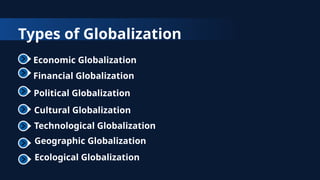
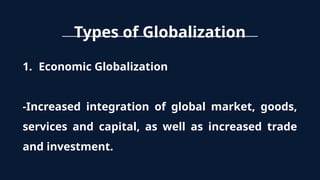
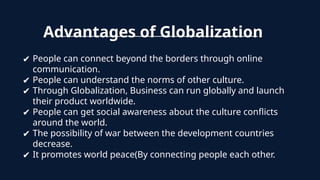
Globalization is the process of increased interconnectedness and interdependence among countries, driven by advances in technology, trade, communication, and transportation. It allows for the exchange of goods, services, information, culture, and ideas across borders, shaping economies and societies worldwide.
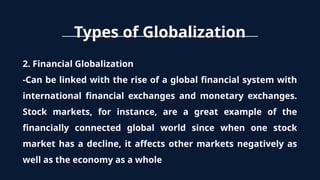
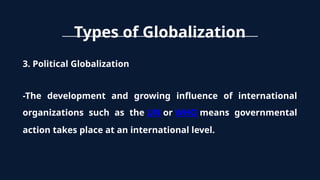
This phenomenon has led to significant developments, such as the expansion of multinational companies, the rise of digital connectivity, and international collaborations in various fields like science, politics, and environmental conservation. However, globalization also presents challenges, including economic inequality, cultural homogenization, and environmental concerns.
Understanding globalization is crucial as it affects daily life, from the products people consume to the job opportunities available and even global issues like climate change and public health. By examining its impacts, both positive and negative, individuals and nations can navigate globalization effectively and maximize its benefits while addressing its challenges.