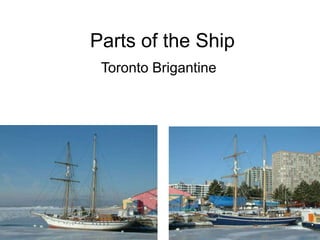
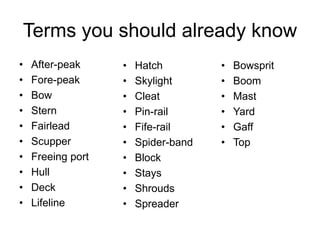
Parts of the Ship
Toronto Brigantine
Terms you should already know
• After-peak
• Fore-peak
• Bow
• Stern
• Fairlead
• Scupper
• Freeing port
• Hull
• Deck
• Lifeline
• Bowsprit
• Boom
• Mast
• Yard
• Gaff
• Top
• Hatch
• Skylight
• Cleat
• Pin-rail
• Fife-rail
• Spider-band
• Block
• Stays
• Shrouds
• Spreader
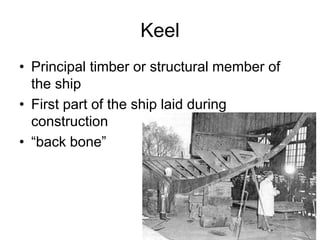
Keel
• Principal timber or structural member of
the ship
• First part of the ship laid during
construction
• “back bone”
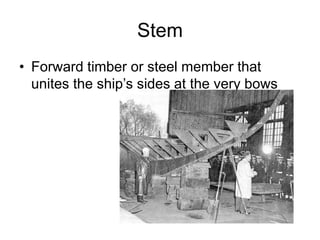
Stem
• Forward timber or steel member that
unites the ship’s sides at the very bows
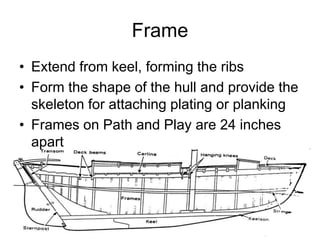
Frame
• Extend from keel, forming the ribs
• Form the shape of the hull and provide the
skeleton for attaching plating or planking
• Frames on Path and Play are 24 inches
apart
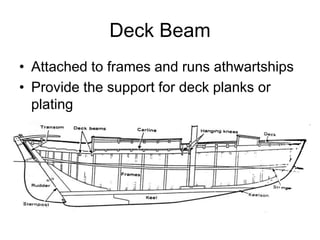
Deck Beam
• Attached to frames and runs athwartships
• Provide the support for deck planks or
plating
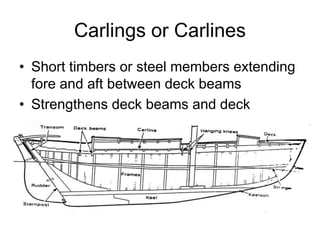
Carlings or Carlines
• Short timbers or steel members extending
fore and aft between deck beams
• Strengthens deck beams and deck
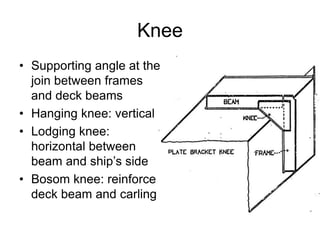
Knee
• Supporting angle at the
join between frames
and deck beams
• Hanging knee: vertical
• Lodging knee:
horizontal between
beam and ship’s side
• Bosom knee: reinforce
deck beam and carling
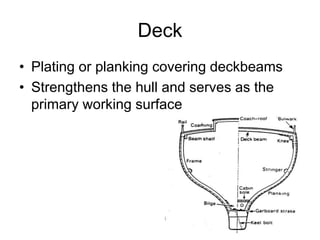
Deck
• Plating or planking covering deckbeams
• Strengthens the hull and serves as the
primary working surface
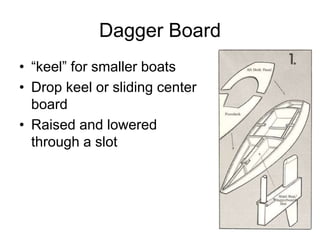
Dagger Board
• “keel” for smaller boats
• Drop keel or sliding center
board
• Raised and lowered
through a slot
Center-board
• “Keel” for smaller boats
• Raised or lowered by pivoting through a
slot
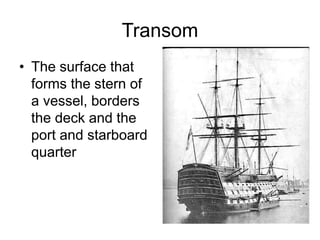
Transom
• The surface that
forms the stern of
a vessel, borders
the deck and the
port and starboard
quarter
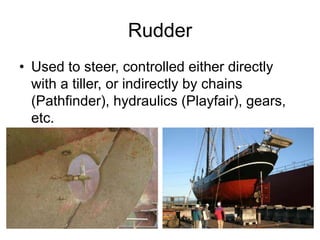
Rudder
• Used to steer, controlled either directly
with a tiller, or indirectly by chains
(Pathfinder), hydraulics (Playfair), gears,
etc.
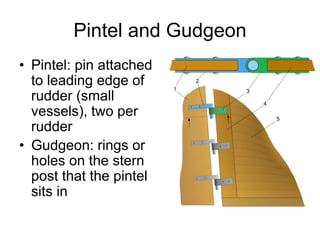
Pintel and Gudgeon
• Pintel: pin attached
to leading edge of
rudder (small
vessels), two per
rudder
• Gudgeon: rings or
holes on the stern
post that the pintel
sits in
Deckhead
• Underside of a Deck
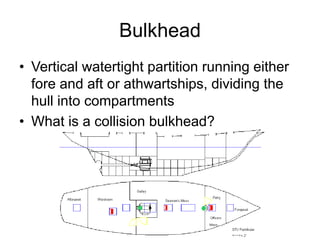
Bulkhead
• Vertical watertight partition running either
fore and aft or athwartships, dividing the
hull into compartments
• What is a collision bulkhead?
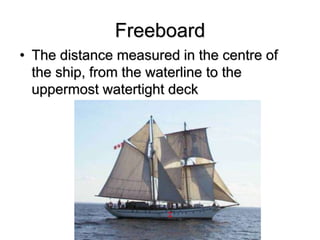
Freeboard
• The distance measured in the centre of
the ship, from the waterline to the
uppermost watertight deck
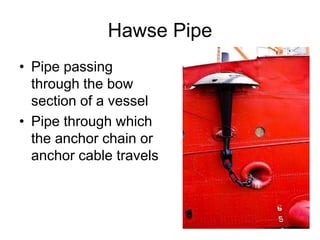
Hawse Pipe
• Pipe passing
through the bow
section of a vessel
• Pipe through which
the anchor chain or
anchor cable travels
Break
• Sudden rise or fall in the deck (step)
• Break in the Forecastle
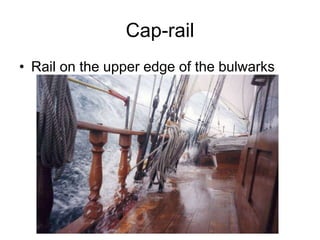
Cap-rail
• Rail on the upper edge of the bulwarks
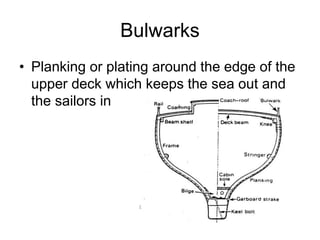
Bulwarks
• Planking or plating around the edge of the
upper deck which keeps the sea out and
the sailors in
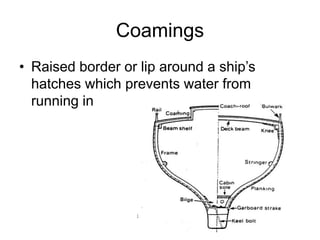
Coamings
• Raised border or lip around a ship’s
hatches which prevents water from
running in
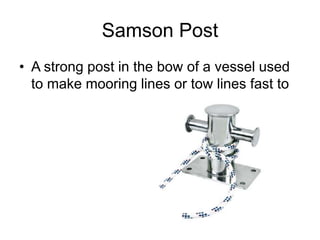
Samson Post
• A strong post in the bow of a vessel used
to make mooring lines or tow lines fast to
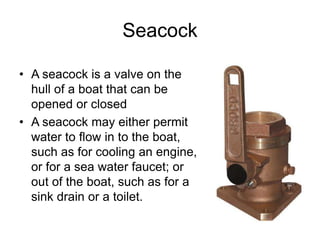
Seacock
• A seacock is a valve on the
hull of a boat that can be
opened or closed
• A seacock may either permit
water to flow in to the boat,
such as for cooling an engine,
or for a sea water faucet; or
out of the boat, such as for a
sink drain or a toilet.
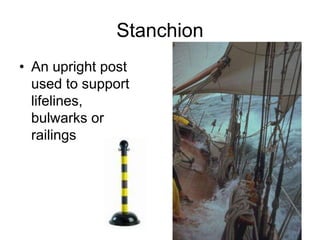
Stanchion
• An upright post
used to support
lifelines,
bulwarks or
railings
Washboard
• A board or coaming on the side of a vessel
or on the edge of the cockpit, used to keep
out spray
Partners
• A framework of supporting structures used
to support areas where high loads come
through openings in the deck, such as the
opening in the deck through which the
mast passes
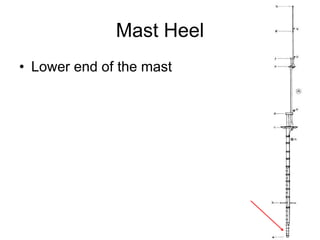
Mast Heel
• Lower end of the mast
Mast Step
• Fitting at where the Heel of the mast sits
• To “step” the mast means to erect it
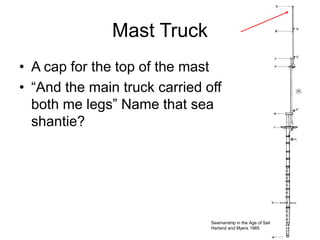
Mast Truck
• A cap for the top of the mast
• “And the main truck carried off
both me legs” Name that sea
shantie?
Seamanship in the Age of Sail
Harland and Myers 1985
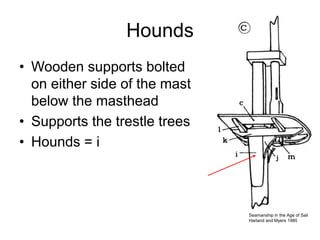
Hounds
• Wooden supports bolted
on either side of the mast
below the masthead
• Supports the trestle trees
• Hounds = i
Seamanship in the Age of Sail
Harland and Myers 1985
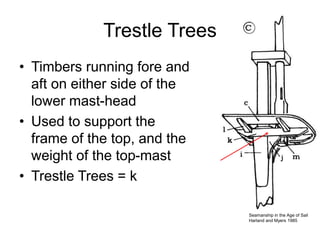
Trestle Trees
• Timbers running fore and
aft on either side of the
lower mast-head
• Used to support the
frame of the top, and the
weight of the top-mast
• Trestle Trees = k
Seamanship in the Age of Sail
Harland and Myers 1985
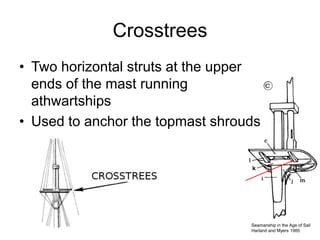
Crosstrees
• Two horizontal struts at the upper
ends of the mast running
athwartships
• Used to anchor the topmast shrouds
Seamanship in the Age of Sail
Harland and Myers 1985
Chain Plates
• Steel plates attached to the ships hull
where the dead-eyes or turnbuckles of the
shrouds attach
• Help to spread the load
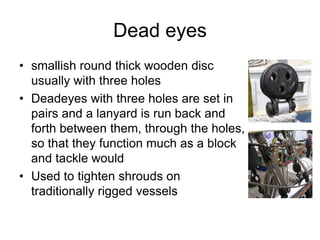
Dead eyes
• smallish round thick wooden disc
usually with three holes
• Deadeyes with three holes are set in
pairs and a lanyard is run back and
forth between them, through the holes,
so that they function much as a block
and tackle would
• Used to tighten shrouds on
traditionally rigged vessels
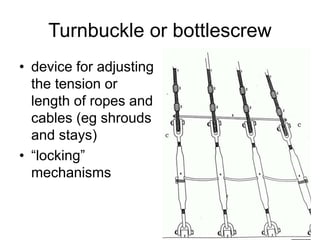
Turnbuckle or bottlescrew
• device for adjusting
the tension or
length of ropes and
cables (eg shrouds
and stays)
• “locking”
mechanisms
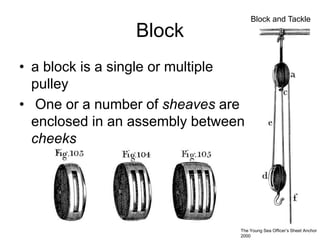
Block
• a block is a single or multiple
pulley
• One or a number of sheaves are
enclosed in an assembly between
cheeks
Block and Tackle
The Young Sea Officer’s Sheet Anchor
2000
Mast Chocks
• Wooden wedges used to stabilize the
mast where it comes through the deck at
the partners
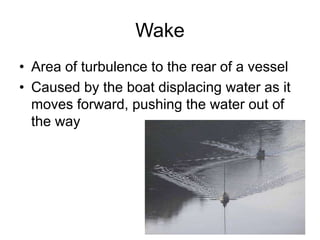
Wake
• Area of turbulence to the rear of a vessel
• Caused by the boat displacing water as it
moves forward, pushing the water out of
the way
Questions?

03_-_Parts_of_a_vessel.ppt

  • 1.
    Parts of theShip Toronto Brigantine
  • 2.
    Terms you shouldalready know • After-peak • Fore-peak • Bow • Stern • Fairlead • Scupper • Freeing port • Hull • Deck • Lifeline • Bowsprit • Boom • Mast • Yard • Gaff • Top • Hatch • Skylight • Cleat • Pin-rail • Fife-rail • Spider-band • Block • Stays • Shrouds • Spreader
  • 3.
    Keel • Principal timberor structural member of the ship • First part of the ship laid during construction • “back bone”
  • 4.
    Stem • Forward timberor steel member that unites the ship’s sides at the very bows
  • 5.
    Frame • Extend fromkeel, forming the ribs • Form the shape of the hull and provide the skeleton for attaching plating or planking • Frames on Path and Play are 24 inches apart
  • 6.
    Deck Beam • Attachedto frames and runs athwartships • Provide the support for deck planks or plating
  • 7.
    Carlings or Carlines •Short timbers or steel members extending fore and aft between deck beams • Strengthens deck beams and deck
  • 8.
    Knee • Supporting angleat the join between frames and deck beams • Hanging knee: vertical • Lodging knee: horizontal between beam and ship’s side • Bosom knee: reinforce deck beam and carling
  • 9.
    Deck • Plating orplanking covering deckbeams • Strengthens the hull and serves as the primary working surface
  • 10.
    Dagger Board • “keel”for smaller boats • Drop keel or sliding center board • Raised and lowered through a slot
  • 11.
    Center-board • “Keel” forsmaller boats • Raised or lowered by pivoting through a slot
  • 12.
    Transom • The surfacethat forms the stern of a vessel, borders the deck and the port and starboard quarter
  • 13.
    Rudder • Used tosteer, controlled either directly with a tiller, or indirectly by chains (Pathfinder), hydraulics (Playfair), gears, etc.
  • 14.
    Pintel and Gudgeon •Pintel: pin attached to leading edge of rudder (small vessels), two per rudder • Gudgeon: rings or holes on the stern post that the pintel sits in
  • 15.
  • 16.
    Bulkhead • Vertical watertightpartition running either fore and aft or athwartships, dividing the hull into compartments • What is a collision bulkhead?
  • 17.
    Freeboard • The distancemeasured in the centre of the ship, from the waterline to the uppermost watertight deck
  • 18.
    Hawse Pipe • Pipepassing through the bow section of a vessel • Pipe through which the anchor chain or anchor cable travels
  • 19.
    Break • Sudden riseor fall in the deck (step) • Break in the Forecastle
  • 20.
    Cap-rail • Rail onthe upper edge of the bulwarks
  • 21.
    Bulwarks • Planking orplating around the edge of the upper deck which keeps the sea out and the sailors in
  • 22.
    Coamings • Raised borderor lip around a ship’s hatches which prevents water from running in
  • 23.
    Samson Post • Astrong post in the bow of a vessel used to make mooring lines or tow lines fast to
  • 24.
    Seacock • A seacockis a valve on the hull of a boat that can be opened or closed • A seacock may either permit water to flow in to the boat, such as for cooling an engine, or for a sea water faucet; or out of the boat, such as for a sink drain or a toilet.
  • 25.
    Stanchion • An uprightpost used to support lifelines, bulwarks or railings
  • 26.
    Washboard • A boardor coaming on the side of a vessel or on the edge of the cockpit, used to keep out spray
  • 27.
    Partners • A frameworkof supporting structures used to support areas where high loads come through openings in the deck, such as the opening in the deck through which the mast passes
  • 28.
    Mast Heel • Lowerend of the mast
  • 29.
    Mast Step • Fittingat where the Heel of the mast sits • To “step” the mast means to erect it
  • 30.
    Mast Truck • Acap for the top of the mast • “And the main truck carried off both me legs” Name that sea shantie? Seamanship in the Age of Sail Harland and Myers 1985
  • 31.
    Hounds • Wooden supportsbolted on either side of the mast below the masthead • Supports the trestle trees • Hounds = i Seamanship in the Age of Sail Harland and Myers 1985
  • 32.
    Trestle Trees • Timbersrunning fore and aft on either side of the lower mast-head • Used to support the frame of the top, and the weight of the top-mast • Trestle Trees = k Seamanship in the Age of Sail Harland and Myers 1985
  • 33.
    Crosstrees • Two horizontalstruts at the upper ends of the mast running athwartships • Used to anchor the topmast shrouds Seamanship in the Age of Sail Harland and Myers 1985
  • 34.
    Chain Plates • Steelplates attached to the ships hull where the dead-eyes or turnbuckles of the shrouds attach • Help to spread the load
  • 35.
    Dead eyes • smallishround thick wooden disc usually with three holes • Deadeyes with three holes are set in pairs and a lanyard is run back and forth between them, through the holes, so that they function much as a block and tackle would • Used to tighten shrouds on traditionally rigged vessels
  • 36.
    Turnbuckle or bottlescrew •device for adjusting the tension or length of ropes and cables (eg shrouds and stays) • “locking” mechanisms
  • 37.
    Block • a blockis a single or multiple pulley • One or a number of sheaves are enclosed in an assembly between cheeks Block and Tackle The Young Sea Officer’s Sheet Anchor 2000
  • 38.
    Mast Chocks • Woodenwedges used to stabilize the mast where it comes through the deck at the partners
  • 39.
    Wake • Area ofturbulence to the rear of a vessel • Caused by the boat displacing water as it moves forward, pushing the water out of the way
  • 40.