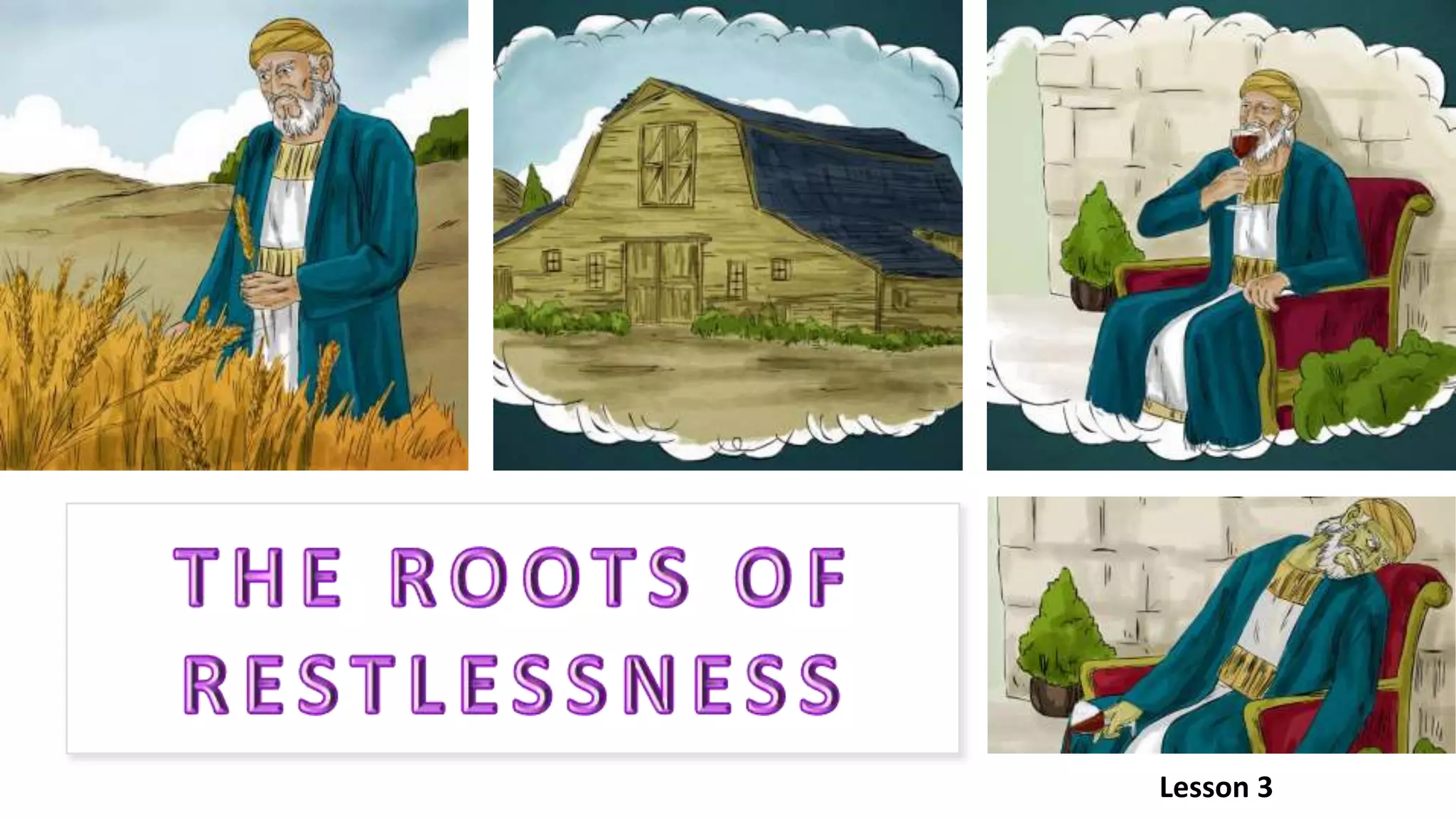
Lesson 3
Outer restlessness
Inner restlessness
Egoism
Ambition
Hypocrisy
Getting rid of restlessness
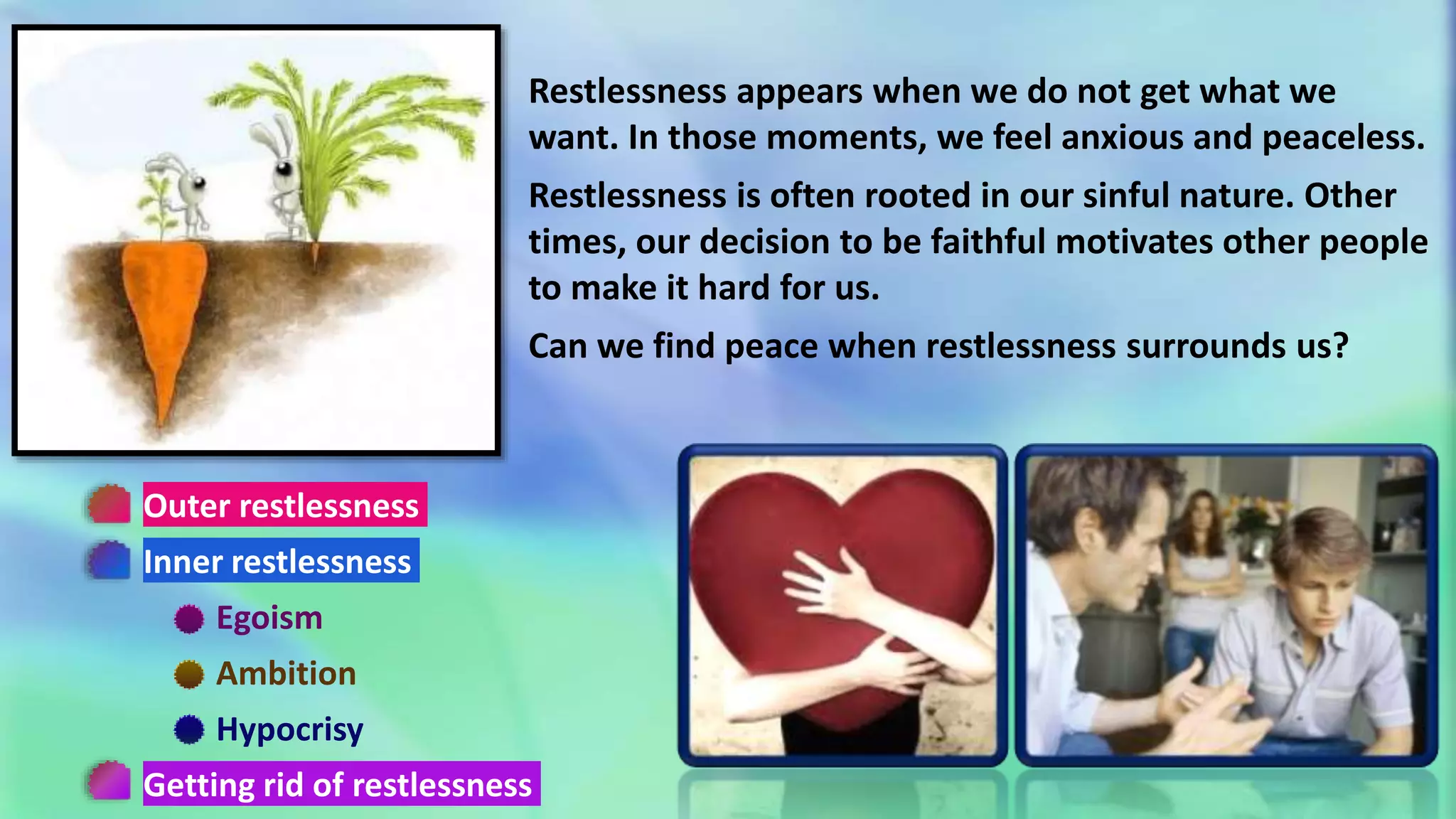
Restlessness appears when we do not get what we
want. In those moments, we feel anxious and peaceless.
Restlessness is often rooted in our sinful nature. Other
times, our decision to be faithful motivates other people
to make it hard for us.
Can we find peace when restlessness surrounds us?
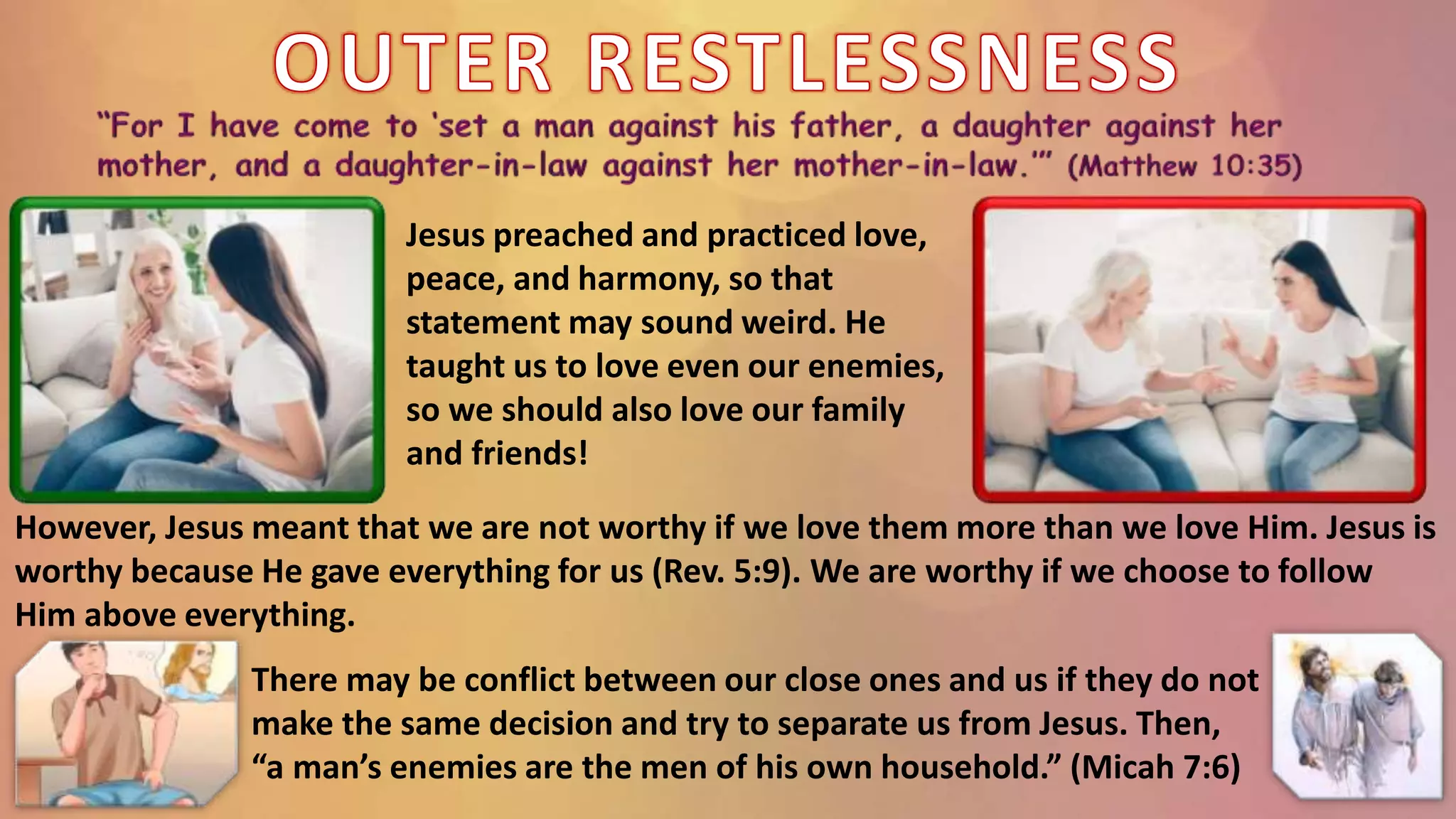
Jesus preached and practiced love,
peace, and harmony, so that
statement may sound weird. He
taught us to love even our enemies,
so we should also love our family
and friends!
However, Jesus meant that we are not worthy if we love them more than we love Him. Jesus is
worthy because He gave everything for us (Rev. 5:9). We are worthy if we choose to follow
Him above everything.
There may be conflict between our close ones and us if they do not
make the same decision and try to separate us from Jesus. Then,
“a man’s enemies are the men of his own household.” (Micah 7:6)
“The peace of Christ is not to banish division,
but it is to remain amid strife and division […]
Families must be divided in order that all who
call upon the name of the Lord may be saved.
All who refuse His infinite love will find
Christianity a sword, a disturber of their
peace.”
E. G. W. (Our High Calling, November 18)
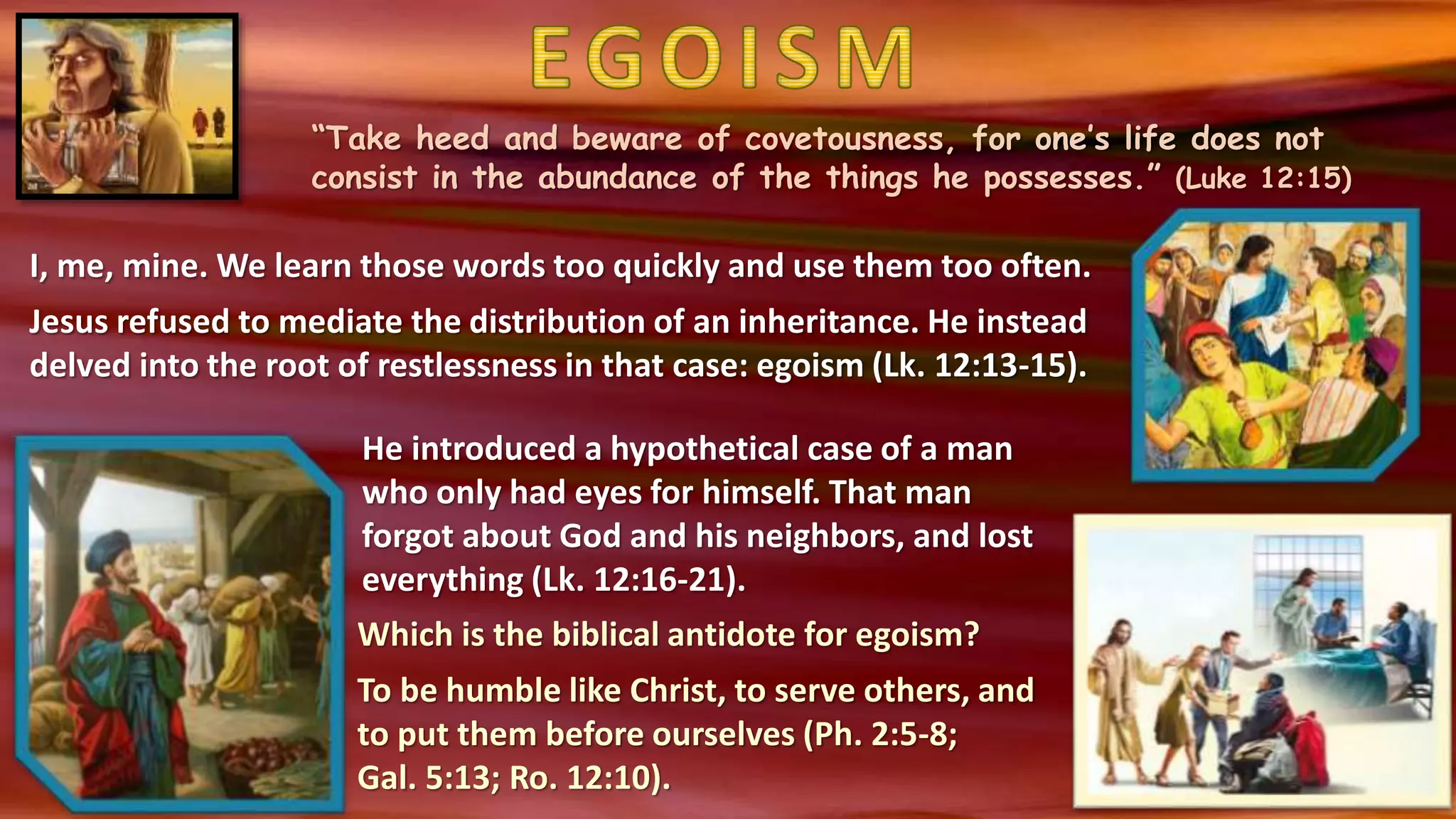
“Take heed and beware of covetousness, for one’s life does not
consist in the abundance of the things he possesses.” (Luke 12:15)
I, me, mine. We learn those words too quickly and use them too often.
Jesus refused to mediate the distribution of an inheritance. He instead
delved into the root of restlessness in that case: egoism (Lk. 12:13-15).
He introduced a hypothetical case of a man
who only had eyes for himself. That man
forgot about God and his neighbors, and lost
everything (Lk. 12:16-21).
Which is the biblical antidote for egoism?
To be humble like Christ, to serve others, and
to put them before ourselves (Ph. 2:5-8;
Gal. 5:13; Ro. 12:10).
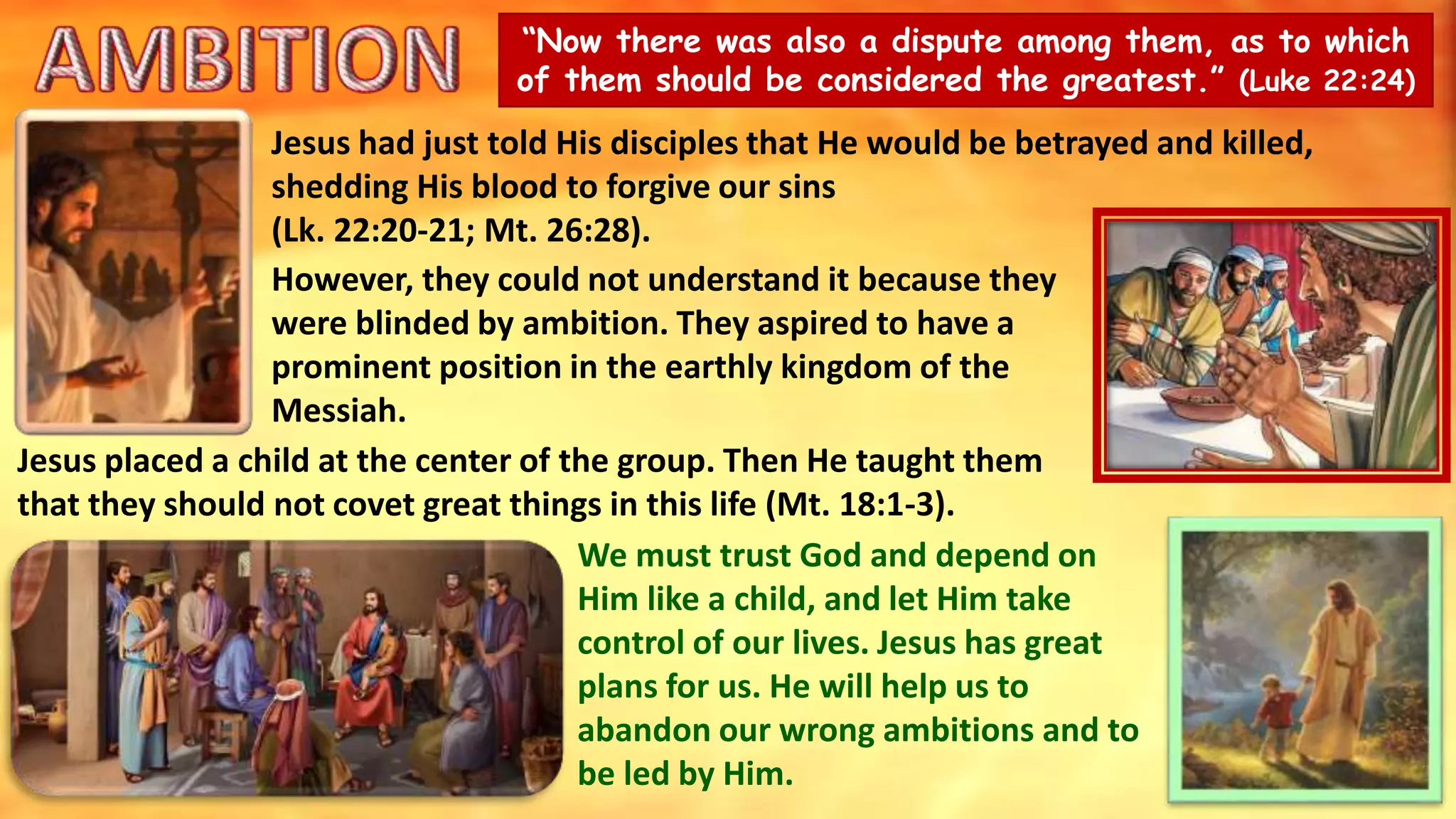
“Now there was also a dispute among them, as to which
of them should be considered the greatest.” (Luke 22:24)
Jesus had just told His disciples that He would be betrayed and killed,
shedding His blood to forgive our sins
(Lk. 22:20-21; Mt. 26:28).
However, they could not understand it because they
were blinded by ambition. They aspired to have a
prominent position in the earthly kingdom of the
Messiah.
Jesus placed a child at the center of the group. Then He taught them
that they should not covet great things in this life (Mt. 18:1-3).
We must trust God and depend on
Him like a child, and let Him take
control of our lives. Jesus has great
plans for us. He will help us to
abandon our wrong ambitions and to
be led by Him.
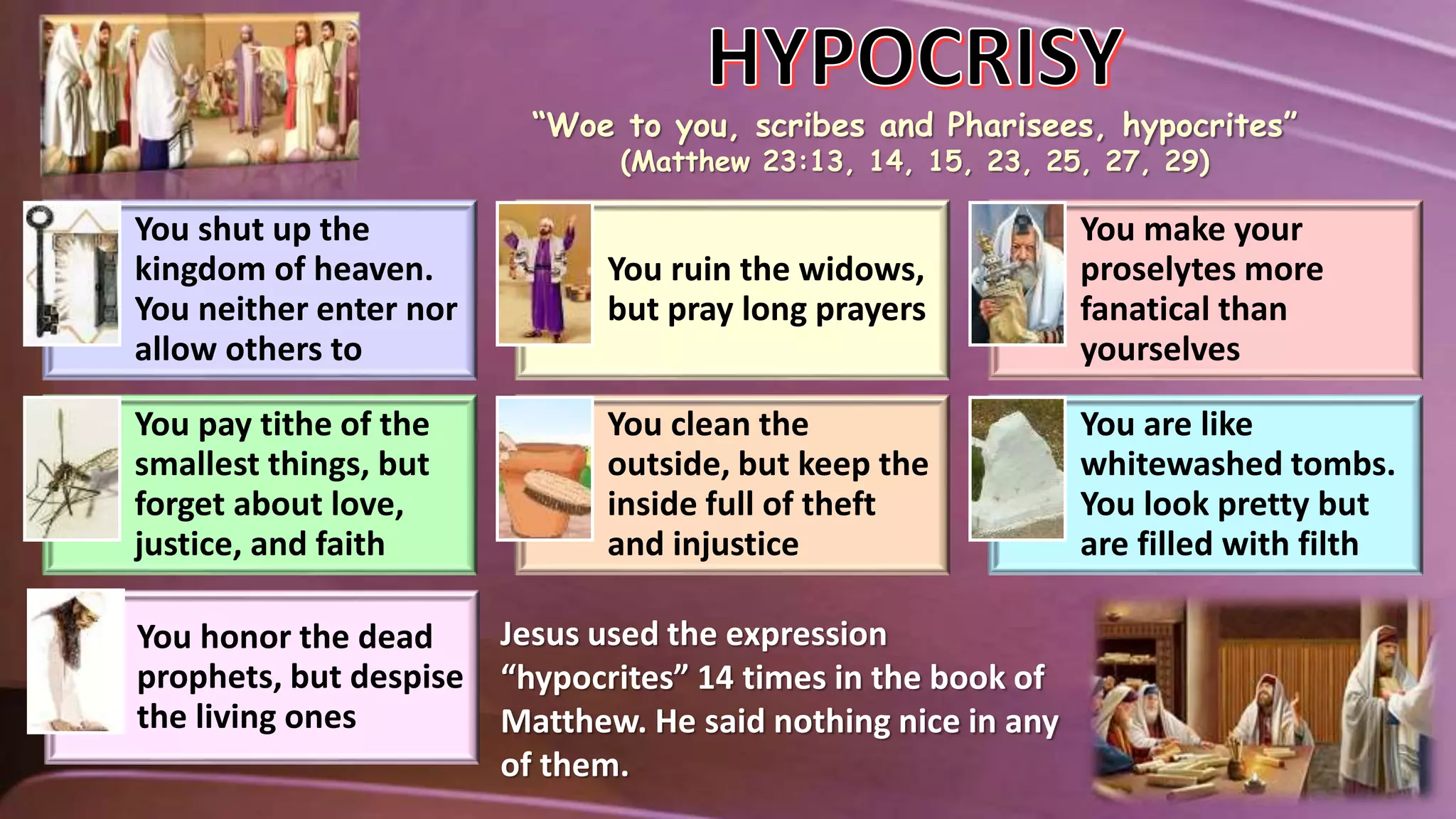
You shut up the
kingdom of heaven.
You neither enter nor
allow others to
You ruin the widows,
but pray long prayers
You make your
proselytes more
fanatical than
yourselves
You pay tithe of the
smallest things, but
forget about love,
justice, and faith
You clean the
outside, but keep the
inside full of theft
and injustice
You are like
whitewashed tombs.
You look pretty but
are filled with filth
You honor the dead
prophets, but despise
the living ones
Jesus used the expression
“hypocrites” 14 times in the book of
Matthew. He said nothing nice in any
of them.
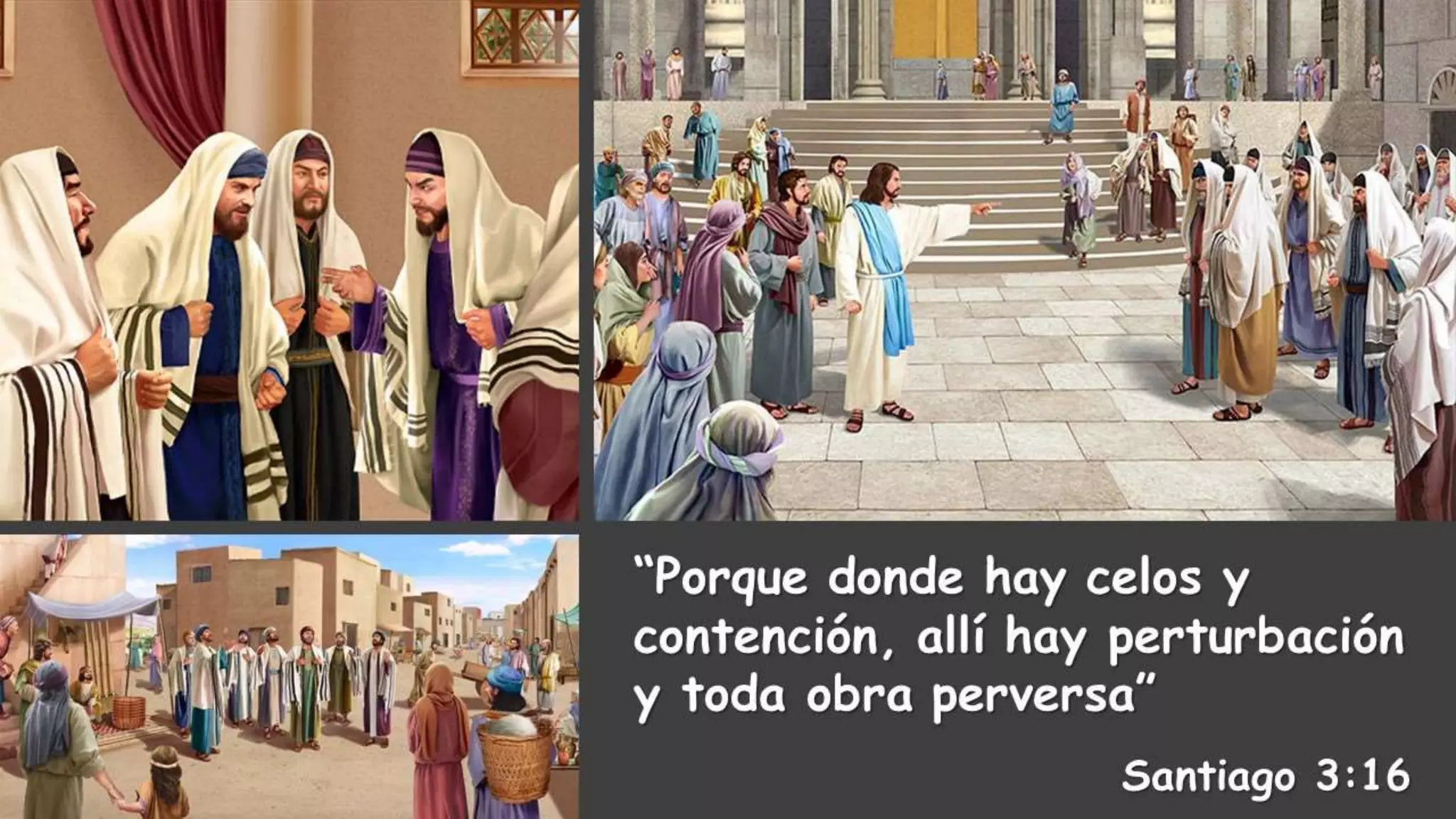
“Woe to you, scribes and Pharisees, hypocrites”
(Matthew 23:13, 14, 15, 23, 25, 27, 29)
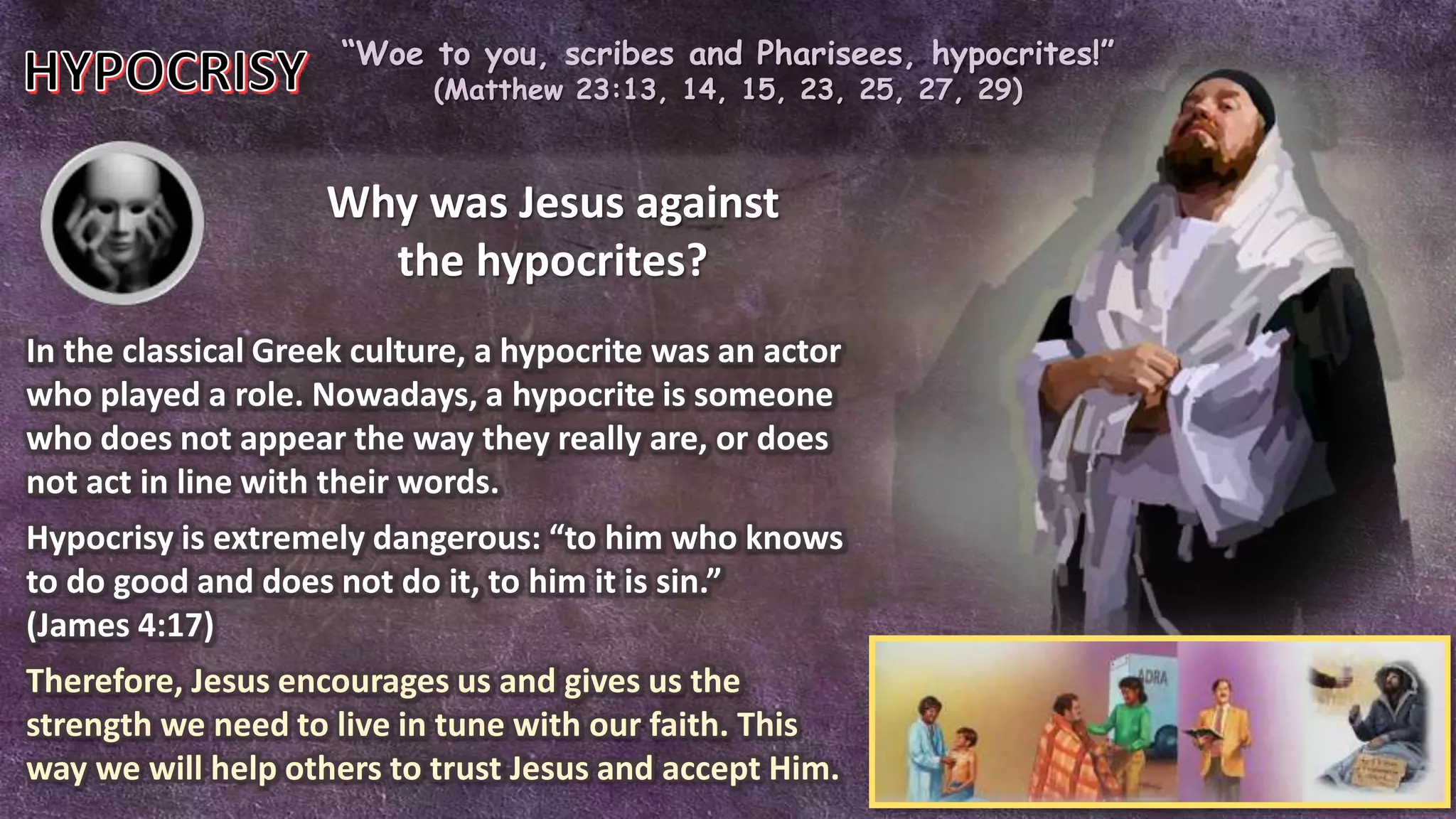
“Woe to you, scribes and Pharisees, hypocrites!”
(Matthew 23:13, 14, 15, 23, 25, 27, 29)
Why was Jesus against
the hypocrites?
In the classical Greek culture, a hypocrite was an actor
who played a role. Nowadays, a hypocrite is someone
who does not appear the way they really are, or does
not act in line with their words.
Hypocrisy is extremely dangerous: “to him who knows
to do good and does not do it, to him it is sin.”
(James 4:17)
Therefore, Jesus encourages us and gives us the
strength we need to live in tune with our faith. This
way we will help others to trust Jesus and accept Him.
“The religion of Christ is sincerity itself.
Zeal for God’s glory is the motive
implanted by the Holy Spirit; and only the
effectual working of the Spirit can
implant this motive. Only the power of
God can banish self-seeking and
hypocrisy.”
E. G. W. (The Desire of Ages, cp. 44, p. 409)
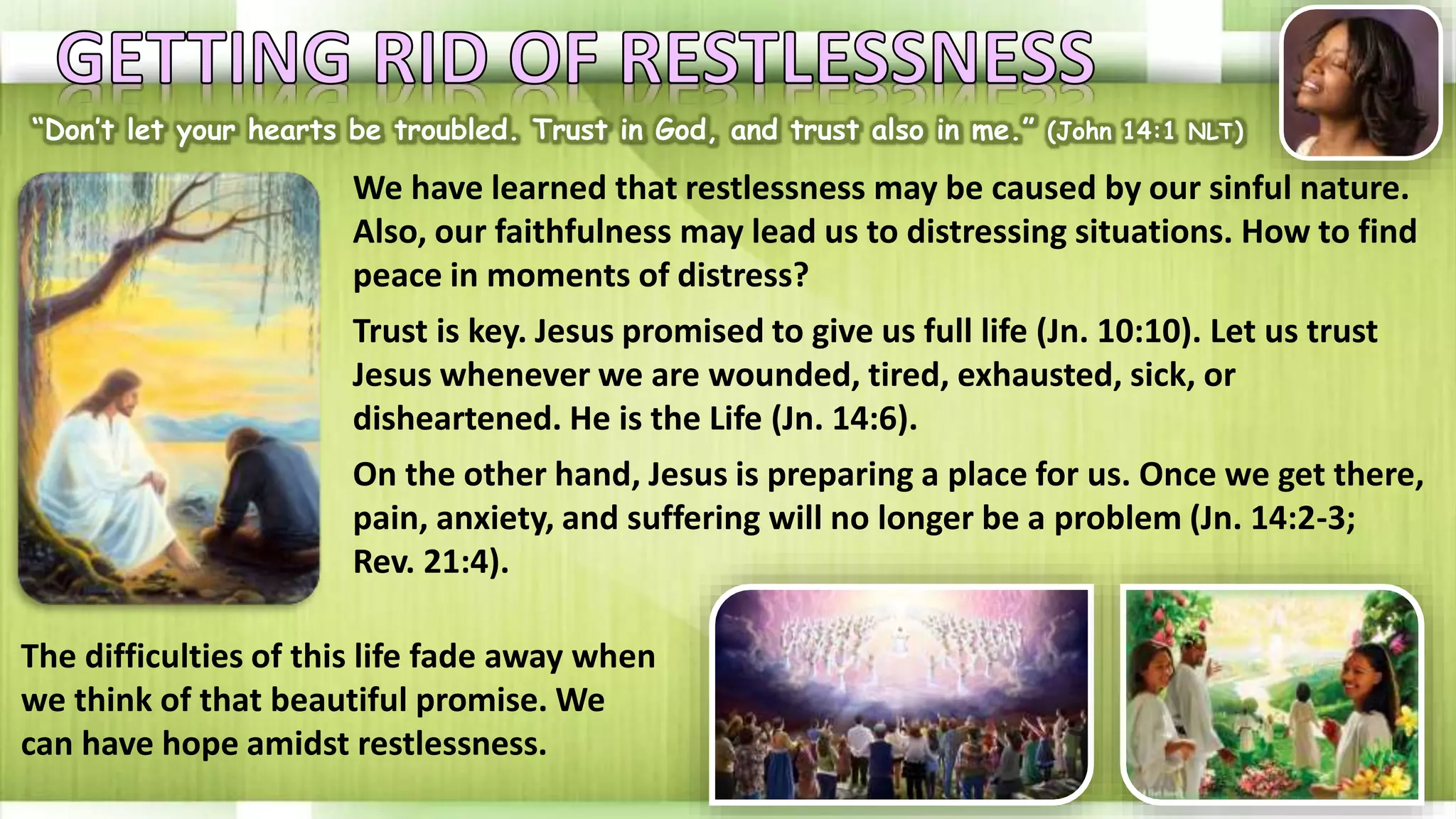
“Don’t let your hearts be troubled. Trust in God, and trust also in me.” (John 14:1 NLT)
We have learned that restlessness may be caused by our sinful nature.
Also, our faithfulness may lead us to distressing situations. How to find
peace in moments of distress?
Trust is key. Jesus promised to give us full life (Jn. 10:10). Let us trust
Jesus whenever we are wounded, tired, exhausted, sick, or
disheartened. He is the Life (Jn. 14:6).
On the other hand, Jesus is preparing a place for us. Once we get there,
pain, anxiety, and suffering will no longer be a problem (Jn. 14:2-3;
Rev. 21:4).
The difficulties of this life fade away when
we think of that beautiful promise. We
can have hope amidst restlessness.
“Before you are two ways—the broad road of self-
indulgence and the narrow path of self-sacrifice. Into
the broad road you can take selfishness, pride, love of
the world; but those who walk in the narrow way must
lay aside every weight, and the sin which doth so easily
beset. Which road have you chosen—the road which
leads to everlasting death, or the road which leads to
glory and immortality?”
E. G. W. (Our High Calling, January 2)
Slideshare.net/chucho1943
We invite you to download
and study each one of the 13
lessons about this serie:
THIS SERVICE IS
FREE AND YOU
CAN USE IT

03 the roots of restlessness

  • 1.
  • 3.
    Outer restlessness Inner restlessness Egoism Ambition Hypocrisy Gettingrid of restlessness Restlessness appears when we do not get what we want. In those moments, we feel anxious and peaceless. Restlessness is often rooted in our sinful nature. Other times, our decision to be faithful motivates other people to make it hard for us. Can we find peace when restlessness surrounds us?
  • 4.
    Jesus preached andpracticed love, peace, and harmony, so that statement may sound weird. He taught us to love even our enemies, so we should also love our family and friends! However, Jesus meant that we are not worthy if we love them more than we love Him. Jesus is worthy because He gave everything for us (Rev. 5:9). We are worthy if we choose to follow Him above everything. There may be conflict between our close ones and us if they do not make the same decision and try to separate us from Jesus. Then, “a man’s enemies are the men of his own household.” (Micah 7:6)
  • 5.
    “The peace ofChrist is not to banish division, but it is to remain amid strife and division […] Families must be divided in order that all who call upon the name of the Lord may be saved. All who refuse His infinite love will find Christianity a sword, a disturber of their peace.” E. G. W. (Our High Calling, November 18)
  • 6.
    “Take heed andbeware of covetousness, for one’s life does not consist in the abundance of the things he possesses.” (Luke 12:15) I, me, mine. We learn those words too quickly and use them too often. Jesus refused to mediate the distribution of an inheritance. He instead delved into the root of restlessness in that case: egoism (Lk. 12:13-15). He introduced a hypothetical case of a man who only had eyes for himself. That man forgot about God and his neighbors, and lost everything (Lk. 12:16-21). Which is the biblical antidote for egoism? To be humble like Christ, to serve others, and to put them before ourselves (Ph. 2:5-8; Gal. 5:13; Ro. 12:10).
  • 7.
    “Now there wasalso a dispute among them, as to which of them should be considered the greatest.” (Luke 22:24) Jesus had just told His disciples that He would be betrayed and killed, shedding His blood to forgive our sins (Lk. 22:20-21; Mt. 26:28). However, they could not understand it because they were blinded by ambition. They aspired to have a prominent position in the earthly kingdom of the Messiah. Jesus placed a child at the center of the group. Then He taught them that they should not covet great things in this life (Mt. 18:1-3). We must trust God and depend on Him like a child, and let Him take control of our lives. Jesus has great plans for us. He will help us to abandon our wrong ambitions and to be led by Him.
  • 8.
    You shut upthe kingdom of heaven. You neither enter nor allow others to You ruin the widows, but pray long prayers You make your proselytes more fanatical than yourselves You pay tithe of the smallest things, but forget about love, justice, and faith You clean the outside, but keep the inside full of theft and injustice You are like whitewashed tombs. You look pretty but are filled with filth You honor the dead prophets, but despise the living ones Jesus used the expression “hypocrites” 14 times in the book of Matthew. He said nothing nice in any of them. “Woe to you, scribes and Pharisees, hypocrites” (Matthew 23:13, 14, 15, 23, 25, 27, 29)
  • 9.
    “Woe to you,scribes and Pharisees, hypocrites!” (Matthew 23:13, 14, 15, 23, 25, 27, 29) Why was Jesus against the hypocrites? In the classical Greek culture, a hypocrite was an actor who played a role. Nowadays, a hypocrite is someone who does not appear the way they really are, or does not act in line with their words. Hypocrisy is extremely dangerous: “to him who knows to do good and does not do it, to him it is sin.” (James 4:17) Therefore, Jesus encourages us and gives us the strength we need to live in tune with our faith. This way we will help others to trust Jesus and accept Him.
  • 10.
    “The religion ofChrist is sincerity itself. Zeal for God’s glory is the motive implanted by the Holy Spirit; and only the effectual working of the Spirit can implant this motive. Only the power of God can banish self-seeking and hypocrisy.” E. G. W. (The Desire of Ages, cp. 44, p. 409)
  • 11.
    “Don’t let yourhearts be troubled. Trust in God, and trust also in me.” (John 14:1 NLT) We have learned that restlessness may be caused by our sinful nature. Also, our faithfulness may lead us to distressing situations. How to find peace in moments of distress? Trust is key. Jesus promised to give us full life (Jn. 10:10). Let us trust Jesus whenever we are wounded, tired, exhausted, sick, or disheartened. He is the Life (Jn. 14:6). On the other hand, Jesus is preparing a place for us. Once we get there, pain, anxiety, and suffering will no longer be a problem (Jn. 14:2-3; Rev. 21:4). The difficulties of this life fade away when we think of that beautiful promise. We can have hope amidst restlessness.
  • 12.
    “Before you aretwo ways—the broad road of self- indulgence and the narrow path of self-sacrifice. Into the broad road you can take selfishness, pride, love of the world; but those who walk in the narrow way must lay aside every weight, and the sin which doth so easily beset. Which road have you chosen—the road which leads to everlasting death, or the road which leads to glory and immortality?” E. G. W. (Our High Calling, January 2)
  • 13.
    Slideshare.net/chucho1943 We invite youto download and study each one of the 13 lessons about this serie: THIS SERVICE IS FREE AND YOU CAN USE IT