Dr. Nawzia Yasmin
Professor & Head, Dept of Public Health
SUB
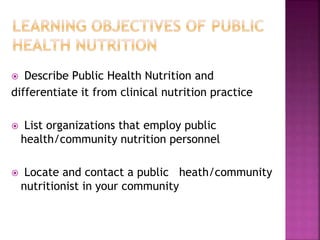
 Describe Public Health Nutrition and
differentiate it from clinical nutrition practice
 List organizations that employ public
health/community nutrition personnel
 Locate and contact a public heath/community
nutritionist in your community
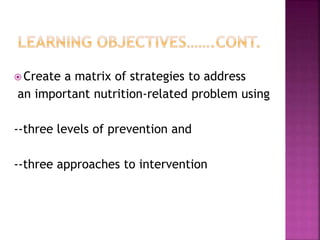
 Create a matrix of strategies to address
an important nutrition-related problem using
--three levels of prevention and
--three approaches to intervention
 Strives to improve or maintain optimum
nutritional health of the whole population
and high risk or vulnerable subgroups
within the population.
 Emphasizes health promotion and disease
prevention but may include therapeutic and
rehabilitative services when these needs
are not adequately addressed by other parts
of the health care system
 Uses multiple, coordinated strategies to
reach and influence the community, and
organizations and individuals that make up the
community
 Requires organized and integrated community
nutrition efforts with leadership provided by the
state and local health agency
 Adequate nutrition for all is the goal
 Dietary factors are associated with five
of the ten leading causes of death
 Maternal and child nutrition sets the
stage for life
 Vulnerable subgroups are at high risk
 Behavior change is challenging
 Assessment
• Systematically assessing nutrition-related needs of
the
population, identifying priority areas, and monitoring
nutrition status of the population and at-risk groups
 Policy Development
• Developing policies, programs and standards that
address highest priority nutrition problems and needs
 Assurance
• Implementing effective nutrition strategies by
encouraging or enabling other entities, requiring
action through regulation or providing services
directly
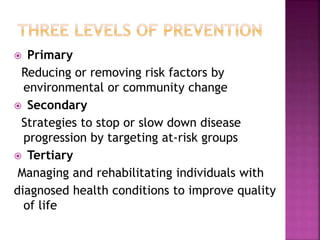
 Primary
Reducing or removing risk factors by
environmental or community change
 Secondary
Strategies to stop or slow down disease
progression by targeting at-risk groups
 Tertiary
Managing and rehabilitating individuals with
diagnosed health conditions to improve quality
of life
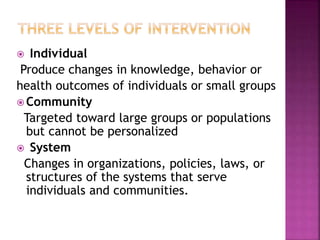
 Individual
Produce changes in knowledge, behavior or
health outcomes of individuals or small groups
 Community
Targeted toward large groups or populations
but cannot be personalized
 System
Changes in organizations, policies, laws, or
structures of the systems that serve
individuals and communities.
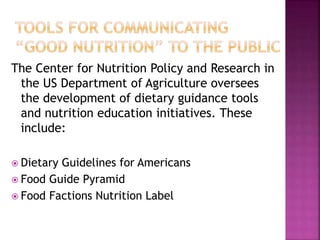
The Center for Nutrition Policy and Research in
the US Department of Agriculture oversees
the development of dietary guidance tools
and nutrition education initiatives. These
include:
 Dietary Guidelines for Americans
 Food Guide Pyramid
 Food Factions Nutrition Label
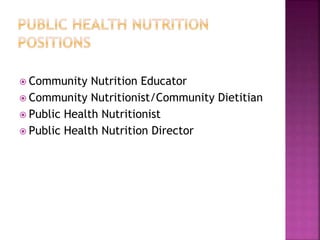
 Community Nutrition Educator
 Community Nutritionist/Community Dietitian
 Public Health Nutritionist
 Public Health Nutrition Director
 Biostatistics and Vital Health Statistics
 Epidemiology
 Environmental Science
 Health Policy, Planning and Administration
 Behavioral Science
 Food and Nutrition Science
Thank You

02. Pub.Health Nutri.lecture-2.pptx

  • 1.
    Dr. Nawzia Yasmin Professor& Head, Dept of Public Health SUB
  • 2.
     Describe PublicHealth Nutrition and differentiate it from clinical nutrition practice  List organizations that employ public health/community nutrition personnel  Locate and contact a public heath/community nutritionist in your community
  • 3.
     Create amatrix of strategies to address an important nutrition-related problem using --three levels of prevention and --three approaches to intervention
  • 4.
     Strives toimprove or maintain optimum nutritional health of the whole population and high risk or vulnerable subgroups within the population.  Emphasizes health promotion and disease prevention but may include therapeutic and rehabilitative services when these needs are not adequately addressed by other parts of the health care system
  • 5.
     Uses multiple,coordinated strategies to reach and influence the community, and organizations and individuals that make up the community  Requires organized and integrated community nutrition efforts with leadership provided by the state and local health agency
  • 6.
     Adequate nutritionfor all is the goal  Dietary factors are associated with five of the ten leading causes of death  Maternal and child nutrition sets the stage for life  Vulnerable subgroups are at high risk  Behavior change is challenging
  • 7.
     Assessment • Systematicallyassessing nutrition-related needs of the population, identifying priority areas, and monitoring nutrition status of the population and at-risk groups  Policy Development • Developing policies, programs and standards that address highest priority nutrition problems and needs  Assurance • Implementing effective nutrition strategies by encouraging or enabling other entities, requiring action through regulation or providing services directly
  • 8.
     Primary Reducing orremoving risk factors by environmental or community change  Secondary Strategies to stop or slow down disease progression by targeting at-risk groups  Tertiary Managing and rehabilitating individuals with diagnosed health conditions to improve quality of life
  • 9.
     Individual Produce changesin knowledge, behavior or health outcomes of individuals or small groups  Community Targeted toward large groups or populations but cannot be personalized  System Changes in organizations, policies, laws, or structures of the systems that serve individuals and communities.
  • 10.
    The Center forNutrition Policy and Research in the US Department of Agriculture oversees the development of dietary guidance tools and nutrition education initiatives. These include:  Dietary Guidelines for Americans  Food Guide Pyramid  Food Factions Nutrition Label
  • 11.
     Community NutritionEducator  Community Nutritionist/Community Dietitian  Public Health Nutritionist  Public Health Nutrition Director
  • 12.
     Biostatistics andVital Health Statistics  Epidemiology  Environmental Science  Health Policy, Planning and Administration  Behavioral Science  Food and Nutrition Science
  • 13.