Presented by
Information!
 Information is a key resource for all enterprises.
 Information is created, used, retained, disclosed and
  destroyed.
 Technology plays a key role in these actions.
 Technology is becoming pervasive in all aspects of
  business and personal life.

What benefits do information and technology bring to
 enterprises?


                                                          2
Enterprise Benefits
Enterprises and their executives strive to:
 Maintain quality information to support business
  decisions.
 Generate business value from IT-enabled investments,
  i.e., achieve strategic goals and realise business benefits
  through effective and innovative use of IT.
 Achieve operational excellence through reliable and
  efficient application of technology.
 Maintain IT-related risk at an acceptable level.
 Optimise the cost of IT services and technology.

How can these benefits be realised to create enterprise
 stakeholder value?
                                                                3
Stakeholder Value
 Delivering enterprise stakeholder value requires good
  governance and management of information and
  technology (IT) assets.
 Enterprise boards, executives and management have to
  embrace IT like any other significant part of the business.
 External legal, regulatory and contractual compliance
  requirements related to enterprise use of information and
  technology are increasing, threatening value if breached.
 COBIT 5 provides a comprehensive framework that
  assists enterprises to achieve their goals and deliver
  value through effective governance and management
  of enterprise IT.
                                                            4
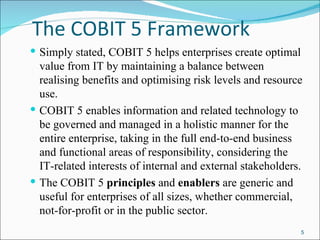
The COBIT 5 Framework
 Simply stated, COBIT 5 helps enterprises create optimal
  value from IT by maintaining a balance between
  realising benefits and optimising risk levels and resource
  use.
 COBIT 5 enables information and related technology to
  be governed and managed in a holistic manner for the
  entire enterprise, taking in the full end-to-end business
  and functional areas of responsibility, considering the
  IT-related interests of internal and external stakeholders.
 The COBIT 5 principles and enablers are generic and
  useful for enterprises of all sizes, whether commercial,
  not-for-profit or in the public sector.
                                                            5
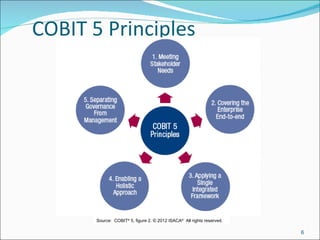
COBIT 5 Principles


       Source:  COBIT® 5, figure 2. © 2012 ISACA®  All rights reserved.

                                                                          6
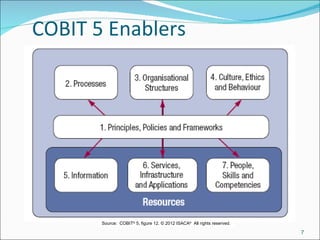
COBIT 5 Enablers


       Source:  COBIT® 5, figure 12. © 2012 ISACA®  All rights reserved.

                                                                           7
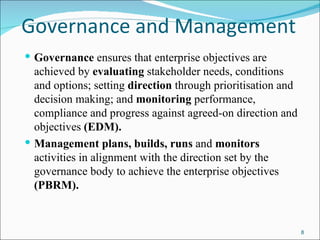
Governance and Management
 Governance ensures that enterprise objectives are
  achieved by evaluating stakeholder needs, conditions
  and options; setting direction through prioritisation and
  decision making; and monitoring performance,
  compliance and progress against agreed-on direction and
  objectives (EDM).
 Management plans, builds, runs and monitors
  activities in alignment with the direction set by the
  governance body to achieve the enterprise objectives
  (PBRM).


                                                              8
In Summary …

COBIT 5 brings together the five principles that
allow the enterprise to build an effective
governance and management framework based
on a holistic set of seven enablers that optimises
information and technology investment and use
for the benefit of stakeholders.


                                                     9

01-COBIT5-ExecSummary

  • 1.
  • 2.
    Information!  Information isa key resource for all enterprises.  Information is created, used, retained, disclosed and destroyed.  Technology plays a key role in these actions.  Technology is becoming pervasive in all aspects of business and personal life. What benefits do information and technology bring to enterprises? 2
  • 3.
    Enterprise Benefits Enterprises andtheir executives strive to:  Maintain quality information to support business decisions.  Generate business value from IT-enabled investments, i.e., achieve strategic goals and realise business benefits through effective and innovative use of IT.  Achieve operational excellence through reliable and efficient application of technology.  Maintain IT-related risk at an acceptable level.  Optimise the cost of IT services and technology. How can these benefits be realised to create enterprise stakeholder value? 3
  • 4.
    Stakeholder Value  Deliveringenterprise stakeholder value requires good governance and management of information and technology (IT) assets.  Enterprise boards, executives and management have to embrace IT like any other significant part of the business.  External legal, regulatory and contractual compliance requirements related to enterprise use of information and technology are increasing, threatening value if breached.  COBIT 5 provides a comprehensive framework that assists enterprises to achieve their goals and deliver value through effective governance and management of enterprise IT. 4
  • 5.
    The COBIT 5Framework  Simply stated, COBIT 5 helps enterprises create optimal value from IT by maintaining a balance between realising benefits and optimising risk levels and resource use.  COBIT 5 enables information and related technology to be governed and managed in a holistic manner for the entire enterprise, taking in the full end-to-end business and functional areas of responsibility, considering the IT-related interests of internal and external stakeholders.  The COBIT 5 principles and enablers are generic and useful for enterprises of all sizes, whether commercial, not-for-profit or in the public sector. 5
  • 6.
    COBIT 5 Principles Source:  COBIT® 5, figure 2. © 2012 ISACA®  All rights reserved. 6
  • 7.
    COBIT 5 Enablers Source:  COBIT® 5, figure 12. © 2012 ISACA®  All rights reserved. 7
  • 8.
    Governance and Management Governance ensures that enterprise objectives are achieved by evaluating stakeholder needs, conditions and options; setting direction through prioritisation and decision making; and monitoring performance, compliance and progress against agreed-on direction and objectives (EDM).  Management plans, builds, runs and monitors activities in alignment with the direction set by the governance body to achieve the enterprise objectives (PBRM). 8
  • 9.
    In Summary … COBIT5 brings together the five principles that allow the enterprise to build an effective governance and management framework based on a holistic set of seven enablers that optimises information and technology investment and use for the benefit of stakeholders. 9