
Lesson 1
KEY TEXT
“ ‘You are My friends if you do
whatever I command you’ ”
John 15:14
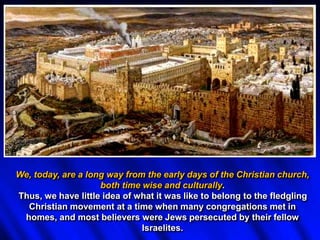
We, today, are a long way from the early days of the Christian church,
both time wise and culturally.
Thus, we have little idea of what it was like to belong to the fledgling
Christian movement at a time when many congregations met in
homes, and most believers were Jews persecuted by their fellow
Israelites.
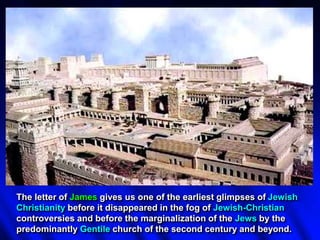
The letter of James gives us one of the earliest glimpses of Jewish
Christianity before it disappeared in the fog of Jewish-Christian
controversies and before the marginalization of the Jews by the
predominantly Gentile church of the second century and beyond.
Unlike many of the
epistles, it does not seem
that some crisis or urgent
need in a local church
impelled James to write
this epistle. Rather, it is
written to the broader
Christian community
“scattered abroad”
(James 1:1).
Before we dive into his letter, however, this week we want to
try to learn what we can about the author himself. Some of the
questions we’ll address are: Who was James? What was his
background? What had been his relationship to Jesus? And
what position did he hold in the church?
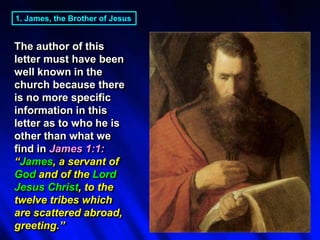
1. James, the Brother of Jesus
The author of this
letter must have been
well known in the
church because there
is no more specific
information in this
letter as to who he is
other than what we
find in James 1:1:
“James, a servant of
God and of the Lord
Jesus Christ, to the
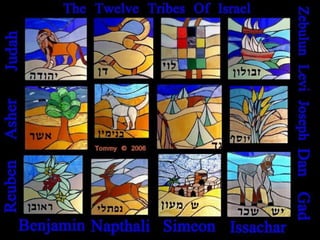
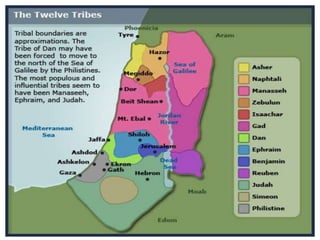
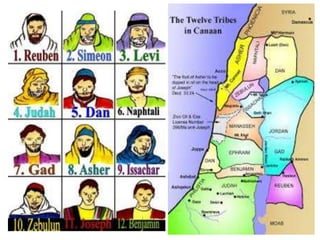
twelve tribes which
are scattered abroad,
greeting.”
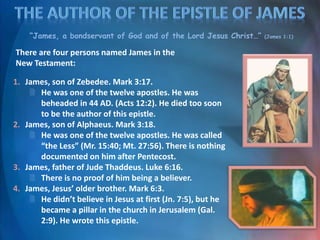
“James, a bondservant of God and of the Lord Jesus Christ…” (James 1:1)
There are four persons named James in the
New Testament:
1. James, son of Zebedee. Mark 3:17.
 He was one of the twelve apostles. He was
beheaded in 44 AD. (Acts 12:2). He died too soon
to be the author of this epistle.
2. James, son of Alphaeus. Mark 3:18.
 He was one of the twelve apostles. He was called
“the Less” (Mr. 15:40; Mt. 27:56). There is nothing
documented on him after Pentecost.
3. James, father of Jude Thaddeus. Luke 6:16.
 There is no proof of him being a believer.
4. James, Jesus’ older brother. Mark 6:3.
 He didn’t believe in Jesus at first (Jn. 7:5), but he
became a pillar in the church in Jerusalem (Gal.
2:9). He wrote this epistle.
“For even His brothers did not believe in Him.”
(John 7:5)
When Jesus began His ministry, His brothers
thought He was crazy (Mr. 3:21). Nevertheless,
they accepted Him as their Savior after His
death and resurrection (Acts 1:14)
Jesus met James alone after His resurrection
(1Co. 15:7)
When Paul came to Jerusalem for the first time after his
conversion, he just met Peter and James. James was
already considered an apostle (Gal. 1:19)
James also presided over the Jerusalem Council (Acts 15).
He was the main of the three early “pillars” of
Christianism: “James, Cephas [Peter] and John.” (Gal. 2:9)
According to Flavius Josephus, James was stoned in 62
AD. The high priest Ananias ordered his stoning
(Antiquities of the Jews, xx.9.1)
“What a support Christ would have found in His
earthly relatives if they had believed in Him as
one from heaven, and had co-operated with Him
in doing the work of God! Their unbelief cast a
shadow over the earthly life of Jesus. It was a
part of the bitterness of that cup of woe which
He drained for us…
They often saw Him full of grief; but instead of
comforting Him, their spirit and words only
wounded His heart. His sensitive nature was
tortured, His motives were misunderstood, His
work was uncomprehended…
Those who are called to suffer for Christ’s sake,
who have to endure misapprehension and
distrust, even in their own home, may find
comfort in the thought that Jesus has endured
the same.”
E.G.W. (The Desire of Ages, cp. 33, pg. 325-327)
“James, a bondservant of God and of the Lord Jesus Christ,
to the twelve tribes which are scattered abroad: Greetings.”
(James 1:1)
“James clearly identifies himself and
his intended readers as Jews. He
refers, for instance, to Abraham as
“our father” (ch. 2:21) and to the
“assembly [literally, “synagogue”]” (v.
2), the usual Jewish place for religious
assembly (see Vol. V, pp. 56, 57). But
the writer and the readers to whom
the epistle was originally addressed
were also Christians, as his repeated
references to Jesus Christ as “Lord”
make evident (see chs. 1:1, 7, 12; 2:1;
5:7, 11). Thus, in writing to the
“twelve tribes” scattered abroad,
James is addressing Jewish Christians
living here and there throughout the
Roman world (cf. 1 Peter 1:1)”
(SDA Bible Commentary, on James 1:1)
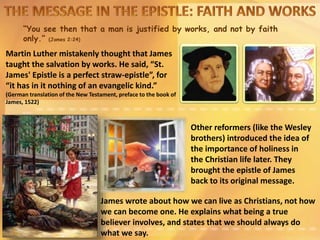
“You see then that a man is justified by works, and not by faith
only.” (James 2:24)
Martin Luther mistakenly thought that James
taught the salvation by works. He said, “St.
James' Epistle is a perfect straw-epistle”, for
“it has in it nothing of an evangelic kind.”
(German translation of the New Testament, preface to the book of
James, 1522)
James wrote about how we can live as Christians, not how
we can become one. He explains what being a true
believer involves, and states that we should always do
what we say.
Other reformers (like the Wesley
brothers) introduced the idea of
the importance of holiness in
the Christian life later. They
brought the epistle of James
back to its original message.
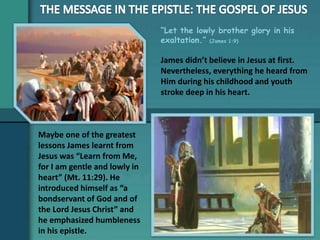
“Let the lowly brother glory in his
exaltation.” (James 1:9)
Maybe one of the greatest
lessons James learnt from
Jesus was “Learn from Me,
for I am gentle and lowly in
heart” (Mt. 11:29). He
introduced himself as “a
bondservant of God and of
the Lord Jesus Christ” and
he emphasized humbleness
in his epistle.
James didn’t believe in Jesus at first.
Nevertheless, everything he heard from
Him during his childhood and youth
stroke deep in his heart.
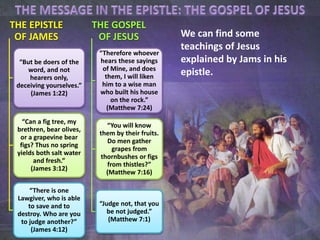
We can find some
teachings of Jesus
explained by Jams in his
epistle.
THE EPISTLE
OF JAMES
“But be doers of the
word, and not
hearers only,
deceiving yourselves.”
(James 1:22)
“Can a fig tree, my
brethren, bear olives,
or a grapevine bear
figs? Thus no spring
yields both salt water
and fresh.”
(James 3:12)
“There is one
Lawgiver, who is able
to save and to
destroy. Who are you
to judge another?”
(James 4:12)
THE GOSPEL
OF JESUS
“Therefore whoever
hears these sayings
of Mine, and does
them, I will liken
him to a wise man
who built his house
on the rock.”
(Matthew 7:24)
“You will know
them by their fruits.
Do men gather
grapes from
thornbushes or figs
from thistles?”
(Matthew 7:16)
“Judge not, that you
be not judged.”
(Matthew 7:1)
JAMES,
THE BROTHER OF JESUS
Slideshare.net/chucho1943
We invite you to download
and study each one of the
13 lessons about this serie
THIS SERVICE IS
FREE AND YOU
CAN USE IT

01 james lords brother

  • 1.
  • 2.
    KEY TEXT “ ‘Youare My friends if you do whatever I command you’ ” John 15:14
  • 3.
    We, today, area long way from the early days of the Christian church, both time wise and culturally. Thus, we have little idea of what it was like to belong to the fledgling Christian movement at a time when many congregations met in homes, and most believers were Jews persecuted by their fellow Israelites.
  • 4.
    The letter ofJames gives us one of the earliest glimpses of Jewish Christianity before it disappeared in the fog of Jewish-Christian controversies and before the marginalization of the Jews by the predominantly Gentile church of the second century and beyond.
  • 5.
    Unlike many ofthe epistles, it does not seem that some crisis or urgent need in a local church impelled James to write this epistle. Rather, it is written to the broader Christian community “scattered abroad” (James 1:1). Before we dive into his letter, however, this week we want to try to learn what we can about the author himself. Some of the questions we’ll address are: Who was James? What was his background? What had been his relationship to Jesus? And what position did he hold in the church?
  • 9.
    1. James, theBrother of Jesus The author of this letter must have been well known in the church because there is no more specific information in this letter as to who he is other than what we find in James 1:1: “James, a servant of God and of the Lord Jesus Christ, to the twelve tribes which are scattered abroad, greeting.”
  • 10.
    “James, a bondservantof God and of the Lord Jesus Christ…” (James 1:1) There are four persons named James in the New Testament: 1. James, son of Zebedee. Mark 3:17.  He was one of the twelve apostles. He was beheaded in 44 AD. (Acts 12:2). He died too soon to be the author of this epistle. 2. James, son of Alphaeus. Mark 3:18.  He was one of the twelve apostles. He was called “the Less” (Mr. 15:40; Mt. 27:56). There is nothing documented on him after Pentecost. 3. James, father of Jude Thaddeus. Luke 6:16.  There is no proof of him being a believer. 4. James, Jesus’ older brother. Mark 6:3.  He didn’t believe in Jesus at first (Jn. 7:5), but he became a pillar in the church in Jerusalem (Gal. 2:9). He wrote this epistle.
  • 11.
    “For even Hisbrothers did not believe in Him.” (John 7:5) When Jesus began His ministry, His brothers thought He was crazy (Mr. 3:21). Nevertheless, they accepted Him as their Savior after His death and resurrection (Acts 1:14) Jesus met James alone after His resurrection (1Co. 15:7) When Paul came to Jerusalem for the first time after his conversion, he just met Peter and James. James was already considered an apostle (Gal. 1:19) James also presided over the Jerusalem Council (Acts 15). He was the main of the three early “pillars” of Christianism: “James, Cephas [Peter] and John.” (Gal. 2:9) According to Flavius Josephus, James was stoned in 62 AD. The high priest Ananias ordered his stoning (Antiquities of the Jews, xx.9.1)
  • 12.
    “What a supportChrist would have found in His earthly relatives if they had believed in Him as one from heaven, and had co-operated with Him in doing the work of God! Their unbelief cast a shadow over the earthly life of Jesus. It was a part of the bitterness of that cup of woe which He drained for us… They often saw Him full of grief; but instead of comforting Him, their spirit and words only wounded His heart. His sensitive nature was tortured, His motives were misunderstood, His work was uncomprehended… Those who are called to suffer for Christ’s sake, who have to endure misapprehension and distrust, even in their own home, may find comfort in the thought that Jesus has endured the same.” E.G.W. (The Desire of Ages, cp. 33, pg. 325-327)
  • 13.
    “James, a bondservantof God and of the Lord Jesus Christ, to the twelve tribes which are scattered abroad: Greetings.” (James 1:1) “James clearly identifies himself and his intended readers as Jews. He refers, for instance, to Abraham as “our father” (ch. 2:21) and to the “assembly [literally, “synagogue”]” (v. 2), the usual Jewish place for religious assembly (see Vol. V, pp. 56, 57). But the writer and the readers to whom the epistle was originally addressed were also Christians, as his repeated references to Jesus Christ as “Lord” make evident (see chs. 1:1, 7, 12; 2:1; 5:7, 11). Thus, in writing to the “twelve tribes” scattered abroad, James is addressing Jewish Christians living here and there throughout the Roman world (cf. 1 Peter 1:1)” (SDA Bible Commentary, on James 1:1)
  • 14.
    “You see thenthat a man is justified by works, and not by faith only.” (James 2:24) Martin Luther mistakenly thought that James taught the salvation by works. He said, “St. James' Epistle is a perfect straw-epistle”, for “it has in it nothing of an evangelic kind.” (German translation of the New Testament, preface to the book of James, 1522) James wrote about how we can live as Christians, not how we can become one. He explains what being a true believer involves, and states that we should always do what we say. Other reformers (like the Wesley brothers) introduced the idea of the importance of holiness in the Christian life later. They brought the epistle of James back to its original message.
  • 15.
    “Let the lowlybrother glory in his exaltation.” (James 1:9) Maybe one of the greatest lessons James learnt from Jesus was “Learn from Me, for I am gentle and lowly in heart” (Mt. 11:29). He introduced himself as “a bondservant of God and of the Lord Jesus Christ” and he emphasized humbleness in his epistle. James didn’t believe in Jesus at first. Nevertheless, everything he heard from Him during his childhood and youth stroke deep in his heart.
  • 16.
    We can findsome teachings of Jesus explained by Jams in his epistle. THE EPISTLE OF JAMES “But be doers of the word, and not hearers only, deceiving yourselves.” (James 1:22) “Can a fig tree, my brethren, bear olives, or a grapevine bear figs? Thus no spring yields both salt water and fresh.” (James 3:12) “There is one Lawgiver, who is able to save and to destroy. Who are you to judge another?” (James 4:12) THE GOSPEL OF JESUS “Therefore whoever hears these sayings of Mine, and does them, I will liken him to a wise man who built his house on the rock.” (Matthew 7:24) “You will know them by their fruits. Do men gather grapes from thornbushes or figs from thistles?” (Matthew 7:16) “Judge not, that you be not judged.” (Matthew 7:1)
  • 17.
    JAMES, THE BROTHER OFJESUS Slideshare.net/chucho1943 We invite you to download and study each one of the 13 lessons about this serie THIS SERVICE IS FREE AND YOU CAN USE IT