After this lecture you should be able to:
 Define “Shop Safety”
 Identify P.P.E.
 Discuss hazards present in shops
 Identify the proper fire extinguisher to use
during a fire
 Understand the MSDS
 Correctly “racking” a vehicle
Body part % of total
injuries
Injury type Injury
mechanism
Hazards
Hand and fingers 23%
Lacerations and
open wounds
on motor vehicles Sharp objects
Back 20%
Muscle and
tendon sprains
and strains
fitting/removing
tyres
Manual tasks
Eye 10%
Metal fragments
and dust in eyes
using grinders Foreign body
Shoulder 6%
Muscle and
tendon sprains
and strains
lifting, carrying
or fitting car
parts
Manual tasks
Knee 5%
Muscle and
tendon sprains
and strains
getting out of
motor vehicles or
pushing motor
vehicles
Manual tasks
Wrist 5%
Muscle and
tendon sprains
and strains
fitting or working
on parts of motor
vehicles
Manual tasks
Neck 3%
Muscle and
tendon sprains
and strains
motor vehicle
accidents
Plant, machinery
and equipment
Abdomen and
pelvic region
3% Hernia
fitting,
removing,
lifting or
carrying motor
vehicle wheels
and tyres
Manual tasks
Ankle 3%
Muscle and
tendon sprains
and strains
falling or
tripping over
and standing on
objects on the
ground
Slips, trips and
falls
Foot and toes 3%
Contusions,
bruising and
superficial
crushing injuries
dropping car
parts
Falling objects
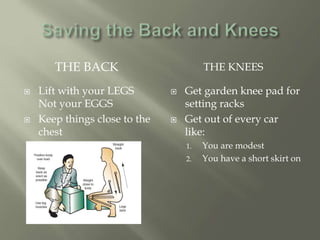
THE BACK THE KNEES
 Lift with your LEGS
Not your EGGS
 Keep things close to the
chest
 Get garden knee pad for
setting racks
 Get out of every car
like:
1. You are modest
2. You have a short skirt on
 Safety Glasses
 Shoes
 Nitryl gloves
 Latex Gloves
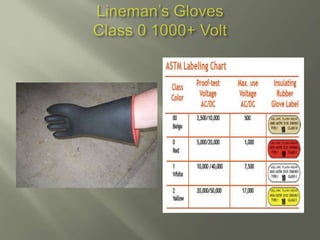
 Class 0 or above if servicing Hybrid Systems
 Polyester work clothes
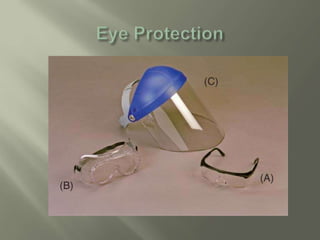
 Safety Glasses
 Must be worn
at all times!!
 If you do get
something in your
eye, flush it out at
the eye wash station
 2 stations in the
shop
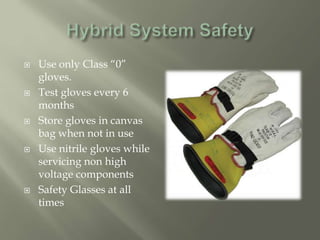
 Use only Class “0”
gloves.
 Test gloves every 6
months
 Store gloves in canvas
bag when not in use
 Use nitrile gloves while
servicing non high
voltage components
 Safety Glasses at all
times
 Ventilation
 Loose clothing and jewelry
 Long hair
 Clean hands
 Un-marked containers
 Asbestos fibers
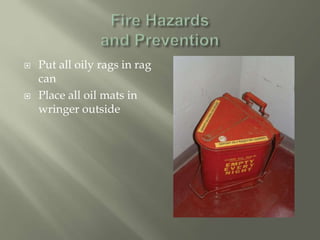
 Put all oily rags in rag
can
 Place all oil mats in
wringer outside
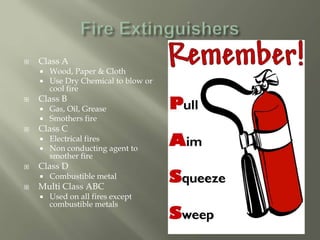
 Class A
 Wood, Paper & Cloth
 Use Dry Chemical to blow or
cool fire
 Class B
 Gas, Oil, Grease
 Smothers fire
 Class C
 Electrical fires
 Non conducting agent to
smother fire
 Class D
 Combustible metal
 Multi Class ABC
 Used on all fires except
combustible metals
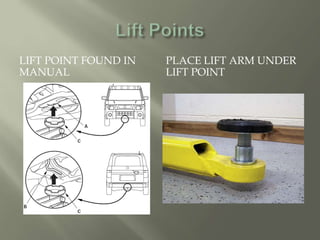
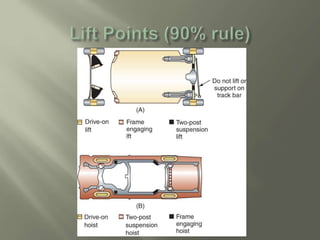
LIFT POINT FOUND IN
MANUAL
PLACE LIFT ARM UNDER
LIFT POINT
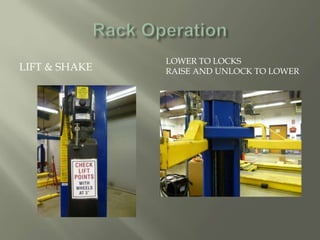
LIFT & SHAKE
LOWER TO LOCKS
RAISE AND UNLOCK TO LOWER
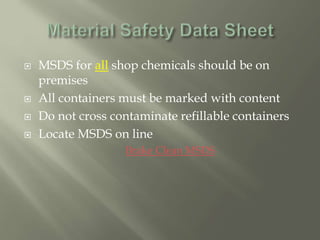
 MSDS for all shop chemicals should be on
premises
 All containers must be marked with content
 Do not cross contaminate refillable containers
 Locate MSDS on line
Brake Clean MSDS
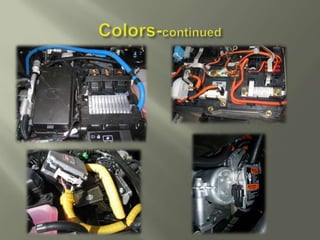
 Black conduit-12 to 42 volts. This voltage level
usually does not represent a shock hazard.
 Yellow or Blue- Usually represents a 42 volt
circuit or SRS system. This level could cause an
arc to be maintained if a live circuit is broken or
deploy the air bags.
 Orange conduit- High and dangerous voltage
levels of 144 to 650 volts
 Always test before use
 Always use leather
protective gloves
when using
 Have tested every 6
months when in use.
 2 years if still in
sealed package
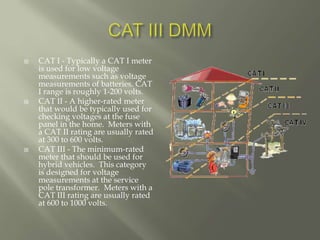
 CAT I - Typically a CAT I meter
is used for low voltage
measurements such as voltage
measurements of batteries. CAT
I range is roughly 1-200 volts.
 CAT II - A higher-rated meter
that would be typically used for
checking voltages at the fuse
panel in the home. Meters with
a CAT II rating are usually rated
at 300 to 600 volts.
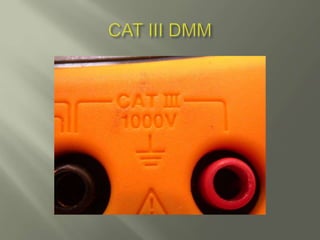
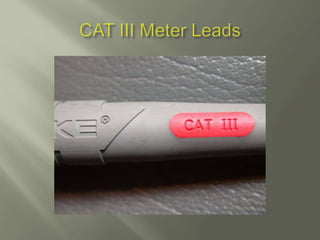
 CAT III - The minimum-rated
meter that should be used for
hybrid vehicles. This category
is designed for voltage
measurements at the service
pole transformer. Meters with a
CAT III rating are usually rated
at 600 to 1000 volts.
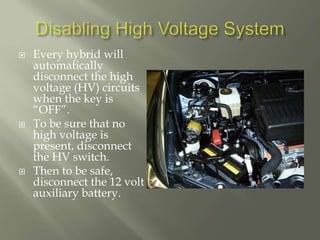
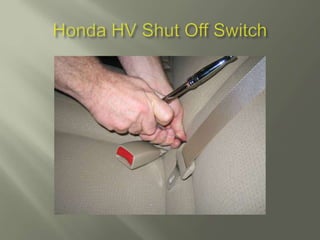
 Every hybrid will
automatically
disconnect the high
voltage (HV) circuits
when the key is
“OFF”.
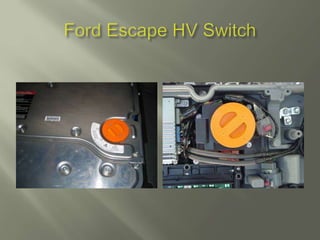
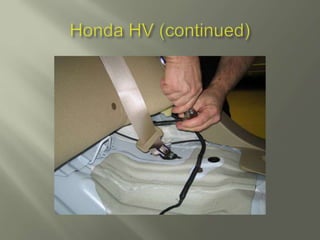
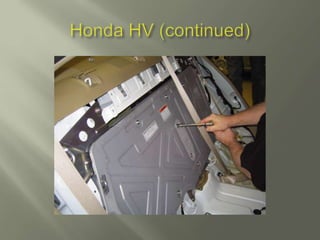
 To be sure that no
high voltage is
present, disconnect
the HV switch.
 Then to be safe,
disconnect the 12 volt
auxiliary battery.
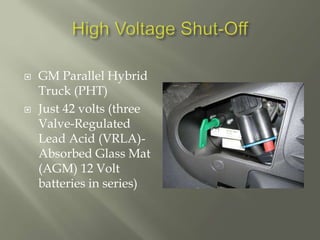
 GM Parallel Hybrid
Truck (PHT)
 Just 42 volts (three
Valve-Regulated
Lead Acid (VRLA)-
Absorbed Glass Mat
(AGM) 12 Volt
batteries in series)
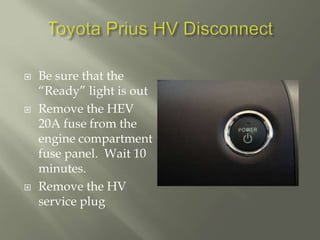
 Be sure that the
“Ready” light is out
 Remove the HEV
20A fuse from the
engine compartment
fuse panel. Wait 10
minutes.
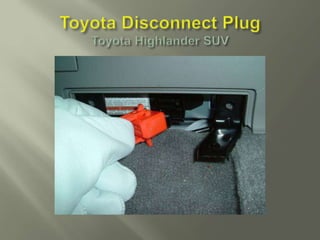
 Remove the HV
service plug
 Whenever the high voltage system is being
accessed, the following MUST be done:
 Set up cones around the vehicle.
 A fiberglass ten-foot long hook must be available if
needed to grab a person who may be electrocuted.
 A face shield must be worn.
 High-voltage Linesman’s gloves must be worn.
 Regardless of make and model
 ALWAYS REFER TO SERVICE MANUAL
BEFORE SERVICING HIGH VOLTAGE
SYSTEMS!
 Never work on HV without proper safety
equipment!
002 shop safety

002 shop safety

  • 2.
    After this lectureyou should be able to:  Define “Shop Safety”  Identify P.P.E.  Discuss hazards present in shops  Identify the proper fire extinguisher to use during a fire  Understand the MSDS  Correctly “racking” a vehicle
  • 3.
    Body part %of total injuries Injury type Injury mechanism Hazards Hand and fingers 23% Lacerations and open wounds on motor vehicles Sharp objects Back 20% Muscle and tendon sprains and strains fitting/removing tyres Manual tasks Eye 10% Metal fragments and dust in eyes using grinders Foreign body Shoulder 6% Muscle and tendon sprains and strains lifting, carrying or fitting car parts Manual tasks Knee 5% Muscle and tendon sprains and strains getting out of motor vehicles or pushing motor vehicles Manual tasks Wrist 5% Muscle and tendon sprains and strains fitting or working on parts of motor vehicles Manual tasks Neck 3% Muscle and tendon sprains and strains motor vehicle accidents Plant, machinery and equipment Abdomen and pelvic region 3% Hernia fitting, removing, lifting or carrying motor vehicle wheels and tyres Manual tasks Ankle 3% Muscle and tendon sprains and strains falling or tripping over and standing on objects on the ground Slips, trips and falls Foot and toes 3% Contusions, bruising and superficial crushing injuries dropping car parts Falling objects
  • 4.
    THE BACK THEKNEES  Lift with your LEGS Not your EGGS  Keep things close to the chest  Get garden knee pad for setting racks  Get out of every car like: 1. You are modest 2. You have a short skirt on
  • 5.
     Safety Glasses Shoes  Nitryl gloves  Latex Gloves  Class 0 or above if servicing Hybrid Systems  Polyester work clothes
  • 7.
     Safety Glasses Must be worn at all times!!
  • 8.
     If youdo get something in your eye, flush it out at the eye wash station  2 stations in the shop
  • 9.
     Use onlyClass “0” gloves.  Test gloves every 6 months  Store gloves in canvas bag when not in use  Use nitrile gloves while servicing non high voltage components  Safety Glasses at all times
  • 10.
     Ventilation  Looseclothing and jewelry  Long hair  Clean hands  Un-marked containers  Asbestos fibers
  • 11.
     Put alloily rags in rag can  Place all oil mats in wringer outside
  • 13.
     Class A Wood, Paper & Cloth  Use Dry Chemical to blow or cool fire  Class B  Gas, Oil, Grease  Smothers fire  Class C  Electrical fires  Non conducting agent to smother fire  Class D  Combustible metal  Multi Class ABC  Used on all fires except combustible metals
  • 14.
    LIFT POINT FOUNDIN MANUAL PLACE LIFT ARM UNDER LIFT POINT
  • 16.
    LIFT & SHAKE LOWERTO LOCKS RAISE AND UNLOCK TO LOWER
  • 17.
     MSDS forall shop chemicals should be on premises  All containers must be marked with content  Do not cross contaminate refillable containers  Locate MSDS on line Brake Clean MSDS
  • 19.
     Black conduit-12to 42 volts. This voltage level usually does not represent a shock hazard.  Yellow or Blue- Usually represents a 42 volt circuit or SRS system. This level could cause an arc to be maintained if a live circuit is broken or deploy the air bags.  Orange conduit- High and dangerous voltage levels of 144 to 650 volts
  • 22.
     Always testbefore use  Always use leather protective gloves when using  Have tested every 6 months when in use.  2 years if still in sealed package
  • 23.
     CAT I- Typically a CAT I meter is used for low voltage measurements such as voltage measurements of batteries. CAT I range is roughly 1-200 volts.  CAT II - A higher-rated meter that would be typically used for checking voltages at the fuse panel in the home. Meters with a CAT II rating are usually rated at 300 to 600 volts.  CAT III - The minimum-rated meter that should be used for hybrid vehicles. This category is designed for voltage measurements at the service pole transformer. Meters with a CAT III rating are usually rated at 600 to 1000 volts.
  • 26.
     Every hybridwill automatically disconnect the high voltage (HV) circuits when the key is “OFF”.  To be sure that no high voltage is present, disconnect the HV switch.  Then to be safe, disconnect the 12 volt auxiliary battery.
  • 27.
     GM ParallelHybrid Truck (PHT)  Just 42 volts (three Valve-Regulated Lead Acid (VRLA)- Absorbed Glass Mat (AGM) 12 Volt batteries in series)
  • 28.
     Be surethat the “Ready” light is out  Remove the HEV 20A fuse from the engine compartment fuse panel. Wait 10 minutes.  Remove the HV service plug
  • 30.
     Whenever thehigh voltage system is being accessed, the following MUST be done:  Set up cones around the vehicle.  A fiberglass ten-foot long hook must be available if needed to grab a person who may be electrocuted.  A face shield must be worn.  High-voltage Linesman’s gloves must be worn.
  • 36.
     Regardless ofmake and model  ALWAYS REFER TO SERVICE MANUAL BEFORE SERVICING HIGH VOLTAGE SYSTEMS!  Never work on HV without proper safety equipment!