1.02
Establish Personal
and Organizational
Goals
Goals
Terms & Definitions
 Goal
 Purpose of any plan or action
 Short Term Goals
 Series of accomplishments that add up to
a specific achievement
 Long Term Goal
 Has existed over an extended period of
time
Goals
Terms & Definitions
Strategy
The decision of how to accomplish
an objective
Desire
To long for an objective
Goals
Terms & Definitions
 Planning Goals
 The small steps you must take to get
from where you are now to where you
want to be
 Self assessment
 Profile of your talents, interests,
abilities, aptitudes, and experiences
Why Set Goals?
Life with a clear purpose and/or
destination
Turn dreams into desires
Why Set Goals?
Prioritize events in your life
Plan of action to guide you into
the future
Establishing Long Term Goals
Plan
Self-assessment
Personal action plan
Research
Career exploration
Review
Advantages of
Short Term Goals
 Long term goal into manageable
pieces
 Focus energy on specific steps to
achieve long term goal
 Setting & achieving short term goals
enables you to reach long term goals
Advantages of
Short Term Goals
 Better manage time
 Specific ways to evaluate progress
 If one short term goal does not work,
another can be set without losing sight
of the long term goal
Effective Goals
 Stated in clear terms
 “I will graduate with a 3.5 GPA”
 Realistic & Believable
 YOU must believe that you can reach the
goal
 Attainable & Reliable
 Interests, skills, abilities and strengths to
make it happen
Effective Goals
 Measurable
 Goal can be accomplished within a certain
time or in a quantity that can be calculated
 Desirable
 You REALLY want to achieve this goal
Evaluating Career Goals
 Indicators of possible career paths
 Values
 Aptitudes
 Skills
 Interests
 Hobbies
 Work
 Many people earn a living doing something they
used to do as a hobby
Living with your Career Choices
 Work is an activity that may result in
something useful
 A job is a collection of tasks or duties
that a person does to earn a living
 Work is the central activity around
which most people plan their lives
Living with your Career Choices
 As an adult, you will be identified
mainly by the kind of work that you do
 Only a few people satisfy their safety
and survival needs by working
 About 80% of Americans are not well-
satisfied with their work and lifestyle
Career Planning
 A process in which a student learns
about himself/herself, the world of
work, and the relationship between
the two
 Should begin in first grade if
possible, no later than sixth grade
Career Decision Making
 Life-long process
 Beliefs, values, skills, aptitudes, interests
 Involves your past, present, and future
work role
 Career plan may change when
significant new information, interests, or
desire appear
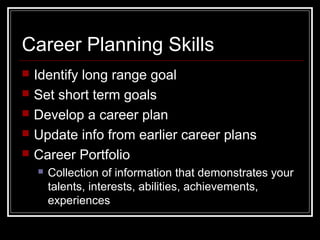
Career Planning Skills
 Identify long range goal
 Set short term goals
 Develop a career plan
 Update info from earlier career plans
 Career Portfolio
 Collection of information that demonstrates your
talents, interests, abilities, achievements,
experiences
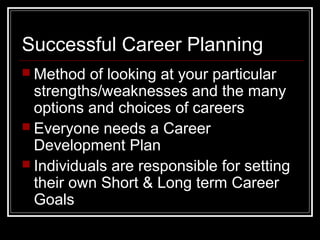
Successful Career Planning
 Method of looking at your particular
strengths/weaknesses and the many
options and choices of careers
 Everyone needs a Career
Development Plan
 Individuals are responsible for setting
their own Short & Long term Career
Goals
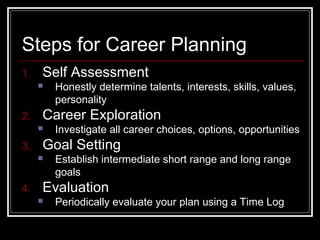
Steps for Career Planning
1. Self Assessment
 Honestly determine talents, interests, skills, values,
personality
2. Career Exploration
 Investigate all career choices, options, opportunities
3. Goal Setting
 Establish intermediate short range and long range
goals
4. Evaluation
 Periodically evaluate your plan using a Time Log
Researching a Career
 Consider working
environment
 Indoor vs.
Outdoor
 Sitting vs.
Standing
 Extreme hot vs.
cold environment
 Consider desired
Lifestyle
 Family
 Friends
 Leisure activities
 Spiritual well-being
 Career
Researching a Career
 Career cluster
 Group of careers that have certain things
in common
 Best way to learn about a career is
working in it
 The more careers you are aware of,
the better your chances of finding one
that is right for you
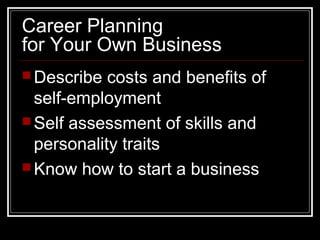
Career Planning
for Your Own Business
 Describe costs and benefits of
self-employment
 Self assessment of skills and
personality traits
 Know how to start a business
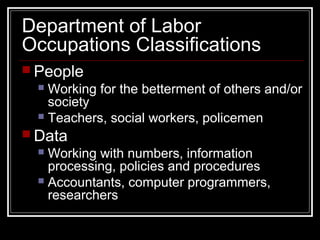
Department of Labor
Occupations Classifications
 People
 Working for the betterment of others and/or
society
 Teachers, social workers, policemen
 Data
 Working with numbers, information
processing, policies and procedures
 Accountants, computer programmers,
researchers
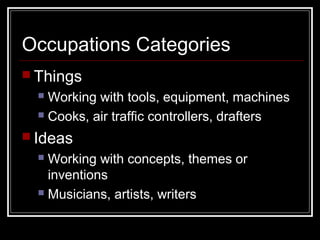
Occupations Categories
 Things
 Working with tools, equipment, machines
 Cooks, air traffic controllers, drafters
 Ideas
 Working with concepts, themes or
inventions
 Musicians, artists, writers
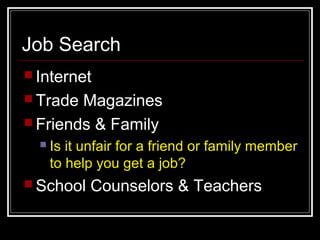
Job Search
 Internet
 Trade Magazines
 Friends & Family
 Is it unfair for a friend or family member
to help you get a job?
 School Counselors & Teachers
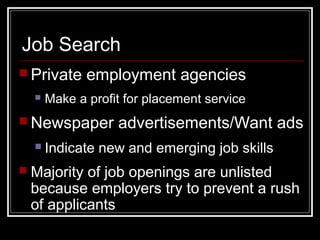
Job Search
 Private employment agencies
 Make a profit for placement service
 Newspaper advertisements/Want ads
 Indicate new and emerging job skills
 Majority of job openings are unlisted
because employers try to prevent a rush
of applicants
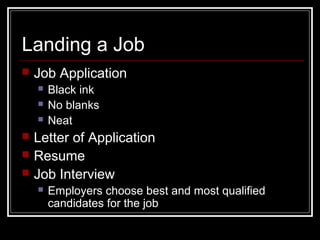
Landing a Job
 Job Application
 Black ink
 No blanks
 Neat
 Letter of Application
 Resume
 Job Interview
 Employers choose best and most qualified
candidates for the job
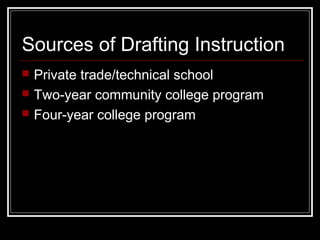
Sources of Drafting Instruction
 Private trade/technical school
 Two-year community college program
 Four-year college program
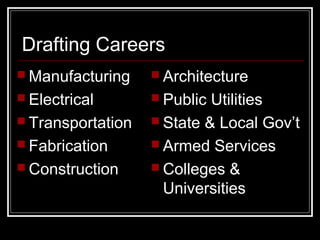
Drafting Careers
 Manufacturing
 Electrical
 Transportation
 Fabrication
 Construction
 Architecture
 Public Utilities
 State & Local Gov’t
 Armed Services
 Colleges &
Universities
Drafting Careers
 Design & drafting skills
 Problem Solving
 Communication
 Processing Information
 Using Numbers & Data
 Using Technology
 Teamwork
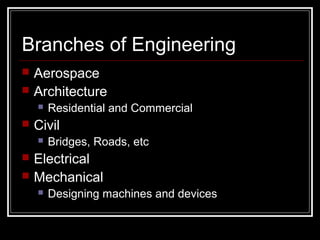
Branches of Engineering
 Aerospace
 Architecture
 Residential and Commercial
 Civil
 Bridges, Roads, etc
 Electrical
 Mechanical
 Designing machines and devices
Engineering as a Career Goal
 Requires a 4-year degree in an engineering
specialty
 Concurrent Engineering
 Engineering design team allows everyone in the
company to have access to product information
 Traditional Engineering
 Engineering design team works on product
development alone

001.02 career goals (1) (1)

  • 1.
  • 2.
    Goals Terms & Definitions Goal  Purpose of any plan or action  Short Term Goals  Series of accomplishments that add up to a specific achievement  Long Term Goal  Has existed over an extended period of time
  • 3.
    Goals Terms & Definitions Strategy Thedecision of how to accomplish an objective Desire To long for an objective
  • 4.
    Goals Terms & Definitions Planning Goals  The small steps you must take to get from where you are now to where you want to be  Self assessment  Profile of your talents, interests, abilities, aptitudes, and experiences
  • 5.
    Why Set Goals? Lifewith a clear purpose and/or destination Turn dreams into desires
  • 6.
    Why Set Goals? Prioritizeevents in your life Plan of action to guide you into the future
  • 7.
    Establishing Long TermGoals Plan Self-assessment Personal action plan Research Career exploration Review
  • 8.
    Advantages of Short TermGoals  Long term goal into manageable pieces  Focus energy on specific steps to achieve long term goal  Setting & achieving short term goals enables you to reach long term goals
  • 9.
    Advantages of Short TermGoals  Better manage time  Specific ways to evaluate progress  If one short term goal does not work, another can be set without losing sight of the long term goal
  • 10.
    Effective Goals  Statedin clear terms  “I will graduate with a 3.5 GPA”  Realistic & Believable  YOU must believe that you can reach the goal  Attainable & Reliable  Interests, skills, abilities and strengths to make it happen
  • 11.
    Effective Goals  Measurable Goal can be accomplished within a certain time or in a quantity that can be calculated  Desirable  You REALLY want to achieve this goal
  • 12.
    Evaluating Career Goals Indicators of possible career paths  Values  Aptitudes  Skills  Interests  Hobbies  Work  Many people earn a living doing something they used to do as a hobby
  • 13.
    Living with yourCareer Choices  Work is an activity that may result in something useful  A job is a collection of tasks or duties that a person does to earn a living  Work is the central activity around which most people plan their lives
  • 14.
    Living with yourCareer Choices  As an adult, you will be identified mainly by the kind of work that you do  Only a few people satisfy their safety and survival needs by working  About 80% of Americans are not well- satisfied with their work and lifestyle
  • 15.
    Career Planning  Aprocess in which a student learns about himself/herself, the world of work, and the relationship between the two  Should begin in first grade if possible, no later than sixth grade
  • 16.
    Career Decision Making Life-long process  Beliefs, values, skills, aptitudes, interests  Involves your past, present, and future work role  Career plan may change when significant new information, interests, or desire appear
  • 17.
    Career Planning Skills Identify long range goal  Set short term goals  Develop a career plan  Update info from earlier career plans  Career Portfolio  Collection of information that demonstrates your talents, interests, abilities, achievements, experiences
  • 18.
    Successful Career Planning Method of looking at your particular strengths/weaknesses and the many options and choices of careers  Everyone needs a Career Development Plan  Individuals are responsible for setting their own Short & Long term Career Goals
  • 19.
    Steps for CareerPlanning 1. Self Assessment  Honestly determine talents, interests, skills, values, personality 2. Career Exploration  Investigate all career choices, options, opportunities 3. Goal Setting  Establish intermediate short range and long range goals 4. Evaluation  Periodically evaluate your plan using a Time Log
  • 20.
    Researching a Career Consider working environment  Indoor vs. Outdoor  Sitting vs. Standing  Extreme hot vs. cold environment  Consider desired Lifestyle  Family  Friends  Leisure activities  Spiritual well-being  Career
  • 21.
    Researching a Career Career cluster  Group of careers that have certain things in common  Best way to learn about a career is working in it  The more careers you are aware of, the better your chances of finding one that is right for you
  • 22.
    Career Planning for YourOwn Business  Describe costs and benefits of self-employment  Self assessment of skills and personality traits  Know how to start a business
  • 23.
    Department of Labor OccupationsClassifications  People  Working for the betterment of others and/or society  Teachers, social workers, policemen  Data  Working with numbers, information processing, policies and procedures  Accountants, computer programmers, researchers
  • 24.
    Occupations Categories  Things Working with tools, equipment, machines  Cooks, air traffic controllers, drafters  Ideas  Working with concepts, themes or inventions  Musicians, artists, writers
  • 25.
    Job Search  Internet Trade Magazines  Friends & Family  Is it unfair for a friend or family member to help you get a job?  School Counselors & Teachers
  • 26.
    Job Search  Privateemployment agencies  Make a profit for placement service  Newspaper advertisements/Want ads  Indicate new and emerging job skills  Majority of job openings are unlisted because employers try to prevent a rush of applicants
  • 27.
    Landing a Job Job Application  Black ink  No blanks  Neat  Letter of Application  Resume  Job Interview  Employers choose best and most qualified candidates for the job
  • 28.
    Sources of DraftingInstruction  Private trade/technical school  Two-year community college program  Four-year college program
  • 29.
    Drafting Careers  Manufacturing Electrical  Transportation  Fabrication  Construction  Architecture  Public Utilities  State & Local Gov’t  Armed Services  Colleges & Universities
  • 30.
    Drafting Careers  Design& drafting skills  Problem Solving  Communication  Processing Information  Using Numbers & Data  Using Technology  Teamwork
  • 31.
    Branches of Engineering Aerospace  Architecture  Residential and Commercial  Civil  Bridges, Roads, etc  Electrical  Mechanical  Designing machines and devices
  • 32.
    Engineering as aCareer Goal  Requires a 4-year degree in an engineering specialty  Concurrent Engineering  Engineering design team allows everyone in the company to have access to product information  Traditional Engineering  Engineering design team works on product development alone