Financial Reporting on the Internet by Saudi Joint Stock
              Companies: Impact on the Audit Profession


                                  Saad M. Mariq, PhD 1

Abstract

This study investigates financial reporting on the Internet by Saudi
joint stock companies and its impact on the audit profession. The data
were obtained through content analysis of the web sites of Saudi joint
stock companies representing eight industries. A web collection
instrument was developed; this instrument was used to identify the
nature and extent of audit-related web practices on the corporate web
sites of the 86 companies that made up the Saudi Stock Market at the
end of 2006. Of the 86 listed companies, 35 companies were found to
have web sites containing corporate financial information.
The results provide evidence that all 35 companies publish audited
financial reports with the corresponding audit report. The major
technology employed by Saudi companies to publish financial
statements on the Internet is the PDF file format. The study also
reveals that in addition to the annual report, companies publish on
their web sites a considerable volume of financial and non-financial
information. Users are likely to find it difficult to distinguish audited
and unaudited financial information. Audit firms in Saudi should
employ technology to distinguish audited and unaudited information,
such as the use of borders, backgrounds, and/or watermarks.
    In addition, none of the auditor reports referred to matters relating to
electronic presentation of financial statements, neither did they refer to
the responsibilities of directors or auditors with respect to web sites.
Cautionary comments by the auditor concerning the risks of relying on
1
    Assistant Professor, King Khalid University, Saudi Arabia, e-mail smariq@kku.edu.sa
Internet financial reports may be considered. We also found that the
majority (34) of audit reports were located on the companies’ web
sites, which would make it difficult for auditors to have control over
these reports with respect to security, access, and changes. To increase
the security of the audit report, audit firms in Saudi Arabia should
locate their reports on the auditor's web site.
A total of 30 auditors’ reports included scanned versions of the
auditors’ signatures. The use of digital signatures, which offer security
to users, is suggested. The results also show that 35 financial
statements had no links to/from the audit report.
To provide assurance and improve trust in Internet financial reporting
in Saudi Arabia, the study recommends that professional accounting
and auditing bodies in Saudi such as Saudi Organisation for Certified
Public Accountants (SOCPA) should give more consideration to and
issue rules and recommendations that would help to guarantee the
reliability of financial reporting on the Internet in Saudi Arabia.


                                                                       2
Financial Reporting on the Internet by Saudi Joint Stock
          Companies: Impact on the Audit Profession


                             Saad M. Mariq, PhD2


Introduction
This study investigates the impact on the audit profession of financial
reporting on the Internet by Saudi joint stock companies. Specifically,
the study analyses the content of the web sites of joint stock
companies in Saudi Arabia to assess the nature of current audit-related
web practices.
Bonsón and Escobar (2002) stated that the economic system is
increasingly becoming digital. Because of low relative costs and the
power of information and communication technologies, companies are
using them to undertake some activities that until now have been done
in more rudimentary ways.
Jones and Zezhong (2004) pointed out that the Internet has
revolutionized the way business information is reported to
stakeholders. In line with this, there have been fundamental changes in
the business-reporting practices of companies. With the Internet
becoming a favoured medium, recent technological advances have led
to unprecedented changes in the means available to corporations,
government agencies, and the investing public to obtain and
disseminate information. Jones and Zezhong added that today, most
companies have some sort of web presence, which can range from
provision of information only to full e-commerce.
In a study by Beattie (1999) using questionnaires and interviews with
the accounting users, she concluded that it is necessary to change the
current model and suggested that financial information should be
2
Assistant Professor, Accounting Dept. King Khalid University

                                                                     3
published on the Internet in order to make access easier for all
potential interested parties. Bonsón and Escobar (2002) added that
initially, companies had web pages to improve their corporate image;
now, however, firms can also use the Internet to obtain competitive
advantage. The growth in the number of users, improvements in the
speed and security of communication, and the low costs of technology
are allowing the Internet to become an important medium for
monetary and information resources.
Several factors could be taken into account to explain the provision of
financial information on the Internet, such as: 1) elimination of the
substantial cost of the printing and posting of annual reports and
accessibility of information to a much wider audience; 2) up-to-date
information through the regular maintenance of web sites and
reducing the time to distribute information; 3) increasing the amount
and type of data disclosed as well as allowing the timely and efficient
exchange of information between preparers and various stakeholders;
4) allowing corporate information to be presented in innovative ways
(Trites, 1999; Bury, 1999; Fisher et al., 2000).
In fact, the Internet is having a profound impact on external financial
reporting. Many corporations have established web sites on the
Internet and a substantial proportion of these corporations use them to
provide financial information to corporate stakeholders (Fisher et al.,
2004). The Internet has become the principal medium for the
distribution of traditional financial reports to users, with many
companies choosing to make available financial information on their
corporate web sites (Fisher et al., 2004; Khadaroo, 2005a). This
Internet usage varies between countries (Deller et al., 1999;
Gowthorpe and Amat, 1999; Hedlin, 1999; Lymer et al., 1999;
Khadaroo 2005a) with, for example, Asian, African, and South
American companies lagging behind North American and European

                                                                     4
companies in their provision of online corporate and financial
information.
Professional bodies are also concerned about how companies use web
sites to communicate with stakeholders; for example, a statement
issued by the Auditing Practices Board (APB, 2001) states that
various types of financial information can be found on web sites,
including information that has been audited (for example, the annual
financial statements), information which auditors may have reviewed
(for example, interim financial information), and information with
which the auditors have had no direct involvement, such as financial
highlights from a company’s Annual Report, or may never have seen,
such as presentations for analysts.
Studies on financial reporting on the Internet shows that the use of the
Internet for corporate reporting has been increasing and is already a
common practice for companies in many countries (Lymer and
Debreceny, 2003; Marston, 2003; Fisher et al., 2004; Khadaroo,
2005a). The Internet offers companies new opportunities to
supplement, replace, and enhance traditional ways of investor and
stakeholder communication (Jones and Zezhong, 2004). On the other
hand, the rapid increase in financial reporting on the Internet raises the
issue of audit and has had a significant impact on the auditing
profession.
A review of the literature reveals a number of factors specifically
associated with Internet financial reporting that have significant
implications for auditors. For example, audit reports presented on the
web are exposed to unauthorised alteration from sources both internal
and external (e.g., hackers) to the client. The audited reports are also
hosted on companies’ web sites, making it difficult for auditors to
have control over these reports with respect to security, access, and
changes. Further, the electronic nature of the audit report file can

                                                                        5
make such manipulation difficult to detect (Debreceny and Gray,
1999; Liang et al., 2001; Higgins, 2002; Broad et al., 2003; Pathak,
2003).
The second primary issue is the inclusion of audited and unaudited
information: as financial reports are normally delivered as just one
part of a corporate web site, misleading information may potentially
be presented alongside the financial data for which the auditor is
primarily responsible. The determination of the boundary of the
external auditor’s responsibility may therefore become problematic
(Fisher et al., 2004). Another issue is hyperlinking audited financial
statements to unaudited information, thus increasing the perceived
credibility of the unaudited information.
This paper contributes to the ongoing research on Internet reporting.
More specifically, it surveys the Internet reporting practices of joint
stock companies in Saudi Arabia and further explores the broader
implications for the auditing profession of Internet financial reporting.
Saudi Arabia was considered an interesting setting for this research, as
to our knowledge, no research on this issue has been conducted within
a Saudi joint stock companies. Furthermore, no national professional
body has yet issued formal standards addressing the specific auditing
issues associated with corporate Internet reporting. This paper seeks to
identify such issues, which will assist professional bodies and
regulators to develop well-informed policies, regulations, and
standards in response to these issues. Both the Saudi Organization for
Certified Accountants (SOCPA) and the Saudi Capital Market
Authority (CMA) will be able to refer to the results of this study in
determining appropriate responses to the growth in Internet financial
reporting.


                                                                        6
The rest of the paper is structured as follows. In the next section, we
provide a review of the literature on Internet reporting practices.
Section 3 discusses the regulations concerning corporate web site
disclosure; this section will also discuss financial reporting on the
Internet and auditors. Section 4 explains the research approach
adopted in this paper. Section 5 discusses the findings of content
analysis of the web sites of Saudi companies. The final section
summarizes the paper, draws a conclusion, and makes suggestions for
further research.


                                                                     7
Literature Review


This section discusses prior research on corporate financial reporting
on the Internet and the auditing implications thereof. A number of
studies have directly or indirectly focused on this issue, most of which
have been undertaken over the last eight years. Almost all of the
earlier studies, and many of the more recent ones, are at least partially
descriptive in nature. Typically, they describe the incidence of Internet
financial reporting via groups of very large companies. Among the
early studies, Hussey et al. (1998) and Craven and Marston (1999)
studied FTSE 100 companies in the UK and listed companies in
Finland. In addition, a special section of the European Accounting
Review in 1999 was devoted to the Internet and corporate reporting in
Europe; it contained studies in several countries, including the UK
(Craven and Marston, 1999; Ashbaugh et al., 1999), the USA, the UK,
and Germany (Deller et al., 1999), Spain (Gowthorpe and Amat,
1999), Sweden (Hedlin, 1999), and Austria (Pirchegger and
Wagenhofer, 1999). Marston (2003) surveyed financial reporting on
the Internet by Japanese companies, and Ashbaugh et al. (1999)
published a detailed study of reporting on the Internet by US
companies. The following literature discussion will concentrate only
on studies related to corporate financial reporting on the Internet.
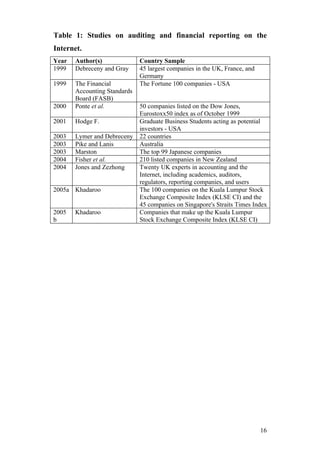
Table 1 provides a summary of the main aspects of these studies.
Debreceny and Gray (1999) surveyed the web-reporting practices of
the 45 largest companies in the UK, France, and Germany. They
found that 44 of them had a web site, of which 36 incorporated
financial statements. The researchers focused their attention on the 17
companies that presented their financial statements in HTML format;
audit reports were included on the web for ten out of the 17
companies. None of the audit reports of these ten companies included

                                                                       8
scanned auditors’ signatures, and none of their financial statements
contained hyperlinks to their corresponding audit reports. All of the
audit reports were located on the companies’ web sites and only four
audit reports contained links to the financial statements. The authors
questioned whether the web-based audit report should reside at the
auditor's or the client's web site and whether changes made to the
web-based version of the financial statements might affect the audit
opinion. Debreceny and Gray suggested either applying a digital
signature to the annual report, which would indicate the area of the
web site that had been audited, or placing all audited web pages on the
auditor's web site.
Professional accounting bodies are also concerned with financial
reporting on the Internet. The Financial Accounting Standards Board
(FASB) Business Reporting Research Project report includes a 1999
survey of the web practices of the Fortune 100 companies (FASB,
2000). This survey found that 22 % of the audit reports located online
included hyperlinks, usually to notes mentioned in the audit reports. In
addition, 99 % of the companies had a web site, and 94 % of the
corporate web sites included some form of investor relations page and
the annual report, which was mainly presented in either HTML or
PDF format, or both. These findings would provide an interesting
topic for audit regulators to ponder. The authors commented that since
the auditors did not deliver their reports with built-in hyperlinks, the
companies must have added them later.
Ponte et al. (2000) surveyed 50 companies listed on the Dow Jones
Eurostoxx50 index as of October 1999, with the aim of analysing the
scope and impact of the electronic dissemination of accounting
information in Europe. The study revealed that all of the companies
(100 %) had web sites and presented annual reports on the Internet,


                                                                      9
with some also including unaudited interim statements, mailing lists,
and shareholder information.
A study by Hodge (2001) found that a common feature of corporate
web sites is that unaudited information is incorporated with audited
information in such a way that it is difficult for users to distinguish
between the two. In particular, the study revealed that compared to
investors who viewed similar information in hard-copy format,
investors who viewed hyperlinked materials on the web misclassified
more unaudited information as audited, inflated the credibility of
unaudited information, and judged the firm's earnings potential to be
higher. The author argued that users confused audited and unaudited
information because hyperlinking them to and from one another gave
the impression that all the information was part of one comprehensive
database: in short, hyperlinking confused the investors. Audited
information may be useful in mitigating the blending problem on the
web. This mitigation could be achieved in a number of ways. First,
audited information could be made more visually distinctive from
unaudited information: the use of labelling, borders, or watermarks
have all been mooted.
Lymer and Debreceny (2003) investigated potential causes of the
variations in the Internet financial reporting of 660 corporations in 22
countries to identify the firm-specific and environmental determinants
of Internet financial reporting. The study revealed that firm size, level
of technology employed, growth prospects, and intangibles were firm-
specific determinants of Internet financial reporting. Given that
Internet financial reporting is not just about the content of disclosure
but also about employing new presentation methods, the environment
of disclosure was included in the research. The overarching disclosure
environment of a country was found to be an important environmental
driver for Internet financial reporting presentation and a less strong

                                                                      10
driver for Internet financial reporting content. The presentation aspect
of Internet financial reporting was more associated with the identified
determinants than the content of Internet financial reporting, which
suggests that Internet presentation technologies were more related to
the determinants than the content of the reports on the company web
sites.

Pike and Lanis (2003) identified a possible relationship between
WebTrust, initiated by the American Institute of Certified Public
Accountants (AICPA) / The Canadian Institute of Chartered
Accountants (CICA) as an attestation service for web sites, and the
potentially misleading effect of hyperlinking audited financial
statements to unaudited information. They argue that firms
hyperlinking such information increase the perceived credibility of the
unaudited information, which may be exacerbated by the presence of a
recognisable, symbolically trustworthy logo. Pike and Lanis
formulated testable hypotheses by modifying an existing theoretical
framework related to hyperlinked materials and their effect on
investor judgements. The amended model extends to all potential
users of financial information and incorporates the web-based
assurance logo of WebTrust. The study proposed a model to ascertain
the extent of the expectation gap among users and argued that simple
disclosure is sufficient to eliminate the potentially misleading effects
of web-based financial information, thereby reducing the risk of
corporate fraud and legal liability of auditors.
Marston (2003) surveyed the financial reporting on the Internet of the
top 99 Japanese companies in 1998. She found that 78 of these
companies had a web site in English and that of these, 68 reported
some financial information with 57 providing detailed accounting
information. Company size was significantly positively associated
with the existence of a web site but the extent of financial disclosure
                                                                     11
did not appear to be related to size. There was no significant
association between profitability, industry grouping, or overseas
listing status and Internet disclosure. The survey was updated in 2001
by re-evaluating those companies which had no web site or only a
Japanese web site in 1998. It was found that the majority of these
companies had by 2001 established an English language web site with
full annual reports available.
Fisher et al. (2004) identified the key audit implications of Internet
financial reporting through a comprehensive review of the academic
and professional literature. Further, they studied the Internet reporting
practices of 210 listed companies in New Zealand. The authors found
that only 188 had web sites; 131 companies provided some financial
information on their web sites; 128 provided audit reports; 101
included the auditors' signatures; 1 had a hyperlink “from” the audit
report to other locations within the web site and 11 had a hyperlink
“to” the audit report from other locations within the web site. The
researchers found that there were a number of concerns for the
auditing profession arising mostly from poor presentation of
information to users. They focused on the need to place more
emphasis on preventive controls and real-time detective controls, the
need for continuous auditing, and the need to consider the possibility
of changing the audit reporting routine, for example, “shorter interval”
reporting, “evergreen” reporting (i.e., always available and dated), or
“report on demand”.
Jones and Zezhong (2004) explored future financial reporting on the
Internet; their aims were to develop a consensus among participating
experts   (representing   key    interested   parties)   on   the   likely
developments in financial reporting on the Internet by 2010 and then
to explore the main issues and consequences for these parties. Twenty
UK experts in accounting and the Internet, including academics,

                                                                       12
auditors, regulators, reporting companies, and users, participated in
the study. A three-dimensional conceptual framework was adopted
consisting of the role of the Internet, the determinant of change
(technological   determinism,   non-technological   determinism,   or
contingency perspective), and the pace of change (conservatism,
gradualism, or radicalism). The consensus view was that the financial
reporting package would evolve into a core of general purpose,
standardised information (in both the hard copy and Internet version)
together with a non-core of general purpose and customised
information. Auditors would be reactive and cautious, and regulators
would adopt a minimalist approach. The fundamental dilemma of
financial reporting in the Internet environment would be between
standardisation and customisation.
Khadaroo (2005a) examined the business reporting practices of listed
companies in Malaysia and Singapore. The research was carried out in
February 2003. He chose the 100 companies on the Kuala Lumpur
Stock Exchange Composite Index (KLSE CI) and the 45 companies
on Singapore's Straits Times Index on the grounds that listed
companies are more likely to have a web presence and provide web-
based information. Khadaroo examined the implications of web
technology for business reporting and the challenges it poses for
standard-setting bodies. A standard web browser was used to survey
the web sites of listed companies and collect the data. The Internet
reporting practices of listed companies in Malaysia and Singapore
only were compared. The results showed that 75 % (75 companies) of
the KLSE CI companies had web sites as compared to 87 % (39
companies) of companies on the Singapore Stock Exchange (SGX)
index. These results indicate that Singaporean companies make more
use of the Internet as a reporting tool than do their Malaysian
counterparts.

                                                                   13
Khadaroo’s (2005b) study aimed to examine the Internet reporting
practices of companies that make up the KLSE CI and to discuss the
auditing implications of companies reporting on the Internet. His
survey of Internet reporting practices shows that there has been an
increase in the number of companies providing information on the
Internet as well as the various types of financial and non-financial
information provided. The survey also provides some evidence that
there has been little improvement in the quality and reliability of
information provided to users. In this respect, the important
contributions of the accounting and auditing profession in enhancing
the integrity, credibility, and reliability of Internet reporting
information are discussed. The study also reveals that auditors have
little control over web content or the changes that can be made to
audited information. Further guidance to standardise the types of
Internet reporting information may help protect the interests of users,
provide more certainty concerning what information needs to be
audited, and reduce audit risks. Internet reporting increases the risk of
auditors giving an inappropriate opinion concerning their clients'
financial statements (i.e., audit risk), thereby exposing them to the
risks of litigation claims and even bankruptcy. Nevertheless, Internet
reporting also creates a lucrative business opportunity for auditors, as
the increase in risks and Internet auditing costs are usually passed on
to audit clients in the form of higher audit fees. In addition, Internet
reporting provides the opportunity for audit firms to earn higher fees
from their other services, such as IT consultancy and web-site design,
but not to their same audit clients because it may compromise their
independence. Regulators play an important role in protecting users
and improving trust and the quality of Internet reporting information.
By mandating the types of information disclosed by companies,
security regulators are making good progress towards protecting users'

                                                                      14
interests and improving trust in the system. Similarly, by providing
Internet auditing guidance, auditing standard setters are (indirectly)
making the business community and users alike more aware of good
practices and the types of control that can be expected in the Internet
reporting environment. However, more needs to be done.


The above literature review shows that a number of academics have
investigated web-reporting practices in the UK, the USA, Germany,
Spain, Austria, Finland, and more recently Japan, Singapore, and
Malaysia. Most research done in this area is concentrated in Western
Europe, Asia, and the USA. To our knowledge, the impact on the
audit profession of corporate financial reporting on the Internet by
Saudi joint stock companies has not been the subject of any study. It is
believed that conducting this study in Saudi Arabia could yield fruitful
results.
The literature reveals a number of factors specifically associated with
Internet financial reporting that have significant implications for
auditors, such as the appropriate responsibilities of auditors and the
nature of audit reporting in such an environment.
These factors include that corporate disclosure over the Internet is
currently unregulated and because of the global nature of the Internet,
the application of traditional national regulations and laws to the
Internet environment may not be appropriate. The present study
extends this literature by investigating the existing practices of
auditors in relation to the Internet financial reporting of Saudi joint
stock companies. The data for the research were obtained through
content analysis of the web sites of joint stock companies in Saudi
Arabia.


                                                                     15
Table 1: Studies on auditing and financial reporting on the
Internet.
Year   Author(s)              Country Sample
1999   Debreceny and Gray     45 largest companies in the UK, France, and
                              Germany
1999   The Financial          The Fortune 100 companies - USA
       Accounting Standards
       Board (FASB)
2000   Ponte et al.           50 companies listed on the Dow Jones,
                              Eurostoxx50 index as of October 1999
2001   Hodge F.               Graduate Business Students acting as potential
                              investors - USA
2003   Lymer and Debreceny    22 countries
2003   Pike and Lanis         Australia
2003   Marston                The top 99 Japanese companies
2004   Fisher et al.          210 listed companies in New Zealand
2004   Jones and Zezhong      Twenty UK experts in accounting and the
                              Internet, including academics, auditors,
                              regulators, reporting companies, and users
2005a Khadaroo                The 100 companies on the Kuala Lumpur Stock
                              Exchange Composite Index (KLSE CI) and the
                              45 companies on Singapore's Straits Times Index
2005   Khadaroo               Companies that make up the Kuala Lumpur
b                             Stock Exchange Composite Index (KLSE CI)


                                                                            16
Regulation of Corporate Web Sites
Disclosure and Auditing


This section discusses the regulation of the financial reporting on the
Internet by professional bodies. It also discusses the impact on the
audit profession of financial reporting on the Internet (Ettredge, 2001;
Fisher et al., 2004; Jones and Zezhong, 2004).


In 1997, the Audit Issues Task Force (AITF) in the USA issued
AU550 – Other Information in Electronic Sites Containing Audited
Financial Statements - to provide guidance on the application of SAS
8 – Other Information in Documents Containing Audited Financial
Statements - to companies disclosing corporate information on the
Internet.
In 1998, the Institute of Chartered Accountants of England and Wales
(ICAEW) published the 21st Century Annual Report, which indicates
that “corporate reporting has traditionally been regulation-led with
innovations arising principally from new accounting standards and,
less frequently, changes in legislation” (ICAEW, 1998). The ICAEW
report notes that there has been a fundamental shift in the process of
accounting development. Technology and other factors, such as
globalisation and notions of accountability, are currently driving
changes in financial reporting practices. While external drivers, such
as technology, help ensure the ongoing relevance of the accounting
product, the speed with which they are revolutionising accounting
makes it difficult for regulators to keep pace. For example, in the
absence of formal relevant professional promulgations, the adoption
of the Web for corporate disclosure has seen the US Securities and
Exchange Commission (SEC) initiate more than 200 web-related
enforcement actions as of March 2001 (Hodge, 2001), and recently

                                                                     17

威尼斯人酒店

  • 1.
    Financial Reporting onthe Internet by Saudi Joint Stock Companies: Impact on the Audit Profession Saad M. Mariq, PhD 1 Abstract This study investigates financial reporting on the Internet by Saudi joint stock companies and its impact on the audit profession. The data were obtained through content analysis of the web sites of Saudi joint stock companies representing eight industries. A web collection instrument was developed; this instrument was used to identify the nature and extent of audit-related web practices on the corporate web sites of the 86 companies that made up the Saudi Stock Market at the end of 2006. Of the 86 listed companies, 35 companies were found to have web sites containing corporate financial information. The results provide evidence that all 35 companies publish audited financial reports with the corresponding audit report. The major technology employed by Saudi companies to publish financial statements on the Internet is the PDF file format. The study also reveals that in addition to the annual report, companies publish on their web sites a considerable volume of financial and non-financial information. Users are likely to find it difficult to distinguish audited and unaudited financial information. Audit firms in Saudi should employ technology to distinguish audited and unaudited information, such as the use of borders, backgrounds, and/or watermarks. In addition, none of the auditor reports referred to matters relating to electronic presentation of financial statements, neither did they refer to the responsibilities of directors or auditors with respect to web sites. Cautionary comments by the auditor concerning the risks of relying on 1 Assistant Professor, King Khalid University, Saudi Arabia, e-mail smariq@kku.edu.sa
  • 2.
    Internet financial reportsmay be considered. We also found that the majority (34) of audit reports were located on the companies’ web sites, which would make it difficult for auditors to have control over these reports with respect to security, access, and changes. To increase the security of the audit report, audit firms in Saudi Arabia should locate their reports on the auditor's web site. A total of 30 auditors’ reports included scanned versions of the auditors’ signatures. The use of digital signatures, which offer security to users, is suggested. The results also show that 35 financial statements had no links to/from the audit report. To provide assurance and improve trust in Internet financial reporting in Saudi Arabia, the study recommends that professional accounting and auditing bodies in Saudi such as Saudi Organisation for Certified Public Accountants (SOCPA) should give more consideration to and issue rules and recommendations that would help to guarantee the reliability of financial reporting on the Internet in Saudi Arabia. 2
  • 3.
    Financial Reporting onthe Internet by Saudi Joint Stock Companies: Impact on the Audit Profession Saad M. Mariq, PhD2 Introduction This study investigates the impact on the audit profession of financial reporting on the Internet by Saudi joint stock companies. Specifically, the study analyses the content of the web sites of joint stock companies in Saudi Arabia to assess the nature of current audit-related web practices. Bonsón and Escobar (2002) stated that the economic system is increasingly becoming digital. Because of low relative costs and the power of information and communication technologies, companies are using them to undertake some activities that until now have been done in more rudimentary ways. Jones and Zezhong (2004) pointed out that the Internet has revolutionized the way business information is reported to stakeholders. In line with this, there have been fundamental changes in the business-reporting practices of companies. With the Internet becoming a favoured medium, recent technological advances have led to unprecedented changes in the means available to corporations, government agencies, and the investing public to obtain and disseminate information. Jones and Zezhong added that today, most companies have some sort of web presence, which can range from provision of information only to full e-commerce. In a study by Beattie (1999) using questionnaires and interviews with the accounting users, she concluded that it is necessary to change the current model and suggested that financial information should be 2 Assistant Professor, Accounting Dept. King Khalid University 3
  • 4.
    published on theInternet in order to make access easier for all potential interested parties. Bonsón and Escobar (2002) added that initially, companies had web pages to improve their corporate image; now, however, firms can also use the Internet to obtain competitive advantage. The growth in the number of users, improvements in the speed and security of communication, and the low costs of technology are allowing the Internet to become an important medium for monetary and information resources. Several factors could be taken into account to explain the provision of financial information on the Internet, such as: 1) elimination of the substantial cost of the printing and posting of annual reports and accessibility of information to a much wider audience; 2) up-to-date information through the regular maintenance of web sites and reducing the time to distribute information; 3) increasing the amount and type of data disclosed as well as allowing the timely and efficient exchange of information between preparers and various stakeholders; 4) allowing corporate information to be presented in innovative ways (Trites, 1999; Bury, 1999; Fisher et al., 2000). In fact, the Internet is having a profound impact on external financial reporting. Many corporations have established web sites on the Internet and a substantial proportion of these corporations use them to provide financial information to corporate stakeholders (Fisher et al., 2004). The Internet has become the principal medium for the distribution of traditional financial reports to users, with many companies choosing to make available financial information on their corporate web sites (Fisher et al., 2004; Khadaroo, 2005a). This Internet usage varies between countries (Deller et al., 1999; Gowthorpe and Amat, 1999; Hedlin, 1999; Lymer et al., 1999; Khadaroo 2005a) with, for example, Asian, African, and South American companies lagging behind North American and European 4
  • 5.
    companies in theirprovision of online corporate and financial information. Professional bodies are also concerned about how companies use web sites to communicate with stakeholders; for example, a statement issued by the Auditing Practices Board (APB, 2001) states that various types of financial information can be found on web sites, including information that has been audited (for example, the annual financial statements), information which auditors may have reviewed (for example, interim financial information), and information with which the auditors have had no direct involvement, such as financial highlights from a company’s Annual Report, or may never have seen, such as presentations for analysts. Studies on financial reporting on the Internet shows that the use of the Internet for corporate reporting has been increasing and is already a common practice for companies in many countries (Lymer and Debreceny, 2003; Marston, 2003; Fisher et al., 2004; Khadaroo, 2005a). The Internet offers companies new opportunities to supplement, replace, and enhance traditional ways of investor and stakeholder communication (Jones and Zezhong, 2004). On the other hand, the rapid increase in financial reporting on the Internet raises the issue of audit and has had a significant impact on the auditing profession. A review of the literature reveals a number of factors specifically associated with Internet financial reporting that have significant implications for auditors. For example, audit reports presented on the web are exposed to unauthorised alteration from sources both internal and external (e.g., hackers) to the client. The audited reports are also hosted on companies’ web sites, making it difficult for auditors to have control over these reports with respect to security, access, and changes. Further, the electronic nature of the audit report file can 5
  • 6.
    make such manipulationdifficult to detect (Debreceny and Gray, 1999; Liang et al., 2001; Higgins, 2002; Broad et al., 2003; Pathak, 2003). The second primary issue is the inclusion of audited and unaudited information: as financial reports are normally delivered as just one part of a corporate web site, misleading information may potentially be presented alongside the financial data for which the auditor is primarily responsible. The determination of the boundary of the external auditor’s responsibility may therefore become problematic (Fisher et al., 2004). Another issue is hyperlinking audited financial statements to unaudited information, thus increasing the perceived credibility of the unaudited information. This paper contributes to the ongoing research on Internet reporting. More specifically, it surveys the Internet reporting practices of joint stock companies in Saudi Arabia and further explores the broader implications for the auditing profession of Internet financial reporting. Saudi Arabia was considered an interesting setting for this research, as to our knowledge, no research on this issue has been conducted within a Saudi joint stock companies. Furthermore, no national professional body has yet issued formal standards addressing the specific auditing issues associated with corporate Internet reporting. This paper seeks to identify such issues, which will assist professional bodies and regulators to develop well-informed policies, regulations, and standards in response to these issues. Both the Saudi Organization for Certified Accountants (SOCPA) and the Saudi Capital Market Authority (CMA) will be able to refer to the results of this study in determining appropriate responses to the growth in Internet financial reporting. 6
  • 7.
    The rest ofthe paper is structured as follows. In the next section, we provide a review of the literature on Internet reporting practices. Section 3 discusses the regulations concerning corporate web site disclosure; this section will also discuss financial reporting on the Internet and auditors. Section 4 explains the research approach adopted in this paper. Section 5 discusses the findings of content analysis of the web sites of Saudi companies. The final section summarizes the paper, draws a conclusion, and makes suggestions for further research. 7
  • 8.
    Literature Review This sectiondiscusses prior research on corporate financial reporting on the Internet and the auditing implications thereof. A number of studies have directly or indirectly focused on this issue, most of which have been undertaken over the last eight years. Almost all of the earlier studies, and many of the more recent ones, are at least partially descriptive in nature. Typically, they describe the incidence of Internet financial reporting via groups of very large companies. Among the early studies, Hussey et al. (1998) and Craven and Marston (1999) studied FTSE 100 companies in the UK and listed companies in Finland. In addition, a special section of the European Accounting Review in 1999 was devoted to the Internet and corporate reporting in Europe; it contained studies in several countries, including the UK (Craven and Marston, 1999; Ashbaugh et al., 1999), the USA, the UK, and Germany (Deller et al., 1999), Spain (Gowthorpe and Amat, 1999), Sweden (Hedlin, 1999), and Austria (Pirchegger and Wagenhofer, 1999). Marston (2003) surveyed financial reporting on the Internet by Japanese companies, and Ashbaugh et al. (1999) published a detailed study of reporting on the Internet by US companies. The following literature discussion will concentrate only on studies related to corporate financial reporting on the Internet. Table 1 provides a summary of the main aspects of these studies. Debreceny and Gray (1999) surveyed the web-reporting practices of the 45 largest companies in the UK, France, and Germany. They found that 44 of them had a web site, of which 36 incorporated financial statements. The researchers focused their attention on the 17 companies that presented their financial statements in HTML format; audit reports were included on the web for ten out of the 17 companies. None of the audit reports of these ten companies included 8
  • 9.
    scanned auditors’ signatures,and none of their financial statements contained hyperlinks to their corresponding audit reports. All of the audit reports were located on the companies’ web sites and only four audit reports contained links to the financial statements. The authors questioned whether the web-based audit report should reside at the auditor's or the client's web site and whether changes made to the web-based version of the financial statements might affect the audit opinion. Debreceny and Gray suggested either applying a digital signature to the annual report, which would indicate the area of the web site that had been audited, or placing all audited web pages on the auditor's web site. Professional accounting bodies are also concerned with financial reporting on the Internet. The Financial Accounting Standards Board (FASB) Business Reporting Research Project report includes a 1999 survey of the web practices of the Fortune 100 companies (FASB, 2000). This survey found that 22 % of the audit reports located online included hyperlinks, usually to notes mentioned in the audit reports. In addition, 99 % of the companies had a web site, and 94 % of the corporate web sites included some form of investor relations page and the annual report, which was mainly presented in either HTML or PDF format, or both. These findings would provide an interesting topic for audit regulators to ponder. The authors commented that since the auditors did not deliver their reports with built-in hyperlinks, the companies must have added them later. Ponte et al. (2000) surveyed 50 companies listed on the Dow Jones Eurostoxx50 index as of October 1999, with the aim of analysing the scope and impact of the electronic dissemination of accounting information in Europe. The study revealed that all of the companies (100 %) had web sites and presented annual reports on the Internet, 9
  • 10.
    with some alsoincluding unaudited interim statements, mailing lists, and shareholder information. A study by Hodge (2001) found that a common feature of corporate web sites is that unaudited information is incorporated with audited information in such a way that it is difficult for users to distinguish between the two. In particular, the study revealed that compared to investors who viewed similar information in hard-copy format, investors who viewed hyperlinked materials on the web misclassified more unaudited information as audited, inflated the credibility of unaudited information, and judged the firm's earnings potential to be higher. The author argued that users confused audited and unaudited information because hyperlinking them to and from one another gave the impression that all the information was part of one comprehensive database: in short, hyperlinking confused the investors. Audited information may be useful in mitigating the blending problem on the web. This mitigation could be achieved in a number of ways. First, audited information could be made more visually distinctive from unaudited information: the use of labelling, borders, or watermarks have all been mooted. Lymer and Debreceny (2003) investigated potential causes of the variations in the Internet financial reporting of 660 corporations in 22 countries to identify the firm-specific and environmental determinants of Internet financial reporting. The study revealed that firm size, level of technology employed, growth prospects, and intangibles were firm- specific determinants of Internet financial reporting. Given that Internet financial reporting is not just about the content of disclosure but also about employing new presentation methods, the environment of disclosure was included in the research. The overarching disclosure environment of a country was found to be an important environmental driver for Internet financial reporting presentation and a less strong 10
  • 11.
    driver for Internetfinancial reporting content. The presentation aspect of Internet financial reporting was more associated with the identified determinants than the content of Internet financial reporting, which suggests that Internet presentation technologies were more related to the determinants than the content of the reports on the company web sites. Pike and Lanis (2003) identified a possible relationship between WebTrust, initiated by the American Institute of Certified Public Accountants (AICPA) / The Canadian Institute of Chartered Accountants (CICA) as an attestation service for web sites, and the potentially misleading effect of hyperlinking audited financial statements to unaudited information. They argue that firms hyperlinking such information increase the perceived credibility of the unaudited information, which may be exacerbated by the presence of a recognisable, symbolically trustworthy logo. Pike and Lanis formulated testable hypotheses by modifying an existing theoretical framework related to hyperlinked materials and their effect on investor judgements. The amended model extends to all potential users of financial information and incorporates the web-based assurance logo of WebTrust. The study proposed a model to ascertain the extent of the expectation gap among users and argued that simple disclosure is sufficient to eliminate the potentially misleading effects of web-based financial information, thereby reducing the risk of corporate fraud and legal liability of auditors. Marston (2003) surveyed the financial reporting on the Internet of the top 99 Japanese companies in 1998. She found that 78 of these companies had a web site in English and that of these, 68 reported some financial information with 57 providing detailed accounting information. Company size was significantly positively associated with the existence of a web site but the extent of financial disclosure 11
  • 12.
    did not appearto be related to size. There was no significant association between profitability, industry grouping, or overseas listing status and Internet disclosure. The survey was updated in 2001 by re-evaluating those companies which had no web site or only a Japanese web site in 1998. It was found that the majority of these companies had by 2001 established an English language web site with full annual reports available. Fisher et al. (2004) identified the key audit implications of Internet financial reporting through a comprehensive review of the academic and professional literature. Further, they studied the Internet reporting practices of 210 listed companies in New Zealand. The authors found that only 188 had web sites; 131 companies provided some financial information on their web sites; 128 provided audit reports; 101 included the auditors' signatures; 1 had a hyperlink “from” the audit report to other locations within the web site and 11 had a hyperlink “to” the audit report from other locations within the web site. The researchers found that there were a number of concerns for the auditing profession arising mostly from poor presentation of information to users. They focused on the need to place more emphasis on preventive controls and real-time detective controls, the need for continuous auditing, and the need to consider the possibility of changing the audit reporting routine, for example, “shorter interval” reporting, “evergreen” reporting (i.e., always available and dated), or “report on demand”. Jones and Zezhong (2004) explored future financial reporting on the Internet; their aims were to develop a consensus among participating experts (representing key interested parties) on the likely developments in financial reporting on the Internet by 2010 and then to explore the main issues and consequences for these parties. Twenty UK experts in accounting and the Internet, including academics, 12
  • 13.
    auditors, regulators, reportingcompanies, and users, participated in the study. A three-dimensional conceptual framework was adopted consisting of the role of the Internet, the determinant of change (technological determinism, non-technological determinism, or contingency perspective), and the pace of change (conservatism, gradualism, or radicalism). The consensus view was that the financial reporting package would evolve into a core of general purpose, standardised information (in both the hard copy and Internet version) together with a non-core of general purpose and customised information. Auditors would be reactive and cautious, and regulators would adopt a minimalist approach. The fundamental dilemma of financial reporting in the Internet environment would be between standardisation and customisation. Khadaroo (2005a) examined the business reporting practices of listed companies in Malaysia and Singapore. The research was carried out in February 2003. He chose the 100 companies on the Kuala Lumpur Stock Exchange Composite Index (KLSE CI) and the 45 companies on Singapore's Straits Times Index on the grounds that listed companies are more likely to have a web presence and provide web- based information. Khadaroo examined the implications of web technology for business reporting and the challenges it poses for standard-setting bodies. A standard web browser was used to survey the web sites of listed companies and collect the data. The Internet reporting practices of listed companies in Malaysia and Singapore only were compared. The results showed that 75 % (75 companies) of the KLSE CI companies had web sites as compared to 87 % (39 companies) of companies on the Singapore Stock Exchange (SGX) index. These results indicate that Singaporean companies make more use of the Internet as a reporting tool than do their Malaysian counterparts. 13
  • 14.
    Khadaroo’s (2005b) studyaimed to examine the Internet reporting practices of companies that make up the KLSE CI and to discuss the auditing implications of companies reporting on the Internet. His survey of Internet reporting practices shows that there has been an increase in the number of companies providing information on the Internet as well as the various types of financial and non-financial information provided. The survey also provides some evidence that there has been little improvement in the quality and reliability of information provided to users. In this respect, the important contributions of the accounting and auditing profession in enhancing the integrity, credibility, and reliability of Internet reporting information are discussed. The study also reveals that auditors have little control over web content or the changes that can be made to audited information. Further guidance to standardise the types of Internet reporting information may help protect the interests of users, provide more certainty concerning what information needs to be audited, and reduce audit risks. Internet reporting increases the risk of auditors giving an inappropriate opinion concerning their clients' financial statements (i.e., audit risk), thereby exposing them to the risks of litigation claims and even bankruptcy. Nevertheless, Internet reporting also creates a lucrative business opportunity for auditors, as the increase in risks and Internet auditing costs are usually passed on to audit clients in the form of higher audit fees. In addition, Internet reporting provides the opportunity for audit firms to earn higher fees from their other services, such as IT consultancy and web-site design, but not to their same audit clients because it may compromise their independence. Regulators play an important role in protecting users and improving trust and the quality of Internet reporting information. By mandating the types of information disclosed by companies, security regulators are making good progress towards protecting users' 14
  • 15.
    interests and improvingtrust in the system. Similarly, by providing Internet auditing guidance, auditing standard setters are (indirectly) making the business community and users alike more aware of good practices and the types of control that can be expected in the Internet reporting environment. However, more needs to be done. The above literature review shows that a number of academics have investigated web-reporting practices in the UK, the USA, Germany, Spain, Austria, Finland, and more recently Japan, Singapore, and Malaysia. Most research done in this area is concentrated in Western Europe, Asia, and the USA. To our knowledge, the impact on the audit profession of corporate financial reporting on the Internet by Saudi joint stock companies has not been the subject of any study. It is believed that conducting this study in Saudi Arabia could yield fruitful results. The literature reveals a number of factors specifically associated with Internet financial reporting that have significant implications for auditors, such as the appropriate responsibilities of auditors and the nature of audit reporting in such an environment. These factors include that corporate disclosure over the Internet is currently unregulated and because of the global nature of the Internet, the application of traditional national regulations and laws to the Internet environment may not be appropriate. The present study extends this literature by investigating the existing practices of auditors in relation to the Internet financial reporting of Saudi joint stock companies. The data for the research were obtained through content analysis of the web sites of joint stock companies in Saudi Arabia. 15
  • 16.
    Table 1: Studieson auditing and financial reporting on the Internet. Year Author(s) Country Sample 1999 Debreceny and Gray 45 largest companies in the UK, France, and Germany 1999 The Financial The Fortune 100 companies - USA Accounting Standards Board (FASB) 2000 Ponte et al. 50 companies listed on the Dow Jones, Eurostoxx50 index as of October 1999 2001 Hodge F. Graduate Business Students acting as potential investors - USA 2003 Lymer and Debreceny 22 countries 2003 Pike and Lanis Australia 2003 Marston The top 99 Japanese companies 2004 Fisher et al. 210 listed companies in New Zealand 2004 Jones and Zezhong Twenty UK experts in accounting and the Internet, including academics, auditors, regulators, reporting companies, and users 2005a Khadaroo The 100 companies on the Kuala Lumpur Stock Exchange Composite Index (KLSE CI) and the 45 companies on Singapore's Straits Times Index 2005 Khadaroo Companies that make up the Kuala Lumpur b Stock Exchange Composite Index (KLSE CI) 16
  • 17.
    Regulation of CorporateWeb Sites Disclosure and Auditing This section discusses the regulation of the financial reporting on the Internet by professional bodies. It also discusses the impact on the audit profession of financial reporting on the Internet (Ettredge, 2001; Fisher et al., 2004; Jones and Zezhong, 2004). In 1997, the Audit Issues Task Force (AITF) in the USA issued AU550 – Other Information in Electronic Sites Containing Audited Financial Statements - to provide guidance on the application of SAS 8 – Other Information in Documents Containing Audited Financial Statements - to companies disclosing corporate information on the Internet. In 1998, the Institute of Chartered Accountants of England and Wales (ICAEW) published the 21st Century Annual Report, which indicates that “corporate reporting has traditionally been regulation-led with innovations arising principally from new accounting standards and, less frequently, changes in legislation” (ICAEW, 1998). The ICAEW report notes that there has been a fundamental shift in the process of accounting development. Technology and other factors, such as globalisation and notions of accountability, are currently driving changes in financial reporting practices. While external drivers, such as technology, help ensure the ongoing relevance of the accounting product, the speed with which they are revolutionising accounting makes it difficult for regulators to keep pace. For example, in the absence of formal relevant professional promulgations, the adoption of the Web for corporate disclosure has seen the US Securities and Exchange Commission (SEC) initiate more than 200 web-related enforcement actions as of March 2001 (Hodge, 2001), and recently 17