Ready to Read
Ready to Succeed
State Policies that Support
Fourth-Grade Reading Success
“Research shows that a
‘spray and pray’ approach
to helping struggling readers
does not work…”
— Task Force to Study the Implementation
of a Dyslexia Education Program in Maryland. (2015).
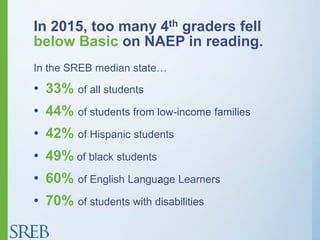
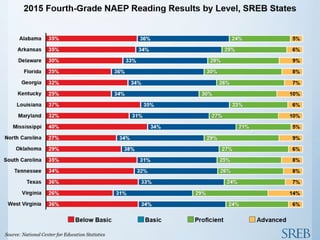
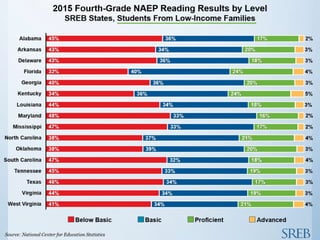
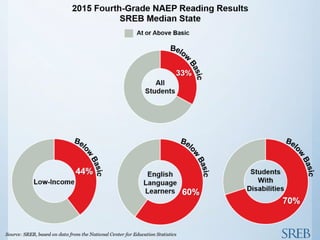
In 2015, too many 4th graders fell
below Basic on NAEP in reading.
In the SREB median state…
• 33% of all students
• 44% of students from low-income families
• 42% of Hispanic students
• 49% of black students
• 60% of English Language Learners
• 70% of students with disabilities
NAEP Definition of “Basic”
“Partial mastery of prerequisite knowledge and
skills that are fundamental for proficient work at
the grade level assessed”
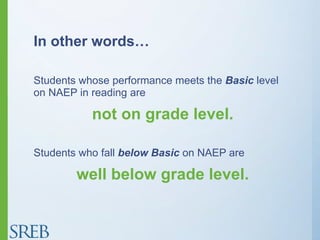
In other words…
Students whose performance meets the Basic level
on NAEP in reading are
not on grade level.
Students who fall below Basic on NAEP are
well below grade level.
Let’s take a look at the data…
Goals for
Education
• Ninety percent of fourth graders will
score at or above the Basic level on
NAEP in reading, math and science.
• Percentages of fourth graders who score
at or above the Proficient level on NAEP
in reading, math and science will
increase regularly — to above national
averages.
Challenge to Lead 2020
How can states help make sure
students become better readers?
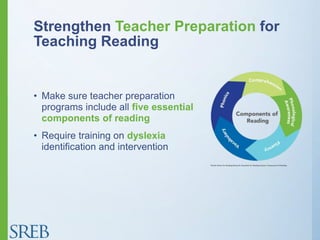
Strengthen Teacher Preparation for
Teaching Reading
• Make sure teacher preparation
programs include all five essential
components of reading
• Require training on dyslexia
identification and intervention
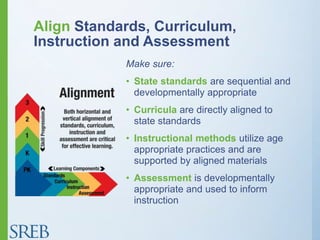
Align Standards, Curriculum,
Instruction and Assessment
Make sure:
• State standards are sequential and
developmentally appropriate
• Curricula are directly aligned to
state standards
• Instructional methods utilize age
appropriate practices and are
supported by aligned materials
• Assessment is developmentally
appropriate and used to inform
instruction
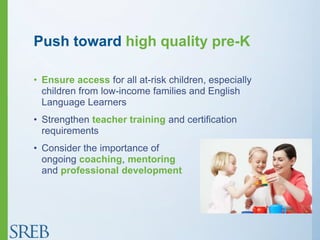
Push toward high quality pre-K
• Ensure access for all at-risk children, especially
children from low-income families and English
Language Learners
• Strengthen teacher training and certification
requirements
• Consider the importance of
ongoing coaching, mentoring
and professional development
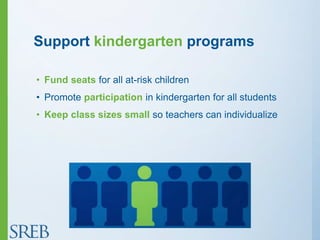
Support kindergarten programs
• Fund seats for all at-risk children
• Promote participation in kindergarten for all students
• Keep class sizes small so teachers can individualize
Identify Early and Intervene
• Incentivize the use of regular
formative assessment and
screenings to identify struggling
readers early
• Make sure schools use proven,
research-based intervention
programs and methods
Develop effective promotion policies
for third-grade students
• Provide students with multiple opportunities and
methods to demonstrate reading proficiency before
leaving 3rd grade
• Make sure students who do not meet a reading
benchmark receive intensive, individualized support
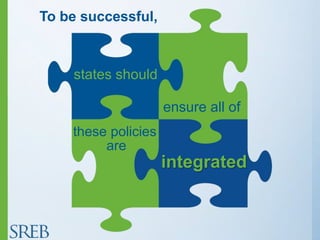
To be successful,
states should
ensure all of
these policies
are
integrated
And states should be ready
to commit for the
long haul.
Significant, lasting changes
take time and
sustained efforts.
Read the full report at
www.sreb.org/ReadToSucceed
For more information, contact:
Samantha Durrance at
Samantha.Durrance@sreb.org
or Joan Lord at Joan.Lord@sreb.org

SREB Report: State Policies to Support Reading Success

  • 1.
    Ready to Read Readyto Succeed State Policies that Support Fourth-Grade Reading Success
  • 2.
    “Research shows thata ‘spray and pray’ approach to helping struggling readers does not work…” — Task Force to Study the Implementation of a Dyslexia Education Program in Maryland. (2015).
  • 3.
    In 2015, toomany 4th graders fell below Basic on NAEP in reading. In the SREB median state… • 33% of all students • 44% of students from low-income families • 42% of Hispanic students • 49% of black students • 60% of English Language Learners • 70% of students with disabilities
  • 4.
    NAEP Definition of“Basic” “Partial mastery of prerequisite knowledge and skills that are fundamental for proficient work at the grade level assessed”
  • 5.
    In other words… Studentswhose performance meets the Basic level on NAEP in reading are not on grade level. Students who fall below Basic on NAEP are well below grade level.
  • 6.
    Let’s take alook at the data…
  • 10.
    Goals for Education • Ninetypercent of fourth graders will score at or above the Basic level on NAEP in reading, math and science. • Percentages of fourth graders who score at or above the Proficient level on NAEP in reading, math and science will increase regularly — to above national averages. Challenge to Lead 2020
  • 12.
    How can stateshelp make sure students become better readers?
  • 13.
    Strengthen Teacher Preparationfor Teaching Reading • Make sure teacher preparation programs include all five essential components of reading • Require training on dyslexia identification and intervention
  • 14.
    Align Standards, Curriculum, Instructionand Assessment Make sure: • State standards are sequential and developmentally appropriate • Curricula are directly aligned to state standards • Instructional methods utilize age appropriate practices and are supported by aligned materials • Assessment is developmentally appropriate and used to inform instruction
  • 15.
    Push toward highquality pre-K • Ensure access for all at-risk children, especially children from low-income families and English Language Learners • Strengthen teacher training and certification requirements • Consider the importance of ongoing coaching, mentoring and professional development
  • 16.
    Support kindergarten programs •Fund seats for all at-risk children • Promote participation in kindergarten for all students • Keep class sizes small so teachers can individualize
  • 17.
    Identify Early andIntervene • Incentivize the use of regular formative assessment and screenings to identify struggling readers early • Make sure schools use proven, research-based intervention programs and methods
  • 18.
    Develop effective promotionpolicies for third-grade students • Provide students with multiple opportunities and methods to demonstrate reading proficiency before leaving 3rd grade • Make sure students who do not meet a reading benchmark receive intensive, individualized support
  • 19.
    To be successful, statesshould ensure all of these policies are integrated
  • 20.
    And states shouldbe ready to commit for the long haul. Significant, lasting changes take time and sustained efforts.
  • 21.
    Read the fullreport at www.sreb.org/ReadToSucceed For more information, contact: Samantha Durrance at Samantha.Durrance@sreb.org or Joan Lord at Joan.Lord@sreb.org