


P.I.E.R.

Proactive Intervention to
P.I.E.R
1

Context
2

Impact

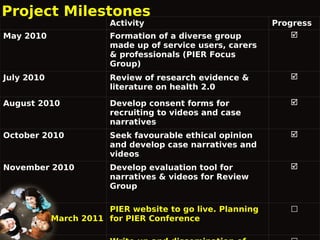
Project Milestones
3
4

Conclusion
Brief Background
• February 2010
– Team plagued with staff shortage,
high rate of pt. admission, mediocre
PSR score, low staff morale, low pt.
satisfaction

• April 2010 - Taking a hard, long
look
– The imperative was to improve quality
& productivity and become a good
value for money service

• How??
1. Context
• Early Intervention In Psychosis
– Social movement focused on
prevention not cure

• Psychosis
– No longer seen as an illness immune to
intervention (Franz et al, 2010)

• Participatory Healthcare
– Diverse views lead to enhanced and
more effective interventions leading to
improved health outcomes (DH, 2004)
What is P.I.E.R?
•Emerging Leader Bursary funding of
£10,000 from SHA & NLC
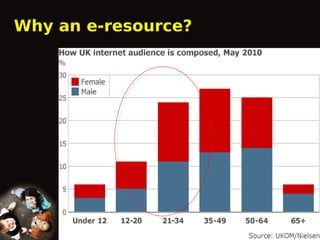
•To produce online health resource (eresource)
•With multi-lingual access to relevant
information on illness and treatment
•Convenient, 24/7 ‘at your fingertips’
access
Why an e-resource?
Key Elements
• Collaborative – for clients – by clients
– with clients
• Interactive – focused on two way
conversations
• Responsive - evolving according to
need
• Built on mutuality - respect of
‘experts by experience’
• Community focused - involving third
sector and education/employment
agencies
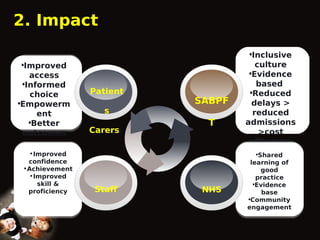
2. Impact
•Improved
access
•Informed
choice
•Empowerm
ent
•Better
outcomes
•Improved
confidence
•Achievement
•Improved
skill &
proficiency

Patient
s
Carers

Staff

SABPF
T

NHS

•Inclusive
culture
•Evidence
based
•Reduced
delays >
reduced
admissions
>cost
efficiency
•Improved
•Shared
reputation
learning of
good
practice
•Evidence
base
•Community
engagement
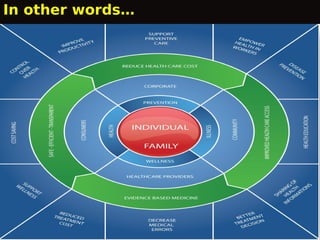
In other words…
Project Milestones
Activity

Progress


May 2010

Formation of a diverse group
made up of service users, carers
& professionals (PIER Focus
Group)

July 2010

Review of research evidence &
literature on health 2.0



August 2010

Develop consent forms for
recruiting to videos and case
narratives



October 2010

Seek favourable ethical opinion
and develop case narratives and
videos



November 2010

Develop evaluation tool for
narratives & videos for Review
Group



PIER website to go live. Planning
March 2011 for PIER Conference

☐
4. Conclusion
“Online mechanisms are under
utilized by both government and
community organizations, and can
provide appropriate and cost
effective ways to engage young
people from diverse backgrounds.”
National Youth Affairs Research
Scheme (2008)
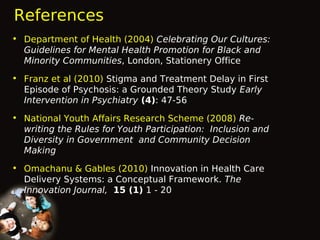
References
• Department of Health (2004) Celebrating Our Cultures:
Guidelines for Mental Health Promotion for Black and
Minority Communities, London, Stationery Office
• Franz et al (2010) Stigma and Treatment Delay in First
Episode of Psychosis: a Grounded Theory Study Early
Intervention in Psychiatry (4): 47-56
• National Youth Affairs Research Scheme (2008) Rewriting the Rules for Youth Participation: Inclusion and
Diversity in Government and Community Decision
Making
• Omachanu & Gables (2010) Innovation in Health Care
Delivery Systems: a Conceptual Framework. The
Innovation Journal, 15 (1) 1 - 20
Thank You
Any Questions?

Proactive Intervention to Enhance Recovery (PIER) Project 2010

  • 1.
  • 2.
  • 3.
    Brief Background • February2010 – Team plagued with staff shortage, high rate of pt. admission, mediocre PSR score, low staff morale, low pt. satisfaction • April 2010 - Taking a hard, long look – The imperative was to improve quality & productivity and become a good value for money service • How??
  • 4.
    1. Context • EarlyIntervention In Psychosis – Social movement focused on prevention not cure • Psychosis – No longer seen as an illness immune to intervention (Franz et al, 2010) • Participatory Healthcare – Diverse views lead to enhanced and more effective interventions leading to improved health outcomes (DH, 2004)
  • 5.
    What is P.I.E.R? •EmergingLeader Bursary funding of £10,000 from SHA & NLC •To produce online health resource (eresource) •With multi-lingual access to relevant information on illness and treatment •Convenient, 24/7 ‘at your fingertips’ access
  • 6.
  • 7.
    Key Elements • Collaborative– for clients – by clients – with clients • Interactive – focused on two way conversations • Responsive - evolving according to need • Built on mutuality - respect of ‘experts by experience’ • Community focused - involving third sector and education/employment agencies
  • 8.
  • 9.
  • 10.
    Project Milestones Activity Progress  May 2010 Formationof a diverse group made up of service users, carers & professionals (PIER Focus Group) July 2010 Review of research evidence & literature on health 2.0  August 2010 Develop consent forms for recruiting to videos and case narratives  October 2010 Seek favourable ethical opinion and develop case narratives and videos  November 2010 Develop evaluation tool for narratives & videos for Review Group  PIER website to go live. Planning March 2011 for PIER Conference ☐
  • 13.
    4. Conclusion “Online mechanismsare under utilized by both government and community organizations, and can provide appropriate and cost effective ways to engage young people from diverse backgrounds.” National Youth Affairs Research Scheme (2008)
  • 14.
    References • Department ofHealth (2004) Celebrating Our Cultures: Guidelines for Mental Health Promotion for Black and Minority Communities, London, Stationery Office • Franz et al (2010) Stigma and Treatment Delay in First Episode of Psychosis: a Grounded Theory Study Early Intervention in Psychiatry (4): 47-56 • National Youth Affairs Research Scheme (2008) Rewriting the Rules for Youth Participation: Inclusion and Diversity in Government and Community Decision Making • Omachanu & Gables (2010) Innovation in Health Care Delivery Systems: a Conceptual Framework. The Innovation Journal, 15 (1) 1 - 20
  • 15.