Tourism Planning and policy- 6th sem
Tourism Carrying Capacity and EIA
By- Saloni Bansal
Carrying Capacity
Analysis Is a radical approach gaining currency over
the last two decades or so in tourism and
recreation planning with a view to methodically work out the
upper limits of development and visitor use and optimum
utilization of tourism resources.
What is Tourism
Carrying Capacity?
Mathieson and wall (1982) define carrying capacity as “ the maximum
number of people who can use a site without an unacceptable alteration in
the physical environment and without an unacceptable decline in the quality
of experience gained by visitors.”
Tourism Carrying Capacity is defined by the WTO as
“the maximum number of people that may visit a tourist
destination at the same time, without causing destruction
of the physical, economic, socio-cultural environment
and an unacceptable decrease in the quality of visitor’s
satisfaction.”
According to the WTO
The carrying Capacity is fundamental for
environmental protection and sustainability.
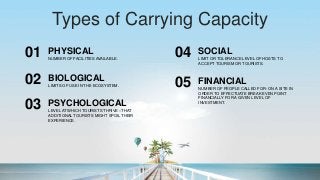
Types of Carrying Capacity
NUMBER OF FACILITIES AVAILABLE.
PHYSICAL01
LIMITS OF USE IN THE ECOSYSTEM.
BIOLOGICAL02
LEVEL AT WHICH TOURISTS THRIVE –THAT
ADDITIONAL TOURISTS MIGHT SPOIL THEIR
EXPERIENCE.
PSYCHOLOGICAL03
LIMIT OR TOLERANCE LEVEL OF HOSTS TO
ACCEPT TOURISM OR TOURISTS.
SOCIAL04
NUMBER OF PEOPLE CALLED FOR- ON A SITE IN
ORDER TO EFFECTUATE BREAK EVEN POINT
FINANCIALLY FOR A GIVEN LEVEL OF
INVESTMENT.
FINANCIAL05
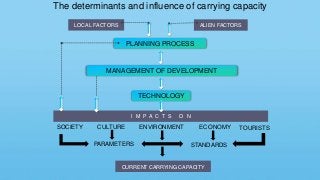
The determinants and influence of carrying capacity
LOCAL FACTORS ALIEN FACTORS
PLANNING PROCESS
MANAGEMENT OF DEVELOPMENT
TECHNOLOGY
I M P A C T S O N
ECONOMYSOCIETY ENVIRONMENT TOURISTSCULTURE
PARAMETERS STANDARDS
CURRENT CARRYING CAPACITY
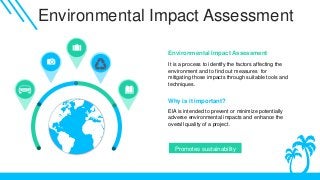
Environmental Impact Assessment
It is a process to identify the factors affecting the
environment and to find out measures for
mitigating those impacts through suitable tools and
techniques.
Environmental Impact Assessment
.
Why is it important?
Promotes sustainability
EIA is intended to prevent or minimize potentially
adverse environmental impacts and enhance the
overall quality of a project.
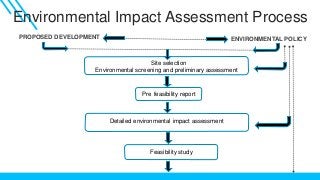
Environmental Impact Assessment Process
Site Selection Content Here
Easy to change colors,
photos and Text.
Content Here
Easy to change colors,
photos and Text.
Content Here
PROPOSED DEVELOPMENT ENVIRONMENTAL POLICY
Site selection
Environmental screening and preliminary assessment
Pre feasibility report
Detailed environmental impact assessment
Feasibility study
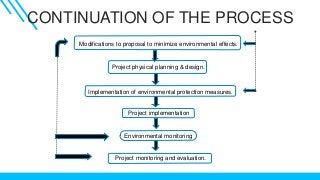
CONTINUATION OF THE PROCESS
Modifications to proposal to minimize environmental effects.
Project physical planning & design.
Implementation of environmental protection measures.
Project implementation
Environmental monitoring
Project monitoring and evaluation.
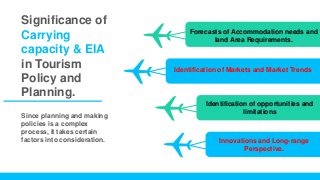
Forecasts of Accommodation needs and
land Area Requirements.
Significance of
Carrying
capacity & EIA
in Tourism
Policy and
Planning.
Since planning and making
policies is a complex
process, it takes certain
factors into consideration.
Identification of Markets and Market Trends
Identification of opportunities and
limitations
Innovations and Long-range
Perspective.
Thank You for
your attention.

Tourism carrying Capacity and EIA

  • 1.
    Tourism Planning andpolicy- 6th sem Tourism Carrying Capacity and EIA By- Saloni Bansal
  • 2.
    Carrying Capacity Analysis Isa radical approach gaining currency over the last two decades or so in tourism and recreation planning with a view to methodically work out the upper limits of development and visitor use and optimum utilization of tourism resources. What is Tourism Carrying Capacity?
  • 3.
    Mathieson and wall(1982) define carrying capacity as “ the maximum number of people who can use a site without an unacceptable alteration in the physical environment and without an unacceptable decline in the quality of experience gained by visitors.” Tourism Carrying Capacity is defined by the WTO as “the maximum number of people that may visit a tourist destination at the same time, without causing destruction of the physical, economic, socio-cultural environment and an unacceptable decrease in the quality of visitor’s satisfaction.”
  • 4.
    According to theWTO The carrying Capacity is fundamental for environmental protection and sustainability.
  • 5.
    Types of CarryingCapacity NUMBER OF FACILITIES AVAILABLE. PHYSICAL01 LIMITS OF USE IN THE ECOSYSTEM. BIOLOGICAL02 LEVEL AT WHICH TOURISTS THRIVE –THAT ADDITIONAL TOURISTS MIGHT SPOIL THEIR EXPERIENCE. PSYCHOLOGICAL03 LIMIT OR TOLERANCE LEVEL OF HOSTS TO ACCEPT TOURISM OR TOURISTS. SOCIAL04 NUMBER OF PEOPLE CALLED FOR- ON A SITE IN ORDER TO EFFECTUATE BREAK EVEN POINT FINANCIALLY FOR A GIVEN LEVEL OF INVESTMENT. FINANCIAL05
  • 6.
    The determinants andinfluence of carrying capacity LOCAL FACTORS ALIEN FACTORS PLANNING PROCESS MANAGEMENT OF DEVELOPMENT TECHNOLOGY I M P A C T S O N ECONOMYSOCIETY ENVIRONMENT TOURISTSCULTURE PARAMETERS STANDARDS CURRENT CARRYING CAPACITY
  • 7.
    Environmental Impact Assessment Itis a process to identify the factors affecting the environment and to find out measures for mitigating those impacts through suitable tools and techniques. Environmental Impact Assessment . Why is it important? Promotes sustainability EIA is intended to prevent or minimize potentially adverse environmental impacts and enhance the overall quality of a project.
  • 8.
    Environmental Impact AssessmentProcess Site Selection Content Here Easy to change colors, photos and Text. Content Here Easy to change colors, photos and Text. Content Here PROPOSED DEVELOPMENT ENVIRONMENTAL POLICY Site selection Environmental screening and preliminary assessment Pre feasibility report Detailed environmental impact assessment Feasibility study
  • 9.
    CONTINUATION OF THEPROCESS Modifications to proposal to minimize environmental effects. Project physical planning & design. Implementation of environmental protection measures. Project implementation Environmental monitoring Project monitoring and evaluation.
  • 10.
    Forecasts of Accommodationneeds and land Area Requirements. Significance of Carrying capacity & EIA in Tourism Policy and Planning. Since planning and making policies is a complex process, it takes certain factors into consideration. Identification of Markets and Market Trends Identification of opportunities and limitations Innovations and Long-range Perspective.
  • 11.