Blockchain:
Underlying security layer
Trust machine – shared and
trusted ledger that can be
inspected. No single user
can control it.
Focus on cooperation
and synergy. Create
value together.
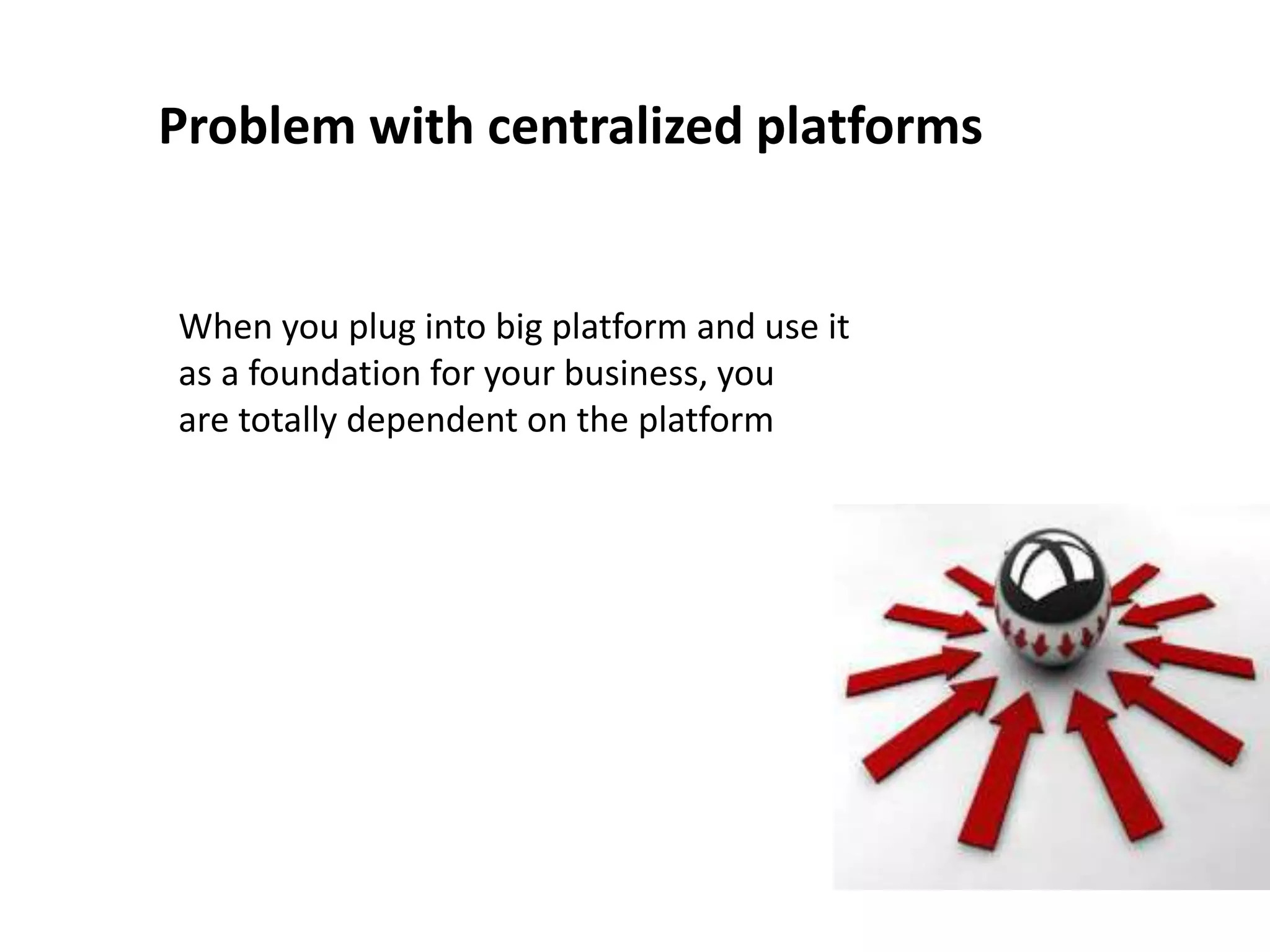
Problem with centralized platforms
When you plug into big platform and use it
as a foundation for your business, you
are totally dependent on the platform
New paradigm for data ownership
People and businesses will take back control
of their data, they will own the content created
by them and will get return on it.
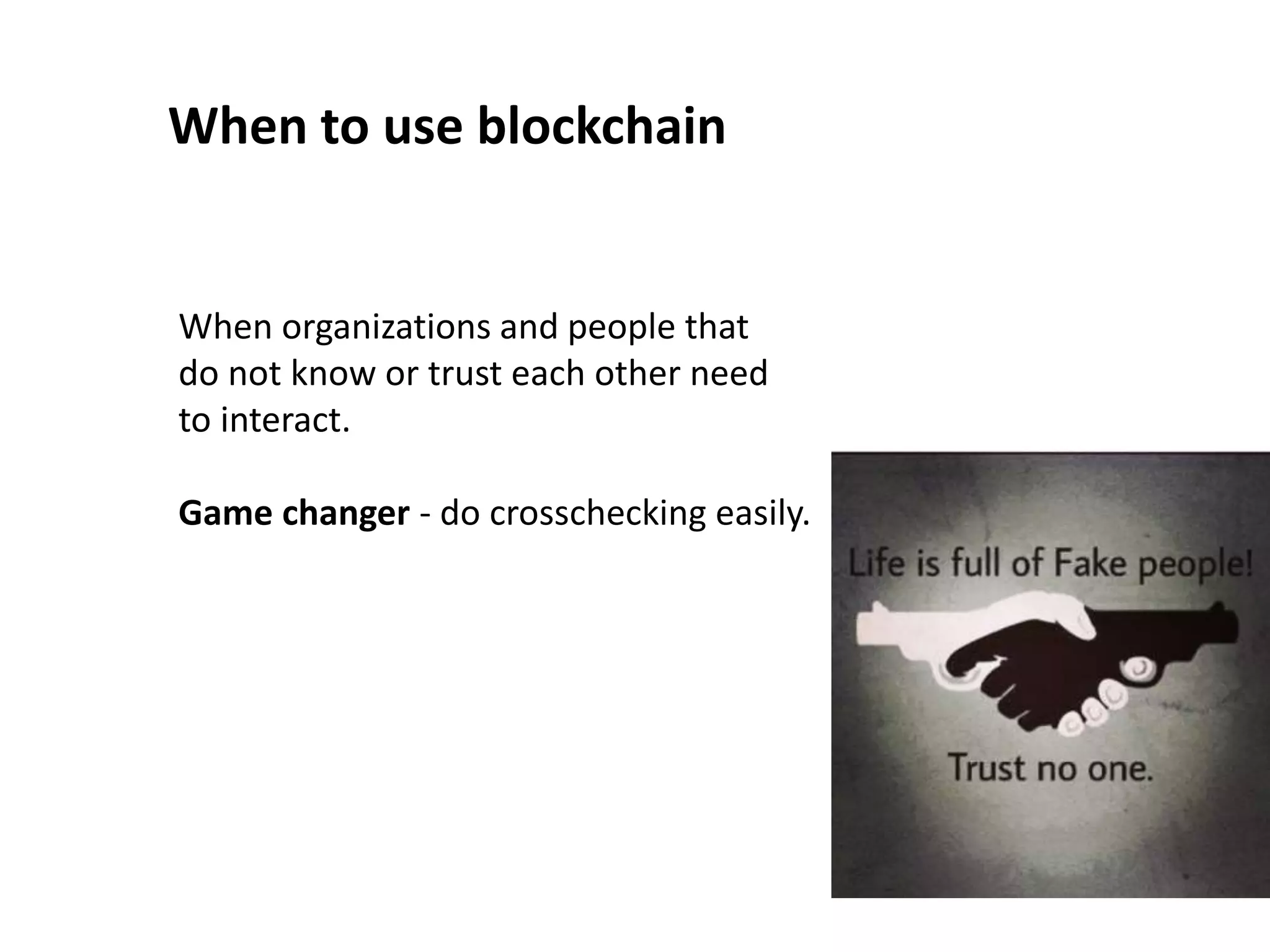
When to use blockchain
When organizations and people that
do not know or trust each other need
to interact.
Game changer - do crosschecking easily.
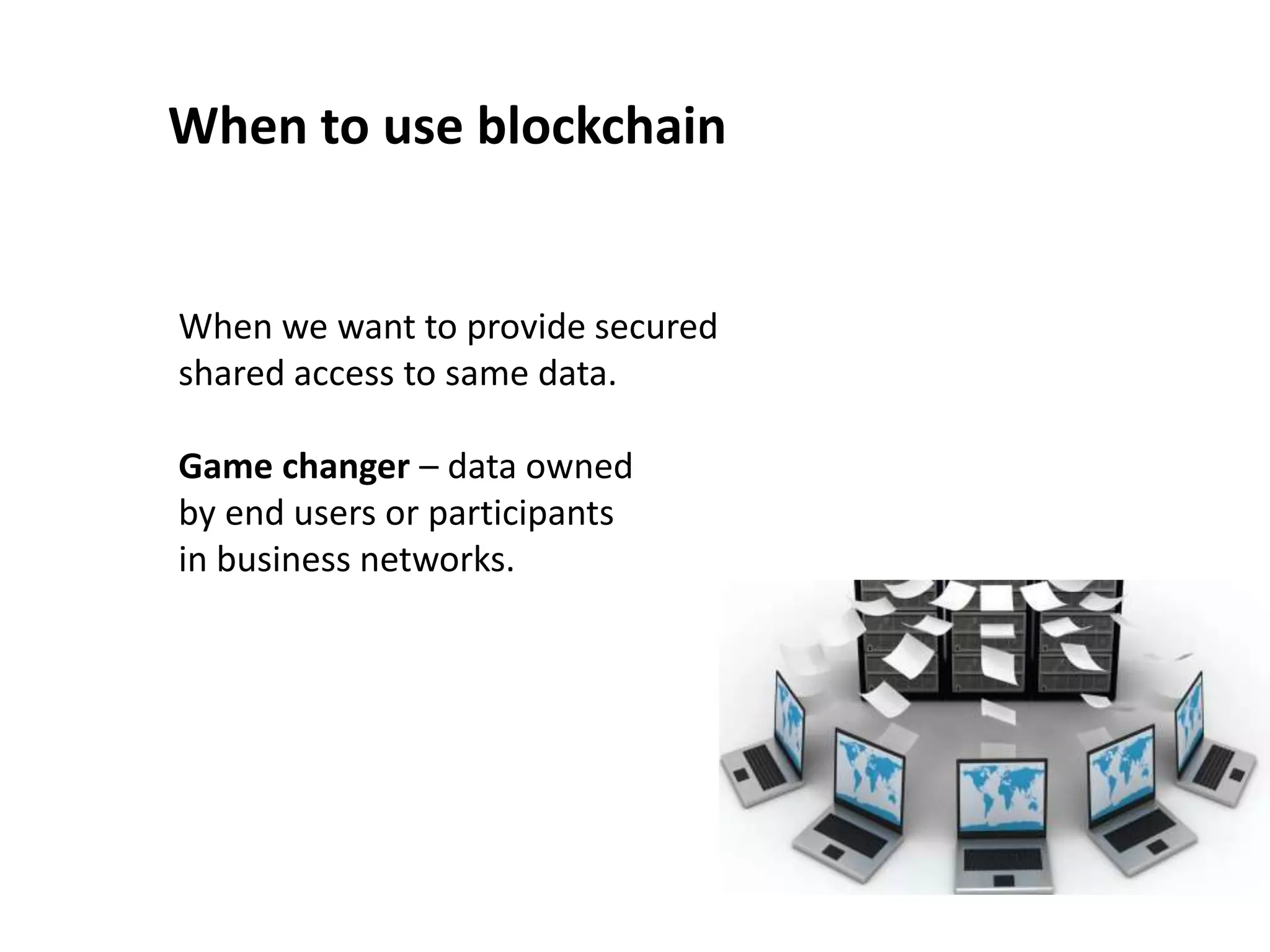
When to use blockchain
When we want to provide secured
shared access to same data.
Game changer – data owned
by end users or participants
in business networks.
When to use blockchain
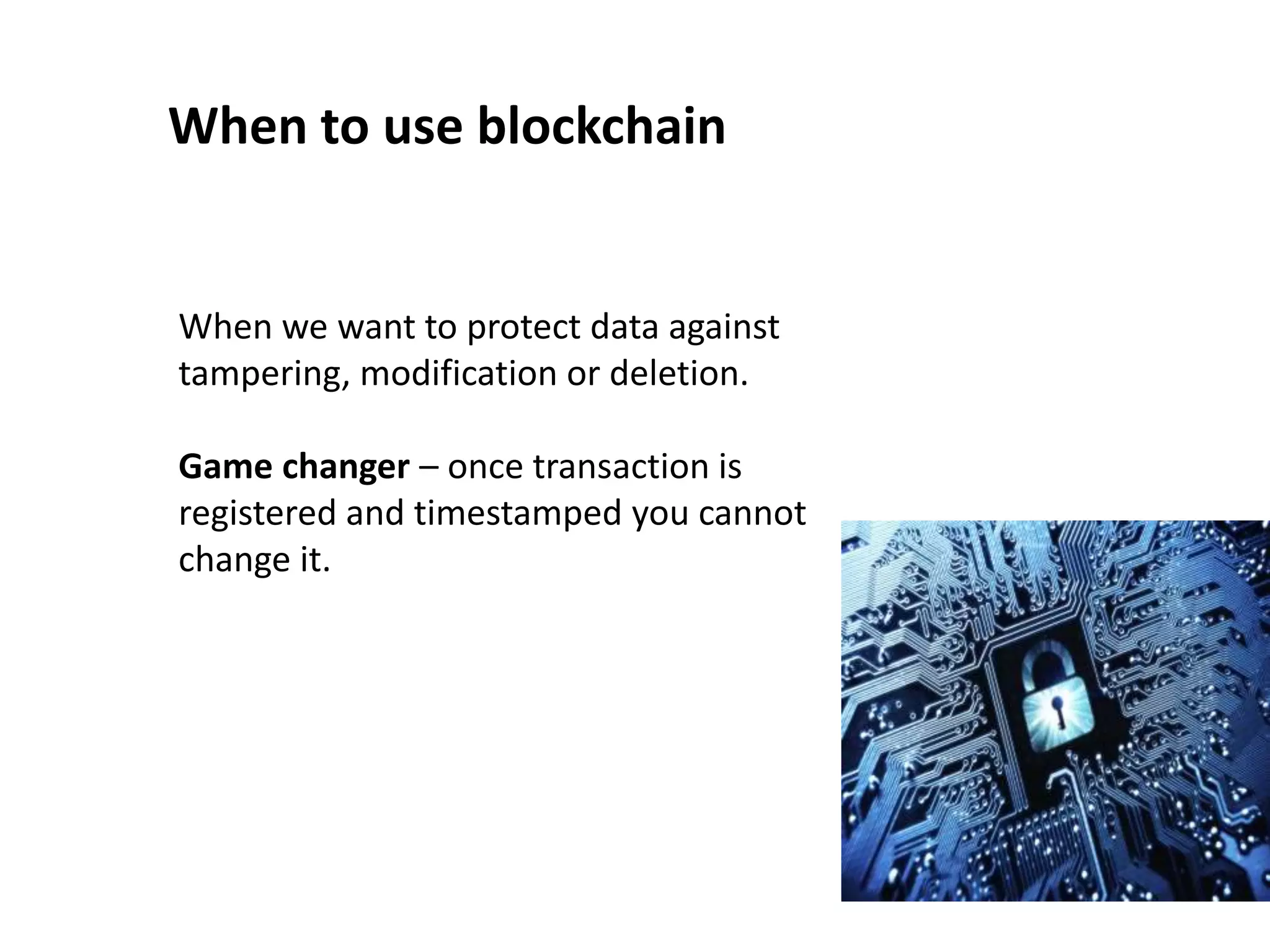
When we want to protect data against
tampering, modification or deletion.
Game changer – once transaction is
registered and timestamped you cannot
change it.
When to use blockchain
When you want to comply with new
regulations and laws (especially in the
field of data protection).
Game changer – you can make
transactions anonymously and
privately.
When to use blockchain
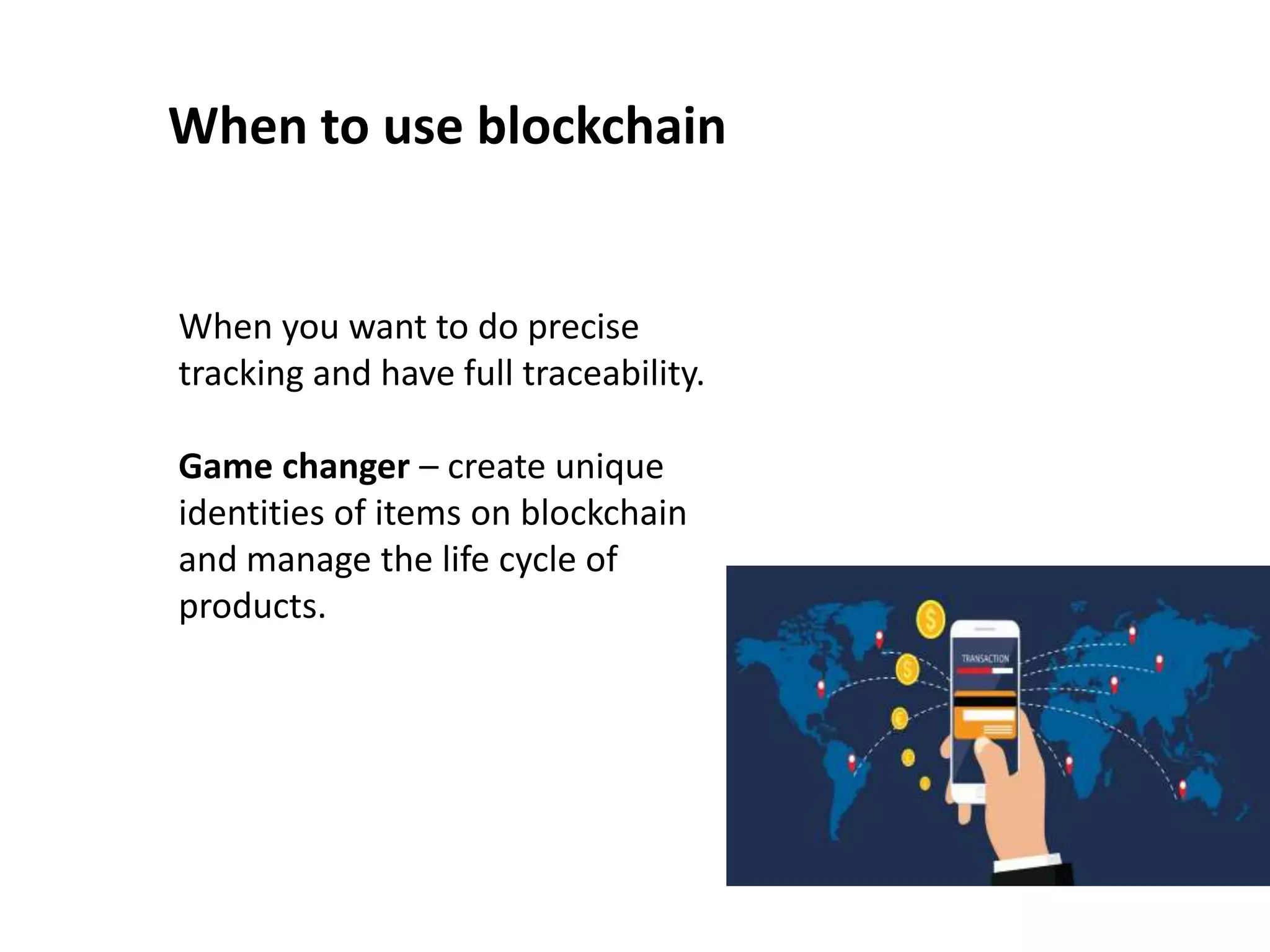
When you want to do precise
tracking and have full traceability.
Game changer – create unique
identities of items on blockchain
and manage the life cycle of
products.
How to use blockchain
Do no reproduce existing processes
on blockchain.
Re-think, re-ingeneer and re-build.
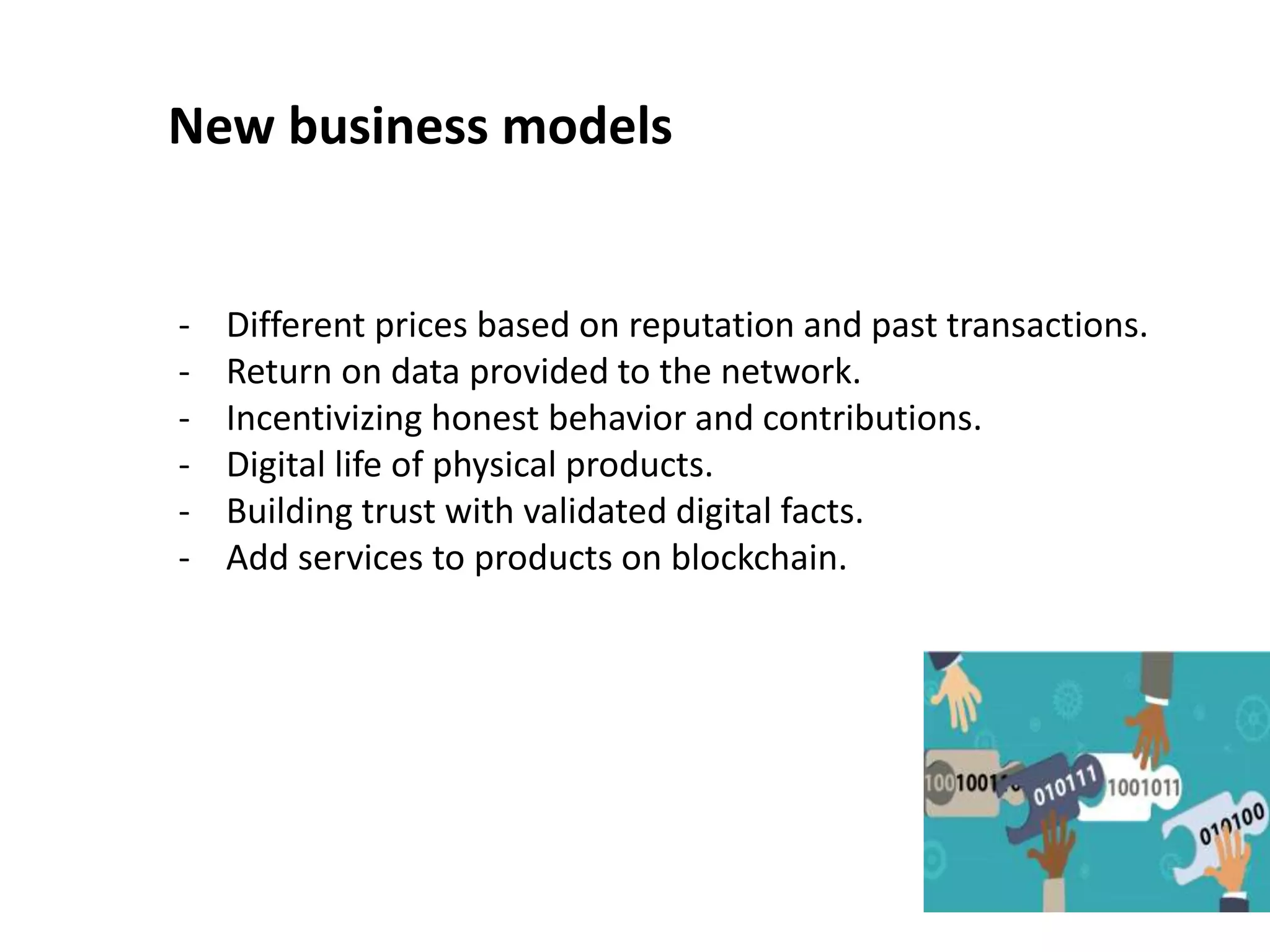
New business models
- Different prices based on reputation and past transactions.
- Return on data provided to the network.
- Incentivizing honest behavior and contributions.
- Digital life of physical products.
- Building trust with validated digital facts.
- Add services to products on blockchain.
Blockchain superpower:
Get people to do stuff by
rewarding with tokens
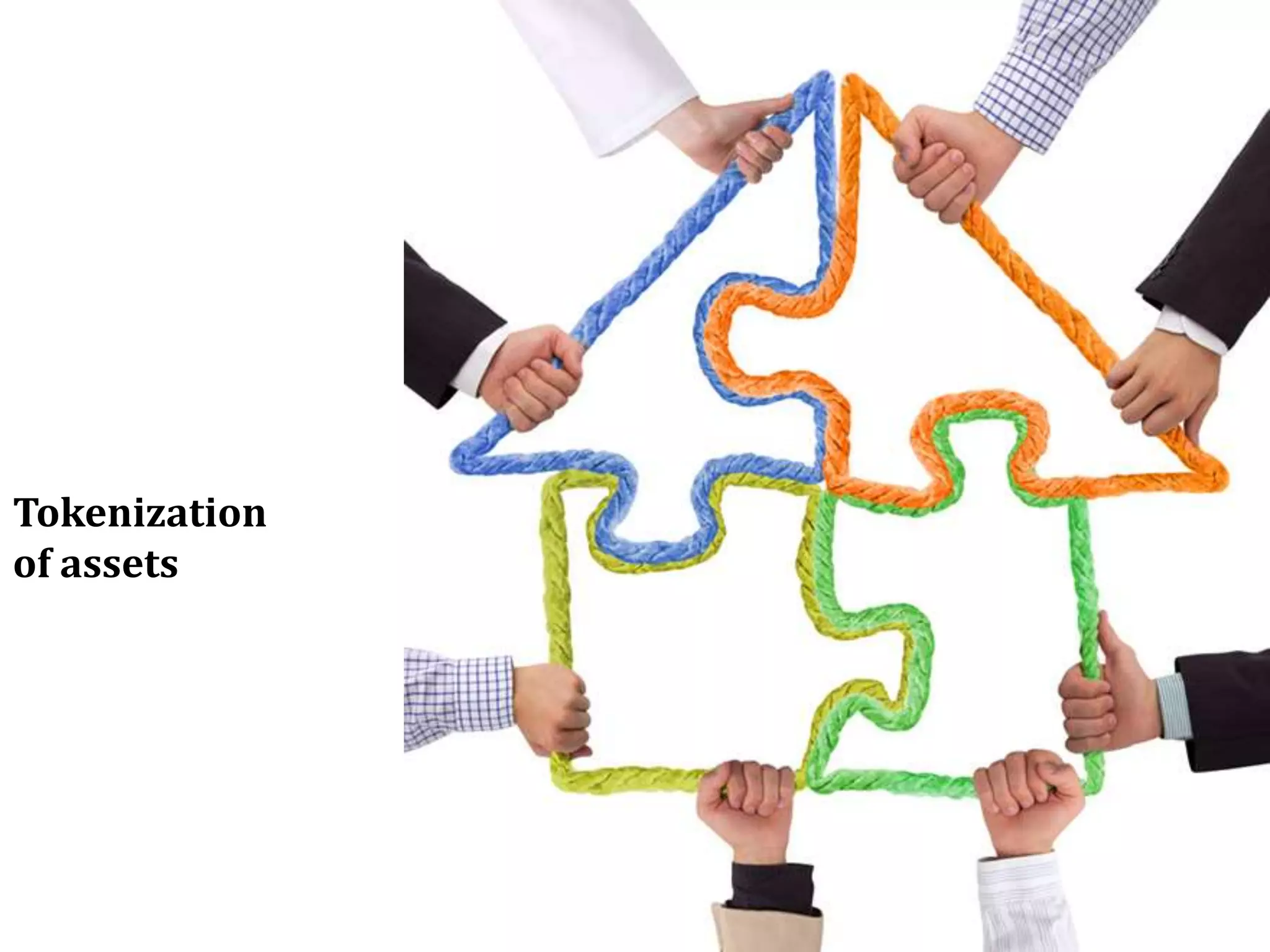
Tokenization
of assets
Self-sovereign:
Own your data and identity.
Escape centralized platforms
Pooling resources
+
Co-ownership of networks
=
New decentralized communities
Build trust with
digital proofs
Tokenization
of assets
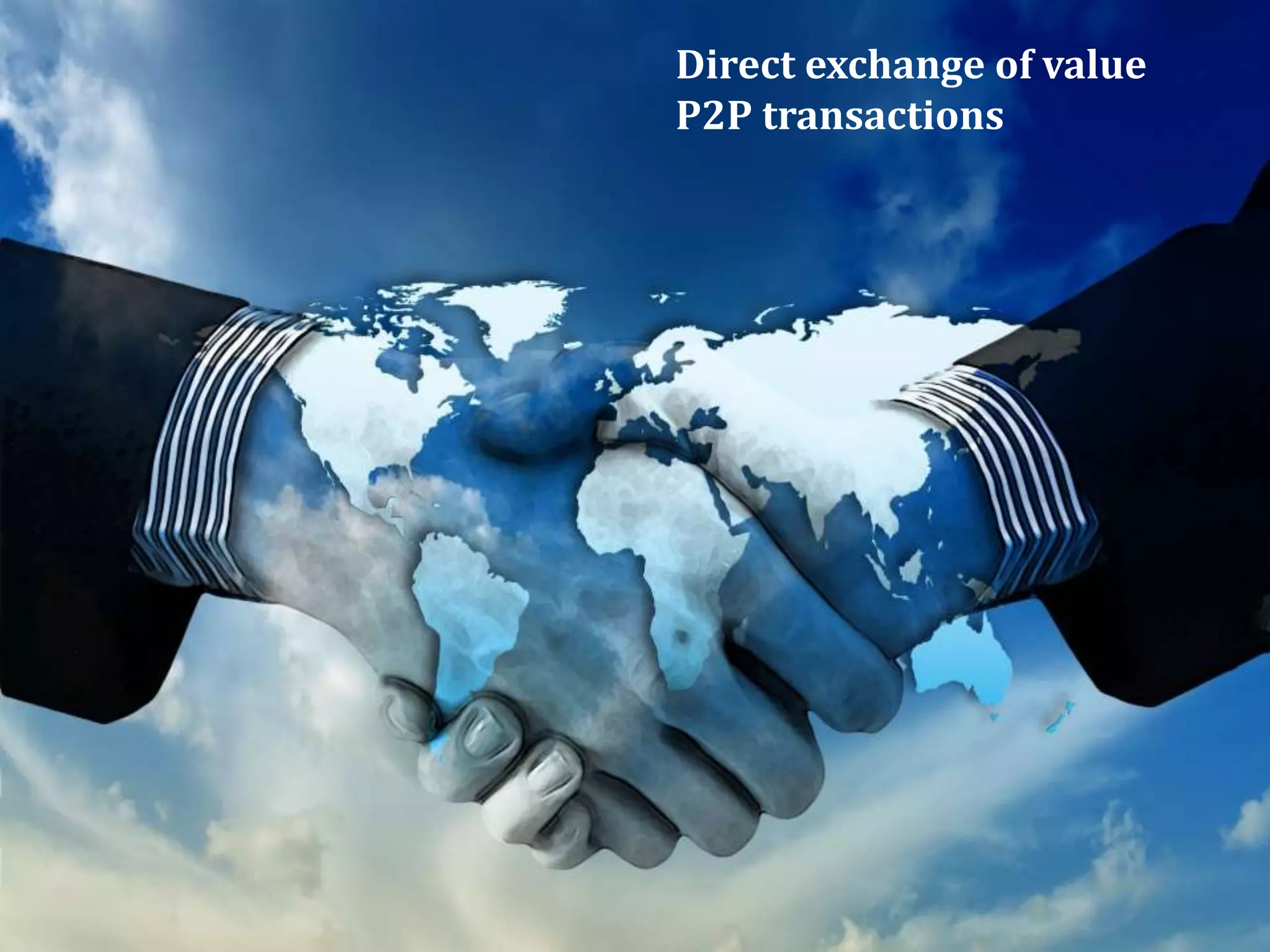
Direct exchange of value
P2P transactions
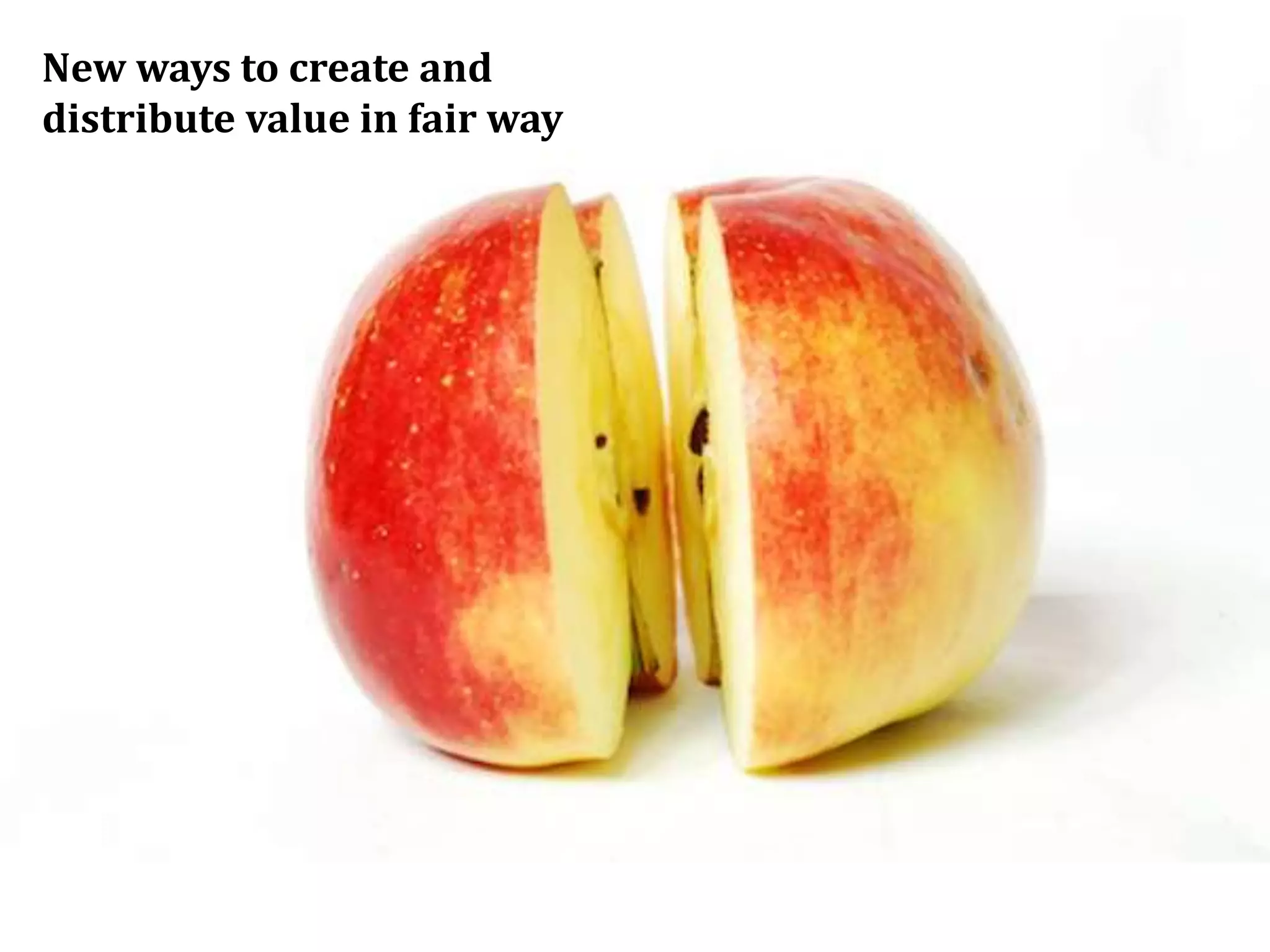
New ways to create and
distribute value in fair way
Aligned incentives.
Reward fair behavior
and contributions
Game of monopolies –
which products would
Alexa recommend you to
buy? Amazon’s perhaps?
Data synchronization
at global level.
New shared
infrastructure.
• Create secure environment for executing
transactions.
• Bring transparency to business networks and
systems.
• Automate operations and decrease transaction costs.
What can you do now?
Where can I grant more control and data ownership?
Is application for decentralised identity management
possible?
What operations can be automated with the help of Smart
Contracts?
Where is high level of security and protection required?
Using Blockchain
Where is there a greater demand for transparency,
traceability and accountability?
Where can I look for a direct interaction with clients and
partners? Is it possible for me to exchange value directly?
With which of my partners/contractors can I start working
directly on a single network
Is it possible to apply a Token economy to my operations?
What can the tokens be used for?
Using Blockchain
Thank you!
enev@recheck.io

Blockchain in practice 21 Nov Update

  • 2.
  • 3.
    Trust machine –shared and trusted ledger that can be inspected. No single user can control it.
  • 4.
    Focus on cooperation andsynergy. Create value together.
  • 6.
    Problem with centralizedplatforms When you plug into big platform and use it as a foundation for your business, you are totally dependent on the platform
  • 7.
    New paradigm fordata ownership People and businesses will take back control of their data, they will own the content created by them and will get return on it.
  • 8.
    When to useblockchain When organizations and people that do not know or trust each other need to interact. Game changer - do crosschecking easily.
  • 9.
    When to useblockchain When we want to provide secured shared access to same data. Game changer – data owned by end users or participants in business networks.
  • 10.
    When to useblockchain When we want to protect data against tampering, modification or deletion. Game changer – once transaction is registered and timestamped you cannot change it.
  • 11.
    When to useblockchain When you want to comply with new regulations and laws (especially in the field of data protection). Game changer – you can make transactions anonymously and privately.
  • 12.
    When to useblockchain When you want to do precise tracking and have full traceability. Game changer – create unique identities of items on blockchain and manage the life cycle of products.
  • 13.
    How to useblockchain Do no reproduce existing processes on blockchain. Re-think, re-ingeneer and re-build.
  • 14.
    New business models -Different prices based on reputation and past transactions. - Return on data provided to the network. - Incentivizing honest behavior and contributions. - Digital life of physical products. - Building trust with validated digital facts. - Add services to products on blockchain.
  • 15.
    Blockchain superpower: Get peopleto do stuff by rewarding with tokens
  • 16.
    Tokenization of assets Self-sovereign: Own yourdata and identity. Escape centralized platforms
  • 17.
    Pooling resources + Co-ownership ofnetworks = New decentralized communities
  • 18.
  • 19.
  • 20.
    Direct exchange ofvalue P2P transactions
  • 21.
    New ways tocreate and distribute value in fair way
  • 22.
    Aligned incentives. Reward fairbehavior and contributions
  • 23.
    Game of monopolies– which products would Alexa recommend you to buy? Amazon’s perhaps?
  • 24.
    Data synchronization at globallevel. New shared infrastructure.
  • 25.
    • Create secureenvironment for executing transactions. • Bring transparency to business networks and systems. • Automate operations and decrease transaction costs. What can you do now?
  • 26.
    Where can Igrant more control and data ownership? Is application for decentralised identity management possible? What operations can be automated with the help of Smart Contracts? Where is high level of security and protection required? Using Blockchain
  • 27.
    Where is therea greater demand for transparency, traceability and accountability? Where can I look for a direct interaction with clients and partners? Is it possible for me to exchange value directly? With which of my partners/contractors can I start working directly on a single network Is it possible to apply a Token economy to my operations? What can the tokens be used for? Using Blockchain
  • 31.