CROWDFUNDING MEDICAL CARE:
IDENTIFYING ETHICAL IMPLICATIONS
DR.VALORIE CROOKS
PROFESSOR & CANADA RESEARCH CHAIR, SIMON FRASER UNIVERSITY (BC, CANADA)
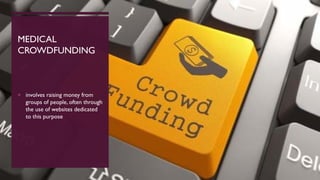
MEDICAL
CROWDFUNDING
 involves raising money from
groups of people, often through
the use of websites dedicated
to this purpose
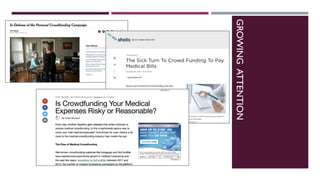
GROWINGATTENTION
WHAT DO THE
NUMBERS TELL US?
 GoFundMe reported that in
2014 US$150 million was
raised for medical
crowdfunding
 Anticipated 25% growth in the
number of medical
crowdfunding campaigns and
the funds they raise in the
coming years
ANALYTIC
OVERVIEW
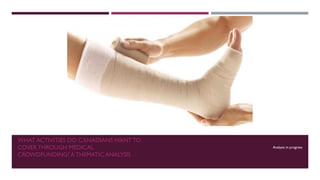
WHAT ACTIVITIES DO CANADIANSWANT TO
COVER THROUGH MEDICAL
CROWDFUNDING? A THEMATIC ANALYSIS
Analysis in progress
SEEKING CROWDFUNDS FOR
“The health system in Canada does not recognize chronic
Lyme disease as an illness and has no regulated treatment
to cure it. Even though I was infected by the disease on this
soil, I have to travel internationally to receive treatment.As a
result, I am asking for your help and support to travel to a
specialized Lyme disease and Cancer clinic in Germany.”
 Travel & Movement
 Daily expenses (parking, gas)
 Relocation to be closer to hospital or caregiver
 Medical tourism
 Shifting from hospital to home, or home to hospital
SEEKING CROWDFUNDS FOR
 MedicalTreatment & Care
 Actual costs of hands on medical care
 Experimental treatments
 Complementary & alternative care
 Pharmaceuticals
 Going elsewhere for a second opinion
or better quality care
“We are working with a detox specialist and Herbologist to try and helpTammy.
We have hope we can extend her life for just a little longer so she can enjoy
some time with her son and family.We need funds to help with the cost of the
natural medicine, and we would like to hire a nurse to come and help the family
giveTammy the best possible care.”
SEEKING CROWDFUNDS FOR
“All this to say, Rhys is a miracle and he has changed our
families lives for the better. However, medical appointments
and cost of living in a different city, has put a severe strain on
all of us financially. Paying for our empty home all the while
living in a hospital room for 6 months nearly destroyed us.”
 Supplement Income
 Having to stop work for treatment
 Reaching the end of employment insurance benefits
 Caregivers needing to stop work
 Having to maintain housing in two locations
 Having to offset the financial burden to the family unit
 Avoiding medical bankruptcy
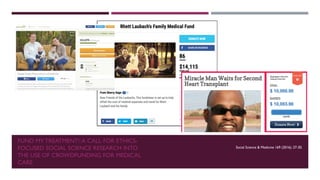
FUND MYTREATMENT!:A CALL FOR ETHICS-
FOCUSED SOCIAL SCIENCE RESEARCH INTO
THE USE OF CROWDFUNDING FOR MEDICAL
CARE
Social Science & Medicine 169 (2016): 27-30.
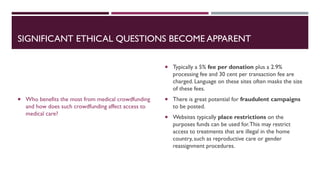
SIGNIFICANT ETHICAL QUESTIONS BECOME APPARENT
 Who benefits the most from medical crowdfunding
and how does such crowdfunding affect access to
medical care?
 Typically a 5% fee per donation plus a 2.9%
processing fee and 30 cent per transaction fee are
charged. Language on these sites often masks the size
of these fees.
 There is great potential for fraudulent campaigns
to be posted.
 Websites typically place restrictions on the
purposes funds can be used for.This may restrict
access to treatments that are illegal in the home
country, such as reproductive care or gender
reassignment procedures.
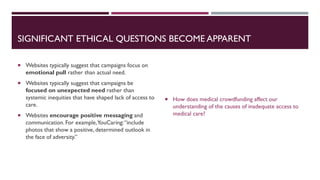
SIGNIFICANT ETHICAL QUESTIONS BECOME APPARENT
 Websites typically suggest that campaigns focus on
emotional pull rather than actual need.
 Websites typically suggest that campaigns be
focused on unexpected need rather than
systemic inequities that have shaped lack of access to
care.
 Websites encourage positive messaging and
communication. For example,YouCaring:“include
photos that show a positive, determined outlook in
the face of adversity.”
 How does medical crowdfunding affect our
understanding of the causes of inadequate access to
medical care?
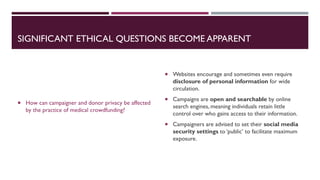
SIGNIFICANT ETHICAL QUESTIONS BECOME APPARENT
 How can campaigner and donor privacy be affected
by the practice of medical crowdfunding?
 Websites encourage and sometimes even require
disclosure of personal information for wide
circulation.
 Campaigns are open and searchable by online
search engines, meaning individuals retain little
control over who gains access to their information.
 Campaigners are advised to set their social media
security settings to ‘public’ to facilitate maximum
exposure.
APPEALING TOTHE CROWD: ETHICAL
JUSTIFICATIONS IN CANADIAN MEDICAL
CROWDFUNDING CAMPAIGNS
Journal of Medical Ethics, in press, doi:10.1136/medethics- 2016-103933
ETHICAL JUSTIFICATIONS
 Personal connections between the recipient and the
donor
 Campaigns typically appeal to known individuals
 ”I’m guessing that if you’re reading this, you know and love
Steve.”
 Personal relationships are framed through an
obligation to donate
 “I truly believe that when we have someone we care about
in need, we should gather around them as one big family
and help as much as possible.”
ETHICAL JUSTIFICATIONS
 Detailed, and sometimes even graphic, descriptions
of illness or injury
 Focus on how need for support is impacting
others
 Explanations of how need can be addressed
through financial assistance
 The recipients’ need for help and the good that can
be done through donation
ETHICAL JUSTIFICATIONS
 Giving back to recipients who have previously helped
others
 Emphasize the selfless nature of campaign recipients
 “compassionate, loving, giving and one of the most caring
women on this planet.”
 ”literally one of those people who would give you the shirt
off his back.”
 Articulate previous ‘good deeds’ performed by the
recipient
 A “person who was always there for others when needed,
and now its come to a time in his life where he needs us.”
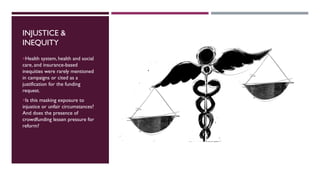
INJUSTICE &
INEQUITY
Health system, health and social
care, and insurance-based
inequities were rarely mentioned
in campaigns or cited as a
justification for the funding
request.
Is this masking exposure to
injustice or unfair circumstances?
And does the presence of
crowdfunding lessen pressure for
reform?
OUR NEXT STEPS
ACKNOWLEDGEMENTS
 Collaborators: Drs. Jeremy Snyder and Peter Chow-White
 Research Assistants:Annalise Mathers and AnikaVassell
 Funding: Canadian Institutes of Health Research
Valorie Crooks holds the Canada Research Chair in Health Service Geographies and a Scholar Award from the Michael Smith Foundation for Health Research

Valorie Crooks, Crowdfunding Medical Care: Identifying Ethical Implications

  • 1.
    CROWDFUNDING MEDICAL CARE: IDENTIFYINGETHICAL IMPLICATIONS DR.VALORIE CROOKS PROFESSOR & CANADA RESEARCH CHAIR, SIMON FRASER UNIVERSITY (BC, CANADA)
  • 2.
    MEDICAL CROWDFUNDING  involves raisingmoney from groups of people, often through the use of websites dedicated to this purpose
  • 3.
  • 4.
    WHAT DO THE NUMBERSTELL US?  GoFundMe reported that in 2014 US$150 million was raised for medical crowdfunding  Anticipated 25% growth in the number of medical crowdfunding campaigns and the funds they raise in the coming years
  • 5.
  • 6.
    WHAT ACTIVITIES DOCANADIANSWANT TO COVER THROUGH MEDICAL CROWDFUNDING? A THEMATIC ANALYSIS Analysis in progress
  • 7.
    SEEKING CROWDFUNDS FOR “Thehealth system in Canada does not recognize chronic Lyme disease as an illness and has no regulated treatment to cure it. Even though I was infected by the disease on this soil, I have to travel internationally to receive treatment.As a result, I am asking for your help and support to travel to a specialized Lyme disease and Cancer clinic in Germany.”  Travel & Movement  Daily expenses (parking, gas)  Relocation to be closer to hospital or caregiver  Medical tourism  Shifting from hospital to home, or home to hospital
  • 8.
    SEEKING CROWDFUNDS FOR MedicalTreatment & Care  Actual costs of hands on medical care  Experimental treatments  Complementary & alternative care  Pharmaceuticals  Going elsewhere for a second opinion or better quality care “We are working with a detox specialist and Herbologist to try and helpTammy. We have hope we can extend her life for just a little longer so she can enjoy some time with her son and family.We need funds to help with the cost of the natural medicine, and we would like to hire a nurse to come and help the family giveTammy the best possible care.”
  • 9.
    SEEKING CROWDFUNDS FOR “Allthis to say, Rhys is a miracle and he has changed our families lives for the better. However, medical appointments and cost of living in a different city, has put a severe strain on all of us financially. Paying for our empty home all the while living in a hospital room for 6 months nearly destroyed us.”  Supplement Income  Having to stop work for treatment  Reaching the end of employment insurance benefits  Caregivers needing to stop work  Having to maintain housing in two locations  Having to offset the financial burden to the family unit  Avoiding medical bankruptcy
  • 10.
    FUND MYTREATMENT!:A CALLFOR ETHICS- FOCUSED SOCIAL SCIENCE RESEARCH INTO THE USE OF CROWDFUNDING FOR MEDICAL CARE Social Science & Medicine 169 (2016): 27-30.
  • 11.
    SIGNIFICANT ETHICAL QUESTIONSBECOME APPARENT  Who benefits the most from medical crowdfunding and how does such crowdfunding affect access to medical care?  Typically a 5% fee per donation plus a 2.9% processing fee and 30 cent per transaction fee are charged. Language on these sites often masks the size of these fees.  There is great potential for fraudulent campaigns to be posted.  Websites typically place restrictions on the purposes funds can be used for.This may restrict access to treatments that are illegal in the home country, such as reproductive care or gender reassignment procedures.
  • 12.
    SIGNIFICANT ETHICAL QUESTIONSBECOME APPARENT  Websites typically suggest that campaigns focus on emotional pull rather than actual need.  Websites typically suggest that campaigns be focused on unexpected need rather than systemic inequities that have shaped lack of access to care.  Websites encourage positive messaging and communication. For example,YouCaring:“include photos that show a positive, determined outlook in the face of adversity.”  How does medical crowdfunding affect our understanding of the causes of inadequate access to medical care?
  • 13.
    SIGNIFICANT ETHICAL QUESTIONSBECOME APPARENT  How can campaigner and donor privacy be affected by the practice of medical crowdfunding?  Websites encourage and sometimes even require disclosure of personal information for wide circulation.  Campaigns are open and searchable by online search engines, meaning individuals retain little control over who gains access to their information.  Campaigners are advised to set their social media security settings to ‘public’ to facilitate maximum exposure.
  • 14.
    APPEALING TOTHE CROWD:ETHICAL JUSTIFICATIONS IN CANADIAN MEDICAL CROWDFUNDING CAMPAIGNS Journal of Medical Ethics, in press, doi:10.1136/medethics- 2016-103933
  • 15.
    ETHICAL JUSTIFICATIONS  Personalconnections between the recipient and the donor  Campaigns typically appeal to known individuals  ”I’m guessing that if you’re reading this, you know and love Steve.”  Personal relationships are framed through an obligation to donate  “I truly believe that when we have someone we care about in need, we should gather around them as one big family and help as much as possible.”
  • 16.
    ETHICAL JUSTIFICATIONS  Detailed,and sometimes even graphic, descriptions of illness or injury  Focus on how need for support is impacting others  Explanations of how need can be addressed through financial assistance  The recipients’ need for help and the good that can be done through donation
  • 17.
    ETHICAL JUSTIFICATIONS  Givingback to recipients who have previously helped others  Emphasize the selfless nature of campaign recipients  “compassionate, loving, giving and one of the most caring women on this planet.”  ”literally one of those people who would give you the shirt off his back.”  Articulate previous ‘good deeds’ performed by the recipient  A “person who was always there for others when needed, and now its come to a time in his life where he needs us.”
  • 18.
    INJUSTICE & INEQUITY Health system,health and social care, and insurance-based inequities were rarely mentioned in campaigns or cited as a justification for the funding request. Is this masking exposure to injustice or unfair circumstances? And does the presence of crowdfunding lessen pressure for reform?
  • 19.
  • 20.
    ACKNOWLEDGEMENTS  Collaborators: Drs.Jeremy Snyder and Peter Chow-White  Research Assistants:Annalise Mathers and AnikaVassell  Funding: Canadian Institutes of Health Research Valorie Crooks holds the Canada Research Chair in Health Service Geographies and a Scholar Award from the Michael Smith Foundation for Health Research