
Mark Smith
11th September 2019
Critical Control Focused
Assessments
Background
Following an apparent increase of significant incidents at the same time as significant
adjustment and change in the industry in 2013/2014, the Minister for Resources and
Energy, The Hon. Anthony Roberts MP, instructed the Mine Safety Advisory Council to
conduct a review to identify and respond to any systematic and underlying issues
contributing to serious incidents.
In August 2014, NSW Department of Trade and Investment contracted Noetic Solutions Pty
Ltd (Noetic) to examine four fatal incidents which occurred in 2013/2014 in the New South
Wales mining industry (including companies, workforce and regulator).
The review was undertaken by Peter Wilkinson and a report presented to the Mine Safety
Advisory Council.
Wilkinson Fatality Review 2013/14
Recommendation 3: Consider if the regulator should explicitly focus on critical controls for
significant risks as part of an incident prevention strategy.
Background
“The Regulator has established a planned approach to its inspection activities that is underpinned by a
fundamental view of mining hazards. This includes an effective risk-based approach to intervention with
sites facing significant risks and compliance issues. This control-focused approach to regulation is
foundational to the Regulator’s Incident Prevention Strategy. While it has made significant progress in
this area, this report identifies opportunities to further mature this approach and ensure that the
effectiveness of risk controls remains a core component of regulatory activity.”
REGULATORY REFORM REVIEW
Report for the NSW Resources Regulator
Noetic Group
September 2018
Recommendation 1: Refine the implementation of TAPs and the Planned Inspection’s to ensure a clearer
focus on the risk controls.
Critical Controls
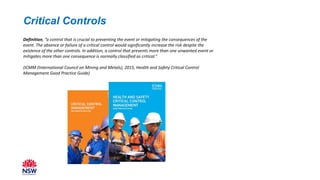
Definition, “a control that is crucial to preventing the event or mitigating the consequences of the
event. The absence or failure of a critical control would significantly increase the risk despite the
existence of the other controls. In addition, a control that prevents more than one unwanted event or
mitigates more than one consequence is normally classified as critical.”
(ICMM (International Council on Mining and Metals), 2015, Health and Safety Critical Control
Management Good Practice Guide)
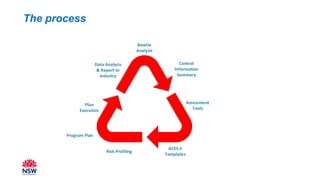
The process
Risk Profiling
Assessment
Tools
ACES II
Templates
Program Plan
Plan
Execution
Data Analysis
& Report to
Industry
Bowtie
Analysis
Control
Information
Summary
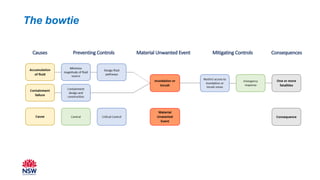
The bowtie
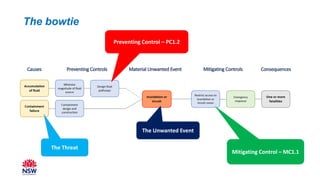
The bowtie
Preventing Control – PC1.2
Mitigating Control – MC1.1
The Threat
The Unwanted Event
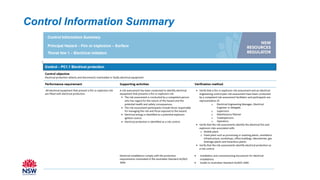
Control Information Summary
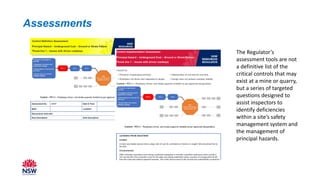
Assessments
The Regulator’s
assessment tools are not
a definitive list of the
critical controls that may
exist at a mine or quarry,
but a series of targeted
questions designed to
assist inspectors to
identify deficiencies
within a site’s safety
management system and
the management of
principal hazards.
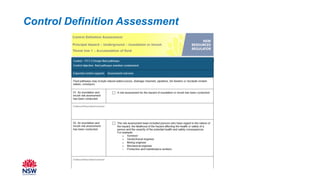
Control Definition Assessment
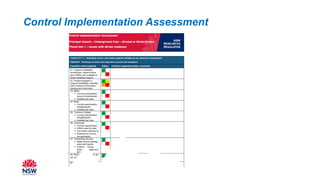
Control Implementation Assessment
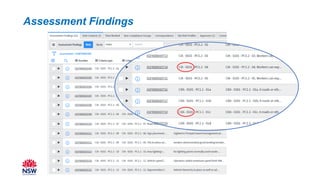
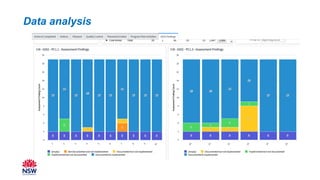
Assessment Findings
Data analysis
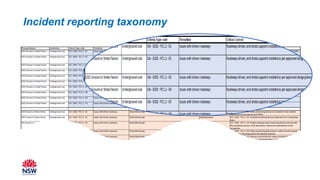
Incident reporting taxonomy
Thank you

Control focused inspection tools (Mark Smith)

  • 1.
    Mark Smith 11th September2019 Critical Control Focused Assessments
  • 2.
    Background Following an apparentincrease of significant incidents at the same time as significant adjustment and change in the industry in 2013/2014, the Minister for Resources and Energy, The Hon. Anthony Roberts MP, instructed the Mine Safety Advisory Council to conduct a review to identify and respond to any systematic and underlying issues contributing to serious incidents. In August 2014, NSW Department of Trade and Investment contracted Noetic Solutions Pty Ltd (Noetic) to examine four fatal incidents which occurred in 2013/2014 in the New South Wales mining industry (including companies, workforce and regulator). The review was undertaken by Peter Wilkinson and a report presented to the Mine Safety Advisory Council. Wilkinson Fatality Review 2013/14 Recommendation 3: Consider if the regulator should explicitly focus on critical controls for significant risks as part of an incident prevention strategy.
  • 3.
    Background “The Regulator hasestablished a planned approach to its inspection activities that is underpinned by a fundamental view of mining hazards. This includes an effective risk-based approach to intervention with sites facing significant risks and compliance issues. This control-focused approach to regulation is foundational to the Regulator’s Incident Prevention Strategy. While it has made significant progress in this area, this report identifies opportunities to further mature this approach and ensure that the effectiveness of risk controls remains a core component of regulatory activity.” REGULATORY REFORM REVIEW Report for the NSW Resources Regulator Noetic Group September 2018 Recommendation 1: Refine the implementation of TAPs and the Planned Inspection’s to ensure a clearer focus on the risk controls.
  • 4.
    Critical Controls Definition, “acontrol that is crucial to preventing the event or mitigating the consequences of the event. The absence or failure of a critical control would significantly increase the risk despite the existence of the other controls. In addition, a control that prevents more than one unwanted event or mitigates more than one consequence is normally classified as critical.” (ICMM (International Council on Mining and Metals), 2015, Health and Safety Critical Control Management Good Practice Guide)
  • 5.
    The process Risk Profiling Assessment Tools ACESII Templates Program Plan Plan Execution Data Analysis & Report to Industry Bowtie Analysis Control Information Summary
  • 6.
  • 7.
    The bowtie Preventing Control– PC1.2 Mitigating Control – MC1.1 The Threat The Unwanted Event
  • 8.
  • 9.
    Assessments The Regulator’s assessment toolsare not a definitive list of the critical controls that may exist at a mine or quarry, but a series of targeted questions designed to assist inspectors to identify deficiencies within a site’s safety management system and the management of principal hazards.
  • 10.
  • 11.
  • 12.
  • 13.
  • 14.
  • 15.