DRESS CODE
“Be Authentic in what you wear”
Group members:-
Nitin dhodi
Niyati Mehta
Ankita Patel
Suraj Patel
Monu Sam
Bhavini Tandel
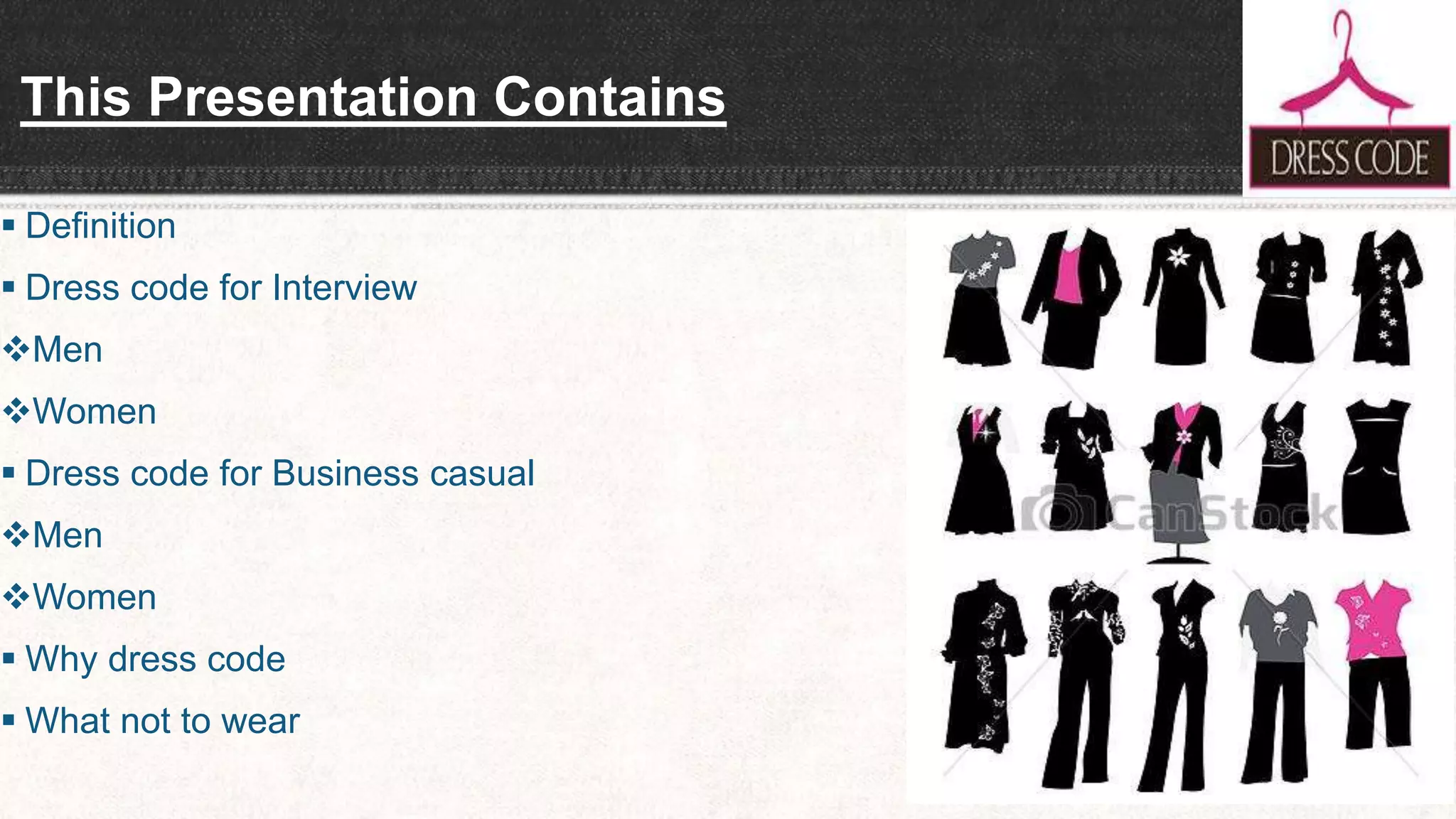
This Presentation Contains
 Definition
 Dress code for Interview
Men
Women
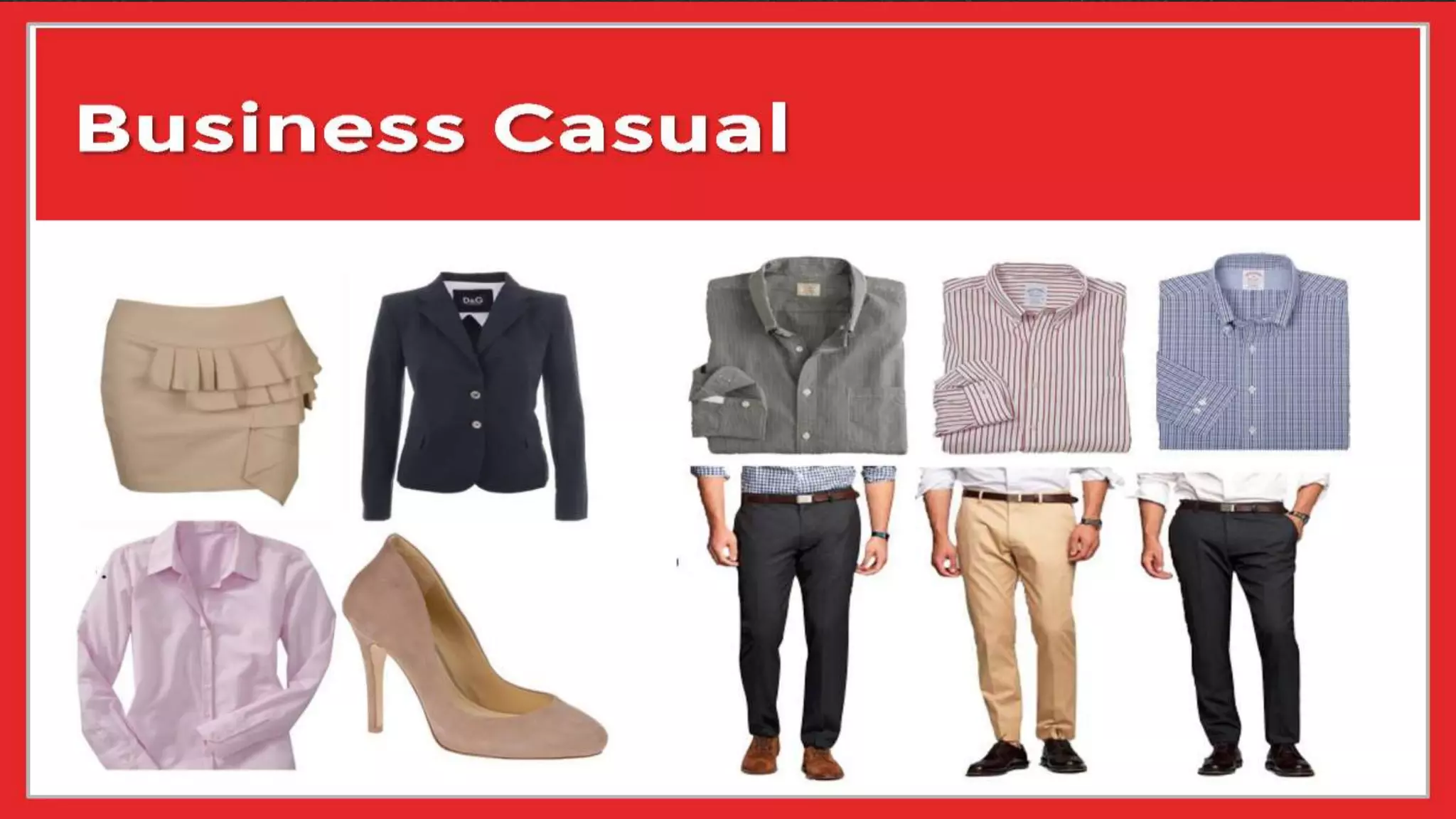
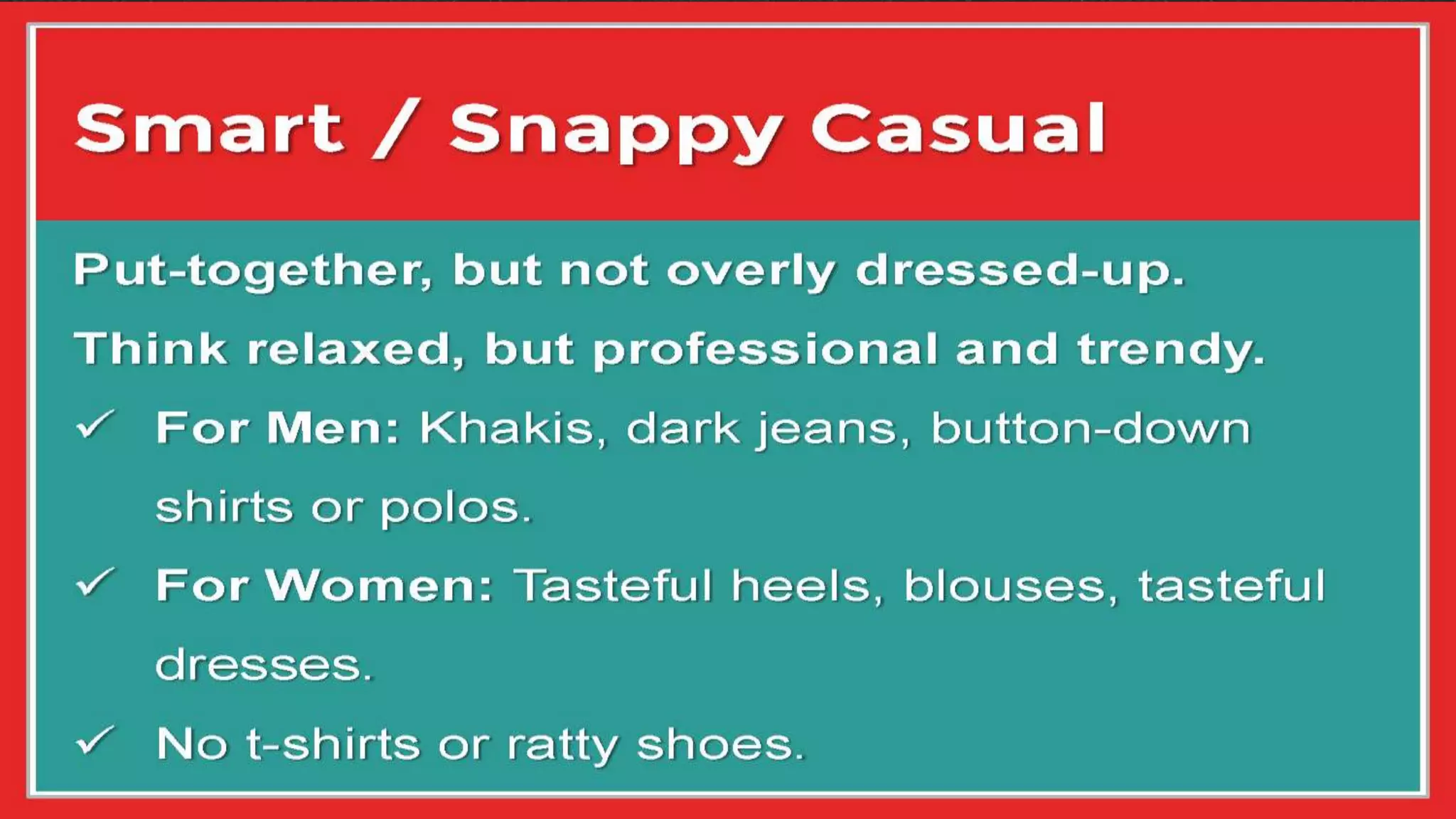
 Dress code for Business casual
Men
Women
 Why dress code
 What not to wear
Dress code
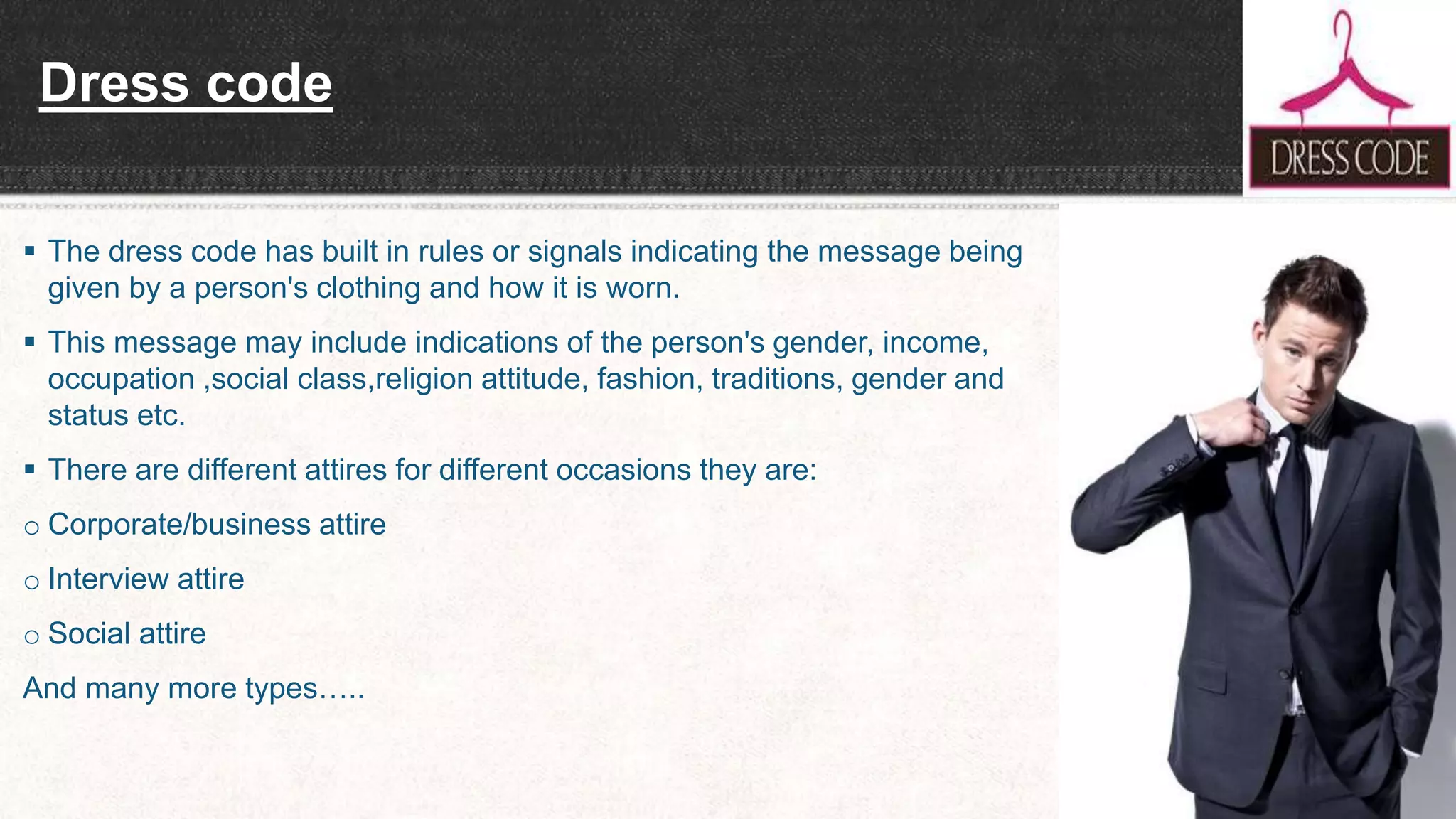
 The dress code has built in rules or signals indicating the message being
given by a person's clothing and how it is worn.
 This message may include indications of the person's gender, income,
occupation ,social class,religion attitude, fashion, traditions, gender and
status etc.
 There are different attires for different occasions they are:
o Corporate/business attire
o Interview attire
o Social attire
And many more types…..
Dress code – Mens
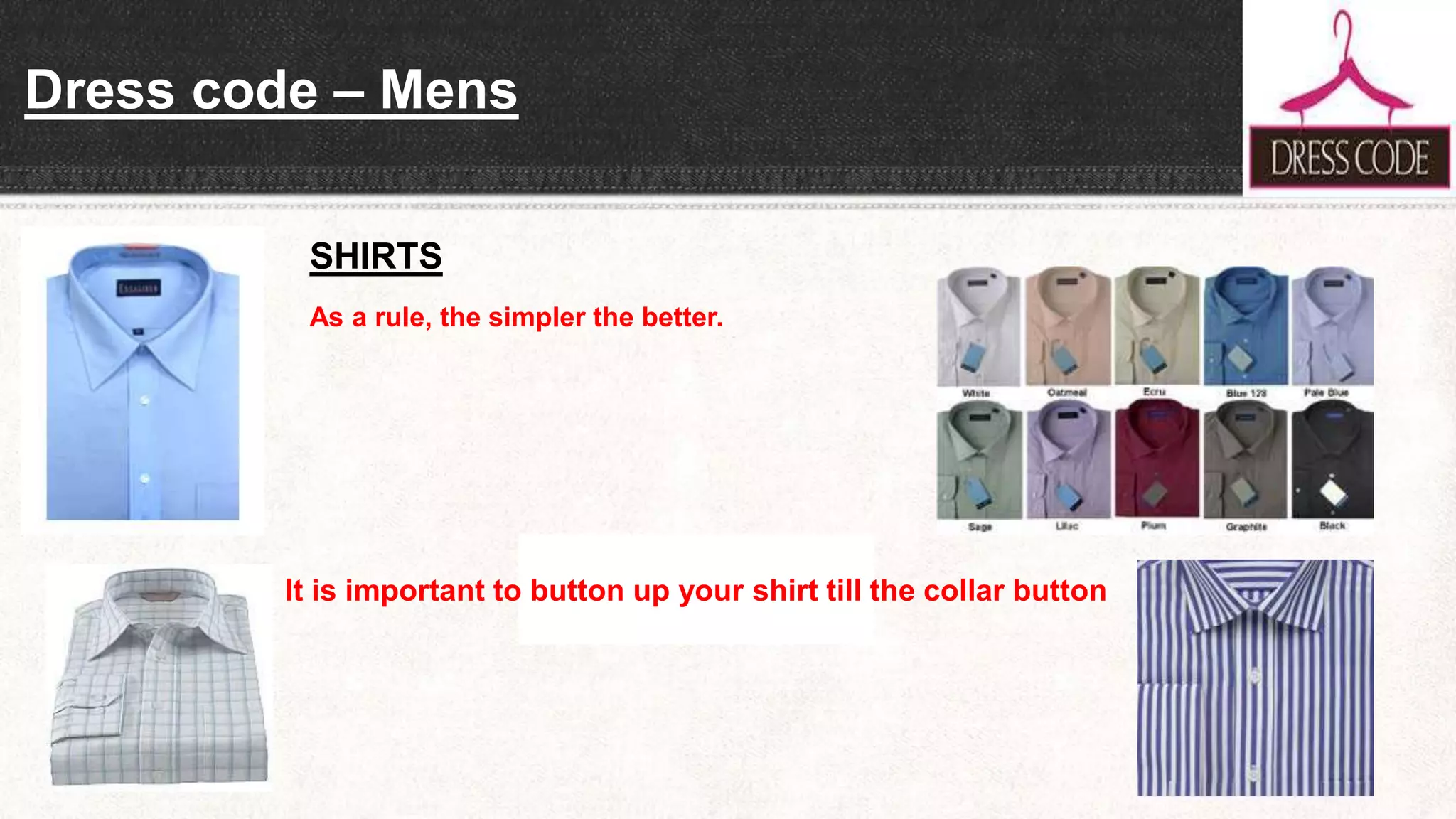
SHIRTS
As a rule, the simpler the better.
It is important to button up your shirt till the collar button
Dress code-Men
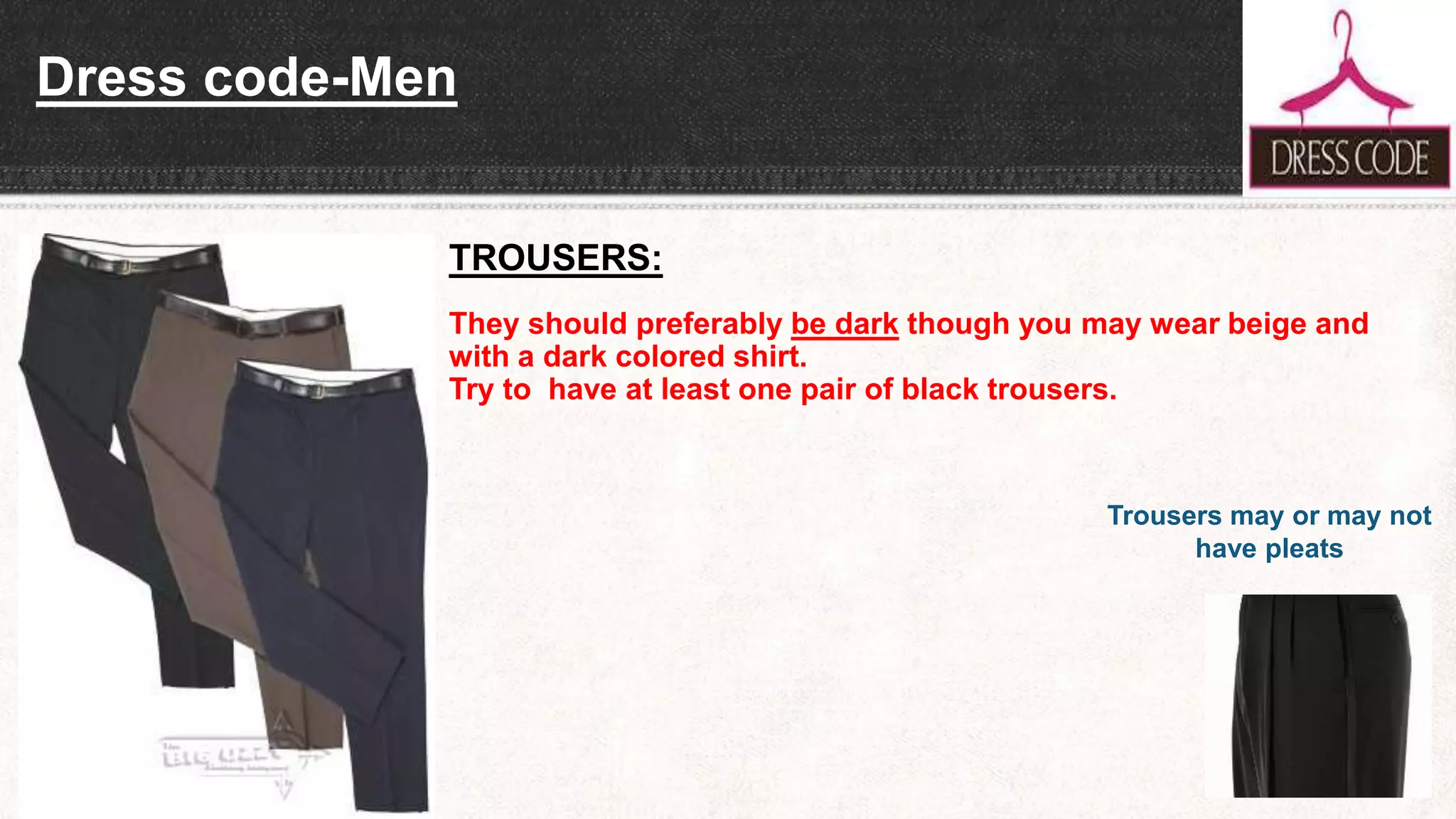
TROUSERS:
They should preferably be dark though you may wear beige and
with a dark colored shirt.
Try to have at least one pair of black trousers.
Trousers may or may not
have pleats
Dress code-Men
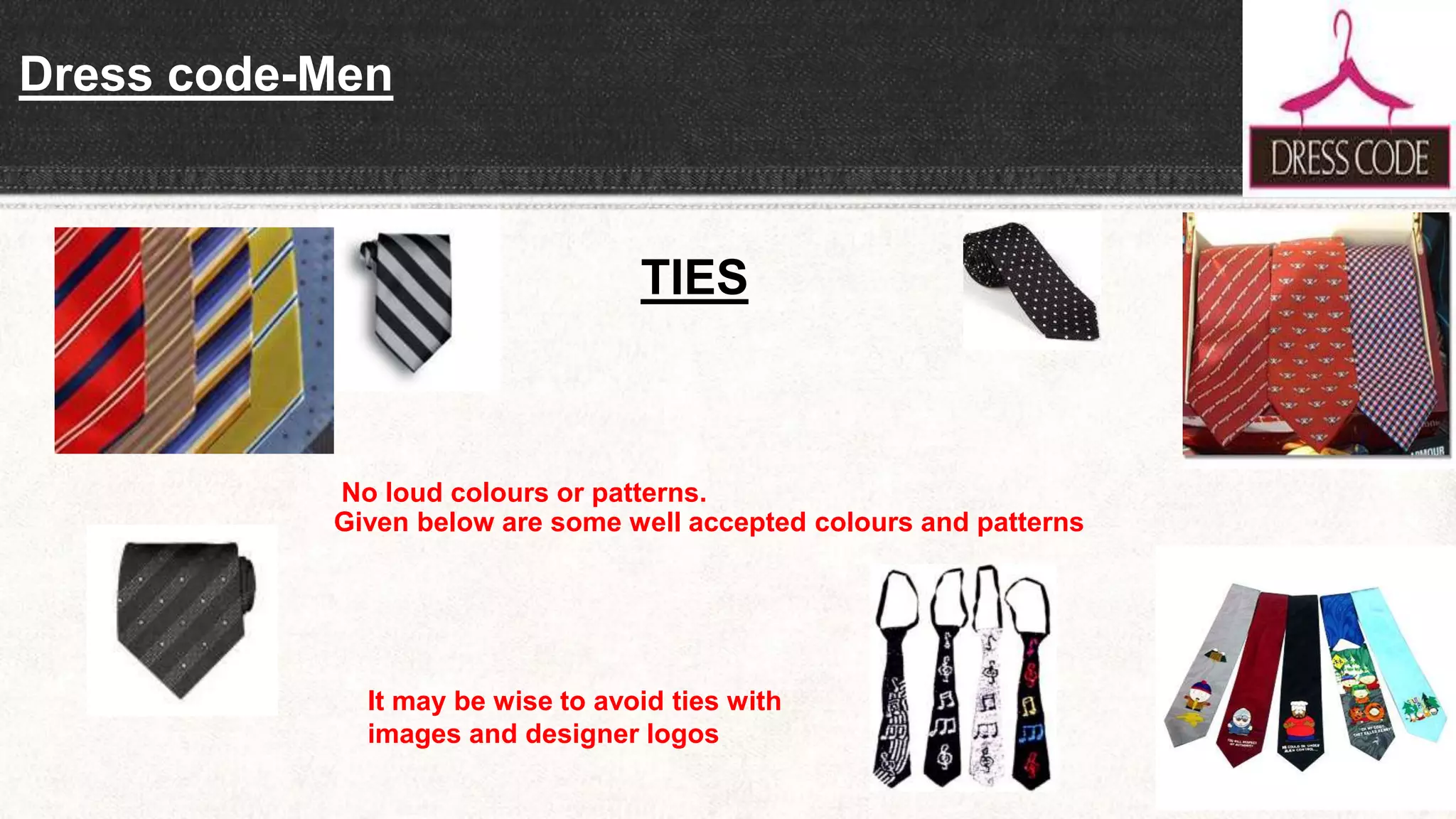
No loud colours or patterns.
Given below are some well accepted colours and patterns
It may be wise to avoid ties with
images and designer logos
TIES
Dress code-Men
SHOES
Wear a good pair of leather shoes- black and
brown/tan shoes.
Shoes must be polished everyday.
Do not wear shoes that look casual.
Also, do not wear shoes with worn out
heels.
Dress code-Women
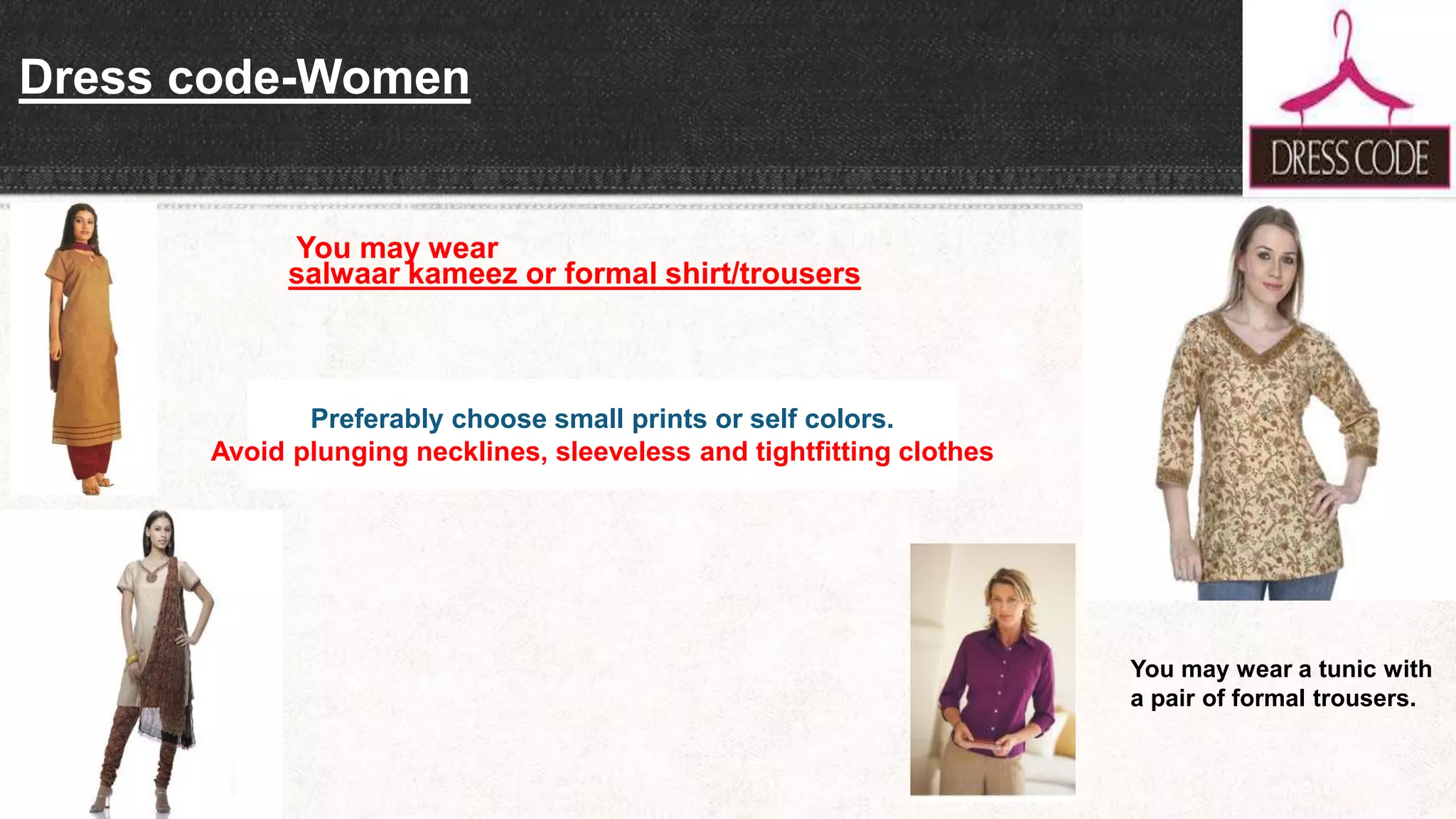
You may wear
salwaar kameez or formal shirt/trousers
You may wear a tunic with
a pair of formal trousers.
Preferably choose small prints or self colors.
Avoid plunging necklines, sleeveless and tightfitting clothes
Dress code-Women
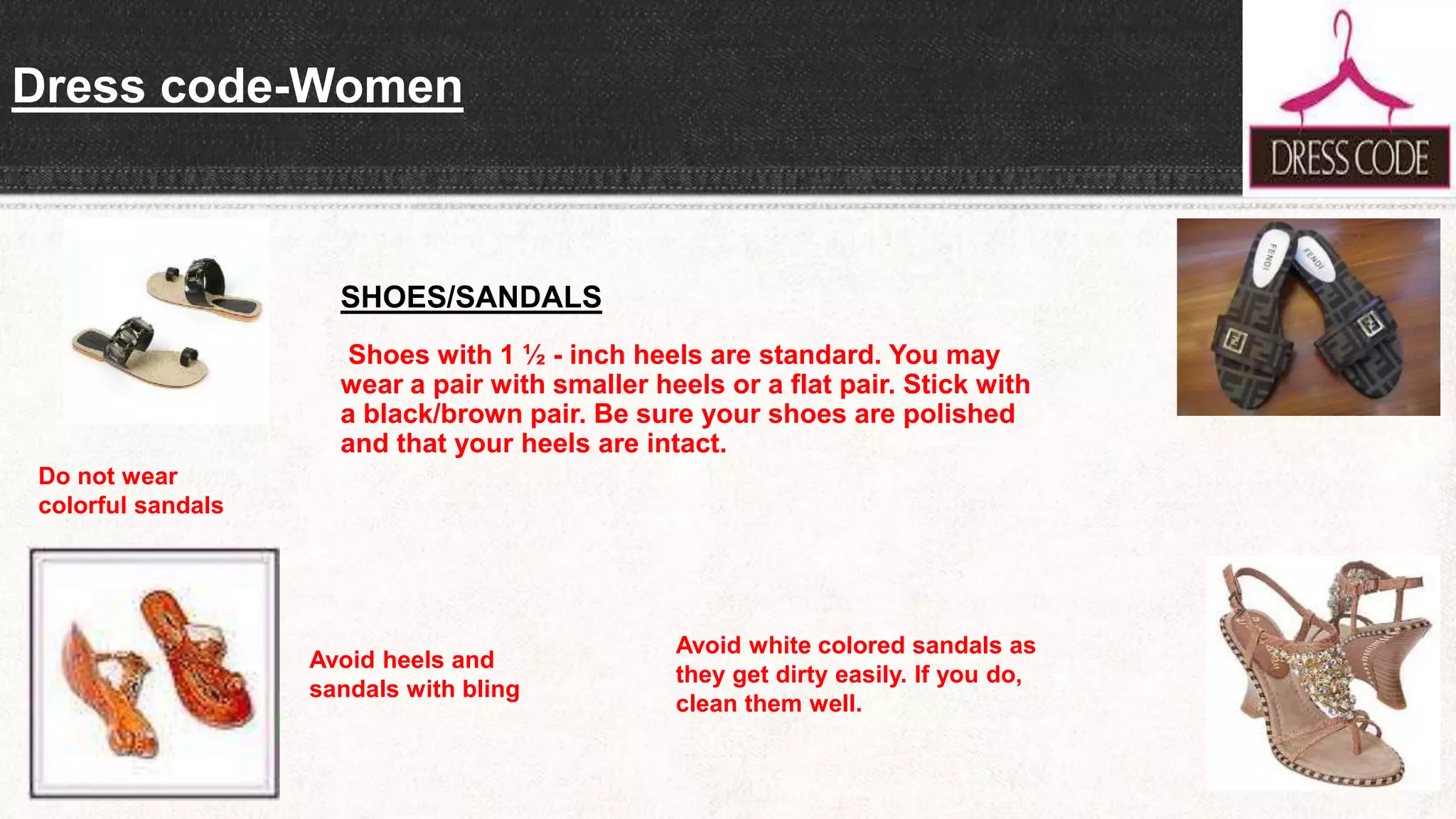
SHOES/SANDALS
Shoes with 1 ½ - inch heels are standard. You may
wear a pair with smaller heels or a flat pair. Stick with
a black/brown pair. Be sure your shoes are polished
and that your heels are intact.
Do not wear
colorful sandals
Avoid heels and
sandals with bling
Avoid white colored sandals as
they get dirty easily. If you do,
clean them well.
Dress code-Women
ACCESSORIES
Earrings
Wear stubs or small rings
Bracelets/Bangles:
You may wear either a bracelet or a bangle..
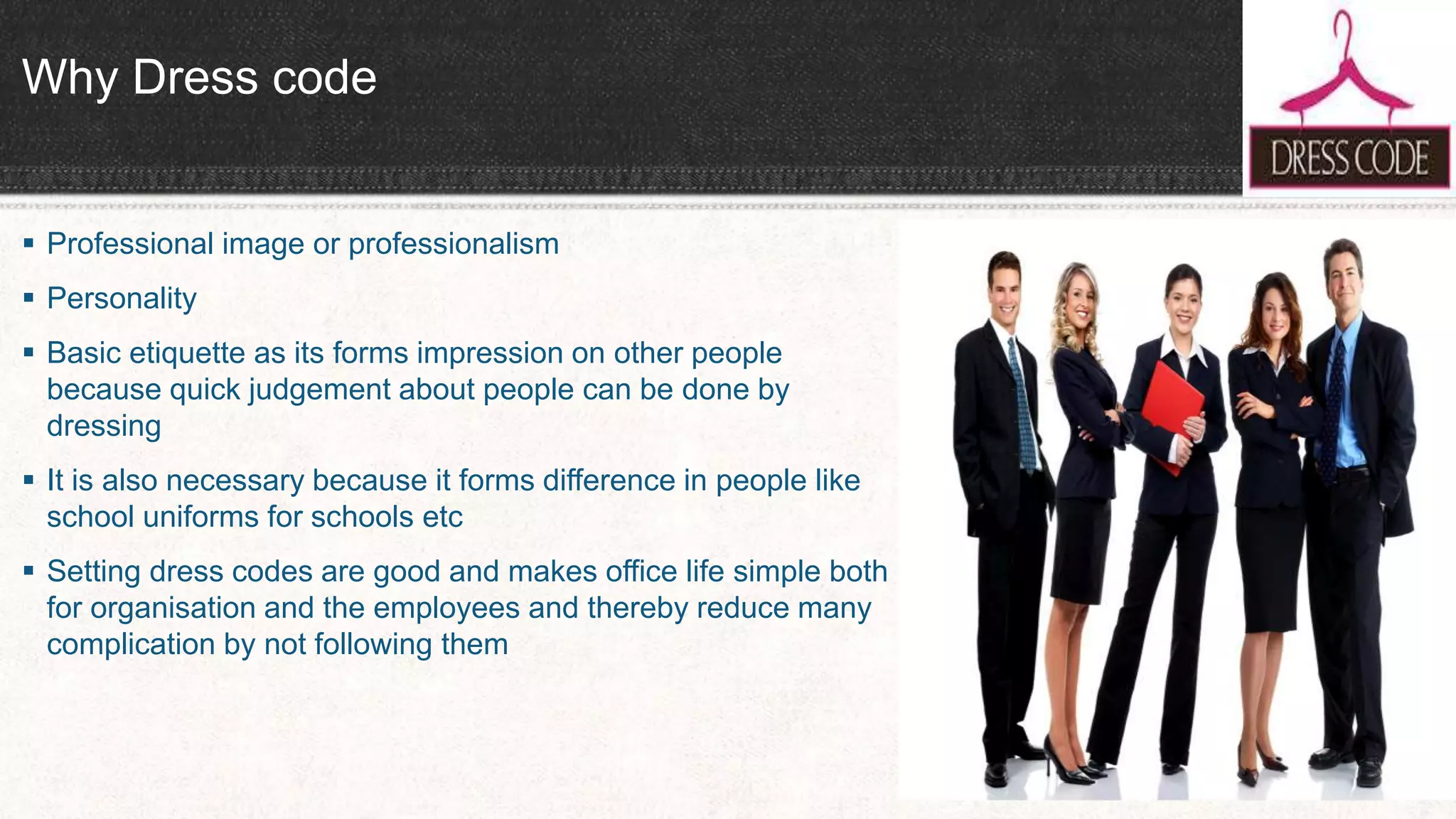
Why Dress code
 Professional image or professionalism
 Personality
 Basic etiquette as its forms impression on other people
because quick judgement about people can be done by
dressing
 It is also necessary because it forms difference in people like
school uniforms for schools etc
 Setting dress codes are good and makes office life simple both
for organisation and the employees and thereby reduce many
complication by not following them
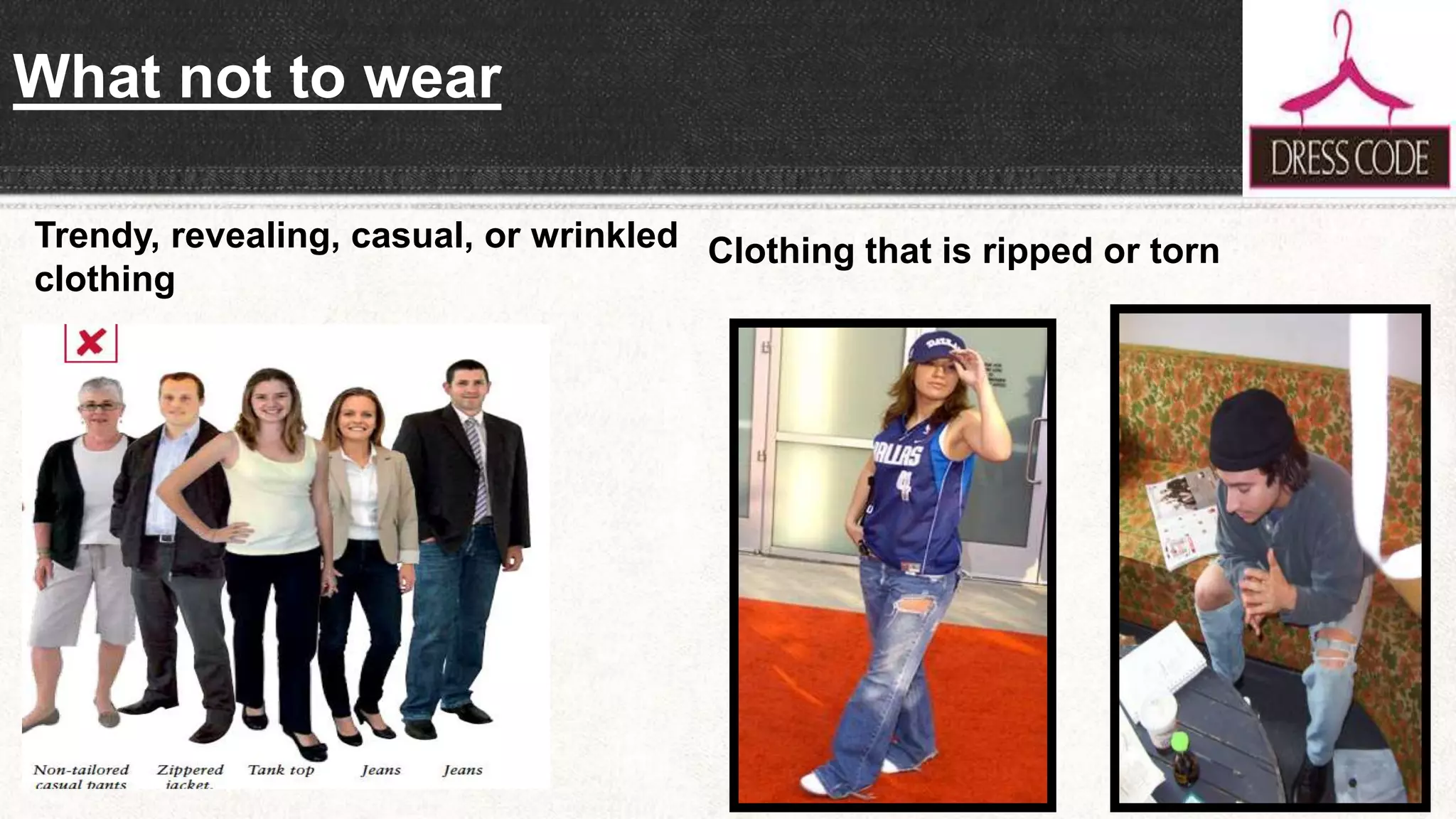
What not to wear
Trendy, revealing, casual, or wrinkled
clothing
Clothing that is ripped or torn
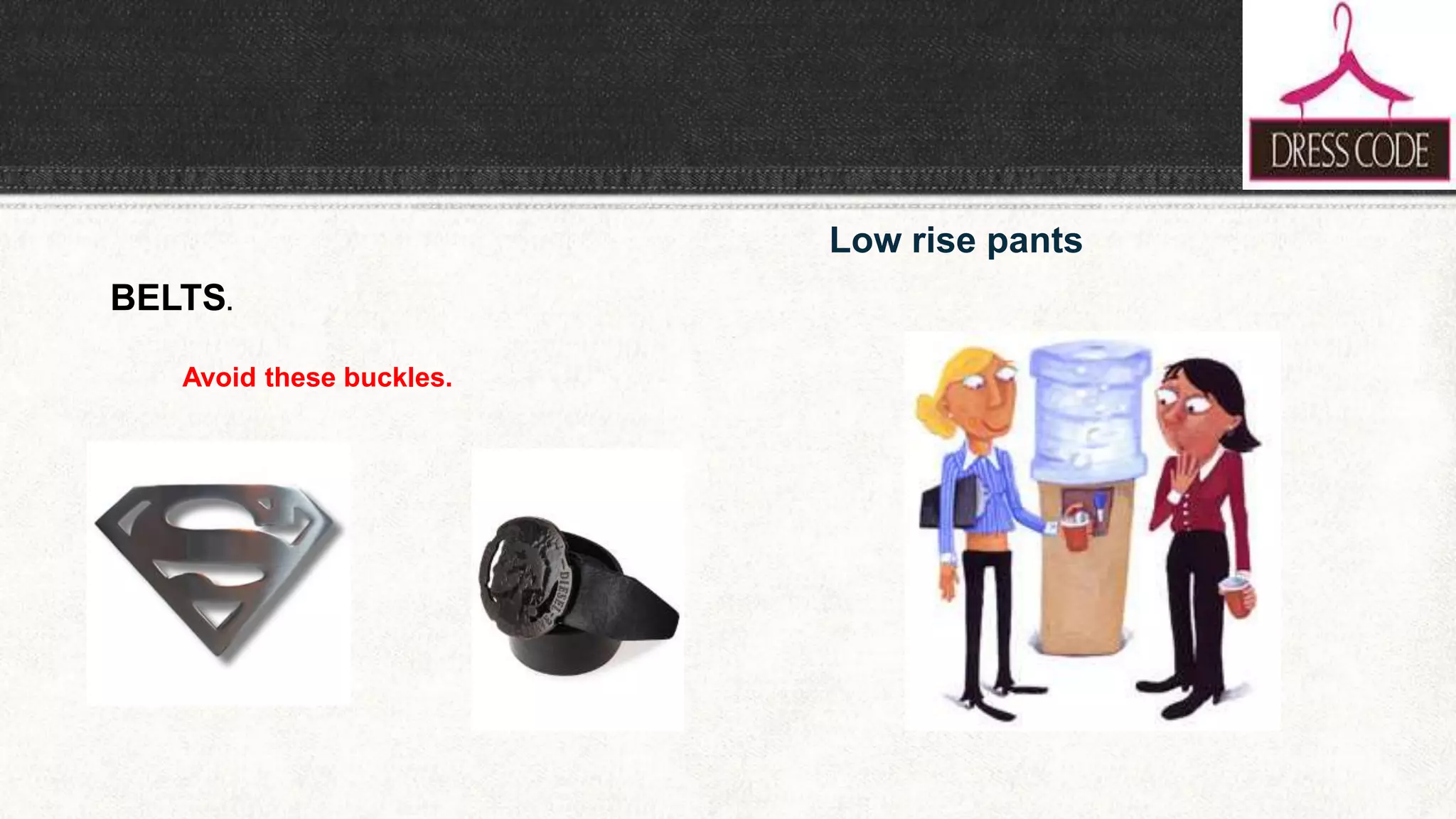
Low rise pants
BELTS.
Avoid these buckles.
Dress code

Dress code

  • 2.
    DRESS CODE “Be Authenticin what you wear”
  • 3.
    Group members:- Nitin dhodi NiyatiMehta Ankita Patel Suraj Patel Monu Sam Bhavini Tandel
  • 4.
    This Presentation Contains Definition  Dress code for Interview Men Women  Dress code for Business casual Men Women  Why dress code  What not to wear
  • 5.
    Dress code  Thedress code has built in rules or signals indicating the message being given by a person's clothing and how it is worn.  This message may include indications of the person's gender, income, occupation ,social class,religion attitude, fashion, traditions, gender and status etc.  There are different attires for different occasions they are: o Corporate/business attire o Interview attire o Social attire And many more types…..
  • 9.
    Dress code –Mens SHIRTS As a rule, the simpler the better. It is important to button up your shirt till the collar button
  • 10.
    Dress code-Men TROUSERS: They shouldpreferably be dark though you may wear beige and with a dark colored shirt. Try to have at least one pair of black trousers. Trousers may or may not have pleats
  • 11.
    Dress code-Men No loudcolours or patterns. Given below are some well accepted colours and patterns It may be wise to avoid ties with images and designer logos TIES
  • 12.
    Dress code-Men SHOES Wear agood pair of leather shoes- black and brown/tan shoes. Shoes must be polished everyday. Do not wear shoes that look casual. Also, do not wear shoes with worn out heels.
  • 13.
    Dress code-Women You maywear salwaar kameez or formal shirt/trousers You may wear a tunic with a pair of formal trousers. Preferably choose small prints or self colors. Avoid plunging necklines, sleeveless and tightfitting clothes
  • 14.
    Dress code-Women SHOES/SANDALS Shoes with1 ½ - inch heels are standard. You may wear a pair with smaller heels or a flat pair. Stick with a black/brown pair. Be sure your shoes are polished and that your heels are intact. Do not wear colorful sandals Avoid heels and sandals with bling Avoid white colored sandals as they get dirty easily. If you do, clean them well.
  • 15.
    Dress code-Women ACCESSORIES Earrings Wear stubsor small rings Bracelets/Bangles: You may wear either a bracelet or a bangle..
  • 21.
    Why Dress code Professional image or professionalism  Personality  Basic etiquette as its forms impression on other people because quick judgement about people can be done by dressing  It is also necessary because it forms difference in people like school uniforms for schools etc  Setting dress codes are good and makes office life simple both for organisation and the employees and thereby reduce many complication by not following them
  • 23.
    What not towear Trendy, revealing, casual, or wrinkled clothing Clothing that is ripped or torn
  • 24.