“Living” Vs. “Nonliving” What makes something “alive”?
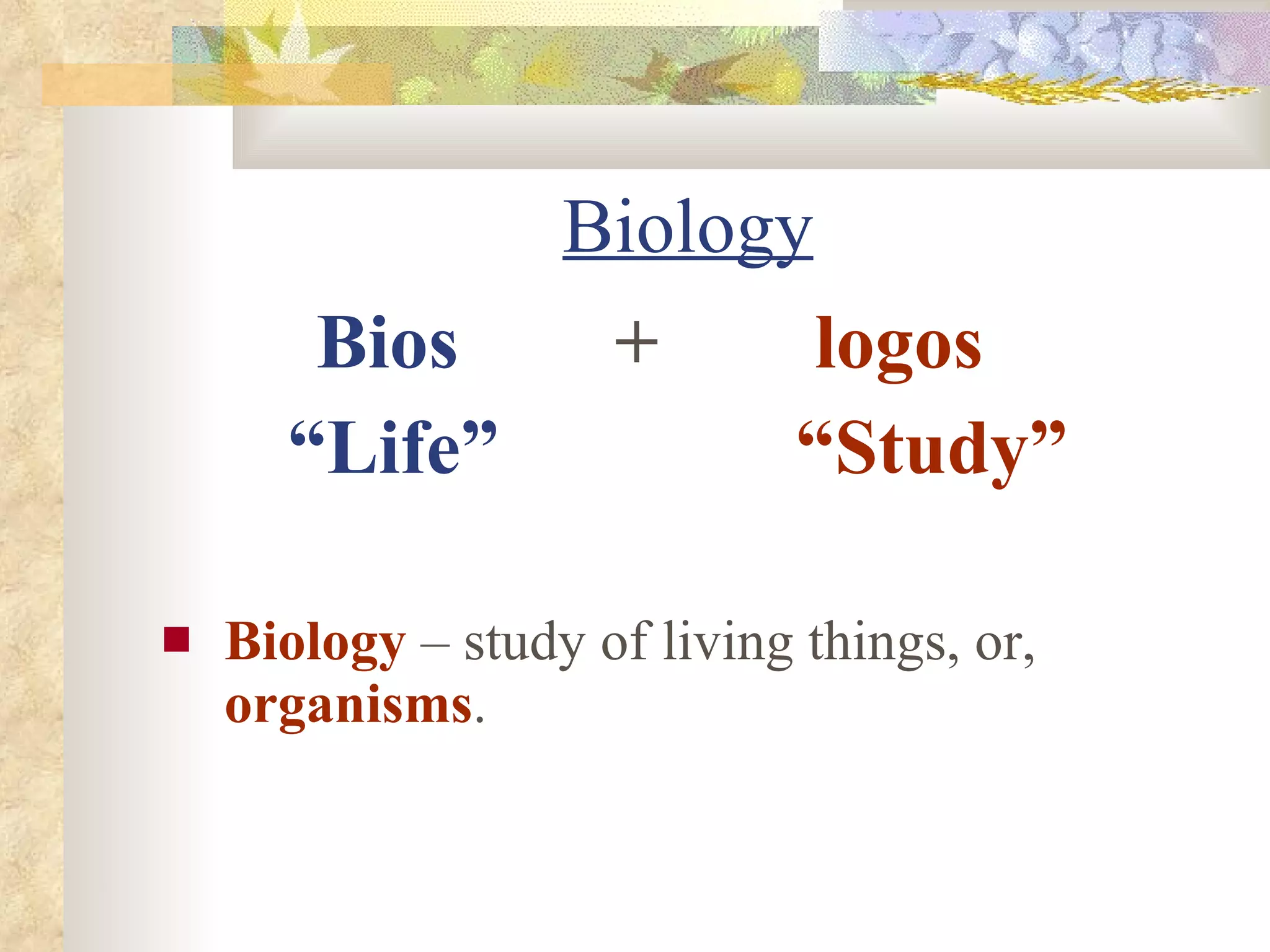
Biology   Bios  +  logos “ Life” “Study” Biology  – study of living things, or,  organisms .
Life Functions 8 life functions/processes that classify something as “living”, or an  organism : 1.  Digestion 5.  Excretion 2.  Circulation 6.  Coordination 3.  Movement 7.  Reproduction 4.  Respiration 8.  Immunity
1. Digestion Breaking down  large food molecules to smaller molecules. -  small  molecules  can  enter cells. ex:  glucose
2. Circulation Transport of materials within an organism. - brings  glucose  and  oxygen  to cells (mailman). - takes away  wastes  and  carbon dioxide  from  cells. (garbage man)
3.  Movement Voluntary  change in position of organism. -  muscular  and  skeletal  systems work together.
4.  Respiration Uses  oxygen  to change  glucose  into  energy (ATP).
5.  Ex cretion “ Ex” = out! Removal  of waste products! - sweat, urine, carbon dioxide
6. Coordination Nervous system  and  endocrine system  send chemical messages throughout the body. -  hormones  are chemical messages.
7. Reproduction Ability of an organism to make more of its own kind. - necessary for survival of  species . Sexual Reproduction  – involves two parents. Asexual Reproduction  – involves one parent.
8. Immunity Ability of an organism to  fight disease  and foreign invaders. - produce  antibodies  and  white blood cells.
 
 
Homeostasis All life processes work together in order to ensure maintenance of  homeostasis . Homeostasis  – an organism’s ability to keep a stable internal environment (steady-state). - any change in a life process = bad for homeostasis. - organisms have control mechanisms to help maintain    homeostasis.
Example of Control Mechanism 1. Temp. rises     2. Sweating    3.  Cools body  back down to    normal   temp (98.6).

Life Processes

  • 1.
    “Living” Vs. “Nonliving”What makes something “alive”?
  • 2.
    Biology Bios + logos “ Life” “Study” Biology – study of living things, or, organisms .
  • 3.
    Life Functions 8life functions/processes that classify something as “living”, or an organism : 1. Digestion 5. Excretion 2. Circulation 6. Coordination 3. Movement 7. Reproduction 4. Respiration 8. Immunity
  • 4.
    1. Digestion Breakingdown large food molecules to smaller molecules. - small molecules can enter cells. ex: glucose
  • 5.
    2. Circulation Transportof materials within an organism. - brings glucose and oxygen to cells (mailman). - takes away wastes and carbon dioxide from cells. (garbage man)
  • 6.
    3. MovementVoluntary change in position of organism. - muscular and skeletal systems work together.
  • 7.
    4. RespirationUses oxygen to change glucose into energy (ATP).
  • 8.
    5. Excretion “ Ex” = out! Removal of waste products! - sweat, urine, carbon dioxide
  • 9.
    6. Coordination Nervoussystem and endocrine system send chemical messages throughout the body. - hormones are chemical messages.
  • 10.
    7. Reproduction Abilityof an organism to make more of its own kind. - necessary for survival of species . Sexual Reproduction – involves two parents. Asexual Reproduction – involves one parent.
  • 11.
    8. Immunity Abilityof an organism to fight disease and foreign invaders. - produce antibodies and white blood cells.
  • 12.
  • 13.
  • 14.
    Homeostasis All lifeprocesses work together in order to ensure maintenance of homeostasis . Homeostasis – an organism’s ability to keep a stable internal environment (steady-state). - any change in a life process = bad for homeostasis. - organisms have control mechanisms to help maintain homeostasis.
  • 15.
    Example of ControlMechanism 1. Temp. rises  2. Sweating  3. Cools body back down to normal temp (98.6).