Question 1- Genre research
 The primary audience for my film is for people that are over the age of
25. I chose this specific target audience as I believed that it would be
the best age for people to be able to understand and accept the films
story line for what it is.
 I found out this target audience by looking at films with the same genre
that have already been produced and picked out their combined
target audiences
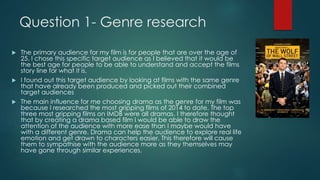
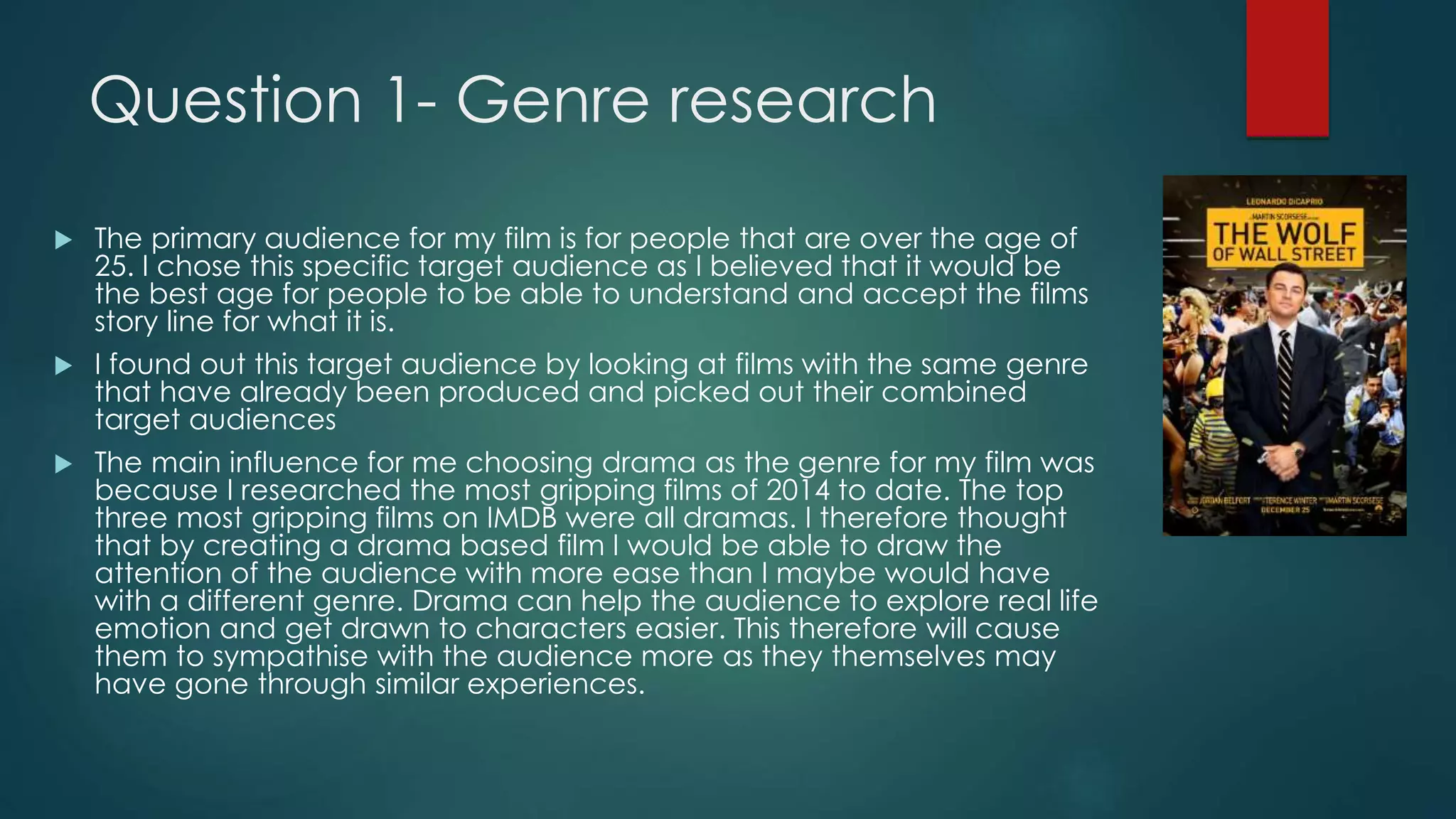
 The main influence for me choosing drama as the genre for my film was
because I researched the most gripping films of 2014 to date. The top
three most gripping films on IMDB were all dramas. I therefore thought
that by creating a drama based film I would be able to draw the
attention of the audience with more ease than I maybe would have
with a different genre. Drama can help the audience to explore real life
emotion and get drawn to characters easier. This therefore will cause
them to sympathise with the audience more as they themselves may
have gone through similar experiences.
Film Opening Sequence Research
I firstly re-watched a prelim task that had previously been
shown to me by my subject teacher. This helped me with
ideas for the idea and development of my opening scene. It
held the same idea that I had initially come up with up
contrasting two peoples lives.
I liked the idea of the split screen effect which really helped
to add to the effect of the contrast between the two
characters.
This is also where I got the influence for the title of the film
opening that I was going to produce.
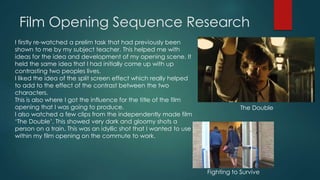
I also watched a few clips from the independently made film
‘The Double’. This showed very dark and gloomy shots a
person on a train. This was an idyllic shot that I wanted to use
within my film opening on the commute to work.
Fighting to Survive
The Double
Narrative
Tzvetan Todorov came up with a way to divide the narrative into five different
stages.
 1) The Equilibrium; This is where the setting of the film is established.
 2) The Disruption; This is where the story takes a particular direction.
 3) The recognition of disruption; Here the problem is discovered and the characters
and event are combined.
 4) The attempt to repair the disruption; This is where the characters try to solve the
issue presented as the disruption.
 5) Reinstating the equilibrium; Finally this is where the matters of the problem are
solved and any questions are answered. Therefore bring it back to the equilibrium.
 Using the first stage that Todorov devised I created the equilibrium. It is clear in the
opening sequence that Tony and Chris live completely different lives. The disruption
will be shown later into the film when the reasoning behind the characters attitudes
becomes apparent. I also set the scene of where most of the film would be which is in
the city and around the area of Chris’ work.
Techniques Used
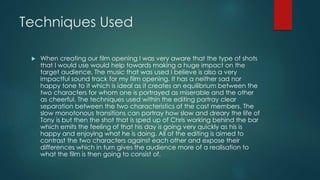
 When creating our film opening I was very aware that the type of shots
that I would use would help towards making a huge impact on the
target audience. The music that was used I believe is also a very
impactful sound track for my film opening. It has a neither sad nor
happy tone to it which is ideal as it creates an equilibrium between the
two characters for whom one is portrayed as miserable and the other
as cheerful. The techniques used within the editing portray clear
separation between the two characteristics of the cast members. The
slow monotonous transitions can portray how slow and dreary the life of
Tony is but then the shot that is sped up of Chris working behind the bar
which emits the feeling of that his day is going very quickly as his is
happy and enjoying what he is doing. All of the editing is aimed to
contrast the two characters against each other and expose their
differences which in turn gives the audience more of a realisation to
what the film is then going to consist of.
Key Shots Within Opening
Sequence
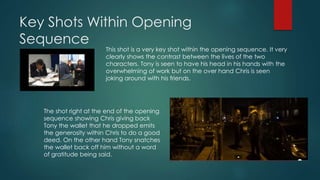
This shot is a very key shot within the opening sequence. It very
clearly shows the contrast between the lives of the two
characters. Tony is seen to have his head in his hands with the
overwhelming of work but on the over hand Chris is seen
joking around with his friends.
The shot right at the end of the opening
sequence showing Chris giving back
Tony the wallet that he dropped emits
the generosity within Chris to do a good
deed. On the other hand Tony snatches
the wallet back off him without a word
of gratitude being said.
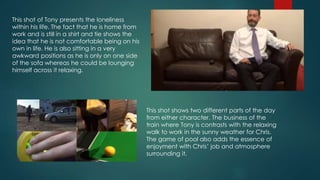
This shot of Tony presents the loneliness
within his life. The fact that he is home from
work and is still in a shirt and tie shows the
idea that he is not comfortable being on his
own in life. He is also sitting in a very
awkward positions as he is only on one side
of the sofa whereas he could be lounging
himself across it relaxing.
This shot shows two different parts of the day
from either character. The business of the
train where Tony is contrasts with the relaxing
walk to work in the sunny weather for Chris.
The game of pool also adds the essence of
enjoyment with Chris’ job and atmosphere
surrounding it.
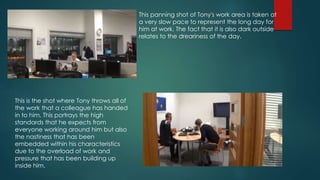
This panning shot of Tony's work area is taken at
a very slow pace to represent the long day for
him at work. The fact that it is also dark outside
relates to the dreariness of the day.
This is the shot where Tony throws all of
the work that a colleague has handed
in to him. This portrays the high
standards that he expects from
everyone working around him but also
the nastiness that has been
embedded within his characteristics
due to the overload of work and
pressure that has been building up
inside him.
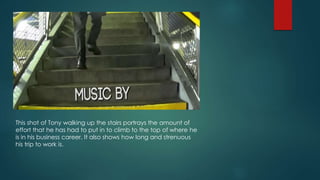
This shot of Tony walking up the stairs portrays the amount of
effort that he has had to put in to climb to the top of where he
is in his business career. It also shows how long and strenuous
his trip to work is.
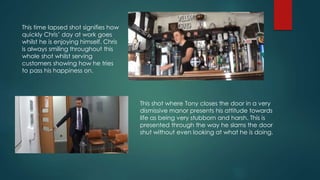
This time lapsed shot signifies how
quickly Chris’ day at work goes
whilst he is enjoying himself. Chris
is always smiling throughout this
whole shot whilst serving
customers showing how he tries
to pass his happiness on.
This shot where Tony closes the door in a very
dismissive manor presents his attitude towards
life as being very stubborn and harsh. This is
presented through the way he slams the door
shut without even looking at what he is doing.

Question 1

  • 1.
    Question 1- Genreresearch  The primary audience for my film is for people that are over the age of 25. I chose this specific target audience as I believed that it would be the best age for people to be able to understand and accept the films story line for what it is.  I found out this target audience by looking at films with the same genre that have already been produced and picked out their combined target audiences  The main influence for me choosing drama as the genre for my film was because I researched the most gripping films of 2014 to date. The top three most gripping films on IMDB were all dramas. I therefore thought that by creating a drama based film I would be able to draw the attention of the audience with more ease than I maybe would have with a different genre. Drama can help the audience to explore real life emotion and get drawn to characters easier. This therefore will cause them to sympathise with the audience more as they themselves may have gone through similar experiences.
  • 2.
    Film Opening SequenceResearch I firstly re-watched a prelim task that had previously been shown to me by my subject teacher. This helped me with ideas for the idea and development of my opening scene. It held the same idea that I had initially come up with up contrasting two peoples lives. I liked the idea of the split screen effect which really helped to add to the effect of the contrast between the two characters. This is also where I got the influence for the title of the film opening that I was going to produce. I also watched a few clips from the independently made film ‘The Double’. This showed very dark and gloomy shots a person on a train. This was an idyllic shot that I wanted to use within my film opening on the commute to work. Fighting to Survive The Double
  • 3.
    Narrative Tzvetan Todorov cameup with a way to divide the narrative into five different stages.  1) The Equilibrium; This is where the setting of the film is established.  2) The Disruption; This is where the story takes a particular direction.  3) The recognition of disruption; Here the problem is discovered and the characters and event are combined.  4) The attempt to repair the disruption; This is where the characters try to solve the issue presented as the disruption.  5) Reinstating the equilibrium; Finally this is where the matters of the problem are solved and any questions are answered. Therefore bring it back to the equilibrium.  Using the first stage that Todorov devised I created the equilibrium. It is clear in the opening sequence that Tony and Chris live completely different lives. The disruption will be shown later into the film when the reasoning behind the characters attitudes becomes apparent. I also set the scene of where most of the film would be which is in the city and around the area of Chris’ work.
  • 4.
    Techniques Used  Whencreating our film opening I was very aware that the type of shots that I would use would help towards making a huge impact on the target audience. The music that was used I believe is also a very impactful sound track for my film opening. It has a neither sad nor happy tone to it which is ideal as it creates an equilibrium between the two characters for whom one is portrayed as miserable and the other as cheerful. The techniques used within the editing portray clear separation between the two characteristics of the cast members. The slow monotonous transitions can portray how slow and dreary the life of Tony is but then the shot that is sped up of Chris working behind the bar which emits the feeling of that his day is going very quickly as his is happy and enjoying what he is doing. All of the editing is aimed to contrast the two characters against each other and expose their differences which in turn gives the audience more of a realisation to what the film is then going to consist of.
  • 5.
    Key Shots WithinOpening Sequence This shot is a very key shot within the opening sequence. It very clearly shows the contrast between the lives of the two characters. Tony is seen to have his head in his hands with the overwhelming of work but on the over hand Chris is seen joking around with his friends. The shot right at the end of the opening sequence showing Chris giving back Tony the wallet that he dropped emits the generosity within Chris to do a good deed. On the other hand Tony snatches the wallet back off him without a word of gratitude being said.
  • 6.
    This shot ofTony presents the loneliness within his life. The fact that he is home from work and is still in a shirt and tie shows the idea that he is not comfortable being on his own in life. He is also sitting in a very awkward positions as he is only on one side of the sofa whereas he could be lounging himself across it relaxing. This shot shows two different parts of the day from either character. The business of the train where Tony is contrasts with the relaxing walk to work in the sunny weather for Chris. The game of pool also adds the essence of enjoyment with Chris’ job and atmosphere surrounding it.
  • 7.
    This panning shotof Tony's work area is taken at a very slow pace to represent the long day for him at work. The fact that it is also dark outside relates to the dreariness of the day. This is the shot where Tony throws all of the work that a colleague has handed in to him. This portrays the high standards that he expects from everyone working around him but also the nastiness that has been embedded within his characteristics due to the overload of work and pressure that has been building up inside him.
  • 8.
    This shot ofTony walking up the stairs portrays the amount of effort that he has had to put in to climb to the top of where he is in his business career. It also shows how long and strenuous his trip to work is.
  • 9.
    This time lapsedshot signifies how quickly Chris’ day at work goes whilst he is enjoying himself. Chris is always smiling throughout this whole shot whilst serving customers showing how he tries to pass his happiness on. This shot where Tony closes the door in a very dismissive manor presents his attitude towards life as being very stubborn and harsh. This is presented through the way he slams the door shut without even looking at what he is doing.