FORCE MULTIPLIER INTEGRATING SOCIAL MEDIA  INTO TRAVEL MARKETING EFFORTS
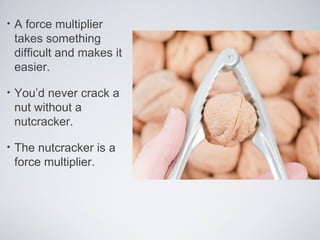
A force multiplier takes something difficult and makes it easier. You’d never crack a nut without a nutcracker.  The nutcracker is a force multiplier.
We’d never open this beer bottle with our bare hands.  The bottle opener is a force multiplier.
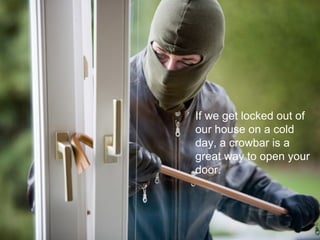
If we get locked out of our house on a cold day, a crowbar is a great way to open your door.
IN MARKETING Social Media is a new medium that is low cost, and high leverage that magnifies your existing efforts.  Social Media gives us the opportunity to be nimble and engage in ways other mediums to not allow.
SOCIAL MEDIA HYPE WHAT’S THE BIG DEAL ABOUT IT ANYWAY?
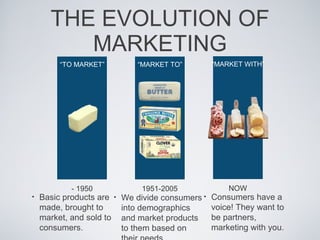
THE EVOLUTION OF MARKETING Basic products are made, brought to market, and sold to consumers.  We divide consumers into demographics and market products to them based on their needs.  Consumers have a voice! They want to be partners, marketing with you.  “ TO MARKET” - 1950 “ MARKET TO” 1951-2005 “ MARKET WITH” NOW
ADMIT IT.  THIS DOESN’T  WORK ANYMORE.
ADVERTISING Is no longer a viable medium by itself in a crowded marketplace. The costs to reach the same audience is constantly rising, while the effectiveness is reduced.  People have come to expect discounts.  Motivating people to do what we want is more difficult.
MEANWHILE A drastic shift in consumer behavior has happened, starting in 2004. It caught marketers by surprise, and most still have not recovered.  Only small percentage of brands have learned how to take advantage of our new reality.
THE MEDIA CONSUMERS USE TO COMMUNICATE CHANGED. USE TO COMMUNICATE CHANGED. WITHOUT US.
AND THINGS KEEP CHANGING
HOW COULD THIS HAPPEN? Technology gave consumers new ways to engage with each other that was two-way instead of one-way. Advertising agencies could not figure out how to make money in social. Consumers started to naturally expect brands to communicate with them in their media of choice. Marketers began to see competitors engage their fans in new media in two-way conversations and wondered how they could do it too.
WHAT IS SOCIAL MEDIA? AND WHO IS USING IT?
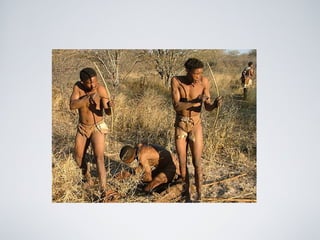
WORD OF MOUTH Social media is not a “new” form of communication. It used to be called “Word of Mouth.” “Word of Mouth” has been around since we’ve been able to talk. Word of Mouth is a trusted source of communication because it leverages the established relationships of friends and family.
IT’S BEEN AROUND FOREVER. Hey Adam, try this apple!
WHAT IT LOOKS LIKE TODAY
SOCIAL MEDIA TODAY Simply allows us to stimulate and track word of mouth conversations.  We can use our traditional media to further amplify these goals by driving messages to and from our social platforms.  Most importantly, we identify and empower fans who already love the brand with the tools and triggers they need to spread the word to their friends and family.
WHY DO PEOPLE SHARE?  What motivates people want to pass along a message? People don’t share because they like your brand.  They share because they like their friends.
IT’S A CONVERSATION
 
HIERARCHY OF NEEDS
WHAT DRIVES SHARING? The hierarchy of needs Hunter gatherer mentality Not wanting to be left out Winning at something Having “value” in social circles
PEOPLE ARE ALREADY TALKING ABOUT YOUR BRAND WITHOUT YOU.
ISN’t IT TIME YOU JOINED THEM?
IF YOU’RE STILL NOT  CONVINCED…
SOCIAL MEDIA IN TRAVEL Over 80% of travelers will search for conversations over the internet to plan their next trip.  Ad recalls in social settings increased 1.6 times.  Brand awareness in social  settings doubled.  Brand message recall exhibited the greatest lift among the dual platform exposure (print/TV & web), 52%  recall rate.
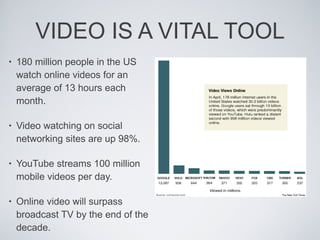
VIDEO IS A VITAL TOOL 180 million people in the US watch online videos for an average of 13 hours each month.  Video watching on social networking sites are up 98%.  YouTube streams 100 million mobile videos per day. Online video will surpass broadcast TV by the end of the decade.
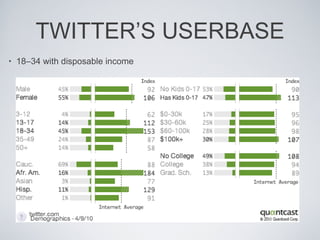
TWITTER’S USERBASE 18–34 with disposable income
TWITTER’S GROWTH
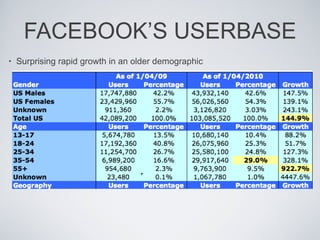
FACEBOOK’S USERBASE Surprising rapid growth in an older demographic
SOCIAL MEDIA TRAVEL FACTS of consumers turn to advice from family and friends as their first choice for how to get/give information when planning a vacation. 39%
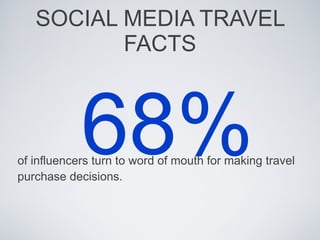
SOCIAL MEDIA TRAVEL FACTS of influencers turn to word of mouth for making travel purchase decisions.  68%
SOCIAL MEDIA TRAVEL FACTS of consumers indicate that they have booked hotel reservations online, and that the hotel was determined most by the reviews and opinions of other consumers.  62%
TWITTER SEARCH RESULTS
SOCIAL MEDIA TRAVEL FACTS consumers consult the Internet before making a travel decision.  9/10
HOW DO I USE SOCIAL MEDIA? Marketing Customer Service Research and Development
MARKETING Delivering “social currency” to be spread via word of mouth.  Driving positive actions leading to word of mouth and sales.  Providing the information for a consumer to make an informed purchasing decision.  Combining social media with existing efforts to create a “force multiplier.”
CUSTOMER SERVICE Eliminate the need for “waiting on hold.” Deal with problems in the moment.  Show the public you care by addressing unhappy customers and showing the resolution with full transparency.  Build relationships by reaching out to new guests via the medium of their choice.
CUSTOMER SERVICE
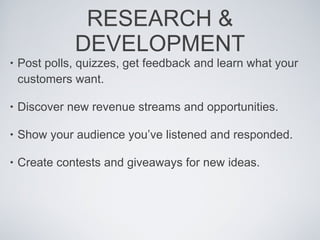
RESEARCH & DEVELOPMENT Post polls, quizzes, get feedback and learn what your customers want. Discover new revenue streams and opportunities. Show your audience you’ve listened and responded.  Create contests and giveaways for new ideas.
THE TRAVEL INDUSTRY HOW HAS SOCIAL MEDIA AND TECH AFFECTED TRAVEL?
FOUR TRENDS SHAPING TOURISM
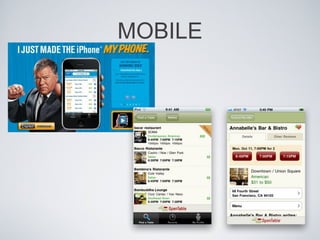
MOBILE Relevance, context and location are key to successful mobile strategies.  Rapid advances in geo-tagging and GPS-empowered applications, online mapping services, contextual and location-based search and rich mobile applications provide powerful, relevant services and content to travelers during their travel and in destination.
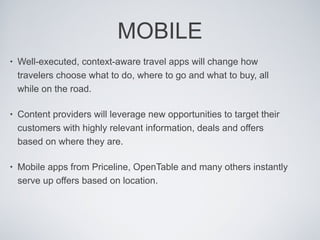
MOBILE Well-executed, context-aware travel apps will change how travelers choose what to do, where to go and what to buy, all while on the road.  Content providers will leverage new opportunities to target their customers with highly relevant information, deals and offers based on where they are.  Mobile apps from Priceline, OpenTable and many others instantly serve up offers based on location.
MOBILE
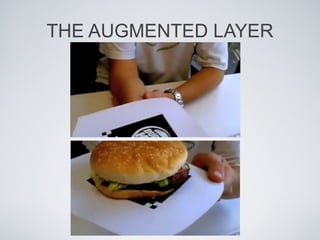
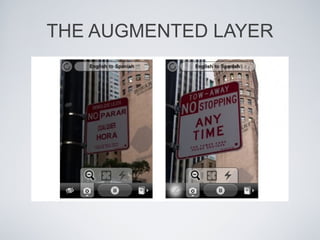
MOBILE Innovations like Augmented Reality add a whole new content layer on top of the existing world that you can brand and offer your take on the current surroundings.  This is just the beginning.
THE BEGINNING....
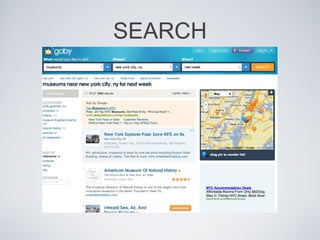
SEARCH Google is leveraging user generated content for just about every type of product and service and introducing new services such as Google City Tours.  Travel startups like Goby are taking a very search-centric model to deliver targeted local destination content and information to travelers.
SEARCH
SOFTWARE as a service + WEb 2.0 Most local tour and activity providers are small businesses with limited automation to support reservations, online booking, sophisticated inventory management and third-party distribution.  But new Web technologies and software delivery models, such as Software as a Service (Saas), are finally putting modern technologies within reach of this industry and enabling local suppliers to better market to and engage prospective customers and participate in the broader travel distribution ecosystem.
THIS IS YOUR FORCE MULTIPLIER
FORCE MULTIPLIER Mobile apps are location aware.  Search allows us to target users by their current location.  Users tell us what they want. Software as a Service technology allows for rapid customization. The traveler can now share and recommend these discoveries via social media as well as via a “location” layer.
THE LOCATION LAYER
THE LOCATION LAYER Allows destinations to encourage tourists to peg their reviews, tips and experiences to a location.  The location layer means added credibility of a friend’s recommendation.  People can add photos, video and any sort of content to a multitude of location based social networks.
THE GAME LAYER
THE GAME LAYER
THE GAME LAYER Creates a fun way to encourage positive actions such as driving to specific locations, buying products and rewarding a high level of engagement.  Incentives can be discounts, or even something as simple as a badge. It may seem silly but badges are a huge motivator of user behavior.
THE GAME LAYER
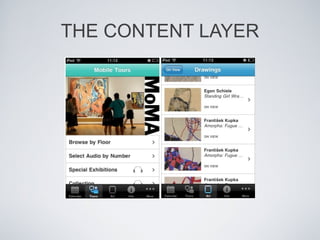
THE CONTENT LAYER
THE CONTENT LAYER
THE AUGMENTED LAYER
THE AUGMENTED LAYER
THE AUGMENTED LAYER
THE AUGMENTED LAYER
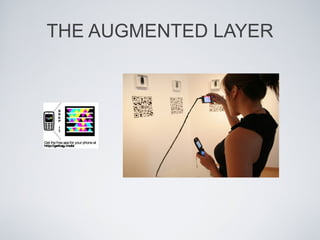
THE AUGMENTED LAYER Augmented Reality allows you to create a “wow” factor at a destination by layering content right into someone’s point of view.  Placing mobile tags that can be read by a smart phone allow you to create another force multiplier by pushing your print efforts to digital.  Once your customer has gone digital, the content they’ve acquired can be passed along via social media.
THANK YOU Download this presentation at: Questions + Comments  [email_address] Twitter: @adholes

Social Media as a Force Multiplier for the Travel Industry

  • 1.
    FORCE MULTIPLIER INTEGRATINGSOCIAL MEDIA INTO TRAVEL MARKETING EFFORTS
  • 2.
    A force multipliertakes something difficult and makes it easier. You’d never crack a nut without a nutcracker. The nutcracker is a force multiplier.
  • 3.
    We’d never openthis beer bottle with our bare hands. The bottle opener is a force multiplier.
  • 4.
    If we getlocked out of our house on a cold day, a crowbar is a great way to open your door.
  • 5.
    IN MARKETING SocialMedia is a new medium that is low cost, and high leverage that magnifies your existing efforts. Social Media gives us the opportunity to be nimble and engage in ways other mediums to not allow.
  • 6.
    SOCIAL MEDIA HYPEWHAT’S THE BIG DEAL ABOUT IT ANYWAY?
  • 7.
    THE EVOLUTION OFMARKETING Basic products are made, brought to market, and sold to consumers. We divide consumers into demographics and market products to them based on their needs. Consumers have a voice! They want to be partners, marketing with you. “ TO MARKET” - 1950 “ MARKET TO” 1951-2005 “ MARKET WITH” NOW
  • 8.
    ADMIT IT. THIS DOESN’T WORK ANYMORE.
  • 9.
    ADVERTISING Is nolonger a viable medium by itself in a crowded marketplace. The costs to reach the same audience is constantly rising, while the effectiveness is reduced. People have come to expect discounts. Motivating people to do what we want is more difficult.
  • 10.
    MEANWHILE A drasticshift in consumer behavior has happened, starting in 2004. It caught marketers by surprise, and most still have not recovered. Only small percentage of brands have learned how to take advantage of our new reality.
  • 11.
    THE MEDIA CONSUMERSUSE TO COMMUNICATE CHANGED. USE TO COMMUNICATE CHANGED. WITHOUT US.
  • 12.
  • 13.
    HOW COULD THISHAPPEN? Technology gave consumers new ways to engage with each other that was two-way instead of one-way. Advertising agencies could not figure out how to make money in social. Consumers started to naturally expect brands to communicate with them in their media of choice. Marketers began to see competitors engage their fans in new media in two-way conversations and wondered how they could do it too.
  • 14.
    WHAT IS SOCIALMEDIA? AND WHO IS USING IT?
  • 15.
    WORD OF MOUTHSocial media is not a “new” form of communication. It used to be called “Word of Mouth.” “Word of Mouth” has been around since we’ve been able to talk. Word of Mouth is a trusted source of communication because it leverages the established relationships of friends and family.
  • 16.
    IT’S BEEN AROUNDFOREVER. Hey Adam, try this apple!
  • 17.
    WHAT IT LOOKSLIKE TODAY
  • 18.
    SOCIAL MEDIA TODAYSimply allows us to stimulate and track word of mouth conversations. We can use our traditional media to further amplify these goals by driving messages to and from our social platforms. Most importantly, we identify and empower fans who already love the brand with the tools and triggers they need to spread the word to their friends and family.
  • 19.
    WHY DO PEOPLESHARE? What motivates people want to pass along a message? People don’t share because they like your brand. They share because they like their friends.
  • 20.
  • 21.
  • 22.
  • 23.
    WHAT DRIVES SHARING?The hierarchy of needs Hunter gatherer mentality Not wanting to be left out Winning at something Having “value” in social circles
  • 24.
    PEOPLE ARE ALREADYTALKING ABOUT YOUR BRAND WITHOUT YOU.
  • 25.
    ISN’t IT TIMEYOU JOINED THEM?
  • 26.
    IF YOU’RE STILLNOT CONVINCED…
  • 27.
    SOCIAL MEDIA INTRAVEL Over 80% of travelers will search for conversations over the internet to plan their next trip. Ad recalls in social settings increased 1.6 times. Brand awareness in social settings doubled. Brand message recall exhibited the greatest lift among the dual platform exposure (print/TV & web), 52% recall rate.
  • 28.
    VIDEO IS AVITAL TOOL 180 million people in the US watch online videos for an average of 13 hours each month. Video watching on social networking sites are up 98%. YouTube streams 100 million mobile videos per day. Online video will surpass broadcast TV by the end of the decade.
  • 29.
    TWITTER’S USERBASE 18–34with disposable income
  • 30.
  • 31.
    FACEBOOK’S USERBASE Surprisingrapid growth in an older demographic
  • 32.
    SOCIAL MEDIA TRAVELFACTS of consumers turn to advice from family and friends as their first choice for how to get/give information when planning a vacation. 39%
  • 33.
    SOCIAL MEDIA TRAVELFACTS of influencers turn to word of mouth for making travel purchase decisions. 68%
  • 34.
    SOCIAL MEDIA TRAVELFACTS of consumers indicate that they have booked hotel reservations online, and that the hotel was determined most by the reviews and opinions of other consumers. 62%
  • 35.
  • 36.
    SOCIAL MEDIA TRAVELFACTS consumers consult the Internet before making a travel decision. 9/10
  • 37.
    HOW DO IUSE SOCIAL MEDIA? Marketing Customer Service Research and Development
  • 38.
    MARKETING Delivering “socialcurrency” to be spread via word of mouth. Driving positive actions leading to word of mouth and sales. Providing the information for a consumer to make an informed purchasing decision. Combining social media with existing efforts to create a “force multiplier.”
  • 39.
    CUSTOMER SERVICE Eliminatethe need for “waiting on hold.” Deal with problems in the moment. Show the public you care by addressing unhappy customers and showing the resolution with full transparency. Build relationships by reaching out to new guests via the medium of their choice.
  • 40.
  • 41.
    RESEARCH & DEVELOPMENTPost polls, quizzes, get feedback and learn what your customers want. Discover new revenue streams and opportunities. Show your audience you’ve listened and responded. Create contests and giveaways for new ideas.
  • 42.
    THE TRAVEL INDUSTRYHOW HAS SOCIAL MEDIA AND TECH AFFECTED TRAVEL?
  • 43.
  • 44.
    MOBILE Relevance, contextand location are key to successful mobile strategies. Rapid advances in geo-tagging and GPS-empowered applications, online mapping services, contextual and location-based search and rich mobile applications provide powerful, relevant services and content to travelers during their travel and in destination.
  • 45.
    MOBILE Well-executed, context-awaretravel apps will change how travelers choose what to do, where to go and what to buy, all while on the road. Content providers will leverage new opportunities to target their customers with highly relevant information, deals and offers based on where they are. Mobile apps from Priceline, OpenTable and many others instantly serve up offers based on location.
  • 46.
  • 47.
    MOBILE Innovations likeAugmented Reality add a whole new content layer on top of the existing world that you can brand and offer your take on the current surroundings. This is just the beginning.
  • 48.
  • 49.
    SEARCH Google isleveraging user generated content for just about every type of product and service and introducing new services such as Google City Tours. Travel startups like Goby are taking a very search-centric model to deliver targeted local destination content and information to travelers.
  • 50.
  • 51.
    SOFTWARE as aservice + WEb 2.0 Most local tour and activity providers are small businesses with limited automation to support reservations, online booking, sophisticated inventory management and third-party distribution. But new Web technologies and software delivery models, such as Software as a Service (Saas), are finally putting modern technologies within reach of this industry and enabling local suppliers to better market to and engage prospective customers and participate in the broader travel distribution ecosystem.
  • 52.
    THIS IS YOURFORCE MULTIPLIER
  • 53.
    FORCE MULTIPLIER Mobileapps are location aware. Search allows us to target users by their current location. Users tell us what they want. Software as a Service technology allows for rapid customization. The traveler can now share and recommend these discoveries via social media as well as via a “location” layer.
  • 54.
  • 55.
    THE LOCATION LAYERAllows destinations to encourage tourists to peg their reviews, tips and experiences to a location. The location layer means added credibility of a friend’s recommendation. People can add photos, video and any sort of content to a multitude of location based social networks.
  • 56.
  • 57.
  • 58.
    THE GAME LAYERCreates a fun way to encourage positive actions such as driving to specific locations, buying products and rewarding a high level of engagement. Incentives can be discounts, or even something as simple as a badge. It may seem silly but badges are a huge motivator of user behavior.
  • 59.
  • 60.
  • 61.
  • 62.
  • 63.
  • 64.
  • 65.
  • 66.
    THE AUGMENTED LAYERAugmented Reality allows you to create a “wow” factor at a destination by layering content right into someone’s point of view. Placing mobile tags that can be read by a smart phone allow you to create another force multiplier by pushing your print efforts to digital. Once your customer has gone digital, the content they’ve acquired can be passed along via social media.
  • 67.
    THANK YOU Downloadthis presentation at: Questions + Comments [email_address] Twitter: @adholes

Editor's Notes

  • #7 So what’s the big deal about social media? Isn’t it just a bunch of people on Twitter telling everyone what they had for breakfast? Why do we care about it?
  • #12 The consumer has chosen these new communication media. Without us. So we have to evolve.
  • #15 So what is Social Media, and who is using it?
  • #21 Social media is a two way conversation. It’s scary for a brand, because you’re not sending people clever headlines that took a creative team months to develop. You’re having a real conversation between two people, in real time.