Download to read offline

![http/requests
import "http/requests"
response =
requests.get(
url: "http://example.com",
params: ["start": ["100"], "interval": ["1h", "1d"]]
)
// http://example.com?start=100&interval=1h&interval=1d
requests.peek(response: response)
https://docs.influxdata.com/flux/v0.x/stdlib/http/requests/](https://image.slidesharecdn.com/copyofinfluxdays2022flux-221020205149-d8010074/75/Nathaniel-Cook-InfluxData-Scripting-Languages-Demonstration-Flux-InfluxDays-2022-5-2048.jpg)
![array
import "array"
a = [ 1, 2, 3, 4, 5]
|> array.filter(fn: (x) => x >= 2)
|> array.map(fn: (x) => ({_value: x}))
array.from(rows: a)
https://docs.influxdata.com/flux/v0.x/stdlib/array/](https://image.slidesharecdn.com/copyofinfluxdays2022flux-221020205149-d8010074/75/Nathaniel-Cook-InfluxData-Scripting-Languages-Demonstration-Flux-InfluxDays-2022-6-2048.jpg)
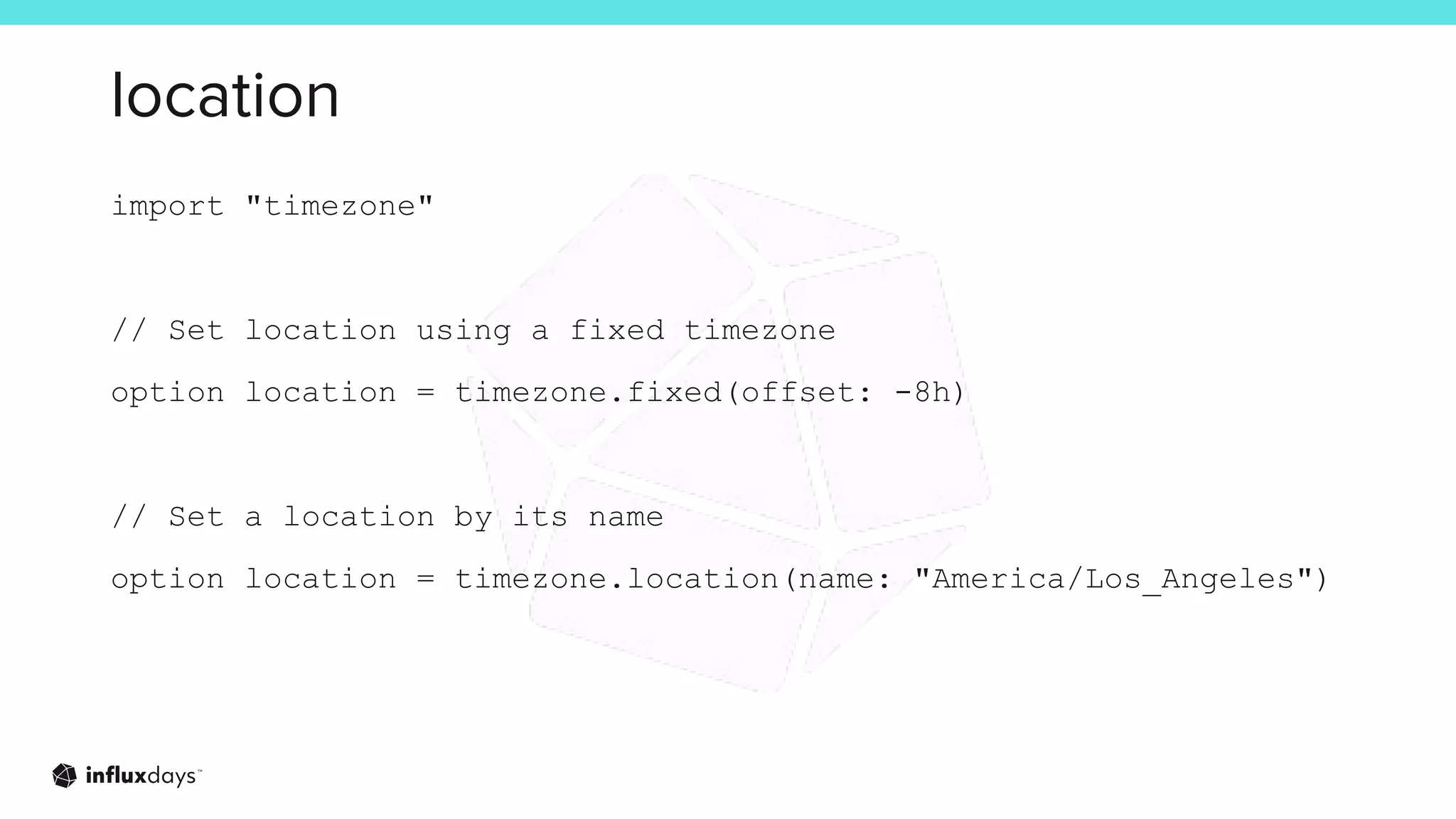
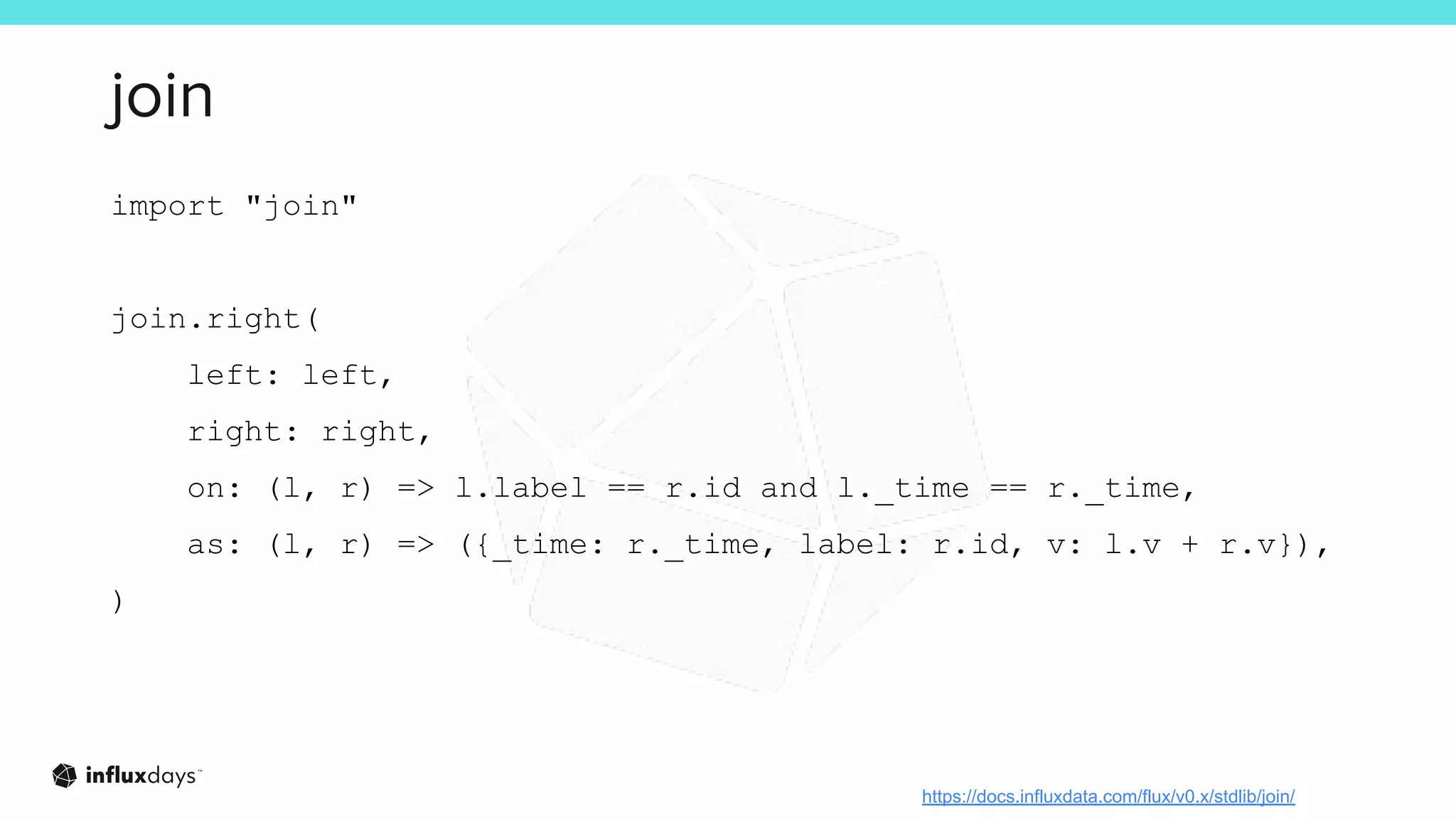
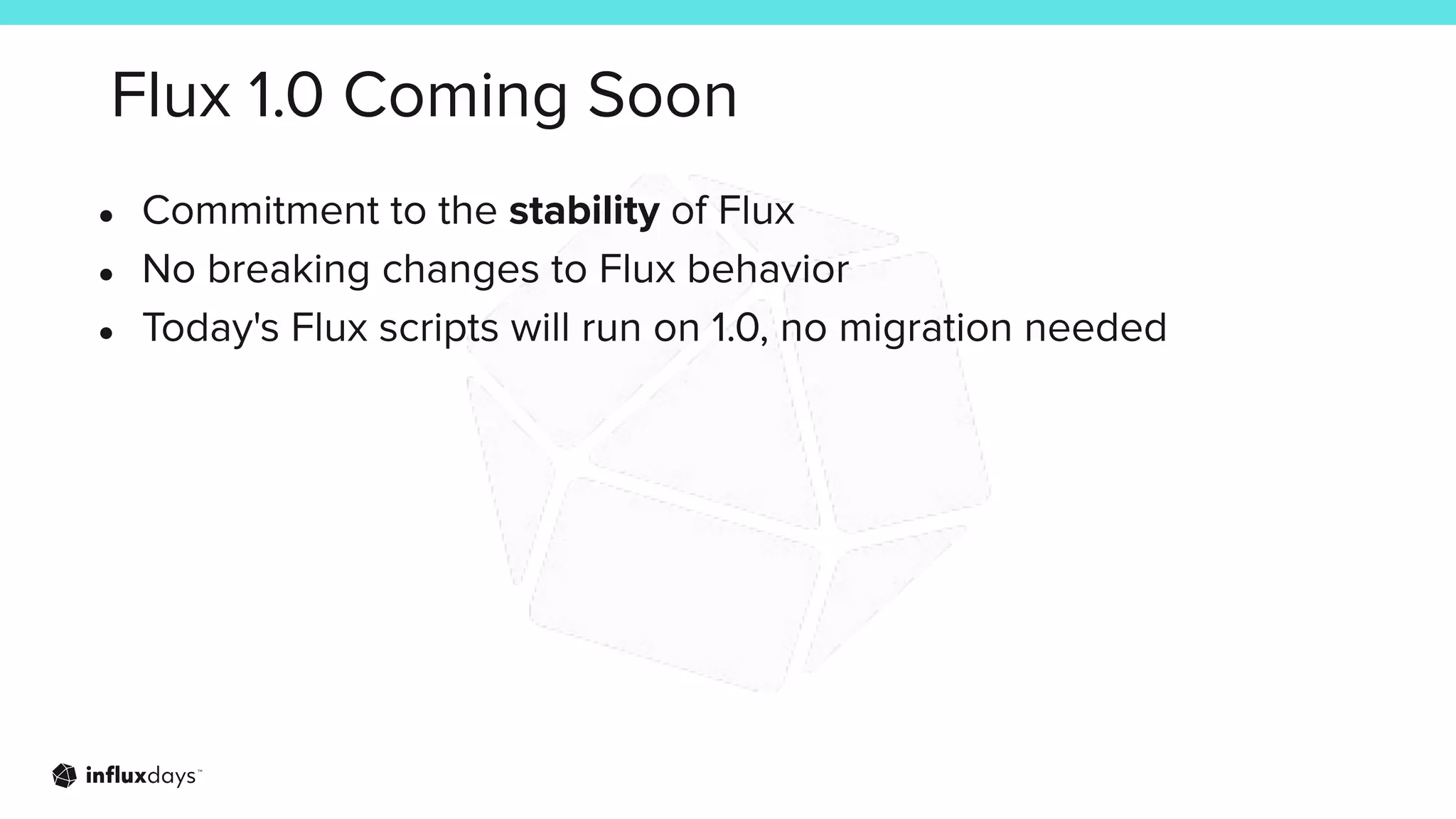
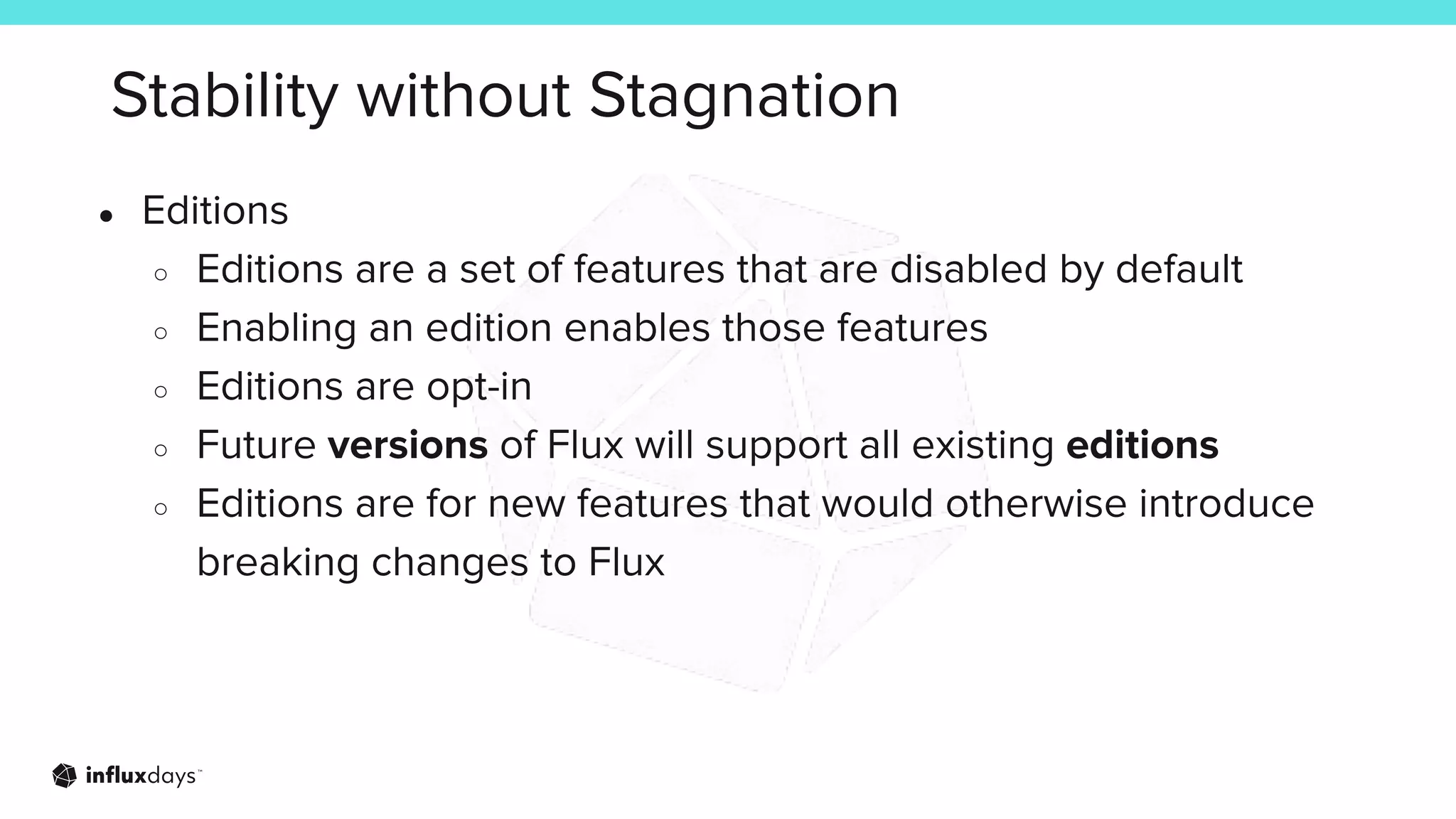
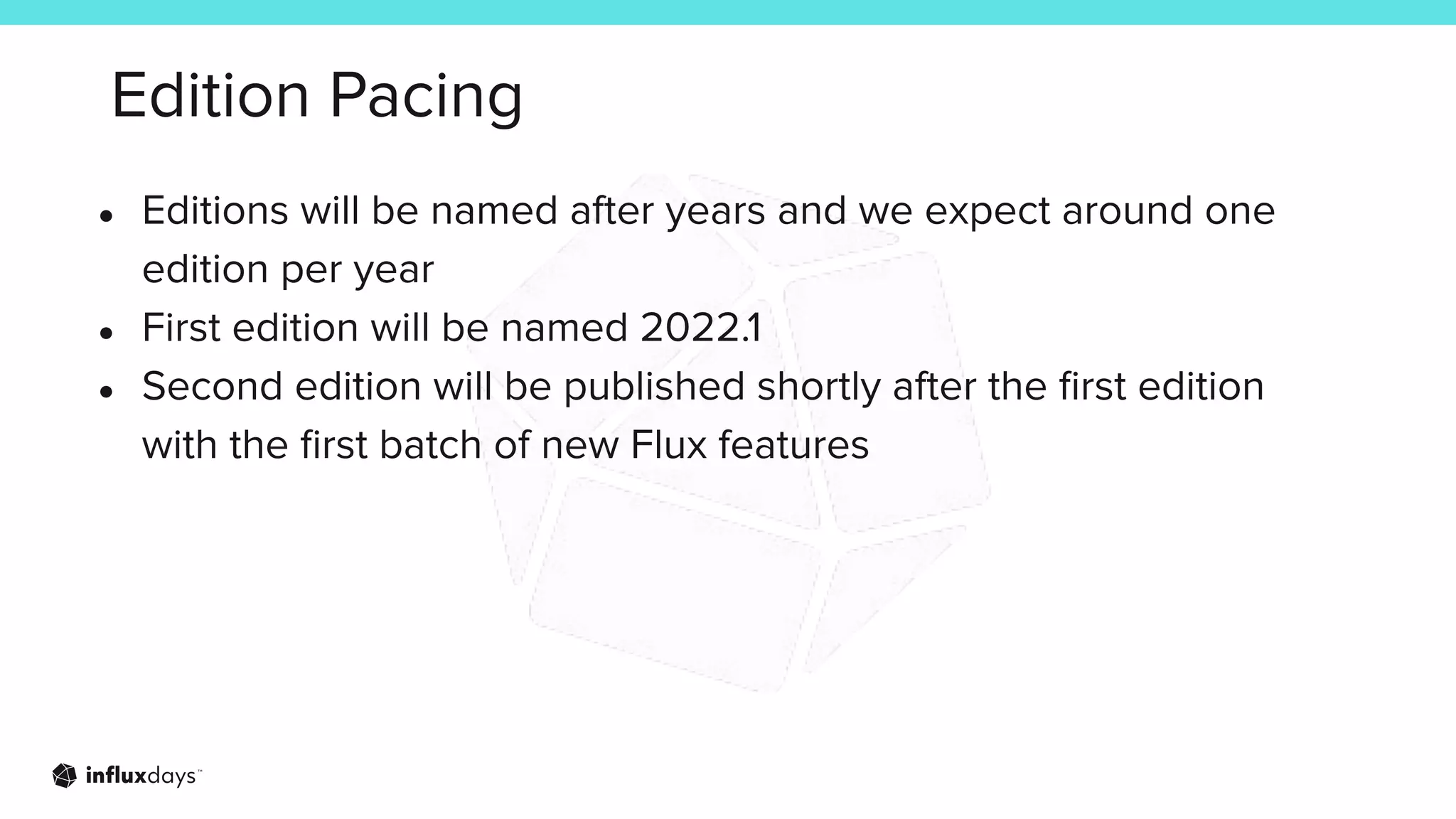
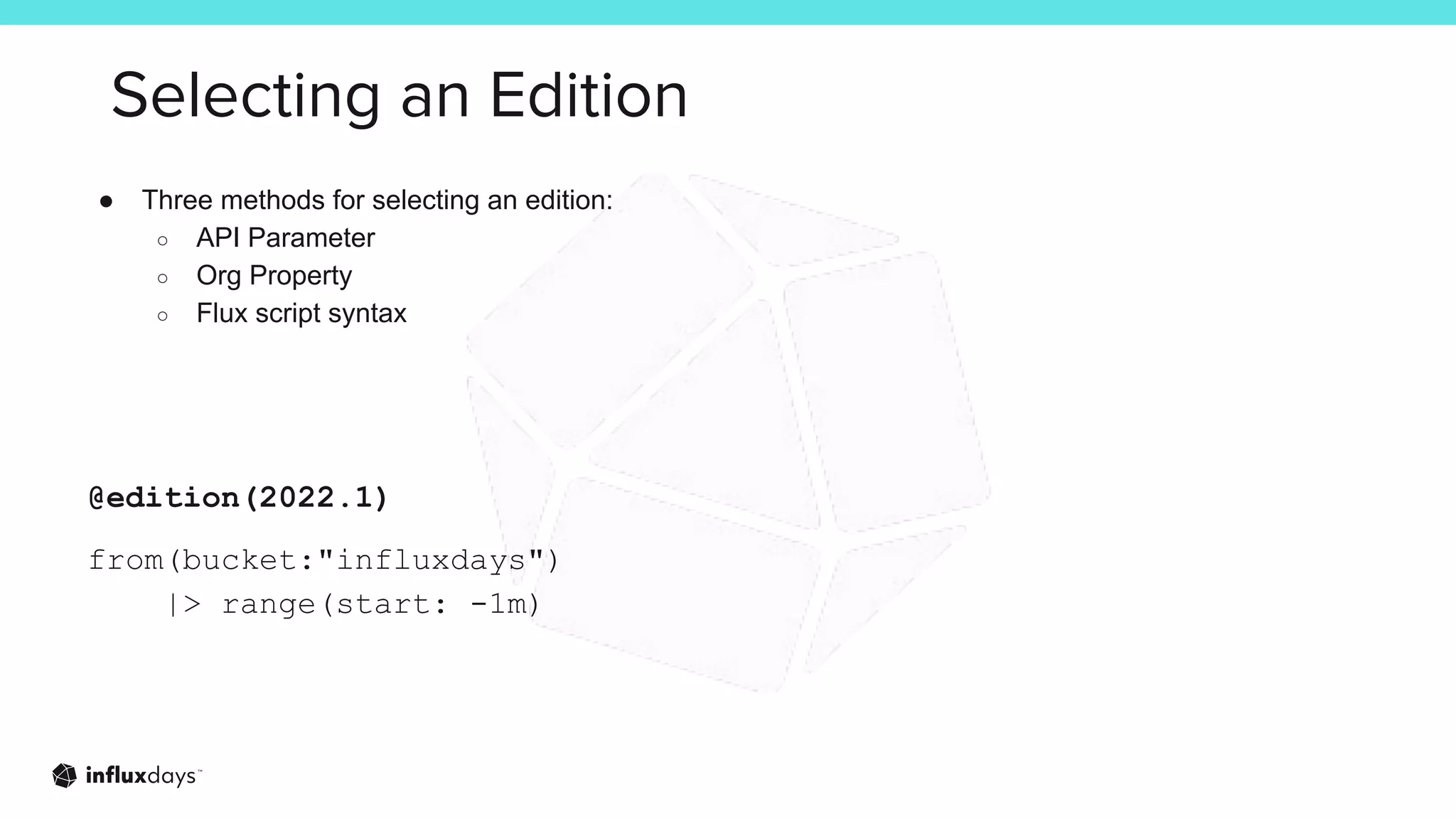
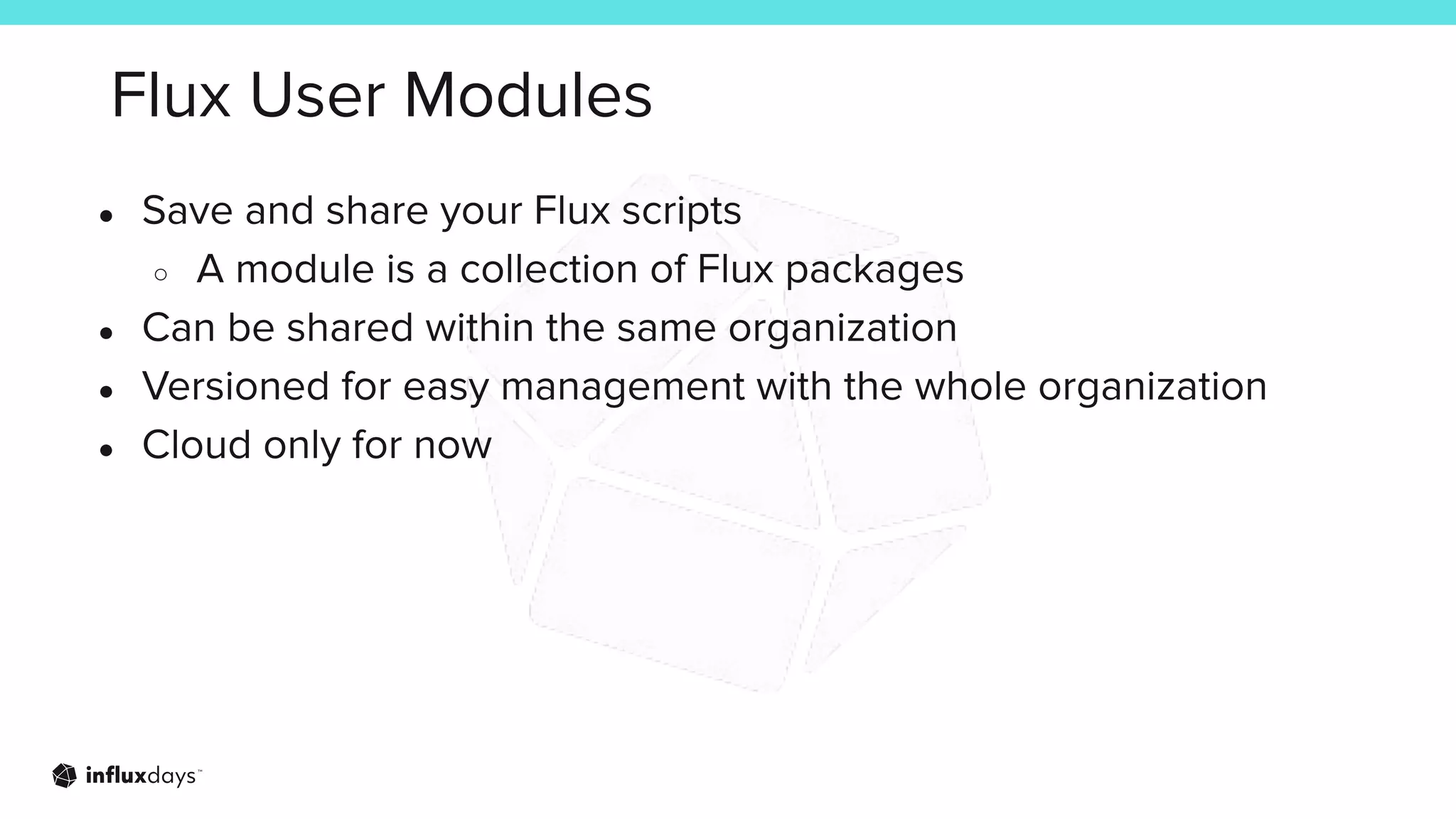
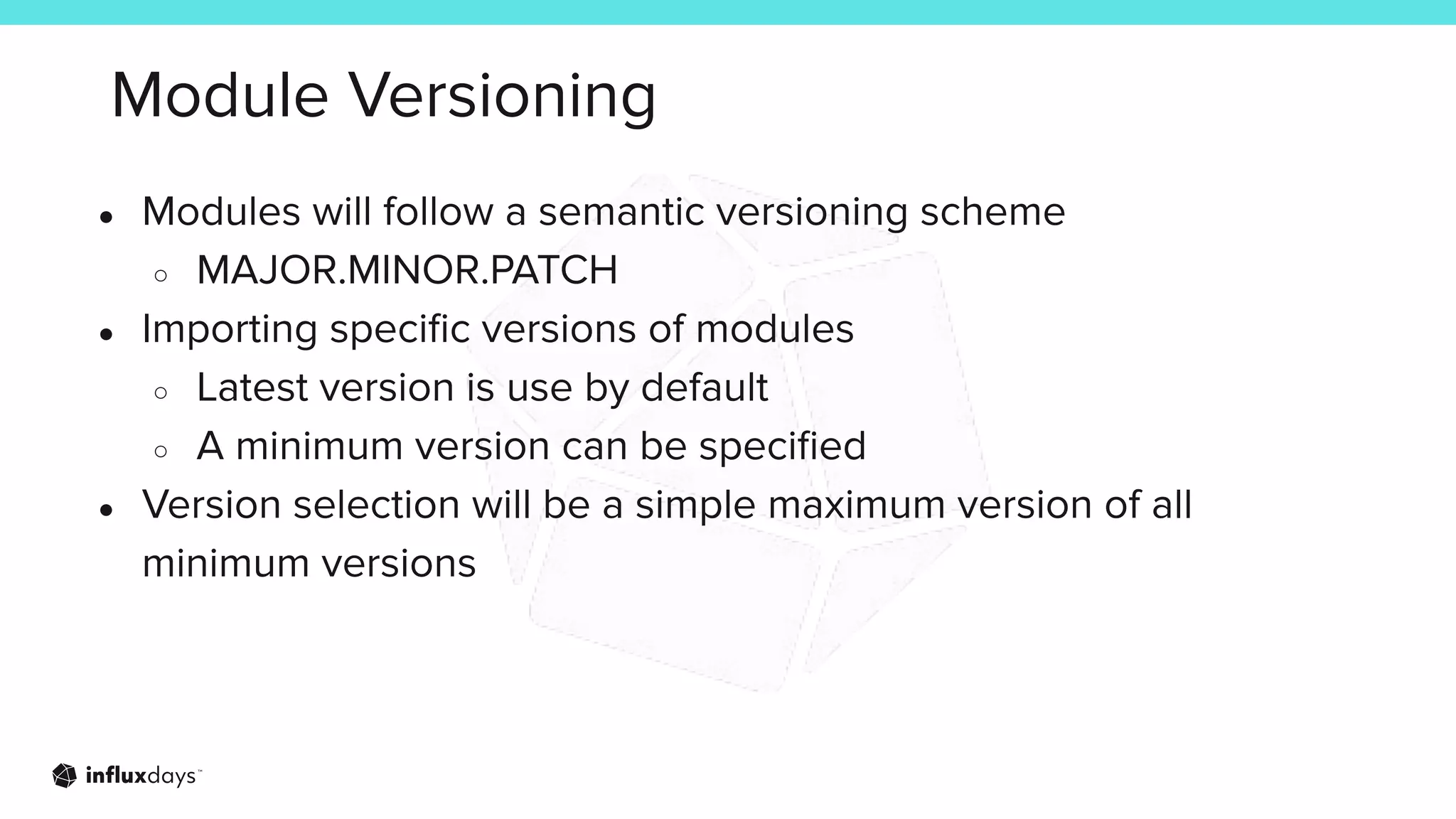
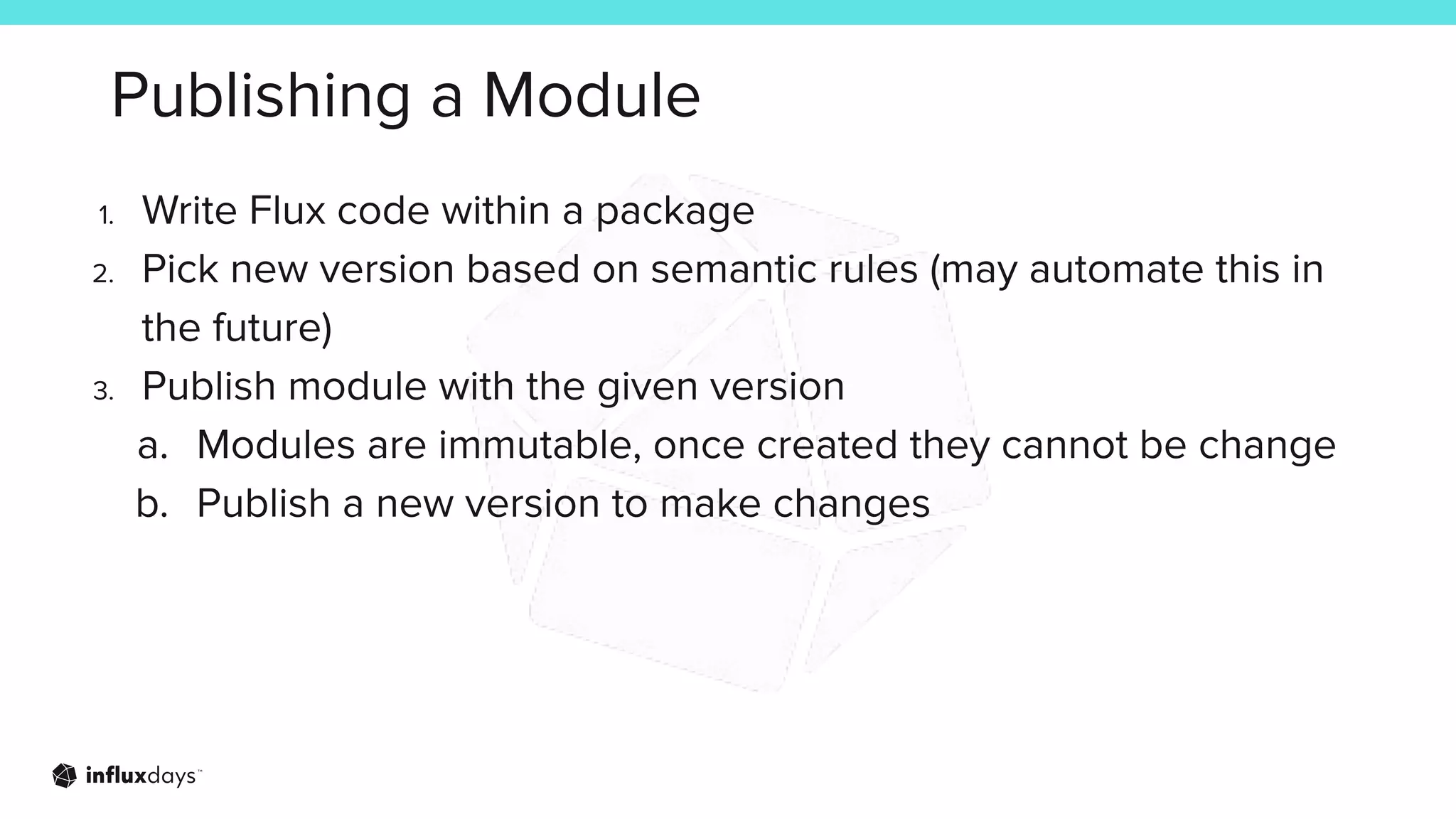
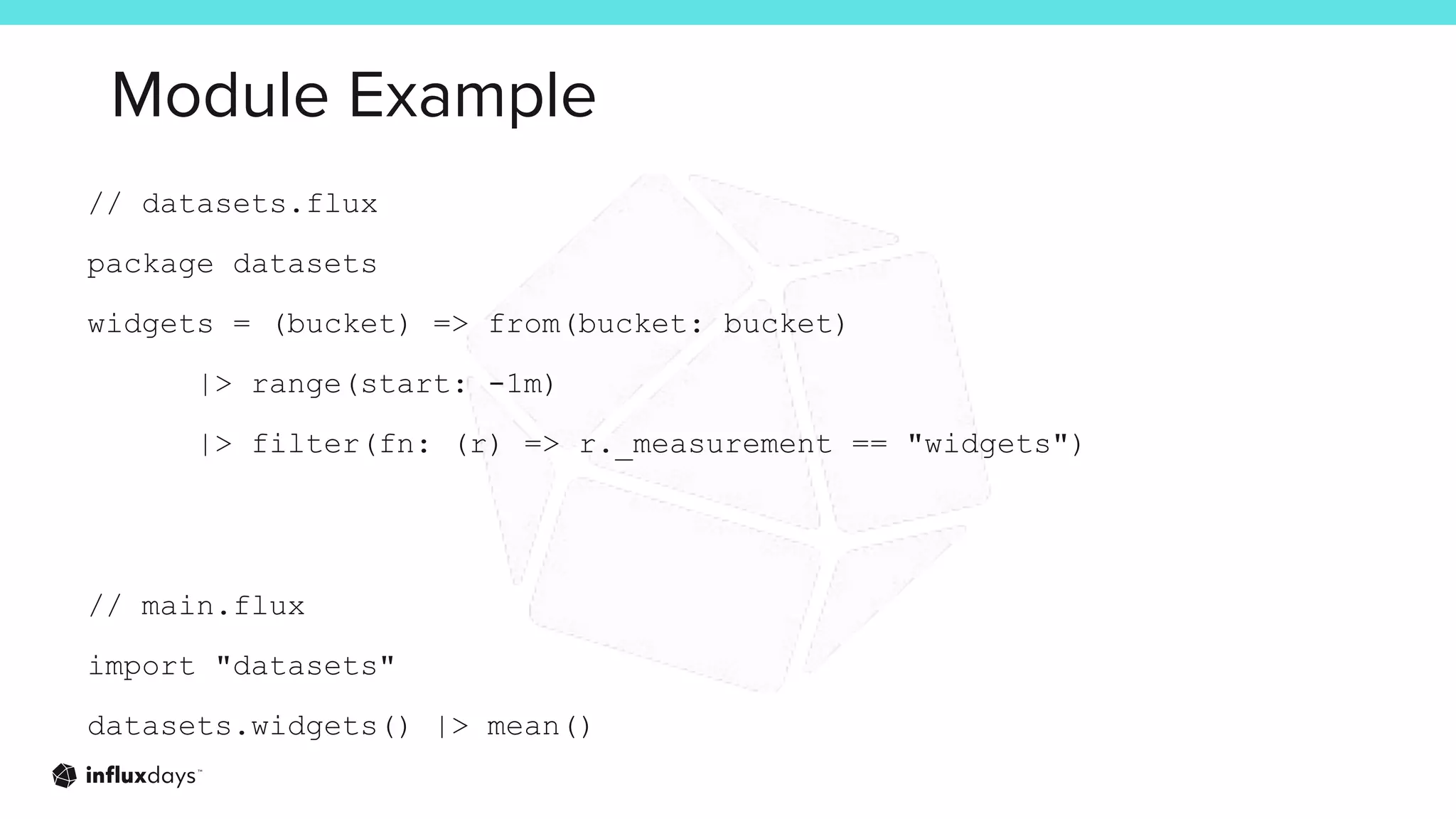
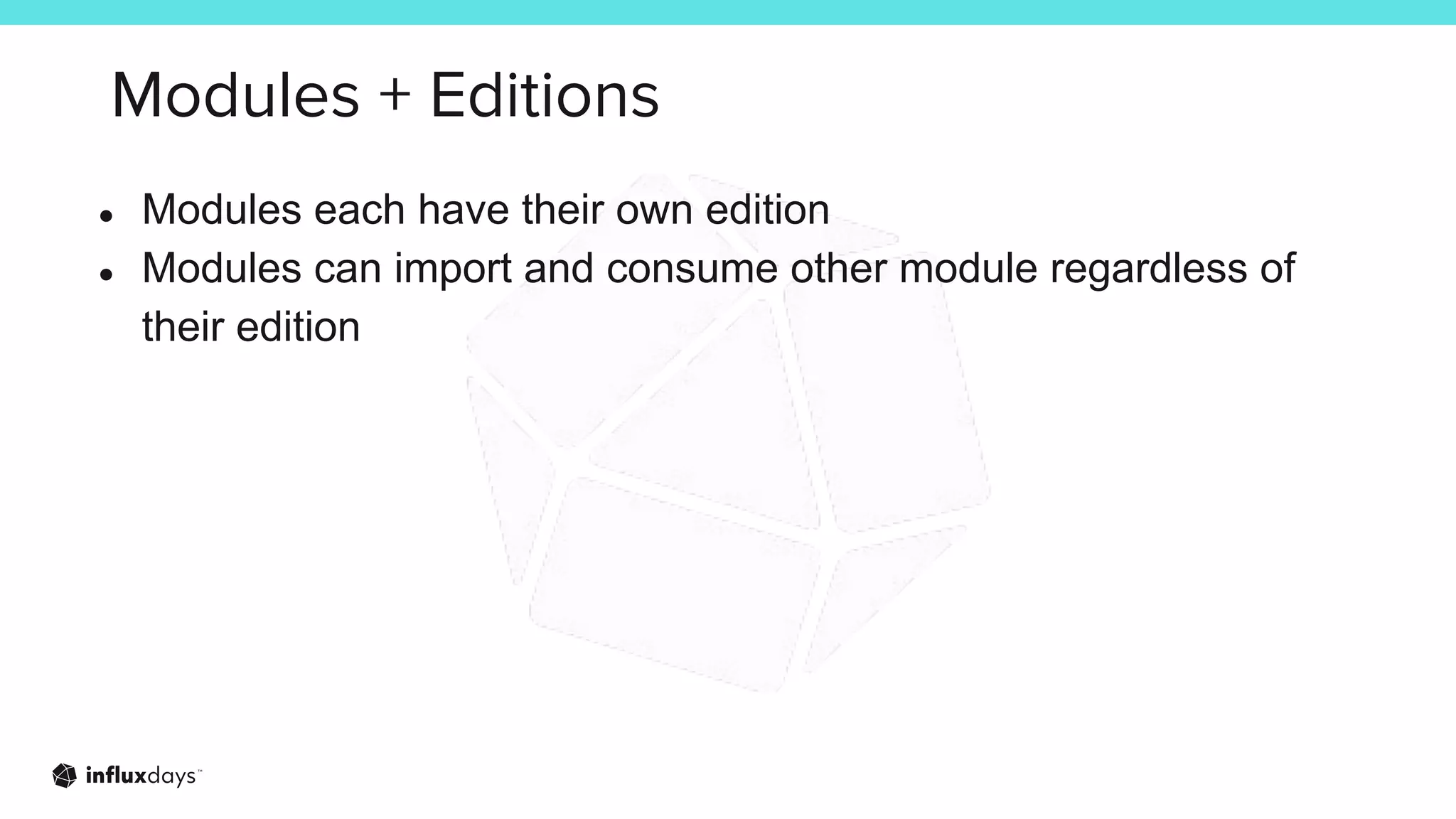

This document summarizes Nathaniel Cook's presentation on Flux and the future of the functional data scripting and querying language Flux. The presentation covers: 1. A review of developments in Flux over the past year 2. An overview of the next year of developments for Flux, including the introduction of Flux 1.0 with a commitment to stability without stagnation through an editions system. Editions will allow for new features in Flux without breaking changes, and will be enabled through script syntax, API parameters, or org properties. User modules will also allow sharing and versioning of Flux scripts.


![Russ Savage [Ngrok] | InfluxDB QuickStart | InfluxDays NA 2021](https://cdn.slidesharecdn.com/ss_thumbnails/russ-savageinfluxdays-na-2021-211022195246-thumbnail.jpg?width=640&height=640&fit=bounds)

![Michael Hall [InfluxData] | Become an InfluxDB Pro in 20 Minutes | InfluxDays...](https://cdn.slidesharecdn.com/ss_thumbnails/becomeaninfluxdbproin20minutesreviewed-221020212209-7ac7ea3f-thumbnail.jpg?width=640&height=640&fit=bounds)


![Anais Dotis-Georgiou & Faith Chikwekwe [InfluxData] | Top 10 Hurdles for Flux...](https://cdn.slidesharecdn.com/ss_thumbnails/anaisdotis-georgioufaithchikwekweinfluxdatatop10hurdlesforfluxbeginnersinfluxdaysvirtualexperiencena-201106155710-thumbnail.jpg?width=640&height=640&fit=bounds)
![Paul Dix [InfluxData] | InfluxDays Keynote: Future of InfluxDB | InfluxDays N...](https://cdn.slidesharecdn.com/ss_thumbnails/2021-10-26whytimeseries-influxdaysna-211026005527-thumbnail.jpg?width=640&height=640&fit=bounds)


![Balaji Palani [InfluxData] | InfluxDB Tasks Overview | InfluxDays 2022](https://cdn.slidesharecdn.com/ss_thumbnails/dem13tasksoverviewdemobalajipalani-221020205918-ba7ebf60-thumbnail.jpg?width=640&height=640&fit=bounds)


![Phil Day [Configured Things] | Policy-Driven Real-Time Data Filtering from Io...](https://cdn.slidesharecdn.com/ss_thumbnails/influxdays2021policydrivenfilteringwithfluxphilday1-210426175430-thumbnail.jpg?width=640&height=640&fit=bounds)


![Ward Bowman [PTC] | ThingWorx Long-Term Data Storage with InfluxDB | InfluxDa...](https://cdn.slidesharecdn.com/ss_thumbnails/influxdays-221027185325-5d2f430b-thumbnail.jpg?width=640&height=640&fit=bounds)
![Scott Anderson [InfluxData] | New & Upcoming Flux Features | InfluxDays 2022](https://cdn.slidesharecdn.com/ss_thumbnails/influxdays2022-fluxupdates-scott-221021210238-9d323cba-thumbnail.jpg?width=640&height=640&fit=bounds)
![Steinkamp, Clifford [InfluxData] | Closing Thoughts | InfluxDays 2022](https://cdn.slidesharecdn.com/ss_thumbnails/influxdays2022closingthoughtsday2-221020220104-abde55ea-thumbnail.jpg?width=640&height=640&fit=bounds)
![Steinkamp, Clifford [InfluxData] | Welcome to InfluxDays 2022 - Day 2 | Influ...](https://cdn.slidesharecdn.com/ss_thumbnails/influxdays2022welcometoday2-221020215815-c8463942-thumbnail.jpg?width=640&height=640&fit=bounds)
![Steinkamp, Clifford [InfluxData] | Closing Thoughts Day 1 | InfluxDays 2022](https://cdn.slidesharecdn.com/ss_thumbnails/influxdays2022closingthoughtsday1-221020215301-f8040e1f-thumbnail.jpg?width=640&height=640&fit=bounds)


