© Health Catalyst. Confidential and Proprietary.
A Healthcare Worker Shortage
Action Plan: Short-Term Wins
and Long-Term Strategy
© Health Catalyst. Confidential and Proprietary.
Dan Unger
Senior Vice President and General Manager,
Financial Transformation Business
Dan Hopkins
Professional Services, VP
John Hansmann, MSIE, LFHIMSS, DSHS
Professional Services, VP
Article
Summary
U.S. health systems will have a projected deficit of
200,000-450,000 RNs by 2025. Meanwhile, hospital labor
costs have reached almost 50% of an organization’s
overall expenses. Now more than ever, leaders need a
data-driven labor management strategy that ensures the
most cost-effective, high-quality care.
© Health Catalyst. Confidential and Proprietary.
A Healthcare Worker Shortage Action Plan
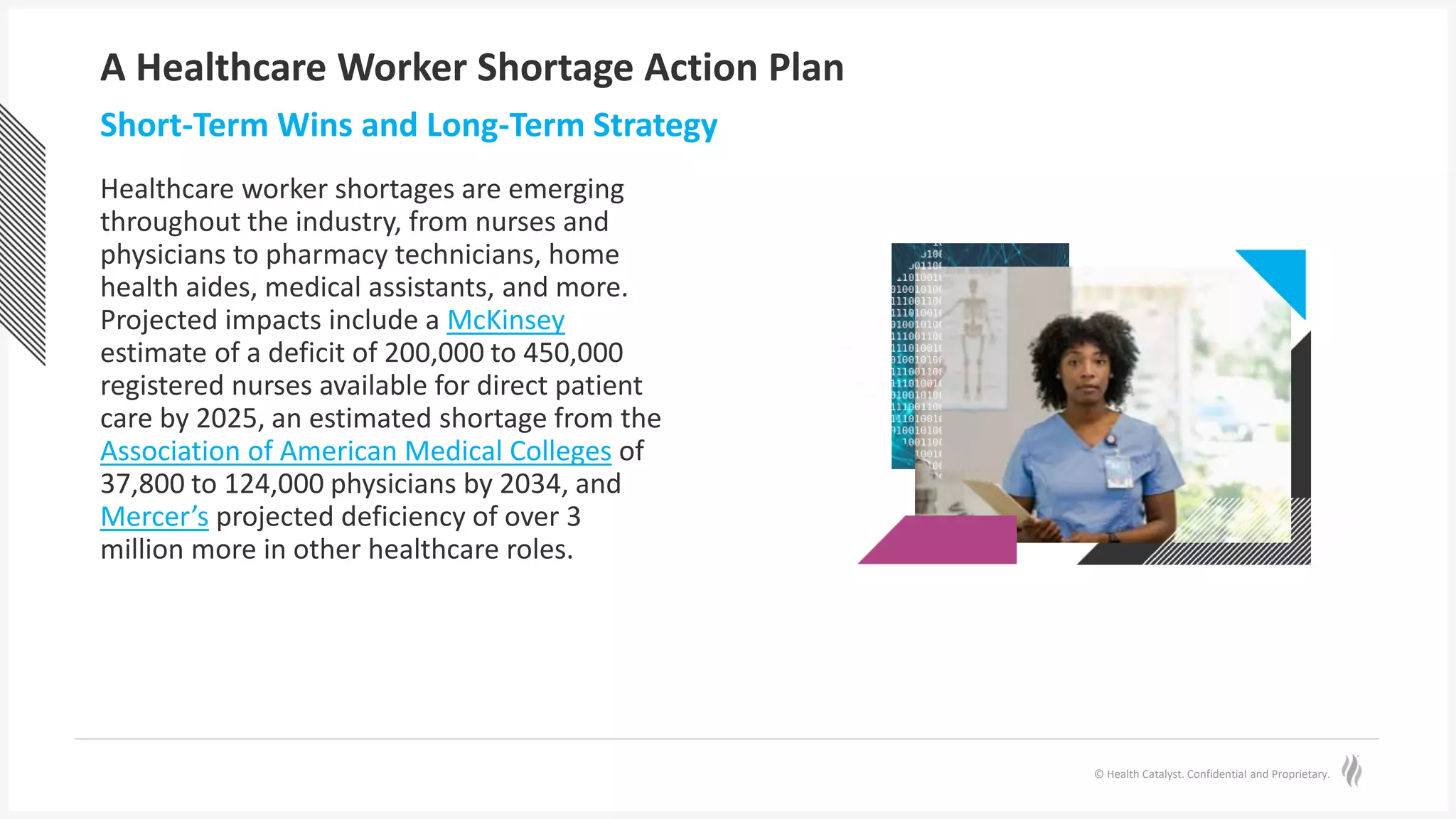
Healthcare worker shortages are emerging
throughout the industry, from nurses and
physicians to pharmacy technicians, home
health aides, medical assistants, and more.
Projected impacts include a McKinsey
estimate of a deficit of 200,000 to 450,000
registered nurses available for direct patient
care by 2025, an estimated shortage from the
Association of American Medical Colleges of
37,800 to 124,000 physicians by 2034, and
Mercer’s projected deficiency of over 3
million more in other healthcare roles.
Short-Term Wins and Long-Term Strategy
© Health Catalyst. Confidential and Proprietary.
A Healthcare Worker Shortage Action Plan
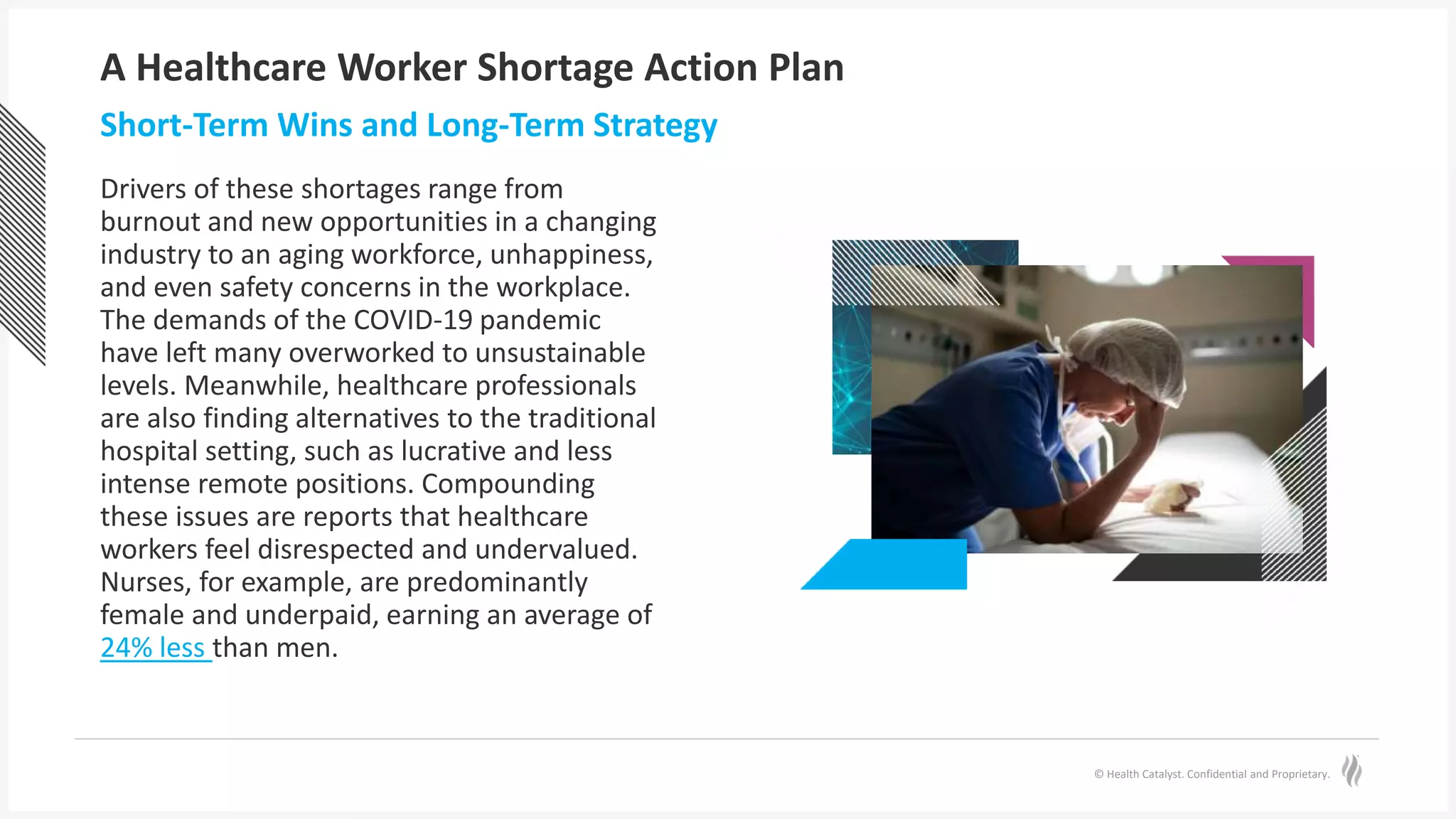
Drivers of these shortages range from
burnout and new opportunities in a changing
industry to an aging workforce, unhappiness,
and even safety concerns in the workplace.
The demands of the COVID-19 pandemic
have left many overworked to unsustainable
levels. Meanwhile, healthcare professionals
are also finding alternatives to the traditional
hospital setting, such as lucrative and less
intense remote positions. Compounding
these issues are reports that healthcare
workers feel disrespected and undervalued.
Nurses, for example, are predominantly
female and underpaid, earning an average of
24% less than men.
Short-Term Wins and Long-Term Strategy
© Health Catalyst. Confidential and Proprietary.
A Healthcare Worker Shortage Action Plan
While the healthcare worker shortage
immediately impacts clinical care, labor
challenges are also a systemwide problem, as
repercussions such as unsustainable costs and
interrupted workflows affect every aspect of
an organization. In May 2022, Kaufman Hall
reported that hospital labor expenses had
increased one-third from pre-pandemic levels,
reaching almost 50% of total expenses,
including a fivefold increase in contract labor.
Due to the heavy financial burden and the
complex drivers described above, health
systems must leverage quality data and work
collaboratively to understand and proactively
approach staffing.
Short-Term Wins and Long-Term Strategy
© Health Catalyst. Confidential and Proprietary.
Understand Your
Organization’s Problem:
Areas Impacting Labor Costs
© Health Catalyst. Confidential and Proprietary.
Understand Your Organization’s Problem
Healthcare has a workforce supply
problem, with people leaving the
profession at a greater rate than they’re
entering it. Meanwhile, demand and cost
are rising, leaving organizations short on
human and financial resources to meet
community healthcare needs.
Areas Impacting Labor Costs
© Health Catalyst. Confidential and Proprietary.
Understand Your Organization’s Problem
Several significant factors are driving the healthcare supply shortage:
 Retirement: An aging population means a substantial portion of the healthcare workforce is
approaching retirement.
 Retention: Healthcare workers are leaving their jobs. Drivers include burnout, the inability to
practice at the top of their licenses, and a lack of respect in the workplace. In addition to
retirement, workers are leaving healthcare for opportunities in other industries and within
healthcare in newer innovative partnerships, in which disparate entities (e.g., CVS-Aetna) are
teaming up to provide higher-quality, lower-cost care and more welcoming workplace
environments.
 Recruitment: Not enough younger people are entering healthcare professions.
 Quiet quitting: While many people are not leaving their jobs, healthcare is seeing less engagement
and a higher incidence of workers completing only their role’s minimum requirements.
 Shift to travel positions: With the rise of contract labor to fill staffing shortages, nurses, in
particular, have opportunities to transition to travel positions, earning them higher pay and more
flexibility than hospital-based positions.
Areas Impacting Labor Costs
© Health Catalyst. Confidential and Proprietary.
Understand Your Organization’s Problem
As the workforce supply diminishes, the demand for
healthcare services is growing. After a COVID-19-driven
slowdown in patient volumes in 2020 and 2021,
numbers are rising again and approaching pre-
pandemic levels. Additionally, patients are sicker and
more medically complex (patient acuity) than before
the COVID-19 pandemic, which drives up the cost of
labor, medication, and supplies. Organizations have
turned to contract labor and travel positions to bridge
the supply-demand gap, increasing labor expenses by
more than one-third compared to pre-pandemic levels.
Areas Impacting Labor Costs
© Health Catalyst. Confidential and Proprietary.
A Healthcare Worker Shortage
Action Plan: Achieving Long-Term
Goals Starts with Short-Term Impact
© Health Catalyst. Confidential and Proprietary.
A Healthcare Worker Shortage Action Plan
With the scope of issues impacting healthcare
workforces, organizations have short- and long-term
opportunities to improve their labor outlook. While
the bigger-picture, long-term goals stand to be
transformative, they’ll also require years of
preparation, training, and cultural shifts. In the
meantime, leaders can focus on shorter-term areas
of impact to start reversing the healthcare worker
shortage immediately and create pathways for
longer-term aims.
Achieving Long-Term Goals Starts with Short-Term Impact
© Health Catalyst. Confidential and Proprietary.
A Healthcare Worker Shortage Action Plan
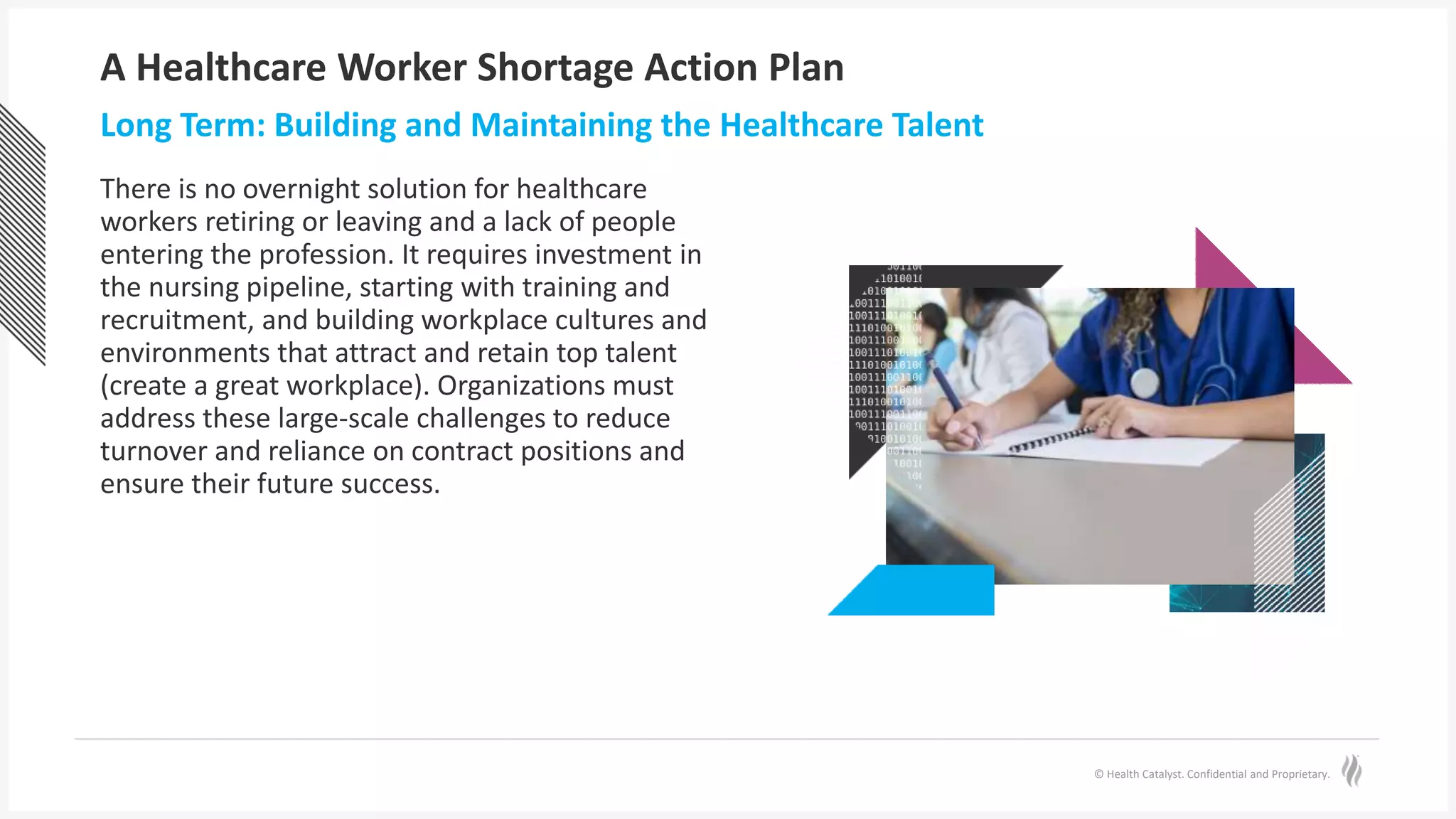
There is no overnight solution for healthcare
workers retiring or leaving and a lack of people
entering the profession. It requires investment in
the nursing pipeline, starting with training and
recruitment, and building workplace cultures and
environments that attract and retain top talent
(create a great workplace). Organizations must
address these large-scale challenges to reduce
turnover and reliance on contract positions and
ensure their future success.
Long Term: Building and Maintaining the Healthcare Talent
© Health Catalyst. Confidential and Proprietary.
A Healthcare Worker Shortage Action Plan
Organizations are exploring many strategies to increase the
supply of healthcare professionals. While many are long-
term in nature, there are some ways health systems can
support increasing the overall supply of available nurses:
 Sponsor scholarships for education and training for
nursing and other high-demand roles.
 Support public marketing campaigns to promote and
grow the healthcare workforce.
 Provide support and flexibility to existing staff
members who want to return to school to become an
RN or another in-demand role.
 Invest in nurse training programs and faculty to
increase capacity.
 Partner with schools to provide training opportunities
and experience in a future work environment.
Increase the Supply: Build the Workforce Pipeline
© Health Catalyst. Confidential and Proprietary.
A Healthcare Worker Shortage Action Plan
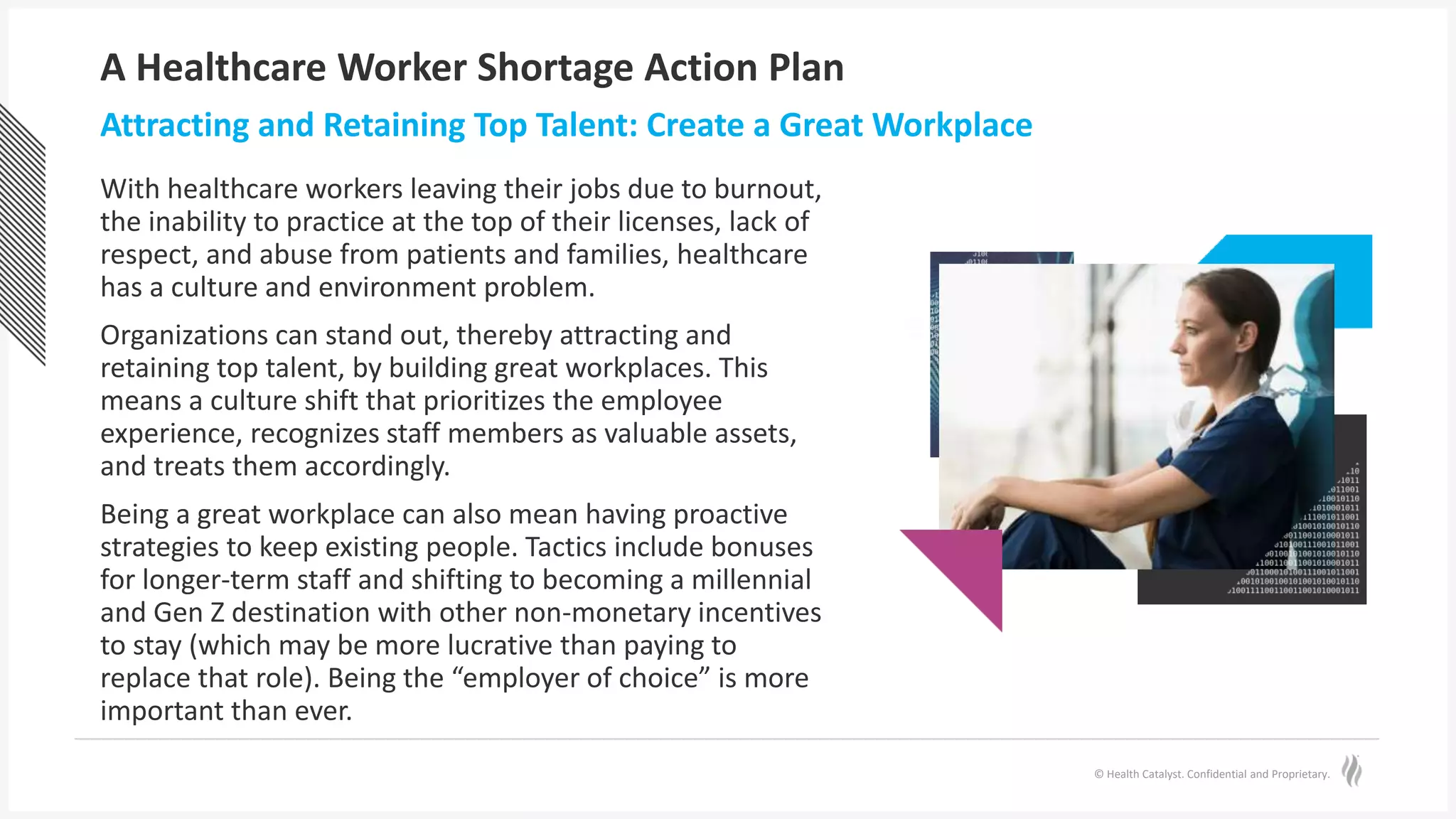
With healthcare workers leaving their jobs due to burnout,
the inability to practice at the top of their licenses, lack of
respect, and abuse from patients and families, healthcare
has a culture and environment problem.
Organizations can stand out, thereby attracting and
retaining top talent, by building great workplaces. This
means a culture shift that prioritizes the employee
experience, recognizes staff members as valuable assets,
and treats them accordingly.
Being a great workplace can also mean having proactive
strategies to keep existing people. Tactics include bonuses
for longer-term staff and shifting to becoming a millennial
and Gen Z destination with other non-monetary incentives
to stay (which may be more lucrative than paying to
replace that role). Being the “employer of choice” is more
important than ever.
Attracting and Retaining Top Talent: Create a Great Workplace
© Health Catalyst. Confidential and Proprietary.
A Healthcare Worker Shortage Action Plan
While the above long-term strategies to
address healthcare require time and effort
before they yield measurable impact,
organizations can do a lot today to optimize
their current resources. The core of these
efforts will be leveraging data to become more
efficient in seeing patients in a high-quality
way. In other words, health systems must
identify ways to deploy the workforce better
to meet patient volumes (supply and demand).
Short Term: How to Act Today to Staff for Patient Volume in the
Most Cost-Effective, High-Quality Way
© Health Catalyst. Confidential and Proprietary.
A Healthcare Worker Shortage Action Plan
Bridging the supply and demand gap to manage
costs requires a comprehensive, AI-equipped
view of healthcare labor data by system,
department, team, and job role, including
particular contract and pay categories. Health
systems must predict patient volumes and
proactively schedule resources to decrease
waste and increase productivity while ensuring
excellent patient care.
Short Term: How to Act Today to Staff for Patient Volume in the
Most Cost-Effective, High-Quality Way
© Health Catalyst. Confidential and Proprietary.
A Healthcare Worker Shortage Action Plan
These short-term labor management strategies include the following:
 Implement shared governance: Initiatives within nursing and other fields to support workforce
engagement. Known as shared governance, tactics include staff participation with scheduling,
which gives individuals input on the flow and activity in their department.
 Improve patient flow (throughput): Patient flow, or the movement of patients through a
healthcare facility, can hold significant opportunities for improvement, especially when it comes to
optimizing staffing. For example, overscheduling in one area (e.g., elective surgery) will cause a
bottleneck in another (e.g., post-operative overcrowding), leading to staffing strain.
 Find the appropriate setting for each patient (patient aggregation or placement): Optimizing
resources includes ensuring that patients are cared for in the most appropriate setting. For
example, does a patient need a Med-Surg bed after a procedure, or can they recover just as well
or better at home with telemonitoring? Does a patient need to stay hospitalized, or are they ready
for discharge? Health systems can build on lessons learned during the pandemic—such as rapidly
responding to patient surges with makeshift expansion to facilities—to accommodate patients as
unforeseen needs arise.
 Optimize the nursing skill mix: Healthcare leaders must evaluate their nursing roles to ensure a
good combination of education and experience, including registered nurses (RNs), licensed
Short Term: How to Act Today to Staff for Patient Volume in the
Most Cost-Effective, High-Quality Way
© Health Catalyst. Confidential and Proprietary.
A Healthcare Worker Shortage Action Plan
These short-term labor management strategies include the following (continued):
 Optimize the nursing skill mix: Healthcare leaders must evaluate their nursing roles to ensure a good
combination of education and experience, including registered nurses (RNs), licensed practical
nurses, and nursing assistants, and ensure each role is in the appropriate setting to perform at the
top of their license. For example, are RNs mostly performing duties that require an RN? Or does the
health system have higher-paid RNs performing too many non-RN responsibilities, such as
transporting stable patients? The right skill mix can help organizations minimize costly contracts,
travel, and overtime labor.
 Create new care models: Telehealth opened the doors to a model shift during the pandemic.
Although we see a swing back to prior models, we must re-examine and capitalize on these proven
virtual models. Imagine nurses and providers having the opportunity one or two days a week to
practice remotely with patients who recognize that a virtual visit can provide the same or better care.
 Enhance workforce flexibility: Provide opportunities for different shift lengths, part-time positions,
and other flexible scheduling practices that can open access to individuals otherwise not interested in
filling available shifts.
Short Term: How to Act Today to Staff for Patient Volume in the
Most Cost-Effective, High-Quality Way
© Health Catalyst. Confidential and Proprietary.
A Healthcare Worker Shortage Action Plan
Short Term: How to Act Today to Staff for Patient Volume in the
Most Cost-Effective, High-Quality Way
Download a PDF of this article to share with your organization.
© Health Catalyst. Confidential and Proprietary.
Labor Management in Action:
$2.2 Million Saved in 16 Months
© Health Catalyst. Confidential and Proprietary.
Labor Management in Action
Health systems that commit to improving labor
management using the tactics above need a
comprehensive data-driven approach to reduce
unnecessary costs while maintaining high-quality
care and patient and employee satisfaction.
Leaders need a data and analytics platform to
help understand everything from predicting
patient volumes and matching supply to demand
to optimizing skill mix and scheduling.
$2.2 Million Saved in 16 Months
© Health Catalyst. Confidential and Proprietary.
Labor Management in Action
For example, in 2022, Hawai‘i Pacific Health (HPH)
sought to improve its staffing practices and better
manage labor needs. The organization used its data
and analytics platform and a labor-management
analytics application (Health Catalyst PowerLabor™)
to help managers facilitate more efficient labor
force utilization. PowerLabor helped HPH leaders
visualize labor management, understand
productivity, and identify hours detail versus the
budget and full-time equivalent (FTE) utilization
compared to budgeted FTE.
$2.2 Million Saved in 16 Months
© Health Catalyst. Confidential and Proprietary.
Labor Management in Action
The data uncovered opportunities to reduce costs in
healthcare labor management and identified areas
across four hospitals with the most significant
potential to improve. HPH’s meaningful insights into
their labor management included the following:
 A unit that others in the organization perceived
as overstaffed used the data to demonstrate
the need to add FTEs.
 Another unit analyzed the overtime and
double-time employees were using and
converted those high-expense dollars to regular
hours by adding one staff member. In many
cases, reallocating positions improved staffing
without additional costs.
$2.2 Million Saved in 16 Months
© Health Catalyst. Confidential and Proprietary.
Labor Management in Action
With its data-driven approach to labor
management, HPH forecasted its workforce
needs and effectively managed staff
schedules. These changes led to significant
cost savings—$2.2 million in just over a year.
$2.2 Million Saved in 16 Months
$2.2 million in just over a year
© Health Catalyst. Confidential and Proprietary.
Continue the Cycle: Managing the
Healthcare Worker Shortage Is an
Ongoing, Dynamic Process
© Health Catalyst. Confidential and Proprietary.
Continue the Cycle
With labor expenses comprising nearly
50% of total hospital and health system
operation expenses and projected
healthcare worker shortages reaching
millions in just a few short years, the
industry has a complex course of
challenges ahead. Restoring the balance
between labor supply, demand, and cost
will require a multifaceted investment
with long- and short-term approaches.
Managing the Healthcare Worker Shortage Is an Ongoing, Dynamic Process
© Health Catalyst. Confidential and Proprietary.
Continue the Cycle
While foundational elements like drawing
more people to healthcare professions and
building great places to work that attract
and retain talent are critical for a
sustainable industry, organizations must
also address acute issues in the short term.
Backed by a comprehensive, data-driven
labor management solution, these short-
term actions can deliver immediate returns
by optimizing existing resources for lower
costs, better quality, and an improved
workforce experience.
Managing the Healthcare Worker Shortage Is an Ongoing, Dynamic Process
© Health Catalyst. Confidential and Proprietary.
1 Easing Labor Shortages and Staff Burnout with Data and Analytics
3 Data-Driven Labor Management Delivers
Financial and Operational Improvements
2 Optimize Your Labor Management with
Health Catalyst PowerLabor™
Here Are Some Articles We Suggest
Additional Reading

A Healthcare Worker Shortage Action Plan Short-Term Wins and Long-Term Strategy

  • 1.
    © Health Catalyst.Confidential and Proprietary. A Healthcare Worker Shortage Action Plan: Short-Term Wins and Long-Term Strategy
  • 2.
    © Health Catalyst.Confidential and Proprietary. Dan Unger Senior Vice President and General Manager, Financial Transformation Business Dan Hopkins Professional Services, VP John Hansmann, MSIE, LFHIMSS, DSHS Professional Services, VP
  • 3.
    Article Summary U.S. health systemswill have a projected deficit of 200,000-450,000 RNs by 2025. Meanwhile, hospital labor costs have reached almost 50% of an organization’s overall expenses. Now more than ever, leaders need a data-driven labor management strategy that ensures the most cost-effective, high-quality care.
  • 4.
    © Health Catalyst.Confidential and Proprietary. A Healthcare Worker Shortage Action Plan Healthcare worker shortages are emerging throughout the industry, from nurses and physicians to pharmacy technicians, home health aides, medical assistants, and more. Projected impacts include a McKinsey estimate of a deficit of 200,000 to 450,000 registered nurses available for direct patient care by 2025, an estimated shortage from the Association of American Medical Colleges of 37,800 to 124,000 physicians by 2034, and Mercer’s projected deficiency of over 3 million more in other healthcare roles. Short-Term Wins and Long-Term Strategy
  • 5.
    © Health Catalyst.Confidential and Proprietary. A Healthcare Worker Shortage Action Plan Drivers of these shortages range from burnout and new opportunities in a changing industry to an aging workforce, unhappiness, and even safety concerns in the workplace. The demands of the COVID-19 pandemic have left many overworked to unsustainable levels. Meanwhile, healthcare professionals are also finding alternatives to the traditional hospital setting, such as lucrative and less intense remote positions. Compounding these issues are reports that healthcare workers feel disrespected and undervalued. Nurses, for example, are predominantly female and underpaid, earning an average of 24% less than men. Short-Term Wins and Long-Term Strategy
  • 6.
    © Health Catalyst.Confidential and Proprietary. A Healthcare Worker Shortage Action Plan While the healthcare worker shortage immediately impacts clinical care, labor challenges are also a systemwide problem, as repercussions such as unsustainable costs and interrupted workflows affect every aspect of an organization. In May 2022, Kaufman Hall reported that hospital labor expenses had increased one-third from pre-pandemic levels, reaching almost 50% of total expenses, including a fivefold increase in contract labor. Due to the heavy financial burden and the complex drivers described above, health systems must leverage quality data and work collaboratively to understand and proactively approach staffing. Short-Term Wins and Long-Term Strategy
  • 7.
    © Health Catalyst.Confidential and Proprietary. Understand Your Organization’s Problem: Areas Impacting Labor Costs
  • 8.
    © Health Catalyst.Confidential and Proprietary. Understand Your Organization’s Problem Healthcare has a workforce supply problem, with people leaving the profession at a greater rate than they’re entering it. Meanwhile, demand and cost are rising, leaving organizations short on human and financial resources to meet community healthcare needs. Areas Impacting Labor Costs
  • 9.
    © Health Catalyst.Confidential and Proprietary. Understand Your Organization’s Problem Several significant factors are driving the healthcare supply shortage:  Retirement: An aging population means a substantial portion of the healthcare workforce is approaching retirement.  Retention: Healthcare workers are leaving their jobs. Drivers include burnout, the inability to practice at the top of their licenses, and a lack of respect in the workplace. In addition to retirement, workers are leaving healthcare for opportunities in other industries and within healthcare in newer innovative partnerships, in which disparate entities (e.g., CVS-Aetna) are teaming up to provide higher-quality, lower-cost care and more welcoming workplace environments.  Recruitment: Not enough younger people are entering healthcare professions.  Quiet quitting: While many people are not leaving their jobs, healthcare is seeing less engagement and a higher incidence of workers completing only their role’s minimum requirements.  Shift to travel positions: With the rise of contract labor to fill staffing shortages, nurses, in particular, have opportunities to transition to travel positions, earning them higher pay and more flexibility than hospital-based positions. Areas Impacting Labor Costs
  • 10.
    © Health Catalyst.Confidential and Proprietary. Understand Your Organization’s Problem As the workforce supply diminishes, the demand for healthcare services is growing. After a COVID-19-driven slowdown in patient volumes in 2020 and 2021, numbers are rising again and approaching pre- pandemic levels. Additionally, patients are sicker and more medically complex (patient acuity) than before the COVID-19 pandemic, which drives up the cost of labor, medication, and supplies. Organizations have turned to contract labor and travel positions to bridge the supply-demand gap, increasing labor expenses by more than one-third compared to pre-pandemic levels. Areas Impacting Labor Costs
  • 11.
    © Health Catalyst.Confidential and Proprietary. A Healthcare Worker Shortage Action Plan: Achieving Long-Term Goals Starts with Short-Term Impact
  • 12.
    © Health Catalyst.Confidential and Proprietary. A Healthcare Worker Shortage Action Plan With the scope of issues impacting healthcare workforces, organizations have short- and long-term opportunities to improve their labor outlook. While the bigger-picture, long-term goals stand to be transformative, they’ll also require years of preparation, training, and cultural shifts. In the meantime, leaders can focus on shorter-term areas of impact to start reversing the healthcare worker shortage immediately and create pathways for longer-term aims. Achieving Long-Term Goals Starts with Short-Term Impact
  • 13.
    © Health Catalyst.Confidential and Proprietary. A Healthcare Worker Shortage Action Plan There is no overnight solution for healthcare workers retiring or leaving and a lack of people entering the profession. It requires investment in the nursing pipeline, starting with training and recruitment, and building workplace cultures and environments that attract and retain top talent (create a great workplace). Organizations must address these large-scale challenges to reduce turnover and reliance on contract positions and ensure their future success. Long Term: Building and Maintaining the Healthcare Talent
  • 14.
    © Health Catalyst.Confidential and Proprietary. A Healthcare Worker Shortage Action Plan Organizations are exploring many strategies to increase the supply of healthcare professionals. While many are long- term in nature, there are some ways health systems can support increasing the overall supply of available nurses:  Sponsor scholarships for education and training for nursing and other high-demand roles.  Support public marketing campaigns to promote and grow the healthcare workforce.  Provide support and flexibility to existing staff members who want to return to school to become an RN or another in-demand role.  Invest in nurse training programs and faculty to increase capacity.  Partner with schools to provide training opportunities and experience in a future work environment. Increase the Supply: Build the Workforce Pipeline
  • 15.
    © Health Catalyst.Confidential and Proprietary. A Healthcare Worker Shortage Action Plan With healthcare workers leaving their jobs due to burnout, the inability to practice at the top of their licenses, lack of respect, and abuse from patients and families, healthcare has a culture and environment problem. Organizations can stand out, thereby attracting and retaining top talent, by building great workplaces. This means a culture shift that prioritizes the employee experience, recognizes staff members as valuable assets, and treats them accordingly. Being a great workplace can also mean having proactive strategies to keep existing people. Tactics include bonuses for longer-term staff and shifting to becoming a millennial and Gen Z destination with other non-monetary incentives to stay (which may be more lucrative than paying to replace that role). Being the “employer of choice” is more important than ever. Attracting and Retaining Top Talent: Create a Great Workplace
  • 16.
    © Health Catalyst.Confidential and Proprietary. A Healthcare Worker Shortage Action Plan While the above long-term strategies to address healthcare require time and effort before they yield measurable impact, organizations can do a lot today to optimize their current resources. The core of these efforts will be leveraging data to become more efficient in seeing patients in a high-quality way. In other words, health systems must identify ways to deploy the workforce better to meet patient volumes (supply and demand). Short Term: How to Act Today to Staff for Patient Volume in the Most Cost-Effective, High-Quality Way
  • 17.
    © Health Catalyst.Confidential and Proprietary. A Healthcare Worker Shortage Action Plan Bridging the supply and demand gap to manage costs requires a comprehensive, AI-equipped view of healthcare labor data by system, department, team, and job role, including particular contract and pay categories. Health systems must predict patient volumes and proactively schedule resources to decrease waste and increase productivity while ensuring excellent patient care. Short Term: How to Act Today to Staff for Patient Volume in the Most Cost-Effective, High-Quality Way
  • 18.
    © Health Catalyst.Confidential and Proprietary. A Healthcare Worker Shortage Action Plan These short-term labor management strategies include the following:  Implement shared governance: Initiatives within nursing and other fields to support workforce engagement. Known as shared governance, tactics include staff participation with scheduling, which gives individuals input on the flow and activity in their department.  Improve patient flow (throughput): Patient flow, or the movement of patients through a healthcare facility, can hold significant opportunities for improvement, especially when it comes to optimizing staffing. For example, overscheduling in one area (e.g., elective surgery) will cause a bottleneck in another (e.g., post-operative overcrowding), leading to staffing strain.  Find the appropriate setting for each patient (patient aggregation or placement): Optimizing resources includes ensuring that patients are cared for in the most appropriate setting. For example, does a patient need a Med-Surg bed after a procedure, or can they recover just as well or better at home with telemonitoring? Does a patient need to stay hospitalized, or are they ready for discharge? Health systems can build on lessons learned during the pandemic—such as rapidly responding to patient surges with makeshift expansion to facilities—to accommodate patients as unforeseen needs arise.  Optimize the nursing skill mix: Healthcare leaders must evaluate their nursing roles to ensure a good combination of education and experience, including registered nurses (RNs), licensed Short Term: How to Act Today to Staff for Patient Volume in the Most Cost-Effective, High-Quality Way
  • 19.
    © Health Catalyst.Confidential and Proprietary. A Healthcare Worker Shortage Action Plan These short-term labor management strategies include the following (continued):  Optimize the nursing skill mix: Healthcare leaders must evaluate their nursing roles to ensure a good combination of education and experience, including registered nurses (RNs), licensed practical nurses, and nursing assistants, and ensure each role is in the appropriate setting to perform at the top of their license. For example, are RNs mostly performing duties that require an RN? Or does the health system have higher-paid RNs performing too many non-RN responsibilities, such as transporting stable patients? The right skill mix can help organizations minimize costly contracts, travel, and overtime labor.  Create new care models: Telehealth opened the doors to a model shift during the pandemic. Although we see a swing back to prior models, we must re-examine and capitalize on these proven virtual models. Imagine nurses and providers having the opportunity one or two days a week to practice remotely with patients who recognize that a virtual visit can provide the same or better care.  Enhance workforce flexibility: Provide opportunities for different shift lengths, part-time positions, and other flexible scheduling practices that can open access to individuals otherwise not interested in filling available shifts. Short Term: How to Act Today to Staff for Patient Volume in the Most Cost-Effective, High-Quality Way
  • 20.
    © Health Catalyst.Confidential and Proprietary. A Healthcare Worker Shortage Action Plan Short Term: How to Act Today to Staff for Patient Volume in the Most Cost-Effective, High-Quality Way Download a PDF of this article to share with your organization.
  • 21.
    © Health Catalyst.Confidential and Proprietary. Labor Management in Action: $2.2 Million Saved in 16 Months
  • 22.
    © Health Catalyst.Confidential and Proprietary. Labor Management in Action Health systems that commit to improving labor management using the tactics above need a comprehensive data-driven approach to reduce unnecessary costs while maintaining high-quality care and patient and employee satisfaction. Leaders need a data and analytics platform to help understand everything from predicting patient volumes and matching supply to demand to optimizing skill mix and scheduling. $2.2 Million Saved in 16 Months
  • 23.
    © Health Catalyst.Confidential and Proprietary. Labor Management in Action For example, in 2022, Hawai‘i Pacific Health (HPH) sought to improve its staffing practices and better manage labor needs. The organization used its data and analytics platform and a labor-management analytics application (Health Catalyst PowerLabor™) to help managers facilitate more efficient labor force utilization. PowerLabor helped HPH leaders visualize labor management, understand productivity, and identify hours detail versus the budget and full-time equivalent (FTE) utilization compared to budgeted FTE. $2.2 Million Saved in 16 Months
  • 24.
    © Health Catalyst.Confidential and Proprietary. Labor Management in Action The data uncovered opportunities to reduce costs in healthcare labor management and identified areas across four hospitals with the most significant potential to improve. HPH’s meaningful insights into their labor management included the following:  A unit that others in the organization perceived as overstaffed used the data to demonstrate the need to add FTEs.  Another unit analyzed the overtime and double-time employees were using and converted those high-expense dollars to regular hours by adding one staff member. In many cases, reallocating positions improved staffing without additional costs. $2.2 Million Saved in 16 Months
  • 25.
    © Health Catalyst.Confidential and Proprietary. Labor Management in Action With its data-driven approach to labor management, HPH forecasted its workforce needs and effectively managed staff schedules. These changes led to significant cost savings—$2.2 million in just over a year. $2.2 Million Saved in 16 Months $2.2 million in just over a year
  • 26.
    © Health Catalyst.Confidential and Proprietary. Continue the Cycle: Managing the Healthcare Worker Shortage Is an Ongoing, Dynamic Process
  • 27.
    © Health Catalyst.Confidential and Proprietary. Continue the Cycle With labor expenses comprising nearly 50% of total hospital and health system operation expenses and projected healthcare worker shortages reaching millions in just a few short years, the industry has a complex course of challenges ahead. Restoring the balance between labor supply, demand, and cost will require a multifaceted investment with long- and short-term approaches. Managing the Healthcare Worker Shortage Is an Ongoing, Dynamic Process
  • 28.
    © Health Catalyst.Confidential and Proprietary. Continue the Cycle While foundational elements like drawing more people to healthcare professions and building great places to work that attract and retain talent are critical for a sustainable industry, organizations must also address acute issues in the short term. Backed by a comprehensive, data-driven labor management solution, these short- term actions can deliver immediate returns by optimizing existing resources for lower costs, better quality, and an improved workforce experience. Managing the Healthcare Worker Shortage Is an Ongoing, Dynamic Process
  • 29.
    © Health Catalyst.Confidential and Proprietary. 1 Easing Labor Shortages and Staff Burnout with Data and Analytics 3 Data-Driven Labor Management Delivers Financial and Operational Improvements 2 Optimize Your Labor Management with Health Catalyst PowerLabor™ Here Are Some Articles We Suggest Additional Reading