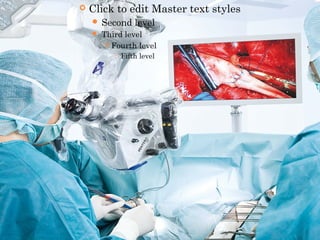


Documentation of surgical
procedure : Why & How
Hieder   A’ala
Why
   Documentation and archieving


   Reviewing the effectivness of training


   Recording the wired cases


   Matter of education through case-based approach
How ….
         Criteria of good documentation
   Objective data…not subjective
   Honesty in writing.
   Continuity
   Postoperative follow up
   Good classification of the surgery undertaken
   Ability to find the procedure without delay
   Commentary ( on the procedure which was read
    prior to procedure ) other than descriptive.
methods


   1.Program-based


   2.Written work


   3.Web-based


   4.Media
1. Program based

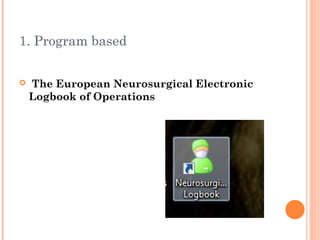
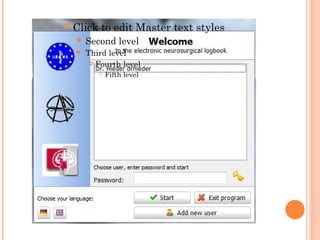
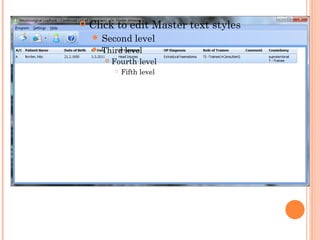
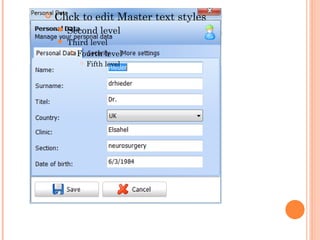
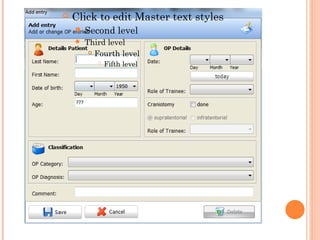
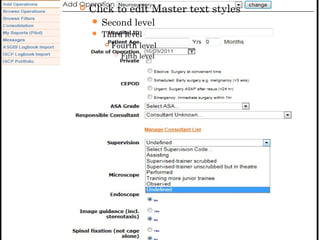
   The European Neurosurgical Electronic
    Logbook of Operations
1. Program based…cont.
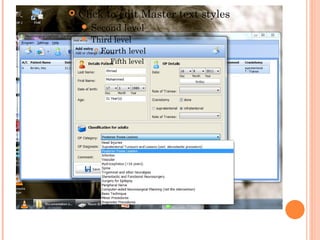
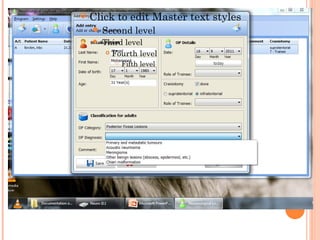
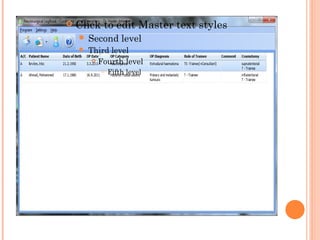
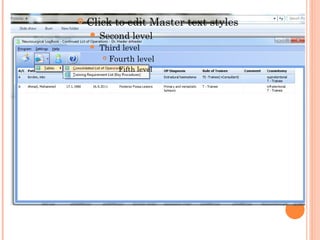
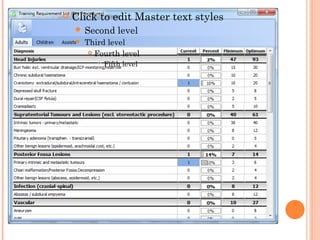
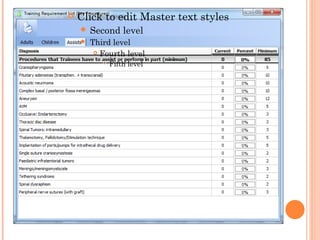
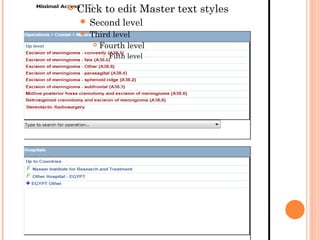
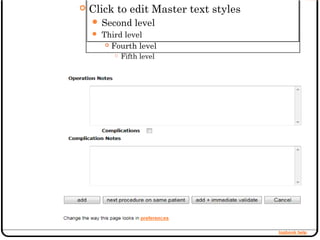
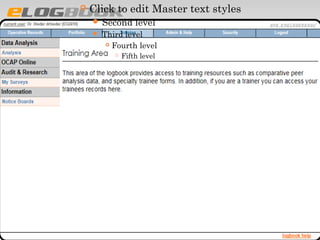
   Electronic version of this logbook that helps the trainee to
    record all operations in an easy and fast way.


   Runs under any version of Microsoft Windows


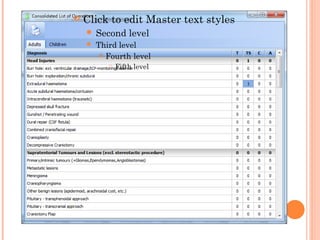
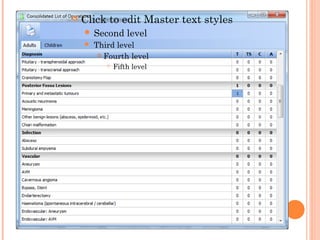
   The EANS published a detailed list of operations with
    minimum and optimum figures for each entry that a
    trainee must meet at the end of his training


   It is not depended on any external programs
Continue

    The application is designed to support multiple languages
    for all text messages and the list of diagnoses


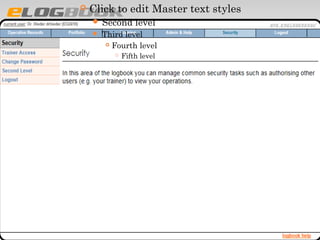
   For security reasons all data entered is encrypted


    To allow multiple users to access their data on one
    single computer, the application supports an
    unlimited number of accounts that can be accessed by
    one installation of the program
   Installation of the application is as
    straightforward as installing other
    standard applications


   Both lists mentioned can be printed
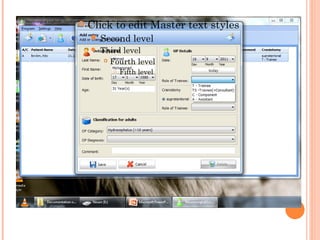
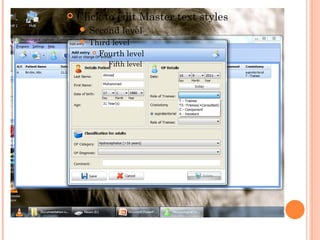
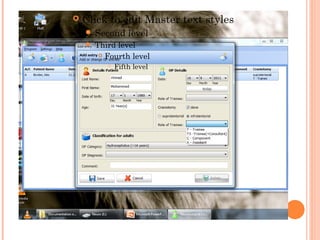
Role of the trainee during the operation


This value can either be “T” , “TS”, “C” or “A”:
    T=Trainee: The trainee has done the operation.
    The supervising consultant must not have made
    a decision/practical manoeuvre significantly
    affecting the execution of the operation.
   TS=Trainee (+Consultant Supervising): The
    trainee has done the operation but the
    supervising consultant has made a significant
    decision/practical manoeuvre during the
    operation.
   C=Component: The trainee has performed
    component parts during the operation under
    supervision of a senior surgeon: Positioning,
    operative approach, closure, drainage, draping,
    instructions for postoperative care.


   A=Assistant: The trainee is the principal
    assistant during the operation.
   Click to edit Master text styles
     Second       level
       Third level
          Fourth level

              Fifth level
   Click to edit Master text styles
     Second       level
       Third level
          Fourth level

              Fifth level
   Click to edit Master text styles
     Second       level
       Third level
          Fourth level

              Fifth level
   Click to edit Master text styles
     Second       level
       Third level
          Fourth level

              Fifth level
   Click to edit Master text styles
     Second       level
       Third level
          Fourth level

              Fifth level
   Click to edit Master text styles
     Second       level
       Third level
          Fourth level

              Fifth level
   Click to edit Master text styles
     Second       level
       Third level
          Fourth level

              Fifth level
   Click to edit Master text styles
     Second       level
       Third level
          Fourth level

              Fifth level
   Click to edit Master text styles
     Second       level
       Third level
          Fourth level

              Fifth level
   Click to edit Master text styles
     Second       level
       Third level
          Fourth level

              Fifth level
   Click to edit Master text styles
     Second       level
       Third level
          Fourth level

              Fifth level
   Click to edit Master text styles
     Second       level
       Third level
          Fourth level

              Fifth level
   Click to edit Master text styles
     Second       level
       Third level
          Fourth level

              Fifth level
   Click to edit Master text styles
     Second       level
       Third level
          Fourth level

              Fifth level
   Click to edit Master text styles
     Second       level
       Third level
          Fourth level

              Fifth level
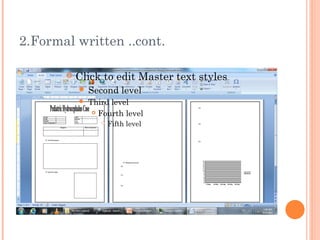
2.Formal written
   The eldest way to record


   Depends on ability of recorder to fullfil all fields


   Obligate us to read prior to write


   Nothing not important, keep your mind with the
    seniors and register every data
2.Formal written
   Not comfortable


   All data around us recorded by new technologies


   Return to previous cases is not so easy
2.Formal written
   writtenMy Real LogbookTrauma Cranial sheet.doc
2.Formal written ..cont.

          Click to edit Master text styles
            Second       level
              Third level
                 Fourth level

                     Fifth level
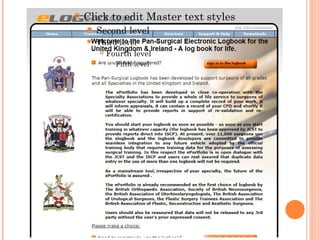
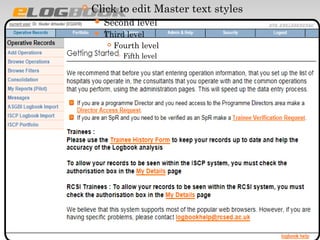
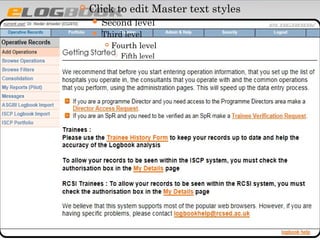
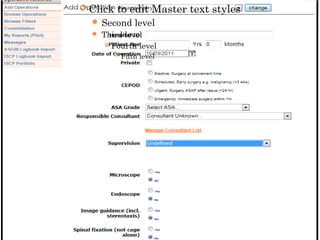
3.Web-based
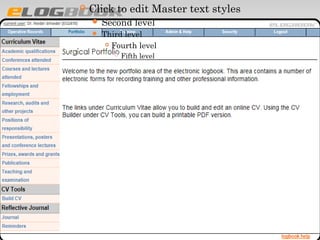
   Few sites were constructed for such mission
   The data is stored in place other than my computer


   Revision and recording need internet access


   The available site is not free


   Well organized data and fields, no place for blurred
    subjects and specific.
continue
   The web facilitate revision with trainer


   Accredited from well known organisation.
   Click to edit Master text styles
     Second       level
       Third level
          Fourth level

              Fifth level
   Click to edit Master text styles
     Second       level
       Third level
          Fourth level

              Fifth level
   Click to edit Master text styles
     Second       level
       Third level
          Fourth level

              Fifth level
   Click to edit Master text styles
     Second       level
       Third level
          Fourth level

              Fifth level
   Click to edit Master text styles
     Second       level
       Third level
          Fourth level

              Fifth level
   Click to edit Master text styles
     Second       level
       Third level
          Fourth level

              Fifth level
   Click to edit Master text styles
     Second       level
       Third level
          Fourth level

              Fifth level
   Click to edit Master text styles
     Second       level
       Third level
          Fourth level

              Fifth level
   Click to edit Master text styles
     Second       level
       Third level
          Fourth level

              Fifth level
   Click to edit Master text styles
     Second       level
       Third level
          Fourth level

              Fifth level
4.Media
   Advantages :


   Audio recording represents one of the old method
    to record


   Video and photos capturing are new quit
    methods to save pt. pictures and operative steps
4.Media
   Disadvantages :


   Continuity not always possible


   Needs tool ( high cam zooming )


   Needs someone to capture them


   Microscopic recording is the best
4.Media
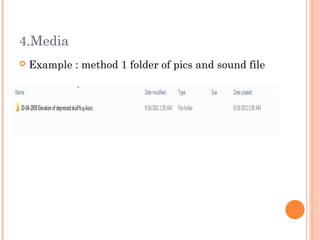
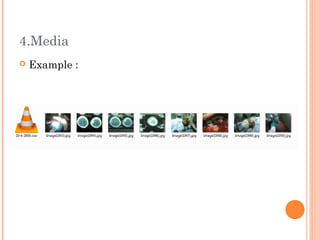
   Example : method 1 folder of pics and sound file
4.Media
   Example :
4.Media
   Example :
4.Media
   Example : method 2 microscope recording
   Click to edit Master text styles
     Second       level
       Third level
          Fourth level

              Fifth level
The Final Word


Be  honest
 with your
 data
   Click to edit Master text styles
     Second       level
       Third level
          Fourth level

              Fifth level

Documentation of surgical procedure

  • 1.
    Documentation of surgical procedure: Why & How Hieder A’ala
  • 2.
    Why  Documentation and archieving  Reviewing the effectivness of training  Recording the wired cases  Matter of education through case-based approach
  • 3.
    How …. Criteria of good documentation  Objective data…not subjective  Honesty in writing.  Continuity  Postoperative follow up  Good classification of the surgery undertaken  Ability to find the procedure without delay  Commentary ( on the procedure which was read prior to procedure ) other than descriptive.
  • 4.
    methods  1.Program-based  2.Written work  3.Web-based  4.Media
  • 5.
    1. Program based  The European Neurosurgical Electronic Logbook of Operations
  • 6.
    1. Program based…cont.  Electronic version of this logbook that helps the trainee to record all operations in an easy and fast way.  Runs under any version of Microsoft Windows  The EANS published a detailed list of operations with minimum and optimum figures for each entry that a trainee must meet at the end of his training  It is not depended on any external programs
  • 7.
    Continue  The application is designed to support multiple languages for all text messages and the list of diagnoses  For security reasons all data entered is encrypted  To allow multiple users to access their data on one single computer, the application supports an unlimited number of accounts that can be accessed by one installation of the program
  • 8.
    Installation of the application is as straightforward as installing other standard applications  Both lists mentioned can be printed
  • 9.
    Role of thetrainee during the operation This value can either be “T” , “TS”, “C” or “A”:  T=Trainee: The trainee has done the operation. The supervising consultant must not have made a decision/practical manoeuvre significantly affecting the execution of the operation.  TS=Trainee (+Consultant Supervising): The trainee has done the operation but the supervising consultant has made a significant decision/practical manoeuvre during the operation.
  • 10.
    C=Component: The trainee has performed component parts during the operation under supervision of a senior surgeon: Positioning, operative approach, closure, drainage, draping, instructions for postoperative care.  A=Assistant: The trainee is the principal assistant during the operation.
  • 11.
    Click to edit Master text styles  Second level  Third level  Fourth level  Fifth level
  • 12.
    Click to edit Master text styles  Second level  Third level  Fourth level  Fifth level
  • 13.
    Click to edit Master text styles  Second level  Third level  Fourth level  Fifth level
  • 14.
    Click to edit Master text styles  Second level  Third level  Fourth level  Fifth level
  • 15.
    Click to edit Master text styles  Second level  Third level  Fourth level  Fifth level
  • 16.
    Click to edit Master text styles  Second level  Third level  Fourth level  Fifth level
  • 17.
    Click to edit Master text styles  Second level  Third level  Fourth level  Fifth level
  • 18.
    Click to edit Master text styles  Second level  Third level  Fourth level  Fifth level
  • 19.
    Click to edit Master text styles  Second level  Third level  Fourth level  Fifth level
  • 20.
    Click to edit Master text styles  Second level  Third level  Fourth level  Fifth level
  • 21.
    Click to edit Master text styles  Second level  Third level  Fourth level  Fifth level
  • 22.
    Click to edit Master text styles  Second level  Third level  Fourth level  Fifth level
  • 23.
    Click to edit Master text styles  Second level  Third level  Fourth level  Fifth level
  • 24.
    Click to edit Master text styles  Second level  Third level  Fourth level  Fifth level
  • 25.
    Click to edit Master text styles  Second level  Third level  Fourth level  Fifth level
  • 26.
    2.Formal written  The eldest way to record  Depends on ability of recorder to fullfil all fields  Obligate us to read prior to write  Nothing not important, keep your mind with the seniors and register every data
  • 27.
    2.Formal written  Not comfortable  All data around us recorded by new technologies  Return to previous cases is not so easy
  • 28.
    2.Formal written  writtenMy Real LogbookTrauma Cranial sheet.doc
  • 29.
    2.Formal written ..cont.  Click to edit Master text styles  Second level  Third level  Fourth level  Fifth level
  • 30.
    3.Web-based  Few sites were constructed for such mission  The data is stored in place other than my computer  Revision and recording need internet access  The available site is not free  Well organized data and fields, no place for blurred subjects and specific.
  • 31.
    continue  The web facilitate revision with trainer  Accredited from well known organisation.
  • 32.
    Click to edit Master text styles  Second level  Third level  Fourth level  Fifth level
  • 33.
    Click to edit Master text styles  Second level  Third level  Fourth level  Fifth level
  • 34.
    Click to edit Master text styles  Second level  Third level  Fourth level  Fifth level
  • 35.
    Click to edit Master text styles  Second level  Third level  Fourth level  Fifth level
  • 36.
    Click to edit Master text styles  Second level  Third level  Fourth level  Fifth level
  • 37.
    Click to edit Master text styles  Second level  Third level  Fourth level  Fifth level
  • 38.
    Click to edit Master text styles  Second level  Third level  Fourth level  Fifth level
  • 39.
    Click to edit Master text styles  Second level  Third level  Fourth level  Fifth level
  • 40.
    Click to edit Master text styles  Second level  Third level  Fourth level  Fifth level
  • 41.
    Click to edit Master text styles  Second level  Third level  Fourth level  Fifth level
  • 42.
    4.Media  Advantages :  Audio recording represents one of the old method to record  Video and photos capturing are new quit methods to save pt. pictures and operative steps
  • 43.
    4.Media  Disadvantages :  Continuity not always possible  Needs tool ( high cam zooming )  Needs someone to capture them  Microscopic recording is the best
  • 44.
    4.Media  Example : method 1 folder of pics and sound file
  • 45.
    4.Media  Example :
  • 46.
    4.Media  Example :
  • 47.
    4.Media  Example : method 2 microscope recording
  • 48.
    Click to edit Master text styles  Second level  Third level  Fourth level  Fifth level
  • 49.
    The Final Word Be honest with your data
  • 50.
    Click to edit Master text styles  Second level  Third level  Fourth level  Fifth level