The Signaling Pathways Project:
The Signaling Pathways Project, An Integrated ‘Omics Knowledgebase
For Mammalian Cellular Signaling Pathways
Scott Ochsner, PhD & Neil McKenna, PhD
Department of Molecular and Cellular Biology
Baylor College of Medicine, Houston TX
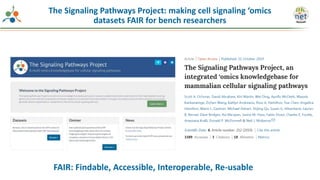
The Signaling Pathways Project: making cell signaling ‘omics
datasets FAIR for bench researchers
FAIR: Findable, Accessible, Interoperable, Re-usable
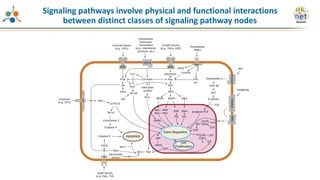
Signaling pathways involve physical and functional interactions
between distinct classes of signaling pathway nodes
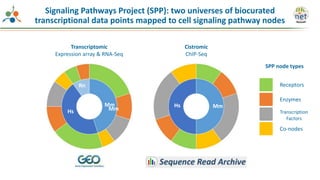
Transcriptomic
Expression array & RNA-Seq
Cistromic
ChIP-Seq
Receptors
Enzymes
Transcription
Factors
Co-nodes
Signaling Pathways Project (SPP): two universes of biocurated
transcriptional data points mapped to cell signaling pathway nodes
SPP node types
Hs
Mm
Rn
Hs
Mm Mm
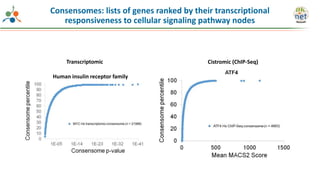
Consensomes: lists of genes ranked by their transcriptional
responsiveness to cellular signaling pathway nodes
Transcriptomic Cistromic (ChIP-Seq)
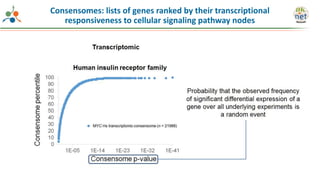
Human insulin receptor family
Consensomes: lists of genes ranked by their transcriptional
responsiveness to cellular signaling pathway nodes
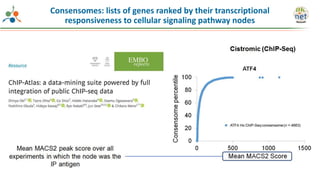
Consensomes: lists of genes ranked by their transcriptional
responsiveness to cellular signaling pathway nodes
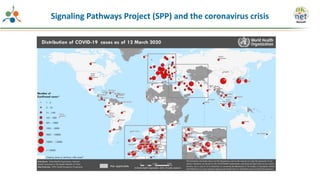
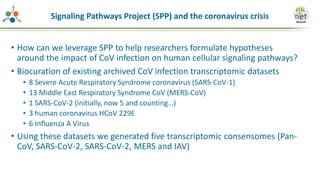
Signaling Pathways Project (SPP) and the coronavirus crisis
• How can we leverage SPP to help researchers formulate hypotheses
around the impact of CoV infection on human cellular signaling pathways?
• Biocuration of existing archived CoV infection transcriptomic datasets
• 8 Severe Acute Respiratory Syndrome coronavirus (SARS-CoV-1)
• 13 Middle East Respiratory Syndrome CoV (MERS-CoV)
• 1 SARS-CoV-2 (initially, now 5 and counting…)
• 3 human coronavirus HCoV 229E
• 6 Influenza A Virus
• Using these datasets we generated five transcriptomic consensomes (Pan-
CoV, SARS-CoV-2, SARS-CoV-2, MERS and IAV)
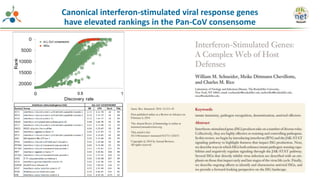
Canonical interferon-stimulated viral response genes
have elevated rankings in the Pan-CoV consensome
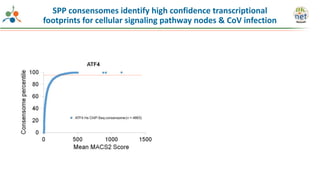
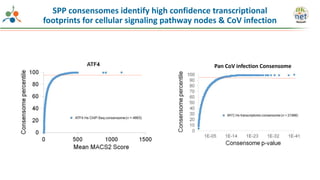
SPP consensomes identify high confidence transcriptional
footprints for cellular signaling pathway nodes & CoV infection
Pan CoV infection Consensome
SPP consensomes identify high confidence transcriptional
footprints for cellular signaling pathway nodes & CoV infection
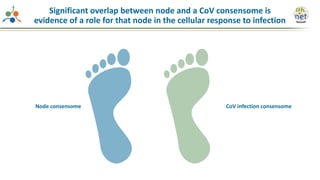
Node consensome CoV infection consensome
Significant overlap between node and a CoV consensome is
evidence of a role for that node in the cellular response to infection
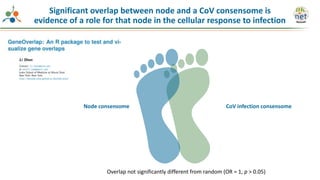
Node consensome CoV infection consensome
Overlap not significantly different from random (OR = 1, p > 0.05)
Significant overlap between node and a CoV consensome is
evidence of a role for that node in the cellular response to infection
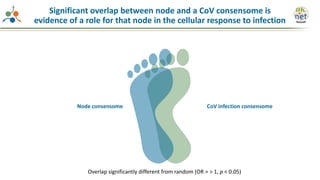
Node consensome CoV infection consensome
Overlap significantly different from random (OR = > 1, p < 0.05)
Significant overlap between node and a CoV consensome is
evidence of a role for that node in the cellular response to infection
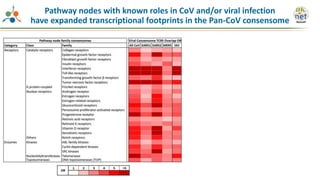
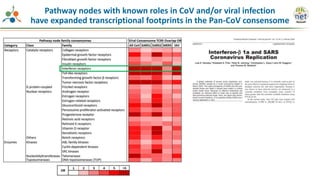
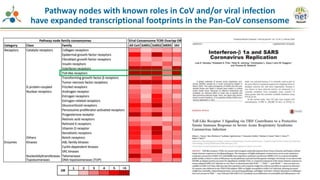
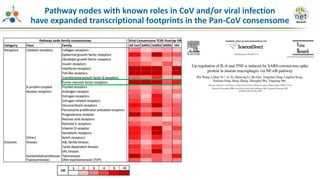
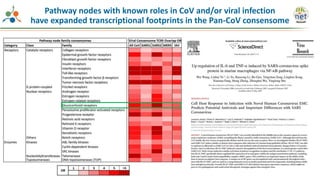
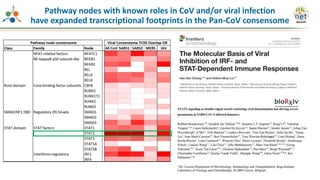
Pathway nodes with known roles in CoV and/or viral infection
have expanded transcriptional footprints in the Pan-CoV consensome
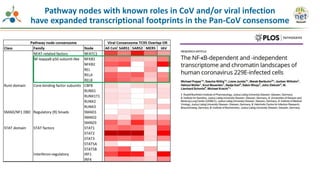
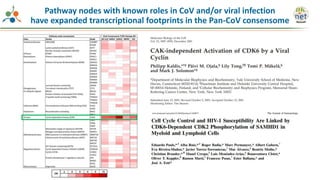
Pathway nodes with known roles in CoV and/or viral infection
have expanded transcriptional footprints in the Pan-CoV consensome
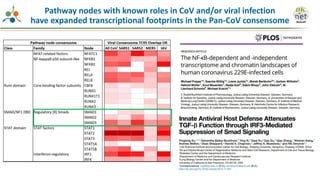
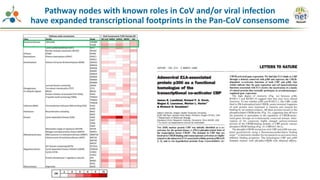
Pathway nodes with known roles in CoV and/or viral infection
have expanded transcriptional footprints in the Pan-CoV consensome
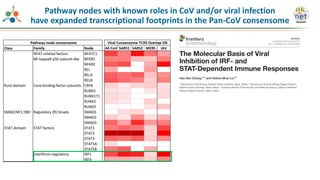
Pathway nodes with known roles in CoV and/or viral infection
have expanded transcriptional footprints in the Pan-CoV consensome
Pathway nodes with known roles in CoV and/or viral infection
have expanded transcriptional footprints in the Pan-CoV consensome
Pathway nodes with known roles in CoV and/or viral infection
have expanded transcriptional footprints in the Pan-CoV consensome
Pathway nodes with known roles in CoV and/or viral infection
have expanded transcriptional footprints in the Pan-CoV consensome
Pathway nodes with known roles in CoV and/or viral infection
have expanded transcriptional footprints in the Pan-CoV consensome
Pathway nodes with known roles in CoV and/or viral infection
have expanded transcriptional footprints in the Pan-CoV consensome
Pathway nodes with known roles in CoV and/or viral infection
have expanded transcriptional footprints in the Pan-CoV consensome
Pathway nodes with known roles in CoV and/or viral infection
have expanded transcriptional footprints in the Pan-CoV consensome
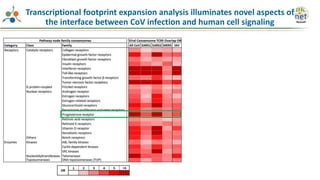
Transcriptional footprint expansion analysis illuminates novel aspects of
the interface between CoV infection and human cell signaling
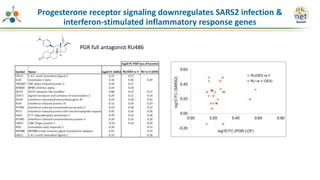
Progesterone receptor signaling downregulates SARS2 infection &
interferon-stimulated inflammatory response genes
PGR full antagonist RU486
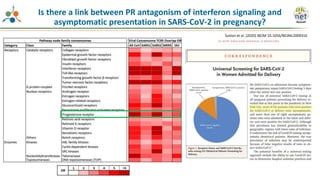
Sutton et al. (2020) NEJM 10.1056/NEJMc2009316
Is there a link between PR antagonism of interferon signaling and
asymptomatic presentation in SARS-CoV-2 in pregnancy?
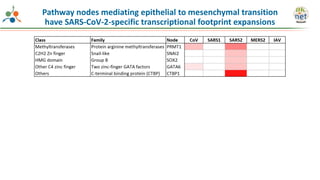
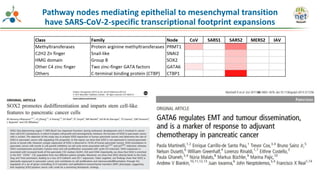
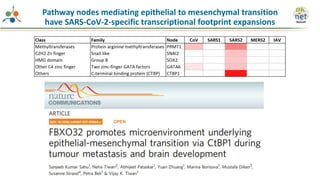
Pathway nodes mediating epithelial to mesenchymal transition
have SARS-CoV-2-specific transcriptional footprint expansions
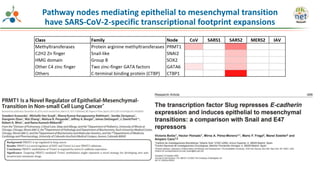
Pathway nodes mediating epithelial to mesenchymal transition
have SARS-CoV-2-specific transcriptional footprint expansions
Pathway nodes mediating epithelial to mesenchymal transition
have SARS-CoV-2-specific transcriptional footprint expansions
Pathway nodes mediating epithelial to mesenchymal transition
have SARS-CoV-2-specific transcriptional footprint expansions
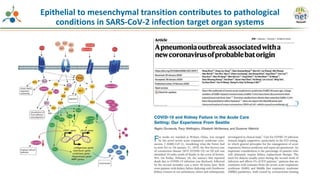
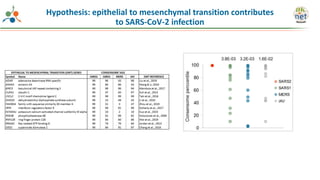
Epithelial to mesenchymal transition contributes to pathological
conditions in SARS-CoV-2 infection target organ systems
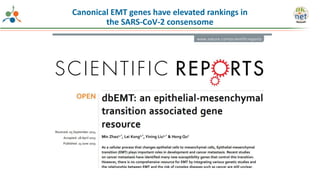
Canonical EMT genes have elevated rankings in
the SARS-CoV-2 consensome
Hypothesis: epithelial to mesenchymal transition contributes
to SARS-CoV-2 infection
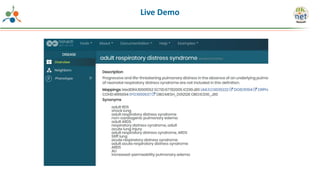
Live Demo
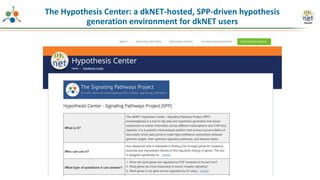
The Hypothesis Center: a dkNET-hosted, SPP-driven hypothesis
generation environment for dkNET users
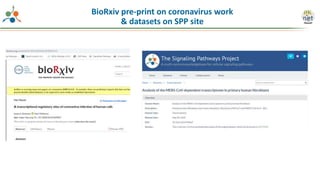
BioRxiv pre-print on coronavirus work
& datasets on SPP site
Thank you
National Institute of Diabetes, Digestive & Kidney Diseases (NIDDK)
NIDDK Information Network (dkNET)
American Thyroid Association
www.signalingpathways.org
@sigpathproject

dkNET Webinar: dkNET Hypothesis Center - Signaling Pathways Project Live Demo

  • 1.
    The Signaling PathwaysProject: The Signaling Pathways Project, An Integrated ‘Omics Knowledgebase For Mammalian Cellular Signaling Pathways Scott Ochsner, PhD & Neil McKenna, PhD Department of Molecular and Cellular Biology Baylor College of Medicine, Houston TX
  • 2.
    The Signaling PathwaysProject: making cell signaling ‘omics datasets FAIR for bench researchers FAIR: Findable, Accessible, Interoperable, Re-usable
  • 3.
    Signaling pathways involvephysical and functional interactions between distinct classes of signaling pathway nodes
  • 4.
    Transcriptomic Expression array &RNA-Seq Cistromic ChIP-Seq Receptors Enzymes Transcription Factors Co-nodes Signaling Pathways Project (SPP): two universes of biocurated transcriptional data points mapped to cell signaling pathway nodes SPP node types Hs Mm Rn Hs Mm Mm
  • 5.
    Consensomes: lists ofgenes ranked by their transcriptional responsiveness to cellular signaling pathway nodes Transcriptomic Cistromic (ChIP-Seq) Human insulin receptor family
  • 6.
    Consensomes: lists ofgenes ranked by their transcriptional responsiveness to cellular signaling pathway nodes
  • 7.
    Consensomes: lists ofgenes ranked by their transcriptional responsiveness to cellular signaling pathway nodes
  • 8.
    Signaling Pathways Project(SPP) and the coronavirus crisis
  • 9.
    Signaling Pathways Project(SPP) and the coronavirus crisis • How can we leverage SPP to help researchers formulate hypotheses around the impact of CoV infection on human cellular signaling pathways? • Biocuration of existing archived CoV infection transcriptomic datasets • 8 Severe Acute Respiratory Syndrome coronavirus (SARS-CoV-1) • 13 Middle East Respiratory Syndrome CoV (MERS-CoV) • 1 SARS-CoV-2 (initially, now 5 and counting…) • 3 human coronavirus HCoV 229E • 6 Influenza A Virus • Using these datasets we generated five transcriptomic consensomes (Pan- CoV, SARS-CoV-2, SARS-CoV-2, MERS and IAV)
  • 10.
    Canonical interferon-stimulated viralresponse genes have elevated rankings in the Pan-CoV consensome
  • 11.
    SPP consensomes identifyhigh confidence transcriptional footprints for cellular signaling pathway nodes & CoV infection
  • 12.
    Pan CoV infectionConsensome SPP consensomes identify high confidence transcriptional footprints for cellular signaling pathway nodes & CoV infection
  • 13.
    Node consensome CoVinfection consensome Significant overlap between node and a CoV consensome is evidence of a role for that node in the cellular response to infection
  • 14.
    Node consensome CoVinfection consensome Overlap not significantly different from random (OR = 1, p > 0.05) Significant overlap between node and a CoV consensome is evidence of a role for that node in the cellular response to infection
  • 15.
    Node consensome CoVinfection consensome Overlap significantly different from random (OR = > 1, p < 0.05) Significant overlap between node and a CoV consensome is evidence of a role for that node in the cellular response to infection
  • 16.
    Pathway nodes withknown roles in CoV and/or viral infection have expanded transcriptional footprints in the Pan-CoV consensome
  • 17.
    Pathway nodes withknown roles in CoV and/or viral infection have expanded transcriptional footprints in the Pan-CoV consensome
  • 18.
    Pathway nodes withknown roles in CoV and/or viral infection have expanded transcriptional footprints in the Pan-CoV consensome
  • 19.
    Pathway nodes withknown roles in CoV and/or viral infection have expanded transcriptional footprints in the Pan-CoV consensome
  • 20.
    Pathway nodes withknown roles in CoV and/or viral infection have expanded transcriptional footprints in the Pan-CoV consensome
  • 21.
    Pathway nodes withknown roles in CoV and/or viral infection have expanded transcriptional footprints in the Pan-CoV consensome
  • 22.
    Pathway nodes withknown roles in CoV and/or viral infection have expanded transcriptional footprints in the Pan-CoV consensome
  • 23.
    Pathway nodes withknown roles in CoV and/or viral infection have expanded transcriptional footprints in the Pan-CoV consensome
  • 24.
    Pathway nodes withknown roles in CoV and/or viral infection have expanded transcriptional footprints in the Pan-CoV consensome
  • 25.
    Pathway nodes withknown roles in CoV and/or viral infection have expanded transcriptional footprints in the Pan-CoV consensome
  • 26.
    Pathway nodes withknown roles in CoV and/or viral infection have expanded transcriptional footprints in the Pan-CoV consensome
  • 27.
    Transcriptional footprint expansionanalysis illuminates novel aspects of the interface between CoV infection and human cell signaling
  • 28.
    Progesterone receptor signalingdownregulates SARS2 infection & interferon-stimulated inflammatory response genes PGR full antagonist RU486
  • 29.
    Sutton et al.(2020) NEJM 10.1056/NEJMc2009316 Is there a link between PR antagonism of interferon signaling and asymptomatic presentation in SARS-CoV-2 in pregnancy?
  • 30.
    Pathway nodes mediatingepithelial to mesenchymal transition have SARS-CoV-2-specific transcriptional footprint expansions
  • 31.
    Pathway nodes mediatingepithelial to mesenchymal transition have SARS-CoV-2-specific transcriptional footprint expansions
  • 32.
    Pathway nodes mediatingepithelial to mesenchymal transition have SARS-CoV-2-specific transcriptional footprint expansions
  • 33.
    Pathway nodes mediatingepithelial to mesenchymal transition have SARS-CoV-2-specific transcriptional footprint expansions
  • 34.
    Epithelial to mesenchymaltransition contributes to pathological conditions in SARS-CoV-2 infection target organ systems
  • 35.
    Canonical EMT geneshave elevated rankings in the SARS-CoV-2 consensome
  • 36.
    Hypothesis: epithelial tomesenchymal transition contributes to SARS-CoV-2 infection
  • 37.
  • 38.
    The Hypothesis Center:a dkNET-hosted, SPP-driven hypothesis generation environment for dkNET users
  • 39.
    BioRxiv pre-print oncoronavirus work & datasets on SPP site
  • 40.
    Thank you National Instituteof Diabetes, Digestive & Kidney Diseases (NIDDK) NIDDK Information Network (dkNET) American Thyroid Association www.signalingpathways.org @sigpathproject