Lean Startup
Deepak Sharma
9th Nov’ 2017
Agenda:
- What is Lean? What is Startup? What is Lean Startup?
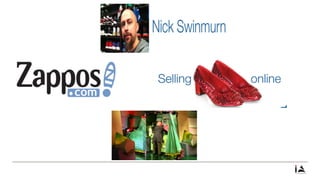
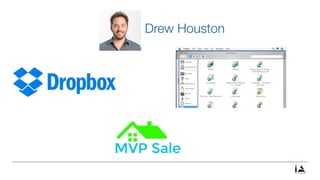
- Case Studies
- Risks
- Stages of a Startup Lifecycle
- What is MVP / MVE?
- Assumption / Hypothesis / Experiment / Pivot or Persevere
- Validated Learning / BML
- Lean Startup Myths
- How do we win?
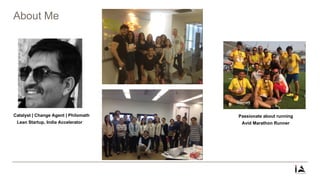
About Me
Catalyst | Change Agent | Philomath
Lean Startup, India Accelerator
Passionate about running
Avid Marathon Runner
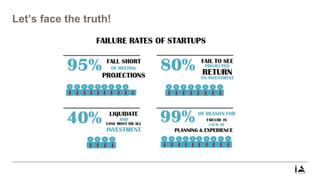
Let’s face the truth!
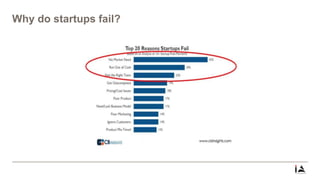
Why do startups fail?
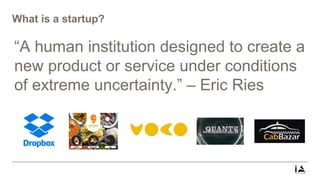
What is a startup?
“A human institution designed to create a
new product or service under conditions
of extreme uncertainty.” – Eric Ries
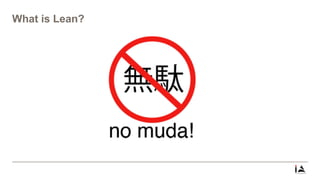
What is Lean?
What is Lean Startup?
“A method to systemically address
uncertainty through rapid iteration and
market learning.”
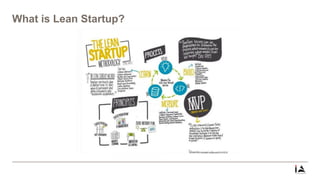
What is Lean Startup?
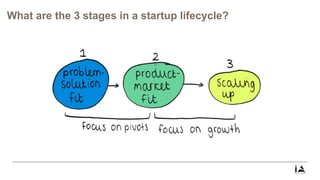
What are the 3 stages in a startup lifecycle?
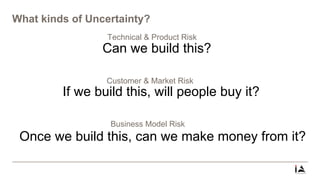
What kinds of Uncertainty?
Technical & Product Risk
Can we build this?
Customer & Market Risk
If we build this, will people buy it?
Business Model Risk
Once we build this, can we make money from it?
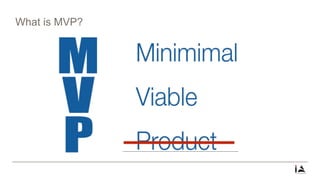
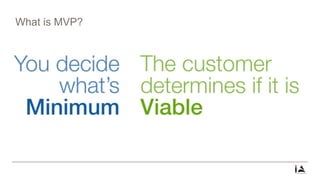
What is MVP?
What is MVP?
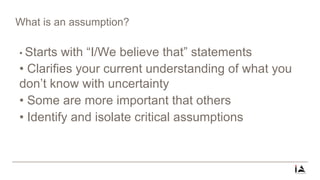
What is an assumption?
• Starts with “I/We believe that” statements
• Clarifies your current understanding of what you
don’t know with uncertainty
• Some are more important that others
• Identify and isolate critical assumptions
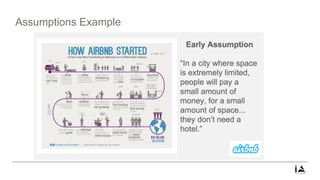
Assumptions Example
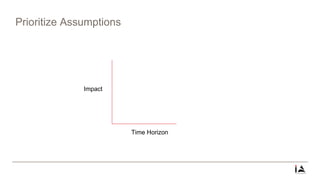
Prioritize Assumptions
Impact
Time Horizon
What is hypothesis?
• “If then” statement that helps design tests for an
assumption
• Clarifies your current understanding of what
uncertainty you seek to resolve
• Is Specific in action, timing, value / amount of
impact
• Helps to design and build a MVP
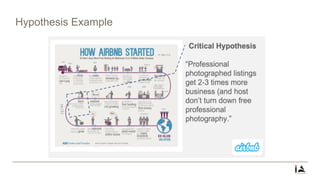
Hypothesis Example
What is an Experiment?
• A scientific test undertaken to make a discovery,
test a hypothesis, or demonstrate a known fact
• Process of rapidly learning what customers want
and will pay for
• Test Assumptions so that you don’t waste time
and money building the wrong thing
What is a MVP (Minimum Viable Product)?
• Experiment that helps you validate (or invalidate)
hypothesis about the value or growth potential of a
new product
• MVP helps you answer a specific question about
one of your assumptions
• Building a MVP is not a one time event
What is Pivot/Persevere?
• Pivot – Change in direction without a change in
Vision
• Persevere – A team’s decision to test the next
most important hypothesis
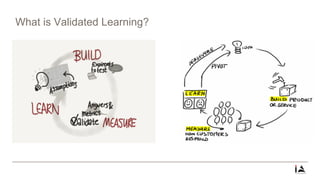
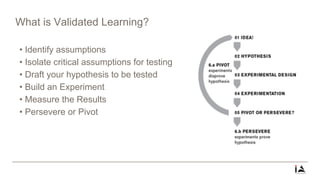
What is Validated Learning?
• Identify assumptions
• Isolate critical assumptions for testing
• Draft your hypothesis to be tested
• Build an Experiment
• Measure the Results
• Persevere or Pivot
Lean Startup Myths
• Myth#1:
– Lean means cheap. Lean Startups try to spend as little money as
possible
• Myth#2:
– Lean Startup is applicable for Internet/Consumer Software Companies
• Myth#3:
– Applicable for small bootstrapped startups
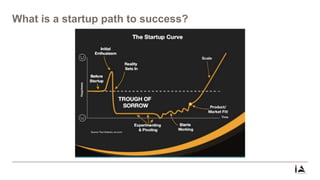
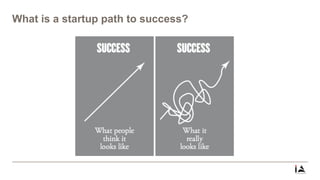
What is a startup path to success?
How do you win?
Recognizing your key assumptions
Test Assumptions Early & Often
Don’t spend time & money building wrong things
THANK YOU !
32

Lean Startup 101 at India Accelerator

  • 1.
  • 2.
    Agenda: - What isLean? What is Startup? What is Lean Startup? - Case Studies - Risks - Stages of a Startup Lifecycle - What is MVP / MVE? - Assumption / Hypothesis / Experiment / Pivot or Persevere - Validated Learning / BML - Lean Startup Myths - How do we win?
  • 3.
    About Me Catalyst |Change Agent | Philomath Lean Startup, India Accelerator Passionate about running Avid Marathon Runner
  • 4.
  • 5.
  • 6.
    What is astartup? “A human institution designed to create a new product or service under conditions of extreme uncertainty.” – Eric Ries
  • 7.
  • 8.
    What is LeanStartup? “A method to systemically address uncertainty through rapid iteration and market learning.”
  • 9.
    What is LeanStartup?
  • 14.
    What are the3 stages in a startup lifecycle?
  • 15.
    What kinds ofUncertainty? Technical & Product Risk Can we build this? Customer & Market Risk If we build this, will people buy it? Business Model Risk Once we build this, can we make money from it?
  • 16.
  • 17.
  • 18.
    What is anassumption? • Starts with “I/We believe that” statements • Clarifies your current understanding of what you don’t know with uncertainty • Some are more important that others • Identify and isolate critical assumptions
  • 19.
  • 20.
  • 21.
    What is hypothesis? •“If then” statement that helps design tests for an assumption • Clarifies your current understanding of what uncertainty you seek to resolve • Is Specific in action, timing, value / amount of impact • Helps to design and build a MVP
  • 22.
  • 23.
    What is anExperiment? • A scientific test undertaken to make a discovery, test a hypothesis, or demonstrate a known fact • Process of rapidly learning what customers want and will pay for • Test Assumptions so that you don’t waste time and money building the wrong thing
  • 24.
    What is aMVP (Minimum Viable Product)? • Experiment that helps you validate (or invalidate) hypothesis about the value or growth potential of a new product • MVP helps you answer a specific question about one of your assumptions • Building a MVP is not a one time event
  • 25.
    What is Pivot/Persevere? •Pivot – Change in direction without a change in Vision • Persevere – A team’s decision to test the next most important hypothesis
  • 26.
  • 27.
    What is ValidatedLearning? • Identify assumptions • Isolate critical assumptions for testing • Draft your hypothesis to be tested • Build an Experiment • Measure the Results • Persevere or Pivot
  • 28.
    Lean Startup Myths •Myth#1: – Lean means cheap. Lean Startups try to spend as little money as possible • Myth#2: – Lean Startup is applicable for Internet/Consumer Software Companies • Myth#3: – Applicable for small bootstrapped startups
  • 29.
    What is astartup path to success?
  • 30.
    What is astartup path to success?
  • 31.
    How do youwin? Recognizing your key assumptions Test Assumptions Early & Often Don’t spend time & money building wrong things
  • 32.