The impact man has had on earth till today
English Project: The Anthropocene.
Vasiliki Glynou
Joanna Tsaliki
G’2
Contents
 Introduction
 Agrarian Era
 Modern Era
 Digital Era
Introduction
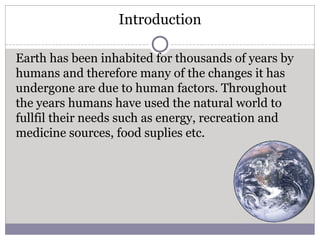
Earth has been inhabited for thousands of years by
humans and therefore many of the changes it has
undergone are due to human factors. Throughout
the years humans have used the natural world to
fullfil their needs such as energy, recreation and
medicine sources, food suplies etc.
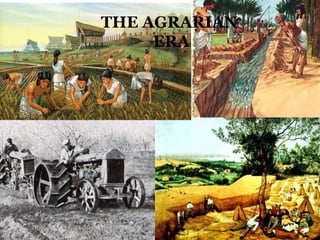
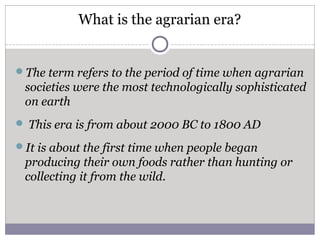
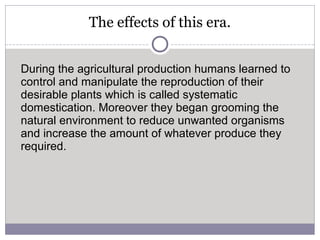
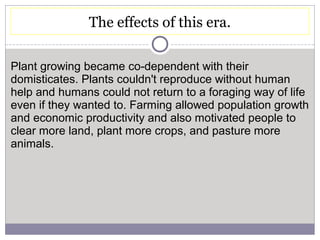
THE AGRARIAN
ERA
What is the agrarian era?
The term refers to the period of time when agrarian
societies were the most technologically sophisticated
on earth
 This era is from about 2000 BC to 1800 AD
It is about the first time when people began
producing their own foods rather than hunting or
collecting it from the wild.
The effects of this era.
During the agricultural production humans learned to
control and manipulate the reproduction of their
desirable plants which is called systematic
domestication. Moreover they began grooming the
natural environment to reduce unwanted organisms
and increase the amount of whatever produce they
required.
The effects of this era.
Plant growing became co-dependent with their
domisticates. Plants couldn't reproduce without human
help and humans could not return to a foraging way of life
even if they wanted to. Farming allowed population growth
and economic productivity and also motivated people to
clear more land, plant more crops, and pasture more
animals.
5/3/2017
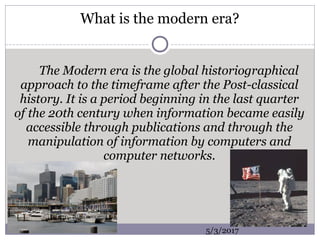
What is the modern era?
The Modern era is the global historiographical
approach to the timeframe after the Post-classical
history. It is a period beginning in the last quarter
of the 20th century when information became easily
accessible through publications and through the
manipulation of information by computers and
computer networks.
5/3/2017
Modern history can be further broken down
into periods:
• The early modern period began approximately in the early
16th century; noteworthy historical turning points included
the European Renaissance and the Age of Discovery
• The late modern period began approximately in the mid-
18th century; the most important historcal landmarks
included the French Revolution, the American Revolution,
the Industrial Revolution, and the Great Divergence. It
took all of human history up to 1804 for the world's
population to reach 1 billion; the next billion came just
over a century later, in 1927.[5]
5/3/2017
The 10 Greatest Inventors
In The Modern Era
5/3/2017
Francis H. Richards
Richards Envelope-
Blank-Feeding
Mechanisms, 80,000
envelopes per day.
5/3/2017
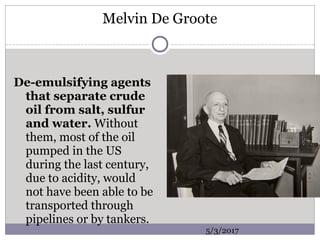
Melvin De Groote
De-emulsifying agents
that separate crude
oil from salt, sulfur
and water. Without
them, most of the oil
pumped in the US
during the last century,
due to acidity, would
not have been able to be
transported through
pipelines or by tankers.
5/3/2017
Leonard Forbes
Capillary underfill of
stacked wafers: a
method for stacking
semiconductors in a
wafer for increased
performance
5/3/2017
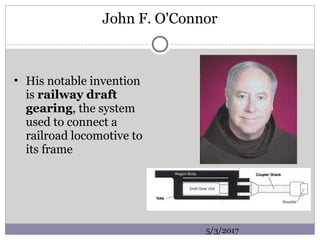
John F. O'Connor
• His notable invention
is railway draft
gearing, the system
used to connect a
railroad locomotive to
its frame
5/3/2017
Donald Weder
He created various
ways to wrap
flowers and flower
pots, and used
different materials
for doing so
5/3/2017
Paul Lapstun
He notably invented a
system that lets
someone send an
email to another
person only if they
have that person's
business card.
5/3/2017
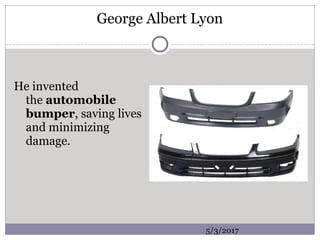
George Albert Lyon
He invented
the automobile
bumper, saving lives
and minimizing
damage.
5/3/2017
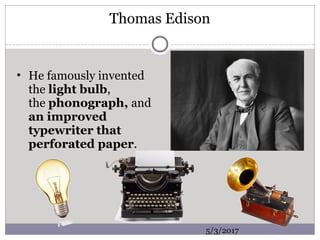
Thomas Edison
• He famously invented
the light bulb,
the phonograph, and
an improved
typewriter that
perforated paper.
5/3/2017
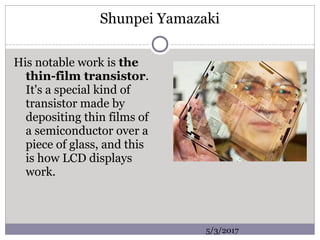
Shunpei Yamazaki
His notable work is the
thin-film transistor.
It's a special kind of
transistor made by
depositing thin films of
a semiconductor over a
piece of glass, and this
is how LCD displays
work.
5/3/2017
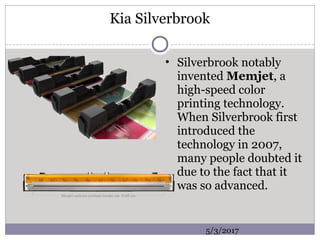
Kia Silverbrook
• Silverbrook notably
invented Memjet, a
high-speed color
printing technology.
When Silverbrook first
introduced the
technology in 2007,
many people doubted it
due to the fact that it
was so advanced.
5/3/2017
5/3/2017
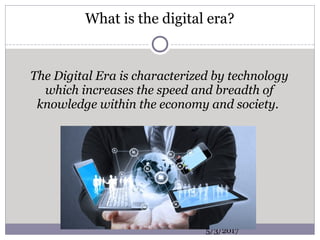
What is the digital era?
The Digital Era is characterized by technology
which increases the speed and breadth of
knowledge within the economy and society.
5/3/2017
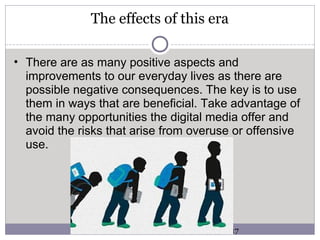
The effects of this era
• There are as many positive aspects and
improvements to our everyday lives as there are
possible negative consequences. The key is to use
them in ways that are beneficial. Take advantage of
the many opportunities the digital media offer and
avoid the risks that arise from overuse or offensive
use.
5/3/2017
5/3/2017
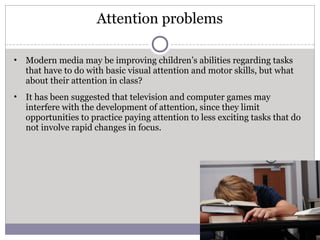
Attention problems
• Modern media may be improving children’s abilities regarding tasks
that have to do with basic visual attention and motor skills, but what
about their attention in class?
• It has been suggested that television and computer games may
interfere with the development of attention, since they limit
opportunities to practice paying attention to less exciting tasks that do
not involve rapid changes in focus.
5/3/2017
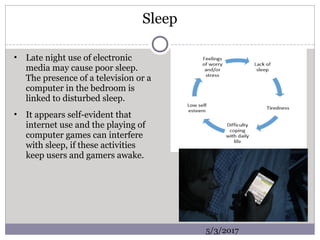
Sleep
• Late night use of electronic
media may cause poor sleep.
The presence of a television or a
computer in the bedroom is
linked to disturbed sleep.
• It appears self-evident that
internet use and the playing of
computer games can interfere
with sleep, if these activities
keep users and gamers awake.
5/3/2017
THE END
Thank you.
5/3/2017

Eng project ioanna vassiliki

  • 1.
    The impact manhas had on earth till today English Project: The Anthropocene. Vasiliki Glynou Joanna Tsaliki G’2
  • 2.
    Contents  Introduction  AgrarianEra  Modern Era  Digital Era
  • 3.
    Introduction Earth has beeninhabited for thousands of years by humans and therefore many of the changes it has undergone are due to human factors. Throughout the years humans have used the natural world to fullfil their needs such as energy, recreation and medicine sources, food suplies etc.
  • 4.
  • 5.
    What is theagrarian era? The term refers to the period of time when agrarian societies were the most technologically sophisticated on earth  This era is from about 2000 BC to 1800 AD It is about the first time when people began producing their own foods rather than hunting or collecting it from the wild.
  • 6.
    The effects ofthis era. During the agricultural production humans learned to control and manipulate the reproduction of their desirable plants which is called systematic domestication. Moreover they began grooming the natural environment to reduce unwanted organisms and increase the amount of whatever produce they required.
  • 7.
    The effects ofthis era. Plant growing became co-dependent with their domisticates. Plants couldn't reproduce without human help and humans could not return to a foraging way of life even if they wanted to. Farming allowed population growth and economic productivity and also motivated people to clear more land, plant more crops, and pasture more animals.
  • 8.
  • 9.
    What is themodern era? The Modern era is the global historiographical approach to the timeframe after the Post-classical history. It is a period beginning in the last quarter of the 20th century when information became easily accessible through publications and through the manipulation of information by computers and computer networks. 5/3/2017
  • 10.
    Modern history canbe further broken down into periods: • The early modern period began approximately in the early 16th century; noteworthy historical turning points included the European Renaissance and the Age of Discovery • The late modern period began approximately in the mid- 18th century; the most important historcal landmarks included the French Revolution, the American Revolution, the Industrial Revolution, and the Great Divergence. It took all of human history up to 1804 for the world's population to reach 1 billion; the next billion came just over a century later, in 1927.[5] 5/3/2017
  • 11.
    The 10 GreatestInventors In The Modern Era 5/3/2017
  • 12.
    Francis H. Richards RichardsEnvelope- Blank-Feeding Mechanisms, 80,000 envelopes per day. 5/3/2017
  • 13.
    Melvin De Groote De-emulsifyingagents that separate crude oil from salt, sulfur and water. Without them, most of the oil pumped in the US during the last century, due to acidity, would not have been able to be transported through pipelines or by tankers. 5/3/2017
  • 14.
    Leonard Forbes Capillary underfillof stacked wafers: a method for stacking semiconductors in a wafer for increased performance 5/3/2017
  • 15.
    John F. O'Connor •His notable invention is railway draft gearing, the system used to connect a railroad locomotive to its frame 5/3/2017
  • 16.
    Donald Weder He createdvarious ways to wrap flowers and flower pots, and used different materials for doing so 5/3/2017
  • 17.
    Paul Lapstun He notablyinvented a system that lets someone send an email to another person only if they have that person's business card. 5/3/2017
  • 18.
    George Albert Lyon Heinvented the automobile bumper, saving lives and minimizing damage. 5/3/2017
  • 19.
    Thomas Edison • Hefamously invented the light bulb, the phonograph, and an improved typewriter that perforated paper. 5/3/2017
  • 20.
    Shunpei Yamazaki His notablework is the thin-film transistor. It's a special kind of transistor made by depositing thin films of a semiconductor over a piece of glass, and this is how LCD displays work. 5/3/2017
  • 21.
    Kia Silverbrook • Silverbrooknotably invented Memjet, a high-speed color printing technology. When Silverbrook first introduced the technology in 2007, many people doubted it due to the fact that it was so advanced. 5/3/2017
  • 22.
  • 23.
    What is thedigital era? The Digital Era is characterized by technology which increases the speed and breadth of knowledge within the economy and society. 5/3/2017
  • 24.
    The effects ofthis era • There are as many positive aspects and improvements to our everyday lives as there are possible negative consequences. The key is to use them in ways that are beneficial. Take advantage of the many opportunities the digital media offer and avoid the risks that arise from overuse or offensive use. 5/3/2017
  • 25.
  • 26.
    Attention problems • Modernmedia may be improving children’s abilities regarding tasks that have to do with basic visual attention and motor skills, but what about their attention in class? • It has been suggested that television and computer games may interfere with the development of attention, since they limit opportunities to practice paying attention to less exciting tasks that do not involve rapid changes in focus. 5/3/2017
  • 27.
    Sleep • Late nightuse of electronic media may cause poor sleep. The presence of a television or a computer in the bedroom is linked to disturbed sleep. • It appears self-evident that internet use and the playing of computer games can interfere with sleep, if these activities keep users and gamers awake. 5/3/2017
  • 28.