Session 6

Co-Parenting
1. Co-Parenting
2. Parenting in Two Homes
• Work Together
• Minimize Conflict
• Self-responsibility
3. Reassurance
•   Loved by Both Parents
•   Reduce Guilt
•   Simple Explanation
•   Ability to Voice Concerns
4. Visitation
•   Reasons for not Allowed Custody
•   Child’s Sense of Time
•   Be on Time
•   Prioritize Visitation
•   Spend Quality Time
5. Reconciliation
• Normal
• Belief that it May Occur


          Parent – Do not Give False Sense of Hope
6. Choosing Sides &
Loyalty Conflicts
• Talking Negative About the Other Parent
• Experience of Emotions and Acknowledgement
7. Communication
•   Increase Communication with Children
•   Ex-spouse Communication
•   Create Records of Communication
•   Lessen the Chance of Conflict
•   Increase Staying Focused
8. Permissions to Love Both
Parents
•   Gift Giving Occasions
•   Ability to Continue Rituals
•   Phone Calls to Communicate
•   Create Cards
9. Two Separate Lives
• Two Birthday Celebrations
• Options for Celebrations
10. Attention to Your Child
• Give Undivided Attention
• Have Dinner Together


          Children often learn what is required to
          obtain your undivided attention.
11. Grief
• Family Routines
• Holiday Traditions
• Family Traditions
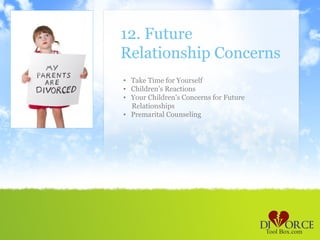
12. Future
Relationship Concerns
• Take Time for Yourself
• Children’s Reactions
• Your Children’s Concerns for Future
  Relationships
• Premarital Counseling
13. Extracurricular Activities
• Time
• Expense
• Commitment
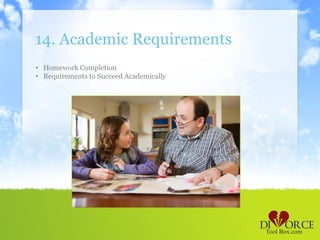
14. Academic Requirements
• Homework Completion
• Requirements to Succeed Academically
15. Parent and Opposite Sex Child
•   Admiration
•   Enter Child’s World
•   No Excuses for Non-parenting
•   Feelings of Abandonment
16. Remarriage of Parent
•   May Become Main Parental Figure if Biological Parent is Absent
•   Become Vulnerable
•   Divorce and Remarriage
•   Blending Two Different Families
•   Time with Children
17. Adolescent
• Changes Associated with Maturity
• Parents Wisdom and Guidance
• Maintain Parenting Skills
18. Single Parenting
• Allow Children to Remain a Child Without too Many Responsibilities
• Make Accommodations
• Older Children Should not Become the Parent
19. Expectations Across Homes
• Consistency
• Expectations as Children Mature
20. Surrogate Parent
• Stable Qualities
• Available Options
• Ability to Participate in Same Sex Parent & Child Activities
21. Other Considerations
•   Non-custodial Relatives
•   Compromise
•   Financially Competing
•   Transition Adjustment
•   Memory Bank
Thank you!

Session 6

  • 1.
  • 2.
  • 3.
    2. Parenting inTwo Homes • Work Together • Minimize Conflict • Self-responsibility
  • 4.
    3. Reassurance • Loved by Both Parents • Reduce Guilt • Simple Explanation • Ability to Voice Concerns
  • 5.
    4. Visitation • Reasons for not Allowed Custody • Child’s Sense of Time • Be on Time • Prioritize Visitation • Spend Quality Time
  • 6.
    5. Reconciliation • Normal •Belief that it May Occur Parent – Do not Give False Sense of Hope
  • 7.
    6. Choosing Sides& Loyalty Conflicts • Talking Negative About the Other Parent • Experience of Emotions and Acknowledgement
  • 8.
    7. Communication • Increase Communication with Children • Ex-spouse Communication • Create Records of Communication • Lessen the Chance of Conflict • Increase Staying Focused
  • 9.
    8. Permissions toLove Both Parents • Gift Giving Occasions • Ability to Continue Rituals • Phone Calls to Communicate • Create Cards
  • 10.
    9. Two SeparateLives • Two Birthday Celebrations • Options for Celebrations
  • 11.
    10. Attention toYour Child • Give Undivided Attention • Have Dinner Together Children often learn what is required to obtain your undivided attention.
  • 12.
    11. Grief • FamilyRoutines • Holiday Traditions • Family Traditions
  • 13.
    12. Future Relationship Concerns •Take Time for Yourself • Children’s Reactions • Your Children’s Concerns for Future Relationships • Premarital Counseling
  • 14.
    13. Extracurricular Activities •Time • Expense • Commitment
  • 15.
    14. Academic Requirements •Homework Completion • Requirements to Succeed Academically
  • 16.
    15. Parent andOpposite Sex Child • Admiration • Enter Child’s World • No Excuses for Non-parenting • Feelings of Abandonment
  • 17.
    16. Remarriage ofParent • May Become Main Parental Figure if Biological Parent is Absent • Become Vulnerable • Divorce and Remarriage • Blending Two Different Families • Time with Children
  • 18.
    17. Adolescent • ChangesAssociated with Maturity • Parents Wisdom and Guidance • Maintain Parenting Skills
  • 19.
    18. Single Parenting •Allow Children to Remain a Child Without too Many Responsibilities • Make Accommodations • Older Children Should not Become the Parent
  • 20.
    19. Expectations AcrossHomes • Consistency • Expectations as Children Mature
  • 21.
    20. Surrogate Parent •Stable Qualities • Available Options • Ability to Participate in Same Sex Parent & Child Activities
  • 22.
    21. Other Considerations • Non-custodial Relatives • Compromise • Financially Competing • Transition Adjustment • Memory Bank
  • 23.