 Codes are used to help create a meaning from the use of signs
from systems. They can also be split into two different groups:
technical and symbolic.
- Symbolic shows us what’s being shown like the setting of a scene
to help the audience know what genre it is.
- Technical is the way equipment is used to tell the story in media
text for example: the brightness of the film.
 Conventions are the normal ways of accepting the ways of
something that’s going on. There are conventions in anything
produced through the media, such as the same camera shots and
work, but conventions are also genre specific.
 Soundtrack – Recorded sound element of a
film.
 Theme music/ tune – a recurrent melody in the
film.
 Sound affects – Sounds other than dialogue or
music made artificially.
 Ambient sound – buzz and/ or surrounding
sounds.
 Dialogue – sound.
 A huge range and variety of camera movements are used to create videos
and shots such as:
- Tilt, which is when the camera lens move up or down constantly in line.
For example nodding to someone to agree with what they say is tilting.
- Panning is moving the camera lens to one side or another. For example if
you shake your head to disagree with someone, this is panning.
- Zoom is one of the most familiar camera angles to people as it can be
used with most mobile phones now and is also used within the media. Its
used to help make the subject of the frame appear to be closer and further
or bigger and smaller for example it helps make people appear to be
bigger than others in films when they aren’t in actual fact.
 Mise-en-scene is very important as it helps put the storyline into more
depth and makes the music video become a lot more realistic and look
more sophisticated to the viewers.
 The main parts of mise-en-scene which are used and developed into the
storyline through the media are: Hair and makeup, colour, location,
costume, lighting and props. These are all very important that they are
used properly as it takes all of these features to work and makes the
editing that’s also being used to look more professional and realistic.
 Props- Car, dog lead etc.
 Costume- Certain worn clothing: Scarf, coat.
 Lighting- Artificial and side lights to present the video in different ways.
 Hair and makeup- Present the artist better infront of camera and show feelings.
 Location- countryside, pet stores and a home.
 Colour- Certain colours to show emotion and character to the video.
 Each shot that is created needs to be edited in
accurately and efficiently so it sinks in smoothly with
the music to help improve the quality of the video
giving it a better flow.
 The amount you record is a lot more than how much
you put into the clip because a lot of the videoing goes
wrong for different reasons and not all of the
recordings you do are needed for the video.
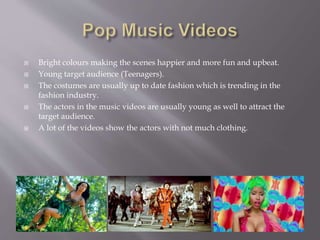
 Bright colours making the scenes happier and more fun and upbeat.
 Young target audience (Teenagers).
 The costumes are usually up to date fashion which is trending in the
fashion industry.
 The actors in the music videos are usually young as well to attract the
target audience.
 A lot of the videos show the actors with not much clothing.
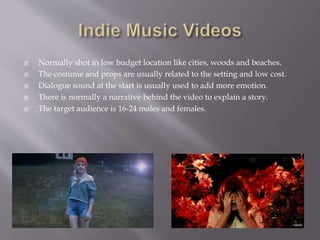
 Normally shot in low budget location like cities, woods and beaches.
 The costume and props are usually related to the setting and low cost.
 Dialogue sound at the start is usually used to add more emotion.
 There is normally a narrative behind the video to explain a story.
 The target audience is 16-24 males and females.
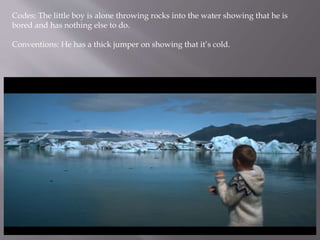
Codes: The little boy is alone throwing rocks into the water showing that he is
bored and has nothing else to do.
Conventions: He has a thick jumper on showing that it’s cold.
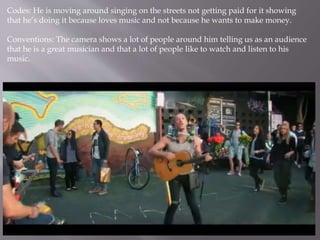
Codes: He is moving around singing on the streets not getting paid for it showing
that he’s doing it because loves music and not because he wants to make money.
Conventions: The camera shows a lot of people around him telling us as an audience
that he is a great musician and that a lot of people like to watch and listen to his
music.
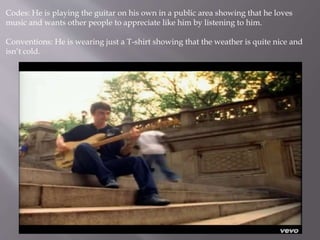
Codes: He is playing the guitar on his own in a public area showing that he loves
music and wants other people to appreciate like him by listening to him.
Conventions: He is wearing just a T-shirt showing that the weather is quite nice and
isn’t cold.
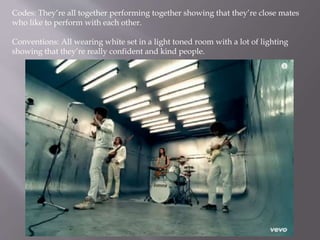
Codes: They’re all together performing together showing that they’re close mates
who like to perform with each other.
Conventions: All wearing white set in a light toned room with a lot of lighting
showing that they’re really confident and kind people.

Codes And Convention Slideshare

  • 2.
     Codes areused to help create a meaning from the use of signs from systems. They can also be split into two different groups: technical and symbolic. - Symbolic shows us what’s being shown like the setting of a scene to help the audience know what genre it is. - Technical is the way equipment is used to tell the story in media text for example: the brightness of the film.  Conventions are the normal ways of accepting the ways of something that’s going on. There are conventions in anything produced through the media, such as the same camera shots and work, but conventions are also genre specific.
  • 3.
     Soundtrack –Recorded sound element of a film.  Theme music/ tune – a recurrent melody in the film.  Sound affects – Sounds other than dialogue or music made artificially.  Ambient sound – buzz and/ or surrounding sounds.  Dialogue – sound.
  • 4.
     A hugerange and variety of camera movements are used to create videos and shots such as: - Tilt, which is when the camera lens move up or down constantly in line. For example nodding to someone to agree with what they say is tilting. - Panning is moving the camera lens to one side or another. For example if you shake your head to disagree with someone, this is panning. - Zoom is one of the most familiar camera angles to people as it can be used with most mobile phones now and is also used within the media. Its used to help make the subject of the frame appear to be closer and further or bigger and smaller for example it helps make people appear to be bigger than others in films when they aren’t in actual fact.
  • 5.
     Mise-en-scene isvery important as it helps put the storyline into more depth and makes the music video become a lot more realistic and look more sophisticated to the viewers.  The main parts of mise-en-scene which are used and developed into the storyline through the media are: Hair and makeup, colour, location, costume, lighting and props. These are all very important that they are used properly as it takes all of these features to work and makes the editing that’s also being used to look more professional and realistic.  Props- Car, dog lead etc.  Costume- Certain worn clothing: Scarf, coat.  Lighting- Artificial and side lights to present the video in different ways.  Hair and makeup- Present the artist better infront of camera and show feelings.  Location- countryside, pet stores and a home.  Colour- Certain colours to show emotion and character to the video.
  • 6.
     Each shotthat is created needs to be edited in accurately and efficiently so it sinks in smoothly with the music to help improve the quality of the video giving it a better flow.  The amount you record is a lot more than how much you put into the clip because a lot of the videoing goes wrong for different reasons and not all of the recordings you do are needed for the video.
  • 7.
     Bright coloursmaking the scenes happier and more fun and upbeat.  Young target audience (Teenagers).  The costumes are usually up to date fashion which is trending in the fashion industry.  The actors in the music videos are usually young as well to attract the target audience.  A lot of the videos show the actors with not much clothing.
  • 8.
     Normally shotin low budget location like cities, woods and beaches.  The costume and props are usually related to the setting and low cost.  Dialogue sound at the start is usually used to add more emotion.  There is normally a narrative behind the video to explain a story.  The target audience is 16-24 males and females.
  • 9.
    Codes: The littleboy is alone throwing rocks into the water showing that he is bored and has nothing else to do. Conventions: He has a thick jumper on showing that it’s cold.
  • 10.
    Codes: He ismoving around singing on the streets not getting paid for it showing that he’s doing it because loves music and not because he wants to make money. Conventions: The camera shows a lot of people around him telling us as an audience that he is a great musician and that a lot of people like to watch and listen to his music.
  • 11.
    Codes: He isplaying the guitar on his own in a public area showing that he loves music and wants other people to appreciate like him by listening to him. Conventions: He is wearing just a T-shirt showing that the weather is quite nice and isn’t cold.
  • 12.
    Codes: They’re alltogether performing together showing that they’re close mates who like to perform with each other. Conventions: All wearing white set in a light toned room with a lot of lighting showing that they’re really confident and kind people.