E-BUSINESS
SEARCH ENGINE
E-Business definitions

   SE – search engine

   SEO - search engine optimization

   SEM - search engine marketing

   Location Based Services
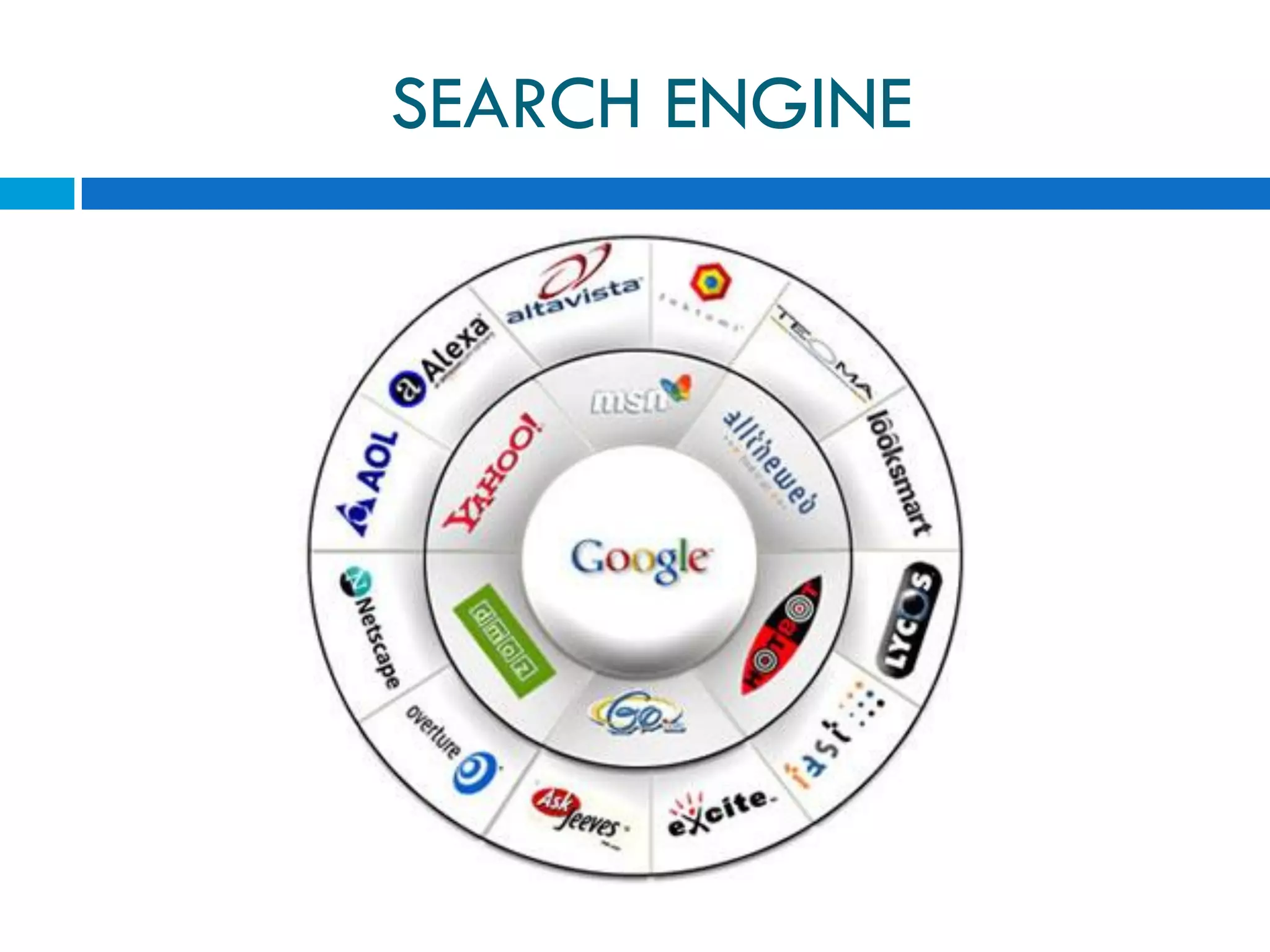
SEARCH ENGINE
What is a Search Engine?
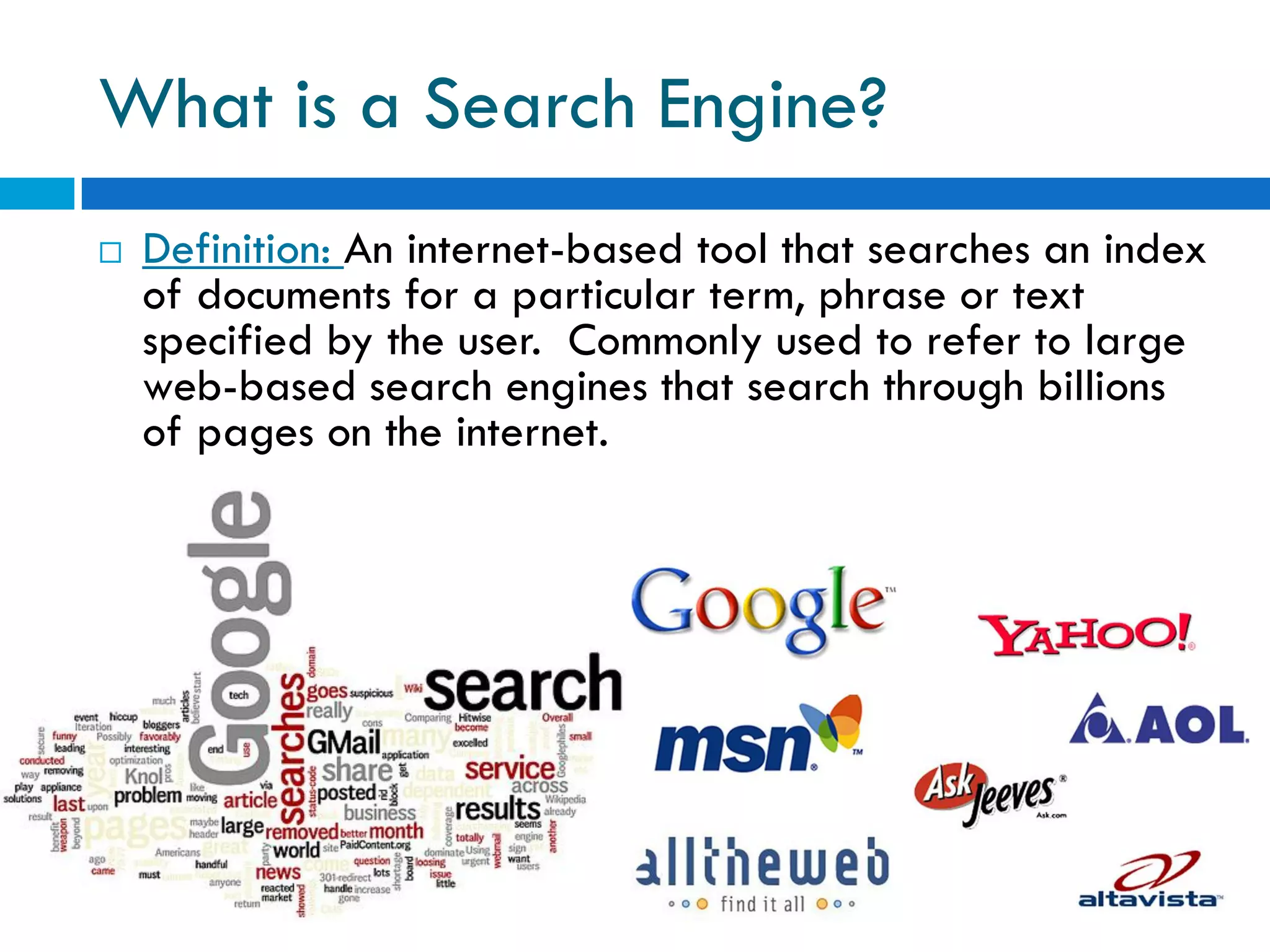
   Definition: An internet-based tool that searches an index
    of documents for a particular term, phrase or text
    specified by the user. Commonly used to refer to large
    web-based search engines that search through billions
    of pages on the internet.
A Search Engine’s Goals & Objectives

   Accumulate large index (database) of web documents
    to search.

   Provide relevant results to users.

   Generate revenue thanks to paid advertising and
    related business ventures that leverage large amount
    of traffic.
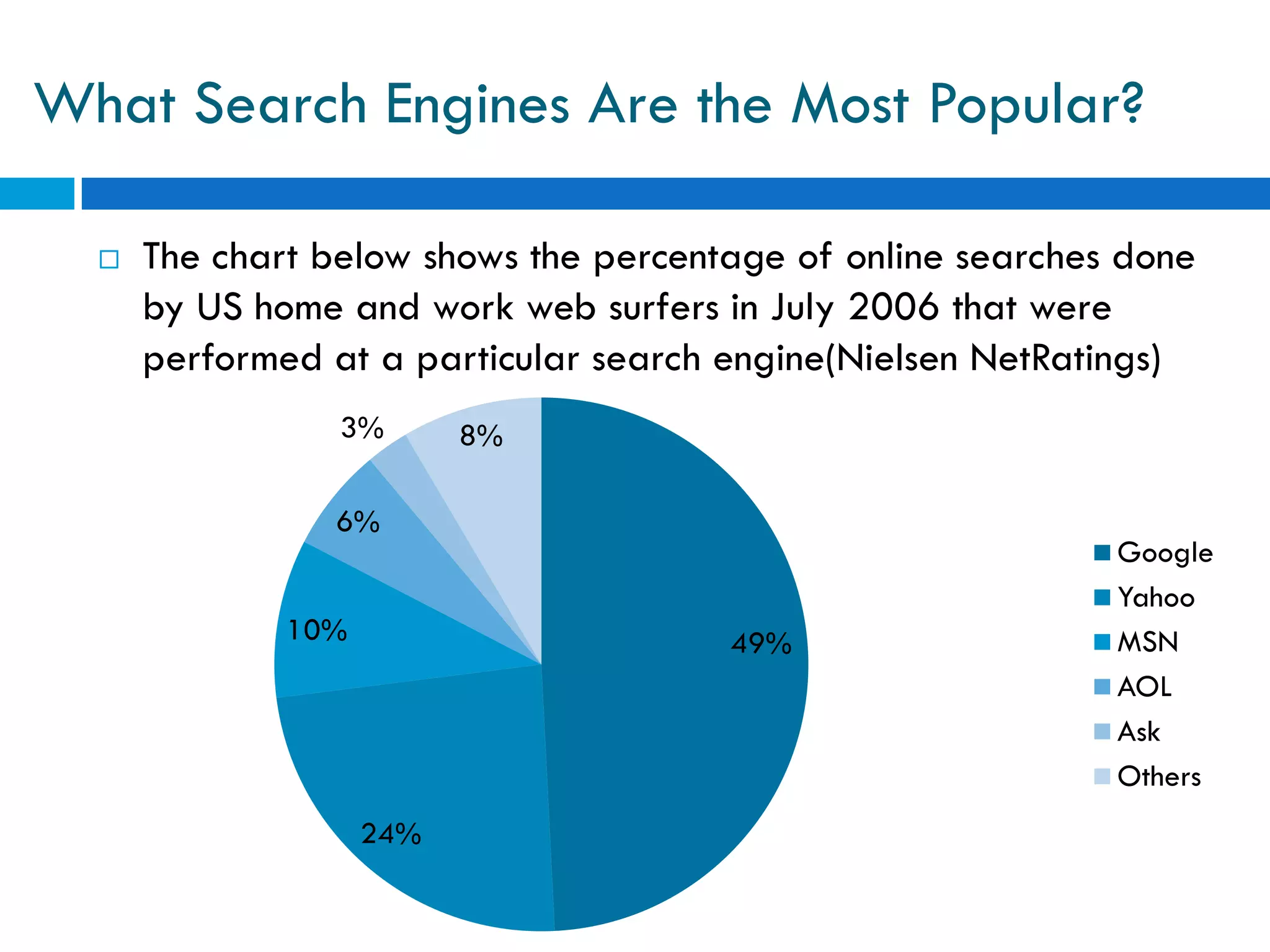
What Search Engines Are the Most Popular?

     The chart below shows the percentage of online searches done
      by US home and work web surfers in July 2006 that were
      performed at a particular search engine(Nielsen NetRatings)
                 3%       8%

                 6%
                                                             Google
                                                             Yahoo
              10%                      49%                   MSN
                                                             AOL
                                                             Ask
                                                             Others
                    24%
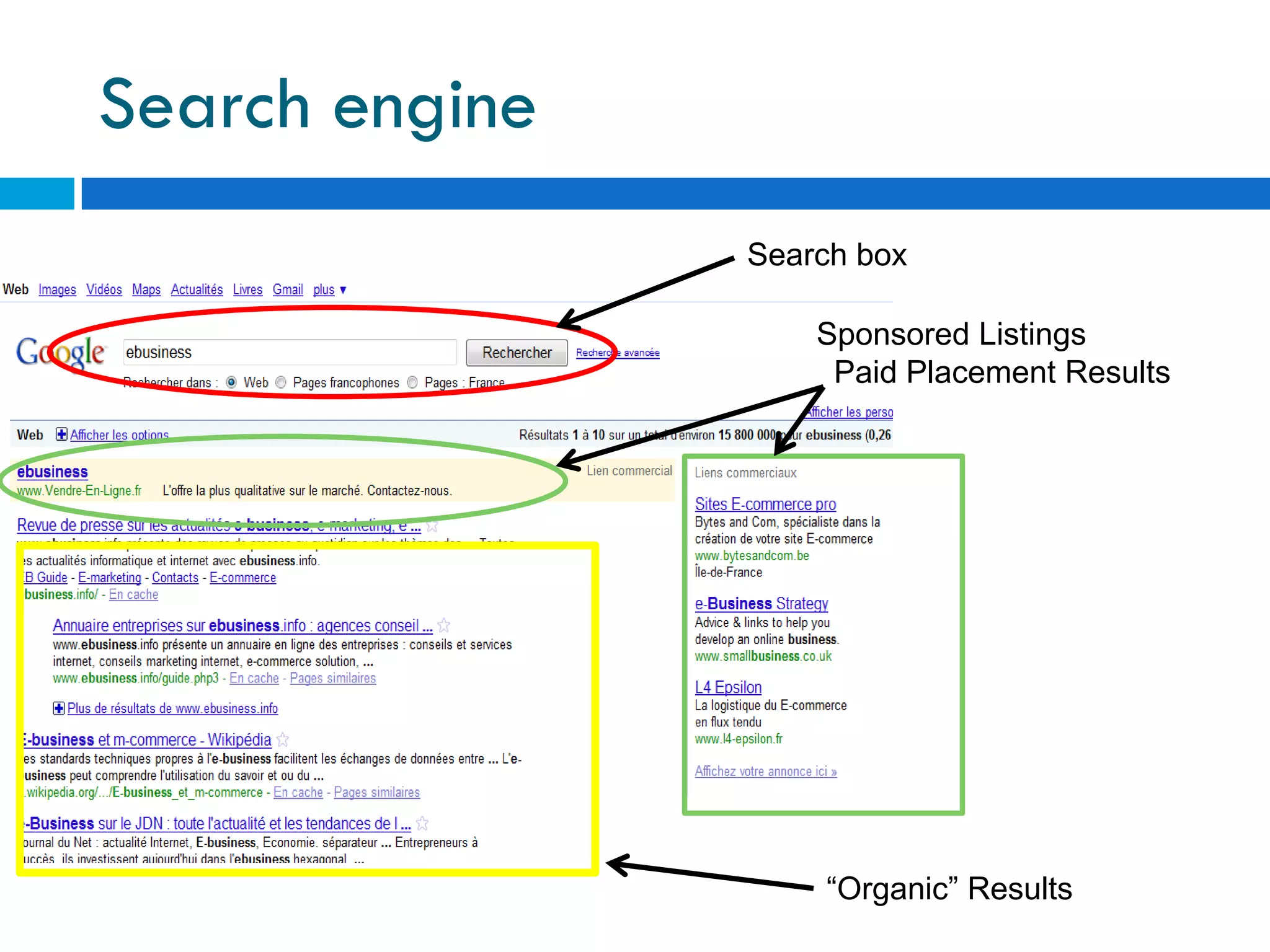
Search engine
                Search box

                    Sponsored Listings
                     Paid Placement Results


                    “Organic” Results
SEO PRESENTATION
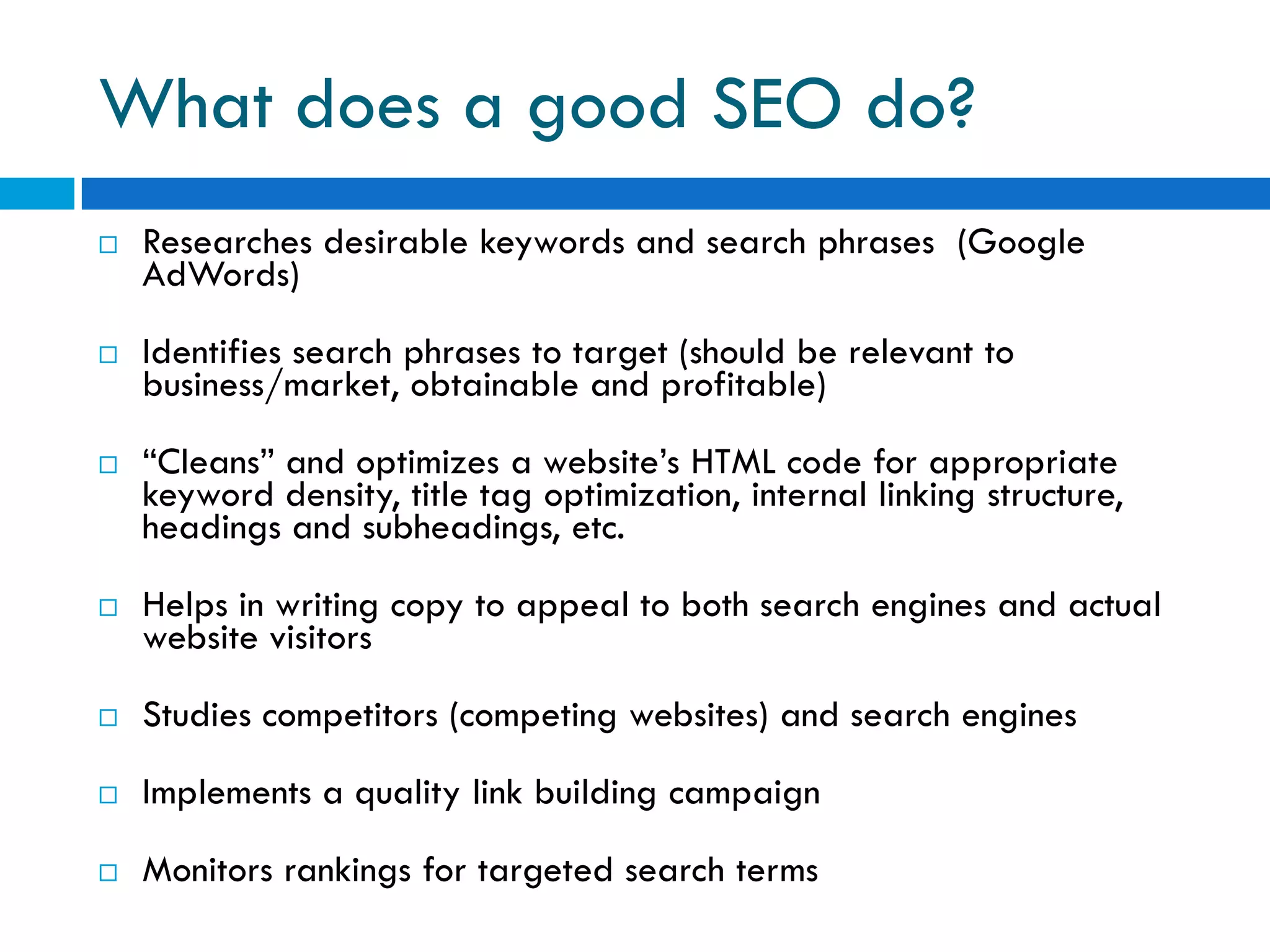
SEO - search engine optimization
   SEO = Search Engine Optimization

       Refers to the process of “optimizing” both the on-page and off-page
        ranking factors in order to achieve high search engine rankings for
        targeted search terms.

       Refers to the “industry” that revolves around obtaining high rankings in
        the search engines for desirable keyword search terms as a means of
        increasing the relevant traffic to a given website.

       Refers to an individual or company that optimizes websites for its
        clientele.

       Has a number of related meanings, and usually
        refers to an individual/firm that focuses on
        optimizing for “organic” search engine rankings
What does a good SEO do?
   Researches desirable keywords and search phrases (Google
    AdWords)

   Identifies search phrases to target (should be relevant to
    business/market, obtainable and profitable)

   “Cleans” and optimizes a website’s HTML code for appropriate
    keyword density, title tag optimization, internal linking structure,
    headings and subheadings, etc.

   Helps in writing copy to appeal to both search engines and actual
    website visitors

   Studies competitors (competing websites) and search engines

   Implements a quality link building campaign

   Monitors rankings for targeted search terms
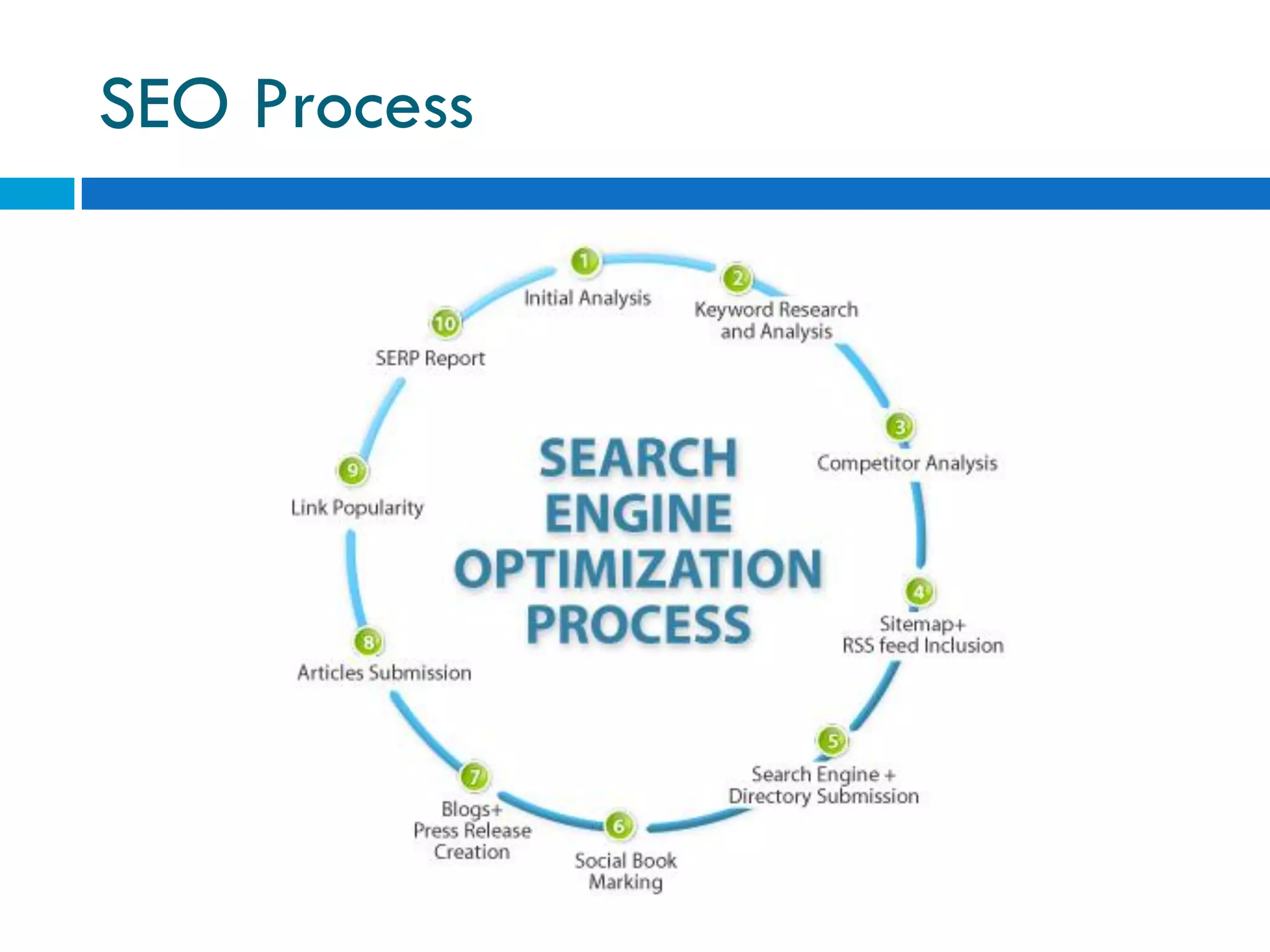
SEO Process
SEACH ENGINE MARKETING
Search engine marketing

Definition: SEM is the act of marketing a website via
  search engines by purchasing paid listings

What are paid listings?
 These are listings that search engines sell to
 advertisers, usually through paid placement or paid
 inclusion programs. In contrast, organic listings are
 not sold.
What are the benefits?
It gives companies the ability to:
 Drive high quality customers to their website

 Increase sales leads from customers looking for their
   products and services
 Build their brand online by communicating marketing
   messages to their target audience
 Increase their profile against their competitors

 Target a global audience via international search
   engines
 Be accountable with ROI tracking (SEM)
SEM: pay per click
   PPC ads appear as “sponsored listings”
   Companies bid on price they are willing to pay “per
    click”
   Typically have very good tracking tools and statistics
   Can set budgets and spending limits
   Google AdWords and Overture are the two leaders
Why search engine marketing?
   85% of all traffic on the internet is referred from a search engine


   90% of all users don’t look past the first 30 results (most only view top 10)

   Many websites aren’t even indexed, most are poorly optimized and get
    very little traffic from the search engines

   Cost-effective advertising

   Clear and measurable Return On Investment


   Operates under this assumption:
         More (relevant) traffic + Good Conv. Rate = More Sales/Leads
SEO vs SEM


   Search engine optimisation (SEO)
    - no cost per click

   Search engine marketing (SEM)
    - cost per click
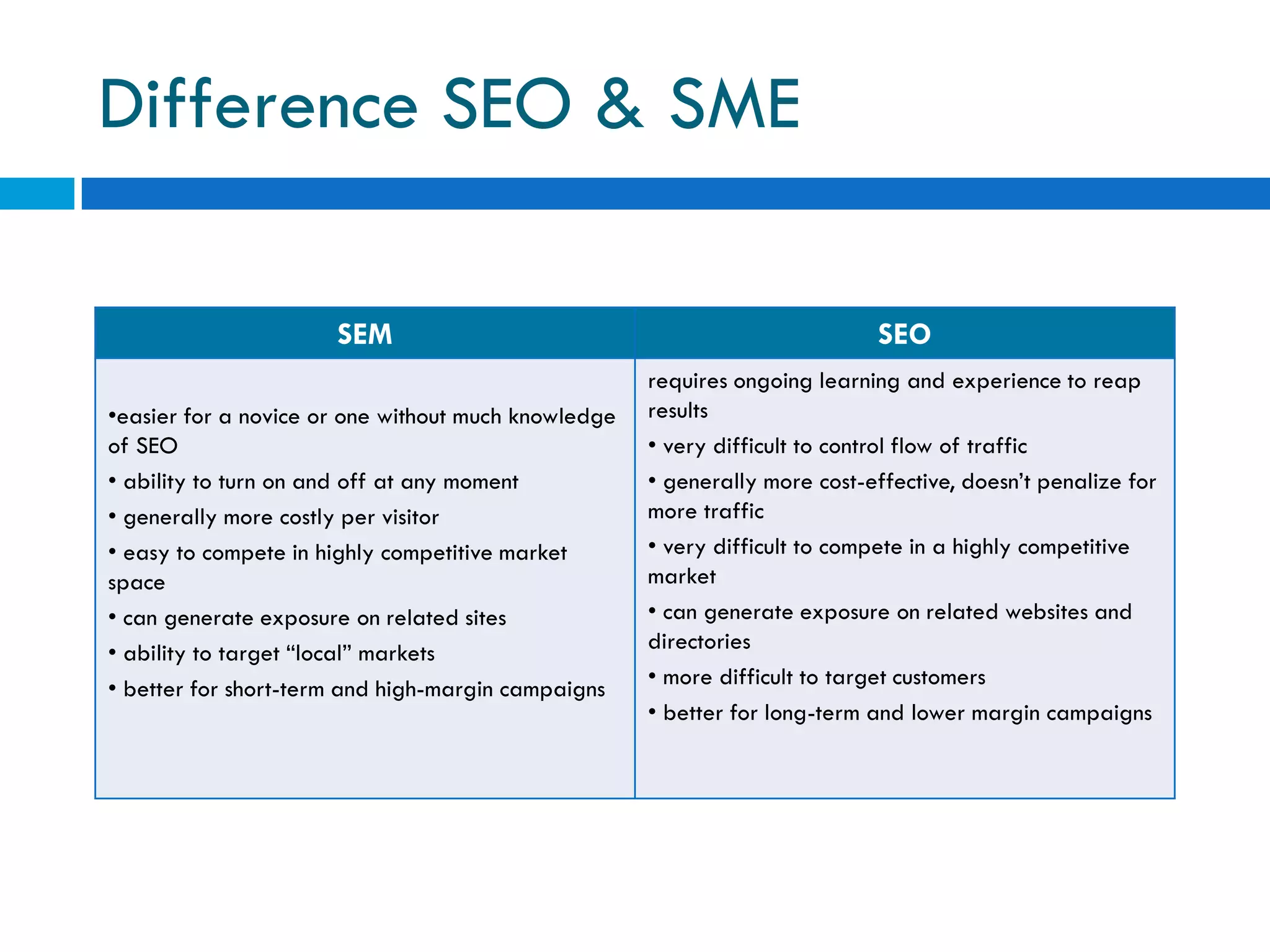
Difference SEO & SME

                      SEM                                                   SEO
                                                     requires ongoing learning and experience to reap
•easier for a novice or one without much knowledge   results
of SEO                                               • very difficult to control flow of traffic
• ability to turn on and off at any moment           • generally more cost-effective, doesn’t penalize for
• generally more costly per visitor                  more traffic
• easy to compete in highly competitive market       • very difficult to compete in a highly competitive
space                                                market
• can generate exposure on related sites             • can generate exposure on related websites and
• ability to target “local” markets                  directories
• better for short-term and high-margin campaigns    • more difficult to target customers
                                                     • better for long-term and lower margin campaigns
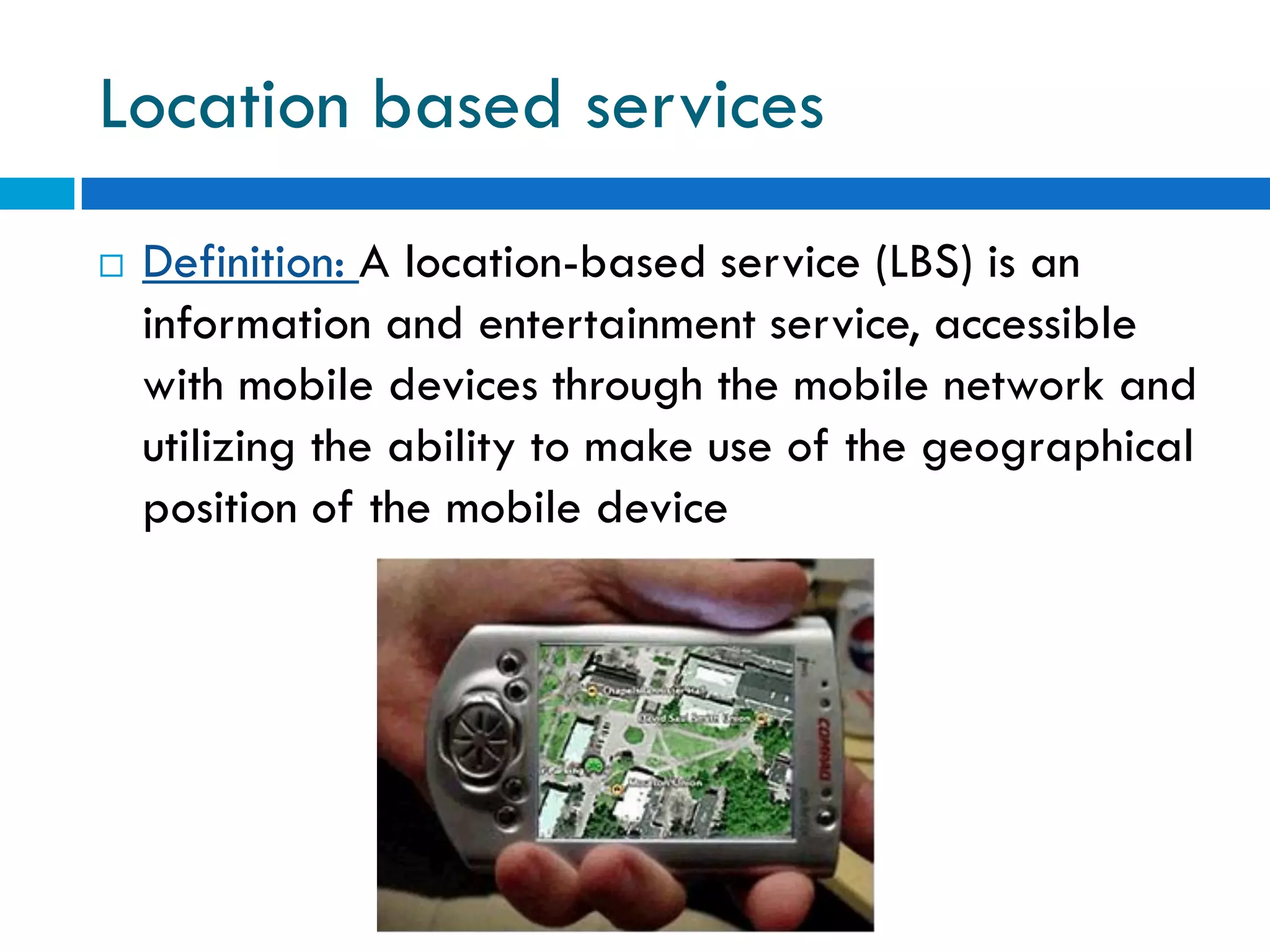
Location based services
   Definition: A location-based service (LBS) is an
    information and entertainment service, accessible
    with mobile devices through the mobile network and
    utilizing the ability to make use of the geographical
    position of the mobile device

What is Search Engine?

  • 1.
  • 2.
    E-Business definitions  SE – search engine  SEO - search engine optimization  SEM - search engine marketing  Location Based Services
  • 3.
  • 4.
    What is aSearch Engine?  Definition: An internet-based tool that searches an index of documents for a particular term, phrase or text specified by the user. Commonly used to refer to large web-based search engines that search through billions of pages on the internet.
  • 5.
    A Search Engine’sGoals & Objectives  Accumulate large index (database) of web documents to search.  Provide relevant results to users.  Generate revenue thanks to paid advertising and related business ventures that leverage large amount of traffic.
  • 6.
    What Search EnginesAre the Most Popular?  The chart below shows the percentage of online searches done by US home and work web surfers in July 2006 that were performed at a particular search engine(Nielsen NetRatings) 3% 8% 6% Google Yahoo 10% 49% MSN AOL Ask Others 24%
  • 7.
    Search engine Search box Sponsored Listings Paid Placement Results “Organic” Results
  • 8.
  • 9.
    SEO - searchengine optimization  SEO = Search Engine Optimization  Refers to the process of “optimizing” both the on-page and off-page ranking factors in order to achieve high search engine rankings for targeted search terms.  Refers to the “industry” that revolves around obtaining high rankings in the search engines for desirable keyword search terms as a means of increasing the relevant traffic to a given website.  Refers to an individual or company that optimizes websites for its clientele.  Has a number of related meanings, and usually refers to an individual/firm that focuses on optimizing for “organic” search engine rankings
  • 10.
    What does agood SEO do?  Researches desirable keywords and search phrases (Google AdWords)  Identifies search phrases to target (should be relevant to business/market, obtainable and profitable)  “Cleans” and optimizes a website’s HTML code for appropriate keyword density, title tag optimization, internal linking structure, headings and subheadings, etc.  Helps in writing copy to appeal to both search engines and actual website visitors  Studies competitors (competing websites) and search engines  Implements a quality link building campaign  Monitors rankings for targeted search terms
  • 11.
  • 12.
  • 13.
    Search engine marketing Definition:SEM is the act of marketing a website via search engines by purchasing paid listings What are paid listings? These are listings that search engines sell to advertisers, usually through paid placement or paid inclusion programs. In contrast, organic listings are not sold.
  • 14.
    What are thebenefits? It gives companies the ability to:  Drive high quality customers to their website  Increase sales leads from customers looking for their products and services  Build their brand online by communicating marketing messages to their target audience  Increase their profile against their competitors  Target a global audience via international search engines  Be accountable with ROI tracking (SEM)
  • 15.
    SEM: pay perclick  PPC ads appear as “sponsored listings”  Companies bid on price they are willing to pay “per click”  Typically have very good tracking tools and statistics  Can set budgets and spending limits  Google AdWords and Overture are the two leaders
  • 16.
    Why search enginemarketing?  85% of all traffic on the internet is referred from a search engine  90% of all users don’t look past the first 30 results (most only view top 10)  Many websites aren’t even indexed, most are poorly optimized and get very little traffic from the search engines  Cost-effective advertising  Clear and measurable Return On Investment  Operates under this assumption: More (relevant) traffic + Good Conv. Rate = More Sales/Leads
  • 17.
    SEO vs SEM  Search engine optimisation (SEO) - no cost per click  Search engine marketing (SEM) - cost per click
  • 18.
    Difference SEO &SME SEM SEO requires ongoing learning and experience to reap •easier for a novice or one without much knowledge results of SEO • very difficult to control flow of traffic • ability to turn on and off at any moment • generally more cost-effective, doesn’t penalize for • generally more costly per visitor more traffic • easy to compete in highly competitive market • very difficult to compete in a highly competitive space market • can generate exposure on related sites • can generate exposure on related websites and • ability to target “local” markets directories • better for short-term and high-margin campaigns • more difficult to target customers • better for long-term and lower margin campaigns
  • 19.
    Location based services  Definition: A location-based service (LBS) is an information and entertainment service, accessible with mobile devices through the mobile network and utilizing the ability to make use of the geographical position of the mobile device