LEVELS OF ORGANIZATION OF THE HUMAN BODY. 
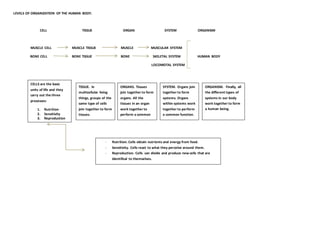
CELL TISSUE ORGAN SYSTEM ORGANISM 
MUSCLE CELL MUSCLE TISSUE MUSCLE MUSCULAR SYSTEM 
BONE CELL BONE TISSUE BONE SKELETAL SYSTEM HUMAN BODY 
LOCOMOTAL SYSTEM 
CELLS are the basic 
units of life and they 
carry out the three 
processes: 
1. Nutrition 
2. Sensitivity 
3. Reproduction 
TISSUE. In 
multicellular living 
things, groups of the 
same type of cells 
join together to form 
tissues. 
ORGANS. Tissues 
join together to form 
organs. All the 
tissues in an organ 
work together to 
perform a common 
function. 
SYSTEM. Organs join 
together to form 
systems. Organs 
within systems work 
together to perform 
a common function. 
ORGANISM. Finally, all 
the different types of 
systems in our body 
work together to form 
a human being. 
- Nutrition. Cells obtain nutrients and energy from food. 
- Sensitivity. Cells react to what they perceive around them. 
- Reproduction. Cells can divide and produce new cells that are 
identifical to themselves.

Levels of organization of the human body.

  • 1.
    LEVELS OF ORGANIZATIONOF THE HUMAN BODY. CELL TISSUE ORGAN SYSTEM ORGANISM MUSCLE CELL MUSCLE TISSUE MUSCLE MUSCULAR SYSTEM BONE CELL BONE TISSUE BONE SKELETAL SYSTEM HUMAN BODY LOCOMOTAL SYSTEM CELLS are the basic units of life and they carry out the three processes: 1. Nutrition 2. Sensitivity 3. Reproduction TISSUE. In multicellular living things, groups of the same type of cells join together to form tissues. ORGANS. Tissues join together to form organs. All the tissues in an organ work together to perform a common function. SYSTEM. Organs join together to form systems. Organs within systems work together to perform a common function. ORGANISM. Finally, all the different types of systems in our body work together to form a human being. - Nutrition. Cells obtain nutrients and energy from food. - Sensitivity. Cells react to what they perceive around them. - Reproduction. Cells can divide and produce new cells that are identifical to themselves.