
PROGRESS REPORT FOR FINAL YEAR PROJECT 
BROAD AREA: SOFTWARE DEFINED NETWORKING 
SPECIFIC FOCUS: LOAD BALANCING IN DATA CENTRE NETWORK 
By: Aditya Shukla, Anshuman Singh 
Guide: Mr. Nabajyoti Medhi
Outline 
 Focus 
 Need for a new Network Paradigm 
 Limitations of Current Networking Technology 
 Basics of SDN 
 Work done 
 Next steps 
 References
Need for a new Network 
Paradigm 
 Changing traffic patterns 
 The “consumerization of IT” 
 The rise of cloud services 
 Big data means more bandwidth
Limitations of current network: 
 Complexity that leads to stasis 
 Inconsistent Policies 
 Inability to scale 
 Vendor dependence
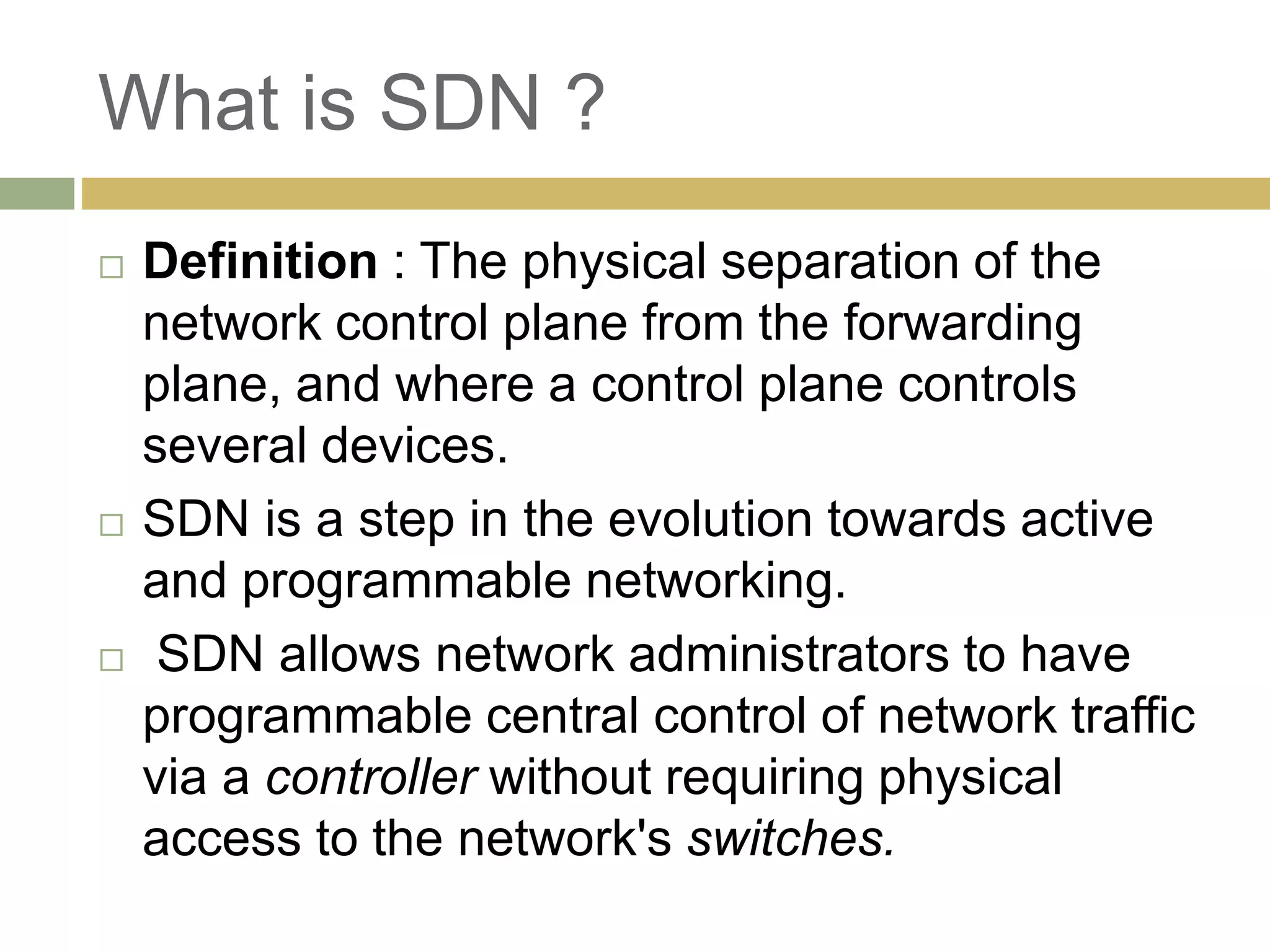
What is SDN ? 
 Definition : The physical separation of the 
network control plane from the forwarding 
plane, and where a control plane controls 
several devices. 
 SDN is a step in the evolution towards active 
and programmable networking. 
 SDN allows network administrators to have 
programmable central control of network traffic 
via a controller without requiring physical 
access to the network's switches.
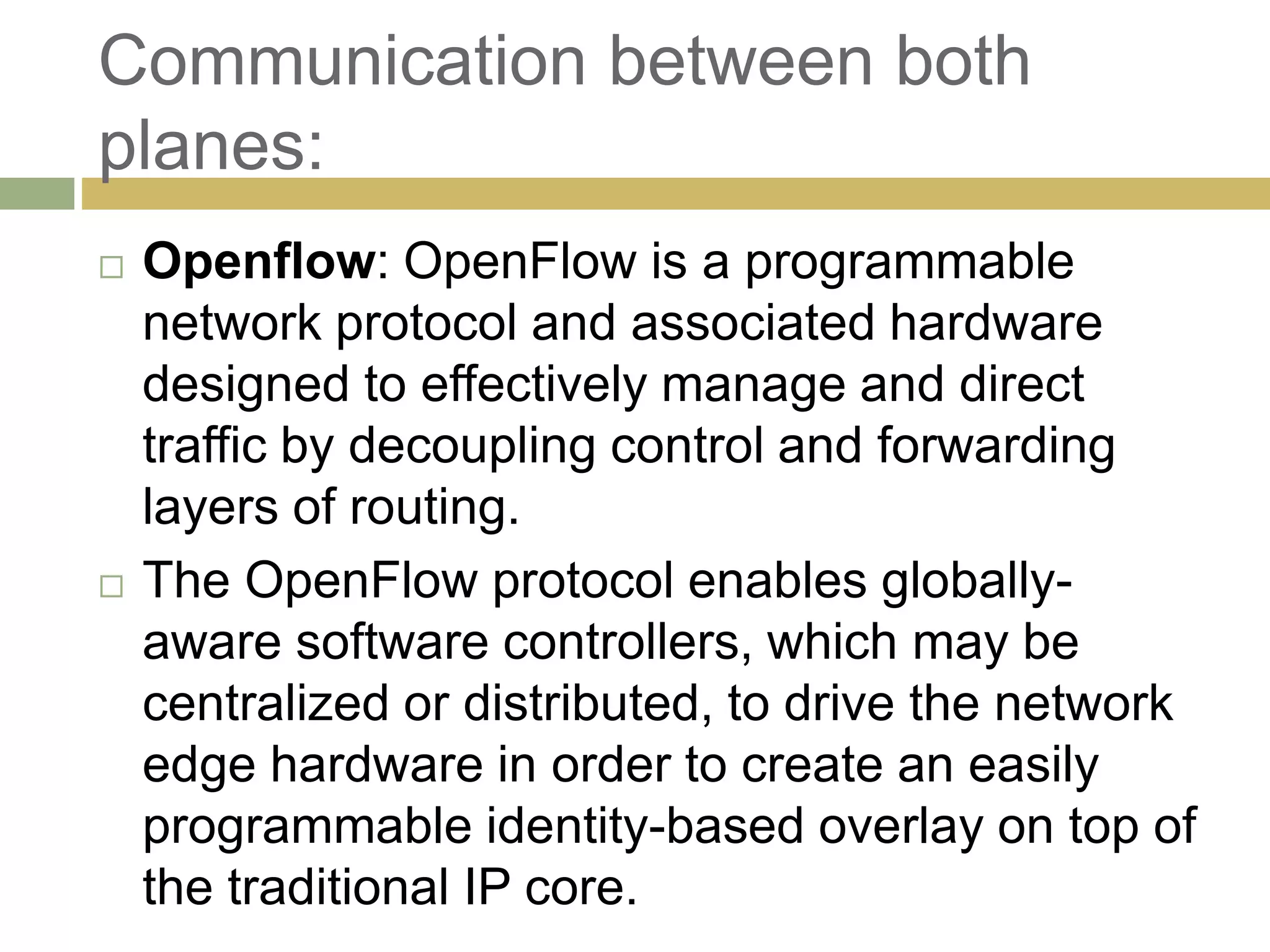
Communication between both 
planes: 
 Openflow: OpenFlow is a programmable 
network protocol and associated hardware 
designed to effectively manage and direct 
traffic by decoupling control and forwarding 
layers of routing. 
 The OpenFlow protocol enables globally-aware 
software controllers, which may be 
centralized or distributed, to drive the network 
edge hardware in order to create an easily 
programmable identity-based overlay on top of 
the traditional IP core.
Focus 
To design a mechanism using which we could 
load balance traffic in data centre network.
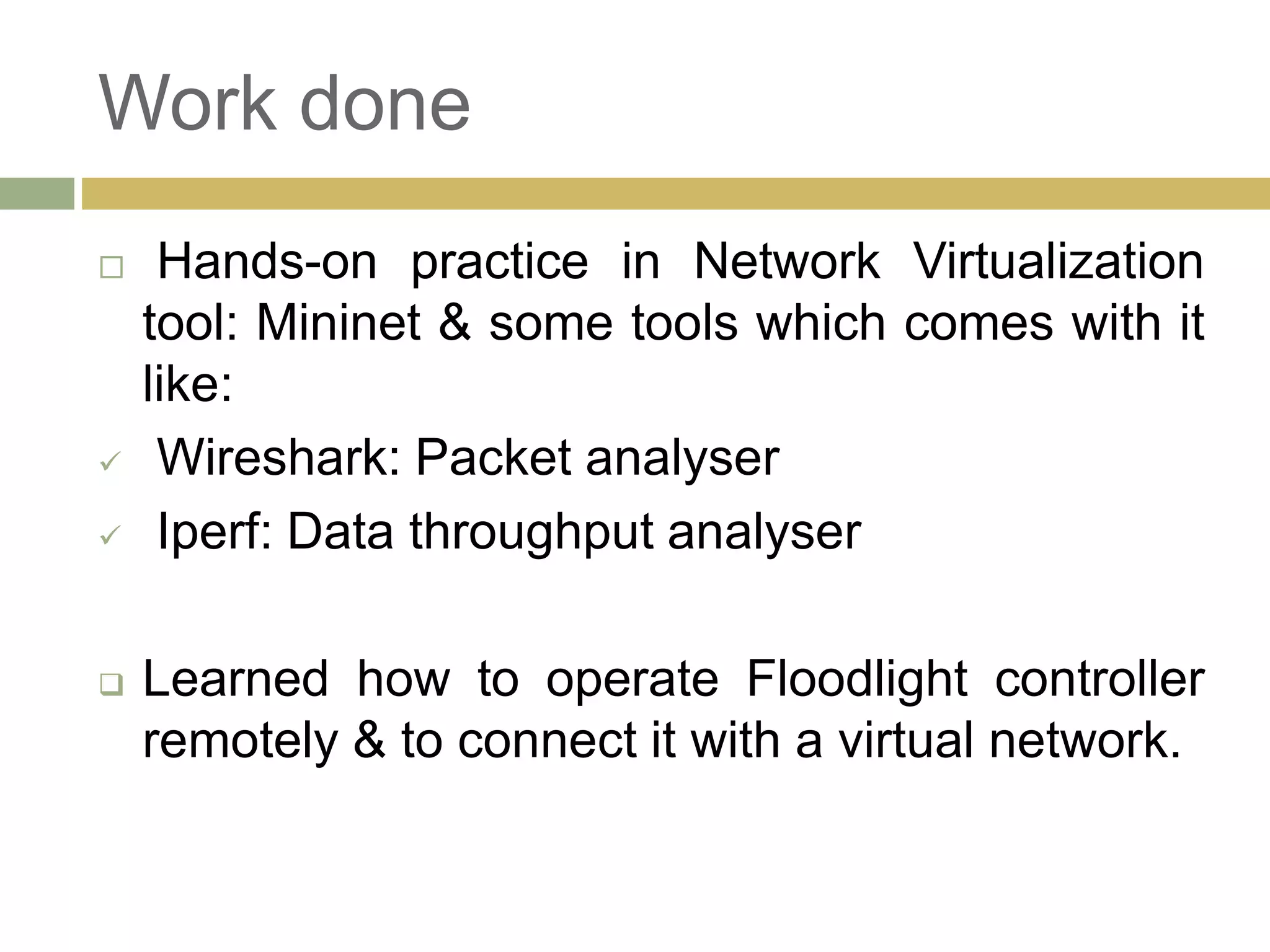
Work done 
 Hands-on practice in Network Virtualization 
tool: Mininet & some tools which comes with it 
like: 
 Wireshark: Packet analyser 
 Iperf: Data throughput analyser 
 Learned how to operate Floodlight controller 
remotely & to connect it with a virtual network.
Work done 
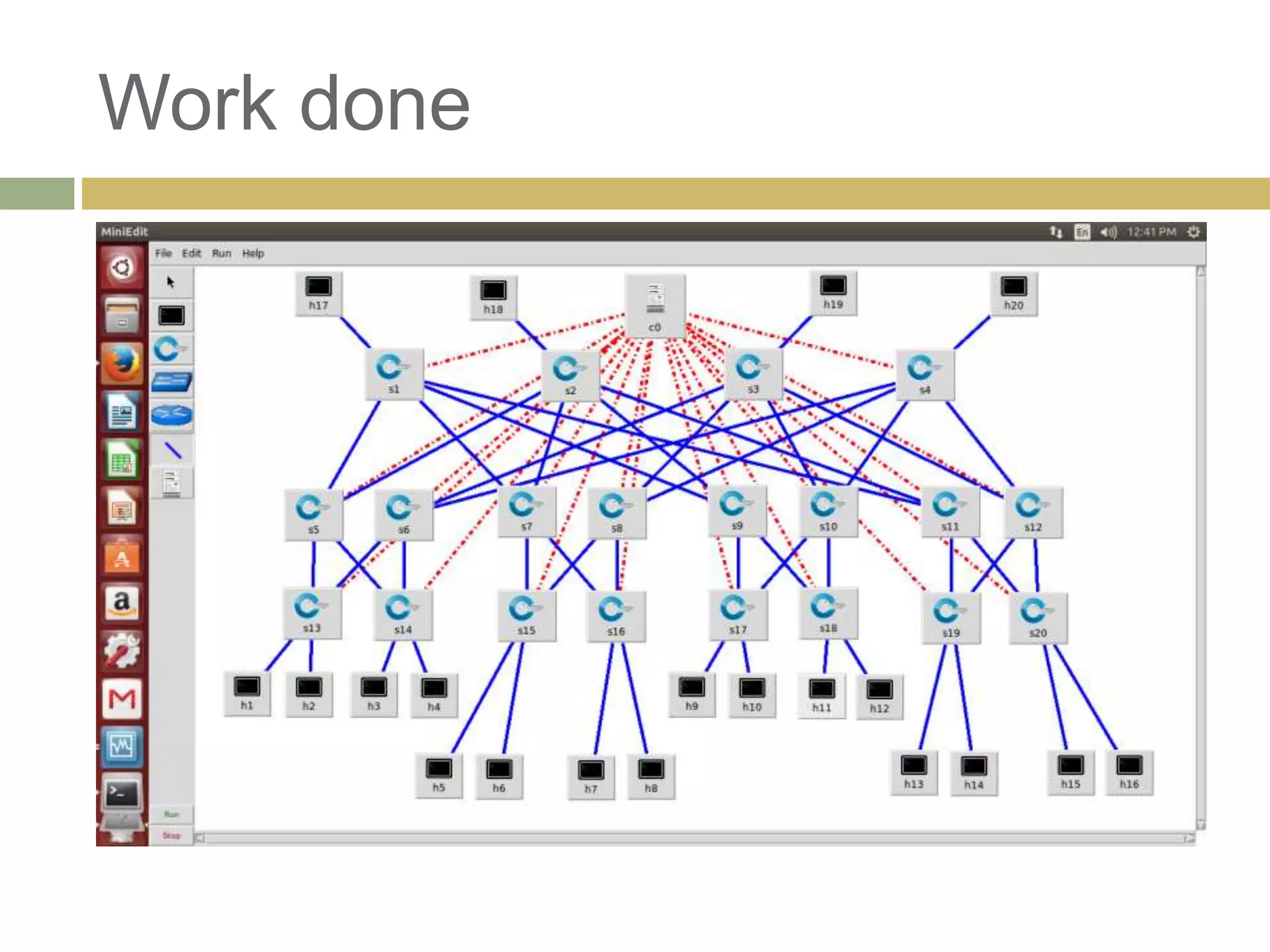
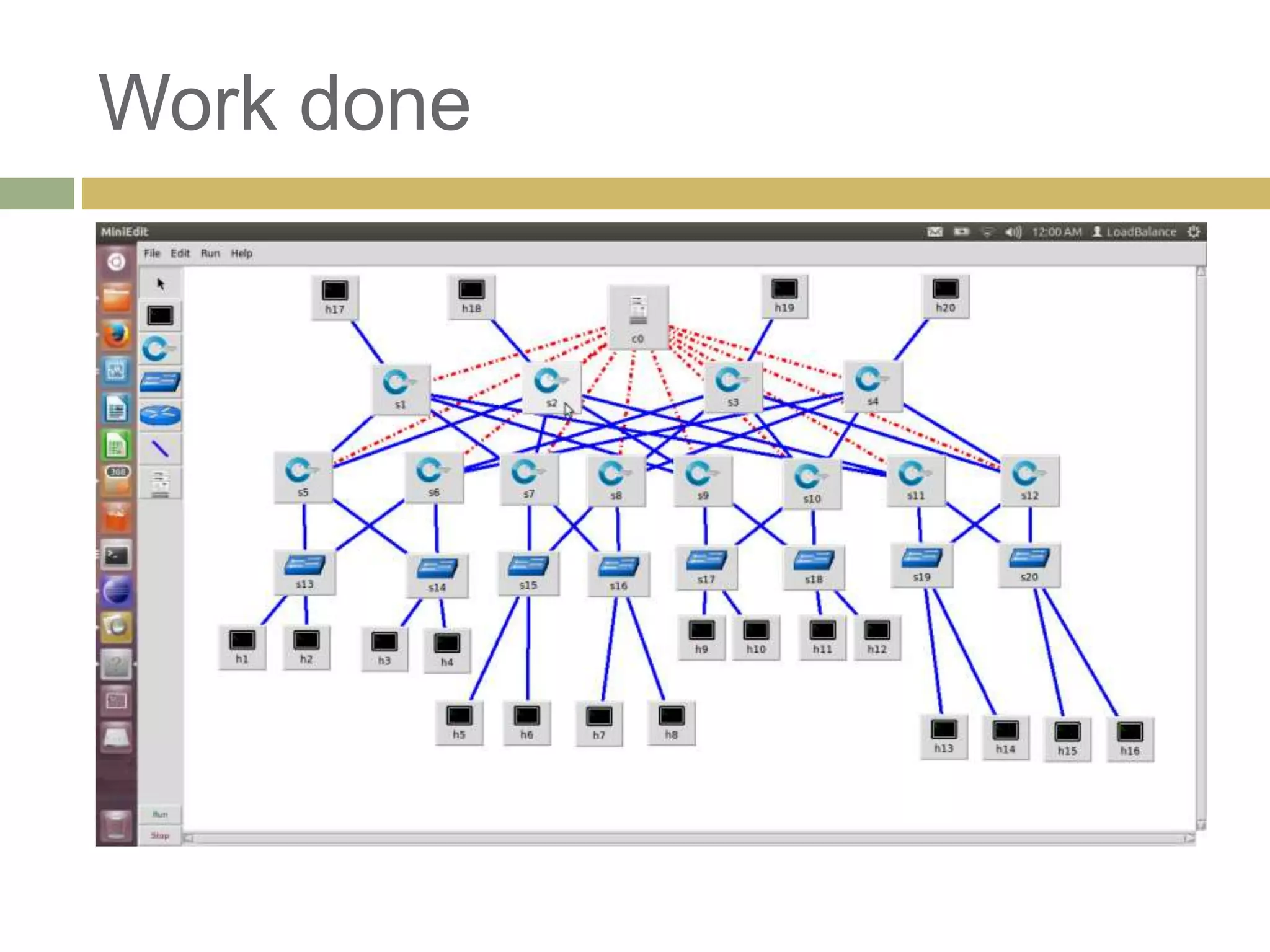
 Experimented with different combinations of 
legacy & openflow switches in fat tree network 
to figure out best possible combination for 
efficiently handling data traffic. 
 Fat tree Network : is a popular data center 
network topology. 
 It is typically a 3-layer hierarchical tree that 
consists of switches on the core, aggregation 
and top-of-rack(ToR) layers. The hosts 
connect to the switches on the ToR layer.
Work done
Work done
Next Steps 
 We are now trying to develop a module for 
iperf open source tool so as to generate 
traffic between all possible pairs of hosts 
automatically. 
 To try different types of controllers on the same 
fat tree network so as to figure out most 
suitable one for efficiently handling the traffic.
References 
●Software Defined Networking- The new norm in Networks 
https://www.opennetworking.org/images/stories/downloads/sdn-resources/white-papers/wp-sdn-newnorm. 
pdf 
●About Openflow 
http://archive.openflow.org/wk/index.php/OpenFlow_Tutorial 
●Mininet tutorial 
http://mininet.org/walkthrough/
Software Defined Networking

Software Defined Networking

  • 1.
    PROGRESS REPORT FORFINAL YEAR PROJECT BROAD AREA: SOFTWARE DEFINED NETWORKING SPECIFIC FOCUS: LOAD BALANCING IN DATA CENTRE NETWORK By: Aditya Shukla, Anshuman Singh Guide: Mr. Nabajyoti Medhi
  • 2.
    Outline  Focus  Need for a new Network Paradigm  Limitations of Current Networking Technology  Basics of SDN  Work done  Next steps  References
  • 3.
    Need for anew Network Paradigm  Changing traffic patterns  The “consumerization of IT”  The rise of cloud services  Big data means more bandwidth
  • 4.
    Limitations of currentnetwork:  Complexity that leads to stasis  Inconsistent Policies  Inability to scale  Vendor dependence
  • 5.
    What is SDN?  Definition : The physical separation of the network control plane from the forwarding plane, and where a control plane controls several devices.  SDN is a step in the evolution towards active and programmable networking.  SDN allows network administrators to have programmable central control of network traffic via a controller without requiring physical access to the network's switches.
  • 6.
    Communication between both planes:  Openflow: OpenFlow is a programmable network protocol and associated hardware designed to effectively manage and direct traffic by decoupling control and forwarding layers of routing.  The OpenFlow protocol enables globally-aware software controllers, which may be centralized or distributed, to drive the network edge hardware in order to create an easily programmable identity-based overlay on top of the traditional IP core.
  • 7.
    Focus To designa mechanism using which we could load balance traffic in data centre network.
  • 8.
    Work done Hands-on practice in Network Virtualization tool: Mininet & some tools which comes with it like:  Wireshark: Packet analyser  Iperf: Data throughput analyser  Learned how to operate Floodlight controller remotely & to connect it with a virtual network.
  • 9.
    Work done Experimented with different combinations of legacy & openflow switches in fat tree network to figure out best possible combination for efficiently handling data traffic.  Fat tree Network : is a popular data center network topology.  It is typically a 3-layer hierarchical tree that consists of switches on the core, aggregation and top-of-rack(ToR) layers. The hosts connect to the switches on the ToR layer.
  • 10.
  • 11.
  • 12.
    Next Steps We are now trying to develop a module for iperf open source tool so as to generate traffic between all possible pairs of hosts automatically.  To try different types of controllers on the same fat tree network so as to figure out most suitable one for efficiently handling the traffic.
  • 13.
    References ●Software DefinedNetworking- The new norm in Networks https://www.opennetworking.org/images/stories/downloads/sdn-resources/white-papers/wp-sdn-newnorm. pdf ●About Openflow http://archive.openflow.org/wk/index.php/OpenFlow_Tutorial ●Mininet tutorial http://mininet.org/walkthrough/

Editor's Notes

  • #6 Decoupling Extract out control from devices. Network intelligence kept at a place . One logic entity. Abstraction of underlying network provided to applications. Simplifies. Programmability Real time behavior change Open API between planes. SDN makes network “applicationcustomized rather than application aware. And makes application network capability aware.
  • #7 Both side of interface. Allows network to be programmed per flow basis so more granular control.