IoT: Internet of Things
EVOLUTION OF AN INTERNET ERA
Definition:
 The Internet of Things (IoT) is a scenario in which objects or people are provided
with unique identifiers and the ability to transfer the data automatically over a
network without requiring human-to-human or human-to-computer interaction.
 Tounderstand the IoT, imagine each of the object (Light, Fan, Air-conditioned,
Projector, Door, etc.) here in this room, all wirelessly connected to communicate
with each other…
 IoT is a “network connecting to physical world objects” same as computers connect
with the Internet now.
What does “Thing” mean to IoT
 A person with a heart monitorimplant.
 A farm animal with a biochiptransponder.
 An automobile that has built-in sensors to alert the driver when tirepressure
is low.
 So the thing, in the Internet of Things, can be any natural or man-made object
that can be assigned an IP address and provided with the ability to transfer
data over a network.
Internet Connection:
 Internet Compatible Devices You Own ?
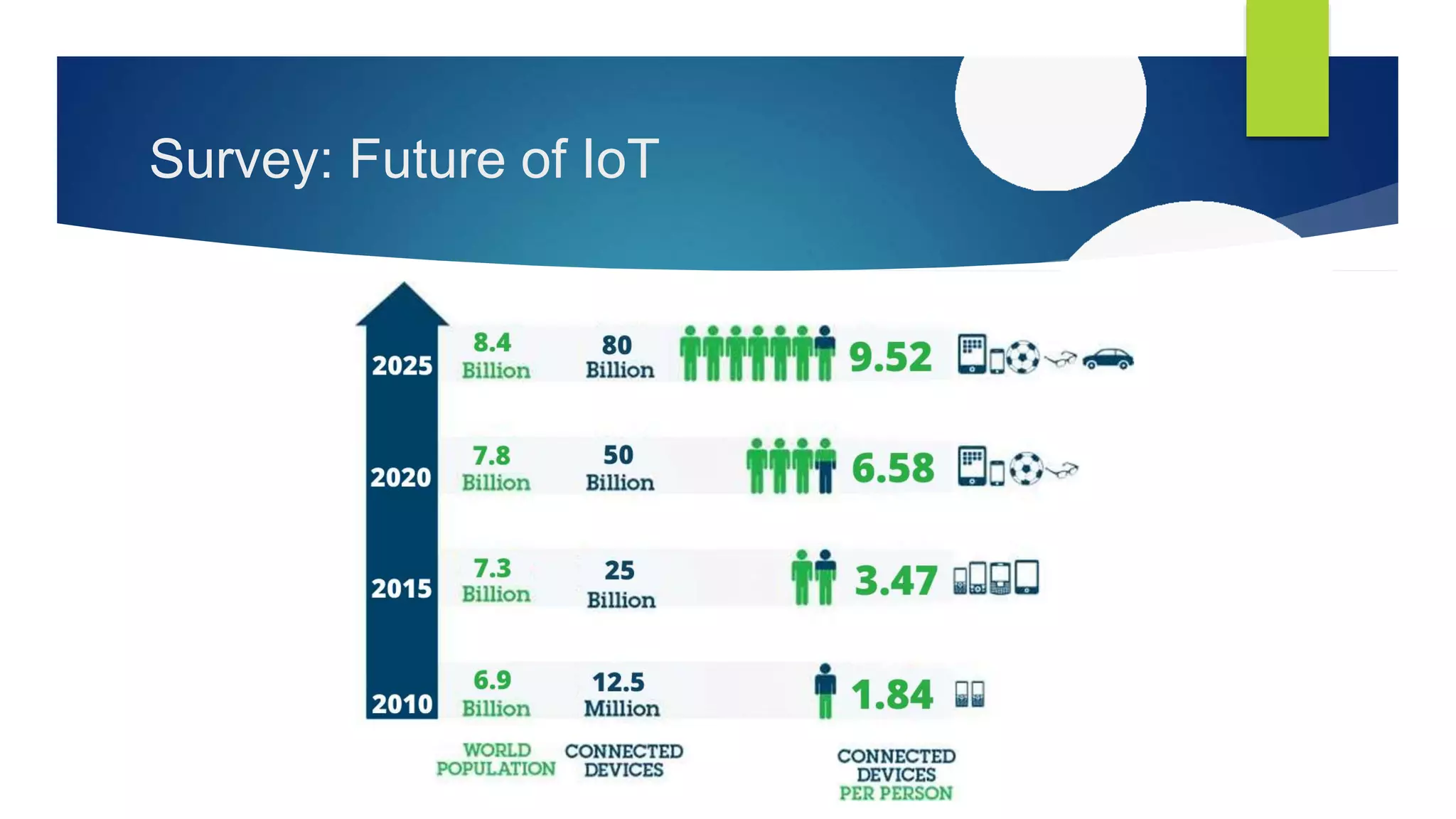
 More connected devices than people - 2015
 10 billion objects connected with the Internet - 2018
 24.8 billion internet-connected objects – 2020
Future:
 2022: 50 Billion Connected Things
 10.6 objects will be connected with the Internet for each person.
 IPv6’s huge increase in address space is an important factor in the
development of the Internet of Things.
Survey: Future of IoT
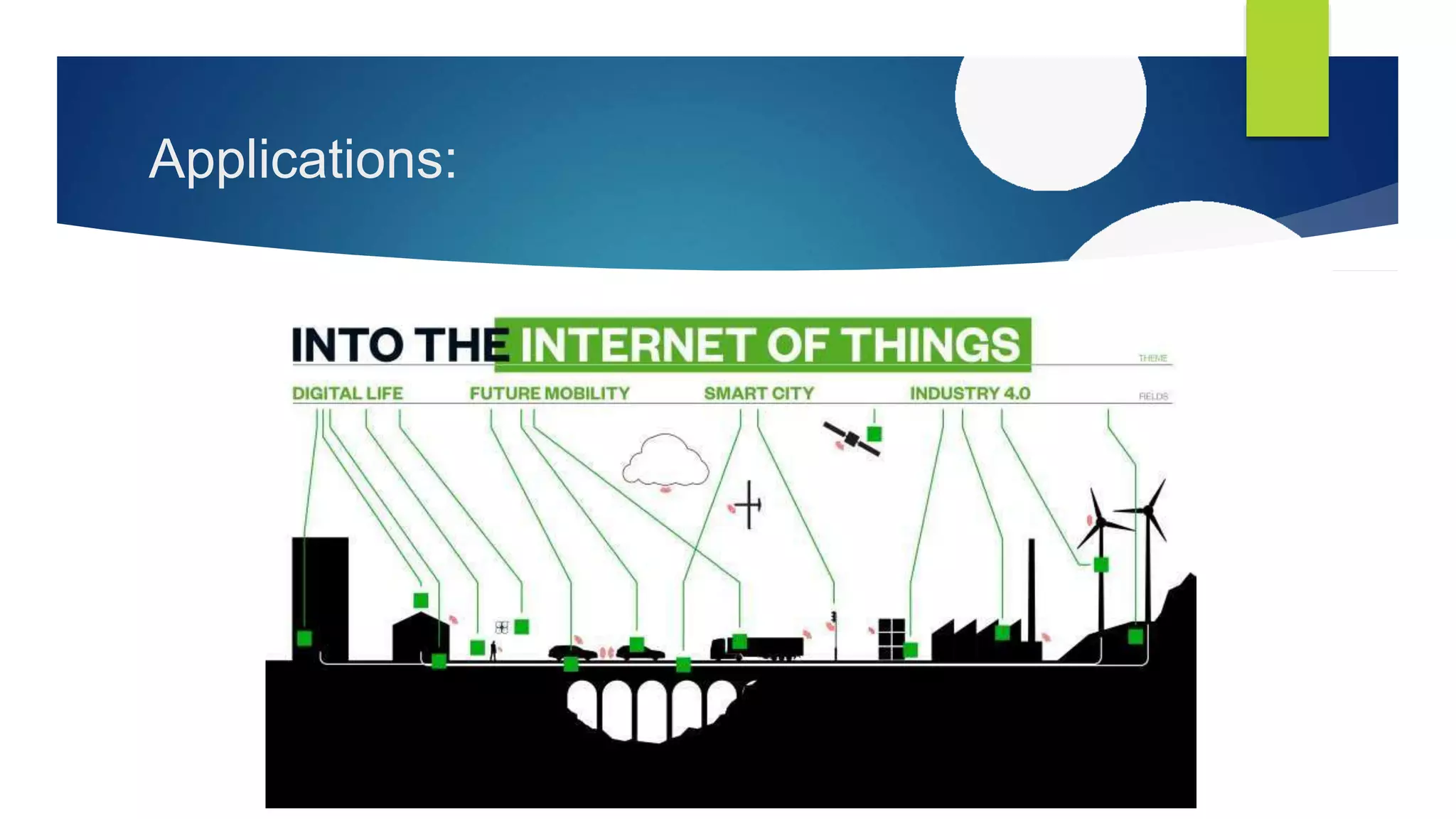
Applications:
Applications:
 Fast and easy communication ofinformation
 Live and analyzed datacollection
Smart Cities:
 Smart Parking: Monitoring of parking spaces availability in thecity.
 Structural health: Monitoring of vibrations and material conditions in buildings,
bridges and historical monuments.
 Noise Urban Maps: Sound monitoring in bar areas and centric zones in realtime.
 Traffic Congestion: Monitoring of vehicles and pedestrian levels to optimize driving
and walking routes.
 Smart Lighting: Intelligent and weather adaptive lighting in streetlights.
 Waste Management: Detection of rubbish levels in containers to optimize the trash
collection routes.
 Smart Roads: Intelligent Highways with warning messages and diversions according
to climate conditions and unexpected events like accidents or trafficjams.
Smart Environment:
 Forest Fire Detection: Monitoring of combustion gases and preemptivefire
conditions to define alertzones.
 Air Pollution: Control of CO2 emissions of factories, pollution emitted by cars and
toxic gases generated in farms.
 Snow Level Monitoring: Snow level measurement to know in real time thequality
of ski tracks and allow security corps avalancheprevention.
 Landslide and Avalanche Prevention: Monitoring of soil moisture, vibrations and
earth density to detect dangerous patterns in landconditions.
 Earthquake Early Detection: Distributed control in specific places oftremors.
Smart Water:
 Potable water monitoring: Monitor the quality of tap water incities.
 Chemical leakage detection in rivers: Detect leakages and wastes of factories in
rivers.
 Swimming pool remote measurement: Control remotely the swimmingpool
conditions.
 Pollution levels in the sea: Control real-time leakages and wastes in thesea.
 River Floods: Monitoring of water level variations in rivers, dams and reservoirs.
Retail:
 Monitoring: product tracking for traceabilitypurposes.
 Intelligent Shopping Applications: Getting advices in the point of sale
according to customer habits, preferences, presence of allergic componentsfor
them or expiring dates.
 Marketing: Collect very huge amount of precise information about buyers and
their needs.
Industry:
 M2M Applications: Remotely machine control and auto-diagnosis forearly
detection of problems.
 Indoor Air Quality: Monitoring of oxygen, ozone presence and toxic gaslevels
inside chemical plants to ensure workers and goodssafety.
 Temperature Monitoring: Control of temperature inside industrial and
medical fridges with sensitive merchandise.
Agriculture:
 Monitoring: keep latest information for soil moisture andfertility.
 Irrigation: Selective irrigation in dry zones to reduce the water resourcesrequired
in the green.
 Water Management: Study of weather conditions in fields to forecastice
formation, rain, drought, snow or wind changes.
 Accuracy: Control the exact conditions of plant’s growth to get thehighest
efficiency.
 Animal Tracking: Location and identification of animals grazing in open pastures
or location in big stables.
Security & Emergencies:
 Perimeter Access Control: Access control to restricted areas and detectionof
people in non-authorizedareas.
 Radiation Levels: Distributed measurement of radiation levels in nuclear
power stations surroundings to generate leakagealerts.
Daily Life:
 Remote Control Appliances: Switching on and off remotely appliances toavoid
accidents and save energy.
 Sensor-Based Furniture: It will warn you for your health cure. e.g. While you
seat for long time on computer desk, it will warn you to stand-up and walk
around for some distance.
 Energy and Water Use: Energy and water supply consumption monitoring to
obtain advice on how to save cost and resources.
 Care: Assistance for elderly or disabled people living independent.
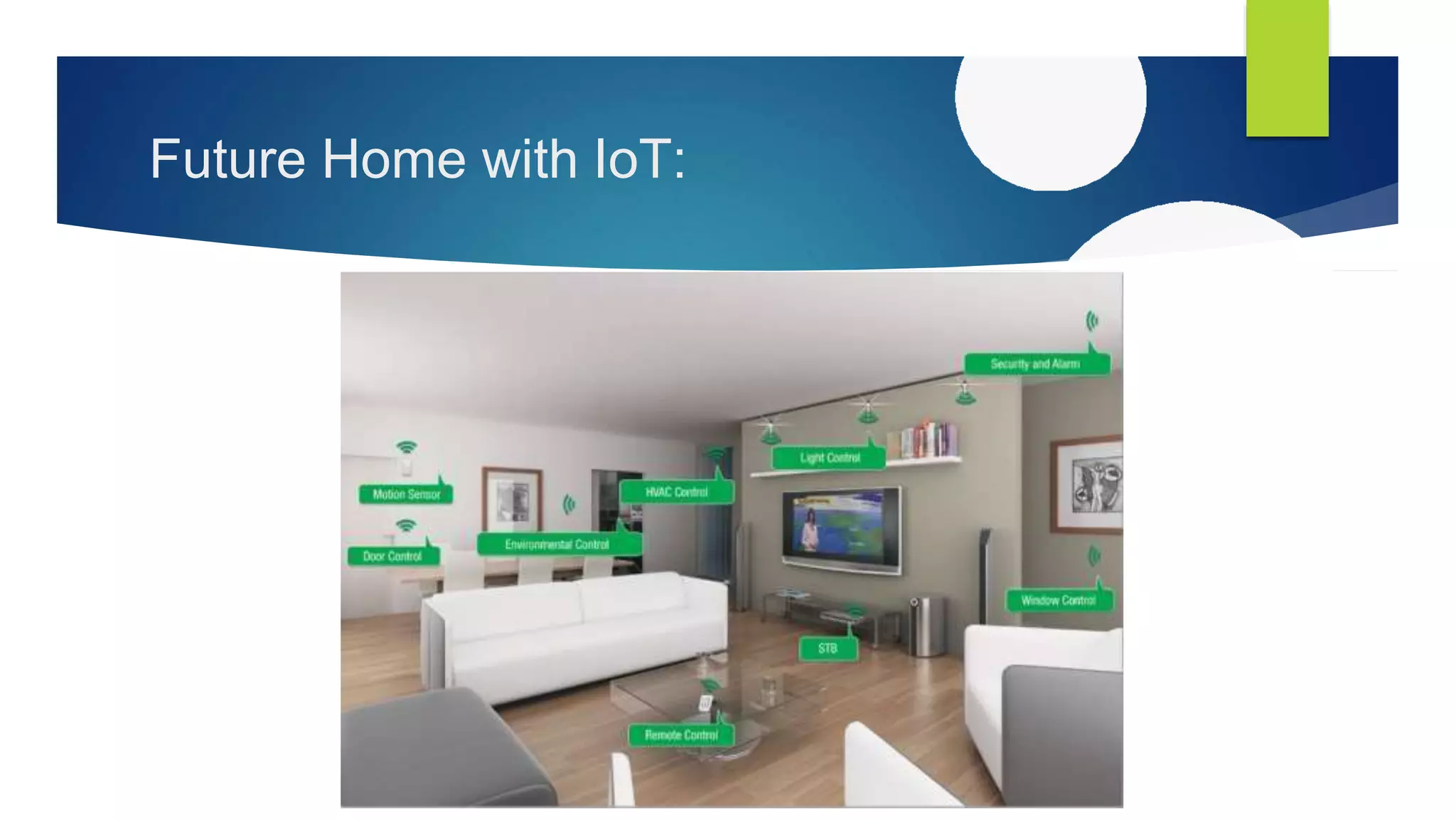
Future Home with IoT:
Issues:
 Security in terms ofCommunication
 DataPrivacy
 Out of Law boundaries and GovernmentSurveillance
Thanks for your attention
Website: https://www.aryausa.com
Call Us: +1-650-242-8260,
+1-650-212-6127
Mail Us: sales@aryausa.com
Copyright 2019 Aryavrat Infotech. All rights

IoT: Internet of Things

  • 1.
    IoT: Internet ofThings EVOLUTION OF AN INTERNET ERA
  • 2.
    Definition:  The Internetof Things (IoT) is a scenario in which objects or people are provided with unique identifiers and the ability to transfer the data automatically over a network without requiring human-to-human or human-to-computer interaction.  Tounderstand the IoT, imagine each of the object (Light, Fan, Air-conditioned, Projector, Door, etc.) here in this room, all wirelessly connected to communicate with each other…  IoT is a “network connecting to physical world objects” same as computers connect with the Internet now.
  • 3.
    What does “Thing”mean to IoT  A person with a heart monitorimplant.  A farm animal with a biochiptransponder.  An automobile that has built-in sensors to alert the driver when tirepressure is low.  So the thing, in the Internet of Things, can be any natural or man-made object that can be assigned an IP address and provided with the ability to transfer data over a network.
  • 4.
    Internet Connection:  InternetCompatible Devices You Own ?  More connected devices than people - 2015  10 billion objects connected with the Internet - 2018  24.8 billion internet-connected objects – 2020
  • 5.
    Future:  2022: 50Billion Connected Things  10.6 objects will be connected with the Internet for each person.  IPv6’s huge increase in address space is an important factor in the development of the Internet of Things.
  • 6.
  • 7.
  • 8.
    Applications:  Fast andeasy communication ofinformation  Live and analyzed datacollection
  • 9.
    Smart Cities:  SmartParking: Monitoring of parking spaces availability in thecity.  Structural health: Monitoring of vibrations and material conditions in buildings, bridges and historical monuments.  Noise Urban Maps: Sound monitoring in bar areas and centric zones in realtime.  Traffic Congestion: Monitoring of vehicles and pedestrian levels to optimize driving and walking routes.  Smart Lighting: Intelligent and weather adaptive lighting in streetlights.  Waste Management: Detection of rubbish levels in containers to optimize the trash collection routes.  Smart Roads: Intelligent Highways with warning messages and diversions according to climate conditions and unexpected events like accidents or trafficjams.
  • 10.
    Smart Environment:  ForestFire Detection: Monitoring of combustion gases and preemptivefire conditions to define alertzones.  Air Pollution: Control of CO2 emissions of factories, pollution emitted by cars and toxic gases generated in farms.  Snow Level Monitoring: Snow level measurement to know in real time thequality of ski tracks and allow security corps avalancheprevention.  Landslide and Avalanche Prevention: Monitoring of soil moisture, vibrations and earth density to detect dangerous patterns in landconditions.  Earthquake Early Detection: Distributed control in specific places oftremors.
  • 11.
    Smart Water:  Potablewater monitoring: Monitor the quality of tap water incities.  Chemical leakage detection in rivers: Detect leakages and wastes of factories in rivers.  Swimming pool remote measurement: Control remotely the swimmingpool conditions.  Pollution levels in the sea: Control real-time leakages and wastes in thesea.  River Floods: Monitoring of water level variations in rivers, dams and reservoirs.
  • 12.
    Retail:  Monitoring: producttracking for traceabilitypurposes.  Intelligent Shopping Applications: Getting advices in the point of sale according to customer habits, preferences, presence of allergic componentsfor them or expiring dates.  Marketing: Collect very huge amount of precise information about buyers and their needs.
  • 13.
    Industry:  M2M Applications:Remotely machine control and auto-diagnosis forearly detection of problems.  Indoor Air Quality: Monitoring of oxygen, ozone presence and toxic gaslevels inside chemical plants to ensure workers and goodssafety.  Temperature Monitoring: Control of temperature inside industrial and medical fridges with sensitive merchandise.
  • 14.
    Agriculture:  Monitoring: keeplatest information for soil moisture andfertility.  Irrigation: Selective irrigation in dry zones to reduce the water resourcesrequired in the green.  Water Management: Study of weather conditions in fields to forecastice formation, rain, drought, snow or wind changes.  Accuracy: Control the exact conditions of plant’s growth to get thehighest efficiency.  Animal Tracking: Location and identification of animals grazing in open pastures or location in big stables.
  • 15.
    Security & Emergencies: Perimeter Access Control: Access control to restricted areas and detectionof people in non-authorizedareas.  Radiation Levels: Distributed measurement of radiation levels in nuclear power stations surroundings to generate leakagealerts.
  • 16.
    Daily Life:  RemoteControl Appliances: Switching on and off remotely appliances toavoid accidents and save energy.  Sensor-Based Furniture: It will warn you for your health cure. e.g. While you seat for long time on computer desk, it will warn you to stand-up and walk around for some distance.  Energy and Water Use: Energy and water supply consumption monitoring to obtain advice on how to save cost and resources.  Care: Assistance for elderly or disabled people living independent.
  • 17.
  • 18.
    Issues:  Security interms ofCommunication  DataPrivacy  Out of Law boundaries and GovernmentSurveillance
  • 19.
    Thanks for yourattention Website: https://www.aryausa.com Call Us: +1-650-242-8260, +1-650-212-6127 Mail Us: sales@aryausa.com Copyright 2019 Aryavrat Infotech. All rights