

Search Engine Optimization

         Presentation by
        Alok Raghuwanshi
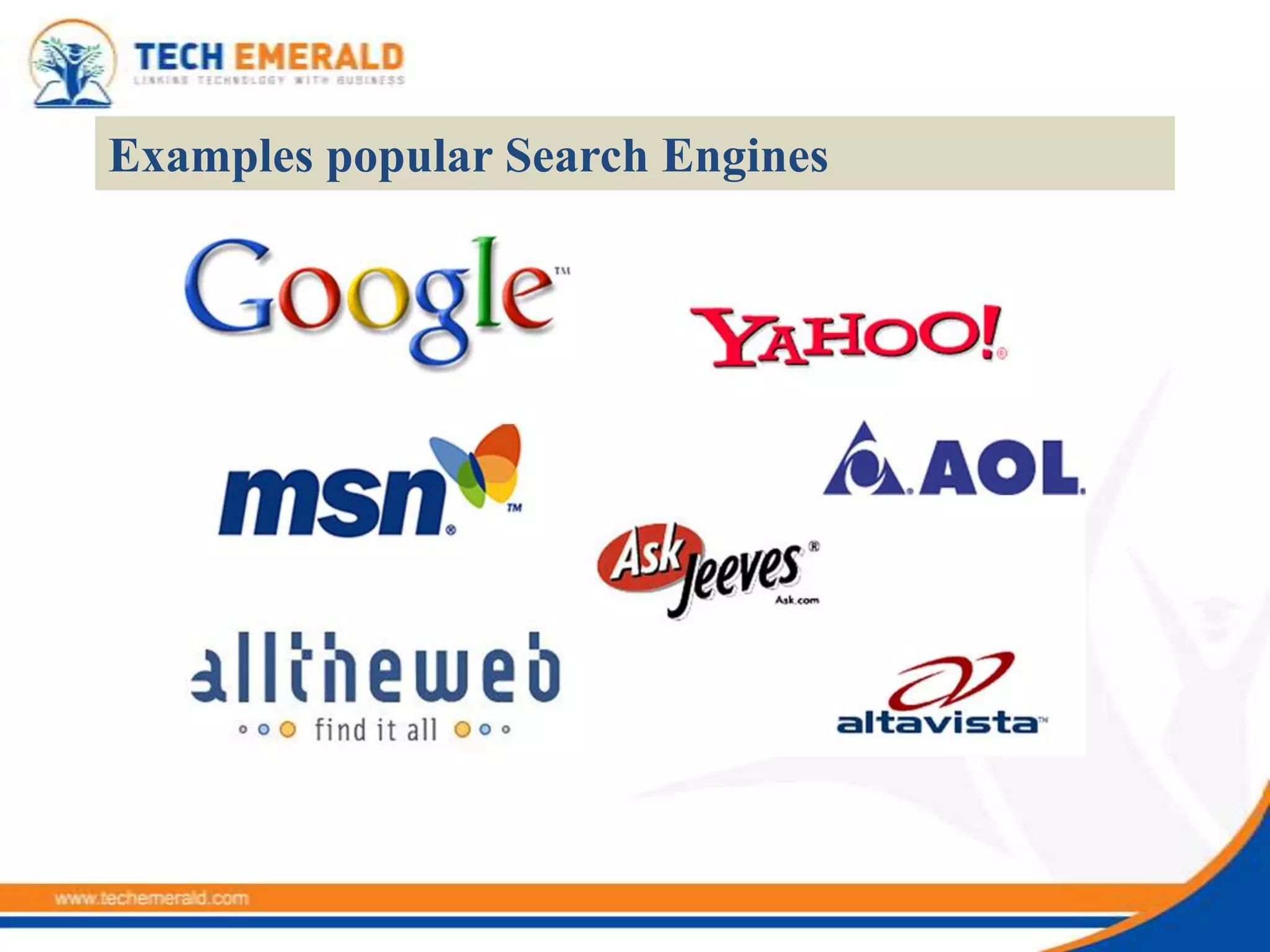
Examples popular Search Engines
Search Engines statistics:
1.Google.com - www.google.com
2.Yahoo.com - www.yahoo.com
3.Bing.com - www.bing.com
4.Ask.com - www.ask.com
5.ScrubTheWeb.com - www.scrubtheweb.com
6.blekko.com - blekko.com
7.DuckDuckGo.com - duckduckgo.com
8.Entireweb.com - www.entireweb.com
9.Dogpile.com - www.dogpile.com
10.Webopedia.com - www.dogpile.com
Search Engine Optimization Contents
What is a Search Engine Optimization?
What are Meta Tags?
What a Search Engine Sees
Why is Search Engine Marketing important?
Ways To Make Search Engines Can Crawl Your Site
Ranking factors
Basic Tips & Optimization Techniques
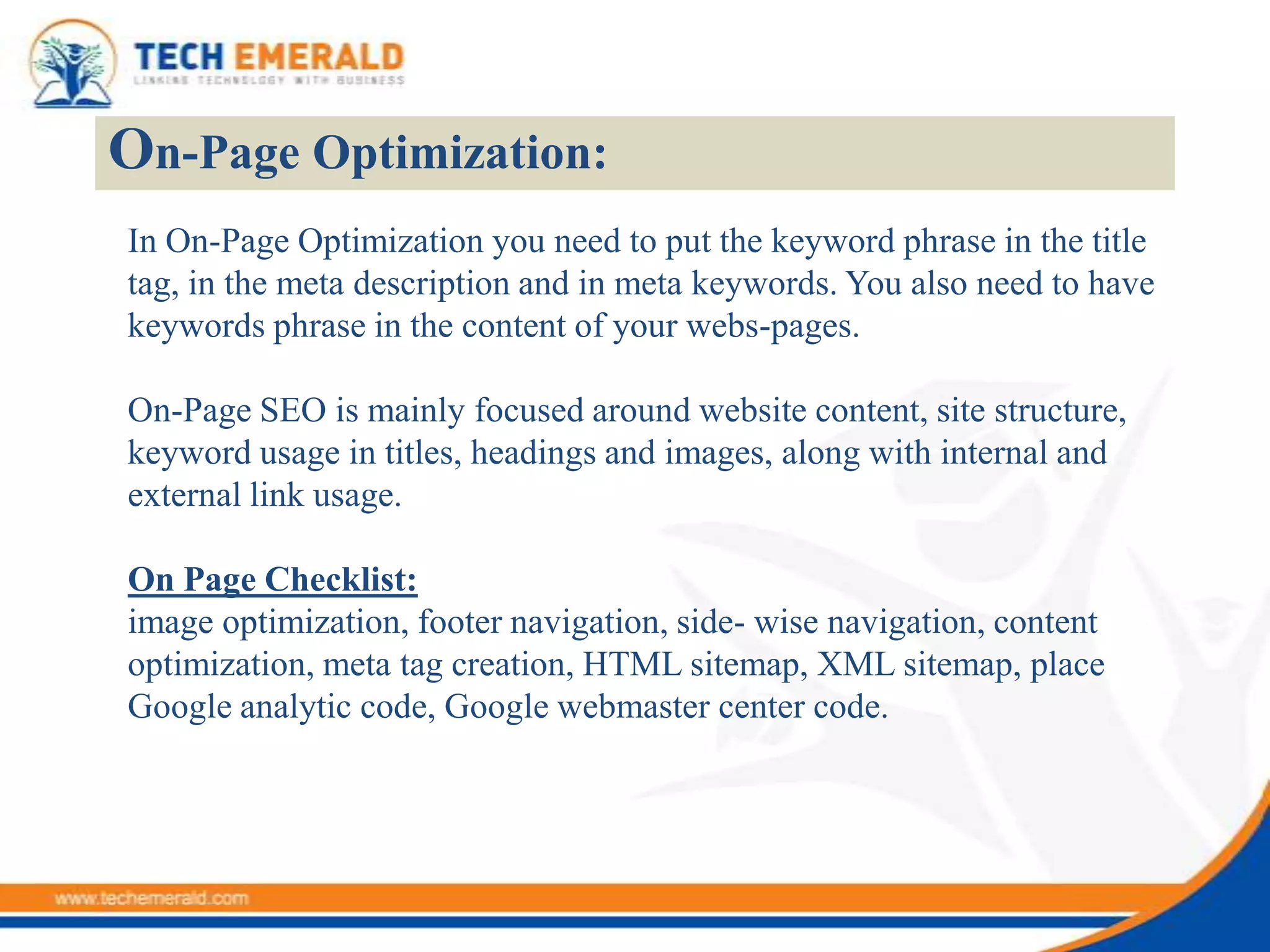
What is a Search Engine Optimization?
SEO is search engine optimization and is this process you use in getting
your pages to place well on search result.

             “Generally SEO define into two categories”

                         On-Page Optimization
                         Off-Page Optimization
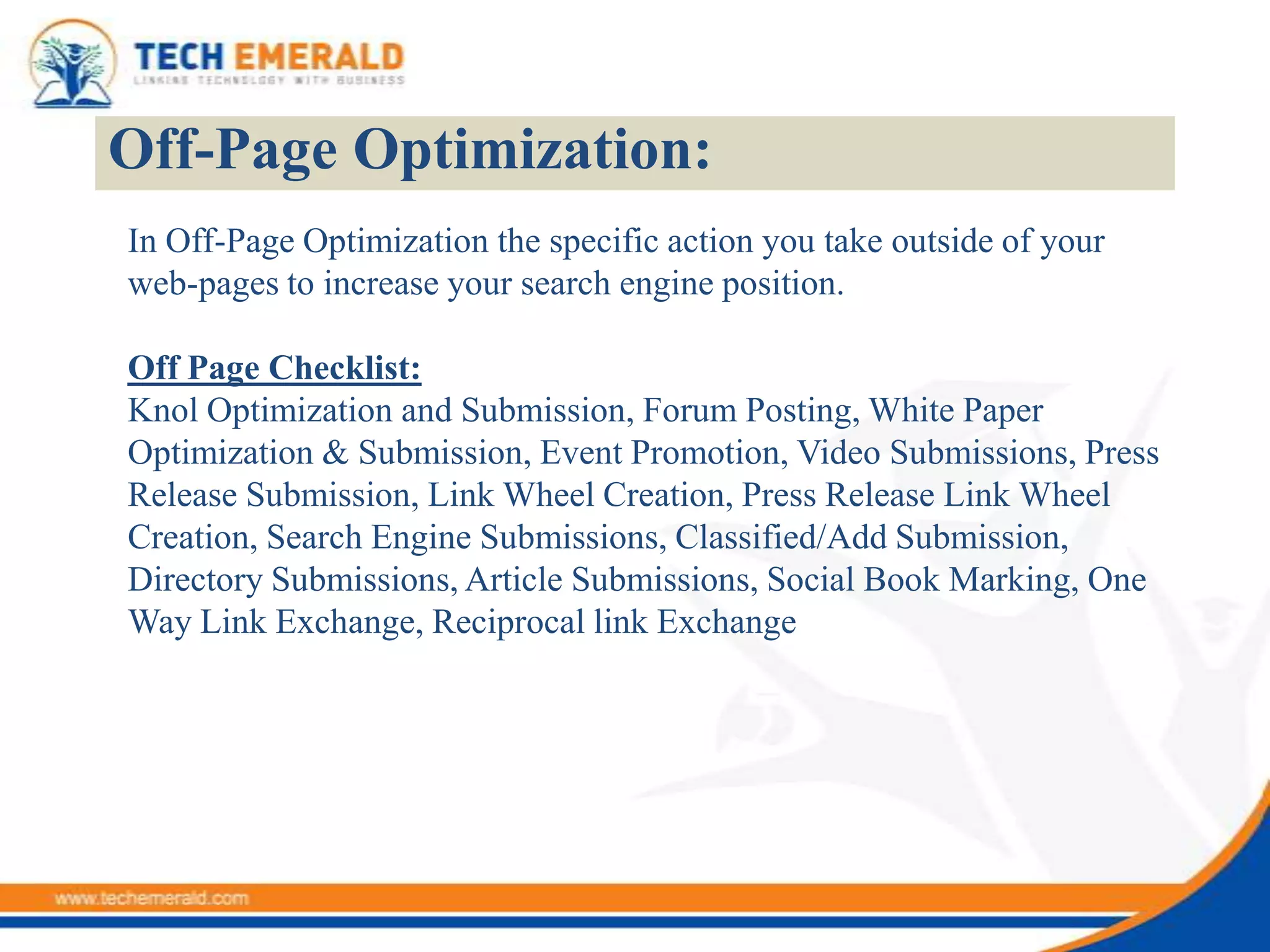
On-Page Optimization:
In On-Page Optimization you need to put the keyword phrase in the title
tag, in the meta description and in meta keywords. You also need to have
keywords phrase in the content of your webs-pages.

On-Page SEO is mainly focused around website content, site structure,
keyword usage in titles, headings and images, along with internal and
external link usage.

On Page Checklist:
image optimization, footer navigation, side- wise navigation, content
optimization, meta tag creation, HTML sitemap, XML sitemap, place
Google analytic code, Google webmaster center code.
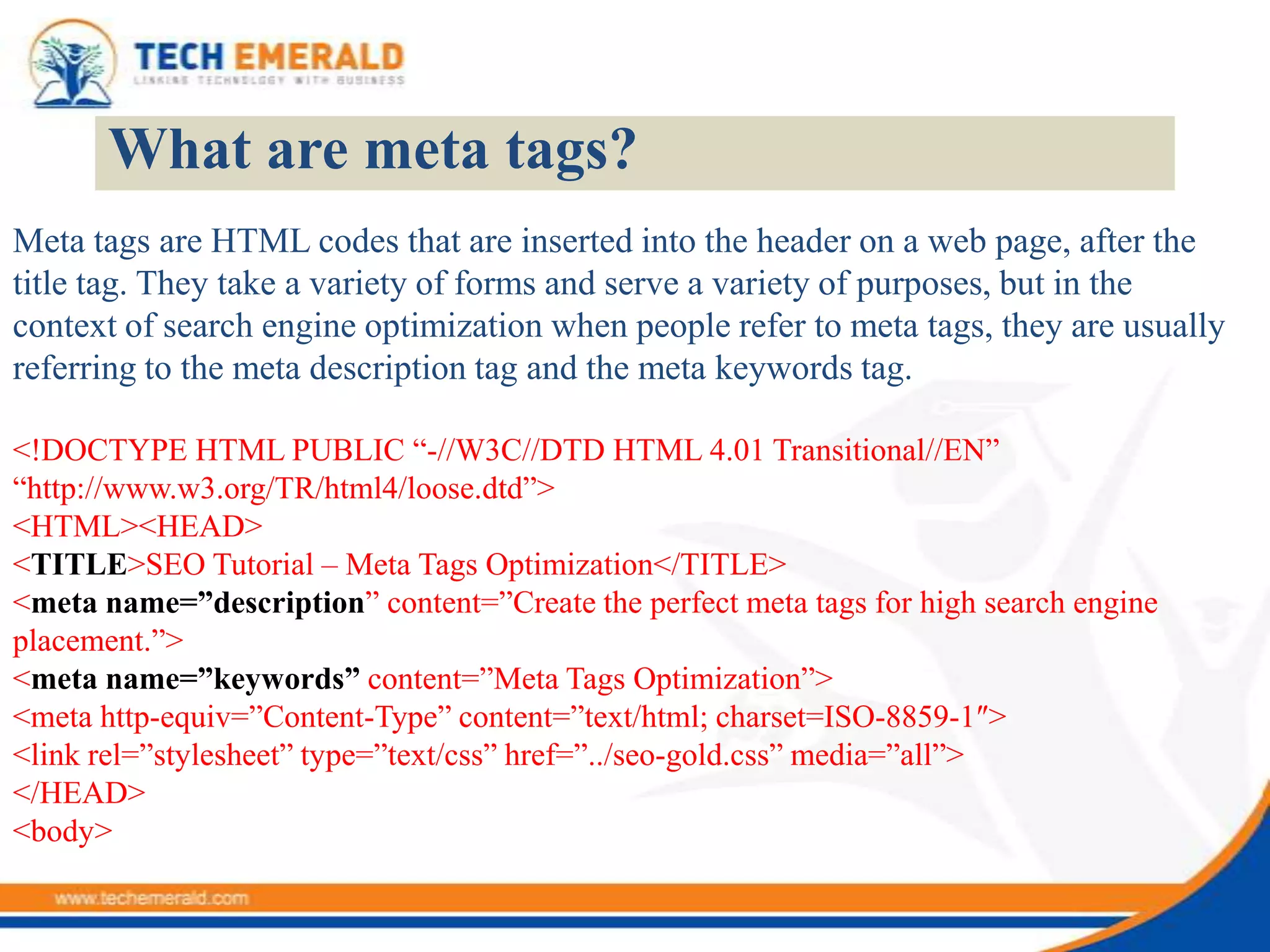
Off-Page Optimization:
In Off-Page Optimization the specific action you take outside of your
web-pages to increase your search engine position.

Off Page Checklist:
Knol Optimization and Submission, Forum Posting, White Paper
Optimization & Submission, Event Promotion, Video Submissions, Press
Release Submission, Link Wheel Creation, Press Release Link Wheel
Creation, Search Engine Submissions, Classified/Add Submission,
Directory Submissions, Article Submissions, Social Book Marking, One
Way Link Exchange, Reciprocal link Exchange
What are meta tags?
Meta tags are HTML codes that are inserted into the header on a web page, after the
title tag. They take a variety of forms and serve a variety of purposes, but in the
context of search engine optimization when people refer to meta tags, they are usually
referring to the meta description tag and the meta keywords tag.

<!DOCTYPE HTML PUBLIC “-//W3C//DTD HTML 4.01 Transitional//EN”
“http://www.w3.org/TR/html4/loose.dtd”>
<HTML><HEAD>
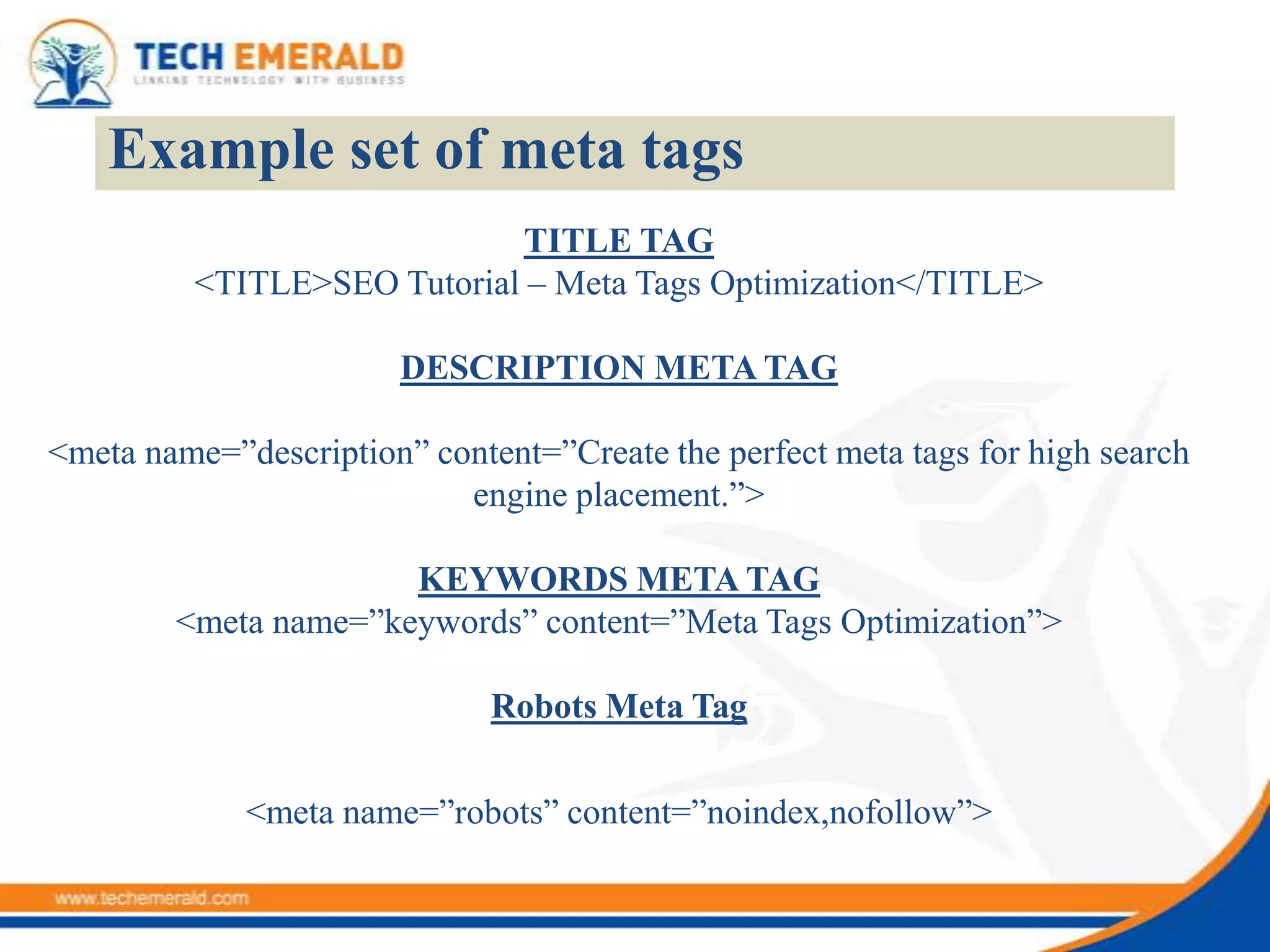
<TITLE>SEO Tutorial – Meta Tags Optimization</TITLE>
<meta name=”description” content=”Create the perfect meta tags for high search engine
placement.”>
<meta name=”keywords” content=”Meta Tags Optimization”>
<meta http-equiv=”Content-Type” content=”text/html; charset=ISO-8859-1″>
<link rel=”stylesheet” type=”text/css” href=”../seo-gold.css” media=”all”>
</HEAD>
<body>
Example set of meta tags
                             TITLE TAG
         <TITLE>SEO Tutorial – Meta Tags Optimization</TITLE>

                        DESCRIPTION META TAG

<meta name=”description” content=”Create the perfect meta tags for high search
                           engine placement.”>

                      KEYWORDS META TAG
        <meta name=”keywords” content=”Meta Tags Optimization”>

                              Robots Meta Tag

             <meta name=”robots” content=”noindex,nofollow”>
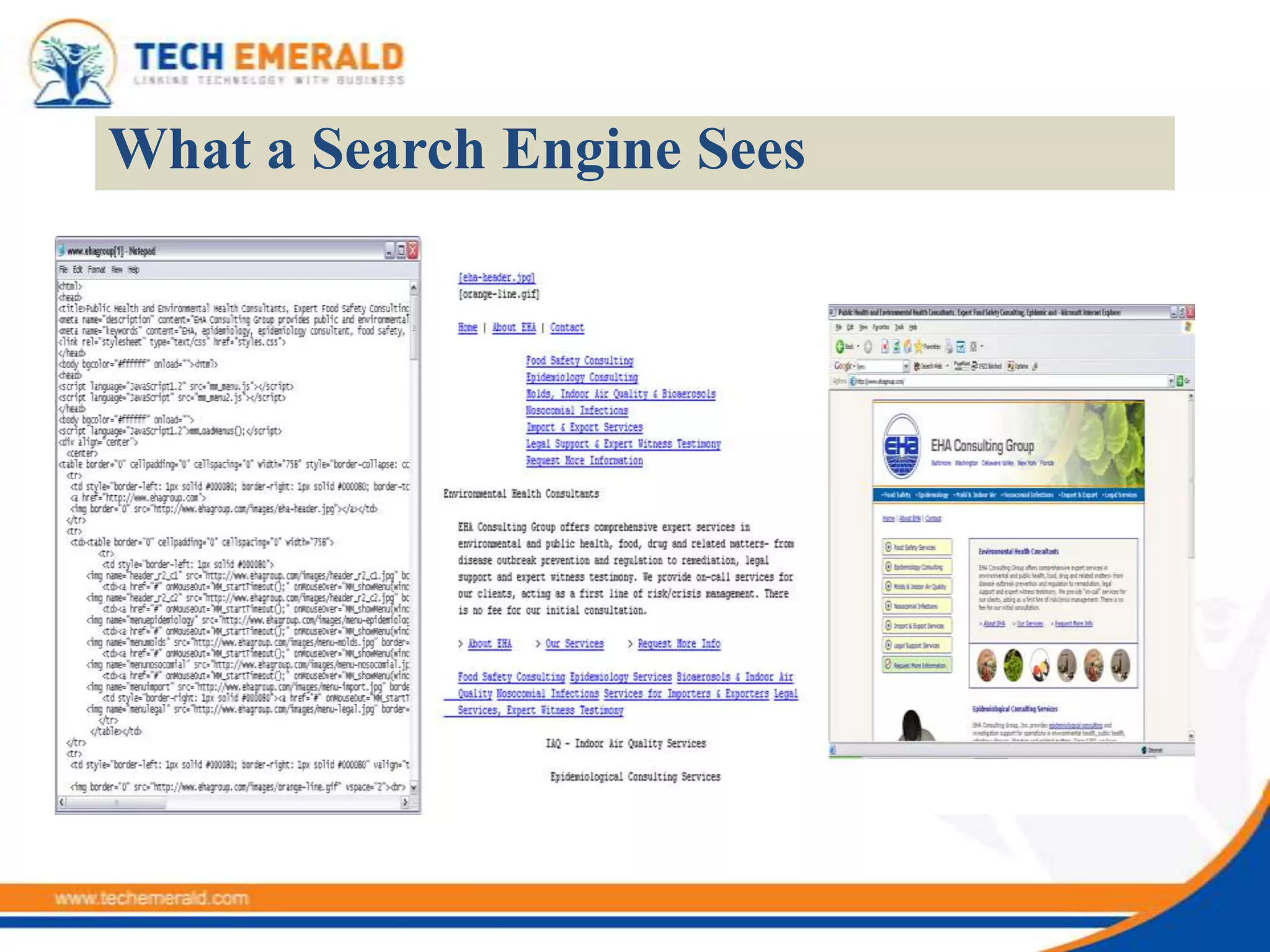
What a Search Engine Sees
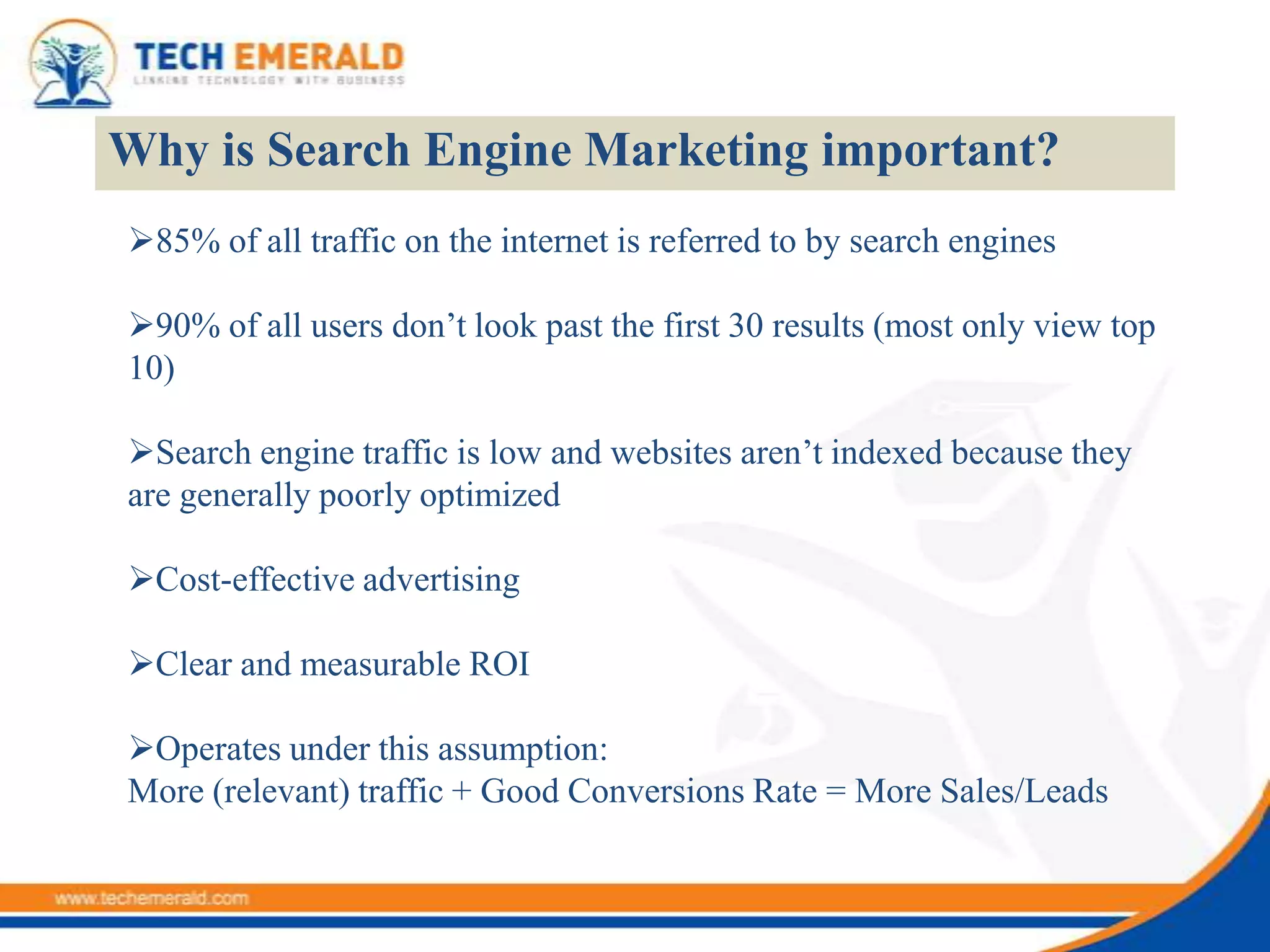
Why is Search Engine Marketing important?
85% of all traffic on the internet is referred to by search engines

90% of all users don’t look past the first 30 results (most only view top
10)

Search engine traffic is low and websites aren’t indexed because they
are generally poorly optimized

Cost-effective advertising

Clear and measurable ROI

Operates under this assumption:
More (relevant) traffic + Good Conversions Rate = More Sales/Leads
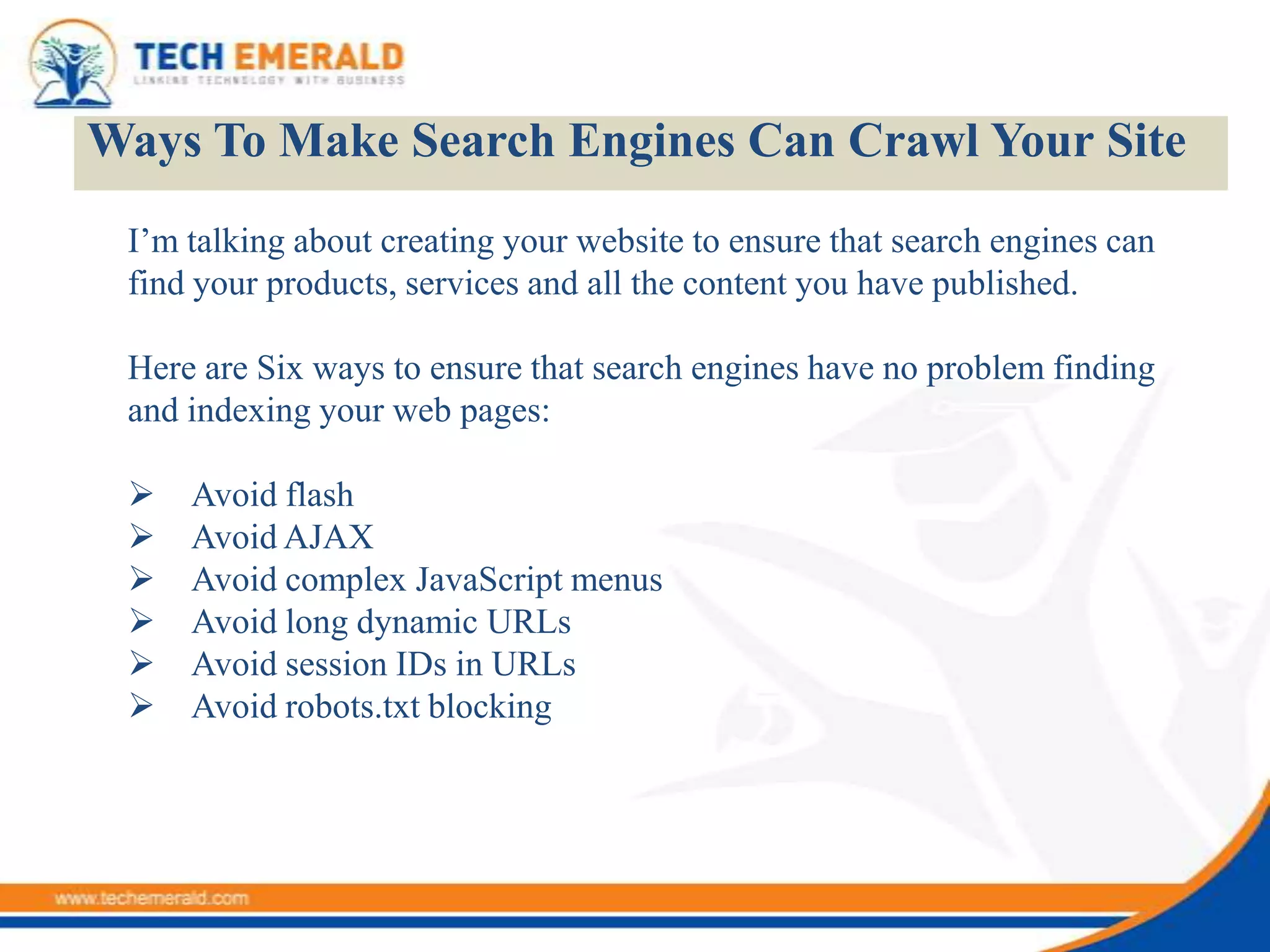
Ways To Make Search Engines Can Crawl Your Site
 I’m talking about creating your website to ensure that search engines can
 find your products, services and all the content you have published.

 Here are Six ways to ensure that search engines have no problem finding
 and indexing your web pages:

    Avoid flash
    Avoid AJAX
    Avoid complex JavaScript menus
    Avoid long dynamic URLs
    Avoid session IDs in URLs
    Avoid robots.txt blocking
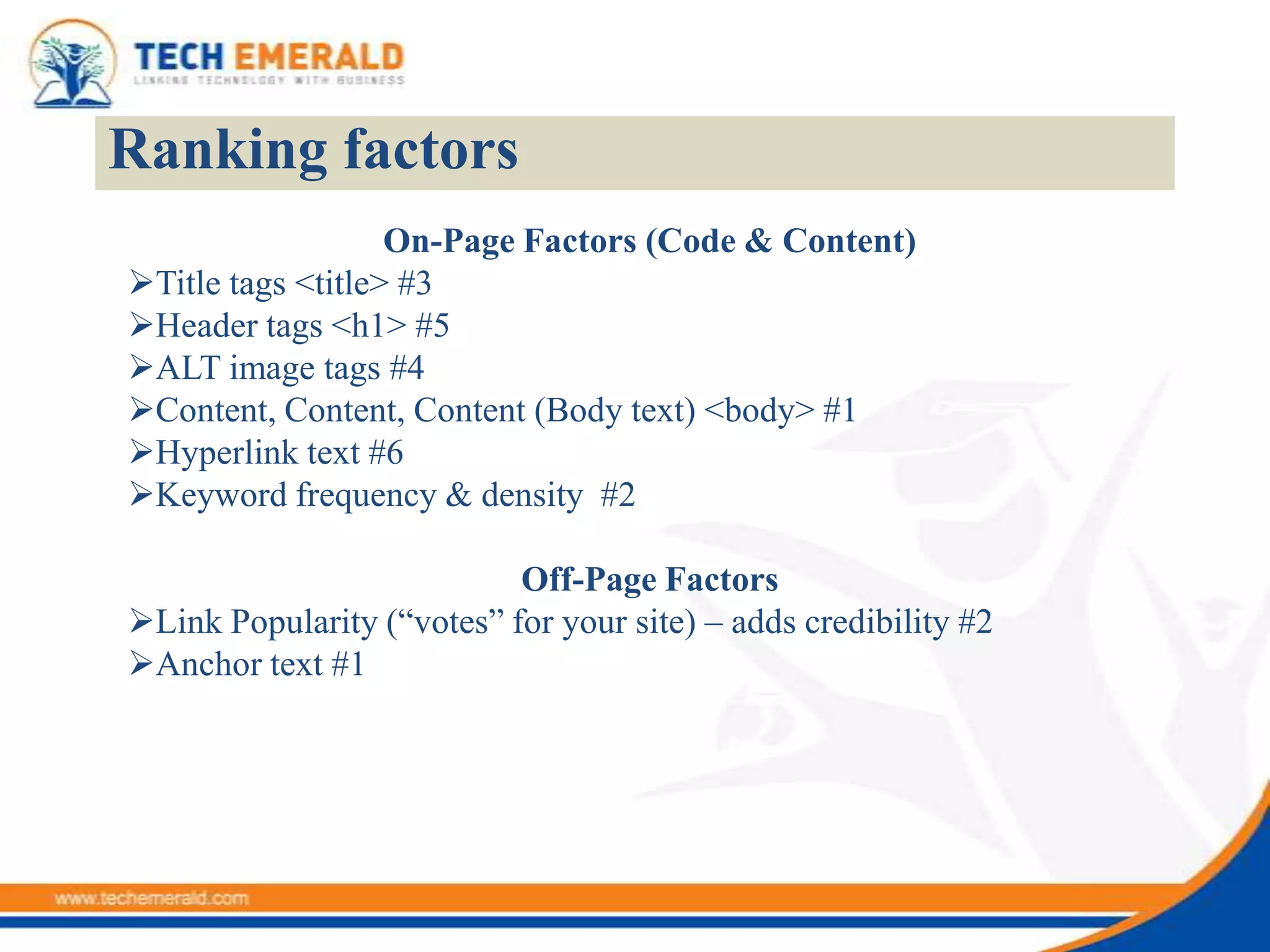
Ranking factors
                   On-Page Factors (Code & Content)
Title tags <title> #3
Header tags <h1> #5
ALT image tags #4
Content, Content, Content (Body text) <body> #1
Hyperlink text #6
Keyword frequency & density #2

                           Off-Page Factors
Link Popularity (“votes” for your site) – adds credibility #2
Anchor text #1
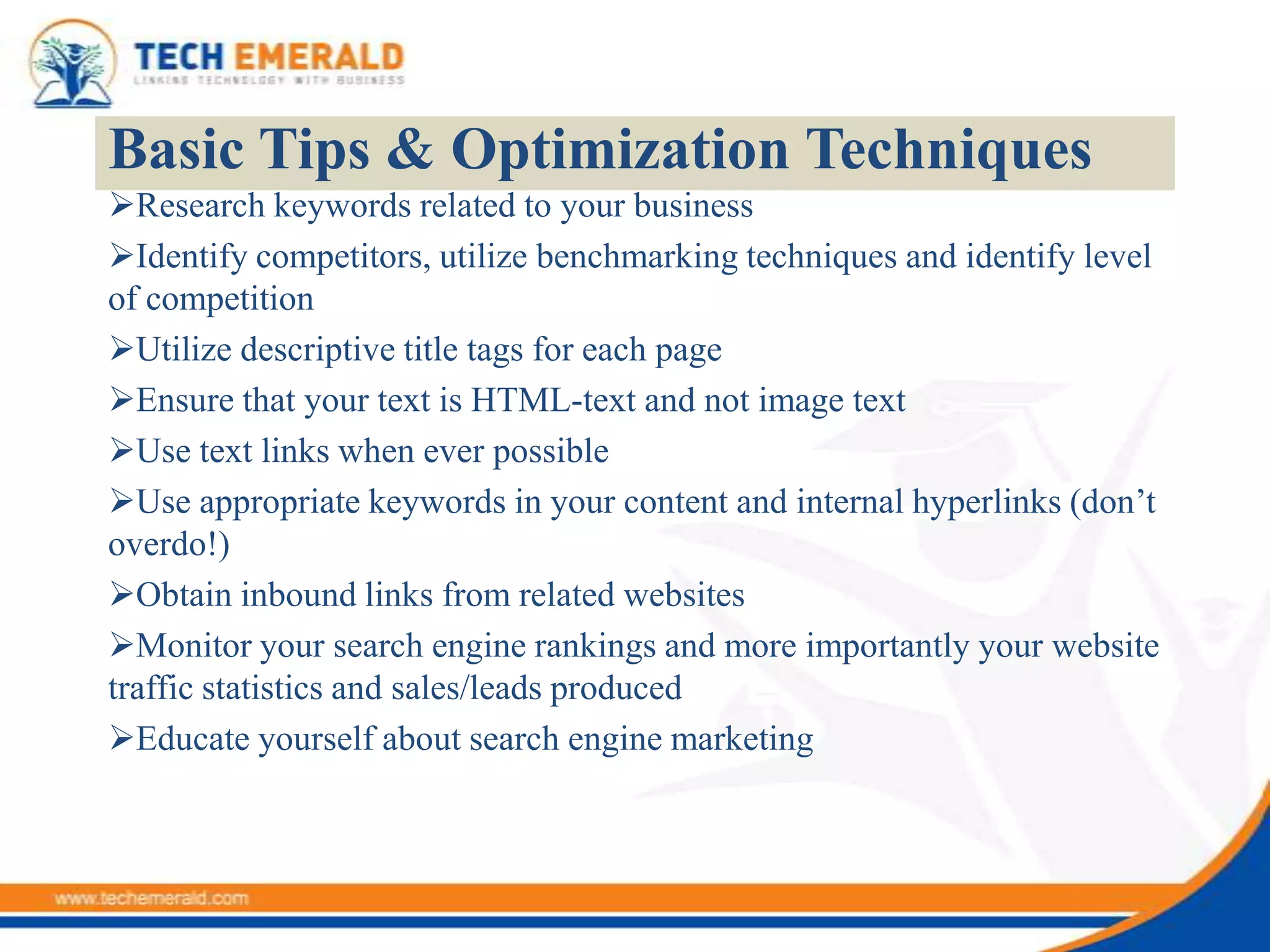
Basic Tips & Optimization Techniques
Research keywords related to your business
Identify competitors, utilize benchmarking techniques and identify level
of competition
Utilize descriptive title tags for each page
Ensure that your text is HTML-text and not image text
Use text links when ever possible
Use appropriate keywords in your content and internal hyperlinks (don’t
overdo!)
Obtain inbound links from related websites
Monitor your search engine rankings and more importantly your website
traffic statistics and sales/leads produced
Educate yourself about search engine marketing
Search Engine Optimization Tutorial

Search Engine Optimization Tutorial

  • 2.
    Search Engine Optimization Presentation by Alok Raghuwanshi
  • 3.
  • 4.
    Search Engines statistics: 1.Google.com- www.google.com 2.Yahoo.com - www.yahoo.com 3.Bing.com - www.bing.com 4.Ask.com - www.ask.com 5.ScrubTheWeb.com - www.scrubtheweb.com 6.blekko.com - blekko.com 7.DuckDuckGo.com - duckduckgo.com 8.Entireweb.com - www.entireweb.com 9.Dogpile.com - www.dogpile.com 10.Webopedia.com - www.dogpile.com
  • 5.
    Search Engine OptimizationContents What is a Search Engine Optimization? What are Meta Tags? What a Search Engine Sees Why is Search Engine Marketing important? Ways To Make Search Engines Can Crawl Your Site Ranking factors Basic Tips & Optimization Techniques
  • 6.
    What is aSearch Engine Optimization? SEO is search engine optimization and is this process you use in getting your pages to place well on search result. “Generally SEO define into two categories” On-Page Optimization Off-Page Optimization
  • 7.
    On-Page Optimization: In On-PageOptimization you need to put the keyword phrase in the title tag, in the meta description and in meta keywords. You also need to have keywords phrase in the content of your webs-pages. On-Page SEO is mainly focused around website content, site structure, keyword usage in titles, headings and images, along with internal and external link usage. On Page Checklist: image optimization, footer navigation, side- wise navigation, content optimization, meta tag creation, HTML sitemap, XML sitemap, place Google analytic code, Google webmaster center code.
  • 8.
    Off-Page Optimization: In Off-PageOptimization the specific action you take outside of your web-pages to increase your search engine position. Off Page Checklist: Knol Optimization and Submission, Forum Posting, White Paper Optimization & Submission, Event Promotion, Video Submissions, Press Release Submission, Link Wheel Creation, Press Release Link Wheel Creation, Search Engine Submissions, Classified/Add Submission, Directory Submissions, Article Submissions, Social Book Marking, One Way Link Exchange, Reciprocal link Exchange
  • 9.
    What are metatags? Meta tags are HTML codes that are inserted into the header on a web page, after the title tag. They take a variety of forms and serve a variety of purposes, but in the context of search engine optimization when people refer to meta tags, they are usually referring to the meta description tag and the meta keywords tag. <!DOCTYPE HTML PUBLIC “-//W3C//DTD HTML 4.01 Transitional//EN” “http://www.w3.org/TR/html4/loose.dtd”> <HTML><HEAD> <TITLE>SEO Tutorial – Meta Tags Optimization</TITLE> <meta name=”description” content=”Create the perfect meta tags for high search engine placement.”> <meta name=”keywords” content=”Meta Tags Optimization”> <meta http-equiv=”Content-Type” content=”text/html; charset=ISO-8859-1″> <link rel=”stylesheet” type=”text/css” href=”../seo-gold.css” media=”all”> </HEAD> <body>
  • 10.
    Example set ofmeta tags TITLE TAG <TITLE>SEO Tutorial – Meta Tags Optimization</TITLE> DESCRIPTION META TAG <meta name=”description” content=”Create the perfect meta tags for high search engine placement.”> KEYWORDS META TAG <meta name=”keywords” content=”Meta Tags Optimization”> Robots Meta Tag <meta name=”robots” content=”noindex,nofollow”>
  • 11.
    What a SearchEngine Sees
  • 12.
    Why is SearchEngine Marketing important? 85% of all traffic on the internet is referred to by search engines 90% of all users don’t look past the first 30 results (most only view top 10) Search engine traffic is low and websites aren’t indexed because they are generally poorly optimized Cost-effective advertising Clear and measurable ROI Operates under this assumption: More (relevant) traffic + Good Conversions Rate = More Sales/Leads
  • 13.
    Ways To MakeSearch Engines Can Crawl Your Site I’m talking about creating your website to ensure that search engines can find your products, services and all the content you have published. Here are Six ways to ensure that search engines have no problem finding and indexing your web pages:  Avoid flash  Avoid AJAX  Avoid complex JavaScript menus  Avoid long dynamic URLs  Avoid session IDs in URLs  Avoid robots.txt blocking
  • 14.
    Ranking factors On-Page Factors (Code & Content) Title tags <title> #3 Header tags <h1> #5 ALT image tags #4 Content, Content, Content (Body text) <body> #1 Hyperlink text #6 Keyword frequency & density #2 Off-Page Factors Link Popularity (“votes” for your site) – adds credibility #2 Anchor text #1
  • 15.
    Basic Tips &Optimization Techniques Research keywords related to your business Identify competitors, utilize benchmarking techniques and identify level of competition Utilize descriptive title tags for each page Ensure that your text is HTML-text and not image text Use text links when ever possible Use appropriate keywords in your content and internal hyperlinks (don’t overdo!) Obtain inbound links from related websites Monitor your search engine rankings and more importantly your website traffic statistics and sales/leads produced Educate yourself about search engine marketing