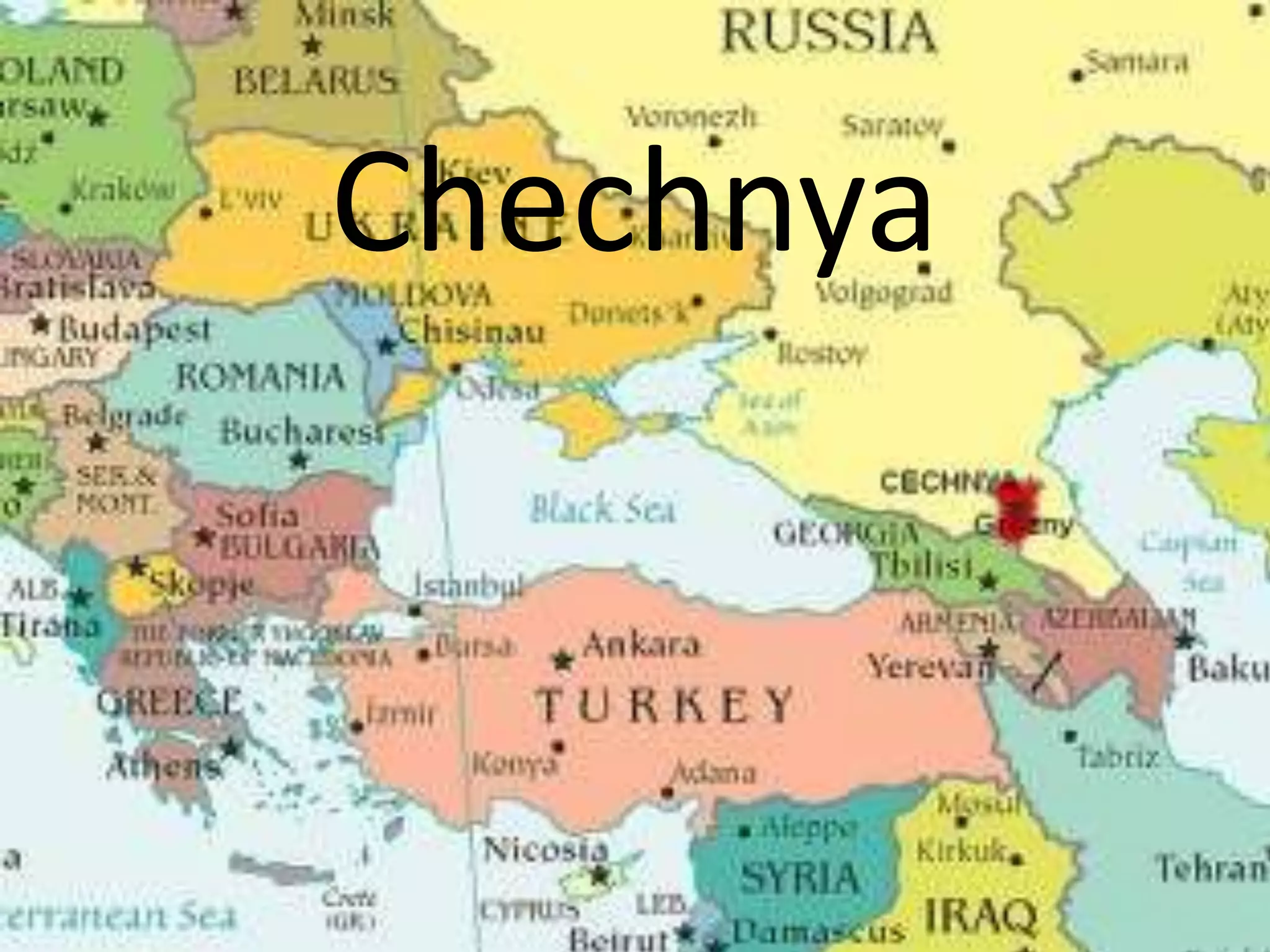
Chechnya
SOME FACTS
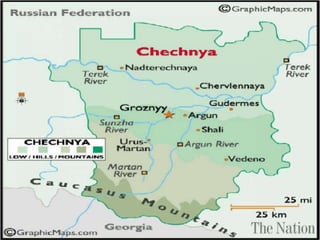
• autonomous republic in the North Caucasus
(Russia)
• 1.3 million inhabitants
• Capital: Grozny
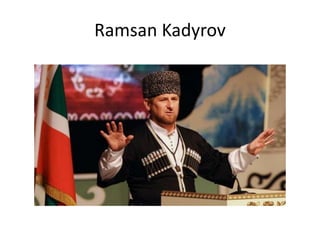
• head of state: Ramsan Kadyrov
Population
• Chechens make up the majority (95%)
• minorities: -Russians (2%)
-Ingushes
-Armenians
-Ukrainians
• ethnic tensions between Russians and
Chechens because of the wars
Healthcare and education
• Hospitals only in Grozny, lack of qualified
medical staff
• many destroyed schools (Chechen wars), lack
of professional teachers -> low level of
education, school buildings have to be rebuilt
Religion and culture
• Islam is the most important religion in
Chechnya, practised by 95%
 Sunni belief, Sufism (mystical form of Islam)
• In general: clan-relationships and
brotherhoods influence everyday life
Languages
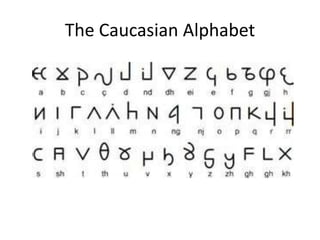
• Use of Caucasian alphabet
• Languages in use: Russian and Chechen
• Chechen belongs to the North-central
Caucasian language family
The Caucasian Alphabet
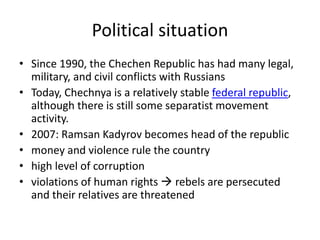
Political situation
• Since 1990, the Chechen Republic has had many legal,
military, and civil conflicts with Russians
• Today, Chechnya is a relatively stable federal republic,
although there is still some separatist movement
activity.
• 2007: Ramsan Kadyrov becomes head of the republic
• money and violence rule the country
• high level of corruption
• violations of human rights  rebels are persecuted
and their relatives are threatened
Ramsan Kadyrov
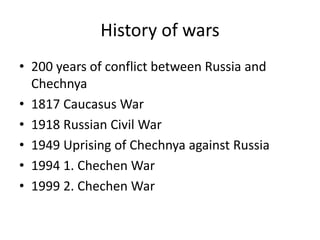
History of wars
• 200 years of conflict between Russia and
Chechnya
• 1817 Caucasus War
• 1918 Russian Civil War
• 1949 Uprising of Chechnya against Russia
• 1994 1. Chechen War
• 1999 2. Chechen War
After the war
• capital Grozny destroyed
• President Kadyrow rules by force
• human rights violations, torture, murder
• number of Chechen seeking asylum in
European countries has increased
Chechens in Austria
• About 30,000, most of them in Vienna
• live isolated among their own countrymen
• marriage within the people
• not a good reputation: many crimes, involved
in organized crime, violent youth groups
• reasons: young people grew up in war  no
fathers, no education, used to violence
• high national pride
Human rights
• Human rights violations: suppression, spread
of fear, kidnapping, punishment and torture
by state security forces, honour killing,
persecution of homosexuals
• attacks on advocats of human rights:
 lawyers
 journalists
 charities
Chechnya - Austria

Chechnya - Austria

  • 1.
  • 2.
    SOME FACTS • autonomousrepublic in the North Caucasus (Russia) • 1.3 million inhabitants • Capital: Grozny • head of state: Ramsan Kadyrov
  • 4.
    Population • Chechens makeup the majority (95%) • minorities: -Russians (2%) -Ingushes -Armenians -Ukrainians • ethnic tensions between Russians and Chechens because of the wars
  • 5.
    Healthcare and education •Hospitals only in Grozny, lack of qualified medical staff • many destroyed schools (Chechen wars), lack of professional teachers -> low level of education, school buildings have to be rebuilt
  • 6.
    Religion and culture •Islam is the most important religion in Chechnya, practised by 95%  Sunni belief, Sufism (mystical form of Islam) • In general: clan-relationships and brotherhoods influence everyday life
  • 7.
    Languages • Use ofCaucasian alphabet • Languages in use: Russian and Chechen • Chechen belongs to the North-central Caucasian language family
  • 8.
  • 9.
    Political situation • Since1990, the Chechen Republic has had many legal, military, and civil conflicts with Russians • Today, Chechnya is a relatively stable federal republic, although there is still some separatist movement activity. • 2007: Ramsan Kadyrov becomes head of the republic • money and violence rule the country • high level of corruption • violations of human rights  rebels are persecuted and their relatives are threatened
  • 10.
  • 11.
    History of wars •200 years of conflict between Russia and Chechnya • 1817 Caucasus War • 1918 Russian Civil War • 1949 Uprising of Chechnya against Russia • 1994 1. Chechen War • 1999 2. Chechen War
  • 12.
    After the war •capital Grozny destroyed • President Kadyrow rules by force • human rights violations, torture, murder • number of Chechen seeking asylum in European countries has increased
  • 13.
    Chechens in Austria •About 30,000, most of them in Vienna • live isolated among their own countrymen • marriage within the people • not a good reputation: many crimes, involved in organized crime, violent youth groups • reasons: young people grew up in war  no fathers, no education, used to violence • high national pride
  • 14.
    Human rights • Humanrights violations: suppression, spread of fear, kidnapping, punishment and torture by state security forces, honour killing, persecution of homosexuals • attacks on advocats of human rights:  lawyers  journalists  charities