Rational Computational Design of
Inhibitors Preventing the Selective
Binding of Glutathione-
Conjugated Substrates to Human
Aldose Reductase
Lu Z. A.1, Lee J. D.2, Tomlinson S.2, Watowich S.2
1CPRIT Summer Undergraduate Research Program, University of Texas Medical Branch, Galveston TX
2University of Texas Medical Branch, Galveston TX
Background
• Human Aldose Reductase (hALR2) is a member of the
aldo-keto reductase enzyme family
• Reduces toxic aldehydes, glucose, and glutathione-
conjugated aldehydes
• Uses NADPH as a cofactor
• Glutathione-conjugated aldehydes have stronger affinity
for Aldose reductase than toxic aldehydes
– Aldose reductase has a specific binding site for GSH
• The reduction of glutathione conjugated aldehydes has
been shown to increase inflammatory responses, tumor
growth, and lead to metastasis of certain cancers
(Srivastava, 2011)
Our Concern
• Inhibition of the glutathione conjugated aldehyde
pathway may also inhibit the degradation of toxic lipid
aldehydes
• The quest for a selective inhibitor that will block the
glutathione conjugated pathway without compromising
the reduction of toxic lipid aldehydes
Goals
• Obtain and characterize aldose reductase
• Develop an assay to test aldose reductase activity for
glutathione-conjugated substrates
• Identify inhibitors using computational modeling and
simulations
• Test inhibitors that selectively target
glutathione-tagged substrates
We believe that we can discover inhibitors which will
specifically exclude glutathione-tagged aldehydes, allowing
for the continued reduction (and elimination) of other toxic
aldehydes
Motivating Hypothesis
MATERIALS and METHODS
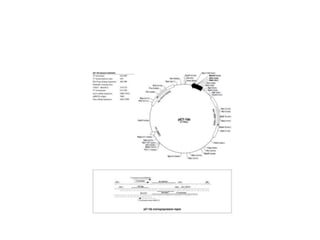
• Plasmid with Aldose Reductase gene in pET
vector sent to us from Podjarny, Alberto from
France
• Methods for transformation and induction
based off of paper from Keneth h. Gabbay
(1991)
Transformation
• Human aldose reductase, inserted into a pET-15b
plasmid (Podjarny group)
• Contains a His-tag sequence
• Standard transformation protocol was used – adapted
from the Gabbay group (1991)
– BL21(DE3) E. coli cells
• Antibiotic resistance for selection
– carbenicillin
J. Biol. Chem. 1991, 266, 24031-24037.
Protein Over-Expression
• Small-scale induction of colonies with isopropyl β-D-1-
thiogalactopyranoside (IPTG)
– IPTG induction inactivates the lac repressor,
activating transcription of the protein of interest
• Protein Bands emerged around ~38 kDa
• Medium-scale induction of two “lucky” colonies
– Goal: to make “bucket-loads” of desired protein
ladder N1 I1 N2 I2 N3 I3 N4 I4 N5 I5 N6 I6
118kD
85kD
47kD
36kD
26kD
hALR2 ~38kD
Purification
• Two colonies were tested for culture growth and protein
over-expression
• Cells were lysed, desired protein was purified using a Ni-
sepharose column
• hALR eluted using increasing imidazole concentrations
• Protein concentration ~ 300 nM
• Purity of elutions verified by SDS-PAGE
• Identity checked by mass spectroscopy
ladder soluble insoluble flow wash 25 mM 50 mM 100 mM250 mM beads
113kD
92kD
52.9kD
35.4kD
29kD
21.5kD
Protein with methionine: 38016.7 Da
Protein without methionine: 37867.5 Da
Methionine 149.21 Da
hALR2 ~38kD
Preliminary Activity Analysis
(NADPH Assay)
• Protein dialyzed in buffer containing 1 mM DTT
(dithiothreitol)
• Protein concentrations determined by UV-Vis
spectroscopy at 280 nm
– Molar extinction coefficients predicted by the ExPASy
ProtParam online tool based on the protein sequence
• Reaction Conditions - 6.6% w/v (NH4)2SO4, 33 mM
NaH2PO4, pH 6.6, 0.11 mM NADPH,, 4.7 mM DL-
glyceraldehyde, 0.59 ug of enzyme, 1% DMSO (Podjarny,
2005)
• Measuring the decrease in NADPH, which absorbs at
340 nm
0
0.1
0.2
0.3
0.4
0.5
0.6
0.7
0 10 20 30
A340
Time (minutes)
Activity 1 day after induction
NADPH-1
Enz4-1
Enz11-1
0
0.1
0.2
0.3
0.4
0.5
0.6
0.7
0 5 10 15 20 25 30
A340
Time (min)
Activity 10 days after induction
NADPH
Enz4
Enz11
Further Steps
• Acquire kinetic parameters (analyze reaction data
using Michaelis-Menten formalism and Dynafit
program)
• Acquire kinetic parameters for HNE and GS-HNE
Applications
• Novel drug candidates to inhibit cancerous tumor
growths
• Chemical interventions for inflammatory diseases
• Reduce toxicity of inhibitory drugs
Acknowledgments
• Dr. Stan Watowich, Mr. Jonathan Lee, Dr. Suzanne Tomlinson, Ms. Andrea
Garces, Dr. Usha Viswanathan
• UTMB GSBS
• Gulf Coast Consortium
This research was funded by the CPRIT Summer Undergraduate Program in
Computational Cancer Biology, training grant award RP 101489 from the Cancer
Prevention & Research Institute of Texas (CPRIT).
References
• Barski, O. A.; Gabbay, K. H.; Grimshaw, C. E.; Bohren, K. M. Mechanism of human aldehyde reductase: Characterization of the active site
pocket. Biochemistry 1995, 34, 11264-11275.
• Srivastava S. K., Yadav U. C., Reddy A. B., Saxena A., Tammali R., Shoeb M., Ansari N. H., Bhatnagar A., Petrash M. J., Srivastava S.,
Ramana K. V. (2011). Aldose reductase inhibition suppresses oxidative stress-induced inflammatory disorders. Chem. Biol. Interact. 191,
330–338. doi: 10.1016/j.cbi.2011.02.023.
• Van Zandt C., Jones M. L., Gunn D. E., Geraci L., Jones H., Sawicki D.R., Sredy J., Jacot J.L., DiCioccio A. T., Petrova T., Mitschler A.,
and, Podjarny A.D. Discovery of 3-[(4,5,7-Trifluorobenzothiazol-2-yl)methyl]indole-N-acetic Acid (Lidorestat) and Congeners as Highly
Potent and Selective Inhibitors of Aldose Reductase for Treatment of Chronic Diabetic Complications. Journal of Medicinal
Chemistry 2005 48 (9), 3141-3152.
• Wu J. T., Wu L. H., and Knight J. H.. Stability of NADPH: Effect of Various Factors on the Kinetics of Degradation. J. Med. Chem. 2005,
48, 3141-3152.

FinalPoster

  • 1.
    Rational Computational Designof Inhibitors Preventing the Selective Binding of Glutathione- Conjugated Substrates to Human Aldose Reductase Lu Z. A.1, Lee J. D.2, Tomlinson S.2, Watowich S.2 1CPRIT Summer Undergraduate Research Program, University of Texas Medical Branch, Galveston TX 2University of Texas Medical Branch, Galveston TX
  • 2.
    Background • Human AldoseReductase (hALR2) is a member of the aldo-keto reductase enzyme family • Reduces toxic aldehydes, glucose, and glutathione- conjugated aldehydes • Uses NADPH as a cofactor
  • 4.
    • Glutathione-conjugated aldehydeshave stronger affinity for Aldose reductase than toxic aldehydes – Aldose reductase has a specific binding site for GSH • The reduction of glutathione conjugated aldehydes has been shown to increase inflammatory responses, tumor growth, and lead to metastasis of certain cancers (Srivastava, 2011)
  • 6.
    Our Concern • Inhibitionof the glutathione conjugated aldehyde pathway may also inhibit the degradation of toxic lipid aldehydes • The quest for a selective inhibitor that will block the glutathione conjugated pathway without compromising the reduction of toxic lipid aldehydes
  • 7.
    Goals • Obtain andcharacterize aldose reductase • Develop an assay to test aldose reductase activity for glutathione-conjugated substrates • Identify inhibitors using computational modeling and simulations • Test inhibitors that selectively target glutathione-tagged substrates
  • 8.
    We believe thatwe can discover inhibitors which will specifically exclude glutathione-tagged aldehydes, allowing for the continued reduction (and elimination) of other toxic aldehydes Motivating Hypothesis
  • 9.
    MATERIALS and METHODS •Plasmid with Aldose Reductase gene in pET vector sent to us from Podjarny, Alberto from France • Methods for transformation and induction based off of paper from Keneth h. Gabbay (1991)
  • 10.
    Transformation • Human aldosereductase, inserted into a pET-15b plasmid (Podjarny group) • Contains a His-tag sequence • Standard transformation protocol was used – adapted from the Gabbay group (1991) – BL21(DE3) E. coli cells • Antibiotic resistance for selection – carbenicillin J. Biol. Chem. 1991, 266, 24031-24037.
  • 12.
    Protein Over-Expression • Small-scaleinduction of colonies with isopropyl β-D-1- thiogalactopyranoside (IPTG) – IPTG induction inactivates the lac repressor, activating transcription of the protein of interest • Protein Bands emerged around ~38 kDa • Medium-scale induction of two “lucky” colonies – Goal: to make “bucket-loads” of desired protein
  • 13.
    ladder N1 I1N2 I2 N3 I3 N4 I4 N5 I5 N6 I6 118kD 85kD 47kD 36kD 26kD hALR2 ~38kD
  • 14.
    Purification • Two colonieswere tested for culture growth and protein over-expression • Cells were lysed, desired protein was purified using a Ni- sepharose column • hALR eluted using increasing imidazole concentrations • Protein concentration ~ 300 nM • Purity of elutions verified by SDS-PAGE • Identity checked by mass spectroscopy
  • 15.
    ladder soluble insolubleflow wash 25 mM 50 mM 100 mM250 mM beads 113kD 92kD 52.9kD 35.4kD 29kD 21.5kD Protein with methionine: 38016.7 Da Protein without methionine: 37867.5 Da Methionine 149.21 Da hALR2 ~38kD
  • 17.
    Preliminary Activity Analysis (NADPHAssay) • Protein dialyzed in buffer containing 1 mM DTT (dithiothreitol) • Protein concentrations determined by UV-Vis spectroscopy at 280 nm – Molar extinction coefficients predicted by the ExPASy ProtParam online tool based on the protein sequence • Reaction Conditions - 6.6% w/v (NH4)2SO4, 33 mM NaH2PO4, pH 6.6, 0.11 mM NADPH,, 4.7 mM DL- glyceraldehyde, 0.59 ug of enzyme, 1% DMSO (Podjarny, 2005) • Measuring the decrease in NADPH, which absorbs at 340 nm
  • 18.
    0 0.1 0.2 0.3 0.4 0.5 0.6 0.7 0 10 2030 A340 Time (minutes) Activity 1 day after induction NADPH-1 Enz4-1 Enz11-1 0 0.1 0.2 0.3 0.4 0.5 0.6 0.7 0 5 10 15 20 25 30 A340 Time (min) Activity 10 days after induction NADPH Enz4 Enz11
  • 19.
    Further Steps • Acquirekinetic parameters (analyze reaction data using Michaelis-Menten formalism and Dynafit program) • Acquire kinetic parameters for HNE and GS-HNE
  • 20.
    Applications • Novel drugcandidates to inhibit cancerous tumor growths • Chemical interventions for inflammatory diseases • Reduce toxicity of inhibitory drugs
  • 21.
    Acknowledgments • Dr. StanWatowich, Mr. Jonathan Lee, Dr. Suzanne Tomlinson, Ms. Andrea Garces, Dr. Usha Viswanathan • UTMB GSBS • Gulf Coast Consortium This research was funded by the CPRIT Summer Undergraduate Program in Computational Cancer Biology, training grant award RP 101489 from the Cancer Prevention & Research Institute of Texas (CPRIT).
  • 22.
    References • Barski, O.A.; Gabbay, K. H.; Grimshaw, C. E.; Bohren, K. M. Mechanism of human aldehyde reductase: Characterization of the active site pocket. Biochemistry 1995, 34, 11264-11275. • Srivastava S. K., Yadav U. C., Reddy A. B., Saxena A., Tammali R., Shoeb M., Ansari N. H., Bhatnagar A., Petrash M. J., Srivastava S., Ramana K. V. (2011). Aldose reductase inhibition suppresses oxidative stress-induced inflammatory disorders. Chem. Biol. Interact. 191, 330–338. doi: 10.1016/j.cbi.2011.02.023. • Van Zandt C., Jones M. L., Gunn D. E., Geraci L., Jones H., Sawicki D.R., Sredy J., Jacot J.L., DiCioccio A. T., Petrova T., Mitschler A., and, Podjarny A.D. Discovery of 3-[(4,5,7-Trifluorobenzothiazol-2-yl)methyl]indole-N-acetic Acid (Lidorestat) and Congeners as Highly Potent and Selective Inhibitors of Aldose Reductase for Treatment of Chronic Diabetic Complications. Journal of Medicinal Chemistry 2005 48 (9), 3141-3152. • Wu J. T., Wu L. H., and Knight J. H.. Stability of NADPH: Effect of Various Factors on the Kinetics of Degradation. J. Med. Chem. 2005, 48, 3141-3152.