
SPORTLYZER
ROWING ACADEMY
 Training planning and
analysis tips
 Rowing technique videos
 Applicable bits of rowing
research

Jarek Mäestu
Sports Scientist (PhD),
Ex rower and rowing coach,
Rowing Academy Scientist

MARKERS OF
OVERTRAINING
Performance tests
Probably the strongest parameter that can identify excessive overtraining is athletic
performance, as performance is reflected by overall positive and negative adaptations to
training.
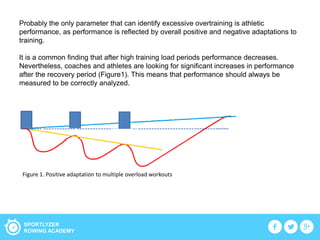
It is a common finding that after high training load periods performance decreases.
Nevertheless, coaches and athletes are looking for significant increases in performance
after the recovery period (Figure1). This means that performance should always be
measured to be correctly analyzed.

Figure 1. Positive adaptation to multiple overload workouts

SPORTLYZER
ROWING ACADEMY
In most endurance athletes an incremental exercise test until exhaustion is regularly
performed throughout the season as it enables to measure performance at several
intensities (aerobic threshold, anaerobic threshold, VO2max, maximal performance).
Also, multiple submaximal tests are performed to measure steady state levels at various
intensities .
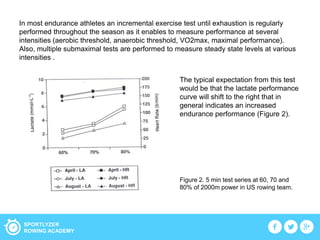
The typical expectation from this test
would be that the lactate performance
curve will shift to the right that in
general indicates an increased
endurance performance (Figure 2).

Figure 2. 5 min test series at 60, 70 and
80% of 2000m power in US rowing team.

SPORTLYZER
ROWING ACADEMY
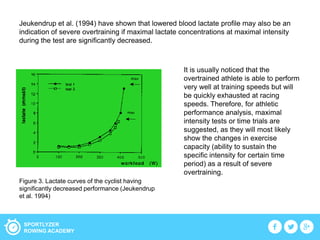
Jeukendrup et al. (1994) have shown that lowered blood lactate profile may also be an
indication of severe overtraining if maximal lactate concentrations at maximal intensity
during the test are significantly decreased.

It is usually noticed that the
overtrained athlete is able to perform
very well at training speeds but will
be quickly exhausted at racing
speeds. Therefore, for athletic
performance analysis, maximal
intensity tests or time trials are
suggested, as they will most likely
show the changes in exercise
capacity (ability to sustain the
specific intensity for certain time
period) as a result of severe
overtraining.
Figure 3. Lactate curves of the cyclist having
significantly decreased performance (Jeukendrup
et al. 1994)

SPORTLYZER
ROWING ACADEMY
In conclusion
Performance is the key marker of excessive overtraining. It is recommended to use
maximal performance tests to get feedback, as during submaximal tests, performance
might not be altered by overtraining. However, the submaximal intensity test, if performed
until exhaustion, may be used.

References
• Hagerman FC. The physiology of competitive rowing. In: Exercise and Sport
Science, W. Garrett JR, Kirkendall D, eds. Lippincot Williams & Wilkins, 2000.
• Jeukendrup AE, Hesslink KC. Overtraining – what do lactate curves tell us? British
Journal of Sports Medicine 1994; 28: 239-240.

SPORTLYZER
ROWING ACADEMY
Hey, before you go!
Please Tweet, Like, +1 and share this presentation
if you found it helpful or entertaining.

Next slide: learn more about the Rowing Academy
SPORTLYZER
ROWING ACADEMY
More related reading
•
•
•

Overtraining, overreaching and supercompensation (slideshow)
Overtraining syndrome (slideshow)
Training planning (wiki)

Sportlyzer Rowing Academy
Sportlyzer Rowing Academy is No 1 source for
rowing coaches looking for inspiration and ideas to:
•
•
•

make training plans more effective
plan and analyze athletes' progress better
learn from other coaches' experience

Discover more

Markers of overtraining - performance tests

  • 1.
    SPORTLYZER ROWING ACADEMY  Trainingplanning and analysis tips  Rowing technique videos  Applicable bits of rowing research Jarek Mäestu Sports Scientist (PhD), Ex rower and rowing coach, Rowing Academy Scientist MARKERS OF OVERTRAINING Performance tests
  • 2.
    Probably the strongestparameter that can identify excessive overtraining is athletic performance, as performance is reflected by overall positive and negative adaptations to training. It is a common finding that after high training load periods performance decreases. Nevertheless, coaches and athletes are looking for significant increases in performance after the recovery period (Figure1). This means that performance should always be measured to be correctly analyzed. Figure 1. Positive adaptation to multiple overload workouts SPORTLYZER ROWING ACADEMY
  • 3.
    In most enduranceathletes an incremental exercise test until exhaustion is regularly performed throughout the season as it enables to measure performance at several intensities (aerobic threshold, anaerobic threshold, VO2max, maximal performance). Also, multiple submaximal tests are performed to measure steady state levels at various intensities . The typical expectation from this test would be that the lactate performance curve will shift to the right that in general indicates an increased endurance performance (Figure 2). Figure 2. 5 min test series at 60, 70 and 80% of 2000m power in US rowing team. SPORTLYZER ROWING ACADEMY
  • 4.
    Jeukendrup et al.(1994) have shown that lowered blood lactate profile may also be an indication of severe overtraining if maximal lactate concentrations at maximal intensity during the test are significantly decreased. It is usually noticed that the overtrained athlete is able to perform very well at training speeds but will be quickly exhausted at racing speeds. Therefore, for athletic performance analysis, maximal intensity tests or time trials are suggested, as they will most likely show the changes in exercise capacity (ability to sustain the specific intensity for certain time period) as a result of severe overtraining. Figure 3. Lactate curves of the cyclist having significantly decreased performance (Jeukendrup et al. 1994) SPORTLYZER ROWING ACADEMY
  • 5.
    In conclusion Performance isthe key marker of excessive overtraining. It is recommended to use maximal performance tests to get feedback, as during submaximal tests, performance might not be altered by overtraining. However, the submaximal intensity test, if performed until exhaustion, may be used. References • Hagerman FC. The physiology of competitive rowing. In: Exercise and Sport Science, W. Garrett JR, Kirkendall D, eds. Lippincot Williams & Wilkins, 2000. • Jeukendrup AE, Hesslink KC. Overtraining – what do lactate curves tell us? British Journal of Sports Medicine 1994; 28: 239-240. SPORTLYZER ROWING ACADEMY
  • 6.
    Hey, before yougo! Please Tweet, Like, +1 and share this presentation if you found it helpful or entertaining. Next slide: learn more about the Rowing Academy SPORTLYZER ROWING ACADEMY
  • 7.
    More related reading • • • Overtraining,overreaching and supercompensation (slideshow) Overtraining syndrome (slideshow) Training planning (wiki) Sportlyzer Rowing Academy Sportlyzer Rowing Academy is No 1 source for rowing coaches looking for inspiration and ideas to: • • • make training plans more effective plan and analyze athletes' progress better learn from other coaches' experience Discover more