GHANA
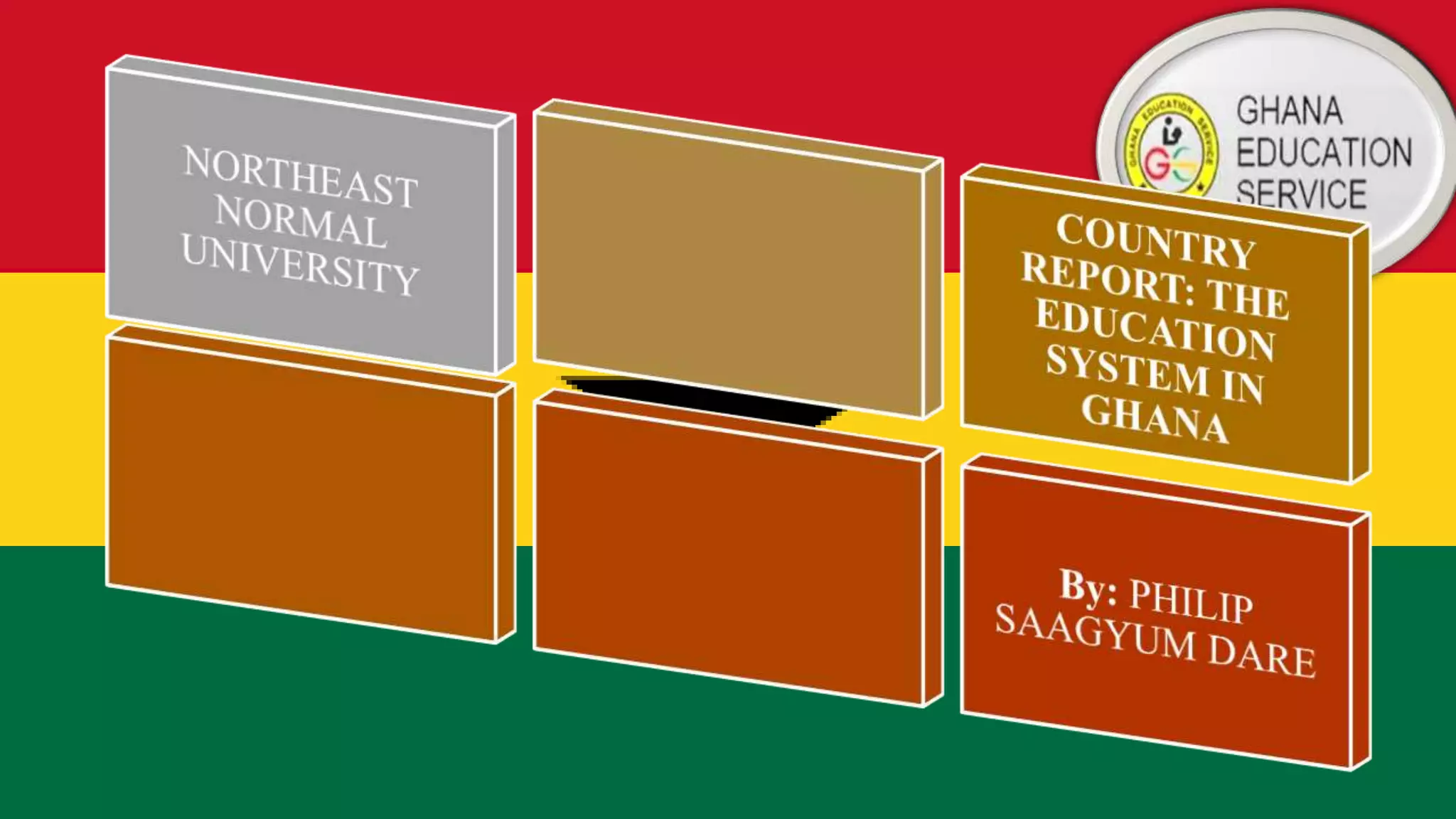
• Country: Ghana
• Capital City: Accra
• Government System:
Democracy
• Current Government:
National Democratic
Congress (NDC)
• Independence Day: 6th of
March 1957
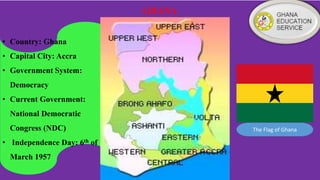
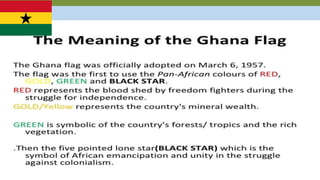
The Flag of Ghana
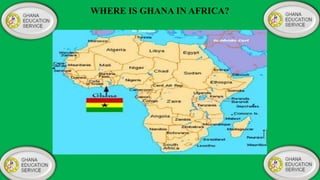
WHERE IS GHANA IN AFRICA?
The
History of
Ghana’s
Education
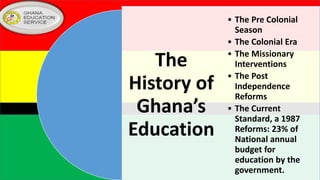
• The Pre Colonial
Season
• The Colonial Era
• The Missionary
Interventions
• The Post
Independence
Reforms
• The Current
Standard, a 1987
Reforms: 23% of
National annual
budget for
education by the
government.
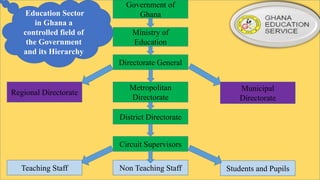
Government of
Ghana
Ministry of
Education
Regional Directorate
Directorate General
Metropolitan
Directorate
Municipal
Directorate
District Directorate
Teaching Staff
Circuit Supervisors
Students and PupilsNon Teaching Staff
Education Sector
in Ghana a
controlled field of
the Government
and its Hierarchy
THE MAJOR
OBJECTIVE OF THE
GHANA EDUCATION
SERVICE
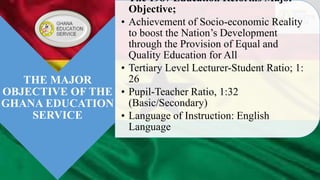
• The 1987 Education Reforms Major
Objective;
• Achievement of Socio-economic Reality
to boost the Nation’s Development
through the Provision of Equal and
Quality Education for All
• Tertiary Level Lecturer-Student Ratio; 1:
26
• Pupil-Teacher Ratio, 1:32
(Basic/Secondary)
• Language of Instruction: English
Language
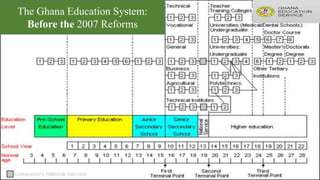
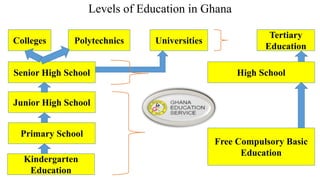
The Ghana Education System:
Before the 2007 Reforms
Levels of Education in Ghana
Kindergarten
Education
Junior High School
Senior High School
Colleges
Primary School
Polytechnics Universities
Tertiary
Education
High School
Free Compulsory Basic
Education
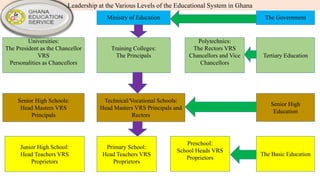
Ministry of Education
Training Colleges:
The Principals
Universities:
The President as the Chancellor
VRS
Personalities as Chancellors
Polytechnics:
The Rectors VRS
Chancellors and Vice
Chancellors
The Government
Technical/Vocational Schools:
Head Masters VRS Principals and
Rectors
Senior High Schools:
Head Masters VRS
Principals
Tertiary Education
Senior High
Education
The Basic Education
Junior High School:
Head Teachers VRS
Proprietors
Primary School:
Head Teachers VRS
Proprietors
Preschool:
School Heads VRS
Proprietors
Leadership at the Various Levels of the Educational System in Ghana
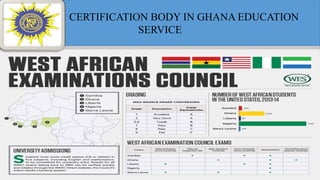
CERTIFICATION BODY IN GHANA EDUCATION
SERVICE
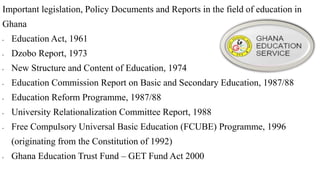
Important legislation, Policy Documents and Reports in the field of education in
Ghana
• Education Act, 1961
• Dzobo Report, 1973
• New Structure and Content of Education, 1974
• Education Commission Report on Basic and Secondary Education, 1987/88
• Education Reform Programme, 1987/88
• University Relationalization Committee Report, 1988
• Free Compulsory Universal Basic Education (FCUBE) Programme, 1996
(originating from the Constitution of 1992)
• Ghana Education Trust Fund – GET Fund Act 2000
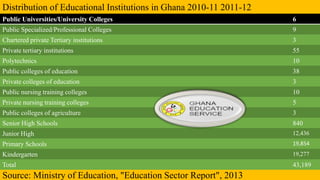
Distribution of Educational Institutions in Ghana 2010-11 2011-12
Source: Ministry of Education, "Education Sector Report", 2013
Public Universities/University Colleges 6
Public Specialized/Professional Colleges 9
Chartered private Tertiary institutions 3
Private tertiary institutions 55
Polytechnics 10
Public colleges of education 38
Private colleges of education 3
Public nursing training colleges 10
Private nursing training colleges 5
Public colleges of agriculture 3
Senior High Schools 840
Junior High 12,436
Primary Schools 19,854
Kindergarten 19,277
Total 43,189
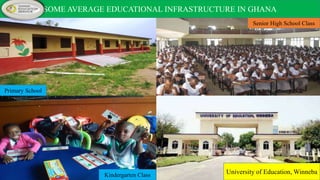
SOME AVERAGE EDUCATIONAL INFRASTRUCTURE IN GHANA
Primary School
Senior High School Class
Kindergarten Class University of Education, Winneba
Conclusion
• The government of
Ghana is responsible
for education in all
aspects. This is
evidenced through
the Ministry of
Education where
power or control is
decentralized to other
low sectors to
promote the
efficiency in the
education sector.
References
• Ministry of Education, (2013). Education Sector Report; Ghana
• Education System, Ghana,(2015). Internationalizing Education; EP-Nuffic,
Ghana.

Ghana education system

  • 2.
    GHANA • Country: Ghana •Capital City: Accra • Government System: Democracy • Current Government: National Democratic Congress (NDC) • Independence Day: 6th of March 1957 The Flag of Ghana
  • 4.
    WHERE IS GHANAIN AFRICA?
  • 5.
    The History of Ghana’s Education • ThePre Colonial Season • The Colonial Era • The Missionary Interventions • The Post Independence Reforms • The Current Standard, a 1987 Reforms: 23% of National annual budget for education by the government.
  • 6.
    Government of Ghana Ministry of Education RegionalDirectorate Directorate General Metropolitan Directorate Municipal Directorate District Directorate Teaching Staff Circuit Supervisors Students and PupilsNon Teaching Staff Education Sector in Ghana a controlled field of the Government and its Hierarchy
  • 7.
    THE MAJOR OBJECTIVE OFTHE GHANA EDUCATION SERVICE • The 1987 Education Reforms Major Objective; • Achievement of Socio-economic Reality to boost the Nation’s Development through the Provision of Equal and Quality Education for All • Tertiary Level Lecturer-Student Ratio; 1: 26 • Pupil-Teacher Ratio, 1:32 (Basic/Secondary) • Language of Instruction: English Language
  • 8.
    The Ghana EducationSystem: Before the 2007 Reforms
  • 9.
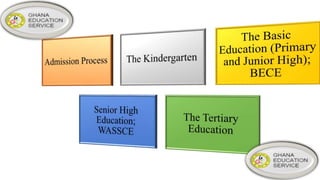
    Levels of Educationin Ghana Kindergarten Education Junior High School Senior High School Colleges Primary School Polytechnics Universities Tertiary Education High School Free Compulsory Basic Education
  • 10.
    Ministry of Education TrainingColleges: The Principals Universities: The President as the Chancellor VRS Personalities as Chancellors Polytechnics: The Rectors VRS Chancellors and Vice Chancellors The Government Technical/Vocational Schools: Head Masters VRS Principals and Rectors Senior High Schools: Head Masters VRS Principals Tertiary Education Senior High Education The Basic Education Junior High School: Head Teachers VRS Proprietors Primary School: Head Teachers VRS Proprietors Preschool: School Heads VRS Proprietors Leadership at the Various Levels of the Educational System in Ghana
  • 11.
    CERTIFICATION BODY INGHANA EDUCATION SERVICE
  • 12.
    Important legislation, PolicyDocuments and Reports in the field of education in Ghana • Education Act, 1961 • Dzobo Report, 1973 • New Structure and Content of Education, 1974 • Education Commission Report on Basic and Secondary Education, 1987/88 • Education Reform Programme, 1987/88 • University Relationalization Committee Report, 1988 • Free Compulsory Universal Basic Education (FCUBE) Programme, 1996 (originating from the Constitution of 1992) • Ghana Education Trust Fund – GET Fund Act 2000
  • 14.
    Distribution of EducationalInstitutions in Ghana 2010-11 2011-12 Source: Ministry of Education, "Education Sector Report", 2013 Public Universities/University Colleges 6 Public Specialized/Professional Colleges 9 Chartered private Tertiary institutions 3 Private tertiary institutions 55 Polytechnics 10 Public colleges of education 38 Private colleges of education 3 Public nursing training colleges 10 Private nursing training colleges 5 Public colleges of agriculture 3 Senior High Schools 840 Junior High 12,436 Primary Schools 19,854 Kindergarten 19,277 Total 43,189
  • 15.
    SOME AVERAGE EDUCATIONALINFRASTRUCTURE IN GHANA Primary School Senior High School Class Kindergarten Class University of Education, Winneba
  • 16.
    Conclusion • The governmentof Ghana is responsible for education in all aspects. This is evidenced through the Ministry of Education where power or control is decentralized to other low sectors to promote the efficiency in the education sector.
  • 17.
    References • Ministry ofEducation, (2013). Education Sector Report; Ghana • Education System, Ghana,(2015). Internationalizing Education; EP-Nuffic, Ghana.