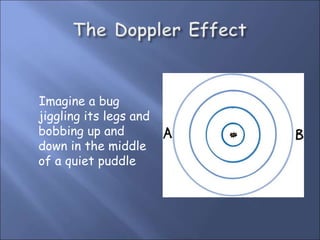
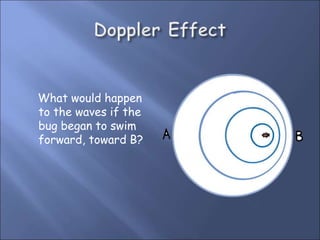
Imagine a bug
jiggling its legs and
bobbing up and
down in the middle
of a quiet puddle
What would happen
to the waves if the
bug began to swim
forward, toward B?
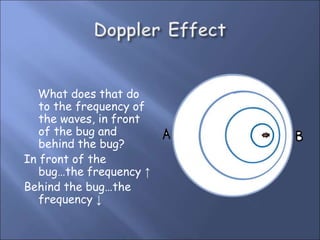
What does that do
to the frequency of
the waves, in front
of the bug and
behind the bug?
In front of the
bug…the frequency ↑
Behind the bug…the
frequency ↓
 http://www.fearofphysics.com/cgi-
bin/doppler.cgi?dir=t&vs=200&mode=wrap
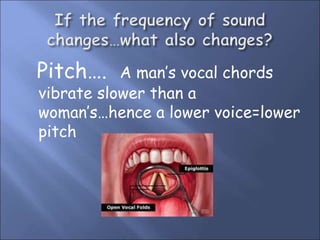
Pitch…. A man’s vocal chords
vibrate slower than a
woman’s…hence a lower voice=lower
pitch
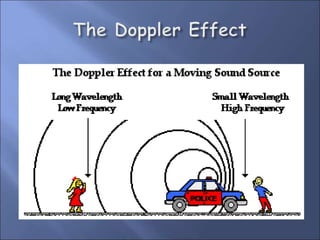
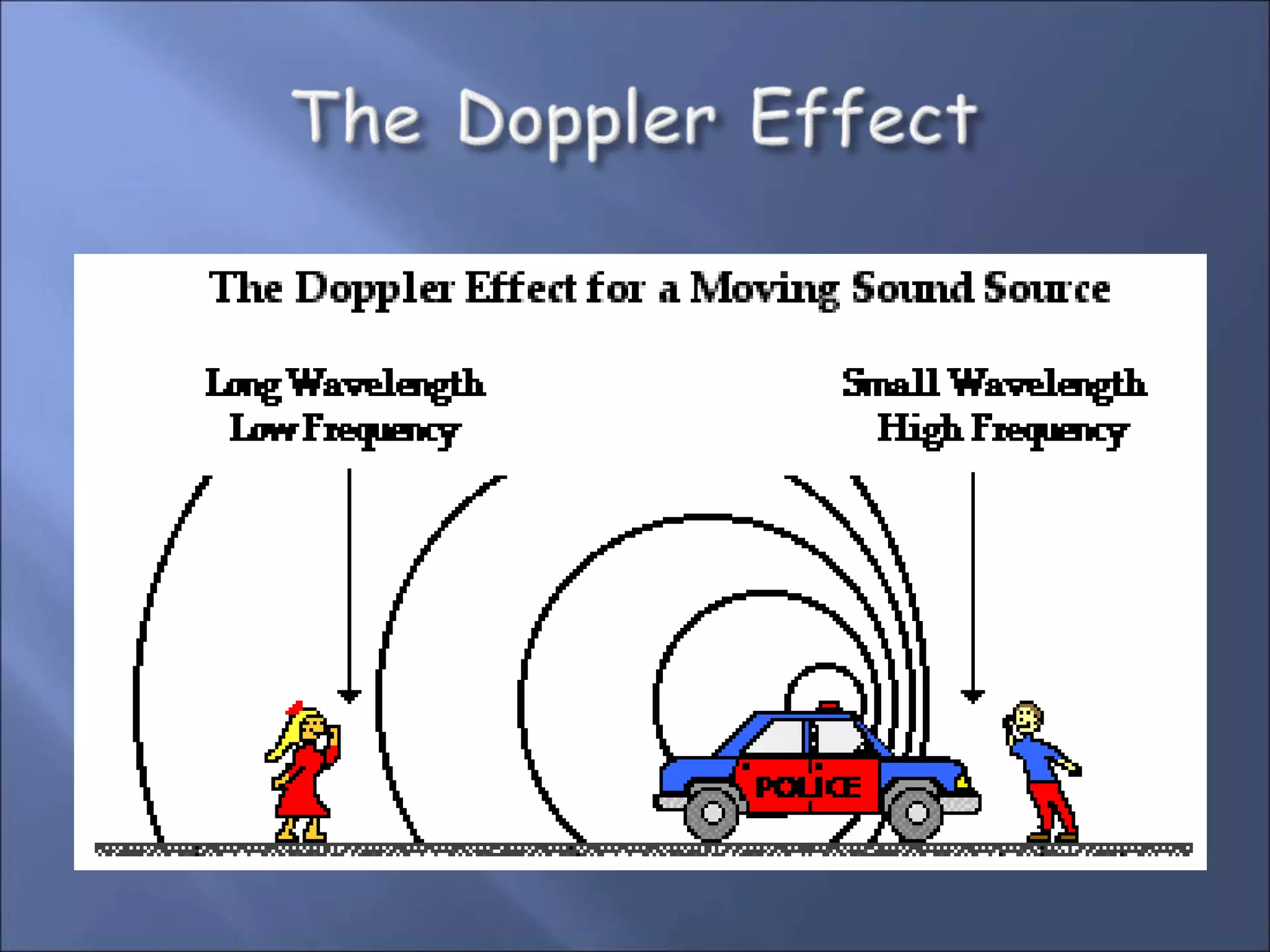
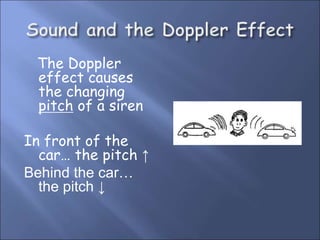
The Doppler
effect causes
the changing
pitch of a siren
In front of the
car… the pitch ↑
Behind the car…
the pitch ↓
Note: The change in
loudness is not the
Doppler Effect! It is
the shift in
frequency!
 http://www.youtube.
com/watch?v=Y5Kae
CZ_AaY
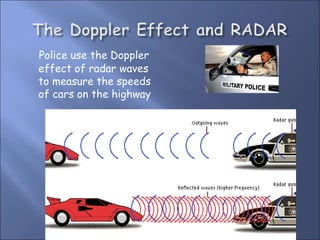
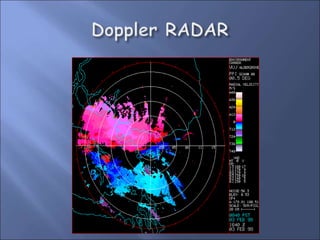
Police use the Doppler
effect of radar waves
to measure the speeds
of cars on the highway
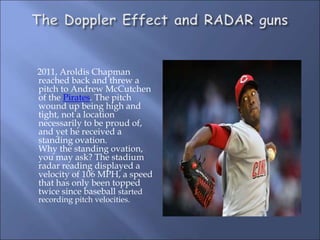
2011, Aroldis Chapman
reached back and threw a
pitch to Andrew McCutchen
of the Pirates. The pitch
wound up being high and
tight, not a location
necessarily to be proud of,
and yet he received a
standing ovation.
Why the standing ovation,
you may ask? The stadium
radar reading displayed a
velocity of 106 MPH, a speed
that has only been topped
twice since baseball started
recording pitch velocities.
 http://www.youtube.com/watch?v=Y5KaeCZ
_AaY
 Named after Christian Doppler (Austrian)
1803-1853
When a source
moves toward you,
do you measure an
increase or
decrease in wave
speed?
Neither! It is the
frequency of a
wave that
undergoes a
change, not the
wave speed.
How does the
apparent
frequency of
waves change as a
wave source
moves?
 The sound waves
become more
frequent
(compressed
together).
 The sound waves
become less
frequent (stretched
apart).

The Doppler Effect.ppt