TBI THERAPY WEBINAR:
ADULT STEM CELLS FOR TBI
By Dr. John Hughes
January 31st, 2018
DR. JOHN HUGHES, DO
• Doctor of Osteopathy
• From Georgia
• Arizona College of
Osteopathic Medicine - 2007
• Aspen Integrative Medicine -
2009
• TBITherapy - 2014
LEARNING OBJECTIVE
• What is a traumatic brain injury (TBI)?
• What are stem cells?
• How do stem cells help TBI?
WHAT IS A TBI? • “Brain dysfunction caused by an outside
force, usually a violent blow to the
head.”
• Occur mostly during sports injury, auto
accidents, falls, blasts, blunt force trauma
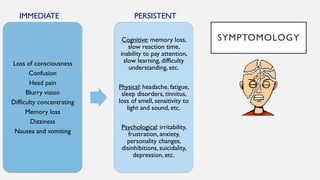
SYMPTOMOLOGY
Loss of consciousness
Confusion
Head pain
Blurry vision
Difficulty concentrating
Memory loss
Dizziness
Nausea and vomiting
Cognitive: memory loss,
slow reaction time,
inability to pay attention,
slow learning, difficulty
understanding, etc.
Physical: headache, fatigue,
sleep disorders, tinnitus,
loss of smell, sensitivity to
light and sound, etc.
Psychological: irritability,
frustration, anxiety,
personality changes,
disinhibitions, suicidality,
depression, etc.
IMMEDIATE PERSISTENT
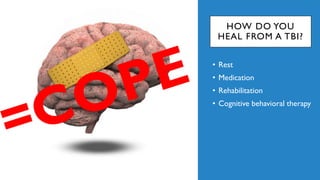
HOW DO YOU
HEAL FROM A TBI?
• Rest
• Medication
• Rehabilitation
• Cognitive behavioral therapy
BUT WHAT ABOUT
REGENERATION?
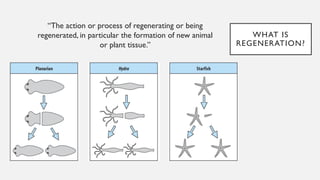
WHAT IS
REGENERATION?
“The action or process of regenerating or being
regenerated, in particular the formation of new animal
or plant tissue.”
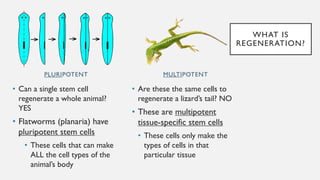
PLURIPOTENT
• Can a single stem cell
regenerate a whole animal?
YES
• Flatworms (planaria) have
pluripotent stem cells
• These cells that can make
ALL the cell types of the
animal’s body
• Are these the same cells to
regenerate a lizard’s tail? NO
• These are multipotent
tissue-specific stem cells
• These cells only make the
types of cells in that
particular tissue
MULTIPOTENT
WHAT IS
REGENERATION?
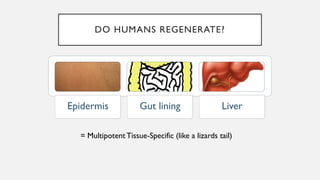
DO HUMANS REGENERATE?
Epidermis Gut lining Liver
= Multipotent Tissue-Specific (like a lizards tail)
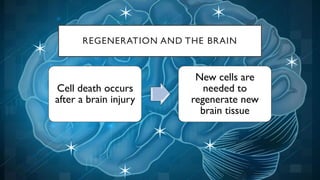
REGENERATION AND THE BRAIN
Cell death occurs
after a brain injury
New cells are
needed to
regenerate new
brain tissue
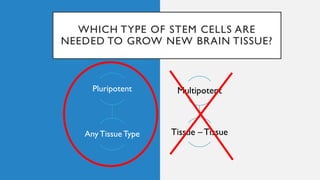
WHICH TYPE OF STEM CELLS ARE
NEEDED TO GROW NEW BRAIN TISSUE?
Multipotent
Tissue – Tissue
Pluripotent
Any Tissue Type
PLURIPOTENT STEM CELLS
• Recently discovered in peripheral blood
• Behave like embryonic stem cells
• Give rise to all the cell types
• Long lifespan
• Stem cells work in combination with PRP
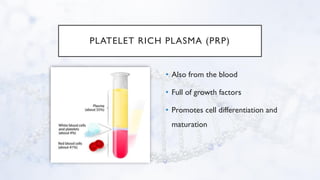
PLATELET RICH PLASMA (PRP)
• Also from the blood
• Full of growth factors
• Promotes cell differentiation and
maturation
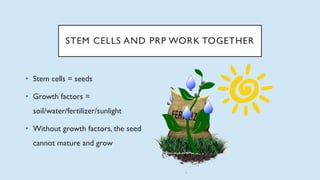
STEM CELLS AND PRP WORK TOGETHER
• Stem cells = seeds
• Growth factors =
soil/water/fertilizer/sunlight
• Without growth factors, the seed
cannot mature and grow
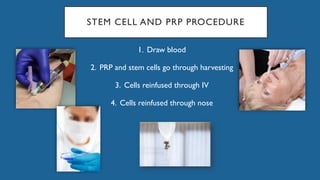
STEM CELL AND PRP PROCEDURE
1. Draw blood
2. PRP and stem cells go through harvesting
3. Cells reinfused through IV
4. Cells reinfused through nose
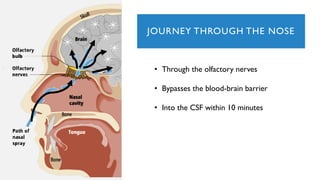
JOURNEY THROUGH THE NOSE
• Through the olfactory nerves
• Bypasses the blood-brain barrier
• Into the CSF within 10 minutes
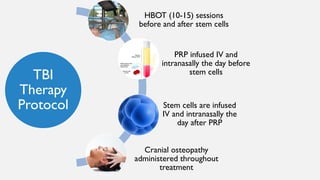
TBI
Therapy
Protocol
HBOT (10-15) sessions
before and after stem cells
PRP infused IV and
intranasally the day before
stem cells
Stem cells are infused
IV and intranasally the
day after PRP
Cranial osteopathy
administered throughout
treatment
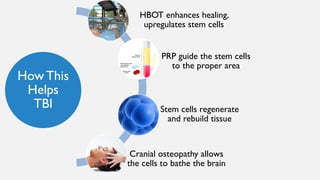
How This
Helps
TBI
HBOT enhances healing,
upregulates stem cells
PRP guide the stem cells
to the proper area
Stem cells regenerate
and rebuild tissue
Cranial osteopathy allows
the cells to bathe the brain
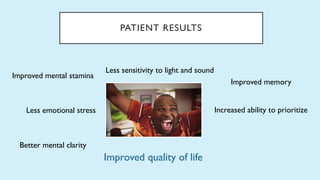
PATIENT RESULTS
Improved mental stamina
Improved memory
Less emotional stress Increased ability to prioritize
Better mental clarity
Improved quality of life
Less sensitivity to light and sound
STUDIES & REFERENCES
“Intranasally administered cells could bypass the blood-brain barrier by
migrating from the nasal mucosa through the cribriform plate along the
olfactory neural pathway into the brain and cerebrospinal fluid (CSF).”
Danielyan, L., Schäfer, R., von Ameln-Mayerhofer,A., Buadze, M., Geisler, J., Klopfer,T., … & Buniatian, G. H. (2009). Intranasal
delivery of cells to the brain. European journal of cell biology, 88(6), 315-324.
“Pluripotent stem cells are responsive to any lineage-induction agent ...
across all three primary germ layer lineages.”
Young, H. E., & Black, A. C. (2005). Differentiation potential of adult stem cells. In Stem Cells in Endocrinology (pp. 67-92). Humana Press.
“The ability to store, expand, and differentiate these PSC from autologous
peripheral blood should make them valuable candidates for
transplantation therapy.”
Zhao, Y., Glesne, D., & Huberman, E. (2003). A human peripheral blood monocyte-derived subset acts as pluripotent stem cells. Proceedings of the National
Academy of Sciences, 100(5), 2426-2431.
Q&A
Learn more at tbitherapy.com
or call 303-447-1257
video

Stem Cells for Traumatic Brain Injury

  • 1.
    TBI THERAPY WEBINAR: ADULTSTEM CELLS FOR TBI By Dr. John Hughes January 31st, 2018
  • 2.
    DR. JOHN HUGHES,DO • Doctor of Osteopathy • From Georgia • Arizona College of Osteopathic Medicine - 2007 • Aspen Integrative Medicine - 2009 • TBITherapy - 2014
  • 3.
    LEARNING OBJECTIVE • Whatis a traumatic brain injury (TBI)? • What are stem cells? • How do stem cells help TBI?
  • 4.
    WHAT IS ATBI? • “Brain dysfunction caused by an outside force, usually a violent blow to the head.” • Occur mostly during sports injury, auto accidents, falls, blasts, blunt force trauma
  • 5.
    SYMPTOMOLOGY Loss of consciousness Confusion Headpain Blurry vision Difficulty concentrating Memory loss Dizziness Nausea and vomiting Cognitive: memory loss, slow reaction time, inability to pay attention, slow learning, difficulty understanding, etc. Physical: headache, fatigue, sleep disorders, tinnitus, loss of smell, sensitivity to light and sound, etc. Psychological: irritability, frustration, anxiety, personality changes, disinhibitions, suicidality, depression, etc. IMMEDIATE PERSISTENT
  • 6.
    HOW DO YOU HEALFROM A TBI? • Rest • Medication • Rehabilitation • Cognitive behavioral therapy
  • 7.
  • 8.
    WHAT IS REGENERATION? “The actionor process of regenerating or being regenerated, in particular the formation of new animal or plant tissue.”
  • 9.
    PLURIPOTENT • Can asingle stem cell regenerate a whole animal? YES • Flatworms (planaria) have pluripotent stem cells • These cells that can make ALL the cell types of the animal’s body • Are these the same cells to regenerate a lizard’s tail? NO • These are multipotent tissue-specific stem cells • These cells only make the types of cells in that particular tissue MULTIPOTENT WHAT IS REGENERATION?
  • 10.
    DO HUMANS REGENERATE? EpidermisGut lining Liver = Multipotent Tissue-Specific (like a lizards tail)
  • 11.
    REGENERATION AND THEBRAIN Cell death occurs after a brain injury New cells are needed to regenerate new brain tissue
  • 12.
    WHICH TYPE OFSTEM CELLS ARE NEEDED TO GROW NEW BRAIN TISSUE? Multipotent Tissue – Tissue Pluripotent Any Tissue Type
  • 13.
    PLURIPOTENT STEM CELLS •Recently discovered in peripheral blood • Behave like embryonic stem cells • Give rise to all the cell types • Long lifespan • Stem cells work in combination with PRP
  • 14.
    PLATELET RICH PLASMA(PRP) • Also from the blood • Full of growth factors • Promotes cell differentiation and maturation
  • 15.
    STEM CELLS ANDPRP WORK TOGETHER • Stem cells = seeds • Growth factors = soil/water/fertilizer/sunlight • Without growth factors, the seed cannot mature and grow
  • 16.
    STEM CELL ANDPRP PROCEDURE 1. Draw blood 2. PRP and stem cells go through harvesting 3. Cells reinfused through IV 4. Cells reinfused through nose
  • 17.
    JOURNEY THROUGH THENOSE • Through the olfactory nerves • Bypasses the blood-brain barrier • Into the CSF within 10 minutes
  • 18.
    TBI Therapy Protocol HBOT (10-15) sessions beforeand after stem cells PRP infused IV and intranasally the day before stem cells Stem cells are infused IV and intranasally the day after PRP Cranial osteopathy administered throughout treatment
  • 19.
    How This Helps TBI HBOT enhanceshealing, upregulates stem cells PRP guide the stem cells to the proper area Stem cells regenerate and rebuild tissue Cranial osteopathy allows the cells to bathe the brain
  • 20.
    PATIENT RESULTS Improved mentalstamina Improved memory Less emotional stress Increased ability to prioritize Better mental clarity Improved quality of life Less sensitivity to light and sound
  • 21.
    STUDIES & REFERENCES “Intranasallyadministered cells could bypass the blood-brain barrier by migrating from the nasal mucosa through the cribriform plate along the olfactory neural pathway into the brain and cerebrospinal fluid (CSF).” Danielyan, L., Schäfer, R., von Ameln-Mayerhofer,A., Buadze, M., Geisler, J., Klopfer,T., … & Buniatian, G. H. (2009). Intranasal delivery of cells to the brain. European journal of cell biology, 88(6), 315-324. “Pluripotent stem cells are responsive to any lineage-induction agent ... across all three primary germ layer lineages.” Young, H. E., & Black, A. C. (2005). Differentiation potential of adult stem cells. In Stem Cells in Endocrinology (pp. 67-92). Humana Press. “The ability to store, expand, and differentiate these PSC from autologous peripheral blood should make them valuable candidates for transplantation therapy.” Zhao, Y., Glesne, D., & Huberman, E. (2003). A human peripheral blood monocyte-derived subset acts as pluripotent stem cells. Proceedings of the National Academy of Sciences, 100(5), 2426-2431.
  • 22.
    Q&A Learn more attbitherapy.com or call 303-447-1257 video