Revenge of the ORMs
Why SQL skills still matter in 2015
Lightning strikes © flickr.com/photos/snowpeak CC-BY
First, An Intro
Megan Bowra-Dean !
• Rails/JS/Android/iOS/
kitchen sink developer
at Rabid Tech
• 2 years .NET
enterprise web dev
• 2 years C/C++
embedded dev
• Ruby NZ Committee
Member
–Roy Batty, Bladerunner
“I've seen things you people wouldn't believe.”
Reintroducing ORMs
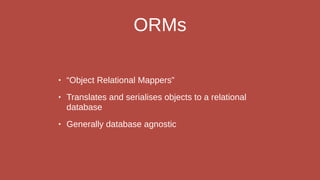
ORMs
• “Object Relational Mappers”
• Translates and serialises objects to a relational
database
• Generally database agnostic
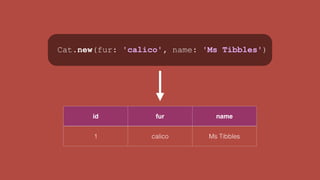
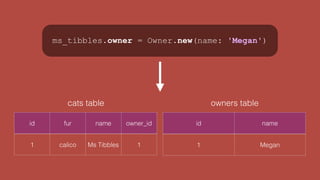
Cat.new(fur: 'calico', name: 'Ms Tibbles')
id fur name
1 calico Ms Tibbles
ms_tibbles.owner = Owner.new(name: 'Megan')
id fur name owner_id
1 calico Ms Tibbles 1
cats table
id name
1 Megan
owners table
Examples
Entity FrameworkActiveRecord django.db
The Good 👍
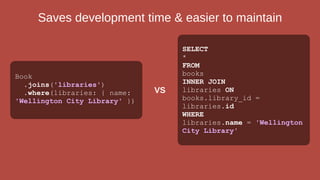
Saves development time & easier to maintain
SELECT
*
FROM
books
INNER JOIN
libraries ON
books.library_id =
libraries.id
WHERE
libraries.name = 'Wellington
City Library'
Book
.joins('libraries')
.where(libraries: { name:
'Wellington City Library' })
VS
Security
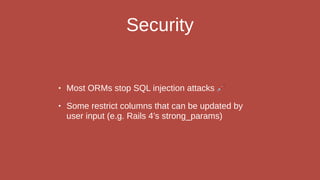
• Most ORMs stop SQL injection attacks 💉
• Some restrict columns that can be updated by
user input (e.g. Rails 4’s strong_params)
BUT $
When and How ORMs
Can Breakdown
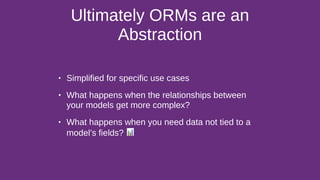
Ultimately ORMs are an
Abstraction
• Simplified for specific use cases
• What happens when the relationships between
your models get more complex?
• What happens when you need data not tied to a
model’s fields? 📊
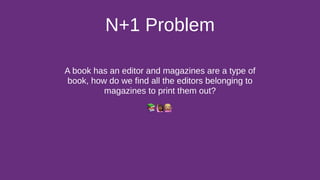
N+1 Problem
A book has an editor and magazines are a type of
book, how do we find all the editors belonging to
magazines to print them out?
📚'(
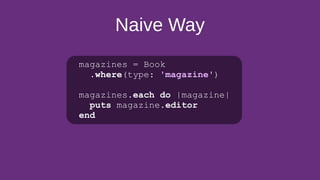
Naive Way
magazines = Book
.where(type: 'magazine')
magazines.each do |magazine|
puts magazine.editor
end
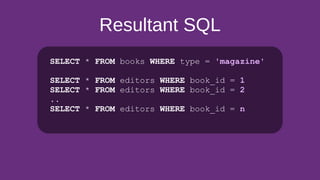
Resultant SQL
SELECT * FROM books WHERE type = 'magazine'
SELECT * FROM editors WHERE book_id = 1
SELECT * FROM editors WHERE book_id = 2
..
SELECT * FROM editors WHERE book_id = n
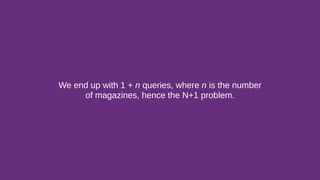
We end up with 1 + n queries, where n is the number
of magazines, hence the N+1 problem.
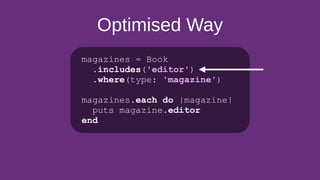
Optimised Way
magazines = Book
.includes('editor')
.where(type: 'magazine')
magazines.each do |magazine|
puts magazine.editor
end
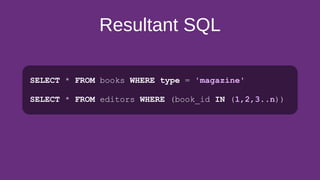
Resultant SQL
SELECT * FROM books WHERE type = 'magazine'
SELECT * FROM editors WHERE (book_id IN (1,2,3..n))
• Not always as obvious as this
• Can have a lot of things happening between
fetching the parent model and the child models
• Still, (most) ORMs have the capability to help
Modern Scripting
Languages are SLOW* 🐢
* At handling large data sets
• Page load times can slow down noticeably with
just a few thousand instances of models.
• May expect to run operations on hundreds of
thousands.
• Is it WEBSCALE?
We Usually Deal With This
by Over-engineering
• Adding extra caching layers
• Load balancing with horizontal scaling
• Progressive page loading
Subverting Your ORM
for Fun and Profit
• We can wrest the raw database connection from
the ORM
• With this we can improve performance without
greatly increasing complexity
A real world example
• Web app for client that surveyed organisational
performance
• Produced an online report with several different
breakdowns of statistics from the survey
• Was surprisingly slow - hit web server timeout
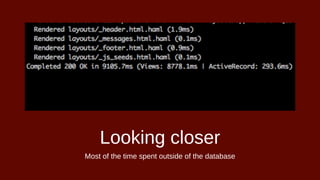
Looking closer
Most of the time spent outside of the database
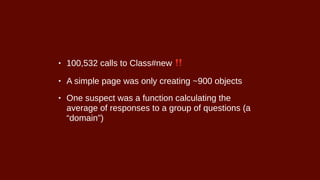
• 100,532 calls to Class#new ‼
• A simple page was only creating ~900 objects
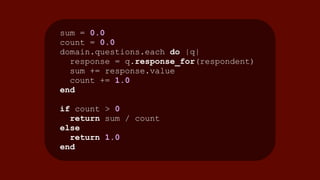
• One suspect was a function calculating the
average of responses to a group of questions (a
“domain”)
sum = 0.0
count = 0.0
domain.questions.each do |q|
response = q.response_for(respondent)
sum += response.value
count += 1.0
end
if count > 0
return sum / count
else
return 1.0
end
conn = ActiveRecord::Base.connection
result = conn.execute <<-SQL
SELECT
SUM(responses.value) as sum,
COUNT(*) as count
FROM
domains
INNER JOIN
questions ON questions.domain_id = domains.id
INNER JOIN
responses ON responses.question_id = questions.id
AND responses.respondent_id = #{respondent.id}
WHERE
domains.id = #{domain.id}
SQL
score = 1.0
sum = result[0]['sum'].to_f
count = result[0]['count'].to_f
score = sum / count if count > 0
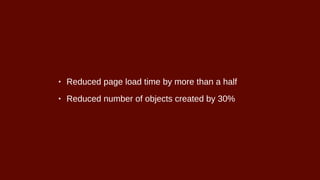
• Reduced page load time by more than a half
• Reduced number of objects created by 30%
Words of Caution ⚠
• Not as maintainable
• Need to keep an eye on security. 

Never insert user provided values into raw SQL.
• Not as portable.
XKCD #327 https://xkcd.com/327/
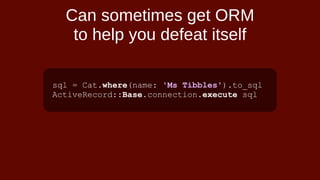
sql = Cat.where(name: 'Ms Tibbles').to_sql
ActiveRecord::Base.connection.execute sql
Can sometimes get ORM
to help you defeat itself
Cool Things Beyond
Performance 😎
• Database functions
• Common table expressions
• Views
• GIS extensions for geographical data 🌏
• Non-standard data types
Finally:
Remember your
indexes!
To Summarise
• ORMs bring great benefits much of the time
• However being aware of what they’re doing is
essential
• If need be, it is possible to work around them.
• Databases are your friend.

Revenge of the ORMs

  • 1.
    Revenge of theORMs Why SQL skills still matter in 2015 Lightning strikes © flickr.com/photos/snowpeak CC-BY
  • 2.
  • 3.
    Megan Bowra-Dean ! •Rails/JS/Android/iOS/ kitchen sink developer at Rabid Tech • 2 years .NET enterprise web dev • 2 years C/C++ embedded dev • Ruby NZ Committee Member
  • 4.
    –Roy Batty, Bladerunner “I'veseen things you people wouldn't believe.”
  • 5.
  • 6.
    ORMs • “Object RelationalMappers” • Translates and serialises objects to a relational database • Generally database agnostic
  • 7.
    Cat.new(fur: 'calico', name:'Ms Tibbles') id fur name 1 calico Ms Tibbles
  • 8.
    ms_tibbles.owner = Owner.new(name:'Megan') id fur name owner_id 1 calico Ms Tibbles 1 cats table id name 1 Megan owners table
  • 9.
  • 10.
  • 11.
    Saves development time& easier to maintain SELECT * FROM books INNER JOIN libraries ON books.library_id = libraries.id WHERE libraries.name = 'Wellington City Library' Book .joins('libraries') .where(libraries: { name: 'Wellington City Library' }) VS
  • 12.
    Security • Most ORMsstop SQL injection attacks 💉 • Some restrict columns that can be updated by user input (e.g. Rails 4’s strong_params)
  • 13.
  • 14.
    When and HowORMs Can Breakdown
  • 15.
    Ultimately ORMs arean Abstraction • Simplified for specific use cases • What happens when the relationships between your models get more complex? • What happens when you need data not tied to a model’s fields? 📊
  • 16.
    N+1 Problem A bookhas an editor and magazines are a type of book, how do we find all the editors belonging to magazines to print them out? 📚'(
  • 17.
    Naive Way magazines =Book .where(type: 'magazine') magazines.each do |magazine| puts magazine.editor end
  • 18.
    Resultant SQL SELECT *FROM books WHERE type = 'magazine' SELECT * FROM editors WHERE book_id = 1 SELECT * FROM editors WHERE book_id = 2 .. SELECT * FROM editors WHERE book_id = n
  • 19.
    We end upwith 1 + n queries, where n is the number of magazines, hence the N+1 problem.
  • 20.
    Optimised Way magazines =Book .includes('editor') .where(type: 'magazine') magazines.each do |magazine| puts magazine.editor end
  • 21.
    Resultant SQL SELECT *FROM books WHERE type = 'magazine' SELECT * FROM editors WHERE (book_id IN (1,2,3..n))
  • 22.
    • Not alwaysas obvious as this • Can have a lot of things happening between fetching the parent model and the child models • Still, (most) ORMs have the capability to help
  • 23.
    Modern Scripting Languages areSLOW* 🐢 * At handling large data sets
  • 24.
    • Page loadtimes can slow down noticeably with just a few thousand instances of models. • May expect to run operations on hundreds of thousands. • Is it WEBSCALE?
  • 25.
    We Usually DealWith This by Over-engineering • Adding extra caching layers • Load balancing with horizontal scaling • Progressive page loading
  • 26.
  • 27.
    • We canwrest the raw database connection from the ORM • With this we can improve performance without greatly increasing complexity
  • 28.
    A real worldexample • Web app for client that surveyed organisational performance • Produced an online report with several different breakdowns of statistics from the survey • Was surprisingly slow - hit web server timeout
  • 29.
    Looking closer Most ofthe time spent outside of the database
  • 30.
    • 100,532 callsto Class#new ‼ • A simple page was only creating ~900 objects • One suspect was a function calculating the average of responses to a group of questions (a “domain”)
  • 31.
    sum = 0.0 count= 0.0 domain.questions.each do |q| response = q.response_for(respondent) sum += response.value count += 1.0 end if count > 0 return sum / count else return 1.0 end
  • 32.
    conn = ActiveRecord::Base.connection result= conn.execute <<-SQL SELECT SUM(responses.value) as sum, COUNT(*) as count FROM domains INNER JOIN questions ON questions.domain_id = domains.id INNER JOIN responses ON responses.question_id = questions.id AND responses.respondent_id = #{respondent.id} WHERE domains.id = #{domain.id} SQL score = 1.0 sum = result[0]['sum'].to_f count = result[0]['count'].to_f score = sum / count if count > 0
  • 33.
    • Reduced pageload time by more than a half • Reduced number of objects created by 30%
  • 34.
  • 35.
    • Not asmaintainable • Need to keep an eye on security. 
 Never insert user provided values into raw SQL. • Not as portable. XKCD #327 https://xkcd.com/327/
  • 36.
    sql = Cat.where(name:'Ms Tibbles').to_sql ActiveRecord::Base.connection.execute sql Can sometimes get ORM to help you defeat itself
  • 37.
  • 38.
    • Database functions •Common table expressions • Views • GIS extensions for geographical data 🌏 • Non-standard data types
  • 39.
  • 40.
    To Summarise • ORMsbring great benefits much of the time • However being aware of what they’re doing is essential • If need be, it is possible to work around them. • Databases are your friend.